DABHAR and the ISNESS of GOD


Tomorrow, I will get into my car to begin the nearly three-and-a-half-thousand kilometre journey to Vancouver.  When people ask me why I’m driving so far instead of flying, I tell them it is because my sabbatical affords me the luxury of taking my time. But I suspect the real reason has something to do my love of this immense land in which I have the pleasure of living. From behind the wheel, I will have the freedom to explore just a small part of Canada and I can hardly wait to get beyond the familiar routes of my day-to-day life and out on to the open road, knowing all the while that in the far off distance, beyond the rocks and trees of Ontario, the open expanse of the prairies lie the mountains.  I will linger in the mountains before making my way to the Vancouver School of Theology, on the grounds of my alma mater the University of British Columbia, where I will spend six glorious weeks reading and reflecting upon the many emerging connections that are happening in progressive christian theology. So, filled as I am, with anticipation of all that tomorrow promises, I am also filled with memories of other trips into the splendour of creation.

When I was a student in the Religious Studies department at the University of British Columbia, I decided that if I was ever going to be able to understand religious practices that I would need to do more than simply study them from an academic perspective.  Longing to understand more about Buddhism I decided to learn how to meditate. I went to a Buddhist retreat centre to try to learn the fine art of meditation.  While I learned a great deal in the process of learning to meditate, I found the experience of meditation to be very frustrating.  I’m drawn to ideas, and reading, and studying.  I love roaming around in the words that have been strung together by scholars, or historians or theologians, or philosophers or psychologists or even novelists. I thrive on the written word and so the scarcity of words that the discipline of meditation demands can often frustrate me.

I remember talking to a good friend of mine about the trouble I was having learning to meditate. Bryan had travelled all over the Far East and was an avid practitioner of transcendental meditation. He sympathized with my dilemma and suggested that perhaps my particular spiritual quest would need to be one that entailed letting go of words so that I could move beyond words.

I remember being dumbfounded by the idea of ever being able to let go of words. But Bryan insisted that unless I moved beyond words, I’d remain frustrated by my attempts to learn any form of meditation. I confessed that I had absolutely no idea where to begin. Bryan said that my basic problem was wrapped up in the weakness of my right mind. Before I could take offense, Bryan went on to explain that I was primarily a left-brain kind of gal. Bryan insisted that I needed to learn to develop the right hemisphere of my brain.

Even though I was familiar with the theories about right brain verses left brain, I had absolutely no idea about how to go about changing what I thought was the unchangeable reality that my left brain which is the area responsible for verbal and cognitive skills is the hemisphere that I tend to rely on rather than the right brain wherein lies the artistic, playful side of my nature.

I like words. I like the way words sound. I like the way the way words look. I like the meanings of words. I love the history of words. I love putting words together.    I’m called to a profession that is all about words. So, asking me to move beyond words is like asking me to give up my lifeblood. But Bryan was determined to move me beyond words and made me promise that I’d meet him at his workplace the very next day.

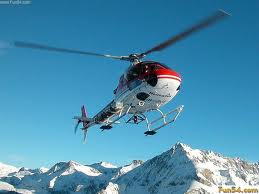
Bryan is a pilot; a helicopter pilot. Bryan also knows that I’m afraid of heights and although I’ve conquered my fear of flying, I’m partial to fix-wing aircraft. Helicopters make me more than nervous; helicopters terrify me. Most of my fear of helicopters is Bryan’s fault. While Bryan was studying to fly helicopters he would share with me all of his newfound knowledge about helicopters. One thing stood out: helicopters are unreliable. The best mechanic can safety check a helicopter and certify that it is perfectly safe to take off and still the helicopter can malfunction and cause the pilot to have to land immediately.  So, I wasn’t too crazy about meeting Bryan at work. But who am I to argue with a guy who is determined to develop my left brain.

That’s how I found myself hovering over the mountains of North Vancouver in a small helicopter that for some reason had no doors. I was strapped in and Bryan assured me that there was no way that I could fall out but there was something about all that fresh air that seemed a little too close for comfort. So I held on for dear life as Bryan headed North towards Garibaldi Mountain. As Garibaldi slipped out of followed by Blackcomb and Whistler the sheer beauty of all that lay before me filled me with such awe that my mind struggled to comprehend the splendor my eyes beheld. This of course was my left-brain on overdrive struggling to find words to describe the experience of my senses. It wasn’t until I heard Bryan’s voice through the crackly headset that I realized that rather than moving beyond words, my mind was flooded with words.

I asked Bryan where we were going and he pointed to a place on the northern horizon and told me that we were going to put down on the side of a mountain in a place that he knew that I would love. As we’d long since passed the boundaries of my ability to recognize the mountains by their shape, I turned to the map of the Bastion Range but could not read our location. Bryan motioned to a point in the distance and indicated that it would be there that he would land.

As we hovered over the spot, I wondered how he’d manage to land, when through the headset Bryan explained. It was too dangerous to actually land.  Bryan would hover inches from the ground and if I was willing to go where few humans had ever been, I would step out of the chopper and huddle down on the ground as Bryan swooped back up into the air out of sight so that I could be alone in a place where Bryan was sure I’d find no words but one.

I was relieved that Bryan hadn’t explained all this while we were still on terra firma because I would never have agreed to the journey. But out there the appeal of the Alpine meadow perched on a mountainside was more than I could resist.

As the ground approached, I became convinced that I was about to die, but I was much younger then and far more reckless, and in seconds, I was hugging the earth and feeling the whoosh of the chopper as Bryan climbed. I knew that he’d be back in about 5 minutes, but as the sound left, it was replaced by the roar of a silence I’d never heard before. I stood up in time to see Bryan disappear behind the summit and discovered that I was literally on top of the world.  I’ve rarely tired to put into words what happened next.  I resisted doing so for years.  I think out of some sort of belief that in trying to put it into words I’d rob it of its, its what, that’s just it, I don’t know what……Well I do know, I just don’t know how to say it.

Standing there looking out at what seemed like all of creation right there before me. Looking down at the vast valley below and up to the summit I could almost reach out and touch, blanketed by a sky that I was convinced I could walk out upon, because so much of it appeared to be below me and not above, my senses were overwhelmed.

I was alone and yet I knew I was not alone.

I’d like to say that I was conscious of a presence but that’s not really how it was.

Words don’t do it justice.

I was surrounded by it.

Not “it” really but “is”.

“Is” is about as close as I can come to describing it.

 I was in the presence of, or surrounded by, or overwhelmed by, our upheld by or embraced by or touched by or loved by ISNESS.

            GOD IS TOO SMALL A WORD TO DESCRIBE THIS ISNESS.

But there in the presence of all that IS, I had no need to describe IS, it was enough to simply be.

All words, and thoughts slipped away and it was enough to just be.

To be in the presence of BEING.

            ……….

It’s more than beyond words, but as I try to explain what I felt on that mountainside, I’m struck by the fact that our ancestors speak of this ISNESS as YAHWEH…I AM WHO AM.

The verb “to be” is the very name of the God who is the source of all BEING.

The clearest way that I can point to and say “there that’s it that’s the pathway where you will meat this ISNESS” is to point to creation itself and say there, there right there in the creation of the Creator you will discover all that you need to know this ISNESS.

Standing there in the presence of ISNESS I could feel it.

There was no stillness except in me.

I was absolutely still except for the breath breathing in me.

All around me I could feel the energy of the meadow, the movement of the mountaintops that lay below me, and the dance of the sky, and the Breath of it all caressing me, holding me, touching me, holding me, moving in me, loving me.

As I loved it all, I could feel the tears rolling down my cheeks, taste them, as the spilled upon my lips.

I sobbed with delight.

As the WORD itself spoke to me through all that IS.

The Hebrew word in Genesis and in the first chapter of the Gospel of John that we translate as the “WORD of God” means so much more than our word, WORD can capture.

For us words cannot convey what the ancients spoke of when they tried to describe the creative energy that speaks into being all that is. The voice of God that says, let there be light and so it was IS more than our word WORD or words about the WORD can express or convey.

The Hebrew word that the ancients used is DABHAR and it literally means:  “word and deed”.  For the very utterance by the Creator of all that IS, is in and of itself a compelling creative energy.

THE DABHAR, then is the compelling force of creative energy that IS. So, we often describe it as the WORD, in all capitol letters.

For in the beginning was the WORD and the WORD was with GOD and the WORD was GOD. For GOD DABHAR light and it was, it was Good.  GOD DABHAR the sky and DABHAR the waters and the earth below and it was good.

God went on Dabharing and Dabharing and this compelling creative word and deed that is God called forth all that is or ever shall be and it is good.  We live and breathe and have our being in this very ISNESS that is all that IS and ever shall be. This Creation IS, and in this ISNESS we are held, and touched, and loved, and moved to be all that we are.

Can you hear the verb “to be”? Can you feel it?

When all words fall away it is the WORD that remains. The very DABHAR of our GOD who IS.

Creation is the sacred WORD of God.  ALL that IS is in GOD.

If you want to know God you can catch a glimpse of God in all that God has made. Creation is the sacred DABHAR, the WORD AND DEED of GOD.

As part of creation each of us is DABHAR, for the WORD became flesh and dwells with us.  You are God’s WORD and DEED.  God speaks in with and through creation and so God speaks in with and through you.

The great Christian mystics speak of their experiences of God by pointing to creation.  Hildegard of Bingen says, “The Word is living, being, spirit, all verdant greening, all creativity.  This Word manifests itself in every creature.”

Meister Eckhart says, “Every creature is a word of God and is a book about God.” Creation itself Eckhart describes as the primary scripture, a Bible.

Our spiritual task is to get out of its way long enough that we might be filled with it and go about our task of healing, celebrating, and co-creating. For DABHAR the WORD wishes to incarnate us.  Let the DABHAR the WORD become flesh and dwell among us.

Hear words as we begin to try to translate the New Testament in more Hebraic terms:

            In the beginning was the DABHAR the Creative Energy:

            The Creative Energy was with God

            And the Creative Energy was God.

            It was with God in the beginning.

            Through it all things came to be,

            Not one thing had its being but through it,

            All that came to be had life in it

            And that life was the light of persons,

            A light that shines in the dark,

            A light that darkness could not overpower…

            The DABHAR, the Creative Energy was the true light

            That enlightens all people;

            And it was coming into the world.

            It was in the world

            That had its being through it,

            And the world did not know it…

            But to all who did accept it

            It gave power to become children of God…

            The Creative Energy was made flesh,

            It pitched its tent among us,

            And we saw its glory,

            the glory that is its as the only Child of the Creator,

            full of grace and full of truth.

Creation itself is a sacrament.  Creation itself is the primary sacrament.

As I partook of that sacred sacrament on the mountainside, I never wanted it to end.   But as the chopper came into view, I was keenly aware of how glad I was to be able to return to the world. Bryan insisted that he’d only been gone for five minutes but in those five minutes all of eternity had come into view. As we sailed passed mountaintops, I wept for the sheer joy of weeping. Long after the hum of the choppers noise subsided in my ears I could feel the ISNESS breathing in me as Bryan and I drove through the streets of Vancouver. All around me the beauty of the world was so clear, and I knew that God really does love it because I had a sense of why.

14 billion years is the inkling we have of the age of the universe. 14 billion years of creation that we know of, coming together to create all that IS now here in this place, in you and in me.

This ISNESS, this Creation is the original blessing that is life. You don’t need to travel to a mountaintop to see it. Wandering out into creation, the DEBHAR of GOD is not just speaking, God is shouting, declaring God’s love in the splendor of the leaves whose vibrant colours positively sing out I love you! Standing in the presence of the many children of God, you can almost taste God in the sacrament of DABHAR that each person is. The ISNESS is here all around us, breathing in with and through us, for the WORD has become flesh and dwells with us.

            Let all creation sing out with joy!

I am indebted to Mathew Fox whose book “Original Blessing” provided me with words to express the inexpressible!

While Preachers Dutifully Ponder the Doctrine of the Trinity, Our Congregations Shrink???

This Sunday is Trinity Sunday.  In anticipation, preachers all over the world are dutifully pondering the Doctrine of the Trinity desperately searching for something to say to encourage their congregations.

Preachers will trot out tired old clichés conjuring up images of triangles, shamrocks around, or point to H20’s ability to appear as water, ice, or steam while still maintaining it’s unified essence. Or have you heard the one about the 3 blind men and the elephant in the room. That old chestnut is trotted out by many a desperate preacher struggling to put flesh on the doctrine of the trinity. But for the life of me I can’t see how 1 blind man touching the elephant’s trunk and presuming that there is a tree in the room, while a second blind man catching wind of the elephant’s ear is convinced that there is some sort of giant fan in the room, while a third man grabs hold of the tail and is sure that he has hold of a rope, helps you to conclude that just because they’re all sharing a room with an elephant you can now confess that God is indeed Father, Son, and Holy Spirit, one God, forever and ever amen. But all sorts of mental gymnastics will be exercised in the vain attempt to make some sort of sense of the doctrine of the Trinity!

On Trinity Sundays, mindful of the fact that trying to explain the doctrine of the Trinity usually leads to heresy: dusty theological books that have not seen the light of day since last Trinity Sunday have been poured over to ensure that the formula’s learned in seminary are repeated correctly and heresy scrupulously avoided. The imaginative among us have attempted to baffle our congregations with our theological intellect, the pragmatic among us have attempted to baffle our congregations with something akin to BS, while the desperate among us have simply tried to survive the Trinity Sunday hoping against hope that no one will notice that we haven’t a clue what we’re talking about.

Perhaps only dear old Dr. Martin Luther possessed the theological integrity sufficient to save a preacher from the perils of preaching on Trinity Sunday. So, before I launch, forth, let me remind you what the instigator of the Reformation had to say on the subject of the Trinity. Martin Luther warned that: “To deny the Trinity is to risk our salvation; to try and explain the Trinity is to risk our sanity.”

I will confess that Martin Luther had much more at stake, literally at stake, than I do, because the truth is that for centuries the punishment for heresy would have found many an ancient preacher burned at the stake. But while the death penalty for heresy has been lifted, the risk to one’s sanity remains.

Now, I will confess that when faced with a particularly difficult theological knot, I prefer to begin by quoting Jesus and not Luther, but alas Jesus remained silent on the issue of the Trinity. So, I did try to find something helpful in the words of the Apostle Paul. But alas, without some really amazing theological gymnastics that are beyond my abilities to comprehend, even the Apostle Paul remains mute on the issue of the Trinity. So keeping in mind Dr. Luther’s dire warning that to,  “To deny the Trinity is to risk our salvation; but to try and explain the Trinity is to risk our sanity.”

Let me remind you that the Trinitarian formula appears in Scripture only once, in Matthew 28, during what is called the Great Commission, when Jesus commands the disciples to go forth, baptizing in the name of the Father, and of the Son, and of the Holy Spirit. But the doctrine of the Trinity does not appear in the Bible

– The doctrine of the trinity, as we know it, was first formulated in the fourth century, by a couple of guys named Gregory and a woman called Marcrina.

– The doctrine of the Trinity was then developed over hundreds of years

– The doctrine of the Trinity was at the heart of several wars

– Thousands of Christians were killed because they came down on the loosing side of arguments over the doctrine of the Trinity

– No one has ever been able to adequately explain the Trinity

– Every explanation of the Trinity that I have ever come across includes some form of heresy

By the way, just so we’re clear, I rummaged through some of my previous sermons on the doctrine of the Trinity and I must confess that if this were the twelfth century, an angry mob would be stoking up the fires beneath my feet  because based on things I have proclaimed on various Trinity Sundays a charge of Modalism could very successfully be laid against me, as could a charge of Sabellianism. You might be interested to know, that more traditional preachers than I, will no doubt preach sermons this Sunday which will prove them guilty  of Arianism or at the very least Subordinationism. All of these heresies in a bygone age would have left us with a severe shortage of clergy in the church, as many of us would be smoldering at the stake for our crimes. Deciding who is right and who is wrong, who is in and who is out is a deadly preoccupation of humanity, a preoccupation that the church has not been able to escape.

So, with apologies to Dr. Luther, I’m going to go ahead and risk my salvation by declaring that the doctrine of the trinity is but a feeble attempt to comprehend the incomprehensible mystery of the very nature of our God.  We can echo all the creeds of Christendom with as much confidence as we can muster, and as enlightening as some of those creeds may be, they cannot begin to unravel the mystery of the creator of everything that ever was and ever shall be, nor can they fully describe the magnitude of the revelation provided in the life, death and resurrection of the one we call Christ, and when it comes to the power of the Holy Spirit, all our creeds together cannot tell the story of her wondrous beauty.

The doctrine of the trinity is just a tool to help us along the way, the trinity is not God, nor is God the trinity. The trinity is merely a way to speak of the unspeakable. And yet down through the centuries we have used the doctrine of the trinity as an idol and demanded that we worship the trinity as if it were God’s very self.

We have worried more about believing in the trinity than relating to the very One whose relationship the Trinity attempts to describe. For when it comes down to it, what we know of our God finds expression our attempts to describe God as a relational being. For what is the doctrine of the Trinity if it is not the declaration that God is Creator, Christ and Spirit, intimately connected as One; at God’s very core we find a relationship. This should be our first clue that any understanding of God must begin with relationship. Surely it is more important to experience God than to explain God. Surely it is more important to relate to God than it is to preserve a doctrine that has long since failed to describe God.

You’d think that after nearly 2000 years the Christian church would have learned to be more humble in its declarations about God. And yet, today, as we strive to learn more and more about creation, some things remain out of bounds. The church remains unwilling to revisit long established doctrines, choosing instead to insist that we simply believe, because what was good enough for grandma ought to be good enough for us. And if we should doubt the doctrine of the Trinity then all we need to do is study harder and we will eventually understand. And if we are unwilling to work at understanding the Trinity we should simply trust that folks much smarter than us have figured it out so we should simply stop questioning and simply mouth the words. Let the tired clichés and the worn out illustrations suffice, forget about our questions and simply drink the kool-aid and our doubts will somehow magically disappear. And so together we focus on believing what has been handed down to us. And for a great many people that’s good enough. All we really need to do is believe, to have faith and all will be well. But oh so many more of us have grown weary of the tired insistence on belief; you only have to think of the children missing from our churches to know that our doctrines are failing to engender relationship.

I’d like to be able to say, here just learn this and believe this and all will be well,  all we need to do is figure out more up to date methods to deliver the same old doctrines and your grown children will learn to believe, but  I too have my doubts.   You see I don’t believe that the point of a religion is to engender belief. I believe that the point of religion is much bigger than belief. For if a religion does no help you relate to God or to God’s creatures, or enhance your experience of creation, then religion is not life giving and all its doctrines are but fleeting attempts to deny death.

It is far more important to have a relationship with our God than it is to understand doctrines about God. In so far as the doctrine of the trinity helps us to relate to God then it can be said to be life-giving. When the doctrine of the trinity helps us relate to God’s creatures and to God’s creation, then it can be said to be life-giving. But reduced to a formula that we must believe the doctrine of the trinity runs the risk of inhibiting our experience of God and robbing us of a life-giving relationship with God and with the world that God loves.

I am convinced that the only way to ensure that the doctrine of the trinity remains life-giving is to free it from the confines of the past. Despite it’s fear, the church must re-examine its creeds and confessions, open up our dusty doctrines to the light of the 21st century so that those that fail to enhance our relationship to God and to one another can be given a decent Christian burial and those that nurture our relationship to God and to one another can thrive.

We need to prioritize relationship and experience over ancient creeds and doctrines, least our preoccupation with correct belief causes us to miss an encounter with our God.

Trying to understand the very nature of God, is, when you think about it actually an arrogant thing for simple creatures such as we. We cannot hope to understand the nature of God.  So perhaps the most faithful sermon on the Trinity is one that merely sniffs around the edges of the mystery, hunting for something closer to an experience rather than an understanding.  God is the elusive stranger.

Sometimes it is possible to identify God, before God gets away. But most of the time we only recognize God after God is gone, like the drifter who wants to tell you his story only you do not have time, so you hand him a dollar and walk away.  Or the woman with the tearstained face who disappears while you decide whether to ask her what is wrong; or the bewildered child whose mother scolds him for being alive and whose sorrowful eyes catch yours just as she drags him away. These are the strangers who lay claim to our hearts, although they make no claims for themselves.  In their presence we fail them.  It is only after they are gone that we know who they were.  That is why it is so easy for us to sacrifice them.  We did not know.  How could we have known?  Who expected Christ to show up looking like that?

Is it possible for us to attend to our peripheral vision, to see out of the corner of our eyes, to notice those faint sounds of birdsong in the background, to catch those elusive fragrances, that might well be God, the Holy One, coming to us in ordinary space and matter, longing for an intimate encounter?

Let us be ready to notice the Spirit of God in a burning bush, to turn aside for a moment in order to encounter the mysterious, intimate God who comes to us, so that in the power of the trinity we ourselves may be made holy!

            Heirs with Christ –  inheritors and distributers of all God’s love.

            There you see, I’m not suggesting that we toss it all away.

            Down through the centuries God has revealed so much.

            I’m simply pleading that we walk humbly with our God.

            And revel in the mystery.

In a dusty library years ago, I discovered a pearl about the Trinity, which I treasure. It came from St. Augustine, a 4th century bishop who helped to craft the doctrine of the trinity.

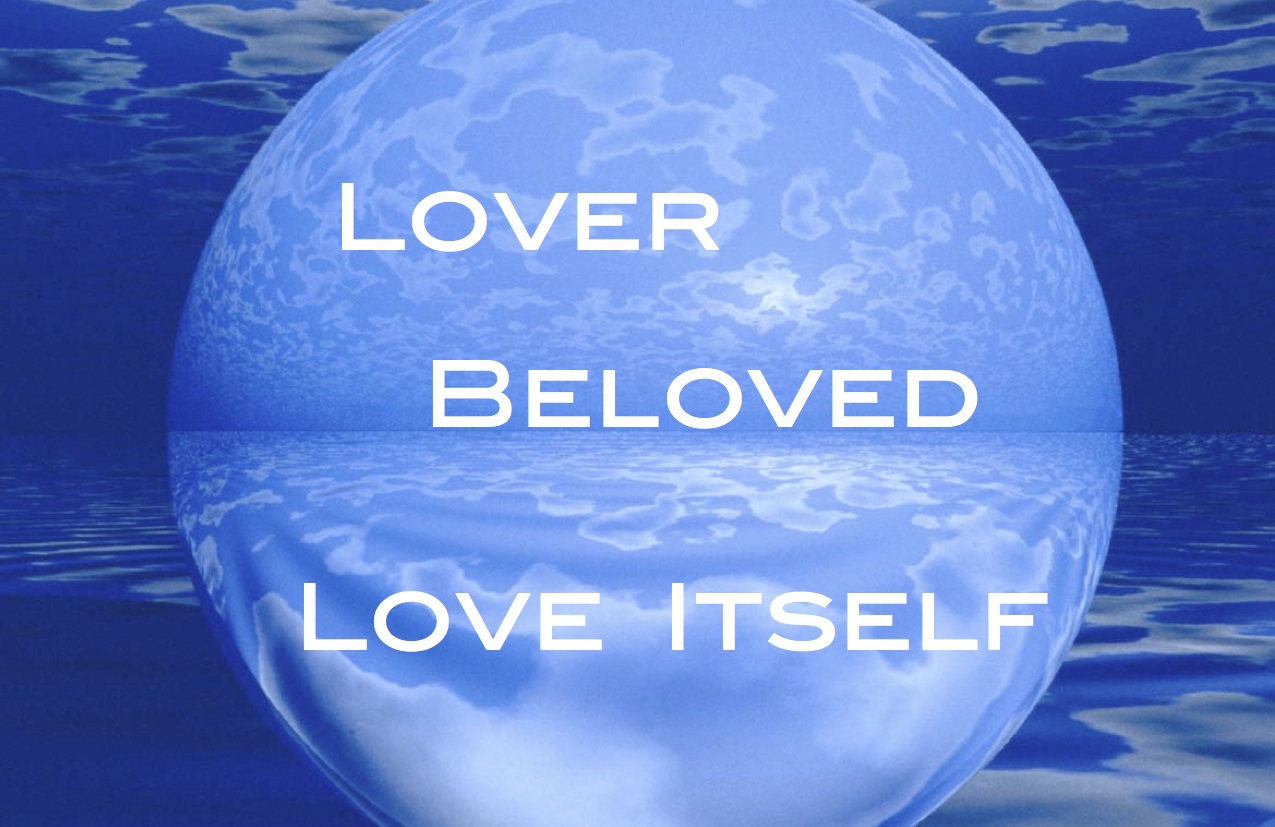
            Augustine’s metaphor for the Trinity is that

            God is:  Lover, Beloved, and Love itself.  

            May we learn to walk humbly with that love.

PREPARING TO PREACH ON GOOD FRIDAY. Searching beyond the talk of sacrifice to see the Good News.

The Church’s Good Friday obsession with talk of  “sacrifice for sin” has been breed into the bones of this particular preacher.  I have been trained to speak the language of the Church.  I know full well the many doctrines of atonement that have been proposed to explain the reasons Jesus died upon a cross.  I’ve been studying the historical context and the theological consequences of Jesus’ death for more years than I care to admit.   Yet every year, I find myself wanting to book a vacation or call in sick so that I can avoid the awesome task of preaching on Good Friday.

             I’ve put it off tackling the Good Friday texts as long as I dare.  So today, I picked up my copy of “The Last Week” by John Dominic Cross and Marcus Borg, together with my copies of John Shelby Spong’s “Resurrection: Myth or Reality” and “Jesus for the Non Religious” and spent the day in pursuit of a sermon.

            What follows is not the sermon I will preach on Good Friday, but rather, the notes I made to remind myself not to fall into the trap of talking about the events surrounding Jesus’ death in the way I was trained to speak of those events.  I offer up my notes hoping that those who are engaged in the struggle of grappling with how to talk about the cross in the 21st century might find some solace in a fellow struggler’s ruminations. 

            For those of you who don’t have to come up with a sermon for Good Friday, I offer these notes as my humble attempt to see beyond the rhetoric about the cross to the Good News.

            As always I am indebted to Dom and Jack for their scholarship. 

    There are many ways in which our focus upon the cross is disturbing.   Not the least of which is the way in which we as Christians tend to talk about the crucifixion as Jesus’ passion.  I have always thought it a tragedy that we should describe the events of Jesus’ crucifixion as Jesus’ passion. I’ve always understood talk of an individual’s passion to be concern with those things that people lived for. And so to insist that Jesus’ lived to die a horrible death might sooth those who seek to turn Jesus into some sort of preordained blood sacrifice.

            But for those of us who look to Jesus in search of the face of God, such talk seems is indeed a crime against divinity. For what kind of petty, sadistic god would engineer the birth of, foster the life of, and then engineer the death of a beloved child. Surely such a god is no more than a wicked illusion of our own making.

            I wonder what Jesus himself would make of the god we have created. I wonder what Jesus himself would make of our Good Friday commemorations? I suspect that if Jesus is anything like the accounts of his life suggest, he would be mortified, and I mean that literally…I think that Jesus would be mortified …mortified ie shamed to death…of what has become of his life’s passion; for if Jesus’ was passionate about anything, he was passionate about life. Jesus declared, “I have come so that you may have life and live it abundantly.” Jesus’ passion was about living. Living fully, abundantly. 

            Jesus passion was about a world where everyone could live life fully and abundantly. Jesus went from town to town urging people to live. Jesus struggled to free people from their narrow understandings to, open themselves to the wonders of creation, and to praise the Creator who he called Abba, in ways that honored God by loving. Indeed, Jesus defined Abba as LOVE itself.

            Jesus was so in tune with this LOVE that he was able to say, “I and the Abba are ONE.” Jesus embodied LOVE.

            I believe that Jesus was so open to the power of the LOVE that is God that he was able to live his life fully without fear. I believe that Jesus wanted more than anything else for his followers to be so open to the power of LOVE that is God that they too would live their lives fully without fear. I believe that that’s what Jesus meant when he said,   “I have come that you might have life and live it abundantly.”

            I believe that Jesus lived life abundantly and that means that he loved abundantly and without fear.  Jesus was so open to the power of LOVE that is God that Jesus would not let the powers of darkness stop him from loving and living fully. The kind of LOVE that Jesus embodied and taught has no boundaries.

            No darkness, no power, no fear, not even death can limit the power of LOVE. For if LOVE is limited by death, then love will always be qualified and quantified.

            That Jesus was willing to LOVE without boundaries came at great cost to himself. But Jesus was willing to pay that price to show us the way; the way to LOVE without limit, without fear, without boundaries.  LOVE without boundaries is abundant life.

            That Jesus’ LOVE endured the worst that the world could send his way, that Jesus LOVE was for all the world, dead and buried, and yet bursts free from the grave, bears witness to the power of LOVE.  That Jesus LOVE could not be destroyed, not even by the thing we fear the most, death itself, saves us from the need to fear death. For Jesus has shown us the way and we can live abundantly lives that are free from the fear of death. Because Jesus has shown us the way we are free to live fully, love extravagantly and be all that we were created to be.

            Jesus taught us that life without fear freed us from the powers of darkness that enslave the world. Life without fear is the first step toward justice.  And justice and not violence is the way to peace. And peace is God’s will for creation.

            The early Christians stood out in the world for a reason.  Those first Christians were called followers of the Way. The Way that Jesus taught them was the path to peace through justice. Jesus called us to usher in God’s reign of peace in the world by seeking justice for all of God’s creation. For justice and not violence is the way to peace.

            Jesus was so passionate about his belief that living life abundantly, without fear would lead to justice that in turn would lead to peace on earth that he was willing to live his life as the embodiment of the LOVE of God. Jesus died not for our sins, but to show us the way. To show us that God’s ways are not our ways: that our ways of greed, injustice, and violence lead only to war and death. But God’s ways of love, grace, and justice lead to peace and life.

            Jesus believed so passionately in the ways of love, grace, and justice that he was willing to live a life that embodied love, grace and justice so that all the world could see the way to peace and abundant life. And that leads me to the other thing that disturbs me about the way so many Christians talk about the crucifixion.

            That we should look upon the cross and see only the symbol of our personal salvation is a travesty that fails to see the magnitude of Jesus life and witness. How can we fail to see the truth that Jesus life and witness were so powerful that death could not contain them is?

            Why do we find it so easy to forget that in Jesus life and witness those first followers of the way were so moved by the power of Jesus life and witness that when they looked upon the cross they saw the Christ, the anointed one, the very face of God on earth?

            Does our preoccupation with our own personal salvation blind us to the reality of Christ?

            We need to broaden our vision.

            We need to see Christ crucified in order to see the terrible reality that Christ continues to be crucified over and over again.

            For just as surely as Christ died upon the cross, those who follow the ways of Christ, the ways of grace, of justice and peace, those who embody Love, continue to be tortured, battered, abused and hauled up upon crosses and executed by the forces of darkness, violence and death.

            The crucifixion didn’t happen once and for all, way back when. Christ is crucified over and over again as the ways of greed, violence, war and death exact their punishment on the innocent victims of the world.

            Christ is crucified all over again when calls for peace through justice go unanswered.

            Christ is crucified all over again in the countless deaths that are claimed by our lust for power and quest for stuff.

            Christ is crucified all over again when creation, scarred and wounded is poisoned by our arrogance and greed.

            Christ is crucified again and again, when we fail to see the face of God in our sisters and brothers of every clan and race.

            Jesus was passionate about his desire that we should have life and live it abundantly.

            Jesus was passionate that the way to achieve abundant life for all of God’s creation was through justice because justice is the way to peace.

            Jesus was executed precisely because the ways of justice and peace threatened the ways of peace through victory.

            The powers that be sought to conquer their enemies rather than love them; to vanquish and kill their way to a peace that could only be maintained through injustice and was only peace if you could number yourself among the conquerors, the victorious, the strong, and powerful. And no peace at all if you were among the weak and powerless.

            Jesus took a stand on the pathway that leads to peace.  And the powers that be nailed him to a cross believing that his death would ensure their power.

            But Jesus life and witness were so powerful that in Jesus people saw the face of Christ, and death could not and will not contain Christ. The powers of darkness will have their day.

            But not even death can contain Christ.

            For Christ comes again and again and is embodied in those who work for peace through justice, grace and love.  And that dear sisters and brothers is the Good News of Good Friday.

            Not even death can contain the life and witness of Jesus who is the Christ the very face of God in our midst!

            May God continue to dwell with us so that we too can bear the face of Christ to the world.

            The gift of life is ours.

            Live it abundantly.

            Let all the world know that we are Christ’s by our love.