A Creation Open to the Future: Jürgen Moltmann

 “In border zones between faith and science, when faith encounters series science it requires no defense, but only interest and curiosity.  The question about God and the question what holds nature together are not wholly divergent questions and they are not controversial.”   I will confess that Moltmann often hurts my brain and so I must read him carefully and listen attentively.  But he is always worth the effort.  He always sends me off on tangents I would never have discovered without his prompting.

Here, Moltmann insists that theology does not call into question the results of scientific research, but theology does set these results in the context of wider horizons of interpretation because theology has different questions.  

EMERGENCE CHRISTIANITY: Phyllis Tickle

The term Emergence Christianity names a conversation. One of the leading thinkers in this conversation is Phyllis Tickle.  PHYLLIS TICKLE, founding editor of the Religion Department of PUBLISHERS WEEKLY, the international journal of the book industry, is frequently quoted in print sources like USA TODAY, CHRISTIAN SCIENCE MONITOR, NY TIMES as well as in electronic media like PBS, NPR, THE HALLMARK CHANNEL, and innumerable blogs and web sites.  Tickle explores the contours of the current Emergence Christianity conversation.

God and the Evolutionary Mind: The God Who Beckons

Sister Joan Chittister, O.S.B. What does evolution have to tell us about God?  Speaking in April 2012, Sister Joan explores the emerging connections between science, religion and spirituality to find new ways of speaking of about God. The God we know in 2012 is not the God we knew in years past.  We have all known and moved beyond many Gods. As our images of God fail us, we turn to the MYSTERY of God that no one wants: God the fullness of BEING.

Gretta Vosper

Canadian Progressive Christian author Gretta Vosper will be our guest at Holy Cross in Newmarket the weekend of Nov.30/Dec.1/ 2012 

Click here to view video of Gretta’s presentation at ideacity 2012

The Search for Jesus

Surviving Progress

BBC4’s excellent documentary exploration of “progress”.  What is progress? What is sustainable progress? Are we in a “progress trap”? These are issues that impact our daily lives and yet our endless quest for progress leaves us so little time to explore why we are working so very hard to progress. This film is well worth the investment of time, if only to make us pause to ask ourselves if progress is all it’s cracked up to be.

DABHAR and the ISNESS of GOD


Tomorrow, I will get into my car to begin the nearly three-and-a-half-thousand kilometre journey to Vancouver.  When people ask me why I’m driving so far instead of flying, I tell them it is because my sabbatical affords me the luxury of taking my time. But I suspect the real reason has something to do my love of this immense land in which I have the pleasure of living. From behind the wheel, I will have the freedom to explore just a small part of Canada and I can hardly wait to get beyond the familiar routes of my day-to-day life and out on to the open road, knowing all the while that in the far off distance, beyond the rocks and trees of Ontario, the open expanse of the prairies lie the mountains.  I will linger in the mountains before making my way to the Vancouver School of Theology, on the grounds of my alma mater the University of British Columbia, where I will spend six glorious weeks reading and reflecting upon the many emerging connections that are happening in progressive christian theology. So, filled as I am, with anticipation of all that tomorrow promises, I am also filled with memories of other trips into the splendour of creation.

When I was a student in the Religious Studies department at the University of British Columbia, I decided that if I was ever going to be able to understand religious practices that I would need to do more than simply study them from an academic perspective.  Longing to understand more about Buddhism I decided to learn how to meditate. I went to a Buddhist retreat centre to try to learn the fine art of meditation.  While I learned a great deal in the process of learning to meditate, I found the experience of meditation to be very frustrating.  I’m drawn to ideas, and reading, and studying.  I love roaming around in the words that have been strung together by scholars, or historians or theologians, or philosophers or psychologists or even novelists. I thrive on the written word and so the scarcity of words that the discipline of meditation demands can often frustrate me.

I remember talking to a good friend of mine about the trouble I was having learning to meditate. Bryan had travelled all over the Far East and was an avid practitioner of transcendental meditation. He sympathized with my dilemma and suggested that perhaps my particular spiritual quest would need to be one that entailed letting go of words so that I could move beyond words.

I remember being dumbfounded by the idea of ever being able to let go of words. But Bryan insisted that unless I moved beyond words, I’d remain frustrated by my attempts to learn any form of meditation. I confessed that I had absolutely no idea where to begin. Bryan said that my basic problem was wrapped up in the weakness of my right mind. Before I could take offense, Bryan went on to explain that I was primarily a left-brain kind of gal. Bryan insisted that I needed to learn to develop the right hemisphere of my brain.

Even though I was familiar with the theories about right brain verses left brain, I had absolutely no idea about how to go about changing what I thought was the unchangeable reality that my left brain which is the area responsible for verbal and cognitive skills is the hemisphere that I tend to rely on rather than the right brain wherein lies the artistic, playful side of my nature.

I like words. I like the way words sound. I like the way the way words look. I like the meanings of words. I love the history of words. I love putting words together.    I’m called to a profession that is all about words. So, asking me to move beyond words is like asking me to give up my lifeblood. But Bryan was determined to move me beyond words and made me promise that I’d meet him at his workplace the very next day.

Bryan is a pilot; a helicopter pilot. Bryan also knows that I’m afraid of heights and although I’ve conquered my fear of flying, I’m partial to fix-wing aircraft. Helicopters make me more than nervous; helicopters terrify me. Most of my fear of helicopters is Bryan’s fault. While Bryan was studying to fly helicopters he would share with me all of his newfound knowledge about helicopters. One thing stood out: helicopters are unreliable. The best mechanic can safety check a helicopter and certify that it is perfectly safe to take off and still the helicopter can malfunction and cause the pilot to have to land immediately.  So, I wasn’t too crazy about meeting Bryan at work. But who am I to argue with a guy who is determined to develop my left brain.

That’s how I found myself hovering over the mountains of North Vancouver in a small helicopter that for some reason had no doors. I was strapped in and Bryan assured me that there was no way that I could fall out but there was something about all that fresh air that seemed a little too close for comfort. So I held on for dear life as Bryan headed North towards Garibaldi Mountain. As Garibaldi slipped out of followed by Blackcomb and Whistler the sheer beauty of all that lay before me filled me with such awe that my mind struggled to comprehend the splendor my eyes beheld. This of course was my left-brain on overdrive struggling to find words to describe the experience of my senses. It wasn’t until I heard Bryan’s voice through the crackly headset that I realized that rather than moving beyond words, my mind was flooded with words.

I asked Bryan where we were going and he pointed to a place on the northern horizon and told me that we were going to put down on the side of a mountain in a place that he knew that I would love. As we’d long since passed the boundaries of my ability to recognize the mountains by their shape, I turned to the map of the Bastion Range but could not read our location. Bryan motioned to a point in the distance and indicated that it would be there that he would land.

As we hovered over the spot, I wondered how he’d manage to land, when through the headset Bryan explained. It was too dangerous to actually land.  Bryan would hover inches from the ground and if I was willing to go where few humans had ever been, I would step out of the chopper and huddle down on the ground as Bryan swooped back up into the air out of sight so that I could be alone in a place where Bryan was sure I’d find no words but one.

I was relieved that Bryan hadn’t explained all this while we were still on terra firma because I would never have agreed to the journey. But out there the appeal of the Alpine meadow perched on a mountainside was more than I could resist.

As the ground approached, I became convinced that I was about to die, but I was much younger then and far more reckless, and in seconds, I was hugging the earth and feeling the whoosh of the chopper as Bryan climbed. I knew that he’d be back in about 5 minutes, but as the sound left, it was replaced by the roar of a silence I’d never heard before. I stood up in time to see Bryan disappear behind the summit and discovered that I was literally on top of the world.  I’ve rarely tired to put into words what happened next.  I resisted doing so for years.  I think out of some sort of belief that in trying to put it into words I’d rob it of its, its what, that’s just it, I don’t know what……Well I do know, I just don’t know how to say it.

Standing there looking out at what seemed like all of creation right there before me. Looking down at the vast valley below and up to the summit I could almost reach out and touch, blanketed by a sky that I was convinced I could walk out upon, because so much of it appeared to be below me and not above, my senses were overwhelmed.

I was alone and yet I knew I was not alone.

I’d like to say that I was conscious of a presence but that’s not really how it was.

Words don’t do it justice.

I was surrounded by it.

Not “it” really but “is”.

“Is” is about as close as I can come to describing it.

 I was in the presence of, or surrounded by, or overwhelmed by, our upheld by or embraced by or touched by or loved by ISNESS.

            GOD IS TOO SMALL A WORD TO DESCRIBE THIS ISNESS.

But there in the presence of all that IS, I had no need to describe IS, it was enough to simply be.

All words, and thoughts slipped away and it was enough to just be.

To be in the presence of BEING.

            ……….

It’s more than beyond words, but as I try to explain what I felt on that mountainside, I’m struck by the fact that our ancestors speak of this ISNESS as YAHWEH…I AM WHO AM.

The verb “to be” is the very name of the God who is the source of all BEING.

The clearest way that I can point to and say “there that’s it that’s the pathway where you will meat this ISNESS” is to point to creation itself and say there, there right there in the creation of the Creator you will discover all that you need to know this ISNESS.

Standing there in the presence of ISNESS I could feel it.

There was no stillness except in me.

I was absolutely still except for the breath breathing in me.

All around me I could feel the energy of the meadow, the movement of the mountaintops that lay below me, and the dance of the sky, and the Breath of it all caressing me, holding me, touching me, holding me, moving in me, loving me.

As I loved it all, I could feel the tears rolling down my cheeks, taste them, as the spilled upon my lips.

I sobbed with delight.

As the WORD itself spoke to me through all that IS.

The Hebrew word in Genesis and in the first chapter of the Gospel of John that we translate as the “WORD of God” means so much more than our word, WORD can capture.

For us words cannot convey what the ancients spoke of when they tried to describe the creative energy that speaks into being all that is. The voice of God that says, let there be light and so it was IS more than our word WORD or words about the WORD can express or convey.

The Hebrew word that the ancients used is DABHAR and it literally means:  “word and deed”.  For the very utterance by the Creator of all that IS, is in and of itself a compelling creative energy.

THE DABHAR, then is the compelling force of creative energy that IS. So, we often describe it as the WORD, in all capitol letters.

For in the beginning was the WORD and the WORD was with GOD and the WORD was GOD. For GOD DABHAR light and it was, it was Good.  GOD DABHAR the sky and DABHAR the waters and the earth below and it was good.

God went on Dabharing and Dabharing and this compelling creative word and deed that is God called forth all that is or ever shall be and it is good.  We live and breathe and have our being in this very ISNESS that is all that IS and ever shall be. This Creation IS, and in this ISNESS we are held, and touched, and loved, and moved to be all that we are.

Can you hear the verb “to be”? Can you feel it?

When all words fall away it is the WORD that remains. The very DABHAR of our GOD who IS.

Creation is the sacred WORD of God.  ALL that IS is in GOD.

If you want to know God you can catch a glimpse of God in all that God has made. Creation is the sacred DABHAR, the WORD AND DEED of GOD.

As part of creation each of us is DABHAR, for the WORD became flesh and dwells with us.  You are God’s WORD and DEED.  God speaks in with and through creation and so God speaks in with and through you.

The great Christian mystics speak of their experiences of God by pointing to creation.  Hildegard of Bingen says, “The Word is living, being, spirit, all verdant greening, all creativity.  This Word manifests itself in every creature.”

Meister Eckhart says, “Every creature is a word of God and is a book about God.” Creation itself Eckhart describes as the primary scripture, a Bible.

Our spiritual task is to get out of its way long enough that we might be filled with it and go about our task of healing, celebrating, and co-creating. For DABHAR the WORD wishes to incarnate us.  Let the DABHAR the WORD become flesh and dwell among us.

Hear words as we begin to try to translate the New Testament in more Hebraic terms:

            In the beginning was the DABHAR the Creative Energy:

            The Creative Energy was with God

            And the Creative Energy was God.

            It was with God in the beginning.

            Through it all things came to be,

            Not one thing had its being but through it,

            All that came to be had life in it

            And that life was the light of persons,

            A light that shines in the dark,

            A light that darkness could not overpower…

            The DABHAR, the Creative Energy was the true light

            That enlightens all people;

            And it was coming into the world.

            It was in the world

            That had its being through it,

            And the world did not know it…

            But to all who did accept it

            It gave power to become children of God…

            The Creative Energy was made flesh,

            It pitched its tent among us,

            And we saw its glory,

            the glory that is its as the only Child of the Creator,

            full of grace and full of truth.

Creation itself is a sacrament.  Creation itself is the primary sacrament.

As I partook of that sacred sacrament on the mountainside, I never wanted it to end.   But as the chopper came into view, I was keenly aware of how glad I was to be able to return to the world. Bryan insisted that he’d only been gone for five minutes but in those five minutes all of eternity had come into view. As we sailed passed mountaintops, I wept for the sheer joy of weeping. Long after the hum of the choppers noise subsided in my ears I could feel the ISNESS breathing in me as Bryan and I drove through the streets of Vancouver. All around me the beauty of the world was so clear, and I knew that God really does love it because I had a sense of why.

14 billion years is the inkling we have of the age of the universe. 14 billion years of creation that we know of, coming together to create all that IS now here in this place, in you and in me.

This ISNESS, this Creation is the original blessing that is life. You don’t need to travel to a mountaintop to see it. Wandering out into creation, the DEBHAR of GOD is not just speaking, God is shouting, declaring God’s love in the splendor of the leaves whose vibrant colours positively sing out I love you! Standing in the presence of the many children of God, you can almost taste God in the sacrament of DABHAR that each person is. The ISNESS is here all around us, breathing in with and through us, for the WORD has become flesh and dwells with us.

            Let all creation sing out with joy!

I am indebted to Mathew Fox whose book “Original Blessing” provided me with words to express the inexpressible!

The Doctrine of Original Sin versus the Teachings of Jesus

Given the choice between the doctrine of original sin and the teachings of Jesus, I’m with Jesus! 

For centuries the church’s doctrine of Original Sin, has defined human nature as inherently sinful.  We are born cursed by the first sin of Adam. Born, some would insist, of bodily sin. Somehow the doctrine of Original Sin, permeates our understanding of the very act of procreation, and in the minds of too many, tainted the very idea of sex with sin. We are born of sin, into sin, and as such must die to our sins.  So, we wash away our sins in the waters of baptism and are reborn as forgiven sinners. For years and years this has been the modus operandi of the institutional church.

This predominant doctrine of the church does not fare well when it comes to Jesus. Jesus knew nothing of Original Sin. Jesus was a good and faithful Jew. Original Sin is not Jewish. Original Sin is not in the Bible. For a good three-hundred years after the resurrection, the church had no doctrine of Original Sin. Today, Orthodox Christians have no doctrine of Original Sin. And yet the Roman Catholic and Protestant denominations have built their institutions on the Doctrine of Original Sin. I dare say that for a good many of us, our very psyche’s have been shaped by the doctrine of Original Sin. Most of us relate to God, as sinners in need of Grace. While there is no doubt that humanity is indeed sinful, I’d like to suggest that we look to the teachings of Jesus, and the ancient traditions of Christianity to recover a sense of the goodness of creation.

We are, as the stories handed down by our ancestors insist, created in the image of our Creator, and we are good. We are as Jesus insisted, loved and blessed. We are as the letter to the Ephesians declares, “God’s work of art” We are as the saints of old have known and written, “God’s delight.” We are as science proves over and over again wondrously made. 

Every day as we learn more and more about creation and our place in it, we know that the ancient nomadic tribesmen of the Middle East got a few things wrong. There was no pristine human state. No time when humans were perfect. There was no fall from grace. The story of the fall is just that, a story told by an ancient tribe to try to explain their relationship to their Creator. Yes there is much truth to be learned from the story. But we cannot learn the whole truth from this ancient tale and we must not base our image of ourselves on this story.

We are wondrously made. We have learned so much down through the centuries and if we are to continue to follow the teachings of Jesus then we “must love God with our whole heart, with our whole soul, and with our whole mind.” We cannot check our brains at the door and don the persona of those “in bondage to sin” who cannot free themselves. 

We have learned much about the cosmos over the centuries and that knowledge, despite our worst fears, does not diminish God. The more we learn about the cosmos and our place in it the more we learn of our Creator and the more we come to realize that it is good. 

We live in a post-Darwinian world. We know about evolution. We know that humans have evolved and are continuing to evolve and this miraculous reality is to be celebrated and not feared. Creation is an ongoing reality. “All of creation has been groaning in one great act of giving birth.” 

But sadly for some, it’s as if the Creator is throwing a marvelous banquet, and we are so preoccupied with our misunderstandings and distractions that we are refusing to attend. It’s long past time to free ourselves from the doctrine of  original sin and embrace the sacredness of humanity.

The universe itself is full of grace. It’s time to open our arms to the embrace of the One who is, was, and ever more shall be, the One who lives and breathes in with and through us. The force that permeates the cosmos. We can hold on to our wounds or we can let them go and move on.

I’m not saying that there is no evil in the world, or that we are without error. But like Dr. Martin Luther King I believe that “the moral arch of the universe bends toward justice” and that standing on the shoulders of all those who have gone before us, creation has the potential to evolve. As part of creation we have the potential to evolve, so that each generation does a little better than the generation before. That means taking responsibility for our mistakes.  Confession is good for us. We can’t learn from our mistakes unless we confess them. We can’t heal from our wounds if we don’t know what they are. We can’t develop if we don’t take a look at our shortcomings. We can’t simply let ourselves off the hook by saying it was ever thus, “We are by nature sinful.” and then keep doing the same things over and over.

Jesus’ life, death and resurrection calls us to do the work of improving our relationships with God and with one another, and to celebrate the goodness, the beauty, the grace, and the love that permeates creation.

There’s no time to wallow in our unworthiness. The banquet of blessings is well underway! It’s long past time to celebrate the blessing that Creation is. We’ve wasted enough time wallowing in original sin. It’s time to stand up and look around us at the original blessing in which we live and breath and have our being. 

We are wondrously made! It’s time to embrace our Creator’s work; it’s time to embrace our humanity!

 Re-reading Matthew Fox’s “Original Blessing”, I am reminded that although the doctrine of original dominates so much of Christianity theology and practice, there has from the very beginning been a splendid chorus of alternative voices who have heralded our Original Blessing.  Contemporary voices are lending their voices to the chorus as we open our minds to the wonders that surround us in the cosmos.

The WORDS of GOD – Catherine Faber

From desert cliff and mountaintop we trace the wide design, 
Strike-slip fault and overthrust and syn and anticline… 
We gaze upon creation where erosion makes it known, 
And count the countless aeons in the banding of the stone. 
Odd, long-vanished creatures and their tracks & shells are found; 
Where truth has left its sketches on the slate below the ground. 
The patient stone can speak, if we but listen when it talks. 
Humans wrote the Bible; God wrote the rocks. 

There are those who name the stars, who watch the sky by night, 
Seeking out the darkest place, to better see the light. 
Long ago, when torture broke the remnant of his will, 
Galileo recanted, but the Earth is moving still 
High above the mountaintops, where only distance bars, 
The truth has left its footprints in the dust between the stars. 
We may watch and study or may shudder and deny, 
Humans wrote the Bible; God wrote the sky. 

By stem and root and branch we trace, by feather, fang and fur, 
How the living things that are descend from things that were. 
The moss, the kelp, the zebrafish, the very mice and flies, 
These tiny, humble, wordless things — how shall they tell us lies? 
We are kin to beasts; no other answer can we bring. 
The truth has left its fingerprints on every living thing. 
Remember, should you have to choose between them in the strife, 
Humans wrote the Bible; God wrote life. 

And we who listen to the stars, or walk the dusty grade 
Or break the very atoms down to see how they are made, 
Or study cells, or living things, seek truth with open hand. 
The profoundest act of worship is to try to understand. 
Deep in flower and in flesh, in star and soil and seed, 
The truth has left its living word for anyone to read. 
So turn and look where best you think the story is unfurled. 
Humans wrote the Bible; God wrote the world. 

                                                                   — Catherine Faber

WISDOM: SEEKING the FACE of GOD

Sophia the Greek word for Wisdom is also the name given to the aspect of God that was present at the moment of creation. As our knowledge continues to increase it becomes more and more difficult to grasp Wisdom who dances in and out of our bits of knowledge, refusing to be confined by the limits of our sight. 

As our knowledge of the vastness and splendour of creation increases, the smallness and narrowness of our images of the Divine begs us to open our minds to a more inclusive quest for the Face of God. Our theologies and creeds will be eclipsed by our wiliness to join in Wisdom’s sacred dance!

Astro-physicist Brian Cox offers a new creation narrative to match the wonders of the cosmos as he seeks the Face of God.

Tangible-atate the Gospel

Tangibile-atatin the Gospel for Mamma Eternal

One of the joys of being on sabbatical is the opportunity not to preach. I have been a preacher for 13 years. Which means that almost every week I have focussed upon writing a sermon. The drive to dig deeply in order to come up with something to say on Sunday morning is a focus that I both love and hate because it is both joyful and painful. All too often, I find myself sounding like myself. The break from preaching and the need to be creative on demand has allowed me the opportunity to wander off in directions that the weekly sermon demands would never allow the time for. Discovering new forms of expression is marvellous. 

I came across James Forbes via the Living the Questions DVD adult education program and I’ve been meaning to seek him out. His way with words intrigues me. Take a look at this TED talk from 2008 in which Forbes preaches about the Charter for Compassion.  He has a way with words and his phrases break the hold! “Mamma Eternal” is a keeper! I can hardly wait to use it in my own quest to “tangible-atate the Gospel”.

Wade in the Water

Sweet Honey in the Rock @ Koerner Hall in Toronto

The Divine Feminine – Joan Chittister

Sister Joan Chittister is a captivating speaker. In this video, recorded at Chautauqua last summer, Sister Joan examines pictures of God and the impact these pictures have had on our lives.

While Preachers Dutifully Ponder the Doctrine of the Trinity, Our Congregations Shrink???

This Sunday is Trinity Sunday.  In anticipation, preachers all over the world are dutifully pondering the Doctrine of the Trinity desperately searching for something to say to encourage their congregations.

Preachers will trot out tired old clichés conjuring up images of triangles, shamrocks around, or point to H20’s ability to appear as water, ice, or steam while still maintaining it’s unified essence. Or have you heard the one about the 3 blind men and the elephant in the room. That old chestnut is trotted out by many a desperate preacher struggling to put flesh on the doctrine of the trinity. But for the life of me I can’t see how 1 blind man touching the elephant’s trunk and presuming that there is a tree in the room, while a second blind man catching wind of the elephant’s ear is convinced that there is some sort of giant fan in the room, while a third man grabs hold of the tail and is sure that he has hold of a rope, helps you to conclude that just because they’re all sharing a room with an elephant you can now confess that God is indeed Father, Son, and Holy Spirit, one God, forever and ever amen. But all sorts of mental gymnastics will be exercised in the vain attempt to make some sort of sense of the doctrine of the Trinity!

On Trinity Sundays, mindful of the fact that trying to explain the doctrine of the Trinity usually leads to heresy: dusty theological books that have not seen the light of day since last Trinity Sunday have been poured over to ensure that the formula’s learned in seminary are repeated correctly and heresy scrupulously avoided. The imaginative among us have attempted to baffle our congregations with our theological intellect, the pragmatic among us have attempted to baffle our congregations with something akin to BS, while the desperate among us have simply tried to survive the Trinity Sunday hoping against hope that no one will notice that we haven’t a clue what we’re talking about.

Perhaps only dear old Dr. Martin Luther possessed the theological integrity sufficient to save a preacher from the perils of preaching on Trinity Sunday. So, before I launch, forth, let me remind you what the instigator of the Reformation had to say on the subject of the Trinity. Martin Luther warned that: “To deny the Trinity is to risk our salvation; to try and explain the Trinity is to risk our sanity.”

I will confess that Martin Luther had much more at stake, literally at stake, than I do, because the truth is that for centuries the punishment for heresy would have found many an ancient preacher burned at the stake. But while the death penalty for heresy has been lifted, the risk to one’s sanity remains.

Now, I will confess that when faced with a particularly difficult theological knot, I prefer to begin by quoting Jesus and not Luther, but alas Jesus remained silent on the issue of the Trinity. So, I did try to find something helpful in the words of the Apostle Paul. But alas, without some really amazing theological gymnastics that are beyond my abilities to comprehend, even the Apostle Paul remains mute on the issue of the Trinity. So keeping in mind Dr. Luther’s dire warning that to,  “To deny the Trinity is to risk our salvation; but to try and explain the Trinity is to risk our sanity.”

Let me remind you that the Trinitarian formula appears in Scripture only once, in Matthew 28, during what is called the Great Commission, when Jesus commands the disciples to go forth, baptizing in the name of the Father, and of the Son, and of the Holy Spirit. But the doctrine of the Trinity does not appear in the Bible

– The doctrine of the trinity, as we know it, was first formulated in the fourth century, by a couple of guys named Gregory and a woman called Marcrina.

– The doctrine of the Trinity was then developed over hundreds of years

– The doctrine of the Trinity was at the heart of several wars

– Thousands of Christians were killed because they came down on the loosing side of arguments over the doctrine of the Trinity

– No one has ever been able to adequately explain the Trinity

– Every explanation of the Trinity that I have ever come across includes some form of heresy

By the way, just so we’re clear, I rummaged through some of my previous sermons on the doctrine of the Trinity and I must confess that if this were the twelfth century, an angry mob would be stoking up the fires beneath my feet  because based on things I have proclaimed on various Trinity Sundays a charge of Modalism could very successfully be laid against me, as could a charge of Sabellianism. You might be interested to know, that more traditional preachers than I, will no doubt preach sermons this Sunday which will prove them guilty  of Arianism or at the very least Subordinationism. All of these heresies in a bygone age would have left us with a severe shortage of clergy in the church, as many of us would be smoldering at the stake for our crimes. Deciding who is right and who is wrong, who is in and who is out is a deadly preoccupation of humanity, a preoccupation that the church has not been able to escape.

So, with apologies to Dr. Luther, I’m going to go ahead and risk my salvation by declaring that the doctrine of the trinity is but a feeble attempt to comprehend the incomprehensible mystery of the very nature of our God.  We can echo all the creeds of Christendom with as much confidence as we can muster, and as enlightening as some of those creeds may be, they cannot begin to unravel the mystery of the creator of everything that ever was and ever shall be, nor can they fully describe the magnitude of the revelation provided in the life, death and resurrection of the one we call Christ, and when it comes to the power of the Holy Spirit, all our creeds together cannot tell the story of her wondrous beauty.

The doctrine of the trinity is just a tool to help us along the way, the trinity is not God, nor is God the trinity. The trinity is merely a way to speak of the unspeakable. And yet down through the centuries we have used the doctrine of the trinity as an idol and demanded that we worship the trinity as if it were God’s very self.

We have worried more about believing in the trinity than relating to the very One whose relationship the Trinity attempts to describe. For when it comes down to it, what we know of our God finds expression our attempts to describe God as a relational being. For what is the doctrine of the Trinity if it is not the declaration that God is Creator, Christ and Spirit, intimately connected as One; at God’s very core we find a relationship. This should be our first clue that any understanding of God must begin with relationship. Surely it is more important to experience God than to explain God. Surely it is more important to relate to God than it is to preserve a doctrine that has long since failed to describe God.

You’d think that after nearly 2000 years the Christian church would have learned to be more humble in its declarations about God. And yet, today, as we strive to learn more and more about creation, some things remain out of bounds. The church remains unwilling to revisit long established doctrines, choosing instead to insist that we simply believe, because what was good enough for grandma ought to be good enough for us. And if we should doubt the doctrine of the Trinity then all we need to do is study harder and we will eventually understand. And if we are unwilling to work at understanding the Trinity we should simply trust that folks much smarter than us have figured it out so we should simply stop questioning and simply mouth the words. Let the tired clichés and the worn out illustrations suffice, forget about our questions and simply drink the kool-aid and our doubts will somehow magically disappear. And so together we focus on believing what has been handed down to us. And for a great many people that’s good enough. All we really need to do is believe, to have faith and all will be well. But oh so many more of us have grown weary of the tired insistence on belief; you only have to think of the children missing from our churches to know that our doctrines are failing to engender relationship.

I’d like to be able to say, here just learn this and believe this and all will be well,  all we need to do is figure out more up to date methods to deliver the same old doctrines and your grown children will learn to believe, but  I too have my doubts.   You see I don’t believe that the point of a religion is to engender belief. I believe that the point of religion is much bigger than belief. For if a religion does no help you relate to God or to God’s creatures, or enhance your experience of creation, then religion is not life giving and all its doctrines are but fleeting attempts to deny death.

It is far more important to have a relationship with our God than it is to understand doctrines about God. In so far as the doctrine of the trinity helps us to relate to God then it can be said to be life-giving. When the doctrine of the trinity helps us relate to God’s creatures and to God’s creation, then it can be said to be life-giving. But reduced to a formula that we must believe the doctrine of the trinity runs the risk of inhibiting our experience of God and robbing us of a life-giving relationship with God and with the world that God loves.

I am convinced that the only way to ensure that the doctrine of the trinity remains life-giving is to free it from the confines of the past. Despite it’s fear, the church must re-examine its creeds and confessions, open up our dusty doctrines to the light of the 21st century so that those that fail to enhance our relationship to God and to one another can be given a decent Christian burial and those that nurture our relationship to God and to one another can thrive.

We need to prioritize relationship and experience over ancient creeds and doctrines, least our preoccupation with correct belief causes us to miss an encounter with our God.

Trying to understand the very nature of God, is, when you think about it actually an arrogant thing for simple creatures such as we. We cannot hope to understand the nature of God.  So perhaps the most faithful sermon on the Trinity is one that merely sniffs around the edges of the mystery, hunting for something closer to an experience rather than an understanding.  God is the elusive stranger.

Sometimes it is possible to identify God, before God gets away. But most of the time we only recognize God after God is gone, like the drifter who wants to tell you his story only you do not have time, so you hand him a dollar and walk away.  Or the woman with the tearstained face who disappears while you decide whether to ask her what is wrong; or the bewildered child whose mother scolds him for being alive and whose sorrowful eyes catch yours just as she drags him away. These are the strangers who lay claim to our hearts, although they make no claims for themselves.  In their presence we fail them.  It is only after they are gone that we know who they were.  That is why it is so easy for us to sacrifice them.  We did not know.  How could we have known?  Who expected Christ to show up looking like that?

Is it possible for us to attend to our peripheral vision, to see out of the corner of our eyes, to notice those faint sounds of birdsong in the background, to catch those elusive fragrances, that might well be God, the Holy One, coming to us in ordinary space and matter, longing for an intimate encounter?

Let us be ready to notice the Spirit of God in a burning bush, to turn aside for a moment in order to encounter the mysterious, intimate God who comes to us, so that in the power of the trinity we ourselves may be made holy!

            Heirs with Christ –  inheritors and distributers of all God’s love.

            There you see, I’m not suggesting that we toss it all away.

            Down through the centuries God has revealed so much.

            I’m simply pleading that we walk humbly with our God.

            And revel in the mystery.

In a dusty library years ago, I discovered a pearl about the Trinity, which I treasure. It came from St. Augustine, a 4th century bishop who helped to craft the doctrine of the trinity.

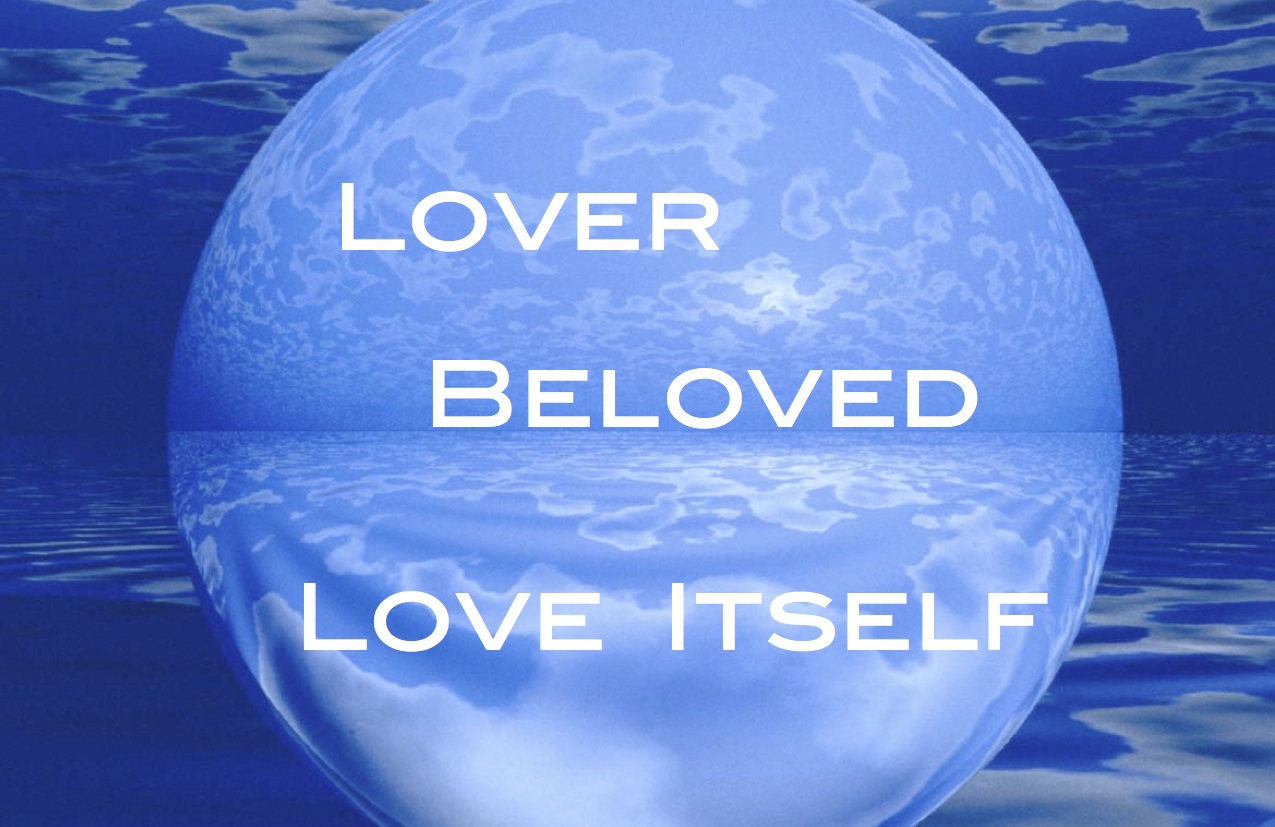
            Augustine’s metaphor for the Trinity is that

            God is:  Lover, Beloved, and Love itself.  

            May we learn to walk humbly with that love.

Beyond Tribalism – 21st Century Pentecost


Ideas gleamed from Clay Nelson, John Shelby Spong,

John Dominic Crossan and Marcus Borg

The splendid preacher Clay Nelson of St. Matthew-in-the-city, Auckland, New Zealand, opened me up to a new way of seeing Pentecost.  Nelson tells this lovely little story written by fellow Kiwi Judy Parker, entitled simply “The Hat.”

A priest looked up from the psalms on the lectern, cast his eyes over all the hats bowed before him.   Feathered, frilled, felt hats in rows like faces.  But there was one at the end of the row that was different. What was she thinking, a head without hat.  Was like a cat without fur. Or a bird without wings. 

That won’t fly here, not in the church. The voices danced in song with the colours of the windows.  Red light played along the aisle, blue light over the white corsage of Missus  Dewsbury, green on the pages of the Bible.  Reflecting up on the face of the priest.

The priest spoke to the young lady afterwards:  “You must wear a hat and gloves in the House of God. It is not seemly otherwise.”

The lady flushed, raised her chin, and strode out.

“That’s the last we’ll see of her,” said the organist.

 Later:  The organ rang out; the priest raised his eyes to the rose window.  He didn’t see the woman in hat and gloves advancing down the aisle as though she were a bride.            The hat, enormous, such as one might wear to the races. Gloves, black lace, such as one might wear to meet a duchess.  Shoes, high-heeled, such as one might wear on a catwalk in Paris.            And nothing else.

Now some people might ask, “Is this a true story?”  And I’d have to answer that this story is absolutely true!  Now for some that answer might not be enough and they’d want to know, “Did this actually happen?”  Well, I’d like to think so.  But I doubt that it actually happened. But whether it actually happened or not, most of us know that the truth in this story lies in the power of metaphor.

Metaphor, which literally means:  beyond words. The power of metaphor is in its ability to point beyond itself to truths beyond those that are apparent.  And the metaphor in this story points us to buck-naked truths about tradition, worldly power, patriarchy, hierarchy, orthodoxy and many more truths about the very nature of the church itself and religion in general.  And it doesn’t matter whether or not this actually happened or not. What matters is what we can learn about ourselves and our life together from this story.

The heroine in this little story demands to be heard as she puts all her listeners on notice that the Spirit of God is out of the box and wearing a hat.  The story of Pentecost is just as stunning.  Even though we’ve managed to pretty much domesticate the story by literalizing it and insisting that yes indeed Pentecost really did actually happen just as it is described in the Book of the Acts of the Apostles, the story of Pentecost refuses to play by our rules as the power of metaphor turns the Spirit of God loose on our silly notions about history.

Truth is as elusive as it is blatantly obvious and yet we continue to try to deny the paradox of truth. Truth is as colourful as the rainbows that stretch across the sky and yet we continue to try to limit the truth to the simplicity of black and white.             All too often truth’s refusal to fit into our neat little boxes causes us to deny the obvious truth in  favour of a truth of our own creation.

The story of Pentecost is a case in point. For decades historians, New Testament Scholars, and theologians have been telling us that the story of Pentecost is not history.  Like all sorts of stories about the origins of things, the story of the church’s birthday is shrouded in myth and legend. That doesn’t make the story of the church’s beginning at Pentecost any less true, it just means that it isn’t history.

The book of the Acts of the Apostles, was written by the same author who wrote the Gospel According to Luke. We have no idea who this writer was, and the name Luke does not appear on the early manuscripts. The name Luke was applied much latter, by something called “tradition”.  In those days ‘tradition” meant “the church”.  

The Acts of the Apostles represents the voice of someone living in a community at the turn of the first century.  The writer, let’s follow tradition and just call him Luke, the writer known as Luke writes a Gospel also now known as Luke, which tells the story of the life and times of Jesus as known by his community.           Luke also writes the Book of the Acts of the Apostles, which chronicles the story of the early followers of Jesus, who managed to hang together after Jesus was gone and established a movement that changed the world.

Luke writes his account of the founding of this movement out of the context of his community and addresses the needs and concerns of his community.          And in both the Gospel of Luke and in the Book of Acts, the writer makes it clear that he is writing to a character named Theopholous, which in Greek means, Lover of God. Luke addresses his writing to a lover of God and right from the beginning he confesses that he is writing so that you may have faith.  As lovers of God we read these ancient stories so that we may have faith. We do not read them so that we can know the history of events as they actually happened.

Marcus Borg suggests that in reading the stories in the Bible we must ask ourselves two important questions:  1) Why did the writers write the stories that they wrote?  and 2)  Why did they write them the way they wrote them?

When we ask those two questions about the story of Pentecost we begin to see all sorts of truths as we strip away the layers of tradition that have held this story captive to history for far too long. Why did the writer known as Luke write  the story of Pentecost and why did he write it the way he wrote it? 

I suspect that the answer to both of those questions begins to become clear when we pay attention to the story from the Hebrew Scriptures that is often told at Pentecost. Recorded in the Book of Genesis, the story of the Tower of Babel would have been a familiar one to the people of Luke’s community. The story of the chaos that ensues as a result of humanity’s hubris contains truths about tribalism that would have been as familiar to a first century audience as they are to a 21st century audience. 

The perils of tribalism which pits one people against another and one culture against another were ingrained in the religious traditions of the first century.     The writer of Acts uses the story of Pentecost to point to the truth of the Jesus experience. Their experience of Jesus with his radical ideas about a loving God, lead the early followers of the way to a new understanding of faith.          Empowered by Jesus full embodiment of love, the early followers felt compelled to share their experience. Faith did not have to be lived out in fear, even in the face of death. Being faithful was not about being exclusive or tribal, for love knows no boundaries. It wasn’t even about religion which is so often used by the powerful to oppress the powerless. Faith was not about purity but compassion, healing and justice. Faith didn’t need to be destructive if it heightened our awareness that the creation of which we are a part is an interconnected web.

Sadly over the years all too many Christians have seen the story of Pentecost as simply a reversal of the Tower of Babel story. But here we have so much more.      In the Tower of Babel  we have a story speaks to the origins of a kind of chaos that is the result of human arrogance. This chaos leads to disaster. And the response of the people is to adopt a kind of tribalism where eventually only one tribe becomes the chosen people. The chosen tribe then chooses to exhibit a kind of uniformity which defines who is in and who is out. 

Boundaries are established. The religious practice that emerges strives for order and uniformity.  Order is established and the faithful are encouraged to live within the rules. But in the Pentecost story the chaos and disorder is not created by humans but by God. The Pentecost story is about chaos and disorder; about God who is running amok. Boundaries are crossed. Taboos are broken.           Suddenly, like the rush of the wind young people have visions and elders have dreams; dreams and visions that threaten the established order.

Luke’s story speaks directly to his community which has become accustomed to a religion that is a product of its culture; where faith reflects the values of the tribe. Religion is used to give members of the community a sense of who was friend and who was foe. It played to their fear of others who were beyond the tribe. It grounded their xenophobia and ethnocentrism in righteousness.  It served as the glue that told its adherents who they were and who they weren’t.           Religion gave people an illusion of living in an orderly and predictable world.

Outside the boundaries of their religion was a place of chaos. Its inhabitants were judged to be demonic or subhuman. In the early history of Israel those who worshipped gods outside the culture were labeled idolaters. Identifying idolaters gave the faithful of the local religion a target for their contempt and hostility and someone to blame for their disappointments and failures. Along comes Jesus who challenges the status quo along with the powers that be who maintain order by force of might. Violence, greed, and force become the tools to the Pax Romana, which insisted that the way to peace was through force. First you conquer a people, then you wield your power over them to control them so that you can tax them and the status quo is the only kind of peace one can hope for.     And along comes Jesus who points to another way to peace through justice.             People want to believe they want to follow Jesus but their fearful of the chaos that might ensue.  Better the devil you know than the devil you don’t know.          Chaos is frightening.

Into that mix the writer of Luke offers his story of Pentecost which displays the Spirit of God at work in the midst of chaos. The followers of Jesus are calling their communities out of the constraints of the religious practices of their day. 

The Pentecost story reflects the early Christian understanding of Jesus as a leader who didn’t just address the Chosen People but who engaged the Syrophoenician woman, the Centurion, and the Samaritan leper.

Luke, in the telling of the story of Pentecost, already knew that Christianity had spread to the edge of the known world and to its very centre in Rome.    Christianity had already transcended tribe and tradition.  Jesus inspired a religion of the poor and the powerless without an enemy or enmity and yet inclusive in its membership.

Christianity was as outrageous as a woman who wore a hat, gloves, shoes and nothing else. Sadly, it didn’t take long for the early Christians to try to put the Spirit back in the box.

The story of Pentecost shows the Spirit of God out of the box, prancing about in the town square and intoxicating the people with the sheer beauty of her audacity.

Luke’s Pentecost story served to remind those first Christians of the Jesus call to diversity. That call to diversity has the power to contradict the power of the status quo of tribalism that was exemplified in the story of the Tower of Babel.

The followers of the Way are able to declare that in Christ there is no East nor West, no North nor South, no Jew nor Gentile, no man nor woman.

Luke has crafted the story of Pentecost that declares that in Christ there is no longer Parthians, Medes, Elamites, people from Mesopotamia, Judea, Cappodocia, Pontus, Asisa, Phrygia and Pamphylia, Egypt and the ports of Libya around Cyrene, nor even Romans.  All are one as Christ is One.

In Jesus the followers of the way are challenged to think beyond tribalism, to dream dreams and see visions.

Luke’s Pentecost story calls us to a similar awakening.

An awakening that begs the question:  What kind of Pentecost stories are we called to craft?

Can we 21st century followers of the Way produce Pentecost stories that will boldly declare that we are one with our Jewish, Muslim, Hindu, Buddhist, Sikh and Taoist sisters and brothers, and what about atheists, agnostics and all the poor and the powerless?

I hope that the audacity of God’s Spirit can call us out of our status quo religious practices that keep us from exploring the wonders of the chaos that lies beyond our established religious order.

Imagine a 21st century Pentecost where rather than speaking in languages that we’ve never understood before, we begin to listen to those who we’ve failed to understand before.

Imagine a 21st century Pentecost where Christians, Muslims, Jews, Hindus, Buddhists, Sikhs, Taoists, Baha’is and adherents of all sorts of native religions that we’ve never heard of begin to listen to one another. 

Imagine an audacious Spirit calling us beyond Christianity’s exclusivism.

Imagine a vision of Christianity that celebrates not denigrates the truths of the worlds great religions.

Imagine a vision of Christianity whose first impulse is to listen rather than speak; a Christianity that is willing to share its truths in a spirit of co-operation without an emphasis on conversion.

Imagine a vision of a church full of curious Christians, who share a goal of dialogue that seeks not just to create new Christians, but to learn from other religions so that we can become better Christians and those with whom we listen and speak might become better practitioners of their faiths.

Imagine a vision of Pentecost where the wind and the fire represent God out of the box.

Do we have the courage to strip ourselves of the trappings of status quo Christianity and venture out into the world free of the taboos of tradition? Do we have the courage to listen and learn from the truths of other tribes? Do we have the wisdom to embrace divinely inspired chaos?  Some dreams and visions have to be believed before they can be seen.

If the Reign of God is to be realized in all its chaotic splendour, we must put on a new hat, and strip ourselves of the ethnocentrism and chauvinism that cloaks our faith and walk brazenly down the aisle.

Open to the MYSTERY

“Infinity always gives me vertigo and fills me up with grace.”

 Bruce Cockburn


In pondering MYSTERY we are always indebted to those who have gone before us.

What follows relies on the work of Brian McLaren and process theologian James Murray

A while back, I went to a lecture given by Brian McLaren. Brian McLaren is one of the leaders of what is being called the Emerging Church Movement, which is a movement that is trying to articulate a new kind of Christianity for the 21st century. McLaren told us a story about a friend of his named John who lives in South Africa.

John is a very wealthy successful Zulu who belongs to a Pentecostal church that preaches what is called the prosperity gospel. This is movement that insists that if you have enough faith God will see to it that you prosper and become very wealthy. Well John belongs to a very large Pentecostal church in South Africa that has tens of thousands of member. John is a very wealthy and successful businessman.  And in John’s church if you are rich you gain entry to the inner circle of the pastor and you are called an Armor Bearer.

But after being involved as an Armor Bearer for many years John becomes disillusioned. John says,  “I’m rich but a whole lot of other members of the church who are good faithful people are poor.”  These folks have been doing everything the pastor has taught them to do and for some reason God just isn’t rewarding these poor folks with riches. The pastor keeps laying hands on them and they are not getting rich. It’s worked for me, but I just can’t figure out why it’s not working for them.” So John starts to have doubts about the prosperity gospel and he is deep in doubt.

A couple of years ago John comes to his friend Brian McLaren and he tells him that he has decided to put his faith to a test. John announces that he is going to read Richard Dawkins book the God Delusion. Now for those of you who haven’t heard or read about Richard Dawkins, he is an atheist who has written several books on the fact that God is dead or just an illusion and that people of the 21st century should just get over it. So, John says he’s going to put his faith to the test and read the God Delusion and put it all on the line.  John says that, “If I become convinced by Richard Dawkins, I will give up my faith and become an atheist.”

So John starts reading, and he’s just going to put it all on the line. It’s sort of a good Pentecostal test.  And John tells his friend, “Brian, I’m a good Pentecostal and I know how to hear the voice of the Lord.  And one morning I was taking a shower and the Holy Spirit spoke to me. And the Spirit said, “This man Richard Dawkins speaks the truth.”

So John says to his friend, “Brian what do I do with this? I know the voice of God and God has told me that Richard Dawkins is speaking the truth.”

Well John is a good businessman and he doesn’t have much formal education, but he wants to figure this out. And he says to his friend, “Brian I just had to live with this terrible paradox in my mind. That God has told me that Dawkins is speaking the truth. And months went by and I was in turmoil about this.” And then he said, “It gradually began to dawn on me that the God that Dawkins doesn’t believe in is the God that the missionaries brought to my people. And it was a white god and a colonial god and that god was used to justify putting all of my people in a position of subservience.” And he said that, “It gradually began to dawn on me that Richard Dawkins is killing a god who needs to be killed.” And he said, “The strangest thing happened after this, I found myself loving Jesus Christ more than ever. Because I realized that Jesus was trying to reveal another vision of God, a vision other than the God who kills and destroys and dominates and judges.”

In Jesus’ parable: “people never put new wine in an old wineskin. If they do, the new wine will burst the skin; the wine will spill out and the skin will be ruined. No, new wine must be put into fresh wineskins. People never want new wine after they’ve been drinking the old. They say, ‘We like the old better’.”

Jesus reveals a vision of a God who is beyond our tribal instincts and understandings; a vision of a God who is beyond our fears. And yet, all too often we prefer the old God better. We long for the supernatural being out there separate from the world who from time to time intervenes in the world; that old God who is out there and who can’t be known directly, but only believed in; that old God who sits waiting on a cloud for us to die so that he can judge us and forgive us and reward us. We like the old wine better than the new wine.  And we have these old wine skins so we try putting the new wine that Jesus brings in those old skins, hoping that they will contain it. But the new wine burst the skins and pours out all over the place.

It’s the 21st century and nobody uses wine skins anymore. Why last year when we toured the vineyards of Niagara we learned that nobody’s using cork anymore. The best of the new wine comes to us in screw-top bottles. We’ve moved on and we’ve learned all sorts of things about creation, and that knowledge of creation has expanded our vision of God in ways our ancestors could never have imagined. It’s time to let the old vision of God die.

It’s time to open ourselves to what Christ has and is revealing to us about a vision of God that moves beyond our fears; a vision of God that is reflected in the cosmos as we are beginning to understand it; a vision of God that enhances our knowledge of God and calls forth a spirituality in us that sustains us in our daily living; a vision of God that helps us to experience God.

By peeling back the layers of the tradition of the Church, by unpacking the generations of theological doctrine, scholars are beginning to see a vision of God that Jesus spoke of. The new vision revealed to us in Christ, is one that reflects the reality that, “God is in the world and the world is in God and God is more than the world.” This is a vision of a relational God; a God who is intimate with the world.

We may long for the all-powerful King God, who with the stroke of his arm imposes his will upon the world, but who among us can be intimate with such a god. Is such an all-powerful God even capable of intimacy or would it be like you or I trying to caress an amoeba.

The ancient mystics found in the wisdom literature of the Hebrew Scriptures the vision of God that Jesus lived and died to reveal. They found a vision of God with us, who is compassionate and directing, using our freedom and responsibility, and calling us to use these for the good of others as well as ourselves. A vision of God that emphasizes that, although God is always an important factor in what happens, God does not control history. God is in us and we are in God but we are also members one of another, and our lives are interwoven with the wider natural context of creation as well.

God’s power is relational power as opposed to unilateral power. Unilateral power is by nature coercive—imagine the old god, the cosmic moralist, and ruling like an absolute king. This image is of a God who gives, but does not receive; acts but does not listen; demands but does not compromise; this image of God makes spirituality difficult because it ignores our identities as God’s beloved creatures, it ignores our desires.

The vision of God that Christ reveals is of a God whose power is relational, a God who gives, but also receives, acts but also responds, has a vision but is open to change and transformation. Christ reveals an image of God who creates and gives freedom and creativity to creation. Freedom and creativity are intrinsic to each of us and relational power works to value that by offering a dream or aim to each of us. The future is created out of response and anticipation. The idea of relational power is dependent on diversity, actually welcomes diversity, and offers novelty to each nano second of experience.

Christ’s image of God affirms that God has a vision, appropriate to each moment of experience and, in the broadest sense, for the vast expanses of planetary and cosmic history. God is omnipresent, in all things so there are no God forsaken places. In each moment God presents the world with possibilities. God calls us into God’s dream of the future; a dream of peace and justice and peace for all God’s creation.

If we are in God then what we do matters.  What we do and who we are impacts God. What we do can limit God, but can never defeat God. For in each moment the dream is revised and offered back to us. We can refuse but God does not stop, for there are some who listen and they will guide us. God leads us by persuasion and Christ empowers us by expanding our freedom to be what God is calling us to be, and the Spirit lives and breathes in with and through us.

All of creation is interconnected and intimately related to the Creator.  This expansive vision of God cannot be stuffed into the old wine skins of the institution. New ways of worshipping, new ways of praying, new ways of understanding will move us beyond the old image of God which has soured and turned to vinegar in those old wine skins.

Images of God are but pale reflections of God. Worshipping images of God is a problem as old as time itself.  Such worship has an ancient name. It’s called idolatry. We are called to worship God, not a pale reflection of God. So, our worship will always be incomplete for we peer through a glass darkly. So let us worship with humility, trusting Christ to show us the way.  Let us worship together, mindful that our words and rituals will fail to capture the wonders and mystery of our God, but open to the possibility that together we might capture a glimpse of God or feel the touch of God, or hear the love of God, or recognize the gifts of God as we worship together.

Let us always be prepared to let an image of God die. For we are a people who claim the power of resurrection and we know that in death there is new life. God will come to us again and again, touching, caressing, nudging, persuading, cajoling, imploring, healing, soothing; sometimes shouting, sometimes whispering, often just embracing.

God will be who God will be.  YAHWEH.

Our images of God will come and go, but God remains steadfast. The new wine that comes to us in the life of Christ brings us a foretaste of the feast to come; a taste that reminds us of our connectedness to God and to one another; a sacred connectedness.

So let our prayers open us to the reality of that connection. Let our deeds reflect the confidence that our freedom to act can change the world. Let us be about ushering in the reign of God that Jesus taught. A reign of justice and peace, where each one of God’s children is treasured as God’s beloved.

Let us live with confidence trusting that God is the source of our being.

Let us walk together trusting that God is the ground of our being.

Let us be all that we were created to be.

Jesus said over and over again, in words and in deeds: “Do not be afraid.”

So let us have the courage to drink the new wine that Christ offers and if it tastes a little strange to our palates, drink again, let the flavor move us to a new understanding, a new way of relating, a new way of being.

Let us open ourselves to the reflections of God that are all around us – open ourselves to the God who lives within us.

The Ascension Never Actually Happened – Ascension is Always Happening

Leaving Behind the Miraculous Jesus to Welcome the Human Jesus

The celebration of Jesus’ Ascension is a church festival that I have always chosen to ignore. The ancient tradition that has Jesus floating up into the clouds stretches the credibility of the church to such an extent that I’ve always assumed that the less said about the Ascension the better. But last year I was challenged by a parishioner to try to make some sense out of the Ascension story so that 21st century Christians would not have to check their brains at the door should they happen upon a congregation that still celebrated the day. What follows is a transcript of my attempt to leave behind the miraculous Jesus in order to be better able to welcome the human Jesus down from the clouds. I am indebted to Bishop John Shelby Spong together with Clay Nelson of St Matthew-in-the-city for their liberating insights.  

Traditionally, on the 40th day after Easter, the church celebrates the feast of the Ascension. But because so few people in the 21st century are willing to come to church during the week, the Ascension is celebrated by the church on the first Sunday after the feast of the Ascension. Since I have been your pastor we have not celebrated Ascension Sunday. But as this particular Ascension Sunday follows so closely after Jack Spong’s visit with us, I thought that it was about time that rather than avoid the Ascension, I’d like to try to confront it.

Jack has been telling his anti-Ascension story for quite a few years now. Just in case you’ve never heard it or have forgotten it, let me remind you. It seems that Jack was speaking with Carl Sagan, the world-renowned astronomer and astrophysicist. Jack says that Carl Sagan once told him  “if Jesus literally ascended into the sky and traveled at the speed of light, then he hasn’t yet escaped our galaxy.”

With that said, let me just say, that the Ascension never actually happened. It is not an historical event. If a tourist with a video camera had been there in Bethany they would have recorded absolutely nothing. 

I know what the Nicene Creed says, “Jesus ascended into heaven and is seated at the right hand of the Father.” But like the members of the early church, I do not have a literal understanding of the scriptures. And so, as I do not understand the Bible literally, neither do I understand the Nicene Creed to be a literal interpretation of the faith. Like all creeds the Nicene, Apostles and Athanasian creeds are snapshots of theology as it was at a particular time in history.

We would do well to remember that the Creeds were developed to answer questions about the faith in a time when people understood the cosmos to be comprised of a flat earth, where God resides above in the heavens and located beneath the earth were the pits of hell. I know that the universe is infinite.  I also know about gravity. I also know that it is highly unlikely that Jesus had helium flowing through his veins.  I’ve flown around the world, and I can tell you that there is no heaven above the clouds. So, I can say with confidence that:  The very present Jesus of resurrection faith did not literally elevate into heaven while his disciples looked on.

The writer of the Gospel according to Luke and the Book of Acts are one and the same person. The same writer wrote the Gospel according to Luke to tell the story of the life of Jesus and the Book of Acts to tell the story of the Holy Spirit at work in the followers of Jesus.  Although we don’t know who the author was, we do know that he was not an historian. Neither Luke nor Acts are historical accounts. They are both addressed to a character named Theopholus. Theopholus is  Greek for lover of God. The books are addressed to the lovers of God, that’s you and me and the author makes it clear that he has written these books so that we, the lovers of God, can believe and have faith.  The books were written somewhere near the end of the first century. Somewhere between 50 to 60 years after the death of Jesus.  Perhaps between 80 and 95 of this Common Era.

The important question for most biblical scholars is not whether the Ascension actually happened but rather, what did the Ascension mean to the author in his context. And to that question we might add a more pressing question: Given what the Ascension meant in the first century, does it continue to have any relevance for those of us who live in the 21st century?

I believe that the followers of Jesus experiences of Jesus the man were so overwhelming that they saw in him the human face of God. I also believe that in very powerful ways the followers of Jesus continued to experience Jesus presence.

Those powerful experiences of Jesus after his death were so intense that they defied description. Given that Jesus was now dead and gone, yet his presence still seemed to be with them, the followers of Jesus used the Hebrew story of Elijah and Elisha to construct a belief about the Spirit of Jesus continuing to be powerfully among them.

By the time the writer of Luke and Acts got around to writing these stories down, there were different versions of the story being passed around in the early church. The writer of Luke/Acts paints a picture of a re-formed bodily Jesus going up into the heavens in the Ascension and a windy, fiery Spirit coming down at Pentecost. The writer uses powerful familiar Hebrew images to portray the experiences of Jesus’ followers after his death.

In order for us to move beyond the literal and beyond the historical and even beyond the metaphorical meaning to arrive at the meaning that the story of the Ascension can have for us today in this time and in this place, I’d like to tell you two stories that I heard about from a preacher who serves an Anglican parish in Auckland, New Zealand. Clay Nelson is a friend of Jack Spong who tells great stories.  The first story is an actual, literal, historically accurate Ascension story followed by a metaphorical Ascension story.

The literal historical Ascension story took place in 1982. But it the story that actually began some twenty years earlier when Larry Walters was just 13 years old and he saw weather balloons hanging from the ceiling of an Army & Navy surplus store. It was then that Larry knew that some day he would be carried up to the heavens by balloons. Sure enough when he was 33 years old, on July 2nd 1982, Larry Walters tied 42 helium-filled balloons to a lawn chair in the backyard of his girlfriend’s house in San Pedro, California. With the help of his friends, Larry secured himself into the lawn chair that was anchored to the bumper of a friend’s car, by two nylon tethers. Larry packed several sandwiches and a six-pack of Miller Lite and loaded his pellet gun so that he could pop a few balloons when he was ready to come down. His goal was to sail across the desert and hopefully make it to the Rocky Mountains in a few days.

But things didn’t quite work out for Larry. When he cut the cord anchoring the lawn chair the second one snapped, launching Larry into the skies above Los Angeles. Instead of leveling off at about 30 feet as he’d planned, Larry rose to 16,000 feet and at that height Larry couldn’t risk shooting any of the balloons.    So he stayed up there drifting cold and frightened for more than 14 hours when he found himself in the primary flight approach corridor for LAX.

Legend has it that a Pan Am pilot was the first to spot Larry and quickly radioed the tower telling them that he’d just passed a guy in a lawn chair with a gun. The Federal Aviation Administration was not amused. Larry started shooting out the balloons to start his descent but accidentally dropped the gun. After drifting for a couple of hours he eventually landed in a Long Beach neighbourhood entangled in some power lines. Larry survived without any serious injuries.

Now that is an historically accurate ascension story. It’s a funny story and a true story, but it is not a life changing story. But Larry did inspire a wonderful Australian movie, called Danny Deckchair, which is untrue, is in fact full of truth. Now when a New Zealander recommends an Australian movie, I take notice, so yesterday I watched Danny Deckchair and I do believe that it is a modern metaphorical interpretation of the Ascension.

The movie’s hero, Danny, is a bored labourer who drives a cement mixer. Danny is an unlikely Christ figure whose story is similar to Larry’s. Danny ascends from his backyard in Sydney during a barbecue and lands less than gracefully in a small town in the Australian outback. By this act of departure and arrival everything changes not only for Danny, but also for those he left behind and those he meets in the outback. Danny’s unique departure inspires those at home to take risks of their own: to live life more boldly, to act on their dreams, to become all they can be.

In acting out his dream, Danny finds new confidence and becomes the source of inspiration and affirmation for the townsfolk in the outback who used to see themselves as backwater hicks, but now see the importance of their actions in the life of their town. Everyone is transformed by Danny’s ascension. New Life and love accompany his resurrection.

The writer of Luke/Acts two versions of Jesus’ Ascension are not true like Larry’s lift off but are true like Danny Deckchair.  While the event certainly did not happen in a literal way, the story does attempt to capture the quality of a real man whose coming and going in their lives changed them forever.  The writer of Luke/Acts Ascension story is not so miraculous after all. The Ascension story is about the joy the disciples felt about the ongoing ever so real presence of Jesus after his death. The God they saw in Jesus they found in themselves. In Jesus’ departure they discovered that they could love as wastefully as he did.  They could live abundantly as Jesus did. They could heal and reconcile just as Jesus did.  With Jesus pointing the way they had found God and while Jesus was gone, the God that Jesus pointed to was everywhere, even in them.

If we are to move beyond the literal, beyond the historical, beyond the metaphorical to the life-changing meaning of the stories that have been handed down to us, we may just have to give up our tenacious hold upon the notion of Jesus as some sort of miracle worker who defies the laws of gravity, and time and space.

If we are to engage the stories about Jesus in a way that allows those stories to intersect with our lives we will have to embrace Jesus’ humanity. My Kiwi colleague Clay Nelson puts it like this:  “If your faith is sustained by a miraculous understanding of Jesus that has to ignore what you know about the real world, then let me ask you: Is it a faith that can sustain you in the real world?             Eventually this world of advancing scientific knowledge, that no longer requires a personal God to create, heal and sustain life will make the God we have had irrelevant, if it hasn’t already. I think God would rather be dead than irrelevant.             And if God is irrelevant, Jesus, who has been portrayed by the author of Luke/Acts and the church as the incarnation of this God, will suffer the same fate. If he hasn’t already.”

Nelson reminds us that Jesus was human and the human Jesus does not suffer the fate of an irrelevant god.. “The human Jesus, instead of only showing us God in all God’s glory, also shows us in all of ours. This Jesus becomes a window through which we can glimpse the mystery of love and life and being we are all called into. This Jesus through his radical love of even his enemies invites us into that mystery that surrounds us and is part of our very being.  This Jesus becomes the doorway through which I’m willing to walk into that mystery. For this mystery, I am willing to die to have new life. Mystery makes sense to me, the miraculous doesn’t. The mysterious Jesus inspires me and calls me to new levels of being. The miraculous Jesus helps me as much as telling a child that Santa comes down chimneys. The mysterious Jesus sustains my faith.  The miraculous Jesus impedes my faith.”

Like my Kiwi colleague Clay, I no longer need to believe in a miraculous Jesus in order to experience the mysterious Christ who lives and breathes in with and through Christ’s body here and now.

The writer of Luke/Acts is preparing his audience of God lovers for the arrival on the scene of the very Spirit of God that lived and breathed in with and through Jesus.

So, as we approach the celebration of Pentecost, may you find in these stories handed down to us by our ancestors in the faith an inkling of the powerful presence that Jesus’ first followers experienced after Jesus had left them.

May the joy they felt at the realization that the God they saw in Jesus they now found in themselves. May the realizations that those first followers experienced in Jesus’ departure, when they discovered they could love as extravagantly as Jesus did, that they could live as abundantly as Jesus did. That they could bring about healing and reconciliation just as Jesus did. 

May these realizations live and breath and have their being in you. May you know the joy of seeing Jesus point the way, the joy of finding God, may you know the God Christ points to who is everywhere, even in you. May you love as extravagantly as Jesus loved. May you live as abundantly as Jesus lived.             May you be Christ’s Body here and now, in this place in this time!

Read about the real Lawn-chair Larry here