Giving Up Theories of Atonement for Lent in Favour of Listening for God’s Laughter

Laughter St Teresa

Traditionally the season of Lent is a mournful time filled with calls to repentance and self-examination as we follow Jesus into the wilderness to be tempted and then on that long march to Jerusalem where the powers that be will have their wicked way with him. Our liturgies take a mournful tone as we lament our woeful human existence, confess our sinfulness, and hear exultations to take up our crosses so that we too can follow Jesus to the bitter end. Over and over again we are asked to remember that we are in bondage to sin and cannot free ourselves, as we gaze upon the cross remembering that Jesus our savior bled and died as a result of our wicked sinfulness.

Lent is a strange season that harkens back to a forgotten era. Unlike so many of the seasons of the church year it’s not exactly a season that attracts people to church. Not many of you got out of bed this morning and said, “Yippy it’s the first day of Lent. Oh goodie!  We get to be reminded that we are sinful, that life is miserable and unless I’m willing to take up my cross and follow Jesus all the way to Golgotha, there’s precious little hope cause we’re all going to die and when the time comes we want Jesus to remember us.”

Now I know that there are some people who just love Lent and I must confess that I like the quieter, more somber tone that our liturgies take. I actually enjoy the opportunity to slow things done and be more reflective in our worship together. I savor the silences and the opportunities to be more contemplative. I love the colour purple with all its vibrant hues and the best part of all is that the beginning of Lent means that spring is just around the corner. What I don’t like about Lent are the signs, symbols, hymns and stories that make it so easy for us to fall back into the 11th century.

It is so easy for us to lean not on the ever-lasting arms of Jesus but on the scales of St. Anslem and find ourselves not looking forward to the promise of resurrection and the gifts of eternal life, but rather dreading judgment day knowing that the scales of justice must be balanced and fearing the moment of truth when our sins are piled onto the scale and knowing that our only hope for reconciliation with our Maker is that Jesus is sitting on the other end of the scale.

“Woe is me.  Woe is me for I am sinful. My sins are too numerous to count. There are all the things I have done and all the things I have left undone. Thank God Jesus died for me. Somebody had to pay the price for my sinfulness. Jesus died for a reason, and you and I dear sisters and brothers are that reason. A blood sacrifice had to be paid. God’s justice demanded it and Jesus paid the price with his very own blood.   Jesus took our place up there on that cross and the least you and I can do to say thank-you is to spend some time shouldering our own crosses as we retrace Jesus steps to Jerusalem.”

The season of Lent with all of its liturgical trappings makes it so easy to fall back upon St. Anslem’s theory of atonement.  St Anslem the 11th century English monk, a legal scholar who came up with the theory about why Jesus died on the cross known as substitutionary satisfaction. Jesus stood in on our behalf to satisfy the debt that had to be paid.

St Anslem’s theory may have satisfied the minds of worshippers in the 11th century but a lot has changed in the last ten centuries. Take for example the sixteenth century — Martin Luther a name near and dear to the hearts of Lutherans everywhere.   Good old Martin Luther was so obsessed with his own sinfulness that he spent many a long night agonizing over those things that he had done and left undone that he often found himself flagellating of an evening. You don’t hear much about flagellation these days; at least not in church. But flagellation was all the rage among the religious of Martin’s day. 

Why Marty would whip himself into a positive frenzy just thinking about his sinfulness; and I do mean whip himself. Flagellation is the fine art of punishing oneself for ones’ sins by stripping down to the waist and whipping one’s back to the point of drawing blood so that you could bleed just like your Saviour bleed for you before he was led through the streets of Jerusalem on his way to Golgotha. Martin became so obsessed with his own sinful nature that his own priest feared for his life. Father Staupitz, the priest to whom Martin was constantly confessing his sins to is said to have become so frustrated with Martin’s obsession with trivial sin. I mean how much can a faith monk, living in a monetary have to confess. Legend has it that Staupitz grew weary of Martin’s confession of every trivial sin, that in desperation he once told Luther to go and sin boldly, perhaps hoping that Luther would at least have something to actually flagellate for.

Happily for Christendom, Martin Luther eventually came to the realization that far from being a harsh judge of our sinfulness, God is actually a gracious God and thus the Luther’s theology of Grace gave birth to the Reformation. No longer did the faithful have to worry about balancing the scales with acts of piety because God’s grace is sufficient. God in Christ freely forgives us all our sins, not because of any merit we might gain from acts of piety but simply because in Christ, God took on human form and travelled to the cross and paid the ultimate price. Thanks to Luther we all know that we are justified by faith through grace.  We are made righteous in the eyes of God through Christ and there is nothing that we can say or do about it.

Now that’s all worked very well for about 500 years. Just a few years ago, even the Roman Catholic Church agreed that when it comes to the doctrine of grace, Martin Luther was correct. We humans it can be and is said, are simul justus et peccator;  we are both sinners and saints all at the same time. Yes we are in bondage to sin and cannot free ourselves, but by God’s grace we are also forgiven, and set free to live in joyful response to God’s amazing grace. So, for about 500 years we’ve been chugging alone, delighted that we are all forgiven sinners and then along comes Darwin.  

Oops. You mean Adam and Eve weren’t actually the very first people on earth? And then along comes archeology. Oh, I see there’s actually a whole lot of bones that tell us that we humans didn’t arrive ready made, that actually over millions and millions of years we actually evolved into the creatures that we are and indeed there’s lots of medical evidence that insists that we are still evolving. Okay, so you mean to tell me that Eve didn’t actually cause us to fall from grace. There is no garden to which we can return to? 

Now how are we going to explain who we humans are? If we are no longer understand the human condition according to the theological concept of “The Fall”, then why did Jesus have to die? The idea that we were once perfect creatures who committed some outrageous sin, and fell from grace and we’ve got to get ourselves back to the garden, just doesn’t jive with the facts on the ground.

So, here we are at the beginning of Lent in the full throws of another Reformation and we are struggling to understand our place in the grand scheme of things. When you reject the theory of “The Fall” and you begin to understand yourselves not as broken people, but as incomplete people, people who are still evolving into whatever it is that we were created to be, well you can’t but help to look at Jesus differently. Couple that with the explosion of historical knowledge that has  brought us all sorts of new insights into the first century in which Jesus of Nazareth actually walked the earth, and you begin to ask yourself, what are we too do when we get together to worship the creator of all that is and ever shall be.

So, that was my dilemma as I was trying to figure out how we should set off on our Lenten journey. I was busy contemplating the theory of original sin. Which dates back not to Jesus day, but rather to St. Augustine of Hippo who lived during the fifth century. The theory of original sin is one way of understanding the Creation story from the book of Genesis. You see as a result of our fall from the garden, humans, who were originally created to live in a perfect relationship with God, were somehow tempted when evil came to the garden in the form of a snake. Because Eve and then Adam, succumbed to the temptation of evil, God got annoyed and kicked them out of the garden and took away the gift of immortality. This fall from grace meant that from that day to this every human is born sinful by nature.

So there I was in my office contemplating the notion of original sin, when I was distracted by the tone on my computer that indicated that a new email had arrived. Tired of thinking about original sin, substitutionary satisfaction and the doctrine of grace, I gleefully succumbed to temptation long enough to open the email.  It was from my daughter in-law. The subject line read:  Happy Addison followed by an exclamation mark. The body of the email included one of those viewing screens above which was this message:  “There is no video, just wonderful sound!” I eagerly clicked play: and to my delight came the sounds of our nine-month-old grand-daughter. She was laughing and laughing and laughing. Her mommy was playing peek-a-boo with her and her laughter was infections.

There is nothing in heaven or on earth quite like the sound of a baby laughing out loud with such  great gusto, that all you can do is laugh right along.  I laughed and I laughed, until tears of joy rolled down my cheeks. And I knew once and for all that the theory of original sin is nothing but a crock of ….Well you get the picture. Babies are not born sinful. Sinful babies are not being born all over the world as a result of an apple being eaten by some mythical creature. Now, I know full well that the doctrine of original sin is nothing more than a theory used to describe the human condition.  I know the dangers of taking theories literally.

If we are indeed in the midst of a new reformation and I really do believe that we are. Then we really do have to begin to examine the theories and metaphors that we’ve been using for centuries to see if they are still life-giving ways of helping us to live in relationship to our Creator. When we no longer see ourselves as creatures born defined by original sin, we are set free to begin to explore human evolution in ways that will help us to evolve into the humans that we were created to be.

Lenten celebrations that flagellate us with words that reinforce a definition of ourselves as wicked sinners who can only be redeemed by a blood sacrifice simply won’t do in the 21st century. Not if we want to equip ourselves to live in communion with our Creator and our fellow creatures. Evolving Christians know that despite our weak and deliberate offences we are not the sum total of our weaknesses for we are fearfully and wonderfully made in the image of our creator; albeit an incomplete image. While we still look to our relationship with our Creator longing for the development of a clean heart with in us, we do so trusting that the Ground of All Our Being works in with and through us to ensure that we evolve into all that our Creator dreams that we can become.

So during the season of Lent we can look to the stories of Jesus of Nazareth who in his time and place revealed to his contemporaries a view of our Creator that challenged their notions of reality. We look to the life and witness of Jesus of Nazareth to see what we can learn about who we are and whose we are. And thanks to the struggles of all those who evolved before us, we can also look to the one we know as the Christ to seek understand of how God works in with and through us to achieve the evolution of humanity into creatures that live in ways that reflect the life of Jesus.

This is an exciting time to be alive. These are exciting days for the church. Excitement can be a wonderful thing, but it can also be frightening. So, sometimes we cling to the things of former days, and we hold on to the familiar. Those familiar comforts are all well and good if they provide us with some sense of security in these exciting times. But those familiar comforts can also be vain comforts if we begin to worship them.

So, during this Lenten season, I invite you to wander off into the wilderness. Now don’t be afraid, because we are after all Canadians and Canadians know how to handle a journey into the wilderness. Take heart for we are not going out into the wilderness alone. Jesus goes on before us. And we will follow his story to see what we can learn from his life and witness. And we’ll take the Mystics along with us to help us see the wisdom of the centuries in new ways.

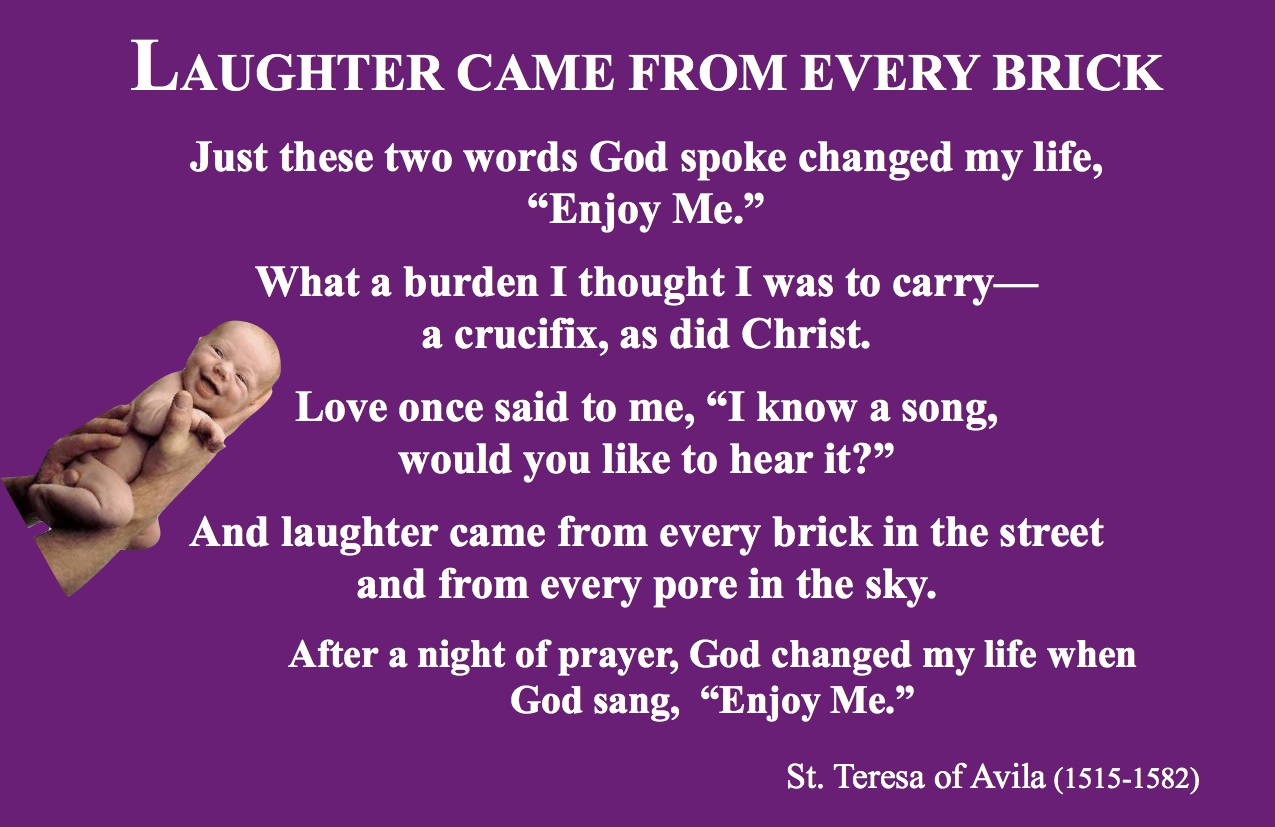
Imagine if you will a baby in your own life. A baby from your past perhaps, you baby brother or sister, maybe your own babies when they were just new and discovering the joys of creation. Such a beautiful little child.  So much ahead of her. So much to explore. But for now a simple game of peek-a-boo.  Ah, such laughter. You can’t help but laugh along and as you laugh, the tears of joy stream down your cheeks as you begin to imagine the wonders of the beautiful human being this child will grow into. And as you are over-come with joy, you won’t be able to help yourself as you are compelled to thank the Creator of such a beautiful little creature. And as you give thanks, listen to the words of St Teresa of Avila  whose joy echoes down through the centuries to help us evolve into the vision of our Creator: Teresa writes: “Just these two words God spoke changed my life, “Enjoy Me.” What a burden I thought I was to carry— a crucifix, as did Christ. Love once said to me, “I know a song, would you like to hear it?” And laughter came from every brick in the street and from every pore in the sky. After a night of prayer, God changed my life when God sang, “Enjoy Me.”

A Benediction:                             Listen, listen closely,

can you hear the memory of a baby’s laughter?

Such beauty, such potential, such joy.

 Now listen again,

can you hear the voice of God?

Listen carefully,

listen beyond the laughter and you will hear God say:

“Enjoy Me”.

“Enjoy Me!”

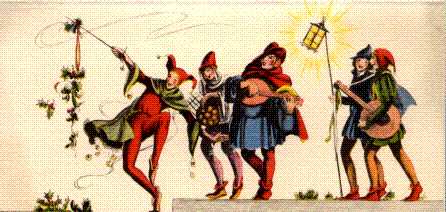
Shrove Tuesday – Such Frivolity!

ShroveTuesdaylrShrove-Tuesday, at whose entrance in the morning all the whole kingdom is inquiet, but by that time the clocke strikes eleven, which (by the help of a knavish sexton) is commonly before nine, then there is a bell rung, cal’d the Pancake-bell, the sound whereof makes thousands of people distracted, and forgetful either of manners or humanitie; then there is a thing called wheaten floure, which the cookes do mingle with water, eggs, spice, and other tragical, magical inchantments, and then they put it by little and little into a frying pan of boiling suet, where it makes a confused dismal hissing, (like the Lernean Snakes in the reeds of Acheron, Stix, or Phlegeton) until at last, by the skill of the Cooke, it is transformed into the forme of a Flip-Jack, cal’d a Pancake, which ominous incantation the ignorant people doe devoure very greedily.  John Taylor, English poet (August 24, 1580 – 1654)

Shrove comes from the old English word shrive = to shrive is to be absolvedshrove following confession.  Those who have received absolution are the shriven.  The priest who dose the shriving is the shriver. The shriven would feast using up all the foods that were avoided during Lent.

The practice of feasting is not complete without revelry and merrymaking. Many of the rules of acceptable behaviour are  set aside so as to ensure that a “wild time” is had by all:

  • Men dressed as women and women dressed as men (Prussia 15th century)
  • Football was played with wild abandon in the streets to ensure that windows were broken and gardens disturbed
  • Dancing in long meandering lines through the streets was encouraged
  • Church clipping:  clasping hands and surrounding the church
  • Jokes were told
  • Magic usually forbidden was preformed
  • Skipping (usually forbidden) was encouraged with up to ten people skipping together using the same rope (considered scandalous at other times of the year)
  • Fortune telling was allowed
  • Dancing was encouraged on church property!
  • Children were encouraged to mock their elders!
  • Tricks were played on members of the clergy.
  • Clergy decked in all their finery engaged in races.
  • Little boys and girls went from house to house knocking on doors and then running away.
  • Water was poured over the heads of officials.
  • Unspeakable things were done to chickens.
  • Eggs were tossed.

Pagan Roots:  the grand battle between Winter and Spring

  • Masks were worn to scare Winter away
  • the pancake is the symbol of the sun
  • music and revelry frightens Winter and Welcomes Spring
  • Church bells were rung at odd times to confuse Winter
  • Skipping made the earth more fertile
  • Boys and girls were encouraged to sneak away together so that matches might become inevitable.
  • Sledding down snowy slopes on Shrove Tuesday encourages the land to be fertile.

Did you know?

  • The faithful once believed that it was advantageous to hang one’s laundry out on Shrove Tuesday because chances were that the laundress having just received absolution, hanging laundry in a town full of folks who had just received absolution was sure to mean that the whites would dry whiter than white!
  • Certain works were forbidden on Shrove Tuesday: mending, sewing, hair combing, rope twisting and grindstone milling. Disobeying these bans will bring about summer storms, winds will rip off roofs, chicken will scratch in gardens, meat will have worms and fingers will swell.
  • Carnival = fare well to carni = meat

Just an Old Fashioned Love Song – Transfiguration Sermon

transfigurationTransfiguration Sunday – February 10, 2013

Listen to the sermon here

God, Google and iPods: Digital Faith and Analog Religion – Otis Moss III

techno faithThe Reverend Dr. Otis Moss III is the Pastor of Trinity United Church of Christ in Chicago. As the successor to the Rev. Jeremiah Wright, Moss exemplifies the finest traditions of the African American Church’s long line of brilliant preachers. In this video Moss speaks at the Chautauqua Institution exploring the dissonance between “Analogue Religion and Digital Faith.”  Moss sees the democratization of faith as “open source communities” enable users to network in ways religion has heretofore been unable to achieve. 


Jesus’ Sermon on the Mount

Before becoming a poet, Baraka Kanaan was a University Professor, his work was in re-articulating the Christ Figure. He studied dozens of translations, but came upon an Aramaic text & paraphrased what Jesus said in ‘The Sermon on the Mount’ from the book of Matthew; chapters 5,6, & 7. Here is a brief exploration of the purest essence of that message, made into modern day English, & escorted musically by the rare & exotic hijaz hang instrument. Delivered live at the Temple of Peace in Haiku, Maui… on Yom Kippur, or the Day of Forgiveness.

The Value of a Progressive Christian Gospel

questions mark

This is a fascinating conversation that explores the role of Progressive Christianity in the life of the church.

Bishop John Shelby Spong, Rev. Dr. Jay Emerson Johnson, Dr. David Hollinger and Rev. Byron Williams discuss the mainline church and liberal Christianity at the Pacific School of Religion.

You Have the Power to Transfigure the Face of God

mushroom Cloud

Two years ago, the Strange History of Transfiguration Sunday inspired this sermon. I offer it here because the words of Desmond Tutu speak volumes as I work on this year’s Transfiguration sermon.

When our images of God are tied to the idol of a supernatural sky-dweller who has the power to solve all our problems, despair is sure to follow as our super-hero fails time after time to impress us.

When I was a very little girl, I was absolutely convinced that I had the power to change the mind of God! Confident that I held such power, I never missed an opportunity to exercise it. Now, I’ll grant you that like most children, I was also convinced that the universe itself actually revolved around me, so believing that I was powerful enough to change God’s mind, wasn’t exactly much of a stretch. In fact, when I was a child, it wasn’t all that difficult to change God’s mind. For instance, I could stop God from breaking my mother’s back simply by leaping over a crack in the pavement. “Don’t step on a crack and break your mothers back.” Now, in my young mind the only one powerful enough to crush my mother’s powerful spine, must be God. I also knew that God wasn’t particularly fond of ladders, and that if I refrained from walking under them, God would smile upon me.

I had no idea why black cats, or spilling salt, or breaking mirrors, or opening umbrellas inside, or leaving hats on the bed, or putting new shoes on the table, would annoy God, but I knew enough to avoid doing such things. I was absolutely sure that God would respond positively if I managed to pull a turkey’s wishbone apart in just the right way so that I was left holding a piece larger than the piece my brother was left with.  God also responded well if I knocked on wood, or caught sight of a falling star, or if I crossed my fingers and hoped to die.

I didn’t need to understand why my activities worked to influence the heart and mind of God, I simply knew that they did and would continue to do so just as long as I continued to avoid the necessary evils and indulge in an apple a day, and managed to blow out all the candles on my birthday cakes.

The universe that revolved around me might have been full of all sorts of rules, but it would continue to revolve exactly the way I wanted it to if I managed to placate the old guy up in the sky who was pulling every body else’s strings. I never once considered that that old God in the sky was pulling my strings because I was absolutely confident in my ability to do what was necessary to pull God’s strings.

But as I grew up, I began to learn that despite my best intentions, the universe did not revolve around me. Little by little I learned that I didn’t have what it takes to influence all of the things that were having an impact upon my life. And just as surely as my powers waned, so too did the powers of God.

I can still remember sitting in the back seat of the car and wondering why God despite the fact that I always lifted my feet up each and every time my father drove over a railroad track, my parents simply couldn’t find the money we needed to buy our happiness. Surely God must know that I was doing my part to do what was necessary to make God shine his smile upon my family.

So each and every time God failed to do exactly what I wanted God to do, God’s power was diminished in my eyes. As I grew, I gave up trying to influence God and I took off after God’s son. After all Jesus was far more fun to be around than his old doddering Father. For starters Jesus actually liked children. And Jesus had way better party tricks than his Dad. Jesus could turn water into wine, make the blind see, and the lame walk. And if the cupboard was bare, no need to worry, cause Jesus was even better than my Mom at turning nothing into something. Where Mom could make a meal out of almost nothing, Jesus could make enough to feed 5000. And there was always that trick to beat all tricks, cause in all my young life, I never heard tell of anyone else who ever came back from the dead and brought tons of chocolate with him. I mean that old doddering guy in the sky simply didn’t stand a chance against Jesus. Santa Claus was about the only one who could come close, and everybody knew that Santa would be nothing without Jesus.

So, somewhere along the way, that I had no need to worry about stepping on a cracks, or spilling salt, or dropping forks, because these things were nothing more than superstitions. Besides, who needs to worry about superstitions when you’ve got Jesus for as your friend? My buddy Jesus was all I needed to keep my world on an even keel. So, I walked with him and I talked with him and we were so happy together, until stuff started to happen that made me begin to doubt Jesus ability to change the world.

A few weeks before my eleventh birthday, Sirhan Sirhan shot Bobby Kennedy and for the second time in my life, I saw my father cry. I was only six-years old when the shooting of Bobby’s older brother made the adults in my life cry. Their tears changed something in me. I listened more intently to what was going on in the world around me. I needed to know what was happening so that I could do something to change it. A year after Bobby Kennedy was shot, I went to my first protest march. I was just twelve years old, but I knew that Vietnam was wrong and had to be stopped. I believed that my presence together with the presence of hundreds of thousands, could make a difference.

I left my buddy Jesus playing in the garden. I began to listen to the radical Jesus who spoke truth to power and called us to follow him so that we could change the world. As a teenager I knew that we had to end the war in Vietnam and even though the sixties were drawing to a close, and the flower children would soon be trading in their incense and beads so that the could find jobs and climb the corporate ladder, we marched. And when in 1975, the Vietnam war ended in defeat, I actually naively believed that public opinion had caused the powers that be to change their minds.

So, I continued to work for peace, only this time it was nuclear proliferation that we needed to stop. It was somewhere during the Regan years that I gave up the notion of changing the world by marching in the streets.  Iran Contra put an end to my naiveté.  Jesus and I retreated. Literally.  I mean we literally retreated. A few friends and I worked together on a retreat center. Seabright Farm was a Christian retreat centre designed to nourish people who were trying to live their lives in the world. Jesus was our guide. We wanted to live in this complicated world of ours, the way that Jesus might live. So we dedicated ourselves to learning. Learning all we could about Jesus, Christianity, the church, theology, living responsibly, ethically. Our attempts to change the world took on a more modest approach. We set out to change the world, by changing ourselves.

Eventually, my work at Seabright Farm, brought me into seminary, where I suppose I thought I could change the world by changing the church. Along the way, I must confess that over the years I’ve become more than a little jaded and cynical.  There are days when I don’t really believe that anything will ever really change. But there are moments, moments when I actually believe that it’s possible not only to change the world, but to actually change God.  

Transfiguration Sunday is a strange festival in the Church calendar. The story of the Transfiguration is the story of Jesus climbing a mountain with his closest friends. On the mountaintop Jesus has a profound experience. There is a dazzling light, a cloud that overshadowed them, and the cloud terrified them. That same cloud appeared generations earlier and overshadowed one of the fathers of the Jewish people. That same cloud appeared generations later and overshadowed the father of the people of Islam.

As we read of that cloud today, we should do so with the same fear and trembling of our sisters and brothers who over the generations have encountered that cloud. For Transfiguration Sunday may be a festival of the church, but it’s history is steeped in the political and religious intolerance of the world. Before the fifteenth century, only a few Christian communities kept the feast of the Transfiguration. The festival hadn’t caught on like other festivals.

In all of Christendom only a handful of congregations marked the day and we would not be celebrating it today if it weren’t for a terrible battle. On the sixth of August 1456 news was announced in Rome that John Hunyady had defeated the Turks near Belgrade and the bells of churches rang out in celebration of the slaughter of some 50,000  Muslims.   Overjoyed, Pope Callistus ordered the whole church to commemorate the victory against the infidels by celebrating the feast of the Transfiguration.

For generations the church commemorated the battle by celebrating Transfiguration Sunday on August the sixth. Some church’s still celebrate Transfiguration on the sixth of August. However, shortly after the end of World War II protestant churches discretely decided to  move the festival of Transfiguration to the last day of Epiphany. They did so, because of the infamy of August 6. In 1945 a slaughter of a different sort was inflicted on a different people.

On August 6th 1945, someone climbed not a holy mountain, but into the cockpit of a plane—a machine of war. There had been a lull of a week in the fighting between the Allies and Japan. The Allies had a new secret weapon and they wanted to us it with the maximum psychological effect. They had prepared three atomic bombs. On the 16th of July, the first bomb was tested in New Mexico.

As a terrifying cloud rose up from the earth, the father of the atomic bomb J. Robert Oppenheim quoted from the Hindu Scriptures a line from the Bhagavad-Gita, “Now, I am become death the destroyer of worlds.”  On August 6 the second bomb was dropped on Hiroshima, and three days later the third one was dropped on Nagasaki. 150,000 people lay dead. Thousands more died later from the effect of atomic radiation. 75,000 buildings were destroyed. Two cities were devastated. The world will never be the same. The date for the festival of Transfiguration was moved.

The shape of that awful cloud hangs now forever in our sky. If you close your eyes you will see that cloud; rising up from the earth; a mushroom more poisonous than anything created by God. It is the new tree of knowledge of good and evil. We have eaten of its fruit and we shall never be the same.

We live in fear of everything that emanates from that terrible cloud. Is it any wonder that the vision of that cloud was invoked by the leaders of our neighbours to the south as they tried to convince the world to go to war against the people of Iraq. Weapons of mass destruction! Yesterday, the memory of the cloud hung over Iraq. Today, the memory of that cloud is being used to isolate Iran and Korea.

Has the memory of that poisonous cloud obliterated from our minds the memory of another cloud? Do we no longer remember the story of another climb, another light, another voice, another cloud? Jesus was there speaking of his departure, which he was about to accomplish at Jerusalem.

Jesus was speaking of his death, his destruction by another tree. Do we not meet on Transfiguration Sunday today under the shadow of that tree, to break bread and to proclaim the victory of Christ’s death over every evil, even the total annihilation by human evil.

Friends, I trust that we will be led out of this morass of fear and hatred by a pillar of cloud; a cloud that transformed Moses and a band of refugees in the desert into a people;  a cloud that rested upon Jesus declaring Jesus to be the embodiment of all that God had tried to say for generations; the same cloud that carried on Mohammad into the heavens, leaving behind a people who would take on the name Islam, which itself means peace.

Memories of clouds… Sorry, but I’ve looked at cloud’s from both sides know and like the song says I really don’t know clouds at all. I’m still wondering if its possible to be the people God created us to be? I’d given up wondering whether or not it’s realistic to hope, but rather whether it’s even possible to hope that the world can be changed. The poor will always be with us. Wars will keep breaking out just as surely as the sun rises in the east. Bad things will continue to happen to good people. And just when I think that hope is pointless…that the powerful will always abuse the powerless…just when I’m about ready to join the ranks of those who say live for today and forget about tomorrow…some people half a world away, begin to turn the whole world upside down…and dictators begin to loose their grip…and I begin to wonder, what if? And I feel the hope begin to stir in me.

In his book, God Has A Dream: A Vision of Home for Our Time, Desmond Tutu tells about a transfiguration experience that he will never forget. It occurred when apartheid was still in full swing. Tutu and other church leaders were preparing for a meeting with the prime minister of South Africa to discuss the troubles that were destroying their nation. They met at a theological college that had closed down because of the white government’s racist policies.             During a break from the proceedings, Tutu walked into the college’s garden for some quiet time.  In the midst of the garden was a huge wooden cross. As Tutu looked at the barren cross, he realized that it was winter, a time when the grass was pale and dry, a time when almost no one could imagine that in a few short weeks it would be lush, green, and beautiful again.  In a few short weeks, the grass and all the surrounding world would be transfigured. As the archbishop sat there and pondered that, he obtained a new insight into the power of transfiguration, of God’s ability to transform  our world. Tutu concluded that transfiguration means that no one and no situation is “untransfigurable.” The time will eventually come when the whole world will be released from its current bondage and brought to share in the glorious liberty that God intends.

Just over a week ago, many of you followed Jesus out of your comfort zone and down to the Inn From the Cold. You worked very heard to prepare over 200 meals to feed the hungry. But you did so much more than just feeding your neighbours. I believe that you actually achieved a transfiguration of sorts. Shortly before that evening, some of us watched Desmond Tutu talk about the need to change our image of God. I’d like to read back to you the words that Tutu said: The images that we have of God are odd because God—this omnipotent one—is actually weak. As a parent I understand this. You watch your child going wrong and there’s not very much you can do to stop them. You have tried to teach them what is right, but now it is their life and they are mucking it up. There are many moments when you cry for your child, and that’s exactly what happens with God. All of us are God’s children.

I frequently say, I’m so glad I’m not God! Can you imagine having to say, “Bin Laden is my child. Saddam Hussein is my child. George Bush is my child.” Oh!   All of them, including me. Can you imagine what God must have felt watching the Holocaust? Watching Hiroshima and Nagasaki? Watching Rwanda? Can you imagine God watching Darfur?  Imagine God watching Iraq and saying, “These are my children here, and they are killing my other children.  And I can’t do anything because I have said to them, ‘I give you the space to be you and that space enables you to make choices. And I can’t stop you when you make the wrong choices. All I can do is sit here and cry.’”    And God cries until God sees beautiful people who care, even if they may not do earth-shattering things.

There is a fantastic story of a so-called colored woman who was driven from her home and ostracized by her family because she had HIV/AIDS. She came to live in a home for people who suffered from the disease, and there were white men there who would help her because she couldn’t do anything herself. She was all skin and bones. They would carry her like a baby and wash her, bathe her, feed her. Then they would put her in front of a television set and hold her. And this was during the apartheid years. I visited this home and said, “What an incredible lesson in loving and compassion and caring.”

It was transfiguring something ugly, letting something beautiful come from a death-making disease. When God sees that, a smile breaks forth on God’s face and God smiles through the tears. It’s like when the sun shines through the rain. The world may never know about these little transfigurations, but these little acts of love are potent.            

They are moving our universe so that it will become the kind of place God wants it to be. And so, yes, you wipe the tears from God’s eyes. And God smiles.” You people have transfigured the face of God on more than a few occasions. By following Jesus out into the world, to reach out to your sisters and brothers, you have transfigured the face of God.” (see the video below for the full context of this quote)

So, on this Transfiguration Sunday, let me remind you of God’s ability to Transform the world precisely because God dwells in with and through you! Do not give up hope:  no one and no situation is “untransfigurable.” The time will eventually come when the whole world will be released from its current bondage and brought to share in the glorious liberty that God intends.  Continue to give hope to the hopeless, reach out and love the world that God loves, and always remember that you have the power to transfigure the face of God!

A Benediction:          Always remember that you have the power

to transfigure the face of God!

You can wipe the tears from God’s eyes.

You can make God smile.

Reach out with love.

Be the compassionate people God created you to be!

Receive the blessing of  God whose love knows no boundaries,

Christ whose peace you embody,

And the Holy Spirit, whose power breathes

in with and through you,

To transfigure the world with love!


Ash Wednesday – A Wakeup Call

purple light 2

Here’s an Ash Wednesday homily for the 21st century!

We’ve all been there. Driving down the road – distracted by thoughts of this and that, when all of a sudden it happens, a car comes at you out of no where and you slam on the breaks or you quickly swerve to avoid a disaster. You could have been killed. You could have killed someone. Your life or someone else’s life could have been radically changed in an instant. As you pull back into traffic you are ever so conscious of the weight of you foot on the accelerator and you swear that you’ve got to be more careful.  You begin to scold yourself.  What were you thinking? Why weren’t you paying attention? Wake-up you could have been killed.

Welcome to Ash Wednesday. What have you been thinking? Why weren’t you paying attention? Wake-up — you are going to die!!!  Ash Wednesday is your mid-winter wake-up call. Some of you may not need the wake-up call. Some of you know all too well that death is all around us. Some of you have lost someone dear to you. Some of you have felt that fear in the pit of your belly when the doctor suggests a particular test. Traditional Ash Wednesday worship would require us to focus on the brevity of life and remember that none of us will get out of this life alive.  Our ancestors in the faith, entered into a morose season of Lent by via the awesome reminder that they came from dust and soon they shall return to the dust.

Lent was a season of lament and repentance based on a particular understanding of what it means to be human. Since the 11th century most of Christianity has understood the human condition as that of those who have fallen from grace. But we live in a post-modern world. We no longer believe that Adam and Eve were the first humans. We read Genesis not as history but as myth. We understand that humans evolved over millions of years. There was no perfect human condition for us to fall from.

What happens when you reject the theological construct of original sin?  What happens when you embrace the idea that we are fiercely and wonderfully made? What happens when you see humanity as originally blessed?

Once you open up Pandora’s box you can’t just walk back out of the room and pretend that the theory of evolution doesn’t have something to teach us about what it means to be human. If we see our selves as incomplete creations rather than fallen sinful creatures, how then do we deal with our mortality?

Perhaps we can begin to express what it means to be human in terms that reflect our need to evolve in to all that we were created to be. Perhaps the brevity and uncertainty of life can begin to wake us up so that we can seize each and every moment. This is the day that God has made, let us rejoice and be glad in it!

All that we love and care for is mortal and transitory, but mortality is the very reality that can become the inspiration for celebrate life and to love. Ash Wednesday reminds us of our human condition of mortality. But we should also remember the reality of creation itself is transformed by death and is constantly renewing itself. There is an eternal quality to creation, just as there is an eternal quality to life.

Tonight we embrace the promise that in death we are transformed into a new way of living on in God.Trusting that here and now we are living in God, we delight in the knowledge that in God we share in eternity. We are constantly dying, but we are also constantly living as we reflect God’s vision in the world of the flesh. This day, this moment is eternity for God is here, revealed in the wonders of creation; in the face of our neighbours, in the beauty of the earth, in the magnitude of the universe and in the miracles of sub-atomic particles. Tonight is our wake-up call.

We will not pass this way again. If we’ve been hibernating its time to take a deep breath and let ourselves be filled with the Spirit so that we can live fully, love extravagantly and be all that we were created to be. Yes we are dust, but we are earthly dust, springing forth from a multi-billion-year holy adventure.

Dust is good, after all; it is the place of fecundity, of moist dark soil, and perhaps we are as various scientists are suggesting:  “star-dust” evolving creatures emerging from God’s intergalactic creativity. We are frail, but we are also part of a holy adventure reflecting the love of God over billions of years and in billions of galaxies.

So, how can we fail to rejoice in the colour purple, or pause in wonder at a baby’s birth? How can we fail to enjoy the beauty of a sunset or the splendor of a mountain range? How can we fail to embrace the sorrows that surround us with love? How can we remain deaf to the cries of our neighbours, or the pleas of our enemies? Tonight is our wake-up call?

Life is here for the living. This is eternity; right here, right now!!! Let the ashes we receive be the ashes of transformation; of awakening to the beauty and love of seizing the moment and living it to the fullest.

Remember that you are dust and to dust you shall return. Let the memory of your incomplete humanity awaken you to the wonders, joys, sorrows, and pain of life.

Let it be said of you that here in this little part of eternity that you lived fully, loved extravagantly and helped humanity evolve into all that God dreamed we can be!             Amen.

An Ash Wednesday Benediction

 Remember that you are dust and to dust you shall return.

Let the memory of your incomplete humanity

awaken you to the wonders, joys, sorrows, and pain of life.

Let the ashes you wear be the ashes of transformation;

of awakening to the beauty and love of seizing the moment

and living it to the fullest.

 Let it be said of you that here in this little part of eternity

that you lived fully, loved extravagantly

and helped humanity evolve into all that God dreamed we can be!

 You are fearfully and wonderfully made

In the image of the ONE who is was and ever more shall be

Creator, Christ and Spirit ONE,    AMEN

Ash Wednesday – Stardust

purple universe“Remember that you are dust and to dust you shall return.” are the words that are spoken during Ash Wednesday’s Imposition of Ashes. I have always thought of the dust of the earth, funerals, and death during this age-old ritual. But last year during our worship, we added a new reading to our Ash Wednesday Liturgy. This new creation story embraces a perspective on reality that is all together different than that of our ancestors in the faith. This new perspective turned my thoughts toward life and eternity.

More and more I have come to believe that unless our worship together can embrace reality as it is viewed in the 21st century, we will fail in our efforts to make worship relevant in the 21st century.   

The Star Within

a creation story by Dr. Paula Lehman & Rev. Sarah Griffith

In the beginning, the energy of silence rested over an infinite horizon of pure nothingness.

The silence lasted for billions of years, stretching across aeons that the human mind cannot even remotely comprehend.

 Out of the silence arose the first ripples of sound, vibrations of pure energy that ruptured the tranquil stillness as a single point of raw potential, bearing all matter, all dimension, all energy, and all time: exploding like a massive fireball.

It was the greatest explosion of all time!

An irruption of infinite energy danced into being. It had a wild and joyful freedom about it, and like a dance it was richly endowed with coherence, elegance, and creativity.

The universe continued to expand and cool until the first atoms came into being. The force of gravity joined the cosmic dance; atoms clustered into primordial galaxies.

Giant clouds of hydrogen and helium gases gathered into condensed masses, giving birth to stars!

Generations of stars were born and died, born and died, and then our own star system, the solar system, was formed from a huge cloud of interstellar dust, enriched by the gifts of all those ancestral stars.

Planet Earth condensed out of a cloud that was rich in a diversity of elements.

Each atom of carbon, oxygen, silicon, calcium, and sodium had been given during the explosive death of ancient stars. These elements, this stuff of stars, included all the chemical elements necessary for the evolution of carbon-based life.

With the appearance of the first bacteria, the cosmic dance reached a more complex level of integration.

Molecules clustered together to form living cells!

Later came the algae, and then fish began to inhabit the waters!

Thence the journey of life on land and in the sky.

Insects, amphibians, birds, reptiles, and mammals: all flourished and diversified and elaborated the themes of life. And now it is our time, too.

This is our story.

The story of our beginning, our cosmology.

And so we commence our Lenten Journey this night – this Ash Wednesday, with open hearts in the midst of our Creator.

As we partake in our daily things of life may we see them as sacred.

May we be empowered to perform simple acts of concern and love, and real works of reform and renewal.

Let us love deeply the earth which gives us
 air to breathe, water to drink, and food to sustain us.

May we remember that life is begotten from stardust, radiant in light and heat.

We are all one – all of creation, all that now live, 
all that have ever lived.

Remember we are stardust, and to stardust we return.

Remember we are part of the great mystery.

Remember we are stardust and to stardust we return!


The Place of Organized Religion in the 21st Century???

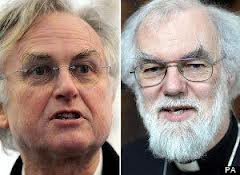
dawkins williamsFeb.3/2013: Richard Dawkins Loses Debate Against Former Anglican Head Rowan Williams at Cambridge University

The debate motion that “religion has no place in the 21st Century” was well-defeated at the event held yesterday at the Cambridge Union Society. Dawkins lost the debate by 324 to 136 as he failed to convince the gathering that religion has no place.  Also taking part in the debate were Andrew Copson and Arif Ahmed. 

Called to Spiritual Renewal – Epiphany 4C Sermon

Bishop SusanEvangelical Lutheran Church in Canada’s National Bishop Susan Johnson was our Guest Preacher

Sunday February 3, 2013

Listen to the sermon here

Life the Universe and Everything, No God But God, The God of the Gaps

The Story of God

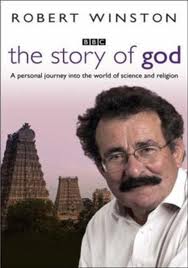
The Story of GodImagining the unimaginable and describing the indiscribable – the human endeavour to capture the nature of the divine in words, images, stories and myths is the subject of this excellent BBC documentary series. Robert Winston, (medical doctor, scientist and Professor of Science and Society at Imperial College London) examines the roots of religious beliefs and the various ways in which humanity’s sense of the divine have developed. 

Professor Winston says: “However you define God, and whether you believe in God or not, the world we live in has been shaped by the universal human conviction that there is more to life than life itself; that there is a ‘god’ shaped hole at the centre of our universe.“We have come up with many different ways to fill that hole, with many gods or just one, with gods of hunting, gods of farming, gods of war and gods of sea and sky.”

Ms God???

Mother godLooking at the Bible as “literature with a religious agenda which distorts the past,” Dr Francesca Stavrakopoulou (University of Exeter) challenges some long held assumptions about monotheism to ask the question: “Did God Have a Wife?”  Her BBC documentary explores the early roots of monotheism in Judaism, Christianity and Islam.