Five Bags of Sugar – Mothers’ Day Sermon

When I was a child in Northern Ireland, my Mom would often as me a question which would be the beginning of a conversation, a routine of sorts which I suspect she learned   when she was a child from her Mother. The routine goes something like this. Mom would ask me, “How much do you love me?” and I would answer, as I’d been taught to answer: “A big bag of sugar!” To which Mom would reply, “I love you more, I love you to bags of sugar!” To which I would reply, that I love my Mom, “Five bags of sugar!” Over the years I’ve met lots of people from Belfast who grew up measuring love in bags of sugar.

As near as I can tell this loving conversation has something to do with rationing during World War II. Sugar’s ability to make all things sweet tied it to people’s perception of a happy life. A “big bag of sugar” was more sugar than most people would ever see. It doesn’t take much imagination to understand how people could begin to measure love in bags of sugar. To this day my great-nieces and nephews still learn from their elders, to measure love in bags of sugar; even though we have all since learned that consuming large quantities of sugar makes us sick. I suspect the wartime custom of  expressing love in terms of bags of sugar will soon go the way of Ring-around-the-rosy…while children still sing it they have no idea that it is all about the black plague which saw millions of children fall to their death…. Love measured in bags of sugar, like packets full of posy, is a thing of the past…vaguely remembered by only a few.

This week the world remembered VE Day; the end of war in Europe was commemorated from the confines of our physically isolated planet as we all seek refuge from the pandemic which has brought an end to many of our treasured cultural norms. The combination of Mothers’ Day, the 75 Anniversary of VE Day, a global pandemic was topped off with news of the arrival in North America of some beast called a “murder hornet.” These are strange times in which to live. According to the experts, many of us are experiencing culture shock. Think back to just two months ago. Way back then, we would not be confined to worshipping together over the medium of the internet. Less than two short months ago, we enjoyed the freedom of movement which all of us took for granted and many of us would have been gathered together in our sanctuary, singing, praying, exchanging the peace, sharing communion, and then feasting together over coffee, tea, and conversation. In less than two months, so very many things which we took for granted, are no longer possible and we do not know when or if they shall be returned to us.

Last week I listened as Bill Gates, the kazillionaire behind so much of the technology which characterized the past thirty years, insisted that many of us have had to learn new skills at a rate which has seen us absorb fifteen years’ worth of change in just six weeks. Gates called this phenomenon “cultural compression.” So, if you are struggling to come to terms with your new life, rest assured, you are not alone. Go easy on yourself. Humans were never designed to cope with the rate of change we are experiencing today.

Yes, we are privileged. We came into this crisis as the privileged few. We are certainly wealthy beyond the wildest dreams of our parents and grandparents. In addition to our wealth and privilege we also have all sorts of mechanisms in place to cushion the effects of whatever we may still have to endure. We know that there are others who are much worse off than we are, and yet, we can’t quite shake the angst which comes in the middle of the night. No amount of sugar or packets full of posy can obscure the shock waves which are impacting our way of being in the world.

So, reeling from the so many changes, I must confess that today’s Gospel text, makes me feel the way I used to feel when I would turn the tables on my Mom and ask her, “How much do you love me Mom?” As some of you know, my Mom lives on the West Coast, I miss her terribly and there I nothing more I’d rather hear than, “Five big bags of sugar!” There is something about your mother’s voice that has the power to sooth even our deepest upsets. Even if your Mom has long since gone on to “prepare a place for you,” I’m sure that you can still hear her soothing you in times of trouble.

Now, I know full well all the scholarly reasons for insisting that the words of the anonymous gospel-story-teller which we call John has put on the lips of Jesus, very probably come from the community of people who followed the ways of Jesus, rather than Jesus himself. I don’t care much whether or not Jesus actually said these words. However, I do care very much about the truth which these words convey about the DIVINE MYSTERY which lies at the very heart of ALL. I know that love measured in “bags of sugar” and safeguards like  “packets of posy”  are expressions whose meanings have been lost over time. I also know that the words used to express the characteristics of the DIVINE MYSTERY have also lost their power over time. 

We have forgotten so very much about those things we once took for granted. “Jesus loves me this I know. For the Bible tells me so! Little ones to him belong! Yes! Jesus loves me! Yes! Jesus loves me! The Bible tells me so.” We are all grown up and in the face of so much suffering, it may indeed be time for us to put away childish things. When our physical isolation is over and we are released to return to our lives, our lives will not be as they once were. Nothing stays the same under normal circumstances.  Life changes over time and the experts may just be correct when they tell us that the effects of cultural compression will have a colossal impact on the ways in which we return to life out there. But whether it’s bags of sugar, pockets of posy, or the sure and certain knowledge that “Jesus loves me!”, this I do know, LOVE remains constant. 

“Do not let your hearts be troubled. Trust in God; trust in me as well.” Our way of speaking about the DIVINE MYSTERY which is the source of ALL REALITY may have changed and will continue to change over time.  But the truth that the DIVINE MYSTERY IS LOVE, this LOVE never changes. God IS, was and evermore shall be LOVE. In Jesus of Nazareth, his followers like the anonymous gospel-storyteller who we call John, in Jesus people for generations have seen the embodiment of the LOVE which IS God. Jesus’ Way of being in the world is LOVE alive in the world.

Jesus insistence that, “I myself AM the Way—I AM Truth, and I AM Life.” is not some arbitrary barrier to be crossed or hoop one must jump through in order to know the DIVINE. But rather the followers of Jesus’ attempting to express the reality that for Jesus the Way of LOVE is the only Way of being. The Way of LOVE empowered Jesus to claim unity with LOVE. “I AM in LOVE and LOVE is in me!” “The words I speak are not spoken of myself; it is LOVE, living in me, who is accomplishing the works of LOVE.” Jesus loves me this I know; just as surely as I know that my Mom loves me. Just as surely that I know that there is nothing in heaven or on earth which can ever separate me from the LOVE that IS God.

It may indeed be scary out there. I suppose it has always been scary out there. But my Mom always pushed me out the door to meet the world, in the sure and certain knowledge that she loved me more than five big bags of sugar. “Do not let your hearts be troubled.” Trust in the DIVINE ONE who is LOVE. LOVE beyond the ability of mere words to describe. LOVE beyond the beyond and beyond that also. LOVE which lives in, with, through, and beyond you. LOVE is the Way, the Truth and the Life. Know that LOVE is in you and you are in LOVE and there is nothing which can separate you from the LOVE which is God. LOVE’s got this! Be LOVE and you will be well. Be LOVE and all manner of things shall be well.

YOU CAN VIEW THE WHOLE WORSHIP SERVICE BELOW

Download the Order of Service here
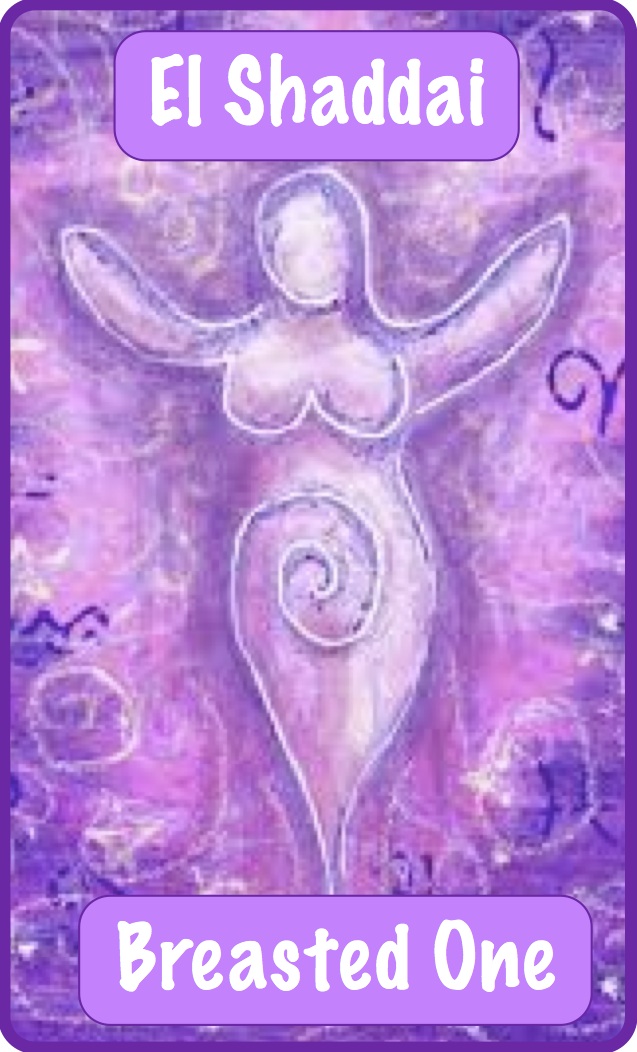
 

Breasted ONE – reflections for Mothers’ Day – John 14:1-14

Readings: Julia Ward Howe’s Mother’s Day Proclamation; Revelations of Love, by Julian of Norwich Chapter 26; John 14:1-14

Listen to the sermon here

“I myself AM the Way—I AM Truth, and I AM Life. NO one comes to Abba God but through me.” Over the course of two millennia, the ways in which these words have been interpreted by far too many people who insist that they are “Christian” is enough to make most mothers, be they Christian, Hindu, Buddhist, Muslim, Shikh, Jew, atheist, or agnostic, CRINGE. It seems to me, that to insist that it’s Jesus’ Way or the highway, as if Christians have the exclusive way of being in the world, violates the basic principles of the image we have of what it means to be a good mother.  Today, while we celebrate all the various stereotypes of what it means to be or to have a good mother, I don’t think any of you would hold point to the image of a mother who favoured one of her children to the exclusion of her other children. Yet somehow, the image of God as “Father” of us all, is messed up with the notion of a God who insists on a particular Way of being in the world, a way of being that believes particular things about who Jesus of Nazareth is, was, and ever more shall be; a way of being that insists that only those who believe particular things about Jesus will be welcomed into God’s household. The Good News is, that New Testament scholars have learned a great deal about this passage that contradicts the so-called “traditional interpretations” of this text. New Testament scholars begin by teaching us that these words attributed to Jesus, were in fact written some 70 plus years after Jesus’ crucifixion by an anonymous story-teller that we call John, who in all likelihood put these words into the mouth of Jesus in order to address a particular problem in the community to which this story is addressed.

But, more important than the realization that Jesus may never have actually said these words is the reality that taken out of context and proclaimed in ways that exclude some people at the expense of others, these words fail to express the very ideas of inclusion that the anonymous story-teller that we call John was trying to express to his community in the first place. For as the anonymous gospel storyteller that we call John insists:

“In God’s house there are many dwelling places; otherwise, how could I have told you that I was going to prepare a place for you? I am indeed going to prepare a place for you and then I will come back to take you with me, that where I am there you may be as well. Continue reading

I AM, You ARE, We ARE the Good Shepherd – Psalm 23 and John 10

Sermon Only – Watch the full service below.

“The Lord is my Shepherd. I shall not want” or,“A song for LOVE’s sake: When our LOVE’s the guide by-my-side, I want for nothing.”

The translations of this ancient Hebrew hymn may be separated by centuries, but both the English translators of King James and the American Rabbi Jamie Arnold seek to move us deeply into the inner workings of our being.

Like the unknown ancient Hebrew who created this pathway to a realm beyond the surface of our thinking toward our deepest longings, our darkest fears and into our deepest peace, all translators, interpreters, readers, and listeners of this ancient LOVE song, approach the ULTIMATE MYSTERY that IS.

IS , is the word is the present tense of the verb TO BE.

The verb “to be” is unique among all verbs.

The present tense of the verb to be: AM, IS, ARE

The past tense: WAS, WERE

The past participle: BEEN,

And the present participle: BEING.

TO BE a verb which struggles to communicate the very ISNESS of BEING.

 For the ancient ancestors, the very essence of a being is contained in the name of that being. Is it any wonder then, that the verb “to be” in Hebrew was used by the ancients to communicate the name of the ULTIMATE MYSTERY that IS?  

YAHWEH – I AM, WHO AM, or I AM, WHO I AM, or I WILL BE WHO I WILL BE

Or as the anonymous gospel-storytellers put it, simply, “I AM.”

JESUS BEcomes the embodiment of the I AM.

ONE with the ULTIMATE MYSTERY that IS.

 When we turn to this song of the ancients, we see, lush meadows, meandering waters, green pastures, and valleys crowed with figures of death and disgrace, pictures, images, hopes, dreams, and fears, laid out in words designed to lead us beyond our wants, beyond our fears, from death into life.

Today, each one of us can, without much difficulty, move beyond the distractions of the moment toward our wants and our fears, all around us death is very much a part of life. At our fingertips we have access to images aplenty of the valley of the shadow of death which no amount of hand-washing can erase. In our lives there are losses and griefs which mask our ability to see beyond our fears. We know that the lush meadows are all around us, but the enormity of the world’s pain coupled with the uncertainty of tomorrow’s worries blind us to the WAY beyond. From the isolation of our homes, so many of us lumber through these days, longing for release, while others venture out on our behalf, fearful of what lurks in unseen molecules. If only there were a shepherd to lead us, a saviour to save us, a way to move us beyond, this, whatever this, is, was, or will become. No press conference, no medical expert, no brilliant scientist, bi astute economist, bi canny politician, can move us beyond our wants, beyond our fears, from death into life. And yet, we long for green pastures and the memory of ONE who insisted that, “I AM”, this ONE continues to inspire possibility beyond words or images. 

“The truth of the matter is, I AM the sheep gate.” “I AM the gate. Whoever enters through me will be safe – you’ll go in and out and find pasture.” “I came that you might have life and live it abundantly.” Abundant life, life beyond our wants, beyond our fears, abundant life. The anonymous gospel-storyteller we call John speaks of Jesus as ONE who claims wandering sheep as his own, “My sheep hear my voice. I know them, and they follow me. I give them eternal life, and they will never be lost. No one will ever snatch them from my hand. Abba God, who gave them to me, is greater than anyone, and no one can steal them from Abba God.  For Abba and I are ONE.”  

Therein lies the MYSTERY, “I and the ABBA are ONE.” Therein lies the WAY beyond our wants, beyond our fears, from death into life. I AM, You ARE, We ARE, ONE. “Even when” I, You, We, “descend into valleys crowded with figures of death and disgrace,” I, You, We, “will not succumb to fear, now knowing where” I, You, We, are, “I AM, I AM with YOU,” YAHWEH. I AM, You ARE, We ARE, with YAHWEH, ONE with the ULTIMATE MYSTERY.  

“Ancestral staff of family tree in hand, courage and comfort blossom under the sun, casting shadows revealing time in melodies measure for measure, these and these harmonies lay my frets to rest.”  “When our LOVE’s the guide by-my-your-our-side, I, You, We want for nothing.” For the ULTIMATE MYSTERY which we call God, IS LOVE. 

“Patience and perseverance, playing with polarity, stand and say, “Send me. Send me before you; tabling shame and sorrow for tomorrow that you may feast today, head anointed with oil, LOVE’s cup pouring-over the rim with plenty.”

We can move beyond our wants, beyond our fears, from death into life. Look around, there are lush green pastures everywhere. Our cups overflow with goodness. “Gratefulness and lovingkindness run me down and up, coursing through my vines to live in all my limbs, words and ways, coming home at last to sit and sabbath. Your ever-presence, here, now embodying, housing, LOVING CONSCIOUSNESS in time-space-and-soul.” 

I, You, We, and the ULTIMATE MYSTERY which we call God, who IS, WAS, and every more SHALL BE, LOVE, I, You, We, and this LOVE are ONE. This ONEness into which LOVE draws us moves us beyond our wants, beyond our fears, from death into life. It is our ONEness which transforms us into the Good Shepherd. You and the Abba are ONE.  In LOVE we live and move and have our BEING. We set the table in the midst of all this, whatever this is, the table is set by LOVE, this, all this IS abundant life, eternal life.  I, You, We ARE the LOVE who IS. We are the shepherds, we are the saviours, we ARE the ONEs. See beyond your wants, beyond your fears and let us dwell in the house of LOVE forever.  Amen.

You can watch the full worship service below – download the Order of Service here
Emmaus is Nowhere because Emmaus is Everywhere: a sermon on Luke 24

Road to EmmausThis sermon was inspired on my own journey to Emmaus where in the space of the same afternoon I heard a stranger declare: “Christianity is dead!” and Karen Armstrong’s now famous TED talk about her call for a world Charter for Compassion.

Has anybody here ever been to Emmaus? Which one? According to the latest issue of Biblical Archeology there are at least nine possible locations that are candidates for the Biblical town of Emmaus. Historians tell us that there is no record of any village called Emmaus in any other ancient source. We simply don’t know where Emmaus might have been. Tradition, tells us that it might have been a place just a few hours walk from Jerusalem. New Testament scholars, Marcus Borg and John Dominic Crossan suggest that Emmaus is nowhere. Emmaus is nowhere precisely because Emmaus is everywhere. Each and every one of us has at one time, or indeed for some of us, many times, traveled along the road to Emmaus.

I know that I have been on the road to Emmaus most of my life. I’ve had lots of company on the Road to Emmaus. I’ve had many conversations along the way discussing, with anyone who’d care to accompany me, the ifs, ands, and buts of Christianity, of religion, and indeed of life. If you haven’t traveled down the road to Emmaus you must be very skilled in the fine art of turning off your brain and if you check you just might discover that your heart isn’t actually beating.

It’s so easy to imagine, those two characters striding down the Road to Emmaus that we can almost hear them talking, maybe even arguing about what happened. What on earth were they to make of all this! Jesus was supposed to be the Messiah. Jesus was the One who had come to liberate Israel, to free the people from oppression. Jesus was the One who was supposed to draw the people back to God, restore the relationship between God and God’s people. Now Jesus was gone, and what had changed? Now, Jesus was gone, and the Roman Empire was still oppressing them, still inflicting such pain and hardship, still killing them. Was it all a mistake? Was it all a lie? Had they been fooled by some kind of cruel hoax—were they wrong to put their hopes in this man from Nazareth? They had trusted Jesus believed in Jesus, followed Jesus. Their lives had been changed. They had seen the lives of others changed and they had expected even greater changes to come. Jesus had confronted corrupt powers. Jesus had charmed great crowds. Jews and Gentiles alike responded to the truth of Jesus’ teaching. Rich and poor had come to Jesus, believing in Jesus’ healing power. But Jesus had been shamed, and ridiculed, and humiliated, and crucified and now Jesus was dead. Well, was Jesus dead? Some said they’d seen Jesus, alive! Not that Jesus had survived the crucifixion by some miracle of strength, but that Jesus had risen from the dead. They seemed so totally convinced by their own experience…were they confused by their own grief? Were they delirious? Had they loved this Jesus so much—invested so much hope in Jesus life and leadership—that they simply could not let him go? And what did ‘resurrection” mean? Apparently it was not the resuscitation of a corpse. Jesus wasn’t revived to resume his former life; to take up his broken body until the day he might die again. No, somehow this was some new mode of being that seemed to be spiritual to some and yet real to others. And, if Jesus were risen from the dead, what would be the point of all that? What was the point to a Messiah—to a presumed political and religious leader—if Jesus wasn’t able to lead people here on earth? How could Jesus restore Israel when he had so easily been defeated by a handful of Roman guards? How could he bring release to the captives, how could he bring justice for the poor, how could Jesus advocate for the widows and the homeless? How could Jesus call people to account for all the ways they had strayed from God’s intent, now? What good could come from some kind of spiritual ghost? We can hear these two friends wrestling with each other and with their own hearts on the road that day! Continue reading

Longing for Resurrection! – Second Sunday of Easter: John 20:26-31

“A week later the disciples were again in the house, and Thomas was with them.”
Four, Five? How many weeks is it and we have been in our houses?
Their doors were locked for fear of the authorities.
We too are locked down for fear of, well you all know what we are afraid of…
Even in our respective lockdowns we cannot shutdown our fears.
And now Thomas is with us.
Or maybe Thomas has always been with us?
Doubt and fear seem to be old friends.
Hand in hand, doubt and fear, are locked in here with us and there is no amount of sanitizer which will save us from the ability of these particular viruses to haunt the darkness of our isolation.

Outside the sunshine appears so tantalizing, luring us to move beyond the limits of physical distancing, while inside we long for resurrection. Yearning to burst forth from the darkness of these tombs of isolation, we long for resurrection.
Grasping on to any hint that the restrictions will be lifted, we can’t help but hope for a return to our lives as they once were, before, you know, when things were normal. Suddenly, without warning, our stories resonate a little too much with their stories. Like the disciples of old, the ones who followed Jesus, we now huddle in the confines of our darkness. All they had were a few brief stories.
We too have their brief stories, together with our emerging stories. The one about the empty tomb and the one about a vaccine.  Folded grave-cloths. Discarded face masks. Weeping women and fleeing men. Worn out nurses and discouraged doctors. Horrible wounds: the mark of the nails; bruised faces and scarred psyches. Rumors, Confusion, Fear, and Doubt. Is Thomas with us, or are we with Thomas?

Thomas is the one forever known as doubting. So, is believing, trusting what we have not seen, is faith the answer? There are plenty who will tell us that faith is all we need, that this too shall pass, that everything is going to be all right. But like Thomas, I’m not so sure. “Unless I see the mark of the nails in Jesus’ hands, and put my finger in the mark of the nails and my hand in Jesus’ side, I will not believe.”

Longing for resurrection, I want to believe. But we have scarcely even begun to see the marks the virus is making or touch the depths of the wounds inflicted on millions.

Many of us, are tucked up safe and warm, in our isolation.
We are well fed, well entertained, and conveniently distracted,
happily confused about the nature of the very resurrection we now long for.
Dreaming of hugs and handshakes, gatherings and workplaces; trusting that all we need to do is to go back to the way things were.

In the same way that some believe that faith in the resuscitation of Jesus’ corpse is all there is to resurrection, there are so many who believe that faith in the status quo is all we need to resurrect our world. Those fear-filled followers of Jesus huddled together immersed in the trauma that crucifixion wrought, they knew that nothing, nothing was ever going to be the same again. Jesus could no more rise up from the dead, free from the wounds of his death, than we can. Their dreams of a messiah who would make everything better died upon the cross.  They could not return to life as they once knew it. Jesus’ life and death changed everything they had ever known or hoped for. They were forever changed by the visible wounds and the not so visible deeper wounds.

Today, the marks of the nails are seen in different ways. New media beam images of death and our fear of death into the isolation of our minds. The crosses of execution have been replaced with images of body bags, temporary morgues, and forlorn care-facilities. Nail marks look more like facial bruising.  Not all wounds can be seen on the surface, some are held deep within the confines of isolation as we worry about our finances, job security, and where we might take a walk. While anxiety and depression consume others, and far too many feel the sting of abuse, poverty and homelessness, others struggle to find food.

While the knowledge that some of these wounds will heal helps us to move from one day to the next, we know that many wounds will never heal.
The pain of those who have lost loved ones must wait to be soothed by the practices we have grown accustomed too. Mourning and grieving must begin in unfamiliar isolation. The balm of shared tears and laughter, the strength gained from long embraces, and the familiar grieving rituals, have been taken from us, leaving far too many gaping wounds on so many mourners.

No belief in the resuscitation of a corpse can heal the inequities of our world which have been revealed by this virus. The poverty of millions has been exposed along with the lack of medical care. The ease with which the privileged are entertained during what has become a nightmare for others rubs salt into the wounds. The frustration of the powerless endangers the safety of everyone.
If the Risen Christ cannot bear these wounds, then the tomb is nothing but empty. Rumors of an empty tomb was not enough to calm the fears of Jesus’ first followers.

In the midst of their fear and grief, in the turmoil of their attempts to figure out what to do next, in the anxiety of their panic about the dangers which surrounded them stood the Risen Christ bearing the wounds of the world. In the absence of Jesus, in whom all their hopes were founded, the Risen Christ appears. This Christ, this Risen One is so much more than a resuscitated corpse – this Risen ONE is the presence of the LOVE that cannot be contained by death.

This Risen ONE is LOVE.
LOVE there in the midst of a rag-tag, fear-filled gathering of hapless individuals confused by the magnitude of their trauma.
This Risen ONE stands wounded, and bids them, “Shalom. Peace be with you.” and drawing attention to the wounds of the world, sends them back into the world to make it whole.
No mere, revived corpse has the power of the ONE who is LOVE.
Surely, if this virus has taught us anything, it is that we are all ONE.
When one of us is suffering we are all suffering.
Our world is suffering, we are all suffering.
But there is nothing, in heaven or on earth, no virus, not even death which can separate us from the LOVE that IS God.

LOVE rises again, and again, and again.
And when LOVE rises, LOVE heals.
LOVE makes us whole.
For in the LOVE that is God we are all ONE.
LOVE is Risen! LOVE is Risen in us!
And it is that LOVE which will heal our wounds.

But like the wounded in all times and in all places, we will be forever marked.
We cannot go back to life as it once was.
For our wounds to heal, we must allow them to change us.
There is much we can learn while we heal.
So much is being revealed. So much is being exposed.
Not the least of which is the reality that we don’t have to go back to the way things were. LOVE can work in, with, through and beyond us to make all things new. Therein lies the hope of the world.

We can linger in our houses, with the doors shut, confident that LOVE cannot be contained by death. We can breathe deeply of the SPIRIT, trusting that LOVE rises in us, with us, through us, and beyond us. There will be much that needs to be transformed in the weeks and months that lie ahead. But for now, take comfort in the RISEN ONE, who IS the LOVE we call God, who even know stands among us bidding us, “SHALOM, Peace be with you.”

May the peace which comes from the LOVE who is God, continue to work healing
in, with, through and beyond us.
Resurrection is here and now.
LOVE is risen! LOVE is risen in us! Alleluia!

Soon, Risen LOVE will send us back into the world to make all things new.
For we are the hands and feet of the ONE who IS LOVE.
LOVE is risen! LOVE is risen in us! Alleluia!

View the full service below – Download the order of service here

Resurrection: Believing is NOT the point! – sermons for the Second Sunday of Easter

 Anticipating Doubting Thomas’ annual appearance, I am reminded that resurrection is not about belief. Resurrection is a way of being in the world. Over the years I have tried serval different approaches to encourage the practice of resurrection. click on the titles below to see

Exposing Our Wounds click here

Believing in Resurrection is NOT the point! click here

Easter: 50 Days to Practice Resurrection! click here

Humpty Dumpty, Doubting Thomas, and Resurrection click here

Leap of Doubt – How Do We Believe Resurrection? click here

Can the ways in which we tell the stories of resurrection transform us into followers of Jesus who embody a way of being in the world that can nourish, ground, and sustain the kind of peace that the world years for? click here

Practicing Resurrection: Forgiveness click here

Maundy Thursday Sermons

MAUNDY THURSDAY SERMONS

Two Suppers – Maundy Thursday – A Strange Night

Scuffed Up Reddish Pumps

MAUNDY THURSDAY – When you don’t believe that Jesus was a sacrifice for sin!

We must peer beyond Passover lambs and scapegoats if we are to understand the LOVE that we call God

In Need of Prayer? How Do We Pray In This Crisis?

You can download the worship bulletin here

Clay Nelson, a colleague in New Zealand, tells a story about a journalist who was stationed in Jerusalem. The journalist’s apartment overlooks the Western Wall which is the holiest site in Judaism. Every day when the journalist looks out towards the Wall, she sees an old Jewish man praying vigorously. One day the journalist goes down and introduces herself to the old man. As a journalist, she cannot resist interviewing the old man. “You come every day to the wall. How long have you done this and what are you praying for?”

The old man replies, “I have come here to pray every day for 25 years. In the morning, I pray for world peace and then for the wellbeing of humanity. I go home, and I have a cup of tea, and I come back and I pray for the eradication of illness and disease from all the earth.”

The journalist is intrigued and asks, “How does it make you feel to come here every day for 25 years and pray for these things?” The old man looks at the journalist with great sadness and replies, “It feels like I’m talking to a damn wall!”

For many of us, social distancing, has created a wall between us and separated us from our lives. Bumping up against this wall over and over again, our noses can almost smell the fear filled mortar which oozes from the newly laid brickwork.

This week people have asked me to pray for them. But many more people have asked me, “to whom shall we pray? Most of us learned to pray to a faraway-sky-god and we were taught that faith meant believing that the faraway-sky-god was waiting around to answer our prayers.

As the news gets bleaker and bleaker and the danger draws closer and closer, our loved ones, our livelihoods, and our lives are threatened. So, is it any wonder that we find ourselves longing for a personified-parent-god to be the super-hero who come to our rescue? And so, we pray and sometimes it feels like we’re talking to a damn wall.

Earlier this week, a well-intentioned priest sent some of my colleagues and I an urgent message urging us to combat COVID-19 by praying without ceasing and then he quoted the words of Jesus:  “That is why I tell you, keep asking and you will receive; keep looking and you will find; keep knocking and the door will be opened to you. For whoever asks, receives; whoever seeks, finds; whoever knocks, is admitted.”

If asking and knocking could save even one person from this virus, I would not get off my knees. And, I suspect that I would have a great deal of company down there on my knees. The problem with telling people to pray, or promising people that you will pray for them is that so many of us learned to pray to an image of the DIVINE MYSTERY that fails to capture the magnitude of the CREATOR of all that IS. We were trained to look up to the heavens as we beseeched a god who we cast in the role of a cosmic superhero, ready, willing, and able to intervene on our behalf. Our prayers were crafted with a transactional mindset which perceived life from a dualistic perspective: either or, yes or no, all or nothing, agree or disagree, answered or unanswered prayer. You either believe in God or you don’t.

Slowly, as we have learned more and more about the nature of reality, our longing to connect with the Source of All reality has caused us to expand our images of the ONE in whom we live and move and have our being. As the CREATOR OF UNIVERSES shakes off our way too small superhero costume, we are left standing among the snakes and scorpions, and yes, the virus, wondering: to whom shall we go?  how shall we pray? whatever shall we pray? I mean when you give up the notion of worshipping what is but a poor image of the DIVINE, to whom, or how do you pray in a crisis such as this?

We were trained in the art of transactional prayer, I believe, so do this, help me, save me, help them, save them.  But what if prayer is not transactional but transformative? If prayer is transformative and not transactional, then we don’t need the super-hero god to reward our prayers by giving us whatever we ask for. If you, with all your short comings, know how to give your children good things, how much more will the MYSTERY, who is the DIVINE, give. How much more, well how about the transformative power of the HOLY SPIRIT?

Jesus does not promise a successful transaction as our reward for persistent prayer, but rather the HOLY SPIRIT herself. The transforming power of the SPIRIT is ours. For the ONE in whom we live and move and have our being, breathes, the very breath of the DIVINE, the SPIRIT, the RUACH breathes, in, with, through, and beyond us.

What if the transformative power of prayer opens us to the presence of the ONE in whom we have our BEING? What if prayer is a way for us to open ourselves to the persisting presence of the DIVINE which permeates the universe; a way to be open to a universe that is saturated with the sacred? What if prayer is a doorway to consciousness; a practice to strengthen our intention to work toward the answers to our prayers? What if prayer doesn’t change a thing? What if the power of prayer is its potential to change us? What if prayer opens us, breaks down our walls, opens doorways, points us toward the connections we so long for? What if prayer helps us to see clearly, to pay attention, to connect, to care about our neighbours, to welcome the stranger, to seek justice, to be merciful, and to love extravagantly?  What if prayer is the way to recognize the ONE who lives, in, with, through, and beyond us?

What if our intentional, traditional, formal prayers are not the main event but rather a spiritual practice, an educational tool designed to prepare us by reminding us who we are and what is important about each moment. So that we can live more deeply and compassionately connected to the DIVINE, to Creation and to one another? In other words what if what we have always thought of as prayer is just the beginning, an opening up, into being the LOVE that IS the MYSTERY we call God? What if prayer is transformative? Our lives have changed so very much in the past week. We can only imagine what is going to happen next week or next month. We can respond to these changes with fear and try to find a super-hero to save us. Or we can let our prayers open us to transformation.

Let us pray without ceasing. That is to say, let our prayer be our striving to live these moments in loving relationship to the HOLY ONE, in loving relationship to our neighbours, all our sisters and brothers, and in loving relationship to ourselves. Transformative prayer is our living, loving, and being in which, we relate to one another giving and receiving the LOVE that is the MYSTERY that we call God.

Jesus we are told was fond of telling one story to shed light on another story. So, in the SPIRIT of Jesus, let me tell you a story that sheds light on our Gospel story.

Once upon a time there was a wise old woman who lived in a small village. The children of the village were puzzled by the woman’s great wisdom, her gentleness, and her strength. One day a few of the children decided to test the old woman. They just couldn’t believe that anyone could be as wise as everyone claimed this old woman was. They were determined to prove that the old woman wasn’t very wise at all.

One day the children found a baby bird and one of the boys cupped the bird in his hands and said to the other children, “All we need to do is ask the old woman whether the bird I have in my hands is dead or alive. If she says the bird is dead.  I will open my hands and let the bird fly away. If she says the bird is alive, I’ll crush it in my hands, and she’ll see that the bird is dead. So, the children, went to the old woman and presented her with this challenge. “Old woman,” the boy demanded, “Is this bird in my hands dead or alive?”

The woman became very still, studied the boy’s hands, then she looked carefully into his eyes. “It is in your hands whether the bird will live or will die.” The wise old woman smiled, and repeated the wisdom from within, “It is in your hands.”

Each one of us holds within our hands the transformative power of the SPIRIT. It’s in our hands! So, as you wash or sanitize those powerful hands of yours, pray without ceasing. As you practice physical distancing, pray without ceasing. For with every act of compassion, you are praying. Pray without ceasing so that we might be opened up to a way of being in these challenging days, a way of being that opens us up to the LOVE that IS the MYSTERY we call God! Today, and in the coming weeks and months may all our fears be transformed into compassion so that we may be LOVE in these ever-changing moments. Let it be so. Amen.

[1]Clay Nelson, Auckland Unitarian Church July 23, 2017

[2]My questions are adapted from and  inspired by John Shelby Spong’s exploration of prayer in A New Christianity For a New World (chapter 11)

[3]Versions of this story appear in “NON_THEISTIC LITURGY RESOURCES”St. Stephen’s College – follow the link for the full PDF – an excellent resource for progressive liturgists.


Now, more than ever, its the time for each one of us to put on LOVE. – a sermon in the midst of a pandemic

We abandoned the regular lectionary our readings were Matthew 11:28-30; Colossians 3:12-17; and Mark 1:29-35 you can read them in our service bulletin, found here

It was almost five years ago now, and I can still see her smile. It was a beautiful smile; a smile which I often return to in my mind’s-eye. I have long-since forgotten her name. But her smile, I will never forget. It was a smile which she brought to me every day for about a week. A smile that calmed me, soothed me, at a time when my fear was at a fevered pitch. I had travelled to Vancouver to be at my Mother’s bedside. Mom was deathly ill, and we weren’t sure that she was going to survive. Standing there, looking down at the woman who nursed me through all my childhood illness, I felt so very helpless. Even though I am a pastor, and I have been trained how to visit the sick, visiting my Mom, I was simply her daughter.

Helpless and afraid, just standing there or sitting there, waiting for the doctors and nurses to heal my Mom. Every morning the smiling woman would come into the room and she would sooth my fear. All it took was her beautiful smile. Yes, she was on the hospital staff and yes it was her job to come in every morning to take my Mom’s food order. But she wasn’t required to be so very kind. Her kindness went beyond her smile. I could hear her kindness in her voice and feel her kindness in the patient way she tried to coax my Mom into ordering something to help her to get stronger. I could hear her kindness when she turned her attention away from my Mom to focus on me. “You should go for a walk. Get some fresh air. You’re no good to your Mom, if you don’t take care of yourself.” Her kindness, was not part of her job, not required of her, but like her smile, her kindness soothed my fevered fear and dove away the demons long enough for me to recognize her as my Sister, and to capture a glimpse of the LOVE she embodied. Our ancestors tell us that Jesus had the same kind of power. I don’t know if he eased fevers or drove away daemons with a smile, but I believe that kindness had a role in Jesus’ ability to bring healing.

On Friday, I found myself in a grocery store. It was as if we all spiked a fever at the same time. Some of us were trying to keep our selfish demons at bay. Yes, there were more than a few who were completely possessed by demon.  But on the whole, our polite Canadian instincts managed to keep us relatively civil. But our civility was sorely tested as we searched for an easy way out of the grocery store. I witnessed a few ugly moments. I also saw many kindnesses. Strangers helping one another. Strangers sharing information. Strangers expressing dire warnings. You could almost feel the fever rising.

Driving home, I remembered the last time she gifted me with a smile. She had very kindly convinced my Mom to try ordering a dinner, when she turned to me and explained that she was going to be off work for a few days. But that I shouldn’t worry about my Mom because she had left a note with the nice young man who would be there for the next few days. She had told him to take good care of us and she had explained that my Mom needed extra help with the menu. Then she placed her hand on my arm and gave me that beautiful smile of hers, and it was as if the fever finally left me. In the kindness of a woman whose name I cannot remember, I was embraced by the LOVE in which we all live and move and have our being.

Over the next few weeks and months we are all going to experience more than our fair share of fevers and we will be visited by fearful demons. This pandemic threatens all of us and it threatens those we love. Our fevers and the fevers of our neighbours will require as much kindness as we can muster. The demons that are lining up to haunt us will only be driven off by LOVE. Now more than ever, is the time for each one of us to, in the words of the Apostle Paul,  “clothe (y)ourselves with heartfelt compassion, with kindness, humility, gentleness and patience.  Bear with one another; forgive whatever grievances we have against one another—forgive in the same way God has forgiven us.  Above all else, put on LOVE, which binds the rest together and makes them perfect. Let CHRIST’s peace reign in (y)our hearts since, as members of one body, we have been called to that peace.  Dedicate yourselves to thankfulness.  Let the WORD of CHRIST, rich as it is, dwell in you. Instruct and admonish one another wisely.”

We don’t have to smile. We don’t have to be kind. We can let our demons run wild. We can infect one another with fear and let the fever continue to rise. Or we can take strength from one another, trusting that the ONE in whom we live and move and have our being IS LOVE.

Dear sisters and brothers, beloved, when all is said and done, and COVID-19 becomes a but a memory, let it be said of us, above all else, we put on LOVE and clothed ourselves with compassion, with kindness, gentleness and patience. Let us embody the LOVE that IS the MYSTERY we call God, so that all the world may know the healing power of the ONE who is our LOVER, BELOVED, and LOVE HERSELF. Amen.

Tickled By the Racy Svetlana; Otherwise Known as the Woman Evangelist Who Rocked Jesus’ World! – John 4:1-42 – Lent 3A

TickledThere was a commercial that a while back on the TV and each time it came  on, I couldn’t help myself, it made me smile and if I let myself, it made me laugh. It was a collection of scenes in which lovely little babies laugh. They laugh and they laugh and they laugh and before you know it you’re hooked and you just can’t help yourself you are laughing too. Laughter is a great tonic! Laughter is good for the soul! And yet, for some unknown reason we tend to exclude laughter from our religious life. Religion is serious business and so we don’t laugh much in worship. There’s a quote from St. Teresa of Avila that served as a warning sign for me as I was preparing this sermon. “NOT YET TICKLED” writes St. Teresa, “How did those priests ever get so serious and preach all that gloom? I don’t think God tickled them yet. Beloved—hurry.” The thought of being tickled by the DIVINE is delightfully refreshing.

I must confess that I don’t spend much time laughing with God. Listen to this quote from the writings of St. Teresa: “Just these two words God spoke changed my life, “Enjoy Me.” “What a burden I thought I was to carry—a crucifix, as did Christ. “Love” which is Teresa’s name for God. “Love once said to me, ‘I know a song would you like to hear it?’ And laughter came from every brick in the street and from every pore in the sky. After a night of prayer, God changed my life when God sang, “Enjoy Me.” Enjoy Me. What a different place the world would be if we could only hear God beseeching us, “Enjoy Me.”

We are a serious lot we Christians. Duty, responsibility, guilt, and consternation have left us precious little time to “Enjoy!” We’ve got things to do, stuff to learn, values to instill and standards to uphold, so we’ve put enjoyment on the back-burner. After all, God is far too high and mighty to be trifling with, we daren’t laugh in the presence of our God. And yet, God continues to tickle us. Over and over again, with the most absurd wonders, and we can’t help ourselves, but smile. Creation is so full of laughs. Life is so funny! And church, I mean, whenever I think of the ridiculous things we get up to in church, well its enough to make you laugh until you cry. So to those of you who insist upon personifying our Creator,  don’t you try to tell me that the Creator of all that is or ever shall be, the one who is responsible for creating humour itself, doesn’t just roar with laughter at the stuff that we get up to. So, isn’t it just possible that when it comes to laughing babies, God has plenty of scope for delighting in us? Surely, laughter is one of the most sublime forms of prayer? We ought to lighten up and enjoy our time with God. Cause lord knows, serious people are all well and good but who wants to spend time with a bunch of folks who can’t enjoy a joke.

So with that said, let’s turn to this mornings Gospel reading. This story is a real tickler! But in order to get the jokes, you’ve got to know some of the stuff the insiders knew. It’s a bit like trying to understand British humour, sometimes you don’t quite get the joke, if you don’t know something about life in Britain. The Gospel of John is full of stories that play on the local humour of Palestine in the first century. This story, about the Woman at the Well is full of double en-ton-dras. Indeed, this story is so outrageous that when the powers that be were sitting around deciding which books would make it into the New Testament, The Gospel of John almost didn’t make the cut. This story was far too racy and I mean racy in both senses of the word, this story was about race and it was far too risqué for the likeings of the religious authorities who were functioning as the thought police for the early church. So, sit back and allow yourselves to be tickled as I let you in on the jokes. Continue reading

Social Distancing and the Woman with a Flow of Blood

This is not the sermon which I planned to preach this morning. On this International Women’s Day, I planned to preach about the unnamed women who walk with Jesus. I was going to riff off of the Leviticus text (Lev.15:19-30) which outlines the way in which women have been cast out from the temples of power simply for being women. Shedding blood comes naturally to women. But for millennia men have feared the life-giving abilities of women so much that they have judged the natural functions of our bodies as unclean. I planned to tell you about my own experiences of being cast out from the holy of holies. I was going to use my story as a way of celebrating just how far women have come in my lifetime.

You see when I was just seventeen years old, I was elected to the Church Council of my home parish. It was the late nineteen-seventies and the liturgical renewal movement was beginning to make its way through congregations. In my home parish it was decided that Council members would function as Worship Assistants. For the first time the pastor would have an assistant to help serve communion. For the first time in the life of our church laypeople would serve communion and pronounce the words, “The blood of Christ shed for you.”

I say laypeople, but I should really say laymen. You see, even though I was serving on Church Council, the pastor told me that the time wasn’t quite right for me to be a Worship Assistant. At first, I thought it was because I was too young. But then one afternoon, my beloved pastor told me that women were not permitted behind the altar. I had only been attending church for about two years, and I’d never learned about this particular rule. Imagine my surprise when my pastor explained that I couldn’t go behind the altar because in the Bible women were not allowed into the holy of holies because of our monthly cycles. I could not be a worship assistant because I could not stand behind the altar.

I was going to use that little story to make the point that the church has come a long way. You see, all the while my pastor was telling me that I couldn’t, the church already was. In 1976, Pamela McGee became the first Lutheran woman to be ordained in Canada. Today, I planned to preach a sermon in celebration of all the unnamed women whose faith has propelled them to move beyond societies attempts to limit their participation. I planned to celebrate the women who have been ordained in Canada these past 44 years. Daughters of this church whose faith gave them the courage to reach beyond the limits carved out for them by the taboos and fears which all too often defined them. Daughters who even though they bleed, they saw Jesus out there and decided to follow.

Well that’s what I planned to preach about and then I began receiving communications from York Region’s Public Health department. Listening to York Region’s Medical Officer of Health, I learned a new phrase:  social distancing.           Social distancing, suddenly, I had a whole new appreciation of our reading from Leviticus. In the course of this past week, we have all been learning not to touch one another. Indeed, we are not supposed to touch our own faces. Fear has birthed all sorts of new taboos as we try to navigate our new reality. If only blood were the cause of these taboos. But alas, miniscule droplets have become the basis of so much fear that there isn’t a drop of sanitizer to be found in any of our stores. Continue reading

What term of endearment do you use when you whisper sweet nothings in the ear of this God that you love? a sermon on John 3:1-17 – Lent 2A


Way back when I first began the formal process of becoming a pastor, the church committee responsible for helping people become pastors, recommended that I get a “spiritual director.” Among the many pieces of paper that the candidacy committee gave me, included both a definition of what a “spiritual director” is and who I might approach to be my “spiritual director”.

I remember three things about the church’s recommendation:

  1. A spiritual director walks with, guides, encourages and challenges people to deepen their relationship with the divine.
  2. A spiritual director is someone whose wisdom is derived from their own deep relationship with the divine together coupled with formal theological education.
  3. The spiritual director is someone in whom the candidate for the ministry of Word and Sacrament can place their trust.

Although, I was blessed to know several people that that I trusted who might be able to walk with me, guide, me encourage me, there was only one person who I could trust to challenge me; I mean really challenge me. The problem was, I wasn’t actually sure if Henry’s theological education was quite what the church had in mind. Nevertheless, I decided to ignore that particular detail as I proceeded to invite Henry to serve as my “spiritual director”.

I had met Henry years earlier when we both were working for a package tour operator. Henry was responsible for graphic design and we worked together to produce some pretty snazzy travel brochures. At the time, I thought Henry was a little odd. He was older than everyone in the office. Henry came from Brooklyn and looked very much like the stereo-typical  Jewish rabbi. I’m talking full black beard, black clothes, and a yarmulke. Turned out, Henry looked like a typical Jewish rabbi because he was a Jewish rabbi. Henry was working as a graphic designer to put food on the table for his family while he took a long-deserved break from serving as the director of a Jewish Yeshiva. Henry and I became fast friends.

Ours was a strange sort of friendship. Most of our conversations comprised of a series of questions without answers. I’d ask Henry a question, to which Henry would respond with an even deeper question, which would inspire and even deeper question with which I would be compelled to respond; it was kinda like dancing with ideas. Years later Henry would teach me that our dancing was actually an ancient form of the Jewish art of pilpul used by Talmudic scholars to get to the very heart of the sacred mysteries.  It took me years to realize that Henry had become my spiritual director long before I ever asked him to formerly take on the role.

It turned out that Henry had studied at one of the best rabbinical schools in New York and was an accredited to be a “spiritual director”. Somehow, despite the urging of the church to select from their list of suggestions, I managed to get my candidacy committee to approve Henry as my spiritual director. To this day, I think the committee members over-looked the fact that Henry is Jewish, only because Henry offered to serve as my spiritual director without me having to pay him the going rate, which back then would have cost me way more than I could afford. As it turned out, Henry’s direction was priceless. So, many of the treasures that Henry shared with me continue to shape and direct me to this very day. Continue reading

It’s ALL About Eve! – Lent series: The Women Who Walk with Jesus

On this the first Sunday of Lent the powers that be designed our lectionary so that the reading from the Hebrew Scriptures and our Gospel reading would speak with one voice. Sadly, the powers that be have used the myths about Eve to set Jesus up to save us from the church’s idea that all humans need to be saved from original sin. A while back, I said to a group of Roman Catholic Women Priests, that I would never read Eve’s story in public without provided the listeners with the information necessary to hear the story as it was written rather than how it is miss-remembered. So, before I read the second creation story which is found in the Book of Genesis, let me remind you of some of what has been forgotten about this story.

(see the video for the unpacking of Genesis 2:15-25 and Genesis 3:1-7 – the song we sing between and after the Genesis reading “Mother Eve Chose Love of Knowledge” which can be found in “Inclusive Songs for Resistance & Social Action” by is Jann Aldredge-Clanton, with composer Larry E. Schultz – verse 1 between the readings and verses 2 & 3 as our Acclamation)

Matthew 4:1-11

Sadly, the spirit of the mis-remembered Eve continues to walk with Jesus. Generations of Jesus’ followers have forgotten all about Eve. The church has failed to teach Jesus followers about Eve the giver of life and the seeker of knowledge. The church has stripped Eve of her power to breathe life, and her wisdom in seeking knowledge. The church has offered up a miss-remembered fallen woman, a temptress, to be punished over and over again. Eve has become the cross women must bear in our bleeding and in our birthing. The church has offered Eve up as if she is little more than a doctrine, the doctrine of original sin; a doctrine born of the fall and served up by Augustine in the fourth century to solidify the church’s role as the arbitrator of salvation. The trouble is there was no fall. We are not fallen creatures. We were never perfect creatures who fell from grace. For there is nothing in heaven or on earth that can separate us from the LOVE that IS God. Jesus never said a word about the fall or about original sin. Yet, generations of church hierarchies have offered Jesus up as a sacrifice sent to save us from “the Fall”.

During the Season of Lent, we are encouraged to repent. Repent comes from the Greek, Metanoia – which means to turn around or to change your way of thinking. It is long past time for us to re-member the story of Eve and the Tree of Knowledge of Everything and repent, change our way of thinking. By portraying Eve’s quest for knowledge as a “Fall from Grace” the patriarchal church hierarchy has spawned leaders who have created and maintained systemic misogyny for generations.

Just listen to the words of the Church Fathers spew their venom: Clement of Alexandra reflecting on Eve’s story insisted that:  “Every woman should be filled with shame by the thought that she is a woman.” No less a figure than Tertullian himself proclaimed that, “Women were the reason Jesus had to die on the cross; they were the “gate to hell,” and a “temple built over a sewer.” Saint Augustine wrote, “Men by themselves are the image of God, while women are not, they are merely men’s helpmates.” Saint Albert the Great, preached, “Women have faulty and defective natures; their feelings drive them to evil while reason drives men to good. Women are by nature, lying, deceptive creatures; one must be on guard against every woman as if she were a poisonous snake and the horned devil himself.” Saint Thomas Aquinas proclaimed, “Women are defective and misbegotten. “ The mystic John Chrysostom wrote, “Amongst all the savage beasts, none is found so harmful as woman.”

Now I know that some may shake their heads and insist, that the church has long since given up misogyny. I will confess that I struggled with the idea of this Lenten preaching series on the Women Who Walk with Jesus, precisely because I too want to believe that we have come a long way baby. But then news of yet another male member of the privileged church fathers serial sexual abuse of women came to light. The recent confession by the L’arche foundation about Jean Vanier guilt, is sad but it is not shocking, not even very surprising. Those of us who are among the “firsts’, the first generation of women to serve as pastors, are not surprised by the depths of misogyny that continue to spawn snakes.  It will take more than a generation or two of women in positions of power to affect the necessary repentance. Changing an institution’s systemic misogyny requires more than simply changing our way of thinking about women. We must repent, turn around and change the way we act not just how the church acts towards women, but how we women think about ourselves.

I can’t help but wonder how different the church, indeed the world would be if the church had not miss-remembered Eve. I dream of a church in which Chavah, Eve, Mother of All Living, walks with Jesus breathing life into our quest for wisdom., with Chavah, Eve, the Mother of All Living walking with Jesus perhaps we can learn to look to Eve’s decision to choose knowledge over blind obedience and begin to celebrate the rights of women everywhere to choose, with Chavah, Eve, the Mother of All Living walking with Jesus, perhaps we can begin to celebrate women’s bodies rather than abuse them.

I dream of a church and indeed a world in which young girls will naught be taught to see their own bleeding as a curse but as the miraculous gift of potential new life. I dream of women and men who follow Jesus’ example of reaching out beyond the lines drawn by the religious establishment, or cultural expectations. I dream of a world where young girls and boys will be raised to imagine the DIVINE as our ancestors did, El Shaddai, The Breasted ONE. I dream of a church where we can once again see the humour and the humility in the stories our ancestors told. Humour and Humility, both words come from the same root as the word humus – which means earth. For we are, when all is said and done, both women and men, simply Earth Creatures.

So, let us always re-member our common earthiness. May the Breasted ONE who breathed life into us, female and male, continue to breathe in, with, through and beyond us. May the spirit of Eve the Mother of All LIVING, continue to walk with us, as we seek the knowledge and the wisdom to follow Jesus, with humour and humility. Amen.

Facing Our Demons – a sermon on Matthew 4:1-11, Lent 1A

1100A long time ago, when I was just a young woman, I think I was about 22 or 23, still young enough to believe that all the answers to all my questions were out there somewhere, just waiting for me to discover. I was a serious young woman full of serious questions, always pondering the meanings of thins – big things like life and death, goodness and evil, love and hate, sickness and health, sin and forgiveness, God and no-god. I truly believed that if I actually applied myself to my questions, I would be able to discover the answers. It was the pursuit of particular answers that lead me into the wilderness of the desert.

Now, it may come as a surprise to some of you, but there are real deserts in British Columbia. You will discover one of those deserts as you travel between Ashcroft down to Merritt.  They’ve improved the roads since then, but back in the day that particular route was quite the challenge. Mind you, it didn’t help that I was driving an old beat up 1969 Austin 1100, that had no business being on mountain roads, let alone mountain roads that wound their way through a desert. Now if you don’t know what an Austin 1100 looks like, picture an old Austin Mini; an 1100 is only slightly bigger than an Austin Mini, and my old 1100 was purchased for the grand sum of $300.00. About the only thing this car had going for it was my faith in it to take me places.

 On this trip, I had loaded my little car down with all sorts of camping equipment along with several plastic milk jugs that held a gallon of water each, because the car’s radiator had a nasty habit of overheating. The woman that I am know, looks back on the young woman that I was, and I can’t help wondering what possessed me to head out into the desert in that stupid little car. I can almost see myself sitting on the side of the road waiting for the radiator to cool down, so that I could risk loosening the radiator cap, to fill it up with cool water so that I could travel another hour or so, before it over-heated again.

To say that I was young and foolish, would be an understatement. But I was also, adventurous and inquisitive. I had traveled into the wilderness to do some thinking. I needed to find some answers. I had some decisions to make; decisions, that at the time, felt like life and death. I truly believed that some time away by myself would guarantee me the kind of peace and quiet I needed to discover the answers to my questions.

Sitting there, on a rock, hoping against hope, that the 95 degree heat from the blazing sun would be enough to guarantee that any rattle snacks would remain tucked away in some distant shade, I couldn’t believe that I’d been driving for two hours without seeing another car on the road. I was out there in the middle of nowhere, which is exactly where I had intended to be. I had travelled into the wilderness to find a place where there were no distractions, so that I could apply myself to finding an answer that I desperately needed. You see, some stuff had happened in my life; stuff that had lead me to doubt the god that over the years I had come to love.

Looking back, I think that I went out into the wilderness looking for a sign; a sign that God existed. My faith in the God who lives out there somewhere, who from time to time hears my prayer and decides to intervene in my life, my faith in that God, had been fairly strong, right up to the point where some really tough stuff started to happen to some folks I cared a great deal about, and no matter how long or how hard I prayed, the great Sky God that I had been taught to worship, simply refused to show himself. So, I decided to take a page or two out of the bible and follow Jesus right out into the wilderness to see if God would show up. Sitting there on a rock, roasting in the hot sun, as the tumble-weeds tumbled by, I wondered what I would do, if I discovered that God wasn’t really there. What if it was all just wishful thinking? I desperately wanted to meet the god that I’d been taught to believe in to be there in the wilderness. Isn’t that why Jesus wandered out into the wilderness of the desert? Surely, he didn’t go out there to meet the devil? Or did he? Maybe Jesus went out into the wilderness to meet his demons.

Over the years, I’ve learned enough about the anonymous  gospel storytellers to know that their stories are more than just history. I’ve learned to read beyond the words that have been handed down to us, to ponder the multi-layered texture of meanings that lie hidden waiting to be discovered. The storytellers’ careful crafting of their tale of Jesus time in the wilderness uses images and illusions that harken back to earlier stories of Moses leading the people of Israel into the wilderness where they spent not 40 days, but 40 years forming themselves into the nation that would go on to inhabit the promised land. In the wilderness, Jesus encountered his own demons. I can well imagine Jesus contemplating his own future and realizing his own desires for power were actual temptations that would distract him from his overriding desire to embody a new way of being in the world. A quest for power would have seen Jesus giving the people what they wanted a leader who could feed them with bread and everything that bread represents, wealth and power; the kind of power that would enable them to fight their Roman oppressors. The temptation to be the kind of messiah that the people wanted was Jesus’ temptation.

In the wilderness, alone with his desires and temptations Jesus fought his personal demons. According to the gospel storytellers, Jesus didn’t conquer his demons, “The Devil awaited another opportunity.” As the storytellers follow Jesus to Jerusalem and beyond, the temptation to forsake the new way of being in the world that Jesus embodied, in favour of being the kind of messiah that the people wanted continues to haunt Jesus. Jesus steadfastly refuses to take the mantle of power that so many would have handed to him the power to form an army the likes of King David, to rise up and violently resist the tyranny of Rome. As tempting as it may have been for Jesus to become the people’s messiah, Jesus summons up the courage to be a new kind of messiah. Jesus chooses to embody a posture of non-violent resistance to evil even though he knows full well that such a posture against the Romans could get him killed. Jesus refuses to give into his fears, trusting that even death cannot defeat the LOVE that he chooses to embody. Continue reading

First Sunday in LENT – sermons

Giving Up Theories of Atonement for Lent in Favour of Listening for God’s Laughter here

Facing Our Demons here

Awe and Wonder: A Lenten Practice here

Lent: Letting Go of Our Tightly Held Piety to See Our Need of Confession here

We Don’t Know What We Don’t Know here

Giving Up God for Lent? here

What a Joke: These Stories Never Actually Happened! here

Don’t Give Up Chocolate, Give Up God for Lent here

Abundant Life in the Cosmos – Evolution Sunday

The extreme cold which we have been experiencing this week reminded me of an experience of the Cosmos which left me awestruck. It happened one long-ago spring when I was working in Whitehorse for a big tour company. One morning, my boss asked me to drive to Skagway to help oversee the meet and greet of a large cruise ship. I’d been on the road for about an hour, so it must have been about 8 o’clock in the morning. In the Yukon, at that time of the year the sun wouldn’t come for a least a couple of hours.  I had just pulled out of Carcross, a tiny town. In those days there was just a small general store in Carcross where, I’d picked up a cup of coffee for the road. I was sipping on the last of my coffee and thinking about how very bright the stars were up in the Yukon. The lack of city lights meant that the sky was illuminated in ways that were positively astonishing to this town dweller.  I was enjoying the view, when something began to happen which caused me to pull the car over and venture out into the cold.

Now if you know me, you know that once it gets down below zero, I’m not much interested in venturing out into the cold.  So, for me to have gotten out of my warm car when it was more than 25 below zero, you know that what was happening must have been something spectacular. The beauty of the star-filled sky began to dance with colours so dazzling that I could scarcely believe what I was seeing. I cannot adequately describe the dance of the Aurora Borealis. The magic of colours dancing across the sky evoked such wonder in me. I tried to imagine just how far the particles of colour had travelled in order to dance above me.

If you’ve ever had the privilege of experiencing the Northern Lights, you will understand when I say that the dance of colourful rays is breath-taking. But the sound of the Northern Lights is positively other-worldly. There’s a kind of crackling and hissing which rises to a gentle clapping as if the Cosmos itself is applauding the intricacies of the dance. Standing there in amazement, I couldn’t help but join the Cosmos in rapturous applause. Looking back on my frozen adventure, the profound beauty that continues to dance in my memory reminds me of a quote I love that comes from Sir Francis Bacon who insisted that: “God has, in fact, written two books, not just one.”  Of course, we are all familiar with the first book God wrote, namely Scripture.  But God has written a second book called creation. Lift up your hearts and listen again as the Cosmos declares in infinite and magnificent ways the Gospel of Christ: “I have come that they may have life and live it abundantly!”

Abundance:   the dictionary defines the word abundance as an adjective meaning “existing or available in large quantities: plentiful. Copious, ample, profuse, rich, lavish, abounding, liberal, generous, bountiful, large, huge, great, bumper, prolific, teeming, plentiful, bounteous. We stand in the midst of the abundance of Creation. Jesus said, “I have come that they may have life and live it abundantly!” Abundant life, abounding life, generous life, bountiful life, large life, huge life, great life, bumper life, liberal life, prolific life, teeming life, plentiful life, bounteous life. Look around and you, look outside the windows of this humble dwelling and you will see the Earth living abundantly. Take a deep breath and you can actually taste the abundance of life, teeming life, bounteous life, plentiful life, abounding life. Continue reading

Blessed Are We Who Mourn – Matthew 4:1-12

She had no family.  She lived alone. For the purposes of this sermon I will call her Sophia. Sophia, the Greek word for wisdom. I became her pastor because she knew somebody who used to be a member here and when the doctors told her that she was dying she thought she ought to have a pastor. I was summoned to her bedside. I was afraid. I had been told that she only had a few weeks before “the cancer would take her,” not that she would die, but that “the cancer would take her.” No one used the word death or said that she was going to die. To be present to a stranger when they are so close to death is a daunting task.  No time for gentle hello’s, or warming up to one another, just a long, painful and sometimes awkward good-bye.

I went to Sophia’s bedside every day. Some days, when she was able, the questions just tumbled out of her. She wanted to know what I believed. No pat answers or trite platitudes if you please, just the facts. I liked her no-nonsense approach even though I knew that the meager facts that I possessed might not sustain us on our journey. It didn’t take me long to figure out that she’d spent a great deal of time in the church. Her parents saw to it that she was raised in the church, but a lifetime of tragedy and heartache had led her far away from the faith she’d grown up with. But as death drew near, she longed for the certainty of her youth. She’d like to believe. It would be nice to think that there would be a place for her, not exactly heaven per se but someplace heavenly, perhaps like Paris in the springtime. She so loved Paris in the springtime. If only heaven were full of cafés, or patisseries where she could while away the hours talking with others who appreciate the finer things of life. Life, would there be life beyond death? She’d like to believe so.

One morning, I stopped by the bakery that Eduard had on Main Street and picked out the most Parisian looking pastries I could find, then I swung by a coffee shop and had them grind some fresh beans. As I brewed the coffee in Sophia’s kitchen, the aroma wafted up the stairs and she shouted down and asked me to heat up some milk so that we could have lattes. It was as heavenly a breakfast as we could muster. Our conversation took us back to Paris and a springtime before I was born when Sophia was young and beautiful, and the men all fell at her feet. Some of her stories actually made me blush. We laughed and laughed and laughed until we cried.

After Paris, we travelled to London by way of some excellent fish n’ chips and a few glasses of cider. It was cold and wet in London. Sophia managed to complete her nursing studies even though a certain young man begged her to give up work and come and be his love. Over sausages and beer, we travelled to Hamburg, where Sophia fell in love with an orphanage full of refugee children.  By the time our conversations took us to India, Sophia was too ill for a curry, so we sipped tea as we wept over her stories of poverty and disease. One afternoon, I arrived to find Sophia’s care-worker crushing ice for mint juleps.  It took me a while to figure out that we were going deep into the southern states, where Sophia had worked long and hard to help establish a medical center among the poorest Americans.  By the time our travels led us back to Newmarket, Sophia was growing weak and I had gone from being a suspected bible-thumper to a trusted travelling companion. The most difficult part of our journey lay before us.

“What will become of me?” Sophia pleaded. I told her that the doctors would see to it that there was no pain. That wasn’t what she meant. “What will become of me? Will there just be darkness? Or Will I see a bright light?”

“I don’t know?” was all I could honestly say.

Sophia was patient with me. She asked me if I thought there was more to life or if death was the end. “No religious platitudes please. Just the facts.”

“I don’t know Sophia. I believe that we live and die in God and that God is LOVE and in LOVE we have nothing to fear. All will be well? I trust that in death we fall into the LOVE that IS God.”

Sophia took my hand firmly and confessed, “I’m afraid.”

I did not know how to comfort her, so I asked, “What are you afraid of Sophia?”

“Not of dying! Good God no! I’m not afraid of dying.” Sophia insisted, “I’m afraid of being forgotten. Who will remember me?”

Yesterday, I was struggling with this sermon. I’d been reading about our gospel text for hours and hours trying to figure exactly what to say to you about the line in Jesus’ Sermon on the Mount which kept jumping out at me. “Blessed are those who are mourning:  they will be consoled.” Some translations say, “Blessed are those who mourn, for they shall be comforted.” Mourning has fallen out of fashion these days. People don’t like to talk about mourning. They’d rather celebrate life than mourn a death. “Blessed are those who are mourning:  they will be consoled.” Continue reading

Blessed Are We Who Mourn – Matthew 5:1-12

She had no family.  She lived alone. For the purposes of this sermon I will call her Sophia. Sophia, the Greek word for wisdom. I became her pastor because she knew somebody who used to be a member here and when the doctors told her that she was dying she thought she ought to have a pastor. I was summoned to her bedside. I was afraid. I had been told that she only had a few weeks before “the cancer would take her,” not that she would die, but that “the cancer would take her.” No one used the word death or said that she was going to die. To be present to a stranger when they are so close to death is a daunting task.  No time for gentle hello’s, or warming up to one another, just a long, painful and sometimes awkward good-bye.

I went to Sophia’s bedside every day. Some days, when she was able, the questions just tumbled out of her. She wanted to know what I believed. No pat answers or trite platitudes if you please, just the facts. I liked her no-nonsense approach even though I knew that the meager facts that I possessed might not sustain us on our journey. It didn’t take me long to figure out that she’d spent a great deal of time in the church. Her parents saw to it that she was raised in the church, but a lifetime of tragedy and heartache had led her far away from the faith she’d grown up with. But as death drew near, she longed for the certainty of her youth. She’d like to believe. It would be nice to think that there would be a place for her, not exactly heaven per se but someplace heavenly, perhaps like Paris in the springtime. She so loved Paris in the springtime. If only heaven were full of cafés, or patisseries where she could while away the hours talking with others who appreciate the finer things of life. Life, would there be life beyond death? She’d like to believe so.

One morning, I stopped by the bakery that Eduard had on Main Street and picked out the most Parisian looking pastries I could find, then I swung by a coffee shop and had them grind some fresh beans. As I brewed the coffee in Sophia’s kitchen, the aroma wafted up the stairs and she shouted down and asked me to heat up some milk so that we could have lattes. It was as heavenly a breakfast as we could muster. Our conversation took us back to Paris and a springtime before I was born when Sophia was young and beautiful, and the men all fell at her feet. Some of her stories actually made me blush. We laughed and laughed and laughed until we cried.

After Paris, we travelled to London by way of some excellent fish n’ chips and a few glasses of cider. It was cold and wet in London. Sophia managed to complete her nursing studies even though a certain young man begged her to give up work and come and be his love. Over sausages and beer, we travelled to Hamburg, where Sophia fell in love with an orphanage full of refugee children.  By the time our conversations took us to India, Sophia was too ill for a curry, so we sipped tea as we wept over her stories of poverty and disease. One afternoon, I arrived to find Sophia’s care-worker crushing ice for mint juleps.  It took me a while to figure out that we were going deep into the southern states, where Sophia had worked long and hard to help establish a medical center among the poorest Americans.  By the time our travels led us back to Newmarket, Sophia was growing weak and I had gone from being a suspected bible-thumper to a trusted travelling companion. The most difficult part of our journey lay before us.

“What will become of me?” Sophia pleaded. I told her that the doctors would see to it that there was no pain. That wasn’t what she meant. “What will become of me? Will there just be darkness? Or Will I see a bright light?”

“I don’t know?” was all I could honestly say.

Sophia was patient with me. She asked me if I thought there was more to life or if death was the end. “No religious platitudes please. Just the facts.”

“I don’t know Sophia. I believe that we live and die in God and that God is LOVE and in LOVE we have nothing to fear. All will be well? I trust that in death we fall into the LOVE that IS God.”

Sophia took my hand firmly and confessed, “I’m afraid.”

I did not know how to comfort her, so I asked, “What are you afraid of Sophia?”

“Not of dying! Good God no! I’m not afraid of dying.” Sophia insisted, “I’m afraid of being forgotten. Who will remember me?”

Yesterday, I was struggling with this sermon. I’d been reading about our gospel text for hours and hours trying to figure exactly what to say to you about the line in Jesus’ Sermon on the Mount which kept jumping out at me. “Blessed are those who are mourning:  they will be consoled.” Some translations say, “Blessed are those who mourn, for they shall be comforted.” Mourning has fallen out of fashion these days. People don’t like to talk about mourning. They’d rather celebrate life than mourn a death. “Blessed are those who are mourning:  they will be consoled.” Continue reading

More than Just the Be Happy Attitudes: a sermon for Epiphany 4A

jesusThe beatitudes, from the Gospel According to Matthew have become  so very familiar to us that they have almost lost their ability to touch us. “Blessed are the poor in spirit; blessed are those who mourn, blessed are the meek, blessed are those who hunger and thirst for righteousness, blessed are the merciful, blessed are the pure in heart, blessed are the peacemakers, blessed are those who are persecuted for righteousness sake, blessed are you when people revile you and persecute you and utter all kinds of evil against you falsely on my account.”  Blessed, blessed, blessed, yeah, yeah, yeah, we know, we know, we’ve heard all before. So, tell us something we don’t know.

These twelve verses are from the introduction to what’s known as Jesus’ Sermon on the Mount. A sermon that strikes fear and trembling into the hearts of any preacher worth her salt. I remember hearing that it’s insane to try to preach on Jesus’ sermon, after all it is the greatest sermon ever written. It has been said that preachers shouldn’t even try to preach on this, because it is in and of itself a sermon. We should simply read it and then sit down. Jesus is the preacher; he has said it all. He has said it like no has ever said it before or since. This sermon is the heart of the Christian message. It is what Jesus is all about. Blessed be the name of Jesus. Hallelujah! Pass the bread and wine and we’re ready to face the world as followers of Jesus. Continue reading

The Beatitudes and the Power of One: a sermon for Epiphany 4A – Matthew 5:1-12

sad EckhartMost us us have heard the words from Matthew 5, known as the Beatitudes, so many times that we can recite them from memory. Indeed, the Beatitudes are at the very core of our Christian tradition. But there is a danger in our familiarity with these words because it allows us to distance ourselves from them as we relegate them to some idealized notion of some unattainable goal.

I have studied these words many times and I do not believe that Jesus intended these words to become a prescription for how to be a better Christian. So, I won’t be encouraging anyone to be poor in spirit, to mourn, or to be meek in the hope that they might gain the kindom of heaven, or be comforted, or inherit the earth. While hungering and thirsting for righteousness is in and of itself a good thing, along with being merciful, pure of heart, and peace-making, all of which I heartily encourage. However, these attributes or beatitudes are not a prescription for holiness or wholeness.

So, if Jesus wasn’t prescribing the beatitudes from atop the mountain, what was he doing? Well, there’s an old storytellers’ ploy that I’d suggest in order to better understand Jesus words. The ploy doesn’t have a name, but most of us are very familiar with the trick. It’s the one where you tell an unfamiliar story alongside of a very familiar story in the hope that the unfamiliar story will help to shed some new light on the words of the familiar story. The unfamiliar story is taken from Bryce Courtenay’s autobiographical novel “The Power of One.” The Power of One was are into a movie about twenty years ago, so the story may be somewhat familiar. Continue reading