Welcome Home to the MYSTERY that IS LOVE – Christmas Eve sermon

A number of years ago, back when I had only been a pastor for a couple of years, on the Sunday just before Christmas, immediately after our worship service, I travelled over to the hospital to pay a visit to a member of this church. I was all decked out in my Sunday best.

So, I very much looked the part of a pastor. Back then, I was very unsure of myself in my new role as a pastor. Nothing made me more uncomfortable than hospital visits. I felt like I was a bit of impostor. It was the Sunday before Christmas, and even though the collar around my neck often felt like it might choke the life out of me, that collar proclaimed to everyone at the hospital that I was there in my professional capacity.

I enjoyed a very pleasant visit with one of the seasoned members of this congregation, who went out of her way to ensure that we both enjoyed the visit. As I was leaving the floor, a woman beckoned me into a visitors’ lounge, ever so quietly she asked, “Could you please help me?”

I sat down beside her and listened to her story. When you’re wearing a clergy collar people presume all sorts of things about who you are. This distraught young woman presumed from my attire that I was a competent professional who could accomplish what she could not. Tearfully, she told me that her farther, from whom she’d been estranged for many years, was dying and needed a priest. She had called the Roman Catholic churches in town and none of the priests were available to come right away. The young woman explained that she was afraid that there may not be enough time to wait for a Roman Catholic priest. She asked me if I would be able to administer the Last Rites to her father. I hesitated as I considered her request.

I was frantically going over what I had been taught about the Roman Catholic practices commonly known as “the Last Rites:” Confession, Absolution, Communion, Anointing the Sick. I had been trained to do all of these as a Lutheran, but not as a Roman Catholic. The Last Rites always were intended to provide comfort to those who were dying. But for centuries, many Roman Catholics had come to believe that the dying needed to receive the Last Rites in order to assure their place in heaven. This popular misconception created all sorts of anxiety about securing the services of a priest. While I was tossing this over in my mind, the young woman, grabbed my arm and loudly asked: “Protestants do have Last Rites, don’t you?” Continue reading

Not Even Jesus of Nazareth Can Contain ALL that Christ IS

By now most of us are well on our way to “Preparing the Way.” Unlike John the Baptist’s plaintive cry to clear a straight path, fill every valley, and level every mountain, our preparations find us harkening back to the Christmases of our childhood, so that we might capture the love and joy that we imagine awaits us if only we prepare to do Christmas, the way it was done way back when. Right about now, in gatherings all over the place people are telling stories about how it was “way back when.”  You know, “way back when” people knew just how to prepare the way for Christmas. I remember way back when I was just a little girl, you know long, long, ago, way back when Christmas celebrations were so different. Way back when I was a child, we didn’t hang fancy, specially dedicated stockings on the chimney with care, in hopes that St. Nicholas soon would be there. No, way back when, people didn’t have the money to waste on special, fancy, Christmas stockings that were only used once a year.  Way back when, we just went into our sock draw and pulled out the largest sock we could find, and we hung it up, in the hope that if we’d been good, our stockings would be filled with treats, instead of the dreaded lump of coal that our parents had been threatening us with for weeks. Come Christmas morning, way back when, we were happy when our sock was filled not with stocking-stuffers like we have these days, but with the same thing we got every Christmas in our stockings, an apple, an orange, a few toffee’s and a couple of coins.

You see way back when, fruit was seasonal and fresh apples and oranges were a real treat. These days we can haul crates of tiny delectable oranges from the grocery store all year long. But, way back when, oranges at Christmas time, they were a real treat. I never did like oranges very much, so I would always try to trade my orange with my brother so that I could have two apples instead. You see, way back when, children were easier to please and Christmas was different.

Which leads me to another story. I don’t remember when or where I first heard this story about way back when, World War II had just ended, and refugees were loaded into camps until the world could figure out what to do with the millions of displaced people. Back then, refugee camps were filled to overflowing with children who’d lost their families during the war. Apparently, there was this little boy in a camp in France, we’ll call him Andre. Andre couldn’t have been more than about seven years old and he could barely remember the family he lost almost three years before the war ended. He’d been living in the refugee camp, more of an orphanage really, for almost a year.

The camp was run by a few nuns who never could scrap together enough money to feed the children properly. But they did their best, and the children were, after all was said and done, lucky to be alive. The children hardly noticed that Christmas was approaching until one of the nuns announced that a neighbour had promised to come by on Christmas Eve to drop off a sack of oranges. Andre had only a vague memory of an orange. The year before a stranger had shared an orange with him and he remembered the taste of the three tiny sections of his share of the orange that oozed precious juice down his half-starved throat. Andre spent the days leading up to Christmas Eve dreaming of having a whole orange of his very own. He thought about the smell of the orange, dreamed of peeling the orange, and carefully considered whether or not to devour each and every section of the orange all at once or whether he should divide it and save a section or two for Christmas morning. Continue reading

Weeds Upon the Altar

As the Season of Creation winds to a close, some of us will take the opportunity to comemmorate St. Francis of Assisi this Sunday.  You can follow the links to previous sermons for this celebration:  A Feminist, the Niquab, St. Francis and the Sultan, The Saint and the Sultan Daring to Dance in the Midst of a March

Weeds Upon the Altar

On this the last Sunday of the Season of Creation we celebrate the teachings of St. Francis of Assisi. Our Gospel text is Matthew 6:25-28

Listen to the sermon here

Sisters and Brothers, hear again the words of St. Francis of Assisi:

I think God might be a little prejudiced.

For once God asked me to join God on a walk

through this world,

and we gazed into every heart on this earth,

and I noticed God lingered a bit longer

before any face that was

weeping,

and before any eyes that were

laughing.

And sometimes when we passed

a soul in worship

God too would kneel

down.

I have Come to learn:  God

adores God’s

creation.

In the spirit of St. Francis, I bid you peace. Please take a long deep breath…..Peace. Now if you would focus your attention upon these two beautiful bouquets upon the altar. Yes, I am well aware that these bouquets are little more than a collection of weeds. Yes, I know that many of us were taught by the Church, I’m talking here about the capital “C” Church; we were taught by the Church that flowers don’t belong upon the altar. Flowers upon the altar distract people from the presence of God and the acts of worshipping God, so if we must have flowers in the sanctuary, we were all trained to place them anywhere other than upon the altar; the holy of holies, the place where God works in, with, through, and under the bread and wine to touch us, love us, strengthen us, and empower us. We can’t, reasoned the Church, we can’t have people distracted from the actions of God that center upon the altar. So, the Church banished flowers from the altar. But on this the feast day of St. Francis, I asked Carol to gather up some bouquets of weeds and place upon the altar. I did so, because these bouquets are beautiful!

Take a good look…..In this beautiful season of autumn these particular weeds are everywhere. You cannot go for a walk or a drive in and around town without being confronted by the existence of these spectacular weeds. Take a good look….aren’t they beautiful.In the words of St. Francis,

I have Come to learn: 

God adores God’s

creation.

Now look around you, take a very good look at this spectacular gathering, this splendid bouquet of what some might call weeds but, if you look very closely you will see in one another a breathtakingly beautiful bouquet of awe-inspiring flowers.  Aren’t you lovely? Made from LOVE. Gathered around this makeshift altar of ours God will indeed work in, with, through, and under each one of us to touch us, to love us, to strengthen us and to love us. In, with, through, and under this is the way that Lutheran theology describes the way in which God comes to us in the bread and wine of holy communion. I have gotten into the habit of always reminding you that we live and move and have our being in God and that God lives and breathes in, with, through, and beyond us. I repeat this over and over again, not only to remind all of you but to remind myself that God is not some far off distant being, who lives up there or out there somewhere. God is here, right here, all around us, in us and beyond us just as surely as we are in God. So, on this the final Sunday in the Season of Creation it is so very appropriate for us to turn our attention to St. Francis who reminds us that all of creation is in God. Continue reading

Finding God in the Depths of Silence: Richard Rohr

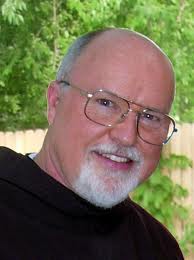
rohrSpeaking in May of 2013 at the Festival of Faiths, Richard Rohr shares his perspective on silences as the only thing broad and deep enough ot hold all of the contradictions and paradoxes of Full Reality and our own reality, too. 99.9% of the known universe is silent,, and it is in this space that the force fields of life and compassion dwell and expand. Rohr insists that we too can live in this silent expanse!

Richard Rohr is a Franciscan teacher, author and founder of the Center for Action and Contemplation.