Unknown's avatar

About Rev. Dawn Hutchings

Retired progressive Lutheran Pastor. Exploring the DIVINE MYSTERY that some call, "GOD," hoping to learn about the LOVE which is BEYOND the BEYOND and BEYOND that also.

Words Will Always Fail Us – A Resurrection Story – John 20:1-18

Christ Is Risen in Us pastordawn

You can listen to the story here

The doctor who signed her death certificate and I crossed paths in the driveway. We recognized one another from the few times that our visits to the house had coincided. I hadn’t been a pastor for more than about a year and I remember thinking the first time I’d seen the doctor arrive with her medical bag, “at least she has some real pain medication in there.” All I had in my bag was a bible and my tiny, little communion kit. Just some old wine and a few stale wafers. I envied the doctor with her knowledge, her pills, her medicine and her skills. The doctor sighed, “Oh thank-God you’re here! They’re a real mess in there.” As I stood there, wondering what to say to that, I remember wishing the doctor had something in her bag of tricks that could give me the courage to enter the house, I felt like a fool. What was I suppose to do?

This wasn’t my first visit. A parishioner had called me just a few months earlier, “Could I go and visit a friend of hers who was dying; cancer it won’t be long now. She iss being cared for at home; she wants to die at home. She used to go to church and now as the end draws near she wants to reconnect.” Would I please go and see her.”

I knew I was out of my depth from the moment I hung up the phone. I thought this is it. This is the real stuff of being a pastor. This is where they discover that I don’t have what it takes to do this job. Leading worship, preaching, and teaching is one thing, this,

this is something entirely different. But the parishioner was insistent, her friend, let’s call her Anna, her friend Anna, you’ll never guess she was once a Lutheran; yes she went to Sunday School, Confirmation, had her kids baptized and even taught Sunday School. But since they moved to Newmarket they had fallen out of the habit of going to church. There wasn’t a Lutheran church in Newmarket when they first moved here some ten or was it twenty years ago.  “Anyway Pastor, she really needs to get close to God right now, so I told her you would come; you will go and see her won’t you, I know she’s not a member, but she really needs to get things in order before she goes.”

Standing there in the driveway feeling like a fool, I said good-bye to the doctor and tried to get myself to go inside.The black van in the driveway signaled the presence of the funeral home; there to collect the body. Her husband welcomed me at the door, fell into my arms and said only, “It is almost finished, they’ll be gone soon.” Continue reading

Good Friday Sermons

Good Friday 2016Holy Week marks a sharp uptick in visitors to this blog. From comments, messages, and emails I hear from fellow preachers who, like me, are daunted by the task of preparing the Good Friday sermon. That task is even more daunting for those of us who serve progressive communities. My fellow progressive-christian-preachers tell me of the dearth of progressive-christian Good Friday sermons to be found on the internet and encourage me to re-post my own attempts to rise to the occasion. So, here are the links to some of the Good Friday sermons I have preached over the years of my journey with the progressive community which I serve. The people Holy Cross Lutheran Church has over the years provided an invigorating space for me to pursue my questions. They have also provided the resources which make this blog possible. So, if you find the work posted here  of value to you and your community, please consider supporting this ministry of Holy Cross. I rarely solicit donations. But Holy Cross is a small community that continues to give to others in so many ways and your encouragement is greatly appreciated!!! (Holy Cross Lutheran Church, 1035 Wayne Dr., Newmarket, On. L3Y 1N3)

Follow the links to Good Friday sermons and feel free to use/adapt/repost

2015 Not Salvation! Solidarity and Transformation click here

2014 God Is Dead? click here

2013 Giving Up the Theories of Atonement in Order to Move Toward an Evolutionary Understanding of Jesus. click here

2012 Good Friday Rituals or Crimes Against Divinity? click here

Good Friday: Not Salvation! Solidarity and Transformation

Listen to a version of this here:

rough crossAccording to the American novelist, Joyce Carol Oates: “Homo sapiens is the species that invents symbols in which to invest passion and authority, then forgets that symbols are inventions.” Following last year’s Maundy Thursday worship, I received a very rude reminder of our all too human habit of investing passion and authority in invented symbols. Our efforts to remember the life and death of Jesus of Nazareth are bolstered year after year, decade after decade, century after century by the symbols we followers of the Way have invented and invested with passion and authority. So, after our regular Maundy Thursday ritual of removing invented symbols from the sanctuary, I went looking for our own sacred Good Friday symbol. Each Maundy Thursday, we followers of the Way get together to remember Jesus by focusing upon the symbols which represent to us the events of the night before Jesus died, when he gathered his followers together to eat the Passover meal. At that supper Jesus took bread, gave thanks and broke it and the rest as they say is history. Our Maundy Thursday Eucharist is packed with symbols, from the hand-basins in which we ritually wash one another to remember Jesus washing of his followers feet, bread and wine which we ritually consume as Christ given and poured out for us, to the ritual stripping of the sanctuary of all of the symbols in which we have invested passion and authority, in our efforts to re-member Jesus.

The rituals of Maundy Thursday prepare us for the rituals of Good Friday and so after our worship, I went downstairs to venture into the cupboard under the stairs to retrieve the stark symbols of this congregation’s Good Friday rituals. It is the same every year, a rough-hewn cross, fashioned out of the trunk of a Christmas tree that once adorned this sanctuary. A Christmas tree – evergreen, a symbol in which we invest our passion for everlasting life, stripped of it’s branches so that only the trunk remains and then cut so that the top section can be lashed with twin to the main section to fashion a cross of sorts. A rough-hewn cross in which we invest our passion for what we have come to call the passion of Christ. Each year, once the sanctuary is stripped of  all the symbols which we have invented to facilitate our ritual remembering, I journey down beneath the stairs to retrieve our rough-hewn cross to facilitate our Good Friday remembering. This year, I had designed our remembering ritual, so that we could pay particular attention to our rough-hewn cross. This sermon was built around an exercise of re-membering which I hoped would help us to participate in the very act for which symbols are invented. Symbols are created to point beyond themselves, to direct our focus to that which lies beyond the symbol. This year, my Lenten sermons had focused on a definition of Divinity which describes God as beyond the beyond and beyond that also. So, this Good Friday sermon was written to use our rough-hewn cross to examine the work of the cross in the lives of the followers of Jesus, so that we might see beyond the symbol to the One who is beyond the beyond and beyond that also. I planned to place the rough-hewn cross here on the floor of the sanctuary, right in the middle of our circle so that as the Gospel according to John’s symbolic narrative, which has become known as the Passion Narrative, was read you could gaze upon our rough hewn cross and as my sermon began I would literally and figuratively take apart our invented symbol so that we might peer beyond it. I planned to sit here in the midst of you and unlash the vine that held our rough-hewn cross together and as I untied the vine, I would do my level best to untie the bonds that our religious tradition have placed upon the symbol of the cross and perhaps encourage you to question the passion and authority which is all too often invested in this invent symbol of the life, death, and resurrection of Jesus of Nazareth. Then with dramatic flare, I planned to put it back together again. As I used the old Christmas tree trunk to pull together our history and tradition, and the withered vine to lash our troubled attempts to remember back into the form of the cross in the hope that we might see the cross from the perspective of the 21st century followers of the way which on this day of days we struggle to be. Continue reading

PREPARING TO PREACH ON GOOD FRIDAY. Searching beyond the talk of sacrifice to see the Good News.

The Church’s Good Friday obsession with talk of  “sacrifice for sin” has been breed into the bones of this particular preacher.  I have been trained to speak the language of the Church.  I know full well the many doctrines of atonement that have been proposed to explain the reasons Jesus died upon a cross.  I’ve been studying the historical context and the theological consequences of Jesus’ death for more years than I care to admit.   Yet every year, I find myself wanting to book a vacation or call in sick so that I can avoid the awesome task of preaching on Good Friday.

I put off tackling the Good Friday texts as long as I dare.  Then I pick up my copy of “The Last Week” by John Dominic Crossan and Marcus Borg, together with my copies of John Shelby Spong’s “Resurrection: Myth or Reality” and “Jesus for the Non Religious” as well as Marcus Borg’s final book “Convictions” and Dom Crossan’s “How to Read the Bible and Still Be Christian” and James Carroll’s  “Christ Actually: the Son of God for the Secular Age” spend days in pursuit of a sermon.

What follows is not the sermon I will preach on Good Friday, but rather, the notes I made a few years ago to remind myself not to fall into the trap of talking about the events surrounding Jesus’ death in the way I was trained to speak of those events.  I offer up my notes hoping that those who are engaged in the struggle of grappling with how to talk about the cross in the 21st century might find some solace in a fellow struggler’s ruminations.  For those of you who don’t have to come up with a sermon for Good Friday, I offer these notes as my humble attempt to see beyond the rhetoric about the cross to the Good News. As always I am indebted to the progressive scholars for their invaluable resources. However, in the end, the only way to discover the sermon is to wander into the darkness, trusting that the hours of preparation will allow you to let go, breathe, and trust the One who lives in, with, through, and beyond you. 

There are many ways in which our focus upon the cross is disturbing.   Not the least of which is the way in which we as Christians tend to talk about the crucifixion as Jesus’ passion.  I have always thought it a tragedy that we should describe the events of Jesus’ crucifixion as Jesus’ passion. I’ve always understood talk of an individual’s passion to be concern with those things that people lived for. And so to insist that Jesus’ lived to die a horrible death might sooth those who seek to turn Jesus into some sort of preordained blood sacrifice.

But for those of us who look to Jesus in search of the face of God, such talk seems is indeed a crime against divinity. For what kind of petty, sadistic god would engineer the birth of, foster the life of, and then engineer the death of a beloved child. Surely such a god is no more than a wicked illusion of our own making. I wonder what Jesus himself would make of the god we have created. I wonder what Jesus himself would make of our Good Friday commemorations? I suspect that if Jesus is anything like the accounts of his life suggest, he would be mortified, and I mean that literally…I think that Jesus would be mortified …mortified ie shamed to death…of what has become of his life’s passion; for if Jesus’ was passionate about anything, he was passionate about life. Jesus declared, “I have come so that you may have life and live it abundantly.” Jesus’ passion was about living. Living fully, abundantly.  Continue reading

MAUNDY THURSDAY – When you don’t believe that Jesus was a sacrifice for sin!

I was asked by a colleague, “So, if you do not believe that Jesus died for your sins, then why bother celebrating the events of Holy Week?”  Behind this question lies the assumption that the only way to understand Jesus’ death is to frame it within the context of the theology of “penal sacrificial atonement” ie “we are judged to be sinful creatures, punishment is required, God sends Jesus to pay the price for our sin”.  That Anslem’s theory of sacrificial atonement was formulated in the 11th century and continues to hold sway in the minds of so many followers of Christ is a testament to the power of our liturgies and hymns to form our theology.  However, Anslem’s theory is not they only faithful way to understand Jesus’ death.  

When one seriously engages the question, “What kind of god would demand a blood sacrifice?” the answers often render God impotent at best and at worst cruel and vindictive. I have often said that atonement theories leave God looking like a cosmic son of #%#%# !  Progressive Christian theologians are opening up new ways of understanding the death and resurrection of Jesus that empower the faithful to see new possibilities.  To my colleague, who fears that I am leading the faithful astray, and to those who find little comfort in the theories of an 11th century monastic, I the following notes, crafted in my preparation to lead Maundy Thursday worship.

Jesus said, “I give you a new commandment:  Love one another.   And you’re to love one another the way I have loved you. This is how all will know that you’re my disciples: that you truly love one another.” That we should love one another is not a new commandment. There have been many before Jesus and many who came after Jesus who have commanded, advised, encouraged, implored, and even begged us to, “love one another.”

What is new about Jesus commandment is that we are to love one another the way that Jesus loved us. Which begs the question:  How exactly did Jesus love? I believe that Jesus loved in ways that I am only beginning to understand. I believe that Jesus was so open to the power of the LOVE that is God; that Jesus was able to live his life fully without fear. I believe that Jesus wanted more than anything else for his followers to be so open to the power of LOVE that is God so that they too would live their lives fully without fear. I believe that that’s what Jesus meant when he said, “I have come that you might have life and live it abundantly.” I believe that Jesus lived life abundantly and that means that he loved abundantly and without fear. Jesus was so open to the power of LOVE that is God that Jesus would not let the powers of darkness stop him from loving and living fully.

The kind of LOVE that Jesus embodied and taught has no boundaries.  No darkness, no power, no fear, not even death can limit the power of LOVE. For if LOVE is limited by death, then love will always be qualified and quantified. That Jesus was willing to LOVE without boundaries, came at great cost to himself. But Jesus was willing to pay that price in order to show  others the way. The way to LOVE without limit, without fear, without boundaries.

LOVE without boundaries is abundant life. That Jesus’ LOVE endured the worst that the world could send his way, that Jesus’ LOVE was for all the world, dead and buried, and yet bursts free from the grave, bears witness to the power of LOVE. That Jesus LOVE could not be destroyed, not even by the thing we fear the most, death itself, saves us from the need to fear death.

Jesus has shown us the way. We can live abundantly lives that are free from the fear of death. Because Jesus has shown us the way we are free to live fully, to love extravagantly and be all that we were created to be.

LOVE shines in the darkness and darkness shall not overcome LOVE.

If Jesus, life, death, and resurrection teach us anything, surely they teach us not to be afraid.

Not to be afraid of the darkness.

Not to be afraid of living fully.

Not to be afraid of loving extravagantly.

Not to be afraid of the powers of evil.

Not to be afraid of the power of death.

LOVE will endure.

All will be well.

Jesus can’t save us from life.

There is evil to contend with.

There will be darkness and there will be death.

Jesus couldn’t save himself and he cannot save us from life. Darkness and death are part of life.  Each of us must walk into the darkness that lies before us.  We can beg God to take the cup from us!  But the darkness will still come.  And there will be days when the darkness will triumph.  There are good Fridays too many to mention out there.  We can shout all we want for Jesus to save us, but in the end we too will have to take up our cross and find a way to follow Jesus into the darkness and beyond, trusting that even though it feels for all the world that God has forsaken us, we will make it beyond the darkness.

The cross will not look the same for each of us. But there will be crosses to bear. Jesus has showed us the way. If we are to follow Jesus, then we must love one another they way that Jesus loved.  It is the way beyond the darkness. Do not be afraid of evil, of death, or of the darkness. Follow Jesus who by love frees us from the power of darkness to hold us captive to our fears so that we can have life and live it abundantly.

How exactly did Jesus love?

Without limit.

What did Jesus save us from?

Our fears.

Hosanna! Hosanna! Hosanna! Yada, Yada, Yada, we’ve heard it all before…a sermon for Palm Sunday

on a donkeyOur worship began outside in the bright sunshine of the first morning of springtime, where we spoke of the reenactment of one of the two parades that took place in Jerusalem nearly 2000 years ago. Embracing Jesus’ political act of performance art we processed into the sanctuary waving our palm branches and shouting our hosannas. Rather than the familiar Palm Sunday readings our worship included the story from Genesis chapter 32 which tells of Jacob wrestling with God, Psalm 118, and John 12:12-15. you can read them here and listen to the sermon here

Approaching the Resurrection – What Did Paul Actually Say?

trouble with resurrection

Far too many preachers stumble into the celebration of Easter without doing our homework. Resurrection is a central tenant of the Christian faith and Easter is the primary celebration of resurrection and yet, too many of us fail to open ourselves to current scholarship surrounding the doctrine of resurrection. Questions about the nature of the resurrection ought to send us back to the words of the Apostle Paul. Bernard Brandon Scott is a charter member of the Jesus Seminar. His book “The Trouble with Resurrection” is a must read for those who preach during the Easter Season.

If you are planning to write a sermon or listen to a sermon this Easter, this video provides essential background information about the words of the Apostle Paul on the nature of the resurrection which may surprise you. Scott’s treatment of 1 Cor. 15 provides a new understanding of resurrection which is compelling as well as liberating.


Palm Sunday Sermons

palm donkey view

Jesus: Human or Divine?

Marching in the Wrong Parades

On Palm Sunday, An Inconvenient Messiah Parades Into our Midst

Jesus Sets Us Free to Save Ourselves

Jesus is still up there on that ass making a mockery of our hopes for a Messiah!


Something About Mary’s Extravagance: a sermon for Lent 5C

anoint 2

Readings: Deuteronomy 15:7-15 and John 12:1-8

Listen to the sermon here

Those Marys, St. Patrick, and the Daughters of Zelophad: Faith and Begorrra – John 12:1-8

Once again the story of the Mary who anointed Jesus comes to us when St. Patrick’s Day is just around the corner. So I’m reposting this sermon I preached three years ago because the memory of preaching with a Guinness glass still makes me chuckle.  The best way to fully appreciate this sermon is to pour yourself a glass of your favourite tipple, sit back, listen and enjoy a laugh. For those colleagues who are busy searching for sermon ideas for this coming Sunday you can read my attempt to write with a Belfast accent below…you’ll probably need a tipple of some-at to get tru it! Cheers!

Readings:  Numbers 27: 1-11; Acts 13:44-51; John 12:1-8

guinnessbeerSt. Patrick’s Day doesn’t often fall on a Sunday, but as our congregation’s Annual Meeting would begin immediately following our worship service, I decided to be somewhat playful and irreverent with a sermon designed encourage folk to think beyond words on a page. The first reading brought the wonderful story of the Daughters of Zelophehad to church and as this reading does not appear in the Revised Common Lectionary it was fun to play withirish these feisty women. The reading from the book of Acts is actually the prescribed reading for the commemoration of St. Patrick and the Gospel text is prescribed for Lent 5C. The Guinness was just for fun! Enjoy.

Listen to the sermon

https://pastordawn.com/wp-content/uploads/2013/03/st_patricks_sermon.m4a

It’s not every year that St. Patrick’s Day falls on a Sunday. “An so,” and so, that’s a very Irish expression. At least it is in some parts of Ireland. You’ll hear someone use that wee phrase, usually at the end of a sentence. An so…Sometimes they follow it with iy….and so, iy. But not from the part of Ireland that my people are from, sure the never said that. An so… What was I sayin? Sure it’s not every year that St. Paddie’s Day falls on a Sunday. And I don’t think it will every happen again that you’ll get all three lined up together like this, St. Paddie’s Day, Sunday and Holy Cross’ Annual Meeting. And so…. So, let me be tellin ye…Such a grand and glorious day as this, calls for a sermon like no other, an so…

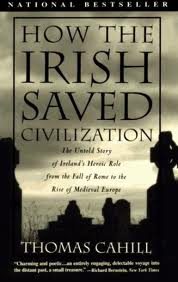
I brought props. Sure St. Paddie had his shamrocks and faith and begorra…an so…I have a book….A book called, “How the Irish Saved Civilization: The Untold Story of Ireland’s Heroic Role from the Fall of Rome to the Rise of Medieval Europe.” By none other than Thomas Cahill, himself. Faith and begorra…did ya ever in all your life hear such a ting as dat??? But that’s not all, I’ve sumtin else…

Take a look at that there??? Sure there’s nothing better on a St. Paddie’s morning than a glass of Guinness….an so… Well you’ll notice that this here particular glass of Guinness, well she’s as empty as Paddie’s pig on market day… An so…for the rest of this wee sermon you just think of me as the preacher who had we tipple before she set about tellin ya what’s what. My glass might be empty, but my heart is full… Full a the devil some may say…or full a the love a Jesus if the truth be told…an so… Where was I? Yeah, sure it’s St. Patrick’s Day and all the world is Irish if only until ya fill there glass. And then faith and begorra…that’s when the truth comes out. That’s when you find out who really saved the world. Now like any good Irish story, we’re gonna wander a bit…so falla me, for like my dear old Nannie used to say, you’d better falla me cause I’m right behind ya. That’s right falla me I’m right behind ya. But that should be no trouble for you lot, cause ya haven’t touched a drop. Yet. And a drop is all you’ll be gettin for have ya seen the size of those Jeesus jiggers;  Why you wouldn’t quench the thirst of the devil’s flees with the wee titch of wine they give ya in dose wee glasses. An so…the Irish and those that want to be Irish well this is a big day indeed. An so… I want to tell us all, exactly how the Irish saved civilization, an, an, I’m gonna tell the truth about St. Patrick himself…an, an, while I’m at it, I wanna take to use about those Daughters of Zolophehad, now there were a bunch of girls if you know what I mean…and speaking about a bunch a girls, while I’m at it I wanna tell ya all about those Marys…Faith and begorra, who’d be havin it?

Sure there’s Mary de Mother of Jesus, and then there’s Mary Jesus’ best friend, you know the girl from over Bethany way…and then there’s that lovely Mary, you know the lovely girl from over there in Magdela who everyone is after confusing with dat other woman, the one the call, Mary who really wasn’t Mary at’al, at’al, at’al… Sure wasn’t she after being healed, her being a sinner from the city and all…Sure there’s more Mary’s in this story, than I have time to be tellin ya about. So, we’ll just leave Mary the mother of Jesus out of it, cause she’s got nothing to do with this really. Unless of course, I loose me, way…and then begorra, I be Jesus, Mary and Joseph, this and Jesus Mary and Joseph that…an so… Were was I ??? I was needin a wee drink that’s where I was…. Continue reading

Amidst the Stink, Be Extravagant for Christ’s Sake – John 12:1-8

anointA sermon for Fifth Sunday of Lent read John 12:1-8 

I got my very first job when I was just ten years old. Our neighbours were going away on holiday and they needed someone to take care of their cat. Now I have never been a cat person. In fact, if the truth be known, I’ve always been sort of afraid of cats.  When I was little I was terrified of them. But as I grew I learned to control my fears and these days I just tend to avoid cats. I don’t really know why, they just give me the creeps. Back when I was ten, cats still had the power to make me very nervous. But our neighbours tempted me with the promise of a dollar a day for ten days. All I had to do was go into their house each day and feed their cat. There was no litter tray to deal with because back then people still had those little trap doors and the cat could go outside whenever it needed to. So, I signed on and each and every day for ten days I mustered up all my courage and I went into the neighbours’ house and I opened a tin of cat food and I filled a dish with water. I did it as quickly and as quietly as I could and in ten days not once did I ever run into that cat. When the neighbours came home they were so delighted with the good job that I had done that they actually gave me a whole dollar as a bonus. Eleven whole dollars, I was wealthy beyond my wildest dreams.  I knew exactly just what I was going to do with that money. You see, Christmas was just a few days away and for the first time in my life I had money to buy Christmas presents! My parents insisted that there was no need for me to buy Christmas presents and they suggested that I should save my money. But I just had to buy presents. To this day I can still remember the joy of hoisting my hard earned cash onto the drugstore counter to purchase my carefully selected merchandise. I can still remember those two amazing gift sets. The first one was for my Dad.  It was manufactured by the Old Spice Company and inside it had a soap on a rope, and a two bottles. One of the bottles contained after-shave and the other something called men’s cologne. I didn’t know what cologne was so I had to ask the saleswoman who explained that it’s what they call perfume for men, and I knew that my Dad just had to have some of that. Now the second gift set was a real bargain it was made by Yardly. I wasn’t fooled by all those tiny bottles of perfume that were so much more expensive.  No, I picked the gift set that had the biggest bottle of perfume. It also had a big container of something that looked like talcum powder but the container said it was actually dusting powder and it came with a little puffy yellow thing for dusting the powder all over your body. I knew that my Mom would just love this. Together the two gift sets cost a just few pennies less than eleven dollars. I don’t think that I have never enjoyed Christmas quite the way I enjoyed that one.

There is something about giving the most extravagant gift that you can afford that brings a special kind of joy to a celebration. Why that Christmas the people that I loved the most in the whole world may have stunk to high heaven, but I dare say my extravagant gift brought them great joy. Maybe that’s why I love this particular gospel story. There’s just something about the outrageous extravagance of Mary’s gift to Jesus that just makes me want to cast caution to the wind and be as extravagant as I can be. A version of this story is told in all four of the gospels. The story is told differently in each of the gospels, sometimes the anointer is Mary of Magdala, sometimes Mary of Bethany and sometimes the women is unnamed, one gospel writer has the woman anoint Jesus head while another account has her anoint his feet. But however the story is told, the act is outrageously extravagant.

The story is so remarkable that each of the Gospel writers include it in their proclamation. So what was it about this event that caused it to be told over and over again and why did they tell it the way in which they told it? The only way to get close to an answer is to fully engage ourselves in the story itself. The writer of the Gospel of John wrote his account at the end of the first century, some 60 to seventy years after the event. By this point the story would have been told over and over again, and you know what happens when people tell a story over and over again…It takes on a life of its own. So, for a short time, I want you to set aside your historical hats and simply walk with me into the story to see what we can learn about how people in the year 99 might have heard this story. Continue reading

“I Am Woman” – Angry on this International Women’s Day

International Women's DayIn 1972, I was fifteen years old and the number one song on the radio was “I Am Woman” by Helen Reddy. We sang it with such power and conviction because “I Am Woman” had become our anthem; the anthem for a generation of women. So, we sang determined to blaze trails for ourselves that would ensure that women all over the world would be counted as equal. The year that I graduated from high school (1975) the United Nations declared as “The Year of the Woman” and they chose our anthem, “I Am Woman” as the theme song and once again “I Am Woman” rose to the top of the charts.

As I grew into my womanhood  and explored the contours of feminism my sisters were “Doin It In the Streets,” marching for equality, demanding equal rights, and yes, we burned our bras. In the midst of the battle for equal rights for women and girls, the advertising industry announced proudly, “You’ve come a long way baby!” as they rolled out a cigarette designed just for woman (Virginia Slims); packaged and marketed just for women. “You’ve come a long way baby, so stop all your hooting and a hollerin. Settle down, it’ll happen! Don’t shout! Don’t be so angry you feminists! You don’t need to be a feminist. If you want to get ahead, just play the game.”  So, I bought a power suit and I learned to do it better, and smarter, and faster than the men did it. So that I could make half as much as the men did.

Later, much later, when I realized that the business that I was in wasn’t making me happy and I discovered my true vocation, I knew that if I was gong to be taken seriously as a “woman pastor” I would have to study very, very, hard. So, I read more books than my male classmates did, went to more lectures, took more classes, earned more credits, explored more possibilities and managed to graduate from seminary at the top of my class. When I graduated from seminary in 1998, my bishop out in British Columbia, told me that although there were vacancies in his Synod, “none of those vacancies would translate into a call for a woman.” The rest as they say, is history, not her-story, but his-story.

B.C.’s loss was my gain and thanks to the good folks of Holy Cross, I was called to the best place in the world and in the past sixteen years we have come a long way baby. So maybe there’s no need to write about International Women’s Day. After all, we’ve been there, most of us have bought the T-shirt all of the women in my life are strong and invincible and all of the men of are feminists. We’ve come a long way baby. So, let’s just cheer Jesus on as he turns the tables over in the Temple. It is tempting to give Women’s Day a miss. I have come a long way. Baby! But I am white and I am wealthy. I am a person of privilege; the privilege of my race and the privilege of my class, mean that I can say I’ve come a long way baby and mean it. But the world that I live in may be bought and paid for by the blood, and sweat, and tears, of the countless women who continue to suffer in the oppressive systems and structures that enslave more than half of the world’s population. Our wealth, class, and race, may insulate us from the pain of our sisters, but even we can fall victim to violence and economic hardships that generations of discrimination have enshrined in our society. Those of us who enjoy the privileges that enable us to insulate ourselves from the harsh reality of economic abuse are just moments away from the dangers of physical violence, domestic abuse, sexual assault, and poverty in our old-age. There are lots and lots of reasons not to bother preaching to the converted about International Women’s Day. Sadly, there are millions and millions of reasons to preach loudly, long, and passionately about the plight of women in the world.

Equal pay for equal work, most of us agree, a few continue to hesitate, despite the fact that there are countless economic studies that demonstrate the equal pay for equal work is good for men as well as women. In 2015, the United Nations communique declared that at the current rate it will take seventy years for women to reach pay equity and that includes Canada, the United States and Europe; seventy years!  Continue reading

Just Wave the White Flag of Surrender and Go Into the Party: a Sermon for the Lost – Luke 15 – Lent 4C

prodigalI am indebted to Amy-Jill Levine’s book “short stories by Jesus” and Bernard Brandon Scott’s book “Hear Then the Parable” for challenging to look beyond the Christian bias of interpreting Jesus’ parables through the lens of the repentance and forgiveness and attempting to hear this story in ways more in keeping with Judaism. 

Following the reading of the three parables of the Lost from Luke 15, we watched the video “Prodigal” before the sermon. You can watch the video below and then listen to the sermon here 

Listen to the sermon here:


Prodigal Pirate Tragedy?

prodigal childKester Brewin certainly has a different take on the story of the prodigal! Pirate Theology is not a homiletical method that I’ve ever employed. But then pirates tend to work for themselves. Brewin’s playful pirate theology encourages us to leave our places of comfort in order to view a familiar story as a tragedy in order to grasp what he calls “radical theology” in which we take responsibility for who we are rather than defer to “the Big Other”.

Brewin is a founding member of Vaux-London, a collective of artists and faithful urban dwellers that served as an early model of fresh expressions of church in the UK.

Kester teaches Mathematics in London and works as a consultant for the BBC, as well as writing for the national educational press. He is also an acclaimed poet and has been described by Brian McLaren as ‘one of the leading public theologians for a new generation of thoughtful Christians.’ 

Lost and Found – an interactive exercise on Luke 15 for Lent 4C

lost-and-foundThree years ago, when Luke 15 came up in the lectionary, I tried something very different – in place of the sermon I tried an interactive exercise designed to help the congregation experience the parable. I was inspired by a lecture I heard down in Chautauqua when Jewish New Testament Scholar, Amy-Jill Levine was exploring the parables.

Listen to the interactive exercise/sermon here

You can watch Amy-Jill Levine’s lecture which inspired me to challenge the congregation to move beyond allegorizing this parable here (look real close and you’ll see me down near the front, just soaking it al in!

The Foolishness of God – a sermon for Lent 4C – Parables of the Lost


foolishness of godAmong the teachings of Jesus, the parables of the lost and found are so well known, so familiar that we are in peril of failing to hear the foolishness they advocate. Although only a few of us have had the opportunity to tend a flock of sheep, most of us at one time or another have been responsible for the welfare of a flock. And whether that flock be sheep or co-workers, clients, customers, students, friends, or children none but the foolish among us would leave 99 to the perils and dangers of the wilderness in order to go looking for one idiot who’d been stupid enough to get themselves lost. We may not keep our coins at home, but I daresay that most of us have felt the sting of loosing a drachma or two or three in this recession. Only a fool would waste a moment searching for our losses when our portfolio’s are so full. I dare say that if we managed to find  or recoup our loss, we’re hardly likely to invite the neighbourhood to a party that would in all likelihood eat up more than we had found. Parents, and all of us have been parented, so we know the wisdom of parents not rewarding bad behaviour. Most of us are law-abiding. We all want what is best for our own parents, and so I don’t think any but the foolish among us would consider celebrating the return of someone who has hurt our parents in the past.

These parables of the lost and found are outrageous. None of us would get very fare in life if we lived by these teachings. It is better to put the welfare of the many above the needs of one. It is pointless to cry over spilt milk. Sometimes its better to cut your losses and move on. The best accountants learn quickly to write off losses that would be too time consuming and costly to recoup. Children need to learn that they can’t always get what they want; that there are consequences to their actions, that dues must be paid, that we need to ask for forgiveness and make amends for our crimes, that rules need to be followed, and laws cannot be broken. That doing the right thing will be rewarded. And yet along comes Jesus, spouting such foolishness that even we who are predisposed to agree with him, even we can sympathize with the self-righteous and wonder how anyone could be expected to live like this.  Continue reading

God Finds Expression In, With, Through, and Beyond Us – a sermon for Lent 3C

Love Julian copy

Reading Luke 13:1-9 – listen to the sermon here

The Fox is in the Henhouse – a sermon for Lent 2C – Luke 13:31-35

foxPope

Our Lenten journey continues even as the news of the day challenges us. Listen to the sermon here

Carcasses Torn Asunder – Do We Really Have to Listen to This In Church?

Genesis 15:1-12,17-18 – Musing About Genesis Bloody Carcasses

Genesis 15From time to time, the prescribed readings from the Common Lectionary fill me with dread and despair. Something about those bloodied, split, rotting carcasses that sealed the deal between God and Abraham makes me wonder about the nature of the god we have projected into the heavens and ask: Have we evolved or has God? The story of God’s promises to the “Chosen People” portrays God as a churlish player in humanity’s game of tribal rivalry. While I’d rather not preach on the text from Genesis this Sunday, I know full well that simply reading this text during worship without elaboration, will if folk are paying attention, leave a distasteful oder in the sanctuary  that will surely spoil our appetite for our common meal of body and blood disguised as bread and wine.

The readings for this coming Sunday have me thinking about tribalism. There’s always more than one way to look at things. Tribalism has served us well. New people to meet can be exciting or it can be frightening. Taking comfort with your own people is wonderful, but taking too much pride in your own kind is dangerous. One minute you’re cheering for your team the next minute you’re hurling insults at the other guy and one too many insults and the next thing you know you’re at war. A little tribalism is a good thing, but how much tribalism is too much? Tribalism is a basic human survival instinct. Tribalism is lodged deep within our psyches and has been from the very beginning of time. Tribal is part of our primordial selves. Tapping into this basic human instinct can mean the difference between survival and death.

Tribal thinking exists on almost every level of human life, from the international to the local. Attack a human on any level and that human will resort to instinctive behaviour. When threatened humans have two basic instincts, fight or flight and the choice between the two often comes down to tribalism. If you have enough people to back you, you’ll probably choose to fight. Not enough people and you’ll probably choose flight.

Human kind has evolved a great deal over the centuries but we haven’t evolved very far from our basic instincts. You don’t have to scratch a fan too deeply to find the primitive tribal mentality. Tribalism is seen in the way we portray our rivals. I once heard a Kiwi say, “I root for two teams, New Zealand and whoever is playing Australia.” Sporting competition is all well and good, but when tribalism is carried to its worst possible conclusion, wars beak out. Tribal feeling is then exacerbated in times of war, and tribal propaganda is used to dehumanize our enemies to make it easier to hate or kill without any qualms of conscience.           We don’t kill human beings in war; our victims are not someone’s child, spouse, or parent.  NO, one kills either, the Huns, the Krauts, the Japs, the Nips, the VC, the insurgents, the fanatics or the terrorists.

There is within us all a basic, dominant, intrinsic fear of those tribes different from our own, a predisposition to be on guard against them, to reject them, to attack and even to kill them. This tribal tradition arises out of our deep-seated survival mentality and it feeds something at the heart of our insecure humanity. We are tribal people to our core. Far more than we will consciously admit, the religions of the world including Christianity rise out of and undergird our tribal thinking. Continue reading