Retired progressive Lutheran Pastor. Exploring the DIVINE MYSTERY that some call, "GOD," hoping to learn about the LOVE which is BEYOND the BEYOND and BEYOND that also.
Following our worship, our Annual Congregational Meeting began and we had plenty of opportunities to talk about the things we value about Holy Cross and the various transformations that we have experienced as well as our hopes and dreams for the future.
Back in November of 2015, my Mom, who lives in Vancouver, fell. The fall was the cumulative effect of years and years of ill health, which for all sorts of reasons my Mom was unable to face; ill health that my family has fretted over and worried about. But no matter how hard we tried, it took a fall to get my Mom into the hospital. Many of you know the pain of living thousands and thousands of kilometers away from loved ones. The telephone rings and suddenly your life is turned upside down as you anxiously try to decide if you should book a flight, pack a bag, and rush to the bedside of someone you love. As I was agonizing over whether I should or shouldn’t rush out to Vancouver, my brother called and said that I needed to come right away. The sound of my brother’s voice cracking in mid-sentence convinced me to move heaven and earth in order to race to Vancouver, in order to sit at what we were now convinced would be my mother’s deathbed.
As a pastor, I have had the privilege of being present with all sorts of people as they sit vigils with their loved ones. Over the years, I have learned the value of a quiet, gentle, presence to accompany us in the darkest of journeys. In my head, I knew that whatever my family was about to experience, all that was really necessary was for me to do was to be present. So, I went to Vancouver, not as a pastor, not as someone who has been trained to be a non-anxious presence in the midst of a crisis, not as a professional who has accompanied many people on this kind of journey, not as Pastor Dawn; no on this journey I was simply, as my Mom calls, me when she wants to talk seriously to me, “Dawn Lesley”, a little girl, terrified of what lay in front of me.
The flight to Vancouver is about five hours long and during that five hours, I imagined what it would be like when I arrived and I tried to steel myself. My family is not what you would call religious, they don’t go to church, they don’t much talk about what they believe in, and they view my involvement in the church as a bit of strange; I’m an oddity in my family. They don’t really know this persona, Pastor Dawn is a mystery and to them I am simply their daughter Dawn, or their sister, or their Auntie Dawn. To the youngest members of the family Carol and I are lovingly referred to as their far-away aunties. We fly in for a visit every once in a while and the history that I share with my family, reminds us of the love we share for one another, and carries us through our all too brief encounters. The history that we share filled my thoughts as the plane carried me and all my baggage home; home so that I could be present for whatever might happen. The seats on either side of me were empty. Normally, empty seats on a plane, meant more room to stretch out and be more comfortable. But this time those empty seats only served to remind me of my own emptiness. I wanted Jesus to be in the seat beside me. I wanted God the “Father” to be in the other seat. And I wanted the Holy Spirit to be outside the plane somewhere holding us all up there in the sky, keeping the plane safely above the clouds. I wanted the Father, Son, and Holy Spirit to keep me safe, to comfort me, to take care of my Mother. I wanted the big and powerful, Almighty Sky God, to reach down and interfere in the world, and I wanted it right then and there for me and for mine. I wanted that old-time religion, the kind of religion I signed up for way back when, when life was simpler. The kind of religion where all I need was to have faith and God would answer my prayers. Instead, all I had with me was my iPad full of theological books about the nature of God, the historical Jesus, and progressive Christianity. Cold comfort when your tens of thousands of feet up in the sky, hurtling in a metal tube towards a situation that strikes fear in your heart and could rob you of your Mother. Somehow, the Ground of my Being, the One Who Lies at the very heart of Reality, the God who Is LOVE, was obscured by God the Father, the Almighty Idol who served me so well in the past, was back, and the only problem was that I have long since stopped worshipping idols.Continue reading →
As many of you know, one of my favorite ways of attempting to name the DIVINE comes from the fourth century Bishop Augustine of Hippo. Augustine’s trinitarian formulations describes the DIVINE Creator as the LOVER, Christ as the BELOVED, and the Holy Spirit as the LOVE that binds them together. LOVER, BELOVED, and LOVE Herself! Remember that Spirit is feminine in both Hebrew and Latin. LOVER, BELOVED, and LOVE Herself!
Now the trouble with words is that words let us down. Words are after all simply symbols pointing beyond themselves to something other than the words. Words are a way to make meaning and to share whatever meaning we make with one another. The trouble with words is that words tend to let us down when it comes to making meaning of our experiences of the DIVINE MYSTERY. Words simply aren’t capable of giving us more than a glimpse of the DIVINE MYSTERY that is the LOVE that we call GOD.
So, even though I’m particularly fond of Augustine’s attempt to describe the DIVINE MYSTERY as LOVER, BELOVED, and LOVER Herself, I realize that even this lovely, pardon the pun, even this lovely gathering of words gives us but a glimpse of the LOVE that we call GOD. Part of the problem is the word “love”. In these parts and in these times the word “love” has become rather wish-washy. I am a child of the 60’s when the word “love” appeared all over the place in stylized letters, with flowers; often daisies, incorporated into the O. “PEACE, LOVE, and Rock ‘n roll,” “Looking for love and feeling groovy…”
In the decades since the sixties the flower-children have all grown up and the groovy part has faded. But from our comfortable positions of North American, upper-middle class privilege, we have a tendency to over-sentimentalize the world “love”. That’s why I had Pat read, Dr. King’s warnings about the kind of love that is sentimental and anemic. Anemic love is endemic these days. Anemic love is rampant in our culture, our politics, and sadly in our churches. LOVER, BELOVED, and LOVE Herself is certainly NOT anemic love. The kind of love that Jesus taught in his sermon on the mount in the gospel according to Matthew, or in the sermon on the plain in today’s gospel from the anonymous-gospel-story teller that we call Luke. Anemic love is simply not up to the task of empowering us to love our enemies. Anemic lovers aren’t capable of doing good to those who hate them, or blessing those who curse them, or praying for those who mistreat them. That kind of love, the kind of love that Jesus is talking about, the kind of love that Jesus taught with his very life and death, that kind of love is anything but anemic. That kind of love is powerful. In the words of Dr. King:
“Now, we’ve got to get this thing right. What is needed is a realization that power without love is reckless and abusive, and love without power is sentimental and anemic. Power at its best is love implementing the demands of justice, and justice at its best is love correcting everything that stands against love.”
Dr. King had that kind of love. I was just eleven years old, when Dr. King’s power was cut down. I can still vividly remember the stunned emotions that poured out from the adults in my life when news of Dr. King’s assassination came over the radio. Dr. King was a hero of mine. I’d followed his quest for freedom and justice for his people and cheered him on from the safety of my living room. To this day, I’m convinced that it was Dr. King’s embodiment of the teachings of Jesus that inspired the curiosity in me that led me to first seek out my mother’s bible so that I could read for myself what it was that this Jesus actually taught. I never went to church as a kid. Most of what I knew about Jesus, I picked up by osmosis. Dr. King’s speeches mesmerized me. But I was just a kid and it would take me decades to begin to grasp the magnitude of Dr. King’s non-violent resistance. Eventually, I would learn that Dr. King was mentored in non-violent resistance by the Reverend Doctor Howard Thurman, who intern was inspired by Mahatma Gandhi. Gandhi’s non-violent resistance overthrew what was at the time one the most powerful empire on the planet. Howard Thurman had traveled to India as early as 1935 where he met Gandhi whose commitment to ahimsa, the Hindu principle of refusing to do harm to any creatures, sent Thurman back to the gospels to discover anew Jesus’ commitment to non-violence. In 1949, Dr. Thurman wrote a little book that Dr. King carried with him throughout his struggles for civil rights. Thurman’s little book entitled, “Jesus and the Disinherited” revolutionized the civil rights movement. In his book, Thurman reminds us that Jesus was a Jewish man and as a Jew he was a member of an oppressed race. Jesus was also poor. Jesus was a member of a race that was oppressed by the power of an Empire that had been established through violence, an Empire that maintained its power through violence and injustice perpetuated upon the poor oppressed. Thurman insisted that as a poor and oppressed man, Jesus new what it meant to suffer at the hands of the powerful. Jesus’ concern for justice was born out of his love for his sisters and brothers who like him were poor and oppressed. Jesus had absolutely no interest in being worshipped or believed in. Jesus wanted to be believed and followed. Jesus could preach good news to the poor because he was one of them. Jesus understood what it meant to preach release from captivity because Jesus and his people were captives. Jesus taught a radical form of non-violent resistance. Jesus’ commitment to non-violent resistant lead him to Jerusalem where he would confront the powers of empire. Jesus’ teachings continue to resonate with the poor and the oppressed where-ever people suffer from the abuses of empire; be they political, military, or commercial empires.Continue reading →
In the Gospels According to Matthew and Luke, the Sermon on the Mount, and the Plain provide distillations of the teachings of Jesus; teachings Jesus lived for, teachings that eventually made Jesus so dangerous to the oppressive Roman Empire that they executed him as an enemy of the state. The very heart of these sermons is Jesus’ teaching on non-violence. I can think of no better way to begin my own preparations to preach on this Luke 6:27-38 than to look to the work of the great Walter Wink. I will always be indebted to this amazing teacher for all that I have learned and continue to learn from him. The videos below comprise the various parts of a lecture that Wink offered on the subject of Jesus’ teaching on Non-Violence. For anyone who aspires to follow Jesus this lecture is a must see. Wink’s books are well worn friends that I have often thumbed through to find more than a nugget or two to enable me to teach anew something that I have long since come to know as a result of Wink’s excellent work! His enlightening trilogy: Naming the Powers, Engaging the Powers, and The Powers that Be along with Jesus and Nonviolence: A Third Wayshould be at every preacher’s fingertips as we proclaim Jesus’ radical way of being in the world. Follow this link to a sermon based on these resources.
Once upon a time, in a poor Chinese village, there lived a farmer and his son. The farmer’s only material possession, apart from the land and a small hut, was a horse that he had inherited from his father. One day, the horse ran away, leaving the farmer with no animal with which to work the land. His neighbours, who respected him for his honesty and diligence, went to the farmer’s house to say how much they regretted his loss. The farmer thanked his neighbours for their visit, but asked them: ‘How do you know that what just happened is a misfortune in my life?’
Someone muttered to a friend: ‘He obviously doesn’t want to face facts, but let him think what he likes, after all, this is better than him being sad about it.’ So, his neighbours went away, pretending to agree with what the farmer had said.
A week later, the horse returned to its stable, but it was not alone; the horse brought along a beautiful mare for company. The inhabitants of the village were thrilled when they heard the news, for only then did they understand the reply that the farmer had given them, and they went back to the farmer’s house to congratulate him on his good fortune, ‘Instead of one horse, you’ve got two. Congratulations!’ they said.
‘Many thanks for your visit and for your solidarity,’ replied the farmer. ‘But how do you know that what happened was a blessing in my life?’
The neighbours were rather put out and decided that the farmer must be going mad, and, as they left, one of his neighbours spoke for them all when he said: ‘Doesn’t the farmer realize that the horse is a gift from God?’
A month later, the farmer’s son decided to break the mare in. Unfortunately, the animal bucked wildly and threw the boy off; the boy fell so violently that he broke his leg. The neighbours returned to the farmer’s house, bringing presents for the injured boy. The mayor of the village solemnly presented his condolences to the farmer, saying how sad they all were about what had occurred.
The farmer thanked them for their visit and for their kindness, but he asked: ‘How do you know that what just happened is a misfortune in my life?’
These words left everyone dumbstruck, because they were all quite sure that the boy’s accident was a real tragedy. As they left the farmer’s house, they said to each other: ‘Now he really has gone mad; his only son could be left permanently crippled, and he’s not sure whether the accident was a misfortune or not!’
A few months went by, and Japan declared war on China. The emperor’s emissaries scoured the country for healthy young men to be sent to the front. When they reached the village, they recruited all the young men, except the farmer’s son, whose leg had not yet healed. None of the young men came back alive. The son recovered, and the two horses produced foals that were all sold for a good price. The farmer went to visit his neighbours to console and to help them, since they had always shown him such solidarity. Whenever any of them complained, the farmer would say: ‘How do you know that what just happened is a misfortune?’ If someone was overjoyed about something, he would ask: ‘How do you know that what just happened is a blessing?’ And the people of the village came to understand that life has other meanings that go beyond mere appearance.[i]
Jesus’ comments about blessings and woes are sometimes interpreted as a forecast of what is to come. The poor shall be rewarded, the hungry will be filled, those who weep will laugh, being hated scorned, insulted, and spurned won’t be so bad because this will gain you a great reward. But woe to those who are rich because you’ve had yours now and there won’t be more of that. Woe to you who are full because you are going to be hungry. As for those of you who are laughing now, woe is me you are going to weep in your grief. As for you whom folks speak well of, well we all know what horrors are in store for you because we’ve seen it all before. It’s as if these blessings and woes are a kind of prediction of a reversal of fortunes.
Well if that’s true, I have only one thing to ask of Jesus: Where’s the good news? What’s the point of predicting that things are going to be turned upside down? Is Jesus really pointing toward a Creator who is nothing more than a judge who’s going to punish those who appear to have one life’s lottery, so that the apparent losers can become apparent winners? Well as someone who is blessed beyond measure, I don’t really want to know let alone worship such a Deity. And I can tell you this, I hope that even if I was poor, I wouldn’t wish poverty on my worst enemy, even if that enemy was a greedy, filthy, stinking, rich so-and-so. After all is said and done, isn’t Jesus the rabbi who lived and died teaching the way of LOVE? Cleary, we need to look beyond interpretations that set up the apparent winners and losers as players in a perverse game of reversal of fortunes. It’s long past time for us to move beyond a quid pro quo philosophy that pits winners and loser against one another as if the only way we can have winners is if someone loses.
So, where is the good news here? Good news for the rich and the poor? Good news for the hungry and the fed? Good news for those who weep and for those who laugh? Good news for the winners and for the losers?Continue reading →
I went to high school on the West Coast in a small town called Ladner. Today, Ladner is pretty much a suburban bedroom community from which people commute to their jobs in the city of Vancouver. But back in the early 1970’s, Ladner was a small fishing village. It was a terrific place to go to high school; that is if you were white, middle-class and male. I don’t really know how it was for the handful of folks who weren’t part of the white majority. I remember when I was in grade ten; a new girl showed up in our classes. I’ll call her Shirley for the purposes of this sermon. Shirley, we were told, came from somewhere way up north in British Columbia. Shirley wasn’t part of the majority, back then we called Shirley’s people “Indians.” I remember our homeroom teacher introduced Shirley as an Indian who had travelled south for her education. We were told that there weren’t any high schools where Shirley came from, so she had to leave her family behind and come down to Ladner all by herself. She was boarding with a family in Ladner.
About all I can remember about Shirley’s first days with us is the unusual way that Shirley dressed. Back then there was a sort of dress code. We all wore the same stuff, blue jeans, not just any blue-jeans, mind you, we wore a brand called Seafarers which had bell-bottoms, that dragged on the ground. Both boys and girls wore white tee-shirts and you just had to have the latest thing in foot wear: leather adidas running shoes. We thought we were so cool, with our anti style, which in our rebellious naiveté we didn’t realize was actually a style in itself. Shirley didn’t fit in, because she wore what we openly mocked as stylish clothes. I remember that all her cloths looked new and expensive as if someone had taken her out and bought her an entire wardrobe of old people’s cloths; and by old people I mean 30 somethings. She just didn’t look like one of us. But that didn’t really matter because Shirley wasn’t one of us and so we never included her in anything we did.
After Shirley had been in our school for a few months, I remember a social studies class in which the teacher asked Shirley to tell us about her life in Northern British Columbia. The tale that Shirley told us about the reservation on which she lived was unbelievable to our young ignorant ears. Shirley claimed that she had been forced against her will to leave her family behind and travel all by herself to live with a family that was only interested in the money that the Indian Affairs department paid them for her room and board. She said that her parents would be thrown into jail if she wasn’t in school even though there was no school anywhere near the reservation. She said she’d run away several times, but that she’d always been caught, and her family was punished because she’d missed so much school. She claimed that her family hated living on the reservation. Shirley told us that it wasn’t safe on the reservation because most of the men drank.
My classmates asked all sorts of questions, but there was something in the way they asked the questions that made it clear that none of us believed a word Shirley was saying. After all, how could any of this be true? Nobody would ever take kids away from their families by force. Back then we cut class all the time. It was a different world and as long as you kept your grades up nobody cared whether or not you went to every class. Cutting classes was part of our culture, so the idea that parent could be thrown into jail because you skipped school was crazy talk.
Why we wondered out loud, would the government send you to a school so far away; why not just send you to a school nearer the reservation so that you could go see your folks on weekends? Well, according to Shirley, the government picked schools that were far away so that the Indian kids wouldn’t just run away from school and head back home. The only way home for Shirley was on an airplane and the government only gave her two tickets a year. When the teacher asked Shirley about conditions on the reservation, Shirley spoke really softly about there not being enough water and food to go around. One of us said, that was because they spent all their money on booze and cigarettes. Shirley got really quiet then and the teacher ended the conversation.
Later in the cafeteria there was a lot of conversation about the lies we were convinced Shirley had told us. We simply didn’t believe a word she said. I mean really, this is Canada after all. Canada is a great country, a good place. My parents brought us to Canada because it’s the land of opportunity. If Shirley’s people were having a tough time it wasn’t the government’s fault. Like my classmates, I believed Shirley’s people had only themselves to blame for their troubles. From our position of privilege, we insisted that all “they” had to do was work hard and to get ahead. We believed that we Canadians are good people, we are not prejudice at all.
I remember an actual conversation about the many ways in which Canadians take care of “our” Indians, because we are not like the Americans. Canadians didn’t declare war on Indians, Canadians took care of Indians. Our ignorance was matched only by our arrogance. I, like my privileged classmates, had a naïve understanding of this country. We had been taught to look at Canadian history through rose-coloured glasses. I believed what I was taught about the honour and gallantry of the early settlers of this land, hard workers one and all;
good honest people who’d left the hardships imposed on them in their homelands to build lives for themselves here in Canada. I knew nothing of the world that Shirley was describing. We weren’t taught anything about broken treaties, or the abuses perpetrated by the Indian Affairs Department and we’d certainly never heard about the travesty of residential schools. The conditions Shirley tried to tell us about and the circumstances in which she found herself sounded ridiculous to us, so we assumed that Shirley must be lying. Ignorance and denial were not just our collective responses to Shirley’s story, in my own heart of hearts I was convinced that it that Shirley’s stories could not be true, and I was comfortable passing judgement upon her.
So, the good people of Ladner marginalized Shirley. We weren’t bad, no not us. We weren’t prejudiced, no not us. We simply could not, nor would we believe that the Canadian system could or would inflict such hardships on Shirley’s people. “They, those Indians” must be doing something to bring down the wrath of the Indian Affairs Department. We convinced ourselves that if “they” would just get themselves together and live more like us, things would go a whole lot better for “them.” Just look at Shirley and you’ll see what I mean. Shirley never finished grade ten, she started taking drugs and hanging out with men; older men. I heard that she tried to kill herself not once but several times. Shirley was messed up. From where I was standing, it sure looked like Shirley brought a whole lot of trouble upon herself.
Looking back on the young girl that I once was, I am ashamed of the self-righteousness that blinded me to Shirley’s pain. Sure, I can tell myself that it was a different time and we just didn’t know any better. I can let myself off the hook with all sorts of rationalizations, but the truth is that not a whole lot has changed, even though we all know better. The truth is that to this very day, I continue to find it difficult to accept the reality of my white privilege. I grew up with all the privileges of a world where everything was interpreted from the perspective of a paradigm of Empire and make no mistake about it, that Empire was ruled by white people who were mostly male. Every aspect of our culture was controlled by an Empire that bestowed privilege upon the tribe that I just happened to be born into.Continue reading →
When I was a kid, my family moved around a lot. All that moving around, and always being the new kid at school, really messed me up. When I was about fifteen years old, I started hanging out with a gang. I haven’t got time to go into the details of my involvement with this gang;
suffice it to say, if I knew what this gang was all about, I would never have gotten involved with them. What I didn’t know when I started hanging out with this gang was that the members of this gang all had one thing in common. These members of this gang were part of a Lutheran Youth Group. These gang members managed to convince me to run away with them. They were going on something I’ve never heard of before; a retreat, a weekend at a place called Camp Luther. Somehow, I found myself with a gang of young, socially aware, politically astute kids who wanted to change the world. As I figured out who and what this gang was, I thought they might be a cult. It was kind of exciting to flirt with a cult. So, there I was at Camp Luther on the shores of Lake Hatsick.
Pastor Don Johnson was one of the retreat leaders. Don was the father of our National Bishop Susan Johnson, he died just a few months ago. That retreat was where I first met the young woman who would become our National Bishop. The very first exercise that we were assigned was to team up with someone we didn’t know and share our favorite bible passage. This gang was about to discover that I didn’t belong. I didn’t have a favorite bible passage. I’d only been to church a handful of times in my life, and I hadn’t read very much of the bible. So, I decided to break the rules of the exercise and teamed up with someone I knew slightly and suggested that she go first.Continue reading →
A sermon for Epiphany 4C – listen to the sermon here
When I was a child, I spoke like a child, I thought like a child, I reasoned like a child; when I became an adult, I put an end to childish ways. In the words of Joanie Mitchell, “I’ve looked at love from both sides now. From win and lose and still somehow, it’s love’s illusions I recall I really don’t know love at all.” The Apostle Paul, who by most accounts, knew precious little about love, is responsible for passing on to generation after generation, one of the greatest love poems ever written. 1stCorinthians 13 is without a doubt the most popular reading at Western Weddings, as brides and grooms whether they are Christians, pseudo-Christians, non-Christians, or simply influenced by Hallmark sentimentality, confidently select this passage to celebrate their love for one another. Most preachers have to stop ourselves from rolling our eyes when prospective brides and grooms suggest this passage. We’ve been taught to understand that this text has nothing at all to do with the kind of love that lovers need to sustain a lasting marriage. Even if you know nothing at all about the rest of Paul’s letter to the church at Corinth, if you know anything at all about the love married couples share, you know that it is not anything like the love that is described in this text.
I’m as much of a romantic as the next person, but I ask you, patience, kindness, are one thing, and maybe you’ll get lucking and be able to avoid being envious or boastful, arrogant, or rude, and good luck to you if you do. But never insisting on your own way, never being irritable or resentful, bearing all things, believing all things; please give me a break. Show me a couple who don’t ever engage in a battle of wills, or build up resentments, or succeed in bearing and believing everything about one another, well, that couple is in all likelihood headed for some serious trouble. My darling Carol is perfect in every way, and I of course am perfect in every way and we are sublimely happy, so happy that birds sing when we walk by and flowers stand tall in our saintly presence…Of course not! Carol is the love of my life and being married to her is the best thing that ever happened to me. But I am annoying to live with. I have a job that interferes with our life together on a regular basis. When I’m on a role, I can be arrogant and rude. Even though I’d never say a bad word about Carol, especially from the pulpit, I will tell you this, if Carol was never, boastful, arrogant, or rude, if she was always patient and kind, never insisting on her own way, never irritable or resentful, well I don’t think I would be able to live with her. That’s not the kind of love that any of us could live with, let alone be in love with. I want a real-life partner, someone who will engage me in all of who they are, the good and the bad, the beautiful and the not so beautiful, for better or for worse, in sickness and in health.Continue reading →
The Epistle Reading (Second Reading) for this coming Sunday is 1 Corinthians 13:1-13. Most of us have heard this reading over and over again at weddings as if it were some sort of recipe for happiness between lovers. So often we hear it as an impossible recipe and cast it aside as something nice but unattainable. What would happen if we could hear this passage not as a prescriptive recipe but as a descriptive revelation of the LOVE that is God. Couple this revelation with the knowledge that God dwells in, with, through, and beyond us and it becomes a description of the possibilities for each of us being LOVE in the world. The knowledge that LOVE dwells in us might just open us to being the love that the world so desperately needs.
91 year-old, Johnny Barnes is a Bermuda native who embodies the LOVE that dwells in him. How might we embody the LOVE that dwells in us? What does, would, could, will the embodiment of LOVE look like in you?
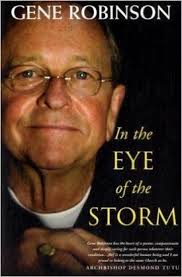
The Rt. Rev. Gene Robinson understands what it means to be threatened because of the Gospel he embodies. While reflecting on the threatening reaction of those who heard Jesus’ first sermon as it is recorded in Luke 4, Bishop Robinson challenges us all to stand on the clifftop with the courage of Jesus. Well worth a listen to all those who are preparing to preach on this text on Sunday.
Well, congratulations, it has happened again, for the fourth year in a row a miraculous truth has been revealed. So, let me take this opportunity to congratulate each and every member of this beloved community on this day, as I deliver the good news that we dear sisters and brothers, we have won the lottery! Let’s take a moment to rejoice and be glad in this marvelous news! So, how does it feel to know that we have won the lottery? That’s right my friends, for the fourth year in a row Canada has been ranked the number 1 country in the world for quality of life.
How many of you were born here in Canada? Congratulations, by happy accident you won the big lottery. You were born and have the great pleasure of living in the best country in the world when it comes to quality of life. How many of you, like me immigrated to Canada? Congratulations, you or your family came to the one place in the world that continues to be ranked number 1 in quality of life. Congratulations everyone because we all have the privilege of living in Canada, not only is Canada #1 in quality of life, but we have also been ranked as the second-best country in the world to live; second only to Switzerland. What a privilege it is to be us! First in quality of life and second over-all in terms of the best country. Apparently, we have the best job market, and the most stable and affordable economy in the world! We are the most family friendly, best income equality, most politically stable, and the safest place in the whole wide world. We have a well-developed public education system and public heal system. I could go on and on, but suffice it to say, you and I live in a country that has the best quality of life on the whole freaking planet!
What a privilege it is to be us! Good News! In case you’re interested our friends to the south are ranked as #17 in the world when it comes to quality of life!!! We’re number 1, they are number 17. When it comes to quality of life, we won the lottery!
Today, in your hearing, Today the Good News is that we enjoy the great privilege of living in a place where the quality of life is second to none! Surely, all your hopes and dreams have been fulfilled! Perspective is a curious thing. From where we sit, this good news is often drowned out by the sound of our belly-aching. Oh, woe is me, woe is me, woe is me. There is so very much to complain about. If only we could escape this or that. If only we could free ourselves from this or that. If only there was less of this or less of that. If only we could have more of this or more of that. Woe is me, woe is me, woe is me. Is it any wonder that our response to the gospel, to the Good News that Jesus proclaims is so very muted?
We listen to the gospel account of Jesus proclaim good news to the poor, liberty to those who are held captive, recovery of sight to those who are blind, and release to those in prison and we tend to think one of two things. Either we identify ourselves as one of the categories of people Jesus is setting free, or we wonder what that kind of freedom might mean to our position of privilege. All too often, we see ourselves as the ones who need liberating. I mean poor, poor pitiful me, right? We are enslaved to the system, right? Set us free from the day to day grind! Release us from our debts! TODAY!
Rarely do we see ourselves as the oppressors. If we are living in the number one country in the world for quality of life, how exactly did that happen? The system that is in place, the system that guarantees our privilege exacts a huge cost from the places that don’t enjoy such quality of life. We all know that the rich are rich at the cost of the poor. So, today, who needs liberating from who?
How quickly we move from release the captives to wait a minute those captives need to stay exactly where they. Those prisoners are far too dangerous to the status quo. Freedom ain’t worth it, not if I have to lose my stuff, not if I have to give up my privilege. Freedom’s just another word for nothing left to lose and I’ve got plenty to lose.
Slow down Jesus, wait just a minute. After all is said and done, our security, our status, our quality of life depends on maintain the status quo. No wonder Jesus’ homies tried to toss him off a cliff; good news my……you fill in the blank. I suspect that we, like everyone who has ever lived find it easier to see ourselves as the poor, the blind or the captive. Humans by our very nature always want more than we have; always looking for some kind of saviour who can make things better for us.
Today we hear Jesus’ deliver good news not to privileged people like us. Jesus marches into the synagogue at a time with his people are suffering terribly under the oppressive rule of the Roman Empire and speaks words from the sacred scriptures that encapsulate their longings to be free and has the audacity to say: “TODAY!!” Today you are free!
Jesus challenges the way in which his people see themselves. Today, you already have it all. Today, you are rich. Today, you can see. Today, you are free. Today, your debts are cleared. TODAY! You don’t need a saviour! You don’t need a messiah! TODAY! You have it all. TODAY, it is time to stop looking back at the problems of yesterday or looking forward in fear of tomorrow. All that you have is Today and today is all you need to be free. By virtue of being alive you are already blessed beyond belief. If Jesus can proclaim this gospel to a suffering people, what might this good news mean for you and I, who are enjoying a quality of life that is second to none? Today, by virtue of being alive, we are blessed beyond belief. Today, we can see if we but open our eyes to see – there’ no need to be blinded by our past, or to let our fear of the future obscure our view of the fullness of life that surrounds us. Today we are free. We don’t need a saviour. Today the burdens that have been laid upon us by the systems of the past are declared null and void and we are free – that’s what jubilee is all about: freedom. Freedom to live in the moment. No longer in debt to the past or held captive to our insecurities, or blind to reality, for we are free today! No longer searching for a saviour, or a religious system to save us. Free to live and love today.
The Good News that Jesus is declaring is not the creation of yet another religious system, but the amazing reality that we are free Today, to live and to love. Free to embrace the richness of life. Freedom from all that blinds us to the beauty that surrounds us. Freedom from our fear of the future. Freedom from the captivity of the systems which entrap us and hold us prisoners. Freedom to forge new pathways. Freedom to embody all that we are, freedom to be reflections of the ONE who made us. Freedom to imagine justice. Freedom to dare to create peace. Freedom to give it all away. Freedom to set the captives free and release the debts of those whose indebtedness assures our privilege.
Today, I am reminded of all those African American Spirituals; the songs that were sung by people who were enslaved. Those spirituals were sung at great risk to the singers. If their oppressors caught wind of what the salves were singing, the punishments were severe. So, the singers often used a sort of code that only the enslaved understood. Words were used to express African American hopes for freedom. Swing low sweet chariot, isn’t just an illusion to a bible verse, it’s a description of liberation, a way to say freedom is coming. That sweet chariot was the underground railroad.
One of the words or illusions that was used in these spirituals is heaven. Does anybody know what the word heaven was code for? Heaven meant freedom and for the African American slave, freedom was Canada! Comin’ for to carry me home.. Come take me to freedom in Canada… I looked over Jordan, and what did I see? I looked over the Mississippi River, or the Ohio River and what did I see? A band of angels…the workers of the underground railroad, Coming after me…helping to reach Canada Next time you hear…over Jordan…think over the border to Canada, to freedom. Over Jordon, heaven, home, all meant Canada because Canada meant freedom.
Congratulations beloved community, for today the good news is we are home, we are free. Free to be a beacon of hope for all those who seek freedom. For if we cannot see our way clear to respond to the incredible reality of our great privilege by freeing others, then it is we who are enslaving ourselves. The truth is we can be held captive by our privilege, or we can use our privilege to free those who are being held captive for the sake of our privilege. Today, Wade in the Water, take the river of this sweet life over Jordan, to our home faraway and come home to our lord and be free. Free to be the LOVE that is MYSTERY.
The last time Luke 4:15-21 came up in the lectionary, we engaged in a reflection on what we know of Jesus’ first sermon…a bible study of sorts. I offer it here for those of you who are preparing to preach on this text.
The Acclamation sung before the reading is “God of My Childhood” by Miriam Therese Winter Listen to the reflection here
This sermon explores the need to set the captives free. It was inspired by a Globe and Mail article written by David Clayton Thomas, former lead singer of Blood, Sweat & Tears and dedicated to the memory of an old friend who did not “go naturally” and will never be forgotten! You can listen to the sermon here to get you in the mood, watch the video of Blood, Sweat & Tears below
The year was 1969. I was just twelve years old and my family had only recently moved to Ladner, a small village south of Vancouver. I was the new kid in a tightly knit grade seven class. I remember being angry, a lot. Being twelve is tough, but being twelve and new in town; well that’s a kind of hell I wouldn’t wish on anyone. There were only two places I felt safe: One was my bedroom where I could escape into my books or listen to music. The other place was music class. We had a really cool, young teacher, she must have been fresh out of teachers’ college, because she had all these new ideas about something she called music appreciation. The songs we sang in Miss Conroy’s class were songs off the radio. Some days she’d let us put our heads down on our desks and she’d just play music and all we had to do was appreciate it. Not all of the music was stuff we’d heard on the radio, sometimes Miss Conroy would sneak in some jazz; not any kind of jazz I’d ever heard before, improvisational jazz; it was so cool to my twelve year-old ears that I gave Miss Conroy a pass when she would slip into teacher mode and put some classical music on the record player.
One day, Miss Conroy announced that we’d been listening to her music long enough; it was time we began to listen to our music. Miss Conroy explained that she was going to divide us into pairs and each pair would have to work together to select a piece of music to bring to class and share it. We would have to explain to the class, why the piece that we choose was worth paying attention to. Now even though there were all sorts of pieces of music that I thought would be great for this assignment, I began to panic. Who on earth would want to work with me on such a project? The thought of being teamed up with anyone of my classmates struck fear into my heart. I didn’t have any real friends in this class and as the new kid I knew that nobody would want to be stuck with me. Vision’s of being left out, all alone without a partner began to overwhelm me, as Mrs. Conroy announced that we would be drawing names out of a hat in order to determine who our partners would be. When my turn came to pull a partner’s name out of the hat, I didn’t even know what to hope for. I didn’t know people well enough to want anyone in particular to be my partner, there was only one person in the whole class that I knew that I knew well enough to know that I didn’t want to be my partner. I, like all my classmates was positively terrified of, for the sake of this sermon I’m going to call him Kenny. Kenney sure wasn’t twelve; he was a few years older than the rest of us. He was a big guy; dark hair, good looking, and unlike the other adolescent boys in the class, Kenny had already started shaving. Once during the lunch hour I witnessed Kenny bullying a younger boy into eating an apple core that had been discarded a few days earlier. The kid ate the rotting core rather than face whatever it was Kenny was threatening him with. Kenny was big, tough and loud. Most of us were frightened of Kenny and because kids are cruel, behind his back we diagnosed him as crazy. But there was something about Kenny, maybe it was his good looks, maybe it was the buckskin fringe jacket that he sported, or maybe it was just his wildness that made him the talk of the jittering boy-crazed girls in the class. So, I was more than a bit upset when of all people, I pulled Kenny’s name out of the hat. What piece of music could the two of us possibly have in common and how was I even going to talk to him? Miss Conroy slipped perilously into my bad books on the day she forced me into the company of the dreaded Kenny.
Ours was an uneasy partnership. There was precious little conversation involved. Kenny picked the piece of music. Kenny told me what I was going to tell the class about our piece of music. Fortunately, I actually knew and liked the piece that Kenny had chosen. It had been a big hit the previous summer and I owned a copy of the record. The only problem was that my copy was a 45. Kenny insisted that we just had to use the version that was on the album; not the version that they played on the radio off the 45. The version on the album included the trumpet solo that never made it onto the 45. It would have made the song too long for the hit parade! And that’s how I ended up in front of my classmates, standing beside a boy, who though handsome and tough had suddenly become monosyllabic as I struggle to explain why our choice of Blood, Sweat and Tears, Spinning Wheel, was music well worth appreciating.
What goes up must come down
spinning wheel got to go round
Talking about your troubles it’s a crying sin
Ride a painted pony
Let the spinning wheel spin
You got no money, and you, you got no home
Spinning wheel, spinning all alone
Talking about your troubles and you,
you never learn
Ride a painted pony
let the spinning wheel turn.
Did you find a directing sign
on the straight and narrow highway?
Would you mind a reflecting sign
Just let it shine within your mind
And show you the colours that are real
Someone is waiting just for you
spinning wheel is spinning true
Drop all your troubles, by the river side
Catch a painted pony
On the spinning wheel ride
Someone is waiting just for you
spinning wheel is spinning true
Drop all your troubles, by the river side
Ride a painted pony
Let the spinning wheel fly.
They just don’t write songs like that anymore. Kenny was right, the trumpet solo, is a must. Blood, Sweat and Tears had the best horn section. They could take a mediocre song and turn it into something special: “Spinning Wheel,” “You’ve Made Me So Very Happy,” “God Bless the Child,” “Hidey Ho, Hidey Hi,” “And When I Die.” Thanks to Kenny, I bought every LP that Blood, Sweat and Tears ever recorded.
So, what has any of this got to do with this morning’s Gospel reading? Well the words that the writer of the Gospel of Luke puts into the mouth of Jesus of Nazareth have been spinning round in my head all week long. I keep hearing Jesus quote the words of the prophet Isaiah. “The Spirit of our God is upon me: because the Most High has anointed me to bring Good News to those who are poor. God has sent me to proclaim liberty to those held captive, recovery of sight to those who are blind, and release to those in prison—to proclaim the year of God’s favour.” The year of God’s favour is the prophet Isaiah’s way of describing the year of Jubilee. Written into the Jewish law was a provision meant to address the systemic injustices that creep into the law as time goes by. It is said that every 50 years a Jubilee would be declared.Continue reading →
A while back, I was having a conversation with a friend that I was very close to during my seminary days. This friend has long since left the church. My friend asked me, “Dawn do you still believe in Jesus?” I remembered all the long conversations in seminary about believing in Jesus and at that very moment I had an epiphany of sorts. I hesitated to answer, because like all epiphanies, I recognized that if I let myself go to the place where my epiphany was pointing me to, I would be in very unfamiliar territory. My friend would not let me off the hook, “It’s a simple question Dawn. Do you still believe in Jesus?”
“No.” I said, and my friend smiled, the way she used to smile when she scored a point against me in some theological debate. My epiphany was shedding light on what could prove to be a painful reality. After all, from where my friend now sits, outside of the church and beyond all the church’s teachings, belief in Jesus is kind of a non-negotiable bottom line for a pastor. From her perspective, I ought to be able to give an unequivocal, “YES” to her question.
“No.” I said it again. “I do not believe in Jesus.”
My friend’s smile seemed to shine brighter than my epiphany. It was as if she was already celebrating my departure from the church. Before she could welcome me to the place where she now stands, outside the church, I said it again. “No, I do not believe inJesus. But, ……….I dobelieve Jesus. I believe Jesus. I believe Jesus. I believe what Jesus said. I believe what Jesus said .I believe what Jesus taught. I believe that the way Jesus lived embodies a new way of being human. I believe Jesus when he says, “Do not be afraid.” I believe Jesus when he speaks about the MYSTERY that we call God. I believe Jesus when he insists that justice is worth dying for. I believe Jesus when he risks everything for the sake of his conviction that non-violent resistance is the way to achieve justice. I believe Jesus, the way he lived, the way he died, and the way he lives on in the hearts and minds of all those who follow his way of being human. I believe Jesus. I also believe that it doesn’t matter a whole hill of beans whether or not I or anybody else believes inJesus. But it makes all the difference in the world and tothe world that we believe Jesus, because at the core of who Jesus was and what Jesus taught is LOVE. LOVE God with all your heart, with, all your soul, and with all your mind and LOVE your neighbour as you LOVE yourself; this I believe is a way BEYOND the kind of humanity that is always consumed by itself. I believe Jesus’ call to look beyond our selfish needs, desires and wants, to move beyond our fears, to LOVE.Continue reading →
Looking back at old sermons can reveal the various ways in which our theology has developed. This sermon was first preached in 2013. Since then, I have moved to a posture that has opened me to more humble statements about the nature of the MYSTERY that is the source and ground of our being, which causes me to refrain from using the word “God” to describe that MYSTERY. Re-reading this sermon, I was tempted to edit it in ways that better reflect my current posture. However I think, perhaps such edits are best left to those of you who may be tempted or inspired by this sermon to tell your own stories alongside the anonymous gospel-storyteller’s tale of the wedding at Cana and thus reveal your own intoxication with life!.
The gospel according to John is my favourite of all the gospels. Maybe it’s my Irish heritage but I just love a good story and the more outrageous the better. The Irish have never been known to let the facts get in the way of a good story, and neither did the anonymous writer of the Gospel we can John. This gospel was the last of the four gospels to be written and it nearly didn’t make it into the biblical cannon because the religious powers that be cited all sorts of problems with this particular portrait of Jesus. Not the least of which are all the signs and wonders that Jesus commands in this gospel. So, just for the record, let me say that I don’t believe that this particular story happened exactly the way it was written. I don’t believe that the man Jesus of Nazareth had the ability to instantaneously change water into wine. I do believe that getting hung up on whether or not Jesus could actually work miracles is to miss the point of this story all together.
This morning rather than go into a long and drawn out explanation of the historical critical method of studying the scriptures in order to explain why the anonymous writer of the gospel of John wrote this particular story and speculate upon the particular theological points the author was trying to make to his second century audience, I would like to set the history aside for a moment and look at what the author might have been trying to inspire in the people who would hear and read his or her story about the Wedding at Cana. To do that, I want to get to the heart of this story to explore what it might be like for the people who actually encountered the Man Jesus of Nazareth. I mean, on the surface of it this story is about a kind of intoxication that happened to people who come into the presence of this strange man from Nazareth. The best way I know of interpreting a story is to lay down another story right beside it and let one story interpret another.
Once upon a time, I remember it was a damp and dreary day in Vancouver that stood out from all the other damp and dreary days. It was in the middle of February; it had been overcast or raining for weeks and weeks and weeks. I was riding on the bus to work. It was the same bus that I had been riding on for two years. Every weekday morning I would commute by bus from the suburbs to the heart of the city. Every morning at six-fifteen, I would stand with the same people at the same bus stop and get on the same bus, which carried all the same people to their same jobs. On a good day the trip would usually take 45 minutes. Nobody ever spoke on that bus. Occasionally people would nod or smile at the all too familiar faces of their travelling companions, but conversation would be reserved for sunny days, when people could only manage a word or two. It was like there was this unwritten rule that nobody had the energy or the inclination to break. We saw one another almost every day, and yet we knew absolutely nothing about one another and that was the way we were determined to keep it.
On this particular February morning in addition to being tired, I was also wet. The wind was really blowing and I had to rely on my hooded jacket to keep me dry. The bus was running late and the water was just beginning to seep threw my jacket. I sat in my usual seat on the bus and I was determined to ignore the damp and get in a short nap before we reached the city. I was just dozing off when the bus screeched to a halt. Several passengers climbed aboard. All but one of them, were recognizable. I’d seen them a hundred times before. But the young man, who loudly greeted the bus driver with a “Hello,” him I’d never seen before. He struggled to fold his broken umbrella as he stumbled to the rear of the bus. He sat opposite me, and proceeded to greet everyone around him. People weren’t sure how to take this. Some just nodded and then looked away. Others mumbled a greeting before fixing their gaze out the window. I smiled, nodded and then closed my eyes, determined to escape into sleep.
The young man, continued to fuss with his umbrella. He explained in a loud voice that the umbrella was a gift from his sister and he hoped that it wasn’t ruined. He asked the gentleman seated beside him if he could help him to fold it. The somewhat flustered gentleman proceeded to fold the umbrella without a word. When the task was completed the young man, thanked the gentleman and asked him what his name was. He said he wanted to be able to tell his sister, who the nice man was, that had helped him with his umbrella. Without revealing his name the gentleman assured the young man that it wasn’t necessary to thank him. The young man on the other hand, proceeded to break all the rules, and said that his name was Michael and he told us all that he had never ridden on this bus before. He usually had to get a bus that went to the city in the afternoon and then he would get a ride home after dinner with his sister. But on this day, he would begin to work full days at his job. So he had to catch the bus in the dark. He went on to tell us that the bus we were riding in was much nicer than the one he usually caught. He decided that this bus must be a new bus, and weren’t we lucky to get to ride on a new bus. Then Michael took off his hat, held it out in front of him so we could all see it, and declared that he was the luckiest person in the world because his mother had bought him this wonderful hat that kept his head dry.
Michael went on to tell us all sorts of details about his life. At first people managed to listen, without responding. But as Michael went on describing his wonderful life, people found that in spite of themselves they were drawn into the conversation. As we approached the tunnel, that normally causes traffic to back up in rush hour, it was clear that there must have been some sort of accident in the tunnel. It would be a long wait. There would be no escaping Michael’s enthusiasm. Before long we all knew that Michael worked in the mailroom of a securities company. He assured us that this security company was a safe place to work, because they didn’t take care of the safety of people, but just took care of pieces of paper that were called stocks and bonds. Michael told us just how much he loved his job. Having a job was the best thing. Before he had the job he didn’t have any money to help his parents. But now he had enough money to help his parents and lots left over. Michael told us that he was really lucky because he worked with really nice people who took good care of him and let him do all kinds of fun jobs.Continue reading →
I have never much cared for John the Baptist. Everything that we read about John the Baptist in the Christian Scriptures makes me think of him as Jesus’ red-necked cousin. You know the kind of family member I mean. We all have one or two in our families. Some of you may have had the pleasure of being visited by one of your fanatical red-necked family members over the holidays. We’ve all been there. Stuck around a dinner table, trying to steer the conversation clear away from anything remotely political; fearing that at any moment our red-necked relative will go on a rant about immigrants coming into this country and threatening our culture, or the government wasting millions on foreign aid, or women with their feminist agenda’s wanting it all, and those lazy poor people who need to pull themselves up by their bootstraps and stop expecting handouts, or heaven forbid, the relative whose neck so flaming red that they, at the drop of a hat, will sing the praises of the likes the orange fellow who lives in the White House, who they think is on to something because he refuses to be politically correct and tells it like it is. You know that relative of yours who keeps reminding you of the good old days and the need to return to them because if we spare the rod, we will spoil the child.
Take a moment and sit back and remember that relative, friend, or co-worker, and if you are blessed enough not to have such a person in your life, think about the folks who we see every day in every sort of media, the folks are calling for a return to the values you no longer share. Do you have a clear picture in your mind of someone whose constant wrangling makes you so uncomfortable that they embarrass you? Hold that image in your mind and listen as I do my best to imitate John the Baptist as he rants on:
“Pay attention people! You think my raving on and on about repentance is annoying? You think my baptism is demanding? There is somebody coming who makes me look like a wimp. There is somebody coming who has real fire in his belly. Somebody who will take your tools out of your hands, and wipe the floor with you, and toss the lot of you into the fiery pits of hell! You brood of vipers!!! You just wait! Be afraid. Be very afraid!!! You’re all going to get yours!
Repent. Turn from your modern, pinko, new age, progressive, radical ways!!! Return to the good old days!!! Days when men were men and women kept a civil tongue in their heads and kids were seen and not heard. The days when this was a God-fearing country and we rode with our neighbours to the south, to keep the world safe for the likes of us. It’s time to toughen up people and start demanding a little respect from those people, you know the ones I mean, the ones who are different than us.”
I don’t know about you but these days I tend to give rednecks like John the Baptist a wide birth. If I do happen to stumble into a situation where I can’t avoid fanatics like John the Baptist, I tend to just let them ramble on, until they wear themselves out and then I take my leave, shake the dust from my feet and I move on. But the holidays, oh the holidays, it’s difficult to avoid red-necks during the holidays, especially if we are related to them. Well John the Baptist comes around every Advent ranting and raving, shouting at us to Repent, to Prepare, you brood of vipers! No wonder, we are all very quick to move on to Christmas when we can ignore John and gaze adoringly at the baby Jesus, whose beauty makes us forget that Herod is looming in the background. But no sooner is the baby born, then in the wink of an eye Jesus is a grown man, and his dear cousin John is at it again, going on and on, threatening us by suggesting that Jesus is going to rain down on us bringing the Holy Spirit to baptize us with fire. With a winnowing fork in hand, he will clear the threshing floor and gather the wheat into his granary, burning the chaff with unquenchable fire. And the way that John tells it, it sounds pretty much like we are the chaff and not the wheat, and so, we are doomed to burn in that unquenchable fire, if we don’t do what John tells us to do. Repent! Repent! Repent I say! Repent! Be afraid! Be very afraid! The Lord is coming! Fire burns!!! Hell is on the horizon!!! Turn back! Turn back!!!Continue reading →






 pastordawn