Today is Hiroshima Day. It is also the Feast of the Transfiguration. So I am reposting this as it appeared earlier this year in preparation for the Sunday of the Transfiguration.
You Have the Power
to Transfigure the Face of God
When our images of God are tied to the idol of a supernatural sky-dweller who has the power to solve all our problems, despair is sure to follow as our super-hero fails time after time to impress us.
When I was a very little girl, I was absolutely convinced that I had the power to change the mind of God! Confident that I held such power, I never missed an opportunity to exercise it. Now, I’ll grant you that like most children, I was also convinced that the universe itself actually revolved around me, so believing that I was powerful enough to change God’s mind, wasn’t exactly much of a stretch. In fact, when I was a child, it wasn’t all that difficult to change God’s mind. For instance, I could stop God from breaking my mother’s back simply by leaping over a crack in the pavement. “Don’t step on a crack and break your mothers back.” Now, in my young mind the only one powerful enough to crush my mother’s powerful spine, must be God. I also knew that God wasn’t particularly fond of ladders, and that if I refrained from walking under them, God would smile upon me.
I had no idea why black cats, or spilling salt, or breaking mirrors, or opening umbrellas inside, or leaving hats on the bed, or putting new shoes on the table, would annoy God, but I knew enough to avoid doing such things. I was absolutely sure that God would respond positively if I managed to pull a turkey’s wishbone apart in just the right way so that I was left holding a piece larger than the piece my brother was left with. God also responded well if I knocked on wood, or caught sight of a falling star, or if I crossed my fingers and hoped to die.
I didn’t need to understand why my activities worked to influence the heart and mind of God, I simply knew that they did and would continue to do so just as long as I continued to avoid the necessary evils and indulge in an apple a day, and managed to blow out all the candles on my birthday cakes.
The universe that revolved around me might have been full of all sorts of rules, but it would continue to revolve exactly the way I wanted it to if I managed to placate the old guy up in the sky who was pulling every body else’s strings. I never once considered that that old God in the sky was pulling my strings because I was absolutely confident in my ability to do what was necessary to pull God’s strings.
But as I grew up, I began to learn that despite my best intentions, the universe did not revolve around me. Little by little I learned that I didn’t have what it takes to influence all of the things that were having an impact upon my life. And just as surely as my powers waned, so too did the powers of God. Continue reading →
Stroumboulopoulos beware: our own Bishop Michael Pryse’s interview skills might put you out of a job. Bishop Pryse explores the work of the relief agencies of the ELCIC and ACC during the Joint Assembly in Ottawa. Bishop Michael also has some stomping and spoon playing skills that might come in handy over at the CBC!
Richard Holloway, the former Primate of the Scottish Episcopal Church, interprets the story of the resurrection not as an historical tale, but as our own story. Holloway has written of his longing for a humbled and broken church. His own humility and brokenness shines through this video as Holloway embodies his own longing.
Thinking about this Sunday’s epistle reading, Galatians 3:23-29 and wondering how we might re-imagine the Apostle Paul’s insistence that in Christ “There is no longer Jew or Greek, there is no slave or free, there is no longer male and female; for all of you are one in Christ Jesus.” Might it be that those of us who follow the way of Jesus need to consider subtracting our language about “Jesus Christ” as the source of our ONENESS in the One In Whom All Life Is Rooted? Can we begin to re-imagine language for what we mean by “Christ”? What can we learn from sisters and brothers who follow a different way to ONENESS?
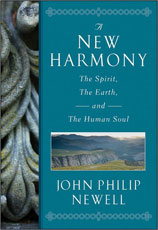
John Philip Newell’s recent book, “New Harmony: The Spirit, The Earth, and The Human Soul” provides an Eastern perspective from which I’m looking anew at the Galatians reading. You can hear Newell reading from the chapter “Every Bush Is Burning” in which I trust preachers and seekers alike will find much to contemplate. Enjoy!
This Sunday is Trinity Sunday. In anticipation, preachers all over the world are dutifully pondering the Doctrine of the Trinity desperately searching for something to say to encourage their congregations.
Preachers will trot out tired old clichés conjuring up images of triangles, shamrocks around, or point to H20’s ability to appear as water, ice, or steam while still maintaining it’s unified essence. Or have you heard the one about the 3 blind men and the elephant in the room. That old chestnut is trotted out by many a desperate preacher struggling to put flesh on the doctrine of the trinity. But for the life of me I can’t see how 1 blind man touching the elephant’s trunk and presuming that there is a tree in the room, while a second blind man catching wind of the elephant’s ear is convinced that there is some sort of giant fan in the room, while a third man grabs hold of the tail and is sure that he has hold of a rope, helps you to conclude that just because they’re all sharing a room with an elephant you can now confess that God is indeed Father, Son, and Holy Spirit, one God, forever and ever amen. But all sorts of mental gymnastics will be exercised in the vain attempt to make some sort of sense of the doctrine of the Trinity!
On Trinity Sundays, mindful of the fact that trying to explain the doctrine of the Trinity usually leads to heresy: dusty theological books that have not seen the light of day since last Trinity Sunday have been poured over to ensure that the formula’s learned in seminary are repeated correctly and heresy scrupulously avoided. The imaginative among us have attempted to baffle our congregations with our theological intellect, the pragmatic among us have attempted to baffle our congregations with something akin to BS, while the desperate among us have simply tried to survive the Trinity Sunday hoping against hope that no one will notice that we haven’t a clue what we’re talking about.
Perhaps only dear old Dr. Martin Luther possessed the theological integrity sufficient to save a preacher from the perils of preaching on Trinity Sunday. So, before I launch, forth, let me remind you what the instigator of the Reformation had to say on the subject of the Trinity. Martin Luther warned that: “To deny the Trinity is to risk our salvation; to try and explain the Trinity is to risk our sanity.”
I will confess that Martin Luther had much more at stake, literally at stake, than I do, because the truth is that for centuries the punishment for heresy would have found many an ancient preacher burned at the stake. But while the death penalty for heresy has been lifted, the risk to one’s sanity remains.
Now, I will confess that when faced with a particularly difficult theological knot, I prefer to begin by quoting Jesus and not Luther, but alas Jesus remained silent on the issue of the Trinity. So, I did try to find something helpful in the words of the Apostle Paul. But alas, without some really amazing theological gymnastics that are beyond my abilities to comprehend, even the Apostle Paul remains mute on the issue of the Trinity. So keeping in mind Dr. Luther’s dire warning that to, “To deny the Trinity is to risk our salvation; but to try and explain the Trinity is to risk our sanity.”
Let me remind you that the Trinitarian formula appears in Scripture only once, in Matthew 28, during what is called the Great Commission, when Jesus commands the disciples to go forth, baptizing in the name of the Father, and of the Son, and of the Holy Spirit. But the doctrine of the Trinity does not appear in the Bible
– The doctrine of the trinity, as we know it, was first formulated in the fourth century, by a couple of guys named Gregory and a woman called Marcrina.
– The doctrine of the Trinity was then developed over hundreds of years
– The doctrine of the Trinity was at the heart of several wars
– Thousands of Christians were killed because they came down on the loosing side of arguments over the doctrine of the Trinity
– No one has ever been able to adequately explain the Trinity
– Every explanation of the Trinity that I have ever come across includes some form of heresy
By the way, just so we’re clear, I rummaged through some of my previous sermons on the doctrine of the Trinity and I must confess that if this were the twelfth century, an angry mob would be stoking up the fires beneath my feet because based on things I have proclaimed on various Trinity Sundays a charge of Modalism could very successfully be laid against me, as could a charge of Sabellianism. You might be interested to know, that more traditional preachers than I, will no doubt preach sermons this Sunday which will prove them guilty of Arianism or at the very least Subordinationism. All of these heresies in a bygone age would have left us with a severe shortage of clergy in the church, as many of us would be smoldering at the stake for our crimes. Deciding who is right and who is wrong, who is in and who is out is a deadly preoccupation of humanity, a preoccupation that the church has not been able to escape.
So, with apologies to Dr. Luther, I’m going to go ahead and risk my salvation by declaring that the doctrine of the trinity is but a feeble attempt to comprehend the incomprehensible mystery of the very nature of our God. We can echo all the creeds of Christendom with as much confidence as we can muster, and as enlightening as some of those creeds may be, they cannot begin to unravel the mystery of the creator of everything that ever was and ever shall be, nor can they fully describe the magnitude of the revelation provided in the life, death and resurrection of the one we call Christ, and when it comes to the power of the Holy Spirit, all our creeds together cannot tell the story of her wondrous beauty.
The doctrine of the trinity is just a tool to help us along the way, the trinity is not God, nor is God the trinity. The trinity is merely a way to speak of the unspeakable. And yet down through the centuries we have used the doctrine of the trinity as an idol and demanded that we worship the trinity as if it were God’s very self.
We have worried more about believing in the trinity than relating to the very One whose relationship the Trinity attempts to describe. For when it comes down to it, what we know of our God finds expression our attempts to describe God as a relational being. For what is the doctrine of the Trinity if it is not the declaration that God is Creator, Christ and Spirit, intimately connected as One; at God’s very core we find a relationship. This should be our first clue that any understanding of God must begin with relationship. Surely it is more important to experience God than to explain God. Surely it is more important to relate to God than it is to preserve a doctrine that has long since failed to describe God.
You’d think that after nearly 2000 years the Christian church would have learned to be more humble in its declarations about God. And yet, today, as we strive to learn more and more about creation, some things remain out of bounds. The church remains unwilling to revisit long established doctrines, choosing instead to insist that we simply believe, because what was good enough for grandma ought to be good enough for us. And if we should doubt the doctrine of the Trinity then all we need to do is study harder and we will eventually understand. And if we are unwilling to work at understanding the Trinity we should simply trust that folks much smarter than us have figured it out so we should simply stop questioning and simply mouth the words. Let the tired clichés and the worn out illustrations suffice, forget about our questions and simply drink the kool-aid and our doubts will somehow magically disappear. And so together we focus on believing what has been handed down to us. And for a great many people that’s good enough. All we really need to do is believe, to have faith and all will be well. But oh so many more of us have grown weary of the tired insistence on belief; you only have to think of the children missing from our churches to know that our doctrines are failing to engender relationship.
I’d like to be able to say, here just learn this and believe this and all will be well, all we need to do is figure out more up to date methods to deliver the same old doctrines and your grown children will learn to believe, but I too have my doubts. You see I don’t believe that the point of a religion is to engender belief. I believe that the point of religion is much bigger than belief. For if a religion does no help you relate to God or to God’s creatures, or enhance your experience of creation, then religion is not life giving and all its doctrines are but fleeting attempts to deny death.
It is far more important to have a relationship with our God than it is to understand doctrines about God. In so far as the doctrine of the trinity helps us to relate to God then it can be said to be life-giving. When the doctrine of the trinity helps us relate to God’s creatures and to God’s creation, then it can be said to be life-giving. But reduced to a formula that we must believe the doctrine of the trinity runs the risk of inhibiting our experience of God and robbing us of a life-giving relationship with God and with the world that God loves.
I am convinced that the only way to ensure that the doctrine of the trinity remains life-giving is to free it from the confines of the past. Despite it’s fear, the church must re-examine its creeds and confessions, open up our dusty doctrines to the light of the 21st century so that those that fail to enhance our relationship to God and to one another can be given a decent Christian burial and those that nurture our relationship to God and to one another can thrive.
We need to prioritize relationship and experience over ancient creeds and doctrines, least our preoccupation with correct belief causes us to miss an encounter with our God.
Trying to understand the very nature of God, is, when you think about it actually an arrogant thing for simple creatures such as we. We cannot hope to understand the nature of God. So perhaps the most faithful sermon on the Trinity is one that merely sniffs around the edges of the mystery, hunting for something closer to an experience rather than an understanding. God is the elusive stranger.
Sometimes it is possible to identify God, before God gets away. But most of the time we only recognize God after God is gone, like the drifter who wants to tell you his story only you do not have time, so you hand him a dollar and walk away. Or the woman with the tearstained face who disappears while you decide whether to ask her what is wrong; or the bewildered child whose mother scolds him for being alive and whose sorrowful eyes catch yours just as she drags him away. These are the strangers who lay claim to our hearts, although they make no claims for themselves. In their presence we fail them. It is only after they are gone that we know who they were. That is why it is so easy for us to sacrifice them. We did not know. How could we have known? Who expected Christ to show up looking like that?
Is it possible for us to attend to our peripheral vision, to see out of the corner of our eyes, to notice those faint sounds of birdsong in the background, to catch those elusive fragrances, that might well be God, the Holy One, coming to us in ordinary space and matter, longing for an intimate encounter?
Let us be ready to notice the Spirit of God in a burning bush, to turn aside for a moment in order to encounter the mysterious, intimate God who comes to us, so that in the power of the trinity we ourselves may be made holy!
Heirs with Christ – inheritors and distributers of all God’s love.
There you see, I’m not suggesting that we toss it all away.
Down through the centuries God has revealed so much.
I’m simply pleading that we walk humbly with our God.
And revel in the mystery.
In a dusty library years ago, I discovered a pearl about the Trinity, which I treasure. It came from St. Augustine, a 4th century bishop who helped to craft the doctrine of the trinity.
Speaking on March 17, 2013, Marcus Borg points to the teachings of Jesus, who he describes as a decisive revelation of God’s character, to outline the “Passion of Jesus” in order to move us toward a vision of the “Kingdom of God.”
Reposted from last year – Sermon for the Second Sunday of Easter April 15 2012
This Sunday I tried something new: introducing a video clip into the sermon! You can view the video within the written text of the sermon below or listen to the audio version provided. I am indebted to the work of James Rowe Adams for much of the New Testament Scholarship in this sermon.
The Scripture texts were John chapter 20:19-31 and Acts 4:32-35
Christ is Risen! Christ is Risen indeed! Alleluia!
So, Christ is Risen! So What???
What can it possibly mean to you and to me, that a rag-tag bunch of Jesus’ followers gathered together in an upper-room and talked about their experiences of Jesus and decided that not even death could extinguish the life that they experienced in Jesus? What difference does it make to you or to I that Christ is risen?
The truth is that it can make absolutely no difference what so ever. Now there are a whole lot of people who will tell you that the important thing about resurrection is that you believe it. Those same folks absolutely love the story of doubting Thomas. And so every year on the second Sunday of Easter we read the story of doubting Thomas as a kind of inoculation against Thomas’ disease.
I sometimes think that the designers of the lectionary were trying to build up our resistance to doubt. Having problems believing in resurrection, well don’t do what Thomas did, don’t doubt, because you’ll be proven wrong. Jesus is alive, the wounds in his hands proved that to Doubting Thomas, so have no doubt about it the resurrection happened! Believe in the resurrection!
The trouble with believing in stuff is that it belief can make absolutely no difference what so ever. I can believe in justice for all, but unless I’m prepared to seek justice, to be fair, or to resist injustice, it makes absolutely no difference what so ever. You can shout, “Christ is risen!” all you want but unless you are willing to live it, the resurrection means very little at all.
In order to live the resurrection you have to begin practicing resurrection. In order to practice something, you have to know what it looks like, what it sounds like, or what it feels like.
I’ve been trying to figure out how to show you what resurrection looks like in the flesh. Then I remembered a video that’s been doing the rounds on the internet, so I want you to watch this modern miracle of resurrection.
WATCH THE VIDEO CLIP FROM: Alive Inside
Christ is Risen! Christ is Risen indeed! Alleluia!
2000 years ago a bunch of rag-tag Jesus followers were huddled together in fear. Their beloved leader had been brutally executed by the powers that be and they were terrified that they would be next. Paralyzed by their fear, hiding behind a locked door, something happened that gave them the strength to burst forth from their own tomb and change the world.
Ever since they began to practice resurrection, people have been trying to figure out exactly what happened; what could have changed these bumbling, terrified, betrayers, abandoners, who seemed to be always getting things wrong, into a bunch of leaders who began a movement that spread through out the Empire within their own life-times and then based on the power of their witness, spread throughout the world and continues to nourish and sustain millions of people from generation to generation?
Now there are those that insist that it was the power of Jesus having been physically resuscitated from the dead that motivated his followers to change their lives and the lives of millions who have come after them. But we live in the 21st century and we have access to all sorts of information that the generations who have gone before us did not. Most of us, myself included, are not swayed by arguments about a physical resuscitation of Jesus’ body. But I can tell you without a doubt that I do believe in resurrection and I know that Christ is risen and I also know that the same power that the early followers of Jesus used to change the world is available to you and to me. And now more than ever the world needs us to start using that power. It’s long past time for us to start practicing resurrection.
So, if they weren’t talking about a physical resuscitation when they spoke of Jesus’ resurrection, what did the early followers of Jesus actually mean when they spoke of Jesus having been raised from the dead? During the first century many Jews had adopted a vision of the future that dealt with the prevailing question of the day: “How could a just God allow his people to suffer endlessly at the hands of their enemies?” Or as Dom Crossan puts it: When was God going to clean up the world so that justice could prevail? Continue reading →
This year our Lenten Evening Prayer services draw on Peter Rollins collection of Parables found in “The Orthodox Heretic and Other Impossible Tales”. Prayers are drawn from the writings of the Christian Mystics. Each week an audio recording of the service will be posted as well as a copy of our worship bulletin.
This year our Lenten Evening Prayer services draw on Peter Rollins collection of Parables found in “The Orthodox Heretic and Other Impossible Tales”. Prayers are drawn from the writings of the Christian Mystics. Each week an audio recording of the service will be posted as well as a copy of our worship bulletin.
Feb.20, 2013: Preaching during the Lenten Preaching Series at Calvary Episcopal Church in Tennessee, Bishop Spong calls the church to move beyond tribal understandings of the nature of God. As always Jack’s humour gently moves his listeners to see beyond familiar views of the scripture toward a more expansive Christianity that encourages adherents to “live fully, love wastefully, and be all that we can be.” Enjoy!
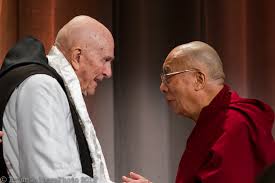
Fr. Keating is an internationally renowned theologian and an accomplished author. He has traveled the world to speak with laypeople and communities about contemplative Christian practices and the psychology of the spiritual journey. Thomas Keating, founder of the centering prayer movement, is an author, teacher, and monk who has worked for many years to foster understanding among the world’s religions. A member of the Cistercian Order in the Benedictine tradition.
This year our Lenten Evening Prayer services draw on Peter Rollins collection of Parables found in “The Orthodox Heretic and Other Impossible Tales”. Prayers are drawn from the writings of the Christian Mystics. Each week an audio recording of the service will be posted as well as a copy of our worship bulletin.
Evening Prayer – February 27, 2013 – Translating the Word
Below are the three video clips we used in class this morning as we continued our conversation about myth and making meaning.
Brian Swimme is a mathematical cosmologist with an uncanny ability to articulate the new story of our origins in ways that those of us unfamiliar with the breakthroughs in science can begin to understand. As science continues to revolutionize our understanding of who we are and where we are, the stories we tell to make meaning of life will also begin to change.
Ashana’s rendering of the prayer that Jesus is said to have taught to his followers. I have always thought that if this prayer was indeed taught by Jesus it was done so out of frustration. The followers of Jesus are said to have insisted that Jesus teach them to pray just as John the Baptist taught his followers to pray. Weary of their constant demands, I imagine Jesus offering this prayer as a kind of “Oh well if you need words, use these…” Much ink has already been spent in search of a definition of Abba, I think it is best to simply leave the word untranslated so as to capture some of the mystery of the ONE to who we pray, who is so more than language can capture. Abba of the Cosmos perhaps?
A Eucharistic Prayer of the Cosmos for the 21st Century
For those of us who love liturgy, the reality that liturgical practices shape and form us in the faith is no surprise. So, is it any wonder that practices crafted by words and images offered by humans who understood creation as a three-tiered universe often fail those of us who are seeking to be shaped and formed for faith in the 21st century? In the past few decades our knowledge about creation has expanded at a staggering rate. With new understandings comes the need for offerings of new words and images to transform ancient practices from the confines of limited imaginations into practices that can nourish, ground and sustain us in faith.
In this video, Father Sean O’Laorie Ph.D. offers a Eucharistic Prayer based not on sin and redemption-through-crucifixion but on the reality that all creatures are the Word-of-God-made-flesh.
Before becoming a poet, Baraka Kanaan was a University Professor, his work was in re-articulating the Christ Figure. He studied dozens of translations, but came upon an Aramaic text & paraphrased what Jesus said in ‘The Sermon on the Mount’ from the book of Matthew; chapters 5,6, & 7. Here is a brief exploration of the purest essence of that message, made into modern day English, & escorted musically by the rare & exotic hijaz hang instrument. Delivered live at the Temple of Peace in Haiku, Maui… on Yom Kippur, or the Day of Forgiveness.
This is a fascinating conversation that explores the role of Progressive Christianity in the life of the church.
Bishop John Shelby Spong, Rev. Dr. Jay Emerson Johnson, Dr. David Hollinger and Rev. Byron Williams discuss the mainline church and liberal Christianity at the Pacific School of Religion.
Two years ago, the Strange History of Transfiguration Sunday inspired this sermon. I offer it here because the words of Desmond Tutu speak volumes as I work on this year’s Transfiguration sermon.
When our images of God are tied to the idol of a supernatural sky-dweller who has the power to solve all our problems, despair is sure to follow as our super-hero fails time after time to impress us.
When I was a very little girl, I was absolutely convinced that I had the power to change the mind of God! Confident that I held such power, I never missed an opportunity to exercise it. Now, I’ll grant you that like most children, I was also convinced that the universe itself actually revolved around me, so believing that I was powerful enough to change God’s mind, wasn’t exactly much of a stretch. In fact, when I was a child, it wasn’t all that difficult to change God’s mind. For instance, I could stop God from breaking my mother’s back simply by leaping over a crack in the pavement. “Don’t step on a crack and break your mothers back.” Now, in my young mind the only one powerful enough to crush my mother’s powerful spine, must be God. I also knew that God wasn’t particularly fond of ladders, and that if I refrained from walking under them, God would smile upon me.
I had no idea why black cats, or spilling salt, or breaking mirrors, or opening umbrellas inside, or leaving hats on the bed, or putting new shoes on the table, would annoy God, but I knew enough to avoid doing such things. I was absolutely sure that God would respond positively if I managed to pull a turkey’s wishbone apart in just the right way so that I was left holding a piece larger than the piece my brother was left with. God also responded well if I knocked on wood, or caught sight of a falling star, or if I crossed my fingers and hoped to die.
I didn’t need to understand why my activities worked to influence the heart and mind of God, I simply knew that they did and would continue to do so just as long as I continued to avoid the necessary evils and indulge in an apple a day, and managed to blow out all the candles on my birthday cakes.
The universe that revolved around me might have been full of all sorts of rules, but it would continue to revolve exactly the way I wanted it to if I managed to placate the old guy up in the sky who was pulling every body else’s strings. I never once considered that that old God in the sky was pulling my strings because I was absolutely confident in my ability to do what was necessary to pull God’s strings.
But as I grew up, I began to learn that despite my best intentions, the universe did not revolve around me. Little by little I learned that I didn’t have what it takes to influence all of the things that were having an impact upon my life. And just as surely as my powers waned, so too did the powers of God.
I can still remember sitting in the back seat of the car and wondering why God despite the fact that I always lifted my feet up each and every time my father drove over a railroad track, my parents simply couldn’t find the money we needed to buy our happiness. Surely God must know that I was doing my part to do what was necessary to make God shine his smile upon my family.
So each and every time God failed to do exactly what I wanted God to do, God’s power was diminished in my eyes. As I grew, I gave up trying to influence God and I took off after God’s son. After all Jesus was far more fun to be around than his old doddering Father. For starters Jesus actually liked children. And Jesus had way better party tricks than his Dad. Jesus could turn water into wine, make the blind see, and the lame walk. And if the cupboard was bare, no need to worry, cause Jesus was even better than my Mom at turning nothing into something. Where Mom could make a meal out of almost nothing, Jesus could make enough to feed 5000. And there was always that trick to beat all tricks, cause in all my young life, I never heard tell of anyone else who ever came back from the dead and brought tons of chocolate with him. I mean that old doddering guy in the sky simply didn’t stand a chance against Jesus. Santa Claus was about the only one who could come close, and everybody knew that Santa would be nothing without Jesus.
So, somewhere along the way, that I had no need to worry about stepping on a cracks, or spilling salt, or dropping forks, because these things were nothing more than superstitions. Besides, who needs to worry about superstitions when you’ve got Jesus for as your friend? My buddy Jesus was all I needed to keep my world on an even keel. So, I walked with him and I talked with him and we were so happy together, until stuff started to happen that made me begin to doubt Jesus ability to change the world.
A few weeks before my eleventh birthday, Sirhan Sirhan shot Bobby Kennedy and for the second time in my life, I saw my father cry. I was only six-years old when the shooting of Bobby’s older brother made the adults in my life cry. Their tears changed something in me. I listened more intently to what was going on in the world around me. I needed to know what was happening so that I could do something to change it. A year after Bobby Kennedy was shot, I went to my first protest march. I was just twelve years old, but I knew that Vietnam was wrong and had to be stopped. I believed that my presence together with the presence of hundreds of thousands, could make a difference.
I left my buddy Jesus playing in the garden. I began to listen to the radical Jesus who spoke truth to power and called us to follow him so that we could change the world. As a teenager I knew that we had to end the war in Vietnam and even though the sixties were drawing to a close, and the flower children would soon be trading in their incense and beads so that the could find jobs and climb the corporate ladder, we marched. And when in 1975, the Vietnam war ended in defeat, I actually naively believed that public opinion had caused the powers that be to change their minds.
So, I continued to work for peace, only this time it was nuclear proliferation that we needed to stop. It was somewhere during the Regan years that I gave up the notion of changing the world by marching in the streets. Iran Contra put an end to my naiveté. Jesus and I retreated. Literally. I mean we literally retreated. A few friends and I worked together on a retreat center. Seabright Farm was a Christian retreat centre designed to nourish people who were trying to live their lives in the world. Jesus was our guide. We wanted to live in this complicated world of ours, the way that Jesus might live. So we dedicated ourselves to learning. Learning all we could about Jesus, Christianity, the church, theology, living responsibly, ethically. Our attempts to change the world took on a more modest approach. We set out to change the world, by changing ourselves.
Eventually, my work at Seabright Farm, brought me into seminary, where I suppose I thought I could change the world by changing the church. Along the way, I must confess that over the years I’ve become more than a little jaded and cynical. There are days when I don’t really believe that anything will ever really change. But there are moments, moments when I actually believe that it’s possible not only to change the world, but to actually change God.
Transfiguration Sunday is a strange festival in the Church calendar. The story of the Transfiguration is the story of Jesus climbing a mountain with his closest friends. On the mountaintop Jesus has a profound experience. There is a dazzling light, a cloud that overshadowed them, and the cloud terrified them. That same cloud appeared generations earlier and overshadowed one of the fathers of the Jewish people. That same cloud appeared generations later and overshadowed the father of the people of Islam.
As we read of that cloud today, we should do so with the same fear and trembling of our sisters and brothers who over the generations have encountered that cloud. For Transfiguration Sunday may be a festival of the church, but it’s history is steeped in the political and religious intolerance of the world. Before the fifteenth century, only a few Christian communities kept the feast of the Transfiguration. The festival hadn’t caught on like other festivals.
In all of Christendom only a handful of congregations marked the day and we would not be celebrating it today if it weren’t for a terrible battle. On the sixth of August 1456 news was announced in Rome that John Hunyady had defeated the Turks near Belgrade and the bells of churches rang out in celebration of the slaughter of some 50,000 Muslims. Overjoyed, Pope Callistus ordered the whole church to commemorate the victory against the infidels by celebrating the feast of the Transfiguration.
For generations the church commemorated the battle by celebrating Transfiguration Sunday on August the sixth. Some church’s still celebrate Transfiguration on the sixth of August. However, shortly after the end of World War II protestant churches discretely decided to move the festival of Transfiguration to the last day of Epiphany. They did so, because of the infamy of August 6. In 1945 a slaughter of a different sort was inflicted on a different people.
On August 6th 1945, someone climbed not a holy mountain, but into the cockpit of a plane—a machine of war. There had been a lull of a week in the fighting between the Allies and Japan. The Allies had a new secret weapon and they wanted to us it with the maximum psychological effect. They had prepared three atomic bombs. On the 16th of July, the first bomb was tested in New Mexico.
As a terrifying cloud rose up from the earth, the father of the atomic bomb J. Robert Oppenheim quoted from the Hindu Scriptures a line from the Bhagavad-Gita, “Now, I am become death the destroyer of worlds.” On August 6 the second bomb was dropped on Hiroshima, and three days later the third one was dropped on Nagasaki. 150,000 people lay dead. Thousands more died later from the effect of atomic radiation. 75,000 buildings were destroyed. Two cities were devastated. The world will never be the same. The date for the festival of Transfiguration was moved.
The shape of that awful cloud hangs now forever in our sky. If you close your eyes you will see that cloud; rising up from the earth; a mushroom more poisonous than anything created by God. It is the new tree of knowledge of good and evil. We have eaten of its fruit and we shall never be the same.
We live in fear of everything that emanates from that terrible cloud. Is it any wonder that the vision of that cloud was invoked by the leaders of our neighbours to the south as they tried to convince the world to go to war against the people of Iraq. Weapons of mass destruction! Yesterday, the memory of the cloud hung over Iraq. Today, the memory of that cloud is being used to isolate Iran and Korea.
Has the memory of that poisonous cloud obliterated from our minds the memory of another cloud? Do we no longer remember the story of another climb, another light, another voice, another cloud? Jesus was there speaking of his departure, which he was about to accomplish at Jerusalem.
Jesus was speaking of his death, his destruction by another tree. Do we not meet on Transfiguration Sunday today under the shadow of that tree, to break bread and to proclaim the victory of Christ’s death over every evil, even the total annihilation by human evil.
Friends, I trust that we will be led out of this morass of fear and hatred by a pillar of cloud; a cloud that transformed Moses and a band of refugees in the desert into a people; a cloud that rested upon Jesus declaring Jesus to be the embodiment of all that God had tried to say for generations; the same cloud that carried on Mohammad into the heavens, leaving behind a people who would take on the name Islam, which itself means peace.
Memories of clouds… Sorry, but I’ve looked at cloud’s from both sides know and like the song says I really don’t know clouds at all. I’m still wondering if its possible to be the people God created us to be? I’d given up wondering whether or not it’s realistic to hope, but rather whether it’s even possible to hope that the world can be changed. The poor will always be with us. Wars will keep breaking out just as surely as the sun rises in the east. Bad things will continue to happen to good people. And just when I think that hope is pointless…that the powerful will always abuse the powerless…just when I’m about ready to join the ranks of those who say live for today and forget about tomorrow…some people half a world away, begin to turn the whole world upside down…and dictators begin to loose their grip…and I begin to wonder, what if? And I feel the hope begin to stir in me.
In his book, God Has A Dream: A Vision of Home for Our Time, Desmond Tutu tells about a transfiguration experience that he will never forget. It occurred when apartheid was still in full swing. Tutu and other church leaders were preparing for a meeting with the prime minister of South Africa to discuss the troubles that were destroying their nation. They met at a theological college that had closed down because of the white government’s racist policies. During a break from the proceedings, Tutu walked into the college’s garden for some quiet time. In the midst of the garden was a huge wooden cross. As Tutu looked at the barren cross, he realized that it was winter, a time when the grass was pale and dry, a time when almost no one could imagine that in a few short weeks it would be lush, green, and beautiful again. In a few short weeks, the grass and all the surrounding world would be transfigured. As the archbishop sat there and pondered that, he obtained a new insight into the power of transfiguration, of God’s ability to transform our world. Tutu concluded that transfiguration means that no one and no situation is “untransfigurable.” The time will eventually come when the whole world will be released from its current bondage and brought to share in the glorious liberty that God intends.
Just over a week ago, many of you followed Jesus out of your comfort zone and down to the Inn From the Cold. You worked very heard to prepare over 200 meals to feed the hungry. But you did so much more than just feeding your neighbours. I believe that you actually achieved a transfiguration of sorts. Shortly before that evening, some of us watched Desmond Tutu talk about the need to change our image of God. I’d like to read back to you the words that Tutu said: The images that we have of God are odd because God—this omnipotent one—is actually weak. As a parent I understand this. You watch your child going wrong and there’s not very much you can do to stop them. You have tried to teach them what is right, but now it is their life and they are mucking it up. There are many moments when you cry for your child, and that’s exactly what happens with God. All of us are God’s children.
I frequently say, I’m so glad I’m not God! Can you imagine having to say, “Bin Laden is my child. Saddam Hussein is my child. George Bush is my child.” Oh! All of them, including me. Can you imagine what God must have felt watching the Holocaust? Watching Hiroshima and Nagasaki? Watching Rwanda? Can you imagine God watching Darfur? Imagine God watching Iraq and saying, “These are my children here, and they are killing my other children. And I can’t do anything because I have said to them, ‘I give you the space to be you and that space enables you to make choices. And I can’t stop you when you make the wrong choices. All I can do is sit here and cry.’” And God cries until God sees beautiful people who care, even if they may not do earth-shattering things.
There is a fantastic story of a so-called colored woman who was driven from her home and ostracized by her family because she had HIV/AIDS. She came to live in a home for people who suffered from the disease, and there were white men there who would help her because she couldn’t do anything herself. She was all skin and bones. They would carry her like a baby and wash her, bathe her, feed her. Then they would put her in front of a television set and hold her. And this was during the apartheid years. I visited this home and said, “What an incredible lesson in loving and compassion and caring.”
It was transfiguring something ugly, letting something beautiful come from a death-making disease. When God sees that, a smile breaks forth on God’s face and God smiles through the tears. It’s like when the sun shines through the rain. The world may never know about these little transfigurations, but these little acts of love are potent.
They are moving our universe so that it will become the kind of place God wants it to be. And so, yes, you wipe the tears from God’s eyes. And God smiles.” You people have transfigured the face of God on more than a few occasions. By following Jesus out into the world, to reach out to your sisters and brothers, you have transfigured the face of God.” (see the video below for the full context of this quote)
So, on this Transfiguration Sunday, let me remind you of God’s ability to Transform the world precisely because God dwells in with and through you! Do not give up hope: no one and no situation is “untransfigurable.” The time will eventually come when the whole world will be released from its current bondage and brought to share in the glorious liberty that God intends. Continue to give hope to the hopeless, reach out and love the world that God loves, and always remember that you have the power to transfigure the face of God!
A Benediction: Always remember that you have the power
to transfigure the face of God!
You can wipe the tears from God’s eyes.
You can make God smile.
Reach out with love.
Be the compassionate people God created you to be!
Receive the blessing of God whose love knows no boundaries,
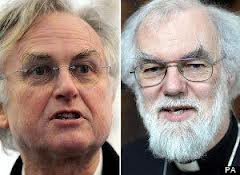
Feb.3/2013: Richard Dawkins Loses Debate Against Former Anglican Head Rowan Williams at Cambridge University
The debate motion that “religion has no place in the 21st Century” was well-defeated at the event held yesterday at the Cambridge Union Society. Dawkins lost the debate by 324 to 136 as he failed to convince the gathering that religion has no place. Also taking part in the debate were Andrew Copson and Arif Ahmed.








 pastordawn