Ash Wednesday – A Wakeup Call

purple light 2

Here’s an Ash Wednesday homily for the 21st century!

We’ve all been there. Driving down the road – distracted by thoughts of this and that, when all of a sudden it happens, a car comes at you out of no where and you slam on the breaks or you quickly swerve to avoid a disaster. You could have been killed. You could have killed someone. Your life or someone else’s life could have been radically changed in an instant. As you pull back into traffic you are ever so conscious of the weight of you foot on the accelerator and you swear that you’ve got to be more careful.  You begin to scold yourself.  What were you thinking? Why weren’t you paying attention? Wake-up you could have been killed.

Welcome to Ash Wednesday. What have you been thinking? Why weren’t you paying attention? Wake-up — you are going to die!!!  Ash Wednesday is your mid-winter wake-up call. Some of you may not need the wake-up call. Some of you know all too well that death is all around us. Some of you have lost someone dear to you. Some of you have felt that fear in the pit of your belly when the doctor suggests a particular test. Traditional Ash Wednesday worship would require us to focus on the brevity of life and remember that none of us will get out of this life alive.  Our ancestors in the faith, entered into a morose season of Lent by via the awesome reminder that they came from dust and soon they shall return to the dust.

Lent was a season of lament and repentance based on a particular understanding of what it means to be human. Since the 11th century most of Christianity has understood the human condition as that of those who have fallen from grace. But we live in a post-modern world. We no longer believe that Adam and Eve were the first humans. We read Genesis not as history but as myth. We understand that humans evolved over millions of years. There was no perfect human condition for us to fall from.

What happens when you reject the theological construct of original sin?  What happens when you embrace the idea that we are fiercely and wonderfully made? What happens when you see humanity as originally blessed?

Once you open up Pandora’s box you can’t just walk back out of the room and pretend that the theory of evolution doesn’t have something to teach us about what it means to be human. If we see our selves as incomplete creations rather than fallen sinful creatures, how then do we deal with our mortality?

Perhaps we can begin to express what it means to be human in terms that reflect our need to evolve in to all that we were created to be. Perhaps the brevity and uncertainty of life can begin to wake us up so that we can seize each and every moment. This is the day that God has made, let us rejoice and be glad in it!

All that we love and care for is mortal and transitory, but mortality is the very reality that can become the inspiration for celebrate life and to love. Ash Wednesday reminds us of our human condition of mortality. But we should also remember the reality of creation itself is transformed by death and is constantly renewing itself. There is an eternal quality to creation, just as there is an eternal quality to life.

Tonight we embrace the promise that in death we are transformed into a new way of living on in God.Trusting that here and now we are living in God, we delight in the knowledge that in God we share in eternity. We are constantly dying, but we are also constantly living as we reflect God’s vision in the world of the flesh. This day, this moment is eternity for God is here, revealed in the wonders of creation; in the face of our neighbours, in the beauty of the earth, in the magnitude of the universe and in the miracles of sub-atomic particles. Tonight is our wake-up call.

We will not pass this way again. If we’ve been hibernating its time to take a deep breath and let ourselves be filled with the Spirit so that we can live fully, love extravagantly and be all that we were created to be. Yes we are dust, but we are earthly dust, springing forth from a multi-billion-year holy adventure.

Dust is good, after all; it is the place of fecundity, of moist dark soil, and perhaps we are as various scientists are suggesting:  “star-dust” evolving creatures emerging from God’s intergalactic creativity. We are frail, but we are also part of a holy adventure reflecting the love of God over billions of years and in billions of galaxies.

So, how can we fail to rejoice in the colour purple, or pause in wonder at a baby’s birth? How can we fail to enjoy the beauty of a sunset or the splendor of a mountain range? How can we fail to embrace the sorrows that surround us with love? How can we remain deaf to the cries of our neighbours, or the pleas of our enemies? Tonight is our wake-up call?

Life is here for the living. This is eternity; right here, right now!!! Let the ashes we receive be the ashes of transformation; of awakening to the beauty and love of seizing the moment and living it to the fullest.

Remember that you are dust and to dust you shall return. Let the memory of your incomplete humanity awaken you to the wonders, joys, sorrows, and pain of life.

Let it be said of you that here in this little part of eternity that you lived fully, loved extravagantly and helped humanity evolve into all that God dreamed we can be!             Amen.

An Ash Wednesday Benediction

 Remember that you are dust and to dust you shall return.

Let the memory of your incomplete humanity

awaken you to the wonders, joys, sorrows, and pain of life.

Let the ashes you wear be the ashes of transformation;

of awakening to the beauty and love of seizing the moment

and living it to the fullest.

 Let it be said of you that here in this little part of eternity

that you lived fully, loved extravagantly

and helped humanity evolve into all that God dreamed we can be!

 You are fearfully and wonderfully made

In the image of the ONE who is was and ever more shall be

Creator, Christ and Spirit ONE,    AMEN

Ash Wednesday – Stardust

purple universe“Remember that you are dust and to dust you shall return.” are the words that are spoken during Ash Wednesday’s Imposition of Ashes. I have always thought of the dust of the earth, funerals, and death during this age-old ritual. But last year during our worship, we added a new reading to our Ash Wednesday Liturgy. This new creation story embraces a perspective on reality that is all together different than that of our ancestors in the faith. This new perspective turned my thoughts toward life and eternity.

More and more I have come to believe that unless our worship together can embrace reality as it is viewed in the 21st century, we will fail in our efforts to make worship relevant in the 21st century.   

The Star Within

a creation story by Dr. Paula Lehman & Rev. Sarah Griffith

In the beginning, the energy of silence rested over an infinite horizon of pure nothingness.

The silence lasted for billions of years, stretching across aeons that the human mind cannot even remotely comprehend.

 Out of the silence arose the first ripples of sound, vibrations of pure energy that ruptured the tranquil stillness as a single point of raw potential, bearing all matter, all dimension, all energy, and all time: exploding like a massive fireball.

It was the greatest explosion of all time!

An irruption of infinite energy danced into being. It had a wild and joyful freedom about it, and like a dance it was richly endowed with coherence, elegance, and creativity.

The universe continued to expand and cool until the first atoms came into being. The force of gravity joined the cosmic dance; atoms clustered into primordial galaxies.

Giant clouds of hydrogen and helium gases gathered into condensed masses, giving birth to stars!

Generations of stars were born and died, born and died, and then our own star system, the solar system, was formed from a huge cloud of interstellar dust, enriched by the gifts of all those ancestral stars.

Planet Earth condensed out of a cloud that was rich in a diversity of elements.

Each atom of carbon, oxygen, silicon, calcium, and sodium had been given during the explosive death of ancient stars. These elements, this stuff of stars, included all the chemical elements necessary for the evolution of carbon-based life.

With the appearance of the first bacteria, the cosmic dance reached a more complex level of integration.

Molecules clustered together to form living cells!

Later came the algae, and then fish began to inhabit the waters!

Thence the journey of life on land and in the sky.

Insects, amphibians, birds, reptiles, and mammals: all flourished and diversified and elaborated the themes of life. And now it is our time, too.

This is our story.

The story of our beginning, our cosmology.

And so we commence our Lenten Journey this night – this Ash Wednesday, with open hearts in the midst of our Creator.

As we partake in our daily things of life may we see them as sacred.

May we be empowered to perform simple acts of concern and love, and real works of reform and renewal.

Let us love deeply the earth which gives us
 air to breathe, water to drink, and food to sustain us.

May we remember that life is begotten from stardust, radiant in light and heat.

We are all one – all of creation, all that now live, 
all that have ever lived.

Remember we are stardust, and to stardust we return.

Remember we are part of the great mystery.

Remember we are stardust and to stardust we return!


Prayer? How shall we pray?

cosmic brainSince becoming a pastor, the questions that I hear more frequently than any others concern the subject of prayer. “How do I pray?” or “What should I prayer?” used to be the most often asked questions. However, since speaking and writing about giving up the idol of the “Big Santa-God-in-the-Sky” who grants requests or doesn’t answer prayers as if they were wishes, people have added “To whom should/do/can we pray?” to the list of most the asked questions. While I am tempted to offer answers to these questions, I suspect that my answers will not satisfy those who insist that there must be some secret formula that will make their prayer life successful.

I can say that when prayer ceases to be a laundry list of wants and desires, it has the power to open us to the awe and wonder of being a part of something far greater than ourselves. When we allow ourselves to be opened to more than what and who we are, the sense of gratitude that wells has the power to make us lovers of creation and partners with our sisters and brothers in this grand endeavour we call life.

In the stories handed down to us of Jesus of Nazareth, we are told that his followers asked him how they should pray. When I read these stories I see a frustrated Jesus whose followers insist that John the Baptist’s followers have a formula for prayer and Jesus ought to give them one as well.  In these stories its as if Jesus says, “Oh well if you insist, then when you pray pray like this.” The prayer that results has become known as The Lord’s Prayer, and although there are many translations and interpretations of this Abba Prayer, these days the one I am becoming fond of is the one provided by Neil Douglas-Klotz in Prayers of the Cosmos: Meditations on the Aramaic Words of Jesus. The video below provides a beautiful interpretation of this interpretation. Enjoy. May it move you toward prayer without words so that you can pray without ceasing and let your life be your prayer!

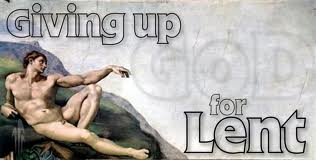
Giving Up God for Lent?

giving up godDare we give up God for Lent? Are we ready to expose ourselves to critiques of Christianity so that we might move beyond “God as a crutch” toward an experience of the absence of God? I find myself intrigued by Peter Rollin’s attempt to move us beyond our carefully held images/idols toward a deeper understanding of Christ’s experience on the cross. Atheism for Lent is a daring idea; a real journey into the wilderness.

New Beginnings

So many new beginnings: Back to work this week; a new beginning. Team Ministry; a new beginning. As students and teachers head back to school, churches begin a new program year. At Holy Cross we are are using the Alternate Lectionary (scripture readings) for Creation and this Sunday’s readings call for a celebration of Humanity. The first reading is the Hebrew creation myth found in the first chapter of Genesis; the all too familiar story. Churches have been telling this particular story of our beginning for centuries. Standing here at the beginning of a new century makes me wonder why we don’t tell a new story of our beginning.

When I begin to study the Genesis story with Confirmation Students, I ask them to imagine our ancestors sitting around a campfire asking one another, “What’s it all about? Why are we here? Where did we come from? Who are we?” Looking back at how we once approached these questions of meaning is a perfectly fine exercise. But we can’t stop there. It’s time for us to change the scene so that it better reflects who we are here and now. Gone is the campfire. Gone is the three-tired universe. Gone is the belief that Genesis is history.

The time has come for us to imagine a different gathering at which the same questions emerge. Only this time those who have gathered can reach into their pockets and take out their mobile devices to access the wisdom of the ages. This time a new myth emerges to capture our imaginations, a new myth from within which we can begin to imagine who we are, where we came from, why we are here and where we are going???

So this Sunday our first reading will not come to us from the book of Genesis. This Sunday we will begin our celebration of humanity by telling a new creation myth, one that emerges from the wealth of knowledge that science offers us. I can’t wait to begin!

While Preachers Dutifully Ponder the Doctrine of the Trinity, Our Congregations Shrink???

This Sunday is Trinity Sunday.  In anticipation, preachers all over the world are dutifully pondering the Doctrine of the Trinity desperately searching for something to say to encourage their congregations.

Preachers will trot out tired old clichés conjuring up images of triangles, shamrocks around, or point to H20’s ability to appear as water, ice, or steam while still maintaining it’s unified essence. Or have you heard the one about the 3 blind men and the elephant in the room. That old chestnut is trotted out by many a desperate preacher struggling to put flesh on the doctrine of the trinity. But for the life of me I can’t see how 1 blind man touching the elephant’s trunk and presuming that there is a tree in the room, while a second blind man catching wind of the elephant’s ear is convinced that there is some sort of giant fan in the room, while a third man grabs hold of the tail and is sure that he has hold of a rope, helps you to conclude that just because they’re all sharing a room with an elephant you can now confess that God is indeed Father, Son, and Holy Spirit, one God, forever and ever amen. But all sorts of mental gymnastics will be exercised in the vain attempt to make some sort of sense of the doctrine of the Trinity!

On Trinity Sundays, mindful of the fact that trying to explain the doctrine of the Trinity usually leads to heresy: dusty theological books that have not seen the light of day since last Trinity Sunday have been poured over to ensure that the formula’s learned in seminary are repeated correctly and heresy scrupulously avoided. The imaginative among us have attempted to baffle our congregations with our theological intellect, the pragmatic among us have attempted to baffle our congregations with something akin to BS, while the desperate among us have simply tried to survive the Trinity Sunday hoping against hope that no one will notice that we haven’t a clue what we’re talking about.

Perhaps only dear old Dr. Martin Luther possessed the theological integrity sufficient to save a preacher from the perils of preaching on Trinity Sunday. So, before I launch, forth, let me remind you what the instigator of the Reformation had to say on the subject of the Trinity. Martin Luther warned that: “To deny the Trinity is to risk our salvation; to try and explain the Trinity is to risk our sanity.”

I will confess that Martin Luther had much more at stake, literally at stake, than I do, because the truth is that for centuries the punishment for heresy would have found many an ancient preacher burned at the stake. But while the death penalty for heresy has been lifted, the risk to one’s sanity remains.

Now, I will confess that when faced with a particularly difficult theological knot, I prefer to begin by quoting Jesus and not Luther, but alas Jesus remained silent on the issue of the Trinity. So, I did try to find something helpful in the words of the Apostle Paul. But alas, without some really amazing theological gymnastics that are beyond my abilities to comprehend, even the Apostle Paul remains mute on the issue of the Trinity. So keeping in mind Dr. Luther’s dire warning that to,  “To deny the Trinity is to risk our salvation; but to try and explain the Trinity is to risk our sanity.”

Let me remind you that the Trinitarian formula appears in Scripture only once, in Matthew 28, during what is called the Great Commission, when Jesus commands the disciples to go forth, baptizing in the name of the Father, and of the Son, and of the Holy Spirit. But the doctrine of the Trinity does not appear in the Bible

– The doctrine of the trinity, as we know it, was first formulated in the fourth century, by a couple of guys named Gregory and a woman called Marcrina.

– The doctrine of the Trinity was then developed over hundreds of years

– The doctrine of the Trinity was at the heart of several wars

– Thousands of Christians were killed because they came down on the loosing side of arguments over the doctrine of the Trinity

– No one has ever been able to adequately explain the Trinity

– Every explanation of the Trinity that I have ever come across includes some form of heresy

By the way, just so we’re clear, I rummaged through some of my previous sermons on the doctrine of the Trinity and I must confess that if this were the twelfth century, an angry mob would be stoking up the fires beneath my feet  because based on things I have proclaimed on various Trinity Sundays a charge of Modalism could very successfully be laid against me, as could a charge of Sabellianism. You might be interested to know, that more traditional preachers than I, will no doubt preach sermons this Sunday which will prove them guilty  of Arianism or at the very least Subordinationism. All of these heresies in a bygone age would have left us with a severe shortage of clergy in the church, as many of us would be smoldering at the stake for our crimes. Deciding who is right and who is wrong, who is in and who is out is a deadly preoccupation of humanity, a preoccupation that the church has not been able to escape.

So, with apologies to Dr. Luther, I’m going to go ahead and risk my salvation by declaring that the doctrine of the trinity is but a feeble attempt to comprehend the incomprehensible mystery of the very nature of our God.  We can echo all the creeds of Christendom with as much confidence as we can muster, and as enlightening as some of those creeds may be, they cannot begin to unravel the mystery of the creator of everything that ever was and ever shall be, nor can they fully describe the magnitude of the revelation provided in the life, death and resurrection of the one we call Christ, and when it comes to the power of the Holy Spirit, all our creeds together cannot tell the story of her wondrous beauty.

The doctrine of the trinity is just a tool to help us along the way, the trinity is not God, nor is God the trinity. The trinity is merely a way to speak of the unspeakable. And yet down through the centuries we have used the doctrine of the trinity as an idol and demanded that we worship the trinity as if it were God’s very self.

We have worried more about believing in the trinity than relating to the very One whose relationship the Trinity attempts to describe. For when it comes down to it, what we know of our God finds expression our attempts to describe God as a relational being. For what is the doctrine of the Trinity if it is not the declaration that God is Creator, Christ and Spirit, intimately connected as One; at God’s very core we find a relationship. This should be our first clue that any understanding of God must begin with relationship. Surely it is more important to experience God than to explain God. Surely it is more important to relate to God than it is to preserve a doctrine that has long since failed to describe God.

You’d think that after nearly 2000 years the Christian church would have learned to be more humble in its declarations about God. And yet, today, as we strive to learn more and more about creation, some things remain out of bounds. The church remains unwilling to revisit long established doctrines, choosing instead to insist that we simply believe, because what was good enough for grandma ought to be good enough for us. And if we should doubt the doctrine of the Trinity then all we need to do is study harder and we will eventually understand. And if we are unwilling to work at understanding the Trinity we should simply trust that folks much smarter than us have figured it out so we should simply stop questioning and simply mouth the words. Let the tired clichés and the worn out illustrations suffice, forget about our questions and simply drink the kool-aid and our doubts will somehow magically disappear. And so together we focus on believing what has been handed down to us. And for a great many people that’s good enough. All we really need to do is believe, to have faith and all will be well. But oh so many more of us have grown weary of the tired insistence on belief; you only have to think of the children missing from our churches to know that our doctrines are failing to engender relationship.

I’d like to be able to say, here just learn this and believe this and all will be well,  all we need to do is figure out more up to date methods to deliver the same old doctrines and your grown children will learn to believe, but  I too have my doubts.   You see I don’t believe that the point of a religion is to engender belief. I believe that the point of religion is much bigger than belief. For if a religion does no help you relate to God or to God’s creatures, or enhance your experience of creation, then religion is not life giving and all its doctrines are but fleeting attempts to deny death.

It is far more important to have a relationship with our God than it is to understand doctrines about God. In so far as the doctrine of the trinity helps us to relate to God then it can be said to be life-giving. When the doctrine of the trinity helps us relate to God’s creatures and to God’s creation, then it can be said to be life-giving. But reduced to a formula that we must believe the doctrine of the trinity runs the risk of inhibiting our experience of God and robbing us of a life-giving relationship with God and with the world that God loves.

I am convinced that the only way to ensure that the doctrine of the trinity remains life-giving is to free it from the confines of the past. Despite it’s fear, the church must re-examine its creeds and confessions, open up our dusty doctrines to the light of the 21st century so that those that fail to enhance our relationship to God and to one another can be given a decent Christian burial and those that nurture our relationship to God and to one another can thrive.

We need to prioritize relationship and experience over ancient creeds and doctrines, least our preoccupation with correct belief causes us to miss an encounter with our God.

Trying to understand the very nature of God, is, when you think about it actually an arrogant thing for simple creatures such as we. We cannot hope to understand the nature of God.  So perhaps the most faithful sermon on the Trinity is one that merely sniffs around the edges of the mystery, hunting for something closer to an experience rather than an understanding.  God is the elusive stranger.

Sometimes it is possible to identify God, before God gets away. But most of the time we only recognize God after God is gone, like the drifter who wants to tell you his story only you do not have time, so you hand him a dollar and walk away.  Or the woman with the tearstained face who disappears while you decide whether to ask her what is wrong; or the bewildered child whose mother scolds him for being alive and whose sorrowful eyes catch yours just as she drags him away. These are the strangers who lay claim to our hearts, although they make no claims for themselves.  In their presence we fail them.  It is only after they are gone that we know who they were.  That is why it is so easy for us to sacrifice them.  We did not know.  How could we have known?  Who expected Christ to show up looking like that?

Is it possible for us to attend to our peripheral vision, to see out of the corner of our eyes, to notice those faint sounds of birdsong in the background, to catch those elusive fragrances, that might well be God, the Holy One, coming to us in ordinary space and matter, longing for an intimate encounter?

Let us be ready to notice the Spirit of God in a burning bush, to turn aside for a moment in order to encounter the mysterious, intimate God who comes to us, so that in the power of the trinity we ourselves may be made holy!

            Heirs with Christ –  inheritors and distributers of all God’s love.

            There you see, I’m not suggesting that we toss it all away.

            Down through the centuries God has revealed so much.

            I’m simply pleading that we walk humbly with our God.

            And revel in the mystery.

In a dusty library years ago, I discovered a pearl about the Trinity, which I treasure. It came from St. Augustine, a 4th century bishop who helped to craft the doctrine of the trinity.

            Augustine’s metaphor for the Trinity is that

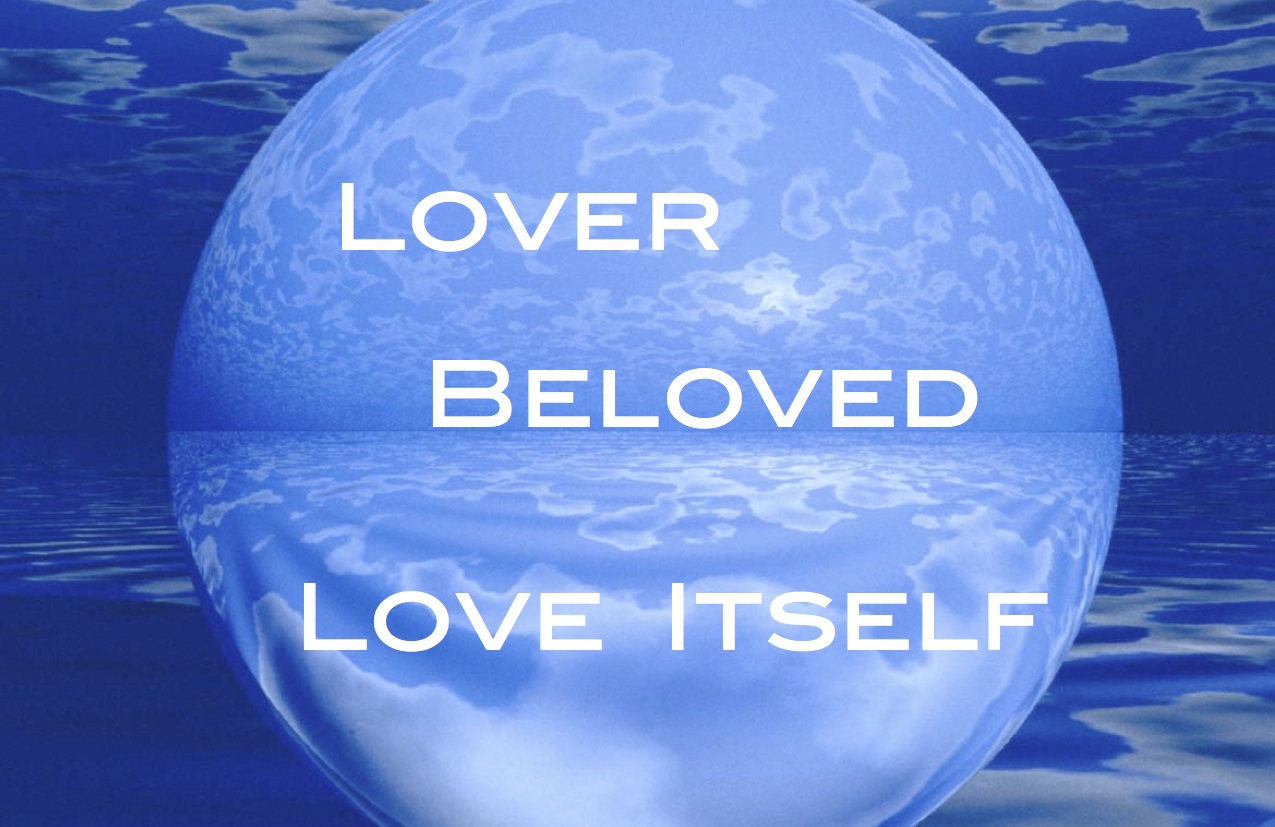
            God is:  Lover, Beloved, and Love itself.  

            May we learn to walk humbly with that love.