T’is a glorious summer weekend and so it is a perfect time to get yourself an ice cold glass of your favourite beverage, find some shade and sit back and listen to the wisdom of one of my favourite humanoids John 0″Donohue. I have been eating up his writings for the past few months and delighting in his Irish lilting way with words. From Anam Cara, to Beauty, through Eternal Echos and now lingering over Benedictus I have come to love this kindred spirit! Sláinte!
Music opens us to all that lies within ourselves. I have always been fascinated by the powers of music in ritual. Of late I have been exploring the transformative powers of lament; a worship form that has fallen out of use. Alerted by a colleague to the music of Olivier Messiaen, I was immediately both disturbed and intrigued by his brilliant musical exploration of evil. I was relieved to find this video of Scottish theologian Richard Holloway’s thoughts on Messiaen’s Quartet for the End of Time. Haunting, severe, beautiful, unnerving, and sublime the piece echo’s the horror perpetrated in the camps while shouting what Holloway calls the “nevertheless of faith”.
Stroumboulopoulos beware: our own Bishop Michael Pryse’s interview skills might put you out of a job. Bishop Pryse explores the work of the relief agencies of the ELCIC and ACC during the Joint Assembly in Ottawa. Bishop Michael also has some stomping and spoon playing skills that might come in handy over at the CBC!
Of all of the guests to the first Joint Assembly of the Evangelical Lutheran Church in Canada and the Anglican Church in Canada, the Presiding Bishop Mark Hanson of the Evangelical Lutheran Church in America was by far the most challenging. Bishop Hanson spoke eloquently of the crossroads at which both the ELCA and ELCIC find ourselves. Truly the most rousing speech of the Joint Assembly.
Preaching ideas for this week’s sermon on Luke 10:25-37
I was just 10 years old when the Gideon Society came into my classroom to present us with small pocket editions of The New Testament and Psalms. I was in grade five when this little book was given to me. Its imitation leather has held up well over the years. After I carefully wrote my name on the presentation page, I tucked it into my school bag. Several weeks later, a thunderstorm knocked out the electricity and I was caught without a book to read, so I dug out this little red book from my school bag. By candlelight, I read the Gospel of Matthew. Over the course of the next two weeks, I read Mark, Luke and John. I stopped reading somewhere in the book of Acts.
Over the course of the next few years, in the privacy of my room, I would return to this little red book and escape into the desert towns where Jesus travelled. In those days I didn’t know what a parable was, but I loved the stories that Jesus told. The stories that Jesus told have a timeless quality to them. The parables that Jesus told defy simple explanations. Each of the parables is layered with meaning. The varied meanings of each parable can take a lifetime to uncover as the stories weave in and out of our own lives. The parable about the Good Samaritan is probably one of the most familiar of all of Jesus’ parables.
I believe that the timeless quality of this story comes as a result of the way in which the reader or the hearer can identify with all of the characters in the story. While most of us would like to see ourselves as good Samaritans, I dare say that over the years each of us have managed to play all of the roles in this story.
Over the years I have often played the role of the lawyer, trying to get Jesus to explain the secrets of life as over and over again I have questioned and questioned what I must do to inherit eternal life. Continue reading →
Keynote address to the Joint Assembly of the ELCIC & ACC – Ottawa July 3, 2013
South Indian theologian the Rev. Dr. Christopher Duraisingh challenged the delegates at the Joint Assembly to think of our them “Together for the Love of the World” not as an invitation to “grow bigger and better” and not as a project, but as “a major calling to nurture and nourish an alternative consciousness,” one that would involve, like Jesus, “a solidarity plunge into the anguish, hopes and aspirations of his people.” Jesus’ baptism was “not for the forgiveness of sin…not sin management,” but rather “an identification with the world, with the hopes and aspirations of the poor and the oppressed.”
Ottawa Convention Center: site of the Joint Assembly
It has been almost two years since the Evangelical Lutheran Church in Canada voted on a series of motions designed to end the discrimination against GLBT people in our church. Prior to the passage of these motions, I assumed that once we voted to allow same-gendered marriage and the ordination of openly gay candidates for the ministry of word and sacrament we would be well on the way to equality for GLBT folk in our congregations. I had hoped that our church’s affirmative votes would mean that I could finally set aside studies related to sex in the Bible. As an ordained woman who just happens to be gay, I had grown weary of sexual politics in the church and longed to turn my attentions to theological matters that might lead to a re-articulation of the Christ experience for 21st century thinkers. My naive notions failed to take into account the fact that it has been close to 37 years since the ELCIC voted to ordain women and sadly there are still bastions of prejudices against women that remain in the ELCIC.
Voting doesn’t make it so. As the National Assembly of the ELCIC draws near, I have begun to receive questions about: 1) what it’s like to be an “out lesbian” serving in an ELCIC parish, 2) how many individual congregations have voted to affirm the ELCIC’s policies, are served by openly gay clergy, or are preforming same-gendered weddings, and 3) what needs doing in order that we might have more congregations that actually welcome GLBT folk into full membership?
In response to the various questions that are littering my inbox I can only say, “I don’t know?” You see I live in a bubble. The congregation I serve is a fully inclusive congregation. Shortly after the ELCIC voted to allow openly gay clergy to serve, I was finally able to celebrate by marrying my long-time partner. Our wedding celebration was also a congregational celebration. While I am relieved to be able to speak publicly about who I am, my gayness is not central to my ministry. We at Holy Cross are busy working to be a congregation that dwells in the 21st century. We are constantly exploring what it means to follow the ways of Jesus in a post-Christendom world. We have moved so far beyond the sexuality questions which obsessed the ELCIC for nearly two decades. I rather like the freedom that our particular bubble has afforded us to float away from the endless conversations about sexuality. So, it is with great trepidation that I began to engage the questions that are frequenting my inbox.
This Joint Assembly marks the first time that the Evangelical Lutheran Church and the Anglican Church in Canada have gathered together for our national conventions. As full communion partners there is so much that unites us. However, the Anglican Church of Canada, unlike the Evangelical Lutheran Church in Canada, has not yet voted to remove all of the barriers to full inclusion for its LGBTQ members. While our experiences in the ELCIC prove that voting doesn’t make it so, it does make it possible for us to claim our place in the church. So, while I applaud the sentiments that bring us together for this Assembly, I can’t help wondering about the quality of our “full communion”?
I shall endeavour to blog during this Joint Assembly. I’ve added a page to this website where related blogs will be posted. In the meantime I travel in hope!
If religion is to move beyond the supernatural, we must begin to see religion as a work of art. Richard Holloway, the former Primate of the Scottish Episcopal Church points to the power of story to explore human discontent as we crawl toward a better humanity.
As Pride Week celebrations continue and I search for words to help us express our celebrations of Canada Day during today’s worship service, I came across this prayer written by Kittredge Cherry and Patrick Cheng.
Rainbow Christ, you embody all the colors of the world. Rainbows serve as bridges between different realms: Heaven and Earth, east and west, queer and non-queer. Inspire us to remember the values expressed in the rainbow flag of the lesbian, gay, bisexual, transgender, and queer community.
Red is for life, the root of spirit. Living and Self-Loving Christ, you are our Root. Free us from shame, and grant us the grace of healthy pride so we can follow our own inner light. With the red stripe in the rainbow, we give thanks that God created us just the way we are.
Orange is for sexuality, the fire of spirit. Erotic Christ, you are our Fire, the Word made flesh. Free us from exploitation, and grant us the grace of mutual relationships. With the orange stripe in the rainbow, kindle a fire of passion in us.
Yellow is for self-esteem, the core of spirit. Out Christ, you are our Core. Free us from closets of secrecy, and give us the guts and grace to come out. With the yellow stripe in the rainbow, build our confidence.
Green is for love, the heart of spirit. Transgressive Outlaw Christ, you are our Heart, breaking rules out of love. In a world obsessed with purity, you touch the sick and eat with outcasts. Free us from conformity, and grant us the grace of deviance. With the green stripe in the rainbow, fill our hearts with untamed compassion for all beings.
Blue is for self-expression, the voice of spirit. Liberator Christ, you are our Voice, speaking out against all forms of oppression. Free us from apathy, and grant us the grace of activism. With the blue stripe in the rainbow, motivate us to call for justice.
Violet is for vision, the wisdom of spirit. Interconnected Christ, you are our Wisdom, creating and sustaining the universe. Free us from isolation, and grant us the grace of interdependence. With the violet stripe in the rainbow, connect us with others and with the whole creation.
Rainbow colours come together to make one light, the crown of universal consciousness. Hybrid and All-Encompassing Christ, you are our Crown, both human and divine. Free us from rigid categories, and grant us the grace of interwoven identities. With the rainbow, lead us beyond black-and-white thinking to experience the whole spectrum of life.
Rainbow Christ, you light up the world. You make rainbows as a promise to support all life on Earth. In the rainbow space we can see all the hidden connections between sexualities, genders, and races. Like the rainbow, may we embody all the colours of the world! Amen.
Below is a version of a favourite hymn “For All the Children” composed by David Lohman and sung by a gathering of Catholics in Minnesota last summer. Since then our neighbours to the south have made some good progress toward equality. We here in Canada can take pride in our nation’s equal marriage laws, but more work needs to be done to accomplish full equality.
“Thine is the glory risen concrete son!” When she was just a little girl these were the words she heard the adults in her life singing about the baby Jesus. Not having any idea what concrete was, she just sang these words assuming that they said all that needed to be said about the character of the little baby whose arrival meant presents for everyone.
On this long weekend, memories of childhood celebrations remind me that the stories we tell our children are not always heard exactly as we intend. When I was a little girl, I remember enthusiastically singing “God Save the Queen” and wondering exactly where “reignoverus” was and why we wanted to send the nice lady, who wore such pretty hats, there. It was a particularly mortifying disappointment to discover that what I was meant to be singing on behalf of the nice lady was to “send her victorious long to reign over us” as I implored God to save her. To this day, I cannot sing Her Majesty’s anthem without chuckling as I muse about what has now become the mythical land of reignoverus. While chuckling is a rather pleasant residue, I can’t help wondering what dangerous, frightening or perhaps scarring residues will remain as a result of the stories we currently tell our children.
I have often been cajoled, bribed, guilted or shamed into including children’s sermons/talks/times during Sunday morning worship services. While I understand the impulse to find ways to include children in worship, I have never been convinced that stories told during these moments accomplish anything more than the placation the guilt we feel for our unreasonable expectations. The best we can hope for our good intentions is that in the years to come they will provide a few chuckles as the children we once corralled at the front of our sanctuaries look back bemused at our efforts to include them in worship.
Dave Allen, an Irish comedian whose television program I was not allowed to watch when I was a child, but whose humour I learned to enjoy as a teen-ager, provides a window into a world we would do well to remember.
Richard Holloway, the former Primate of the Scottish Episcopal Church, interprets the story of the resurrection not as an historical tale, but as our own story. Holloway has written of his longing for a humbled and broken church. His own humility and brokenness shines through this video as Holloway embodies his own longing.
As millions of Canadians make their finial preparations for the Canada Day Long Weekend, the church prepares to celebrate the Sixth Sunday after Pentecost or Ordinary 13 with scripture readings that will challenge even the best of homileticians to make the connections to the activities of most Canadians.
This particular homiletician has decided to abandon the Revised Common Lectionary in favour of Canada Sunday. Granted I had to make the feast day up, but I do so in the name of relevance; for surely, preachers ought to have something important to say about Canada!!
So, the sanctuary will be adorned in red, for no other colour will suffice for this feast day. The readings will begin with verses from Deuteronomy about the Promised Land. Psalm 72, from whence came Canada’s official motto “A Mari usque ad Mare” – “From Sea to Sea” Psalm 72:8 – “God shall have dominion from sea to sea and from the river unto the ends of the earth”. The first official use of this motto came in 1906 when it was engraved on the head of the mace of the Legislative Assembly of the new Province of Saskatchewan. The wording of the motto came to the attention of Sir Joseph Pope, then Under Secretary of State, who was impressed with its meaning. He later proposed it as motto for the new design of the coat of arms, which was approved by Order in Council on April 21, 1921 and by Royal Proclamation on November 21, 1921.
The gospel text eluded me until I chanced upon the Revised Common Lectionary’s suggestion for our cousins to the south’s celebration of Independence Day, Matthew 5:43-48. Our Hymn of the Day includes words written by Shirley Erena Murray that were inspired by Dietrich Boenhoeffer. We will be singing it to the tune Londonderry Air (thats Danny Boy) but you can see Per Harling’s music here.
I suspect this homiletician will have something to say about Canada’s once proud history as Peace Keepers as she cries out for a renewed sense of justice when it comes to our actions in the world???
Here’s a pdfof our Worship Bulletin (designed to be printed on double-sided legal paper and folded into a booklet)
I have just completed reading Richard Holloway’s “Leaving Alexandria: A Memoir of Faith and Doubt”. As someone who struggles to stay in the institutional church, I can hear the whispers of which this former Primate of the Scottish Episcopal Church writes.
After a lifetime in the church, Holloway continues to respond to whispers, “The thing that keeps me religious is the possibility that there might be an ultimate purpose to the universe and it might, as certain rumours suggest in sacred texts, be unconditional love. And it seems to me to live as if that might be the case is not a bad way go be going; especially if it makes us kind to one another.”
Richard Holloway’s vision of the church he longs for is a vision I too long for. As he ponders the question “Am I still a Christian?” Holloway insists, “God has always been elusive in me. He’s always felt like an absence that felt like a presence. I was tantalized by God, that resonant absence again. The God that I was being told about, the God who was punishing my gay friends, the God who denounced me was cruel I and I couldn’t be part of that. And yet I am still tugged by the longing that had gotten me into this, the possibility of transcendence, that there is meaning and that the meaning might be a great pity, not a cruelty, but an absolute compassion, an absolute unconditional love, a love like the father of the prodigal in Luke’s great parable who runs to meet his broken son and doesn’t condemn and doesn’t even wait for the confession before embracing him, and bringing him home. There is that God. That’s the God of Jesus….So I’m kind of in and yet out of the Christian Church. I want it to continue. But I want it humbled. I don’t want it cruel and bullying. I want it modest and serving. I want it to feel broken like the broken Jesus and not trying to sort people into very precise understandings of humanity. I want it to accept the totality of broken humanity. Most of us are broken in one way or another and we struggle with our own meaning, with our own integrity, and our own sinfulness. And the thing I found in Jesus and the thing you can still find in some churches is an understanding of that. ‘Come onto me all ye who travail and heavy laden and I will give you rest.’ So, I’m back. But I can’t proclaim. I can’t evangelize. I can’t say what this is the truth. I don’t know what the absolute truth is. But I still catch a glimpse of the tiny figure of Jesus on a distant seashore kindling a fire, a fire of compassion and kindness. And I’ve become increasingly allergic to religious certainties. They seem to me only to crucify people…”
For those of us who remain and for those who have joined the church alumni, Holloway’s story is a compelling whisper that speaks with the very compassion for which he and we long for. He may no longer be a bishop in the institution, but he remains a shepherd to those who long to catch a glimpse of the tiny figure of Jesus who continues to call the religious out from under the tables that clutter our temples.
I have featured Lesley Hazleton on this blog before. Hazleton’s insights into faith come from her unique perspective as an agnostic Jew whose fascination with Islam has produced two biographies of the Prophet Mohammad.
In her latest TED talk (June 23/13) Hazleton looks to the doubts experienced by the Prophet Mohammad to explore the relationship between faith and doubt, calling for a new appreciation of doubt as pivotal in the struggle to end the fundamentalism of all religions. It is well worth a listen!!!
Thinking about this Sunday’s epistle reading, Galatians 3:23-29 and wondering how we might re-imagine the Apostle Paul’s insistence that in Christ “There is no longer Jew or Greek, there is no slave or free, there is no longer male and female; for all of you are one in Christ Jesus.” Might it be that those of us who follow the way of Jesus need to consider subtracting our language about “Jesus Christ” as the source of our ONENESS in the One In Whom All Life Is Rooted? Can we begin to re-imagine language for what we mean by “Christ”? What can we learn from sisters and brothers who follow a different way to ONENESS?
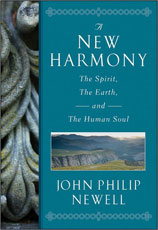
John Philip Newell’s recent book, “New Harmony: The Spirit, The Earth, and The Human Soul” provides an Eastern perspective from which I’m looking anew at the Galatians reading. You can hear Newell reading from the chapter “Every Bush Is Burning” in which I trust preachers and seekers alike will find much to contemplate. Enjoy!
Bobby wasn’t like any other 10-year-old boy. Bobby had the face of an angel but the temperament of a devil. Bobby was a beautiful child. His blond hair and blue eyes together with his alabaster skin, pointed toward his Scandinavian heritage. At first sight, Bobby appeared to be the kind of child that any congregation would be proud to count as a member. But, Bobby’s physical appearance was deceiving and Bobby’s presence in church was not welcome. Bobby didn’t go down to Sunday school classes with the other children. The Sunday school teachers had tried to include Bobby, but after several parents threatened to withdraw their children, they asked Bobby’s parents not to send Bobby anymore. So Bobby stayed in the sanctuary with the adults. Most of the adult members tried to tolerate Bobby’s presence but for some, Bobby’s presence was simply unnerving. Bobby is autistic. Sitting and behaving in church was impossible for him. As long as we were singing hymns, Bobby was happy. He would catch the rhythms of the music and rock back and forth and sing. He never sang the same words as the rest of the congregation. But it was clear from his movements and the sounds that emanated from his lips that Bobby was singing. The trouble was that Bobby never stopped singing when we did. When his parents would attempt to put an end to Bobby’s song, he would flail about and sometime throw himself on the floor.
Now there are some churches where flailing about and throwing one’s self to the floor would be interpreted as a sign that the Holy Spirit was at work. But in this little Lutheran church, the reaction of the worshippers to Bobby’s outbursts made it clear that they feared that Bobby was possessed by spirits of the evil variety. Oh, they would never have come out and said that Bobby was possessed by demons, they just acted as if he were. Bobby’s favorite part of the service was communion. I think that he enjoyed the opportunity to walk up to the front of the church and kneel at the altar. When the Pastor would place a communion wafer in his hands, Bobby would giggle with glee. Bobby never ate the communion wafer; he would just hold it up to the light and smile. The communion wine was another thing altogether. Sometimes Bobby’s mother would try to help him drink from the common cup. Sometimes Bobby would dunk his wafer into the intinction cup and slop wine everywhere. At other times Bobby would be so preoccupied with his wafer that he just let the cup pass him by. On a good day Bobby’s behavior only made people uncomfortable. On a bad day, Bobby’s behavior embarrassed some, offended others, and sometimes outraged many.
I remember being summoned to an extra-ordinary council meeting. The meeting had been called to deal with the complaints and concerns of several long time members of the congregation that had decided that Bobby’s presence could now longer be tolerated at worship. The people who were complaining were not bad people. They were fine upstanding members of the congregation who found themselves unable to deal with Bobby’s presence in their midst. During the meeting we agonized over what to do. Continue reading →

 T’is a glorious summer weekend and so it is a perfect time to get yourself an ice cold glass of your favourite beverage, find some shade and sit back and listen to the wisdom of one of my favourite humanoids John 0″Donohue. I have been eating up his writings for the past few months and delighting in his Irish lilting way with words. From Anam Cara, to Beauty, through Eternal Echos and now lingering over Benedictus I have come to love this kindred spirit! Sláinte!












 pastordawn