CONSUMED BY TEILHARD de CHARDIN’s FIERY VISION

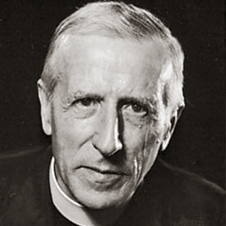
I first discovered Teilhard’s work while completing my undergraduate work in Religious Studies at the University of British Columbia, when a well-used copy of “The Phenomenon of Man” (Le Phenomene Humain) captured my interest. At the time, Teilhard’s insights were quite a stretch for me and although I finished the book feeling overwhelmed by its complexity, I couldn’t help longing for the day when I might be better able to follow Teilhard beyond the rigid confines of the science versus religion debate toward a more comprehensive approach to understanding the cosmos and our place in it.

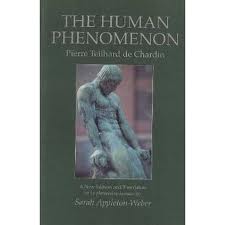
Today, in the midst of my sabbatical at UBC, it feels so appropriate that I should once again be consumed by Teilhard, as I luxuriate in Sarah Appleton-Weber’s newer translation: The Human Phenomenon. Lo these many years later, I still feel ill-equipped to grasp the wonders of Teilhard’s vision. But, I am struck by the beauty of his vision of the complex process of unfolding of the universe. 

My comprehension of Teilhard’s work is enhanced by Ersula King’s splendid biography: Spirit of Fire.  King describes his vision as one in which: “love is a spirituality that celebrates the oneness of creation, a spirituality that acknowledges love as the clearest understanding we have of God, of ourselves, of history, and of the cosmos.”

“his vision was one of consuming fire, kindled by the radiant powers of love. It was a mystical vision, deeply Christian in origin and orientation. Yet it broke through the boundaries of traditional orthodoxies — whether those of science or religion — and grew into a vision which is global in intent.”  

In an essay, “The Heart of the Matter” written near the end of his life, Teilhard described this fire at the heart of reality:

“Throughout my life, by means of my life, the world has little by little caught fire in my sight, until a flame all around me, it has become almost luminous from within. Such has been my experience in contact with the Earth. The diaphany of the divine at the heart of the universe on fire. Christ, the heart, a fire capable of penetrating everywhere, and gradually spreading everywhere.”

Teilhard was a scientist/theologian/philosopher/prophet who remains ahead of his time, whose work continues to push scientists and theologians to move beyond the carefully drawn boundaries of their own disciplines so that they might learn from one another. King explains: “His deepest desire was to see the essence of things, to find their heart, and probe into the mystery of life, its origin and goal. In the rhythm of life and its evolution, at the center of the cosmos and the world, Teilhard believed, is a divine center, a living heart beating with the fiery energy of love and compassion. Now, the heart is really a fleshly reality But the image of this very flesh, this concentration of living, breathing matter, came to symbolize for Teilhard the very core of the spirit.”

The warmth of these summer days at UBC are richly complemented by Teilhard’s fiery vision as I savour this divine consumption.

For those of you unfamiliar with this 20th century Christian mystic the American Teilhard Association provides a brief biography at:  http://teilharddechardin.org/index.php/biography

PEACEFUL SABBATH- Contemplating Divinity

“AT THE HEART OF THE MATTER, A WORLD HEART, THE HEART OF GOD” Teilhard de Chardin

Today, I began to study the work of Pierre Teilhard de Chardin. I have been longing to do this ever since I was first introduced to this 20th century Christian mystic some 25 years ago, when Matthew Fox’s “Original Blessing” helped me to look to the Christian mystics, both ancient and modern, to find new ways of connecting to the cosmos.  After many brief encounters with Teilhard’s work in books and articles by some of my favorite theologians, I have longed to spend some time exploring Teilhard’s purported brilliance. I have begun by reading “The Human Phenomenon” (often mistranslated from the French as “The Phenomenon of Man”). I’ve submerged myself in the delights and challenges of this enthralling work until my mind is about to explode (usually just a chapter or two at a sitting) and then I take a break by reading Ersula King’s  riveting biography: “Spirit of Fire: The Life and Vision of Teilhard de Chardin”. It has been a mind blowing day!

So many connections are emerging and I shall endeavor to post them as they escape from the quagmire of ideas that are swirling around in my brain. But as the Sabbath approaches I leave you with this playful tune from Peter Mayer which celebrates this blessed Ordinary Day in a way that complements this mystic moment!


‘WE ARE ALL THE UNIVERSE BECOMING MORE AWARE OF ITSELF” Rev. Michael Dowd

Michael Dowd, a self-proclaimed Evolutionary Evangelist is committed to spreading the good news that evolution is humanity’s common creation story as he proclaims that science illuminates the evidence with which God is communicating to humans today.

Inspired by the work of Fr. Thomas Berry who portrayed the epic of evolution as a sacred story Dowd seeks to popularize Berry’s insistence that humanity is the universe becoming conscious of itself. 

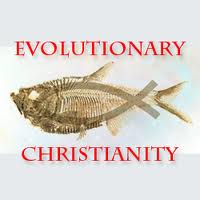
Dowd’s work is especially intriguing to this particular 21st century pastor who connects to the cosmos from the perspective of panentheism (God is in everything and everything is in God). Evolutionary Christianity is an exciting way of using the explosions in scientific evidence to illuminate our religious quest to understand our place in the cosmos. 

I am indebted to a blog-follower from South Africa for linking me to this excellent video by New Hampshire Outlook that explores the work of the Rev. Michael Dowd. In addition to a fabulous interview this video provides an enticing overview of Evolutionary Christianity that will leave you wanting to learn more.  You can begin by visiting Evolutionary Christianity’s Blog. I’m anxiously waiting for my copy of Dowd’s “Thank God for Evolution” to explore more of Dowd’s insights.

OLD FRIENDS: Rebel Voices that Shaped Me

Summertime provides me the freedom to recall those voices from the past that belong to rebels who helped to shape me. Holly Near and Odetta possess voices that called me into being. Their hunger for justice opened me up to a world beyond the confines of my safe and comfortable life. Their love of humanity inspired me to reach out to strangers I might never have met. Their quest for peace disturbed me from my placidness. The Spirit that dwells in, with, and through them sang me into being. 

My old records are long lost, so I rejoice that technology reunites me with these old friends.  We may all be older now, but Holly Near is as fearless as ever and Odetta still has the power to haunt generations. Enjoy!

CHRISTIANITY AFTER RELIGION: The End of Church and the Birth of a New Spiritual Awakening by Diana Butler Bass

Re-reading Diana Butler Bass’ latest tome while on sabbatical in Vancouver allows me the luxury of time to delve deeply into her keen insights with regard to the current state of Christianity in North America. 

Bass offers hope to those of us who remain in the institutional church toiling away at the hard work of renewal. While the powers that be within the institution struggle to hold on to what used to be, by tinkering with doctrines and structures in order to maintain the status quo, Bass sees a “New Spiritual Awakening” happening among the “spiritual but not religious” crowd who seek a more direct experience of God. Rather than choosing between spirituality and religion, Bass calls for a more spirtual religion; one that enables us to become more fully human. 

Take the time to watch Bass describe her book in her own words. For those of you who have already read the book, I would encourage you to listen to the story at the end of the lecture which Bass did not include in the book that captures the flavour of the “New Spiritual Awakening” she sees taking place in the most unlikely of places among the most unlikely participants.

LETTIN’ HER LIGHT SHINE: Dr. Maya Angelou

And such a beautiful light it is!!!

CRACK HOUSE CHURCH – Peter Rollins’ Challenging Critique of “Church”!

In a soon to be released interview for “The Work of the People,” Peter Rollins offers a challenging critique to those among us who are addicted to feel-good Sunday Church experiences. As someone who spends hours of sweat and toil crafting Sunday morning worship services, I must confess to squirming as Rollins’ critique made me feel like a pusher of dubious integrity. Despite my  discomfort, Rollins’ challenge reminds me of the need to “re-think” my own assumptions and aspirations of what it means to be “church”.

Rollins’ critique speaks to the need to broaden our definition of church beyond that which takes place in a building on Sunday morning to a more inclusive understanding of our life together in community.  When church endeavours to embody Christ, we begin to live our lives together as one in the world. Our common life in Christ reaches beyond our addiction to feel-good Sunday morning worship to include our struggle together to become more fully human.

Pete Rollins will be our guest at Holy Cross Lutheran Church in Newmarket, Ontario on the weekend of: April 12-14, 2013. I look forward to learning more from this challenging theologian!!!

EVOLUTIONARY GOOD NEWS – Rev. Michael Dowd

Evolutionary theologian Michael Dowd, author of “THANK GOD FOR EVOLUTION” advocates for an “Evolutionary Christianity”.  A self-described “New Theist” Dowd explains: New Theists are not believers; we’re evidentialists. We value scientific, historic, and cross-cultural evidence over ancient texts, religious dogma, or ecclesiastical authority. We also value how an evidential worldview enriches and deepens our communion with God. New Theists are not supernaturalists; we’re naturalists. We are inspired and motivated more by this world and this life than by promises of a future otherworld or afterlife. This does not, however, mean that we diss uplifting or transcendent experiences, or disvalue mystery. We don’t. But neither do we see the mystical as divorced from the natural. New Theists are legion; we are diverse. Many of us continue to call ourselves Christian, Jew, Muslim, or Hindu. We may also self-identify as emergentist, evidentialist, freethinker, neo-humanist, pantheist, panentheist, or some other label. New Theists don’t believe in God. We know that throughout human history, the word “God” has always and everywhere been a meaning-filled interpretation, a mythic and inspiring personification of forces and realities incomprehensible in a prescientific age. We also know that interpretations and personifications don’t exist or fail to exist. Rather, they are more or less helpful, more or less meaningful, more or less inspiring.”

Here’s the TED TALK: Why We Suffer Now, for those who are pushed for time. But if you have the time, I strongly  recommend the longer CAL TECH Lecture:  Evolution and the Global Integrity Crisis,  below in which Dowd is able to elaborate on his ideas.  Fascinating stuff!!!

For more on Evolutionary Christianity click below:

Peter Rollins and Phyllis Tickle discuss EMERGING CHRISTIANITY


Peter Rollins will be our guest at Holy Cross in Newmarket: April 12-14, 2013

A Creation Open to the Future: Jürgen Moltmann

 “In border zones between faith and science, when faith encounters series science it requires no defense, but only interest and curiosity.  The question about God and the question what holds nature together are not wholly divergent questions and they are not controversial.”   I will confess that Moltmann often hurts my brain and so I must read him carefully and listen attentively.  But he is always worth the effort.  He always sends me off on tangents I would never have discovered without his prompting.

Here, Moltmann insists that theology does not call into question the results of scientific research, but theology does set these results in the context of wider horizons of interpretation because theology has different questions.  

EMERGENCE CHRISTIANITY: Phyllis Tickle

The term Emergence Christianity names a conversation. One of the leading thinkers in this conversation is Phyllis Tickle.  PHYLLIS TICKLE, founding editor of the Religion Department of PUBLISHERS WEEKLY, the international journal of the book industry, is frequently quoted in print sources like USA TODAY, CHRISTIAN SCIENCE MONITOR, NY TIMES as well as in electronic media like PBS, NPR, THE HALLMARK CHANNEL, and innumerable blogs and web sites.  Tickle explores the contours of the current Emergence Christianity conversation.

God and the Evolutionary Mind: The God Who Beckons

Sister Joan Chittister, O.S.B. What does evolution have to tell us about God?  Speaking in April 2012, Sister Joan explores the emerging connections between science, religion and spirituality to find new ways of speaking of about God. The God we know in 2012 is not the God we knew in years past.  We have all known and moved beyond many Gods. As our images of God fail us, we turn to the MYSTERY of God that no one wants: God the fullness of BEING.

Gretta Vosper

Canadian Progressive Christian author Gretta Vosper will be our guest at Holy Cross in Newmarket the weekend of Nov.30/Dec.1/ 2012 

Click here to view video of Gretta’s presentation at ideacity 2012

The Search for Jesus

Who Was Jesus?

DABHAR and the ISNESS of GOD


Tomorrow, I will get into my car to begin the nearly three-and-a-half-thousand kilometre journey to Vancouver.  When people ask me why I’m driving so far instead of flying, I tell them it is because my sabbatical affords me the luxury of taking my time. But I suspect the real reason has something to do my love of this immense land in which I have the pleasure of living. From behind the wheel, I will have the freedom to explore just a small part of Canada and I can hardly wait to get beyond the familiar routes of my day-to-day life and out on to the open road, knowing all the while that in the far off distance, beyond the rocks and trees of Ontario, the open expanse of the prairies lie the mountains.  I will linger in the mountains before making my way to the Vancouver School of Theology, on the grounds of my alma mater the University of British Columbia, where I will spend six glorious weeks reading and reflecting upon the many emerging connections that are happening in progressive christian theology. So, filled as I am, with anticipation of all that tomorrow promises, I am also filled with memories of other trips into the splendour of creation.

When I was a student in the Religious Studies department at the University of British Columbia, I decided that if I was ever going to be able to understand religious practices that I would need to do more than simply study them from an academic perspective.  Longing to understand more about Buddhism I decided to learn how to meditate. I went to a Buddhist retreat centre to try to learn the fine art of meditation.  While I learned a great deal in the process of learning to meditate, I found the experience of meditation to be very frustrating.  I’m drawn to ideas, and reading, and studying.  I love roaming around in the words that have been strung together by scholars, or historians or theologians, or philosophers or psychologists or even novelists. I thrive on the written word and so the scarcity of words that the discipline of meditation demands can often frustrate me.

I remember talking to a good friend of mine about the trouble I was having learning to meditate. Bryan had travelled all over the Far East and was an avid practitioner of transcendental meditation. He sympathized with my dilemma and suggested that perhaps my particular spiritual quest would need to be one that entailed letting go of words so that I could move beyond words.

I remember being dumbfounded by the idea of ever being able to let go of words. But Bryan insisted that unless I moved beyond words, I’d remain frustrated by my attempts to learn any form of meditation. I confessed that I had absolutely no idea where to begin. Bryan said that my basic problem was wrapped up in the weakness of my right mind. Before I could take offense, Bryan went on to explain that I was primarily a left-brain kind of gal. Bryan insisted that I needed to learn to develop the right hemisphere of my brain.

Even though I was familiar with the theories about right brain verses left brain, I had absolutely no idea about how to go about changing what I thought was the unchangeable reality that my left brain which is the area responsible for verbal and cognitive skills is the hemisphere that I tend to rely on rather than the right brain wherein lies the artistic, playful side of my nature.

I like words. I like the way words sound. I like the way the way words look. I like the meanings of words. I love the history of words. I love putting words together.    I’m called to a profession that is all about words. So, asking me to move beyond words is like asking me to give up my lifeblood. But Bryan was determined to move me beyond words and made me promise that I’d meet him at his workplace the very next day.

Bryan is a pilot; a helicopter pilot. Bryan also knows that I’m afraid of heights and although I’ve conquered my fear of flying, I’m partial to fix-wing aircraft. Helicopters make me more than nervous; helicopters terrify me. Most of my fear of helicopters is Bryan’s fault. While Bryan was studying to fly helicopters he would share with me all of his newfound knowledge about helicopters. One thing stood out: helicopters are unreliable. The best mechanic can safety check a helicopter and certify that it is perfectly safe to take off and still the helicopter can malfunction and cause the pilot to have to land immediately.  So, I wasn’t too crazy about meeting Bryan at work. But who am I to argue with a guy who is determined to develop my left brain.

That’s how I found myself hovering over the mountains of North Vancouver in a small helicopter that for some reason had no doors. I was strapped in and Bryan assured me that there was no way that I could fall out but there was something about all that fresh air that seemed a little too close for comfort. So I held on for dear life as Bryan headed North towards Garibaldi Mountain. As Garibaldi slipped out of followed by Blackcomb and Whistler the sheer beauty of all that lay before me filled me with such awe that my mind struggled to comprehend the splendor my eyes beheld. This of course was my left-brain on overdrive struggling to find words to describe the experience of my senses. It wasn’t until I heard Bryan’s voice through the crackly headset that I realized that rather than moving beyond words, my mind was flooded with words.

I asked Bryan where we were going and he pointed to a place on the northern horizon and told me that we were going to put down on the side of a mountain in a place that he knew that I would love. As we’d long since passed the boundaries of my ability to recognize the mountains by their shape, I turned to the map of the Bastion Range but could not read our location. Bryan motioned to a point in the distance and indicated that it would be there that he would land.

As we hovered over the spot, I wondered how he’d manage to land, when through the headset Bryan explained. It was too dangerous to actually land.  Bryan would hover inches from the ground and if I was willing to go where few humans had ever been, I would step out of the chopper and huddle down on the ground as Bryan swooped back up into the air out of sight so that I could be alone in a place where Bryan was sure I’d find no words but one.

I was relieved that Bryan hadn’t explained all this while we were still on terra firma because I would never have agreed to the journey. But out there the appeal of the Alpine meadow perched on a mountainside was more than I could resist.

As the ground approached, I became convinced that I was about to die, but I was much younger then and far more reckless, and in seconds, I was hugging the earth and feeling the whoosh of the chopper as Bryan climbed. I knew that he’d be back in about 5 minutes, but as the sound left, it was replaced by the roar of a silence I’d never heard before. I stood up in time to see Bryan disappear behind the summit and discovered that I was literally on top of the world.  I’ve rarely tired to put into words what happened next.  I resisted doing so for years.  I think out of some sort of belief that in trying to put it into words I’d rob it of its, its what, that’s just it, I don’t know what……Well I do know, I just don’t know how to say it.

Standing there looking out at what seemed like all of creation right there before me. Looking down at the vast valley below and up to the summit I could almost reach out and touch, blanketed by a sky that I was convinced I could walk out upon, because so much of it appeared to be below me and not above, my senses were overwhelmed.

I was alone and yet I knew I was not alone.

I’d like to say that I was conscious of a presence but that’s not really how it was.

Words don’t do it justice.

I was surrounded by it.

Not “it” really but “is”.

“Is” is about as close as I can come to describing it.

 I was in the presence of, or surrounded by, or overwhelmed by, our upheld by or embraced by or touched by or loved by ISNESS.

            GOD IS TOO SMALL A WORD TO DESCRIBE THIS ISNESS.

But there in the presence of all that IS, I had no need to describe IS, it was enough to simply be.

All words, and thoughts slipped away and it was enough to just be.

To be in the presence of BEING.

            ……….

It’s more than beyond words, but as I try to explain what I felt on that mountainside, I’m struck by the fact that our ancestors speak of this ISNESS as YAHWEH…I AM WHO AM.

The verb “to be” is the very name of the God who is the source of all BEING.

The clearest way that I can point to and say “there that’s it that’s the pathway where you will meat this ISNESS” is to point to creation itself and say there, there right there in the creation of the Creator you will discover all that you need to know this ISNESS.

Standing there in the presence of ISNESS I could feel it.

There was no stillness except in me.

I was absolutely still except for the breath breathing in me.

All around me I could feel the energy of the meadow, the movement of the mountaintops that lay below me, and the dance of the sky, and the Breath of it all caressing me, holding me, touching me, holding me, moving in me, loving me.

As I loved it all, I could feel the tears rolling down my cheeks, taste them, as the spilled upon my lips.

I sobbed with delight.

As the WORD itself spoke to me through all that IS.

The Hebrew word in Genesis and in the first chapter of the Gospel of John that we translate as the “WORD of God” means so much more than our word, WORD can capture.

For us words cannot convey what the ancients spoke of when they tried to describe the creative energy that speaks into being all that is. The voice of God that says, let there be light and so it was IS more than our word WORD or words about the WORD can express or convey.

The Hebrew word that the ancients used is DABHAR and it literally means:  “word and deed”.  For the very utterance by the Creator of all that IS, is in and of itself a compelling creative energy.

THE DABHAR, then is the compelling force of creative energy that IS. So, we often describe it as the WORD, in all capitol letters.

For in the beginning was the WORD and the WORD was with GOD and the WORD was GOD. For GOD DABHAR light and it was, it was Good.  GOD DABHAR the sky and DABHAR the waters and the earth below and it was good.

God went on Dabharing and Dabharing and this compelling creative word and deed that is God called forth all that is or ever shall be and it is good.  We live and breathe and have our being in this very ISNESS that is all that IS and ever shall be. This Creation IS, and in this ISNESS we are held, and touched, and loved, and moved to be all that we are.

Can you hear the verb “to be”? Can you feel it?

When all words fall away it is the WORD that remains. The very DABHAR of our GOD who IS.

Creation is the sacred WORD of God.  ALL that IS is in GOD.

If you want to know God you can catch a glimpse of God in all that God has made. Creation is the sacred DABHAR, the WORD AND DEED of GOD.

As part of creation each of us is DABHAR, for the WORD became flesh and dwells with us.  You are God’s WORD and DEED.  God speaks in with and through creation and so God speaks in with and through you.

The great Christian mystics speak of their experiences of God by pointing to creation.  Hildegard of Bingen says, “The Word is living, being, spirit, all verdant greening, all creativity.  This Word manifests itself in every creature.”

Meister Eckhart says, “Every creature is a word of God and is a book about God.” Creation itself Eckhart describes as the primary scripture, a Bible.

Our spiritual task is to get out of its way long enough that we might be filled with it and go about our task of healing, celebrating, and co-creating. For DABHAR the WORD wishes to incarnate us.  Let the DABHAR the WORD become flesh and dwell among us.

Hear words as we begin to try to translate the New Testament in more Hebraic terms:

            In the beginning was the DABHAR the Creative Energy:

            The Creative Energy was with God

            And the Creative Energy was God.

            It was with God in the beginning.

            Through it all things came to be,

            Not one thing had its being but through it,

            All that came to be had life in it

            And that life was the light of persons,

            A light that shines in the dark,

            A light that darkness could not overpower…

            The DABHAR, the Creative Energy was the true light

            That enlightens all people;

            And it was coming into the world.

            It was in the world

            That had its being through it,

            And the world did not know it…

            But to all who did accept it

            It gave power to become children of God…

            The Creative Energy was made flesh,

            It pitched its tent among us,

            And we saw its glory,

            the glory that is its as the only Child of the Creator,

            full of grace and full of truth.

Creation itself is a sacrament.  Creation itself is the primary sacrament.

As I partook of that sacred sacrament on the mountainside, I never wanted it to end.   But as the chopper came into view, I was keenly aware of how glad I was to be able to return to the world. Bryan insisted that he’d only been gone for five minutes but in those five minutes all of eternity had come into view. As we sailed passed mountaintops, I wept for the sheer joy of weeping. Long after the hum of the choppers noise subsided in my ears I could feel the ISNESS breathing in me as Bryan and I drove through the streets of Vancouver. All around me the beauty of the world was so clear, and I knew that God really does love it because I had a sense of why.

14 billion years is the inkling we have of the age of the universe. 14 billion years of creation that we know of, coming together to create all that IS now here in this place, in you and in me.

This ISNESS, this Creation is the original blessing that is life. You don’t need to travel to a mountaintop to see it. Wandering out into creation, the DEBHAR of GOD is not just speaking, God is shouting, declaring God’s love in the splendor of the leaves whose vibrant colours positively sing out I love you! Standing in the presence of the many children of God, you can almost taste God in the sacrament of DABHAR that each person is. The ISNESS is here all around us, breathing in with and through us, for the WORD has become flesh and dwells with us.

            Let all creation sing out with joy!

I am indebted to Mathew Fox whose book “Original Blessing” provided me with words to express the inexpressible!

The Doctrine of Original Sin versus the Teachings of Jesus

Given the choice between the doctrine of original sin and the teachings of Jesus, I’m with Jesus! 

For centuries the church’s doctrine of Original Sin, has defined human nature as inherently sinful.  We are born cursed by the first sin of Adam. Born, some would insist, of bodily sin. Somehow the doctrine of Original Sin, permeates our understanding of the very act of procreation, and in the minds of too many, tainted the very idea of sex with sin. We are born of sin, into sin, and as such must die to our sins.  So, we wash away our sins in the waters of baptism and are reborn as forgiven sinners. For years and years this has been the modus operandi of the institutional church.

This predominant doctrine of the church does not fare well when it comes to Jesus. Jesus knew nothing of Original Sin. Jesus was a good and faithful Jew. Original Sin is not Jewish. Original Sin is not in the Bible. For a good three-hundred years after the resurrection, the church had no doctrine of Original Sin. Today, Orthodox Christians have no doctrine of Original Sin. And yet the Roman Catholic and Protestant denominations have built their institutions on the Doctrine of Original Sin. I dare say that for a good many of us, our very psyche’s have been shaped by the doctrine of Original Sin. Most of us relate to God, as sinners in need of Grace. While there is no doubt that humanity is indeed sinful, I’d like to suggest that we look to the teachings of Jesus, and the ancient traditions of Christianity to recover a sense of the goodness of creation.

We are, as the stories handed down by our ancestors insist, created in the image of our Creator, and we are good. We are as Jesus insisted, loved and blessed. We are as the letter to the Ephesians declares, “God’s work of art” We are as the saints of old have known and written, “God’s delight.” We are as science proves over and over again wondrously made. 

Every day as we learn more and more about creation and our place in it, we know that the ancient nomadic tribesmen of the Middle East got a few things wrong. There was no pristine human state. No time when humans were perfect. There was no fall from grace. The story of the fall is just that, a story told by an ancient tribe to try to explain their relationship to their Creator. Yes there is much truth to be learned from the story. But we cannot learn the whole truth from this ancient tale and we must not base our image of ourselves on this story.

We are wondrously made. We have learned so much down through the centuries and if we are to continue to follow the teachings of Jesus then we “must love God with our whole heart, with our whole soul, and with our whole mind.” We cannot check our brains at the door and don the persona of those “in bondage to sin” who cannot free themselves. 

We have learned much about the cosmos over the centuries and that knowledge, despite our worst fears, does not diminish God. The more we learn about the cosmos and our place in it the more we learn of our Creator and the more we come to realize that it is good. 

We live in a post-Darwinian world. We know about evolution. We know that humans have evolved and are continuing to evolve and this miraculous reality is to be celebrated and not feared. Creation is an ongoing reality. “All of creation has been groaning in one great act of giving birth.” 

But sadly for some, it’s as if the Creator is throwing a marvelous banquet, and we are so preoccupied with our misunderstandings and distractions that we are refusing to attend. It’s long past time to free ourselves from the doctrine of  original sin and embrace the sacredness of humanity.

The universe itself is full of grace. It’s time to open our arms to the embrace of the One who is, was, and ever more shall be, the One who lives and breathes in with and through us. The force that permeates the cosmos. We can hold on to our wounds or we can let them go and move on.

I’m not saying that there is no evil in the world, or that we are without error. But like Dr. Martin Luther King I believe that “the moral arch of the universe bends toward justice” and that standing on the shoulders of all those who have gone before us, creation has the potential to evolve. As part of creation we have the potential to evolve, so that each generation does a little better than the generation before. That means taking responsibility for our mistakes.  Confession is good for us. We can’t learn from our mistakes unless we confess them. We can’t heal from our wounds if we don’t know what they are. We can’t develop if we don’t take a look at our shortcomings. We can’t simply let ourselves off the hook by saying it was ever thus, “We are by nature sinful.” and then keep doing the same things over and over.

Jesus’ life, death and resurrection calls us to do the work of improving our relationships with God and with one another, and to celebrate the goodness, the beauty, the grace, and the love that permeates creation.

There’s no time to wallow in our unworthiness. The banquet of blessings is well underway! It’s long past time to celebrate the blessing that Creation is. We’ve wasted enough time wallowing in original sin. It’s time to stand up and look around us at the original blessing in which we live and breath and have our being. 

We are wondrously made! It’s time to embrace our Creator’s work; it’s time to embrace our humanity!

 Re-reading Matthew Fox’s “Original Blessing”, I am reminded that although the doctrine of original dominates so much of Christianity theology and practice, there has from the very beginning been a splendid chorus of alternative voices who have heralded our Original Blessing.  Contemporary voices are lending their voices to the chorus as we open our minds to the wonders that surround us in the cosmos.

WISDOM: SEEKING the FACE of GOD

Sophia the Greek word for Wisdom is also the name given to the aspect of God that was present at the moment of creation. As our knowledge continues to increase it becomes more and more difficult to grasp Wisdom who dances in and out of our bits of knowledge, refusing to be confined by the limits of our sight. 

As our knowledge of the vastness and splendour of creation increases, the smallness and narrowness of our images of the Divine begs us to open our minds to a more inclusive quest for the Face of God. Our theologies and creeds will be eclipsed by our wiliness to join in Wisdom’s sacred dance!

Astro-physicist Brian Cox offers a new creation narrative to match the wonders of the cosmos as he seeks the Face of God.