This sermon is inspired by, infused with, and indebted to the work of Kurt Struckmeyer whose essay “The Words of the Eucharist” articulates communion in terms of “liberation” and pointed me to the work of the Roman Catholic liturgist Gabe Huck; with just a little Martin Luther thrown in to insure that “this is most certainly true.” The readings included 1 Corinthians 11:23-26, Mark 14:22-25 and Luke 22:14-20 – listen to the sermon here
In his book, “The Orthodox Heretic”, Peter Rollins creates a parable which he calls “Finding Faith.”
According to Pete, “There was once a fiery preacher who possessed a powerful but unusual gift. He found that, from an early age, when he prayed for individuals, they would supernaturally lose all of their religious convictions. They would invariably lose all of their beliefs about the prophets, the sacred Scriptures, and even God. So the preacher learned not to pray for people but instead he limited himself to preaching inspiring sermons and doing good works. However, one day while travelling across the country, the preacher found himself in a conversation with a businessman who happened to be going in the same direction. The businessman was a very powerful and ruthless merchant banker, who was honored by his colleagues and respected by his adversaries. Their conversation began because the businessman, possessing a deep, abiding faith, had noticed the preacher reading from the Bible. He introduced himself to the preacher and they began to talk. As they chatted together this powerful man told the preacher all about his faith in God and his love of Christ. He spoke of how his work did not really define who he was but was simply what he had to do.
“The world of business is a cold one,” he confided to the preacher, “And in my line of work I find myself in situations that challenge my Christian convictions. But I try, as much as possible, to remain true to my faith. Indeed, I attend a local church every Sunday, participate in a prayer circle, engage in some your work and contribute to a weekly Bible study. These activities help to remind me of who I really am.’
After listening carefully to the businessman’s story, the preacher began to realize the purpose of his unseemly gift. So he turned to the businessman and said, ‘Would you allow me to pray a blessing onto your life?’
The businessman readily agreed, unaware of what would happen. Sure enough, after the preacher had muttered a simple prayer, the man opened his eyes in astonishment. ‘What a fool I have been for all these years!’ he proclaimed. ‘It is clear to me now that there is no God above, who is looking out for me, and that there are no sacred texts to guide me, and there is no Spirit to inspire and protect me.’
As they parted company the businessman, still confused by what had taken place, returned home. But now that he no longer had any religious beliefs, he began to find it increasingly difficult to continue in his line of work. Faced with the fact that he was now just a hard-nosed businessman working in a corrupt system, rather than a man of God, he began to despise his work. Within months he had a breakdown, and soon afterward he gave up his line of work completely.
Feeling better about himself, he then went on to give to the poor all of the riches he had accumulated and he began to use his considerable managerial expertise to challenge the very system he once participated in, and to help those who had been oppressed by the system.
One day, many years later, he happened upon the preacher again while walking through town. He ran over, fell at the preacher’s feet, and began to weep with joy.
Eventually he looked up at the preacher and smiled, ‘thank you, my dear friend, for helping me to discover my faith.’”
In a parable handed down to us from our ancestors in the faith, Jesus’ disciples ask him to “increase their faith”. It is a request that I believe many of us can identify with for who among us has not at some point or other asked for the gift of more faith? If only we had more faith we would be able to believe and if we could believe we’d have the courage to cope with whatever crisis is overwhelming us. If we could only believe, we’d be able to understand why, or how, this or that. If we could just believe strongly enough, we’d have the courage to risk, to speak out, to stand-up for, to open up to, to ask for, to go on, to do something. If only we could believe in God, believe in the life death and resurrection of Jesus, believe in the power of the Holy Spirit if only we could get it all straight in our heads we’d be able to tell all the world what it is we believe. In the meantime, we’ll just keep on struggling to believe.
For years, and years, I used to believe that what was necessary was to just believe. So, I struggled to understand what all those “I believe statements” that the church, the community of believers asks its followers to make.
“I believe in God the Father Almighty,
maker of heaven and earth and in Jesus Christ,
his only Son our Lord,
he was conceived by the power of the Holy Spirit
and born of the virgin Mary.
He suffered under Pontius Pilate,
Was crucified, died and was buried.
He descended into hell.
On the third day he rose again,
He ascended into heaven,
and is seated at the right hand of the Father.
He will come again to judge the living and the dead.
I believe in the Holy Spirit,
the holy catholic Church, the communion of saints,
the forgiveness of sins,
the resurrection of the body and the life everlasting. Amen.”
Over and over again, in liturgies, Sundays after Sunday, the church; the institution of the faith, offered me the opportunity to stand among the faithful to declare what it is that we believe. Whether it was the Apostles or the Nicene or heaven forbid the Athanasian creeds, the Church made it very clear exactly what it is that we are supposed to believe in order that we might number ourselves among the faithful. The very word “creed” itself, was handed down to us from our ancestors creed from the Latin “creedo” which translates into English as “I believe”.Continue reading →
John 10:22-31 The time came for Hanukkah, the Feast of Dedication, in Jerusalem. It was winter, and Jesus was walking in the Temple area, in Solomon’s Porch, when the Temple authorities surrounded him and said, “How long are you going to keep us in suspense? If you really are the Messiah, tell us plainly.” Jesus replied, “I did tell you, but you don’t believe. The work I do in my Abba’s name gives witness in my favour, but you don’t believe because you’re not my sheep. My sheep hear my voice. I know them and they follow me. I give them eternal life, and they will never be lost. No one will ever snatch them from my hand. Abba God, who gave them to me, is greater than anyone, and no one can steal them from Abba God. For Abba and I are One.” With that, the Temple authorities reached again for rocks to stone him.
With that, the Temple authorities reached again for rocks to stone Jesus. Welcome home. On this Homecoming Sunday, we are reminded that home is not always a safe place. The buffalo have ceased their roaming, the deer and the antelope no longer play, and all too often is heard a discouraging word. Welcome home. As many of us know all too well, home may be where the heart is, but home is also a place where the most cutting of family arguments can wound even those of us who’s strength of character has lead us far from home. Jesus never faired well at home. Whether it was his home in Nazareth where his neighbours wanted to toss him off a cliff, or his spiritual home in Jerusalem, where the Temple authorities reached again for rocks to stone him, Jesus words, his teaching, his way of being in the world made the people at home so angry they could kill him. There was something about this fellow Jesus that got on people’s nerves. I mean the nerve of the fella, imagine insisting that he, Jesus, and Abba are ONE. Bad enough that Jesus had the audacity to call God Abba, “daddy” as if he and the Creator are on intimate terms, but then to suggest that God, the Creator of all that IS, and all that ever shall be, to insist that he and God are ONE, well is it any wonder that the Temple authorities reached again for rocks to stone him. After all the Temple authorities are charged with the solemn responsibility of preserving good order. Every home needs rules and when it comes to the rules the Temple authorities know the rules backwards and forwards, and this guy Jesus seems incapable of sticking to the rules. Everyone knows that according to the rules God is up there and out there, beyond us and from time to time God comes down here and the best place to find God is in God’s house, and in God’s house we have rules about who, how, and when people can approach the ONE who IS the source of all life. God’s house has rules for a reason. Without rules there is chaos and chaos is the very thing that the Creator established creation for. In our earliest myths we imagined that in the beginning there was chaos and God’s Spirit hovered over the chaos and said, “Let there be light!” and so began the slow and steady evolution out of the muck and the mire of chaos and into the natural order of things, with God up there in the heavens and we earth creatures down here, going about our business, and remembering to pay homage from time to time to the ONE who makes it possible for us all to feel at home here in creation. Then along comes Jesus, suggesting that God is not safely out of reach but that indeed God is ONE with him, why the next thing you know people will be imagining all sorts of things, and some one will suggest that we are all ONE with God. Quick find some rocks so we can stone this guy before things get out of control. After all our home is our castle, and we need to stay in control of the castle lest our carefully held ways of doing things devolves into chaos. We’ve got to keep God safe from such ideas.Ideas are far too dangerous to be allowed to infect the masses, pardon the pun. If ideas are allowed to fester, the next thing you know we won’t recognize our homes anymore and we’ll have to find new ways of living together.Get me a rock, will you? I can’t stand it when my home is threatened by an idea; especially an idea that is so dangerous that it threatens my image of who I am by suggesting that the god I worship and adore might be something other than who or how I want god to be. If you don’t believe me, just look at our neighbours in the United Church of Canada. If only they’d reached for their stones a little sooner, then that Greta Vosper woman would never have gotten all the attention she’s getting now and she’d never have been able to infect their house with ideas about God being dead. JEEZUS H CHRIST! Just imagine what might happen if people are allowed to suggest that God is dead! Ok, I know, I am grossly over-simplifying things here.But we are at home here aren’t we. We’re family and we don’t have to spell everything out do we.We know who we are and whose we are. Whether we say it out loud in here, where we all know what we mean, our whisper it out there where people might not understand, we know that God being dead is precisely the foundation upon which many of our homes have been built for generations. Jesus said, “I and Abba are ONE.” and we all know how that worked out. Jesus was executed by the state, aided and abetted by the Temple authorities, Jesus died at the hands of those who firmly believed that he was a troublemaker capable of creating chaos. Jesus died believing that he was ONE with God. We have been taught to believe that JESUS and God are ONE, so dear friends and family, here in this house we can safely say that God did indeed die. God died and was buried. The good news is that we also believe that death does not have the final word. God is dead. Long live God! For we in this house know the sweet beauty of resurrection. We know that God dies over and over again, precisely because we know that when Jesus said, “I and Abba are ONE.” Jesus pulled God out of the heavens and the faraway God of our ancestors was reborn as the Abba whose intimacy with us is so palpable that we can say that Abba and I are ONE. We are ONE with God. The community of people who followed Jesus after his death understood this. The Apostle Paul understood that God was no longer up, there, far away, distant, beyond our reach, or tucked away in the Holy of Holies. The Apostle Paul, knew that that particular God died upon the cross with Jesus, but death did not have the final word. The power of the resurrection empowers us to know that God is the ONE in whom we live and move and have our being. We are ONE with God and this dear family means chaos. For if we are ONE with God, then those people out there, those other humans, indeed all those other beings, in fact creation itself, is ONE with God. That means that every life is precious, including the life of this planet. That means that all the walls in the world won’t be able to separate us from the ONE in whom live and move and have our being. It means that even the biggest, baddest, most scary ones out there, are ONE with God. How will we know how to be in the world when each and everyone we meet is kin? God is Dead! Our lovely, God, the one we created in our image, the one who we safely tucked away up in heaven, the one we allowed to come into our sanctuaries only if he behaved and followed our rules, that god, the image formed by the art and thought of mortals, is dead. Long live God. Long live the ONE in whom we live and move and have our being. Long live the ONE with whom we are ONE. We can throw all the stones we want at the Gretas of this world, who dare to point out that our images of the ONE are for all intents and purposes dead, but our rocks won’t help us preserve the order that we are counting on to save us from chaos. Life is chaotic. Our rules, regulations, and houses can offer us sanctuary from time to time from the chaos, but the rules and regulations, the carefully held beliefs, the doctrines and the dogma, even the images we hold dear cannot save us. We can toss all the rocks we want, but alas, the ONE in whom we live and move and have our being, lives and dies over and over and over again, in, with, through, and beyond us, that’s the beauty of the chaos that the light brings into view. The ONE in whom we live and move and have our being is more than we can begin to imagine. The “Idea of the Holy” is in and of ITSELF, “Mysterium, Tremendum, et Facinans” (Rudolf Otto) Mysterious, Tremendous, and Fascinating. Take and eat. Taste and see for LIFE in the ONE is Mysterious, Tremendous and Fascinating. Chaotic, always transforming, ever changing, awe-inspiring, terrifying, delicious, pungent, devastating, jaw-droopingly real, compelling, exhausting, dangerous, sublime, enchanting, revolting, magnificent, challenging, refreshing, frightening, unimaginable, surprising, beyond our ability to express, and yet this Chaos of which we are ONE, is home. So, welcome home. Take and eat. Taste and see. For it is, in the words of our ancestors, good, very good. And be prepared, because the ONE in whom we live and move and have our being, lives and dies, over and over again. For we dear family are the people of the resurrection. We are the ones who proclaim, “God has died. God is risen. God will come again and again, and again.” Welcome home: Taste and see. For God is God. Can I get an Amen?
Recorded Aug 8/2016 at the Chautauqua Institution.
Diana Butler Bass moves from her latest book Grounded‘s focus on nature to examine the sacredness of the city. Bass explores the theological images that appear in scripture that help us to think in new ways about the urban environments of our day. Seeking transformative images to usurp our tendency toward building empires toward a vision of the “urban cosmos” that empowers its inhabitants to live with justice, love, and humility, Bass paints a seductive vision of a universal city on a hill; a dwelling place of peace. In contrast to the system of globalization which seeks market control in the service of empire, Bass points to cosmopolitanism, a world view based upon our shared common humanity.
I am indebted to Pastor Michael Rodgers for preaching a sermon long ago that stuck with me for decades. This sermon is inspired by his work!
Jesus you’ve got to be kidding! “Whoever comes to me and does not hate father and mother, wife and children, brothers and sisters, yes and even life itself, cannot be my disciple?…None of you can become my disciple if you do not give up all your possessions?”
Hate your father; hate your mother; hate your wife; hate your children; hate you brothers; hate your sisters; hate even life itself and oh yes while you are at it give up all you possessions and then, and only then will you be ready to take up your cross and follow Jesus. What is Jesus talking about? Has Jesus forgotten about the fourth commandment? Are we to forget about honouring our parents? Wasn’t it Jesus who said that we are to love our neighbours as we love ourselves? Didn’t Jesus try to talk people into loving their enemies? Has Jesus forgotten that God is love? Why does Jesus rant and rave about hating our father’s, mothers, children, sisters, brothers and even life itself?
It is difficult to recognize the Jesus in this text. This is not the gentle Jesus of my childhood. This is not the happy Jesus who smiled out from the pictures in my illustrated Bible.This is not the Jesus that the rightwing conservative Christians point to when they harp on about family values. This is not the gentle Jesus we have come to expect. This Jesus sounds to harsh. This Jesus wants to turn us into religious fanatics who hate everybody and give up everything, even life itself.
For a few years now, there has stood on the shelf above my desk a quotation from Deuteronomy 30. I put it there so that these word’s of God might guide me in my decision making. According to the writers of Deuteronomy, God says: “I have set before you life and death, blessings and curses. Choose life so that you and your descendants may live”. God says “Choose life!” How do I reconcile this to the Gospel lesson in which Jesus says whoever does not hate even life itself, cannot be a disciple of Jesus? Why was Jesus so harsh? What is going on here? Continue reading →
Earlier this week I was reminded of the fact that one of the most basic parts of my job of being a pastor is pointing out the sacred. Most of what I do revolves around noticing when we are in the presence of the Holy, the Mystery, the One who is so much more that we are, the Love that lies at the heart of all that is. My job is to point to the sacred Oneness, the Love that many call God and say “there,” or “here,” or “now,” “don’t miss it.” All too often we find ourselves in the company of angels, messengers of the LOVE that IS God, and we don’t even notice it. For the most part we humans can’t quite grasp the magnitude of the Mystery that lies at the very heart of reality and so we do what humans always do: we personify this ONEness, or we use symbols and metaphors to indicate the presence of the sacred in our midst, and we tell stories. Stories that include burning bushes, ladders into the sacred realm, shepherds, lost coins, all sorts of symbols and metaphors that point to the ONE who IS. We have told some of those stories so often that the Reality of the Mystery that these stories were created to bring down to earth, seems ever so distant and far away, lost in the mists of time. The Reality that so many call God has been cast out there far away beyond our reach. So, week after week, I try to bring the stories, symbols and metaphors a little closer to the world that we inhabit so that you might be able to see in your own stories the angels that you have entertained without even knowing it. This morning I’d like to tell you a story that I’ve told twice before. It’s been about seven years since I last told this story, so some of you may not have heard it before and those of you who have heard it before; well we’ve been on quite a journey here at Holy Cross, and you’ve all helped me to understand my own story in a completely new way. The story takes place back in October of 1977, when I was twenty years old. I was young and adventurous. With a rail pass in my hand, a back pack slung over my shoulders and several hundred dollars worth of American Express Travellers cheques in my pocket, I boarded a train in Zurich, Switzerland, bound for Athens, Greece. I was tired. Several months of back-packing in Northern Europe had left me weary. In just five days my rail-pass would expire, so I decided to head for Greece, where the living is easy, where the warm sun, blue skies and equally blue waters held the promise of rest and relaxation. As the train made its way through the Alps, I remembered a similar trip which I had made the year before and I tried to calculate whether my remaining funds would allow me to return to the village of Chania on the island of Crete. I knew that on Crete I could find work. So, I planned to mix a lot of rest and relaxation with just a little work and try to live out the winter on the Mediterranean. As the train rattled through Austria, towards what was then called Yugoslavia, it began to get dark. I was disappointed that my journey through Yugoslavia would be completed in darkness. I remembered my previous journey, by car, through Yugoslavia and how at the time, I had marvelled at the diversity of this strange little country. I remembered men and women driving oxen as they ploughed their fields in much the same way as their ancestors had done. I also remembered my surprise at entering the ultra modern city of Belgrade; the showcase of what was then Tito’s communist regime.I fell asleep pondering the sharp differences between the lives of the poor people in the villages who appeared to live without any modern conveniences at all and the lives of those who inhabited the city of Belgrade with its towering sky-scrapers and streets filled with automobiles. Several centuries seemed to co-exist in Yugoslavia. I was awakened from my dreams by the sound of people shuffling to find their papers as the train conductor instructed us to get our passports and visas ready for customs inspection. When the Yugoslavian custom officials, with their rifles over their shoulders boarded our train they were preceded by men guided by vicious looking German shepherds. Even though I knew that I had all the right papers and that my back pack contained nothing more offensive than some dirty laundry, the sight of the dogs, guns, and uniformed officials struck fear into my heart. I nervously handed over my precious passport to an official who looked younger than my twenty years. He carefully read over the Visa which I had obtained in Zurich the day before; a visa that I could not read because it was written in an unfamiliar language and an unfamiliar alphabet.The young man handed my passport over to an older official and before I knew what was happening, I was being escorted off the train. I was shaking so badly that the young men on either side of me had to hold me up. I am not sure that my feet even touched the ground. After a long lonely wait in a drab windowless room, a woman entered. In broken English she told me that my visa was not in order. I gathered from what she was trying unsuccessfully to explain to me, that my passport contained the visa from my previous visit to Yugoslavia, but was missing an official exit stamp. She demanded to know why there was no exit stamp in my passport. Needless to say, I could not explain. I told her that I had only spent a little over a week in Yugoslavia the year before and then gone on to Greece. I told her that I didn’t know that an exit stamp was necessary and that I couldn’t understand why the Yugoslavian consulate would have issued my current visa if my paper work was not in order. She kept insisting that I needed an exit stamp. After several fruitless attempts to try and get her to tell me what I was supposed to do, I found myself in a small room. Its only window was reinforced with bars. In the darkness of a Yugoslavian holding cell, I sat down and I began to cry. I cried like I have never cried before or since. I was terrified and my sobbing was uncontrollable. After a while I became conscious of a sound that did not come from me. “Susssssssssh.” I realized that I was not alone in the darkness. Someone else was in the room with me. In the shadows, I could make out the shape of a woman. My sobbing began to subside as she continued, “Shussssssh.” The woman began to pace back and forth in our tiny room and gradually her shusssh turned into humming. She hummed unfamiliar tunes that somehow managed to calm me. Occasionally her humming would turn to singing. She sang softly and quietly and my sobbing began to ease. In the shadows I could not tell how old she was. Her hair was long, dark and curly. She wore a plain cotton dress, ankle socks and a beaten up pair of shoes, whose laces flapped back and forth as she paced. It took only a few hours for my travelling companion to contact the British Embassy, sort out the mess and secure my freedom. The sunlight was just beginning to find its way into our room when my captor arrived to release me. As I left, I took a close look at my roommate. I smiled, hoping that she would understand my smile as gratitude for her kindness. Her tender sounds had calmed me and helped me through one of the darkest nights of my life. She returned my smile and added a wave of her own. Then the guard roughly escorted me out into the bright lights of the customs house. Before I boarded a train that would take me safely out of Yugoslavia, I thought that perhaps I should try to help my roommate. Maybe I should try to find out why she was being detained. Perhaps I should try to help her get out. But this was not a place that welcomed questions and the warm sun of Greece beckoned me. And so, I boarded the train and I left. My few hours of captivity – I chalked up to just one more adventure on the road and I rarely thought of my room-mate again.Continue reading →
I have often heard Jesus’ teaching about who sits where at a wedding feast used to encourage a kind of humility that requires those who would follow Jesus to take a back seat or better still adopt a cloak of invisibility lest we be mistaken for the proud and self-righteous. Canadians have a special affinity for this particular way of interpreting this text. It seems to me that the image of Canadian humility suggests that Canadian Christianity has had a huge impact upon our national psyche. I know that there are many who would insist that our humble national character is a direct result of living in the shadow of the Americans, whose national identity is anything but humble. I have to admit that the constant drumbeat of “We’re number one!”, “We’re number one!” coupled with a patriotism that champions the idea of American Exceptionalism which is the notion that the United States alone has the right, whether by divine sanction or moral obligation, to bring civilization, or democracy, or liberty to the rest of the world, by violence if necessary. With such pride of place, you can be sure that each and every one of our American cousins is endowed with the confidence on knowing exactly where they belong at the head table. So, is it any wonder that living next-door to a nation that instills such patriotic ardor in its citizens, that we Canadians would find a more humble approach more appealing.
Don’t get me wrong; I know that stereotypes rarely express the full character of a nation and so, it would be a mistake to paint all Americans with the same brush. But I dare say that you’d be hard pressed to find a Canadian who would disagree that even the most enlightened of our American cousins who might be found from time to time to speak softly, doesn’t underneath it all carry a big stick. Where Bravado flows through our American cousin’s national character, most Canadians prefer a quieter, softer, gentler approach, lest we be confused with the worst of American stereotypes: “the ugly American.” Continue reading →
Readings: Genesis 15:1-6, Hebrews 11:1-16, Luke 12:32-40
Listen to the sermon
‘‘Have no fear little flock. Have no fear little flock. It is you Abba’s good pleasure to give you the kin-dom.” Have no fear. Do not be afraid. But what is it that we are all afraid of? What is fear is Jesus trying to sooth? What fear drives us? In the deepest darkest hours of the night what are we afraid of? Does it all come down to the darkness in the end? Darkness in the end? Darkness in the end? Have no fear. Do not be afraid. But how can I not be afraid? What if in the end it all comes down to darkness? Have faith! Have faith. ”Faith is the reality of all that is hoped for; faith is the proof of all that is unseen.” Have no fear little flock. Do not be afraid. Have faith. But what is faith? The reality of all that is hoped for; faith is the proof of all that is unseen. I’d love to get me some of that. I’d love to have faith; faith that in the end all is not darkness. If I only had faith, I could believe that in the end I will not be left in the darkness of the abyss. If I only I had faith. After this morning’s worship, I will begin five weeks of vacation. Five glorious weeks to do whatever I want, whenever I want to.I am richly blessed!!! Not only do I have five weeks stretching before me. My vacation begins at the peak of the Perseids. In fact the absolute best time to view the most spectacular meteor shower of the year will be tonight and tomorrow night. From about 10:30 to 4:30 am the universe will be putting on a show. It will start off slowly and then peek just before dawn and if you lie out under there’ll be more falling stars to wish upon than you’ll be able to count. I’ve spoken to you many times about my experiences out under the stars. I’ve been a fan of the Perseids ever since I was a teenager and felt the nearness of something so much bigger than myself under a starlight night. Stars have always given me the courage to peer into the darkness and trust that we are not alone. Stars in the night-sky and not doctrines, or theologies or creeds or a list of things I ought to believe, but stars in the darkness of the night sky. Stars in the night sky take me back to all hope filled nights I’ve spent peering into the darkness for a trace of the One for whom my heart yearns. Stars in the night sky help me to see beyond the darkness. Stars in the night sky are best viewed far away from the lights of the city. In the city there is too much man-made light interfering with our view. In the city there is just too much of everything and there is good reason to be afraid. I still remember my first trip to New York City. I was a young woman, and the hustle, and bustle, and reputation of New York City gave me so much to be afraid of. New York City is dirty and gritty. In an effort to escape the stickiness of the busy streets, I ducked into the Museum of Modern Art. Back then I didn’t have much of an appreciation for great art, but even I was left breathless when I turned a corner and was confronted by Van Gogh’s masterpiece, Starry Night. Vincent Van Gogh’s image of the night sky swirls across the canvas full of vitality and power that speaks of God’s presence. The stars don’t just sparkle; they explode in radiance. Looking closer, I could see that the earth itself seems to respond to the movement in the heavens, forming its own living waves in the mountains and the rolling trees beneath them. In the sleepy village, the windows of the houses glow with the same light that illuminates the universe. The church steeple in the center seems to struggle to point to God, who is so alive in this scene. But the little church is dwarfed by the cypress trees at the left, which seem to capture the joy of the inhabited creation around them by erupting in a living flame of praise. I spent a couple of hours standing and sitting in front of that masterpiece and that afternoon was just the beginning of my love affair with Vincent Van Gogh’s work. Over the years I have travelled to Amsterdam many times and spent hours in the Van Gogh museum gazing in wonder at the work of this master. If you have only ever seen a print of a Van Gogh then you have missed the wonder of the thousands and thousands of brush strokes that make up one of his masterpieces and you have missed the opportunity to be mesmerized by the wonders of the details imbedded in each painting. I have traipsed around Europe exploring the various museums that contain Van Goghs and I have often gone out of my way to catch a glimpse of a Van Gogh tour. I’ve seen hundreds of his masterpieces, but none can compare to the splendour of Starry Night.
“Do not be afraid, little flock, for it is your Abba’s good pleasure to give you the kin-dom” So begins the gospel reading for this coming Sunday. But I am afraid and my fear is not about the the thief who this text insists may break into my house or that the Human One is coming at some unexpected hour. No my fear is wrapped up in my desire to pay little or no attention to the second reading prescribed for this Sunday from the letter to the Hebrews:
“Faith is the reality of all that is hoped for; faith is the proof of all that is unseen. Because of faith, our ancestors were approved b God. By faith, we understand the world was created by the word from God, and that what is visible came into being through the invisible…..”
Do I have faith? Do any of us have faith? For that matter: What is faith? According to Hebrews faith “is the reality of all that is hoped for; faith is the proof of all that is unseen.” Faith is the stuff that makes it possible for us to hear Jesus words: “Do not be afraid, little flock, for it is your Abba’s good pleasure to give you the kin-dom.” Faith is the stuff that makes it possible for us to believe. So I wonder: Do I have faith? Do I have the faith that makes it possible for me to believe? Do you? Do any of us?
I write this as one who finds it difficult and sometimes even impossible to believe much of anything. I am a doubter by nature. Doubting is part of who I am. I know that there are those who are more inclined to believe and I am envious of believers. I envy those who are sure and are able to find comfort in the Scriptures. For a very long time I was ashamed of my inability to believe. I often sat in church and wondered if I might just be a hypocrite. I wondered if someone who had as many doubts as I have belongs in the church. And so, I tried to conquer my doubts by studying the Scriptures. Continue reading →
Looking over the readings for this coming Sunday and the subject of faith jumps out from the Hebrews reading (Hebrews 11:1-16) which begs questions about doubt. I have read and blogged about Richard Holloway’s “Faith and Doubt” and Lesley Hazleton’s insistence that “Doubt is Essential to Faith” and both posts provide an interesting jumping off point. This little video of Richard Holloway on “Why doubt is a good thing” provides insights for preaching on doubt as the foundation of faith!!!
I am indebted to Bishop John Shelby Spong for his insights into the Book of the Prophet Hosea. Without Jack’s thoughtful portrayal of Gomer, I would not have recognized her as the Leanne Battersby of her time. Also, thanks to Marcus Borg for his definition of the verb “believe”!
Listen to the sermon:
I must confess that I am one of the millions and millions of people across the globe who enjoys a guilty pleasure about five days a week. It’s a habit that began back when I was but a wee child. From time to time, circumstances have forced me to give up this guilty pleasure, but over the years, as technology has improved I’ve been able to indulge myself on a more regular basis than I would have thought possible back when I was just a little girl and only able to enjoy this pleasure during the summer holidays. Now a days, I can delay my indulgence to a convenient time. So about 5 times a week, I find myself relaxing in my favourite chair with a mug of tea, ready to enjoy a episode of my favourite soap opera.
Jesus’ teaching on prayer in the gospel reading Luke 11:1-13 leaves me wondering what an enlightened 21st humanoid is supposed to do with Jesus 1st century ideas???
Cast you minds back to another time and place and tell what the numbers 33, 45, and 78 have in common??? Vinyl Records anyone? When I was a kid music came from a portable RCA record player. The sound quality wasn’t all that great, but somehow we didn’t seem to care. Later when I was a teenager, my parents got a fancy state of the art Phillips stereo cabinet and suddenly sound seemed to be coming from booth ends of the room. I never did understand how those old record players managed to pick up sound from the grooves in the vinyl to produce music. I still remember my father’s first reel-to-reel tape recorder, and then there were the eight-tracks, followed by cassettes, followed by CD’s. I can remember these things, but I have no idea how they made music. It doesn’t matter how many times people try to explain it to me, I still think it’s a miracle that such beautiful sounds can come out of machines.
These days I don’t use records, tapes or CDs to listen to music. My music is stored in “the cloud” and when I want to hear I song I make sweeping motions on my iphone screen and presto, I can make music fill the room. I don’t know what the cloud is. I asked the personal assistant on my iPhone, her name is Siri and she told me she was sorry but she couldn’t tell me because Steve told her not to tell anyone. Some people think the cloud is located in a 225-acre facility that Apple built in North Carolina. Continue reading →
Jesus’ teaching on prayer in the gospel text Luke 11:1-13 begs the question: “To Whom Shall We Go?” Liberated from perceptions that reduce images of God to those of a cosmic superhero who abides up or out there ready to manipulate events here in the world at the request of those who pray, the activity of prayer takes on a whole new meaning and shape. Our images of who, where and what God is will direct our prayers in ways that impact our expectations of prayer. Who do we pray to and what we expect of the One who hears our prayers will shape how and why we pray.
Before we can even begin to understand what so much of the Christian tradition means when it talks about praying to God, we need to take a step back and look at what we mean when we say the word “god.” Throughout the Jewish and Christian traditions you can trace two very distinct ways of understanding and talking about God. Continue reading →
In this coming Sunday’s gospel reading Luke 11:1-13, Jesus’ disciples ask him to teach them to pray. As a pastor I have been asked to teach people to pray. Each time I have been asked to teach someone to pray I have cringed inside because I do not feel up to the task. For some reason the old hymn “I Come to the Garden Alone” keeps playing in my mind. I keep telling it to, “Shush!” so that I might hear the “bath qol” but the daughter of a sound eludes me. Below is a portion of a sermon I preached a couple of years ago on the subject of prayer. If nothing else, it reminds me to shush!
I began this sermon by asking the congregation to sing from memory the old hymn: I Come to the Garden Along. Feel free to sing it to yourself!
I think my earliest memory of prayer is a distant memory I have of skipping along the sidewalk chanting a familiar refrain: “Don’t step on a crack or you’ll break your mother’s back.” Most of us can remember a moment from our childhood when a superstition was instilled in us that caused us to perform some ritual in order to placate the unseen power that could determine our fate. Whether it was avoiding cracks, or walking under ladders or black cats, we were trained from an early age to believe that there were powers out there that could determine our future. Continue reading →
You can read the academic paperhereand the sermonhere
I am usually on vacation at this time of the year. So, I have only had a couple of opportunities to preach on this coming Sunday’s gospel text (Luke 10:38-42). The story of Jesus’ sojourn at the home of Mary and Martha is such a familiar text, which over the years has been used and abused by preachers to inflict such harm on their listeners. During my seminary years, this text awakened the feminist in me in ways that I am still unpacking. So, I went back to my seminary years to uncover an academic treatment of this text that I included in my Masters Comprehensive paper in 1998. Reading the paper took me back to a time when I seriously doubted my call to ordained ministry. Back then I was unsure about my ability to tolerate the institutional church or indeed whether or not the institutional church would be able to tolerate me. I am happy to report that there are pockets of the institutional church were feminists can thrive and I have been blessed to be called to serve in one of those pockets.
I preached on this text was in 2004 and I post both the academic paper and the sermon based on the paper as a resources for those of you who will take up the text this week. I have not edited the sermon, despite my inclination to do so. Old sermons provide a snapshot of old preachers. Like most snapshots, I’m not altogether happy with the picture of myself. I’ll post a copy of a more recent sermon on this text in the next blog post…stay tuned!
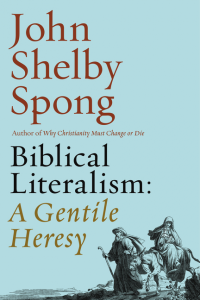
Thanks to the generosity of my congregation, I am provided with time for Continuing Education. So, last week I journeyed down to the Chautauqua Institution to listen to Jack Spong articulate the thesis of his latest “last” book: Biblical Literalism: A Gentile Heresy. Jack’s 85 years have afforded him much wisdom when it comes to exploring the sacred texts of Christianity in ways that can open us to new visions of a Christianity capable of nourishing 21st century minds. I’m happy to report that Jack has yet another “last” book scheduled for publication in 2018 under the working title: “Charting a New Reformation.” As always it was a blessing to be guided by Jack!!! Thanks to the Chautauqua Institution for making Jack’s lectures available to a wider audience.
Bobby wasn’t like any other 10-year-old boy. Bobby had the face of an angel but the temperament of a devil. Bobby was a beautiful child. His blond hair and blue eyes together with his alabaster skin, pointed toward his Scandinavian heritage. At first sight, Bobby appeared to be the kind of child that any congregation would be proud to count as a member. But, Bobby’s physical appearance was deceiving and Bobby’s presence in church was not welcome. Bobby didn’t go down to Sunday school classes with the other children. The Sunday school teachers had tried to include Bobby, but after several parents threatened to withdraw their children, they asked Bobby’s parents not to send Bobby anymore. So Bobby stayed in the sanctuary with the adults. Most of the adult members tried to tolerate Bobby’s presence but for some, Bobby’s presence was simply unnerving. Bobby is autistic. Sitting and behaving in church was impossible for him. As long as we were singing hymns, Bobby was happy. He would catch the rhythms of the music and rock back and forth and sing. He never sang the same words as the rest of the congregation. But it was clear from his movements and the sounds that emanated from his lips that Bobby was singing. The trouble was that Bobby never stopped singing when we did. When his parents would attempt to put an end to Bobby’s song, he would flail about and sometime throw himself on the floor.
Now there are some churches where flailing about and throwing one’s self to the floor would be interpreted as a sign that the Holy Spirit was at work. But in this little Lutheran church, the reaction of the worshippers to Bobby’s outbursts made it clear that they feared that Bobby was possessed by spirits of the evil variety. Oh, they would never have come out and said that Bobby was possessed by demons, they just acted as if he were. Bobby’s favorite part of the service was communion. I think that he enjoyed the opportunity to walk up to the front of the church and kneel at the altar. When the Pastor would place a communion wafer in his hands, Bobby would giggle with glee. Bobby never ate the communion wafer; he would just hold it up to the light and smile. The communion wine was another thing altogether. Sometimes Bobby’s mother would try to help him drink from the common cup. Sometimes Bobby would dunk his wafer into the intinction cup and slop wine everywhere. At other times Bobby would be so preoccupied with his wafer that he just let the cup pass him by. On a good day Bobby’s behavior only made people uncomfortable. On a bad day, Bobby’s behavior embarrassed some, offended others, and sometimes outraged many.
I remember being summoned to an extra-ordinary council meeting. The meeting had been called to deal with the complaints and concerns of several long time members of the congregation that had decided that Bobby’s presence could now longer be tolerated at worship. The people who were complaining were not bad people. They were fine upstanding members of the congregation who found themselves unable to deal with Bobby’s presence in their midst. During the meeting we agonized over what to do. Continue reading →
As some of you know, I had a short vacation. I booked the last week of May for a little stay-cation and we had all sorts of plans for the week. Unfortunately, those plans all came to naught because Carol was sick with bronchitis. So, in between playing nurse-maid, I was able to read a few books and catch up on all sorts of movies and tv shows. One of the most incredible dramas that I was able to watch happened toward the end of my week off, when I watched 13-year-old Arvind Mahankali win the 86th annual Scripps National Spelling Bee. Spelling Bees always freaked me out when I was a kid, because I have never been able to spell. I used to come down with a mysterious version of the flue whenever a spelling bee was scheduled and the symptoms of this strange flue always convinced my mother to keep me home from school. But I’ve really been missing out all these years because spelling bees are really incredibly exciting. Now even though young Arvind is only 13, this was not the first time that he has been a finalist. Arvind finished in third place in both 2011 and 2012 and both times he was eliminated on German-derived words. So, after correctly spelling “tokonoma” a Japanese derived word that isn’t even in my spell-check, Arvind was the last speller standing when his inquisitors announced the word that stood between him and the championship: “Knaidel.” When Arvind asked for the derivation of the word his quizzer revealed that it was German-derived-Yiddish. The audience groaned. But Arvind was prepared. Indeed, when he was interviewed after the competition he revealed that he had indeed studied this word. Which you can see in the instant reply of the event, when Arvind smiles and nods slightly when the definition of the word was given to him. The roar that went up from the crowd when Arvind correctly spelled a word that would have surely stumped me.
I have always been a lover of words. As a young child, I loved learning new words. Each new word opened up a whole new way of expressing reality. To this very day I like nothing better than learning a new word so that I can better express myself and the world around me. Selecting just the right words each week with which to comment upon the connections between the written words on the pages of scripture with our reality is one of the joys and the torments of my life’s vocation. When I discover just the right words to shed some light on a particular text, all is well in my world, and there’s such relief when I can string together the words. But there are also those days and nights when words fail and I am left staring at a blank computer screen. Fortunately for us, our worship does not stand or fall on the quality of the words I string together in a sermon. Our liturgy is filled with music and the words of the songs we sing are all designed to shed light upon the connections between the scriptures we read and the reality of our lives. So, whenever I can’t find the right words for a sermon I often find myself review the music I have chosen for our liturgy.
Yesterday, when my blank computer screen caused me to begin to sing, the African American spirituals that we’re singing today, sent me on an internet search for a song I remember from my childhood. It’s a country and western piece that I hear in my head being sung by none other than Johnny Cash and his wife June Carter. The words go like this:Continue reading →
The song sung prior to the Gospel is Jann Aldridge-Clanton’s “Welcome New Wineskins” sung to the tune of Blessed Assurance. (Inclusive Hymns for Liberating Christians). As for my appropriation of the Beach Boys, “Help Me Rhonda”…my apologies! I am indebted to Christopher B. Zeichmann’s article “Rethinking the Gay Centurion” in The Bible and Critical Theory Vol 11 #1, 2015.

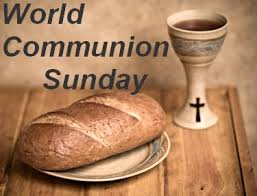 This sermon is inspired by, infused with, and indebted to the work of Kurt Struckmeyer whose essay “The Words of the Eucharist” articulates communion in terms of “liberation” and pointed me to the work of the Roman Catholic liturgist Gabe Huck; with just a little Martin Luther thrown in to insure that “this is most certainly true.” The readings included 1 Corinthians 11:23-26, Mark 14:22-25 and Luke 22:14-20 – listen to the sermon here













 pastordawn
