Ash Wednesday – A Wakeup Call

purple light 2

Here’s an Ash Wednesday homily for the 21st century!

We’ve all been there. Driving down the road – distracted by thoughts of this and that, when all of a sudden it happens, a car comes at you out of no where and you slam on the breaks or you quickly swerve to avoid a disaster. You could have been killed. You could have killed someone. Your life or someone else’s life could have been radically changed in an instant. As you pull back into traffic you are ever so conscious of the weight of you foot on the accelerator and you swear that you’ve got to be more careful.  You begin to scold yourself.  What were you thinking? Why weren’t you paying attention? Wake-up you could have been killed.

Welcome to Ash Wednesday. What have you been thinking? Why weren’t you paying attention? Wake-up — you are going to die!!!  Ash Wednesday is your mid-winter wake-up call. Some of you may not need the wake-up call. Some of you know all too well that death is all around us. Some of you have lost someone dear to you. Some of you have felt that fear in the pit of your belly when the doctor suggests a particular test. Traditional Ash Wednesday worship would require us to focus on the brevity of life and remember that none of us will get out of this life alive.  Our ancestors in the faith, entered into a morose season of Lent by via the awesome reminder that they came from dust and soon they shall return to the dust.

Lent was a season of lament and repentance based on a particular understanding of what it means to be human. Since the 11th century most of Christianity has understood the human condition as that of those who have fallen from grace. But we live in a post-modern world. We no longer believe that Adam and Eve were the first humans. We read Genesis not as history but as myth. We understand that humans evolved over millions of years. There was no perfect human condition for us to fall from.

What happens when you reject the theological construct of original sin?  What happens when you embrace the idea that we are fiercely and wonderfully made? What happens when you see humanity as originally blessed?

Once you open up Pandora’s box you can’t just walk back out of the room and pretend that the theory of evolution doesn’t have something to teach us about what it means to be human. If we see our selves as incomplete creations rather than fallen sinful creatures, how then do we deal with our mortality?

Perhaps we can begin to express what it means to be human in terms that reflect our need to evolve in to all that we were created to be. Perhaps the brevity and uncertainty of life can begin to wake us up so that we can seize each and every moment. This is the day that God has made, let us rejoice and be glad in it!

All that we love and care for is mortal and transitory, but mortality is the very reality that can become the inspiration for celebrate life and to love. Ash Wednesday reminds us of our human condition of mortality. But we should also remember the reality of creation itself is transformed by death and is constantly renewing itself. There is an eternal quality to creation, just as there is an eternal quality to life.

Tonight we embrace the promise that in death we are transformed into a new way of living on in God.Trusting that here and now we are living in God, we delight in the knowledge that in God we share in eternity. We are constantly dying, but we are also constantly living as we reflect God’s vision in the world of the flesh. This day, this moment is eternity for God is here, revealed in the wonders of creation; in the face of our neighbours, in the beauty of the earth, in the magnitude of the universe and in the miracles of sub-atomic particles. Tonight is our wake-up call.

We will not pass this way again. If we’ve been hibernating its time to take a deep breath and let ourselves be filled with the Spirit so that we can live fully, love extravagantly and be all that we were created to be. Yes we are dust, but we are earthly dust, springing forth from a multi-billion-year holy adventure.

Dust is good, after all; it is the place of fecundity, of moist dark soil, and perhaps we are as various scientists are suggesting:  “star-dust” evolving creatures emerging from God’s intergalactic creativity. We are frail, but we are also part of a holy adventure reflecting the love of God over billions of years and in billions of galaxies.

So, how can we fail to rejoice in the colour purple, or pause in wonder at a baby’s birth? How can we fail to enjoy the beauty of a sunset or the splendor of a mountain range? How can we fail to embrace the sorrows that surround us with love? How can we remain deaf to the cries of our neighbours, or the pleas of our enemies? Tonight is our wake-up call?

Life is here for the living. This is eternity; right here, right now!!! Let the ashes we receive be the ashes of transformation; of awakening to the beauty and love of seizing the moment and living it to the fullest.

Remember that you are dust and to dust you shall return. Let the memory of your incomplete humanity awaken you to the wonders, joys, sorrows, and pain of life.

Let it be said of you that here in this little part of eternity that you lived fully, loved extravagantly and helped humanity evolve into all that God dreamed we can be!             Amen.

An Ash Wednesday Benediction

 Remember that you are dust and to dust you shall return.

Let the memory of your incomplete humanity

awaken you to the wonders, joys, sorrows, and pain of life.

Let the ashes you wear be the ashes of transformation;

of awakening to the beauty and love of seizing the moment

and living it to the fullest.

 Let it be said of you that here in this little part of eternity

that you lived fully, loved extravagantly

and helped humanity evolve into all that God dreamed we can be!

 You are fearfully and wonderfully made

In the image of the ONE who is was and ever more shall be

Creator, Christ and Spirit ONE,    AMEN
Life the Universe and Everything, No God But God, The God of the Gaps

The Story of God

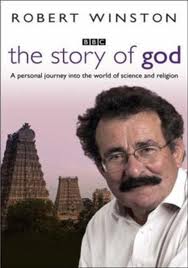
The Story of GodImagining the unimaginable and describing the indiscribable – the human endeavour to capture the nature of the divine in words, images, stories and myths is the subject of this excellent BBC documentary series. Robert Winston, (medical doctor, scientist and Professor of Science and Society at Imperial College London) examines the roots of religious beliefs and the various ways in which humanity’s sense of the divine have developed. 

Professor Winston says: “However you define God, and whether you believe in God or not, the world we live in has been shaped by the universal human conviction that there is more to life than life itself; that there is a ‘god’ shaped hole at the centre of our universe.“We have come up with many different ways to fill that hole, with many gods or just one, with gods of hunting, gods of farming, gods of war and gods of sea and sky.”

The Wisdom of Progressive Christianity – Adult Ed. Class

living the questions bkSession TWO:  Creation Myths – Myth Making

Myths are created in the context of a culture – shaped by the characteristics of the culture in which they are born. Over time myths have the power to shape culture. However, as our cultural context changes we must continue the process of making meaning and creating new myths.

Here are the video clips we used to explore the process.

Prayer? How shall we pray?

cosmic brainSince becoming a pastor, the questions that I hear more frequently than any others concern the subject of prayer. “How do I pray?” or “What should I prayer?” used to be the most often asked questions. However, since speaking and writing about giving up the idol of the “Big Santa-God-in-the-Sky” who grants requests or doesn’t answer prayers as if they were wishes, people have added “To whom should/do/can we pray?” to the list of most the asked questions. While I am tempted to offer answers to these questions, I suspect that my answers will not satisfy those who insist that there must be some secret formula that will make their prayer life successful.

I can say that when prayer ceases to be a laundry list of wants and desires, it has the power to open us to the awe and wonder of being a part of something far greater than ourselves. When we allow ourselves to be opened to more than what and who we are, the sense of gratitude that wells has the power to make us lovers of creation and partners with our sisters and brothers in this grand endeavour we call life.

In the stories handed down to us of Jesus of Nazareth, we are told that his followers asked him how they should pray. When I read these stories I see a frustrated Jesus whose followers insist that John the Baptist’s followers have a formula for prayer and Jesus ought to give them one as well.  In these stories its as if Jesus says, “Oh well if you insist, then when you pray pray like this.” The prayer that results has become known as The Lord’s Prayer, and although there are many translations and interpretations of this Abba Prayer, these days the one I am becoming fond of is the one provided by Neil Douglas-Klotz in Prayers of the Cosmos: Meditations on the Aramaic Words of Jesus. The video below provides a beautiful interpretation of this interpretation. Enjoy. May it move you toward prayer without words so that you can pray without ceasing and let your life be your prayer!

The View from Job’s Dung-heap: Peering Beyond the Heavens Toward a Theory of Everything?

string theoryBack in November, I had the privilege of attending a series of lectures given by Phyllis Tickle who describes the current reformation that the church is experiencing as part of a cultural phenomenon that happens about every 500 years, which she calls “The Great Emergence”. When asked what skills religious leaders will need to navigate the information age, Tickle insisted that the best advice we could give to anyone considering a religious vocation was that they should study physics. Inwardly I groaned, remembering my feeble attempts to come to grips with the most rudimentary theories of quantum physics. But I also nodded in agreement, knowing that so many of our religious narratives strive to make meaning of the cosmos as it was perceived by ancient minds. When our ancestors looked into the heavens they had no way of knowing the wonders of the cosmos that we are beginning to discover. While physicists can ignore theology, theologians who ignore physics will find themselves stuck atop Job’s dung-heap impotently shaking their fists at the Divine.  Perhaps Tickle is correct and the clerics of the future will out of necessity need to be physicists.  Theoretical physicist Michio Kaku speculates that the universe is “a symphony of strings” and the “mind of God would be cosmic music resonating through eleven dimensional hyper-space”.  If you have the courage to climb down from the dung-heap, take a look at Michio Kaku’s “The Universe in a Nutshell”. If the Divine bollocking that Job endured makes you wonder if ignorance might just be bliss, then take a peek at “Is God a Mathematician?” or “The Mind of God”. Who knows, maybe if a few more of us dare to dwell in the questions we might just come up with imaginative narratives to help us fathom what it means to be human. 

Darwin and Divinity – Bruce Sanguin

bruce sanguinEvolutionary Christian Bruce Sanguin is the minister at the Canadian Memorial United Church in Vancouver. There are a few preachers that I regularly read, listen to, or watch on Monday mornings and Bruce is one of my favourites. His preaching has influenced my own. While on sabbatical, I had the pleasure of worshiping at the Canadian Memorial United Church and throughly enjoyed experiencing this community that via the internet has been a part of my own development.

Bruce has also written several books that continue to inspire my own worship planning. Two of his books are of particular value to any pastor who seeks to plan worship without slipping into the trap of words that re-inscribe old theological patterns:  Darwin, Divinity and the Dance of the Cosmos: An Ecological Christianity and If Darwin Prayed: Prayers for Evolutionary Mystics. 

This video in which Bruce is interviewed by fellow evolutionary Andrew Cohen will wet your appetite for Bruce’s work while giving you an interesting look into evolutionary mysticism.  (more about Andrew Cohen coming soon) Enjoy!

Epiphany: Evolution is Shedding New Light on Our Lives – Joan Chittister

sad EckhartThanks to science and all we have learned about creation, we are beginning to develop new images of the ultimate reality we call God. New images of God challenge the patriarchal misogyny of religious traditions. When it comes to re-imagining the faith, Sister Joan Chittister paints a picture of God as One Who Summons from among us – Emmanuel. The Summoning One calls and encourages us toward a world of equals. “Evolution is shedding new light on our lives.”

Eternity: That Which Has No End and I Dare Say – No Beginning

Catching StarsIf eternity is beyond the confines of time, then the definition of eternity is that which has no beginning and no end. As wayward snowflakes begin to fall, eventide on this December day promises a very long night. And I can’t help wondering about how long this soul of mine has been kicking around. Does this soul of mine have eternal life: life without beginning or end? I wonder? Does the stardust that continues to live in this body of mine point toward a limitless life? I wonder?  But for now, the wayward snowflakes remind me of falling stars and the dust  which I will one day return to with confidence. Enjoy!

Opening to the Embrace of the DIVINE

cosmic eyeWhen we begin to let go of the various images we have fashioned into the idol that for so long has been the focus of our worship, we open ourselves to the embrace of the ONE who is so much more than we can possibly imagine or describe.  We live in a culture that encourages us to abdicate our role of peering   beyond our fears in order to  catch a glimpse of the HOLY so that we can become like children who faithfully follow in the footsteps of the loud and the powerful. And so, we have settled for definitions and images of the DIVINE that are mere talismans from which we dare only to ask for good fortune to somehow come our way.   Letting go of the  grand-pupiteer-in-the-sky-father-god is not easy. Moving beyond the idolatry born of our fears requires a faith that trusts that our movement is supported by the ONE we seek. 

I offer this video of Neil deGrasse Tyson’s testimony (I use this term in its full religious sense because Tyson’s proclamation represents the best of what this medium of communicating a profound experience can be) as a way to inspire questions about the nature of the DIVINE.

Tyson’s testimony about his encounters with the universe open me to an understanding of the DIVINE that has been described as panentheism which suggests that all of creation is in God and God is in all of creation; (pan=all, en=in, theism=god). Panentheism is not to be confused with pantheism which looks at the tree and sees god and so worships the tree.  Panentheism sees the tree as sacred because it is in God who is also in all that is. Where Tyson sees us held by the universe, I wonder if the universe is another way of speaking of the MYSTERY we call GOD, or is the universe held in God, and if so how might we begin to relate to all the various aspects of the universe knowing that that are both in and of God?  

Such an image of the DIVINE implies that everything that is is held in God and so all that is is sacred. It also means that as we move beyond our fears God is the very GROUND OF OUR BEING (Tillich). With all that is being revealed to us about the wonders of creation, can we begin to move beyond our idols trusting that as we put one foot in front of the other, God will uphold us? As we leave behind the talismans can we begin to seek more than merely good fortune and turn our ardent desires toward the adventure of an ever evolving universe? I wonder, can we possibly begin to feel the tender embrace of the DIVINE?

We Need New Words to Praise the Silent Night Cosmically!

Silent NightSilent night, holy night is a perennial favourite! T’is the season for nostalgia. But what if we are serious about providing more than nostalgia in our worship? Can we, or do we even dare to offer worshippers new images that endeavour to engage our reality? Can we touch the spiritual but not religious crowds that wander into our sanctuaries seeking an encounter with the Mystery we call God, with a hint of our unknowing. Or are we content to address only the nostalgia seekers with safe images designed only to warm and not excite the imagination? Dare we beacon the nostalgia seeks beyond their memories toward the future? I wonder?  Maybe we can summon up the courage to compromise by simply adding a few new verses?  

The challenge belongs to all of us to write new words to enable us to sing our praise with integrity. Here’s a sample, with thanks to Keith Mesecher.

Don’t Just Hear the Words of the Prophet, Become the Prophet!

jokulsarlon-glacier-lakeThe figure of John the Baptist looms large during the first half of Advent. This angry misfit shouts and us, convicting us of hastening the end. Do we have the courage to join him? Do we have the stamina to become a prophet of doom?

Listen to the sermon here

jesus weeping planet

A Radical Christian Life – Joan Chittister

RadChristLife_Mast21

This weekend, Holy Cross partnered with the Trinity Institute in Manhattan to host a live webinar featuring Sister Joan Chittister.  Sister Joan challenged traditional images of God and opened us to new evolutionary images of God which empower us to engage reality.  It was an amazing program and you can view the  keynote by clicking the link below.

Keynote Address


Integrity and Evolutionary Christianity – Michael Dowd

For those who are reluctant to give up the doctrine of “original sin”, Evolutionary Christian evangelist Michael Dowd offers an intriguing re-interpretation of the human condition that uses evolutionary science to offer good news.  While I prefer to speak of “original blessing” a la Matthew Fox, Dowd’s re-interpetation offers a radical re-working of a doctrine that has entrenched so many of us in “worm theology” bemoaning our sinfulness. To get a better understanding of Dowd’s approach, I recommend his book “Thank God for Evolution” or check out his website 

Click on here to watch the book trailer

Enough with “A Mighty Fortress” Already! Sing a New Song!

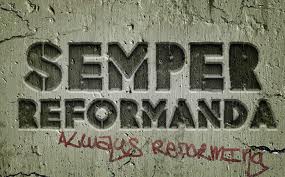
In the spirit of the Reformation motto: semper reformanda – always reforming, what say we abandon the fortresses of our traditions.  Tomorrow, Lutheran churches all over the world will begin their Reformation Sunday worship services vigorously singing “A Mighty Fortress” and I for one wish they wouldn’t.  I suspect that the hymn’s author Martin Luther might just agree with me. After all didn’t Luther write a Mighty Fortress in an attempt to bring the popular music of the day into the church? I am convinced that this particular Reformation Sunday tradition has dear old Martin spinning in his grave at the thought that the church that bears his name is still singing a tired old chestnut like A Mighty Fortress to celebrate the Reformation. The very idea of 21st century Lutheran’s celebrating the Reformation by clinging to the events of the 16th century is an affront to the memory of Martin Luther.

We should be singing this centuries music and rather than smugly resting on the laurels of the past, we should be plotting were the reformation goes from here.  Perhaps in this the 21st century, when so many of the church’s traditions have seen the institution fall into the malaise of irrelevancy, we need to echo the cry: “Semper Reformanda”  —  “Always Reforming” the cry of the reformers who insisted that the church in every age stands in need of reformation.

Legend has it that on October 31st 1517, after taking a long hard look at the Roman Catholic Church and having fixed his sights on what he saw as the source of the rot that threatened to destroy the church’s ability to proclaim the Good News of God’s grace that is revealed in the life, death, and resurrection of Jesus Christ, Martin Luther took his 95 Theses on the abuses of the doctrine of indulgences into the streets of Wittenburg and nailed them on the doors of the church. Within a few short weeks, with the aid of the newest technology, copies of Luther’s 95 Theses spread throughout the Holy Roman Empire and sparked a Reformation the likes of which the church hadn’t seen since the Apostle Paul did away with the need to snip the male anatomy to gain entrance to the church. Luther’s words threatened the status quo of centuries of abuse. And the church as is her way, struck back with force so as to ensure that tradition might prevail. The rest, as they say, is history.

 Ah history, safely ensconced in the past with its hoards of devils. Let the people rejoice because Martin Luther did it all and we can relax safe in the knowledge that we are justified by grace, through faith. Ain’t it great to be a Lutheran!  “A mighty fortress is our God, who himself fights by our side with weapons of the spirit. Were they to take our house, goods, honour, child, or spouse, though life be wrenched away, they cannot win the day. The Kingdom’s ours forever!”

So tell me, if they fought the good fight in the sixteenth century and handed us everything we need, and God is on our side and wins salvation glorious:    Where are the children? Where are the young people? Where are the neighbours?  Where is everybody? How and why did the church of our ancestors manage to fall into such disrepair? How did we become so irrelevant?

Most of us, can look around and see for ourselves how broken the church is. If we are honest, we all have our own particular theories as to why and how this happened. Yet we continue to go about our business, hoping against hope that someone will notice and finally fix it.  Year by year the church slips farther and farther into the morass of it’s own making and more and more people forget the wisdom of the ages and Christ seems to slip further and further from our grasp.  We, who go by the name Lutheran, we can’t do much more than point to our glorious past as if we could only turn the clocks back the work of the reformers of old would save us. But time waits for no one and year after year, people drift away and churches close their doors, and those who are left react with fear.

Despite the fact that we’ve tried to immortalize him, it’s as if Martin Luther never lived at all. Back in the dim recess of memory Luther stands, frozen and impotent. And I can’t help but ask the question:  “What would Martin do?”

Well in good old Lutheran style, a song comes to mind, a song of the people, a song from the streets, a drinking song…

             “If I had a hammer, I’d hammer in the morning, I’d hammer in the evening, all over this land, I’d hammer out danger, I’d hammer out warning…

It’s time to stop celebrating the Reformation as if it is somehow over. The work of reformation continues precisely because the church is always in need of Reformation.

This week I re-read a little book by Matthew Fox. Fox was a Roman Catholic theologian until Mr Ratzinger silenced him. The Roman Catholic church’s loss was the Episcopal church’s gain.   Shortly after Mr Ratzinger made himself pope, Matthew Fox took a long hard look at the church he’d served for so many years and became demoralized. Fox noticed the similarities between the sex-abuse scandals that continue to rock the church and the abuses wrought by indulgences, and asked himself what Martin Luther would do. That’s when Matthew Fox decided to write a few Theses of his own. Except where Luther wrote his 95 Theses to object to the practice of indulgences, Fox wrote 95 Theses to object to the many and various abuses of the church. It wasn’t difficult, over the course of a particularly dark night, Matthew Fox found that 95 Theses came flooding out of him. In the morning, he resolved to take his 95 Theses to Wittenburg and nail them to the very same doors where Martin Luther instigated the Reformation.

Well, things have changed a little over the course of nearly 500 years since that fateful day in Wittenburg. You can’t just waltz up to the doors at Wittenburg and nail things there.  The doors are no longer made of wood and the city councilors require that you obtain a permit to protest at Wittenburg.

Fox was told that he would need to stay at least 500 feet from the doors, lest he interfere with the tourists who flock to visit the very spot were the church of the protester’s was born. Thus proving one of Fox’s thesis that the church has become for many nothing more than a museum for tourists.

Eventually the town council relented and after some careful construction, on October 31st 2005, Matthew Fox nailed his 95 Thesis to the doors of the church in Wittenburg. Rome took no notice.  But the churches in Germany did.  Just as Martin Luther’s action was aided by the invention of the printing press, Matthew Fox’s action was aided by the invention of the internet and thus began a conversation that led to the publication of Fox’s little book: A New Reformation:  Creation Spirituality and the Transformation of Christianity.  I return to Fox’s tome annually as part of my preparation to preach on Reformation Sunday.

Here’s a sample of Fox’s theses:

1) God is both Mother and Father.

3) God is always new, always young, and always “in the beginning.

4) God the Punitive Father is not a God worth honouring, but a false god and an idol that serves empire builders. The notion of a punitive, all-male God, is contrary to the full nature of the Godhead, who is as much female and motherly as masculine and fatherly.

5) “All the names we give to God come from an understanding of ourselves” (Meister Eckhart). thus people who worship a Punitive Father are themselves punitive.

6) Theism (the idea that God is “out there” or above and beyond the universe) is false. All things are in God and God is in all things (panentheism).

10) God loves all of creation, and science can help us more deeply penetrate and appreciate the mysteries and wisdom of God in creation. Science is no enemy of true religion.

15) Christians must distinguish between Jesus (a historical figure) and Christ (the experience of God-in-all-things).

16) Christians must distinguish between Jesus and Paul.

18) Eco-justice is a necessity for planetary survival and human ethics; without it we are crucifying the Christ all over again in the form of destruction of forests, waters, species, air, and soil.

20) A preferential option for the poor, as found in the base community movement, is far closer to the teaching and spirit of Jesus than is a preferential option for the rich and powerful, as found, for example, in Opus Dei.

23) Sexuality is a sacred act and a spiritual experience, a theophany (revelation of the Divine), a mystical experience. It is holy and deserves to be honoured as such.

24) Creativity is both humanity’s greatest gift and its most powerful weapon for evil, and so it ought to be both encouraged and steered to humanity’s most God-like activity, which all religions agree is compassion.

32) Original Sin is an ultimate expression of a punitive father God and is not a biblical teaching. Bit Original Blessing (goodness and grace) is biblical.

33) The term original wound better describes the separation humans experience on leaving the womb and entering the world–a world that is often unjust and unwelcoming–than does the term Original Sin.

59) Fourteen billion years of evolution and unfolding of the universe bespeak the intimate sacredness of all that is.

60) Jesus said nothing about condoms, birth control, or homosexuality.

71) A church that is more preoccupied with sexual wrongs than with wrongs of injustice is itself sick.

75) Poverty for the many and luxury for the few are not right or sustainable.

I’m sure that we all have thesis or two that you would like to nail to the door. I know that if I had a hammer, I’d hammer in the morning, I’d hammer in the evening all over this land, right up to the doors of churches everywhere, and I would nail a few theses to the more than a few church doors. I’d begin with a thesis about the need to move beyond the destructive theories of atonement that have only served to pervert the meaning of the life, death and resurrection of Jesus and separate people from the sure and certain knowledge that neither death, nor life nor anything in all of creation can separate us from the love of God in Christ.

I’d include a theses or two about the dumbing down of our best theology and our acceptance of easy answers that have turned most people’s vision of God into a sadomasochistic father who insists on the death of his own son in order to satisfy our definition of justice.

I’d go on and on about the wonders and beauty of creation, and insist that we confess that we are wonderfully made.

I’d confess our obsession with self that lies behind the sin of avarice that permeates our consumer culture and turns our energies toward violence.

I’d call for a return to the Jewish tradition of Sabbath that called upon believers to read the Song of Songs and make love on the Sabbath.

I’d call the church to its responsibility to instill a love of creation in all people so that we can walk upon the earth lightly.

I’d remind the powers that be that all people are created equally and that sexuality is a gift from God to be celebrated and not used to segregate some believers from the priesthood that belongs to all believers.

On this Reformation Sunday, lovers of the church everywhere need to free ourselves from the shackles of tradition and about our 95 theses.

What wisdom do you have to share with the church?  What needs reforming?           What needs preserving? What needs tossing out? What needs holding up and celebration? When should we cry out in solidarity?  When should we sing out with joy and wonder? What should we do? What should we stop doing?  Semper Reformanda!    Always reforming!

This Reformation Sunday at Holy Cross Lutheran, we will sing new words by Miriam Therese Putzer to Luther’s traditional tune:  EIN FESTE BURG  which you can find  here

You can watch the video of Matthew Fox talking about his book here

Religionless Christianity – Dietrich Bonhoeffer

When I was just a teenager, I was introduced to the writings of Dietrich Bonhoeffer by a wise Lutheran Pastor. I remember devouring Bonhoeffer’s “Life Together” and “Letters and Papers from Prison”. To this day, I credit Bonhoeffer for making me a Lutheran.  While a great deal of water has flowed under a good many bridges since I was first enamoured of Lutheran theology, to this day I am grateful to that wise old Lutheran pastor who gave me my first taste of Bonhoeffer.   Of late, there has been much ado about a little phrase that has been extracted from Bonhoeffer’s work: “religionless Christianity”.

(click here for full quotations from Letter and Papers from Prison)

“It is not for us to prophecy the day when men will once more ask God that the world be changed and renewed. But when that day arrives there will be a new language, perhaps quite non-religious. But liberating and redeeming as was Jesus language. It’ll shock people. It’ll shock them by its power. It’ll be the language of a new truth proclaiming God’s peace with men.”  Bonhoeffer: Agent of Grace

Tragically, Bonhoeffer was executed before he had the opportunity to expand on his idea of Christianity beyond religion.  The phrase “religionless Christianity” has intrigued agnostics, atheists, humanists, liberal christians and progressive christians.  Eric Metaxas, author of “Bonhoeffer” dismisses the idea that Bonhoeffer was anything but a serious, orthodox Lutheran pastor right up to the end.

Despite the historical evidence of Bonhoeffer’s religious orthodoxy, the notion of religionless Christianity will not die. Bishop John Shelby Spong is among those who have tried to build on Bonhoeffer’s phrase and his book “Jesus for the Non Religious” has certainly moved the conversation along among progressive christians.  

The dream of religionless christianity has moved well beyond Bonhoeffer as twenty-first century christians wrestle with archaic images of God and move beyond the religious trappings of traditional christianity. The notion of moving beyond religion has always intrigued me. Years ago, while studying Hinduism my professor offered a definition of God from one of the Vedas: “God is beyond the beyond, and beyond that also”.  As I continue to explore the life and teachings of the man none as Jesus of Nazareth it becomes more and more evident that such a definition is compatible with his portrait of God.  Jesus of Nazareth attempted to move his co-religionists beyond their religious images of God. What might our images of God become if we move beyond the idols offered to us by the religion of Christianity?   Might we move toward images of God that more closely resemble the teachings of Jesus by moving toward a religionless christianity?

Sometimes we can better reflect upon our own tradition from the perspective of another tradition. In the video below, twentieth century philosopher and theologian Alan Watts explores the concept of the Religion of No Religion. 

“Beyond the Beyond and Beyond that also.” Letting go of our images is the gift of faith that moves us beyond religion. I can hear Jesus call us to let go!

Waking Up to the Wealth of Wisdom Beyond our Idols

All too often we allow our images of God to become idols that we worship. Sometimes these idols prevent us from challenging our images of reality. Stepping outside our comfort-zones to explore images of reality that are envisioned by those who do not worship our idols sometimes allows us to see beyond the idols that have limited our vision. I remember reading Alan Watts when I was in my twenties.  I’d forgotten how his visions of reality helped me to see farther than I’d ever dared.  Recently, a friend shared the video below and all at once I remembered Matthew Fox’s quoting Thomas Aquinas who insisted that each of us is “capable of the universe”.  Waking up the wealth of wisdom that exists beyond the idols we worship is just the beginning of a new day. We ought not to be afraid to open our eyes.   “As capable as God are we.”

For more information about the life and work of Alan Watts click on the graphic below:

A Church for the Future – Matthew Fox

“We are here to grow a soul. Not just to sit on one and cash it in at the end of our life.” Matthew Fox explores the undiscovered territories that lie within us.  Developing a sense of the sacred that lives in all of us is vital as we engage in the expansion of our consciousness. But has the church, like humanity itself,  forgotten the sense of the sacred? Matthew Fox explores a vision of the church that is the place, the space, the happening, where mystics and prophets are birthed, nurtured, championed, supported, and challenged.  Fox encourages the church to embrace her prophetic calling to interfere with education, economics, and the environment. 

Gratitude Alleluias becoming Reckless Generosity – Sermon

Thanksgiving Sunday

This sermon was inspired by Monty Python’s “We were so poor that…” sketch also known as the Four Yorkshiremen, and Joan Chittister’s book Uncommon Gratitude.

Readings for Thanksgiving here

Listen to the Sermon here

The skit that inspired the sermon:

An Uncommon Search for the Common Good – Joan Chittister

Teilhard de Chardin

Speaking at the University of Noter Dame’s Centre for Social Concerns, on the 50 Anniversary of Pope John XXIII’s encyclical Pacem in Terris issued in 1963 as a call to “Universal Peace in Truth, Justice and Liberty” Sister Joan describes the “Common Good” as the Holy Grail of politics. She divines the common good as “a vision of public virtue which engages the individual citizen, energizes the government, shapes the public system, and points the public direction in all its policies, all its institutions, and all its legislative intents.”  

Fear of diversity has relegated the notion of the common good to the status of an endangered species.  Str. Joan points to Pacem in Terris’ insistence that nationality is trumped by one’s global citizenship and responsibilities and warns that pathological individualism threatens our ability to articulate a vision of the common good.  She reminds us of the core of our Abrahamic traditions to discover what we hold in common as a seedbed for the reemergence of our desire for the common good in what Chittister describes as a Constitution of the Good Community”.  

Sister Joan’s lecture begins at about the 12 minute mark.

The Big Bang, Darwin and God – Sermon

Back to Church Sunday

This sermon is inspired by the work of Joan Chittister on Evolution and God.

Readings for Sunday here

Listen to the Sermon here