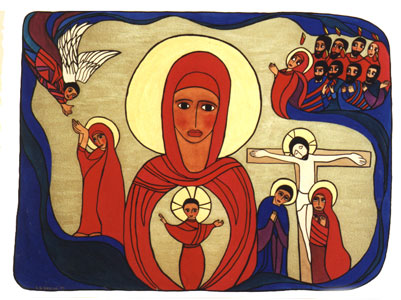
Thanks to science and all we have learned about creation, we are beginning to develop new images of the ultimate reality we call God. New images of God challenge the patriarchal misogyny of religious traditions. When it comes to re-imagining the faith, Sister Joan Chittister paints a picture of God as One Who Summons from among us – Emmanuel. The Summoning One calls and encourages us toward a world of equals. “Evolution is shedding new light on our lives.”
The art of blessing is often neglected. The birth of a New Year calls forth the desire in us to bestow a blessing upon those we love. Several years ago, John O”Donohue, one of my favorite Irish poet’s created a New Year’s blessing for his mother entitled Beannacht-for Josie. It is a blessing of superior quality. And so, on this New Year’s Eve, may you all receive this beannacht with my added blessing for a peace-filled New Year in which the God in whom all of creation is held, might find full expression in your miraculous life!
An Epiphany Sermon, preached in 2008. I had just read “The First Christmas” by John Dominic Crossan and Marcus Borg. Our congregation played host to Dom Crossan a month before I wrote this sermon. So, Dom’s insights run through this effort. But the heart of this sermon beats as the result of a sermon preached by Bruce Sanguin a self-proclaimed evolutionary christian who is a United Church Minister (Canadian Memorial Church, Vancouver). I had the privilege of meeting this modern mystic while on sabbatical this summer and his compelling way of unlocking the scriptures using the wealth of the christian tradition together with the insights of modern science and psychology borders upon the poetic. This sermon was anchored by Sanguin’s words (Epiphany 2007). Sermons are a “live” event. So, this manuscript is an approximation of what was actually preached.
Just five days before Christmas (2008), The Archbishop of Canterbury, The Most Reverend Doctor Rowan Williams, the leader of the worldwide Anglican Communion started a firestorm. During a BBC interview, His Grace was quoted to say that the story of the “three wise men is a legend”. The Archbishop was also heard to say that he remained unconvinced that there was indeed a star that led the legendary trio to the birth place of the Christ Child.
If that wasn’t enough to send folks off the deep-end, it has been revealed that the Presiding Bishop of the U.S. Episcopal Church The Most Reverend Doctor Katherine Jefferts Schori, who just happens to be the first woman elected primate in Anglican history, has fanned the flames of the fire-storm by sending out what has been judged by some to be an incendiary Christmas card.
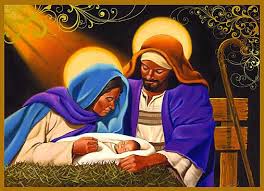
I downloaded a copy of the offensive card, so that you could see for yourself. Her Grace’s choice of card has offended the good deacons of Ft Worth Texas who claim that their Primate’s actions defy explanation. As you can see the wise folks depicted on this image look a lot like women. Can you imagine the nerve of the first woman primate! How could she be so bold as to select such an offensive image? Leave it to straight talking Texans to set things straight: for despite the audacity of the Primate, the Texans have pledged to “stand for the traditional expression of the Faith.” Continue reading →
I have tried to locate the source of the parable told in this sermon about the encounter between the little boy and the old woman. But despite the many authors who claim it as their own, I suspect that its origins go back farther than I have been able to trace. The Readings for this first Sunday after Christmas offer us the parable of the Presentation of in the Temple: Psalm 42:1-3, Galatians 4:4-7, Luke 2:8-20
While the world hurdles toward the New Year celebrations, we linger in the Twelve Days of Christmas. I do believe that the counting begins on the first day after Christmas; which means this is only the Third Day of Christmas. That means there is still time to enjoy the music of Christmas and so, I offer up one of my favourite singers: Odetta proclaiming the Good News in her own splendid style with Go Tell it on the Mountain.
During these twelve days of Christmas we celebrate the birth of the Messiah. Messiah, is a word the ancient Hebrews used to describe the anointed one. The one whom God would send to change the world. In Greek the word for Messiah is Christ.
My thoughts swirl around a poem written by the unknown writer of the Gospel of John in which the birth of the Christ is describe as the WORD. It’s a mysterious cosmic poem that moves our minds away from the mundane everyday ordinary stuff of life to the extra-ordinary mysteries of creation, which when you think about it is what every birth does.
Just holding a newborn in your arms and before long you’ll find yourself pondering the mysteries of this life. Who are we and where do we come from? Why are we here? What does it all mean? These are all perfectly wonderful questions and speculating upon the many possible answers to those questions is a fascinating process. But in the end, our words will always fail us when it comes to answers. As we are speculating about the birth of this beautiful little baby, the baby is alive and among us, and needs to be fed and changed, nurtured, guided and protected.
Our speculations about the mysteries of creation are a little like our preparations for Christmas. All the preparations, the decorating, the shopping, the wrapping, the stuffing, the cooking, and the worrying, and in the end all our preparations aren’t really the point. The point is Christmas-tide is now and the guests are all around we’ve arrived and the Messiah has arrived, or not, its up to us to welcome the One who is Love in our midst, to celebrate Christmas.
The trouble is that sometimes, we are so preoccupied with the preparations, with the idea of getting it right that we forget the whole point of Christmas is the celebration itself; the gathering of the clans, the being with one another, the opportunity to be present to one another. It’s one of the reasons why I love the stories that the unknown writers of the gospels of Matthew and Luke put together. In those familiar tales we hear a story of a couple of parents who were not at all prepared to welcome a child into the world. It’s an earthy story that brings the pungent aroma of a animal dung right into our carefully decorated living-rooms. And the Messiah that we greet in the story found in Matthew has no halo hovering over his head. The writer of Matthew makes it very clear that the Messiah comes from a very dubious pedigree, numbering a prostitute, a product of incest, an adulteress and sexual trickster among his ancestors. The Messiah’s parents were an unwed teenage girl and an unspeaking father, who wasn’t a father, and the pair of them appear to be homeless and then on the run, seeking shelter wherever they can find it.
Our romantic notions of a pretty little stable will have to wait a thousand years for St Francis to pretty up and launch us on a quest for cattle lowing, shepherds kneeling and magi bowing. Our expectations of the Messiah have become so very highfalutin, so otherworldly that I wonder if we are really prepared to welcome the Messiah among us. We hardly know what to expect from the Messiah. Are you really ready to welcome the Messiah? What do you expect?
There’s an old Jewish story, I can’t remember where I first heard or read it. I suspect I might have learned it from Scott Peck? The story is now deep in my bones. It surfaces most Christmas mornings to remind me that Christ is born in us.
Once there was a monastery with a long history of commerce and a thriving spiritual community. But as time wore on, fewer and fewer villagers visited the hallowed halls. Fewer people turned to the monastery for advice. Even the sale of their famous wines began to dwindle. The abbot began to despair for his community. “What should they do?” he wondered.
They prayed daily for guidance, but the brothers only became more dispirited. The monastery itself reflected their mood, becoming shabby and untidy. At last the Abbot, hearing that a wise Jewish rabbi was visiting, swallowed his pride and went to visit the rabbi to ask his advice. The abbot and the rabbi visited for a long time.
They talked of their respective religions, and the fickleness of human nature. The abbot explained his problem to the rabbi and asked for advice, but the Jewish sage only shook his head and smiled.
As the abbot sadly departed, the rabbi suddenly rose and shouted after him, “Ah, but take heart my friend for the Messiah lives amongst you!” All the way home the abbot pondered the rabbi’s words, “The Messiah lives amongst you.” What could he mean? Did the Messiah live in the abbey? The abbot knew all the brothers very well. Could one of them really be the Messiah? Surely he, the abbot, was not the Messiah… Was it possible?”
Upon reaching the monastery the abbot confided the rabbi’s words to another brother, who told another brother, who was overheard telling another brother. Soon the whole abbey had heard the news. “The Messiah lives amongst us!” “Who do you suppose he could be?”
As each brother speculated on who the Messiah could be, his view of his brothers began to change. Brother Louis no longer appeared simple, but rather innocent. Brother Jacques was no longer uncompromising, but rather striving for spiritual perfection.
The brothers began to treat each other with greater respect and courtesy; after all, one never knew when he might be speaking to the Messiah. And, as each brother discovered that his own words were taken seriously, the thought that he might become the Messiah would cross his humble mind. He would square his shoulders and attend his work with greater care and start acting like a Messiah.
Soon the neighboring villages began to notice the change that had come over the monastery. The brothers seemed so happy. Villagers flocked to the monastery and were energized by the spirit of the Brothers. And so the spirit grew and the monastery flourished. As each new brother was welcomed, the question arose, “Could he be the Messiah?”
Apparently the monastery still prospers today and it is often whispered both within its walls and in the surrounding towns that the Messiah lives amongst them. As you celebrate Christmas this year, remember that the Messiah lives among you.
If you are waiting for perfection, Christmas is going to be a lonely and frustrating time. If you are waiting for some future time, the wonders of this moment will pass you by. If you are expecting salvation outside yourself, you might miss your own wisdom. If you hold your loved ones to impossible standards you just might miss the Messiah who sits right next to you. I know that you’ve worked hard, and made all kinds of preparations, but today is the day it’s time to greet the Messiah, now. Don’t miss a moment of it. Enjoy. The Messiah arrives in you and right next to you! Enjoy!
This sermon owes much to the work of Richard Rohr whose work opens me to the LOVE who lies at the core of REALITY, the ONE we call God. The source of the story that I tell about a Christmas Eve way back when has been lost to me. I cannot remember when I first heard it. It’s power to open me to the LOVE that is God remains with me and so I treasure the story and tell it so as to open others. To open ourselves to the cosmic nature of the Christ we used different scripture readings. The readings can be found here
On this blessed Christmas Eve, I suspect many are rushing around trying to finish every last thing. This little video entitled, “The Christmas Scale” reminds me of the importance of the pauses! May you find a moment or two today to slow down, breathe and enjoy the Joy in those pauses. Happy Christmas!!!
One of my favorite Christmas movies. Produced in England in 1952, there is no sentimentality here. The story is raw and engaging. Clergy will hear the echoes of their lives in the frustration and doubts expressed by the Parson who is brilliantly portrayed by Ralph Richardson. This movie was censored in the United States because too many of the characters do not believe in God and say so. The ending does not resolve their unbelief. It is a brilliant snapshot of another time that reminds us that the good old days never really where. I love this film’s honest unresolved angst. Enjoy!
As we prepare to hear so much about the story of the nativity, Jack Spong’s words serve as a good reminder of the use of symbolism in the gospels. Jack points to the figure of the mother of Jesus as an interpretive image.
The fourth Sunday of Advent is the perfect time to let the Scripture readings speak for themselves and use the sermon to remind the congregation that their coming Christmas celebrations are about so much more than the birth of a baby. Resurrection is afoot! For those preachers who’d like a more scholarly approach to Advent 4B you’ll find it in another sermon posted here
The church’s season of Advent offers a sanctuary from the endless demands of preparation for the big day. Our Christmas traditions, if they are to be maintained, require a great deal in the way of preparation. But there’s one Christmas tradition that I’ve been enjoying since I was a child that requires little or no preparation save for the effort to carve out the time, when time seems to be in short supply. Somehow over the years, I’ve never missed the opportunity to watch the old black and white version of Dickens’ classic, A Christmas Carol. There is of course only one portrayal of Ebenezer Scrooge that will do.
If it’s not Alistair Sim, it’s just not Scrooge. I usually wait until Christmas Eve to watch the movie. But this year I found the time to read the book and I’ve got to say, there is much in Dickens exploration of Christmas that I’ve been missing over the years.
In the words of Charles Dickens: Ebenezer Scrooge “was as cold and miserly a man as one could ever meet. “He was a tight-fisted hand at the grindstone, Scrooge! A squeezing, wrenching, grasping, scraping, clutching, covetous, old sinner! He carried his own low temperature always about with him; he iced his office in the dog-days; and didn’t thaw it one degree at Christmas.”
Ebenezer Scrooge’s transformation on Christmas Eve is nothing short of a miracle. Scrooge was a broken man. Broken, years before the story begins. The women he loved, Belle, broke her engagement to him one Christmas, she tells Ebenezer, “you fear the world too much. All your other hopes have merged into the hope of being beyond the chance of its sordid reproach. I have seen your nobler aspirations fall off one by one, until the mast passion, GAIN, engrosses you.”
Belle doesn’t tell us how this fear of the world developed. She doesn’t tell us what Scrooge’s nobler aspirations had been. We don’t know what made Belle fall in love with Scrooge in the first place—but we do know that whatever it is, it is gone now. As the Ghost of Christmas Past moves through Scrooge’s life we catch glimpses of what may have broken him – a distant father, the death of his much loved sister, his exposure to wealth in the first place – but we are never quite told what made Scrooge the man he is at the beginning of Dickens’ tale. All we know is that Scrooge is broken and greed and anger have possessed his very soul. Scrooge’s life was broken. While he had all of the wealth, and then some, that any person might need – he was miserable.
I used to think that A Christmas Carol was the story of Scrooge’s metamorphosis. The scene in the movie were Scrooge realizes that it is Christmas morning and that life doesn’t have to be the way it has always been and he does that wonderful dance and sings: “I don’t know anything! I never did know anything all on a Christmas morning!” I always thought of that wonderful dance as the culmination of Scrooge’s metamorphosis, like a butterfly bursting forth from a cocoon. But now I see it for what it really is. It is a dance of resurrection. For Scrooge was dead. Dead and gazing at his own tombstone, when suddenly, and suddenly for me always indicates the work of the Spirit, suddenly, Scrooge realizes that what he is seeing are only the shadows of things that might be. Suddenly, Scrooge knows “that men’s deeds foreshadow certain ends. But if the deeds be departed from surely the ends will change!” Scrooge is born again and is able to declare with confidence, “I’m not the man I was.”And so, the resurrected Scrooge becomes all that God intended him to be. Scrooge’s past didn’t go away—the hurtful Christmas memory of Belle ending their engagement, all of the ill-spent years somewhere between the party at Fezziwig’s and the visit of the spirits would still be a part of Scrooge’s life, resurrection doesn’t erase the past, but transforms the future, hope becomes part of the resurrected life! And so, Scrooge reborn, becomes “as good a friend, as good a master, and as good a man as the good old City ever knew…and it was always said of Scrooge “that he knew how to keep Christmas well!” Knew how to keep Christmas well. Keeping Christmas well is very different than celebrating Christmas. Keeping Christmas well is about resurrection; resurrection of our very selves. I always thought of that wonderful dance as the culmination of Scrooge’s metamorphosis, like a butterfly bursting forth from a cocoon. Keeping Christmas well is to forget what you have done for other people and to remember what other people have done for you. Keeping Christmas well is to see your neighbours as just as real as you are, and to try to look behind their faces to their hearts, hearts hungry for human connection, for dignity, for love and for joy. Keeping Christmas well is the realization that the only good reason for your existence is not what you are going to get out of life, but what you are going to give to life. Keeping Christmas well means closing your book of complaints against the management of the universe and looking around you for a place where you can accomplish some good. Keeping Christmas well is remembering the weakness and loneliness of people who are growing old; it means not worrying so much about how much your friends love you but asking yourself whether you love, honour and care for them enough; it means stepping down from your pedestal long enough to see that you are not the centre of the universe; it means bearing in mind the things that other people have to bear on their hearts; trying to understand what those who live in the same home with you really want, without waiting for them to tell you; it means burying your ugly, destructive and selfish motives and nurturing your nobler ones.
Keeping Christmas well includes the realization that your generation is not the last generation; that you have received an astonishing inheritance given by God, that your very next breath of life is pure gift; that all your various abilities and capacities were knit together in your mother’s womb and you had nothing to do with this original blessing, and that the bounty planet earth offers—its beauty and majesty – are both a wondrous blessing and an awesome responsibility; it’s the realization that you have duties to perform as citizens of a free nation in a dangerous world; that matters of war and peace are not just problems for others to solve; that much, if not most, of what goes on in the space around you depends upon your choices and your actions.
Keeping Christmas well is about being fully alive to all that life has to offer and being gracious in your responses to this amazing grace and living into all that God created you to be. When you keep Christmas well you are willing to believe that forgiveness is the doorway to a hope-filled future; that mercy reflects God’s nature; and that love is the most powerful thing in the universes—stronger than hate, stronger than evil, stronger than death! Keeping Christmas well is living with the knowledge that there is nothing in heaven or on earth that can separate you from the love of God in Christ Jesus. Scrooge’s metamorphous began, dancing and singing: “I don’t know anything, I never did know anything, all on a Christmas morning.” To keep Christmas well you must first realize that in the grand scheme of things you don’t know anything. For then, in humility, you can see the hope that lies in the manger. The hope of resurrection.
Scrooge knew how to keep Christmas well, may that be said of all of us. And as Tiny Tim said, “God bless us everyone!
In the preface to her beautiful children’s book, “But God Remembered: Stores of Women from Creation to the Promised Land” Jewish writer Sandy Eisenberg Saso tells this revealing story:
“Before God created man and woman, God wanted to create Memory and Forgetfulness. But the angels protested.
The angel of Song said, ‘Do not create Forgetfulness. People will forget the songs of their ancestors.’
The Angel of Stories said, ‘If you create Forgetfulness, man and woman will forget many good stories.’ The Angel of Names said, ‘Forget songs? Forget stories? They will not even remember each other’s names.’
God listened to the complaints of the angels. And God asked the angels what kinds of things they remembered.
At first, the angels remembered what it was like before the world was formed. Then as the angels talked about the time before time existed, they recalled moments when they did not always agree.
One angel yelled at another, ‘I remember when your fiery sword burned the hem of my robe!’
‘And I remember when you knocked me down and tore a hole in my wing,’ screamed another.
As the angels remembered everything that ever happened, their voices grew louder and louder and louder until the heavens thundered.
God said, ‘FORGET IT!’
And there was Forgetfulness.
All at once the angels forgot why they were angry at each other and their voices became angelic again. And God saw that it was good.
God said, “There are some things people will need to forget.’
The angels objected. ‘People will forget what they should remember.’
God said, ‘I will remember all the important things. I will plant the seeds of remembrance in the soul of My people.’
And so it was that over time people forgot many of the songs, stories and names of their ancestors.
But God remembered.”
As we approach the Third Sunday of Advent, I can’t help wondering why the creators of the Revised Common Lectionary (RCL: the list of prescribed readings for Sunday worship) have failed to remember the stories and names of our foremothers? John the Baptist will strut across the stage again in this Sunday in churches all over the planet. The followers of the RCL will not hear the names of Tamar, Rahab, Ruth, or Bathsheba; no, even Mary is only suggested as an optional replacement for the reading of the Psalm! Unless worship planners are prepared to tinker with the lectionary Elizabeth and Mary will have to cede the stage to John the Baptist. So, all you worship planners and preachers out there, I say to you, “TINKER AWAY! TELL THE STORIES!” Continue reading →
Today, the Feast of St. Nicholas, the ancient precursor to the modern Santa Claus, will pass without much ado. Some will try to encourage us to resurrect St. Nicholas to save us all from Santa’s powers for we have gone astray. To those well meaning souls who would rid Christmas of its flagrant consumerism, I can only offer up a feeble, “Baa Humbug!”
The very best traditions about St. Nicholas suggest that he was a protector of children while the worst tradition has him providing dowries so that young girls could be married off by their father rather than be sold into slavery. Meanwhile, the modern character Santa Claus grooms children to take up their role as consumers in the cult materialism. Some parents may bemoan the little gimmie-monsters that their children become, but most adults are rendered helpless by our own remembered indoctrinations and so we join in what we choose to deem as harmless fun.
T’is the season for contradictions. ‘Tis the season when we prepare to celebrate the incarnation of God in human form while also waiting for Santa Claus to come down our chimneys. Face it; most of the folks dashing about in the malls are more worried about the imminent arrival of Santa Claus than they are about God. I’d even go so far as to say that a good number of people have unconsciously substituted Santa Claus for God. Santa Claus and the baby Jesus get into some pretty fierce competition at this time of year; and in the culture the larger loyalty belongs to Santa.
Besides, I don’t believe that consumerism is the most dangerous thing about Santa. So, before you accuse me of being a Scrooge or even a Grinch, ask yourself who it is that most children worship at this time of year, and I think you’ll agree that Santa is the one we’ve all been trained to bow down to, and not just at Christmas. It is difficult to deny that sometimes our view of God has been more influenced by Santa Claus than by Christ? I dare you to compare the number of children standing in the lines at the shopping centre to get their picture taken on Santa’s lap to the number of children in Sunday School? So many of us made that same trip to see Santa when we were little and when we finally got to Santa’s lap, he asked us the big Judgement Day question that Santa always seems to ask, “Have you been good this year?” There’s only one way to answer that question – even though we may have been as deviousness might qualify us as servants of that other mythical character that begins with santa and ends with n. For all too many people this laptop confession begins a pattern for interactions with an image we create of the Father-God, who watches and records our offences, making a list if only for the purpose of forgiving us because an appropriate blood sacrifice has been made on our behalf.
Think I’m being harsh? Just listen to that song that pours from muzak speakers, the song that spells out a theology of Santa Claus. “Oh, you better watch out. You better not cry. You better not pout. I’m telling you why. Santa Claus is coming to town. He knows when you’ve been sleeping. He knows when you’re awake. He knows if you’ve been bad or good, so be good for goodness sake. He’s making a list, checking it twice, gonna find out who’s naughty and nice. Santa Claus is coming to town.” The trouble with the theology of Santa Claus is that we keep applying it to God as we try to turn the Creator of all that is and ever shall be into a list-checking, gift-giver, whom we better watch out for, lest we be punished. Why then are we surprised that when our Santa-god fails to deliver or bad things happen to good people, that our childish faith in the Santa-god isn’t enough to sustain our trust?
Santa in his present incarnation is indeed pernicious, but like most mythical characters, he cannot be killed and any attempts to resurrect St. Nicholas to replace him are doomed, for the power of Santa’s materialism will always defeat the dim memories of St. Nicholas and his chocolate money. If we are going to break free of the cult of materialism, perhaps we out to try to convince Santa to use his mythical powers for goodness sake!
Yeah, that’s right, I’m going to say it, it’s time to let old St. Nick and his young assistant Santa die, so that a new Santa can be born; a Christmas resurrection if you will. We need a new Santa capable of changing our consuming ways. If the Coca Cola Company could use the advertising industry to transform St. Nick into Santa, surely we can resurrect Santa using the modern persuasive powers of social media to redesign the old salesman extraordinaire into a mythical character with powers fit for the needs of this century.
SANTINA- all decked out in her Advent blue!
Imagine if you will, a new and improved Santina, all decked out in Advent blue, she has the power to open young minds to the needs of our neighbours and travels the world via her magic transporter beam, to gather the hopes and dreams of the poor and oppressed into one internet feed, which she magically imprints in our hearts and minds, so that we change the world, creating peace through justice!
Oh, wait, we already have such a character. We don’t need St. Nicholas or Santa Claus, nor any new-fangled Santina. We need the One we’ve always needed. The One who comes in the guise of a person. The One we seek is Christ. The One who lives and breathes in, with, and through us to create peace on earth through justice and love. The One who uses our hands, our feet, our lives to change the world!
Enjoy this version of Let There Be Peace on Earth in which Vanessa Williams uses not only inclusive language, but celebrates the Earth as our Mother!
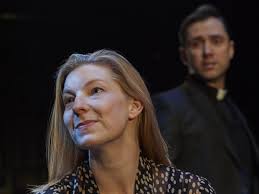
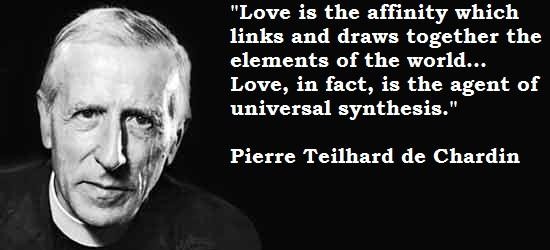
Yesterday, I enjoyed an expansive evening at Toronto’s Theatre Passe Muraille as playwright Adam Seybold’s “The De Chardin Project” brought one of my theological heros to vivid life. Before my very eyes, Pierre Teilhard de Chardin gave new meaning to “forever!” Seybold’s bravery in taking on the complex work of Teilhard is matched by his sensitivity for the life and ideas of the man whose thinking continues to impress those who seek ways of expressing the complicated marriage of theology and science. In ninety short minutes Seybold’s script propelled us to the sun and back over and over again as the talents of Maeve Beaty and Cyrus Lane breathed life in to the divine/human love affair that is life
After years of pouring over Teihard’s work, I can empathize with the challenges of bringing his genius to a wider audience. The combination of talents that have come together in this production to stretch the audience’s perspective beyond the limits of tired arguments has succeeded in creating an experience which far exceeded my expectations. When I entered the theatre, I was sceptical. I wondered what would become of the ideas that I treasure. But it only took a few moments for Seybold’s words to woo me and before I knew it, Cyrus Lane’s tortured and dying Teilhard had me opening myself to a series of transformative moments, the like of which I’ve not enjoyed in the theatre for a long time. With Maev Beaty’s steady hand as our guide, Teihard’s questions took us on an adventure worthy of our deepest wonderings. Beaty’s moving ability to transform herself was aided by the subtle and sometimes startling staging. Director Alan Dilworth managed to not only direct his actors but his audience as well as we transcended the stage up, up, up, to the sun and back again into the deep interior of our being to capture precious grains of sand.
If you live in the Greater Toronto Area, whether you’ve read Teihard or never heard of him before, this play is a must see. The run ends December 14. So don’t delay. After the adventure of The De Chardin Project the expansion of my ideas about reality, like forever, is just beginning as Maev Beaty’s passionate “Yes” echoes throughout my being!
The Gospel reading for this coming Sunday concludes with these words attributed to Jesus by the storyteller know to us as Mark: “And what I say to you I say to all: Keep Awake!” In the stories which have been handed down to us, Jesus is often heard warning, encouraging, sometimes begging us to wake up or to stay awake. So as I prepare for the Advent Season, this tune from Mumford and Sons keeps running through my mind. EMBODIED WAKEFULNESS is emerging as a theme for a season which often has our heads swimming in the clouds.
Sunday’s reading from the gospel according to Mark:
Jesus said: “In those days, after that suffering, the sun will be darkened, and the moon will not give its light, and the stars will be falling from heaven, and the powers in the heavens will be shaken. Then they will see ‘the Son-of-Man coming in clouds’ with great power and glory. Then the Human One will send out the angels, and gather his elect from the four winds, from the ends of the earth to the ends of heaven. From the fig tree learn its lesson: as soon as its branch becomes tender and puts forth its leaves, you know that summer is near. So also, when you see these things taking place, you know that he is near, at the very gates. Truly I tell you, this generation will not pass away until all these things have taken place. Heaven and earth will pass away, but my words will not pass away. But about that day or hour no one knows, neither the angels in heaven, nor the Son, but only the Father. Beware, keep alert; for you do not know when the time will come. It is like someone going on a journey, who leaving home and putting the slaves in charge of their own work, commands the doorkeeper to be on the watch. Therefore, keep awake—for you do know when the lord of the house will come, in the evening, or at midnight, or at crockcrow, or at dawn, or else, coming suddenly, the lord may find you asleep. And what I say to you I say to all: Keep awake. (Mark 13:24-37)
This sermon for the first Sunday of Advent was inspired by a sermon written by Ian Lawton entitled “The Mother of All Virgin Births” in which I was captivated by his use of the phrase “pregnant with possibility.” I read Lawton’s sermon after first reading John Dominic Crossan and Marcus Borg’s book “The First Christmas” in anticipation of Dom Crossan’s first visit to our congregation (2008). I was so eager to prepare the congregation for Dom’s historical approach to Christmas that I fear the sermon is overflowing, perhaps a little too pregnant with details. Luckily, the congregation was treated to the wonders of Dom Crossan’s brilliance for several days and learned well from the master about the delights of historical details. I post the sermon here, trusting that some of the details may be enlightening as we once again prepare ourselves for the Season of Advent.
Let me tell you a story from down-under; an Australian story that was doing the rounds a few years ago. Like all stories it may never have actually happened, but it is absolutely true because it happen again and again, in various and myriad ways. This story happened a while ago in Brisbane, Australia…
“The story begins in the dark. A university student named John was on the side of the road hitch hiking on a very dark night and in the midst of a storm. The night was rolling on and no car went by. The storm was so strong John could hardly see a few feet ahead of him. Suddenly he saw a car slowly coming towards him and slowly it stopped. John was desperate for shelter and without thinking about it; he got in the car and closed the door.
It took only a moment for John to realize that there was nobody behind the wheel and the engine wasn’t on! But the car started moving slowly. John looked at the road and saw a curve approaching. John was so scared, that he started to pray, begging for his life. Then, just before he hit the curve, a hand appeared through the window and turned the wheel. John, paralyzed with terror, watched how the hand repeatedly came through the window but never harmed him. Eventually, John saw the lights of a pub down the road and so gathering his strength, he jumped out of the car and ran into the pub. Wet and out of breath, he rushed inside and started telling everybody about the horrible experience he had just had. A silence enveloped the pub when everybody realized he was crying and he wasn’t drunk. Suddenly two other people walked into the pub. They, like John, were also wet and out of breath. They looked around and saw John sobbing at the bar, one of the men said to the other, ‘Look, Bruce, there’s that idiot that got into the car while we were pushing it.’
Spiritual Philosopher, Ian Lawton insists, “There is always more to life than meets the eye. There is more to life than what our sight is able to see. Our eyes don’t simply pick up information relayed from an outside world and relay it to our brains. Information relayed from the outside through the eye accounts for only 20 percent of what we use to create a perception. At least 80 percent of what the brain works with is information already in the brain. We only use a small fraction of our brainpower. We very rarely exercise the full potential of our physical strength. We rarely access all that is available to our senses. We rarely maximize the potential of our mind, body and spirit in harmony. There is always more to life than meets the eye.”Continue reading →

 Thanks to science and all we have learned about creation, we are beginning to develop new images of the ultimate reality we call God. New images of God challenge the patriarchal misogyny of religious traditions. When it comes to re-imagining the faith, Sister Joan Chittister paints a picture of God as One Who Summons from among us – Emmanuel. The Summoning One calls and encourages us toward a world of equals. “Evolution is shedding new light on our lives.”










 pastordawn