Today! Now Is the Time! – Brian McLaren

brian_mclarenWhat God is up to today is not just for us. “God is as devoted to Muslims, Hindus and Atheists as to Christians.” Brian McLaren’s contributions to the Lenten Preaching Series at Calvary Episcopal Church in Memphis challenge Christians to move beyond narrow Christian notions of discipleship.  recorded Feb.27-28 2013

Listen to a podcast of the evening lecture here

The Marriage of Church and Empire – Phyllis Tickle

cdtickle1As the Roman Catholic Church prepares to elect a new pope, this presentation by Phyllis Tickle seems very timely. Tickle provides a history lesson which enlightens us on the marriage between the church and empire that gave birth to Western Christianity. Tickle is convinced that a whole new day is dawning in this post-Constantinian church that promises to seriously engage the 21st century.

Recorded on Feb. 26, 2013 at Calvary Episcopal Church in Memphis Tennessee during their annual Lenten Preaching Series. 

Moving Beyond Tribal Theism with John Shelby Spong

SPONG swirlFeb.20, 2013: Preaching during the Lenten Preaching Series at Calvary Episcopal Church in Tennessee, Bishop Spong calls the church to move beyond tribal understandings of the nature of God. As always Jack’s humour gently moves his listeners to see beyond familiar views of the scripture toward a more expansive Christianity that encourages adherents to “live fully, love wastefully, and be all that we can be.” Enjoy!

The Foolishness of God – a sermon for Lent 4C – Parables of the Lost


foolishness of godAmong the teachings of Jesus, the parables of the lost and found are so well known, so familiar that we are in peril of failing to hear the foolishness they advocate. Although only a few of us have had the opportunity to tend a flock of sheep, most of us at one time or another have been responsible for the welfare of a flock. And whether that flock be sheep or co-workers, clients, customers, students, friends, or children none but the foolish among us would leave 99 to the perils and dangers of the wilderness in order to go looking for one idiot who’d been stupid enough to get themselves lost. We may not keep our coins at home, but I daresay that most of us have felt the sting of loosing a drachma or two or three in this recession. Only a fool would waste a moment searching for our losses when our portfolio’s are so full. I dare say that if we managed to find  or recoup our loss, we’re hardly likely to invite the neighbourhood to a party that would in all likelihood eat up more than we had found. Parents, and all of us have been parented, so we know the wisdom of parents not rewarding bad behaviour. Most of us are law-abiding. We all want what is best for our own parents, and so I don’t think any but the foolish among us would consider celebrating the return of someone who has hurt our parents in the past.

These parables of the lost and found are outrageous. None of us would get very fare in life if we lived by these teachings. It is better to put the welfare of the many above the needs of one. It is pointless to cry over spilt milk. Sometimes its better to cut your losses and move on. The best accountants learn quickly to write off losses that would be too time consuming and costly to recoup. Children need to learn that they can’t always get what they want; that there are consequences to their actions, that dues must be paid, that we need to ask for forgiveness and make amends for our crimes, that rules need to be followed, and laws cannot be broken. That doing the right thing will be rewarded. And yet along comes Jesus, spouting such foolishness that even we who are predisposed to agree with him, even we can sympathize with the self-righteous and wonder how anyone could be expected to live like this.  Continue reading

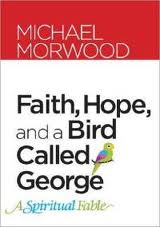
Faith, Hope, and a Bird Called George: A Spiritual Fable

Faith Hope and a Bird Called GeorgeI have just reread Michael Morwood’s “Faith, Hope, and a Bird Called George: A Spiritual Fable” and I remain convinced that this book will continue to be a powerful resource for years to come as I struggle to provide pastoral care without resorting to metaphors that point to a theistic deity. My theology has changed so much in recent years and sometimes it is so very tempting to lean on the crutches provided by familiar notions about God that point to an anthropamorphized manipulator who is up there or out there just waiting to intervene in our lives.

Morwood’s enchanting little tome follows the theological quest of Faith, a mature woman in both years and theology who is approaching the final stages of her life and seeks a deeper understanding of what it means to be in relationship with God. No longer content with traditional religious answers, Faith wonders what to do now that she has expanded her understanding of the nature of the Divine beyond the Father-Sky-God toward a panentheistic understanding of God as the “ground of our Being”. During conversations with her cat named Hope and her bird named George, Faith comes to a deeper awareness of her place in the cosmos. With gentle humour and piercing inquisitiveness Faith is encouraged by her curious cat Hope to debate her bird George whose previous owner was a member of the clergy. George’s traditional answers fail to satisfy and as Faith tries to interpret their meaning for her doubting cat, she finds herself moving to a new way of being in the world.

If you find yourself on a journey that sees you questioning traditional interpretations of Christianity, this book will make an excellent companion. Only, be sure to by a couple of copies, for you are sure to want to give it to friends. If you are clergy you’ll just have to buy dozens of copies because this is one of those books you’re going to want to give to all those folks who you encounter who are searching for an approach to faith that does not require them to suspend their understanding of reality in order to trust that God does indeed dwell in, with and through us.

For more about Michael Morwood see my earlier posts: here and here

Letting Go of our Tightly Held Piety to See Our Need of Confession

JOHN OF THE CROSS as
Little Crystal was only two and a half years old when she got hopelessly stuck.
 And when she got stuck she did what all small children do, when they have gotten themselves into a situation that the can’t get out of, little Crystal cried for help. She went into her mother’s study, holding in one hand a family treasure and her other hand couldn’t be seen.  Crystal cried out, “Mommy I’m stuck”. Her unseen hand was stuck inside her great-grandmother’s vase.  The precious vase had been handed down from her great-grandmother to her grandmother, to her mother. Crystal had always been told that one day the magnificent vase would be hers.

Crystal’s mother tried to move quickly without panicking. She scooped the vase and her little girl up into her arms and carried them to the kitchen sink. She used warm soapy water to try to loosen the toddler’s hand, which was stuck all right. When soap didn’t work she reached for the butter. While greasing her child’s wrist like a cake pan, she asked the obvious “mother question.” “How in the world did you do this, child?” Crystal carefully explained that she had dropped candy down into the vase to see if she could still see it when it was at the very bottom. But she couldn’t see it, so she reached in for her candy and that’s when she got stuck and she couldn’t get her hand back out.

Well, as time passed, the situation became more and more serious. Crystal’s mother called for re-enforcements. She phoned her own mother and told her to get there as fast as she could. A neighbour suggested Vaseline. The apartment manager got out some WD40. Still no luck.  It began to seem like the only way to get Crystal’s hand out was to break the family heirloom.

When Grandma finally arrived, both Crystal and her mother were almost hysterical. They were both more than a little relieved to have Grandma’s calming presence. Grandma sat little Crystal on her knee. 

Crystal was very upset and still very stuck. Grandma took a good look at the vase that used to sit on her mother’s kitchen table all those years ago.  She looked at the miserable look on her grand-daughter’s face, and she said, “Crystal, sweetheart.  Your mommy told me that you reached into the vase for candy.  Is that right?”

Crystal was a little breathless from all the crying she had been doing and all she could manage was a whimpered, “Mmm hummm.” “Honey, tell grandma the truth now. Do you still have a hold of that candy?” “Mmm humm”.  Crystal sobbed. Then Grandma rubbed little Crystal’s back, held her close and gentle, but firmly said: “Let it go, child.  Let it go.” Sure enough, the vase slipped off as smooth as silk. (I have searched for the source of this story, without success. I first heard it at a retreat on the West Coast a lifetime ago)

In this fast paced world of ours, I often find myself in little Crystal’s predicament.  Surrounded by a treasured family heirloom, desperately clinging to a treasure.  My predicament often makes it difficult for me to appreciate the beauty of the heirloom. Letting go isn’t as simple as it sounds. But sometimes letting go is the only way to preserve the integrity of the heirloom. When I think about the church’s practice of public confession, I can see how desperately I have been holding on to candies that no longer satisfy my need for forgiveness.  Continue reading

Buddha at the Gas Pump interviews Thomas Keating

keating dalhi lamaFr. Keating is an internationally renowned theologian and an accomplished author. He has traveled the world to speak with laypeople and communities about contemplative Christian practices and the psychology of the spiritual journey. Thomas Keating, founder of the centering prayer movement, is an author, teacher, and monk who has worked for many years to foster understanding among the world’s religions. A member of the Cistercian Order in the Benedictine tradition. 

“We are Living Through the Greatest Theological Shift Ever in Christian History” – Michael Morwood

“We are Living Through the Greatest Theological Shift Ever in Christian History. How Do We Bring the Freeing, Enheartening, Inspiring, Challenging Message of Jesus of Nazareth to this Age, to Our Times, and to Our Questions” Inspired by the life and work of Thomas Berry, Michael Morwood explores God’s role in the new story of cosmology. Morwood, an Australian theologian was silenced by Rome after the publication of his book “Tomorrow’s Catholic”.

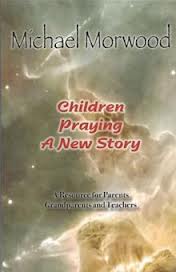
Children Praying Morwood has an uncanny ability to re- imagine and articulate christianity in ways that speak to those of us who embrace all that we are learning from science about the origins and nature of the cosmos. See my early post on Morwood’s work on prayer here.  If you’re looking for a resource for children his book “Children Praying a New Story: A Resource for Parents, Grandparents and Teachers” is terrific! (copies are difficult to find, I got mine from Kindle) I’m currently reading Morwood’s latest book a fable entitled “Faith, Hope, and a Bird Called George: A Spiritual Fable” and I will post more about this soon.

In this video, recorded in April 2012 at Corpus Christi, Morwood speaks on “Thomas Berry, Eco-Spirituality and the Future of Christianity”

The Underground Church – Robin Meyers

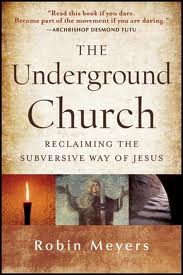
underground churchSince reading his book “Saving Jesus From the Church:  How to Stop Worshiping Christ and Start Following Jesus” I have been a regular listener of Robin Meyers’ weekly sermonsaving Jesus posts. So it was with great eagerness that I snapped up a copy of his latest book “The Underground Church: Reclaiming the Subversive Way of Jesus”. Meyers is a dangerous follower of the radical teaching of Jesus who calls the church to be leaven in the world and move beyond notions of conservative and liberal christianity.  

Why Is There Suffering In the World? – Thomas Keating

Thomas KeatingThomas Keating is a Trappist Monk who is credited with the development of the contemplative practice of Centering Prayer. “Centering Prayer is a method of silent prayer that prepares us to receive the gift of contemplative prayer, prayer in which we experience God’s presence within us, closer than breathing, closer than thinking, closer than consciousness itself. This method of prayer is both a relationship with God and a discipline to foster that relationship.”

At the age of 90, Keating continues to reflect upon the need to integrate our expanding knowledge of the cosmos into our ever-changing theology.  In this video clip, Keating responds to the question of suffering in the world that I find totally refreshing.  I’ll wet your appetite with this short video. But rest assured, as I read more of his work, I’ll be posting more of Keating’s insights.

Help Me Jesus, Help, Help Me Jesus – Sermon for Lent 3C

 only you o godLent 3C – March 3, 2013 sermon – a sermon in memory of Marlene Healy-Ogden

Listen to the sermon here

Listen to Only You O God here

Awe and Wonder: A Lenten Practice

AWE copySo many of our Lenten practices revolve around theories of atonement that cast the HOLY ONE as a participant in a grand bargain that saw Jesus of Nazareth die as a sacrifice for sin. For those of us who have left behind theories of atonement that set Jesus up as  payment for our sin, Lent can seem a very lonely place. While many churches busy themselves with rituals that encourage repentance from the perspective of confessing our unworthiness to a grand-inquistor deity,  it is tempting to give up the season of Lent all together. But with the explosion of information about the nature, beauty and complexity of the cosmos, perhaps we can achieve the humility that the ritual of confession offers in ways that do not require us to adopt the attitude that human’s are unworthy creatures in need of a god who would demand satisfaction at the expense of a blood sacrifice. 

Each time I look up into a starlit sky I am overcome with a sense of awe and wonder that is in and of itself a prayer that inspires humility in me. A sense of awe and wonder at that which is beyond ourselves is the beginning of a prayer that always leads me to a sense of ONENESS with all that IS. 

This morning, my Lenten devotion came to me in the form of this splendid video The Overview, which describes the awe and wonder of those who have had the privilege of looking at the earth from the perspective of space. They describe their awe and wonder, their prayer if you will, as the “overview effect”. The overview effect serves to connect these space travellers to the earth itself and moves them to the kind of humility that helps me to realize that awe and wonder can serve as nourishment for my own Lenten journey.

As we gaze in awe at our marvellous planet perhaps we can be moved to tread more lightly upon her. Perhaps awestruck by the beauty and wonder of creation, we can look to all the inhabitants of the earth and see that they too are fearfully and wonderfully made. I trust that a humility based not on a belief that we are wicked, unworthy creatures, but rather on a experience of awe and wonder, will lead us on a Lenten journey to a place where we will have the courage to gaze upon the cross and see beyond the violence to the hope of resurrection.

Purpose of Education?

Our adult education class discussed the importance of play as a dynamic of evolution. Our conversation about the purpose of education having been subverted to one of preparing students for the workforce reminded me of Alan Watts (1915-1973) comments on the subject. Here is the video I mentioned in the class: “What if money were no object?” I first heard this recording on an old reel to reel tape recorder. I remember being blown away by it. It gave me the courage to quite community college, pack a backpack and head for Europe. I spent the next three years following my wanderlust. 

Bows and Arrows – Sermon for Lent 2C

Lent_2 Feb 24 2013 Rest_in_my_WingsReadings: Genesis 15:1-12, 17-18; Capaxi Universi- Capable of the Universe by Thomas Aquinas; Luke 9:28-36

Listen to the sermon here

Capax Universi

Participating in Evolution – Adult Education Class

living the questions bkFebruary 24 Class

Our exploration of the complexities of the universe continued with a discussion of the Brian Swimme videos. 

Moving Beyond the Tribal God of Our Creation

misunderstood jewAs I prepare to preach tomorrow, the prescribed scripture readings have me wondering when and how we shall be able to move beyond the tribal god we created and have worshipped for far too long. Amy-Jill Levine is a Jewish New Testament scholar who continues to help me understand christianity’s jewish past and look toward a time when our various religious tribes can join in a new narrative that empowers us to worship the God our tribal idols belittle by their narrow portrayal of the Creator-of-All-that-IS-and-Ever-Shall-Be.

Peter Rollins is Coming to Holy Cross in Newmarket

Rollins 3Holy Cross’ Re-Thinking Christianity Speaker Series welcomes Peter Rollins April 12-14. Last’s month publication of Peter’s new book The Idolatry of God: Breaking Our Addictions to Certainty and Satisfaction has challenged us to a more Radical Christianity and we are looking forward to learning more from Peter who continues to turn theology upside down.  For all the details about  what promises to be a marvellous weekend you can download a brochure here.

Carcasses Torn Asunder – Do We Really Have to Listen to that In Church?

Genesis 15:1-12,17-18 – Musing About Genesis Bloody Carcasses

Genesis 15From time to time, the prescribed readings from the Common Lectionary fill me with dread and despair. Something about those bloodied, split, rotting carcasses that sealed the deal between God and Abraham makes me wonder about the nature of the god we have projected into the heavens and ask: Have we evolved or has God? The story of God’s promises to the “Chosen People” portrays God as a churlish player in humanity’s game of tribal rivalry. While I’d rather not preach on the text from Genesis this Sunday, I know full well that simply reading this text during worship without elaboration, will if folk are paying attention, leave a distasteful oder in the sanctuary  that will surely spoil our appetite for our common meal of body and blood disguised as bread and wine.

The readings for this coming Sunday have me thinking about tribalism. There’s always more than one way to look at things. Tribalism has served us well. New people to meet can be exciting or it can be frightening. Taking comfort with your own people is wonderful, but taking too much pride in your own kind is dangerous. One minute you’re cheering for your team the next minute you’re hurling insults at the other guy and one too many insults and the next thing you know you’re at war. A little tribalism is a good thing, but how much tribalism is too much? Tribalism is a basic human survival instinct. Tribalism is lodged deep within our psyches and has been from the very beginning of time. Tribal is part of our primordial selves. Tapping into this basic human instinct can mean the difference between survival and death.

Tribal thinking exists on almost every level of human life, from the international to the local. Attack a human on any level and that human will resort to instinctive behaviour. When threatened humans have two basic instincts, fight or flight and the choice between the two often comes down to tribalism. If you have enough people to back you, you’ll probably choose to fight. Not enough people and you’ll probably choose flight.

Human kind has evolved a great deal over the centuries but we haven’t evolved very far from our basic instincts. You don’t have to scratch a fan too deeply to find the primitive tribal mentality. Tribalism is seen in the way we portray our rivals. I once heard a Kiwi say, “I root for two teams, New Zealand and whoever is playing Australia.” Sporting competition is all well and good, but when tribalism is carried to its worst possible conclusion, wars beak out. Tribal feeling is then exacerbated in times of war, and tribal propaganda is used to dehumanize our enemies to make it easier to hate or kill without any qualms of conscience.           We don’t kill human beings in war; our victims are not someone’s child, spouse, or parent.  NO, one kills either, the Huns, the Krauts, the Japs, the Nips, the VC, the insurgents, the fanatics or the terrorists.

There is within us all a basic, dominant, intrinsic fear of those tribes different from our own, a predisposition to be on guard against them, to reject them, to attack and even to kill them. This tribal tradition arises out of our deep-seated survival mentality and it feeds something at the heart of our insecure humanity. We are tribal people to our core. Far more than we will consciously admit, the religions of the world including Christianity rise out of and undergird our tribal thinking.

Religions are all too often, very deep expressions of a tribal mentality that worships a tribal god. Take for example this Sunday’s reading from the book of Genesis 15:1-12, 17-18. Here we have the story of Abram a wandering Aremeian, who is about to become the father of many nations.  Abram has a vision; a vision in which his god promises to give him descendants as numerous as the stars in the sky if Abram only promises to worship YAHWEH as his only god. 

To seal the promise YAHWEH enacts an ancient tribal custom, common in Mesopotamia. YAHWEH said to Abram, “Bring me a heifer three years old, a female goat three years old, a ram three years old, a turtledove, and a young pigeon. Abram brought God all these and cut them in two, laying each half over against the other; but he did not cut the birds in two. And when birds of prey came down on the carcasses, Abram drove them away.  As the sun was going down, a deep sleep fell upon Abram, and a deep and terrifying darkness descended upon him. When the sun had gone down and it was dark, a smoking fire pot and a flaming torch passed between these pieces.  On that day the Most High God made a covenant with Abram.”

Centuries ago, in the days of our ancestors, Abraham and Sarah, custom dictated the appropriate manner in which a bargain was to be sealed. When two parties entered into an agreement, a covenant, they would take a bunch of good-sized animals, slaughter them, sever them into halves, clear a path between the pieces, and require that each partner to the agreement walk between them as a sort of self-curse. Kind of like:  “cross my heart, hope to die, stick a needle in my eye.” By passing through the severed bodies of the animals, each partner says, in effect, “May the same thing happen to me if I do not keep my word.”

The whole thing sounds so very barbaric to our modern ears. But this story is part of the foundation of the narrative that begins the narrative of YAHWEH’s covenant with the chosen people.

The last two verses of this story are not usually read in church. The crafters of the lectionary leave them out; perhaps because they are so very offensive.  But I would argue that we include them because it is important for us to remember that tribalism permeates our foundation myths.

“When the sun had set and it was dark, a smoking brazier and a flaming torch appeared, which passed between the halves of the sacrifices. On that day YAHWEH made this covenant with Abram: To your descendants I give this land, from the River of Egypt to the Great River, the Euphrates: the land of the Kenites, the Kenizzites, the Kadmonites, the Hittites, the Perizzites, Rephaim, the Amorites, the Canaanite, the Girgashites, and the Jebusites.”

The Promised Land, the land God promised to the chosen people was not some vacant lot somewhere, waiting for inhabitants to come and enjoy the bounty of milk and honey that flowed there. The Promised Land was inhabited by many tribes; tribes who worshipped other gods. And there have been wars and rumors of wars in the Promised Land from that day to this.       

The image of YAHWEH painted by this story is not a particularly glorious one if you are anything other than the Chosen People. The Kenizzites the Kadmonites, the Hittites, the Perizzites, Rephiam, the Amorites, the Canaanite, the Girgashites, and the Jebusites, rue the day YAHWEH chose the descendants of Abram over them.

This image of a tribal god is offensive to our modern ears. We much prefer the more evolved image of God that Jesus paints in the gospel text for this Sunday. “Jerusalem,  O, Jerusalem! You kill the prophets and stone those who are sent to you! How often have I wanted to gather your children together as a mother bird collects her babies under her wings—yet you refuse me! “   This mother hen god is a far cry from the YAHWEH of Genesis.  

So, I ask you, did God evolve, or did human perception of God evolve?  Think of the stars in the heavens, too numerous to count, and yet we dare to describe the Creator of all that is and all that ever shall be as if our images of God are complete.  John Shelby Spong has written a great deal about the dangers of worshipping a tribal God. He reminds us that our knowledge of God is ever-evolving and cautions us to remain open to new possibilities when it comes to speculating on the nature of our Creator.

So much of our Christian doctrine relies on deep expressions of a tribal mentality that worships a god who is little more than a tribal protector. The reality of worshiping such an image of God is that all too often it causes us to sink into tribal attitudes. The more we sink into tribal attitudes, the more our lives are consumed with hatred; and as a direct result the less human we become.

In times of tribal conflict the natural survival instincts within us take over and are hurled at our enemies. This tribal mentality may well have been an asset in the human struggle to survive during the evolutionary process, but unless it is transcended, a deeper humanity ceases to be a possibility.

We cannot be fully human so long as we are consumed with hatred against those who threaten our survival. If the purpose of Jesus was and is to bring life abundantly, then we need to realize that this goal will never be possible until both our tribal mentalities and our tribal fears have been addressed.

Tribal hatreds diminish the humanity of the victims and tribal hatreds also diminish the humanity of those who are the haters. The image of the tribal God of Israel was still alive and well in the first-century Jewish world in which Jesus of Nazareth lived. It was inevitable for Jesus, the fully human one to have to confront this tribal mentality.

Jesus ministry was about empowering his followers to step beyond all tribal boundaries into the fullness of humanity that his life so clearly exhibited. 

Remember that we live in the 21st and not the first century.  Remember Charles Darwin and all that we have learned about humanity since Darwin first proposed his theory of evolution. Humanity is a work in progress. We have evolved over the centuries and as our understanding of our purpose and meaning in the world continues to evolve so to will our images of our Creator. As we evolve we begin to understand that evil does not come from some external force, but rather comes as a result of our incompleteness. What we call evil rises from the incompleteness of the evolutionary process. We are not so much fallen sinners who need to be rescued as we are incomplete creatures who need to be empowered to step into the new possibilities of an expanding life.

When we understand that the evil things we do to one another are the result of our incomplete humanity we begin to see how inappropriate it is to portray our Creator as an avenging God bent on punishing us for our sinfulness. Evil cannot be controlled by threats or by discipline, parental or divine. Security can never finally be built on violence. To be saved does not mean to be rescued. To be saved means to be empowered to be something we have not yet been able to be.

In Jesus we see humanity that is not defined as fallen or sinful. Jesus’ humanity is so whole and so complete that Jesus is experienced by those he encounters as one who is filled with God. We see in Jesus one so radically human and free, so whole and complete that the power of life, the force of the universe—that which we call God—becomes visible and operative in Christ and through Christ.Somehow, in some way, though some means, God was and is in Christ and this God presence can still be met in the depths of our humanity. Our task, here and now, is to move beyond tribalism in order to trace in the gospel tradition the echoes of the transforming power that Jesus made visible and public. Those echoes that we discover, paint a consistent portrait that points to the power present in Jesus’ life, a power that people began to identify with God.

Even though the earthly life of Jesus came to an end around the year 30 CE, the power of Jesus was such that Paul, writing in the early fifties, could still make a claim that was so astonishing in his time that it must have hit his readers like a message from outer space. To the Galatians Paul wrote that inside the Christ experience people had with Jesus, all of their tribal barriers melted away! In Christ there is “neither Jew nor Greek,” neither Jew nor Gentile.

To the Romans, a few years later, Paul still had this sense of the Jesus experience when he wrote that salvation has come from God in the person of Jesus and is available “to the Jew first and also to the Greek”. Paul insisted that “God shows no partiality”.  These were astonishing claims.

The power of Jesus had expanded Paul’s tribal boundaries and, through these writings the followers of the way were enabled to embrace the world. In the letter to the Colossians, a disciple of Paul proclaims the same transcending message that shrinks tribal identity to nothingness: “If you have been raised with Christ, there cannot be Greek and Jew, circumcised and uncircumcised, barbarian, Scythian, slave, or free…, but Christ is all and in all.”

Something about this Jesus is sufficiently unique and life-changing that it has the power to enable us to set aside the million-year-old human survival game of tribal identity and to feel Christ’s call to a new level of humanity. Christ empowers us to be so deeply and fully human that we can actually escape the security lines built to serve our primitive survival needs. In Christ we are called to lay down our survival barriers, to sep beyond tribe, beyond language, beyond the fear-imposed levels of our security. We are called to step into a vision of humanity that opens to all people the meaning of life and in doing so opens us to the meaning of God.

When we put away our tribal fears we can begin to see in the fullness of Jesus’ humanity the very face of God. To be followers of Christ in the 21st century is exciting! There’s a new reformation afoot as we open our hearts and minds to the wonders of our God and begin to explore the abundant life that Christ calls us too. Is it frightening? You bet!  Encounters beyond the confines of our tribe are scary. But I am convinced that abundant life lies beyond our tribal boundaries. So, do not be afraid!  There is much more for us to learn and know for the wonders of our God are as numerous as the stars in the sky, and the blessings that lie ahead are beyond our ability to count.

Lenten Evening Prayer: Parables Ancient and Modern

Orthodox HereticThis year our Lenten Evening Prayer services draw on Peter Rollins collection of Parables found in “The Orthodox Heretic and Other Impossible Tales”. Prayers are drawn from the writings of the Christian Mystics. Each week an audio recording of the service will be posted as well as a copy of our worship bulletin. 

Evening Prayer-Feb. 20 2013 NO CONVICTION

A Copy of the worship bulletin can be found hereit is designed to be printed double-sided and folded into a booklet.

Listen to the worship service here (service begins at the 48 sec. mark)

Peter Rollins reads NO CONVICTION

Please Don’t Ask Me to Take On Any Lenten Disciplines!

JOHN OF THE CROSS wordsIt’s February. It’s cold outside. I have places to go, people to see, and by the time the driveway is shovelled, the ice is scraped, the windshield juice is topped up in my car and all the extra time it takes to navigate the roads in this weather, I can barely complete the regular tasks this busy modern life of ours demands, let alone feel guilty because I’m not adopting some contemplative spiritual exercise! I heard someone say, “If you are currently not experiencing any stress in your life, you should immediately lie down because it appears that you may be dead.” So, please don’t ask me to take on any Lenten disciplines!

I have also heard it said,  that in Canada the most common response to the question “How are you doing?” is the word “Busy!”. Canadians and I suspect Americans, Europeans, and most inhabitants of the so-called First World, seem to feel the need to justify our existance by assuring others that we are leading busy lives. While I am absolutely convinced that lives lived in the twenty-first century are busier than the lives of our ancestors, I’m not so sure that being busy is something we ought to be proud of.

Growing up, I remember all sorts of predictions about how life in our immediate future would be filled with so much leisure time as a direct result of the technology that would be at our fingertips. But as technology advances, our ability to work wherever and whenever the need arises has severely curtailed our leisure time. Our lives are busy and we have forgotten what it means to be human beings because most of us have become human doers. We have forgotten how to simply be.

I find it reassuring, comforting even, that our ancestors understood that our Creator as YAHWEH, which translated can be understood as “I AM WHO I AM or I SHALL BE WHO I SHALL BE. That the name of God should be understood as the verb “to be” helps me to understand myself as one who is created in the image of the great I AM and not the I DO. I am a human being not a human doer! What I need from a season like Lent is not a prescription for more things to do. But rather, the encouragement to simply be. 

Might I suggest that we can begin this encouragement to simply be by simply greeting people with a simple word of peace. If such a greeting seems awkward to you then perhaps simply asking people how they “are” rather than how they are “doing” will suffice. Such a subtle change may not be enough for some people to refrain from telling you what or how they are “doing” and you may find them insisting that they are indeed “busy”. But a little gentle persistence may enable some to respond about their very being. Reminding one another that we are beings and not just doers might lead us toward some peace. Shalom, As-salam alaykum, Peace dear beings, Peace…..