Before I could go to seminary I had to obtain an undergraduate degree. So I enrolled at the University of British Columbia in their religious studies program. In order to obtain a degree in religious studies, we were required to study the religions of the world. My professors and classmates were Islamic, Hindu, Jewish, Christian, Buddhist, atheist, agnostic, and together we explored all sorts of religions, both ancient and modern. I remember registering in a course on ecumenism where I expected that we would study the various movements to restore unity to Christianity. We did that, but we also did so much more. We learned that ecumenism is not just about Christian unity. Ecumenism includes inter-faith dialogue.
During the course I was required to write papers on Hindu-Christian dialogue, as well as a paper concerning what was written about Jesus in the Islamic Qur’an. This course introduced me to the reality that unity does not mean uniformity. In his book entitled “Who Needs God”, Rabbi Harold Kushner writes: “Religion is not primarily a set of beliefs, a collection of prayers, or a series of rituals. Religion is first and foremost a way of seeing. It can’t change the facts about the world we live in, but it can change the way we see those facts, and that in itself can often make a real difference.”
Sadly, over the centuries the religions of the world have shaped the way we see people whose religious practices are different than our own in ways that have made it possible for us to pre-judge our neighbours. Studying the religions of the world broadened my horizons and I actually began to believe that at long last I had escaped the prejudices that were bred into me. Continue reading →
When I am an old woman I shall wear purple
With a red hat which doesn’t go, and doesn’t suit me.
And I shall spend my pension on brandy and summer gloves
And satin sandals, and say we’ve no money for butter.
I shall sit down on the pavement when I’m tired
And gobble up samples in shops and press alarm bells
And run my stick along the public railings
And make up for the sobriety of my youth.
I shall go out in my slippers in the rain
And pick the flowers in other people’s gardens
And learn to spit.
You can wear terrible shirts and grow more fat
And eat three pounds of sausages at a go
Or only bread and pickle for a week
And hoard pens and pencils and beermats and things in boxes.
But now we must have clothes that keep us dry
And pay our rent and not swear in the street
And set a good example for the children.
We must have friends to dinner and read the papers.
But maybe I ought to practice a little now?
So people who know me are not too shocked and surprised
When suddenly I am old, and start to wear purple.
Lydia is one of the many mothers of Christianity. Lydia was the first European convert to Christianity. Lydia was the founder of the church at Philippi. The Scriptures tell us that before Paul and Silias proclaimed the Gospel to Lydia, she was a “God Fearer”. God Fearers, was the name given to people who were not Jewish but who were so intrigued with the God that the Jews worshipped that they lived their lives as if they were Jews. Indeed, most God Fearers followed all the Jewish laws except for circumcision. Circumcision, for adult males, living in the first century, when sanitary conditions were primitive and no antibiotics were available could lead to death. So, most male converts to Judaism, were not called Jews but God Fearers. Generally women were given the same designation as their husbands or fathers.
So right from the beginning of the story, Lydia is described in an unconventional way. We are told that Lydia was “a God fearer; a worshipper of God and a dealer in purple.” Now an introduction like that may not seem very unconventional to us but we have to remember that for the writer of the Book of Acts to have described a situation where, Paul and Silias, two strange men in town meet a woman, any woman was in and of itself unconventional.
When the Acts of the Apostles was written sometime between at the end of the first century, (most scholars date it between 80 to 100) this sort of encounter would have been considered outrageous; women and men, especially strange men, simply didn’t have encounters in public. And as for Lydia being a dealer in purple; well people hearing this story in the first century would have been amazed at the very idea of a women conducting business. And as for the colour purple: it took thousands of mollusks; mollusks are tiny little crustaceans…shellfish; and you’ve got to crush and treat thousands of the little suckers just to make enough dye to make a yard or two of purple cloth. So it was very expensive, worth its weight in silver. Wearing purple was a statement of status and wealth. Purple was the Gucci handbag or Rolex watch of the first century. Lydia is selling purple; purple cloth, purple robes, the power of purple. She’s not local. Lydia’s is from Thyatira, a town well know for making purple cloth. Lydia seems to be the head of her household, there’s no man mentioned and that alone is remarkable, because Lydia is traveling in the public realm, to trade her wares. As a seller of purple, she’s not poor; a poor woman wouldn’t be able to afford that kind of stock. She’s not Jewish, but she believes in God. She’s not part of any organized religion.
According to the story, when Paul and Silias arrive in Philippi to proclaim the good news about Jesus Christ, they begin by looking for a synagogue. They figure a synagogue is a good place to begin because that’s where the folks who already believe in God hang out. But to have a synagogue you need ten men who will meet together to say prayers. Philippi, it seems, didn’t have a ten men to form a synagogue. So if there’s no synagogue, then any Jews or God Fearers that happen to be in the town or passing through know to meet down by the river on the Sabbath to pray.
So, Paul and Silias head down by the riverside, hoping to preach the gospel to the men; and down by the river they find only women. And the scripture tells us that Paul and Silias, “sat down and spoke to the women who had gathered there. A certain woman named Lydia, a worshiper of God, was listening to them; she was from the city of Thyatira and a dealer in purple cloth. We’re told that, “The Lord, opened her heart to listen eagerly to what was said by Paul.” And then we are told that Lydia and her household were baptized and Lydia invited Paul and Silias to come and stay with her.
Many scholars agree that the church that was formed in Philippi, the church to whom Paul address his letter to the Philippians; this church, the first church in Europe was in all likelihood founded and then led by the first European convert to Christianity; a woman named Lydia.
Looking back to a time when we have been lead to believe that conventions demanded that women to stay out of the public realm, we see that even the Apostle Paul, who down through the centuries has been credited with trying to keep women silent in the churches, even Paul promoted the proclamation of the Gospel by entering into all sorts of ministries that were actually lead by women. Lydia was one of several women, named and unnamed who established the first congregations in their homes. Most of these women were wealthy women of means who saw to it that the church had what it needed to grow and flourish.
From the very beginning Christianity has flouted convention. Yet so many of those of us who call ourselves Christians, spend so much of our time content to be conventional. Christianity is not about preserving the status quo. Christianity is not about being conventional. Christianity is dangerous. Those who call ourselves Christian need to put away our desire to play it safe. We need more purple hues in our lives! We need to dare to step out of bounds, and take some risks. Christians need to colour outside the lines!
Don’t shun the unconventional. Remember Lydia and ask yourself: are you old enough to wear purple; how about a red hat that doesn’t go, and doesn’t suit you?
Do you think your ready, to make up for all those years of following the rules? Do you want to go out in your slippers in the rain, or pick the flowers in other people’s gardens and learn to spit? NO. Well maybe you’re right; maybe you’re not old enough just yet. But maybe you ought to practice a little now? So people who know you are not too shocked and surprised when suddenly you are old, and start to wear purple. Come on, what have we got to lose, listen to the ways the Spirit of God is moving in you. Come on let’s take a chance and mosey on down by the riverside!
Let’s dare to wear purple! Perhaps, in daring to be unconventional we will know the peace the promised peace of Christ. So, let’s mosey on down by the riverside…
Lydia’s band of women down by the riverside reminded me of Sister Rosetta Tharpe; an unconventional woman who dared to be who she was. There’s another sermon here somewhere about the peace that Christ offers. Preach it!
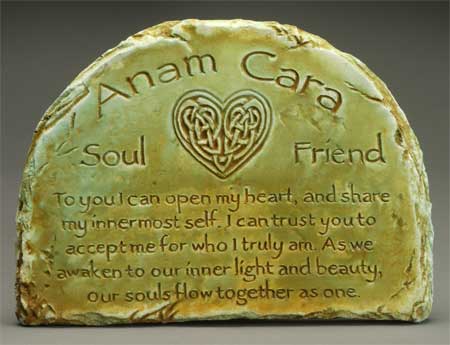
The sunshine of these May days have beaconed me outside into the newly awakened garden. My companion on these respites is John O’Donohue’s “Anam Cara: A Book of Celtic Wisdom.” Anam Cara is Irish Gaelic for “soul friend”. As the gentle breezes and the warm sunlight caress me, I am struck by the pleasure of knowing the Earth as my anam cara.
From the spirit-filled world of animism, through the tribalism of the patriarchs, the warnings of the prophets Jack Spong’s sermon examines our visions of God and demonstrates the journey from God as tribal god who orders genocide to the loving god who calls us to love our enemies. This sermon was preached at Countryside Community Church in Omaha, Nebraska on April 14, 2013.
In the twenty-first century, all too many of the conversations about God are simply beyond the Church. By that I mean, talking about God to people who are outside of the Church is simply beyond the Church’s demonstrated abilities. The faithful remnant who scurry about within Christianity may talk about talking to people who have left the church, or people who have rejected the church, or even to people who have never darkened the door of a church. But when push comes to shove, very few of us are capable of engaging in serious conversation with those who live their lives beyond the Church. Rob Bell’s newly released book: “What We Talk About When We Talk About God” may not be a deep theological endeavour. It may not offer much that is new or insightful. But it does have a place in the conversations that don’t seem to be happening between church-goers and those who live beyond the Church. Indeed, Bell’s book might enable those of us who talk about talking to those outside the walls of the Church to actually begin a conversation with someone who does not share our beliefs.
In my experience of speaking to those who have rejected Christianity and the Church, I have discovered that the God and the religion that so many people have walked away from the Church over, is not the God or the religion that Christianity, at its best, actually proclaims. Bell’s book articulates a Christianity that is closer to the faith most church-goers actually embrace.
Following the success and controversy surrounding his book “Love Wins”, Bell has the notoriety to generate the kind of interest that leaves the average church professional drooling in an “if only I could generate that much interest” kind of way. So there will be plenty of “tut, tuts” coming from those who will insist that it’s not a serious academic work. But don’t let their jealousy of Bell’s appeal fool you. Bell has matured some. He’s been talking to scientists and he’s been influenced by academics and he has made an attempt to talk about God in ways that the unchurched as well as the churched will find engaging. Bell’s also been talking to Peter Rollins (Irish philosopher and theologian) whose work appears to have had a refreshing influence on Bell. Indeed, Bell has chosen a title that could be considered a positive restatement of Rollins’ first book title “How (not) to Speak of God”.
Whether your a fan of Bell’s work or not, it’s difficult not to concede that Bell has mastered the art of communicating in this social media world in which we live. “What We Talk About When We Talk About God” provides an effective tool that will enable many of us to engage in conversations beyond Church. I’ve already purchased several copies and can’t wait to engage in a conversation or two with folks who are ready to engage in talk about God. Bell has given us the gift of a place from which to begin to engage in some serious God-talk.
Below you will find a promotional video created to promote the book, that will wet your appetite for the second video in which Bell lecture at Vanderbilt addresses some of what you will find in the book. Enjoy and after you read the book, use it to begin a conversation beyond Church.
Promotional Video for “What We Talk About When We Talk About God”
Having only recently been introduced to the work of John O’Donohue, (thanks Susan!) I find myself totally enthralled! O’Donohue was an Irish poet, philosopher, theologian, environmental activist, and storyteller whose writings explore the wisdom of Celtic Christianity. O’Donohue was an imbiber of beauty which he heralded as a human calling and an aspect of God. I’ve spent a good deal of time this week absorbed in the beauty of his masterpiece Anam Cara: A Book of Celtic Wisdom(1998). Anam Cara is Gaelic for “soul friend” and the book is just that as it gently guides you through the spiritual landscape of Irish imagination. The book reads like a prayer. O’Donohue insisted that “it is within our power to transform our fear of death so that we need fear little else this life brings.” Sadly, O’Donohue died young (just 52 in 2008), but he left a legacy of wisdom in a series of books that I look forward to immersing myself in.
“When love awakens in your life, in the night of your heart, it is like the dawn breaking within you. Where before there was anonymity, now there is intimacy; where before there was fear, now there is courage; where before in your life there was awkwardness, now there is a rhythm of grace and gracefulness; where before you used to be jagged, now you are elegant and in rhythm with your self. When love awakens in your life, it is like a rebirth, a new beginning.” (Anam Cara)
As I bask in the beauty of O’Donohue’s wisdom, I am delighted to discover a film he made shortly before his death to compliment Anam Cara. The film in and of itself is a “soul friend.” You can enjoy it below. If you are familiar with O’Donohue’s wisdom or if you’ve never encountered the man, you will enjoy the brief video of O’Donohue speaking to a gathering of psychotherapists on the subject of observation. Quoting Heidiegger “true listening is worship” O’Donohue draws in his audience with humour and makes listening a joy while slipping in his subversive advocacy of a “kind of un-thearaphy”. His humour will wet your appetite for the longer film, which is well worth the time. I recommend putting your feet up with wee dram to add to your enjoyment!
Padraig O’Tuama describes himself as a “gay catholic theologian” he is also a poet and a troubadour. I was introduced to his work by Peter Rollins and I have spent much of this week enjoying his book of poetry: “Readings from the Book of Exile”. O’Tuama is quite the performer. I suspect that his ability to tell a good story has much to do with his life in Belfast. Like all good storytellers, O’Tuama’s stories have the ability to transfix his listeners and he uses his beguiling powers to challenge theological doctrines and move people to places that a mere lecturer or preacher would be heard pressed to lead them. On the power of story told to him by his mother, O’Tuama opines: “Does it matter if that actually happened? It did happen that she told it to me. Does it matter where it came from? There is an examination of truth that is vulgar. Truth as empirical fact or truth as something that creates a life? I suppose that what I’d like to say that part of the value of story is to create a way to live a life. It is only the most vulgar analysis that depends purely and solely on whether or not the empirical analysis works. There are other measures of success for story.”
A line from one of O’Tuama’s poems insists that, “God is the crack where the story begins. We are the crack where the story gets interesting.” A beautiful Belfast word is “crack”! It can mean anything from “news” to “debauchery”. Some folk use it to mean gossip, music, drinking, fun, party or good times. I remember relatives using it to mean “word”. So what is the crack? In Padraig’s case the WORD dances through the crack! The notion that God is the “good times” where the story begins, that we are the “party” where the story gets interesting is “good news” indeed!
Padraig O’Tuama is one storyteller whose crack I look forward to hearing more of! Enjoy!
This Sunday, in churches all over the world the story of Judas Iscariot will be read. So, this video of John Shelby Spong’s lecture on Judas Iscariot is a timely one. Both preachers and listeners of sermons will find Jack’s take on Judas’ story thought-provoking. Enjoy!
A sermon based on the readings for the fifth Sunday after Easter
Revelation 21:1-6 and John 13:31-35
Think very carefully about a couple of questions. The questions are simple ones. They are designed to help you form images in your mind; images that will help to shed light on a particular kind of wound. But before I ask the questions, let me give you a definition of the verb that drives both of the questions that I’m going to ask. The verb comes from the Latin verb “tradere” which means to hand over. In English we say: betray. The word betray literally means to hand over to an enemy by treachery or fraud. The word betray can also mean to be unfaithful; to violate trust or to deceive. So, here’s my first question: Have you ever been betrayed? Think about it very carefully. Has someone ever turned you over to the enemy by treachery or fraud? Has someone ever disappointed you; been unfaithful to you, violated your trust, or deceived you? Have you ever been betrayed?
The second question is this: Have you ever betrayed someone? Think about it carefully. Have you ever handed someone over to the enemy? Have you ever let someone down, been unfaithful, violated a trust or deceived someone? Have you ever betrayed someone?
Now take those two questions further: Have you ever been betrayed by someone you love? Have you ever betrayed someone you love? Continue reading →
In my kitchen there are some teacups that we call Nanny’s mugs. They are smaller and more delicate than all the other mugs in the cupboard. Whenever I drink tea from them, I think of my Grandmother. That first summer, I moved to Newmarket; some 3,000 miles from my home, my Grandmother decided that she was going to move in with me. She lived with me in the parsonage for about 3 months. It was an impulse decision on her part; a decision that I had very little say in. Nanny decided that I was the only one in the family she could trust and so she would move in with me. She was in her late eighties at the time. I didn’t fully understand her lack of faith in the other members of the family. I never dreamed that her suspicions about the relative trustworthiness of our relatives was the beginning of the end. I loved my Nanny and I was determined to provide a home for her. I was delighted when she arrived. I was always delighted when my Nanny arrived. I remember as a child, I would long for Nanny to arrive.
Nanny was always full of fun and I have all sorts of wonderful memories of us getting into trouble together. Nanny was all of 5 feet tall, she was just a wee little woman, but there was more power and strength in that wee little woman from Belfast than in most of the women I’ve ever met in my life. She was kindness and fierceness all rolled up into a woman who loved nothing better than a good laugh. Nanny was born in Belfast the oldest of 14 children. When all three of her children ended up living in Canada, even though they were well into their sixties she and my Grandda immigrated to Canada to begin a new life in a new country. Immigrating at any age is an incredible undertaking, but immigrating in your 60’s takes guts. I was twelve years old when my Grandparents arrived in Vancouver. I watched my Grandda begin a new job and my Nanny try to make the best of life far away from everything that was familiar to her. Nanny’s homesickness was palpable. Continue reading →
So much of what passes for prayer these days leaves me cold. I have it on good authority that there are people in various places praying for me. Sadly, most of the things they are praying for on my behalf sound like hell on earth; this despite the fact that these folk insist that the things they are praying for will keep me out of hell. The sung prayer in this video has been a favourite of mine for a few years now. Padraig O’ Tuama is an Irish poet, song writer, theologian and troubadour whose earthy prayer is at the very least a conversation worthy of the Divine’s attention: “I fucked it up. I fucked it up. Maranatha.”
On this glorious morning the splendour of the Earth is intensified by the Sun’s light and I am reminded that for the inhabitants of this planet each and every day is Earth Day. Let us not forget the beauty that awaits us in the ordinary! It is this beauty that we hold in common which reveals the extra-ordinary splendour of the Earth. Breathe deep! Breathe deep the breath of God!
On the heels of Peter Rollins visit to our congregation last weekend, this Earth Sunday sermon flows out of Peter’s work. You can listen to Peter’s sermon which is the jumping off point for this Earth Day sermon here
“Can the ways in which we tell the stories of resurrection transform us into followers of Jesus who embody a way of being in the world that can nourish, ground, and sustain the kind of peace that the world yearns for?” I preached this sermon on the raising of Tabitha years ago, as an attempt to convey the academic essay of New Testament scholar Rick Strelan into the form of a sermon. I believe that it is vital for preachers to convey the wealth of insights that are bandied about in the halls of academia, so that congregations can let go of so many interpretations of scripture that insult their intelligence, so that we can begin to explore the “more-than-literal meaning” (Marcus Borg) of biblical texts. Rick Strelan’s essay appeared in “Biblical Theology Bulletin, May 1, 2009, under the title “Tabitha: the gazelle of Joppa”.
Yesterday, I went for a walk. As I was walking along, minding my own business, a bright light appeared in the sky. The light nearly blinded me and so it took a while for me to figure out what was happening. Suddenly, it was so clear that the light was actually coming from a very large spaceship. I could scarcely believe by eyes. I stood frozen to the spot as the space ship landed in the middle of the road. You’ll never believe what happened after it landed. A couple of little green creatures with giant eyes gout out, took my picture, and then got back in the spaceship and flew off into the farthest reaches of space.
You don’t believe me, do you? You think that I’m making a joke of some sort, or maybe I’ve been working too hard and I’ve finally lost the plot. I know there’s probably nothing that I can say that would convince you that little green men have photographed me. Quite frankly that’s a relief because if you’ll believe that, you’d probably believe anything.
I do find it interesting that you won’t allow yourself to believe that I encountered aliens from another planet, and yet, you’ll suspend your disbelief when I tell you a story from the Bible. Or will you? Take our first lesson from the book of Acts. The miraculous story of how the Apostle Peter raised a disciple named Tabitha from the dead. You all know that when someone is dead, that’s it they are dead. You can pray over them all you want, but they’re never going to sit up, let alone stand up like Tabitha. There’s about as much chance of a person standing up after they’ve actually been dead as there is little green men from outer space landing on the street outside this church.The story of the raising of Tabitha is one of those stories that we wouldn’t believe for a second if it weren’t in the Bible. I suspect that when it comes to stories from the Bible, most of us don’t really believe that they happened exactly the way the Bible says they happened. Or do we?Now maybe you’re the generous type and so you say, “Don’t be too hasty, it could happen if the person wasn’t really dead.” I mean, maybe Tabitha’s friends got it wrong and she just appeared to be dead. The story says that Tabitha died, then her friends washed her body and laid her out in an upper room. Then, since Lydda was near Joppa, the disciples sent two couriers to Peter, who was in Lydda and they asked Peter to head back to Lydda, which was about 10 miles away. That’s a 20 mile round trip on foot with a walking speed of about 3 miles per hour it would take at least 7 hours. She was definitely dead. According to the story Peter sends everyone out of the room, knelt down and prayed and then said, “Tabitha, stand up!” and she did just that.
The story of the raising of Tabitha is one of those stories that we wouldn’t believe for a second if it weren’t in the Bible. I suspect that when it comes to stories from the Bible, most of us don’t really believe that they happened exactly the way the Bible says they happened. Or do we?Continue reading →
Peter Rollins was our guest preacher this Sunday and took us beyond the surface of the story of Paul’s revelation toward the darkness from which we all too often hide.
The scripture readings can be found here – The Worship Bulletin here
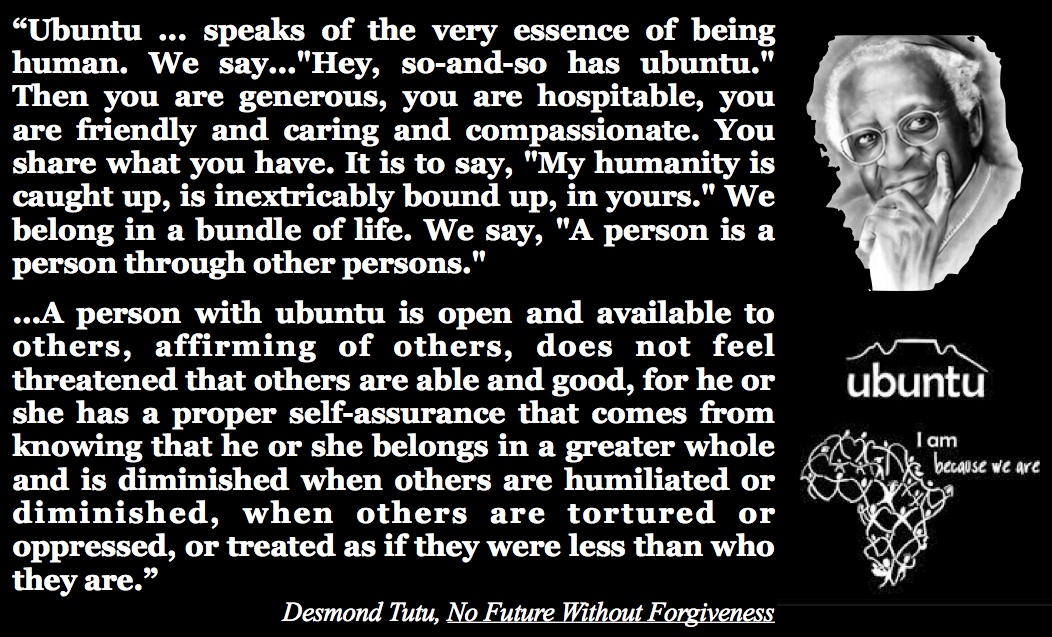
Desmond Tutu, Peacemaker: A conversation with Desmond Tutu and John Allen. Recorded March 21, 2013 by Pepperdine University School of Law. This brilliant video provides an opportunity for Desmond Tutu and his Press Secretary John Allen to reflect upon the work of South Africa’s Truth and Reconciliation Commission. It is a marvellous testament to the potential for goodness that exists in humanity. Tutu’s use of the African word “ubuntu” to express his conviction that we cannot be fully human without other humans is wisdom born of human evolution witnessed up close and personal.
Reposted today as the Church commemorates the life and witness of Dietrich Bonhoeffer.
When I was just a teenager, I was introduced to the writings of Dietrich Bonhoeffer by a wise Lutheran Pastor. I remember devouring Bonhoeffer’s “Life Together” and “Letters and Papers from Prison”. To this day, I credit Bonhoeffer for making me a Lutheran. While a great deal of water has flowed under a good many bridges since I was first enamoured of Lutheran theology, to this day I am grateful to that wise old Lutheran pastor who gave me my first taste of Bonhoeffer. Of late, there has been much ado about a little phrase that has been extracted from Bonhoeffer’s work: “religionless Christianity”.
(click here for full quotations from Letter and Papers from Prison)
“It is not for us to prophecy the day when men will once more ask God that the world be changed and renewed. But when that day arrives there will be a new language, perhaps quite non-religious. But liberating and redeeming as was Jesus language. It’ll shock people. It’ll shock them by its power. It’ll be the language of a new truth proclaiming God’s peace with men.” Bonhoeffer: Agent of Grace
Tragically, Bonhoeffer was executed before he had the opportunity to expand on his idea of Christianity beyond religion. The phrase “religionless Christianity” has intrigued agnostics, atheists, humanists, liberal christians and progressive christians. Eric Metaxas, author of “Bonhoeffer” dismisses the idea that Bonhoeffer was anything but a serious, orthodox Lutheran pastor right up to the end.
Despite the historical evidence of Bonhoeffer’s religious orthodoxy, the notion of religionless Christianity will not die. Bishop John Shelby Spong is among those who have tried to build on Bonhoeffer’s phrase and his book “Jesus for the Non Religious” has certainly moved the conversation along among progressive christians.
The dream of religionless christianity has moved well beyond Bonhoeffer as twenty-first century christians wrestle with archaic images of God and move beyond the religious trappings of traditional christianity. The notion of moving beyond religion has always intrigued me. Years ago, while studying Hinduism my professor offered a definition of God from one of the Vedas: “God is beyond the beyond, and beyond that also”. As I continue to explore the life and teachings of the man none as Jesus of Nazareth it becomes more and more evident that such a definition is compatible with his portrait of God. Jesus of Nazareth attempted to move his co-religionists beyond their religious images of God. What might our images of God become if we move beyond the idols offered to us by the religion of Christianity? Might we move toward images of God that more closely resemble the teachings of Jesus by moving toward a religionless christianity?
Sometimes we can better reflect upon our own tradition from the perspective of another tradition. In the video below, twentieth century philosopher and theologian Alan Watts explores the concept of the Religion of No Religion.
“Beyond the Beyond and Beyond that also.” Letting go of our images is the gift of faith that moves us beyond religion. I can hear Jesus call us to let go!

 Before I could go to seminary I had to obtain an undergraduate degree. So I enrolled at the University of British Columbia in their religious studies program. In order to obtain a degree in religious studies, we were required to study the religions of the world. My professors and classmates were Islamic, Hindu, Jewish, Christian, Buddhist, atheist, agnostic, and together we explored all sorts of religions, both ancient and modern. I remember registering in a course on ecumenism where I expected that we would study the various movements to restore unity to Christianity. We did that, but we also did so much more. We learned that ecumenism is not just about Christian unity. Ecumenism includes inter-faith dialogue.










![peter rollins_thumb[1]](https://pastordawn.com/wp-content/uploads/2013/03/peter-rollins_thumb1.jpg)


 pastordawn