What a New Christianity for a New World will Contain: John Shelby Spong

Jack SpongThis past weekend, The Emerging Church of Springfield, MO. hosted a conference on the Future of Progressive Christianity at which Bishop John Shelby Spong spoke, as only Jack can, on the history of Christianity’s “wrongful diagnosis of what it means to be human” and pointed to a new vision for Christianity’s future. Many thanks to Dr. Roger Ray and the good people of the Community Christian Church for organizing and sharing this conference!!!

Doubt: Preparing to Preach on Hebrews 11:1-16

The Place Where We Are RightLooking over the readings for this coming Sunday and the subject of faith jumps out from the Hebrews reading (Hebrews 11:1-16) which begs questions about doubt.  I recently read and blogged about Richard Holloway’s “Faith and Doubt” and Lesley Hazleton’s insistence that “Doubt is Essential to Faith” and both posts provide an interesting jumping off point. This little video of Richard Holloway on “Why doubt is a good thing” drives my thoughts toward preaching on doubt as the foundation of faith??? 

Hosea: the Coronation Street of Ancient Israel

A Sermon on the Book of the Prophet Hosea

Coronation StI am indebted to Bishop John Shelby Spong for his insights into the Book of the Prophet Hosea. Without Jack’s thoughtful portrayal of Gomer, I would not have recognized her as the Leanne Battersby of her time. Also, thanks to Marcus Borg for his definition of the verb “believe”!

Listen to the sermon:

For those unfamiliar with Corrie, here’s a sample of the first 50 years:

The Steadfast LOVE that GOD IS: a sermon for Hosea 11:1-11

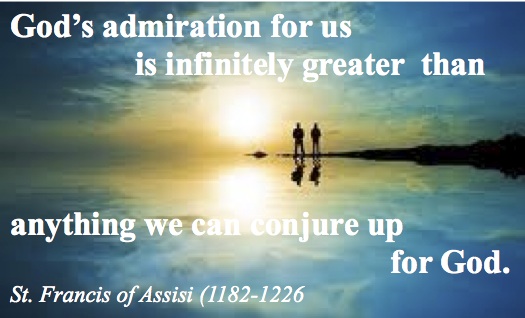
God's Admiration for us copyHere’s a sermon I preached a few years ago on this Sunday’s reading from the Book of the Prophet Hosea. Just as the people of Israel’s images of God changed over time, my own images of the Divine have changed since I preached this sermon. However, I still resonate with ways in which the Book of Hosea seeks to broaden the reader’s understanding of God away from traditional notions of anger and wrath toward images of steadfast love, for I too have had to broaden my own understanding of the Divine many times over the years. I suspect that I am only just beginning to imagine the contours of the steadfast Love that God Is.

Tommy was one of those kids that, no matter how hard he tried, he just couldn’t stay out of trouble. I was never quite sure whether or not Tommy was rotten or whether trouble just followed him wherever he went. Whatever the reason, Tommy managed to live up to the reputation of the typical middle child. His older brother seemed to be perfect in every way, the model child and his younger sister was the cute and adorable baby of the family, leaving the field wide open for Tommy to become the black sheep of the family. And as black sheep go, Tommy was a doosey.  Tommy was also the son of my friends and so even though, I would have rather not have been part of this kid’s life, the fact that he was the Karen’s beloved son, meant that I had to learn to deal with him.

I can still remember an afternoon, long ago, when Tommy was barely three years old. A bunch of us had gathered to celebrate Karen’s birthday.  Tommy was in a foul mood.  I decided that he just didn’t like the fact that on this particular day he wasn’t the center of attention.  He seemed to do whatever he could to upset his mother. 

Her patience with him was beginning to get on my nerves and I was relieved when Karen announced that it was time for Tommy to take his nap. After a very long and loud temper tantrum, Tommy was eventually quiet in his room; a little too quiet, it seems. It wasn’t until I got into my car to leave and happened to glance up toward Tommy’s bedroom window that I realized just why he had been so quiet. Hanging outside of Tommy’s bedroom window was the evidence of this little boy’s stubborn streak. Somehow, to this day I still don’t know how he managed to do it, but somehow little Tommy had managed to stuff the mattress from his bed out the window.

On the lawn below the window were Tommy’s pillows, sheets, stuffed animals and quilt. Three quarters of the mattress hung below the window and I am sure that given enough time Tommy would have managed to push the remainder of his bed out onto the front lawn. I dashed back into the house, grabbed Karen and headed up to his room. When we got there we discovered dear sweet little Tommy, shaking the contents of a big container of baby powder all over his room. Tommy’s himself was covered in talcum and when he caught sight of his mother and I he gave us a wicked little grin and said, “I don’t need to take any more naps!”

Driving home that day, I gave Tommy a nickname.  It’s a name that I have never uttered in his mother’s presence, but a name that has stuck with me.  On that day, the dear sweet little son of one of my dearest friends was forever labeled, Tommy the Terrible; TT for short.

Now the exploits of a cute three-year-old are one thing, and we can all laugh at the site of a mischievous little boy, who manages to out fox his mother.  But TT’s activities went far beyond the laughable exploits of a mischievous little boy. It didn’t take Tommy very long to become skilled in the art of tormenting adults. His mischievous behavior gave way to rudeness, disobedience, cheating, and more often than not down right meanness.  Of all the adults who were subjected to the torments that Tommy dished out, none suffered more than his mother did. No matter how hard she tried, Karen could never get Tommy to behave himself.  Nor was Karen ever able to understand why Tommy did the things he did. Tommy had everything a boy could ever want or need. He had two parents who loved him dearly.  He had a wonderful older brother and a delightful little sister.  He lived in a beautiful house by the ocean.  He attended the best school in the area. He had more toys than he could ever find the time to play with. There were lots of great kids living in the neighborhood to play with and all sorts of interesting and interested adults in his life.  Tommy was a bright and intelligent kid who had everything going for him. There was no earthly reason that this child should behave so badly. Karen has never been able to explain why she has two perfectly wonderful children and one child who has been breaking her heart since he was old enough to speak. Continue reading

Upon Hearing the News that “Archaeologists” Have Located a “Piece of Jesus’ Cross”

BeautyI’ve spent the past few glorious days on an island in Lake Nipissing enjoying the splendour of creation. I made the mistake of checking in from time to time on the comings and goings of the rest of the world. This morning, my perusal of offerings from the news media revealed an article heralding the discovery by archaeologists of a “piece of Jesus’ cross”. I couldn’t help myself. I just had to share the news with my delightful breakfast companions and together we mocked the very idea that this story would be considered news. After all, so many “pieces of the cross” have already been discovered and elevated for veneration, that one wonders why anyone would take notice of yet another attempt to produce a piece of the instrument of Jesus’ execution. Our collective mocking of the “news” article ended with questions: supposing we suspend credulity and go along with the idea that “they” have indeed found a piece of “the cross”, why would anyone care? Why would anyone want to venerate such an ugly relic when creation offers us so much beauty to venerate.

Surrounded by the grandeur of God, I could not help but turn my attention to Creation and venerate I did!

“A beautiful thing, though simple in its immediate presence,

always gives us a sense of depth below depth, almost an

                        innocent wild vertigo as one falls through its levels.” (Frederick Turner)

Here’s a glimpse of the object of my veneration. 

Finding God in the Depths of Silence: Richard Rohr

rohrSpeaking in May of 2013 at the Festival of Faiths, Richard Rohr shares his perspective on silences as the only thing broad and deep enough ot hold all of the contradictions and paradoxes of Full Reality and our own reality, too. 99.9% of the known universe is silent,, and it is in this space that the force fields of life and compassion dwell and expand. Rohr insists that we too can live in this silent expanse!

Richard Rohr is a Franciscan teacher, author and founder of the Center for Action and Contemplation. 

Questions that Arise from Being Human – Richard Holloway

human consciousnessRegular visitors to this blog will not be surprised to read that Richard Holloway has become one of my favourite theologians. I have blogged about his writings several times. In this video Holloway moves beyond spiritual autobiography and into the realm of evolutionary theology to explore the big questions about what it means to be human. 

Preaching on Hosea

Hosea and GomerAs they did last Sunday, this Sunday’s readings include a section from the Book of the Prophet Hosea. To say that this is a strange little book is an understatement. However, I’m tempted try my hand at writing a sermon on this ancient soap opera. For those colleagues who are considering doing the same these short videos provide images to get you in the mood. Of course you could just tune into a modern soap opera to get your creative juices flowing.

Transfeminist Entaglements: Catherine Keller

OnThe MysteryToday the church celebrates the feast day of Martha and Mary. Two disciples whom Jesus  loved, who went on to become Apostles. On this day, I am mindful of the plight of women in the church. I present this lecture by Catherine Keller, a brilliant theologian, as my way of celebrating the role of women in theology. Keller’s work in process theology has enlightened my own theology in ways that continue to challenge my own way of approaching Mystery and I highly recommend “On the Mystery: Discerning Divinity in Process. 

On the Drew Theological School’s website Catherine Keller is described as: “Professor of Constructive Theology at the Theological School of Drew University. In her teaching, lecturing and writing, she develops the relational potential of a theology of becoming. Her books reconfigure ancient symbols of divinity for the sake of a planetary conviviality—a life together, across vast webs of difference. Thriving in the interplay of ecological and gender politics, of process cosmology, poststructuralist philosophy and religious pluralism, her work is both deconstructive and constructive in strategy. She is currently finishing Cloud of the Impossible: Theological Entanglements, which explores the relation of mystical unknowing, material indeterminacy and ontological interdependence.”

Prayer: Connections – a sermon for Luke 11:1-13

catching starsPentecost 10C – July 28 2013

Listen to the sermon here

https://pastordawn.com/wp-content/uploads/2013/07/pentecost-10c-jul-28-2013-sermon.m4a

Prayer: the Perspective of a Process Theologian – Catherine Keller

quantum thoughtToday, preachers all over the world (myself included) will be tackling what the writer of the gospel of Luke had to say about prayer in Luke 11:1-13. It is a daunting task for any preacher, let alone for those of us who have given up images of the Divine that conjure up notions of a super-hero in the sky who interferes in our lives. Catherine Keller is a process theologian who teaches Constructive Theology at  Drew University (New Jersey). Her comments about prayer as a kind of allurement are enlightening. 

Preparing to Preach on Prayer: 21st Century Questions – There’s an App for that!

prayer appAs I continue to work on this Sunday’s sermon, (see earlier posts here … here …and here), Jesus’ teaching on prayer in the gospel reading Luke 11:1-13 leaves me wondering what an enlightened 21st humanoid is supposed to do with Jesus 1st century ideas???

Cast you minds back to another time and place and tell what the numbers 33, 45, and 78 have in common??? Vinyl Records anyone? When I was a kid music came from a portable RCA record player. The sound quality wasn’t all that great, but somehow we didn’t seem to care. Later when I was a teenager, my parents got a fancy state of the art Phillips stereo cabinet and suddenly sound seemed to be coming from booth ends of the room. I never did understand how those old record players managed to pick up sound from the grooves in the vinyl to45 produce music. I still remember my father’s first reel-to-reel tape recorder, and then there were the eight-tracks, followed by cassettes, followed by CD’s.  I can remember these things, but I have no idea how they made music. It doesn’t matter how many times people try to explain it to me, I still think it’s a miracle that such beautiful sounds can come out of machines.

These days I don’t use records, tapes or CDs to listen to music. My music is stored in “the cloud” and when I want to hear I song I make sweeping motions on my iphone screen and presto, I can make music fill the room. I don’t know what the cloud is. I asked the personal assistant on my iPhone, her name is Siri and she told me she was sorry but she couldn’t tell me because Steve told her not to tell anyone. Some people think the cloud is located in a 225-acre facility that Apple built in North Carolina. Continue reading

Preparing to Preach on Prayer: To Whom Shall We Go?

PanentheismAs I continue to work on this Sunday’s sermon, (see earlier posts here and here) Jesus’ teaching on prayer in the gospel text Luke 11:1-13 begs the question: “To Whom Shall We Go?” Liberated from perceptions that reduce images of God to those of a cosmic superhero who abides up or out there ready to manipulate events here in the world at the request of those who pray, the activity of prayer takes on a whole new meaning and shape. Our images of who, where and what God is will direct our prayers in ways that impact our expectations of prayer. Who do we pray to and what we expect of the One who hears our prayers will shape how and why we pray.

Before we can even begin to understand what so much of the Christian tradition means when it talks about praying to God, we need to take a step back and look at what we mean when we say the word “god.” Throughout the Jewish and Christian traditions you can trace two very distinct ways of understanding and talking about God. Continue reading

Jesus’ Teaching on Prayer

teach us to prayThis Sunday’s gospel text (Luke11:1-13) will no doubt send preachers scurrying to review what we might say with regard to prayer. In this splendid little video Laurence Freeman reviews Jesus’ teaching and points to prayer as Jesus’ focus. Well worth watching before you begin to write or indeed listen to Sunday’s sermon.

Dom Laurence Freeman OSB is a monk of the Olivetan Benedictine Congregation of Monte Oliveto Maggiore and Director of The World Community for Christian Meditation. Fr Laurence was born in England in 1951 where he was educated by the Benedictines and studied English Literature at Oxford University.

Before entering monastic life he had experience with the United Nations, banking and journalism. In the monastery his spiritual teacher was John Main with whom he studied and whom he helped in the establishment of the first Christian Meditation Centre in London.

Morning Prayer Liturgy: John Philip Newell

Chanting for PeaceMorning Prayer Liturgy from Casa del Sol, Ghost Ranch. Led by John Philip Newell, Ali Newell, David E. Poole, Winona Poole. Chants from “Chanting For Peace, Praying with the Earth”

Preparing to Preach on Prayer: Shush!

BATH QOLIn this coming Sunday’s gospel reading Luke 11:1-13, Jesus’ disciples ask him to teach them to pray. As a pastor I have been asked to teach people to pray. Each time I have been asked to teach someone to pray I have cringed inside because I do not feel up to the task. For some reason the old hymn “I Come to the Garden Alone” keeps playing in my mind. I keep telling it to, “Shush!” so that I might hear the “bath qol” but the daughter of a sound eludes me. Below is a portion of a sermon I preached a couple of years ago on the subject of prayer. If nothing else, it reminds me to shush!

I began this sermon by asking the congregation to sing from memory the old hymn: I Come to the Garden Along. Feel free to sing it to yourself!

I think my earliest memory of prayer is a distant memory I have of skipping along the sidewalk chanting a familiar refrain: “Don’t step on a crack or you’ll break your mother’s back.” Most of us can remember a moment from our childhood when a superstition was instilled in us that caused us to perform some ritual in order to placate the unseen power that could determine our fate. Whether it was avoiding cracks, or walking under ladders or black cats, we were trained from an early age to believe that there were powers out there that could determine our future.   Continue reading

Feast Day of St. Mary of Magdala: the Apostle to the Apostles

THE RESURRECTION OF MARY – An Idle Tale

Mary-Magdalene egg

To commemorate this festival day, I repost this not-so-long-ago encounter with a visiting New Testament scholar to entice you to follow Mary out of her tomb and beyond the streets to her place at the head of the fledgling community that became the church: 

He just said it for the third time! “Harlots!” He keeps calling them “harlots”, while I rack my brains to come up with one harlot. Then he points to the text and his charges become clearer, he says, “she is a “prostitute!”

My carefully reigned in anger is unleashed. “Where?  Where?  Where? Show me where it says this woman is a prostitute!”

As he refers to the Gospel text and insists that, “It is there, right there in the text”,

I want to scream, I want to cry, I want to wipe the bemused expression from his face. I want to rub his nose in the damned text. Instead, I begin the uneasy process of reigning in my anger. I slow my speech, I try to erase the tremor from my voice and I ask him to, “Show me, show me where it says this woman is a prostitute.”

He consults his text and says, “a woman in the city who was a sinner.”

“A sinner not a prostitute.”  I respond.

He insists, “Yes a prostitute.”

“Where?” I ask.

Again he insists, “A woman who was a sinner.”

I demanded to know, “Where does it say she was a prostitute?”

He insists, “The author means that she was a prostitute.”

I lose control, “How do you know?  What words does the author use to say that his woman was a prostitute? Show me in the text where it says she was a prostitute?”

He still doesn’t get it, “What do you mean? It is clear that this woman was a prostitute.”

Once again I push, “Show me.  Show me where?”

He continues to say, “She was a woman from the city who was a sinner.”

I know that the text says that, so I implore him to tell me, “The Greek… What does the Greek say?”

He replies, “amartolos”.

I push, “Does that mean prostitute?” We both know that it does not.

He replies, “Sinner. But the context clearly shows that she was a prostitute.”

Still pushing I ask him to “Show me.  Show me how the narrative says this woman was a prostitute. Show me where it says her sins were sexual.             Show me where it says so in the narrative.”

He says, “It’s clear.”

Clearly we disagree, so I try again, “Clear to you.  Show me. Show me!”

As he fumbles through the pages, I offer him a way out, “Okay.  Even if I concede the point that her sins were sexual, show me where it says that these sexual sins were nothing more than lust or adultery, show me where it says that she was a prostitute.  Show me!”

He couldn’t show me.  It’s simply not there.

Nowhere in the New Testament does it ever say in Greek or in English that Mary of Magdala is a prostitute.  But over and over again scholars, theologians, popes, preachers, and dramatists, have continued to cast Mary of Magdala as a prostitute.  

In the years that have transpired since than day in seminary, when a visiting New Testament scholar insisted that “the context clearly shows that she was a prostitute,” I’ve delighted in being able to participate in the phenomenon of Mary’s resurrection as the first Apostle. Continue reading

Three Queens, the Birth of Laughter, and the Non-Existent Kitchen – a sermon for Pentecost 9C

three queens

Scripture Readings:  Genesis 18:1-15 and Luke 10:38-42

Worship Bulletin pdf here (to be printed double-sided and folded into a booklet)

Listen to the sermon here

Basileia of God: A Kin-dom

basileiaβασιλεία, “basileia” the Greek feminine noun for sovereignty is traditionally translated into english as “kingdom.” Both the greek and english words were generated by kyirarchal world views. Kyiarchal is a word coined by Elisabeth Schussler Fiorenza to replace the term patriarchy. Kyriarchy emphasizes”the rule of the emperor/master/lord/father/husband of his subordinates.” Fiorenza argues for a different understanding of patriarchy, “one which does not limit it to the sex/gender system but conceptualizes it in terms of interlocking structures of domination, i.e., elite male, relations of ruling.” The kyriarchal translation of “basileia” as “kingdom” fails to capture the literal meaning this word which is after all is said and done the feminine plural of majesty. I have often joked that it is more accurately translated as “queendom”. Over the years I have often used words like “reign” “dominion” or “empire” in place of kingdom. These days, I have come to appreciate “kin-dom” as a better approximation of the meaning of basileia.  With that in mind, I offer Laurence Freeman’s explanation of  basileia. 

Love is the Only Antidote to Fear – John O’Donohue

When I was a child my father used to sing a song that puzzled me:worried man

“It takes a worried man to sing a worried song. It takes a worried man to wing a worried song. It takes a worried man to sing a worried song. I’m worried now, but I won’t be worried long.”  listen here

I can still remember my young self wondering why this worried man won’t be worried for long. Now that my age often lets me know that there are fewer years ahead of me than there are behind me, I know full well that it is death that will end this worried man’s worries. I also know that it is the knowledge of our impending death that gives birth to our fear. Speaking at the Greenbelt Festival in 2004, John O’Donohue explores with wit, charm and wisdom the reality that we are all going to die and points to love as the powerful antidote to the fear that this realty inspires. O’Donohue insists that we all must sort out our fear of death in order to live fully!

Click on the image below to listen to John O’Donohue

john o'donohue