Homecoming Sermon September 22, 2013
Creation IV – Proverbs 8:22-31, Colossians 1:15-20, John 6:41-51
Companion from the Latin “com pinionem” for “with bread” or “bread fellow”


Companion from the Latin “com pinionem” for “with bread” or “bread fellow”
 For those of us following the lectionary for the Season of Creation, Diarmuid O’Murchu’s reminder that the word “pagan” comes from the Latin for “lover of the earth” functions as a call for Christians to embrace Creation! O’Murchu is an evolutionary theologian whose work is breaking new ground as he reconnects 21st century Christians to the riches within the tradition and moves beyond the confines of church doctrine toward a holistic understanding of what it means to be human which offers hope for living together in the “companionship of empowerment”.


 In response to the needs of our neighbours, Holy Cross Lutheran Church’s Global Justice Team created the Lutheran Outreach Volunteers Program otherwise known as LOV Ministries. LOV volunteers currently provide grocery vouchers to those who need help making ends meet. LOV Ministries supports the work of the Street Outreach Van which provides assistance to those living on the streets of York Region. Funds raised by the Super Awesome Amazing Race will be used to support these vital programs. So, signup to participate in the fun or pledge your support now! For more information email: contact@holycrosslutheran.ca
After a long summer vacation, I returned to work this week. Getting back into the pulpit is a daunting task as I struggle to find just the right words for this Homecoming Sunday. Unable to settle upon which of the many possible readings on which to preach, I was struck by the possibilities of the Narrative Lectionary. Some musings:
You may not be able to tell from looking at me. But let me assure you that you are looking at someone who used to be a champion wrestler. Believe it or not, my wrestling skills actually helped me rise to the level of a world champion wrestler. Well, perhaps I should qualify that statement. When I was an amateur wrestler, I was a world-class champion wrestler. But like so many athletes, when my status changed from amateur to professional, I lost my championship status and although I still qualify as a professional wrestler, and I like to see myself as a champion, I’m no longer what you would call world-class.
Like many professional wrestlers my career began when I was but a child. Growing up I had a very clear advantage as I developed my wrestling skills. You see having a brother who was just 18 months younger than me meant that I had ample opportunities to hone my wrestling skills. My brother and I were always at it. I’ve got to say that even though we shared the same weight class for most of our childhood, when it came to world class wrestling holds, I had him beat. I had this wicked arm-hold sleeper, and that together with my full Nelson followed by a knee-arm press, was guaranteed to have my brother screaming uncle and agreeing to be my obedient servant until in no time at all. For years I reigned as the champion of our little world! I was unbeatable. My brother didn’t stand a chance. My reign as world champion would have continued if it weren’t for the abrupt ending of my amateur status.
One morning when I was about 13 and my brother was 9 and a half, we were going at it, and to his credit my bother had me in an ingenious hold. Somehow, he’d managed to secure me with what we professional wrestlers call an arm bar. That’s where you’re opponent wrenches your arm behind your back and applies just enough pressure to cause pain, but not enough to break anything. But just when Alan was approaching the point of no return, I managed with a feat of superhuman strength to rise up, twist around and swing for all I was worth and connect with what I though must be my brothers chest. I expected that such a thrust would have released my arm from Alan’s iron grip. But he still had me. I was about to hit him again, when for no apparent reason Alan released me from his grip. In an instant I wiggled free, spun around and connected with what I figured would be a fatal blow. Just before my blow connected with it’s victim, I realized that I was doomed.

Evening Prayer Liturgy with text and music inspired by Hildegard von Bingen (developed at Holy Cross Lutheran Church)
Evening Prayer Service Bulletin which is to be printed double-sided
Evening Prayer Audio – the silences are intentional. Enjoy!
Herald of the Divine Feminine, reformer of the church and green prophet! September 17th is the feast day of the Christian mystic Hildegard von Bingen, a woman of great vision, a woman centuries ahead of her time. During her 81 years Hildegard’s talents as an artist, musician, poet, healer and theologian allowed her to produce a wealth of resources for the church which ought not to be ignored. And yet the Roman Catholic Church only got around to officially canonizing this giant of the church this past year.
In 2009, German filmmaker Margarethe von Trotta wrote and directed the movie “Vision”. The DVD version is available from Amazon and I highly recommend it!!!
Matthew Fox’s new book “Hildegard of Bingen a Saint for Our Times, Unleashing Her Power in the 21st Century” will be released next month and I am eagerly awaiting my copy. You can listen to an interview of Matthew Fox on the subject of his new book here. Fox describes Hildegard as a Trojan horse whose teachings he hopes will shake up the vatican.
At Holy Cross we have developed an Evening Prayer Service inspired by the work of Hildegard. The worship bulletin and an audio recording of the service are linked below. Enjoy the video of contralto Karen Clark who preforms Hildegard’s antiphon “O Virtus Sapientie”
Evening Prayer Service Bulletin which is to be printed double-sided
Evening Prayer Audio – the silences are intentional. Enjoy!
 “I also think we need to maintain distinctions – the doctrine of creation is different than scientific cosmology and we should resist the temptation, which sometime scientists give into, to try to assimilate the concepts of theology and the concepts of science.” (Pocklinghorne)
Years ago, while visiting Cambridge, I happened upon a lecture being given by John Pocklinghorne. Since then, I have felt compelled to read his work in an attempt to wrap my non-scientific mind around the complex relationship between science and religion. Pocklinghorne’s description of the relationship as one of friendship helped me to see beyond the all too often enforced boundaries between these two ways of seeking understanding reality.
 Over and over again, in conversations with people who have long since left the institution of church behind I hear: “Why don’t clergy pass on what they learned at seminary?” The plea usually comes after I’ve articulated Christianity in a way that makes sense to a 21st century mind. Below are a series of snippets of Church of England clergy articulating what they call “liberal” perspectives of Christianity. I am all too aware of the multitude of reasons/excuses that prevent some clergy from articulating Christianity the way it is taught in the academy, but I can’t help believing that there is a great hunger out there for the kind of theology that does not require church-goers to check their brains at the door!
 How appropriate that preachers all over the world will be preparing sermons this week on the gospel text Luke 15. These parables of the lost will have us remembering the work of a beloved scholar whose work on the parables influenced generations of preachers. Robert Farrar Capon died on Friday and looking over the various sermons that I have prepared over the years on Luke 15, I for one am grateful to have been influenced by such a great theologian! I am also indebted to two beloved seminary professors for the formation of this sermon: Dr. Donna L. Seamone and Dr. Ed Riegert. All preachers stand on the shoulders of those who have gone before us!!!
Jesus was and is an absolute fool! An absolute fool, I tell you!
Among the teachings of Jesus, the parables of the lost and found are so well known, so familiar that we are in peril of failing to hear the foolishness they advocate.
Although only a few of us have had the opportunity to tend a flock of sheep, most of us at one time or another have been responsible for the welfare of a flock. Whether that flock be sheep or co-workers, clients, customers, students, friends, or children none but the foolish among us would leave 99 to the perils and dangers of the wilderness in order to go looking for one idiot who’d been stupid enough to get themselves lost.
We may not keep our coins at home, but I daresay that most of us have felt the sting of loosing a drachma or two or three in this recession. Only a fool would waste a moment searching for our losses when our portfolio’s are so full. I dare say that if we managed to find or recoup our loss, we’re hardly likely to invite the neighbourhood to a party that would in all likelihood eat up more than we had found. Continue reading
 Lesley Hazleton’s is always worth reading! But her new book, “The First Muslim: The Story of Muhammad” is a must read for those of us who live in the West! I have blogged about Lesley Hazleton before (here and here) because I believe that as a Jewish agnostic she is a brilliantly articulate story-teller who is uniquely placed to bring a much needed understanding of Islam to Westerners. If you are looking for a great introduction to the life of Muhammad or if you’ve slogged through other biographies of Muhammad, this book will provide you with a powerful view of the Prophet who continues to speak to millions. In this video, Hazleton discusses her work.

They’re at it again, the powers that be, calling for a military strike to punish a dictator for a military strike that went too far. As the drums of war sound, I hear phrases like “We must stand with Israel”, “Christians are being persecuted” and “Muslim Brotherhood”. When will the children of Sarah, Abraham and Hagar stop their squabbling? Surely, it’s time for us to move beyond our tribal ways? Are we doomed to go on repeating the patterns of the past or can we look into our past as a way of moving beyond our history?
“We cannot be religious in the same way as our ancestors. Our perspective has entirely changed. We have looked at the world from outer space for example. Each generation has the task of looking back at its traditions, looking back at its scriptures and looking at its own peculiar and unique circumstances and making a creative jump to apply the past tradition to the problems of the present.”
Theologian/historian/lecturer Karen Armstrong’s book A HISTORY OF GOD forms the basis for this documentary which explores the way humans have perceived the idea of a supreme being throughout history. During these days, of warmongering we would do well to reflect upon our shared histories.
 He was once the Primate of the Episcopal Church in Scotland but these days Richard Holloway describes himself as an agnostic Christian hungering after transcendency and preaching a gospel of uncertainty. The kind of religion that Holloway envisions includes the
 sort of faith that bends toward inklings of transcendence in ways that exercise humility in loving ways. Holloway’s autobiography: Leaving Alexandria is as delightful a read as it is a challenge to the church to move beyond certainty to embrace doubt as the foundation of faith. Richard Holloway wears his soul as well as his heart upon his sleeve in this video. Enjoy!
 I first became aware of Michael Morwood several years ago when I was looking for prayer resources that did not use anthropomorphic images of God as if the Divine is some far off character who lives somewhere out or up there waiting for us to speak the correct incantations or pass judgement prior to intervening on our behalf. We can talk, preach, teach and even insist that God is not an old angry bearded guy in the sky, but if our liturgies, prayers and hymns continue to beseech mercy from the Lord we will continue to inscribe an anthropomorphic deity upon the hearts and in the minds of those
 few worshipers who continue to worship in our sanctuaries while generations of our neighbours continue to reject our sacred assemblies. Michael Morwood’s little book Praying a New Story gave me the courage to begin creating more sources for worship that move beyond theism. Since then I learned so much from Morwood as I have read all of his books, especially: God Is Near, Is Jesus God and his latest, It’s Time. I’m convinced that Morwood’s thirty years as a parish priest have provided him with the necessary insights to articulate Christianity in ways that 21st century Christians can understand. The videos below feature Michael Morwood doing just that. I encourage you to take the time to listen and learn from this brilliant theologian.
 Still enjoying a wonderful vacation, and I am grateful not to have to preach on the difficult text assigned for this Sunday. Here’s a facsimile of the sermon I preached a number of years ago on the gospel text.
Now large crowds were travelling with Jesus and he turned and said to them, “Whoever comes to me and does not hate father and mother, wife and children, brothers and sisters, yes, and even life itself, cannot be my disciple. Whoever does not carry the cross and follow me cannot be my disciple. For which of you, intending to build a tower, does not first sit down and estimate the cost, to see whether he has enough to complete it? Otherwise, when the foundation is laid and the tower cannot be finished, all who see it will begin to ridicule the builder, saying, “This person began to build and was not able to finish.’ Or what king, going out to wage war against another king, will not sit down first and consider whether he is able with ten thousand to oppose the one who comes against him with twenty thousand? If not, then, while the other is still far away, he sends a delegation and asks for the terms of peace. So therefore, none of you can become my disciple if you do not give up all you possession Luke: 14:25-33
Jesus you’ve got to be kidding! “Whoever comes to me and does not hate father and mother, wife and children, brothers and sisters, yes and even life itself, cannot be my disciple?…None of you can become my disciple if you do not give up all your possessions?”
Hate your father; hate your mother; hate your wife; hate your children; hate you brothers; hate your sisters; hate even life itself and oh yes while you are at it give up all you possessions and then, and only then will you be ready to take up your cross and follow Jesus. What is Jesus talking about? Has Jesus forgotten about the fourth commandment? Are we to forget about honouring our parents? Wasn’t it Jesus who said that we are to love our neighbours as we love ourselves? Didn’t Jesus try to talk people into loving their enemies? Has Jesus forgotten that God is love? Why does Jesus rant and rave about hating our father’s, mothers, children, sisters, brothers and even life itself?
It is difficult to recognize the Jesus in this text. This is not the gentle Jesus of my childhood. This is not the happy Jesus who smiled out from the pictures in my illustrated Bible.This is not the Jesus that the rightwing conservative Christians point to when they harp on about family values. This is not the gentle Jesus we have come to expect. This Jesus sounds to harsh. This Jesus wants to turn us into religious fanatics who hate everybody and give up everything, even life itself.
For a few years now, there has stood on the shelf above my desk a quotation from Deuteronomy 30. I put it there so that these word’s of God might guide me in my decision making. According to the writers of Deuteronomy, God says: “I have set before you life and death, blessings and curses. Choose life so that you and your descendants may live”. God says “Choose life!” How do I reconcile this to the Gospel lesson in which Jesus says whoever does not hate even life itself, cannot be a disciple of Jesus? Why was Jesus so harsh? What is going on here? Continue reading
 Seamus Heaney died on Friday. A poet who captured my heart long ago when I was just a wee girl too frightened to trust my own words. Perhaps I learned to love his verse because we held Belfast in common? But the streets he strode upon were a lifetimes away from the streets I trod, with only the “wideness of his language” to implant his thoughts in my heart. While others will point to his Nobel Prize, Digging, The North, or September 1969 to herald him as a laureate, for me it will be a bag of spuds waiting to be peeled that will bring his words to mind. Rest well dear Seamus. Thank-you for teaching me to write my own words upon the page and trust that they too had a wideness about them! Shalom.


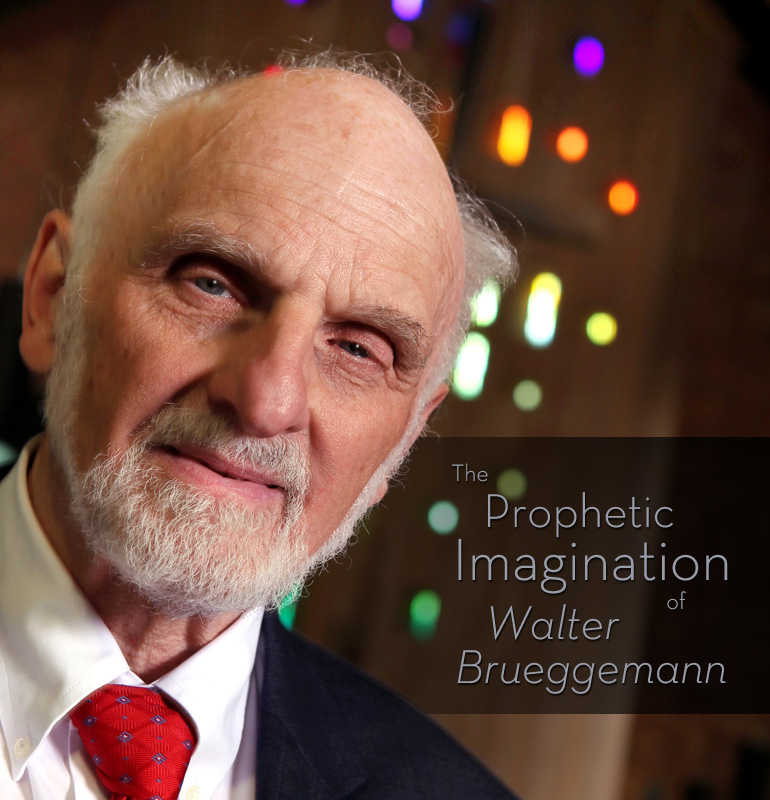 Those of us who presume to preach on the prophetic books of the Bible do so at our own peril. One of the best ways to avoid much of that peril is to first consult the work of the great Walter Brueggemann. Krista Trippett’s extended interview of this eminent theologian provides delightful insights into the faith of the man who has influenced several generations of preachers. Enjoy!
While on sabbatical last summer, I spent some time reading Carter Phipps’ book “Evolutionaries: Unlocking the Spiritual and Cultural Potential of Science’s Greatest Idea”. I blogged about it here
Carter Phipps, author of Evolutionaries: Unlocking the Spiritual and Cultural Potential of Science’s Greatest Idea, gave the keynote lecture for the 2013 Neil Scott Science and Spirituality series at Middle Tennessee State University. Phipps begins speaking at 7:20.
 pastordawn