Retired progressive Lutheran Pastor. Exploring the DIVINE MYSTERY that some call, "GOD," hoping to learn about the LOVE which is BEYOND the BEYOND and BEYOND that also.
Peter Rollins was our guest preacher this Sunday and took us beyond the surface of the story of Paul’s revelation toward the darkness from which we all too often hide.
The scripture readings can be found here – The Worship Bulletin here
Desmond Tutu, Peacemaker: A conversation with Desmond Tutu and John Allen. Recorded March 21, 2013 by Pepperdine University School of Law. This brilliant video provides an opportunity for Desmond Tutu and his Press Secretary John Allen to reflect upon the work of South Africa’s Truth and Reconciliation Commission. It is a marvellous testament to the potential for goodness that exists in humanity. Tutu’s use of the African word “ubuntu” to express his conviction that we cannot be fully human without other humans is wisdom born of human evolution witnessed up close and personal.
Reposted today as the Church commemorates the life and witness of Dietrich Bonhoeffer.
When I was just a teenager, I was introduced to the writings of Dietrich Bonhoeffer by a wise Lutheran Pastor. I remember devouring Bonhoeffer’s “Life Together” and “Letters and Papers from Prison”. To this day, I credit Bonhoeffer for making me a Lutheran. While a great deal of water has flowed under a good many bridges since I was first enamoured of Lutheran theology, to this day I am grateful to that wise old Lutheran pastor who gave me my first taste of Bonhoeffer. Of late, there has been much ado about a little phrase that has been extracted from Bonhoeffer’s work: “religionless Christianity”.
(click here for full quotations from Letter and Papers from Prison)
“It is not for us to prophecy the day when men will once more ask God that the world be changed and renewed. But when that day arrives there will be a new language, perhaps quite non-religious. But liberating and redeeming as was Jesus language. It’ll shock people. It’ll shock them by its power. It’ll be the language of a new truth proclaiming God’s peace with men.” Bonhoeffer: Agent of Grace
Tragically, Bonhoeffer was executed before he had the opportunity to expand on his idea of Christianity beyond religion. The phrase “religionless Christianity” has intrigued agnostics, atheists, humanists, liberal christians and progressive christians. Eric Metaxas, author of “Bonhoeffer” dismisses the idea that Bonhoeffer was anything but a serious, orthodox Lutheran pastor right up to the end.
Despite the historical evidence of Bonhoeffer’s religious orthodoxy, the notion of religionless Christianity will not die. Bishop John Shelby Spong is among those who have tried to build on Bonhoeffer’s phrase and his book “Jesus for the Non Religious” has certainly moved the conversation along among progressive christians.
The dream of religionless christianity has moved well beyond Bonhoeffer as twenty-first century christians wrestle with archaic images of God and move beyond the religious trappings of traditional christianity. The notion of moving beyond religion has always intrigued me. Years ago, while studying Hinduism my professor offered a definition of God from one of the Vedas: “God is beyond the beyond, and beyond that also”. As I continue to explore the life and teachings of the man none as Jesus of Nazareth it becomes more and more evident that such a definition is compatible with his portrait of God. Jesus of Nazareth attempted to move his co-religionists beyond their religious images of God. What might our images of God become if we move beyond the idols offered to us by the religion of Christianity? Might we move toward images of God that more closely resemble the teachings of Jesus by moving toward a religionless christianity?
Sometimes we can better reflect upon our own tradition from the perspective of another tradition. In the video below, twentieth century philosopher and theologian Alan Watts explores the concept of the Religion of No Religion.
“Beyond the Beyond and Beyond that also.” Letting go of our images is the gift of faith that moves us beyond religion. I can hear Jesus call us to let go!
Speaking on March 17, 2013, Marcus Borg points to the teachings of Jesus, who he describes as a decisive revelation of God’s character, to outline the “Passion of Jesus” in order to move us toward a vision of the “Kingdom of God.”
I’m busy preparing the liturgy for this coming Sunday when Peter Rollins will be our guest preacher. It’s an interesting challenge considering the season. Easter is a time when we practice certainty with our shouts of “Christ is risen! Christ is risen indeed! Alleluia!”, so everything I’ve heard and read of Rollins’ work is calling me into the darkness of unknowing. Part of me wishes we’d booked Peter’s weekend visit with us during the season of Lent or maybe even this past weekend when terrified followers of the Way huddled in an upper room in fear for their lives could have set the tone for our worship together. But part of me is relishing Peter’s serious challenges to the church that Peter clearly expresses during the interview in the video below. For those of you who live in Southern Ontario, consider joining us this weekend! For details click here
Speaking on March 17, 2013 at All Saints’ Episcopal Church in Pasadena, Marcus Borg responds to the question about the relevance of Jesus using three words that frame the book he is currently writing: “Memories, Conversions, and Convictions.” Enjoy!
On Sunday, in churches all over Christendom, worshippers will hear the gospel story of Doubting Thomas. The story of Doubting Thomas is prescribed gospel reading every year for the Sunday after Easter. I’ve never understood why Thomas should hold such a prominent place in our lectionary: I mean, when the chips were down, and Jesus could have used their support, Thomas and the guys deserted Jesus; they left him alone and spread out across the city to hide from the Romans and the religious authorities.According to the Gospels, it was the two Marys, together with the other women who had financially supported Jesus’ ministry, who stuck by him to the bitter end. Also according to the gospels, it was Mary, the one they call Magdala who brought back the news that Jesus was not dead, but had risen. But despite the fact that Mary Magdalene was the one chosen to be the Apostle to the Apostles, (the word apostle comes from the Greek for “the one sent”) our lectionary quickly moves on from the empty tomb to the upper room so that we can all once again explore the story of good old, doubting Thomas.
So here, let me honour Mary the Apostle to the Apostles with this my imaginary account of Mary’s story.
Shalom. I greet you in the name of our risen Christ. My name is Mary. You may know me as Mary Magdalene. I am not from around here. I come from a good family in Magdala. Magdala is a wealthy city on the Sea of Galilee, just south of Capernaum. My family made a lot of money in the fishing industry in Magdala. While I was growing up I lacked nothing. But I was not happy. I was sick. I would sit around the house moping and complaining and make everyone miserable. I was so distraught. Often I was so upset that I pulled out my own hair.
Sometimes I would be so excited that people couldn’t stop me from talking. I ran up all sorts of bills in the market place which my parents had to pay. I was always cooking up some mad scheme or other. I would rant and rave at the slightest provocation. From time to time I would become ill and stay in bed for weeks on end. I knew something was terribly wrong and nothing seemed to ease my anxieties. I was a prisoner inside my own mind. Then I met Jesus. He was teaching outside of the synagogue. At first, I just stood back in the crowd and listened as he spoke about a new world which God intended to create. It would be a world where the sick are healed and prisoners are set free. I wanted to taste this freedom which Jesus spoke about. I wanted to ask him so many questions. But the crowd pressed in upon him demanding that he tell them more and I was pushed farther away from him. In despair, I turned to leave. Continue reading →
Reposted from last year – Sermon for the Second Sunday of Easter April 15 2012
This Sunday I tried something new: introducing a video clip into the sermon! You can view the video within the written text of the sermon below or listen to the audio version provided. I am indebted to the work of James Rowe Adams for much of the New Testament Scholarship in this sermon.
The Scripture texts were John chapter 20:19-31 and Acts 4:32-35
Christ is Risen! Christ is Risen indeed! Alleluia!
So, Christ is Risen! So What???
What can it possibly mean to you and to me, that a rag-tag bunch of Jesus’ followers gathered together in an upper-room and talked about their experiences of Jesus and decided that not even death could extinguish the life that they experienced in Jesus? What difference does it make to you or to I that Christ is risen?
The truth is that it can make absolutely no difference what so ever. Now there are a whole lot of people who will tell you that the important thing about resurrection is that you believe it. Those same folks absolutely love the story of doubting Thomas. And so every year on the second Sunday of Easter we read the story of doubting Thomas as a kind of inoculation against Thomas’ disease.
I sometimes think that the designers of the lectionary were trying to build up our resistance to doubt. Having problems believing in resurrection, well don’t do what Thomas did, don’t doubt, because you’ll be proven wrong. Jesus is alive, the wounds in his hands proved that to Doubting Thomas, so have no doubt about it the resurrection happened! Believe in the resurrection!
The trouble with believing in stuff is that it belief can make absolutely no difference what so ever. I can believe in justice for all, but unless I’m prepared to seek justice, to be fair, or to resist injustice, it makes absolutely no difference what so ever. You can shout, “Christ is risen!” all you want but unless you are willing to live it, the resurrection means very little at all.
In order to live the resurrection you have to begin practicing resurrection. In order to practice something, you have to know what it looks like, what it sounds like, or what it feels like.
I’ve been trying to figure out how to show you what resurrection looks like in the flesh. Then I remembered a video that’s been doing the rounds on the internet, so I want you to watch this modern miracle of resurrection.
WATCH THE VIDEO CLIP FROM: Alive Inside
Christ is Risen! Christ is Risen indeed! Alleluia!
2000 years ago a bunch of rag-tag Jesus followers were huddled together in fear. Their beloved leader had been brutally executed by the powers that be and they were terrified that they would be next. Paralyzed by their fear, hiding behind a locked door, something happened that gave them the strength to burst forth from their own tomb and change the world.
Ever since they began to practice resurrection, people have been trying to figure out exactly what happened; what could have changed these bumbling, terrified, betrayers, abandoners, who seemed to be always getting things wrong, into a bunch of leaders who began a movement that spread through out the Empire within their own life-times and then based on the power of their witness, spread throughout the world and continues to nourish and sustain millions of people from generation to generation?
Now there are those that insist that it was the power of Jesus having been physically resuscitated from the dead that motivated his followers to change their lives and the lives of millions who have come after them. But we live in the 21st century and we have access to all sorts of information that the generations who have gone before us did not. Most of us, myself included, are not swayed by arguments about a physical resuscitation of Jesus’ body. But I can tell you without a doubt that I do believe in resurrection and I know that Christ is risen and I also know that the same power that the early followers of Jesus used to change the world is available to you and to me. And now more than ever the world needs us to start using that power. It’s long past time for us to start practicing resurrection.
So, if they weren’t talking about a physical resuscitation when they spoke of Jesus’ resurrection, what did the early followers of Jesus actually mean when they spoke of Jesus having been raised from the dead? During the first century many Jews had adopted a vision of the future that dealt with the prevailing question of the day: “How could a just God allow his people to suffer endlessly at the hands of their enemies?” Or as Dom Crossan puts it: When was God going to clean up the world so that justice could prevail? Continue reading →
I am indebted to John Claypool’s sermon from back in 1997 for the story of Eugene O’Neill’s play “Lazarus Laughs” and to Henri Nouwen’s “Our Greatest Gift: A Meditation on Dying and Caring” for the “Parable of the Twins”.
Preparing sermons this Holy Week and wrestling with texts and doctrines, I have had as my companion Michael Morwood’s new book “It’s Time: Challenges to the Doctrine of the Faith”. Written from the perspective of a former Roman Catholic priest, Morewood’s insights transcend the denominational divide and speak directly to the need for new articulations of the faith. I have been gleaming all sorts of insights that are helping me to proclaim the Gospel in a world where knowledge about the magnificence of creation is expanding at a phenomenal pace. Imagine my delight this morning, when a posting by the author himself alerted me to a brief speech he gave on Good Friday that outlines his hopes for the church of tomorrow. Enjoy!
Michael Morwood is an Australian who is currently the theologian in residence at the Kirkridge Retreat Center, at Bangor, Pennsylvania.
Listen to the full worship service here – Special thanks to the Rev.Susan J. Thompson for her leadership. As always our worship was empowered by the magnificence of our gifted musician Marney Curran. Special thanks to Gary Curran for his solo.
Download the worship bulletin here(3 pages, print double-sided and fold into a booklet)
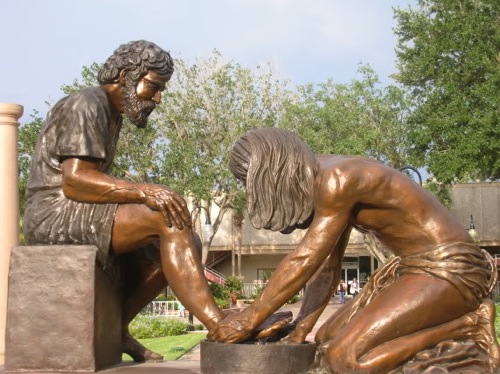
Our worship at Holy Cross was lead by Pastor Tom Doherty and The Rev. Susan J. Thompson as we partook of two suppers interwoven to provide nourishment to our bodies and souls. After hearing the story of Jesus washing the disciples’ feet, our hands were tenderly washed and dried for us as we continued in the Word. After enjoying of a plethora of soups, Pastor Tom’s homily ask, “Is this all a big hoax?”
I post this sermon, which I preached last Easter Sunday, touched by the memories it evokes. Resurrection came to my Gran this past summer. Her 100 years were and are a blessing to her family and friends. She comes to me often in so many ways; this sermon is but one.
Tredegar, Wales the village where Nellie was born in 1911
Sisters and brothers in Christ, today we gather to celebrate the greatest story ever told! Christ is risen! Christ is risen indeed! Alleluia! Christ is risen in you and in me. And because Christ is risen, I can welcome each of you to your very own resurrection!!! Christ is risen in you and in me! Alleluia!!!
It is the greatest story ever told. Like all the best stories ever told it does not answer all our questions. Poet Mary Oliver insists that, “There are many stories more beautiful than answers.” The bible is full of great stories. The sacred scriptures contain responses to some of humanity’s greatest questions. The stories in the scriptures provide us with responses to some of our deepest longings, but those responses do not come in the form of answers. The Bible is full of stories that touch the deepest mysteries of life. The ancients knew that eternal truths are best communicated through stories, and so we plumb the depths of the scriptures’ parables, myths and similes to discover our reality. The story that bursts forth on this Easter Sunday is the greatest story ever told. It is a story told in response to our deepest reality and our darkest fear: death. Continue reading →
A Good Friday Sermon preached at Holy Cross Lutheran Church in 2012
The memory of it still haunts me to this day. I was 18 years old. Some friends of mine from church convinced me to go to a big youth gathering. I don’t remember who sponsored the gathering, I do remember that most of the Lutheran youth groups in the greater Vancouver area were in attendance and various Lutheran pastors were involved in the leadership. At some point near the beginning of the event we were each given a small nail, divided into groups and asked to line up behind one of the three wooden crosses that were laying in the hall. We were then given our instructions. We were about to hear a dramatic reading of the Gospel According to John’s account of the crucifixion. When the reading was over we would be invited to proceed to the cross nearest us, knell down, take a hammer, and drive our nail into the cross. With each blow upon the nail we were asked to remember our own responsibility for the death of Jesus. We were asked to remember that it was we who had crucified Jesus, for we were the guilty sinners for whom Jesus died. It was a powerful, gut wrenching experience that still haunts me to this day.
I wasn’t the only young person who wept buckets that day. I immersed myself into the ritual act as I recounted inwardly the list of my own sins. Together with my friends, we left that hall believing that Jesus died because of us. We left judged, convicted, guilty, tormented, anguished, and full of hope, for we knew that Jesus had died to save us from our sinfulness. Like so many who have gone before us and like so many who will gather on this Good Friday, we left that hall believing that God sent Jesus to die for us; to pay the price for our sin. Continue reading →
A powerful series contemplating resurrection in ever deepening ways in order to explore what a risen christianity might look like in terms of its offering of healing and blessing for the earth. Created by John Philip Newell a poet, pastor and scholar who opens our eyes o a vision beyond doctrines and dogmas that fail to proclaim the wonders of the universe in which we live. “Christianity will rise again to the extent that we remember the sacredness of everything that has been born in the universe.”
The Church’s Good Friday obsession with talk of “sacrifice for sin” has been breed into the bones of this particular preacher. I have been trained to speak the language of the Church. I know full well the many doctrines of atonement that have been proposed to explain the reasons Jesus died upon a cross. I’ve been studying the historical context and the theological consequences of Jesus’ death for more years than I care to admit. Yet every year, I find myself wanting to book a vacation or call in sick so that I can avoid the awesome task of preaching on Good Friday.
I’ve put it off tackling the Good Friday texts as long as I dare. So today, I picked up my copy of “The Last Week” by John Dominic Cross and Marcus Borg, together with my copies of John Shelby Spong’s “Resurrection: Myth or Reality” and “Jesus for the Non Religious” and spent the day in pursuit of a sermon.
What follows is not the sermon I will preach on Good Friday, but rather, the notes I made to remind myself not to fall into the trap of talking about the events surrounding Jesus’ death in the way I was trained to speak of those events. I offer up my notes hoping that those who are engaged in the struggle of grappling with how to talk about the cross in the 21st century might find some solace in a fellow struggler’s ruminations.
For those of you who don’t have to come up with a sermon for Good Friday, I offer these notes as my humble attempt to see beyond the rhetoric about the cross to the Good News. As always I am indebted to Dom and Jack for their scholarship.
There are many ways in which our focus upon the cross is disturbing. Not the least of which is the way in which we as Christians tend to talk about the crucifixion as Jesus’ passion. I have always thought it a tragedy that we should describe the events of Jesus’ crucifixion as Jesus’ passion. I’ve always understood talk of an individual’s passion to be concern with those things that people lived for. And so to insist that Jesus’ lived to die a horrible death might sooth those who seek to turn Jesus into some sort of preordained blood sacrifice.
But for those of us who look to Jesus in search of the face of God, such talk seems is indeed a crime against divinity. For what kind of petty, sadistic god would engineer the birth of, foster the life of, and then engineer the death of a beloved child. Surely such a god is no more than a wicked illusion of our own making.
I wonder what Jesus himself would make of the god we have created. I wonder what Jesus himself would make of our Good Friday commemorations? I suspect that if Jesus is anything like the accounts of his life suggest, he would be mortified, and I mean that literally…I think that Jesus would be mortified …mortified ie shamed to death…of what has become of his life’s passion; for if Jesus’ was passionate about anything, he was passionate about life. Jesus declared, “I have come so that you may have life and live it abundantly.” Jesus’ passion was about living. Living fully, abundantly. Continue reading →


![peter rollins_thumb[1]](https://pastordawn.com/wp-content/uploads/2013/03/peter-rollins_thumb1.jpg) Peter Rollins was our guest preacher this Sunday and took us beyond the surface of the story of Paul’s revelation toward the darkness from which we all too often hide.
Peter Rollins was our guest preacher this Sunday and took us beyond the surface of the story of Paul’s revelation toward the darkness from which we all too often hide.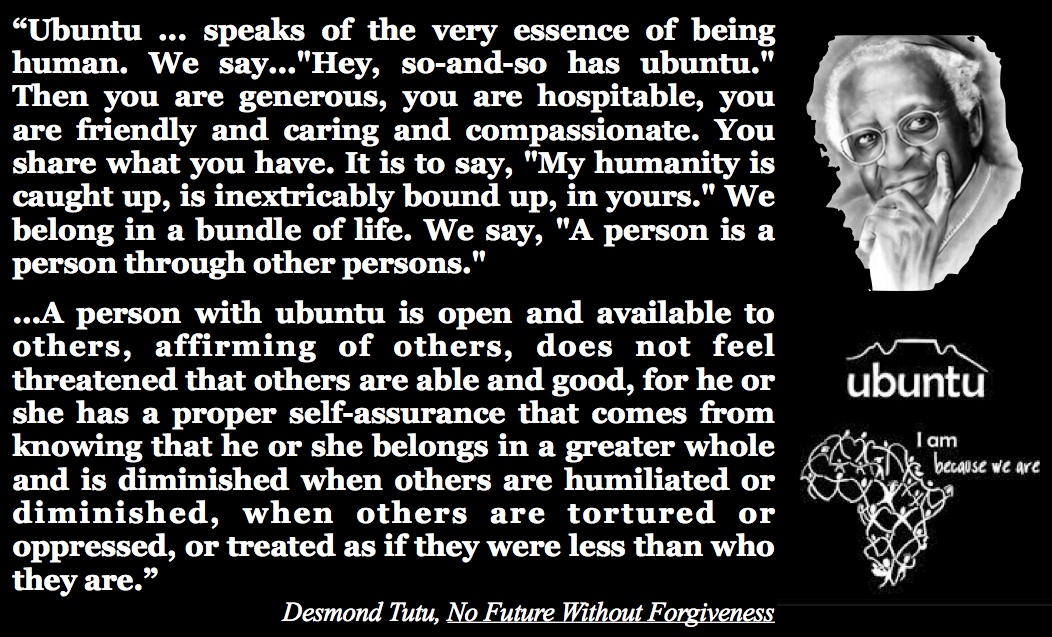







 pastordawn