What Can We Learn from Jesus? sermon 4 – Giving Up God for Lent – John 3:16

Part I                                             We worship as we live

in the midst of the MYSTERY we call God,

a MYSTERY that IS LOVE.

May the Spirit of LOVE

breathe wisdom and passion

into this gathering.

The appointed Gospel reading for this the fourth Sunday in Lent includes the passage from John 3:16. This verse has been dubbed by many evangelicals as “the gospel in a nut-shell.”  So popular is this verse that in certain parts of rural North America you will still find billboards that read simply John 3:16.  “For God so loved the world that he gave his only Son, so that everyone who believes in him may not perish but may have eternal life.” Traditional interpretations of this verse have painted a particular picture of who Jesus was and why Jesus died.

Traditionally, the season of Lent is a time of repentance. So, let us repent. Repent from the Greek word metanoia “to think new thoughts”. Let us metanoia – Let us think new thoughts about who Jesus was and why Jesus died. Repent Metanoia – let us think new thoughts so that we might ask:  What can Jesus teach us?

The way that the Jesus story has been told has crafted, molded and shaped the idol that masquerades as the MYSTERY we call God. The stories about Jesus have been told in ways that paint a particular picture of what it means to be human.  According to these traditional interpretations humans were originally created in a state of perfection to live in a perfect creation. These perfect humans enjoyed a perfect relationship with their Creator. Then one day that perfect relationship was severed when for one reason or another the humans disobeyed the rules established by the creator.

You all know this story. This story provides the raw material for the idol that we have created to serve as our god. According to the story humans are in bondage to sin and we cannot free ourselves. Humans were cast out of the perfection of the garden and alienated for their creator. Humans have tried in vain to get themselves back into the garden, to restore our oneness with our creator. But try as we might we are in bondage to sin and we cannot free ourselves. We need a saviour to rescue us from our sinfulness. And our Creator needs us to pay for our sinfulness. We must be punished.

Traditional interpretations of the life of Jesus insist that Jesus sacrificed himself, took all our respective punishment onto his shoulders, died for us, upon a cross, so that our relationship to our creator could be restored. We’ve heard these interpretations of Jesus’ life, death, and resurrection so many times that they have almost become indistinguishable from the idol that we have created to stand in for the Mystery that we call God. The trouble is, we all live in the 21st century and we know that the definition of what it means to be human that these stories rely upon no longer rings true. We know that humans have been evolving over millennia. We know that humans were not created as perfectly formed creatures who fell into sin. We know that humans are continuing to evolve. Humans are incomplete beings.

We are not fallen creatures. This knowledge has to change the way in which we see our relationship with the MYSTERY that lies at the very source of our being; our Creator if you will. This knowledge has an impact on how we interpret the life, death, and resurrection of Jesus of Nazareth.

If we look at the stories that have been told about Jesus, the stories that have contributed so much to the creation of the idol that masquerades as the Mystery we call God, we discover a narrative that seems preoccupied with Jesus’ death. It occurred to me the other day, that it is quite peculiar that most of what has been written about Jesus in the New Testament and indeed our liturgies, even the hymns we sing about Jesus they tend to shift our focus to Jesus’ death.

Imagine if you will, trying to understand the life of Martin Luther King, or Mahatma Gandhi simply by focusing upon their death. Imagine trying to understand who Dr. King was and focusing your attention upon his assassination.  Imagine knowing everything there is to know about that final day in Memphis, about the motel, about the people who were on that balcony when Dr. King was shot, about the shooter, the gun that was used, about the funeral procession, the grieving, and about the people who tried to go on walking in the ways of Dr. King. Imagine all the information you would miss if you simply focused upon Dr. King’s death.

You wouldn’t know very much about the civil rights movement, about Dr. King’s dream, his vision of equality, his struggle for inclusion, his cries for justice for the poor, his vision economic equality, or his passion for peace, and his commitment to non-violent resistance.

So, this morning I’d like us to take our focus off Jesus’ death and all we may have heard, or learned about why Jesus died so that we can see what it was about Jesus life that endeared him to his followers. What can Jesus teach us? What can we learn from Jesus life about who, or what the MYSTERY we call God is?  What can Jesus teach us about God?

Part II

Repent: Metanoia: “to think new thoughts” Let us repent, metanoia – Let us think new thoughts.

Take a few moments to walk across the sanctuary and have a word with someone about who Jesus was?  What do you know about the life of Jesus that sheds some light on who and what the MYSTERY that we call God is?

 Part III

Repent: Metanoia: “to think new thoughts” Let us repent, metanoia – Let us think new thoughts.

Share as a whole group some responses: What do you know about the life of Jesus that sheds some light on who and what the MYSTERY that we call God is?

Part IV

Repent: Metanoia: “to think new thoughts”. Let us repent, metanoia – Let us think new thoughts.  The Gospel this morning comes to us from the anonymous Gospel storyteller that we know as John. This gospel was written some 70 years after the life and death of Jesus of Nazareth. The storyteller writes: For God so loved the world that he gave his only Son, so that everyone who believes in him may not perish but may have eternal life. “Indeed, God did not send the Son into the world to condemn the world, but in order that the world might be saved through him.”

Today, when each of us is coping with the loss of an hour’s sleep, perhaps it is easier for us to understand that the way in which we describe reality does indeed change over time. Yesterday, when the sun was in the same position in the sky as it is now, we insisted that it was an hour later. Today, thanks to daylight savings time, the earth hasn’t quickened its course around the sun. The sun is in the same place at the same time as it was yesterday, but today all our clocks insist that it is actually 11:00 and not 10:00.

When we focus upon the life of Jesus of Nazareth rather than the death of Jesus, we can begin to hear some of the things that Jesus was passionate about. Jesus’ passions reveal to us the image of the Mystery that we call God that Jesus worshipped. When we set aside the institutional narrative of atonement that the church has relied upon to interpret the life, death, and resurrection of Jesus, the idol that masquerades as god, the idol whose contours are reinforced in our worship services, by our hymns, prayers, creeds, choice of scriptures, and rituals, this idol begins to crumble. When we forgo our obsession with Jesus death and open ourselves to the passions of Jesus life, we begin to see new ways to understand the new images of the HOLY ONE that Jesus encouraged his followers to see. Jesus’ life reveals images of God that point far beyond the life, death, and resurrection of Jesus, to the Ultimate MYSTERY that lies at the very heart of all reality. The apostle Paul who was the first to write about Jesus, portrays Jesus as a doorway into the ultimate. For Paul, Jesus was not God but a human in which God was revealed.  For us, Jesus can be the medium through which the Mystery we call God can be imagined. Continue reading

Beyond the Serpent. Beyond the Idol Jesus. Beyond the Beyond and Beyond that Also: a sermon Lent 4B – John 3:14-21

bronze serpentA sermon that attempts to peer beyond the mess we have made of John 3:16. Listen to the sermon here

I don’t like snakes. No. Let me make it perfectly clear, I hate snakes. I hate snakes because I am afraid of snakes. Snakes terrify me. I know that my fear of snakes is unreasonable. But when it comes to snakes, I could be described as a biblical literalist, because thanks my mythical fore-mother Eve, there shall be enmity between this particular woman and the serpents who are confined to slithering about the dark corners of my imagination. So, perhaps it is my fear of snakes that has prevented me from seeing beyond the literal words on the page when it comes to this morning’s gospel text. That a snake could lead me to a new understanding of the words put into the mouth of Jesus, by the anonymous gospel story-teller that we call John, comes as a complete surprise to me.

You might be able to tell that I am struggling to fight off a cold; the full effects of which hit me during the course of our congregational retreat on Friday night. So, when I arrived home late yesterday afternoon, I took a decongestant and went straight to be.  Decongestants have a strange effect on me. Sometimes they zone me out and sometimes they send me to this strange place where my brain races around at a million miles an hour. Yesterday, I was hoping for the latter, because all week long I have been struggling to figure out what to do with this gospel text and try as I might, I’d been stymied by a wall of doctrine that I simply couldn’t see my way past and despite all my hard work I had no idea what to do with this text.

I was kind of hoping for a bit of a medication buzz to get me past the wall of doctrine so that we could move beyond the line of text that strikes fear into the heart of this particular progressive Christian preacher. “For God so loved the world that he gave his only Son, so that everyone who believes in him may not perish but may have eternal life.”   John 3:16, or as it’s popularly known: THE GOSPEL in a nutshell.

These days, ardent fundamentalists don’t even bother writing out the words of the text, they just wave about their signs emblazoned with the mere mention of John 3:16 as a kind of declaration of what it takes to judge the content of one’s character. Either you believe John 3:16 or you don’t; one way or another you will be judged. Bow down before the Gospel accept that God so loved the world that he gave his only Son, so that everyone who believes in him may not perish but may have eternal life. Bow down and worship, believe or else.

Believe what you say? Believe that God sent his only son to die, to die for you, to die for your sin, to die a horrible death on a cross, so that God your heavenly Father, could be satisfied, and muster up the grace it takes to forgive you, you wicked sinner that you are. Bow down and believe or face the wrath of the Father. Bow down and believe John 3:16 lest ye be judged. Bow down and believe John 3:16 or face the fire torment that awaits you in Hell; damnation! Bow down and believe.  For God so loved the world, that he gave his only song so that everyone who believes in him may not perish but have eternal life. Untangle that one, you progressive Christians, wangle your way out of that particular piece of Good News.

In my drug induced haze, I considered the possibility that the wall of doctrine is just too high to climb and far to wide to go around. Maybe I should just give up, surrender and stretch out in the shade provided by sheer size of a wall that seems impregnable. Lying there in my bed convinced that the walls of my room were actually closing in on me; I began to wonder if I’d made a crucial mistake. Could I be that stupid? Oh, my dear God. I’m an idiot. I found the strength to get out of bed and there on the bathroom counter was the proof of my stupidity. I hadn’t actually taken the daytime cold medication. No buzz for me because I’d taken the nighttime dose. Just burry me beneath the wall of doctrine, cause I am done for. Help me Jesus, Help, Help, me Jesus! Help me Jesus, yeah get me out this mess! Where oh where is the great sky-god when you need him?

There was nothing left but to sleep. Sleep, sleep perchance to dream. Lord let there be a way through that wall of doctrine. Wall made of bricks, bricks forged in fiery furnaces of hell, fire and damnation. Bricks and mortar, plop, plop, fizz, fizz, oh what a relief it is. Continue reading

GOD IS DEAD! LONG LIVE GOD! – reflections upon the Death of God – Lent 3

These reflections are part of our Lenten journey in which we are Giving Up God for Lent. They are set up as a dialogue between the preacher and the songs. The work of Bishop John Shelby Spong, most particularly his latest book:  Unbelievable, permeates my thought process. I hear Jack pushing me farther and farther.  What followers are the reflections and copies of the songs:

We worship as we live

in the midst of the MYSTERY we call God,

a MYSTERY that IS LOVE.

May the Spirit of LOVE

breathe wisdom and passion

into this gathering.

Traditionally, the season of Lent is a time of repentance.

So, let us repent.

Repent from the Greek word metanoia

“to think new thoughts”

Let us metanoia – Let us think new thoughts.

A reading from 1st Corinthians chapter 13:  “When I was a child, I used to speak like a child, think like a child, reason like a child. But when I became an adult, I put childish ways aside. Now we see things imperfectly, like puzzling reflections in a mirror, but then we will see everything with perfect clarity. All that I know now is partial and incomplete, but then I will know everything completely, just as God now knows me completely.

I remember the first so-called “Christian” event I ever went to I must have been five or six years old.  It wasn’t church or Sunday School. No, the first “Christian” thing I ever went to was a funeral. It was amazing. I’d never been inside a church before. And the first time I saw that guy hanging up there in his underwear, I had absolutely no idea who he was or how he got there. So, I asked my Dad and I simply couldn’t believe it when he told me it was Jesus. “How did Jesus get up there?” I asked.

“He was nailed up there, a long time ago?” Dad answered.
“Why Daddy, why did they nail him up there?”
“So, he would die?”
“What?
“You mean they killed the baby Jesus? Why did they kill the baby Jesus Daddy?”
At this point my mother had had enough!  So, she tried to baffle me with the facts of the matter. “Jesus died for you, for all of us, because we’ve been bad. Jesus died so that we could all get into heaven?”

“Why Mommy? Why can’t we all just go to heaven? Why doesn’t God just let us in?”

“Because we’ve done bad things. Bad things must be punished. So. Jesus died on the cross so that we wouldn’t have to?”

By this point all I wanted to do was to get out of there.  I mean, the murdering so-and-so’s killed the baby Jesus. Nailed him up there on the cross so that he would die. And all because of something I’d done? It was awful?

I remember watching the guy up at the front. I didn’t even want to ask why he was wearing a dress.  And he kept doing this X (crossing himself).  And when he did this X he kept mumbling something but I couldn’t figure out what he was saying. So, I spent the rest of the service waiting and watching for him to do this X  and trying to figure out what he was saying when he did this X.

Well, it wasn’t until we got out to the grave-side where I could get closer to the action that I finally figured out what the guy in the frock was saying when he did this  X.  “In the name of the father and of the son and into the hole he goes!!!” For months after that funeral I would do this X, cross myself and repeat the magic words: “In the name of the father and of the son and into the hole he goes!!!” 

Now for those of you who don’t recognize it, I stole that routine from the great Irish comedian Dave Allen. I hoped it would make you laugh. But I also hoped that it would help you to think how ridiculous Christianity can be. Most of us have been hanging around Christianity for so long that we can’t or won’t see the humour in it. 

“When I was a child, I used to speak like a child, think like a child, reason like a child. But when I became an adult, I put childish ways aside. Now we see things imperfectly, like puzzling reflections in a mirror, but then we will see everything with perfect clarity. All that I know now is partial and incomplete, but then I will know everything completely, just as God now knows me completely.

  • Opening Song God Within Our Deepest Thought – Shirley Erena Murray 
Words © 2004 Hope Publishing Company; LiscenSing 1975

REPENT                      God Loses His Home

Repent:          Metanoia: “to think new thoughts” Let us repent, metanoia – Let us think new thoughts.

            The Bible was written by men who believed that they lived in a three-tiered universe. The Earth was flat. The flat Earth was surrounded by the waters. The flat earth was supported over the waters on pillars. Above the sky were the Heavens. One of the authors of the Book of Genesis described creation like this : “And God said, ‘Let there be a firmament in the midst of the waters, and let it divide the waters from the waters.’ And God made the firmament and divided the waters which were under the firmament from the waters which were above the firmament: and it was so.  And God called the firmament Heaven.”

            The Earth, the Heavens, and the seas.Now even though the ancient Greek mathematician Pythagoras proposed that the Earth was round in the 6th century before the common era. It wasn’t until the 15th century that the flatness of the Earth was seriously challenged by the likes of Columbus.

            I don’t know about you but for most of my life I have been taught that the place to learn about God is the Bible. Certainly, in the church the Bible is considered to be the supreme authority of the nature of God. For the most part, the Bible points to the Heavens above the firmament as the home of God.

            In his new book, Unbelievable, our friend, Jack Spong writes: “The laws by which the world operates have not changed since the dawn of time, but the way human beings explain and understand those laws has changed dramatically over the centuries of human history.” Jack has a way of reminding us of the obvious. None of us believe that we live in a three-tiered universe. Unlike our ancestors who succeeded the writers of the bible and went on to develop the theology of the church, we don’t believe that the round earth is the center of the universe.  The writers of our creeds firmly established that God lived in heaven. “For us and for our salvation He came down from heaven…”

            Most of us have travelled far above the Earth, we have sailed through the clouds and we know that there is no heaven up there. As far back as the sixteenth century, a Polish monk named Nicolaus Copernicus calculated that the Earth is not the center of a three-tiered universe. In the 17th century, Galileo Galilei a personal friend of the Pope, published a paper demonstrating that the sun could not possible revolve around the earth. This despite the fact that the biblical author of the book of Joshua wrote that God stopped the rotation of the sun around the earth in order to provide Joshua with an extended period of daylight in which to kill his enemies. It took the Church until 1991 to concede that Galileo and not the writer of Joshua was right and that the Earth did indeed revolve around the Sun. Continue reading

2nd Sunday of Giving Up God for Lent – Pickup Your Cross

“I Am Woman” Angry! a sermon on John 2:13-22-Lent 3B

In 1972, I was fifteen years old and the number one song on the radio was “I Am Woman” by Helen Reddy. We sang it with such power and conviction because “I Am Woman” had become our anthem; the anthem for a generation of women. So, we sang determined to blaze trails for ourselves that would ensure that women all over the world would be counted as equal. The year that I graduated from high school (1975) the United Nations declared as “The Year of the Woman” and they chose our anthem, “I Am Woman” as the theme song and once again “I Am Woman” rose to the top of the charts.

As I grew into my womanhood  and explored the contours of feminism my sisters were “Doin It In the Streets,” marching for equality, demanding equal rights, and yes, we burned our bras. In the midst of the battle for equal rights for women and girls, the advertising industry announced proudly, “You’ve come a long way baby!” as they rolled out a cigarette designed just for woman (Virginia Slims); packaged and marketed just for women. “You’ve come a long way baby, so stop all your hooting and a hollerin. Settle down, it’ll happen! Don’t shout! Don’t be so angry you feminists! You don’t need to be a feminist. If you want to get ahead, just play the game.”  So, I bought a power suit and I learned to do it better, and smarter, and faster than the men did it. So that I could make half as much as the men did.

Later, much later, when I realized that the business that I was in wasn’t making me happy and I discovered my true vocation, I knew that if I was gong to be taken seriously as a “woman pastor” I would have to study very, very, hard. So, I read more books than my male classmates did, went to more lectures, took more classes, earned more credits, explored more possibilities and managed to graduate from seminary at the top of my class. When I graduated from seminary in 1998, my bishop out in British Columbia, told me that although there were vacancies in his Synod, “none of those vacancies would translate into a call for a woman.” The rest as they say, is history, not her-story, but his-story.

B.C.’s loss was my gain and thanks to the good folks of Holy Cross, I was called to the best place in the world and in the past sixteen years we have come a long way baby. So maybe there’s no need to write about International Women’s Day. After all, we’ve been there, most of us have bought the T-shirt all of the women in my life are strong and invincible and all of the men of are feminists. We’ve come a long way baby. So, let’s just cheer Jesus on as he turns the tables over in the Temple. It is tempting to give Women’s Day a miss. I have come a long way. Baby! But I am white and I am wealthy. I am a person of privilege; the privilege of my race and the privilege of my class, mean that I can say I’ve come a long way baby and mean it. But the world that I live in may be bought and paid for by the blood, and sweat, and tears, of the countless women who continue to suffer in the oppressive systems and structures that enslave more than half of the world’s population. Our wealth, class, and race, may insulate us from the pain of our sisters, but even we can fall victim to violence and economic hardships that generations of discrimination have enshrined in our society. Those of us who enjoy the privileges that enable us to insulate ourselves from the harsh reality of economic abuse are just moments away from the dangers of physical violence, domestic abuse, sexual assault, and poverty in our old-age. There are lots and lots of reasons not to bother preaching to the converted about International Women’s Day. Sadly, there are millions and millions of reasons to preach loudly, long, and passionately about the plight of women in the world.

Equal pay for equal work, most of us agree, a few continue to hesitate, despite the fact that there are countless economic studies that demonstrate the equal pay for equal work is good for men as well as women. In 2015, the United Nations communique declared that at the current rate it will take seventy years for women to reach pay equity and that includes Canada, the United States and Europe; seventy years!  Continue reading

Where are the Angry Women? Where are the Angry Christians? Where are the Angry Humans?

International Women's DayInternational Women’s Day has been celebrated since 1911. It is also known as the United Nations Day for Women’s Rights and International Peace. Women have come a long way since 1911. Sadly, we must all confess that women have a long way to go before we achieve our vision of a world in which all people have equal access to opportunity. There is much for us to celebrate on this particular International Women’s Day and there is also much to lament. In our world the phrase “war on women” is bandied about by the media and each time I hear it anger rises in me and it is all I can do to stop myself from screaming. In our own country we have watched the steady erosion of hard one gains as our federal government continues to cut funding to women’s organizations and continues to refuse to launch a federal inquiry into the disappearance of far too many of our aboriginal sisters. Any serious reflection on the plight of women in the world makes my blood boil and I can’t help but wonder why we don’t just follow Jesus’ example because maybe if we turn over a few more tables in the halls of power we might be able to draw some serious attention to the abuses perpetrated upon women for the sake of maintaining the status quo.

The story of Jesus turning over the tables of the moneychangers in the temple has always intrigued me. The idea that Jesus could have become so angry with religious authorities for cooperating with the violent and oppressive, Roman Imperial system that he would create such a scene in the Temple is so far from the image of Jesus as the meek and mild long-haired peace-nick that we’ve all come to take for granted.

For generations, biblical commentators have gone to great pains to ensure that any hint of Jesus humanity is scrubbed clean from interpretations of this story. Anger is a perfectly normal human emotion. Jesus was a human being and therefore he was subject to normal human emotions. But the institutional church frowns upon anger. Indeed, in many places one can still find anger listed as one of the seven deadly sins. “ira” which can be translated as anger or wrath made the list of seven deadly sins. This list is often attributed to the early Christians. Indeed, there are those who would argue that these sins are biblical. However, they are actually the work of a 4th century monk named Evagirus Ponticus, whose nickname was Evagrius the Solitary. He spent most of his adult life living as a hermit in the desert. I suspect that if a modern psychologist were to take a brief look of Evagrius’ personal biography they could very quickly make a diagnosis of clinical depression. Evagrius himself prescribed tears as the pathway to God and was known to have spent days at a time alone and weeping profusely. He is best known for his writings on the various forms of temptation, which the institutional church latched onto with a vengeance. His original list included eight deadly sins. But the church erased “sadness” from the list and elevated the seven deadly sins to the category of mortal sins. Mortal sins were those sins that actually placed one’s soul in danger of eternal damnation. Continue reading

Learning to Die Daily: a sermon for the second Sunday in Lent

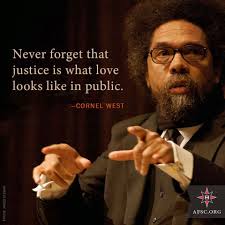
Lent 2B – Mark 8:31-38 this sermon is inspired by my study of the work of Dr. Cornel West. His words flow through the lines of this sermon and his prophetic imagination provides the hope-filled vision of LOVE parading around the world as justice.

Listen to the sermon here

The anonymous gospel storyteller that we call Mark, wants us to know that: “Jesus began to teach them that the Promised One, the Messiah, the Chosen One, the one the oppressed people of Israel had been longing for, waiting for, expecting, hoping for, the Promised One,  had to suffer much, be rejected by the elders, chief priests, and religious scholars, be put to death, and rise again three days later.” Furthermore, the gospel storyteller makes it absolutely clear, “if you, wish to come after me, you must deny your very self, you must pick up your cross and follow in my footsteps.”  Those of us who have the audacity to call ourselves Christian, those of us who seek to follow Jesus, must deny our very selves, we must pick up our cross, and we must follow in the footsteps, of Jesus. Follow in the footsteps of the ONE who is understands that he must suffer much, be rejected by the elders, the pillars of society, the powerful religious leaders and the scholars, follow in the footsteps of the One who understood that rejection meant that he would have to be put to death, and rise again. Quick change the channel. There must be something better on offer than this.

Change the channel, I can’t stand to watch this one again. I’ve seen it before. The hero, the beloved, the freedom fighter, justice seeker, peace maker, that one, the one we’re all rooting for, our saviour, suffers and dies. Change the channel, I’m not up for this. Don’t give me Jesus. I don’t want Jesus. I don’t want anybody telling me that suffering and death are the inevitable; especially my suffering, and my death. Change the channel. There must be something better out there.

I don’t want to know. Distract me. Distract me from the pain and the suffering. Change the channel. Find me something more interesting, more uplifting, more hopeful, more cheerful. Continue reading

Too Often Christianity’s Cross-Eyed Perspective Distorts the Good News that God is LOVE: a sermon for the Second Sunday of Lent – Mark 8:27-38

fish necklacesThat I should serve as the pastor of a church called Holy Cross is ironic. You see for years and years, before I ever dreamed of being the pastor of a church named Holy Cross, I’ve been trying to figure out how crosses became so popular. Personally, I can’t abide crosses! I hate them! I can’t abide the glorification of an instrument of torture and death! I have never understood why crosses are worn as jewelry! People would never dream of wearing an electric chair around their neck. I cannot for the life of me, imagine that any of Jesus’ followers would have ever considered wearing the symbol of Roman tyranny and persecution around their necks.

The early followers of the way; the first Christians used the fish as the symbol of their faith. For a very long time, I used to wear a simple fish necklace that a little girl made for me. Just before I went to seminary, my friend gave me a slightly more elaborate necklace with even more fish on it. Before I was ordained, I insisted that I’d never wear a cross. But then as an ordination gift my wife Carol had her son design a cross that is made up of fish and I must admit that it’s difficult to see this fish cross as an instrument of torture. But then I read a passage like the Gospel text from Mark 8:27-38 and once again the cross becomes a symbol of torture. In this text, the gospel-storyteller we call Mark has Jesus insist that, “If any want to become my followers let them deny themselves and take up their cross an follow me.” All I can say is “Woa, wait just a minute Jesus. Take up my cross and follow you. Wait a minute; I know where you’re going. You’re on your way to Jerusalem and I know exactly what’s going to happen when you get there. You are going to stir things up, get yourself into trouble, upset the powers that be and the next thing you know they are going to nail you to the cross and you are going to suffer and die. If I pick up my cross and follow Jesus, I’m going to end up right there with Jesus, hanging from my cross, suffering and dying and for what? What’s it all about Jesus? Why are you so hell-bent on getting yourself crucified and why do you want me to join you?” Continue reading

Giving Up GOD for Lent – the Journey Begins – Lent 1

This year, we at Holy Cross are giving up God for Lent. Letting go of our carefully crafted and tightly held images of the ONE who IS the SOURCE of ALL BEING is a daunting task. To aid us on our journey, we have decided to radically alter the way we worship together. It is a scary proposition for a pastor to venture out on a journey without the familiar trappings of familiar liturgy.  Gone are the vestments, the prescribed lectionary readings, and the familiar words.  The sermon is broken up into three short homilies. There are flowers in the sanctuary during Lent! The congregation is encouraged to move around the sanctuary. You can peruse my notes for the service in the pdf of my missal here. You can also watch the videos of the homilies – our videorgrapher is enjoying the Family Day weekend – so my head is missing from the first parts but thanks to a volunteer’s intervention my head is restored in the third video. It was quite a beginning to what promises to be an exciting journey.  

Beyond the Wildernesses: a sermon for Lent 1B

JusticeThis sermon is inspired by the work of Dr. Cornel West whose words and challenges infuse this sermon with courage and passion. The questions which frame the challenges are from W.E.B du Bois as quoted by Cornel West. Listen to the sermon here

On Ash Wednesday, this week, we began the season of Lent. Traditionally the Lent is a season for contemplation, repentance, confession, and self-denial designed to prepare us for Holy Week. 40 days, not counting Sundays because all Sundays are a celebration of resurrection, 40 days leading up to our commemoration of Jesus’ death and the celebration of Christ’s resurrection. 40 days inspired by the stories recounted by the gospel storytellers known as Mark, Matthew and Luke about Jesus’ journey into the wilderness, which of course are patterned after the story in the Hebrew Scriptures about Moses spending 40 nights on Mt Sinai, or the 40 days and nights it rained in the story of Noah and the flood, or the 40 years the Hebrew people spent wandering in the desert.

The gospel-storytellers cast Jesus out into the desert where he encounters Satan, the personification of evil. The first Sunday in Lent always includes a reading from one of these three gospel-storytellers about Jesus’ encounter…..this year our lectionary follows Mark, which you heard as our first reading. I’ve chosen the version out of Matthew for our gospel reading because it expands further on Jesus encounter with the personification of evil.

For several weeks now, our Adult Study Class has been ReThinking the concept of Evil; that is we have been looking at evil in light of all the ReThinking of Christianity that we have been doing for the past several years. How does our evolving Christian theology change the way we think of evil? Once you move beyond the doctrine of Original Sin and the Fall from grace as the prevailing explanation for the existence of evil in the world, from whence cometh the problem of evil. So, in preparation for those classes I’ve had the privilege of delving into the subject of evil. I’ve spent weeks, no months now, but it feels like years now, researching the topic of evil. I get all the fun jobs around here.

Turns out most of us don’t really believe in Satan. Sure, the guy still haunts the deepest darkest recesses of our psyche’s – both our personal psyche and our collective psyche. But when push comes to shove, we’ve confined Satan to the pits of hell, which of course we all know doesn’t exist anywhere but in our collective imaginations. What we have here in this morning’s story, is metaphor heaped upon metaphor. Metaphors are those things we use when we don’t really have words to adequately describe particular phenomenon. Meta which means beyond and phor which means words, metaphor means beyond words and that works both ways. Metaphors describe those things that are beyond words and when looking at metaphors we are supposed to look beyond the words of the metaphor itself. Satan is used to describe that which is beyond words and we need to look beyond the word Satan itself to understand the metaphor of Jesus encounter with Satan.

The gospel-storytellers place the story of Jesus temptation in the wilderness immediately following his baptism. Baptism was and is a public act; a sort of declaration of intent to be a certain kind of person.  Jesus is about to step into his life as a public teacher. Jesus is baptized by John the Baptist who preached a  baptism of repentance; repentance means to turn around, to turn from the direction you’ve been going, to turn around toward God so that you might live in God, recognizing that God lives in you. No sooner does Jesus engage in this public act which sets him up as a committed follower of YAHWEH in a world where committed followers of YAHWEH where hanging on crosses all over the place; no sooner does Jesus set himself up against the powers-that-be than he is driving by the Spirit into the wilderness where the personification of evil, Satan himself pays Jesus a visit for the sole purpose of enticing Jesus to follow Satan and not YAHWEH. Isn’t that always the way? Each and every time we resolve to follow one path, someone or something comes along and entices us to follow another. When that someone is the personification of Evil himself, well who else would be up to the task of tempting Jesus other than Satan himself. The gospel-storytellers are setting up a battle of cosmic proportions between good and evil. Our very lives write large upon the canvass of the heavens themselves, cause you know the big guy up in the sky and all the heavenly host will be watching this one; just as they tune in each and every time we are come face to face with the choice between good and evil. What better way to begin a season, which encourages contemplation, repentance, and confession? Continue reading

Laugh! It Is Lent – a sermon for the first Sunday in Lent 1B

TickledA sermon preached on Lent 1B 2012 which began a journey into the wilderness with the Mystics. St Teresa of Avila and my granddaughter’s laughter inspired this sermon.

I find myself wishing that we were entering some other season of the church year. Traditionally the season of Lent is a mournful time filled with calls to repentance and self-examination as we follow Jesus into the wilderness to be tempted and then on that long march to Jerusalem where the powers that be will have their wicked way with him. Our liturgies take a mournful tone as we lament our woeful human existence, confess our sinfulness, and hear exultations to take up our crosses so that we too can follow Jesus to the bitter end. Over and over again we are asked to remember that we are in bondage to sin and cannot free ourselves, as we gaze upon the cross remembering that Jesus our savior bled and died as a result of our wicked sinfulness.

Lent is a strange season that harkens back to a forgotten era. Unlike so many of the seasons of the church year it’s not exactly a season that attracts people to church. Not many of you got out of bed this morning and said, “Yippy it’s the first Sunday of Lent. OH goodie! We get to be reminded that we are sinful, that life is miserable and unless I’m willing to take up my cross and follow Jesus all the way to Golgotha, there’s precious little hope cause we’re all going to die and when the time comes we want Jesus to remember us.”

Now I know that there are some people who just love Lent. And I must confess that I like the quieter, more somber tone that our liturgies take. I actually enjoy the opportunity to slow things done and be more reflective in our worship together. I savor the silences and the opportunities to be more contemplative. I love the colour purple with all its vibrant hues and the best part of all is that the beginning of Lent means that spring is just around the corner. What I don’t like about Lent are the signs, symbols, hymns and stories that make it so easy for us to fall back into the 11th century.

It is so easy for us to lean not on the ever-lasting arms of Jesus but on the scales of St. Anslem and find ourselves not looking forward to the promise of resurrection and the gifts of eternal life, but rather dreading judgment day knowing that the scales of justice must be balanced and fearing the moment of truth when our sins are piled onto the scale and knowing that our only hope for reconciliation with our Maker is that Jesus is sitting on the other end of the scale. Woe is me. Woe is me. For I am sinful. My sins are too numerous to count. There’s all the things I have done and all the things I have left undone. Thank God Jesus died for me. Somebody had to pay the price for my sinfulness. Jesus died for a reason, and you and I dear sisters and brothers are that reason. A blood sacrifice had to be paid. God’s justice demanded it and Jesus paid the price with his very own blood. Jesus took our place up there on that cross and the least you and I can do to say thank-you is to spend some time shouldering our own crosses as we retrace Jesus steps to Jerusalem. Continue reading

Transfiguration Sermons

transfigurationSermons for Transfiguration Sunday:

LOVE Transforms here

Twinkle, Twinkle, Little Star, How I Wonder What You Are? here

Looking Back at the Way Forward here

You Have the Power to Transfigure the Face of God here

Transfiguration Just an Old-Fashioned Love Song here

LOVE Transforms: a sermon for Transfiguration Sunday

transformation

Readings include 2 Kings 2:1-14; Mark 9:2-10

Listen to the sermon here

When I was a kid the scepter of nuclear annihilation hung over the world’s psyche. Children were not immune to the images of mushroom clouds rising in the distance that held the power to destroy entire populations. I can still remember classroom drills in which we were instructed in the fine art of what to do if a nuclear missile was on its way. We practiced hiding under our desks. Our desks were supposed to protect us from a nuclear blast. It sounds funny now. But I remember the day that I put two and two together. We were watching a film of a nuclear test out in the desert of Nevada which showed dummies being blown away by the nuclear blast; dummies that were miles away from ground zero. It was then that I realized that our teachers were lying to us and that if the big one came our way we would all be blown to smithereens.  If we got lucky and ground zero was just far enough away, we would all suffer the effects of radiation sickness. Images of rotting flesh on the bodies of victims of Hiroshima and Nagasaki haunted me and my fear spawned cries of outrage which developed into anger; anger that was embodied in my politics.

I was a very angry teenager. At the time, I believed that my anger was the result of the state of the world and I resolved to change the world. Ah the innocence of youth. It has taken decades and a whole lot of therapy for me to understand that my anger came from a deeper and darker place that rivaled the world’s warring madness. I was in fact a very lonely teenager. We moved around a lot. Every year of my life there had been a new school to contend with. Friendships were fleeting at best. The pain of moving from place to place left me longing for something I didn’t even know how to describe, and that pain came out as anger; anger which I directed at every adult who crossed my path, especially if that adult was in a position of authority. It didn’t take me very long to learn that anger isn’t exactly socially acceptable. So, I tried my best to bottle it all up. Until the day, I discovered what a lot of young people discover:  the love affair between anger and politics. So, I took up the cause of my day and became an angry protester who actively fought the proliferation of nuclear weapons.

I was 13 in 1970 when Greenpeace was founded in Vancouver and I was there in the Pacific Coliseum at their very first fundraiser. My parents knew nothing about it. My friends and I hitchhiked into the big city to join all those who were protesting the nuclear tests that the Americans were carrying out on the Island of Amchitka. Joni Mitchell, James Taylor and Phil Ochs headlined the concert that launched Greenpeace onto the world stage. So, inspired were we that we spent most of the following year organizing a student strike.

In 1971 at the tender age of 14, I was on the organizing committee of the very first High School strike in Canadian history. We managed to convince over 9,000 high school kids from all over the Greater Vancouver Area to walk out of their classrooms and march down to the American Consulate and demand that they put an end to the nuclear testing on Amchitka.

Those were the days my friends. We were going to change the world. Stop the bomb and put an end to the war in Vietnam. Feed the hungry, end racism. What do we want? Peace! When do we want it? Now!

Peace now! Was our rallying cry. Looking back, I realize that I wouldn’t have recognized peace if it broke out in front of me. There was so little peace in my life at home. As for the life inside of me, well that was so full of turmoil that peace would probably have driven me to madness. The only thing stopping me from going insane was my focused anger at the injustices in the world. As long as I could rage against the world, I didn’t have to listen to the demons that were raging inside of me.

Then one day, I started hanging out with a gang. I haven’t got time to go into the details of my involvement with this gang; suffice it to say, if I knew what this gang was all about I would never have gotten involved with them. The kids in this particular gang all had one thing in common; the Lutheran church. These kids were part of a Lutheran Youth Group. This gang managed to convince me to run away with them. They were going on something I’ve never heard of before; a retreat. A weekend at a place called Camp Luther. Somehow, I found myself with a gang of young, socially aware, politically astute kids who wanted to change the world. Continue reading

So, as a progressive christian, how do I think prayer works? – a sermon for Epiphany 5B – Mark 1:29-39

AUDIO ONLY VERSION HERE

“In the morning, while it was still very dark, Jesus got up and went out to a deserted place, and there he prayed.” In the morning, while it is still very dark, I can often be found sitting in my home office clutching a warm mug of coffee. Some of my most creative hours occur just before dawn, as do some of me least creative hours. Staring at a blank computer screen, hoping against hope that the Spirit will inspire me with new insights, my vision is often distracted by the rising sun. My computer sits in front of huge bank of windows that face the eastern sky. I have seen some spectacular sunrises beyond my computer’s screen. No matter what task I am feverishly trying to complete, the blinding light of the sun always causes me to stop what I’m doing, reach for my coffee and pray. More often than not, I pray for this congregation. I pray for each and every one of you. I pray for the work we do together. I pray about the challenges we face together. I pray for the concerns you have expressed for the people in your lives. I pray about the various afflictions that trouble you. I often pray for the wisdom to respond to your needs. I also pray for healing and I pray that the demons that haunt us will be driven out. “What a friend we have in Jesus, all sins and grief to bear. What a privilege to carry everything to God in prayer.”

I know, right, I’m a progressive Christian pastor. I have long since stopped believing in a God who intervenes in our lives like some kind of grand puppeteer in the sky. So, why do I pray? To whom do I pray? And, what do I expect my prayers to accomplish? If there’s no Big Guy upstairs or out there who is waiting to hear and answer my prayers, and if Jesus isn’t some sort of super-human miracle-worker, who intervenes on my behalf, then why bother praying at all?

Let me say this very clearly, because sometimes I think that people get the wrong idea about what it means to be a progressive Christian: just because our ideas about who God is are changing and we no longer see Jesus as some sort of super-human healer, that does not mean that progressive Christians no longer believe in the power of prayer. I believe in the power of prayer! I believe that prayer has worked and continues to work miracles! I pray fully expecting that prayer can make a difference. My prayers do not address a personified being. My prayers take the form of contemplation of the needs and concerns that rise up in me.

I would be the first person to sympathize with anyone who finds it difficult to understand how prayer fits into the ways in which we are just beginning to speak about who and what God might be. As our notions about God change, so do our notions about Jesus. For generations we’ve been looking to Jesus in the same way as we looked to God to cure all that ails us. But when we begin to see God as something other than a grand-puppeteer in the sky, who pulls all our strings, the way in which we see Jesus changes as well. This is not an easy transition to live through, because most of us have grown to like having Jesus the miracle-worker available to us for those really tough situations when we need to call out a really big name to help us convince the grand-puppeteer to heal someone, or something in our lives. Sometimes, usually when I’m up against something that frightens me, I really miss that old sky-god, and I long to walk in the garden alone with Jesus. I can’t tell you how many times I’ve been asked to explain what we are supposed to do once we begin to move beyond personifying the LOVE that we call God, how and why do we pray?

So, as a progressive Christian, how do I think prayer works? The truth is, I simply don’t know how prayer works. Prayer remains a mystery to me. I cannot do anything more than speculate and like all speculation, I am fully aware that I may have it all wrong.

I may not know how prayer works, but I suspect that prayer works because the power to heal one another is ours. I have come to believe that part of being human, is the power to heal one another, to heal the planet, and to heal the world. I believe that Jesus of Nazareth loved so fully that he was able to access the power of his humanity to heal others.

I also know that healing takes many forms. There is a tremendous, largely unheralded power in the bonds between people, in the gentle touch we can offer one another, in the hospitable presence of the LOVE we can extend to both our friends and even to our enemies. I believe that the power that lies in the bonds that exist between us, is the power we access when we pray. I believe that whatever God is, exists in, with, through, and beyond the bonds that connect us to one another.

There’s a story that has always intrigued me that illustrates this reality. You can find the story in a book called “Outliers,” written by Malcolm Gladwell, who also wrote “The Tipping Point.” It’s the story of a modern-day miracle that takes place in a small American town.

Roseto, is a small working-class town in Pennsylvania that was founded back in the late 19th century. From its founding to the late 1950’s it was populated by Italian immigrants from a town also called Roseto in Italy. Roseto would have remained a relatively obscure little town had it not been for the work of a medical school professor called Steward Wolf. While attending a medical conference Professor Wolf met a GP from a town very near Roseto who told him that he’d been practicing medicine for 17 years and in all that time very few patients ever came to see him from Roseto who were under the age of 65 and were suffering from heart disease. Professor Wolf was very surprised by this, because in the 1950’s heart attacks were epidemic in the United States. Heart disease was the leading cause of death in men under 65. So, Professor Wolf decided to investigate. Colleagues and students from his medical school were recruited and they analyzed the medical records of the inhabitants of Roseto.

The entire population was tested and re-tested. The results were astonishing. No one under 55 had died of a heart attack or showed any signs of heart disease. Indeed, the death rate from all causes in Roseto was 30 to 35% lower than the national average. Wolf’s team broadened their research and brought in sociologists and members of other academic disciplines. They found there were no suicides, no alcoholism, no drug addiction, and very little crime. Continue reading

Jesus Is Not a Super-Human Miracle Worker! Jesus Is Human! – a sermon for Epiphany 5B – Mark 1:29-39

Six years ago, I reluctantly gave in to requests to preach on the subject of prayer and I devoted my sermons during the season of Epiphany to the subject of prayer. I have been asked to re-post those sermons. In the course of six years, my theology has continued to evolve. However, I have resisted the temptation to edit the sermons and so the manuscripts are what they are, an exploration of sorts. Here’s the Fifth sermon in the series: 

Prayer #5 – Jesus Is Not a Super-Human Miracle Worker! Jesus Is Human!  preached on Epiphany 5B, 2012 – listen to the sermon here

Readings: Isaiah 40:21-31; Colossians 3:14-15; Mark 1:29-39

Usually, the stories in the gospels about Jesus healing the sick leave me wanting more. They usually seem so incomplete. I have always wanted more details about how exactly Jesus was able to heal those who were sick. Usually, the stories about Jesus healing are read or referenced by the notion that Jesus was some sort of miracle-worker and we are predisposed to believe that Jesus had miraculous powers; that he was somehow able to harness the healing power of God and dispense it at will. We are encouraged to believe that that very same power is available to us if only we figure out exactly how to cozy up to Jesus and ask him in just the right way to heal us or heal those we love. But these stories found in the earliest of the Gospels and attributed to an early follower of the Way known as Mark, don’t portray Jesus as a miracle-worker at all.

I love the story of Peter’s mother-in-law, because I can easily relate to it. I remember back when I was about 17 and I was suffering from a terrible cold. I had a raging fever and I was as sick as a dog. I also had tickets to an Elton John concert. Even though I could barely breath, when the time came, I got myself up out of bead, and whoa-presto, it was as if the power of Elton John’s name had cured me and I was able to follow the Yellow Brick road all the way to the Coliseum where, together with my friends I was hopping and bopping to the Crocodile Rock . So, I have no difficulty believing that when Simon Peter finally brought Jesus around to visit his mother, the sheer power of all the rumors she’d been hearing about this man Jesus, would have been enough motivation for this Jewish mother to rise up out of her sickbed to see who this fellow was who had enticed her son away from his nets. That Jesus could have harnessed the healing power that lies within our grasp as he traveled from town to town and cured the sick and drove out daemons isn’t difficult to believe. Lets face it, first century daemons sound a lot like mental or emotional illnesses, so Jesus ability to cure people who are disturbed by daemons really isn’t much of a stretch. But after centuries of interpretation and proclamation, we tend to hear these stories in ways that portray Jesus as some sort of super-human, miracle-worker, or dare I say it as some sort of God. Because after all, our image of God is that God is some sort of super-human miracle-worker. So for generations we’ve been looking to Jesus in the same way as we look to God to cure all that ails us. And so we are just as likely to appeal to Jesus in prayer, as we are to appeal to God to heal us. So, as our notions about God change, our notions about Jesus change also. Continue reading

The Challenges of Jesus, Confronting Evil – a sermon for Epiphany 5B – Mark 1:29-39

This sermon was preached 3 years ago. Alas, while the politicians have declared that ISIS has been defeated, conditions on the ground indicate that ISIS has merely gone into hiding. The Canadian military is in discussions to purchase military drones, while the U.S. use of drones continues to inflict violence upon civilian populations. Jesus’ way of confronting evil continues to elude us. The Readings included Mark 1:29-39: Jesus raises up Peter’s Mother-in-law, and Aleksandr Solzhenitsyn, “The Gulag Archipelago 1918-1956”

“If only it were all so simple! If only there were evil people somewhere insidiously committing evil deeds, and it were necessary only to separate them from the rest of us and destroy them. But the line dividing good and evil cuts through the heart of every human being. And who is willing to destroy a piece of his own heart?”

listen to the sermon here

https://pastordawn.com/wp-content/uploads/2015/02/epiphany_5b-feb8-2015.m4a

If there was ever any doubt that they are blood-thirsty monsters who are obsessed with destroying our way of life, this week’s abominable immolation of a Saudi pilot ought to prove to even the most ardent peace-loving activist that ISIS or ISIL represents pure evil. The perpetrators of beheadings and immolations the likes of which even the Western news media is loath to broadcast have demonstrated with their incessant viscous barbarous brutality that they are monsters who are worthy of destruction by whatever means necessary. Such evil needs to be eliminated. However, misguided the members of ISIS are, their brutality cannot and will not be tolerated. We will not even dignify their existence with boots on the ground. This enemy is not worthy. We will not risk our own people in this particular battle. Let the bombs fall where they may. We shall defeat them at arms length; reigning down upon them such devastation that they will become easy pickings for the armies of their own kind. We will not dignify their brutality by being drawn into battle with the likes of them. They are the scum of the earth and deserve every evil we can visit upon them provided we don’t have to get our hands too dirty. These viscous evil monsters have proven over and over again that they are inhuman, and we have every right to wage war upon them. They have crossed the line. They have beheaded, burned to death, and slaughtered their way onto the world stage and it is up to us to wipe them off of it and send them screaming back into whatever dark hole they crawled out of. Besides they have brought their evil madness too near the oil fields, which feed our way of life, they must be stopped before they start costing us real money. So, let all the peacemakers turn the other way while the powers that be take up arms for all our sakes and wipe these terrorists off our news screens. These demons must be destroyed.

We’ve been here so many times before. Face to face with demons. All that is necessary for evil to prevail is for good folk like us to do nothing. So, we’d better stop our bellyaching and get into lock-step with the warriors and support our troop’s because there is no other way to deal with these people. So, keep Jesus out of this. Jesus doesn’t belong in this fight. Jesus will only confuse people. Jesus will force us to second-guess ourselves and while we’re arguing about loving our enemies; our enemies will destroy us. So, leave Jesus where he belongs on the pages of a forgotten book, in the sanctuaries of tired old buildings, in the hearts and minds of a dwindling few who are used to being manipulated and wouldn’t dare make waves in the public square lest they be laughed at for the fools they really are. Keep Jesus to yourselves and let the grownups deal with the terrorists unless you want them to march down main street and behead a few of you. Keep Jesus out of this. Fighting demons is for grown-ups who are prepared to live in the real world. Peace, real peace, means getting your hands dirty. Peace, real peace, can only be achieved through violence. The only way to deal with terrorists is to defeat them on the battlefield. Peace through victory.

If you want to do something useful pray for peace. “In the morning, while it was still very dark, Jesus got up and went out to a deserted place, and there he prayed.” Over and over again, we follow Jesus into the dark places of our hearts and minds and we pray. This week my prayers have turned to prayers for peace. Holding my newborn granddaughter in my arms, rocking her to sleep in the darkness of her nursery, I have prayed for peace with the kind of urgency that newborns inspire. I want so much for her. I want a world in which she can thrive; a world where she can grow into all the potential that she holds in her tiny precious little body; a world free from monsters and demons. If the pundits are to be believed ISIS threatens everything we hold we hold dear and the good people of the world must band together and annihilate the evil that ISIS is. Listening to the news you’d be hard pressed to see the war in which we are currently engaged as anything other than an epic battle between good and evil. Pray for peace if we must. But support the military solution that is on offer or accept the peril of terrorists moving into our neighbourhoods. Give up your freedoms, your privacy, your idealism, and join the battle; there is no other way to defeat evil. They’ve almost convinced what’s left of Christendom that if Jesus were alive he too would take up arms in this just war. Peace can only be achieved through victory; so, “they” tell us. The trouble is, “they,” the powers that be, have been telling us this forever and yet victory continues to breed more violence. First century Palestine was full of good folk just like you and me who dreamed of a better life for their children; people who were willing to do just about anything to ensure the futures of their beloved children. Roman oppression was every bit as viscous as the wildest imaginations of the members of ISIS. Roman tortures and executions abounded in the tens of thousands in the first century. The anonymous writer of the Gospel according to Mark together with the anonymous writers of the gospels according to Matthew and Luke took the time in the face of such wicked oppression to record stories about Jesus in the hope that they might encourage their communities to adopt a different way of dealing with the violence that threatened their lives. In Jesus of Nazareth they saw a new way of dealing with one’s enemies; a new way of confronting evil in their world. Jesus of Nazareth, a rabbi who taught in the synagogues moving from town to town proclaiming a new way of living in a world infested with violence, in a world where evil was about as real as evil gets this itinerate preacher forged a new way of being; a way that insisted that peace comes not from victory but through justice; a way that began not with destroying one’s enemy but by loving ones’ enemy. Continue reading

 What hocus pocus must I preform to reveal the body of Christ to the Body of Christ? – a sermon on Mark 1:21-28

Listen to the audio only version here

“What have you to do with us, Jesus of Nazareth?  Have you come to destroy us?  I know who you are the Holy One of God.” The anonymous gospel-storyteller that we call Mark, puts these words into the mouth of Jesus, and now we have to deal with them; or do we? I’ve been struggling all week with today’s assigned gospel reading. I was sorely tempted to change the reading. I usually only put our Contemporary readings in the service bulletins. But, let me confess, the only reason I put the full text of today’s reading in the bulletin, was to ensure that I didn’t cop out and change the readings. If it’s in the bulletin for everyone to see, we have to use it and I can’t just ignore it.

I remember, a few years ago, running into an old friend from high school, who was surprised to discover that I had become a pastor. He said to me something like, “you always seemed to have your head screwed on back in the day. How can you stand all that hocus pocus and mumbo jumbo?” His words have haunted me as I’ve struggled to figure out what to do with this text.

Hocus pocus and mumbo jumbo indeed! The dictionary defines hocus pocus as “meaningless talk or activity, often designed to draw attention away from and disguise what is actually happening. Hocus pocus actually came into usage in English from a Latin phrase that would have been familiar to everyone who has ever heard the Mass in Latin: Hoc est corpus meum which means “This is my body.”

According to the dictionary, mumbo jumbo is defined as: “language or ritual causing or intended to cause confusion or bewilderment.”Or: “words or activities that are unnecessarily complicated or mysterious and seem meaningless”

The anonymous gospel-storyteller’s tale of Jesus preforming what sounds very much like an exorcism certainly seem meaningless to our 21st century minds. Last week, after I we did a bible study instead of a sermon, one of you commented that they never see any of the stuff I pointed out, when they read the bible by themselves, that’s why they don’t read the bible anymore. “It’s too complicated! I don’t know the history, so it just confuses me.” So, when I started preparing today’s sermon, I thought here we go again, more complicate and misleading words.  What hocus pocus must I preform to reveal the body of Christ to the body of Christ? What am I supposed to do with this unclean spirit? I was so tempted to just exorcise this demon from our worship. Sure, I could find all sorts of commentaries and sermons that went on and on explaining away this unclean spirit as some sort of victim of “mental illness.” Which when you think about, this is one way to deal with the reality that most of us, dare I say all of us, don’t really believe in demonic possession and don’t want to have anything much to do with someone who goes around the country preforming exorcisms. Twenty-first century, Canadian followers of Jesus tend to ignore the first century stories about demons and exorcisms.

As tempting as it is to explain the demon in this exorcism away as a suffer of mental illness, I’m not convinced that that helps us any. Because if the “unclean spirit” is mentally ill, then, the story asks us to believe that Jesus had the power to heal the mentally ill simply by commanding the illness to “Be silent and come out.” OK, we all know that that can’t happen, right?

So, in the spirit of the great New Testament scholar Marcus Borg, “why did the writer of this text tell this story the way he told this story.” What was the anonymous gospel-storyteller that we call Mark trying to say to his first century audience? We all know by now that there’s usually lots going on between the lines of the gospel texts. The stuff between the lines is what keeps people like me employed. It is after all my job to read between the lines.  So, let’s move beyond the words on the page and venture beyond the literal to see what we can discover in the more-than-literal interpretation of this text. Continue reading

Peering Through New Windows – a bible study for the 3rd Sunday after Epiphany – Mark 1:14-20

In place of a sermon, we engaged in a bible-study of our Gospel text Mark 1:14 not from the perspective of The Church, but from the perspectives of history and justice. I’m indebted to the work of Ched Myers whose book – “Binding the Strong Man: A Political Reading of Mark’s Story of Jesus, provides a perspective that turned my own understanding of this text upside-down! We are all indebted to the excellent teaching of New Testament scholar John Dominic Crossan, whose visits to Holy Cross have empowered us to be more fervent followers of the Way! Below you will find my notes for the bible-study.

You can listen to the audio version of the study here

  • New windows – New perspectives
  • Very familiar Gospel text
  • My first memory of this text – “fishers of men” listening to a children’s choir
  • Solicit memories of the text – interpretations
  • What does it mean to be a follower of Jesus?
  • From the perspective of the church
  • For years we have been looking at this morning’s gospel reading from the perspective of the church
  • “I will make you fishers of men.”
  • Go out there and teach people about Jesus ð convert people and grow the church
  • We have seen the call to follow Jesus as call to become fishers of “men” the church has sent us out to spread the word and to call others into the church
  • Photographs of Cherilyn – on the Sea of Galilee
  • Reminding me of all that we learned from John Dominic Crossan about the Sea of Galilee
  • Fishing industry – first century Galilee
  • Pax Romana – Roman Empire
  • Fishing leases sold by the Empire through tax collectors
  • First century fishers were disenfranchised workers
  • What is the Anonymous Gospel Storyteller that we call Mark trying to tell us?
  • Follow me and I will make you fishers of humankind.”
  • This is one place where I happen to believe that it is a mistake to use inclusive language.
  • I have learned that Jesus used this language for a reason and I believe that in this instance Jesus is targeting “men”
  • “I will make you fishers of men.”
  • In order to understand this passage we must change our perspective
  • We need to look through new windows
  • Peering through the windows of history
  • What does it mean to be a disciple of Jesus?
  • When we look at this text from the lenses provided by the church, we interpret this Gospel as an instruction to go out and catch the church some fish
  • But looking back through the lenses of history we see a different story
  • Jesus never meant to create a church
  • Gift from Pastor Jon Fogleman: Ched Myers – “Binding the Strong Man: A Political Reading of Mark’s Story of Jesus”
  • Gospel of Mark written after 70 – the Empire has destroyed the Temple – the disenfranchised are suffering at the hands of the Empire
  • How are the persecuted to respond
  • According to the Gospel – Jesus invites them to become “fishers of men.”
  • If this means what we have learned from the perspective of the church, we are supposed to covert people – to grow the church
  • But what if it means something else?
  • What if fishing for men means more than we know?
  • Ched Myers suggests that we look back into the Hebrew Scriptures and look at how this phrase has been used by the Jewish prophets
  • When we peer through the lenses of history we discover that key to unlocking the revolutionary code of the Gospel account
  • The prophets Jeremiah (16:6), Amos (4:2) and Ezekiel (29:4) used the metaphor of “hooking a fish” as a euphemism for judgement upon the rich
  • Jesus is inviting the disenfranchised fishers to follow him to learn how to “hook fish “ and as good, observant, Jews, these fishers as well as those early hearers of this story would have understood the phrase to mean:
  • As Ched Myers puts it:“Jesus is inviting common folk to join him in his struggle to overturn the existing order of power and privilege.”
  • Looking through this new window on the text how might we hear this text today in our context?
  • “Jesus appeared in Galilee proclaiming the Good News of God:  “This is the time of fulfillment.  The reign of God is at hand! Change your hearts and minds, and believe this Good News!”
  • “the reign of God is at hand.”
  • The basilea of God ð the “kingdom” the “empire” or as our modern translation puts it “the realm of God”
  • What might this “realm of God” look like?
  • Who are we in this metaphor? – the fishers or the rich?
  • What does the realm of God look like to us?
  • “basilea theou”  Basilea – the Greek feminine noun for “sovereignty” traditionally translated as “kingdom” – dominion, empire
  • “basilea ouranou” – ouranos means sky or heaven but it is also the name of the father god of the Greeks – in Latin Uranus – “Ouranos was one of the primary realities, who, with his wife, Gaia, or Earth, brought forth all creatures. The creative father spirit imagined to exist in the fine ether of the sky, somewhat remote from earthly life yet very much involved in it. The cosmos began with these two realities, earth and sky, mother and father to all beings.” (Moore – Walking on Sand)
  • Realm of God – is at hand – the Empire of Rome cannot stand.
  • Peering through the windows of history we can see: Jesus is about to lead a movement that seeks justice for the disenfranchised.
  • “Follow me to usher in the Realm of God”
  • “follow me to seek justice for the oppressed, the disenfranchised, the persecuted, the poor; follow me and turn the world upside down.”
  • To follow Jesus is to join a revolutionary movement to turn the existing structures upside down.
  • What fishes need to be hooked today?
  • Are we prepared to hook a fish or two? Are we prepared to be hooked?
  • The invitation to follow Jesus is an invitation to be part of a radical quest for justice.
  • Are we prepared to usher in God’s realm of justice and peace.

Continue reading

Fishing for Young People Will NOT Save the Church! a sermon for Epiphany 3B – Mark1:14-20

Blessing for New Beginnings O'Donohue pastordawn

A sermon preached on the Third Sunday after Epiphany 2015 . Our readings included Ecclesiastes 3:1-13, “A Blessing for New Beginnings” by John Donohue and Mark 1:14-20. Listen to the sermon here

Fishing for Young People Will NOT Save the Church!

Changing National Demographics Tell Us that

Youth are NOT the Future of Christianity!

Good News!  Yesterday, I spent over an hour embracing our newest grandchild. Our granddaughter arrived into our corner of the cosmos on Wednesday morning. As I held this precious little humanoid in my arms, I couldn’t help marveling at the billions and billions of years of development that led to the configuration of cells in which little Evelyn Adele’s conscious self is now poised to be without a doubt one of this planets most dynamic, intelligent, beautiful, talented, compelling, loving, engaging, smart… funny, did I say beautiful?

She’s gorgeous!!! Just like all our grandchildren! Of course. Just like all of your grandchildren. Just like each and every child who has ever been born! Little Evelyn has already won my heart. It is amazing how much love bursts forth when a tiny little humanoid appears in your life. Holding Evelyn is like holding the sun, the moon, and the stars in your arms. It is difficult not to burst with sheer joy at the realization that life is so much more intricate, complex, beautiful, and awesome than you can even begin to imagine and yet, there’s a sadness in the tenderness of that sweet embrace. Because life is more intricate and complex that we can begin to imagine, the knowledge of all the risk, danger, sadness, and tragedy in creation I couldn’t help thinking of all the disappointed parents and grandparents whose hopes and dreams did not come to fruition. Then there’s the tragedy and injustice of all the beautiful children whose lives are at risk because of poverty, injustice, hatred, violence, war, and indifference.  The complexity and the fragility of life seem so acute when you are holding a newborn. The mixture of emotions and the intensity of feeling is something that mere words cannot adequately describe.

All of the parents and the grandparents here know this. But if you had told me any of this a few years ago, I would have understood what you were saying but I would have had precious little idea of what it is that you were feeling. Being a grandparent is something that I never thought possible for me. Usually you have to have children before you can be a grandparent. But thanks to the generosity of my beloved Carol’s children, I have been blessed to be a grandmother. Next to Carol herself, I must say that being “Gran” is the best surprise I could have hoped for, way back when I was discovering who I actually am. But I will confess that the role of grandmother is not a role I ever imagined playing. My image of myself is changing. My ideas about the future are morphing into something I barely recognize. My hopes and dreams are expanding. I can hardly wait to see what lies ahead. The future is calling me to follow wherever these glorious little humans may lead us. Continue reading

Can anything good come from this shit-for-brains president?”

Martin Luther King Sunday – John 1:43-51 – Epiphany 2B

Audio only version here


“Can anything good come from Nazareth?” WOW! All over Christendom, where-ever the Revised Common Lectionary is used, preachers were busy preparing their sermons on this particular Gospel reading, when the most powerful man on the planet caused us all to hone in on these words: “Can anything good come from Nazareth?” I can assure you that the sermon that I had planned to preach this morning, was nothing like the sermon, I am compelled to preach. Dr. Martin Luther King is quoted as saying that “Our lives begin to end the day we become silent about things that matter.”

I must confess that I was not exactly articulate when I first heard the hate filled comments of the man whose name sticks in my throat. For the sake of decency, I shall not quote my own reaction, which can be expressed with the letters W T F followed by a question mark. But decency does not come easily to the current president of the United States. Watching this sorry excuse for a man, sign a proclamation declaring Martin Luther King Jr. Day, brought tears to my eyes for all the wrong reasons.   The hatred expressed on Thursday by a president who holds the futures of so many hopeful immigrants in his hands makes it clear that Dr. King’s dream is not yet realized.

Yes, many of us have come a long way. Some of us can still see Dr. King’s vision. Some of us have lived that dream. But we all received a real slap in the face that ought to wake us up to the reality that we have a long way to go before Dr. King’s vision can be embodied by all those who seek justice and freedom from poverty. Slapped in the face by a man who has ridden his own racism to the pinnacle of political power, we must awaken our sensibilities to the positions of privilege that we enjoy as a result of the legacy of tribalism that continues to enslave our world in systems of abuse that perpetuate fear; fear the enemy of compassion, fear the enemy of justice, fear that leads to hatred; hatred that divides us from one another and robs us of our humanity.   

“Can anything good come from Nazareth?” Indeed, how can anything good come from Nazareth? The soon to be disciple of Jesus, asked a question born out of the very tribalism that continues to haunt us. In Jesus’ day, Nazareth was what number 45 would call a “shit-hole”.  Nazareth, where Jesus was from, was located in Galilee, a hick-town in the Roman occupied backwater of Judea. Judea was characterized by its Roman occupiers as a real shit-hole, and Nazareth was a hot-bed of radical terrorists bent on overthrowing the established order. Nothing but trouble came from Nazareth. Nothing and nobody from Nazareth could be trusted.

“Can anything good come from Nazareth?” Nazareth, a shit-hole of a town, in the back of beyond. The last thing anyone in Jerusalem needs is a bunch of Nazareans coming into town to stir up a whole lot of trouble. The juxtaposition of this particular Gospel reading with the comments made in the White House on Thursday is tragic in and of itself. But add the memory of Dr. King to this horrendous outpouring of hatred and perhaps we might, just might, be able to shed some light on the darkness that has descended upon our world. Dr. King insisted that, “Darkness cannot drive out darkness; only light can do that.

Hate cannot drive out hate; only love can do that.” And while it is so very easy to hate the spewer of racist venom who wields more power than anyone else on the planet, Donald J. Trump is also our brother and we, my dear sisters and brothers, we are called to love even this sorry excuse for a human being. And while it is so very tempting to respond to his venom by asking, “Can anything good come from this shit-for-brains president?” two wrongs won’t make it right. As easy as it is to assume that Trump is beneath contempt, my hatred of Trump will not shed the kind of light that drives out hate, only love can do that.

So, how do I learn to love Donald J. Trump? I confess that a big part of me doesn’t want to learn to love this despicable excuse for a man. But bear with me for just a moment as I try to explore some things that Mr. Trump and I share; indeed, some things that I suspect we all share with Mr. Trump.

Let’s begin with the disciple Nathanael’s question:  “Can anything good come from Nazareth?” I suspect that each of us have asked a similar question at some point in our lives. As a child, I lived in Belfast, Northern Ireland. I was trained to believe that people from certain areas were worthy of my suspicion, simply because they inhabited Roman Catholic neighbourhoods. Later when we immigrated to Canada, I was taught to believe that people who came to town from reservations were lesser beings. I was taught to suspect that the people who lived on reservations, were lazy, no-good, drunks, who spent their lives freeloading off the government, and that nothing of much worth ever came off a reservation. As I grew to adulthood, I was taught to be suspicious of everyone who wanted to come to this country who was not British. My parents didn’t teach me this; this I learned in the playgrounds of the various schools I attended in both Ontario and British Columbia, where I learned to label fellow students as, “pakies and rag-heads” because they came from countries that our brother Mr. Trump would call “shit-holes”.

Take a moment. Look into your own lives. Do you remember the way people used to talk about our First Nations sisters and brothers? Do you remember the way people used to talk about immigrants? Most of us, I hope had enough compassion not to say these hate-filled things but if we are honest with ourselves, I suspect that the fear behind these hate-filled words, infected us to the extent that we became at the very least suspicious of people whose origins we did not share. Continue reading