Words Will Always Fail Us – A Resurrection Story – John 20:1-18

Christ Is Risen in Us pastordawn

You can listen to the story here

The doctor who signed her death certificate and I crossed paths in the driveway. We recognized one another from the few times that our visits to the house had coincided. I hadn’t been a pastor for more than about a year and I remember thinking the first time I’d seen the doctor arrive with her medical bag, “at least she has some real pain medication in there.” All I had in my bag was a bible and my tiny, little communion kit. Just some old wine and a few stale wafers. I envied the doctor with her knowledge, her pills, her medicine and her skills. The doctor sighed, “Oh thank-God you’re here! They’re a real mess in there.” As I stood there, wondering what to say to that, I remember wishing the doctor had something in her bag of tricks that could give me the courage to enter the house, I felt like a fool. What was I suppose to do?

This wasn’t my first visit. A parishioner had called me just a few months earlier, “Could I go and visit a friend of hers who was dying; cancer it won’t be long now. She iss being cared for at home; she wants to die at home. She used to go to church and now as the end draws near she wants to reconnect.” Would I please go and see her.”

I knew I was out of my depth from the moment I hung up the phone. I thought this is it. This is the real stuff of being a pastor. This is where they discover that I don’t have what it takes to do this job. Leading worship, preaching, and teaching is one thing, this,

this is something entirely different. But the parishioner was insistent, her friend, let’s call her Anna, her friend Anna, you’ll never guess she was once a Lutheran; yes she went to Sunday School, Confirmation, had her kids baptized and even taught Sunday School. But since they moved to Newmarket they had fallen out of the habit of going to church. There wasn’t a Lutheran church in Newmarket when they first moved here some ten or was it twenty years ago.  “Anyway Pastor, she really needs to get close to God right now, so I told her you would come; you will go and see her won’t you, I know she’s not a member, but she really needs to get things in order before she goes.”

Standing there in the driveway feeling like a fool, I said good-bye to the doctor and tried to get myself to go inside.The black van in the driveway signaled the presence of the funeral home; there to collect the body. Her husband welcomed me at the door, fell into my arms and said only, “It is almost finished, they’ll be gone soon.” Continue reading
Good Friday: Not Salvation! Solidarity and Transformation

Listen to a version of this here:

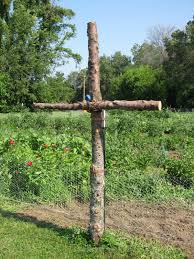
rough crossAccording to the American novelist, Joyce Carol Oates: “Homo sapiens is the species that invents symbols in which to invest passion and authority, then forgets that symbols are inventions.” Following last year’s Maundy Thursday worship, I received a very rude reminder of our all too human habit of investing passion and authority in invented symbols. Our efforts to remember the life and death of Jesus of Nazareth are bolstered year after year, decade after decade, century after century by the symbols we followers of the Way have invented and invested with passion and authority. So, after our regular Maundy Thursday ritual of removing invented symbols from the sanctuary, I went looking for our own sacred Good Friday symbol. Each Maundy Thursday, we followers of the Way get together to remember Jesus by focusing upon the symbols which represent to us the events of the night before Jesus died, when he gathered his followers together to eat the Passover meal. At that supper Jesus took bread, gave thanks and broke it and the rest as they say is history. Our Maundy Thursday Eucharist is packed with symbols, from the hand-basins in which we ritually wash one another to remember Jesus washing of his followers feet, bread and wine which we ritually consume as Christ given and poured out for us, to the ritual stripping of the sanctuary of all of the symbols in which we have invested passion and authority, in our efforts to re-member Jesus.

The rituals of Maundy Thursday prepare us for the rituals of Good Friday and so after our worship, I went downstairs to venture into the cupboard under the stairs to retrieve the stark symbols of this congregation’s Good Friday rituals. It is the same every year, a rough-hewn cross, fashioned out of the trunk of a Christmas tree that once adorned this sanctuary. A Christmas tree – evergreen, a symbol in which we invest our passion for everlasting life, stripped of it’s branches so that only the trunk remains and then cut so that the top section can be lashed with twin to the main section to fashion a cross of sorts. A rough-hewn cross in which we invest our passion for what we have come to call the passion of Christ. Each year, once the sanctuary is stripped of  all the symbols which we have invented to facilitate our ritual remembering, I journey down beneath the stairs to retrieve our rough-hewn cross to facilitate our Good Friday remembering. This year, I had designed our remembering ritual, so that we could pay particular attention to our rough-hewn cross. This sermon was built around an exercise of re-membering which I hoped would help us to participate in the very act for which symbols are invented. Symbols are created to point beyond themselves, to direct our focus to that which lies beyond the symbol. This year, my Lenten sermons had focused on a definition of Divinity which describes God as beyond the beyond and beyond that also. So, this Good Friday sermon was written to use our rough-hewn cross to examine the work of the cross in the lives of the followers of Jesus, so that we might see beyond the symbol to the One who is beyond the beyond and beyond that also. I planned to place the rough-hewn cross here on the floor of the sanctuary, right in the middle of our circle so that as the Gospel according to John’s symbolic narrative, which has become known as the Passion Narrative, was read you could gaze upon our rough hewn cross and as my sermon began I would literally and figuratively take apart our invented symbol so that we might peer beyond it. I planned to sit here in the midst of you and unlash the vine that held our rough-hewn cross together and as I untied the vine, I would do my level best to untie the bonds that our religious tradition have placed upon the symbol of the cross and perhaps encourage you to question the passion and authority which is all too often invested in this invent symbol of the life, death, and resurrection of Jesus of Nazareth. Then with dramatic flare, I planned to put it back together again. As I used the old Christmas tree trunk to pull together our history and tradition, and the withered vine to lash our troubled attempts to remember back into the form of the cross in the hope that we might see the cross from the perspective of the 21st century followers of the way which on this day of days we struggle to be. Continue reading

Approaching the Resurrection – What Did Paul Actually Say?

trouble with resurrection

Far too many preachers stumble into the celebration of Easter without doing our homework. Resurrection is a central tenant of the Christian faith and Easter is the primary celebration of resurrection and yet, too many of us fail to open ourselves to current scholarship surrounding the doctrine of resurrection. Questions about the nature of the resurrection ought to send us back to the words of the Apostle Paul. Bernard Brandon Scott is a charter member of the Jesus Seminar. His book “The Trouble with Resurrection” is a must read for those who preach during the Easter Season.

If you are planning to write a sermon or listen to a sermon this Easter, this video provides essential background information about the words of the Apostle Paul on the nature of the resurrection which may surprise you. Scott’s treatment of 1 Cor. 15 provides a new understanding of resurrection which is compelling as well as liberating.


Something About Mary’s Extravagance: a sermon for Lent 5C

anoint 2

Readings: Deuteronomy 15:7-15 and John 12:1-8

Listen to the sermon here

Lost and Found – an interactive exercise on Luke 15 for Lent 4C

lost-and-foundThree years ago, when Luke 15 came up in the lectionary, I tried something very different – in place of the sermon I tried an interactive exercise designed to help the congregation experience the parable. I was inspired by a lecture I heard down in Chautauqua when Jewish New Testament Scholar, Amy-Jill Levine was exploring the parables.

Listen to the interactive exercise/sermon here

You can watch Amy-Jill Levine’s lecture which inspired me to challenge the congregation to move beyond allegorizing this parable here (look real close and you’ll see me down near the front, just soaking it al in!

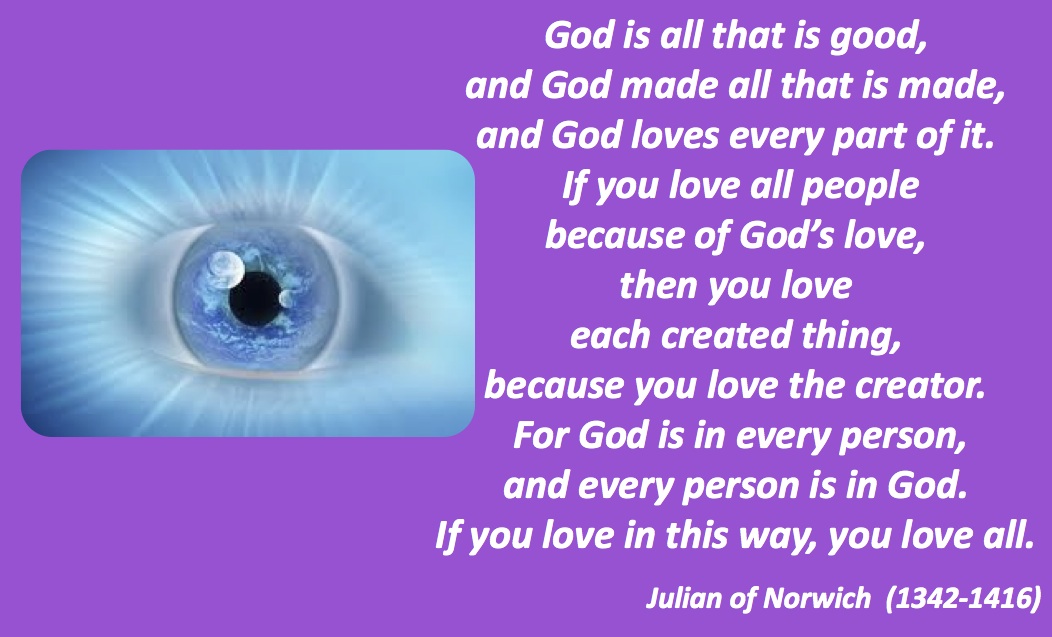
God Finds Expression In, With, Through, and Beyond Us – a sermon for Lent 3C

Love Julian copy

Reading Luke 13:1-9 – listen to the sermon here

What the World Needs Now is Love! 1Corinthians 13:1-13

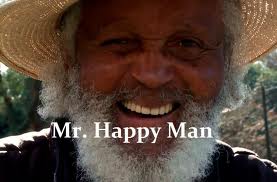
Mr Happy ManThe Epistle Reading (Second Reading) for this coming Sunday is 1 Corinthians 13:1-13. Most of us have heard this reading over and over again at weddings as if it were some sort of recipe for happiness between lovers. So often we hear it as an impossible recipe and cast it aside as something nice but unattainable. What would happen if we could hear this passage not as a prescriptive recipe but as a descriptive revelation of the LOVE that is God. Couple this revelation with the knowledge that God dwells in, with, through, and beyond us and it becomes a description of the possibilities for each of us being LOVE in the world. The knowledge that LOVE dwells in us might just open us to being the love that the world so desperately needs. 

91 year-old, Johnny Barnes is a Bermuda native who embodies the LOVE that dwells in him. How might we embody the LOVE that dwells in us? What does, would, could, will the embodiment of LOVE look like in you?

TODAY!!! – a reflection on Luke 4:14-21

Luke 4Today, rather than a traditional sermon, we engaged in a reflection on what is known as Jesus’ first sermon from Luke 4:14-21…a bible study of sorts. The Acclamation sung before the reading is “God of My Childhood” by Miriam Therese Winter Listen to the reflection here

Introduction to the Gospel according to Mark

P45 Mk7Holy Cross’ Adult Education Classes begin an exploration of the Gospel according to Mark using as our guides a commentary by Marcus Borg and a New Testament annotated by Amy-Jill Levine. You can listen to the first class, view the keynote slides, and get a copy of the class handout here

So this is Christmas…I hope you have fun: a sermon for the Second Sunday of Christmas, Matthew 2:1-12

IMG_1254I am indebted to the work of John Phillip Newell; especially his book “The Rebirthing of God: Christianity’s Struggle for New Beginnings” for the insights into the burning bushes that surround us. Listen to the sermon here

Wisdom Seeks Wisdom – an Epiphany sermon for the Second Sunday of Christmas – Matthew 2:1-12

Thomas 70 pastordawn

The readings included John 1:1-9; the Gospel of Thomas 70, and Matthew 2:1-12 You can listen to the sermon here

This year, in addition to all of the many holiday festivities that we are accustomed to enjoying over the Christmas holidays many of us added the time-consuming guilty pleasure of binge-watching. Binge-watching is a relatively new phenomenon which results in hours and hours spent watching entire seasons of a TV series in one or two days. Thanks to things like Netflix, Apple TV and YouTube there are a so many TV series available but one that has me in its grip at the moment has more power to demand my attention as a result of a passion that developed in me when I was but a child.

When I was just ten years old, we lived in Newmarket for less than a year. By that time I had already lived in Birmingham, England, Belfast, Northern Ireland, Toronto and Newmarket. I was in grade five and I went to J.L.R. Bell public school. My teacher, Mr. Jones, was a particularly gifted storyteller. Mr. Jones had the ability to hold our little class in the palm of his hand simply by weaving tales of the world beyond our little lives. I can still remember the wonder and excitement that he generated when he announced that we were going to begin to study the explorers. I had no idea what an explorer was, but the globe that Mr. Jones spun on his desk as he explained that for years and years and years everyone believed that the earth was flat and that if you travelled far enough you ran the risk of falling off the edge, well I was hooked. Then he pulled down a large display map that was suspended on what looked to my ten-year-old eyes to be a window-blind and pointed to what looked like a funny shaped boot and told us that our study of the exploration of the world would begin in Venice, Italy in the year 1384, with the birth of Marco Polo.

I had absolutely no idea what he was talking about. Venice, Italy, 1384, Marco, Polo, none of these words meant anything to me except for one, so I was hooked. What was a Venice? What was Italy? What could he possibly mean by 1384? Whatever was a Marco and what on earth did a Marco have to do with a Polo? Polo’s were the little mints that my Nannie kept in her purse.

At the tender age of ten, Mr. Jones launched me upon a grand adventure, which would lead to my life-long love of history and of words. For days and days and days, Mr. Jones wove fabulous tales of the discoveries of Marco Polo as he traveled upon the Silk Route to China where he met the fascinating Kublai Kahn whose very name summoned up both mystery and danger. The adventures of Marco Polo had me hooked on history but Mr. Jones didn’t stop there, no. Vasco da Gama, Christopher Columbus, Ferdinand Magellan, John Cabot, Jacque Cartier, Henry Hudson and a host of others who Mr. Jones taught us about with only the globe and that mesmerizing map of his to aid him, all served to open me up to ideas and concepts that turned me into a student of history and a lover of stories.

I had to leave Mr. Jones class before the end of term because once again my family was on the move. We were right in the middle of following Thomas Cook to the shores of what would eventually become my home on the west coast of British Columbia, when I handed over the atlas that Mr. Jones had lent me. I was trying hard not to cry as I bid, the man who was at that very moment my favorite person in the whole world, good-bye. It was when Mr. Jones encouraged me to continue my journey into the past that I had what I know recognize as an epiphany. With that great big wall map as a backdrop and the globe in front of me, I knew that I too was an explorer. What I didn’t know, what that particular epiphany didn’t reveal, was that I was also a storyteller.

Epiphanies are marvelous, miraculous events that have the power to reveal the very depths of who and what we are. Strictly speaking an epiphany is a flash of insight. The word epiphany comes from the Greek for the appearance of the divine. When the word was first explained to me, my teacher suggested that the word epiphany could be used to describe that moment in a cartoon when the light-bulb appears above a character’s head. A flash of insight! A moment of discovery that enlightens the mind and can change a life, open up a whole new world, herald a new way of being, unravel a mystery, or reveal the Divine in our midst.

It is hardly and any wonder, that the celebration of the Epiphany, was once second only to Easter in the church year. The recognition of God in our midst, no that’s something to celebrate! Over the years, Christmas has eclipsed the celebration of Epiphany. We won’t even bother coming to church on Tuesday for the feast of Epiphany. These days most Christians don’t even wait until Epiphany to take down their Christmas decorations. Yesterday, I saw Valentine’s Day decorations in the grocery store. The world scarcely pauses to notice. Perhaps the wise-guys are to blame. Continue reading

Jesus: A Recalcitrant Adolescent??? – a sermon for the First Sunday of Christmas – Luke 2:41-52

Christmas 1C 2015Listen to the sermon here


Know Thyself – a sermon for Advent 2C – Luke 3:1-6

knowThyselfQuotes from John Shelby Spong’s essay “Looking at Christmas Through a Rear-View Window” and Ralph Waldo Emerson’s poem Gnothi Seauton: Know Thyself

Listen to the sermon here

Suddenly this God, that I had been trying hard to fathom, was there, right there! – a sermon for Advent 2C

jokulsarlon-glacier-lakeAs the world turns expectantly for news from the United Nations Climate Conference in Paris, we hope that leaders everywhere can find the courage to commit us all to change our ways. Prophets have been warning us for decades of the dangers of climate change. The figure of John the Baptist looms large during the first half of Advent. This angry misfit shouts and us, convicting us of hastening the end. This sermon from three years ago, asks questions which ring true today: Do we have the courage to join John the Baptist? Do we have the stamina to become a prophet of doom? Our planet may be depending on us! You can listen to the sermon here or read the text below. 

I didn’t know it at the time, but I actually met John the Baptist when I was fifteen years old. She didn’t look much like you’d imagine John the Baptist would look, but she had that same crazy intensity, that same focus on the fact that we’d better change our ways, we’d better repent, and start doing things differently or we’d be in real serious trouble. Lola was my friend Valerie’s mother and she simply couldn’t stop going on and on about the environment and how we were destroy the earth. At the time, I remember thinking she was a bit of a nut-case and on more than one occasion I wished she’d just shut up about it. I was just a kid, and the earth was just something I took for granted. The earth was just there to provide for our needs. I couldn’t believe how much Lola went on and on about all the stuff we humans were doing to destroy the earth. I just wished she’d leave us along to get on with things; I couldn’t abide her incessant nonsense about how we were going to destroy the planet. All her feeble little attempts to be kind to the earth, made me seriously question her sanity.

I tolerated Lola not just because she was my friend’s mother, but I didn’t really understand her until one day when the three of us were travelling together. We were coming home from church. I had only been going to church for a few months. I was trying hard to understand this whole God thing. So, I went to church a lot. My friend Valerie had persuaded me to start going to church with her and family had become like my second family as the supported me during my first attempts to explore the mysterious world into which I had begun to feel pulled. As we drove home from church, I was feeling a little glum. Try as I might, I couldn’t really understand this church thing; all that singing and praying didn’t really help me to feel closer to God. Mostly I just liked how people at church treated each other. I liked how they went out of their way to help me feel at home. Whether or not God was there, well I really wasn’t sure.

Anyway, we were driving along the road. It was a partly over-cast day on the west coast of British Columbia, just a few clouds. You could see the mountains off in the distance. We were chatting back and forth when all of a sudden; Lola pulled the car over to the far side of the road, switched off the engine and got out. Valerie followed her mother out of the car, so I figured I had better do the same. Val and her mother scampered down from the road and onto the beach. When they reached the water’s edge, they stopped and just looked off into the distance. Apart from a tanker-ship making its way across the horizon, I couldn’t see much of anything. Lola had the most amazing expression on her face. She positively glowed with happiness. Valerie wore a similar expression. I must have looked somewhat puzzled because Val smiled at me and said isn’t it the most beautiful thing you have ever seen. This only confused me more. What were they looking at that had made them stop the car, scamper down the bank and stand there at the water’s edge on a cold autumn evening. Maybe my parents were right, these religious types are a little bit weird. Happy, glowing, smiling people make me nervous. There they stood grinning from ear to ear. What were they on? And then, I saw it. For the first time in my life, I saw it. It had been there before. But I had never really seen it before. The sky was amazing. The colours were overwhelming. It almost didn’t look real. It looked like someone must have painted it that way. It was magnificent, a work of art. The most beautiful thing I have ever seen. Continue reading

Re-Birthing God: a sermon for Advent 1C

Made of God Julian pastordawn copyThis sermon relies on the work of John Philip Newell in his book, The Rebirthing of God: Christianity’s Struggle for New Beginnings. On this, the first Sunday of Advent our readings included “The Star Within” a creation story by Dr. Paula Lehman and Rev. Sarah Griffith, Luke 21:25-36, and John 3:1-9. A deliberate choice was made not to use the traditional Advent reading from Jeremiah so as to avoid the trap of the false Christian appropriation of the Hebrew prophets as foretellers of Jesus as the Messiah. Listen to the sermon here

Christ Will Come Again, and Again, and Again – a sermon for Advent 1C – Luke 21:25-38, 34-36

Old SpiceChrist has died. Christ is risen. Christ will come again. Outside the world is hurtling toward the Christmas; toward the celebration of the birth of a baby. While the world prepares for the birth, the church says, “wait”. Wait, keep watch, and beware, for the world is ending. While the church cries out:

“Signs will appear in the sun, the moon and the stars. On the earth, nations will be in anguish, distraught at the roaring of the sea and the waves. People will die of fright in anticipation of what is coming upon the earth.” the world sings: “You better watch out, you better not pout, you better not cry, Santa Clause is coming to town.” And all the while we declare the mystery of our faith, “Christ has died. Christ is risen. Christ will come again.”

Somewhere between our deepest fear and our deepest longings we wait, the world prepares and we wait and watch, knowing all the while that, “Christ has died. Christ is risen. Christ will come again.” knowing that because the world will end, our hope lies in the knowledge that Christ, the Anointed One, the Messiah, will come again.

Advent, the very word means come; tis the season of coming. Advent is not about waiting; waiting for Christmas, or waiting for the birth of a baby; Advent is about coming, the coming of Christ. In the darkness of the end, we long for Christ to come. Yes, we will have to wait for Christmas to come; but Christmas will come as it always does. The point is not the waiting, the point is in the midst of darkness, in the trials and tribulations of the end, Christ will come; the point is Christ will come. In the midst of the darkness of the end, our deepest longings are stirred up, our longings for hope, for peace, for love and for joy.

All around us we can see the signs of the end; death is everywhere. Galaxies collide and stars die, and there is darkness, the end. Dreams die, and there is darkness, the end. Barriers go up, bullets fly, bombs explode, people die; there is darkness, the end. Words are spoken, promises broken, hopes are dashed; there is darkness, the end. The work dries up, the job ends, funds are exhausted, the bills pile up; there is darkness, the end. Illness overwhelms, shadows on x-rays frighten, scans scare, falls break us, dreams are dashed; there is darkness, the end. In the darkness of the end, we long for hope, for peace, for love, for joy.

I remember, when I was a kid; I was about thirteen, we’d just moved to the West Coast and I can still remember it as if it was yesterday. I set off on my bicycle in search of the perfect Christmas I was as moody and emotional as any thirteen year-old could be. I was lonely, because we’d moved around so much that my only close friend was my younger brother; and what thirteen year-old girl, wants to admit that her only real friend is her eleven year-old brother. My parents were worried sick about money. We’d moved, Dad’s job was unstable and Mom’s job barely paid anything. About the only good news in my life was that I was twelve and back in those days, at twelve you were considered old enough for babysitting and babysitting meant money. Every weekend, I would babysit. Looking back on it now, I can’t believe that at thirteen, I was actually left in charge of little children. I remember getting a couple of bucks for babysitting on Friday and Saturday night; and I do mean a couple of bucks, two dollars for two nights of babysitting.

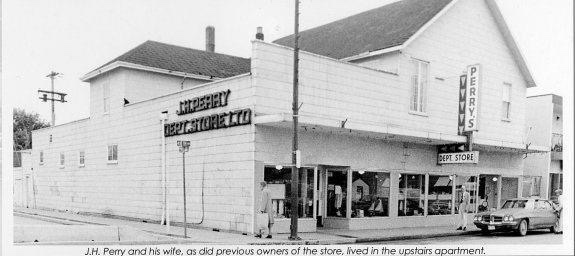
IMG_1220I remember, calculating that by the time Christmas arrived, I should have $27 dollars saved up. Twenty-seven dollars should be just enough to buy presents for my Mom and Dad, my brother, my aunt and uncle, and my two little cousins. I still remember heading off on my bicycle, into the bustling metropolis of Ladner. Ladner was just a small fishing village back then. There were just three stores worth looking for Christmas presents in: Perry’s Department store proved to be far too expensive for my blood. So, I headed off to the 5 and 10 store. For those of you who don’t know what a five and ten store was, just think dollar store, only back then it was the 5 and dime and you could actually get stuff for five and ten cents. I spent hours in there trying to figure out the perfect gifts for my brother and my two little cousins. I left thinking that I could take care of their gifts with about five dollars. So it was off to the drug store to figure out what to get for my Mom and Dad and Aunt and Uncle. That took another couple of hours as I agonized over the various Old Spice gift sets. I could just about afford a 3-piece set for my Dad that included saving cream, after-shave and a soap-on-a-rope. Surely my uncle would be happy with a soap-on-a-rope. Then it was a Yardly gift set for my Mom, dusting powder, perfume and soap all for about six dollars; which would leave enough left over for a small bottle of perfume for my aunt. Continue reading

Home in the Love We Call God – a sermon for Jesus the Christ Sunday- Luke 15

prodigalRather than the recent church tradition of celebrating the Reign of Christ/Christ the King Sunday, on this the last Sunday of the church year, we chose to celebrate our complex relationship with Jesus the Christ. Our readings included the parables of the lost form Luke 15:1-32. 

Listen to the sermon here

Wars and Rumours of Wars: The End is Near – a sermon for the 25th Sunday after Pentecost – Mark 13:1-8

Jean Jullien - Nov.13/15

Jean Jullien – Nov.13/15

Listen to the sermon here

Here We Stand, For We Can Do No Other – a sermon for Reformation Sunday

Simcoe Landing

Simcoe Landing

Listen to the sermon here

Watch the video that was shown in place of the traditional readings for Reformation: Thomas Berry and the Earth Community here

Gospel Text: John 8:31-36

Jesus Is the Memory of Our Future – a sermon for Creation 4B

GrandaThis long forgotten photograph of my Granda, William Anderson, moved my sermon beyond my miss-remembering as I attempt to respond to Dietrich Bonhoeffer’s question: “Who is Christ actually for us today?” I first encountered the phrase “Jesus Is the Memory of Our Future” on a t-shirt from Holden Village. Readings for this the fourth Sunday of the Season of Creation included: Dietrich Bonhoeffer’s Letters from Prison (to Eberhart Bethge, 1944), Mark 12:28-34, Mark 16: 14-16 – click here to read texts

Listen to the sermon here