On Palm Sunday, An Inconvenient Messiah Parades Into Our Midst

palm sundayI wrote this sermon years ago, when I’d first given up theologies which required a subscription to the notion that humans fell from grace and need a Messiah to save them. It’s funny how we cling to ideas about what it means to be human as if centuries of human evolution have no bearing on who and what we are. The illustrations in this story come from an old shoebox of clippings; they do not cite the source, but the name Ed Riegert is scribbled in the margins. Ed was my homiletics professor. He used to encourage us to keep a file of stories that we might tell. That old shoebox has long since been replaced by a hard-drive. But the shoebox still draws me back from time to time. This sermon was a first attempt to move beyond notions of atonement that paint a picture of humanity I no longer cling to. Perhaps it will be helpful to those who are beginning open themselves to a new understanding of who Jesus is.

For previous Palm Sunday sermons click here, here, or here

There was once a man who suffered from various illnesses for a very long time. This man had seen countless doctors who over the years had performed countless tests on him and had prescribed lots of medicine. But, the man’s condition did not improve. This man even tried home remedies to make himself feel better. He drank herbal teas, and took mega-doses of vitamins along with his prescriptions. But still he did not feel any better. Then one day the man heard about a doctor who was said to be an outstanding diagnostician. So the man called the doctor to make an appointment and even though the doctor was booked for months in advance the man was delighted when the receptionist managed to fit him in. As the date of his appointment drew near the man was excited by the prospect of finally getting to the bottom of his problem. At last, he would find out just what was wrong with him and in no time he was sure that this brilliant doctor whose praises were sung by one and all, this doctor would be able to cure him. The day of the appointment arrived. After the doctor had thoroughly examined the man and had reviewed his tests, she sat down with him and she said, “My friend, you are not a healthy man. But you can be well again if you will only follow my advice. What you need to do is lose about sixty pounds, get involved in a regular program of exercise, and eat more grain, fruit, and vegetables. You don’t need to take any more of the medicine that has been prescribed for you and you don’t need all those vitamin pills.” When the man heard this, he was indignant. He demanded that the doctor prescribe some new medicine for him, possibly some experimental drug not yet on the market, which would cure his illness. The doctor smiled patiently and repeated her advice. “You don’t need medicine,” she said. “You need to change your lifestyle.” The man simply cursed the doctor and stomped out of the office. For the rest of his sickly life, he told everyone that she was a quack who didn’t deserve to be called a doctor. Continue reading

Jesus Sets Us Free to Save Ourselves: a sermon for Palm Sunday – Matthew 21:1-11

palm brsIn our parish, on Palm Sunday our liturgy stays with the commemoration of Jesus’ entry into Jerusalem. Trusting that our members will join us on Good Friday, we have not adopted the practice of rushing to the Passion of Christ. This allows us time to linger over our Hosannas. Our worship began outside with the reading of Matthew 21:1-11, followed by a procession of palm waving, hosanna cheering congregation. This year I changed the first reading to the story of Jacob’s wounding during a wrestling match with God in Genesis 32:22-31, followed by an feminist interpretation of Psalm 118, and the Gospel text John 12:12-15. I am indebted to Michael Morewood’s book “Is Jesus God” for the inspiration behind this sermon and to John Dominic Crossan and Marcus Borg’s “The Last Week” for the historical details. 

For previous Palm Sunday sermons click here, here, here, or here

Hosanna! Hosanna! Hosanna! Save us! Save us! Save us! Save us from who? Save us from what? Save us for what? What is all the shouting about?

Two millennia ago, on the outskirts of Jerusalem, when Jesus mounted that donkey it was pretty clear who needed saving from who; it was clear what they needed saving from and it was fairly clear what people longed to be saved for. The people longed for freedom: freedom from the brutality of their Roman rulers, freedom from the ravages of poverty, freedom from the strict oppression of their religious authorities, and freedom from the fear of illness and death. Life among the conquered peoples of first century Palestine was cruel, oppressive, impoverished and filled with fear and suspicion. Whatever hope of deliverance there was all too often false hope. Among the oppressed there are always calls for revolution and the conquered people of first century Palestine had seen more than their fair share of wanna-be saviours.  Some of their young people had fallen prey to the incitement of the Zealots and in youthful, exuberant, impatience had taken up arms against their Roman oppressors. Some of their neighbours had betrayed their own people and taken up whatever crumbs the Romans were offering, sold their souls and become collaborators, lining their own pockets at the expense of their own people. But far too many people had given up and given in, settling for whatever life they could eke out under the cruel regime hoping against hope, that someday, someone, somehow would come along and save them from the horrors of life. And so, they longed for the good old days; The days when their people and not the Romans dominated the land, the days when one of their own was king. But not just any king, they wanted a king like David; a king who would ride at the head of their army full of pride and power and conquer all their enemies. The elders, the wise ones, pointed to the past and heralded David as a Messiah; an anointed one; anointed by God to lead the people. How they longed for such a messiah to rise up among them and lead them; lead them to victory against all their foes and save them from their miserable existence. One by one, they’d hear these wanna-be messiahs, these trumped up saviours, call the people to rise up. But they knew, with each successive saviour, there was no hope that they could triumph over the mighty Roman army and so over and over again, they hunkered down, waiting and watching, longing and hoping for the one who could save them. Continue reading

Beyond the Serpent. Beyond the Idol Jesus. Beyond the Beyond and Beyond that Also: a sermon Lent 4B – John 3:14-21

bronze serpentA sermon that peers beyond the mess we have made of John 3:16. 

Listen to the sermon here


Approaching the Resurrection – What Did Paul Actually Say?

trouble with resurrection

Far too many preachers stumble into the celebration of Easter without doing our homework. Resurrection is a central tenant of the Christian faith and Easter is the primary celebration of resurrection and yet, too many of us fail to open ourselves to current scholarship surrounding the doctrine of resurrection. Questions about the nature of the resurrection ought to send us back to the words of the Apostle Paul. Bernard Brandon Scott is a charter member of the Jesus Seminar. His book “The Trouble with Resurrection” is a must read for those who preach during the Easter Season.

If you are planning to write a sermon or listen to a sermon this Easter, this video provides essential background information about the words of the Apostle Paul on the nature of the resurrection which may surprise you. Scott’s treatment of 1 Cor. 15 provides a new understanding of resurrection which is compelling as well as liberating.


“I Am Woman” – a sermon for International Women’s Day

International Women's Day

Gospel Reading:  John 2:13-22  and I Am Woman by Helen Reddy

Listen to the sermon here

Where are the Angry Women? Where are the Angry Christians? Where are the Angry Humans? – a sermon for the Third Sunday in Lent – International Women’s Day

International Women's DaySunday March 8, 2015 is International Women’s Day. The appointed gospel reading for this the third Sunday of Lent is from John 2:13-22 which recounts the story of Jesus turning over the tables in the temple. This sermon is inspired by the work of Beverly Wildung Harrison and the prophetic witness of Nobel Peace Prize winner Leymah Gbowee. 

Today is International Women’s Day a day. International Women’s Day has been celebrated since 1911. It is also known as the United Nations Day for Women’s Rights and International Peace. Women have come a long way since 1911. Sadly, we must all confess that women have a long way to go before we achieve our vision of a world in which all people have equal access to opportunity. There is much for us to celebrate on this particular International Women’s Day and there is also much to lament. In our world the phrase “war on women” is bandied about by the media and each time I hear it anger rises in me and it is all I can do to stop myself from screaming. In our own country we have watched the steady erosion of hard one gains as our federal government continues to cut funding to women’s organizations and continues to refuse to launch a federal inquiry into the disappearance of far too many of our aboriginal sisters. Any serious reflection on the plight of women in the world makes my blood boil and I can’t help but wonder why we don’t just follow Jesus’ example because maybe if we turn over a few more tables in the halls of power we might be able to draw some serious attention to the abuses perpetrated upon women for the sake of maintaining the status quo.

The story of Jesus turning over the tables of the moneychangers in the temple has always intrigued me. The idea that Jesus could have become so angry with religious authorities for cooperating with the violent and oppressive, Roman Imperial system that he would create such a scene in the Temple is so far from the image of Jesus as the meek and mild long-haired peace-nick that we’ve all come to take for granted.

For generations, biblical commentators have gone to great pains to ensure that any hint of Jesus humanity is scrubbed clean from interpretations of this story. Anger is a perfectly normal human emotion. Jesus was a human being and therefore he was subject to normal human emotions. But the institutional church frowns upon anger. Indeed, in many places one can still find anger listed as one of the seven deadly sins. “ira” which can be translated as anger or wrath made the list of seven deadly sins. This list is often attributed to the early Christians. Indeed, there are those who would argue that these sins are biblical. However, they are actually the work of a 4th century monk named Evagirus Ponticus, whose nickname was Evagrius the Solitary. He spent most of his adult life living as a hermit in the desert. I suspect that if a modern psychologist were to take a brief look of Evagrius’ personal biography they could very quickly make a diagnosis of clinical depression. Evagrius himself prescribed tears as the pathway to God and was known to have spent days at a time alone and weeping profusely. He is best known for his writings on the various forms of temptation, which the institutional church latched onto with a vengeance. His original list included eight deadly sins. But the church erased “sadness” from the list and elevated the seven deadly sins to the category of mortal sins. Mortal sins were those sins that actually placed one’s soul in danger of eternal damnation. Continue reading

Learning to Die Daily: a sermon for the second Sunday in Lent

let suffering speak

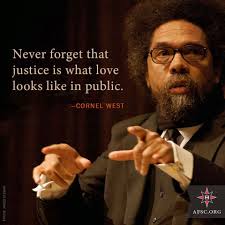
Lent 2B – Mark 8:31-38 this sermon is inspired by my study of the work of Dr. Cornel West. His words flow through this lines of this sermon and his prophetic imagination provides the hope-filled vision of LOVE parading around the world as justice.

Listen to the sermon here

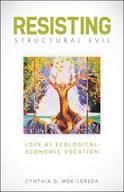
Resisting Structural Evil: Love As Ecological-Economic Vocation by Cynthia D. Moe-Lobeda

Resisting Structural EvilIn the midst of teaching an adult education class on evil from the perspective of progressive Christianity, I was contacted by Dr. Cynthia Moe-Lobeda who had come across this website and wondered if I would be interested in her new book. What followed has been a splendid introduction to the work of a progressive christian ethicist who, despite the fact that she just happens to be Lutheran, I have failed to discover before now! That our little class just happens to be struggling with the problems of systemic evil and looking for signs of hope in the midst of our entanglement with institutions and structures which bind us up in evil that is hurting, oppressing, and condemning whole populations to poverty, prompted me to latch on to Dr. Moe-Lobeda’s invitation to take a look at her new book, if only for the resonance of the title  Resisting Structural Evil: Love as Ecological-Economic Vocation with our current struggles.

Dr. Moe-Lobeda’s resume includes her work as Wismer Professor of Gender and Diversity Studies at Seattle University where she teaches Christian ethics and lectures and consults international on climate justice, economic globalization, white privilege, moral agency, Earth ethics, and being public church. 

ResistingstructuralevilResisting Structural Evil is a must read for those of us who are seeking ways to live in a world where we benefit from systems beyond our control which oppress and abuse whole populations and threaten entire ecosystems. Confronting the evil in which we are all implicated is a task so daunting that many of us are loath to engage the powers of evil lest we be overwhelmed by the multitude of problems in the world. Dr. Moe-Lobeda’s work provides a framework for a spirituality which can nurture and sustain us as we embrace our call to resist evil. After reading her excellent articulation of the moral crisis, enriched by Moe-Lobeda’s ability to embody ethics with stories that resonate with our deep hunger for justice, structural evils are unmasked with an eye to countering hopelessness. Sowing seeds of hope with a spirituality of love that is capable of engaging both Mystery and reality is not for the feint of heart. Yet, Moe-Lobeda’s carefully laid out, totally approachable, framework for the kind of morality capable of  responding to the vision of justice which permeates her work, provides the reader with the courage to see new ways of being Love in the world!

Our little class has already benefited from Dr. Cynthia Moe-Lobeda’s invitation to resist structural evil. We began by devoting ourselves to unpacking the wisdom is the lecture she gave to the Common Good Cafe at University Temple United Methodist Church in Seattle, WA. entitled A Spirituality of Resistance. The talk provides a wonderful overview of Dr. Moe-Lobeda’s important work. Watch the video and see for yourself. Then, order her book! I know that we will be spending more time working with her book as we digest the rich nourishment of her wisdom!     

Liturgies for Lenten Evening Prayer Inspired by the Mystics

I have been asked to re-post our Lenten Evening Prayer liturgies in one convenient spot. These have been used several times at Holy Cross, so you can listen to the audio recordings or check out the worship bulletins.

Liturgical texts and readings taken from the writings of the mystics.

Intended for use during the season of Lent.

EVENING PRAYER:  JULIAN OF NORWICH

Click here to download the Worship Bulletin which is to be printed double-sided

Click here to listen to the Worship Service

EVENING PRAYER:  THOMAS AQUINAS

2 Evening Prayer Lent which is to be printed double-sided

EP 2 Thomas Aquinas — the silences are intentional

LENTEN EVENING PRAYER: MECHTHILD OF MAGDEBURG

Evening Prayer Service Bulletin which is to be printed double-sided.

Evening Prayer Service audio – the silences are intentional – enjoy them.

LENTEN EVENING PRAYER: FRANCIS OF ASSISI

Evening Prayer Service Bulletin which is to be printed double-sided

Evening Prayer Audio – the silences are intentional.  Enjoy!

LENTEN EVENING PRAYER: HILDEGARD VON BINGEN

Evening Prayer Service Bulletin which is to be printed double-sided

Evening Prayer Audio – the silences are intentional.  Enjoy!

Parables Ancient and Modern: Lenten Evening Prayer with readings from the Orthodox Heretic

Orthodox HereticA series of Lenten Evening Prayer Services which use readings from the Parables of Jesus together with readings from Peter Rollins’ “The Orthodox Heretic and Other Impossible Tales.” Prayers are drawn from the writings of the Christian Mystics. Each service includes the worship bulletin as well as an audio recording of the service at Holy Cross Lutheran Church. 

One:  NO CONVICTION

A Copy of the worship bulletin can be found here – it is designed to be printed double-sided and folded into a booklet.

Listen to the worship service here (service begins at the 48 sec. mark)

Peter Rollins reads NO CONVICTION

Two:  Translating the Word

A copy of the worship bulletin can be found here – it is designed to be printed double-sided and folded into a booklet.

Listen to the worship service here

 Three: Great Misfortune

Evening Prayer a copy of the worship bulletin can be found here – it is designed to be printed double-sided and folded into a booklet.

Listen to the worship service here

Four: The Book of Love

 Evening Prayer a copy of the worship bulletin can be found here – it is designed to be printed double-sided and folded into a booklet.

Listen to the worship service here

Five: Betrayal

Evening Prayer a copy of the worship bulletin can be found here – it is designed to be printed double-sided and folded into a booklet.

Listen to the worship service here

Beyond the Wildernesses: a sermon for Lent 1B

JusticeThis sermon is inspired by the work of Dr. Cornel West whose words and challenges infuse this sermon with courage and passion. The questions which frame the challenges are from W.E.B du Bois as quoted by Cornel West. Listen to the sermon here

Laugh! It Is Lent – a sermon for the first Sunday in Lent 1B

TickledA sermon preached on Lent 1B 2012 which began a journey into the wilderness with the Mystics. St Teresa of Avila and my granddaughter’s laughter inspired this sermon   Listen to the sermon here

I find myself wishing that we were entering some other season of the church year. Traditionally the season of Lent is a mournful time filled with calls to repentance and self-examination as we follow Jesus into the wilderness to be tempted and then on that long march to Jerusalem where the powers that be will have their wicked way with him. Our liturgies take a mournful tone as we lament our woeful human existence, confess our sinfulness, and hear exultations to take up our crosses so that we too can follow Jesus to the bitter end. Over and over again we are asked to remember that we are in bondage to sin and cannot free ourselves, as we gaze upon the cross remembering that Jesus our savior bled and died as a result of our wicked sinfulness.

Lent is a strange season that harkens back to a forgotten era. Unlike so many of the seasons of the church year it’s not exactly a season that attracts people to church. Not many of you got out of bed this morning and said, “Yippy it’s the first Sunday of Lent. OH goodie! We get to be reminded that we are sinful, that life is miserable and unless I’m willing to take up my cross and follow Jesus all the way to Golgotha, there’s precious little hope cause we’re all going to die and when the time comes we want Jesus to remember us.”

Now I know that there are some people who just love Lent. And I must confess that I like the quieter, more somber tone that our liturgies take. I actually enjoy the opportunity to slow things done and be more reflective in our worship together. I savor the silences and the opportunities to be more contemplative. I love the colour purple with all its vibrant hues and the best part of all is that the beginning of Lent means that spring is just around the corner. What I don’t like about Lent are the signs, symbols, hymns and stories that make it so easy for us to fall back into the 11th century.

It is so easy for us to lean not on the ever-lasting arms of Jesus but on the scales of St. Anslem and find ourselves not looking forward to the promise of resurrection and the gifts of eternal life, but rather dreading judgment day knowing that the scales of justice must be balanced and fearing the moment of truth when our sins are piled onto the scale and knowing that our only hope for reconciliation with our Maker is that Jesus is sitting on the other end of the scale. Woe is me. Woe is me. For I am sinful. My sins are too numerous to count. There’s all the things I have done and all the things I have left undone. Thank God Jesus died for me. Somebody had to pay the price for my sinfulness. Jesus died for a reason, and you and I dear sisters and brothers are that reason. A blood sacrifice had to be paid. God’s justice demanded it and Jesus paid the price with his very own blood. Jesus took our place up there on that cross and the least you and I can do to say thank-you is to spend some time shouldering our own crosses as we retrace Jesus steps to Jerusalem. Continue reading

Embracing Mortality: a reflection for Ash Wednesday

Ash Wed. 2014 MortalityReadings for Ash Wednesday click here

Bulletin for Ash Wednesday click here

You can listen to the sermon here

On Ash Wednesday we are invited to begin a journey into the mystery of our existence. Since the days long ago when the first of our kind gathered together around under the starlit sky, humans have gazed upon the stars and offered up their questions, longing to know who and what we are, where we come from, why we are here, are we alone in the universe, who made us, why are we here, and perhaps most daunting of all our questions: what will become of us. Tonight, an answer of sorts is offered. Dust.

From dust we came and to dust we shall return. Among all the creatures that inhabit creation, we humans are unique in that we alone are conscious of our own mortality. We know that we are made up of the stuff of the earth; that we sprang forth out of the dirt, the dust of the earth, the same dust that was once the stuff that stars are made of. Out of that dust we are made and when our life on this earth is over, we shall return to that dust. We are after all is said and done, mortal. The life that we know will one day end and the stuff that we are made of will be returned to the earth. We hope that out of our remains new life will spring forth and for some of us this is enough; to be part of the endless cycle of life.

For others of us, the recycling of our remains is not enough. Remembering that we are dust and to dust we shall return strikes us as bleak, and we long to be more than just the sum of our parts. We long to be more than just the stuff that is housed in our bodies. We want more than just this present incarnation of dust. We fear the inevitable decomposition of who we know ourselves to be. We can’t help wondering what lies beyond the dust that we are. Most of the time, we can keep our fears under control as the demands of our bodies to be fed, watered, and amused keep us busily scurrying to and fro, this way and that, with precious little time to spare. Day after day we avoid the questions our mortality stirs in us. From time to time, we catch sight of our aging selves in mirrors that reflect the passing of years as we journey closer to our own earthly demise. Sometimes a nagging pain, a frightening diagnosis, a sudden impact, the death of a friend, or a night like tonight reminds us that we are dust and to dust we shall return and we are forced to deny the reality of our eventual demise because it is just to frightening to contemplate; or to embrace the reality of our dustiness trusting that the Love that lies at the heart of all that is will not abandon us to the abyss of nothingness. Continue reading

LOVE Transforms: a sermon for Transfiguration Sunday

transformation

Readings include 2 Kings 2:1-14; Mark 9:2-10, Romans 8

Listen to the sermon here

Transfiguration Sermons

transfigurationSermons for Transfiguration Sunday:

Looking Back at the Way Forward here

You Have the Power to Transfigure the Face of God here

Transfiguration Just an Old-Fashioned Love Song here


Prayer – Epiphany Sermon Series – #6: Pray Without Ceasing and #7: Prayer Transforms Us

PrayerSermon series pastorDawnThree years ago, I reluctantly gave in to requests to preach on the subject of prayer and I devoted my sermons during the season of Epiphany to the subject of prayer. I have been asked to re-post those sermons. In the course of three years, my theology has continued to evolve. However, I have resisted the temptation to edit the sermons and so the manuscripts are what they are, an exploration of sorts. Here’s the sixth sermon in the series. The final instalment of this series comes in the form of a discussion. Rather than preach on the 7th Sunday of Epiphany, I responded to questions from the congregation. The audio recording of that reflection appears below.

Prayer #6 – PRAY WITHOUT CEASING – preached on Epiphany 6B, 2012 – listen to the sermon here

Prayer #7 – PRAYER TRANSFORMS US – responding to questions about the series, this reflection took the place of the sermon on Transfiguration Sunday, 2012 – listen to the reflection here

 Transcript of #6 PRAY WITHOUT CEASING

Cast you minds back to another time and place and tell what the numbers 33   45   and 78 have in common??? Vinyl Records anyone? When I was a kid music came from a portable RCA record player. The sound quality wasn’t all that great, but somehow we didn’t seem to care. Later when I was a teenager, my parents got a fancy state of the art Phillips stereo cabinet and suddenly sound seemed to be coming from booth ends of the room. I never did understand how those old record players managed to pick up sound from the grooves in the vinyl to produce music. I still remember my father’s first reel-to-reel tape recorder, and then there were the eight-tracks, followed by cassettes, followed by CD’s. I can remember these things, but I have no idea how they made music. It doesn’t matter how many times people try to explain it to me, I still think it’s a miracle that such beautiful sounds can come out of machines. Continue reading

Maranatha: Padraig O Tuama – a timely lesson for those preparing to preach on this coming Sunday’s Gospel text!

This is for my colleagues who are preparing to tackle this coming Sunday’s Gospel reading in which of Jesus heals Peter’s Mother-in-law. I suspect, that as Padraig O Tuama might put it, we will in all likelihood fuck it up. To those of you who will listen to our efforts, remember you’ve fucked it up as well! Alleluia! Alleluia let humility be our healing balm here in Babylon. 

Prayer – Epiphany Sermon Series – #5: Jesus Is Not a Super-Human Miracle Worker! Jesus Is Human!

PrayerSermon series pastorDawnThree years ago, I reluctantly gave in to requests to preach on the subject of prayer and I devoted my sermons during the season of Epiphany to the subject of prayer. I have been asked to re-post those sermons. In the course of three years, my theology has continued to evolve. However, I have resisted the temptation to edit the sermons and so the manuscripts are what they are, an exploration of sorts. Here’s the Fifth sermon in the series. I shall repost the seven sermons in the series over the course of the Season of Epiphany.

Prayer #5 – Jesus Is Not a Super-Human Miracle Worker! Jesus Is Human!  preached on Epiphany 5B, 2012 – listen to the sermon here

Readings: Isaiah 40:21-31; Colossians 3:14-15; Mark 1:29-39

Usually, the stories in the gospels about Jesus healing the sick leave me wanting more. They usually seem so incomplete. I have always wanted more details about how exactly Jesus was able to heal those who were sick. Usually, the stories about Jesus healing are read or referenced by the notion that Jesus was some sort of miracle-worker and we are predisposed to believe that Jesus had miraculous powers; that he was somehow able to harness the healing power of God and dispense it at will. We are encouraged to believe that that very same power is available to us if only we figure out exactly how to cozy up to Jesus and ask him in just the right way to heal us or heal those we love. But these stories found in the earliest of the Gospels and attributed to an early follower of the Way known as Mark, don’t portray Jesus as a miracle-worker at all.

I love the story of Peter’s mother-in-law, because I can easily relate to it. I remember back when I was about 17 and I was suffering from a terrible cold. I had a raging fever and I was as sick as a dog. I also had tickets to an Elton John concert. Even though I could barely breath, when the time came, I got myself up out of bead, and whoa-presto, it was as if the power of Elton John’s name had cured me and I was able to follow the Yellow Brick road all the way to the Coliseum where, together with my friends I was hopping and bopping to the Crocodile Rock . So, I have no difficulty believing that when Simon Peter finally brought Jesus around to visit his mother, the sheer power of all the rumors she’d been hearing about this man Jesus, would have been enough motivation for this Jewish mother to rise up out of her sickbed to see who this fellow was who had enticed her son away from his nets. That Jesus could have harnessed the healing power that lies within our grasp as he traveled from town to town and cured the sick and drove out daemons isn’t difficult to believe. Lets face it, first century daemons sound a lot like mental or emotional illnesses, so Jesus ability to cure people who are disturbed by daemons really isn’t much of a stretch. But after centuries of interpretation and proclamation, we tend to hear these stories in ways that portray Jesus as some sort of super-human, miracle-worker, or dare I say it as some sort of God. Because after all, our image of God is that God is some sort of super-human miracle-worker. So for generations we’ve been looking to Jesus in the same way as we look to God to cure all that ails us. And so we are just as likely to appeal to Jesus in prayer, as we are to appeal to God to heal us. So, as our notions about God change, our notions about Jesus change also. Continue reading

What the Blankety Blank? A New Authority??? a sermon for Epiphany 4B; Mark 1: 21-28

Blankety blankReadings included: Psalm 111 and Mark 1:25-28, prior to the sermon we viewed the video The Awe Factor of God which can be viewed here

Listen to the sermon here


Prayer – Epiphany Sermon Series – #4: AWE – Reclaiming the word Religion

PrayerSermon series pastorDawnThree years ago, I reluctantly gave in to requests to preach on the subject of prayer and I devoted my sermons during the season of Epiphany to the subject of prayer. I have been asked to re-post those sermons. In the course of three years, my theology has continued to evolve. However, I have resisted the temptation to edit the sermons and so the manuscripts are what they are, an exploration of sorts. Here’s the Fourth sermon in the series. I shall repost the seven sermons in the series over the course of the Season of Epiphany.

Prayer #4 – AWE: Reclaiming the word Religion,  preached on Epiphany 4B, 2012 – listen to the sermon here

Readings: Genesis 28:16-22; 

Hildegard of Bingen – Soul Weavings

“The soul is kissed by God in its innermost regions.

With interior yearning, grace and blessing are bestowed.

It is a yearning to take on God’s gentle yoke,

It is a yearning to give one’s self to God’s Way.

The marvels of God are not brought forth from one’s self.

Rather, it is more like a chord, a sound that is played.
The tone does not come out of the chord itself, but rather,
through the touch of the Musician.
I am, of course, the lyre and harp of God’s kindness.”

Our Gospel reading was extended to include Mark 1:21-35 “Rising Early the next morning, Jesus went off to a lonely place in the desert and prayed there.”

I was about 16 or 17, when God first overwhelmed me. I’d been attending church for about two years. Looking back on that confused young girl, I can see how I might have been attracted to Christianity by Jesus. Jesus the radical, who changed the world, is a compelling figure for a teenager who’s out to change the world. I remember that I prayed a great deal back when I first got involved in the Church. I can remember believing that prayer could change everything. Prayer could change the world. Prayer could change my life. Prayer could change other peoples’ lives. Prayer could even change the mind of God. If only I could figure out the correct way to pray. And if I prayed often enough and hard enough and at just the right moment, prayer would change everything.

The trouble was, I was praying often, I was using all sorts of types of prayer and nothing seemed to be working. So, I remember deciding, that my ineffective prayers had nothing at all to do with the power of God or the power of prayer, but with the power of me. I kept telling myself that if I could just learn how to pray, God would definitely do the rest. So, I prayed and I prayed, and I prayed and when nothing much seemed to happen, I blamed myself for not being a good enough Christian: if only, I’d spend more time reading the bible, or if only I was a better person, or if only I was a better believer. It was all up to me. So, I promised myself, and sometimes I even went so far as promising God, that someday, I’d learn how. Someday, I’d find the right teacher, I’d study hard and I’d learn exactly what I needed to do to make my prayer life, more effective. But in the meantime, I’d keep trying, even though it felt like no one was listening. I told myself that this kind of persistence is precisely what people meant when they said, “have faith”. Having faith means praying when it seems like there’s no point at all, in praying. So, I had faith and I prayed…and nada. Not a single thing. It was like talking to myself. Not even a warm fuzzy glow. But I had faith that somehow God, that big guy up there in the sky, He, and I do mean He, cause back then God was an old, bearded, guy who lived on a fluffy cloud, and spoke King James English, in a very lofty way. Anyway, He, must have been hearing my prayers, but because he was God and all, and knew everything there was to know, he was keeping stuumm in an effort to teach me something. So, all this empty praying was going to pay off in the end.

Eventually, I began to expect very little from prayer. Prayer became something akin to my car insurance. I knew I had to pay it, even though I couldn’t afford it, because someday it might just come in handy. But I never really expected my car insurance to do anything for me, especially as I couldn’t afford to pay for collision insurance. But if I hit someone else, well it just might keep me out of jail. So, I kept on praying, trusting that if I happened to hurt someone else, God would function kinda like my car insurance, only instead of keeping me out of jail, God would keep me out of hell. It was all about me back then. And then one night it happened.

My little world was blown apart and for the first time in my young life, I knew that life wasn’t all about me. It happened on the beach. Actually, it was on a boardwalk down by the ocean. A bunch of my friends and I had managed to talk our parents into letting us spend the night sleeping out under the stars. It was late August and there was supposed to be a particularly amazing meteor shower. The only problem was that in our part of the globe, the best viewing time was supposed to be between 3 and 6 am. So, we begged and we pleaded, or we miss-lead our parents and told them we were staying over at a friend’s place and about a dozen of us headed down to the boardwalk to sleep out under the stars.

It was a fabulous night. No adults to tell us what to do. Good friends to talk to. Swimming after dark. An illegal campfire to make us feel just a little bit afraid that someone might catch us. And just enough beer to make us feel like we were big shots and not enough beer to give us a buzz, because only a couple of us were brave enough to try to buy beer from the dozy lady at the convenience store who never seemed quite able to do the math when she bothered to card us. Did I mention that we’d slipped down across the boarder, not because the meteor shower would be any better down there, but because we lived close enough to Washington state and the beaches in Pt Roberts were very attractive because, we knew that there was only one sheriff on patrol and we figured that we could out-run him if we had to. Besides old Dusty, weren’t much of a sheriff and he pretty much stayed away from the boardwalk cause he knew better than to go looking for trouble. And we were trouble. We were a gang of kids from church, about a dozen kids, with about a dozen beer, and we were gonna stay up all night and watch the stars and no, no good copper was gonna stop us. Continue reading