The Stories We Tell Children???

jesus sunbeam“Thine is the glory risen concrete son!” When she was just a little girl these were the words she heard the adults in her life singing about the baby Jesus. Not having any idea what concrete was, she just sang these words assuming that they said all that needed to be said about the character of the little baby whose arrival meant presents for everyone.

On this long weekend, memories of childhood celebrations remind me that the stories we tell our children are not always heard exactly as we intend. When I was a little girl, I remember enthusiastically singing “God Save the Queen” and wondering exactly where “reignoverus” was and why we wanted to send the nice lady, who wore such pretty hats, there. It was a particularly mortifying disappointment to discover that what I was meant to be singing on behalf of the nice lady was to “send her victorious long to reign over us” as I implored God to save her. To this day, I cannot sing Her Majesty’s anthem without chuckling as I muse about what has now become the mythical land of reignoverus. While chuckling is a rather pleasant residue, I can’t help wondering what dangerous, frightening or perhaps scarring residues will remain as a result of the stories we currently tell our children. 

I have often been cajoled, bribed, guilted or shamed into including children’s sermons/talks/times during Sunday morning worship services. While I understand the impulse to find ways to include children in worship, I have never been convinced that stories told during these moments accomplish anything more than the placation the guilt we feel for our unreasonable expectations. The best we can hope for our good intentions is that in the years to come they will provide a few chuckles as the children we once corralled at the front of our sanctuaries look back bemused at our efforts to include them in worship.

Dave Allen, an Irish comedian whose television program I was not allowed to watch when I was a child, but whose humour I learned to enjoy as a teen-ager, provides a window into a world we would do well to remember. 

A Way to Understand the Resurrection – Richard Holloway

Peter Callesen's Papercut Resurrection

Peter Callesen’s Papercut Resurrection

Richard Holloway, the former Primate of the Scottish Episcopal Church, interprets the story of the resurrection not as an historical tale, but as our own story. Holloway has written of his longing for a humbled and broken church. His own humility and brokenness shines through this video as Holloway embodies his own longing.

Faith and Doubt: “a whisper will be heard” – Richard Holloway

hollowayI have just completed reading Richard Holloway’s “Leaving Alexandria: A Memoir of Faith and Doubt”.  As someone who struggles to stay in the institutional church, I can hear the whispers of which this former Primate of the Scottish Episcopal Church writes. leaving alexandria

After a lifetime in the church, Holloway continues to respond to whispers, “The thing that keeps me religious is the possibility that there might be an ultimate purpose to the universe and it might, as certain rumours suggest in sacred texts, be unconditional love. And it seems to me to live as if that might be the case is not a bad way go be going; especially if it makes us kind to one another.” 

Richard Holloway’s vision of the church he longs for is a vision I too long for. As he ponders the question “Am I still a Christian?” Holloway insists,  “God has always been elusive in me. He’s always felt like an absence that felt like a presence. I was tantalized by God, that resonant absence again. The God that I was being told about, the God who was punishing my gay friends, the God who denounced me was cruel I and I couldn’t be part of that. And yet I am still tugged by the longing that had gotten me into this, the possibility of transcendence, that there is meaning and that the meaning might be a great pity, not a cruelty, but an absolute compassion, an absolute unconditional love, a love like the father of the prodigal in Luke’s great parable who runs to meet his broken son and doesn’t condemn and doesn’t even wait  for the confession before embracing him, and bringing him home. There is that God. That’s the God of Jesus….So I’m kind of in and yet out of the Christian Church. I want it to continue. But I want it humbled. I don’t want it cruel and bullying. I want it modest and serving. I want it to feel broken like the broken Jesus and not trying to sort people into very precise understandings of humanity. I want it to accept the totality of broken humanity. Most of us are broken in one way or another and we struggle with our own meaning, with our own integrity, and our own sinfulness. And the thing I found in Jesus and the thing you can still find in some churches is an understanding of that. ‘Come onto me all ye who travail and heavy laden and I will give you rest.’   So, I’m back. But I can’t proclaim. I can’t evangelize. I can’t say what this is the truth. I don’t know what the absolute truth is. But I still catch a glimpse of the tiny figure of Jesus on a distant seashore kindling a fire, a fire of compassion and kindness. And I’ve become increasingly allergic to religious certainties. They seem to me only to crucify people…”

For those of us who remain and for those who have joined the church alumni, Holloway’s story is a compelling whisper that speaks with the very compassion for which he and we long for. He may no longer be a bishop in the institution, but he remains a shepherd to those who long to catch a glimpse of the tiny figure of Jesus who continues to call the religious out from under the tables that clutter our temples.

The Doubt Essential to Faith – Lesley Hazleton

CoexistI have featured Lesley Hazleton on this blog before. Hazleton’s insights into faith come from her unique perspective as an agnostic Jew whose fascination with Islam has produced two biographies of the Prophet Mohammad.

In her latest TED talk (June 23/13) Hazleton looks to the doubts experienced by the Prophet Mohammad to explore the relationship between faith and doubt, calling for a new appreciation of doubt as pivotal in the struggle to end the fundamentalism of all religions. It is well worth a listen!!!

A New Harmony: Re-Imagining St. Paul’s Vision of Oneness

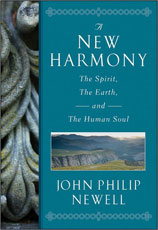
interfaceThinking about this Sunday’s epistle reading, Galatians 3:23-29 and wondering how we might  re-imagine  the Apostle Paul’s insistence that in Christ “There is no longer Jew or Greek, there is no slave or free, there is no longer male and female; for all of you are one in Christ Jesus.” Might it be that those of us who follow the way of Jesus need to consider subtracting our language about “Jesus Christ” as the source of our ONENESS in the One In Whom All Life Is Rooted? Can we begin to re-imagine language for what we mean by “Christ”? What can we learn from sisters and brothers who follow a different way to ONENESS?A New Harmony

John Philip Newell’s recent book, “New Harmony: The Spirit, The Earth, and The Human Soul” provides an Eastern perspective from which I’m looking anew at the Galatians reading. You can hear Newell reading from the chapter “Every Bush Is Burning” in which I trust preachers and seekers alike will find much to contemplate. Enjoy!

Demons or Baggage: Stop and Listen – a sermon for Pentecost 5C: Luke 8:26-39

voice withinBobby wasn’t like any other 10-year-old boy. Bobby had the face of an angel but the temperament of a devil. Bobby was a beautiful child. His blond hair and blue eyes together with his alabaster skin, pointed toward his Scandinavian heritage.  At first sight, Bobby appeared to be the kind of child that any congregation would be proud to count as a member. But, Bobby’s physical appearance was deceiving and Bobby’s presence in church was not welcome. Bobby didn’t go down to Sunday school classes with the other children.  The Sunday school teachers had tried to include Bobby, but after several parents threatened to withdraw their children, they asked Bobby’s parents not to send Bobby anymore. So Bobby stayed in the sanctuary with the adults. Most of the adult members tried to tolerate Bobby’s presence but for some, Bobby’s presence was simply unnerving. Bobby is autistic. Sitting and behaving in church was impossible for him. As long as we were singing hymns, Bobby was happy.  He would catch the rhythms of the music and rock back and forth and sing. He never sang the same words as the rest of the congregation.  But it was clear from his movements and the sounds that emanated from his lips that Bobby was singing. The trouble was that Bobby never stopped singing when we did. When his parents would attempt to put an end to Bobby’s song, he would flail about and sometime throw himself on the floor.

Now there are some churches where flailing about and throwing one’s self to the floor would be interpreted as a sign that the Holy Spirit was at work. But in this little Lutheran church, the reaction of the worshippers to Bobby’s outbursts made it clear that they feared that Bobby was possessed by spirits of the evil variety. Oh, they would never have come out and said that Bobby was possessed by demons, they just acted as if he were. Bobby’s favorite part of the service was communion.  I think that he enjoyed the opportunity to walk up to the front of the church and kneel at the altar.  When the Pastor would place a communion wafer in his hands, Bobby would giggle with glee.  Bobby never ate the communion wafer; he would just hold it up to the light and smile. The communion wine was another thing altogether. Sometimes Bobby’s mother would try to help him drink from the common cup.  Sometimes Bobby would dunk his wafer into the intinction cup and slop wine everywhere.  At other times Bobby would be so preoccupied with his wafer that he just let the cup pass him by. On a good day Bobby’s behavior only made people uncomfortable. On a bad day, Bobby’s behavior embarrassed some, offended others, and sometimes outraged many.

I remember being summoned to an extra-ordinary council meeting. The meeting had been called to deal with the complaints and concerns of several long time members of the congregation that had decided that Bobby’s presence could now longer be tolerated at worship. The people who were complaining were not bad people.  They were fine upstanding members of the congregation who found themselves unable to deal with Bobby’s presence in their midst. During the meeting we agonized over what to do.  Continue reading

Open Hands – Pentecost 4C Sermon

open handsI am indebted to Dr. Martha Ellen Stortz for the metaphor of open hands.

Listen to the sermon here

As Evening Approaches

John Phillip Newell’s “Prayer for Mystery” and “Chant: Hidden Things” provides a gentle transition into the evening.

“Isness is God” – Meister Eckhart

Isness IS God Eckhart Fox Pastor Dawn

Back in the 19th century, Rudolf Otto described the Holy One that we encounter as: “mysterium, tremendum et fascinans.” “Mysterium” captures the indescribable nature of the Holy. “Tremendum” …we get our word tremble from this; and in the presence of the Holy we tremble because the Holy is so far beyond our abilities to cope with. And yet we are “facinans,” fascinated to the point where we long to return over and over again into the presence of the Holy. Sadly, the image of God that has been created for us by religion can’t possibly contain all that the Holy IS.  images

In his book  “Insurrection” Peter Rollins insists that, for a multitude of reasons we are all too willing to settle for what Bonheoffer called the God of Religion. For Bonheoffer, the Church approached God as a “deus ex machina.” God was merely an idea clumsily dropped into our world in order to fulfill a task. God was introduced into the world on our terms in order to resolve a problem rather than expressing a lived reality. The result is a God who simply justifies our beliefs and helps us sleep comfortable at night. God is brought into the picture only when we face a problem of some kind that doesn’t lend itself to solution by other means. This “deus ex machina” falls far short of the God we meet in the Thin Places of our lives; those places or events in which we encounter the Divine. Only by letting go of the god we have created for ourselves can we begin to describe the encounter with the ONE who IS. 


Butterfly Effect: Small But Not Insignificant!

butterfly effectReturning to work after a week’s vacation and I am inundated by a slew of emails urging me to do something/anything about this or that disaster/dilemma/outrage. Do the authors of these electronic pleas really believe that I can make a difference? Will anyone really notice if I delete a week’s worth of urgent requests for my attention? Will anything really change if I lend my attention to one or two of the more compelling pleas? Paralyzed by the enormity of need, I fixed myself a cup of coffee and went outside to think. I was joined by a butterfly; a red admiral to be precise. Remembering that the ancient Greeks called butterflies “psyche” which was also their word for “soul”, I could help wondering how far this brief little life would take this little soul. Had she travelled here from South America? How far north would she go? I used to have a little six-year-old friend who called them “flutter-bys” and his backwards utterances of delight at their presence brought a smile to my lips that came to me from a time long ago. My reverie was interrupted by what I gather an entomologist would call a “rabble” as more and more butterflies fluttered by. It was then that I remembered the “butterfly effect”. 

It seems that back in the sixties there was this mathematician named Edward Lorenz who worked at MIT as a meteorologist. Lorenz was trying to use complicated mathematical formulas to develop models to predict the weather. During the course of his research, Lorenz discovered that his precise mathematical formulas could not process the weather data in a rational way. No matter how many times he ran his models, he could not predict the weather. Apparently, small differences along the way could have huge implications down the road. Lorenz coined the phrase:  “Butterfly Effect” to describe the phenomena that he was observing in his laboratory. Nowadays, quantum physicists use the same term in chaos theory to describe what happens when a small change in one place in a system can result in large difference to a later state.  Apparently, when a butterfly flaps its wings in Brazil it can create a storm in Central Park. The mere flapping of a butterfly wing has a ripple effect that multiplies over time and changes weather patterns thousand of miles away.

Small though our responses may appear when compared to the colossal need in the world, they are not in and of themselves insignificant! Remembering the Christian use of butterflies as a symbol of resurrection, I returned to my office to give those electronic pleas my utmost attention.

Jonah: I love a big fish story!!!

jonahI believe that I was all of ten years old when I first read Hemingway’s “The Old Man and the Sea.”  I loved each and every mesmerizing page of it and I’ve been a fan of big fish stories ever since. I didn’t actually read the Book of Jonah until I was in my twenties and it took me many more years to appreciate it too as a splendid big fish story. This short film written by Jack Thorne and directed by Kibwe Tavares revisits the Jonah story with prophetic urgency and reminds me that though we may never go back to the way things were, we can dream of how things may be, so that we might never have to long so desperately to return. Enjoy this feast for the eyes!

Mary and Elizabeth: Visitation or Escape?

rape victimsMay 31st is the day the Church commemorates “The Visitation” the story of Mary’s visit to Elizabeth  as it is recorded in the Gospel According to Luke 1:39-56. Since reading Jane Schalberg’s “The Illegitimacy of Jesus”, I can’t help but wonder if Mary’s visited her cousin Elizabeth or escaped to her cousin Elizabeth seeking protection for the crime of being raped in a culture that all too often blamed the victim.  Historians estimate that Mary may have been all of twelve years old when she became pregnant. There is ample evidence in the New Testament accounts of Mary’s story that suggest that she may indeed have been raped.  So rather than sweep the possibility under the rug, on this the Feast of the Visitation, I’m reposting a sermon I preached a few years ago during Advent.  I do so because women young and old continue to be raped and to this day, are forced to flee from the accusations and persecutions of cultures that continue to blame the victim. What follows is a written approximation of the sermon which in addition to Jane Schalberg is also indebted to John Shelby Spong’s “Born of a Woman” and “Jesus for the Non Religious” along with John Dominic Crossan and Marcus Borg’s “The First Christmas”.

Sadly, one doesn’t have to travel too far into the past to arrive at the time when women’s voices were not heard. Indeed, in the Lutheran church, it was only a few short decades ago.  For most of us that time is within our own lifetime. For generations, men have told our sacred stories. Men have decided which stories made it into the canon of Sacred Scriptures. Men have interpreted the stories that were allowed to be told. Men have translated, taught, and commented upon those stories from pulpits, in universities, in seminaries, in commentaries and in the public square. Continue reading

Sudokos and Symphonies: Killing Time

leaving alexandriaI am enjoying a week off from work, with no agenda but to relax; a delicious luxury! Fortunately, it has been raining off and on for the past couple of days. The refreshing spring downpours mean that I can indulge myself by doing nothing in particular, without feeling like I out to go out and do something. Relaxing and I have been strangers of late and the ability to watch a movie before breakfast, read a novel with no redeeming social value what so ever, sip gin and tonic and discover new music is splendid indeed.  

Ever since I was a child one of my favourite forms of relaxation is to curl up with a good biography. So taking a break from Dan Brown’s latest thriller Inferno, I opened Richard Holloway’s auto-biography “Leaving Alexandria: A Memoir of Faith and Doubt”. I am grateful to my colleague Brian for introducing me to this wise, passionate, Scottish bishop who describes himself as an agnostic Christian. Holloway is perhaps best known as the “barmy bishop” a name given to him by the press while he occupied the post of Bishop of Edinburgh and head of the Scottish Anglican Episcopal Church. Holloway resigned from the church in 2000 and has become a popular broadcaster, lecturer and writer.

Holloway is a gifted story teller and his autobiography reads like an intellectual search for a better way that takes the reader from the streets of Glasgow (Alexandria is a suburb of Glasgow) to the halls of ecclesiastical power whilst he ponders his own faith and doubts. Holloway’s humour is compelling! His honesty refreshing! His story reveals a struggle with the institutional church moves him to encourage those who are seeking meaning to raid what is good from the institution and move beyond its boundaries.    

Enjoy the short video teaser and let it wet your appetite for Holloway’s lecture “Sudokos and Symphonies: Killing Time” in which he argues for the value of play! I’m off to watch a BBC biopic on Stephen Hawking starring Benedict Cumberbatch of Sherlock Holmes fame! Let it rain!!!

Wolf Blitzer Learns that there are Indeed Atheists in Fox-holes!

Eckhart rid me of GodToday’s Trinity Sunday sermon owes much to John Shelby Spong’s book a “New Christianity for a New World”

You can listen to the sermon here then watch the tail end of the Wolf Blitzer interview mentioned in the sermon.   

We sang Shadow and Substance as our Hymn of the Day: view it here

The Wisdom of God Is Deep Within Us – John Philip Newell

dear longsLast night I had the privilege of attending a lecture by John Philip Newell who spoke about his recent book, “New Harmony: The Spirit, The Earth, and The Human Soul”. So many images and phrases linger in my imagination. Newell’s gentle, provocative, prophetic call to live into what Thomas Berry calls this “moment of grace” in order to heal the Earth moved me beyond words. I am so grateful to Newell for uncovering Wisdom who lives in the Christian Household; especially Julian of Norwich’s conviction that “we are not just made by God, we are made of God.”

This video contains a Prayer for Presence, followed by the chant: As the Deer Longs, by Newell. For more on Newell follow this link

The First Book of God

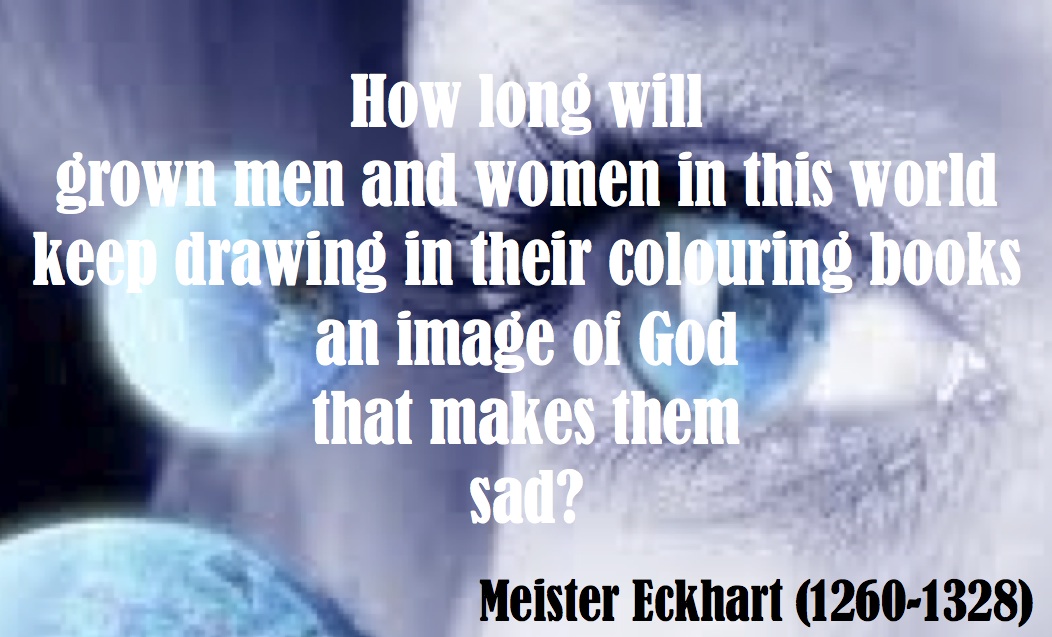
sad Eckhart

It has been said that there are two books that reveal the nature of our Creator, the second of which is the Bible. The first and foremost book that reveals the nature of our Creator is creation itself. Folksinger Peter Mayer’s “The Play” strikes me as a prayer of gratitude for this most splendid revelation of the ONE WHO IS, WAS, and EVERMORE SHALL BE, our CREATOR, CHRIST and SPIRIT, ONE. I offer it here in preparation for Sunday’s onslaught of machinations on the Doctrine of the Trinity.

Does Science Reveal that Death is No Less Sacred than Life? – Michael Dowd

evolutionary christianityEvolutionary Christian, Michael Dowd suggests that we are in the early states of what he calls an “evidential reformation” that is where our best map of what is real and what is important doesn’t come from the church hierarchy or the Bible but with scientific evidence.  In this video Dowd looks to Big History, Human Nature, and Death and Chaos from an “evidential standpoint” to offer an “Inspiring Vision of the Future” and “enrich our communion with reality”.

For more on Michael Dowd follow this link

The Church is Like a Desert in an Oasis: Peter Rollins

Crucified Identities Peter Rollins PastorDawn

The Athanasian Creed and an Unholy Trinity – A sermon for Trinity Sunday

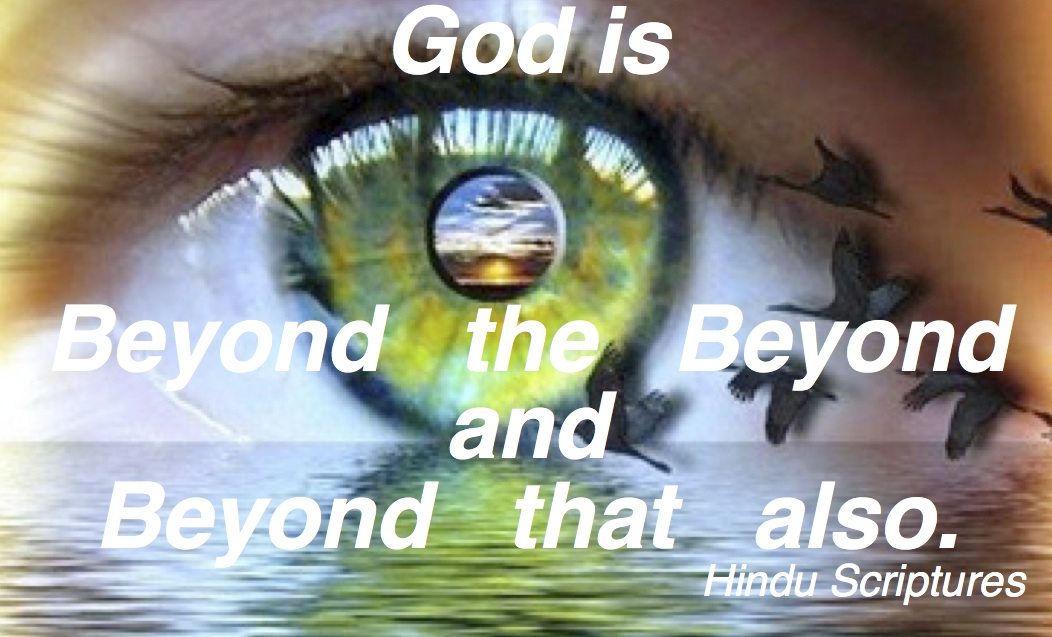
Beyond the Beyond - Dawn Hutchings

I don’t remember the first time I ever saw him. I was barely 18 months old when my brother Alan arrived. Despite the fact that he ruined my gig as an only child, Alan and I grew close over the years. We moved around a lot so we became one another’s best friends. But we went our separate ways when we became teenagers. When I tell the stories, I say that we went our separate ways because Alan became preoccupied with sports.  I suspect that when Alan tells the stories, he says that we went our separate ways because I became preoccupied with the church. Either way you tell it, family and friends used to say that it was hard to believe that we grew up in the same household. Alan developed a reputation for been a bit of a redneck. I developed a reputation for being a bit of a radical. Alan drove four-wheel-drives and went hunting. I drove old beat up cars and lived at an ecumenical retreat centre.  Alan learned a trade, settled down and raised a family. I travelled the world and didn’t get around to figuring out what I was going to be when I grew up, I went back to school at the age of 30.

Alan and I didn’t get around to understanding one another until we were in our mid-40’s. When I grew to appreciate the gentle man that he has become and Alan began to respect the person I’ve become. We still love to talk politics, but these days we tend to agree more than we disagree, I’m not sure who mellowed, the redneck or the radical. We don’t talk much about religion, though. Growing up, Alan would claim to be an atheist, and scoffed at my involvement with the church. These days, Alan, calls suggests he is an agnostic, and although he’s come to respect my life in the church, he still scoffs at the hypocrisy of the church.

I still remember the very first time that I saw Manjit. Her face was the colour of pure milk chocolate. Her jet-black hair was long and wavy. She sat at the very back of the classroom. When the teacher introduced me to Manjit, her toothy grin welcomed me. We were twelve years old. I was the new kid in town and Manjit was the only East Indian in the class. We were to share a double-desk for the remainder of the school year. I remember my first trip to Manjit’s home. A science project needed our attention. I can still smell the aroma of Manjit’s home where exotic curries released their pungency into the air. Over several meals at Manjit’s, I learned to like my food hot and spicy. Manjit’s mother would blend her own spices and she never forgot to send a package or two of her specially blended curries home with me.

Manjit is a gentle soul who introduced me to the wonders of her faith. Manjit is a Hindu. Manjit never tried to encourage me to become a Hindu.  Although over the years she would remind me of the Hindu saying that admonishes Hindus to be better Hindus, Muslims to be better Muslims, Jews to be better Jews, Buddhists to be better Buddhists, and Christians to be better Christians.  Manjit grew into a kind and gentle woman. She works as a social worker in Vancouver’s rough east-end neighborhoods. The last time I saw Manjit she was patiently guiding the students of a confirmation class that I taught, around her Temple. Later that evening Manjit and I talked a long time about Jesus. Manjit told me that she’d always been fascinated with Jesus’ teachings and that she had no problem believing that Jesus is God, but then she explained that Hindus have a thousand god’s.

I can still remember the very first time that Henry walked into my office. A long black beard together with the yarmulke that he wore on his head gave Henry away. So, from the very beginning I knew that Henry was Jewish. But it took a few years of working together before I discovered that in addition to being a graphic artist, Henry is also a rabbi. Henry became a dear friend of mine and over the years he shared so much of his wisdom with me. Many a night Henry and I sat up to the wee hours discussing the Scriptures. Henry even arranged for me to study Hebrew at his Yeshiva. I learned a great deal from Henry. We often talked about Jesus. We rarely agreed about Jesus, but we often talked about him.

Alan, Manjit and Henry, some would call them an unholy Trinity. But to me they are, each of them, sacred. Trinity Sunday is my least favorite Sunday of the Church year. It’s the only festival of the church year that is designed to celebrate not God, nor Jesus, not even the Holy Spirit, but rather a doctrine of the church. The notion that God is One in Three; a doctrine that was created by theologians to explain the inexpressible, a doctrine the church “fathers” began to cast in stone in the words of the Apostle’s, Nicene and Athanasian Creeds.  Three Creeds that make up an unholy trinity in and of themselves. Three Creeds that the Lutheran Church continues to hold as articles of the faith. Three Creeds that continue to hold sway in our church.Three Creeds that in my humble opinion make up an unholy trinity. Three Creeds upon which the doctrine of the Trinity rests.

The Apostles’ and Nicene creeds are familiar to most people who’ve spent time in the churches of Christendom. But it’s the 3rd creed of this unholy Trinity that makes Trinity Sunday my least favorite Sunday of the Church year and for me calls into question the entire doctrine of the Trinity. I still remember the first time I actually heard the third creed. I was about 20. I’d been attending church for about five years and I’d already learned to recite the Apostles creed which we used almost every Sunday and the Nicene Creed which we used on the high holy days like Easter, Pentecost and Christmas. But somehow in those five years I never came across the Athanasian Creed. I must have missed a few Trinity Sundays because in the Lutheran Church tradition dictates that on Trinity Sunday the Athanasian Creed be used. So, on this particular Sunday after the Hymn of the Day the pastor instructed us to turn to page 54 in our Lutheran Book of Worship.    Continue reading

“Trinity: Image of the Community that is God” Desmond Tutu

Trinity Desmond Tutu - Dawn Hutchings

Tutu: “Isn’t it wonderful that we have this Doctrine of the Trinity that speaks of God as a fellowship, a community. And so, you have this wonderful image of the community that is God, the Trinity. So that, all eternity the One who is called Father pours out all of God’s being into the Son….and the Son returning from all eternity this love and you have this movement between the two that is so tremendous that it is God the Holy Spirit.”

Today in a ceremony in London’s Guildhall, Desmond Tutu will receive the Templeton Prize in recognition of his lifelong work in advancing spiritual principles of love and forgiveness. This video was made to commemorate the honour.