If religion is to move beyond the supernatural, we must begin to see religion as a work of art. Richard Holloway, the former Primate of the Scottish Episcopal Church points to the power of story to explore human discontent as we crawl toward a better humanity.
It was nearly 20 years ago, and I still remember it as if it were yesterday. I was working as the on-call Chaplain at the Grand River Hospital in Kitchener. I had been paged to the emergency room to attend to a man who had accompanied a patient to the hospital, VSA, the code for Vital Signs Absent. Someone was waiting for me in the Quiet Room. The Quiet Room was a small ten by twelve room, into which loved ones of really serious patients were asked to wait for the worst possible news. They were kept there in the Quiet Room so that they wouldn’t be disturbed, but I suspect that the real reason is so that they wouldn’t disturb the less seriously ill patients.
Inside the Quiet Room sat one of the largest men I have ever met. He was about six-eight, with big broad shoulders. He wore blue jeans and a black leather jacket. He had long black hair and a bushy beard. He could have passed for the head of a biker gang and under normal circumstances, I probably would have been very afraid of this character. I introduced myself as the Chaplain and he just put his head in his hands. Chaplains are not popular people in hospital emergency rooms. People usually expect the worst when the medical profession calls in a chaplain. I took a seat and together we waited.
Slowly, this big bear of a man began to tell me what had happened. He said, that everything was all his fault; he was to blame. Anne, his partner wouldn’t be in the other room fighting for her life if it wasn’t for him. After years of being on his own, driving truck from one place to another, never really having a home, he had met Anne and she had changed everything. No more long hauls for him. He switched to driving locally. For the first time in a very long time he had a home; a home he and Anne had made together. She’d made him so happy. He loved her so much. Everything was going so well for them.
Why? Why did this have to happen? He knew he shouldn’t have allowed himself to be happy. It was all his fault. If only he hadn’t of stuck around. None of this would have happened.
Quietly, I asked him just what had happened. He explained that he had come home from the store. He’d gone out for a pack of cigarettes. Anne had asked him to quit. He should have quit smoking. When he got back from the corner-store he found Anne lying on the floor. He dialed 911 and started CPR.
They wouldn’t let him stay with her. Could I go and see how she was doing? I headed back to the resuscitation room. They were tidying up. The doctor said she had a massive coronary, she was dead before she got to the hospital, they had just been going through the motions. I waited while the doctor filled in the paperwork and then together, we headed toward the Quiet Room. The doctor didn’t say a word when we arrived, he let his face do all the talking and I watched as a giant of a man fell to pieces.
When he quieted down a little, he told me that Anne was one of the best things in his life and that he should have known better. It was all his fault. If he’d just left her alone she would have been better off. Mutual friends had introduced them just a year ago. He fell for her right away. He should have known it was too good to be true. It was all his fault. It was happening all over again, only this time he should have known better. Through his tears, he asked me, how I could believe in such cruel God. God took his son away from him and now God had taken Anne. He began to moan, over and over again, crying out for his lost son Billy.
It took about an hour for him to tell me what had happened, some 25 years earlier. His son had been playing with some friends down by the river. They’d made a makeshift raft. Somehow, little Billy had drowned. Just five years old and he was taken away. It was all his fault. If he hadn’t been such a lousy father, Billy wouldn’t have been taken away from him. After Billy died, his marriage fell apart. That was all his fault too. If only he’d been a better husband, a better man, God would have helped them to work it out. But clearly, God was punishing him for all the terrible things he had done in his life.
He should have known better than to take the chance. He just should have known better. If he had just stayed on the road. If he hadn’t tried to make some sort of life with Anne, she’d still be alive. God had really stuck it to him this time. This was his punishment for trying to be happy. He cried softly then. Over and over again crying out the names of Anne and Billy.
I quietly told this big bear of a broken man, that I didn’t believe in the kind of God that he was talking about. The God that I know wouldn’t do something like that. God is not that cruel. I told him that I believed that God wept for his son and for Anne, and that God knew the kind of pain that he was feeling. He just kept on sobbing, telling me that I didn’t understand, insisting that it was all his fault. Looking back, I realize that I was probably trying to convince myself at that moment that God was not some sort of monster. At that very moment I suppose that I felt like God was indeed some sort of monster. How could I have expected to help this man to reconcile the death of his son and his partner with the notion of a loving God? Surely that man was better off believing in a punishing God rather than an absent or capricious God who allowed the innocent to suffer? The man himself was willing to blame himself rather than to blame God. God, in that man’s mind, was just doing what had to be done, punishing a guilty man. He knew beyond a doubt that he was to blame. His crimes had caused the deaths of his loved ones, not God. Who was I to destroy his worldview? At least his reasoning allowed him to make some sense out of his life.
Who among us has not done the same when calamity strikes, wondering what we have done wrong to deserve our plight? Who among us at some time or another has not scrutinized our own behaviour, our relationships, our diets, our faith or lack of faith, hunting from some cause to explain our lot in the vain hope that we can find the reason behind our suffering? We are only human after all, less interested in the truth than in the consequences. What we crave above all else is to grasp for control over the chaos of our lives.Continue reading →
When I was in high school, I used to have a recurring nightmare. In my nightmare I would be standing in front of my locker staring down at the combination lock, trying desperately to remember the combination. All the books that I needed for class, all the binders that contained my carefully completed homework assignments, as well as the time-table that would tell me which class I was supposed to go to next, were inside my locker. The clock was ticking, the bell was about to ring, I was supposed to be sitting down at a desk somewhere, but I had absolutely no idea where because I couldn’t for the life of me remember the combination for the lock, that dangled before me, keeping me from the stuff I so desperately needed in order to be where I was supposed to be, doing what I was supposed to be doing. I would have this nightmare whenever my anxiety levels where elevated which when I was a teenager, used to happen quite often. The funny thing is, I never forgot my combination and even though the lock is long gone, confined to the garbage of history, I can still tell you my combination: 21,13, 27. You see whenever I find myself feeling totally overwhelmed and anxious, and not knowing what to do; when I know that I am in over my head and I’m almost paralyzed with fear, in order to get myself going again, in order to find the courage to do something, I will often repeat to myself the numbers of my high school locker combination: 21, 13, 27.
I learned this trick on a September morning standing beside a locker located not in my high school, but up on the second floor of Waterloo Lutheran Seminary. It was my first day at seminary as a student in the Master of Divinity Program. I was 36 years old; the oldest person in a class of a dozen students. I was standing in front of the locker that had just been assigned to me. It had an all too familiar lock on it. In my hand I held a small piece of paper on which the seminary office staff had written the number and combination of the locker that had been assigned to me. I stood there staring at the combination, and suddenly I was a teenager again, standing terrified in front of a locker, with absolutely no idea what to do next. I was 36 years old for crying out loud, I’d travelled thousands of miles to get to this locker, I was about to embark on a program that I’d been preparing to enter for the previous 4 years as an under-graduate. I’d left a good job, and a good life behind, and I was supposed to be headed to some classroom or other to begin a program that I was convinced I didn’t have what it takes to complete. I’d already met my fellow students and they all looked like children to me. I knew that it was only a matter of time before the faculty discovered that I didn’t really belong at seminary. I remember standing there and wanting with all my heart to run away and hide, I remember praying, “help Jesus, help, help, me Jesus, help, me Jesus, yeah, get me out of here.”
I was terrified, when all of a sudden, a well-dressed woman came up beside me and said, “Can I help you with anything?” From her age and the tailored suit, she was wearing, I assumed that she must be a professor and I knew that I should say something, but I was too afraid that anything I might say, would give me away as someone who really didn’t belong at seminary. So, I just sort of stood there. “I’m Marlene” she said, “It looks like we’re locker neighbours. Just take a deep breath you’re going to be all right. Do you feel like you’re back in high school?” I nodded. “Just breathe” she said. “You can do this.”
“I’m too old for all this.” I said. “Ha” she said, “I’m older than you and I keep waiting for the hook to come and drag me off the stage and outta here. But trust me,” she said, “this is way harder than anything you’ve ever done before, but you can do this, just pretend you’re back in high school and put one foot in front of the other and you’ll be just fine. If you need any help, my name is Marlene, I’m in my second year here, so I should be able to help you.” Continue reading →
Faith and Begorra! St. Patrick’s Day fall on a Sunday this year!. Yes, it is also the second Sunday in Lent and and the perfect time to explore Jesus’ use of the image of God as a mother hen, but St. Patrick’s Day provides so many rich opportunities to explore some thirst-quenching images. So I’m reposting this sermon I preached six years ago because the memory of preaching with a Guinness glass in my hand still makes me chuckle. The best way to fully appreciate this sermon is to pour yourself a glass of your favourite tipple, sit back, listen and enjoy a laugh. For those colleagues who are busy searching for sermon ideas for this coming Sunday you can read my attempt to write with a Belfast accent below…you’ll probably need a tipple of some-at to get tru it! Cheers!
Readings: Numbers 27: 1-11; Acts 13:44-51; John 12:1-8
On this particular St. Paddy’s Day, I decided to be somewhat playful and irreverent with a sermon designed encourage folk to think beyond words on a page. The first reading brought the wonderful story of the Daughters of Zelophehad to church and as this reading does not appear in the Revised Common Lectionary it was fun to play with these feisty women. The reading from the book of Acts is actually the prescribed reading for the commemoration of St. Patrick and the Gospel text is prescribed for Lent 5C. The Guinness was just for fun! Enjoy.
Listen to the sermon
It’s not every year that St. Patrick’s Day falls on a Sunday. “An so,” and so, that’s a very Irish expression. At least it is in some parts of Ireland. You’ll hear someone use that wee phrase, usually at the end of a sentence. An so…Sometimes they follow it with iy….and so, iy. But not from the part of Ireland that my people are from, sure the never said that. An so… What was I sayin? Sure it’s not every year that St. Paddie’s Day falls on a Sunday. And I don’t think it will every happen again that you’ll get all three lined up together like this, St. Paddie’s Day, Sunday and Holy Cross’ Annual Meeting. And so…. So, let me be tellin ye…Such a grand and glorious day as this, calls for a sermon like no other, an so…
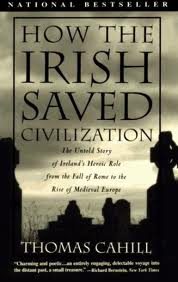
I brought props. Sure St. Paddie had his shamrocks and faith and begorra…an so…I have a book….A book called, “How the Irish Saved Civilization: The Untold Story of Ireland’s Heroic Role from the Fall of Rome to the Rise of Medieval Europe.” By none other than Thomas Cahill, himself. Faith and begorra…did ya ever in all your life hear such a ting as dat??? But that’s not all, I’ve sumtin else…
Take a look at that there??? Sure there’s nothing better on a St. Paddie’s morning than a glass of Guinness….an so… Well you’ll notice that this here particular glass of Guinness, well she’s as empty as Paddie’s pig on market day… An so…for the rest of this wee sermon you just think of me as the preacher who had we tipple before she set about tellin ya what’s what. My glass might be empty, but my heart is full… Full a the devil some may say…or full a the love a Jesus if the truth be told…an so… Where was I? Yeah, sure it’s St. Patrick’s Day and all the world is Irish if only until ya fill there glass. And then faith and begorra…that’s when the truth comes out. That’s when you find out who really saved the world. Now like any good Irish story, we’re gonna wander a bit…so falla me, for like my dear old Nannie used to say, you’d better falla me cause I’m right behind ya. That’s right falla me I’m right behind ya. But that should be no trouble for you lot, cause ya haven’t touched a drop. Yet. And a drop is all you’ll be gettin for have ya seen the size of those Jeesus jiggers; Why you wouldn’t quench the thirst of the devil’s flees with the wee titch of wine they give ya in dose wee glasses. An so…the Irish and those that want to be Irish well this is a big day indeed. An so… I want to tell us all, exactly how the Irish saved civilization, an, an, I’m gonna tell the truth about St. Patrick himself…an, an, while I’m at it, I wanna take to use about those Daughters of Zolophehad, now there were a bunch of girls if you know what I mean…and speaking about a bunch a girls, while I’m at it I wanna tell ya all about those Marys…Faith and begorra, who’d be havin it?
Sure there’s Mary de Mother of Jesus, and then there’s Mary Jesus’ best friend, you know the girl from over Bethany way…and then there’s that lovely Mary, you know the lovely girl from over there in Magdela who everyone is after confusing with dat other woman, the one the call, Mary who really wasn’t Mary at’al, at’al, at’al… Sure wasn’t she after being healed, her being a sinner from the city and all…Sure there’s more Mary’s in this story, than I have time to be tellin ya about. So, we’ll just leave Mary the mother of Jesus out of it, cause she’s got nothing to do with this really. Unless of course, I loose me, way…and then begorra, I be Jesus, Mary and Joseph, this and Jesus Mary and Joseph that…an so… Were was I ??? I was needin a wee drink that’s where I was….Continue reading →
Written 3 years ago, before the fox became the most power person on the planet.
Sadly, it still resonates.
Drawing the connection between the French word “lent” as meaning slow and the historical Lenten practice of fasting, we began our Lenten journey with the suggestion that we adopt a spiritual practice of slowing down for lent by fasting from fast. So, following a delightfully slow start on Monday morning, I read the assigned gospel text for this Sunday and spent some time luxuriating in the study of fables about foxes in henhouses. The gospel’s description of Jesus describing himself as a mother hen longing to gather up her chicks in the safety of her breast so to protect them from encounters with Herod the fox created images that suggested that we lean into the Mystery that we call God. If as our friend Dom Crossan is fond of saying, Jesus really “is what God looks like in sandals,” then surely the gospel-storyteller’s casting Jesus as someone who compares himself to a mother hen, must tell us something about how Jesus want’s his hearers to understand the nature of God. So, I began thinking about preparing a liturgy devoted to gently leaning into the MYSYERY of God.
Part of my lenten practice of fasting from fasting from fast caused me to shun my regular Monday morning consumption of news media, as most of you know, I’m a bit of a news-aholic and so on my day off, I usually spend way too much time catching up on the news of the world. These days the news tends to send my blood pressure racing so, I avoided my usual media haunts in favour of enjoying a few movies and some exercise. As the week wore on, I developed a cold and so Wednesday and Thursday were spent drifting in and out of consciousness as I tried to sleep off the effects of fever and congestion. So, imagine my horror when I finally tuned back into the news of the world on Friday. The fox was actually in the hen house. There he was a fox whose sly cunning makes Herod Antapis look tame, attacking a beautiful tender sweet hen, who over and over again wants for nothing more than to gather children as a mother hen collects her babies beneath her wings. Donald John Trump was attacking the Pope! At first, I thought the decongestants that I was taking were causing hallucinations! Talk about foxes in the hen houses!
Herod Antipas wanted nothing more than to be King of the Jews and Trump wants nothing more than to be King of the World! Herod Antipas scandalized the first century and Trump is well on his way to scandalizing the 21st century. Jesus Christ shocked the first century by comparing himself to a hen.
Donald Trump continues to shock this century with the size of his ego. For over a billion Roman Catholics, Pope Francis is Christ’s representative on earth, billions more see him as a religious leader of impeccable credentials, others see him as a kindly old gentleman who is struggling to bring a stodgy religious institution into the 21st century by opening the doors to welcome in the poor and marginalized. Donald Trump is a narcissist of epic proportions; a real-estate mogul, who despite his three financial bankruptcies has managed to translate his business savvy into reality show ratings that paved the way to a media career which he is currently trying to translate into a political career in his quest for the White House. Responding to a question about the astonishing popularity of Donald Trump, the Pope said something to the effect that “any person who focusses on building walls and not trying to build bridges is not a Christian.” And that audacious fox stopped dead in his tracks just long enough to insist that the Pope is and I quote, “disgraceful”.
Can you blame me for suspecting that I’d taken one too many decongestants? I turned the TV off lest I discover that aliens were about to land on earth and lock us all up for our own safety. Back in the relative safety of my office I returned to biblical commentaries to read about metaphors for God. What exactly is the anonymous gospel-storyteller we call Luke getting at with this particular metaphor? I mean why a chicken? Why not something more elegant or graceful or majestic; an eagle perhaps, or a lion, or a bear? This are metaphors for God that were good enough for other biblical storytellers, but not for this one. Now I have only ever really had a relationship with one chicken in my life. I’ve got to say a chicken is the last thing I would want to be compared to let along something I’d compare myself too. If Jesus is comparing himself to a mother hen collecting her babies under her wings, and the gospel-storyteller wants us to think of Jesus as God then is the gospel-storyteller actually asking us to think of God as a mother hen?
Let me tell you about the one chicken I have actually known personally. Her name was Betty, Betty the Broiler. We called her Betty the Broiler because she wasn’t anything much to look at. You see back in the day, when I was helping to run a retreat centre, among the various animals we kept on Seabright Farm were chickens. Seabright chickens to be exact. Seabright chickens were breed to as ornamental chickens and a flock of seabrights are about as beautiful a flock of chickens as ever adorned a farmyard. For some unknown reason, our flock of seabright chicks came complete with a rather plain looking banti hen that was anything but a seabright, she was a plain white hen which we nicknamed Betty the Broiler on account of how she looked like a generic hen fit for broiling.
But Betty was anything but generic. Betty thought she was human. Right from the start rather than scratch about with the other hens, Betty liked nothing better than to follow the children wherever they went. The kids on the farm loved Betty and because they loved her, they fed her stuff that the average hen never eats; sandwiches, crackers, bananas, berries, ice-cream, Betty’s favourite food was hot dogs. The kids used to squeal with laughter as Betty chased them around the yard demanding that they share their food with her. Well one day, depending on whose telling the story, either one of the dogs on the farm, wanted to share in the food that the kids were eating or a strange dog wandered onto the property to only to attack one of the kids, anyway long story short the kids ran into the farmhouse screaming for help because “a dog tried to kill Betty.” By the time we got to her Betty was gasping on the lawn surrounded by feathers. Her throat had clearly been cut. Betty looked ready for the broiler.
But the children insisted, and so none of the adults had the heart to do what seemed like the kind thing and simply finish her off. Instead against better judgement of the adults, Betty the broiler was rushed to the vet, who even though he thought the so-called adults had taken leave of their senses, agreed to stitch Betty up. The vet had never before tried to rescue a chicken, so when he handed her back to the adults, he suggested that she might be in considerable pain, but rather than prescribe costly drugs, he suggested that we might try alcohol to ease her pain.Continue reading →
This morning’s sunshine has left me longing for spring. I know that when all is said and done this winter will probably go into the record books as a particularly mild one. But even so, I’ve grown weary of the trappings of winter and I cannot wait for spring to arrive. On Friday I found myself suffering from a case of cabin fever. I’d spent the day working in my office and even though my desk faces a large window, the dull grey hue of the cold, overcast, afternoon made me long for spring, when the sunshine would entice me to open my widow and I’d hear the sounds of the world out there waking up from its long winter nap. From my office window I caught a glimpse of some kids who judging from the time of day, were heading home from school. As they trudged along the sidewalk, the sight of their mother tagging along behind them made me incredibly sad. Those poor kids were being escorted by their mother. How in the world were they ever going to have any adventures with their mother tagging along behind them? I know that the world has changed some since I was a kid, but the adventures that we could have on the way home from school, well let’s just say, what our mothers don’t know can’t hurt them. The kids walking down the street on Friday, were going straight home; something we rarely did. We wandered home from school, and it could take hours to get home. Now I know that some of you may be fond of saying that when we were kids, we had to walk for miles and miles and miles, and it was all uphill and the sidewalks weren’t ploughed back in the day and the snow, well you should have seen it back then it was piled as high as the rooftops and we had to trudge through snow drifts that were taller than we were. Yeah, yeah, kids today, they just don’t know how well off they really are. Or are they?
Kids are escorted home from school and there’s no time for dilly-dallying. I’ve got to say that dilly-dallying on my way home from school was some of the best fun I can remember. After a day spent at school there was nothing quite like the fun we could get up to on our way home. I remember one spring my friends and I spent days and weeks collecting tree branches. We wandered here and there trying to find branches with just the right amount of sap in them to make them supple and pliable. You had to be able to bend them just so and unless they had lots of sap in them, they would snap in two. We needed branches that we could bend into bows and when we found those branches, we collected other branches that we could fashion into arrows. It wasn’t difficult because all of us had jack knives and we would take those branches and with our jack knives we’d sharpen them just so. When we had all our bows and arrows ready, we’d practice shooting arrows.Continue reading →
Genesis 15:1-12,17-18 –Musing About Genesis Bloody Carcasses
From time to time, the prescribed readings from the Common Lectionary fill me with dread and despair.Something about those bloodied, split, rotting carcasses that sealed the deal between God and Abraham makes me wonder about the nature of the god we have projected into the heavens and ask: Have we evolved or has God? The story of God’s promises to the “Chosen People” portrays God as a churlish player in humanity’s game of tribal rivalry. While I’d rather not preach on the text from Genesis this Sunday, I know full well that simply reading this text during worship without elaboration, will if folk are paying attention, leave a distasteful oder in the sanctuary that will surely spoil our appetite for our common meal of body and blood disguised as bread and wine.
The readings for this coming Sunday have me thinking about tribalism. There’s always more than one way to look at things. Tribalism has served us well. New people to meet can be exciting or it can be frightening. Taking comfort with your own people is wonderful, but taking too much pride in your own kind is dangerous. One minute you’re cheering for your team the next minute you’re hurling insults at the other guy and one too many insults and the next thing you know you’re at war. A little tribalism is a good thing, but how much tribalism is too much? Tribalism is a basic human survival instinct. Tribalism is lodged deep within our psyches and has been from the very beginning of time. Tribal is part of our primordial selves. Tapping into this basic human instinct can mean the difference between survival and death.
Tribal thinking exists on almost every level of human life, from the international to the local. Attack a human on any level and that human will resort to instinctive behaviour. When threatened humans have two basic instincts, fight or flight and the choice between the two often comes down to tribalism. If you have enough people to back you, you’ll probably choose to fight. Not enough people and you’ll probably choose flight.
Human kind has evolved a great deal over the centuries but we haven’t evolved very far from our basic instincts. You don’t have to scratch a fan too deeply to find the primitive tribal mentality. Tribalism is seen in the way we portray our rivals. I once heard a Kiwi say, “I root for two teams, New Zealand and whoever is playing Australia.” Sporting competition is all well and good, but when tribalism is carried to its worst possible conclusion, wars beak out. Tribal feeling is then exacerbated in times of war, and tribal propaganda is used to dehumanize our enemies to make it easier to hate or kill without any qualms of conscience. We don’t kill human beings in war; our victims are not someone’s child, spouse, or parent. NO, one kills either, the Huns, the Krauts, the Japs, the Nips, the VC, the insurgents, the fanatics or the terrorists.
There is within us all a basic, dominant, intrinsic fear of those tribes different from our own, a predisposition to be on guard against them, to reject them, to attack and even to kill them. This tribal tradition arises out of our deep-seated survival mentality and it feeds something at the heart of our insecure humanity. We are tribal people to our core. Far more than we will consciously admit, the religions of the world including Christianity rise out of and undergird our tribal thinking.Continue reading →
I’m not sure that I need any ashes to remind me of my mortality. I think the wake-up call that Ash Wednesday provides rang for me over a week ago. I was driving down the road – distracted by thoughts of this and that, when all of a sudden it happened, a car came at you out of nowhere and I slammed on the breaks and quickly swerved to avoid a disaster. I could have been killed. I could have killed someone. My life or someone else’s life could have been radically changed in an instant. As I pulled back into traffic, I was ever so conscious of the weight of my foot on the accelerator and I swore out loud to no one in particular! I began to scold myself. What was I thinking? Why wasn’t I paying attention? Wake-up you could have been killed!
Well, just in case you haven’t had a wake-up call like that recently, welcome to Ash Wednesday. What have you been thinking? Why weren’t you paying attention? Wake-up — you are going to die!!! Ash Wednesday is our winter wake-up call. Some of us may not need the wake-up call. Some of us know all too well that death is all around us. Some of us have lost someone dear, others are walking with someone who is close to death. Some of you may have felt that fear in the pit of your belly when the doctor suggested a particular test. Wake-up calls come in all sorts of ways.
Traditional Ash Wednesday worship would require us to focus on the brevity of life and remember that none of us will get out of this life alive. Our ancestors in the faith, entered into a morose season of Lent via the awesome reminder that they came from dust and soon they shall return to the dust. Lent was a season of lament and repentance based on a particular understanding of what it means to be human. Since the 11thcentury most of Christianity has understood the human condition as that of those who have fallen from grace. But we live in a post-modern world. We no longer believe that Adam and Eve were the first humans. We read Genesis not as history but as myth. We understand that humans evolved over millions of years. There was no perfect human condition for us to fall from. What happens when you reject the theological construct of original sin? What happens when you embrace the idea that we are fiercely and wonderfully made? What happens when you see humanity as originally blessed?Continue reading →
Following our worship, our Annual Congregational Meeting began and we had plenty of opportunities to talk about the things we value about Holy Cross and the various transformations that we have experienced as well as our hopes and dreams for the future.
Back in November of 2015, my Mom, who lives in Vancouver, fell. The fall was the cumulative effect of years and years of ill health, which for all sorts of reasons my Mom was unable to face; ill health that my family has fretted over and worried about. But no matter how hard we tried, it took a fall to get my Mom into the hospital. Many of you know the pain of living thousands and thousands of kilometers away from loved ones. The telephone rings and suddenly your life is turned upside down as you anxiously try to decide if you should book a flight, pack a bag, and rush to the bedside of someone you love. As I was agonizing over whether I should or shouldn’t rush out to Vancouver, my brother called and said that I needed to come right away. The sound of my brother’s voice cracking in mid-sentence convinced me to move heaven and earth in order to race to Vancouver, in order to sit at what we were now convinced would be my mother’s deathbed.
As a pastor, I have had the privilege of being present with all sorts of people as they sit vigils with their loved ones. Over the years, I have learned the value of a quiet, gentle, presence to accompany us in the darkest of journeys. In my head, I knew that whatever my family was about to experience, all that was really necessary was for me to do was to be present. So, I went to Vancouver, not as a pastor, not as someone who has been trained to be a non-anxious presence in the midst of a crisis, not as a professional who has accompanied many people on this kind of journey, not as Pastor Dawn; no on this journey I was simply, as my Mom calls, me when she wants to talk seriously to me, “Dawn Lesley”, a little girl, terrified of what lay in front of me.
The flight to Vancouver is about five hours long and during that five hours, I imagined what it would be like when I arrived and I tried to steel myself. My family is not what you would call religious, they don’t go to church, they don’t much talk about what they believe in, and they view my involvement in the church as a bit of strange; I’m an oddity in my family. They don’t really know this persona, Pastor Dawn is a mystery and to them I am simply their daughter Dawn, or their sister, or their Auntie Dawn. To the youngest members of the family Carol and I are lovingly referred to as their far-away aunties. We fly in for a visit every once in a while and the history that I share with my family, reminds us of the love we share for one another, and carries us through our all too brief encounters. The history that we share filled my thoughts as the plane carried me and all my baggage home; home so that I could be present for whatever might happen. The seats on either side of me were empty. Normally, empty seats on a plane, meant more room to stretch out and be more comfortable. But this time those empty seats only served to remind me of my own emptiness. I wanted Jesus to be in the seat beside me. I wanted God the “Father” to be in the other seat. And I wanted the Holy Spirit to be outside the plane somewhere holding us all up there in the sky, keeping the plane safely above the clouds. I wanted the Father, Son, and Holy Spirit to keep me safe, to comfort me, to take care of my Mother. I wanted the big and powerful, Almighty Sky God, to reach down and interfere in the world, and I wanted it right then and there for me and for mine. I wanted that old-time religion, the kind of religion I signed up for way back when, when life was simpler. The kind of religion where all I need was to have faith and God would answer my prayers. Instead, all I had with me was my iPad full of theological books about the nature of God, the historical Jesus, and progressive Christianity. Cold comfort when your tens of thousands of feet up in the sky, hurtling in a metal tube towards a situation that strikes fear in your heart and could rob you of your Mother. Somehow, the Ground of my Being, the One Who Lies at the very heart of Reality, the God who Is LOVE, was obscured by God the Father, the Almighty Idol who served me so well in the past, was back, and the only problem was that I have long since stopped worshipping idols.Continue reading →
As many of you know, one of my favorite ways of attempting to name the DIVINE comes from the fourth century Bishop Augustine of Hippo. Augustine’s trinitarian formulations describes the DIVINE Creator as the LOVER, Christ as the BELOVED, and the Holy Spirit as the LOVE that binds them together. LOVER, BELOVED, and LOVE Herself! Remember that Spirit is feminine in both Hebrew and Latin. LOVER, BELOVED, and LOVE Herself!
Now the trouble with words is that words let us down. Words are after all simply symbols pointing beyond themselves to something other than the words. Words are a way to make meaning and to share whatever meaning we make with one another. The trouble with words is that words tend to let us down when it comes to making meaning of our experiences of the DIVINE MYSTERY. Words simply aren’t capable of giving us more than a glimpse of the DIVINE MYSTERY that is the LOVE that we call GOD.
So, even though I’m particularly fond of Augustine’s attempt to describe the DIVINE MYSTERY as LOVER, BELOVED, and LOVER Herself, I realize that even this lovely, pardon the pun, even this lovely gathering of words gives us but a glimpse of the LOVE that we call GOD. Part of the problem is the word “love”. In these parts and in these times the word “love” has become rather wish-washy. I am a child of the 60’s when the word “love” appeared all over the place in stylized letters, with flowers; often daisies, incorporated into the O. “PEACE, LOVE, and Rock ‘n roll,” “Looking for love and feeling groovy…”
In the decades since the sixties the flower-children have all grown up and the groovy part has faded. But from our comfortable positions of North American, upper-middle class privilege, we have a tendency to over-sentimentalize the world “love”. That’s why I had Pat read, Dr. King’s warnings about the kind of love that is sentimental and anemic. Anemic love is endemic these days. Anemic love is rampant in our culture, our politics, and sadly in our churches. LOVER, BELOVED, and LOVE Herself is certainly NOT anemic love. The kind of love that Jesus taught in his sermon on the mount in the gospel according to Matthew, or in the sermon on the plain in today’s gospel from the anonymous-gospel-story teller that we call Luke. Anemic love is simply not up to the task of empowering us to love our enemies. Anemic lovers aren’t capable of doing good to those who hate them, or blessing those who curse them, or praying for those who mistreat them. That kind of love, the kind of love that Jesus is talking about, the kind of love that Jesus taught with his very life and death, that kind of love is anything but anemic. That kind of love is powerful. In the words of Dr. King:
“Now, we’ve got to get this thing right. What is needed is a realization that power without love is reckless and abusive, and love without power is sentimental and anemic. Power at its best is love implementing the demands of justice, and justice at its best is love correcting everything that stands against love.”
Dr. King had that kind of love. I was just eleven years old, when Dr. King’s power was cut down. I can still vividly remember the stunned emotions that poured out from the adults in my life when news of Dr. King’s assassination came over the radio. Dr. King was a hero of mine. I’d followed his quest for freedom and justice for his people and cheered him on from the safety of my living room. To this day, I’m convinced that it was Dr. King’s embodiment of the teachings of Jesus that inspired the curiosity in me that led me to first seek out my mother’s bible so that I could read for myself what it was that this Jesus actually taught. I never went to church as a kid. Most of what I knew about Jesus, I picked up by osmosis. Dr. King’s speeches mesmerized me. But I was just a kid and it would take me decades to begin to grasp the magnitude of Dr. King’s non-violent resistance. Eventually, I would learn that Dr. King was mentored in non-violent resistance by the Reverend Doctor Howard Thurman, who intern was inspired by Mahatma Gandhi. Gandhi’s non-violent resistance overthrew what was at the time one the most powerful empire on the planet. Howard Thurman had traveled to India as early as 1935 where he met Gandhi whose commitment to ahimsa, the Hindu principle of refusing to do harm to any creatures, sent Thurman back to the gospels to discover anew Jesus’ commitment to non-violence. In 1949, Dr. Thurman wrote a little book that Dr. King carried with him throughout his struggles for civil rights. Thurman’s little book entitled, “Jesus and the Disinherited” revolutionized the civil rights movement. In his book, Thurman reminds us that Jesus was a Jewish man and as a Jew he was a member of an oppressed race. Jesus was also poor. Jesus was a member of a race that was oppressed by the power of an Empire that had been established through violence, an Empire that maintained its power through violence and injustice perpetuated upon the poor oppressed. Thurman insisted that as a poor and oppressed man, Jesus new what it meant to suffer at the hands of the powerful. Jesus’ concern for justice was born out of his love for his sisters and brothers who like him were poor and oppressed. Jesus had absolutely no interest in being worshipped or believed in. Jesus wanted to be believed and followed. Jesus could preach good news to the poor because he was one of them. Jesus understood what it meant to preach release from captivity because Jesus and his people were captives. Jesus taught a radical form of non-violent resistance. Jesus’ commitment to non-violent resistant lead him to Jerusalem where he would confront the powers of empire. Jesus’ teachings continue to resonate with the poor and the oppressed where-ever people suffer from the abuses of empire; be they political, military, or commercial empires.Continue reading →
In the Gospels According to Matthew and Luke, the Sermon on the Mount, and the Plain provide distillations of the teachings of Jesus; teachings Jesus lived for, teachings that eventually made Jesus so dangerous to the oppressive Roman Empire that they executed him as an enemy of the state. The very heart of these sermons is Jesus’ teaching on non-violence. I can think of no better way to begin my own preparations to preach on this Luke 6:27-38 than to look to the work of the great Walter Wink. I will always be indebted to this amazing teacher for all that I have learned and continue to learn from him. The videos below comprise the various parts of a lecture that Wink offered on the subject of Jesus’ teaching on Non-Violence. For anyone who aspires to follow Jesus this lecture is a must see. Wink’s books are well worn friends that I have often thumbed through to find more than a nugget or two to enable me to teach anew something that I have long since come to know as a result of Wink’s excellent work! His enlightening trilogy: Naming the Powers, Engaging the Powers, and The Powers that Be along with Jesus and Nonviolence: A Third Wayshould be at every preacher’s fingertips as we proclaim Jesus’ radical way of being in the world. Follow this link to a sermon based on these resources.
Once upon a time, in a poor Chinese village, there lived a farmer and his son. The farmer’s only material possession, apart from the land and a small hut, was a horse that he had inherited from his father. One day, the horse ran away, leaving the farmer with no animal with which to work the land. His neighbours, who respected him for his honesty and diligence, went to the farmer’s house to say how much they regretted his loss. The farmer thanked his neighbours for their visit, but asked them: ‘How do you know that what just happened is a misfortune in my life?’
Someone muttered to a friend: ‘He obviously doesn’t want to face facts, but let him think what he likes, after all, this is better than him being sad about it.’ So, his neighbours went away, pretending to agree with what the farmer had said.
A week later, the horse returned to its stable, but it was not alone; the horse brought along a beautiful mare for company. The inhabitants of the village were thrilled when they heard the news, for only then did they understand the reply that the farmer had given them, and they went back to the farmer’s house to congratulate him on his good fortune, ‘Instead of one horse, you’ve got two. Congratulations!’ they said.
‘Many thanks for your visit and for your solidarity,’ replied the farmer. ‘But how do you know that what happened was a blessing in my life?’
The neighbours were rather put out and decided that the farmer must be going mad, and, as they left, one of his neighbours spoke for them all when he said: ‘Doesn’t the farmer realize that the horse is a gift from God?’
A month later, the farmer’s son decided to break the mare in. Unfortunately, the animal bucked wildly and threw the boy off; the boy fell so violently that he broke his leg. The neighbours returned to the farmer’s house, bringing presents for the injured boy. The mayor of the village solemnly presented his condolences to the farmer, saying how sad they all were about what had occurred.
The farmer thanked them for their visit and for their kindness, but he asked: ‘How do you know that what just happened is a misfortune in my life?’
These words left everyone dumbstruck, because they were all quite sure that the boy’s accident was a real tragedy. As they left the farmer’s house, they said to each other: ‘Now he really has gone mad; his only son could be left permanently crippled, and he’s not sure whether the accident was a misfortune or not!’
A few months went by, and Japan declared war on China. The emperor’s emissaries scoured the country for healthy young men to be sent to the front. When they reached the village, they recruited all the young men, except the farmer’s son, whose leg had not yet healed. None of the young men came back alive. The son recovered, and the two horses produced foals that were all sold for a good price. The farmer went to visit his neighbours to console and to help them, since they had always shown him such solidarity. Whenever any of them complained, the farmer would say: ‘How do you know that what just happened is a misfortune?’ If someone was overjoyed about something, he would ask: ‘How do you know that what just happened is a blessing?’ And the people of the village came to understand that life has other meanings that go beyond mere appearance.[i]
Jesus’ comments about blessings and woes are sometimes interpreted as a forecast of what is to come. The poor shall be rewarded, the hungry will be filled, those who weep will laugh, being hated scorned, insulted, and spurned won’t be so bad because this will gain you a great reward. But woe to those who are rich because you’ve had yours now and there won’t be more of that. Woe to you who are full because you are going to be hungry. As for those of you who are laughing now, woe is me you are going to weep in your grief. As for you whom folks speak well of, well we all know what horrors are in store for you because we’ve seen it all before. It’s as if these blessings and woes are a kind of prediction of a reversal of fortunes.
Well if that’s true, I have only one thing to ask of Jesus: Where’s the good news? What’s the point of predicting that things are going to be turned upside down? Is Jesus really pointing toward a Creator who is nothing more than a judge who’s going to punish those who appear to have one life’s lottery, so that the apparent losers can become apparent winners? Well as someone who is blessed beyond measure, I don’t really want to know let alone worship such a Deity. And I can tell you this, I hope that even if I was poor, I wouldn’t wish poverty on my worst enemy, even if that enemy was a greedy, filthy, stinking, rich so-and-so. After all is said and done, isn’t Jesus the rabbi who lived and died teaching the way of LOVE? Cleary, we need to look beyond interpretations that set up the apparent winners and losers as players in a perverse game of reversal of fortunes. It’s long past time for us to move beyond a quid pro quo philosophy that pits winners and loser against one another as if the only way we can have winners is if someone loses.
So, where is the good news here? Good news for the rich and the poor? Good news for the hungry and the fed? Good news for those who weep and for those who laugh? Good news for the winners and for the losers?Continue reading →
I went to high school on the West Coast in a small town called Ladner. Today, Ladner is pretty much a suburban bedroom community from which people commute to their jobs in the city of Vancouver. But back in the early 1970’s, Ladner was a small fishing village. It was a terrific place to go to high school; that is if you were white, middle-class and male. I don’t really know how it was for the handful of folks who weren’t part of the white majority. I remember when I was in grade ten; a new girl showed up in our classes. I’ll call her Shirley for the purposes of this sermon. Shirley, we were told, came from somewhere way up north in British Columbia. Shirley wasn’t part of the majority, back then we called Shirley’s people “Indians.” I remember our homeroom teacher introduced Shirley as an Indian who had travelled south for her education. We were told that there weren’t any high schools where Shirley came from, so she had to leave her family behind and come down to Ladner all by herself. She was boarding with a family in Ladner.
About all I can remember about Shirley’s first days with us is the unusual way that Shirley dressed. Back then there was a sort of dress code. We all wore the same stuff, blue jeans, not just any blue-jeans, mind you, we wore a brand called Seafarers which had bell-bottoms, that dragged on the ground. Both boys and girls wore white tee-shirts and you just had to have the latest thing in foot wear: leather adidas running shoes. We thought we were so cool, with our anti style, which in our rebellious naiveté we didn’t realize was actually a style in itself. Shirley didn’t fit in, because she wore what we openly mocked as stylish clothes. I remember that all her cloths looked new and expensive as if someone had taken her out and bought her an entire wardrobe of old people’s cloths; and by old people I mean 30 somethings. She just didn’t look like one of us. But that didn’t really matter because Shirley wasn’t one of us and so we never included her in anything we did.
After Shirley had been in our school for a few months, I remember a social studies class in which the teacher asked Shirley to tell us about her life in Northern British Columbia. The tale that Shirley told us about the reservation on which she lived was unbelievable to our young ignorant ears. Shirley claimed that she had been forced against her will to leave her family behind and travel all by herself to live with a family that was only interested in the money that the Indian Affairs department paid them for her room and board. She said that her parents would be thrown into jail if she wasn’t in school even though there was no school anywhere near the reservation. She said she’d run away several times, but that she’d always been caught, and her family was punished because she’d missed so much school. She claimed that her family hated living on the reservation. Shirley told us that it wasn’t safe on the reservation because most of the men drank.
My classmates asked all sorts of questions, but there was something in the way they asked the questions that made it clear that none of us believed a word Shirley was saying. After all, how could any of this be true? Nobody would ever take kids away from their families by force. Back then we cut class all the time. It was a different world and as long as you kept your grades up nobody cared whether or not you went to every class. Cutting classes was part of our culture, so the idea that parent could be thrown into jail because you skipped school was crazy talk.
Why we wondered out loud, would the government send you to a school so far away; why not just send you to a school nearer the reservation so that you could go see your folks on weekends? Well, according to Shirley, the government picked schools that were far away so that the Indian kids wouldn’t just run away from school and head back home. The only way home for Shirley was on an airplane and the government only gave her two tickets a year. When the teacher asked Shirley about conditions on the reservation, Shirley spoke really softly about there not being enough water and food to go around. One of us said, that was because they spent all their money on booze and cigarettes. Shirley got really quiet then and the teacher ended the conversation.
Later in the cafeteria there was a lot of conversation about the lies we were convinced Shirley had told us. We simply didn’t believe a word she said. I mean really, this is Canada after all. Canada is a great country, a good place. My parents brought us to Canada because it’s the land of opportunity. If Shirley’s people were having a tough time it wasn’t the government’s fault. Like my classmates, I believed Shirley’s people had only themselves to blame for their troubles. From our position of privilege, we insisted that all “they” had to do was work hard and to get ahead. We believed that we Canadians are good people, we are not prejudice at all.
I remember an actual conversation about the many ways in which Canadians take care of “our” Indians, because we are not like the Americans. Canadians didn’t declare war on Indians, Canadians took care of Indians. Our ignorance was matched only by our arrogance. I, like my privileged classmates, had a naïve understanding of this country. We had been taught to look at Canadian history through rose-coloured glasses. I believed what I was taught about the honour and gallantry of the early settlers of this land, hard workers one and all;
good honest people who’d left the hardships imposed on them in their homelands to build lives for themselves here in Canada. I knew nothing of the world that Shirley was describing. We weren’t taught anything about broken treaties, or the abuses perpetrated by the Indian Affairs Department and we’d certainly never heard about the travesty of residential schools. The conditions Shirley tried to tell us about and the circumstances in which she found herself sounded ridiculous to us, so we assumed that Shirley must be lying. Ignorance and denial were not just our collective responses to Shirley’s story, in my own heart of hearts I was convinced that it that Shirley’s stories could not be true, and I was comfortable passing judgement upon her.
So, the good people of Ladner marginalized Shirley. We weren’t bad, no not us. We weren’t prejudiced, no not us. We simply could not, nor would we believe that the Canadian system could or would inflict such hardships on Shirley’s people. “They, those Indians” must be doing something to bring down the wrath of the Indian Affairs Department. We convinced ourselves that if “they” would just get themselves together and live more like us, things would go a whole lot better for “them.” Just look at Shirley and you’ll see what I mean. Shirley never finished grade ten, she started taking drugs and hanging out with men; older men. I heard that she tried to kill herself not once but several times. Shirley was messed up. From where I was standing, it sure looked like Shirley brought a whole lot of trouble upon herself.
Looking back on the young girl that I once was, I am ashamed of the self-righteousness that blinded me to Shirley’s pain. Sure, I can tell myself that it was a different time and we just didn’t know any better. I can let myself off the hook with all sorts of rationalizations, but the truth is that not a whole lot has changed, even though we all know better. The truth is that to this very day, I continue to find it difficult to accept the reality of my white privilege. I grew up with all the privileges of a world where everything was interpreted from the perspective of a paradigm of Empire and make no mistake about it, that Empire was ruled by white people who were mostly male. Every aspect of our culture was controlled by an Empire that bestowed privilege upon the tribe that I just happened to be born into.Continue reading →
When I was a kid, my family moved around a lot. All that moving around, and always being the new kid at school, really messed me up. When I was about fifteen years old, I started hanging out with a gang. I haven’t got time to go into the details of my involvement with this gang;
suffice it to say, if I knew what this gang was all about, I would never have gotten involved with them. What I didn’t know when I started hanging out with this gang was that the members of this gang all had one thing in common. These members of this gang were part of a Lutheran Youth Group. These gang members managed to convince me to run away with them. They were going on something I’ve never heard of before; a retreat, a weekend at a place called Camp Luther. Somehow, I found myself with a gang of young, socially aware, politically astute kids who wanted to change the world. As I figured out who and what this gang was, I thought they might be a cult. It was kind of exciting to flirt with a cult. So, there I was at Camp Luther on the shores of Lake Hatsick.
Pastor Don Johnson was one of the retreat leaders. Don was the father of our National Bishop Susan Johnson, he died just a few months ago. That retreat was where I first met the young woman who would become our National Bishop. The very first exercise that we were assigned was to team up with someone we didn’t know and share our favorite bible passage. This gang was about to discover that I didn’t belong. I didn’t have a favorite bible passage. I’d only been to church a handful of times in my life, and I hadn’t read very much of the bible. So, I decided to break the rules of the exercise and teamed up with someone I knew slightly and suggested that she go first.Continue reading →
A sermon for Epiphany 4C – listen to the sermon here
When I was a child, I spoke like a child, I thought like a child, I reasoned like a child; when I became an adult, I put an end to childish ways. In the words of Joanie Mitchell, “I’ve looked at love from both sides now. From win and lose and still somehow, it’s love’s illusions I recall I really don’t know love at all.” The Apostle Paul, who by most accounts, knew precious little about love, is responsible for passing on to generation after generation, one of the greatest love poems ever written. 1stCorinthians 13 is without a doubt the most popular reading at Western Weddings, as brides and grooms whether they are Christians, pseudo-Christians, non-Christians, or simply influenced by Hallmark sentimentality, confidently select this passage to celebrate their love for one another. Most preachers have to stop ourselves from rolling our eyes when prospective brides and grooms suggest this passage. We’ve been taught to understand that this text has nothing at all to do with the kind of love that lovers need to sustain a lasting marriage. Even if you know nothing at all about the rest of Paul’s letter to the church at Corinth, if you know anything at all about the love married couples share, you know that it is not anything like the love that is described in this text.
I’m as much of a romantic as the next person, but I ask you, patience, kindness, are one thing, and maybe you’ll get lucking and be able to avoid being envious or boastful, arrogant, or rude, and good luck to you if you do. But never insisting on your own way, never being irritable or resentful, bearing all things, believing all things; please give me a break. Show me a couple who don’t ever engage in a battle of wills, or build up resentments, or succeed in bearing and believing everything about one another, well, that couple is in all likelihood headed for some serious trouble. My darling Carol is perfect in every way, and I of course am perfect in every way and we are sublimely happy, so happy that birds sing when we walk by and flowers stand tall in our saintly presence…Of course not! Carol is the love of my life and being married to her is the best thing that ever happened to me. But I am annoying to live with. I have a job that interferes with our life together on a regular basis. When I’m on a role, I can be arrogant and rude. Even though I’d never say a bad word about Carol, especially from the pulpit, I will tell you this, if Carol was never, boastful, arrogant, or rude, if she was always patient and kind, never insisting on her own way, never irritable or resentful, well I don’t think I would be able to live with her. That’s not the kind of love that any of us could live with, let alone be in love with. I want a real-life partner, someone who will engage me in all of who they are, the good and the bad, the beautiful and the not so beautiful, for better or for worse, in sickness and in health.Continue reading →
The Epistle Reading (Second Reading) for this coming Sunday is 1 Corinthians 13:1-13. Most of us have heard this reading over and over again at weddings as if it were some sort of recipe for happiness between lovers. So often we hear it as an impossible recipe and cast it aside as something nice but unattainable. What would happen if we could hear this passage not as a prescriptive recipe but as a descriptive revelation of the LOVE that is God. Couple this revelation with the knowledge that God dwells in, with, through, and beyond us and it becomes a description of the possibilities for each of us being LOVE in the world. The knowledge that LOVE dwells in us might just open us to being the love that the world so desperately needs.
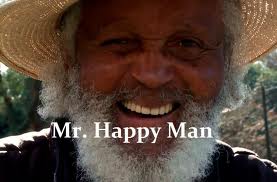
91 year-old, Johnny Barnes is a Bermuda native who embodies the LOVE that dwells in him. How might we embody the LOVE that dwells in us? What does, would, could, will the embodiment of LOVE look like in you?
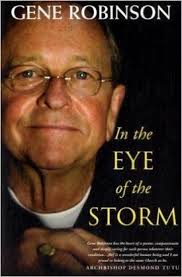
The Rt. Rev. Gene Robinson understands what it means to be threatened because of the Gospel he embodies. While reflecting on the threatening reaction of those who heard Jesus’ first sermon as it is recorded in Luke 4, Bishop Robinson challenges us all to stand on the clifftop with the courage of Jesus. Well worth a listen to all those who are preparing to preach on this text on Sunday.

 If religion is to move beyond the supernatural, we must begin to see religion as a work of art. Richard Holloway, the former Primate of the Scottish Episcopal Church points to the power of story to explore human discontent as we crawl toward a better humanity.







 pastordawn