The readings included John 1:1-9; the Gospel of Thomas 70, and Matthew 2:1-12
You can listen to the sermon here


For those who are preparing to preach on Matthew 1:1-12 this coming Sunday, Jack Spong provides an important view of the context.
A sermon preached on the Second Sunday after Christmas – the readings for this sermon include: John 1:1-9, The Gospel of Thomas 70; Matthew 2:1-12. You can listen to the sermon here
Two cars were waiting at a stoplight. The light turned green, but the man didn’t notice it. A woman in the car behind him was watching traffic pass around them. The woman began pounding on her steering wheel and yelling at the man to move. The man didn’t move. The woman started to go ballistic inside her car; she ranted and raved at the man, pounding on her steering wheel. The light turned yellow. The woman began to blow her car horn; she flipped off the man, and screamed curses at him. The man, hearing the commotion, looked up, saw the yellow light and accelerated through the intersection just as the light turned red. The woman was beside herself, screaming in frustration because she missed her chance to get through the intersection. As she is still in mid-rant she hears a tap on her window and looks up into the barrel of a gun held by a very serious looking policeman. The policeman tells her to shut off her car while keeping both hands in sight. She complies, speechless at what is happening. After she shuts off the engine, the policeman orders her to exit her car with her hands up. She gets out of the car and he orders her to turn and place her hands on her car. She turns, places her hands on the car roof and quickly is cuffed and hustled into the patrol car. She is too bewildered by the chain of events to ask any questions and is driven to the police station where she is fingerprinted, photographed, searched, booked, and placed in a cell.
After a couple of hours, a policeman approaches the cell and opens the door for her. She is escorted back to the booking desk where the original officer is waiting with her personal effects. He hands her the bag containing her things, and says, “I’m really sorry for this mistake. But you see, I pulled up behind your car while you were blowing your horn, flipping that guy off, and cussing a blue streak at the car in front of you, and then I noticed the “What Would Jesus Do” and “Follow Me to Sunday School” bumper stickers, and the chrome plated Christian fish emblem on the trunk, so naturally I assumed that you had stolen the car.”
We can scoff at this, but I must tell you that one of the things I had to learn when I first began to wear a clergy collar was that I could no longer give people the finger when I was driving. If you give people the finger when you are driving, it’s not you giving that person the finger but the whole of Christian Church; people will use your outburst to condemn the hypocrisy of the entire church.
During Advent we used a question from Meister Eckhart not once but twice during each of our worship services: “What good is it to me if Mary gave birth to Christ twenty centuries ago and I don’t give birth to Christ in my person and my culture and my times?” And now, in this the last day of Christmas, I find myself wondering what it actually means for Christ to be born in me or in you. Continue reading
 An Epiphany Sermon, preached in 2008. I had just read “The First Christmas” by John Dominic Crossan and Marcus Borg. Our congregation played host to Dom Crossan a month before I wrote this sermon. So, Dom’s insights run through this effort. But the heart of this sermon beats as the result of a sermon preached by Bruce Sanguin a self-proclaimed evolutionary christian who is a United Church Minister (Canadian Memorial Church, Vancouver). I had the privilege of meeting this modern mystic while on sabbatical this summer and his compelling way of unlocking the scriptures using the wealth of the christian tradition together with the insights of modern science and psychology borders upon the poetic. This sermon was anchored by Sanguin’s words (Epiphany 2007). Sermons are a “live” event. So, this manuscript is an approximation of what was actually preached.
Just five days before Christmas (2008), The Archbishop of Canterbury, The Most Reverend Doctor Rowan Williams, the leader of the worldwide Anglican Communion started a firestorm. During a BBC interview, His Grace was quoted to say that the story of the “three wise men is a legend”. The Archbishop was also heard to say that he remained unconvinced that there was indeed a star that led the legendary trio to the birth place of the Christ Child.
If that wasn’t enough to send folks off the deep-end, it has been revealed that the Presiding Bishop of the U.S. Episcopal Church The Most Reverend Doctor Katherine Jefferts Schori, who just happens to be the first woman elected primate in Anglican history, has fanned the flames of the fire-storm by sending out what has been judged by some to be an incendiary Christmas card.
I downloaded a copy of the offensive card, so that you could see for yourself. Her Grace’s choice of card has offended the good deacons of Ft Worth Texas who claim that their Primate’s actions defy explanation. As you can see the wise folks depicted on this image look a lot like women. Can you imagine the nerve of the first woman primate! How could she be so bold as to select such an offensive image? Leave it to straight talking Texans to set things straight: for despite the audacity of the Primate, the Texans have pledged to “stand for the traditional expression of the Faith.” Continue reading
 I have tried to locate the source of the parable told in this sermon about the encounter between the little boy and the old woman. But despite the many authors who claim it as their own, I suspect that its origins go back farther than I have been able to trace. The Readings for this first Sunday after Christmas offer us the parable of the Presentation of in the Temple: Psalm 42:1-3, Galatians 4:4-7, Luke 2:8-20
You can listen to the sermon here
 This sermon owes much to the work of Richard Rohr whose work opens me to the LOVE who lies at the core of REALITY, the ONE we call God. The source of the story that I tell about a Christmas Eve way back when has been lost to me. I cannot remember when I first heard it. It’s power to open me to the LOVE that is God remains with me and so I treasure the story and tell it so as to open others. To open ourselves to the cosmic nature of the Christ we used different scripture readings. The readings can be found here
You can listen to the sermon here
 Flipping through Bruce Sanguin’s collection of sermons, “The Advance of Love: Reading the Bible with an Evolutionary Heart,” I was opened to a new way of pondering the myth of the “virginity” of Mary in Sanguin’s sermon on Luke 1:26-38 entitled “The Future Calls.”
Sanguin writes, “What about the virgin birth? Despite being a mistranslation of a passage from Isaiah that speaks of a “young woman” and not a virgin, this story has tuck. But let’s explore if at face value. One of the most subversive meanings is captured in a single line from a Bruce Cockburn Christmas song: “Mary grows a child without the help of a man.” The assumptions of patriarchy–that men are favoured ones, that all good things must happen through the male gender, that men should hold all the power, and that women are naturally subservient–are overturned in this single detail. The virgin birth has nothing to do with concern over sexual impurity. The Jewish tradition affirms the body and sexuality as a gift of God. The myth of the Virgin birth is announcing the end of an age, patriarchy, and the beginning of a new creation in Christ. To be Christian is to consent to equality. We are now certain that one of the most radical features of the early Christian church was that women enjoyed equal status with men–unheard of anywhere in the world in the first century. It too men in the church a couple of centuries to wrest control back and exclude women. But the story stands in its affirmation that the world can run just fine without the illusion of the necessity of male dominance. In this story, Spirit bypasses patriarchy in the conception and birth of a new humanity, symbolized by the birth of Christ.”
Would that Sanguin’s reading of the gospel-storyteller’s intention were true! Sadly, whatever glimmer of hope for the end of the age of patriarchy may have been present at the turn of the first century, that glimmer was extinguished over and over again in the succeeding centuries. The slim flickers of equality do continue to burn. But that we need to continue to live in hope rather than the reality of equality is born out by the recent bad news of the downfall of cherished heroes like Bill Cosby and Jian Ghomeshi. That men of such prominence in our society should have resorted to dominance over rather than equality with women, bears testament to the reality that patriarchy continues to haunt our lives together. The peace we all long for continues to be threatened by the violence of patriarchy’s firm grip upon the psyche of so many.
While Cosby and Ghomeshi are but puny players upon the stage our media has erected to exhibit the morays of our culture, they are indicative of our delusional insistence that we have defeated the horrors of patriarchy. In a world where young girls continue to be abducted and sold into the slavery of the sex-trade, where so-called honour-killings continue, where little girls are shot in the head for daring to seek and education and we in the West respond by wringing our hands or turning away, we should not be surprised that our celebrated heroes should believe themselves to be impervious to rebuke.
The crimes, indeed the horrors, which have been perpetrated and continue to be inflicted as a result of the continued inequality between women and men cannot all be linked to the church’s insistence that Jesus was born of a “virgin.” But the church must confess our culpability, for our structures and theologies uphold the delusions of the deranged who continue to cling to the power that patriarchy affords them.
So this Christmas, as the myth of Mary’s virginity continues to haunt us, listen carefully and hear the cries of the Daughters of Jerusalem as they bewail the plight of the One we call the Christ. Listen to that One who responds to their cries, “Daughters of Jerusalem, don’t weep for me! Weep rather for ourselves and for your children!” And when our weeping is done, let us rise up in unison and equality to tend the wounds that patriarchy has wrought upon the earth so that this Christmas the “birth of a new humanity can be symbolized by the birth of Christ.” We can begin by remembering that Jesus of Nazareth was, in the words of the Apostle Paul, “born of a woman,” a powerful woman indeed!
 The story told in this sermon can be found in Maeve Binchy’s book of short stories “This Year it Will be Different.” As always I am indebted to those progressive grinches Marcus Borg, John Dominic Crossan, John Shelby Spong, and Michael Morwood for their insights into the sacred. Our sermon hymn was No Obvious Angels. The readings were all from Luke 1:1-56.
You can listen to the sermon here
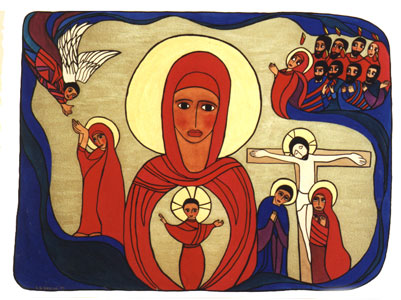 As we prepare to hear so much about the story of the nativity, Jack Spong’s words serve as a good reminder of the use of symbolism in the gospels. Jack points to the figure of the mother of Jesus as an interpretive image.
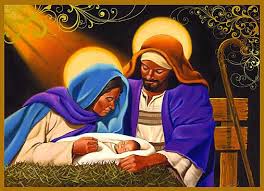
 You can listen to this sermon here
There’s a story that I love to tell. So many of you have heard it before. But this is the night for telling stories over and over again and because I love this story, tonight’s the night! I first heard it from a very wise seminary professor and since then I’ve heard Marcus Borg and Parker Palmer tell it. I’m not sure that this story actually happened, but I am sure that it is absolutely true!
It’s a story about a three-year-old girl who was the only child in her family. Her mom is pregnant, and this three-year-old girl is very excited about having a baby in the house. The day comes where the mother-to-be delivered, and the mom and dad go off to the hospital. A couple of days later they come home with a new baby brother. And the little girl is just delighted. But after they’ve been home for a couple of hours, the little girl tells her parents that she wants to be with the baby in the baby’s room, alone, with the door shut. She’s absolutely insistent about the door being shut.
It kind of gives her folks the willies, you know? They know she’s a good little girl, but they’ve heard about sibling rivalry and their not sure about what they should do. Then they remember that they’ve recently installed an intercom system in preparation for the arrival of the new baby, and they realize that they can let their little girl do this, and if they hear the slightest weird thing happening, they can be in there in a flash.
So they let their little girl go into the room. They close the door behind her. They race to the listening post. They hear her footsteps move across the room. They imagine her now standing over the baby’s crib, and then they hear her say to her two-day-old baby brother, “Tell me about God. I’ve almost forgotten.”
Tonight we are all that child, standing over the baby’s crib hoping against hope that the newborn baby will tell us about God; maybe because we have almost forgotten, maybe because we don’t believe, maybe because we want to believe, maybe because we’ve lost hope, maybe because we are endlessly curious, or maybe just because T’s the season! Regardless of why, here we are gazing into the crib at the newborn baby hoping that this child will tell us about God. But all we have is this story; a story so simple it sounds as if it was created for children; poor homeless refugees, far from home, in the darkness of a winter’s night, struggling to keep warm amongst the dung of a stable, a tiny baby, swaddled in what we imagine as rags and lying in a feed trough, shepherds, angels and a star in the night sky. It’s a lovely story. A story that warms our hearts, told over and over again in the darkness of so many winters as we struggle to keep our demons at bay. We’ve told it so often that we’ve forgotten why it was told in the first place. We’ve lugged so much of our own baggage into that stable that we can scarcely see the baby. We’ve heaped our expectations and longings onto the images and our need to know has demanded that the facts confirm our desires. Continue reading
 If it’s not Alistair Sim, it’s just not Scrooge. I usually wait until Christmas Eve to watch the movie. But this year I found the time to read the book and I’ve got to say, there is much in Dickens exploration of Christmas that I’ve been missing over the years.
In the words of Charles Dickens: Ebenezer Scrooge “was as cold and miserly a man as one could ever meet. “He was a tight-fisted hand at the grindstone, Scrooge! A squeezing, wrenching, grasping, scraping, clutching, covetous, old sinner! He carried his own low temperature always about with him; he iced his office in the dog-days; and didn’t thaw it one degree at Christmas.”
Ebenezer Scrooge’s transformation on Christmas Eve is nothing short of a miracle. Scrooge was a broken man. Broken, years before the story begins. The women he loved, Belle, broke her engagement to him one Christmas, she tells Ebenezer, “you fear the world too much. All your other hopes have merged into the hope of being beyond the chance of its sordid reproach. I have seen your nobler aspirations fall off one by one, until the mast passion, GAIN, engrosses you.”
Belle doesn’t tell us how this fear of the world developed. She doesn’t tell us what Scrooge’s nobler aspirations had been. We don’t know what made Belle fall in love with Scrooge in the first place—but we do know that whatever it is, it is gone now. As the Ghost of Christmas Past moves through Scrooge’s life we catch glimpses of what may have broken him – a distant father, the death of his much loved sister, his exposure to wealth in the first place – but we are never quite told what made Scrooge the man he is at the beginning of Dickens’ tale. All we know is that Scrooge is broken and greed and anger have possessed his very soul. Scrooge’s life was broken. While he had all of the wealth, and then some, that any person might need – he was miserable.
I used to think that A Christmas Carol was the story of Scrooge’s metamorphosis. The scene in the movie were Scrooge realizes that it is Christmas morning and that life doesn’t have to be the way it has always been and he does that wonderful dance and sings: “I don’t know anything! I never did know anything all on a Christmas morning!” I always thought of that wonderful dance as the culmination of Scrooge’s metamorphosis, like a butterfly bursting forth from a cocoon. But now I see it for what it really is. It is a dance of resurrection. For Scrooge was dead. Dead and gazing at his own tombstone, when suddenly, and suddenly for me always indicates the work of the Spirit, suddenly, Scrooge realizes that what he is seeing are only the shadows of things that might be. Suddenly, Scrooge knows “that men’s deeds foreshadow certain ends. But if the deeds be departed from surely the ends will change!” Scrooge is born again and is able to declare with confidence, “I’m not the man I was.” And so, the resurrected Scrooge becomes all that God intended him to be. Scrooge’s past didn’t go away—the hurtful Christmas memory of Belle ending their engagement, all of the ill-spent years somewhere between the party at Fezziwig’s and the visit of the spirits would still be a part of Scrooge’s life, resurrection doesn’t erase the past, but transforms the future, hope becomes part of the resurrected life! And so, Scrooge reborn, becomes “as good a friend, as good a master, and as good a man as the good old City ever knew…and it was always said of Scrooge “that he knew how to keep Christmas well!” Knew how to keep Christmas well. Keeping Christmas well is very different than celebrating Christmas. Keeping Christmas well is about resurrection; resurrection of our very selves. I always thought of that wonderful dance as the culmination of Scrooge’s metamorphosis, like a butterfly bursting forth from a cocoon. Keeping Christmas well is to forget what you have done for other people and to remember what other people have done for you. Keeping Christmas well is to see your neighbours as just as real as you are, and to try to look behind their faces to their hearts, hearts hungry for human connection, for dignity, for love and for joy. Keeping Christmas well is the realization that the only good reason for your existence is not what you are going to get out of life, but what you are going to give to life. Keeping Christmas well means closing your book of complaints against the management of the universe and looking around you for a place where you can accomplish some good. Keeping Christmas well is remembering the weakness and loneliness of people who are growing old; it means not worrying so much about how much your friends love you but asking yourself whether you love, honour and care for them enough; it means stepping down from your pedestal long enough to see that you are not the centre of the universe; it means bearing in mind the things that other people have to bear on their hearts; trying to understand what those who live in the same home with you really want, without waiting for them to tell you; it means burying your ugly, destructive and selfish motives and nurturing your nobler ones.
Keeping Christmas well includes the realization that your generation is not the last generation; that you have received an astonishing inheritance given by God, that your very next breath of life is pure gift; that all your various abilities and capacities were knit together in your mother’s womb and you had nothing to do with this original blessing, and that the bounty planet earth offers—its beauty and majesty – are both a wondrous blessing and an awesome responsibility; it’s the realization that you have duties to perform as citizens of a free nation in a dangerous world; that matters of war and peace are not just problems for others to solve; that much, if not most, of what goes on in the space around you depends upon your choices and your actions.
Keeping Christmas well is about being fully alive to all that life has to offer and being gracious in your responses to this amazing grace and living into all that God created you to be. When you keep Christmas well you are willing to believe that forgiveness is the doorway to a hope-filled future; that mercy reflects God’s nature; and that love is the most powerful thing in the universes—stronger than hate, stronger than evil, stronger than death! Keeping Christmas well is living with the knowledge that there is nothing in heaven or on earth that can separate you from the love of God in Christ Jesus. Scrooge’s metamorphous began, dancing and singing: “I don’t know anything, I never did know anything, all on a Christmas morning.” To keep Christmas well you must first realize that in the grand scheme of things you don’t know anything. For then, in humility, you can see the hope that lies in the manger. The hope of resurrection.
Scrooge knew how to keep Christmas well, may that be said of all of us. And as Tiny Tim said, “God bless us everyone!
 As always, I am indebted to the scholarship of John Dominic Crossan and Marcus Borg whose book The First Christmas is the gift that keeps on giving! You can listen to the sermon here
For those looking for a different approach to Advent 4B check out the sermon posted here
Some have said that it was the most amazing birth story ever told. This birth narrative heralded the arrival of a child who was praised as the Son of God, the Saviour of the World who was said to be the personification of peace on earth; God incarnate; fully divine and fully human. Not everyone agrees that this is the most amazing birth story ever told. Among the ancients, some insisted that the story Alexander the Great’s birth was the greatest story every told.
Alexander the Great’s birth story is truly one of the greats. His was, after all the, son of a Queen and a god and a king. His mother, Olympias was a Queen, betrothed to Philip of Macedonia. The night before they were married, Queen Olympias dreamed that a thunderbolt fell upon her body, which kindled a great fire, whose divided flames dispersed themselves all around her, and then as if by magic they were extinguished. Philip dreamed that he sealed up his Queen’s lady parts with a seal which bore the impression of a lion. The high priests who interpreted the dream warned Philip not to even entertain the idea of consummating the marriage because one wouldn’t go to the trouble of sealing up something that was empty. So Queen Olympias must already be with child, who would undoubtedly be a boy with the courage of a lion. If that wasn’t enough to put Philip off he found a serpent lying beside Queen Olympias as se slept, which was said to have abated his passion. Later the oracle of Apollo at Delphi went on to explain that this was no ordinary serpent, no this was the incarnation of the God Zeus.
The day that Alexander the Great was born, one of the seven wonders of the world burnt to the ground. The temple of the goddess Artemis in Ephesus was the home of the Goddess Artemis who was said to have been attending to the birth of Alexander at the time. Alexander the Great was heralded as the Son of God and Saviour of the World and as one of the greatest warriors the world has ever known, he went on to conquer a good portion of the planet. But by the time our hero was born, the glory days of the Greeks had long since passed. The Empire of Rome had replaced the Greeks as rulers of the world and they had the conquered lands to prove it. By the time our hero was born, Julius Caesar had established an Empire the likes of which the world had never seen before. Gaius Julius’ prowess on the battlefield was matched only by his cunning in the senate and together had one him the title of Caesar. But as great and marvellous a leader as Julius Caesar may have been, history tells us that he and his wife were not blessed with children. Alas, Caesar did have a son by virtue of his dalliance with Cleopatra but that’s another story all together; suffice it to say, that that little fellow didn’t stand a chance against the one Julius would appoint as his heir. Born to Julius Caesar’s niece, little Octavian was eventually adopted as his great-uncle’s heir apparent who eventually amassed powers that far outshone his illustrious uncle’s. Continue reading
 This sermon was preached on Advent 3B 2011 at Holy Cross Lutheran Church.
When John the Baptist cried out from the wilderness to the world with his infamous exhortation to “Make straight the way of the Lord” he never could have imagined the highways and the byways that we 21st century preparers of the way encounter. These days the ways in which we travel are far from straight.
The day after I married the love of my life, Carol and I travelled to England to enjoy our honeymoon. The flight over the Atlantic had been packed, so even though we were dead tired when we boarded, it had been impossible to sleep. The days before the overnight flight had been filled with wedding celebrations, visits with family, that included conversations into the wee hours, followed by early morning trips to the airport as family members returned to their far flung homes.
I was exhausted as I tried to make my way through the construction site that is now Gatwick Airport. Dragging luggage past temporary signs designed to make do until the completed new Gatwick is unveiled just in time for the 2012 Olympics. Tired and confused we made our way past a shed, to the edifice that housed the car rental offices. While I secretly hoped that the perturbed looking woman behind the desk, would announce that they’d lost our reservation. Suddenly, the idea that anyone would entrust me with a vehicle in my brain-dead state, terrified me.
The very idea that I would be set loose behind the wheel of a right-hand drive car struck fear into my heart. Surely the United Kingdom of Great Britain & Northern Ireland had in place some laws designed to protect the British people. One look at my zoombizized persona, should have been enough to warn the purveyor of rental agreements, that I was not to be trusted with a vehicle designed to be driven on the left side of the road. But rather than, deny me access to such a dangerous weapon in my weakened condition, all this representative of Eurocar wanted to know was weather or not I carried adequate insurance. Sensing a way out, I suggested that the insurance coverage that came with my credit card might not be up to the task. A little too gleefully, I thought, the woman ensconced safely behind a desk, explained that they had just the right insurance for me. It seems that I would be on the hook for 12,000 pounds should I happen to total the car they were going to lend me. But for just 13 pounds a day, I could bring what was left of the car back on the hook of a tow truck if need be and I was covered.
It seems that nothing was going to deter this company from setting me loose on an unsuspecting British nation. So, as she handed over the keys, I bid a fond farewell to my mother, who sat waiting for my exhausted 78-year-old father, who was busy securing his own vehicle. I told myself that if Dad could do this, surely I could. So, Carol and I headed out to the parking lot to pick up our almost new, Voxhaul, Astra. It was beautiful and under normal circumstances I would have been delighted with this speedy little machine. But as I approached the driver’s door, I begin to tremble. It had been more than 20 years since I drove a car from that particular vantage point. It was cold and damp, so it took a while to get my GPS installed on the windscreen, and when I punched in the address of the hotel down in Bournmouth, I was relieved to see that the journey should only take about an hour and 40 minutes. I wanted nothing more than a clean bed upon which to lay my weary head. I warned my lovely bride Carol that we’d better find a place where I could get some caffeine or this might prove to be a disastrous trip. Continue reading

As we approach the Third Sunday of Advent, I can’t help wondering why the creators of the Revised Common Lectionary (RCL: the list of prescribed readings for Sunday worship) have failed to remember the stories and names of our foremothers? John the Baptist will strut across the stage again in this Sunday in churches all over the planet. The followers of the RCL will not hear the names of Tamar, Rahab, Ruth, or Bathsheba; no, even Mary is only suggested as an optional replacement for the reading of the Psalm! Unless worship planners are prepared to tinker with the lectionary Elizabeth and Mary will have to cede the stage to John the Baptist. So, all you worship planners and preachers out there, I say to you, “TINKER AWAY! TELL THE STORIES!” Continue reading
 This sermon included quotes from James Carroll’s new book “Jesus Actually: The Son of God for the Secular Age” Carroll’s book is a splendid exploration prompted by Dietrich Bonhoeffer’s question “Who is Jesus for us today?”
Readings: Isaiah 40:1-11 and Mark 1:1-8. Our sermon hymn was “God Is Within”, Text by George Stuart to the Tune Ar Hyd Y Nos = All Through the Night
Listen to the sermon here
 Today, the Feast of St. Nicholas, the ancient precursor to the modern Santa Claus, will pass without much ado. Some will try to encourage us to resurrect St. Nicholas to save us all from Santa’s powers for we have gone astray. To those well meaning souls who would rid Christmas of its flagrant consumerism, I can only offer up a feeble, “Baa Humbug!”
The very best traditions about St. Nicholas suggest that he was a protector of children while the worst tradition has him providing dowries so that young girls could be married off by their father rather than be sold into slavery. Meanwhile, the modern character Santa Claus grooms children to take up their role as consumers in the cult materialism. Some parents may bemoan the little gimmie-monsters that their children become, but most adults are rendered helpless by our own remembered indoctrinations and so we join in what we choose to deem as harmless fun.
T’is the season for contradictions. ‘Tis the season when we prepare to celebrate the incarnation of God in human form while also waiting for Santa Claus to come down our chimneys. Face it; most of the folks dashing about in the malls are more worried about the imminent arrival of Santa Claus than they are about God. I’d even go so far as to say that a good number of people have unconsciously substituted Santa Claus for God. Santa Claus and the baby Jesus get into some pretty fierce competition at this time of year; and in the culture the larger loyalty belongs to Santa.
Besides, I don’t believe that consumerism is the most dangerous thing about Santa. So, before you accuse me of being a Scrooge or even a Grinch, ask yourself who it is that most children worship at this time of year, and I think you’ll agree that Santa is the one we’ve all been trained to bow down to, and not just at Christmas. It is difficult to deny that sometimes our view of God has been more influenced by Santa Claus than by Christ? I dare you to compare the number of children standing in the lines at the shopping centre to get their picture taken on Santa’s lap to the number of children in Sunday School? So many of us made that same trip to see Santa when we were little and when we finally got to Santa’s lap, he asked us the big Judgement Day question that Santa always seems to ask, “Have you been good this year?” There’s only one way to answer that question – even though we may have been as deviousness might qualify us as servants of that other mythical character that begins with santa and ends with n. For all too many people this laptop confession begins a pattern for interactions with an image we create of the Father-God, who watches and records our offences, making a list if only for the purpose of forgiving us because an appropriate blood sacrifice has been made on our behalf.
Think I’m being harsh? Just listen to that song that pours from muzak speakers, the song that spells out a theology of Santa Claus. “Oh, you better watch out. You better not cry. You better not pout. I’m telling you why. Santa Claus is coming to town. He knows when you’ve been sleeping. He knows when you’re awake. He knows if you’ve been bad or good, so be good for goodness sake. He’s making a list, checking it twice, gonna find out who’s naughty and nice. Santa Claus is coming to town.” The trouble with the theology of Santa Claus is that we keep applying it to God as we try to turn the Creator of all that is and ever shall be into a list-checking, gift-giver, whom we better watch out for, lest we be punished. Why then are we surprised that when our Santa-god fails to deliver or bad things happen to good people, that our childish faith in the Santa-god isn’t enough to sustain our trust?
Santa in his present incarnation is indeed pernicious, but like most mythical characters, he cannot be killed and any attempts to resurrect St. Nicholas to replace him are doomed, for the power of Santa’s materialism will always defeat the dim memories of St. Nicholas and his chocolate money. If we are going to break free of the cult of materialism, perhaps we out to try to convince Santa to use his mythical powers for goodness sake!
Yeah, that’s right, I’m going to say it, it’s time to let old St. Nick and his young assistant Santa die, so that a new Santa can be born; a Christmas resurrection if you will. We need a new Santa capable of changing our consuming ways. If the Coca Cola Company could use the advertising industry to transform St. Nick into Santa, surely we can resurrect Santa using the modern persuasive powers of social media to redesign the old salesman extraordinaire into a mythical character with powers fit for the needs of this century.

SANTINA- all decked out in her Advent blue!
Imagine if you will, a new and improved Santina, all decked out in Advent blue, she has the power to open young minds to the needs of our neighbours and travels the world via her magic transporter beam, to gather the hopes and dreams of the poor and oppressed into one internet feed, which she magically imprints in our hearts and minds, so that we change the world, creating peace through justice!
Oh, wait, we already have such a character. We don’t need St. Nicholas or Santa Claus, nor any new-fangled Santina. We need the One we’ve always needed. The One who comes in the guise of a person. The One we seek is Christ. The One who lives and breathes in, with, and through us to create peace on earth through justice and love. The One who uses our hands, our feet, our lives to change the world!
Enjoy this version of Let There Be Peace on Earth in which Vanessa Williams uses not only inclusive language, but celebrates the Earth as our Mother!
 As I prepare the liturgy for the Third Sunday in Advent, various interpretations and musical settings of the Magnificat litter my office. Over and over again, the words placed on the lips of the young child Mary who was “great with child,” a child in whom our hopes and dreams for a new kin-dom of justice are embodied, sing in my imagination. In these past few days, I have observed my Canadian sisters and brothers as we look with horror and sadness as news of what look to us like travesties of justice steam across the border. As Canadians we comfort ourselves with the delusion that the kind of racism which results in what appears to be a systemic contempt for the lives of young black men does not exist here in Canada. We shake our heads in disbelief as grand-juries refuse to indite police officers in Ferguson and New York trusting that our own justice system would do a better job of seeking justice. Some of us go as far as offering up a prayer of sorts giving thanks that we live up here and not down there. Up here we believe that we are above the kind of racism that results in systemic contempt for the lives of so many simply because of the colour of their skin.
Mary’s song echoes in my brain and the tears begin to flow; tears of solidarity with the grieving, angry, laments being sounded by our American cousins as they cry out for justice, longing for the powerful to be brought down from their thrones and the lifting up of the lowly. Feeling my own anger and frustration at the callus disregard for the lives of Michael Brown, Eric Garner, and little Tamir Rice, shot and killed by police who failed to determine that the gun Tamir was holding was a toy, I can’t help but wonder, “How long, O Lord.”
No sooner than my lament leaves my lips, I comfort myself with the thought that I don’t live down there in the U.S., and like so many Canadians, I am more than willing to leave the fate of my American cousins in God’s hands, for there is nothing I can do; thank God. I can happily go about my day, smug in my country’s belief that we are not like “them.” So, with Mary “My soul magnifies the Lord, and my spirit rejoices in God my Saviour,” as images of Canadians, black, white, brown, and yellow dance in my head as equal before the law. Even as I sing to myself my favourite rendition of the Magnificat, images begin to creep into my head; images that cause the tears to return, images of stolen sisters, and the “Highway of Tears” bridges the gap between my delusions and reality. Continue reading

 pastordawn