I’m a Doubter Not a Believer – Preparing to Preach on FAITH

Preaching on Luke 12:32-40 and Hebrews 11:1-16

doubters welcome“Do not be afraid, little flock, for it is your Abba’s good pleasure to give you the kin-dom” So begins the gospel reading for this coming Sunday. But I am afraid and my fear is not about the the thief who this text insists may break into my house or that the Human One is coming at some unexpected hour. No my fear is wrapped up in my desire to pay little or no attention to the second reading prescribed for this Sunday from the letter to the Hebrews:

“Faith is the reality of all that is hoped for; faith is the proof of all that is unseen. Because of faith, our ancestors were approved b God. By faith, we understand the world was created by the word from God, and that what is visible came into being through the invisible…..”

Do I have faith? Do any of us have faith? For that matter: What is faith? According to Hebrews faith “is the reality of all that is hoped for; faith is the proof of all that is unseen.” Faith is the stuff that makes it possible for us to hear Jesus words: “Do not be afraid, little flock, for it is your Abba’s good pleasure to give you the kin-dom.”  Faith is the stuff that makes it possible for us to believe. So I wonder: Do I have faith? Do I have the faith that makes it possible for me to believe? Do you? Do any of us?

I write this as one who finds it difficult and sometimes even impossible to believe much of anything. I am a doubter by nature. Doubting is part of who I am. I know that there are those who are more inclined to believe and I am envious of believers. I envy those who are sure and are able to find comfort in the Scriptures. For a very long time I was ashamed of my inability to believe. I often sat in church and wondered if I might just be a hypocrite. I wondered if someone who had as many doubts as I have belongs in the church. And so, I tried to conquer my doubts by studying the Scriptures. Continue reading

What do the Feast Day of the Transfiguration and Hiroshima Day Share?

mushroom Cloud

Today is Hiroshima Day. It is also the Feast of the Transfiguration. So I am reposting this as it appeared earlier this year in preparation for the Sunday of the Transfiguration. 

You Have the Power

to Transfigure the Face of God 

When our images of God are tied to the idol of a supernatural sky-dweller who has the power to solve all our problems, despair is sure to follow as our super-hero fails time after time to impress us.

When I was a very little girl, I was absolutely convinced that I had the power to change the mind of God! Confident that I held such power, I never missed an opportunity to exercise it. Now, I’ll grant you that like most children, I was also convinced that the universe itself actually revolved around me, so believing that I was powerful enough to change God’s mind, wasn’t exactly much of a stretch. In fact, when I was a child, it wasn’t all that difficult to change God’s mind. For instance, I could stop God from breaking my mother’s back simply by leaping over a crack in the pavement. “Don’t step on a crack and break your mothers back.” Now, in my young mind the only one powerful enough to crush my mother’s powerful spine, must be God. I also knew that God wasn’t particularly fond of ladders, and that if I refrained from walking under them, God would smile upon me.

I had no idea why black cats, or spilling salt, or breaking mirrors, or opening umbrellas inside, or leaving hats on the bed, or putting new shoes on the table, would annoy God, but I knew enough to avoid doing such things. I was absolutely sure that God would respond positively if I managed to pull a turkey’s wishbone apart in just the right way so that I was left holding a piece larger than the piece my brother was left with.  God also responded well if I knocked on wood, or caught sight of a falling star, or if I crossed my fingers and hoped to die.

I didn’t need to understand why my activities worked to influence the heart and mind of God, I simply knew that they did and would continue to do so just as long as I continued to avoid the necessary evils and indulge in an apple a day, and managed to blow out all the candles on my birthday cakes.

The universe that revolved around me might have been full of all sorts of rules, but it would continue to revolve exactly the way I wanted it to if I managed to placate the old guy up in the sky who was pulling every body else’s strings. I never once considered that that old God in the sky was pulling my strings because I was absolutely confident in my ability to do what was necessary to pull God’s strings.

But as I grew up, I began to learn that despite my best intentions, the universe did not revolve around me. Little by little I learned that I didn’t have what it takes to influence all of the things that were having an impact upon my life. And just as surely as my powers waned, so too did the powers of God. Continue reading

Doubt: Preparing to Preach on Hebrews 11:1-16

The Place Where We Are RightLooking over the readings for this coming Sunday and the subject of faith jumps out from the Hebrews reading (Hebrews 11:1-16) which begs questions about doubt.  I recently read and blogged about Richard Holloway’s “Faith and Doubt” and Lesley Hazleton’s insistence that “Doubt is Essential to Faith” and both posts provide an interesting jumping off point. This little video of Richard Holloway on “Why doubt is a good thing” drives my thoughts toward preaching on doubt as the foundation of faith??? 

Hosea: the Coronation Street of Ancient Israel

A Sermon on the Book of the Prophet Hosea

Coronation StI am indebted to Bishop John Shelby Spong for his insights into the Book of the Prophet Hosea. Without Jack’s thoughtful portrayal of Gomer, I would not have recognized her as the Leanne Battersby of her time. Also, thanks to Marcus Borg for his definition of the verb “believe”!

Listen to the sermon:

For those unfamiliar with Corrie, here’s a sample of the first 50 years:

The Steadfast LOVE that GOD IS: a sermon for Hosea 11:1-11

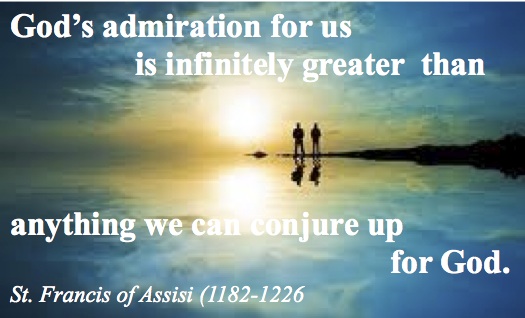
God's Admiration for us copyHere’s a sermon I preached a few years ago on this Sunday’s reading from the Book of the Prophet Hosea. Just as the people of Israel’s images of God changed over time, my own images of the Divine have changed since I preached this sermon. However, I still resonate with ways in which the Book of Hosea seeks to broaden the reader’s understanding of God away from traditional notions of anger and wrath toward images of steadfast love, for I too have had to broaden my own understanding of the Divine many times over the years. I suspect that I am only just beginning to imagine the contours of the steadfast Love that God Is.

Tommy was one of those kids that, no matter how hard he tried, he just couldn’t stay out of trouble. I was never quite sure whether or not Tommy was rotten or whether trouble just followed him wherever he went. Whatever the reason, Tommy managed to live up to the reputation of the typical middle child. His older brother seemed to be perfect in every way, the model child and his younger sister was the cute and adorable baby of the family, leaving the field wide open for Tommy to become the black sheep of the family. And as black sheep go, Tommy was a doosey.  Tommy was also the son of my friends and so even though, I would have rather not have been part of this kid’s life, the fact that he was the Karen’s beloved son, meant that I had to learn to deal with him.

I can still remember an afternoon, long ago, when Tommy was barely three years old. A bunch of us had gathered to celebrate Karen’s birthday.  Tommy was in a foul mood.  I decided that he just didn’t like the fact that on this particular day he wasn’t the center of attention.  He seemed to do whatever he could to upset his mother. 

Her patience with him was beginning to get on my nerves and I was relieved when Karen announced that it was time for Tommy to take his nap. After a very long and loud temper tantrum, Tommy was eventually quiet in his room; a little too quiet, it seems. It wasn’t until I got into my car to leave and happened to glance up toward Tommy’s bedroom window that I realized just why he had been so quiet. Hanging outside of Tommy’s bedroom window was the evidence of this little boy’s stubborn streak. Somehow, to this day I still don’t know how he managed to do it, but somehow little Tommy had managed to stuff the mattress from his bed out the window.

On the lawn below the window were Tommy’s pillows, sheets, stuffed animals and quilt. Three quarters of the mattress hung below the window and I am sure that given enough time Tommy would have managed to push the remainder of his bed out onto the front lawn. I dashed back into the house, grabbed Karen and headed up to his room. When we got there we discovered dear sweet little Tommy, shaking the contents of a big container of baby powder all over his room. Tommy’s himself was covered in talcum and when he caught sight of his mother and I he gave us a wicked little grin and said, “I don’t need to take any more naps!”

Driving home that day, I gave Tommy a nickname.  It’s a name that I have never uttered in his mother’s presence, but a name that has stuck with me.  On that day, the dear sweet little son of one of my dearest friends was forever labeled, Tommy the Terrible; TT for short.

Now the exploits of a cute three-year-old are one thing, and we can all laugh at the site of a mischievous little boy, who manages to out fox his mother.  But TT’s activities went far beyond the laughable exploits of a mischievous little boy. It didn’t take Tommy very long to become skilled in the art of tormenting adults. His mischievous behavior gave way to rudeness, disobedience, cheating, and more often than not down right meanness.  Of all the adults who were subjected to the torments that Tommy dished out, none suffered more than his mother did. No matter how hard she tried, Karen could never get Tommy to behave himself.  Nor was Karen ever able to understand why Tommy did the things he did. Tommy had everything a boy could ever want or need. He had two parents who loved him dearly.  He had a wonderful older brother and a delightful little sister.  He lived in a beautiful house by the ocean.  He attended the best school in the area. He had more toys than he could ever find the time to play with. There were lots of great kids living in the neighborhood to play with and all sorts of interesting and interested adults in his life.  Tommy was a bright and intelligent kid who had everything going for him. There was no earthly reason that this child should behave so badly. Karen has never been able to explain why she has two perfectly wonderful children and one child who has been breaking her heart since he was old enough to speak. Continue reading

Preaching on Hosea

Hosea and GomerAs they did last Sunday, this Sunday’s readings include a section from the Book of the Prophet Hosea. To say that this is a strange little book is an understatement. However, I’m tempted try my hand at writing a sermon on this ancient soap opera. For those colleagues who are considering doing the same these short videos provide images to get you in the mood. Of course you could just tune into a modern soap opera to get your creative juices flowing.

Prayer: Connections – a sermon for Luke 11:1-13

catching starsPentecost 10C – July 28 2013

Listen to the sermon here

https://pastordawn.com/wp-content/uploads/2013/07/pentecost-10c-jul-28-2013-sermon.m4a

Prayer: the Perspective of a Process Theologian – Catherine Keller

quantum thoughtToday, preachers all over the world (myself included) will be tackling what the writer of the gospel of Luke had to say about prayer in Luke 11:1-13. It is a daunting task for any preacher, let alone for those of us who have given up images of the Divine that conjure up notions of a super-hero in the sky who interferes in our lives. Catherine Keller is a process theologian who teaches Constructive Theology at  Drew University (New Jersey). Her comments about prayer as a kind of allurement are enlightening. 

Preparing to Preach on Prayer: 21st Century Questions – There’s an App for that!

prayer appAs I continue to work on this Sunday’s sermon, (see earlier posts here … here …and here), Jesus’ teaching on prayer in the gospel reading Luke 11:1-13 leaves me wondering what an enlightened 21st humanoid is supposed to do with Jesus 1st century ideas???

Cast you minds back to another time and place and tell what the numbers 33, 45, and 78 have in common??? Vinyl Records anyone? When I was a kid music came from a portable RCA record player. The sound quality wasn’t all that great, but somehow we didn’t seem to care. Later when I was a teenager, my parents got a fancy state of the art Phillips stereo cabinet and suddenly sound seemed to be coming from booth ends of the room. I never did understand how those old record players managed to pick up sound from the grooves in the vinyl to45 produce music. I still remember my father’s first reel-to-reel tape recorder, and then there were the eight-tracks, followed by cassettes, followed by CD’s.  I can remember these things, but I have no idea how they made music. It doesn’t matter how many times people try to explain it to me, I still think it’s a miracle that such beautiful sounds can come out of machines.

These days I don’t use records, tapes or CDs to listen to music. My music is stored in “the cloud” and when I want to hear I song I make sweeping motions on my iphone screen and presto, I can make music fill the room. I don’t know what the cloud is. I asked the personal assistant on my iPhone, her name is Siri and she told me she was sorry but she couldn’t tell me because Steve told her not to tell anyone. Some people think the cloud is located in a 225-acre facility that Apple built in North Carolina. Continue reading

Preparing to Preach on Prayer: To Whom Shall We Go?

PanentheismAs I continue to work on this Sunday’s sermon, (see earlier posts here and here) Jesus’ teaching on prayer in the gospel text Luke 11:1-13 begs the question: “To Whom Shall We Go?” Liberated from perceptions that reduce images of God to those of a cosmic superhero who abides up or out there ready to manipulate events here in the world at the request of those who pray, the activity of prayer takes on a whole new meaning and shape. Our images of who, where and what God is will direct our prayers in ways that impact our expectations of prayer. Who do we pray to and what we expect of the One who hears our prayers will shape how and why we pray.

Before we can even begin to understand what so much of the Christian tradition means when it talks about praying to God, we need to take a step back and look at what we mean when we say the word “god.” Throughout the Jewish and Christian traditions you can trace two very distinct ways of understanding and talking about God. Continue reading

Jesus’ Teaching on Prayer

teach us to prayThis Sunday’s gospel text (Luke11:1-13) will no doubt send preachers scurrying to review what we might say with regard to prayer. In this splendid little video Laurence Freeman reviews Jesus’ teaching and points to prayer as Jesus’ focus. Well worth watching before you begin to write or indeed listen to Sunday’s sermon.

Dom Laurence Freeman OSB is a monk of the Olivetan Benedictine Congregation of Monte Oliveto Maggiore and Director of The World Community for Christian Meditation. Fr Laurence was born in England in 1951 where he was educated by the Benedictines and studied English Literature at Oxford University.

Before entering monastic life he had experience with the United Nations, banking and journalism. In the monastery his spiritual teacher was John Main with whom he studied and whom he helped in the establishment of the first Christian Meditation Centre in London.

Preparing to Preach on Prayer: Shush!

BATH QOLIn this coming Sunday’s gospel reading Luke 11:1-13, Jesus’ disciples ask him to teach them to pray. As a pastor I have been asked to teach people to pray. Each time I have been asked to teach someone to pray I have cringed inside because I do not feel up to the task. For some reason the old hymn “I Come to the Garden Alone” keeps playing in my mind. I keep telling it to, “Shush!” so that I might hear the “bath qol” but the daughter of a sound eludes me. Below is a portion of a sermon I preached a couple of years ago on the subject of prayer. If nothing else, it reminds me to shush!

I began this sermon by asking the congregation to sing from memory the old hymn: I Come to the Garden Along. Feel free to sing it to yourself!

I think my earliest memory of prayer is a distant memory I have of skipping along the sidewalk chanting a familiar refrain: “Don’t step on a crack or you’ll break your mother’s back.” Most of us can remember a moment from our childhood when a superstition was instilled in us that caused us to perform some ritual in order to placate the unseen power that could determine our fate. Whether it was avoiding cracks, or walking under ladders or black cats, we were trained from an early age to believe that there were powers out there that could determine our future.   Continue reading

Feast Day of St. Mary of Magdala: the Apostle to the Apostles

THE RESURRECTION OF MARY – An Idle Tale

Mary-Magdalene egg

To commemorate this festival day, I repost this not-so-long-ago encounter with a visiting New Testament scholar to entice you to follow Mary out of her tomb and beyond the streets to her place at the head of the fledgling community that became the church: 

He just said it for the third time! “Harlots!” He keeps calling them “harlots”, while I rack my brains to come up with one harlot. Then he points to the text and his charges become clearer, he says, “she is a “prostitute!”

My carefully reigned in anger is unleashed. “Where?  Where?  Where? Show me where it says this woman is a prostitute!”

As he refers to the Gospel text and insists that, “It is there, right there in the text”,

I want to scream, I want to cry, I want to wipe the bemused expression from his face. I want to rub his nose in the damned text. Instead, I begin the uneasy process of reigning in my anger. I slow my speech, I try to erase the tremor from my voice and I ask him to, “Show me, show me where it says this woman is a prostitute.”

He consults his text and says, “a woman in the city who was a sinner.”

“A sinner not a prostitute.”  I respond.

He insists, “Yes a prostitute.”

“Where?” I ask.

Again he insists, “A woman who was a sinner.”

I demanded to know, “Where does it say she was a prostitute?”

He insists, “The author means that she was a prostitute.”

I lose control, “How do you know?  What words does the author use to say that his woman was a prostitute? Show me in the text where it says she was a prostitute?”

He still doesn’t get it, “What do you mean? It is clear that this woman was a prostitute.”

Once again I push, “Show me.  Show me where?”

He continues to say, “She was a woman from the city who was a sinner.”

I know that the text says that, so I implore him to tell me, “The Greek… What does the Greek say?”

He replies, “amartolos”.

I push, “Does that mean prostitute?” We both know that it does not.

He replies, “Sinner. But the context clearly shows that she was a prostitute.”

Still pushing I ask him to “Show me.  Show me how the narrative says this woman was a prostitute. Show me where it says her sins were sexual.             Show me where it says so in the narrative.”

He says, “It’s clear.”

Clearly we disagree, so I try again, “Clear to you.  Show me. Show me!”

As he fumbles through the pages, I offer him a way out, “Okay.  Even if I concede the point that her sins were sexual, show me where it says that these sexual sins were nothing more than lust or adultery, show me where it says that she was a prostitute.  Show me!”

He couldn’t show me.  It’s simply not there.

Nowhere in the New Testament does it ever say in Greek or in English that Mary of Magdala is a prostitute.  But over and over again scholars, theologians, popes, preachers, and dramatists, have continued to cast Mary of Magdala as a prostitute.  

In the years that have transpired since than day in seminary, when a visiting New Testament scholar insisted that “the context clearly shows that she was a prostitute,” I’ve delighted in being able to participate in the phenomenon of Mary’s resurrection as the first Apostle. Continue reading

Three Queens, the Birth of Laughter, and the Non-Existent Kitchen – a sermon for Pentecost 9C

three queens

Scripture Readings:  Genesis 18:1-15 and Luke 10:38-42

Worship Bulletin pdf here (to be printed double-sided and folded into a booklet)

Listen to the sermon here

Martha and Mary – Active and Contemplative

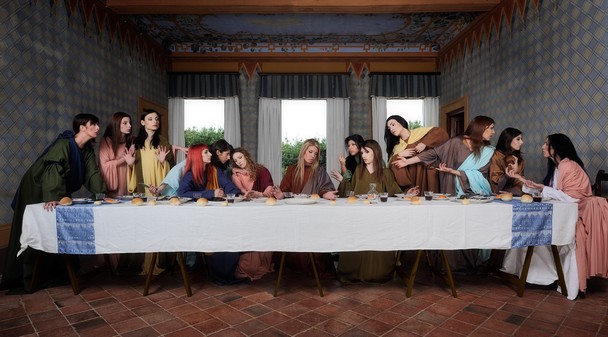
last supper women

Father Laurence falls into the age-old trap of seeing a kitchen where there isn’t one in the text and interprets the many tasks that Martha is distracted by as domestic chores. (see my previous post for a full explanation of the Greek diakonia which does not refer to domestic service but to eucharistic service and the proclamation of the word). Nevertheless, his articulation of the need for balance between the active and contemplative lifestyles is well put. I suspect that my own sermon this week will follow his lead and examine the difficulty some of us have finding time to tend to our need for contemplation when we are distracted by our many tasks in the church.

Dom Laurence Freeman OSB is a monk of the Olivetan Benedictine Congregation of Monte Oliveto Maggiore and Director of The World Community for Christian Meditation. Fr Laurence was born in England in 1951 where he was educated by the Benedictines and studied English Literature at Oxford University.

Before entering monastic life he had experience with the United Nations, banking and journalism. In the monastery his spiritual teacher was John Main with whom he studied and whom he helped in the establishment of the first Christian Meditation Centre in London.

“Martha, Martha, Martha!” – Preparing to preach on an all too familiar text!

From an Academic Paper to a Sermon

martha 2I am usually on vacation at this time of the year. So, I have only had one opportunity to opportunity to preach on this coming Sunday’s gospel text (Luke 10:38-42). The story of Jesus’ sojourn at the home of Mary and Martha is such a familiar text, which over the years has been used and abused by preachers to inflict such harm on their listeners. During my seminary years, this text awakened the feminist in me in ways that I am still unpacking. So, in preparation to write only my second sermon on this text, I went back to my seminary years to uncover an academic treatment of this text that I included in my Masters Comprehensive paper in 1998. Reading the paper took me back to a time when I seriously doubted my call to ordained ministry. Back then I was unsure about my ability to tolerate the institutional church or indeed whether or not the institutional church would be able to tolerate me. I am happy to report that there are pockets of the institutional church were feminists can thrive and I have been blessed to be called to serve in one of those pockets. 

The only time I preached on this text was in 2004 and so I post both the academic paper and the sermon based on the paper as a resources for those of you who will take up the text this week. I have not edited the sermon, despite my inclination to do so. Old sermons provide a snapshot of old preachers. Like most snapshots, I’m not altogether happy with the picture of myself. The good news is that this week I have the opportunity to create another snapshot.

You can read the academic paper here   and   the sermon here

Imagining Fred Phelps as the Good Samaritan – Sermon Luke 10:25-37

love-your-neighbor-as-yourselfPentecost 8C – Sunday July 14 2013

Listen to the sermon here

Playing All the Roles on the Road to Jericho

samaritan

Preaching ideas for this week’s sermon on Luke 10:25-37

I was just 10 years old when the Gideon Society came into my classroom to present us with small pocket editions of The New Testament and Psalms. I was in grade five when this little book was given to me. Its imitation leather has held up well over the years. After I carefully wrote my name on the presentation page, I tucked it into my school bag. Several weeks later, a thunderstorm knocked out the electricity and I was caught without a book to read, so I dug out this little red book from my school bag. By candlelight, I read the Gospel of Matthew. Over the course of the next two weeks, I read Mark, Luke and John. I stopped reading somewhere in the book of Acts.

Over the course of the next few years, in the privacy of my room, I would return to this little red book and escape into the desert towns where Jesus travelled. In those days I didn’t know what a parable was, but I loved the stories that Jesus told. The stories that Jesus told have a timeless quality to them. The parables that Jesus told defy simple explanations. Each of the parables is layered with meaning. The varied meanings of each parable can take a lifetime to uncover as the stories weave in and out of our own lives. The parable about the Good Samaritan is probably one of the most familiar of all of Jesus’ parables.

I believe that the timeless quality of this story comes as a result of the way in which the reader or the hearer can identify with all of the characters in the story. While most of us would like to see ourselves as good Samaritans, I dare say that over the years each of us have managed to play all of the roles in this story.

Over the years I have often played the role of the lawyer, trying to get Jesus to explain the secrets of life as over and over again I have questioned and questioned what I must do to inherit eternal life. Continue reading

Only in Canada Eh? – Canayjuns, Injuns, Paula Deen, the N-Word, and Racism – a sermon for Canada Sunday

children's futureI am indebted to Father Jim O’Shea for his article in the Huffpost and to Robert LoveLace for his parable about Chickens which appeared in The Rabble.

Listen to the sermon here

Canada Sunday???

canada doveAs millions of Canadians make their finial preparations for the Canada Day Long Weekend, the church prepares to celebrate the Sixth Sunday after Pentecost or Ordinary 13 with scripture readings that will challenge even the best of homileticians to make the connections to the activities of most Canadians.

This particular homiletician has decided to abandon the Revised Common Lectionary in favour of Canada Sunday. Granted I had to make the feast day up, but I do so in the name of relevance; for surely, preachers ought to have something important to say about Canada!!

So, the sanctuary will be adorned in red, for no other colour will suffice for this feast day. The readings will begin with verses from Deuteronomy about the Promised Land. Psalm 72, from whence came Canada’s official motto “A Mari usque ad Mare” – “From Sea to Sea” Psalm 72:8 – “God shall have dominion from sea to sea and from the river unto the ends of the earth”. The first official use of this motto came in 1906 when it was engraved on the head of the mace of the Legislative Assembly of the new Province of Saskatchewan. The wording of the motto came to the attention of Sir Joseph Pope, then Under Secretary of State, who was impressed with its meaning. He later proposed it as motto for the new design of the coat of arms, which was approved by Order in Council on April 21, 1921 and by Royal Proclamation on November 21, 1921.

The gospel text eluded me until I chanced upon the Revised Common Lectionary’s suggestion for our cousins to the south’s celebration of Independence Day, Matthew 5:43-48. Our Hymn of the Day includes words written by Shirley Erena Murray that were inspired by Dietrich Boenhoeffer. We will be singing it to the tune Londonderry Air (thats Danny Boy) but you can see Per Harling’s music here.peace canada

I suspect this homiletician will have something to say about Canada’s once proud history as Peace Keepers as she cries out for a renewed sense of justice when it comes to our actions in the world???

Here’s a pdf of our Worship Bulletin (designed to be printed on double-sided legal paper and folded into a booklet)

Happy Canada Weekend!!!