A New Harmony: Re-Imagining St. Paul’s Vision of Oneness

interfaceThinking about this Sunday’s epistle reading, Galatians 3:23-29 and wondering how we might  re-imagine  the Apostle Paul’s insistence that in Christ “There is no longer Jew or Greek, there is no slave or free, there is no longer male and female; for all of you are one in Christ Jesus.” Might it be that those of us who follow the way of Jesus need to consider subtracting our language about “Jesus Christ” as the source of our ONENESS in the One In Whom All Life Is Rooted? Can we begin to re-imagine language for what we mean by “Christ”? What can we learn from sisters and brothers who follow a different way to ONENESS?A New Harmony

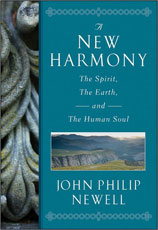
John Philip Newell’s recent book, “New Harmony: The Spirit, The Earth, and The Human Soul” provides an Eastern perspective from which I’m looking anew at the Galatians reading. You can hear Newell reading from the chapter “Every Bush Is Burning” in which I trust preachers and seekers alike will find much to contemplate. Enjoy!

Demons or Baggage: Stop and Listen – a sermon for Pentecost 5C: Luke 8:26-39

voice withinBobby wasn’t like any other 10-year-old boy. Bobby had the face of an angel but the temperament of a devil. Bobby was a beautiful child. His blond hair and blue eyes together with his alabaster skin, pointed toward his Scandinavian heritage.  At first sight, Bobby appeared to be the kind of child that any congregation would be proud to count as a member. But, Bobby’s physical appearance was deceiving and Bobby’s presence in church was not welcome. Bobby didn’t go down to Sunday school classes with the other children.  The Sunday school teachers had tried to include Bobby, but after several parents threatened to withdraw their children, they asked Bobby’s parents not to send Bobby anymore. So Bobby stayed in the sanctuary with the adults. Most of the adult members tried to tolerate Bobby’s presence but for some, Bobby’s presence was simply unnerving. Bobby is autistic. Sitting and behaving in church was impossible for him. As long as we were singing hymns, Bobby was happy.  He would catch the rhythms of the music and rock back and forth and sing. He never sang the same words as the rest of the congregation.  But it was clear from his movements and the sounds that emanated from his lips that Bobby was singing. The trouble was that Bobby never stopped singing when we did. When his parents would attempt to put an end to Bobby’s song, he would flail about and sometime throw himself on the floor.

Now there are some churches where flailing about and throwing one’s self to the floor would be interpreted as a sign that the Holy Spirit was at work. But in this little Lutheran church, the reaction of the worshippers to Bobby’s outbursts made it clear that they feared that Bobby was possessed by spirits of the evil variety. Oh, they would never have come out and said that Bobby was possessed by demons, they just acted as if he were. Bobby’s favorite part of the service was communion.  I think that he enjoyed the opportunity to walk up to the front of the church and kneel at the altar.  When the Pastor would place a communion wafer in his hands, Bobby would giggle with glee.  Bobby never ate the communion wafer; he would just hold it up to the light and smile. The communion wine was another thing altogether. Sometimes Bobby’s mother would try to help him drink from the common cup.  Sometimes Bobby would dunk his wafer into the intinction cup and slop wine everywhere.  At other times Bobby would be so preoccupied with his wafer that he just let the cup pass him by. On a good day Bobby’s behavior only made people uncomfortable. On a bad day, Bobby’s behavior embarrassed some, offended others, and sometimes outraged many.

I remember being summoned to an extra-ordinary council meeting. The meeting had been called to deal with the complaints and concerns of several long time members of the congregation that had decided that Bobby’s presence could now longer be tolerated at worship. The people who were complaining were not bad people.  They were fine upstanding members of the congregation who found themselves unable to deal with Bobby’s presence in their midst. During the meeting we agonized over what to do.  Continue reading

Open Hands – Pentecost 4C Sermon

open handsI am indebted to Dr. Martha Ellen Stortz for the metaphor of open hands.

Listen to the sermon here

In the Sweet By and By, I’ll Fly Away!

Metaphor - pastordawnThird Sunday after Pentecost

June 9, 2013 – Readings: 1 Kings 17:17-24 and Luke 7:11-17

Listen to the sermon here

Mary and Elizabeth: Visitation or Escape?

rape victimsMay 31st is the day the Church commemorates “The Visitation” the story of Mary’s visit to Elizabeth  as it is recorded in the Gospel According to Luke 1:39-56. Since reading Jane Schalberg’s “The Illegitimacy of Jesus”, I can’t help but wonder if Mary’s visited her cousin Elizabeth or escaped to her cousin Elizabeth seeking protection for the crime of being raped in a culture that all too often blamed the victim.  Historians estimate that Mary may have been all of twelve years old when she became pregnant. There is ample evidence in the New Testament accounts of Mary’s story that suggest that she may indeed have been raped.  So rather than sweep the possibility under the rug, on this the Feast of the Visitation, I’m reposting a sermon I preached a few years ago during Advent.  I do so because women young and old continue to be raped and to this day, are forced to flee from the accusations and persecutions of cultures that continue to blame the victim. What follows is a written approximation of the sermon which in addition to Jane Schalberg is also indebted to John Shelby Spong’s “Born of a Woman” and “Jesus for the Non Religious” along with John Dominic Crossan and Marcus Borg’s “The First Christmas”.

Sadly, one doesn’t have to travel too far into the past to arrive at the time when women’s voices were not heard. Indeed, in the Lutheran church, it was only a few short decades ago.  For most of us that time is within our own lifetime. For generations, men have told our sacred stories. Men have decided which stories made it into the canon of Sacred Scriptures. Men have interpreted the stories that were allowed to be told. Men have translated, taught, and commented upon those stories from pulpits, in universities, in seminaries, in commentaries and in the public square. Continue reading

Wolf Blitzer Learns that there are Indeed Atheists in Fox-holes!

Eckhart rid me of GodToday’s Trinity Sunday sermon owes much to John Shelby Spong’s book a “New Christianity for a New World”

You can listen to the sermon here then watch the tail end of the Wolf Blitzer interview mentioned in the sermon.   

We sang Shadow and Substance as our Hymn of the Day: view it here

The Athanasian Creed and an Unholy Trinity – A sermon for Trinity Sunday

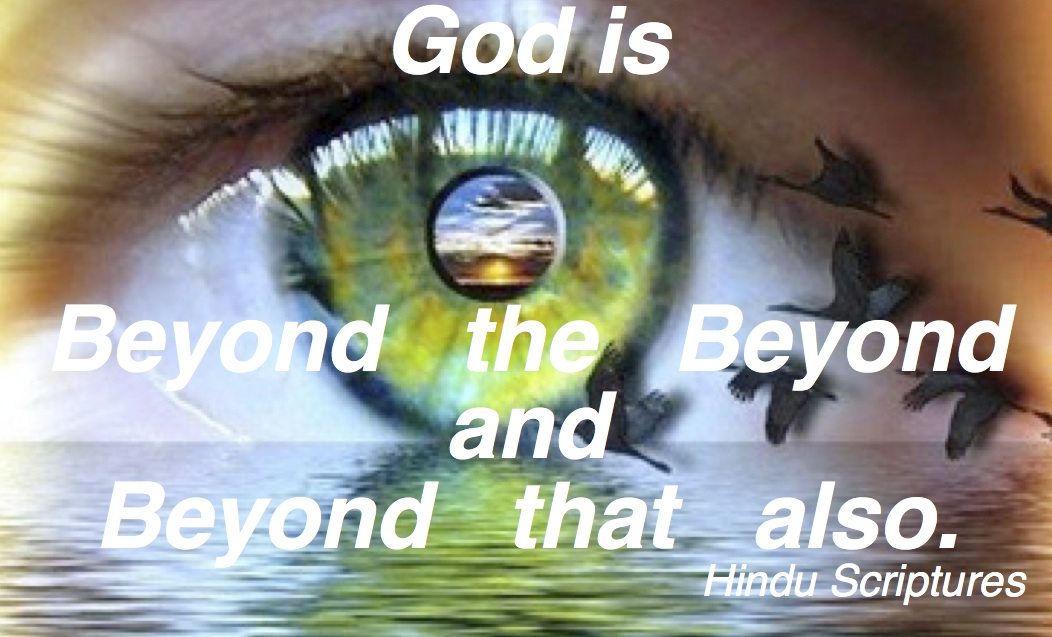
Beyond the Beyond - Dawn Hutchings

I don’t remember the first time I ever saw him. I was barely 18 months old when my brother Alan arrived. Despite the fact that he ruined my gig as an only child, Alan and I grew close over the years. We moved around a lot so we became one another’s best friends. But we went our separate ways when we became teenagers. When I tell the stories, I say that we went our separate ways because Alan became preoccupied with sports.  I suspect that when Alan tells the stories, he says that we went our separate ways because I became preoccupied with the church. Either way you tell it, family and friends used to say that it was hard to believe that we grew up in the same household. Alan developed a reputation for been a bit of a redneck. I developed a reputation for being a bit of a radical. Alan drove four-wheel-drives and went hunting. I drove old beat up cars and lived at an ecumenical retreat centre.  Alan learned a trade, settled down and raised a family. I travelled the world and didn’t get around to figuring out what I was going to be when I grew up, I went back to school at the age of 30.

Alan and I didn’t get around to understanding one another until we were in our mid-40’s. When I grew to appreciate the gentle man that he has become and Alan began to respect the person I’ve become. We still love to talk politics, but these days we tend to agree more than we disagree, I’m not sure who mellowed, the redneck or the radical. We don’t talk much about religion, though. Growing up, Alan would claim to be an atheist, and scoffed at my involvement with the church. These days, Alan, calls suggests he is an agnostic, and although he’s come to respect my life in the church, he still scoffs at the hypocrisy of the church.

I still remember the very first time that I saw Manjit. Her face was the colour of pure milk chocolate. Her jet-black hair was long and wavy. She sat at the very back of the classroom. When the teacher introduced me to Manjit, her toothy grin welcomed me. We were twelve years old. I was the new kid in town and Manjit was the only East Indian in the class. We were to share a double-desk for the remainder of the school year. I remember my first trip to Manjit’s home. A science project needed our attention. I can still smell the aroma of Manjit’s home where exotic curries released their pungency into the air. Over several meals at Manjit’s, I learned to like my food hot and spicy. Manjit’s mother would blend her own spices and she never forgot to send a package or two of her specially blended curries home with me.

Manjit is a gentle soul who introduced me to the wonders of her faith. Manjit is a Hindu. Manjit never tried to encourage me to become a Hindu.  Although over the years she would remind me of the Hindu saying that admonishes Hindus to be better Hindus, Muslims to be better Muslims, Jews to be better Jews, Buddhists to be better Buddhists, and Christians to be better Christians.  Manjit grew into a kind and gentle woman. She works as a social worker in Vancouver’s rough east-end neighborhoods. The last time I saw Manjit she was patiently guiding the students of a confirmation class that I taught, around her Temple. Later that evening Manjit and I talked a long time about Jesus. Manjit told me that she’d always been fascinated with Jesus’ teachings and that she had no problem believing that Jesus is God, but then she explained that Hindus have a thousand god’s.

I can still remember the very first time that Henry walked into my office. A long black beard together with the yarmulke that he wore on his head gave Henry away. So, from the very beginning I knew that Henry was Jewish. But it took a few years of working together before I discovered that in addition to being a graphic artist, Henry is also a rabbi. Henry became a dear friend of mine and over the years he shared so much of his wisdom with me. Many a night Henry and I sat up to the wee hours discussing the Scriptures. Henry even arranged for me to study Hebrew at his Yeshiva. I learned a great deal from Henry. We often talked about Jesus. We rarely agreed about Jesus, but we often talked about him.

Alan, Manjit and Henry, some would call them an unholy Trinity. But to me they are, each of them, sacred. Trinity Sunday is my least favorite Sunday of the Church year. It’s the only festival of the church year that is designed to celebrate not God, nor Jesus, not even the Holy Spirit, but rather a doctrine of the church. The notion that God is One in Three; a doctrine that was created by theologians to explain the inexpressible, a doctrine the church “fathers” began to cast in stone in the words of the Apostle’s, Nicene and Athanasian Creeds.  Three Creeds that make up an unholy trinity in and of themselves. Three Creeds that the Lutheran Church continues to hold as articles of the faith. Three Creeds that continue to hold sway in our church.Three Creeds that in my humble opinion make up an unholy trinity. Three Creeds upon which the doctrine of the Trinity rests.

The Apostles’ and Nicene creeds are familiar to most people who’ve spent time in the churches of Christendom. But it’s the 3rd creed of this unholy Trinity that makes Trinity Sunday my least favorite Sunday of the Church year and for me calls into question the entire doctrine of the Trinity. I still remember the first time I actually heard the third creed. I was about 20. I’d been attending church for about five years and I’d already learned to recite the Apostles creed which we used almost every Sunday and the Nicene Creed which we used on the high holy days like Easter, Pentecost and Christmas. But somehow in those five years I never came across the Athanasian Creed. I must have missed a few Trinity Sundays because in the Lutheran Church tradition dictates that on Trinity Sunday the Athanasian Creed be used. So, on this particular Sunday after the Hymn of the Day the pastor instructed us to turn to page 54 in our Lutheran Book of Worship.    Continue reading

While Preachers Dutifully Ponder the Doctrine of the Trinity, Our Congregations Shrink???

This Sunday is Trinity Sunday.  In anticipation, preachers all over the world are dutifully pondering the Doctrine of the Trinity desperately searching for something to say to encourage their congregations.

Preachers will trot out tired old clichés conjuring up images of triangles, shamrocks around, or point to H20’s ability to appear as water, ice, or steam while still maintaining it’s unified essence. Or have you heard the one about the 3 blind men and the elephant in the room. That old chestnut is trotted out by many a desperate preacher struggling to put flesh on the doctrine of the trinity. But for the life of me I can’t see how 1 blind man touching the elephant’s trunk and presuming that there is a tree in the room, while a second blind man catching wind of the elephant’s ear is convinced that there is some sort of giant fan in the room, while a third man grabs hold of the tail and is sure that he has hold of a rope, helps you to conclude that just because they’re all sharing a room with an elephant you can now confess that God is indeed Father, Son, and Holy Spirit, one God, forever and ever amen. But all sorts of mental gymnastics will be exercised in the vain attempt to make some sort of sense of the doctrine of the Trinity!

On Trinity Sundays, mindful of the fact that trying to explain the doctrine of the Trinity usually leads to heresy: dusty theological books that have not seen the light of day since last Trinity Sunday have been poured over to ensure that the formula’s learned in seminary are repeated correctly and heresy scrupulously avoided. The imaginative among us have attempted to baffle our congregations with our theological intellect, the pragmatic among us have attempted to baffle our congregations with something akin to BS, while the desperate among us have simply tried to survive the Trinity Sunday hoping against hope that no one will notice that we haven’t a clue what we’re talking about.

Perhaps only dear old Dr. Martin Luther possessed the theological integrity sufficient to save a preacher from the perils of preaching on Trinity Sunday. So, before I launch, forth, let me remind you what the instigator of the Reformation had to say on the subject of the Trinity. Martin Luther warned that: “To deny the Trinity is to risk our salvation; to try and explain the Trinity is to risk our sanity.”

I will confess that Martin Luther had much more at stake, literally at stake, than I do, because the truth is that for centuries the punishment for heresy would have found many an ancient preacher burned at the stake. But while the death penalty for heresy has been lifted, the risk to one’s sanity remains.

Now, I will confess that when faced with a particularly difficult theological knot, I prefer to begin by quoting Jesus and not Luther, but alas Jesus remained silent on the issue of the Trinity. So, I did try to find something helpful in the words of the Apostle Paul. But alas, without some really amazing theological gymnastics that are beyond my abilities to comprehend, even the Apostle Paul remains mute on the issue of the Trinity. So keeping in mind Dr. Luther’s dire warning that to,  “To deny the Trinity is to risk our salvation; but to try and explain the Trinity is to risk our sanity.”

Let me remind you that the Trinitarian formula appears in Scripture only once, in Matthew 28, during what is called the Great Commission, when Jesus commands the disciples to go forth, baptizing in the name of the Father, and of the Son, and of the Holy Spirit. But the doctrine of the Trinity does not appear in the Bible

– The doctrine of the trinity, as we know it, was first formulated in the fourth century, by a couple of guys named Gregory and a woman called Marcrina.

– The doctrine of the Trinity was then developed over hundreds of years

– The doctrine of the Trinity was at the heart of several wars

– Thousands of Christians were killed because they came down on the loosing side of arguments over the doctrine of the Trinity

– No one has ever been able to adequately explain the Trinity

– Every explanation of the Trinity that I have ever come across includes some form of heresy

By the way, just so we’re clear, I rummaged through some of my previous sermons on the doctrine of the Trinity and I must confess that if this were the twelfth century, an angry mob would be stoking up the fires beneath my feet  because based on things I have proclaimed on various Trinity Sundays a charge of Modalism could very successfully be laid against me, as could a charge of Sabellianism. You might be interested to know, that more traditional preachers than I, will no doubt preach sermons this Sunday which will prove them guilty  of Arianism or at the very least Subordinationism. All of these heresies in a bygone age would have left us with a severe shortage of clergy in the church, as many of us would be smoldering at the stake for our crimes. Deciding who is right and who is wrong, who is in and who is out is a deadly preoccupation of humanity, a preoccupation that the church has not been able to escape.

So, with apologies to Dr. Luther, I’m going to go ahead and risk my salvation by declaring that the doctrine of the trinity is but a feeble attempt to comprehend the incomprehensible mystery of the very nature of our God.  We can echo all the creeds of Christendom with as much confidence as we can muster, and as enlightening as some of those creeds may be, they cannot begin to unravel the mystery of the creator of everything that ever was and ever shall be, nor can they fully describe the magnitude of the revelation provided in the life, death and resurrection of the one we call Christ, and when it comes to the power of the Holy Spirit, all our creeds together cannot tell the story of her wondrous beauty.

The doctrine of the trinity is just a tool to help us along the way, the trinity is not God, nor is God the trinity. The trinity is merely a way to speak of the unspeakable. And yet down through the centuries we have used the doctrine of the trinity as an idol and demanded that we worship the trinity as if it were God’s very self.

We have worried more about believing in the trinity than relating to the very One whose relationship the Trinity attempts to describe. For when it comes down to it, what we know of our God finds expression our attempts to describe God as a relational being. For what is the doctrine of the Trinity if it is not the declaration that God is Creator, Christ and Spirit, intimately connected as One; at God’s very core we find a relationship. This should be our first clue that any understanding of God must begin with relationship. Surely it is more important to experience God than to explain God. Surely it is more important to relate to God than it is to preserve a doctrine that has long since failed to describe God.

You’d think that after nearly 2000 years the Christian church would have learned to be more humble in its declarations about God. And yet, today, as we strive to learn more and more about creation, some things remain out of bounds. The church remains unwilling to revisit long established doctrines, choosing instead to insist that we simply believe, because what was good enough for grandma ought to be good enough for us. And if we should doubt the doctrine of the Trinity then all we need to do is study harder and we will eventually understand. And if we are unwilling to work at understanding the Trinity we should simply trust that folks much smarter than us have figured it out so we should simply stop questioning and simply mouth the words. Let the tired clichés and the worn out illustrations suffice, forget about our questions and simply drink the kool-aid and our doubts will somehow magically disappear. And so together we focus on believing what has been handed down to us. And for a great many people that’s good enough. All we really need to do is believe, to have faith and all will be well. But oh so many more of us have grown weary of the tired insistence on belief; you only have to think of the children missing from our churches to know that our doctrines are failing to engender relationship.

I’d like to be able to say, here just learn this and believe this and all will be well,  all we need to do is figure out more up to date methods to deliver the same old doctrines and your grown children will learn to believe, but  I too have my doubts.   You see I don’t believe that the point of a religion is to engender belief. I believe that the point of religion is much bigger than belief. For if a religion does no help you relate to God or to God’s creatures, or enhance your experience of creation, then religion is not life giving and all its doctrines are but fleeting attempts to deny death.

It is far more important to have a relationship with our God than it is to understand doctrines about God. In so far as the doctrine of the trinity helps us to relate to God then it can be said to be life-giving. When the doctrine of the trinity helps us relate to God’s creatures and to God’s creation, then it can be said to be life-giving. But reduced to a formula that we must believe the doctrine of the trinity runs the risk of inhibiting our experience of God and robbing us of a life-giving relationship with God and with the world that God loves.

I am convinced that the only way to ensure that the doctrine of the trinity remains life-giving is to free it from the confines of the past. Despite it’s fear, the church must re-examine its creeds and confessions, open up our dusty doctrines to the light of the 21st century so that those that fail to enhance our relationship to God and to one another can be given a decent Christian burial and those that nurture our relationship to God and to one another can thrive.

We need to prioritize relationship and experience over ancient creeds and doctrines, least our preoccupation with correct belief causes us to miss an encounter with our God.

Trying to understand the very nature of God, is, when you think about it actually an arrogant thing for simple creatures such as we. We cannot hope to understand the nature of God.  So perhaps the most faithful sermon on the Trinity is one that merely sniffs around the edges of the mystery, hunting for something closer to an experience rather than an understanding.  God is the elusive stranger.

Sometimes it is possible to identify God, before God gets away. But most of the time we only recognize God after God is gone, like the drifter who wants to tell you his story only you do not have time, so you hand him a dollar and walk away.  Or the woman with the tearstained face who disappears while you decide whether to ask her what is wrong; or the bewildered child whose mother scolds him for being alive and whose sorrowful eyes catch yours just as she drags him away. These are the strangers who lay claim to our hearts, although they make no claims for themselves.  In their presence we fail them.  It is only after they are gone that we know who they were.  That is why it is so easy for us to sacrifice them.  We did not know.  How could we have known?  Who expected Christ to show up looking like that?

Is it possible for us to attend to our peripheral vision, to see out of the corner of our eyes, to notice those faint sounds of birdsong in the background, to catch those elusive fragrances, that might well be God, the Holy One, coming to us in ordinary space and matter, longing for an intimate encounter?

Let us be ready to notice the Spirit of God in a burning bush, to turn aside for a moment in order to encounter the mysterious, intimate God who comes to us, so that in the power of the trinity we ourselves may be made holy!

            Heirs with Christ –  inheritors and distributers of all God’s love.

            There you see, I’m not suggesting that we toss it all away.

            Down through the centuries God has revealed so much.

            I’m simply pleading that we walk humbly with our God.

            And revel in the mystery.

In a dusty library years ago, I discovered a pearl about the Trinity, which I treasure. It came from St. Augustine, a 4th century bishop who helped to craft the doctrine of the trinity.

            Augustine’s metaphor for the Trinity is that

            God is:  Lover, Beloved, and Love itself.  

            May we learn to walk humbly with that love.

Global Engagement, Chaos Theory, the Butterfly Effect and a New Pentecost

Expands God's Being

This sermon speaks to the experience of our Global Justice Team’s attempts to respond ethically to global injustice. We were guided by the Rev. Jonathan Schmidt of the Canadian Churches Forum for Global Ministries. John Philip Newell’s recent book New Harmony: The Spirit, The Earth, and The Human Soul provided new insights for the vision of a New Pentecost. The Gospel reading from Mark 2:1-12 replaced the regular Pentecost reading.

Readings can be found here

Listen to the sermon here the audio begins with the Acclamation Veni Sanctus Spiritus

Beyond Tribalism – Preaching a 21st Century Pentecost

Ideas gleamed from Clay Nelson, John Shelby Spong,

John Dominic Crossan and Marcus Borg

The splendid preacher Clay Nelson of St. Matthews-in-the-City, Auckland, New Zealand, opened me up to a new way of seeing Pentecost.  Nelson tells this lovely little story written by fellow Kiwi Judy Parker, entitled simply “The Hat.”

A priest looked up from the psalms on the lectern, cast his eyes over all the hats bowed before him.   Feathered, frilled, felt hats in rows like faces.  But there was one at the end of the row that was different. What was she thinking, a head without hat.  Was like a cat without fur. Or a bird without wings. 

That won’t fly here, not in the church. The voices danced in song with the colours of the windows.  Red light played along the aisle, blue light over the white corsage of Missus  Dewsbury, green on the pages of the Bible.  Reflecting up on the face of the priest. The priest spoke to the young lady afterwards:  “You must wear a hat and gloves in the House of God. It is not seemly otherwise.”

The lady flushed, raised her chin, and strode out. “That’s the last we’ll see of her,” said the organist.

Later:  The organ rang out; the priest raised his eyes to the rose window.  He didn’t see the woman in hat and gloves advancing down the aisle as though she were a bride.The hat, enormous, such as one might wear to the races. Gloves, black lace, such as one might wear to meet a duchess.  Shoes, high-heeled, such as one might wear on a catwalk in Paris.    And nothing else.

Now some people might ask, “Is this a true story?”  And I’d have to answer that this story is absolutely true!  Now for some that answer might not be enough and they’d want to know, “Did this actually happen?” Well, I’d like to think so. But I doubt that it actually happened. But whether it actually happened or not, most of us know that the truth in this story lies in the power of metaphor.

Metaphor, which literally means:  beyond words. The power of metaphor is in its ability to point beyond itself to truths beyond those that are apparent. And the metaphor in this story points us to buck-naked truths about tradition, worldly power, patriarchy, hierarchy, orthodoxy and many more truths about the very nature of the church itself and religion in general. It doesn’t matter whether or not this actually happened or not. What matters is what we can learn about ourselves and our life together from this story. Continue reading

SHE Who Dwells Among Us – a Mothers’ Day Sermon

Womb-like God

Mothers’ Day Readings which include the Mothers’ Day Proclamation  here

Listen to the sermon here

Worship Bulletin here

Another Option for Preaching on Mothers’ Day – Bring Many Names

Until we can fully recover images and names for God that include the feminine, it will continue to be difficult for many to see the face of God in women and girls. Mothers’ Day is an opportunity for preachers to uncover, explore and proclaim the feminine names, attributes, images and activities of the Divine. This Sunday we will begin our liturgy by singing “Bring Many Names” (Voices United Hymnal), we will sing an invocation to Sophia “Come, Sophia” (Miriam Therese Winter), “Sing Lo! Sing, O Sophia” (Miriam Therese Winter), acclaim women of faith in song with “Come Celebrate the Women” (Shirley Erna Murray), praise the Breasted One with our Hymn of the Day, “Womb of Life” (Ruth Duck), after communion we will “Rock-a My soul in the Bosom of She Who Is” (Miriam Theresa Winter) and send folks off rejoicing to “Faith of Our Mothers”. (copyright laws prevent me from posting the music, so message me and I’ll hook you up)

I offer this repost to inspire the bold women and lovers of women to proclaim the love of She Who Dwells Among Us this Mothers’ Day!

GOD’s Radical Mastectomy

divine feminine 3Recently, I found myself in conversation with a young woman who insisted that inclusive language for God is nothing more than political correctness that has been imposed upon the church by feminists. She insisted that because women have now achieved equality with men, the need for inclusive language for God has served its purpose and need no longer be of concern to worship leaders. I am grateful that my age afforded me the maturity not to explode on this young woman who can well afford her opinion as a direct result of some of the language battles that I and my contemporaries struggled to overcome while she was but knee high to a grasshopper. Our conversation has stuck with me and caused me to review some things that I wrote long ago about the impact our language has not only on our images of the Divine but on the way we live together in community. What follows is a portion of a piece I wrote about the disappearance of the Breasted One as a name for God.

“We believe in one God, the Father the Almighty… We believe in one Lord, Jesus Christ, the only Son of God, eternally begotten of the Father…  We believe in the Holy Spirit, the Lord, the giver of life, who proceeds from the Father and the Son.  With the Father and the Son he is worshipped and glorified.  He has spoken through the prophets. In this God:  “We believe” and “His kingdom will have no end!”  God in three persons: Father, Son and Holy Spirit, our blessed Trinity.  As we proclaim our faith in the words of the Nicene, Apostles’, or (heaven forbid) the Athanasian creeds we proclaim a particular image of the Triune God.  For generations,  a majority of Christians have assumed all three persons in this Trinity are male.  Until recently this assumption has resulted in the exclusive use of male images, symbols and pronouns to represent the Triune God which Christians worship.  God has been declared to be male.  This is not an easy declaration to make.  In order to make such a declaration, many of God’s attributes which are revealed in the biblical accounts have been eradicated from the Christian tradition. 

     Long before the Christian church began to formulate its exclusively male image of the triune God, the Hebrew people used several words to refer to God.  The earliest of these words is “El” which is the generic Semitic word for a god.   

to read the more click here

The Ascension Never Actually Happened – Ascension is Always Happening

Leaving Behind the Miraculous Jesus to Welcome the Human Jesus

The celebration of Jesus’ Ascension is a church festival that I have always chosen to ignore. The ancient tradition that has Jesus floating up into the clouds stretches the credibility of the church to such an extent that I’ve always assumed that the less said about the Ascension the better. But last year I was challenged by a parishioner to try to make some sense out of the Ascension story so that 21st century Christians would not have to check their brains at the door should they happen upon a congregation that still celebrated the day. What follows is a transcript of my attempt to leave behind the miraculous Jesus in order to be better able to welcome the human Jesus down from the clouds. I am indebted to Bishop John Shelby Spong together with Clay Nelson of St Matthew-in-the-city for their liberating insights.  

Traditionally, on the 40th day after Easter, the church celebrates the feast of the Ascension. But because so few people in the 21st century are willing to come to church during the week, the Ascension is celebrated by the church on the first Sunday after the feast of the Ascension. Since I have been your pastor we have not celebrated Ascension Sunday. But as this particular Ascension Sunday follows so closely after Jack Spong’s visit with us, I thought that it was about time that rather than avoid the Ascension, I’d like to try to confront it.

Jack has been telling his anti-Ascension story for quite a few years now. Just in case you’ve never heard it or have forgotten it, let me remind you. It seems that Jack was speaking with Carl Sagan, the world-renowned astronomer and astrophysicist. Jack says that Carl Sagan once told him  “if Jesus literally ascended into the sky and traveled at the speed of light, then he hasn’t yet escaped our galaxy.”

With that said, let me just say, that the Ascension never actually happened. It is not an historical event. If a tourist with a video camera had been there in Bethany they would have recorded absolutely nothing. 

I know what the Nicene Creed says, “Jesus ascended into heaven and is seated at the right hand of the Father.” But like the members of the early church, I do not have a literal understanding of the scriptures. And so, as I do not understand the Bible literally, neither do I understand the Nicene Creed to be a literal interpretation of the faith. Like all creeds the Nicene, Apostles and Athanasian creeds are snapshots of theology as it was at a particular time in history.

We would do well to remember that the Creeds were developed to answer questions about the faith in a time when people understood the cosmos to be comprised of a flat earth, where God resides above in the heavens and located beneath the earth were the pits of hell. I know that the universe is infinite.  I also know about gravity. I also know that it is highly unlikely that Jesus had helium flowing through his veins.  I’ve flown around the world, and I can tell you that there is no heaven above the clouds. So, I can say with confidence that:  The very present Jesus of resurrection faith did not literally elevate into heaven while his disciples looked on.

The writer of the Gospel according to Luke and the Book of Acts are one and the same person. The same writer wrote the Gospel according to Luke to tell the story of the life of Jesus and the Book of Acts to tell the story of the Holy Spirit at work in the followers of Jesus.  Although we don’t know who the author was, we do know that he was not an historian. Neither Luke nor Acts are historical accounts. They are both addressed to a character named Theopholus. Theopholus is  Greek for lover of God. The books are addressed to the lovers of God, that’s you and me and the author makes it clear that he has written these books so that we, the lovers of God, can believe and have faith.  The books were written somewhere near the end of the first century. Somewhere between 50 to 60 years after the death of Jesus.  Perhaps between 80 and 95 of this Common Era.

The important question for most biblical scholars is not whether the Ascension actually happened but rather, what did the Ascension mean to the author in his context. And to that question we might add a more pressing question: Given what the Ascension meant in the first century, does it continue to have any relevance for those of us who live in the 21st century?

I believe that the followers of Jesus experiences of Jesus the man were so overwhelming that they saw in him the human face of God. I also believe that in very powerful ways the followers of Jesus continued to experience Jesus presence.

Those powerful experiences of Jesus after his death were so intense that they defied description. Given that Jesus was now dead and gone, yet his presence still seemed to be with them, the followers of Jesus used the Hebrew story of Elijah and Elisha to construct a belief about the Spirit of Jesus continuing to be powerfully among them.

By the time the writer of Luke and Acts got around to writing these stories down, there were different versions of the story being passed around in the early church. The writer of Luke/Acts paints a picture of a re-formed bodily Jesus going up into the heavens in the Ascension and a windy, fiery Spirit coming down at Pentecost. The writer uses powerful familiar Hebrew images to portray the experiences of Jesus’ followers after his death.

In order for us to move beyond the literal and beyond the historical and even beyond the metaphorical meaning to arrive at the meaning that the story of the Ascension can have for us today in this time and in this place, I’d like to tell you two stories that I heard about from a preacher who serves an Anglican parish in Auckland, New Zealand. Clay Nelson is a friend of Jack Spong who tells great stories.  The first story is an actual, literal, historically accurate Ascension story followed by a metaphorical Ascension story.

The literal historical Ascension story took place in 1982. But it the story that actually began some twenty years earlier when Larry Walters was just 13 years old and he saw weather balloons hanging from the ceiling of an Army & Navy surplus store. It was then that Larry knew that some day he would be carried up to the heavens by balloons. Sure enough when he was 33 years old, on July 2nd 1982, Larry Walters tied 42 helium-filled balloons to a lawn chair in the backyard of his girlfriend’s house in San Pedro, California. With the help of his friends, Larry secured himself into the lawn chair that was anchored to the bumper of a friend’s car, by two nylon tethers. Larry packed several sandwiches and a six-pack of Miller Lite and loaded his pellet gun so that he could pop a few balloons when he was ready to come down. His goal was to sail across the desert and hopefully make it to the Rocky Mountains in a few days.

But things didn’t quite work out for Larry. When he cut the cord anchoring the lawn chair the second one snapped, launching Larry into the skies above Los Angeles. Instead of leveling off at about 30 feet as he’d planned, Larry rose to 16,000 feet and at that height Larry couldn’t risk shooting any of the balloons.    So he stayed up there drifting cold and frightened for more than 14 hours when he found himself in the primary flight approach corridor for LAX.

Legend has it that a Pan Am pilot was the first to spot Larry and quickly radioed the tower telling them that he’d just passed a guy in a lawn chair with a gun. The Federal Aviation Administration was not amused. Larry started shooting out the balloons to start his descent but accidentally dropped the gun. After drifting for a couple of hours he eventually landed in a Long Beach neighbourhood entangled in some power lines. Larry survived without any serious injuries.

Now that is an historically accurate ascension story. It’s a funny story and a true story, but it is not a life changing story. But Larry did inspire a wonderful Australian movie, called Danny Deckchair, which is untrue, is in fact full of truth. Now when a New Zealander recommends an Australian movie, I take notice, so yesterday I watched Danny Deckchair and I do believe that it is a modern metaphorical interpretation of the Ascension.

The movie’s hero, Danny, is a bored labourer who drives a cement mixer. Danny is an unlikely Christ figure whose story is similar to Larry’s. Danny ascends from his backyard in Sydney during a barbecue and lands less than gracefully in a small town in the Australian outback. By this act of departure and arrival everything changes not only for Danny, but also for those he left behind and those he meets in the outback. Danny’s unique departure inspires those at home to take risks of their own: to live life more boldly, to act on their dreams, to become all they can be.

In acting out his dream, Danny finds new confidence and becomes the source of inspiration and affirmation for the townsfolk in the outback who used to see themselves as backwater hicks, but now see the importance of their actions in the life of their town. Everyone is transformed by Danny’s ascension. New Life and love accompany his resurrection.

The writer of Luke/Acts two versions of Jesus’ Ascension are not true like Larry’s lift off but are true like Danny Deckchair.  While the event certainly did not happen in a literal way, the story does attempt to capture the quality of a real man whose coming and going in their lives changed them forever.  The writer of Luke/Acts Ascension story is not so miraculous after all. The Ascension story is about the joy the disciples felt about the ongoing ever so real presence of Jesus after his death. The God they saw in Jesus they found in themselves. In Jesus’ departure they discovered that they could love as wastefully as he did.  They could live abundantly as Jesus did. They could heal and reconcile just as Jesus did.  With Jesus pointing the way they had found God and while Jesus was gone, the God that Jesus pointed to was everywhere, even in them.

If we are to move beyond the literal, beyond the historical, beyond the metaphorical to the life-changing meaning of the stories that have been handed down to us, we may just have to give up our tenacious hold upon the notion of Jesus as some sort of miracle worker who defies the laws of gravity, and time and space.

If we are to engage the stories about Jesus in a way that allows those stories to intersect with our lives we will have to embrace Jesus’ humanity. My Kiwi colleague Clay Nelson puts it like this:  “If your faith is sustained by a miraculous understanding of Jesus that has to ignore what you know about the real world, then let me ask you: Is it a faith that can sustain you in the real world?             Eventually this world of advancing scientific knowledge, that no longer requires a personal God to create, heal and sustain life will make the God we have had irrelevant, if it hasn’t already. I think God would rather be dead than irrelevant.             And if God is irrelevant, Jesus, who has been portrayed by the author of Luke/Acts and the church as the incarnation of this God, will suffer the same fate. If he hasn’t already.”

Nelson reminds us that Jesus was human and the human Jesus does not suffer the fate of an irrelevant god.. “The human Jesus, instead of only showing us God in all God’s glory, also shows us in all of ours. This Jesus becomes a window through which we can glimpse the mystery of love and life and being we are all called into. This Jesus through his radical love of even his enemies invites us into that mystery that surrounds us and is part of our very being.  This Jesus becomes the doorway through which I’m willing to walk into that mystery. For this mystery, I am willing to die to have new life. Mystery makes sense to me, the miraculous doesn’t. The mysterious Jesus inspires me and calls me to new levels of being. The miraculous Jesus helps me as much as telling a child that Santa comes down chimneys. The mysterious Jesus sustains my faith.  The miraculous Jesus impedes my faith.”

Like my Kiwi colleague Clay, I no longer need to believe in a miraculous Jesus in order to experience the mysterious Christ who lives and breathes in with and through Christ’s body here and now.

The writer of Luke/Acts is preparing his audience of God lovers for the arrival on the scene of the very Spirit of God that lived and breathed in with and through Jesus.

So, as we approach the celebration of Pentecost, may you find in these stories handed down to us by our ancestors in the faith an inkling of the powerful presence that Jesus’ first followers experienced after Jesus had left them.

May the joy they felt at the realization that the God they saw in Jesus they now found in themselves. May the realizations that those first followers experienced in Jesus’ departure, when they discovered they could love as extravagantly as Jesus did, that they could live as abundantly as Jesus did. That they could bring about healing and reconciliation just as Jesus did. 

May these realizations live and breath and have their being in you. May you know the joy of seeing Jesus point the way, the joy of finding God, may you know the God Christ points to who is everywhere, even in you. May you love as extravagantly as Jesus loved. May you live as abundantly as Jesus lived.             May you be Christ’s Body here and now, in this place in this time!

Read about the real Lawn-chair Larry here

Preaching on Mothers’ Day – Don’t Compromise!

True Mother Julian of NorwichPreachers have several choices when it comes to proclaiming the Gospel on Mothers’ Day.  We can of course ignore the fact that it is Mothers’ Day. After all Mothers’ Day does not appear on the Church calendar of feasts and commemorations. However, Mothers’ Day is reported to be the third highest attendance day; out numbered only by Easter and Christmas! I suspect that a great many offspring choose the day to placate their mothers. So ignoring the event seems like adding insult to injury to those guilt-ridden offspring who hope that their efforts won’t go unnoticed. Sadly, the presence of the Christmas and Easter crowd, all too often tempts the preacher to resort to sentimentality in order to entertain the infrequent worshippers. The history of the creation of Mothers’ Day ought to compel preachers to resist temptation and find the courage not to compromise. 

Most of us think of Mothers’ Day as a kind of conventional holiday that celebrates traditional family values; the kind of traditional values that encourage women who are mothers to keep on keeping on.  But celebrating the traditional motherhood is definitely not what Mothers’ Day was originally intended for.  The very first Mothers’ Day was intended to be a celebration not just of mothers, but rather it was designed to be a call to action by all women. 

One of the first founders of Mother’s Day was Anna Jarvis back in 1858.  Anna Jarvis gathered women of the Appalachian mountains together in what she called mother’s day work clubs. Where women worked together to eliminate poverty.  When the Civil War came about, the mother’s day work clubs created medical camps.  They were places of nonviolence for men from both sides who were wounded in the war. 

At the end of the Civil War, Anna Jarvis organized the Mother’s Day Friendship Day, which was a call for radical peace.  Anna Jarvis brought together the leaders from the north and the south for a time of reconciliation.  Mother’s Day was originally about reconciliation and peace.

Then along came a  woman named, Julia Ward Howe who wrote “The Battle Hymn of the Republic”. Julia Ward Howe called for women to protest the cruelties of war everywhere and to gather together to call for peace.  She called for a national day of peace for all women.  She issued women’s’ declaration, and from the streets women shouted :

“Arise then women of this day, arise all women who have hearts, say firmly our husbands shall not come to us reeking with the carnage for caresses and applause.  Arise women of peace.” 

Anna Jarvis’ daughter also named Anna Jarvis approached President Wilson and petitioned for a national Mother’s Day.  It was Woodrow Wilson who called for the second Sunday of May to be the national Mother’s Day. Shortly thereafter, n anti-suffragette movement spoke out against the women who were calling for peace.  So instead of being a day for women who were active and present in the world, it became a day to celebrate mothers who stayed at home with the children.

Anna Jarvis the founder of Mother’s Day was so angry with Woodrow Wilson that she filed a law suit, that petitioned the courts to put a stop to Mother’s Day because as the court papers insisted, instead of it being run by women, suddenly Mother’s Day was being run by men in an effort to keep them in the house barefoot and pregnant. 

Sadly, the world was not ready for such strong willed women to shout out loud. And so, Anna Jarvis was arrested at a Mother’s Day celebration and she spent the rest of her life in a sanatorium? 

On mothers’ day we would all do well to remember Julia Ward Howe’s Mothers’ Day Proclamation.  Dated 1870 but sadly it is still so very relevant today:

Arise, then, women of this day! Arise, all women who have hearts, whether your baptism be that of water or tears!

Say firmly: “We will not have great questions decided by irrelevant agencies. Our husbands shall not come to us, reeking with carnage, for caresses and applause. Our sons shall not be taken from us to unlearn all that we have taught them of charity, mercy and patience. We women of one country will be too tender of those of another to allow our sons to be trained to injure theirs.”

From the bosom of the devastated earth, a voice goes up with our own. It says, “Disarm, Disarm!” The sword of murder is not the balance of justice. Blood not wipe out dishonor, nor violence indicate possession. As men have often forsaken the plow and the anvil at the summons of war, let women now leave all that may be left of home for a great and earnest day of counsel. Let them meet first, as women, to bewail & commemorate the dead. Let them solemnly take counsel with each other as to the means whereby the great human family can live in peace, each bearing after his own time the sacred impress, not of Caesars but of God.

In the name of womanhood and of humanity, I earnestly ask that a general congress of women without limit of nationality may be appointed and held at some place deemed most convenient and at the earliest period consistent with its objects, to promote the alliance of the different nationalities, the amicable settlement of international questions, the great and general interests of peace.”

Jesus was wrong! Can I Get an Amen? – a sermon for Easter 7C – John 17:20-26

window4Before I could go to seminary I had to obtain an undergraduate degree.  So I enrolled at the University of British Columbia in their religious studies program. In order to obtain a degree in religious studies, we were required to study the religions of the world. My professors and classmates were Islamic, Hindu, Jewish, Christian, Buddhist, atheist, agnostic, and together we explored all sorts of religions, both ancient and modern.  I remember registering in a course on ecumenism where I expected that we would study the various movements to restore unity to Christianity.  We did that, but we also did so much more.  We learned that ecumenism is not just about Christian unity.  Ecumenism includes inter-faith dialogue.

During the course I was required to write papers on Hindu-Christian dialogue, as well as a paper concerning what was written about Jesus in the Islamic Qur’an.  This course introduced me to the reality that unity does not mean uniformity. In his book entitled Who Needs God, Rabbi Harold Kushner writes: “Religion is not primarily a set of beliefs, a collection of prayers, or a series of rituals. Religion is first and foremost a way of seeing. It can’t change the facts about the world we live in, but it can change the way we see those facts, and that in itself can often make a real difference.”

Sadly, over the centuries the religions of the world have shaped the way we see people whose religious practices are different than our own in ways that have made it possible for us to pre-judge our neighbours. Studying the religions of the world broadened my horizons and I actually began to believe that at long last I had escaped the prejudices that were bred into me. Continue reading

Remembering Who We Are: a sermon for Easter 6C

Inner Peace Kempis

Readings: Acts 16:9-15; Merger Poem (Judy Chicago); John 14:23-29

Listen to the sermon here

Merger Poem (The Dinner Party) by Judy Chicago

And then all that has divided us will merge

And then compassion will be wedded to power

And then softness will come to a world that is harsh and unkind

And then both men and women will be gentle

And then both women and men will be strong

And then no person will be subject to another’s will

And then all will be rich and free and varied

And then the greed of some will give way to the needs of many

And then all will share equally in the Earth’s abundance

And then all will care for the sick and the weak and the old

And then all will nourish the young

And then all will cherish life’s creatures

And then all will live in harmony with each other and the Earth

And then everywhere will be called Eden once again


Don’t Piss God Off! – a sermon for Easter 6C – Acts 16:9-15


“Warning!” written by Jenny Joseph

When I am an old woman I shall wear purple
With a red hat which doesn’t go, and doesn’t suit me.
And I shall spend my pension on brandy and summer gloves
And satin sandals, and say we’ve no money for butter.
I shall sit down on the pavement when I’m tired
And gobble up samples in shops and press alarm bells
And run my stick along the public railings
And make up for the sobriety of my youth.
I shall go out in my slippers in the rain
And pick the flowers in other people’s gardens
And learn to spit.

You can wear terrible shirts and grow more fat
And eat three pounds of sausages at a go
Or only bread and pickle for a week
And hoard pens and pencils and beermats and things in boxes.

But now we must have clothes that keep us dry
And pay our rent and not swear in the street
And set a good example for the children.
We must have friends to dinner and read the papers.

But maybe I ought to practice a little now?
So people who know me are not too shocked and surprised
When suddenly I am old, and start to wear purple.

lydia of philippiLydia is one of the many mothers of Christianity. Lydia was the first European convert to Christianity. Lydia was the founder of the church at Philippi. The Scriptures tell us that before Paul and Silias proclaimed the Gospel to Lydia, she was a “God Fearer”. God Fearers, was the name given to people who were not Jewish but who were so intrigued with the God that the Jews worshipped that they lived their lives as if they were Jews. Indeed, most God Fearers followed all the Jewish laws except for circumcision. Circumcision, for adult males, living in the first century, when sanitary conditions were primitive and no antibiotics were available could lead to death.  So, most male converts to Judaism, were not called Jews but God Fearers. Generally women were given the same designation as their husbands or fathers.

So right from the beginning of the story, Lydia is described in an unconventional way. We are told that Lydia was “a God fearer; a worshipper of God and a dealer in purple.” Now an introduction like that may not seem very unconventional to us but we have to remember that for the writer of the Book of Acts to have described a situation where, Paul and Silias, two strange men in town meet a woman, any woman was in and of itself unconventional.

When the Acts of the Apostles was written sometime between at the end of the first century, (most scholars date it between 80 to 100) this sort of encounter would have been considered outrageous; women and men, especially strange men, simply didn’t have encounters in public. And as for Lydia being a dealer in purple; well people hearing this story in the first century would have been amazed at the very idea of a women conducting business. And as for the colour purple: it took thousands of mollusks; mollusks are tiny little crustaceans…shellfish; and you’ve got to crush and treat thousands of the little suckers just to make enough dye to make a yard or two of purple cloth. So it was very expensive, worth its weight in silver. Wearing purple was a statement of status and wealth. Purple was the Gucci handbag or Rolex watch of the first century. Lydia is selling purple; purple cloth, purple robes, the power of purple. She’s not local. Lydia’s is from Thyatira, a town well know for making purple cloth.  Lydia seems to be the head of her household, there’s no man mentioned and that alone is remarkable, because Lydia is traveling in the public realm, to trade her wares. As a seller of purple, she’s not poor; a poor woman wouldn’t be able to afford that kind of stock. She’s not Jewish, but she believes in God. She’s not part of any organized religion.

According to the story, when Paul and Silias arrive in Philippi to proclaim the good news about Jesus Christ, they begin by looking for a synagogue. They figure a synagogue is a good place to begin because that’s where the folks who already believe in God hang out. But to have a synagogue you need ten men who will meet together to say prayers. Philippi, it seems, didn’t have a ten men to form a synagogue. So if there’s no synagogue, then any Jews or God Fearers that happen to be in the town or passing through know to meet down by the river on the Sabbath to pray.

So, Paul and Silias head down by the riverside, hoping to preach the gospel to the men; and down by the river they find only women. And the scripture tells us that Paul and Silias, “sat down and spoke to the women who had gathered there.  A certain woman named Lydia, a worshiper of God, was listening to them; she was from the city of Thyatira and a dealer in purple cloth. We’re told that, “The Lord, opened her heart to listen eagerly to what was said by Paul.” And then we are told that Lydia and her household were baptized and Lydia invited Paul and Silias to come and stay with her.

Many scholars agree that the church that was formed in Philippi, the church to whom Paul address his letter to the Philippians; this church, the first church in Europe was in all likelihood founded and then led by the first European convert to Christianity; a woman named Lydia.

Looking back to a time when we have been lead to believe that conventions demanded that women to stay out of the public realm,  we see that even the Apostle Paul, who down through the centuries has been credited with trying to keep women silent in the churches, even Paul promoted the proclamation of the Gospel by  entering into all sorts of ministries that were actually lead by women. Lydia was one of several women, named and unnamed who established the first congregations in their homes. Most of these women were wealthy women of means who saw to it that the church had what it needed to grow and flourish.

From the very beginning Christianity has flouted convention.  Yet so many of those of us who call ourselves Christians, spend so much of our time content to be conventional. Christianity is not about preserving the status quo. Christianity is not about being conventional.  Christianity is dangerous. Those who call ourselves Christian need to put away our desire to play it safe. We need more purple hues in our lives! We need to dare to step out of bounds, and take some risks. Christians need to colour outside the lines!

Don’t shun the unconventional. Remember Lydia and ask yourself:  are you old enough to wear purple; how about a red hat that doesn’t go, and doesn’t suit you?

Do you think your ready, to make up for all those years of following the rules? Do you want to go out in your slippers in the rain, or pick the flowers in other people’s gardens and learn to spit? NO. Well maybe you’re right; maybe you’re not old enough just yet. But maybe you ought to practice a little now? So people who know you are not too shocked and surprised when suddenly you are old, and start to wear purple. Come on, what have we got to lose, listen to the ways the Spirit of God is moving in you. Come on let’s take a chance and mosey on down by the riverside!

Let’s dare to wear purple! Perhaps, in daring to be unconventional we will know the peace the promised peace of Christ. So, let’s mosey on down by the riverside…

Lydia’s band of women down by the riverside reminded me of Sister Rosetta Tharpe; an unconventional woman who dared to be who she was. There’s another sermon here somewhere about the peace that Christ offers. Preach it!

For more about Sister Rosetta click here


God: A Changing Reality – John Shelby Spong

jack spongFrom the spirit-filled world of animism, through the tribalism of the patriarchs, the warnings of the prophets Jack Spong’s sermon examines our visions of God and demonstrates the journey from God as tribal god who orders genocide to the loving god who calls us to love our enemies. This sermon was preached at Countryside Community Church in Omaha, Nebraska on April 14, 2013.

The Story of Judas Iscariot – John Shelby Spong

judas and jesusThis Sunday, in churches all over the world the story of Judas Iscariot will be read. So, this video of John Shelby Spong’s lecture on Judas Iscariot is a timely one. Both  preachers and listeners of sermons will find Jack’s take on Judas’ story thought-provoking. Enjoy!

What is Judas Doing Here Now? – A sermon for Easter 5C

A sermon based on the readings for the fifth Sunday after Easter

Revelation 21:1-6 and John 13:31-35

Judas hanging

Think very carefully about a couple of questions. The questions are simple ones. They are designed to help you form images in your mind; images that will help to shed light on a particular kind of wound. But before I ask the questions, let me give you a definition of the verb that drives both of the questions that I’m going to ask. The verb comes from the Latin verb “tradere” which means to hand over. In English we say:  betray. The word betray literally means to hand over to an enemy by treachery or fraud. The word betray can also mean to be unfaithful; to violate trust or to deceive. So, here’s my first question: Have you ever been betrayed? Think about it very carefully. Has someone ever turned you over to the enemy by treachery or fraud? Has someone ever disappointed you; been unfaithful to you, violated your trust, or deceived you? Have you ever been betrayed?     

The second question is this: Have you ever betrayed someone? Think about it carefully. Have you ever handed someone over to the enemy? Have you ever let someone down, been unfaithful, violated a trust or deceived someone? Have you ever betrayed someone? 

Now take those two questions further: Have you ever been betrayed by someone you love?  Have you ever betrayed someone you love?   Continue reading