 Pentecost 10C – July 28 2013
Listen to the sermon here

 Today, preachers all over the world (myself included) will be tackling what the writer of the gospel of Luke had to say about prayer in Luke 11:1-13. It is a daunting task for any preacher, let alone for those of us who have given up images of the Divine that conjure up notions of a super-hero in the sky who interferes in our lives. Catherine Keller is a process theologian who teaches Constructive Theology at Drew University (New Jersey). Her comments about prayer as a kind of allurement are enlightening.
 As I continue to work on this Sunday’s sermon, (see earlier posts here … here …and here), Jesus’ teaching on prayer in the gospel reading Luke 11:1-13 leaves me wondering what an enlightened 21st humanoid is supposed to do with Jesus 1st century ideas???
Cast you minds back to another time and place and tell what the numbers 33, 45, and 78 have in common??? Vinyl Records anyone? When I was a kid music came from a portable RCA record player. The sound quality wasn’t all that great, but somehow we didn’t seem to care. Later when I was a teenager, my parents got a fancy state of the art Phillips stereo cabinet and suddenly sound seemed to be coming from booth ends of the room. I never did understand how those old record players managed to pick up sound from the grooves in the vinyl to produce music. I still remember my father’s first reel-to-reel tape recorder, and then there were the eight-tracks, followed by cassettes, followed by CD’s. I can remember these things, but I have no idea how they made music. It doesn’t matter how many times people try to explain it to me, I still think it’s a miracle that such beautiful sounds can come out of machines.
These days I don’t use records, tapes or CDs to listen to music. My music is stored in “the cloud” and when I want to hear I song I make sweeping motions on my iphone screen and presto, I can make music fill the room. I don’t know what the cloud is. I asked the personal assistant on my iPhone, her name is Siri and she told me she was sorry but she couldn’t tell me because Steve told her not to tell anyone. Some people think the cloud is located in a 225-acre facility that Apple built in North Carolina. Continue reading
 As I continue to work on this Sunday’s sermon, (see earlier posts here and here) Jesus’ teaching on prayer in the gospel text Luke 11:1-13 begs the question: “To Whom Shall We Go?” Liberated from perceptions that reduce images of God to those of a cosmic superhero who abides up or out there ready to manipulate events here in the world at the request of those who pray, the activity of prayer takes on a whole new meaning and shape. Our images of who, where and what God is will direct our prayers in ways that impact our expectations of prayer. Who do we pray to and what we expect of the One who hears our prayers will shape how and why we pray.
Before we can even begin to understand what so much of the Christian tradition means when it talks about praying to God, we need to take a step back and look at what we mean when we say the word “god.” Throughout the Jewish and Christian traditions you can trace two very distinct ways of understanding and talking about God. Continue reading
 This Sunday’s gospel text (Luke11:1-13) will no doubt send preachers scurrying to review what we might say with regard to prayer. In this splendid little video Laurence Freeman reviews Jesus’ teaching and points to prayer as Jesus’ focus. Well worth watching before you begin to write or indeed listen to Sunday’s sermon.
Dom Laurence Freeman OSB is a monk of the Olivetan Benedictine Congregation of Monte Oliveto Maggiore and Director of The World Community for Christian Meditation. Fr Laurence was born in England in 1951 where he was educated by the Benedictines and studied English Literature at Oxford University.
Before entering monastic life he had experience with the United Nations, banking and journalism. In the monastery his spiritual teacher was John Main with whom he studied and whom he helped in the establishment of the first Christian Meditation Centre in London.
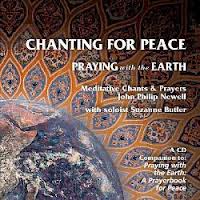 Morning Prayer Liturgy from Casa del Sol, Ghost Ranch. Led by John Philip Newell, Ali Newell, David E. Poole, Winona Poole. Chants from “Chanting For Peace, Praying with the Earth”
 In this coming Sunday’s gospel reading Luke 11:1-13, Jesus’ disciples ask him to teach them to pray. As a pastor I have been asked to teach people to pray. Each time I have been asked to teach someone to pray I have cringed inside because I do not feel up to the task. For some reason the old hymn “I Come to the Garden Alone” keeps playing in my mind. I keep telling it to, “Shush!” so that I might hear the “bath qol” but the daughter of a sound eludes me. Below is a portion of a sermon I preached a couple of years ago on the subject of prayer. If nothing else, it reminds me to shush!
I began this sermon by asking the congregation to sing from memory the old hymn: I Come to the Garden Along. Feel free to sing it to yourself!
I think my earliest memory of prayer is a distant memory I have of skipping along the sidewalk chanting a familiar refrain: “Don’t step on a crack or you’ll break your mother’s back.” Most of us can remember a moment from our childhood when a superstition was instilled in us that caused us to perform some ritual in order to placate the unseen power that could determine our fate. Whether it was avoiding cracks, or walking under ladders or black cats, we were trained from an early age to believe that there were powers out there that could determine our future. Continue reading

To commemorate this festival day, I repost this not-so-long-ago encounter with a visiting New Testament scholar to entice you to follow Mary out of her tomb and beyond the streets to her place at the head of the fledgling community that became the church:
He just said it for the third time! “Harlots!” He keeps calling them “harlots”, while I rack my brains to come up with one harlot. Then he points to the text and his charges become clearer, he says, “she is a “prostitute!”
My carefully reigned in anger is unleashed. “Where? Where? Where? Show me where it says this woman is a prostitute!”
As he refers to the Gospel text and insists that, “It is there, right there in the text”,
I want to scream, I want to cry, I want to wipe the bemused expression from his face. I want to rub his nose in the damned text. Instead, I begin the uneasy process of reigning in my anger. I slow my speech, I try to erase the tremor from my voice and I ask him to, “Show me, show me where it says this woman is a prostitute.”
He consults his text and says, “a woman in the city who was a sinner.”
“A sinner not a prostitute.” I respond.
He insists, “Yes a prostitute.”
“Where?” I ask.
Again he insists, “A woman who was a sinner.”
I demanded to know, “Where does it say she was a prostitute?”
He insists, “The author means that she was a prostitute.”
I lose control, “How do you know? What words does the author use to say that his woman was a prostitute? Show me in the text where it says she was a prostitute?”
He still doesn’t get it, “What do you mean? It is clear that this woman was a prostitute.”
Once again I push, “Show me. Show me where?”
He continues to say, “She was a woman from the city who was a sinner.”
I know that the text says that, so I implore him to tell me, “The Greek… What does the Greek say?”
He replies, “amartolos”.
I push, “Does that mean prostitute?” We both know that it does not.
He replies, “Sinner. But the context clearly shows that she was a prostitute.”
Still pushing I ask him to “Show me. Show me how the narrative says this woman was a prostitute. Show me where it says her sins were sexual. Show me where it says so in the narrative.”
He says, “It’s clear.”
Clearly we disagree, so I try again, “Clear to you. Show me. Show me!”
As he fumbles through the pages, I offer him a way out, “Okay. Even if I concede the point that her sins were sexual, show me where it says that these sexual sins were nothing more than lust or adultery, show me where it says that she was a prostitute. Show me!”
He couldn’t show me. It’s simply not there.
Nowhere in the New Testament does it ever say in Greek or in English that Mary of Magdala is a prostitute. But over and over again scholars, theologians, popes, preachers, and dramatists, have continued to cast Mary of Magdala as a prostitute.
In the years that have transpired since than day in seminary, when a visiting New Testament scholar insisted that “the context clearly shows that she was a prostitute,” I’ve delighted in being able to participate in the phenomenon of Mary’s resurrection as the first Apostle. Continue reading

Scripture Readings: Genesis 18:1-15 and Luke 10:38-42
Worship Bulletin pdf here (to be printed double-sided and folded into a booklet)
Listen to the sermon here
 βασιλεία, “basileia” the Greek feminine noun for sovereignty is traditionally translated into english as “kingdom.” Both the greek and english words were generated by kyirarchal world views. Kyiarchal is a word coined by Elisabeth Schussler Fiorenza to replace the term patriarchy. Kyriarchy emphasizes”the rule of the emperor/master/lord/father/husband of his subordinates.” Fiorenza argues for a different understanding of patriarchy, “one which does not limit it to the sex/gender system but conceptualizes it in terms of interlocking structures of domination, i.e., elite male, relations of ruling.” The kyriarchal translation of “basileia” as “kingdom” fails to capture the literal meaning this word which is after all is said and done the feminine plural of majesty. I have often joked that it is more accurately translated as “queendom”. Over the years I have often used words like “reign” “dominion” or “empire” in place of kingdom. These days, I have come to appreciate “kin-dom” as a better approximation of the meaning of basileia. With that in mind, I offer Laurence Freeman’s explanation of basileia.
When I was a child my father used to sing a song that puzzled me:
“It takes a worried man to sing a worried song. It takes a worried man to wing a worried song. It takes a worried man to sing a worried song. I’m worried now, but I won’t be worried long.” listen here
I can still remember my young self wondering why this worried man won’t be worried for long. Now that my age often lets me know that there are fewer years ahead of me than there are behind me, I know full well that it is death that will end this worried man’s worries. I also know that it is the knowledge of our impending death that gives birth to our fear. Speaking at the Greenbelt Festival in 2004, John O’Donohue explores with wit, charm and wisdom the reality that we are all going to die and points to love as the powerful antidote to the fear that this realty inspires. O’Donohue insists that we all must sort out our fear of death in order to live fully!
Click on the image below to listen to John O’Donohue

 This week I have been preparing to preach on the story in the Gospel According to Luke about Jesus’ encounter with Martha and Mary and I’ve been exploring the tradition of the contemplative life as well as the modern fascination with the many types of meditation. So much of the popular offerings that seek to define meditation seem to cater to our culture’s desire to consume what we like from a particular discipline while failing to appreciate the discipline part of that which we seek. In the course of my research I came across this splendid little video in which Laurence Freeman offerers, from a Christian perspective, his introduction to meditation.

“Life does not exist in fixed categories. It is ever changing.” We are living in an age of enormous change. If we are one we are going to have to radically change.

Moved by the humble and holy desire to learn wisdom from other traditions John Philip Newell looks beyond the Christian household to explore the wisdom of the East.
 While on sabbatical last summer, I took on the daunting task of reading Teilhard de Chardin. (sabbatical post on Chardin) I did so because so many of the progressive Christian scholars that I admire and have learned so much from, site Teilhard de Chardin and I thought that it was long past time for me to become familiar with these important primary texts. Well my ambition far outweighed my capacity for understanding and I found myself weighed down in Chardin’s seminal work The Phenomenon of Man. I was hopelessly lost until I discovered the work of the renowned Teilhard de Chardin scholar Ursula King. (King pointed me in the direction of a superior translation of Chardin’s work by Sarah Appleton-Weber: The Human Phenomenon).
In this video, Ursula King explores the impact of the discovery of evolution has and is having on religion, society and consciousness. As an expert on de Chardin, King brings a unique perspective to the emergence of synergies between various ways of knowing. (the interview by Krista Trippett mentioned in the video can be found here)
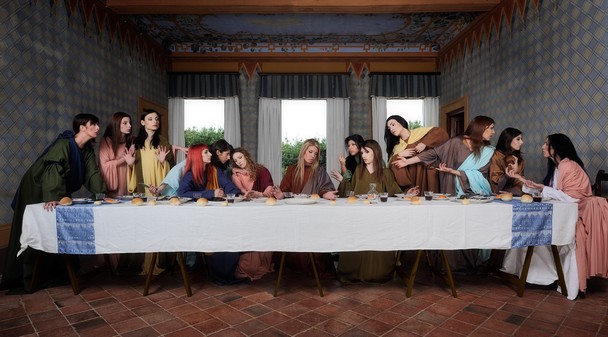
Father Laurence falls into the age-old trap of seeing a kitchen where there isn’t one in the text and interprets the many tasks that Martha is distracted by as domestic chores. (see my previous post for a full explanation of the Greek diakonia which does not refer to domestic service but to eucharistic service and the proclamation of the word). Nevertheless, his articulation of the need for balance between the active and contemplative lifestyles is well put. I suspect that my own sermon this week will follow his lead and examine the difficulty some of us have finding time to tend to our need for contemplation when we are distracted by our many tasks in the church.
Dom Laurence Freeman OSB is a monk of the Olivetan Benedictine Congregation of Monte Oliveto Maggiore and Director of The World Community for Christian Meditation. Fr Laurence was born in England in 1951 where he was educated by the Benedictines and studied English Literature at Oxford University.
Before entering monastic life he had experience with the United Nations, banking and journalism. In the monastery his spiritual teacher was John Main with whom he studied and whom he helped in the establishment of the first Christian Meditation Centre in London.
From an Academic Paper to a Sermon
 I am usually on vacation at this time of the year. So, I have only had one opportunity to opportunity to preach on this coming Sunday’s gospel text (Luke 10:38-42). The story of Jesus’ sojourn at the home of Mary and Martha is such a familiar text, which over the years has been used and abused by preachers to inflict such harm on their listeners. During my seminary years, this text awakened the feminist in me in ways that I am still unpacking. So, in preparation to write only my second sermon on this text, I went back to my seminary years to uncover an academic treatment of this text that I included in my Masters Comprehensive paper in 1998. Reading the paper took me back to a time when I seriously doubted my call to ordained ministry. Back then I was unsure about my ability to tolerate the institutional church or indeed whether or not the institutional church would be able to tolerate me. I am happy to report that there are pockets of the institutional church were feminists can thrive and I have been blessed to be called to serve in one of those pockets.
The only time I preached on this text was in 2004 and so I post both the academic paper and the sermon based on the paper as a resources for those of you who will take up the text this week. I have not edited the sermon, despite my inclination to do so. Old sermons provide a snapshot of old preachers. Like most snapshots, I’m not altogether happy with the picture of myself. The good news is that this week I have the opportunity to create another snapshot.
You can read the academic paper here and the sermon here
 I have always despised the word closure. While I recognize that there are moments when the quest for closure is appropriate, the word itself has evolved into the kind of jargon that is dismissed as psychobabble as the populace concludes that each and every tragedy can be cured/dismissed/completed if just as soon as the victims find closure. The demands for closure work well in our 24-hour-news-cycle world, as we seek to tie our reactions into a neat little emotional bow. Rend your garments if you must, just make sure your ready to appear buttoned down and ready to move on at the top of the hour. Gnashing of teeth will be tolerated but for a moment. Smile and tell us all about how you achieved closure so that we can dust ourselves off and be about our business.
We have forgotten the ancient art of lament. We have little time for the practices that express our outrage, give voice to our grief, or enact our horror; practices which move us beyond the mere words of closure; practices that in and of themselves provide a strange balm to sooth our grief.
Today, I have no words with which to confront the horror of injustice, only my continued lament for the racism that infects the darkness of our existence. So, while the media broadcasts their ongoing quest for closure, my cries of lament are driven deeper into my soul by song.
 Pentecost 8C – Sunday July 14 2013
Listen to the sermon here
 Putting the finishing touches on tomorrow’s sermon on Jesus’ parable of the good samaritan when my computer interrupted me with a newsflash that heralded a “not guilty” verdict in Florida. It’s tough to contemplate being a good samaritan in a stand your ground world. Feels like a few more nails were driven into the body of Christ. Jesus wept!!! But Sunday will come!!! We who believe in freedom cannot not rest!!! But for now the sounds of lament cry out….
 pastordawn