Discovering the Sacred in Everything – Mary Oliver

Discovering this video of Mary Oliver reading her poetry is like running into an old friend . I have not communed with her work for a long time and listening to her read her work reminds me to look for the sacred in all things for all things are in the Divine and the Divine is in all. Oliver puts flesh upon my panentheist  musing. Enjoy!

Surprised by Islam – Lesley Hazleton

Each time I dip into the Qur’an I am surprised by some new insight and I can’t help wondering why I don’t sip more frequently from this deep well’s thirst-quenching wisdom. Over the years, I have tried to keep up my study of Islam which I first began during my years as an undergraduate in Religious Studies at the University of British Columbia. Back then I believed that anyone who intended to seek a career in the church had better understand the religions of the world. Fortunately my naiveté was matched by my enthusiasm and I quickly learned that, despite my good intentions, there was no way to simply learn about the religions of the world. One doesn’t just apply one’s self to the study of a religion and learn what one needs to know and then move on. Islam like any religion that has survived and evolved over centuries, is a multifaceted and multilayered way of living. While I can from time to time open myself to the riches that Islam has to offer, I can only ever hope to be someone who peers in from the outside.

Like many outsiders I find reading from the Qur’an challenging to the point of being daunting. I require a reading partner to guide me along the way.Recently, I discovered the work of Lesley Hazelton, a self-described agnostic Jew whose unique view of Islam is both enlightening and engaging. Hazleton’s work on Islam includes the 2010 publication “After the Prophet: The Epic Story of the Sia-Sunni Split in Islam”. But I came to know about her via her engaging TED Talk which you can view below. I have just pre-ordered her forth-coming book “The First Muslim: The Story of Muhammad”

Some have dubbed Hazleton as Karen Armstrong’s successor. While the comparison is apt, Hazelton’s style is very different from her illustrious counterpart. Hazelton is a psychologist/journalist/historian whose colourful approach, pithy language and diligent research earned her this description by Paul Constant writing for Amazon:

Over the last decade, Hazleton has produced a trilogy of books—Mary: A Flesh-and-Blood Biography of the Virgin MotherJezebel: The Untold Story of the Bible’s Harlot Queen, and After the Prophet: The Epic Story of the Shia-Sunni Split in Islam—that are difficult to categorize. The books land at the intersection of history, religion, and literary criticism; they are informed by hundreds of texts and intensive traveling to the Middle East (Hazleton spent the 1970s living in Jerusalem); and they sing in the voice of a writer who has finally figured out exactly what she wants to say. Her characters are figures who have been trapped, untouchable, in amber for decades by organized religion.

Any given chapter of these books may include a fictionalized narrative of life in biblical times, a puckish interpretation of three wildly differing accounts of an event that occurred over 2,000 years ago, and a personal account of Hazleton’s own travels. In Jezebel, Hazleton undertakes an ambitious rehabilitation of the queen of Israel whose name has become synonymous with whorish behavior. In a fraught passage, Hazleton visits the birthplace of Elijah, the prophet who destroyed Jezebel’s reputation and demanded that she be torn to pieces by dogs in what is the most brutal, explicit murder to take place in the Bible. Of course, Hazleton is beset by ravenous wild dogs: “The car shuddered under the assault. In front of me, open jaws spattered drool on the windshield. To one side, fangs loomed inches from my eyes.”

When I compliment Hazleton for including that passage—you risk breaking the spell for readers when you pepper a historical narrative with personal anecdotes, but the dog attack is perfectly placed to make Jezebel’s story more compelling for the reader—she beams with pride, recalling that as she raced away from Elijah’s birthplace, she thought, “Oh, fuck. No one’s going to believe that happened. It was just too fucking perfect!”

Although only recently acquainted with her work, I am finding Hazleton to be a charmingly rigorous companion as I dip into the oasis of Islam. Her company is giving me the courage to drink more deeply than I have previously dared for fear of drowning in unfamiliar pools.

Enjoy her brief TED Talk which I am sure will wet your appetite for the full lecture given to the Young Muslim Association at the Islamic Centre of America that you will find below.

Nonviolence for the Violent – Walter Wink

Since quoting Walter Wink in my sermon yesterday, I learned that he died a few months ago.  I will always be indebted to this amazing teacher for all that I have learned and continue to learn from him. The videos below comprise the various parts of a lecture that Wink offered on the subject of Jesus’ teaching on Non-Violence. For anyone who aspires to follow Jesus this lecture is a must see. Wink’s books are well worn friends that I have often thumbed through to find more than a nugget or two to enable me to teach anew something that I have long since come to know as a result of Wink’s excellent work! His excellent trilogy: Naming the Powers, Engaging the Powers, and The Powers that Be along with Jesus and Nonviolence: A Third Way should be at every preacher’s fingertips as we proclaim Jesus’ radical way of being in the world.  

Lest We Forget Who We Are and Whose We Are

Remembrance Day Sermon

I am indebted to Walter Wink for his excellent work on Jesus’ radical teachings on nonviolence.

Listen to the Audio here


Lest We Forget – A Peace Remembered

The young woman can still remember one particular Remembrance Day when her words and actions did nothing more than offend someone she loved very much. It was the one and only argument she ever had with her Grandmother and it happened over Remembrance Day. At the time, she was living in London. She remembers thinking that Londoners take Remembrance Day very seriously indeed. More so, she thought, than in her native Canada. She wondered if the blitz had something to do with it.

While most of the poppies people wore were red, she began to see white poppies appear on the lapels of more than just a few people.  She read in the newspaper that those who were committed to peace and believed that for the most part, Remembrance Day only serves to glorify war were donning white poppies.  You could pretty well draw a dividing line between the generations using the colors of poppies as your guide. Young people, who had never experienced war tended to wear white poppies, while those who were older and who had memories of war, tended to wear red poppies. In many homes poppies in and of themselves managed to start wars. 

The idealistic young woman was just twenty and her commitment to peace determined her choice. She was wearing a white poppy the day she traveled up to the Midlands to visit her Grandmother. It was the day before Remembrance Day when she arrived on her Grandmother’s doorstep. She’d forgotten all about the white poppy that adorned her lapel. She couldn’t help thinking that there was something odd about the reception she received from Grandmother. It wasn’t exactly what you would call warm. Her Grandmother was upset about something. But the young woman couldn’t quite figure out what, because her Grandmother appeared to be giving her the silent treatment. She just served dinner and listened quietly as the young woman chatted on about her week in London.

After dinner, the young woman suggested that they pop down to the pub for a chat with her Grandmother’s neighbors. Usually, her Grandmother would have jumped at the chance to show her granddaughter off to her friends. But she seemed more than a little reluctant on this occasion. She so rarely refused her granddaughter anything, but it still took a great deal of cajoling before the young woman managed to talk her Grandmother into venturing out into the world.    As they were putting on their coats to leave, the Grandmother asked her granddaughter to remove the white poppy from her coat.

The young woman looked at her Grandmother’s red poppy and refused. She began to lecture in that pompous way that only young people who don’t know any better can about the horrors of war and the need to stand up for peace.     Her Grandmother insisted that she could stand up anywhere that she wanted to for peace but not in her local, not in front of her friends, not tonight. And then their battle began in earnest. They started calmly, but firmly arguing over the damn poppies. Before long, they were shouting and eventually the Grandmother, stormed out of the house and went to the pub without her granddaughter.

The young woman discretely went to bed before her Grandmother came home.  Each woman slept fitfully, bemoaning the fact that they had declared their own kind of war.   

Early the next morning the young woman rose quietly, hoping to dash off to London before her Grandmother awoke. She was just about to make a clean get away, when her Grandmother came into the living room. She was carrying a uniform. A uniform the young woman had never seen before; a uniform that stopped the young woman cold in her tracks.

Over breakfast the old woman explained that during the Second World War, she had joined the Women’s Auxiliary Air Force. The men were all off fighting and so the government had consented to letting women do their bit. Her job in the WAAFs was carried out on the home front. Every evening after she had fed her kids supper, she would send them off to the air-raid shelter with a neighbour, then she would put on her uniform and head off to the hills over Birmingham, where she would “man” an anti-aircraft gun.

After telling the young woman stories that she had rarely told anyone before, the old woman invited granddaughter to come her to British Legion later that morning. Awed by all she had been told, the young woman changed her plans and agreed to meet her Grandmother down at the Legion hall in about an hour.

On her way to the Legion hall, the young woman bought a red poppy and timidly pinned it to her lapel. When she finally caught up with her Grandmother, the old woman couldn’t help but smile when she saw the red poppy pinned to her beloved granddaughter’s lapel.

The young woman couldn’t manage a smile. Not threw her tears. The young woman was overcome by the sight of the white poppy that was pinned to her Grandmother’s lapel. 

The two women fell into one another’s arms and for a moment, just a moment the two held one another other in the presence of a peace beyond words; a peace which surpasses all our understanding. The peace that only love can achieve. The peace that the world is dying to experience. 

As the last post was trumpeted on that cold November 11th, separated by generations, perspectives, opinions, and commitments, two women stood united in love and remembered. Together they stood hoping against hope for peace.


What Kind of Saints Are We?

All Saints’ Sunday Sermon

Listen to the sermon here

All Saints – Giving thanks for the Divine in One-another!

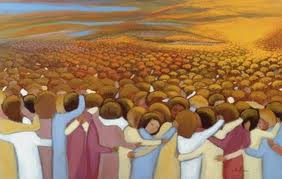
All Saints’ Day is a day for remembering.  The word saint simply means “holy”. In the New Testament, all those who believe and were baptized were referred to as saints. It wasn’t until round about the third century that the church began using the word saint to refer to those who had been martyred for the faith. Over time these martyred saints were held up for veneration and people used to pray to them to intercede on their behalf. I’m not going to go into all of the institutional abuses that led Martin Luther and the later reformers to abolish the veneration of the saints. Except to say, that while the Reformation put an end to the veneration of the saints in the protestant churches, it did not abolish the concept of sainthood.

Within the mainline protestant denominations, we use the term in much the same way as it was used in the New Testament to describe the faithful. We talk about the communion of saints to describe all the faithful who have gone before us who now rest in God, together with all the living who walk in faith. So today as we celebrate the saints, we give thanks for all the faithful those living and those who have gone before us.

Today, I remember and rejoice as I give thanks and praise to God for the witness of St. Joyce of Belfast. St. Joyce who in her own way taught her children to love God and to pray always. And so today, I give thanks and praise to God for the life and witness of St. Joyce of Belfast, my Mom, who was the first to teach me the Lord’s Prayer, and who puts flesh on Christ’s command that we love our neighbours as we love ourselves.

Today I remember and give thanks for the life and witness of St. John of Wales, whose life in the church as a choir-boy was followed by long years of self-exile and whose keen wit and lack of patience with hypocrisy instilled in me a desire for honesty and integrity in the articulation and living of the faith. I give thanks for St. John, my Dad, whose open heart has stretched his discerning mind and enabled many to see the humour in this God-given life we live.

Today, I remember and rejoice as I give thanks and praise to God for the witness of St. Valerie of Ladner. St. Valerie so loved and feared God that she dared to reach out and invite a wayward soul to come and worship God. St. Valerie sang God’s praise, rejoiced in the communion of saints and helped a young friend find a home in God’s holy church. And so toady, I give thanks and praise to God for the life and witness of St. Valerie, my high school friend, who was the first to invite me to come and worship God.

Today, I remember and rejoice as I give thanks and praise to God for the witness of St. Wilton of Lunenburg. St. Wilton loved God all the days of his life and served God with gladness and distinction. St. Wilton went far beyond his call as pastor, he opened up the scriptures to those who eagerly sought the truth of God’s Word with love and dedication and he went on to inspire a diligence to scholarship that nurtured the faith of so many young people. And so today, I give thanks and praise to God for the life and witness of St. Wilton, my first pastor, who taught me to be uncompromising in my study of the scriptures, and steadfast in my love for God.

Today, I remember and rejoice as I give thanks and praise to God for the witness of St. Lola of Washington. St. Lola whose appreciation for God’s grace overflowed in her love for the world. St. Lola whose desire to share God’s grace and truth, led her to give of her time and talent to the care and redemption of so many young seekers. St. Lola whose love for God’s creation inspired her to teach so many of us to give thanks to God for all that God has made. And so today, I give thanks and praise to God for the life and witness of St. Lola, my mentor in the faith, who taught me to love as I have been loved.

Today, I remember and rejoice as I give thanks and praise to God for the life and witness of St. Fritz of Chicago. St. Fritz whose dedication to the Word of God was displayed in all he did. St. Fritz who opened so many minds to the beauty of God’s ways, who taught, inspired and entertained as he sought to reveal  the wonders of God’s unimaginable grace. St. Fritz who taught me that no question is unaskable for it is God who blessed us with minds and who bids us to use them in our love for God and for one another. And so today, I give thanks and praise to God for the witness of St. Fritz, my friend, who was the first to call me to the ordained ministry of Word and sacrament.

Today, I remember and rejoice as I give thanks and praise to God, for the life and witness of St.s Sharon and Irene of Pt. Roberts, St. Ellen of Lonsdale, St.s Jerry and Daniel of Minnesota, St. Nancy of Seattle, St. Anne of Vancouver, St. Donald of UBC, St.s  Carol, John, Eduard, and Donna of Waterloo, and for the great cloud of witness both living and dead who have testified to God’s love in my life.

Toady, I give thanks and praise to God for the cloud of witnesses who gather to worship God and to love one another in the parish I serve. I give thanks for all the glorious saints of Holy Cross who have nourished, challenged and helped me to grow in Christ.

Today, I encourage each and every one of you, to remember and rejoice, as you give thanks to God for the great cloud of witnesses who have been a blessing to you; who have revealed God’s love to you; who have taught you God’s holy Word of truth; who have loved you, nourished you, challenged you and inspired you to love God with all your heart, with all your soul and with all your mind and to love your neighbours as you love yourself.

Who are the saints in your life? Think about the saints who revealed God’s love to you. Remember and rejoice for by their love, they taught you God’s Word, and taught you to celebrate God’s grace. Remember and rejoice in the saints of God, who are responsible for having passed the gifts of faith on to each of us. Saints who you may never read about in the church history books, but saints who by their life and witness managed to reveal a measure of God’s amazing grace to the world.

These saints of God who are so dear to us and so precious to God, are just ordinary folks who in the course of seeking to be faithful followers of Jesus Christ, in striving to love God with all their heart, soul, and mind, they ended up touching our lives in ways that changed us and had a profound effect on who we are today.

Today is a day for remembering and rejoicing in the communion of saints. Today is a day for giving thanks to God for their lives and for the witnesses that they have been and are in our lives. But today is also a day for looking around us to discover our own place in the communion of the saints. Take just a moment to think about how people will remember and give thanks for your sainthood. Whose faith have you nourished? Whose faith will you nourish? How will you nourish people in the faith? What role are you prepared to play in the Communion of Saints?

          The Reverend Dr. Otis Moss III says it well listen to St. Otis preach it!


All Hallows’ Eve – What happens when we die?

On this All Hallows’ Eve, I can’t help returning to the reality that lies at the very heart of our being. We know that we will die and from the very beginning of our consciousness of this reality we can only wonder and speculate on what if anything lies beyond our life here on this mortal coil. This video was first broadcast on the science network. It represents a collection of speculations that cross the artificial boundaries between science and religion.

I Must Confess that I Am Not a Christian. I Aspire to Be a Christian.

Reformation – Confirmation Sunday

Listen to the sermon here

On this Reformation Sunday, we at Holy Cross celebrated the Confirmation of five exceptional young people.  It has been a wonderful journey! I can’t wait to see how they grow into all that God created them to be! 

95 Theses for the Twenty-first Century

Delighted that so many of you after reading this morning’s post have expressed interest in Learning more of Matthew Fox’s 95 Theses for the 21st Century.  The best place to find out more is in Fox’s little book “A New Reformation: Creation Spirituality and the Transformation of Christianity” published in 2006 by Inner Traditions press.

Click Here where you will find a complete list of Fox’s  95 Theses for the Twenty-first Century

Enough with “A Mighty Fortress” Already! Sing a New Song!

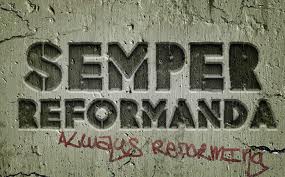
In the spirit of the Reformation motto: semper reformanda – always reforming, what say we abandon the fortresses of our traditions.  Tomorrow, Lutheran churches all over the world will begin their Reformation Sunday worship services vigorously singing “A Mighty Fortress” and I for one wish they wouldn’t.  I suspect that the hymn’s author Martin Luther might just agree with me. After all didn’t Luther write a Mighty Fortress in an attempt to bring the popular music of the day into the church? I am convinced that this particular Reformation Sunday tradition has dear old Martin spinning in his grave at the thought that the church that bears his name is still singing a tired old chestnut like A Mighty Fortress to celebrate the Reformation. The very idea of 21st century Lutheran’s celebrating the Reformation by clinging to the events of the 16th century is an affront to the memory of Martin Luther.

We should be singing this centuries music and rather than smugly resting on the laurels of the past, we should be plotting were the reformation goes from here.  Perhaps in this the 21st century, when so many of the church’s traditions have seen the institution fall into the malaise of irrelevancy, we need to echo the cry: “Semper Reformanda”  —  “Always Reforming” the cry of the reformers who insisted that the church in every age stands in need of reformation.

Legend has it that on October 31st 1517, after taking a long hard look at the Roman Catholic Church and having fixed his sights on what he saw as the source of the rot that threatened to destroy the church’s ability to proclaim the Good News of God’s grace that is revealed in the life, death, and resurrection of Jesus Christ, Martin Luther took his 95 Theses on the abuses of the doctrine of indulgences into the streets of Wittenburg and nailed them on the doors of the church. Within a few short weeks, with the aid of the newest technology, copies of Luther’s 95 Theses spread throughout the Holy Roman Empire and sparked a Reformation the likes of which the church hadn’t seen since the Apostle Paul did away with the need to snip the male anatomy to gain entrance to the church. Luther’s words threatened the status quo of centuries of abuse. And the church as is her way, struck back with force so as to ensure that tradition might prevail. The rest, as they say, is history.

 Ah history, safely ensconced in the past with its hoards of devils. Let the people rejoice because Martin Luther did it all and we can relax safe in the knowledge that we are justified by grace, through faith. Ain’t it great to be a Lutheran!  “A mighty fortress is our God, who himself fights by our side with weapons of the spirit. Were they to take our house, goods, honour, child, or spouse, though life be wrenched away, they cannot win the day. The Kingdom’s ours forever!”

So tell me, if they fought the good fight in the sixteenth century and handed us everything we need, and God is on our side and wins salvation glorious:    Where are the children? Where are the young people? Where are the neighbours?  Where is everybody? How and why did the church of our ancestors manage to fall into such disrepair? How did we become so irrelevant?

Most of us, can look around and see for ourselves how broken the church is. If we are honest, we all have our own particular theories as to why and how this happened. Yet we continue to go about our business, hoping against hope that someone will notice and finally fix it.  Year by year the church slips farther and farther into the morass of it’s own making and more and more people forget the wisdom of the ages and Christ seems to slip further and further from our grasp.  We, who go by the name Lutheran, we can’t do much more than point to our glorious past as if we could only turn the clocks back the work of the reformers of old would save us. But time waits for no one and year after year, people drift away and churches close their doors, and those who are left react with fear.

Despite the fact that we’ve tried to immortalize him, it’s as if Martin Luther never lived at all. Back in the dim recess of memory Luther stands, frozen and impotent. And I can’t help but ask the question:  “What would Martin do?”

Well in good old Lutheran style, a song comes to mind, a song of the people, a song from the streets, a drinking song…

             “If I had a hammer, I’d hammer in the morning, I’d hammer in the evening, all over this land, I’d hammer out danger, I’d hammer out warning…

It’s time to stop celebrating the Reformation as if it is somehow over. The work of reformation continues precisely because the church is always in need of Reformation.

This week I re-read a little book by Matthew Fox. Fox was a Roman Catholic theologian until Mr Ratzinger silenced him. The Roman Catholic church’s loss was the Episcopal church’s gain.   Shortly after Mr Ratzinger made himself pope, Matthew Fox took a long hard look at the church he’d served for so many years and became demoralized. Fox noticed the similarities between the sex-abuse scandals that continue to rock the church and the abuses wrought by indulgences, and asked himself what Martin Luther would do. That’s when Matthew Fox decided to write a few Theses of his own. Except where Luther wrote his 95 Theses to object to the practice of indulgences, Fox wrote 95 Theses to object to the many and various abuses of the church. It wasn’t difficult, over the course of a particularly dark night, Matthew Fox found that 95 Theses came flooding out of him. In the morning, he resolved to take his 95 Theses to Wittenburg and nail them to the very same doors where Martin Luther instigated the Reformation.

Well, things have changed a little over the course of nearly 500 years since that fateful day in Wittenburg. You can’t just waltz up to the doors at Wittenburg and nail things there.  The doors are no longer made of wood and the city councilors require that you obtain a permit to protest at Wittenburg.

Fox was told that he would need to stay at least 500 feet from the doors, lest he interfere with the tourists who flock to visit the very spot were the church of the protester’s was born. Thus proving one of Fox’s thesis that the church has become for many nothing more than a museum for tourists.

Eventually the town council relented and after some careful construction, on October 31st 2005, Matthew Fox nailed his 95 Thesis to the doors of the church in Wittenburg. Rome took no notice.  But the churches in Germany did.  Just as Martin Luther’s action was aided by the invention of the printing press, Matthew Fox’s action was aided by the invention of the internet and thus began a conversation that led to the publication of Fox’s little book: A New Reformation:  Creation Spirituality and the Transformation of Christianity.  I return to Fox’s tome annually as part of my preparation to preach on Reformation Sunday.
Here’s a sample of Fox’s theses:

1) God is both Mother and Father.

3) God is always new, always young, and always “in the beginning.

4) God the Punitive Father is not a God worth honouring, but a false god and an idol that serves empire builders. The notion of a punitive, all-male God, is contrary to the full nature of the Godhead, who is as much female and motherly as masculine and fatherly.

5) “All the names we give to God come from an understanding of ourselves” (Meister Eckhart). thus people who worship a Punitive Father are themselves punitive.

6) Theism (the idea that God is “out there” or above and beyond the universe) is false. All things are in God and God is in all things (panentheism).

10) God loves all of creation, and science can help us more deeply penetrate and appreciate the mysteries and wisdom of God in creation. Science is no enemy of true religion.

15) Christians must distinguish between Jesus (a historical figure) and Christ (the experience of God-in-all-things).

16) Christians must distinguish between Jesus and Paul.

18) Eco-justice is a necessity for planetary survival and human ethics; without it we are crucifying the Christ all over again in the form of destruction of forests, waters, species, air, and soil.

20) A preferential option for the poor, as found in the base community movement, is far closer to the teaching and spirit of Jesus than is a preferential option for the rich and powerful, as found, for example, in Opus Dei.

23) Sexuality is a sacred act and a spiritual experience, a theophany (revelation of the Divine), a mystical experience. It is holy and deserves to be honoured as such.

24) Creativity is both humanity’s greatest gift and its most powerful weapon for evil, and so it ought to be both encouraged and steered to humanity’s most God-like activity, which all religions agree is compassion.

32) Original Sin is an ultimate expression of a punitive father God and is not a biblical teaching. Bit Original Blessing (goodness and grace) is biblical.

33) The term original wound better describes the separation humans experience on leaving the womb and entering the world–a world that is often unjust and unwelcoming–than does the term Original Sin.

59) Fourteen billion years of evolution and unfolding of the universe bespeak the intimate sacredness of all that is.

60) Jesus said nothing about condoms, birth control, or homosexuality.

71) A church that is more preoccupied with sexual wrongs than with wrongs of injustice is itself sick.

75) Poverty for the many and luxury for the few are not right or sustainable.

I’m sure that we all have thesis or two that you would like to nail to the door. I know that if I had a hammer, I’d hammer in the morning, I’d hammer in the evening all over this land, right up to the doors of churches everywhere, and I would nail a few theses to the more than a few church doors. I’d begin with a thesis about the need to move beyond the destructive theories of atonement that have only served to pervert the meaning of the life, death and resurrection of Jesus and separate people from the sure and certain knowledge that neither death, nor life nor anything in all of creation can separate us from the love of God in Christ.

I’d include a theses or two about the dumbing down of our best theology and our acceptance of easy answers that have turned most people’s vision of God into a sadomasochistic father who insists on the death of his own son in order to satisfy our definition of justice.

I’d go on and on about the wonders and beauty of creation, and insist that we confess that we are wonderfully made.

I’d confess our obsession with self that lies behind the sin of avarice that permeates our consumer culture and turns our energies toward violence.

I’d call for a return to the Jewish tradition of Sabbath that called upon believers to read the Song of Songs and make love on the Sabbath.

I’d call the church to its responsibility to instill a love of creation in all people so that we can walk upon the earth lightly.

I’d remind the powers that be that all people are created equally and that sexuality is a gift from God to be celebrated and not used to segregate some believers from the priesthood that belongs to all believers.

On this Reformation Sunday, lovers of the church everywhere need to free ourselves from the shackles of tradition and about our 95 theses.

What wisdom do you have to share with the church?  What needs reforming?           What needs preserving? What needs tossing out? What needs holding up and celebration? When should we cry out in solidarity?  When should we sing out with joy and wonder? What should we do? What should we stop doing?  Semper Reformanda!    Always reforming!

This Reformation Sunday at Holy Cross Lutheran, we will sing new words by Miriam Therese Putzer to Luther’s traditional tune:  EIN FESTE BURG  which you can find  here

You can watch the video of Matthew Fox talking about his book here

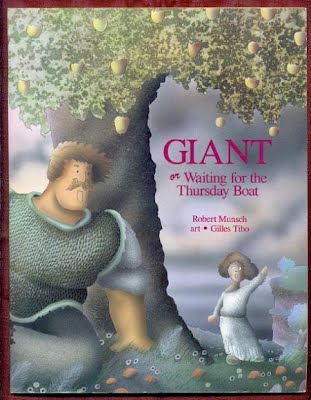
Waiting for the Thursday Boat – Sermon

Agape Sunday – Oct. 21, 2012

Readings  here

Listen to the Sermon here

Link to information about the book-banning here

For All the Children – Claiming the Promise

Today our opening hymn at worship will be

For All the Children (Music & Text by David Lohman)

Here it is sung in Minneapolis by a group who gathered from many churches to claim the promise of God’s love for LGBT people in the struggle for equal rights under the law.

At Holy Cross we will sing this as a celebration of our commitment to radical inclusivity.

Religionless Christianity – Dietrich Bonhoeffer

When I was just a teenager, I was introduced to the writings of Dietrich Bonhoeffer by a wise Lutheran Pastor. I remember devouring Bonhoeffer’s “Life Together” and “Letters and Papers from Prison”. To this day, I credit Bonhoeffer for making me a Lutheran.  While a great deal of water has flowed under a good many bridges since I was first enamoured of Lutheran theology, to this day I am grateful to that wise old Lutheran pastor who gave me my first taste of Bonhoeffer.   Of late, there has been much ado about a little phrase that has been extracted from Bonhoeffer’s work: “religionless Christianity”.

(click here for full quotations from Letter and Papers from Prison)

“It is not for us to prophecy the day when men will once more ask God that the world be changed and renewed. But when that day arrives there will be a new language, perhaps quite non-religious. But liberating and redeeming as was Jesus language. It’ll shock people. It’ll shock them by its power. It’ll be the language of a new truth proclaiming God’s peace with men.”  Bonhoeffer: Agent of Grace

Tragically, Bonhoeffer was executed before he had the opportunity to expand on his idea of Christianity beyond religion.  The phrase “religionless Christianity” has intrigued agnostics, atheists, humanists, liberal christians and progressive christians.  Eric Metaxas, author of “Bonhoeffer” dismisses the idea that Bonhoeffer was anything but a serious, orthodox Lutheran pastor right up to the end.

Despite the historical evidence of Bonhoeffer’s religious orthodoxy, the notion of religionless Christianity will not die. Bishop John Shelby Spong is among those who have tried to build on Bonhoeffer’s phrase and his book “Jesus for the Non Religious” has certainly moved the conversation along among progressive christians.  

The dream of religionless christianity has moved well beyond Bonhoeffer as twenty-first century christians wrestle with archaic images of God and move beyond the religious trappings of traditional christianity. The notion of moving beyond religion has always intrigued me. Years ago, while studying Hinduism my professor offered a definition of God from one of the Vedas: “God is beyond the beyond, and beyond that also”.  As I continue to explore the life and teachings of the man none as Jesus of Nazareth it becomes more and more evident that such a definition is compatible with his portrait of God.  Jesus of Nazareth attempted to move his co-religionists beyond their religious images of God. What might our images of God become if we move beyond the idols offered to us by the religion of Christianity?   Might we move toward images of God that more closely resemble the teachings of Jesus by moving toward a religionless christianity?

Sometimes we can better reflect upon our own tradition from the perspective of another tradition. In the video below, twentieth century philosopher and theologian Alan Watts explores the concept of the Religion of No Religion. 

“Beyond the Beyond and Beyond that also.” Letting go of our images is the gift of faith that moves us beyond religion. I can hear Jesus call us to let go!

Waking Up to the Wealth of Wisdom Beyond our Idols

All too often we allow our images of God to become idols that we worship. Sometimes these idols prevent us from challenging our images of reality. Stepping outside our comfort-zones to explore images of reality that are envisioned by those who do not worship our idols sometimes allows us to see beyond the idols that have limited our vision. I remember reading Alan Watts when I was in my twenties.  I’d forgotten how his visions of reality helped me to see farther than I’d ever dared.  Recently, a friend shared the video below and all at once I remembered Matthew Fox’s quoting Thomas Aquinas who insisted that each of us is “capable of the universe”.  Waking up the wealth of wisdom that exists beyond the idols we worship is just the beginning of a new day. We ought not to be afraid to open our eyes.   “As capable as God are we.”

For more information about the life and work of Alan Watts click on the graphic below:

Griefwalker – a powerful documentary

Whoever you are, at whatever stage of life you find yourself, Griefwaker is a powerful documentary that speaks to what matters in life.  Appreciating endings so that we can appreciate now is not a skill that is often taught. It is a skill that enhances life. Enjoy this beautiful NFB documentary.  Just click on the title below to link to the video:

Today We Celebrate the Life and Witness of St. Teresa of Avila

An excerpt from “Love Poems From God” by Daniel Ladinsky,

(Penguin Compass, London: 2002)

(1515-1582)  “Teresa was born in Avila, a beautiful high mountain village of Spain.  She was one of thirteen children, three girls and ten boys, in a wealthy family.  The Spain in which Teresa grew up was permeated with 700 years of Arabian culture; the eradication of Arab power was followed by one of Spain’s darkest periods, the insanity of the Inquisitions, which, in the fourteenth century, along with other grievous deeds, forced mass conversions of Jews to Christianity.”

“Teresa was her father’s favourite child, and the most spirited.  Her mother died during childbirth when Teresa was thirteen, after which she had little supervision.  It is believed she had a lover at the age of fifteen, which caused her father to send her to a convent boarding school, only to see her return home two years later because of poor health.  When she was twenty-one, Teresa ran away from home to join a convent.  At that time many convents were more like hotels for women, allowing them a great deal more independence than they would be allowed at home, though after two years at the convent Teresa had a near-death experience that changed her life.  A spiritual awakening began in which she cultivated a system of meditation that sought quieting the mind to such an extent that God could then be heard speaking.  Over the next twenty years she experienced many mystical states but not until she was fifty did she begin the most far-reaching aspects of her life’s work.”

St. Teresa of Avila “had a great desire for learning and when the Inquisition, in 1559, forbade women to read, Teresa turned to God and asked God to teach her soul about divine love.  She then began to write completely out of her own experience.   Many of her poems are, in fact, intimate accounts of her communion with God. 

The Church’s persecution of Teresa had not waned when she passed away and was buried in Alba de Tormes in 1582.  A year after her death some of her disciples, feeling that she might have wished to be buried in Avila, had her body exhumed.  When her body was found to be perfectly intact and emitting a wonderful fragrance, her sainthood was formally decreed, allowing the publication and preservation of some of her works.

Most of what we see today of Teresa’s work is probably reined way back, for her writings fell into the hands and under the control of the very forces that had so opposed her throughout her life.”

“Teresa of Avila is undoubtedly the most influential saint in the Western world, and she has made great contributions to spiritual literature and poetry.  She was a woman of tremendous courage who is rightfully credited with the remarkable political and religious reform achieved against the strongest—and most insidious—chauvinistic forces.”

“A realistic picture of Teresa’s life did not even reach the English-reading general public until the 1960s.  She was known to have had a remarkable quick wit and a stunning, even provocative, sense of humour, as well as a great physical beauty.  Her complete works include seven books, four hundred and fifty letters, and assorted poetry.  Her writings are considered masterpieces of mystical prose and verse. She personally founded seventeen Carmelite convents and two monasteries, despite enormous opposition from the Church and other men in power.”


Transformed Living – Sermon

Twentieth Sunday after Pentecost

Pastor Tom Doherty takes us to the opera where we discover an image of God who invites us into living recklessly generous lives.

Listen to the sermon here          Readings for this Sunday here

A Church for the Future – Matthew Fox

“We are here to grow a soul. Not just to sit on one and cash it in at the end of our life.” Matthew Fox explores the undiscovered territories that lie within us.  Developing a sense of the sacred that lives in all of us is vital as we engage in the expansion of our consciousness. But has the church, like humanity itself,  forgotten the sense of the sacred? Matthew Fox explores a vision of the church that is the place, the space, the happening, where mystics and prophets are birthed, nurtured, championed, supported, and challenged.  Fox encourages the church to embrace her prophetic calling to interfere with education, economics, and the environment. 

Gratitude Alleluias becoming Reckless Generosity – Sermon

Thanksgiving Sunday

This sermon was inspired by Monty Python’s “We were so poor that…” sketch also known as the Four Yorkshiremen, and Joan Chittister’s book Uncommon Gratitude.

Readings for Thanksgiving here

Listen to the Sermon here

The skit that inspired the sermon: