Preparing to Preach on Prayer: 21st Century Questions – There’s an App for that!

prayer appAs I continue to work on this Sunday’s sermon, (see earlier posts here … here …and here), Jesus’ teaching on prayer in the gospel reading Luke 11:1-13 leaves me wondering what an enlightened 21st humanoid is supposed to do with Jesus 1st century ideas???

Cast you minds back to another time and place and tell what the numbers 33, 45, and 78 have in common??? Vinyl Records anyone? When I was a kid music came from a portable RCA record player. The sound quality wasn’t all that great, but somehow we didn’t seem to care. Later when I was a teenager, my parents got a fancy state of the art Phillips stereo cabinet and suddenly sound seemed to be coming from booth ends of the room. I never did understand how those old record players managed to pick up sound from the grooves in the vinyl to45 produce music. I still remember my father’s first reel-to-reel tape recorder, and then there were the eight-tracks, followed by cassettes, followed by CD’s.  I can remember these things, but I have no idea how they made music. It doesn’t matter how many times people try to explain it to me, I still think it’s a miracle that such beautiful sounds can come out of machines.

These days I don’t use records, tapes or CDs to listen to music. My music is stored in “the cloud” and when I want to hear I song I make sweeping motions on my iphone screen and presto, I can make music fill the room. I don’t know what the cloud is. I asked the personal assistant on my iPhone, her name is Siri and she told me she was sorry but she couldn’t tell me because Steve told her not to tell anyone. Some people think the cloud is located in a 225-acre facility that Apple built in North Carolina. Continue reading


Preparing to Preach on Prayer: To Whom Shall We Go?

PanentheismAs I continue to work on this Sunday’s sermon, (see earlier posts here and here) Jesus’ teaching on prayer in the gospel text Luke 11:1-13 begs the question: “To Whom Shall We Go?” Liberated from perceptions that reduce images of God to those of a cosmic superhero who abides up or out there ready to manipulate events here in the world at the request of those who pray, the activity of prayer takes on a whole new meaning and shape. Our images of who, where and what God is will direct our prayers in ways that impact our expectations of prayer. Who do we pray to and what we expect of the One who hears our prayers will shape how and why we pray.

Before we can even begin to understand what so much of the Christian tradition means when it talks about praying to God, we need to take a step back and look at what we mean when we say the word “god.” Throughout the Jewish and Christian traditions you can trace two very distinct ways of understanding and talking about God. Continue reading

Jesus’ Teaching on Prayer

teach us to prayThis Sunday’s gospel text (Luke11:1-13) will no doubt send preachers scurrying to review what we might say with regard to prayer. In this splendid little video Laurence Freeman reviews Jesus’ teaching and points to prayer as Jesus’ focus. Well worth watching before you begin to write or indeed listen to Sunday’s sermon.

Dom Laurence Freeman OSB is a monk of the Olivetan Benedictine Congregation of Monte Oliveto Maggiore and Director of The World Community for Christian Meditation. Fr Laurence was born in England in 1951 where he was educated by the Benedictines and studied English Literature at Oxford University.

Before entering monastic life he had experience with the United Nations, banking and journalism. In the monastery his spiritual teacher was John Main with whom he studied and whom he helped in the establishment of the first Christian Meditation Centre in London.

Morning Prayer Liturgy: John Philip Newell

Chanting for PeaceMorning Prayer Liturgy from Casa del Sol, Ghost Ranch. Led by John Philip Newell, Ali Newell, David E. Poole, Winona Poole. Chants from “Chanting For Peace, Praying with the Earth”

Preparing to Preach on Prayer: Shush!

BATH QOLIn this coming Sunday’s gospel reading Luke 11:1-13, Jesus’ disciples ask him to teach them to pray. As a pastor I have been asked to teach people to pray. Each time I have been asked to teach someone to pray I have cringed inside because I do not feel up to the task. For some reason the old hymn “I Come to the Garden Alone” keeps playing in my mind. I keep telling it to, “Shush!” so that I might hear the “bath qol” but the daughter of a sound eludes me. Below is a portion of a sermon I preached a couple of years ago on the subject of prayer. If nothing else, it reminds me to shush!

I began this sermon by asking the congregation to sing from memory the old hymn: I Come to the Garden Along. Feel free to sing it to yourself!

I think my earliest memory of prayer is a distant memory I have of skipping along the sidewalk chanting a familiar refrain: “Don’t step on a crack or you’ll break your mother’s back.” Most of us can remember a moment from our childhood when a superstition was instilled in us that caused us to perform some ritual in order to placate the unseen power that could determine our fate. Whether it was avoiding cracks, or walking under ladders or black cats, we were trained from an early age to believe that there were powers out there that could determine our future.   Continue reading

Feast Day of St. Mary of Magdala: the Apostle to the Apostles

THE RESURRECTION OF MARY – An Idle Tale

Mary-Magdalene egg

To commemorate this festival day, I repost this not-so-long-ago encounter with a visiting New Testament scholar to entice you to follow Mary out of her tomb and beyond the streets to her place at the head of the fledgling community that became the church: 

He just said it for the third time! “Harlots!” He keeps calling them “harlots”, while I rack my brains to come up with one harlot. Then he points to the text and his charges become clearer, he says, “she is a “prostitute!”

My carefully reigned in anger is unleashed. “Where?  Where?  Where? Show me where it says this woman is a prostitute!”

As he refers to the Gospel text and insists that, “It is there, right there in the text”,

I want to scream, I want to cry, I want to wipe the bemused expression from his face. I want to rub his nose in the damned text. Instead, I begin the uneasy process of reigning in my anger. I slow my speech, I try to erase the tremor from my voice and I ask him to, “Show me, show me where it says this woman is a prostitute.”

He consults his text and says, “a woman in the city who was a sinner.”

“A sinner not a prostitute.”  I respond.

He insists, “Yes a prostitute.”

“Where?” I ask.

Again he insists, “A woman who was a sinner.”

I demanded to know, “Where does it say she was a prostitute?”

He insists, “The author means that she was a prostitute.”

I lose control, “How do you know?  What words does the author use to say that his woman was a prostitute? Show me in the text where it says she was a prostitute?”

He still doesn’t get it, “What do you mean? It is clear that this woman was a prostitute.”

Once again I push, “Show me.  Show me where?”

He continues to say, “She was a woman from the city who was a sinner.”

I know that the text says that, so I implore him to tell me, “The Greek… What does the Greek say?”

He replies, “amartolos”.

I push, “Does that mean prostitute?” We both know that it does not.

He replies, “Sinner. But the context clearly shows that she was a prostitute.”

Still pushing I ask him to “Show me.  Show me how the narrative says this woman was a prostitute. Show me where it says her sins were sexual.             Show me where it says so in the narrative.”

He says, “It’s clear.”

Clearly we disagree, so I try again, “Clear to you.  Show me. Show me!”

As he fumbles through the pages, I offer him a way out, “Okay.  Even if I concede the point that her sins were sexual, show me where it says that these sexual sins were nothing more than lust or adultery, show me where it says that she was a prostitute.  Show me!”

He couldn’t show me.  It’s simply not there.

Nowhere in the New Testament does it ever say in Greek or in English that Mary of Magdala is a prostitute.  But over and over again scholars, theologians, popes, preachers, and dramatists, have continued to cast Mary of Magdala as a prostitute.  

In the years that have transpired since than day in seminary, when a visiting New Testament scholar insisted that “the context clearly shows that she was a prostitute,” I’ve delighted in being able to participate in the phenomenon of Mary’s resurrection as the first Apostle. Continue reading

Three Queens, the Birth of Laughter, and the Non-Existent Kitchen – a sermon for Pentecost 9C

three queens

Scripture Readings:  Genesis 18:1-15 and Luke 10:38-42

Worship Bulletin pdf here (to be printed double-sided and folded into a booklet)

Listen to the sermon here

Love is the Only Antidote to Fear – John O’Donohue

When I was a child my father used to sing a song that puzzled me:worried man

“It takes a worried man to sing a worried song. It takes a worried man to wing a worried song. It takes a worried man to sing a worried song. I’m worried now, but I won’t be worried long.”  listen here

I can still remember my young self wondering why this worried man won’t be worried for long. Now that my age often lets me know that there are fewer years ahead of me than there are behind me, I know full well that it is death that will end this worried man’s worries. I also know that it is the knowledge of our impending death that gives birth to our fear. Speaking at the Greenbelt Festival in 2004, John O’Donohue explores with wit, charm and wisdom the reality that we are all going to die and points to love as the powerful antidote to the fear that this realty inspires. O’Donohue insists that we all must sort out our fear of death in order to live fully!

Click on the image below to listen to John O’Donohue

john o'donohue

What is Meditation?

Be still and knowThis week I have been preparing to preach on the story in the Gospel According to Luke about Jesus’ encounter with Martha and Mary and I’ve been exploring the tradition of the contemplative life as well as the modern fascination with the many types of meditation. So much of the popular offerings that seek to define meditation seem to cater to our culture’s desire to consume what we like from a particular discipline while failing to appreciate the discipline part of that which we seek.  In the course of my research I came across this splendid little video in which Laurence Freeman offerers, from a Christian perspective, his introduction to meditation.

Reconnecting Faith Traditions and Reconnecting through the Well of Imagination – John Philip Newell

John Philip Newell

Moved by the humble and holy desire to learn wisdom from other traditions John Philip Newell looks beyond the Christian household to explore the wisdom of the East. 

Martha and Mary – Active and Contemplative

last supper women

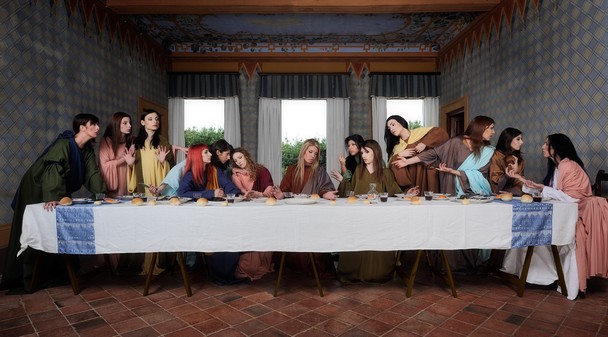
Father Laurence falls into the age-old trap of seeing a kitchen where there isn’t one in the text and interprets the many tasks that Martha is distracted by as domestic chores. (see my previous post for a full explanation of the Greek diakonia which does not refer to domestic service but to eucharistic service and the proclamation of the word). Nevertheless, his articulation of the need for balance between the active and contemplative lifestyles is well put. I suspect that my own sermon this week will follow his lead and examine the difficulty some of us have finding time to tend to our need for contemplation when we are distracted by our many tasks in the church.

Dom Laurence Freeman OSB is a monk of the Olivetan Benedictine Congregation of Monte Oliveto Maggiore and Director of The World Community for Christian Meditation. Fr Laurence was born in England in 1951 where he was educated by the Benedictines and studied English Literature at Oxford University.

Before entering monastic life he had experience with the United Nations, banking and journalism. In the monastery his spiritual teacher was John Main with whom he studied and whom he helped in the establishment of the first Christian Meditation Centre in London.

“Martha, Martha, Martha!” – Preparing to preach on an all too familiar text!

From an Academic Paper to a Sermon

martha 2I am usually on vacation at this time of the year. So, I have only had one opportunity to opportunity to preach on this coming Sunday’s gospel text (Luke 10:38-42). The story of Jesus’ sojourn at the home of Mary and Martha is such a familiar text, which over the years has been used and abused by preachers to inflict such harm on their listeners. During my seminary years, this text awakened the feminist in me in ways that I am still unpacking. So, in preparation to write only my second sermon on this text, I went back to my seminary years to uncover an academic treatment of this text that I included in my Masters Comprehensive paper in 1998. Reading the paper took me back to a time when I seriously doubted my call to ordained ministry. Back then I was unsure about my ability to tolerate the institutional church or indeed whether or not the institutional church would be able to tolerate me. I am happy to report that there are pockets of the institutional church were feminists can thrive and I have been blessed to be called to serve in one of those pockets. 

The only time I preached on this text was in 2004 and so I post both the academic paper and the sermon based on the paper as a resources for those of you who will take up the text this week. I have not edited the sermon, despite my inclination to do so. Old sermons provide a snapshot of old preachers. Like most snapshots, I’m not altogether happy with the picture of myself. The good news is that this week I have the opportunity to create another snapshot.

You can read the academic paper here   and   the sermon here

Imagining Fred Phelps as the Good Samaritan – Sermon Luke 10:25-37

love-your-neighbor-as-yourselfPentecost 8C – Sunday July 14 2013

Listen to the sermon here

Imagination as the Path of the Spirit: John O’Donohue

unseen life O'DonohueT’is a glorious summer weekend and so it is a perfect time to get yourself an ice cold glass of your favourite beverage, find some shade and sit back and listen to the wisdom of one of my favourite humanoids John 0″Donohue. I have been eating up his writings for the past few months and delighting in his Irish lilting way with words. From Anam Cara, to Beauty, through Eternal Echos and now lingering over Benedictus I have come to love this kindred spirit! Sláinte!

Playing All the Roles on the Road to Jericho

samaritan

Preaching ideas for this week’s sermon on Luke 10:25-37

I was just 10 years old when the Gideon Society came into my classroom to present us with small pocket editions of The New Testament and Psalms. I was in grade five when this little book was given to me. Its imitation leather has held up well over the years. After I carefully wrote my name on the presentation page, I tucked it into my school bag. Several weeks later, a thunderstorm knocked out the electricity and I was caught without a book to read, so I dug out this little red book from my school bag. By candlelight, I read the Gospel of Matthew. Over the course of the next two weeks, I read Mark, Luke and John. I stopped reading somewhere in the book of Acts.

Over the course of the next few years, in the privacy of my room, I would return to this little red book and escape into the desert towns where Jesus travelled. In those days I didn’t know what a parable was, but I loved the stories that Jesus told. The stories that Jesus told have a timeless quality to them. The parables that Jesus told defy simple explanations. Each of the parables is layered with meaning. The varied meanings of each parable can take a lifetime to uncover as the stories weave in and out of our own lives. The parable about the Good Samaritan is probably one of the most familiar of all of Jesus’ parables.

I believe that the timeless quality of this story comes as a result of the way in which the reader or the hearer can identify with all of the characters in the story. While most of us would like to see ourselves as good Samaritans, I dare say that over the years each of us have managed to play all of the roles in this story.

Over the years I have often played the role of the lawyer, trying to get Jesus to explain the secrets of life as over and over again I have questioned and questioned what I must do to inherit eternal life. Continue reading

Religion As A Work of Art – Richard Holloway

prodigalIf religion is to move beyond the supernatural, we must begin to see religion as a work of art. Richard Holloway, the former Primate of the Scottish Episcopal Church points to the power of story to explore human discontent as we crawl toward a better humanity. 

Only in Canada Eh? – Canayjuns, Injuns, Paula Deen, the N-Word, and Racism – a sermon for Canada Sunday

children's futureI am indebted to Father Jim O’Shea for his article in the Huffpost and to Robert LoveLace for his parable about Chickens which appeared in The Rabble.

Listen to the sermon here

The Stories We Tell Children???

jesus sunbeam“Thine is the glory risen concrete son!” When she was just a little girl these were the words she heard the adults in her life singing about the baby Jesus. Not having any idea what concrete was, she just sang these words assuming that they said all that needed to be said about the character of the little baby whose arrival meant presents for everyone.

On this long weekend, memories of childhood celebrations remind me that the stories we tell our children are not always heard exactly as we intend. When I was a little girl, I remember enthusiastically singing “God Save the Queen” and wondering exactly where “reignoverus” was and why we wanted to send the nice lady, who wore such pretty hats, there. It was a particularly mortifying disappointment to discover that what I was meant to be singing on behalf of the nice lady was to “send her victorious long to reign over us” as I implored God to save her. To this day, I cannot sing Her Majesty’s anthem without chuckling as I muse about what has now become the mythical land of reignoverus. While chuckling is a rather pleasant residue, I can’t help wondering what dangerous, frightening or perhaps scarring residues will remain as a result of the stories we currently tell our children. 

I have often been cajoled, bribed, guilted or shamed into including children’s sermons/talks/times during Sunday morning worship services. While I understand the impulse to find ways to include children in worship, I have never been convinced that stories told during these moments accomplish anything more than the placation the guilt we feel for our unreasonable expectations. The best we can hope for our good intentions is that in the years to come they will provide a few chuckles as the children we once corralled at the front of our sanctuaries look back bemused at our efforts to include them in worship.

Dave Allen, an Irish comedian whose television program I was not allowed to watch when I was a child, but whose humour I learned to enjoy as a teen-ager, provides a window into a world we would do well to remember. 

A Way to Understand the Resurrection – Richard Holloway

Peter Callesen's Papercut Resurrection

Peter Callesen’s Papercut Resurrection

Richard Holloway, the former Primate of the Scottish Episcopal Church, interprets the story of the resurrection not as an historical tale, but as our own story. Holloway has written of his longing for a humbled and broken church. His own humility and brokenness shines through this video as Holloway embodies his own longing.

Faith and Doubt: “a whisper will be heard” – Richard Holloway

hollowayI have just completed reading Richard Holloway’s “Leaving Alexandria: A Memoir of Faith and Doubt”.  As someone who struggles to stay in the institutional church, I can hear the whispers of which this former Primate of the Scottish Episcopal Church writes. leaving alexandria

After a lifetime in the church, Holloway continues to respond to whispers, “The thing that keeps me religious is the possibility that there might be an ultimate purpose to the universe and it might, as certain rumours suggest in sacred texts, be unconditional love. And it seems to me to live as if that might be the case is not a bad way go be going; especially if it makes us kind to one another.” 

Richard Holloway’s vision of the church he longs for is a vision I too long for. As he ponders the question “Am I still a Christian?” Holloway insists,  “God has always been elusive in me. He’s always felt like an absence that felt like a presence. I was tantalized by God, that resonant absence again. The God that I was being told about, the God who was punishing my gay friends, the God who denounced me was cruel I and I couldn’t be part of that. And yet I am still tugged by the longing that had gotten me into this, the possibility of transcendence, that there is meaning and that the meaning might be a great pity, not a cruelty, but an absolute compassion, an absolute unconditional love, a love like the father of the prodigal in Luke’s great parable who runs to meet his broken son and doesn’t condemn and doesn’t even wait  for the confession before embracing him, and bringing him home. There is that God. That’s the God of Jesus….So I’m kind of in and yet out of the Christian Church. I want it to continue. But I want it humbled. I don’t want it cruel and bullying. I want it modest and serving. I want it to feel broken like the broken Jesus and not trying to sort people into very precise understandings of humanity. I want it to accept the totality of broken humanity. Most of us are broken in one way or another and we struggle with our own meaning, with our own integrity, and our own sinfulness. And the thing I found in Jesus and the thing you can still find in some churches is an understanding of that. ‘Come onto me all ye who travail and heavy laden and I will give you rest.’   So, I’m back. But I can’t proclaim. I can’t evangelize. I can’t say what this is the truth. I don’t know what the absolute truth is. But I still catch a glimpse of the tiny figure of Jesus on a distant seashore kindling a fire, a fire of compassion and kindness. And I’ve become increasingly allergic to religious certainties. They seem to me only to crucify people…”

For those of us who remain and for those who have joined the church alumni, Holloway’s story is a compelling whisper that speaks with the very compassion for which he and we long for. He may no longer be a bishop in the institution, but he remains a shepherd to those who long to catch a glimpse of the tiny figure of Jesus who continues to call the religious out from under the tables that clutter our temples.