God: Supernatural Theism or Panentheism?

Marcus borgWhenever we try to articulate what God IS, language fails us. For the most part, the institutional church has defined God with words and expected that members of the institution will confess loyalty to those words. Many of the words, with which the institution has traditionally described God, craft an image of God as a supernatural being up there or out there who is responsible for creation and from time to time interferes in the workings of creation. As we continue to learn more and more about the magnitude of creation, both in time and space, our traditional words about God seem ever more puny. While some respond to our ever-expanding knowledge about creation by attempting to make our notions of God fit into the tight little containers that were crafted by our ancestors, some are seeking new ways to speak of the CREATOR OF ALL THAT IS, WAS OR EVER SHALL BE. Often our attempts are as clumsy and as limited as the attempts of our ancestors. But sometimes, sometimes the likes of Tillich breathes new life into the notions of our ancestors and Paul’s description of our God as  “the one in whom we live and move and have our being” becomes for us, as Tillich imagines, “the Ground of our Being”.  

So, with a spirit of discovery and wonder, I encourage you to listen to Marcusfish in water Borg’s attempt  to describe our God. Borg’s efforts take us beyond the Ground of our Being toward a panentheistic understanding of God in all things and all things in God.  Please note: panentheism is not pantheism – pantheism means God is in everything – so God can be worshipped by worshipping nature because God is in nature. Panentheism means everything is in God and God is in everything – so – God breathes in, with, through, and beyond us, and we intern are in God – everything is in God but God is more than the sum of everything. A panentheistic view of God does not preclude thinking of God as personal – but it does understand that God is more than personal. 

While I don’t agree with everything Borg says in this video, it is a wonderful place to begin to think about expanding our way of speaking of the Divine. As long as we remember that our language will always fail to capture the wonders of our God.


The Marriage of Church and Empire – Phyllis Tickle

cdtickle1As the Roman Catholic Church prepares to elect a new pope, this presentation by Phyllis Tickle seems very timely. Tickle provides a history lesson which enlightens us on the marriage between the church and empire that gave birth to Western Christianity. Tickle is convinced that a whole new day is dawning in this post-Constantinian church that promises to seriously engage the 21st century.

Recorded on Feb. 26, 2013 at Calvary Episcopal Church in Memphis Tennessee during their annual Lenten Preaching Series. 

God, Google and iPods: Digital Faith and Analog Religion – Otis Moss III

techno faithThe Reverend Dr. Otis Moss III is the Pastor of Trinity United Church of Christ in Chicago. As the successor to the Rev. Jeremiah Wright, Moss exemplifies the finest traditions of the African American Church’s long line of brilliant preachers. In this video Moss speaks at the Chautauqua Institution exploring the dissonance between “Analogue Religion and Digital Faith.”  Moss sees the democratization of faith as “open source communities” enable users to network in ways religion has heretofore been unable to achieve. 


Life the Universe and Everything, No God But God, The God of the Gaps

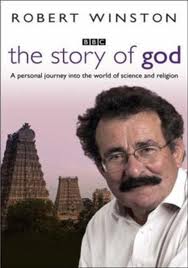
The Story of God

The Story of GodImagining the unimaginable and describing the indiscribable – the human endeavour to capture the nature of the divine in words, images, stories and myths is the subject of this excellent BBC documentary series. Robert Winston, (medical doctor, scientist and Professor of Science and Society at Imperial College London) examines the roots of religious beliefs and the various ways in which humanity’s sense of the divine have developed. 

Professor Winston says: “However you define God, and whether you believe in God or not, the world we live in has been shaped by the universal human conviction that there is more to life than life itself; that there is a ‘god’ shaped hole at the centre of our universe.“We have come up with many different ways to fill that hole, with many gods or just one, with gods of hunting, gods of farming, gods of war and gods of sea and sky.”

The Great Emergence – Phyllis Tickle

Looking forward to lectures this weekend by Phyllis Tickle. For those of you who will not be able to make it to Trinity Anglican in Aurora, enjoy this video of Tickle doing what she does best, teaching. 

In the gospel reading which will be read this Sunday in mainline congregations, the writer of the Gospel According to Mark puts words about the destruction of the Temple into the mouth of Jesus.  I can’t help wondering, if we really are a people who believe in resurrection, why are we so reluctant to let our notions about “church” die. Surely, we have enough faith to open ourselves to what may emerge as the last rites are said over the church of bygone days.  

Waking Up to the Wealth of Wisdom Beyond our Idols

All too often we allow our images of God to become idols that we worship. Sometimes these idols prevent us from challenging our images of reality. Stepping outside our comfort-zones to explore images of reality that are envisioned by those who do not worship our idols sometimes allows us to see beyond the idols that have limited our vision. I remember reading Alan Watts when I was in my twenties.  I’d forgotten how his visions of reality helped me to see farther than I’d ever dared.  Recently, a friend shared the video below and all at once I remembered Matthew Fox’s quoting Thomas Aquinas who insisted that each of us is “capable of the universe”.  Waking up the wealth of wisdom that exists beyond the idols we worship is just the beginning of a new day. We ought not to be afraid to open our eyes.   “As capable as God are we.”

For more information about the life and work of Alan Watts click on the graphic below:

Transformed Living – Sermon

Twentieth Sunday after Pentecost

Pastor Tom Doherty takes us to the opera where we discover an image of God who invites us into living recklessly generous lives.

Listen to the sermon here          Readings for this Sunday here

Peering into the Heavens – Sermon

Creation III – Sky Sunday

Readings for Sky Sunday here

Listen to the sermon here

Hildegard von Bingen – Woman of Vision

Herald of the Divine Feminine, reformer of the church and green prophet! Today is the feast day of the Christian mystic Hildegard von Bingen, a woman of great vision, a woman centuries ahead of her time. During her 81 years Hildegard’s talents as an artist, musician, poet, healer and theologian ought not to be ignored. And yet the Roman Catholic Church only got around to officially canonizing this giant of the church this past May. Rumour has it the Mr. Ratzinger plans to elevate St. Hildegard to the status of Doctor of the Church next month. 

In 2009, German filmmaker Margarethe von Trotta wrote and directed the movie “Vision”. The DVD version is available from Amazon and I highly recommend it!!! 

Matthew Fox’s new book “Hildegard of Bingen a Saint for Our Times, Unleashing Her Power in the 21st Century” will be released next month and I am eagerly awaiting my copy. You can listen to an interview of Matthew Fox on the subject of his new book here.  Fox describes Hildegard as a Trojan horse whose teachings he hopes will shake up the vatican. 

At Holy Cross we have developed an Evening Prayer Service inspired by the work of Hildegard. The worship bulletin and an audio recording of the service are linked below.  Enjoy the video of contralto Karen Clark who preforms Hildegard’s antiphon “O Virtus Sapientie”

Evening Prayer Service Bulletin which is to be printed double-sided

Evening Prayer Audio – the silences are intentional.  Enjoy!


Who Do You Say that I AM? – Sermon

Homecoming Sunday September 16, 2012

Listen to the sermon here

What If? – Remembering September 11, 2001

As our thoughts and prayers turn to that horrendous day, I can’t help wondering about all that has transpired since and wondering “What if…..?”  In the days following the terrorist attacks the following email message was circulated the world over, I’ve kept it all these years.

“Bomb them with butter . . . .”

A military response, particularly an attack on Afghanistan, is exactly what the terrorists want. It will strengthen and swell their small but fanatical ranks.

Instead, bomb Afghanistan with butter, with rice, bread, clothing and medicine. It will cost less than conventional arms, poses no threat of US casualties and just might get the populace thinking that maybe the Taliban don’t have the answers. After three years of drought and with starvation looming, let’s offer the Afghani people the vision of a new future. One that includes full stomachs.

Bomb them with information. Video players and cassettes of world leaders, particularly Islamic leaders, condemning terrorism. Carpet the country with magazines and newspapers showing the horror of terrorism committed by their “guest”. Blitz them with laptop computers and DVD players filled with a perspective that is denied them by their government. Saturation bombing with hope will mean that some of it gets through. Send so much that the Taliban can’t collect and hide it all. The Taliban are telling their people to prepare for Jihad. Instead, let’s give the Afghani people their first good meal in years. Seeing your family fully fed and the prospect of stability in terms of food and a future is a powerful deterrent to martyrdom. All we ask in return is that they, as a people, agree to enter the civilized world. That includes handing over terrorists in their midst.

In responding to terrorism we need to do something different. Something unexpected. Something that addresses the root of the problem. We need to take away the well of despair, ignorance and brutality from which the Osama bin Laden’s of the world water their gardens of terror.”

This morning as the September sun shines as brightly as it did eleven years ago, I can’t help wondering what might have happened if we had paid attention to our better angels. In the  words of Dr. Martin Luther King Jr.:

“The ultimate weakness of violence is that it is a descending spiral, begetting the very thing it seeks to destroy. Instead of diminishing evil, it multiplies it… Through violence you may murder the hater, but you do not murder hate. In fact, violence merely increases hate…. Returning violence for violence multiplies violence, adding deeper darkness to a night already devoid of stars. Darkness cannot drive out hate; only love can do that.” 

We will never know what might have been. But I wonder if we are ready to learn to forgive. On this bright September morning can we turn our hearts, prayers and minds to the challenge of peace? Can we begin to forgive? Do we have the courage to ask for forgiveness? 

As one who strives to follow the teachings of Jesus of Nazareth, I am struck by how quickly my own hunger for justice can so quickly devolve into an acceptance of measures that only appease my own desire for security. The challenge for me is to follow Jesus beyond what seems prudent to a place beyond fear. Do I have the courage to forgive? Do I have the courage to ask for forgiveness? I wonder???

We are Stardust, Billion Year Old Carbon – Sermon

We Are Stardust!!! Billion Year Old Carbon!!!

Creation II – Celebrating Humanity

Great to be back in the pulpit following a splendid four month sabbatical!!!

Thank-you to everyone who contributed to the fabulous welcome home!!!

Listen to the Sermon here

Here’s a little video you’ll want to hum along to after listening to the sermon!

New Beginnings

So many new beginnings: Back to work this week; a new beginning. Team Ministry; a new beginning. As students and teachers head back to school, churches begin a new program year. At Holy Cross we are are using the Alternate Lectionary (scripture readings) for Creation and this Sunday’s readings call for a celebration of Humanity. The first reading is the Hebrew creation myth found in the first chapter of Genesis; the all too familiar story. Churches have been telling this particular story of our beginning for centuries. Standing here at the beginning of a new century makes me wonder why we don’t tell a new story of our beginning.

When I begin to study the Genesis story with Confirmation Students, I ask them to imagine our ancestors sitting around a campfire asking one another, “What’s it all about? Why are we here? Where did we come from? Who are we?” Looking back at how we once approached these questions of meaning is a perfectly fine exercise. But we can’t stop there. It’s time for us to change the scene so that it better reflects who we are here and now. Gone is the campfire. Gone is the three-tired universe. Gone is the belief that Genesis is history.

The time has come for us to imagine a different gathering at which the same questions emerge. Only this time those who have gathered can reach into their pockets and take out their mobile devices to access the wisdom of the ages. This time a new myth emerges to capture our imaginations, a new myth from within which we can begin to imagine who we are, where we came from, why we are here and where we are going???

So this Sunday our first reading will not come to us from the book of Genesis. This Sunday we will begin our celebration of humanity by telling a new creation myth, one that emerges from the wealth of knowledge that science offers us. I can’t wait to begin!

Reinventing Christianity – Matthew Fox

Back in 1989, before I ever began entertaining the idea of returning to school to prepare for a life in ministry, a fortuitous Christmas gift in the guise of a copy of Matthew Fox’s newly published The Coming of the Cosmic Christ sent me on a journey that continues to shape my understanding of what it means to aspire to follow Christ.
Barely two chapters into Fox’s challenging tome and I knew that if I was ever to begin to understand Fox’s visions of reality, I would need to begin nearer the beginning. In those days, searching for a book involved more than a web search and so I began travelling from book store to book store to scour the shelves for a copy of Original Blessing.


Original Blessing’
s Introduction begins with two questions: “1. In our quest for wisdom and survival, does the human race require a new religious paradigm? 2. Does the creation-centered spiritual tradition offer such a paradigm?” Having absolutely no idea what the word “paradigm” means, I knew I was about to be challenged. So, I got my dictionary off the shelf and prepared to wade into unknown waters.  

Lead by Fox, I explored the ancient wisdom of Creation Spirituality and began a love affair with the wonders of mysticism and the marvels of science that continue to reveal ecstasies that intrigue and excite my body, mind and spirit! 

Matthew Fox’s work continues to nourish my desire to approach they Mystery we call divinity. In the videos below Fox delivers (in 2 parts) the Jarvis Lecture in which he calls for the Reinventing of Christianity. Fox believes that “if we cannot reinvent our religious then we are doomed, the human species is doomed.” Fox insists that Christianity needs to reset its focus; away from a preoccupation with redemption toward a focus upon creation. 

Telling the Story of Jesus Today – Marcus Borg

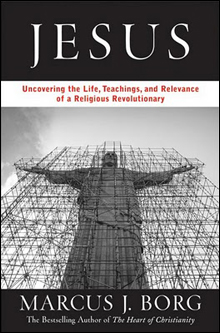
Jesus: Uncovering the Life, Teaching, and Relevance of a Religious Revolutionary If you are looking for an introduction to current scholarship on the man known as Jesus of Nazareth, Marcus Borg’s book is an excellent place to begin. 

For those of you (and you know who you are) who tell me you don’t have time to read one more thing: in this video Borg provides a wonderful overview of his book. Borg challenges his listeners and readers to move beyond what they may have learned to believe about Jesus toward a more nuanced understanding of the radical nature of Jesus’ life and teachings.  Whether you’re a reader or a viewer, a scholar or a seeker, a believer or a sceptic, I’m sure you will find that Borg’s way of telling the story of Jesus will reveal new ways to integrate Jesus’ story into your life today. 

Augustine of Hippo – August 28

The feast day of Augustine of Hippo is a good time to recall what St. Augustine had to say on the literal meaning of Genesis:
“Usually, even a non-Christian knows something about the earth, the heavens, and the other elements of this world, about the motion and orbit of the stars and even their size and relative positions, about the predictable eclipses of the sun and moon, the cycles of the years and the seasons, about the kinds of animals, shrubs, stones, and so forth, and this knowledge he holds to as being certain from reason and experience. Now, it is a disgraceful and dangerous thing for an infidel to hear a Christian, presumably giving the meaning of Holy Scripture, talking nonsense on these topics; and we should take all means to prevent such an embarrassing situation, in which people show up vast ignorance in a Christian and laugh it to scorn. The shame is not so much that an ignorant individual is derided, but that people outside the household of faith think our sacred writers held such opinions, and, to the great loss of those for whose salvation we toil, the writers of our Scripture are criticized and rejected as unlearned men. If they find a Christian mistaken in a field which they themselves know well and hear him maintaining his foolish opinions about our books, how are they going to believe those books in matters concerning the resurrection of the dead, the hope of eternal life, and the kingdom of heaven, when they think their pages are full of falsehoods and on facts which they themselves have learnt from experience and the light of reason? Reckless and incompetent expounders of Holy Scripture bring untold trouble and sorrow on their wiser brethren when they are caught in one of their mischievous false opinions and are taken to task by those who are not bound by the authority of our sacred books. For then, to defend their utterly foolish and obviously untrue statements, they will try to call upon Holy Scripture for proof and even recite from memory many passages which they think support their position, although they understand neither what they say nor the things about which they make assertion.” (from Augustine’s commentary on Genesis: “The Literal Meaning of Genesis” (translated and annotated by John Hammond Taylor, S.J.; two volumes; Newman Press, New York, 1982; pages 42-43 of Volume 1)

Chanting with Mathew Fox

Matthew Fox’s Creation Spirituality has provided a pathway beyond the constrictive confines of Christian doctrine  into the Wisdom tradition of the Mystics. Here he plays with the “ah” sounds of the various names for the divine. The exercise which he demonstrates is a wonderful way to open or awaken one’s self to the playfulness of the Spirit.

Bishop John Shelby Spong – 2012 Chautauqua Lectures

Jack Spong has been a great friend to Holy Cross Lutheran Church in Newmarket and over the years he has graced us with his presence three times. You can read what he has to say about Holy Cross here and here. Below you will find video recordings of Jack’s lectures at the Chautauqua Institute this past June. As always Jack is in great form and each lecture is well worth watching. If you are short on time, watch the last in the series and it will leave you wanting more.

The Judeo-Christian Faith Story: How Much is History

The Prophets: Not Predictors of the Future but Change Agents

The New Testament: An Evolving Story

The Story of Judas Iscariot

Re-Casting the Christ Story Not a Rescue Mission

But the Birth of a New Consciousness

EVOLUTIONARY THINKING: Produces Evolutionary Christians

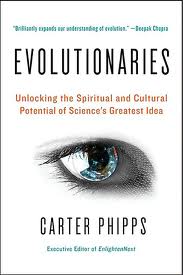
Evolutionary is a term given to thinkers who see evolution as much more than simply a theory that pertains to the biological development of life on this planet. Evolutionaries are generalists who are willing to piece together information from all disciplines in order to explain the cosmos. So, says Carter Phipps in his new bestseller, “Evolutionaries: Unlocking the Spiritual and Cultural Potential of Science’s Greatest Idea”. In which he defines evolutionaries as: “deep time explorers of a universe of infinite becoming.”  In a world where scientists, philosophers, and theologians are borrowing from one another’s insights in order to explore the secrets of existence, evolutionary theory is being applied to more than just biology.  

Inspired by Matthew Fox’s “Original Blessing”, I have long since given up on the medieval doctrine of original sin and moved beyond the atonement theologies that rely on our need to be saved by a “Father God”.  Like many progressive Christians, rather than describing the human condition as sinful or broken, I understand humanity to be incomplete and still evolving. We did not fall from grace in some mythical garden. Humanity, like all of the cosmos continues to evolve. The idea of evolution has all sorts of implications not only for how we see ourselves as human beings, here and know. As we continue to evolve, the determination of who or what humanity becomes requires that we take seriously our role as co-creators not with some grand-puppetier-god-in-the-sky. But as co-creators with a God who is in all and through all. 

The emerging conversation between scientists, theologians, and philosophers makes the question “Do you believe in the bible or do you believe in evolution?” obsolete. The conversations between disciplines are giving birth to a new spirituality. Evolutionary Christianity is emerging. Evolutionary thinkers are developing new theologies that take seriously God’s presence in all things through Christ. 

After having spent a week, exploring the work of Teilhard de Chardin; an evolutionary thinker who was decades ahead of his time, I am eagerly devouring my copy of Phipps new book (just released June 12 and it has already it has reached #14 on Amazon).  I will say more in future posts.  In the meantime, for an overview of what it means to be an evolutionary, take a look at the video below which features Carter Phipps speaking at MIT this past May.

20th CENTURY MYSTIC – Teilhard de Chardin

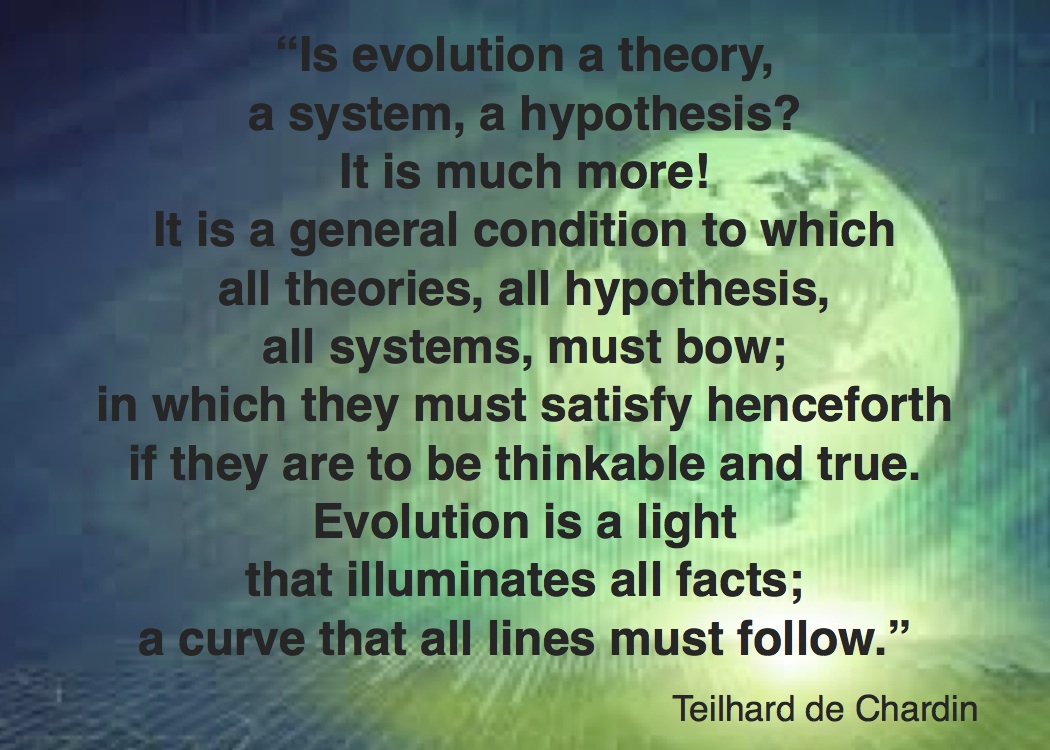
“Our duty, as men and women, is to proceed as if limits to our ability did not exist. We are collaborators in creation.” Pierre Teilhard de Chardin was a mystic whose explorations of creation landed him in hot water with his beloved Roman Catholic Church and propelled him toward visions of a cosmos whose very life-blood is Love. 

Published posthumously, Teilhard’s “Le Phenomene Humain” reads more like the work of a progressive 21st century christian theologian or scientest than that of a devoted 20th century Jesuit priest/biologist/palaeontologist. Teilhard paints a poetic vision that modern theologians would call a panentheistic view of the cosmos (pan: all + theo: god = god is in all and all is in god).  

As I work my way through Sarah Appleton-Weber’s translation, “The Human Phenomenon” I am also enjoying Ersula King’s excellent biography “Spirit of Fire”. King is Professor Emerita of Theology and Religious Studies, University of Bristol, and a vice president of the World Congress of Faiths. Her specific areas of expertise are in the life and work of Teilhard. Below you will find her lecture  which provides an excellent overview of Teilhard de Chardin and the “Contemporary Mystic Quest”  (in 5 parts).  Whether you know a great deal about his life and work, or nothing at all, I commend it to you. But beware, it will wet your appetite for more.