Sermons for the Fourth Sunday in Advent
Reply


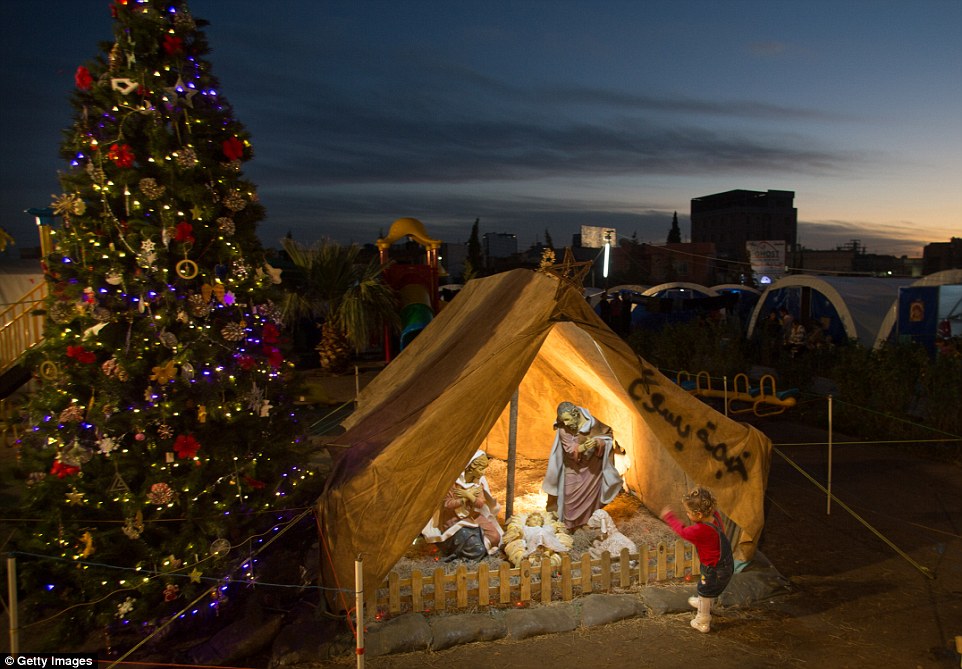
Readings from the first chapter of Luke included the stories of the Angel Gabriel’s Annunciation to Mary, Mary’s Visitation to Elizabeth and Mary’s radical song – The Magnificat. Listen to the sermon here
Last night my brother Alan and I were chatting online about Christmases past. We reminisced about the Secret Sam Attaché Case he got the year I had to settle for a Chatty Cathy Doll. My Brother’s toy transformed him into a secret agent allowing him to peer around corners with a Secret Sam periscope, and take photographs, while the case was closed. Alan’s toy transformed him into a spy capable of holding his own in the world of counterespionage, while I had to settle for Chatty Cathy Doll that could only say a few words when I pulled the string on the back of her neck. We both agreed that girls’ toys sucked. That is until the following Christmas when I talked my Dad into buying me my very own microscope and my brother and I spent the holidays looking at pond scum. We would head down to the pond and fill jars with the scummiest water we could find and then head home to look at the microscopic creatures that inhabited this strange little world. While we were chatting, my brother told me about a colleague whose son died quite suddenly last year. Suddenly, without warning the nostalgia of Christmas disappeared as we contemplated the horror of losing a child. For so many families this and every year Christmas is forever transformed from the simple joys of nostalgia to the painful experience of longing for simpler, gentler times, when all Christmas had to do was jingle a bell or two to bring out the child in us. Life is a complicated mystery. Life is full of unanswerable questions. Life is filled with all sorts of experiences and emotions. Yet, every year we look to our Christmas traditions, stories and rituals to open us to the possibility of all the joy and peace that life has to offer.
I ended our chat by sharing a treasured memory of good old simpler days, when my brother Alan and I would enjoy our very own Christmas Eve tradition of watching the old black and white version of A Christmas Carol; the one in which Alistair Sim plays Scrooge. So, last night, I dozed off with Alistair Sim’s Scrooge dancing in my head and singing, “I don’t know anything. I never did know anything. But now I know that I don’t know. All on a Christmas morning.”
No ghosts visited me in the night, but just like Ebenezer Scrooge, I did dream dreams of Christmas’ long ago. You see, Scrooge wasn’t the only movie that my brother and I used to watch. Alan was particularly fond of science-fiction movies. Sometimes, when he would manage to convince me to watch one of these movies with him, I would complain after just a few minutes in, that the premise was just too unbelievable; I mean really nothing like that could ever actually happen. Alan would remind me that you don’t have to believe them; you just have to watch them, go with the story, see where it takes you.
When you really think about it, many of our best-loved stories never actually happened the way we tell them. Take Scrooge for example; does any one of us actually believe that Ebenezer was really visited by three ghosts? We know that it is a story that never actually happened the way it has been told to us; and yet it has the power to take us somewhere, to move us as we watch the incredible transformation of old Scrooge and we too are moved to keep Christmas well. Continue reading
As we approach the Third Sunday of Advent, I can’t help wondering why the creators of the Revised Common Lectionary (RCL: the list of prescribed readings for Sunday worship) have failed to remember the stories and names of our foremothers? John the Baptist will strut across the stage again in this Sunday in churches all over the planet. The followers of the RCL will not hear the names of Tamar, Rahab, Ruth, or Bathsheba; no, even Mary is only suggested as an optional replacement for the reading of the Psalm! Unless worship planners are prepared to tinker with the lectionary Elizabeth and Mary will have to cede the stage to John the Baptist. So, all you worship planners and preachers out there, I say to you, “TINKER AWAY! TELL THE STORIES!” Continue reading
 The memories described in this sermon were provoked by the writings of Thomas Moore. I am indebted to Moore’s chapter on “The Christmas Tree” in his book “The Soul of Christmas” for opening me to some of the realities of our tree rituals. Dr. Seuss provided the Whos from down in Whoville. you can listen to the audio here or watch the video below
 I didn’t know it at the time, but I actually met John the Baptist when I was fifteen years old. She didn’t look much like you’d imagine John the Baptist would look, but she had that same crazy intensity, that same focus on the fact that we’d better change our ways, we’d better repent, and start doing things differently or we’d be in real serious trouble. Lola was my friend Valerie’s mother and she simply couldn’t stop going on and on about the environment and how we were destroy the earth. At the time, I remember thinking she was a bit of a nut-case and on more than one occasion I wished she’d just shut up about it. I was just a kid, and the earth was just something I took for granted. The earth was just there to provide for our needs. I couldn’t believe how much Lola went on and on about all the stuff we humans were doing to destroy the earth. I just wished she’d leave us along to get on with things, I couldn’t abide her incessant nonsense about how we were going to destroy the planet. All her feeble little attempts to be kind to the earth, made me seriously question her sanity.
I tolerated Lola not just because she was my friend’s mother, but I didn’t really understand her until one day when the three of us were travelling together. We were coming home from church. I had only been going to church for a few months. I was trying hard to understand this whole God thing. So, I went to church a lot. My friend Valerie had persuaded me to start going to church with her and family had become like my second family as they supported me during my first attempts to explore the mysterious world into which I had begun to feel pulled. As we drove home from church, I was feeling a little glum. Try as I might, I couldn’t really understand this church thing; all that singing and praying didn’t really help me to feel closer to God. Mostly I just liked how people at church treated each other. I liked how they went out of their way to help me feel at home. Whether or not God was there, well I really wasn’t sure.
Anyway, we were driving along the road. It was a partly over-cast day on the west coast of British Columbia, just a few clouds. You could see the mountains off in the distance. We were chatting back and forth when all of a sudden Lola pulled the car over to the far side of the road, switched off the engine and got out. Valerie followed her mother out of the car, so I figured I had better do the same. Val and her mother scampered down from the road and onto the beach. When they reached the water’s edge, they stopped and just looked off into the distance. Apart from a tanker-ship making its way across the horizon, I couldn’t see much of anything. Lola had the most amazing expression on her face. She positively glowed with happiness. Valerie wore a similar expression. I must have looked somewhat puzzled because Val smiled at me and said, “Isn’t it the most beautiful thing you have ever seen?” This only confused me more. What were they looking at that had made them stop the car, scamper down the bank and stand there at the water’s edge on a cold autumn evening?
Maybe my parents were right, these religious types are a little bit weird. Happy, glowing, smiling people make me nervous. There they stood grinning from ear to ear. What were they on? And then, I saw it. For the first time in my life, I saw it. It had been there before. But I had never really seen it before. The sky was amazing. The colours were overwhelming. It almost didn’t look real. It looked like someone must have painted it that way. It was magnificent, a work of art, the most beautiful thing I have ever seen!
If you’ve never seen a late October, Pacific Coast Sunset before, you’ve missed one of the great wonders of the world. Neither Emily Carr’s paintings nor picture perfect post cards do a western sunset justice. Believe it or not, even though I had been living on the west coast for about four years, at that point I had never before really noticed just how beautiful a sunset could be. No one in my experience had ever taken the time to stop and look at one. No one had ever pointed one out to me before. I would never have dreamed of stopping a car and getting out to watch as the sun put on a show while setting. So I stood there. Overwhelmed by it all. Amazed at just how beautiful it was. Wondering just who or what could be responsible for such a spectacular thing as this. Before long my thoughts drifted to the Creator. Suddenly this God, that I had been trying so hard to fathom, was there. Right there. Not just in the magnificence of the sunset, but right there on the beach. At that moment, I was just as sure of God’s presence as I was of my own. I remember an overpowering feeling of gratitude, gratitude for God’s presence, gratitude, because for the first time in all my life I was at home. I knew that I was home. Home, not because of the place; home not because of the beauty of the sunset, but home because of God’s presence. That longing that I had always felt; that longing that I have always labelled as homesickness, that over-powering longing was gone. In that glorious moment, the presence of God, filled my longing and I was at home.
I’m sure that each of you could tell of a similar experience. So many of us have been blessed by the presence of God in creation. So many of us have had our longing for God filled by the wonder and majesty of creation. I suspect that our love of creation comes as a direct result of our relatedness to creation. For like creation and everything in creation we share a common Creator. My own love affair with creation kicked into high gear on the beach gazing at the magnificence of the setting sun and it has grown in intensity over the years. This past summer, Carol and I drove out to Vancouver and I have to say, if you want to renew your love for creation, drive across this magnificent country of ours.
You’ll find yourself absolutely besotted with creation as you fall in love all over again. By the time we reached my beloved Rocky Mountains, it was like some star-crossed lover, who simply couldn’t help herself from bubbling over with excitement. Not even the first rainy day of our trip could dampen my excitement as we drove south from Jasper toward the Columbia Ice fields. I couldn’t wait to gaze upon the grandeur of the glacier that I remembered from so many visits over the years. The rain was falling quite heavily as we pulled into the massive parking lot perfectly situated across from the ice-field. As we climbed the steps toward the viewing station, I couldn’t see much because I’d pulled my hood up over my head to protect me from the rain. When I reached the top and looked across the highway, it took my breath away, the mass of ice that was frozen in my memory, was gone.
I’m not sure if the drops of water falling down my cheeks were raindrops or teardrops, as I stood there frozen by a strange mixture of fear and sadness. In the decades that have passed since I first began to visit the ice-fields back in the 1970’s the ice has been receding at a rate of between 10 and 15 centimeters per decade. 120 centimeters may not seem like a great distance, but couple that with a decrease in the thickness of the ice and it is positively shocking to see the amount of ice that has vanished from view.
 Take a look at the iceberg that I asked Andrew to hang. This photograph was taken in a place I visited long ago. It’s a place were icebergs are born. I ended up there back in the days when I was in the travel business and ended up on a cheap Air Iceland flight that was delayed for a week in Reykjavík for a week. Back then Iceland’s airline must have had only two airplanes and when one of them suffered mechanical difficulties you literally had to wait around for them to fix it. It’s one of the reasons that flights were so cheap on Air Iceland. You simply never knew how long your stopover in Iceland might be. I was trapped there for a week and during that time we decided to explore some of the most amazing geological sites that the earth has to offer. We travelled about 400 kilometers outside of Reykavik to the Jokulsarlon Lagoon; the birthplace of glaciers. It was in this strange lagoon, under an eerie twilight that lasted for the entire duration of my stay in Iceland, that I stud on the hull of a small tourist vessel, staring up at a magnificent glacier. I have no words to describe my terror. Continue reading
 This sermon included quotes from James Carroll’s book “Christ Actually: The Son of God for the Secular Age” Carroll’s book is a splendid exploration prompted by Dietrich Bonhoeffer’s question “Who is Jesus for us today?”
Readings: Isaiah 40:1-11 and Mark 1:1-8. Our sermon hymn was “God Is Within”, Text by George Stuart to the Tune Ar Hyd Y Nos = All Through the Night
Listen to the sermon here
While the world out there is caught up in the hustle and bustle of the Christmas season, we here in the church embrace the season of Advent. Our Advent worship invites us to slow down so that we can take a journey into the darkness. Last week, I talked about the importance of darkness in the birthing process; for the seed needs the darkness of the earth to germinate and grow just as surely as we humans need the darkness of the womb to develop. So, as we prepare ourselves to give birth to the Christ, I invite you into the darkness precisely because in the darkness gestation happens and gestation gives rise to birth.
This Advent, our liturgy’s lectionary, the prescribed readings for worship in most mainline congregations, turns to the Gospel According to Mark. All year long, except for a few Sunday’s a reading is selected from the Gospel according to Mark. The Gospel of Mark was written in the darkness. We don’t know who wrote the Gospel of Mark. Tradition did what tradition often does and this writing was attributed to Mark because it was customary for important writings to be attributed to an important person. The technical term for this is pseudepigrapha; a fancy way of describing the ancient practice of attaching the name of an important person to a piece of writing to ensure that that piece of writing garners some of the respect the name has acquired over the years. That’s why even though the four gospels were written long after the disciples of Jesus were around, each of these gospels bears the name of an Apostle. The gospels were not written by the disciples of Jesus. Scholars tell us that the Gospel according to Mark was written sometime after the year 70. That’s at least 40 years after the lifetime of Jesus of Nazareth. Continue reading
 On this first Sunday in Advent we awakened ourselves to the cosmic contours of the darkness. Our first reading was The Star Within: a creation story by Dr. Paula Lehman & Rev. Sarah Griffith, followed by a musical video reflection My Soul by Peter Mayer which you can watch HERE Our Gospel reading was from Mark 13:24-37. Listen to the sermon here
As we embark on the journey of Advent, I need to take a poll, and there’s not much time left, so, we’ll conduct this particular poll by a show of hands. Before you answer this question, would you please close your eyes. Now, for the sake of this poll, I’m not going to continue until everyone has their eyes closed. Notice the darkness, the blackness that enfolds you. Now, I’d like you to remember the carefully and respond as honestly as possible: By a show of hands, when you were a child, how many of you were afraid of the dark? Pease answer as honestly as you can. Don’t worry about anyone knowing that you were afraid of the dark, I’m the only one who has their eyes open and I’m clergy, so I’m bound by the confidentiality of my profession and the privacy act, not to tell anyone.
Ok, those of you who were afraid of the dark when you were a child, you can put your hands down, but keep your eyes closed. Now, those of you who weren’t afraid of the dark when you were a child, please raise your hands. Ok, everyone keep your eyes closed. One more time, I need you to notice the darkness. Now, keep your eyes closed, do not open your eyes until I tell you to and listen carefully to the Gospel according to Mark:
Jesus said: “In those days, after that suffering, the sun will be darkened, and the moon will not give its light, and the stars will be falling from heaven, and the powers in the heavens will be shaken. Then they will see ‘the Son-of-Man coming in clouds’ with great power and glory. Then the Son-of-Man will send out the angels, and gather his elect from the four winds, from the ends of the earth to the ends of heaven. From the fig tree learn its lesson: as soon as its branch becomes tender and puts forth its leaves, you know that summer is near. So also, when you see these things taking place, you know that he is near, at the very gates. Truly I tell you, this generation will not pass away until all these things have taken place. Heaven and earth will pass away, but my words will not pass away.
But about that day or hour no one knows, neither the angels in heaven, nor the Son, but only the Father. Beware, keep alert; for you do not know when the time will come.
It is like someone going on a journey, who leaving home and putting the slaves in charge of their own work, commands the doorkeeper to be on the watch. Therefore, keep awake—for you do know when the lord of the house will come, in the evening, or at midnight, or at crockcrow, or at dawn, or else, coming suddenly, the lord may find you asleep.
And what I say to you I say to all: Keep awake.” The Gospel of Christ.
All right, everybody, WAKE-UP! I mean it! Wake up! There is darkness all around us!!!
Danger everywhere you look. I need you all to WAKE-UP FOR CHRIST’S SAKE!!!!
Don’t sit down! Are you crazy. Who sits down in the midst of darkness? If you sit down, you’re likely to fall back to sleep! I need you to keep awake! Keep awake—for you do know when the lord of the house will come, in the evening, or at midnight, or at crockcrow, or at dawn, or else, coming suddenly, the lord may find you asleep. And what I say to you I say to all: Keep awake.
KEEP AWAKE FOR CHIRST’S SAKE! This is the Gospel of Christ! Keep awake!
The good news is that there are those among us who have never been afraid of the dark. All right, if you promise to Keep AWAKE, you may open your eyes and sit down.
Welcome to the season of Advent. While the world is busy scurrying about preparing for the arrival of Santa Claus, we here inside the walls of the church are embarking on a journey into the darkness. Out there, t’is the season to be jolly! It is the season of good cheer, so everyone is busy getting all the stuff they need to be cheerful. There are decorations to be hung, lists to be made, presents to be bought, special food to be acquired, more presents to be bought, special drinks to be stockpiled, more presents to be bought, people to visit, more presents to buy, carols to be sung, parties to go to, people to visit, gifts to give, fun to be had as our world prepares for the arrival of the baby Jesus or Santa Claus depending on your particular point of view. But in here, inside the walls of the church, the Body of Christ, it is my job to tell you all to wait. Advent the season when the church does it’s level best to hold off our culture’s rush toward a happy, jolly, Christmas each year!!! Advent the season of the church year, when those of us who seek to follow the teachings of Jesus of Nazareth are invited to prepare ourselves not for the birth of a baby, but rather to prepare ourselves to give birth to Christ again and again and again.
Birth and darkness are intimately related to one another. Gestation takes place in the darkness; the seeds need the darkness of the earth, humans the darkness of the womb. Movements and revolutions are created in the darkness. The darkness of poverty and despair, the darkness of injustice and war, the darkness of danger and death germinate the seeds of movements and revolutions.
Beware! Be very aware! I am not inviting you into the darkness that is conducive to a winter’s nap. The darkness that I am inviting you into in this season of Advent, is a very dangerous darkness, the kind of darkness that requires you to KEEP AWAKE! WE ALL KNOW THIS DARKNESS WELL! We more than any of those who have gone before us are all too familiar with the darkness. We have more information about the darkness then generations of humans have ever had. At our very finger-tips we have devices which will bring word of the darkness to us 24 hours a day. In our living rooms, in our automobiles, even in the shopping malls, we can hear tell of the dangers of the darkness. Our earth is suffering under the weight of our filth. Continue reading

This sermon for the first Sunday of Advent was inspired by a sermon written by Ian Lawton entitled “The Mother of All Virgin Births” in which I was captivated by his use of the phrase “pregnant with possibility.” I read Lawton’s sermon after first reading John Dominic Crossan and Marcus Borg’s book “The First Christmas” in anticipation of Dom Crossan’s first visit to our congregation (2008). I was so eager to prepare the congregation for Dom’s historical approach to Christmas that I fear the sermon is overflowing, perhaps a little too pregnant with details. Luckily, the congregation was treated to the wonders of Dom Crossan’s brilliance for several days and learned well from the master about the delights of historical details. I post the sermon here, trusting that some of the details may be enlightening as we once again prepare ourselves for the Season of Advent.
Let me tell you a story from down-under; an Australian story that was doing the rounds a few years ago. Like all stories it may never have actually happened, but it is absolutely true because it happen again and again, in various and myriad ways. This story happened a while ago in Brisbane, Australia…
“The story begins in the dark. A university student named John was on the side of the road hitch hiking on a very dark night and in the midst of a storm. The night was rolling on and no car went by. The storm was so strong John could hardly see a few feet ahead of him. Suddenly he saw a car slowly coming towards him and slowly it stopped. John was desperate for shelter and without thinking about it; he got in the car and closed the door.
It took only a moment for John to realize that there was nobody behind the wheel and the engine wasn’t on! But the car started moving slowly. John looked at the road and saw a curve approaching. John was so scared, that he started to pray, begging for his life. Then, just before he hit the curve, a hand appeared through the window and turned the wheel. John, paralyzed with terror, watched how the hand repeatedly came through the window but never harmed him. Eventually, John saw the lights of a pub down the road and so gathering his strength, he jumped out of the car and ran into the pub. Wet and out of breath, he rushed inside and started telling everybody about the horrible experience he had just had. A silence enveloped the pub when everybody realized he was crying and he wasn’t drunk. Suddenly two other people walked into the pub. They, like John, were also wet and out of breath. They looked around and saw John sobbing at the bar, one of the men said to the other, ‘Look, Bruce, there’s that idiot that got into the car while we were pushing it.’
Spiritual Philosopher, Ian Lawton insists, “There is always more to life than meets the eye. There is more to life than what our sight is able to see. Our eyes don’t simply pick up information relayed from an outside world and relay it to our brains. Information relayed from the outside through the eye accounts for only 20 percent of what we use to create a perception. At least 80 percent of what the brain works with is information already in the brain. We only use a small fraction of our brainpower. We very rarely exercise the full potential of our physical strength. We rarely access all that is available to our senses. We rarely maximize the potential of our mind, body and spirit in harmony. There is always more to life than meets the eye.” Continue reading
 There’s a story that pastors like to tell. I think I first heard it when I was in seminary. It’s the story about a preacher who was leading a children’s sermon. This preacher told the children all about how squirrels gather nuts and hide them away for the winter. He explained to the children how important it was for the squirrels to store up nuts while they were available so that they’d have something to eat when the cold weather arrived. When he was finished, the preacher asked the children if they knew what his lesson about the squirrels was. One small child raised her hand, and she said, “I know, I know, it’s all about God.” The preacher was a little surprised, because he wasn’t talking about God at all, so he asked the little girl why she thought the lesson was about God, and she said, “because you’re the pastor and it’s always about God.”
Unfortunately, many of us have the same reaction when we hear Jesus’ parable of the talents. After all, it’s a story from the Bible, and Jesus told it, so the master handing out the talents must represent God. The only problem is, the master in Jesus’ parable is a real jerk! The kind of jerk, I for one, wouldn’t waste my time trying to worship.
The story says that the man gave the talents, which represent a huge amount of money, to his slaves. If the master in the story is God, then God must be very greedy indeed; expecting massive financial returns, without even bothering to communicate that expectation to the slaves. Fortunately for the first two slaves, they manage to double the master’s investment and the third slave managed to keep the master’s initial investment intact but couldn’t quite manage to earn any interest at all. Now, even given, the precious little I know about the stock market, I’d say the master had nothing at all to complain about. The master entrusted all he had to slaves, and they might have lost a great deal of money on their investments, but they managed to make their master richer than the master had a right to expect.
Let’s do the math. A talent represents about 15 years salary. Most scholars suggest you use a figure of $50,000 per year–times 15, that’s $750,000.00 per talent. So to the first slave the master gave 5 talents, that would be about three million seven hundred and fifty thousand dollars toady. To the second slave, the master gave two talents, that’s about a million and a half dollars today. To the third slave, the master gave, one talent; and that’s about $750,000.00.
According to the story this master had quite the reputation; upon the master’s return the third slave explains why he was so cautious with the master’s money. “Sir, I knew that you were a harsh man, reaping where you did not sow, and gathering where you did not scatter seed; so I was afraid, and I went and hid your talent in the ground.” According to the master’s reputation he is a thief who isn’t above taking what doesn’t belong to him. The third slave was prudent with the master’s money and did what was considered appropriate in the ancient world were banking methods were crude at best, and many people buried treasure for safekeeping; The third slave didn’t loose so much as a penny of the master’s money, and despite the fact that two of the his slaves have just returned to him an additional 7 talents, that’s a whopping great profit of about 5 and a quarter million dollars. Just imagine, that three of us managed to make our boss 5 and a quarter million dollars on an initial investment of 6 million dollars, that’s a return of 75%, well I don’t know where you do your investing but 75% profit is nothing to sneeze about. But instead of rewarding the trio, this master doesn’t deny his own reputation for reaping where he doesn’t sow, and he takes the talent from the fearful salve and gives it to the one who already has ten talents, and then declares that: “to all those who have, more will be given, and they will have an abundance; but from those who have nothing, even what they have will be taken away.” As for the fearful slave who played it safe, the master calls him worthless and orders that he be “thrown into the outer darkness, where there will be weeping and gnashing of teeth.
If this were all about God, then to say that God is harsh would be an understatement indeed. If this were all about God, then why in the world would anybody love God? For who can love such a cruel master? But more importantly, if this cruel master is God, then Jesus’ is describing a god that cannot be compared to the God Jesus boldly calls ABBA. For Jesus’ Abba would never be so greedy as to steal from another’s labour, nor would Jesus’ Abba take from the one who has the least, nor threaten to cast out the least of Jesus’ brothers for the crime of taking care of the gift that was given to him. Such a view of God is inconsistent with all that Jesus’ taught about Bod. So just because Jesus told a story, it doesn’t mean the main character in the story is necessarily God. Continue reading

Listen to the sermon here
All over the world, Lutheran churches celebrate the earth-shattering events that were set in motion on October 31st 1517, when a Roman Catholic priest named Martin Luther nailed his 95 Theses to the door of the church in Wittenberg. Luther challenged the most powerful institution that his world had ever known. Luther shook the very foundations upon which the reality of his fellow humans was based. The power of the Holy Roman Catholic Church rested upon an interpretation of reality that envisioned a God who sits in judgement upon a throne in the heavens, a God who commanded a quid pro quo relationship with HIS subjects; a God whose determination to tip the scales of justice was so precise that he sent HIS only Son to die as a sacrifice for the sins of humanity, a God who used the sacrifice of that Son to somehow atone for the sins of every man, woman, and child who ever lived; saving them from the wrath of this God who had no other choice but to condemn sinners to eternal torment in the fires of hell, a God who established the church on earth to oversee the administration of the atoning power of Jesus death upon the cross, a church so powerful that they could sell you a piece of paper called an indulgence that would whisk you or your loved one out of the pits of Hell and up, up, up into the willowing, billowing, soft, gentle fluffy whiteness of Heaven, so that you could spend all of eternity basking in the Glory of your Father in heaven’s presence. These indulgences were more valuable than gold and it’s no wonder that the Church was able to sell them like hot-cakes, pardon the pun, and yes, I’m been sarcastic in my telling of this tale. Yes, history is more complicated than I’m telling it right here and right now, because I’m trying to make a point. The selling of indulgences was just the tip of the iceberg when it comes to the abuses the church on earth and in heaven. Continue reading
Preparing for Reformation Sunday? Some of these posts might be useful:

Listen to the sermon here
About ten days ago, I traveled up to Owen Sound for the funeral of a young colleague who died in a tragic motorcycle accident. During the two-and-a-half hour drive I couldn’t help wondering what life is all about. The stunning reality of the death of someone so young reminds us how very fragile life is. As I drove north the weather began to turn. So, by the time I reached Blue Mountain the wind was really howling. Driving along the shores of Lake Huron I could see waves rising. I’d been driving for over an hour, so I decided to pull over and take a walk before the rain began. Staring out over Nottawasaga Bay toward the vast grey horizon, I felt very small and insignificant. My mind wandered as my face was pelted by the sand that was kicked up by the wind. The sensation of the sand hitting my face awaked me to the reality that we are dust and to dust we shall return.
As my mind wandered, I caught sight of a small tuft of tall grass bent over by the force of the wind and sand. The long, tall grass shared my feeling of fragility as it was laid almost parallel to the beach by the strength of the wind. I thought about the Ruach, the wind, breath or Spirit of God, the power and majesty of the Ruach as it blows where it wills. Pelted by the wind, the sand, and the reality of death, the fragility of my own being struck me to my core as a deep, loud, “No!” rose up from my inner being. It was as much a plea to the Ruach as it was a staunch denial of the reality of fragility of life. “NO!” I shouted into the horizon. But the Ruach, the wind and the sand threw my “NO” back in my face as my tears mixed with the rain that began to fall.
The wind must have changed direction because when I looked back at the tuft of fragile grass it was standing tall even as the rain’s intensity increased. I took a long, deep, intake of breath. It was as if the very Ruach of God entered my being. I wiped the tears and the rain from my face, straightened my spine and walked back to the car ready to face the reality of our mortality, strengthened by the knowledge that I had encountered MYSTERY; the MYSTERY that is the source of All.
The Bible is full of stories that touch the deepest MYSTERY of life. The ancients knew that eternal truths are best communicated through stories, and so we plumb the depths of the scriptures’ parables, myths, and similes to discover our reality. Memories, stories, imaginings, myths, wonderings, and glimpses are the stuff of truth. We human creatures just can’t help wondering. How did we get here? Who made us? Why were we made? Why are we here? Where are we going? We humans can’t seem to help wondering, what’s it all about? From days of old, we’ve been sitting around campfires weaving tales about how we came to be, and what it’s all about; speculating on the nature of our creator. Story after story has been told; stories that weave in and out between our experiences and our wonderings, what’s real, what’s not, what’s true and what are imaginings. The best stories, the ones that captured our imagination and stimulated our wonderings, those stories were told over and over again. Handed down from one generation to the next. Some stories so profound that they just had to be written down. Elevated to the realm of the sacred these wonderings, took on the quality of myth. Sacred truth, so precious that over the years some have sought to defend these stories with their very lives. Others have built their world around these sacred truths, found their identities between the lines of their imaginings. Still others have feared the very wonderings that birthed these sacred truths. So afraid have they become that they’ve tried to insist that these sacred truths aren’t even ours, but rather the divine ramblings of our God. Whispered into the ears of scribes who jotted them down word for word, in the Kings English no less, holding between their lines not only sacred truths, but perfectly preserved history. So treasured are these sacred truths that some even claim that between their lines lie the for-telling of our future. So treasured are these sacred truths that the questioning of even the slightest detail has the power to set one tribe or nation against another. Continue reading

Listen to the sermon here
Then Jesus spoke to them again in parables. He said, “The kindom of heaven is like this: there was a ruler who prepared a feast for the wedding of the family’s heir; but when the ruler sent out workers to summon the invited guests, they wouldn’t come. The ruler sent other workers, telling them to say to the guests, ‘I have prepared this feast for you. My oxen and fattened cattle have been slaughtered, and everything is ready; come to the wedding.’ But they took no notice; one went off to his farm, another to her business, and the rest seized the workers, attacked them brutally and killed them. The ruler was furious and dispatched troops who destroyed those murderers and burned their town. Then the ruler said to the workers, ‘The wedding feast is ready, but the guests I invited don’t deserve the honour. Go out to the crossroads in the town and invite everyone you can find.’ The workers went out into the streets and collected everyone they met, good and bad alike, until the hall was filled with guests. The ruler, however, came in to see the company at table and noticed one guest who was not dressed for a wedding. ‘My friend,’ said the ruler, ‘why are you here without a wedding garment?’ But the guest was silent. Then the ruler said to the attendants, ‘Bind this guest hand and foot, and throw the individual out into the darkness, where there will be wailing and gnashing of teeth.’ “Many are called, but few are chosen.” Matthew 22:1-14
Is this the Gospel of Christ? In Lutheran, Anglican, United, Roman Catholic and other mainline denominations this text will be read and in those congregations the preacher will conclude the reading with a proclamation declaring that this is, “The Gospel of Christ!” or “The Gospel of the Lord!” to which the people will declare “Praise to you O Christ!” But I ask you: “Is this the Gospel of Christ?” “Wailing and gnashing of teeth.” Is this the Gospel of Christ?
I must confess that when I realized that this text is the one assigned for this, the very Sunday when we are about to begin our “visioning process,” my heart sank. This gospel reading comes around every three years and I’ve always managed to be on vacation when that happens, so I’ve never actually had to preach this particular gospel text. I was sorely tempted to change our gospel reading to something more in keeping with the task that lies before us this afternoon. This text is hardly conducive to creating a new 21st century vision of what our church might become. “Bind this guest hand and foot, and throw the individual out into the darkness, where there will be wailing and gnashing of teeth. Many are called but few are chosen.”
Throw him out into the darkness for the crime of being badly dressed? What kind of vision is this for us, here, today? Are we not a progressive congregation? Do we not pride ourselves on being an inclusive community? “Many are called but few are chosen.” Is this the “Gospel of Christ?” “Praise to you O Christ!” I don’t think so. Continue reading
 About a dozen years ago, I traveled to Vancouver to attend an educational conference for Lutheran Mission Pastors. Most of the conference was spent inside a stuffy meeting room. But one afternoon about forty of us were loaded onto a school bus and we traveled down to the east-side of Vancouver to spend some time with Pastor Brian Heinrich, who ran the Lutheran Urban Ministry Society. I doubt that many of you have ever or will ever visit the downtown east side of Vancouver. Lutheran Urban Ministry was located near the corner of Main and Hastings in one of the poorest areas in all of Canada. It was the sort of place where forty Lutheran pastors stuck out like a sore thumb. At the time the downtown east-side was one of the roughest neighborhoods in Canada. This was before Olympic developers gentrified the neighbourhood.
As we arrived, I noticed the discomfort that was written all over the faces of my fellow clergy. Although I’d travelled to the eastside many times and even lived for a few months in a cheap apartment on the edge of the eastside, my journeys in the eastside were usually quick, with as few stops as I could manage, so that I could avoid the unpleasant sights and sounds that you encounter in places were poverty literally fills the air. Knowing that we were scheduled to spend the day in the eastside made me long for the mountaintops that I could see stretching up to the sky across the river. I could feel the same discomfort that was written on the faces of my colleagues take hold of my own face.
On the steps of the church, a young man was shooting up. In the alley next to the church, very young men and women were offering their bodies for sale. Inside the church we were greeted by several of Pastor Brian’s parishioners. Before we could get inside the sanctuary, a very smelly man extended a filthy hand in friendship. When I took his hand he grinned at me with his two remaining teeth and told me his name was David and that I should make myself at home. Eventually, Pastor Brian introduced us to about a half a dozen of his parishioners. All of them wore their poverty with a welcoming smile. Because the sight of forty Lutheran Pastors being guided around the neighborhood on a tour might have shaken up the local inhabitants, we were divided up into small groups and assigned guides. That’s how I met a woman, for the purposes of this sermon I’ll call, Gracie. Continue reading
This sermon is the second in a series of three sermons responding to questions about Jesus’ identity. You can explore the part one here
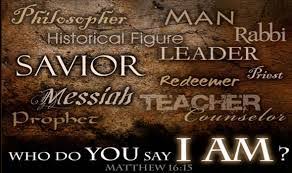 Part Two of this exploration of Jesus’ identity includes three reflections interspersed throughout the liturgy. The audio picks up the liturgy as the congregation is remembering our old friend Jesus by singing an old hymn that evokes our personal histories with the character Jesus. You can listen to the songs as well as the reflections here
Reflection 1: Remembering.
For those of you who were raised in the Lutheran Church, think back to your confirmation classes, do you remember learning the Creeds? I never went to church until I was 15. I was considered too old for confirmation class. So, I received private instruction from my pastor. I remember weeks and weeks spent learning both the Apostle’s and Nicene Creeds. Remembering those creeds still influences the way I respond to the question that the anonymous gospel-storyteller that we call “Matthew” puts on the lips of Jesus: “Who do you say that I AM.”
I remember, a few years back, when Emily Eastwood was helping us in our struggle to move the wider church to be more inclusive. Emily, insisted that the only way to reach out to those on the other side of the argument was to tell our story. Stories have the power to move us. Stories well-told can move us beyond the boundaries we have set for ourselves. So, Emily encouraged each of us to learn how to tell our own stories. Emily taught us to be able to tell our stories about being gay, or knowing someone who is gay, or about changing our minds about homosexuality. Emily, insisted that we needed to be able to tell our stories in about 3 minutes. We were encouraged to seek out folks who we suspected might be among those who were working to limit the roles that LGBTQ folks in the church. In just 3 minutes, our personal stories were told. These stories humanized the issues that divided us and indeed divided the church. Putting a face on the pain made the issues that we were debating, more than just theological, they made them real, immediate, and personal. By moving out beyond the boundaries established by doctrine we could touch the pain caused by doctrine.
Remembering all those weeks of learning the Apostles’ and Nicene Creeds, which were designed by their 3rd and 4th century authors to answer, once and for all, all the questions surrounding the identity of the man we call Jesus, I can’t help but see the young woman that I was, reciting week after week, year after year, the doctrinal response to this pivotal question. For years, no for decades, my answer to Jesus’ question: “Who do you say I AM?” was bound up in my belief that the Creeds had answered the question: “Who do you say I AM?” All you need to do is remember and believe.
I believe in Jesus Christ, God’s only Son, our Lord,
who was conceived by the Holy Spirit,
born of the Virgin Mary,
suffered under Pontius Pilate,
was crucified, died, and was buried;
he descended to the dead.
On the third day he rose again;
he ascended into heaven,
he is seated at the right hand of the Father,
and he will come to judge the living and the dead.
I remember trusting and believing the answer to all my questions was Jesus. I remember trusting and believing that Jesus Christ is the only Son of God who came down from heaven, suffered, died and was buried. I remember believing that Jesus died for my sins. I remember believing that because God was gracious HE sent Jesus to die so that I might live. I remember believing that this grace of God was all I needed to understand who Jesus was and is. I remember believing that Jesus’ death upon the cross was necessary so that I could live forever. I remember believing that I knew exactly who Jesus was. I remember knowing without the shadow of a doubt that Jesus was the Lamb of God who takes away the sin of the world.”
I remember eagerly eating the Body of Christ and drinking the Blood of Christ trusting that: Christ has died, Christ is risen, Christ will come again.
I remember knowing who I knew Jesus was. I also remember my doubts. I remember worrying about the character of a God that I knew, because I am Lutheran after all, I knew God’s grace. But I could not, no matter how hard I tried, reconcile the notion of a loving and gracious God, with a God who could devise a plan to save me, that included the crucifixion of God’s beloved Son. I remember my doubts. Doubts squashed by doctrine.
I remember the very day that my dear pastor, the same pastor who had taught me the Creeds, dear Pastor Ernst invited me to join a Bible Study. Some of you may remember the old, Word and Witness program. Three years of intensive study of the Bible. A study based on the materials that seminaries were teaching prospective pastors. Pastor Ernst said I was too young for the program, but he thought I might just like to give it a try. Once again, I was the only one in the class. I remember well the day I learned the Jesus may not have said all the words that were clearly printed in red in my bible.
I remember the day I learned that the writers of the gospels were not actually Matthew, Mark, Luke, and John; not actually eye-witnesses to the life of Jesus. I remember the questions that began to flow freely from my lips. I remember the freedom of asking questions that were beyond the carefully set boundaries of the Creeds. I remember the freedom. Continue reading
 I am indebted to John Philip Newell’s book “The Rebirthing of God: Christianity’s Struggle for New Beginnings” for inspiring this sermon. The Season of Creation is a relatively new addition to the Church calender and the first and Gospel readings are those prescribed for Forest Sunday: Genesis 2:4b-23 and John 3:1-16. The contemporary reading is from John Philip Newell. The Scripture readings were taken from ‘the inclusive bible: The First Egalitarian Translation” which opens a new way of understanding both the Genesis story and the Gospel According to John simply by using more inclusive literal translations of the Hebrew and Greek. You can find all three readings here
Listen to the sermon here or click on this link
The Season of Creation is a very recent addition to the Church Calendar. We first observed it, here at Holy Cross, just two years ago. So, this is the first opportunity we have had to observe Forest Sunday. It seems odd to me that in a country like Canada where the forests are so vast and have such a huge impact on the history of this nation, that up until just a few short years ago, did not set aside a day dedicated to the celebration of our forests. Indeed, that churches around the world, should have failed until recently to set aside a season dedicated to the celebration of Creation is not just astounding, but dare I say it, sinful.
So, I’d like to begin this sermon by summoning up visions of my favorite forest. Now, I’m well aware that there are hundreds of brilliant forests in these parts, but it won’t come as a surprise to many of you that my favorite forest is located on the West Coast.
This particular forest is special not only to me, but it also stands tall in the annals of Canadian forests; indeed, it stands out among the forests of the world. It is located just north of West Vancouver and I’ve been walking in this forest since I was a teenager. This deep, dark, rich, rain-forest is one of the few old-growth forests in Canada and many of the trees are over 600 years old. This particular forest has managed to survive uncut thanks to the erection of a lighthouse in 1875 on Point Atkinson. The authorities wanted to ensure a dark back-drop for the lighthouse so they banned logging in the area and the city of West-Vancouver has set the forest aside with the creation of Lighthouse Park.
My first trip to Lighthouse Park, I was but a child, taken there by my father for a family outing. I remember a dark, wet, gentle hike down to the water’s edge, followed by a half-hour’s uphill climb back to the parking lot, where my mother waited with our picnic lunch, of sandwiches and hot tea. Later, when I was old enough to drive myself, there were so many dark, wet, gentle hikes in this forest cathedral where I often retreated to for solace from the trials and tribulations of finding my way in the world.
Over the years, I have often returned to this living cathedral where the Douglas Firs and Red Cedars are hundreds, and hundreds, and hundreds and hundreds of years old and looking up to see just how far they stretch toward the sky, makes you dizzy. I still remember the first time I took Carol into the depths of this sacred place. The sheer pleasure of seeing someone you love overwhelmed by the splendor of some of the biggest and oldest trees on the planet, was match only by the deep silences that are possible in such a place. It is without a doubt a thin place a place where the boundary between what is known and what lies beyond the know is so thin that you can feel the presence of the One who is both the source of all that is and who is Beyond all that is.
In this thin place, I have laid down burdens, wept, laughed, shouted, cried, rejoiced, slept, breathed deeply of the earth and lost my breath trudging up the dark, damp, fecund trails. In this thin place, this forest cathedral I have worshiped the source of all that is, been mesmerized by that which is beyond all that is, and been emptied of concerns, trials, tribulations and filled with joy, hope, peace and love. In this thin place, this forest cathedral, over and over again, I have been born anew. In this forest cathedral, and in so many forest cathedrals, I have come to understand what Julian of Norwich meant when she said that, “we are not just made by God, we are made of God.” for in these sacred thin places, in these forest cathedrals, in the sheer beauty and the magnitude of life that abounds from deep within the forest floors, up through the steadfast trunks to the skyward canopies, the One who is the Source of All this is also the One who is the Source of My Being.
But these thin places are not for the faint of heart. Over the years, I have made various pilgrimages to Lighthouse Park, only to find a sign erected warning those who dare to enter that a bear has been sighted in the area. Sometimes the authorities have posted a sign that because of the threat of a dangerous bear in the area that park is closed to all hikers. When I was younger, and much more foolish, I ignored those signs and ventured into the deep, dark forest despite the warnings. The sense of danger was palpable and added to the intensity of the experience of this dangerous wilderness. But the wisdom gained over the decades has of late caused me to heed the warning signs and so from time to time Carol and I have travelled to Lighthouse Park filled with anticipation only to be thwarted by a warning sign.
It seems appropriate somehow that a Thin Place should be so subject to warning signs. I’ve told you before about Rudolf Otto’s definition of God, whom he calls the Numinous. Otto defines the numinous in Latin with the words, “Mysterium, Tremendum, et Facinam” the One whose is the Source of all being is mysterious, tremendous and fascinating. Mysterious yes. Tremendous, literally makes you tremble, yes. But even though you tremble in fear in the presence of such great mysterious, you just can’t help but be fascinated by the One who is the source and ground of your being. Continue reading
Listen to the sermon here
“Who do you say that I Am?” For most of my life I have been trying to figure out who I think Jesus was and is. Your very presence here on a beautiful summer morning, suggests to me that many of you have also tried to figure out who Jesus was and is. From time to time, I suspect that most of us have believed that we have worked it out; that we know just who Jesus is. But Jesus, just like every person we have ever known and or ever loved, Jesus keeps changing on us.
The Jesus I knew when I was a child was little more than an imaginary friend. “Jesus loves me this I know!” “Yes! Jesus loves me! Yes! Jesus loves me!” not because the bible tells me so, but rather as my friend and biblical scholar Harold Remus always insists, “because my Mommy told me so!” When I was a kid the knowledge that Jesus loved me, earned Jesus the role of my imaginary friend. Later, when I was a teen-ager looking for more love than my family could give me, I found my way into the Church and discovered, “What a Friend I have in Jesus! All my sins and griefs to bear!” The idealism of my youth turned my imaginary friend Jesus into my radical friend Jesus who understood my passion for justice, and lead me into deep friendships with folks who were determined to practice what Jesus preached, as we proudly sought to be the kind of people that “They’ll know we are Christians by our love, by our love, yes they’ll know we are Christians by our love.”
Sadly though, after 25 years in the church, I found myself as a called and ordained minister of the Church of Christ, with the keys of the kingdom jangling in my pockets, firmly believing that Jesus was and is, the: “Lamb of God who takes away the sin of the world.” It has taken years for me to get to know Jesus as something other than the sacrificial lamb of God. I stand in a long line of priests and pastors known as the Apostolic Succession. According to the story that comes to us from the anonymous gospel-storyteller that we call Matthew: Jesus handed the keys to the Kingdom of Heaven to Peter, the rock upon which the church was founded, and in doing so Jesus handed over the authority to bind and loose in heaven. For generations, this passage has been interpreted by the Church as the establishment of the priesthood. The Apostle Peter is given the keys to the kingdom of heaven, and becomes the first gate-keeper precisely because possession of these keys give him the power to decide just who will and won’t be forgiven. Generations of priests have been called and ordained, and thereby entrusted with the keys to the kingdom, holders of the power to forgive in Jesus name. When a called and ordained minister of the Church of Christ presides over the rite of public or private confession, we grant forgiveness of sin, in the name of Christ. We have the keys to the kingdom of heaven. WOW… Continue reading

Listen to the sermon here
That annoying Canaanite woman is at it again and not even Jesus can catch a break. Every three years that annoying woman comes along to disturb us. The way the anonymous gospel storyteller that we call Matthew tells his story, this annoying woman exposes Jesus for the human being that he was and shatters our illusions of Jesus the god-like super-hero. We could just look the other way. We could do what people, all too often, do when someone brushes off another human being with a racial slur; we could pretend we didn’t hear it. We could do what, according to the story, Jesus’ followers wanted Jesus to do, when they urged him to: “Please get rid of her! She keeps calling after us”
It clear from the way that the story is told that Jesus was trying to ignore this annoying woman’s incessant pleas, but she will not leave him alone. As much as I’d like to ignore her and everything she represents, she just won’t give us a break. Yes, I know that according to the story this woman was worried about her child, but how dare she expose Jesus in this way?
It’s been a hell of a week and I don’t know about you, but I’ve heard more than enough about racism this week to last me a lifetime. I don’t want to have to think about racism today. I want to get away from all the noise about racism and I don’t want to have to think about the fact that even Jesus is guilty of uttering a racial slur. If I still believed in the kind of God who functions like a puppeteer in the sky, I would suspect that this gospel reading didn’t just appear on this particular Sunday by chance. Even though I don’t believe in that kind of God, every once in a while it would sure be nice to be able to blame this reading on God. But like I said, every three years this reading comes up in the lectionary and this annoying woman forces us to see Jesus for who he was, a man. Jesus was a man of his time; a man who was raised in an environment where women were to be seen and not heard; a man who was raised to believe that his people were superior to other people, a man who wasn’t about to be disturbed by the yammering of a woman who was after all was said and done nothing more than a Canaanite.
Jesus was after all a rabbi and a busy rabbi at that. Hadn’t he just fed the 5,000 and walked on water? He was a rabbi who was in demand, the crowds couldn’t get enough of him, Jesus had places to go and people to see. Just who did this woman think she was? It is clear from the way the story-teller recorded this story that she was a Canaanite woman, they were after all in the district of Tyre and Sidon and that place would have been full of Canaanites. Jesus and his disciples had wandered off the beaten track, probably trying to avoid the crowds that couldn’t get enough of Jesus. Well there’s just no telling who you might run into when you wander into neighbourhoods where those kinds of people live. Continue reading
 Listen to the sermon here
What a beautiful August morning this is! Refreshed by a month-long vacation, I returned to work on Wednesday, eager to engage today’s Gospel story of Jesus walking upon the water. I began work on the sermon for today, convinced that together we would be able to engage the text from our perspective as a “progressive Christian” community. Bearing in mind that summer Sundays require a light touch because most of us are busy enjoying ourselves and few of us are interested in anything that might interrupt our summertime vibe. So, even though the orange fellow down below our border issued an asinine incendiary threat that raised the world’s blood pressure, I decided not to lean into the fear-mongering that various news media were dabbling in. I selected some hymns for us to sing that would allow us to lightly touch our desire for peace on this summer morning and I began to prepare a little story that would help us to see that it matters how we approach the biblical stories; especially the stories in which Jesus engages in miracles like walking on water. So, I do have a gentle sermon designed to encourage us all to be the kind of Christians who look beneath the surface of this story to see beyond the miracles so that we can begin to understand the man that Jesus was rather than the super-hero that Christ has become.
I’d love to be able to preach that sermon to you on this beautiful summer’s day. However, as I look beyond the words of this morning’s Gospel reading, I can’t help but see a vision of Christ walking upon troubled waters and beckoning us to venture out upon those same troubled waters. Just like the Apostle Peter, I too feel like those very waters will swallow me up and I will drown. The waters are deep, they are murky, and I am afraid that we cannot cross over and yet, Christ continues to beckon: “Do not worry, it is me! Do not be afraid! Come!”
Well those are not the exact words that I heard. The embodiment of Christ that beckons me this morning came to me not in a vision, but rather, as invocations nowadays are won’t to do, via social media. Some of you will remember Kelly Fryer. Kelly was the second speaker in our very first year of our Re-Thinking Christianity speaker series. Kelly spent a weekend with us encouraging us as we began to look beyond the church to explore new ways of being Christians in the 21st century. Yesterday, Kelly waded into troubled waters and issued this challenge to preachers everywhere when she wrote: “If you are a white pastor and you pray for “healing and unity” this weekend but you don’t name the sin of racism that infects this nation, lead your people in an act of contrition and cry out for justice like an everflowing stream, you need to write your resignation letter first thing Monday morning.”
I thought I might be able to avoid stepping out into these troubled waters, because after all Kelly lives south of the border and the infection that she was talking about is south of the border. But suddenly my summer craft, was tossed about in the waves, which had been raised by the fierce winds. At about three in the morning, “Jesus came walking toward me on the lake.” Just as I had resolved to stick with my gentle approach, I noticed that our National Bishop Susan Johnson had tweeted out: “Dear #myELCIC now more than ever, we need to speak out against and work to end racism.” I felt the murky waters rising all around me as I sank deeper and deeper into the murky waters that threaten our peaceful summer excursion. Jesus said: “Come!”
So, let’s get out of our boat to walk on the water toward Jesus. But I warn you that once we dip our toes into the murky water we will begin to drown in the words, words, and more words, words like: “Fire and fury!” “Locked and loaded!” the words of Donald J. Trump Murky words like: “In the case of North Korea, God has given Trump authority to take out Kim Jong-Un, …the bible, in the book of Romans, is very clear: God has endowed rulers full power to use whatever means necessary—including war—to stop evil.” these are the words of the Rev. Robert Jeffress – who is touted as #45’s favorite pastor.
But wait, even if you can manage to stay afloat and keep walking toward Jesus with images of mushroom cloud’s dancing in your heads, there are more words from the orange man who holds a nuclear arsenal in his tiny little hands: “We have many options for Venezuela. And by the way, I’m not going to rule out a military option.”
Now, just like Peter who got out of the boat and began to walk on the water toward Jesus, we see how strong the wind is and we too are frightened. Our souls cry out, “Save me!” “Save us!” “Save us all.”
Peering through the image of mushroom cloud, it becomes more and more difficult to see Jesus and we long to scramble back into the safety of our boat and speed back to the tranquility of our summer. Let’s just sing some hymns and say a few prayers. If only the waters would stay calm…
A colleague who was struggling to write his sermon sent me these words in the wee hours, it is a message that was tweeted out from by Traci Blackmon as she worshipped at an interfaith gathering at St. Paul’s Memorial Church in Charlottesville on Friday night: “They are coming for the church! Police all around. They won’t let us go outside. Y’all these KKK are marching with torches!”
Yesterday, as film footage flooded the news media, I struggled to make out the words begin chanted by angry white men. “Blood and Soil” “Blood and Soil” I struggled to comprehend until an explanation was offered by an incredulous journalist: “Blut und Boden” “Blut und Boden” “Blood and Soil. Blood and Soil.” Words from what I believed was a bygone era. “Blut und Boden” a Nazi slogan first chanted in 1926 to emphasize the relationship between true Aryans and a rural life, because Hitler himself believed that true Germans came from the soil. Suddenly, the weight of Blood and Soil was too much to bear upon the murky waters that threaten to drown us all. “They are coming for the church! Police all around. They won’t let us go outside. Y’all these KKK are marching with torches!”
“Wait a minute,” I can hear some of you say. “We are not them. The waters are not nearly as murky up here. We can still see Jesus. We just need to put one foot in front of the other and show our southern cousins how it is done.”
If only it were that simple. But dear friends this boat of ours has far too many holes in it that have been plastered over too many times and the waters upon which we sail are just as murky. As long as children in this country languish in poverty, because of the colour of their skin, on Aboriginal lands bereft of safe drinking water we cannot claim the moral high ground. As long as, the very mention of “Black Lives Matter Toronto,” evokes an ambivalent response from us, we cannot claim that systemic racism does not inhabit our treasured institutions. As long as, we can continue to close our eyes to the sale of military hardware to Saudi Arabia, or ignore the civilian casualties in Arab nations, we cannot claim that we care about brown or beige lives; especially if they happen to be Muslim. As long as, we fail to confess our own white privilege we cannot claim that we are part of the solution.
For years and years, I believed that my status as a woman together with my status as a lesbian, shielded me from the charge of white privilege. After all, I belong to two groups who suffer from discrimination. But when I examine my life, the reality of my white privilege screams out to me from the depths of who I am. As s child, the government of Canada paid my airfare and the airfare of my family so that we could immigrate from Belfast to Canada. The government paid for me to come here at the very same time as the government was tearing children from the arms of indigenous parents and forcing those children to suffer the abuses of residential schools. My white privilege allowed me to grow and thrive in Canada despite the realities of the discrimination of women and LGBTQ folk in this country. As long as, far too many of us fail to face up to the realities of the privileges we enjoy as a result of our race, the horrors of the murdered and missing indigenous women of this land that we love, will continue be swept under the carpet of our nation’s denial. Continue reading
 On this quiet summer morning, I arise to find the airwaves clamouring with the sound of Tweets. As news of war and rumours of war penetrates my consciousness and awaken me to the surreal clamouring of madmen who hold the power of life and death in the grasp of their tiny hands, it is so very tempting to give in to the cynicism of the talking heads. While our hearts grieve for our broken world, let us remember that while we cannot control the actions of others, we can, however, control the way we react to the actions of others. Let us not fall into temptation. Let us live in hope. Let us pause in the gentleness of this summer morning to turn our being toward the dream of peace. Shalom, Salam, Santi, Pax, Udo, Santi, Axsti, Salmu, Sith, Paix, Peace….Let us open ourselves to the sound of the still, small voice, the Daughter of a Sound, the Bat Qol who calls us Beyond the Beyond and Beyond that also toward the Deep Peace….
Two videos which present John Philip Newell’s interpretation of the Celtic prayer for Deep Peace
 pastordawn
