Prayer – Epiphany Sermon Series – 2: Pray to a Super-natural Deity or a Panentheistic God?

PrayerSermon series pastorDawnThree years ago, I reluctantly gave in to requests to preach on the subject of prayer and I devoted my sermons during the season of Epiphany to the subject of prayer. I have been asked to re-post those sermons. In the course of three years, my theology has continued to evolve. However, I have resisted the temptation to edit the sermons and so the manuscripts are what they are, an exploration of sorts. Here’s the Second sermon in the series. I shall repost the seven sermons in the series over the course of the Season of Epiphany.

Prayer #2 – Pray to a Super-natural Deity or a Panentheistic God? preached on Epiphany 2B, 2012 – listen to the sermon here

Readings: 1 Samuel 3:1-10, The Flowing Light of the Godhead by Mechthild of Magdeburg, John 1:43-51 – Our worship began with the singing of the old song, I Come to the Garden Alone.

Last week we began a sermon series on prayer. We are spending the season of Epiphany exploring what it prayer is like after you give up the idea that God is some grand-puppeteer in the sky. We spent some time exploring the description of the Voice of God that we find in the Hebrew Scriptures. In ancient Hebrew the Voice of God is described as the Bat Cole. Which translates literally as the daughter of a sound. Our English bibles translate the Bat Cole, the daughter of a sound as the Still Small Voice of God. It is sometimes translated as “the thinnest silence.” I asked you to spend sometime during the week, listening to the Bat Cole that emanates from deep inside of you. Today, I want to talk about what it means to listen.

What does it mean to listen to the voice of God? What does the voice of God sound like? How do you know that the voice you are hearing is God? What are you supposed to do if you think you hear the voice of God? I’ve been thinking about these questions all week long and I’ve got to say that these questions have driven me more than a little crazy. Earlier in the week, a colleague sent me a recording of televangelist Pat Robertson talking about his latest message from God. It seems that God has told Pat Robertson exactly who the next president of the United States is going to be. God has also, rather conveniently told Robertson not to talk about it. So, Pat’s not saying who it will be. But he is saying that God has told him that the current president; that would be Barak Obama, “holds a radical view of the future of the United States that is at odds with the majority” so the nation should expect chaos and paralysis.”

It strikes me as all too convenient that God just happens to hold the same views as Pat Robertson, so I’m not about to listen to the voice that he hears. But then, how do I know that the voice that I hear is God and not just me impersonating God? To hear Pat Robertson tell it, he hears a clear voice and has no doubt that it is God doing the talking. I on the other hand have never heard a clear voice. In fact I’m pretty sure that if I stood up here and told you all that God spoke to me in a clear voice, you’d begin to wonder about my sanity. I mean hearing voices is a clear signal that something has gone terribly wrong and we have all sorts of medication for that. So, if hearing voices is symptomatic of mental illness, then why in the world would we bother listening for the voice of God?

Before we can even begin to understand what the so much of the Christian tradition means when they talk about listening to the voice of God, we need to take a step back and look at what we mean when we say the word god. Throughout the Jewish and Christian traditions you can trace two very distinct ways of understanding and talking about God. The first and most familiar way of understanding God is as a supernatural being. God is described as a sort of person, a supernatural person. The term supernatural describes it all, super means beyond the natural. God is understood as a being beyond the capabilities of most beings. God is personified; given the characteristics of a person; only it is as if God has the powers of a super-hero; someone far greater than we can even imagine. Continue reading

Prayer – Epiphany Sermon Series – 1: Daughter of a Sound

PrayerSermon series pastorDawnThree years ago, I reluctantly gave in to requests to preach on the subject of prayer and I devoted my sermons during the season of Epiphany to the subject of prayer.  I have been asked to re-post those sermons. In the course of three years, my theology has continued to evolve. However, I have resisted the temptation to edit the sermons and so the manuscripts are what they are, an exploration of sorts. Here’s the first. I shall repost the seven sermons in the series over the course of the Season of Epiphany.

Prayer #1 – Bath Qol – The Daughter of a Sound – preached on Baptism of Jesus Sunday 2012

Mark 1:4-11

And so John the Baptizer appeared in the desert, proclaiming a baptism of repentance for the forgiveness of sins. The whole Judean countryside and all the people of Jerusalem went out to John and were baptized by him in the Jordan River as they confessed their sins. John was clothed in camels’ hair and wore a leather belt around his waist, and he ate nothing but grasshoppers and wild honey.

In the course of his preaching, John said, ‘One more powerful than I is to come after me. I am not fit to stoop and untie his sandal strips. I have baptized you with water, but the One to come will baptize you in the Holy Spirit. It was then that Jesus came from Nazareth in Galilee and was baptized in the Jordan River by John. Immediately upon coming out of the water, Jesus saw the heavens opening and the Spirit descending on him like a dove. Then a voice came from the heavens: “You are my Beloved, my Own. On you my favor rests.”

I began the sermon by asking the congregation to sing a cappella from memory the familiar hymn: I Come to the Garden.

I come to the garden alone,

while the dew is still on the Roses;

And the voice I hear,

falling on my ear the Son of God discloses.

And he walks with me, and he talks with me,

and he tells me I am his own,

And the joy we share as we tarry there,

Non other has ever known.

He speaks and the sound of his voice

Is so sweet the birds hush their singing;

And the melody that he gave to me

Within my heart is ringing,

And he walks with me, and he talks with me,

and he tells me I am his own,

And the joy we share as we tarry there,

Non other has ever known.

I’d stay in the garden with him,

Though the night around me be falling;

But he bids me go;

Through the voice of woe

His voice to me is calling.

And he walks with me, and he talks with me,

and he tells me I am his own,

And the joy we share as we tarry there,

Non other has ever known.

The season of Epiphany begins and ends with stories of Jesus’ hearing the voice of God. In this morning’s story of Jesus’ baptism, Jesus hears the voice of God as a dove descends from the clouds. On the last Sunday of Epiphany, we will hear the story of Jesus’ transfiguration on the mountaintop when the voice of God is heard speaking from out of a cloud. Both times the voice will say essentially the same thing: “This is my beloved”

The word Epiphany is a Greek word which means “manifestation or revelation” of the divine. Over the years, the word epiphany has been used to describe those “a ha” moments in which something quite obvious is revealed. The phrase, “I saw the light” springs to mind whenever I think of the word Epiphany. I’d like to say that I associate that particular phrase with the word epiphany because, in the season of Epiphany is the season when plunged into the darkness of winter the church celebrates light. But the truth is the word epiphany makes me think of cartoons I watched as a child, when a light bulb would appear over the head of a character when the cartoon character had a bright idea. When that light-bulbs appear in cartoons, it’s a sure sign that the character is headed for trouble, because bright ideas often get us into trouble. So, you’d think I would have known better when, earlier this week a light-bulb went off and I had a bright idea that during the season of epiphany I should begin a sermon series on the subject of prayer. I mean, what better season than the season of epiphany to tackle a subject that people have been asking me to address for months now.

Ever since we set off on this grand journey of re-thinking our theology, trying to understand Christianity in the 21st century, the issue of prayer has been lurking in the background, almost haunting us. As we’ve explored ancient and mystic, understandings of the reality that we call God our cherished notions of God as a grand puppeteer in the sky who intervenes from above to change the course of history, have been challenged. As we’ve come to understand God as more than our images of God could ever even begin to capture, we have explored the possibility that God is more immediately present in with and through us. As we begin to see God’s work in the world grounded in the world, there are moments when I really miss that grand puppeteer in the sky.

It is certainly easier to talk about prayer if your talking about appealing to an other-worldly creature to fulfill your longing for a divine parent to solve all our problems. Because seriously folks, when you give up the idol that we’ve created of a god who controls all things from up in heaven, a god who listens to our prayers and then decides what is and isn’t good for us, and answers those prayers according to some grand plan he devised eons ago, in which all we are required to do is believe that whatever happens its God’s will, and we shouldn’t question but simply believe because in the end all will be revealed, well when you give up that particular image of God, the question that haunts me, and judging by the questions and comments I’ve heard from a good many of you is,

Who or what do we pray to know?
Should we pray, and how should we pray?
And more importantly who or what will answer those prayers?

Continue reading

Teach Us to Pray – a recording of our second class

Below you will find a recording of our second class. The video of the Keynote presentation includes the Youtube video featuring Marcus Borg that was shown during the class together with an audio recording of the class (the audio is stilted in places but if you wait but a moment it will sync with the presentation). Or, below the video you will find an audio recording of the class.

The third class in this series is on Sunday Oct. 19 and will be posted on Oct. 21

Audio recording of the class:


Teach Us to Pray – a recording of our first class

Below you will find a recording of our first class.  The video of the Keynote presentation includes the Youtube videos by John Shelby Spong and Fred Plumer that were shown during the class together with an audio recording of the class (the audio is stilted in places but if you wait but a moment it will sync with the presentation). Or, below the video you will find an audio recording of the class.

Unedited audio recording of the class.


When You No Longer Believe that God is a Cosmic Puppeteer, Why Pray?

Image

AE Teach Us to Pray ltr copy

Prayer for the Earth: Llewellyn Vaughan-Lee

Llewellyn Vaughan-Lee draws together Christian and Sufi traditions of mystical prayer to offer up a prayer for creation from creation. His book Prayer of the Heart is a rare find which I treasure. I beg your pardon for the robotic voice in the youtube video review of the book.

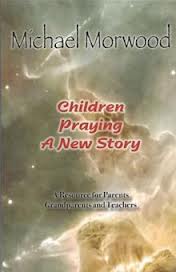
Children Praying a New Story by Michael Morwood

Children PrayingMichael Morwood is an “Adult Faith Educator” whose various books help adults to “re-imagine and re-evaluate their faith in light of the contemporary ‘story’ about our universe.” In Children Praying A New Story, Morwood turns his attention to the task of education children from the perspective of a thinking twenty-first century Christian. Morwood offers insights about teaching children to pray, not to an external, listening Deity but to the Source and Ground of our being. This book has helped me as I craft the prayers of our congregation and I know that parents, grandparents and anyone who is engaged with children and their spirituality will find inspiration in Morwood’s approach. We are looking forward to hearing from Michael Morwood in person; when he visits Holy Cross the weekend of May 2-4. 

Prayer: A State of Communion – Richard Rohr

What the Universe Reveals – When God Is Elusive

Image

Universe Reveals O'Murchu pastordawn

As Evening Approaches

John Phillip Newell’s “Prayer for Mystery” and “Chant: Hidden Things” provides a gentle transition into the evening.

Prayer: the Perspective of a Process Theologian – Catherine Keller

quantum thoughtToday, preachers all over the world (myself included) will be tackling what the writer of the gospel of Luke had to say about prayer in Luke 11:1-13. It is a daunting task for any preacher, let alone for those of us who have given up images of the Divine that conjure up notions of a super-hero in the sky who interferes in our lives. Catherine Keller is a process theologian who teaches Constructive Theology at  Drew University (New Jersey). Her comments about prayer as a kind of allurement are enlightening. 

Preparing to Preach on Prayer: 21st Century Questions – There’s an App for that!

prayer appAs I continue to work on this Sunday’s sermon, (see earlier posts here … here …and here), Jesus’ teaching on prayer in the gospel reading Luke 11:1-13 leaves me wondering what an enlightened 21st humanoid is supposed to do with Jesus 1st century ideas???

Cast you minds back to another time and place and tell what the numbers 33, 45, and 78 have in common??? Vinyl Records anyone? When I was a kid music came from a portable RCA record player. The sound quality wasn’t all that great, but somehow we didn’t seem to care. Later when I was a teenager, my parents got a fancy state of the art Phillips stereo cabinet and suddenly sound seemed to be coming from booth ends of the room. I never did understand how those old record players managed to pick up sound from the grooves in the vinyl to45 produce music. I still remember my father’s first reel-to-reel tape recorder, and then there were the eight-tracks, followed by cassettes, followed by CD’s.  I can remember these things, but I have no idea how they made music. It doesn’t matter how many times people try to explain it to me, I still think it’s a miracle that such beautiful sounds can come out of machines.

These days I don’t use records, tapes or CDs to listen to music. My music is stored in “the cloud” and when I want to hear I song I make sweeping motions on my iphone screen and presto, I can make music fill the room. I don’t know what the cloud is. I asked the personal assistant on my iPhone, her name is Siri and she told me she was sorry but she couldn’t tell me because Steve told her not to tell anyone. Some people think the cloud is located in a 225-acre facility that Apple built in North Carolina. Continue reading

Preparing to Preach on Prayer: To Whom Shall We Go?

PanentheismAs I continue to work on this Sunday’s sermon, (see earlier posts here and here) Jesus’ teaching on prayer in the gospel text Luke 11:1-13 begs the question: “To Whom Shall We Go?” Liberated from perceptions that reduce images of God to those of a cosmic superhero who abides up or out there ready to manipulate events here in the world at the request of those who pray, the activity of prayer takes on a whole new meaning and shape. Our images of who, where and what God is will direct our prayers in ways that impact our expectations of prayer. Who do we pray to and what we expect of the One who hears our prayers will shape how and why we pray.

Before we can even begin to understand what so much of the Christian tradition means when it talks about praying to God, we need to take a step back and look at what we mean when we say the word “god.” Throughout the Jewish and Christian traditions you can trace two very distinct ways of understanding and talking about God. Continue reading

Jesus’ Teaching on Prayer

teach us to prayThis Sunday’s gospel text (Luke11:1-13) will no doubt send preachers scurrying to review what we might say with regard to prayer. In this splendid little video Laurence Freeman reviews Jesus’ teaching and points to prayer as Jesus’ focus. Well worth watching before you begin to write or indeed listen to Sunday’s sermon.

Dom Laurence Freeman OSB is a monk of the Olivetan Benedictine Congregation of Monte Oliveto Maggiore and Director of The World Community for Christian Meditation. Fr Laurence was born in England in 1951 where he was educated by the Benedictines and studied English Literature at Oxford University.

Before entering monastic life he had experience with the United Nations, banking and journalism. In the monastery his spiritual teacher was John Main with whom he studied and whom he helped in the establishment of the first Christian Meditation Centre in London.

Preparing to Preach on Prayer: Shush!

BATH QOLIn this coming Sunday’s gospel reading Luke 11:1-13, Jesus’ disciples ask him to teach them to pray. As a pastor I have been asked to teach people to pray. Each time I have been asked to teach someone to pray I have cringed inside because I do not feel up to the task. For some reason the old hymn “I Come to the Garden Alone” keeps playing in my mind. I keep telling it to, “Shush!” so that I might hear the “bath qol” but the daughter of a sound eludes me. Below is a portion of a sermon I preached a couple of years ago on the subject of prayer. If nothing else, it reminds me to shush!

I began this sermon by asking the congregation to sing from memory the old hymn: I Come to the Garden Along. Feel free to sing it to yourself!

I think my earliest memory of prayer is a distant memory I have of skipping along the sidewalk chanting a familiar refrain: “Don’t step on a crack or you’ll break your mother’s back.” Most of us can remember a moment from our childhood when a superstition was instilled in us that caused us to perform some ritual in order to placate the unseen power that could determine our fate. Whether it was avoiding cracks, or walking under ladders or black cats, we were trained from an early age to believe that there were powers out there that could determine our future.   Continue reading

“We are Living Through the Greatest Theological Shift Ever in Christian History” – Michael Morwood

“We are Living Through the Greatest Theological Shift Ever in Christian History. How Do We Bring the Freeing, Enheartening, Inspiring, Challenging Message of Jesus of Nazareth to this Age, to Our Times, and to Our Questions” Inspired by the life and work of Thomas Berry, Michael Morwood explores God’s role in the new story of cosmology. Morwood, an Australian theologian was silenced by Rome after the publication of his book “Tomorrow’s Catholic”.

Children Praying Morwood has an uncanny ability to re- imagine and articulate christianity in ways that speak to those of us who embrace all that we are learning from science about the origins and nature of the cosmos. See my early post on Morwood’s work on prayer here.  If you’re looking for a resource for children his book “Children Praying a New Story: A Resource for Parents, Grandparents and Teachers” is terrific! (copies are difficult to find, I got mine from Kindle) I’m currently reading Morwood’s latest book a fable entitled “Faith, Hope, and a Bird Called George: A Spiritual Fable” and I will post more about this soon.

In this video, recorded in April 2012 at Corpus Christi, Morwood speaks on “Thomas Berry, Eco-Spirituality and the Future of Christianity”

Prayer? How shall we pray?

cosmic brainSince becoming a pastor, the questions that I hear more frequently than any others concern the subject of prayer. “How do I pray?” or “What should I prayer?” used to be the most often asked questions. However, since speaking and writing about giving up the idol of the “Big Santa-God-in-the-Sky” who grants requests or doesn’t answer prayers as if they were wishes, people have added “To whom should/do/can we pray?” to the list of most the asked questions. While I am tempted to offer answers to these questions, I suspect that my answers will not satisfy those who insist that there must be some secret formula that will make their prayer life successful.

I can say that when prayer ceases to be a laundry list of wants and desires, it has the power to open us to the awe and wonder of being a part of something far greater than ourselves. When we allow ourselves to be opened to more than what and who we are, the sense of gratitude that wells has the power to make us lovers of creation and partners with our sisters and brothers in this grand endeavour we call life.

In the stories handed down to us of Jesus of Nazareth, we are told that his followers asked him how they should pray. When I read these stories I see a frustrated Jesus whose followers insist that John the Baptist’s followers have a formula for prayer and Jesus ought to give them one as well.  In these stories its as if Jesus says, “Oh well if you insist, then when you pray pray like this.” The prayer that results has become known as The Lord’s Prayer, and although there are many translations and interpretations of this Abba Prayer, these days the one I am becoming fond of is the one provided by Neil Douglas-Klotz in Prayers of the Cosmos: Meditations on the Aramaic Words of Jesus. The video below provides a beautiful interpretation of this interpretation. Enjoy. May it move you toward prayer without words so that you can pray without ceasing and let your life be your prayer!