Your Mom and Dad were right when they taught you that “thank-you” is a magic word. Science now confirms what we learned at our parents’ knees all those years ago.
Happy Thanksgiving!



When I was a kid, the adults in my life were very fond of telling me how grateful I ought to be because things were so much harder back when they were kids. I’m sure most of us can remember being told by our elders just how tough times were when they were back in the day. My parents, grandparents, aunts and uncles and just about every adult I knew must have grown up poor. Why if I had a nickel for every time I heard someone say, “When I was a kid we were so poor that…..” well I’d have a whole lot of nickels.
Today, when I hear the words, “We were so poor that…” I brace myself for an outrageous claim like…. We were so poor that we couldn’t afford Kraft Dinner. Kraft Dinner, you were lucky, we were so poor that we couldn’t afford dinner, all we had was a cup of cold tea without milk or sugar. Cup of Tea, we were so poor that we only had filthy cracked teacups. Filthy cracked teacups, that’s nothing we were so poor that we couldn’t afford teacups, we used to have to drink our tea out of a rolled up newspaper. That’s nothing we were so poor that all we could we couldn’t afford newspapers so we had to suck our tea from a damp cloth.
Someone always chimes in with, “Well we might have been poor, but you know we were happy in those days. That’s right money can’t buy happiness. We used to live in a tiny house, with holes in the roof. “House? You were the lucky ones we were so poor that we had to live in one room, all 126 of us, with no furniture. Half the floor was missing; we were all huddled together in one corner for fear of falling! Ha! You were lucky to have a room! We used to have to live in a corridor! Ohhh we were so poor we used to dream of living in a corridor! A corridor would have been a palace to us. We used to live in an old water tank on a rubbish tip. We were woken up every morning by having a load of rotting fish dumped all over us!!! Rubbish tip, you were lucky, we were so poor that we lived in a hole in the ground covered by a piece of tarp, but it was a palace to us…especially after we were evicted from our hole in the ground and we had to go live in a lake. Lake, you were lucky to have a lake, there were a 160 of us living in a small cardboard box in the middle of the road. Cardboard, we were so poor we lived for three months in a brown paper back in a septic tank. We used to have to get up at six o’clock in the morning, clean the bag, eat a crust of stale bread, go to work down in the mines for 14 hours a day, week in week out. We had to get up out of that cardboard box at three o’clock in the morning and lick the road clean with our tongues. In case you didn’t recognize it, that was my interpretation of a classic Monty Python sketch, simply called the “We were so poor sketch”. (watch the video below) Continue reading
 I will be preaching on St. Michael and All Angels this coming Sunday. But for those of you who are working on the Parable of Lazarus and the Rich Man, here’s a copy of a sermon I preached a few years ago.
I moved out of my parent’s house when I was quite young and like most young people I didn’t have much money so I lived in some pretty weird places. I once shared a house with a bunch of people that I met working in the travel industry. I didn’t know them very well when I first moved in but as the months dragged on, I got to know some of them better than I would have liked. There were five of us living in a four-bedroom house about a block from Spanish Banks in Vancouver. The house’s proximity to the beach made up for some of my roommates’ shortcomings and the rent was cheap. So, even though I didn’t like the idea, I didn’t kick up much of a fuss when one of my roommates brought home a puppy.
Now there are those people who would argue that all puppies are cute, I just don’t happen to be one of them. Besides this thing was a Doberman and I don’t care if it was cute, I don’t like Dobermans. I was trying to convince my roommate David that he couldn’t possibly keep a Doberman in our house, when two of my other roommates showed up and quickly became besotted with the creature. One of my roommates when so far as to insist that the puppy was the cutest thing she had ever seen and that we simply had to keep it. While she was hugging and kissing the puppy, David got quite annoyed and pulled the puppy away from her and insisted that this dog was not going to be a pet. He declared that we needed this dog to grow up and be a guard dog, and if that was going to happen then we needed to start treating this dog as we meant to continue.
I had no intention of sharing a house with a Doberman, let a lone a guy who wanted to have one as a guard dog, so I started looking for another place to live. Before I moved out of that house, I had the unfortunate opportunity to watch David as he tried to train his puppy. First of all, David had to give the dog a name and it had to be a name that would instill fear into people, so that’s how the puppy ended up with a name like Vader as in Darth Vader. None of us were supposed to cuddle the dog or pat the dog or play with the dog. That was just fine with me. But one of our roommates, Ellen was forever getting into trouble for treating the puppy like a baby. So, David insisted that Vader be chained up outside. A few months after I moved out of the house, I went back to visit and discovered that even Ellen was afraid to go into the backyard because Vader was actually turning into a viscous guard dog. She told me that David had been leaving Vader chained up for longer and longer periods of time and no one in the house would dare to go out into the back yard to feed Vader. I found out from the others that even though they’d tried to get David to pay more attention to Vader, he insisted that it there was nothing wrong with the way he was treating Vader. For months David left Vader chained in the backyard for days at a time and as the dog got bigger and bigger, the three roommates that were left in the house with David became more and more afraid of the dog and eventually they had to insist that David move out. A few months later, I heard that David and Vader had parted ways. It seems that Vader had taken a chunk out of David’s arm and David had to have the poor creature put down. For some reason Jesus’ parable about Lazarus reminded me of Vader the Doberman. Continue reading
 How appropriate that preachers all over the world will be preparing sermons this week on the gospel text Luke 15. These parables of the lost will have us remembering the work of a beloved scholar whose work on the parables influenced generations of preachers. Robert Farrar Capon died on Friday and looking over the various sermons that I have prepared over the years on Luke 15, I for one am grateful to have been influenced by such a great theologian! I am also indebted to two beloved seminary professors for the formation of this sermon: Dr. Donna L. Seamone and Dr. Ed Riegert. All preachers stand on the shoulders of those who have gone before us!!!
Jesus was and is an absolute fool! An absolute fool, I tell you!
Among the teachings of Jesus, the parables of the lost and found are so well known, so familiar that we are in peril of failing to hear the foolishness they advocate.
Although only a few of us have had the opportunity to tend a flock of sheep, most of us at one time or another have been responsible for the welfare of a flock. Whether that flock be sheep or co-workers, clients, customers, students, friends, or children none but the foolish among us would leave 99 to the perils and dangers of the wilderness in order to go looking for one idiot who’d been stupid enough to get themselves lost.
We may not keep our coins at home, but I daresay that most of us have felt the sting of loosing a drachma or two or three in this recession. Only a fool would waste a moment searching for our losses when our portfolio’s are so full. I dare say that if we managed to find or recoup our loss, we’re hardly likely to invite the neighbourhood to a party that would in all likelihood eat up more than we had found. Continue reading
 Still enjoying a wonderful vacation, and I am grateful not to have to preach on the difficult text assigned for this Sunday. Here’s a facsimile of the sermon I preached a number of years ago on the gospel text.
Now large crowds were travelling with Jesus and he turned and said to them, “Whoever comes to me and does not hate father and mother, wife and children, brothers and sisters, yes, and even life itself, cannot be my disciple. Whoever does not carry the cross and follow me cannot be my disciple. For which of you, intending to build a tower, does not first sit down and estimate the cost, to see whether he has enough to complete it? Otherwise, when the foundation is laid and the tower cannot be finished, all who see it will begin to ridicule the builder, saying, “This person began to build and was not able to finish.’ Or what king, going out to wage war against another king, will not sit down first and consider whether he is able with ten thousand to oppose the one who comes against him with twenty thousand? If not, then, while the other is still far away, he sends a delegation and asks for the terms of peace. So therefore, none of you can become my disciple if you do not give up all you possession Luke: 14:25-33
Jesus you’ve got to be kidding! “Whoever comes to me and does not hate father and mother, wife and children, brothers and sisters, yes and even life itself, cannot be my disciple?…None of you can become my disciple if you do not give up all your possessions?”
Hate your father; hate your mother; hate your wife; hate your children; hate you brothers; hate your sisters; hate even life itself and oh yes while you are at it give up all you possessions and then, and only then will you be ready to take up your cross and follow Jesus. What is Jesus talking about? Has Jesus forgotten about the fourth commandment? Are we to forget about honouring our parents? Wasn’t it Jesus who said that we are to love our neighbours as we love ourselves? Didn’t Jesus try to talk people into loving their enemies? Has Jesus forgotten that God is love? Why does Jesus rant and rave about hating our father’s, mothers, children, sisters, brothers and even life itself?
It is difficult to recognize the Jesus in this text. This is not the gentle Jesus of my childhood. This is not the happy Jesus who smiled out from the pictures in my illustrated Bible.This is not the Jesus that the rightwing conservative Christians point to when they harp on about family values. This is not the gentle Jesus we have come to expect. This Jesus sounds to harsh. This Jesus wants to turn us into religious fanatics who hate everybody and give up everything, even life itself.
For a few years now, there has stood on the shelf above my desk a quotation from Deuteronomy 30. I put it there so that these word’s of God might guide me in my decision making. According to the writers of Deuteronomy, God says: “I have set before you life and death, blessings and curses. Choose life so that you and your descendants may live”. God says “Choose life!” How do I reconcile this to the Gospel lesson in which Jesus says whoever does not hate even life itself, cannot be a disciple of Jesus? Why was Jesus so harsh? What is going on here? Continue reading
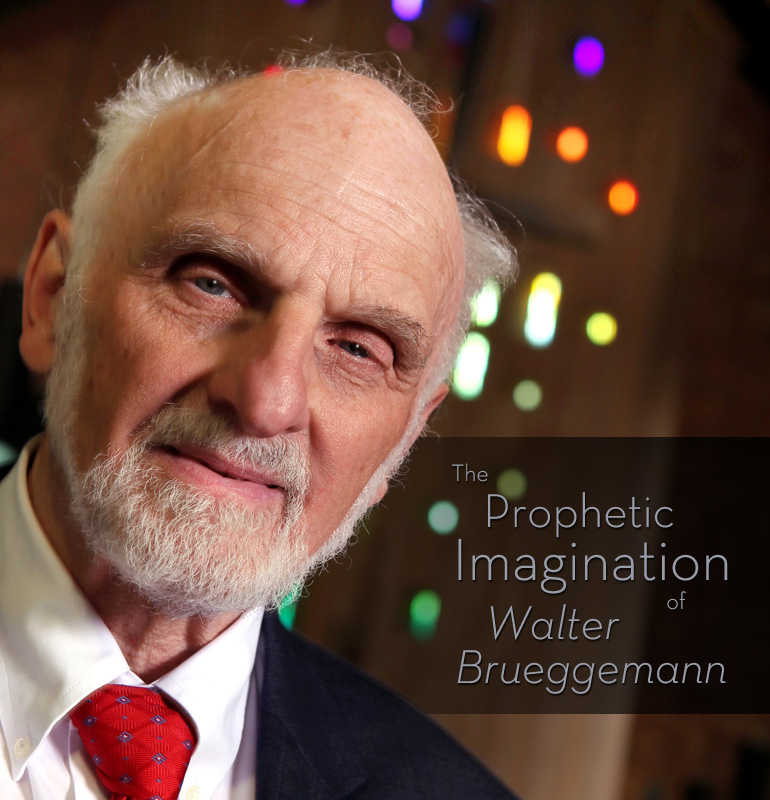 Those of us who presume to preach on the prophetic books of the Bible do so at our own peril. One of the best ways to avoid much of that peril is to first consult the work of the great Walter Brueggemann. Krista Trippett’s extended interview of this eminent theologian provides delightful insights into the faith of the man who has influenced several generations of preachers. Enjoy!
 I have often heard Jesus’ teaching about who sits where at a wedding feast used to encourage a kind of humility that requires those who would follow Jesus to take a back seat or better still adopt a cloak of invisibility lest we be mistaken for the proud and self-righteous. Canadians have a special affinity for this particular way of interpreting this text. It seems to me that the image of Canadian humility suggests that Canadian Christianity has had a huge impact upon our national psyche. I know that there are many who would insist that our humble national character is a direct result of living in the shadow of the Americans, whose national identity is anything but humble. I have to admit that the constant drumbeat of “We’re number one!”, “We’re number one!” coupled with a patriotism that champions the idea of American Exceptionalism which is the notion that the United States alone has the right, whether by divine sanction or moral obligation, to bring civilization, or democracy, or liberty to the rest of the world, by violence if necessary. With such pride of place, you can be sure that each and every one of our American cousins is endowed with the confidence on knowing exactly where they belong at the head table. So, is it any wonder that living next-door to a nation that instills such patriotic ardor in its citizens, that we Canadians would find a more humble approach more appealing.
Don’t get me wrong; I know that stereotypes rarely express the full character of a nation and so, it would be a mistake to paint all Americans with the same brush. But I dare say that you’d be hard pressed to find a Canadian who would disagree that even the most enlightened of our American cousins who might be found from time to time to speak softly, doesn’t underneath it all carry a big stick. Where Bravado flows through our American cousin’s national character, most Canadians prefer a quieter, softer, gentler approach, lest we be confused with the worst of American stereotypes: “the ugly American.” Continue reading
 It was hot. Already the sun had parched the earth. The air was still. The ground beneath her feet radiated the heat. She was tired. Earlier she had thought about staying at home. Her weary body could use a rest. All week long she had toiled in the heat of the sun. On this Sabbath she longed to rest her crumpled, aching body. She tried to ignore the weakness she felt. She had suffered long and hard. She couldn’t even remember when or how she had become so weak. Over the years, her weakened spirit had left her body bent and crippled. The evidence of her heavy burdens could be seen in her crooked spine. She was ashamed of her appearance.
It had been eighteen long years since she had stood straight and tall. She vaguely remembered running when she was a child. She ran everywhere back then. She ran faster than anyone else in the town. She loved to run. Running made her feel free.
Her mother used to warn her not to run. Her mother tried to stop her. But she was so full of life. She wanted to see everything. She wanted to do everything. She wanted to go everywhere.
Her mother warned her not to be so curious. Her mother tried to keep her busy. Her mother tried to keep her out of trouble. But it was no use, no matter how many tasks her mother gave her; she always managed to find time to explore. She had so many questions. She wanted to know how things worked. Life was so very exciting. She dashed from one adventure to the next. She ran everywhere, everyday. Except of course on the Sabbath. On the Sabbath she walked. She walked with her family to the synagogue. She loved to go to the synagogue. As her father and brothers took their places at the feet of the rabbis, she sat quietly with her mother and sisters and the other women and girls in the back of the synagogue. She listened carefully as the men and boys talked. Continue reading
 Sermon August 11, 2013
Readings: Genesis 15:1-6, Hebrews 11:1-16, Luke 12:32-40
Listen to the sermon
 “Do not be afraid, little flock, for it is your Abba’s good pleasure to give you the kin-dom” So begins the gospel reading for this coming Sunday. But I am afraid and my fear is not about the the thief who this text insists may break into my house or that the Human One is coming at some unexpected hour. No my fear is wrapped up in my desire to pay little or no attention to the second reading prescribed for this Sunday from the letter to the Hebrews:
“Faith is the reality of all that is hoped for; faith is the proof of all that is unseen. Because of faith, our ancestors were approved b God. By faith, we understand the world was created by the word from God, and that what is visible came into being through the invisible…..”
Do I have faith? Do any of us have faith? For that matter: What is faith? According to Hebrews faith “is the reality of all that is hoped for; faith is the proof of all that is unseen.” Faith is the stuff that makes it possible for us to hear Jesus words: “Do not be afraid, little flock, for it is your Abba’s good pleasure to give you the kin-dom.” Faith is the stuff that makes it possible for us to believe. So I wonder: Do I have faith? Do I have the faith that makes it possible for me to believe? Do you? Do any of us?
I write this as one who finds it difficult and sometimes even impossible to believe much of anything. I am a doubter by nature. Doubting is part of who I am. I know that there are those who are more inclined to believe and I am envious of believers. I envy those who are sure and are able to find comfort in the Scriptures. For a very long time I was ashamed of my inability to believe. I often sat in church and wondered if I might just be a hypocrite. I wondered if someone who had as many doubts as I have belongs in the church. And so, I tried to conquer my doubts by studying the Scriptures. Continue reading

Today is Hiroshima Day. It is also the Feast of the Transfiguration. So I am reposting this as it appeared earlier this year in preparation for the Sunday of the Transfiguration.
When our images of God are tied to the idol of a supernatural sky-dweller who has the power to solve all our problems, despair is sure to follow as our super-hero fails time after time to impress us.
When I was a very little girl, I was absolutely convinced that I had the power to change the mind of God! Confident that I held such power, I never missed an opportunity to exercise it. Now, I’ll grant you that like most children, I was also convinced that the universe itself actually revolved around me, so believing that I was powerful enough to change God’s mind, wasn’t exactly much of a stretch. In fact, when I was a child, it wasn’t all that difficult to change God’s mind. For instance, I could stop God from breaking my mother’s back simply by leaping over a crack in the pavement. “Don’t step on a crack and break your mothers back.” Now, in my young mind the only one powerful enough to crush my mother’s powerful spine, must be God. I also knew that God wasn’t particularly fond of ladders, and that if I refrained from walking under them, God would smile upon me.
I had no idea why black cats, or spilling salt, or breaking mirrors, or opening umbrellas inside, or leaving hats on the bed, or putting new shoes on the table, would annoy God, but I knew enough to avoid doing such things. I was absolutely sure that God would respond positively if I managed to pull a turkey’s wishbone apart in just the right way so that I was left holding a piece larger than the piece my brother was left with. God also responded well if I knocked on wood, or caught sight of a falling star, or if I crossed my fingers and hoped to die.
I didn’t need to understand why my activities worked to influence the heart and mind of God, I simply knew that they did and would continue to do so just as long as I continued to avoid the necessary evils and indulge in an apple a day, and managed to blow out all the candles on my birthday cakes.
The universe that revolved around me might have been full of all sorts of rules, but it would continue to revolve exactly the way I wanted it to if I managed to placate the old guy up in the sky who was pulling every body else’s strings. I never once considered that that old God in the sky was pulling my strings because I was absolutely confident in my ability to do what was necessary to pull God’s strings.
But as I grew up, I began to learn that despite my best intentions, the universe did not revolve around me. Little by little I learned that I didn’t have what it takes to influence all of the things that were having an impact upon my life. And just as surely as my powers waned, so too did the powers of God. Continue reading
 Looking over the readings for this coming Sunday and the subject of faith jumps out from the Hebrews reading (Hebrews 11:1-16) which begs questions about doubt. I recently read and blogged about Richard Holloway’s “Faith and Doubt” and Lesley Hazleton’s insistence that “Doubt is Essential to Faith” and both posts provide an interesting jumping off point. This little video of Richard Holloway on “Why doubt is a good thing” drives my thoughts toward preaching on doubt as the foundation of faith???
 I am indebted to Bishop John Shelby Spong for his insights into the Book of the Prophet Hosea. Without Jack’s thoughtful portrayal of Gomer, I would not have recognized her as the Leanne Battersby of her time. Also, thanks to Marcus Borg for his definition of the verb “believe”!
Listen to the sermon:
For those unfamiliar with Corrie, here’s a sample of the first 50 years:
 Here’s a sermon I preached a few years ago on this Sunday’s reading from the Book of the Prophet Hosea. Just as the people of Israel’s images of God changed over time, my own images of the Divine have changed since I preached this sermon. However, I still resonate with ways in which the Book of Hosea seeks to broaden the reader’s understanding of God away from traditional notions of anger and wrath toward images of steadfast love, for I too have had to broaden my own understanding of the Divine many times over the years. I suspect that I am only just beginning to imagine the contours of the steadfast Love that God Is.
Tommy was one of those kids that, no matter how hard he tried, he just couldn’t stay out of trouble. I was never quite sure whether or not Tommy was rotten or whether trouble just followed him wherever he went. Whatever the reason, Tommy managed to live up to the reputation of the typical middle child. His older brother seemed to be perfect in every way, the model child and his younger sister was the cute and adorable baby of the family, leaving the field wide open for Tommy to become the black sheep of the family. And as black sheep go, Tommy was a doosey. Tommy was also the son of my friends and so even though, I would have rather not have been part of this kid’s life, the fact that he was the Karen’s beloved son, meant that I had to learn to deal with him.
I can still remember an afternoon, long ago, when Tommy was barely three years old. A bunch of us had gathered to celebrate Karen’s birthday. Tommy was in a foul mood. I decided that he just didn’t like the fact that on this particular day he wasn’t the center of attention. He seemed to do whatever he could to upset his mother.
Her patience with him was beginning to get on my nerves and I was relieved when Karen announced that it was time for Tommy to take his nap. After a very long and loud temper tantrum, Tommy was eventually quiet in his room; a little too quiet, it seems. It wasn’t until I got into my car to leave and happened to glance up toward Tommy’s bedroom window that I realized just why he had been so quiet. Hanging outside of Tommy’s bedroom window was the evidence of this little boy’s stubborn streak. Somehow, to this day I still don’t know how he managed to do it, but somehow little Tommy had managed to stuff the mattress from his bed out the window.
On the lawn below the window were Tommy’s pillows, sheets, stuffed animals and quilt. Three quarters of the mattress hung below the window and I am sure that given enough time Tommy would have managed to push the remainder of his bed out onto the front lawn. I dashed back into the house, grabbed Karen and headed up to his room. When we got there we discovered dear sweet little Tommy, shaking the contents of a big container of baby powder all over his room. Tommy’s himself was covered in talcum and when he caught sight of his mother and I he gave us a wicked little grin and said, “I don’t need to take any more naps!”
Driving home that day, I gave Tommy a nickname. It’s a name that I have never uttered in his mother’s presence, but a name that has stuck with me. On that day, the dear sweet little son of one of my dearest friends was forever labeled, Tommy the Terrible; TT for short.
Now the exploits of a cute three-year-old are one thing, and we can all laugh at the site of a mischievous little boy, who manages to out fox his mother. But TT’s activities went far beyond the laughable exploits of a mischievous little boy. It didn’t take Tommy very long to become skilled in the art of tormenting adults. His mischievous behavior gave way to rudeness, disobedience, cheating, and more often than not down right meanness. Of all the adults who were subjected to the torments that Tommy dished out, none suffered more than his mother did. No matter how hard she tried, Karen could never get Tommy to behave himself. Nor was Karen ever able to understand why Tommy did the things he did. Tommy had everything a boy could ever want or need. He had two parents who loved him dearly. He had a wonderful older brother and a delightful little sister. He lived in a beautiful house by the ocean. He attended the best school in the area. He had more toys than he could ever find the time to play with. There were lots of great kids living in the neighborhood to play with and all sorts of interesting and interested adults in his life. Tommy was a bright and intelligent kid who had everything going for him. There was no earthly reason that this child should behave so badly. Karen has never been able to explain why she has two perfectly wonderful children and one child who has been breaking her heart since he was old enough to speak. Continue reading
 As they did last Sunday, this Sunday’s readings include a section from the Book of the Prophet Hosea. To say that this is a strange little book is an understatement. However, I’m tempted try my hand at writing a sermon on this ancient soap opera. For those colleagues who are considering doing the same these short videos provide images to get you in the mood. Of course you could just tune into a modern soap opera to get your creative juices flowing.
 As I continue to work on this Sunday’s sermon, (see earlier posts here and here) Jesus’ teaching on prayer in the gospel text Luke 11:1-13 begs the question: “To Whom Shall We Go?” Liberated from perceptions that reduce images of God to those of a cosmic superhero who abides up or out there ready to manipulate events here in the world at the request of those who pray, the activity of prayer takes on a whole new meaning and shape. Our images of who, where and what God is will direct our prayers in ways that impact our expectations of prayer. Who do we pray to and what we expect of the One who hears our prayers will shape how and why we pray.
Before we can even begin to understand what so much of the Christian tradition means when it talks about praying to God, we need to take a step back and look at what we mean when we say the word “god.” Throughout the Jewish and Christian traditions you can trace two very distinct ways of understanding and talking about God. Continue reading
 In this coming Sunday’s gospel reading Luke 11:1-13, Jesus’ disciples ask him to teach them to pray. As a pastor I have been asked to teach people to pray. Each time I have been asked to teach someone to pray I have cringed inside because I do not feel up to the task. For some reason the old hymn “I Come to the Garden Alone” keeps playing in my mind. I keep telling it to, “Shush!” so that I might hear the “bath qol” but the daughter of a sound eludes me. Below is a portion of a sermon I preached a couple of years ago on the subject of prayer. If nothing else, it reminds me to shush!
I began this sermon by asking the congregation to sing from memory the old hymn: I Come to the Garden Along. Feel free to sing it to yourself!
I think my earliest memory of prayer is a distant memory I have of skipping along the sidewalk chanting a familiar refrain: “Don’t step on a crack or you’ll break your mother’s back.” Most of us can remember a moment from our childhood when a superstition was instilled in us that caused us to perform some ritual in order to placate the unseen power that could determine our fate. Whether it was avoiding cracks, or walking under ladders or black cats, we were trained from an early age to believe that there were powers out there that could determine our future. Continue reading

Scripture Readings: Genesis 18:1-15 and Luke 10:38-42
Worship Bulletin pdf here (to be printed double-sided and folded into a booklet)
Listen to the sermon here
 Pentecost 8C – Sunday July 14 2013
Listen to the sermon here

 pastordawn