Quest for the Cosmic Christ – a sermon

Cosmic Christ pastordawnWe begin our quest for the Cosmic Christ on this the last Sunday of the Church calendar; traditionally the festival of Christ the King or Reign of Christ Sunday. Readings: John 1:1-6; Colossians 1:15-20; and Matthew 9:16-17. This sermon is the first in a series of sermons on our Quest for the Cosmic Christ which anticipates the season of Advent’s waiting and hoping for Christ to be born in us.
Listen to the sermon here:

Some Virgins and a Rabbi meet Sophia: a sermon on the Parable of the Ten Bridesmaids and Sophia

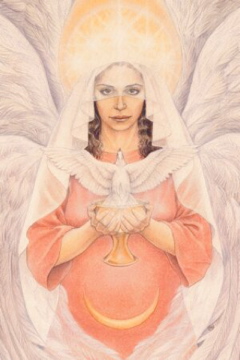
SophiaDoveChaliceHranaJantoWisdom of Solomon 6:12-16 and Matthew 25:1-13 – Here’s a sermon that I preached several years ago when this coming Sunday’s readings prompted me to use/borrow/steal from the book “Wisdom’s Feast: Sophia in Study and Celebration”, by Susan Cady, Marian Ronan, Hal Taussig (Harper and Row, 1986). 

The parable of the ten, what??? Bridesmaids??? Really, ten bridesmaids, it sounds like the set up for some elaborate joke. Ten bridesmaids were waiting for a bridegroom, they waited so long that they fell asleep! I don’t know, you fill in the rest! I’ve never been much good at telling jokes, I’m more of a storyteller. Part of the fun of a story is the journey itself, but when you tell a joke you have to worry about punch lines. I tend to forget punch lines, or if I do remember them, I usually manage to mess them up and loose the laugh. So, there were these ten bridesmaids waiting for a bridegroom. Five of the bridesmaids were wise and five of the bridesmaids were foolish. The wise bridesmaids brought along some extra oil for their lamps, the foolish bridesmaids did not. Long before the bridegroom arrived all ten of the bridesmaids fell asleep. Yada yada yada!

A little detail here, a little detail there and lo and behold we’re at the punch line. Turns out the bridegroom doesn’t know five of the bridesmaids so he shuts the door and says: “Truly I tell you, I do not know you. Keep awake therefore, for you know neither the day nor the hour.” Ha, ha, ha, very funny…. I simply don’t get it. For years and years, generation upon generation, people have been telling this one, and leaving people hanging with that punch line. Ha, ha, too bad, so sad, you just don’t get it. You don’t get to come into the party!

Okay, I know this is a parable and that means that like all parables there’s a trick of some sort that we have to work out. So, for generations preachers have been unraveling this one and the usual explanation goes something like this….“Keep awake! Don’t fall asleep! And for heaven’s sake be prepared! Cause if your not. Christ will bar the door and you won’t get into heaven! So, Keep awake, for you know neither the day nor the hour. Christ could come back at any moment and if your not ready! That’s it! Boom! Christ will deny you, the door will be shut and you’re not getting in. Oh and by the way, your going to burn in hell for all eternity. So, remember keep awake, be afraid be very afraid. Cause your gonna die! And if you haven’t brought along some extra oil for your lamp, well it ain’t gonna be pretty!” Continue reading

You Are the Saints – a sermon in response to Psalm 34

All Saints d

Listen to the sermon here

What Is the Purpose of My Life? – Sister Joan Chittister

sage-ing“What do you do?” not “What is your job?”  Pushing us to move beyond limiting our understanding of who we are. At 78, Sister Joan Chittister continues to be an inspiration to those of us who seek to know the purpose of our creation. To those of us who are nearing or have reached retirement, Sister Joan insists that there is so much for us to do in the world. “If you want to know if your work on earth is done, if you are still alive it is not done!” There is vital work that needs doing and you have the wisdom and skills necessary to be vital. Recorded on October 12, 2014 at Christ Church Charlotte’s Faith Forum. 

Reformation Sunday Resources

semper reformanda

Preparing for Reformation Sunday? Some of these posts might be useful:

Enough with “A Mighty Fortress” Already! Sing a New Song!

95 Theses for the Twenty-first Century

Freedom from What?  All this Reforming is Wearing Me Out!

What Darwin Never Knew

A Reformation Day Nailing to the Internet – John Shelby Spong

A Prayer for Reformation – Thomas Berry


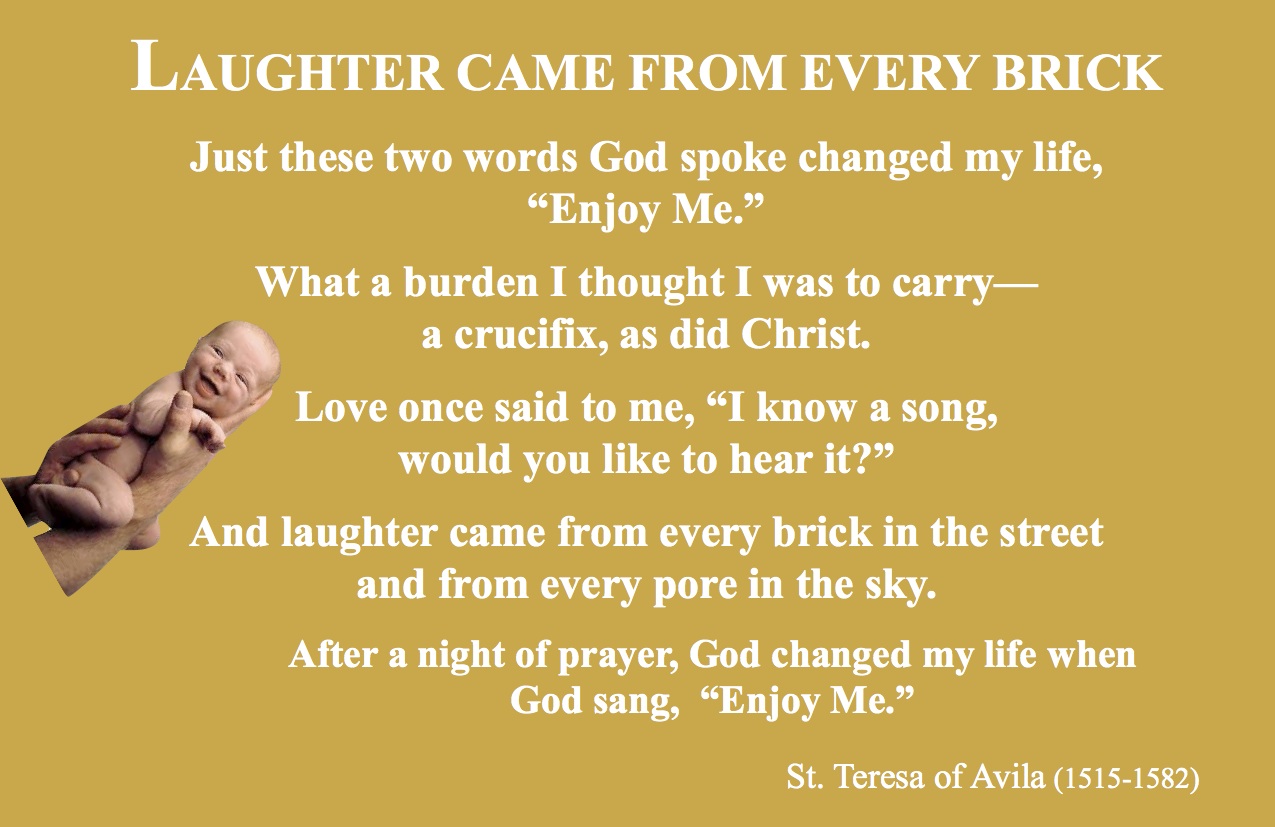
Today We Celebrate the Life and Witness of St. Teresa of Avila

An excerpt from “Love Poems From God” by Daniel Ladinsky,

(Penguin Compass, London: 2002)

(1515-1582)  “Teresa was born in Avila, a beautiful high mountain village of Spain.  She was one of thirteen children, three girls and ten boys, in a wealthy family.  The Spain in which Teresa grew up was permeated with 700 years of Arabian culture; the eradication of Arab power was followed by one of Spain’s darkest periods, the insanity of the Inquisitions, which, in the fourteenth century, along with other grievous deeds, forced mass conversions of Jews to Christianity.”

“Teresa was her father’s favourite child, and the most spirited.  Her mother died during childbirth when Teresa was thirteen, after which she had little supervision.  It is believed she had a lover at the age of fifteen, which caused her father to send her to a convent boarding school, only to see her return home two years later because of poor health.  When she was twenty-one, Teresa ran away from home to join a convent.  At that time many convents were more like hotels for women, allowing them a great deal more independence than they would be allowed at home, though after two years at the convent Teresa had a near-death experience that changed her life.  A spiritual awakening began in which she cultivated a system of meditation that sought quieting the mind to such an extent that God could then be heard speaking.  Over the next twenty years she experienced many mystical states but not until she was fifty did she begin the most far-reaching aspects of her life’s work.” Continue reading

Big Bang, Darwin, and Evolutionary Images of Divinity

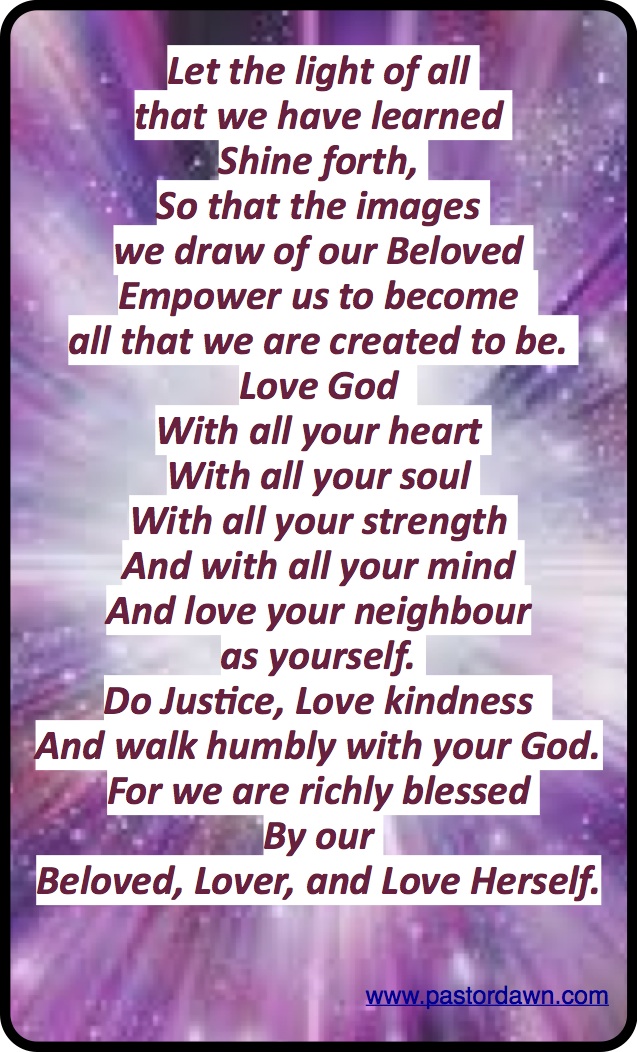
Benediction LightIn the words of our ancestors as they grappled to tell the story of the Divine Mystery we call God, it is written. “Then God spoke all these words, and said, “I AM YAHWEH who brought you out of the land of Egypt, out of the house of bondage. Do not worship any gods except me! Do not make for yourselves any carved mage or likeness of anything in heaven above or on the earth beneath or in the waters of the earth, and do not bow down to them or serve them! For I, YAHWEH, am a jealous God.” (Exodus 20:1-5)

Joan Chittister, a Roman Catholic nun and brilliant theologian, tells a story about a little girl named Katie who was a second-grader in one of the schools of Chittister’s community. One Friday during art class as the teacher roamed the aisles checking progress, she stopped at Katie’s desk and asked, “Well, Katie, what are you drawing?” “I am drawing a picture of God,” Katie said proudly. “Katie,” the teacher answered, “you can’t draw a picture of God. Nobody knows what God looks like.” Katie said, “They will when I’m finished.”

I never was much good at drawing, but like little Katie I to have tried my hand at creating an image of God. For me my image making really took off when I wasn’t much older than little Katie. I must have been about nine or ten years old when my dreams came true one Christmas morning and I became the proud owner of a microscope. At the time I was convinced that my microscope was the most sophisticated tool ever designed. It came in it’s own wooden box and I distinctly remember the metal clasp on that box had a small clasped that was designed to allow a pad lock to slip through so that the box could be safely secured from less sophisticated explorers like my little brother from opening it to reveal the splendor of a tool that could turn its owner into a scientist. Along with my microscope came a box of small glass slides, an eyedropper and a sample jar. My father explained to me that we could go to a local pond to collect our samples. Dad assured me that a small jar of pond-water would contain enough samples to keep me busy for days. Dad was absolutely correct and I spent many an afternoon squinting into my microscope, painstakingly adjusting the focus so that I could get just the right magnification to see the wonders of a miniature world of creatures I had never before even dreamed existed. I was an explorer of pond scum. I was a scientist, enthralled by the tiny little world, wondering in amazement a splendor of creation. I marveled at the tiny creatures that swam franticly in and out of my view. I sometimes pretended that I was their Queen and who with godlike powers could scoop them up out of their native pond home and deliver them to my royal laboratory and command them to dance for me. And dance they would, providing hours and hours of entertainment for me and in return I lavished such care and attention on their little world. Sadly, for reasons beyond my control, their little lives always came to an end after just a few days as the pond water became even too rancid for my little subjects. But I was a benevolent monarch and rather than flush their little worlds down the toilet, I would always travel back to the pond from which they came and with great dignity and more than a little ceremony dump the foul smelling evidence of their watery demise back into the waters of their birth. I remember thinking that God too must be just as dignified when He, back then it was definitely He, attended our funerals, for God had been watching over us in much the same way as I watched my little creatures. Continue reading

Who IS God? – Not One, Not Two – a sermon for Thanksgiving Sunday

Thankyou autumnA sermon for Thanksgiving inspired by Garrison Keillor and Joan Chittister; two of the best storytellers I know.

Let me tell you a classic Thanksgiving story created by the brilliant Garrison Keillor, which takes place on the outskirts of Lake Wobegon, where “All the women are smart. The men are good looking. And the children are above average.”

“It’s been a quiet week in Lake Wobegon.” Keillor’s old home town. “There was a holiday this last week and the return of the exiles. The exiles who come back to their home. Children who’d grown up and moved away and had families, and learned how to complicate their lives in all sorts of new and interesting ways. They come back every year to a little town so much the same it’s hard to look at it and not believe you’re still twelve years old and that’s just how some of the returning children behaved too, when they came back.

A lot of them drive up from the cities with their families and they make a last stop at the Cross Roads Lounge, about ten miles down the road, as they come up over the rise and down into town, the last drags are taken on a lot of last cigarettes, and the first of a lot of breath mints are popped into their mouths and the last warnings are issued to their children, the grandchildren, in the back seat, not to talk about you know what, in front of grandpa and grandma, and remember that at grandpa and grandma’s house before we eat grandpa bows his head and we’re all supposed to be quiet that’s called asking the blessing or saying grace and grandpa is talking to God. So you remember to be quiet then and close your eyes and don’t say a word.

One of the Olsen boys was giving this speech to his children coming into town on Wednesday. He explained all of the rules and was surprised to hear a little voice pipe up from the backseat. And his daughter said, “Who is God daddy?”

He said, “Jesus Christ! What am I gonna do now?” “Two blocks from home! It’s a little late to get this kid shined up for the parents so she looks Lutheran you know.”
Continue reading

Teach Us to Pray – a recording of our second class

Below you will find a recording of our second class. The video of the Keynote presentation includes the Youtube video featuring Marcus Borg that was shown during the class together with an audio recording of the class (the audio is stilted in places but if you wait but a moment it will sync with the presentation). Or, below the video you will find an audio recording of the class.

The third class in this series is on Sunday Oct. 19 and will be posted on Oct. 21

Audio recording of the class:


Teach Us to Pray – a recording of our first class

Below you will find a recording of our first class.  The video of the Keynote presentation includes the Youtube videos by John Shelby Spong and Fred Plumer that were shown during the class together with an audio recording of the class (the audio is stilted in places but if you wait but a moment it will sync with the presentation). Or, below the video you will find an audio recording of the class.

Unedited audio recording of the class.


God IS a River: a sermon for River Sunday

river flow2Today is the Fourth Sunday of the Season of Creation which celebrates River Sunday Our Readings included Ezekiel 47:6-12 and John 7:37-39 and a Contemporary Reflection in the form of a video recording of God IS a River by Peter Mayer.  You can find the texts here 

Lister to the sermon here or click here

Here’s the  video was played between the

reading of the Hebrew Scriptures and the Gospel 

CATALYZING ACTION – Disruption

Climate Summit 2014On Monday the United Nations will host Climate Summit 2014: Catalyzing Action. Tomorrow to kick off a week of climate events, The People’s Climate March will take place in Manhattan. Organizers hope to draw 100,000 marchers to participate in “the largest climate march in history.” Those of us who can’t join the march in Manhattan have work to do in our own communities. Tomorrow, many churches will continue their celebration of the Season of Creation with an emphasis on “The Wilderness.” Let our celebrations contribute to the “Catalyzing Action!” Disruption – a film by Kelly Nyks and Jared P. Scott is a documentary that outlines the dangers of failing to act. 

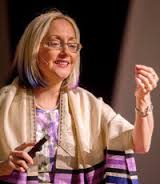
The Common Heart: Spiritual Paradigm Shift: Rabbi Chava Bahle

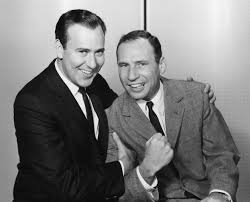
Chava Bahle pastorDawnIn my sermon yesterday, I recalled Carl Reiner and Mel Brooks’ comedy routine about the 2000 Year-old Man. This morning a blog follower sent me the link to Rabbi Chava Bahle’s TED talk in which she too recalls the same comedy routine. What a delight to discover such a splendid spiritual paradigm shifter!!! Sometimes those of us involved in a particular religious tradition fail to raise our heads and look around to the splendidReiner & Brooks pastorDawn work being done in other religious traditions. Rabbi Bahle speaks of “Deep Ecumenism: honouring our own traditions while comfortably being inspired by the truths others’ as well” and insists that “this game-changing is the sacred technology that will change every single one of our institutions.”

Recovering the Sacredness of the Earth: Matthew Fox

Creation“We are the first species on this planet that can choose not to become extinct. Of course we haven’t made that decision yet.”

For those of us following the lectionary readings for The Season of Creation, this Sunday is “Land Sunday.” Matthew Fox’s challenge for to us to “wake up” provides much inspiration to develop worship that shakes us from our sleep and empowers us to work together to develop harmonious relationships with creation that will foster healing of the Earth.


Rebooting Religion for Climate Action – Michael Dowd

care Earth pastorDawnAt Holy Cross, we are currently celebrating The Season of Creation. As we ponder Christianity’s share of the responsibility for the abuse of the Earth, it is important to remember that we have a role to play in the protection of the planet. Evolutionary Christian Michael Dowd (Thank God for Evolution) insists that Christians need to remember our call to be a blessing to humanity. In this video, recorded Aug 25, 2014, Dowd insists that theology must include ecology and challenges us to move forward in ways that foster right-relationship with all of Creation. 

As humanity evolves, may it evolve in ways that embody Divine compassion!

Krista Tippett’s TED talk from 2010 provides an “important linguistic resurrection” of the word compassion. Tippett sees compassion as kindness, curiosity, empathy, forgiveness and reconciliation, the simple act of presence, a willingness to see beauty in the other, and “for the religious compassion also brings us into the territory of ‘mystery’ encouraging us to see not just beauty but perhaps also to look for the face of God in the moment of suffering, in the face of a stranger, in the face of the vibrant religious other.”  

womblove pastorDawnIn his book “Meeting Jesus AGAIN for the First Time”, New Testament scholar Marcus Borg writes about the Hebrew word for compassion ‘rakham’ – “The Hebrew word for ‘compassion’ whose singular form means ‘womb’ is often used of God in the Old Testament. It is translated as ‘merciful’ in the characterization of God as ‘gracious and merciful.’ It is present in that quite wonderful expression from the King James Bible the ‘tender mercies’ of God. It is found
in a passage in Jeremiah that has been translated as follows:

“Thus says Yahweh:
In Ephraim (Israel) my dear son? my darling child?
For the more I speak of him,
the more I do remember him.
Therefore my womb trembles for him;
I will truly show motherly-compassion upon him.

“Thus the Hebrew Bible speaks frequently of God as compassionate, with resonances of ‘womb’ close at hand.

“And so Jesus’ statement ‘Be compassionate as God is compassionate’ is rooted in the Jewish tradition. As an image for the central quality of God, it is striking, To say that God is compassionate is to say that God is ‘like a womb,’ is ‘womblike,’ or, to coin a word that captures the flavor of the original Hebrew, ‘wombish.’ What does it suggest to say that God is like a womb? Metaphoric and evocative, the phrase and its associative image provocatively suggest a number of connotations. Like a womb, God is the one who gives birth to us — the mother who gives birth to us. As a mother loves the children of her womb and feels for the children of her womb, so God loves us and feels for us, for all of her children. In its sense of ‘like a womb,’ compassionate has nuances of giving life, nourishing, caring, perhaps embracing and encompassing. For Jesus, this is what God is like.

“And, to complete the imitatio dei, to ‘be compassionate as God is compassionate’ is to be like a womb as God is like a womb. It is to feel as God feels and to act as God acts: in a life-giving and nourishing way. ‘To be compassionate’ is what is meant in the New Testament by the somewhat more abstract command ‘to love.’ According to Jesus, compassion is to be the central quality of a life faithful to God the compassionate one.”

Tippett’s storytelling helps us to connect with the divine image which exists within our flawed humanity. She insists that the flaws we see in compassionate people liberates us from our modern obsession with perfection and gives us the courage to be compassionate. Tippett paraphrases Albert Einstein to remind us that, “the future of humanity needs this technology as much as it needs all the others that have now connected us and set before us the terrifying and wondrous possibility of actually becoming one human race.”

Among progressive-christians the word ‘panentheism” – literally “all in god” is used to express the notion that, all is in god and god is in all. One way of understanding panentheisim is to expand on Acts 17:28 “In God we live and move and have our being” with a blessing I often use when I lead worship: “God dwells in, with, through, and beyond us.” To imagine the Divine Womb-Love in which we live and move and have our being dwelling in, with, through, and beyond us provides a compelling way of living into our Divine/Human compassionate-selves.   As humanity evolves, may it evolve in ways that embody Divine compassion!

Divine Feminine and the Sacred Masculine: Calming Our Reptilian Brains – Matthew Fox

Divine Feminine Sacred MasculineI am currently enjoying Matthew Fox’s new book, Meister Eckhart: A Mystic-Warrior for Our Times in which Fox puts Eckhart in conversation with an engaging collection of mystic-wariors. So, it is not surprising that in this short video, I hear echoes of Eckhart.


Who are the Canaanites and Why Should We Care? – Pentecost 10A: a dialogue sermon

Palestinian womanSummer Sundays are laid back at Holy Cross and so we engaged in a dialogue sermon. The Gospel reading from (Matthew 14:21-28) about Jesus’ encounter with the Canaanite woman begged the question inspired by Marcus Borg, “Why did the author of the Gospel According to Matthew write this story the way he did and what can we learn from it?” 

Our readings also included:

Hebrew Scriptures:  Isaiah 56:1, 6-8

Contemporary Reading: from Dorothee Soelle  Quoted from Matthew Fox’s book “Christian Mystics”, New World Library, 2011

“If Jesus of Nazareth was the poor man from Galilee who was tortured to death, then Christ is that which cannot be destroyed, which came into the world with him and lives through us in him. When I say Christ, I always think also of Francis of Assisi and Hildegard of Bingen and Martin Luther King, Jr. and of Ita Ford, the American nun who was murdered in El Salvador – as well as all resistance fighters who are sitting in prison today. Christ is a name which for me expresses solidarity, hence suffering with, struggling with. Christ is the mysterious power which was in Jesus and which continues on and sometimes makes us into “fools in Christ,” who without hope of success and without any objective, share life with others.”

Listen to the dialogue sermon here:

Returning to the blog after a summer break!

After a splendid summer break it’s time to return to regular posting. I begin with a Friendship Blessing from John O’Donohue

Friendship Blessing pastorDawn

Celtic Night Prayer

Video: Halianna Burhans: Music:  Rev. Will Burhans – Weight of Grace Text: John Philip Newell, Celtic Benediction: Morning and Night Prayer