Facing Our Demons – a sermon on Matthew 4:1-11, Lent 1A

1100Listen to the sermon HERE

A long time ago, when I was just a young woman, I think I was about 22 or 23, still young enough to believe that all the answers to all my questions were out there somewhere, just waiting for me to discover. I was a serious young woman full of serious questions, always pondering the meanings of thins – big things like life and death, goodness and evil, love and hate, sickness and health, sin and forgiveness, God and no-god. I truly believed that if I actually applied myself to my questions, I would be able to discover the answers. It was the pursuit of particular answers that lead me into the wilderness of the desert.

Now, it may come as a surprise to some of you, but there are real deserts in British Columbia. You will discover one of those deserts as you travel between Ashcroft down to Merritt.  They’ve improved the roads since then, but back in the day that particular route was quite the challenge. Mind you, it didn’t help that I was driving an old beat up 1969 Austin 1100, that had no business being on mountain roads, let alone mountain roads that wound their way through a desert. Now if you don’t know what an Austin 1100 looks like, picture an old Austin Mini; an 1100 is only slightly bigger than an Austin Mini, and my old 1100 was purchased for the grand sum of $300.00. About the only thing this car had going for it was my faith in it to take me places.

 On this trip, I had loaded my little car down with all sorts of camping equipment along with several plastic milk jugs that held a gallon of water each, because the car’s radiator had a nasty habit of overheating. The woman that I am know, looks back on the young woman that I was, and I can’t help wondering what possessed me to head out into the desert in that stupid little car. I can almost see myself sitting on the side of the road waiting for the radiator to cool down, so that I could risk loosening the radiator cap, to fill it up with cool water so that I could travel another hour or so, before it over-heated again.

To say that I was young and foolish, would be an understatement. But I was also, adventurous and inquisitive. I had traveled into the wilderness to do some thinking. I needed to find some answers. I had some decisions to make; decisions, that at the time, felt like life and death. I truly believed that some time away by myself would guarantee me the kind of peace and quiet I needed to discover the answers to my questions.

Sitting there, on a rock, hoping against hope, that the 95 degree heat from the blazing sun would be enough to guarantee that any rattle snacks would remain tucked away in some distant shade, I couldn’t believe that I’d been driving for two hours without seeing another car on the road. I was out there in the middle of nowhere, which is exactly where I had intended to be. I had travelled into the wilderness to find a place where there were no distractions, so that I could apply myself to finding an answer that I desperately needed. You see, some stuff had happened in my life; stuff that had lead me to doubt the god that over the years I had come to love.

Looking back, I think that I went out into the wilderness looking for a sign; a sign that God existed. My faith in the God who lives out there somewhere, who from time to time hears my prayer and decides to intervene in my life, my faith in that God, had been fairly strong, right up to the point where some really tough stuff started to happen to some folks I cared a great deal about, and no matter how long or how hard I prayed, the great Sky God that I had been taught to worship, simply refused to show himself. So, I decided to take a page or two out of the bible and follow Jesus right out into the wilderness to see if God would show up. Sitting there on a rock, roasting in the hot sun, as the tumble-weeds tumbled by, I wondered what I would do, if I discovered that God wasn’t really there. What if it was all just wishful thinking? I desperately wanted to meet the god that I’d been taught to believe in to be there in the wilderness. Isn’t that why Jesus wandered out into the wilderness of the desert? Surely, he didn’t go out there to meet the devil? Or did he? Maybe Jesus went out into the wilderness to meet his demons.

Over the years, I’ve learned enough about the anonymous  gospel storytellers to know that their stories are more than just history. I’ve learned to read beyond the words that have been handed down to us, to ponder the multi-layered texture of meanings that lie hidden waiting to be discovered. The storytellers’ careful crafting of their tale of Jesus time in the wilderness uses images and illusions that harken back to earlier stories of Moses leading the people of Israel into the wilderness where they spent not 40 days, but 40 years forming themselves into the nation that would go on to inhabit the promised land. In the wilderness, Jesus encountered his own demons. I can well imagine Jesus contemplating his own future and realizing his own desires for power were actual temptations that would distract him from his overriding desire to embody a new way of being in the world. A quest for power would have seen Jesus giving the people what they wanted a leader who could feed them with bread and everything that bread represents, wealth and power; the kind of power that would enable them to fight their Roman oppressors. The temptation to be the kind of messiah that the people wanted was Jesus’ temptation.

In the wilderness, alone with his desires and temptations Jesus fought his personal demons. According to the gospel storytellers, Jesus didn’t conquer his demons, “The Devil awaited another opportunity.” As the storytellers follow Jesus to Jerusalem and beyond, the temptation to forsake the new way of being in the world that Jesus embodied, in favour of being the kind of messiah that the people wanted continues to haunt Jesus. Jesus steadfastly refuses to take the mantle of power that so many would have handed to him the power to form an army the likes of King David, to rise up and violently resist the tyranny of Rome. As tempting as it may have been for Jesus to become the people’s messiah, Jesus summons up the courage to be a new kind of messiah. Jesus chooses to embody a posture of non-violent resistance to evil even though he knows full well that such a posture against the Romans could get him killed. Jesus refuses to give into his fears, trusting that even death cannot defeat the LOVE that he chooses to embody. Continue reading

We Don’t Know What We Don’t Know: a sermon for Lent 1A

Sky's Sheets

Readings from Teresa of Avila can be found in the Worship Bulletin here

Listen to the sermon 

During the season of Lent we are invited to follow Jesus on a journey out into the wilderness. Lent is a time to leave behind the safe and familiar and journey out into the wilderness of the unknown. The wilderness can be a frightening place. Unknowing is not a posture we like to adopt. The temptation for us sentient thinking beings is to fill the wilderness void of unknowing with words, ideas and stories that both comfort us and help us to deny our state of unknowing. But our journey, whether we like it or not is the kind of journey where the destination itself is not known and so the wilderness places that we encounter along the way can create in us the kind of fears that cause us to deny reality.

Earlier this week some of us gathered in this sanctuary for Ash Wednesday, the day that marks the beginning of Lent; the beginning of our journey into the wilderness. One of the things we do on Ash Wednesday is to remind ourselves that we are dust and to dust we shall return. In other words we were born and we shall die. This part of the journey will end for all of us in death and there is so much about death that we do not know and that not knowing can fascinate us, it can infuriate us, and it can frighten us.

Sometimes this not knowing can frighten us so much that we deny the reality that in the end death comes to us all. When death does make its presence known to us, we find ourselves tempted to deny our unknowing with ideas about what will happen to us when we die; ideas that some of us insist must be believed. We’ve crafted those ideas about what will happen to us when we die into all sorts of doctrines and dogmas that we’ve imbued with the power to determine how we live, before we die. You know if we believe and we behave, then when we die we will be rewarded or if we don’t believe and we don’t behave when we die we will be punished. The temptation is to believe that these ideas, doctrines, dogmas, beliefs, and behaviors can save us. The reality is that we simply don’t know what is going to happen to us when we die.

A while back, I was asked to visit a woman who’d been raised to believe that these ideas, doctrines, dogmas, beliefs, and behaviours could save her from her fears and anxieties about her eventual demise. For the purposes of this sermon, I’m going to call this woman Grace, not because that’s her real name, but because my encounters with her were so grace-filled that I know whenever I think of her I shall always remember how full of grace this life of ours can be. I was summoned to speak to Grace because she’d attended a baptism here at Holy Cross and based on what she heard that day, she believed that I would be a good person to help her drive away her fears about dying. Grace was in her early eighties and she had been raised in the Lutheran Church, baptized and confirmed in the Lutheran Church. But it had been quite a few years since she’d attended church on a regular basis; just the odd, baptism, wedding or funeral brought her to church these days. Faced with her own mortality, Grace wanted to get a few things straightened out before she died. Continue reading

On Ash Wednesday, Let Us Revel in the Knowledge that We are Dust and to Dust We Shall Return

Ash Wed. 2014 Mortality

On Ash Wednesday, we dare to speak the truth. We speak the truth not in the refreshing light of the morning but in the cold darkness of a winter’s night. We are dust and to dust we shall return. We will die. We are mortal beings and so our lives will end. Our culture has taught us to deny death. Even our funerals have become celebrations of life. But life without the reality of death is lived cheaply, shallowly, in a half-sleep always pushing away and denying reality. So, on Ash Wednesday let us revel in the knowledge that we are dust and to dust we shall return. Revel in this knowledge because it liberates us!

On Ash Wednesday, the realty that we are part of something so much bigger than ourselves is born out in the knowledge that we are stardust, elements of the universe molded together over eons, molded together by a force bigger than we can even begin to imagine, a force we call God, whom we have come to know is LOVE. LOVE breathed into the timeless elements and from the dust our ancestors emerged. Each one of us lives and breathes and has our being as a result of the confluence of so many miracles we shall never be able to count. The LOVE who is God lives and breathes in with through and beyond us.

I have only words to describe the brilliant beings that each of you are. The splendor of what has emerged from the dust and what shall return to the dust is magnificent. That magnificence is made all the more spectacular with the knowledge that it is fleeting. The knowledge that we are dust and to dust we shall return liberates us from delusions of grandeur for we know that this spectacular, magnificent, life that we are currently experiencing will end and we shall die. There’s an Irish expression that I have come to love, it translates from the Gaelic into something like: “We’ll be lying down in the earth for about fifteen million years and we have only a short time here; a brief collection of moments. If that isn’t motivation for each and every one of us to live everything that is within us, then perhaps we have already died.

So, much of what passes for life in the 21st century is merely a distraction from the reality that we shall die. Preoccupied by our distractions we forget that we are part of something so much bigger than our minds can grasp. Each one of us was billions and billions and billions of years in the making and each and every molecule of who and what we are will continue to be for billions and billions and billions of years to come.

Who and what we are is beyond our ability to comprehend. We are part of something so much bigger than we can imagine. This small part of that reality this little piece that we call our life is a precious part of reality. If there is a sin that we must all confess, it is the sin of a life unlived. Our overwhelming fear of the unknown causes so many of us to settle for less. We cannot know what or how eternity shall unfold so we settle for something smaller, something more manageable and we live within the confines of what makes us feel safe. We dare not risk the temptation to wonder at the enormous reality of which we are all a part. We dare not begin to imagine how infinitesimal our time in this part of reality shall be. So, we settle for less, less wondering, less imagining, less dreaming, less reality, less life, and yes even less eternity.

On Ash Wednesday, the liberating knowledge that none of the distractions that make us feel safe can separate us from the truth that from dust we came and to dust we shall return, ought to at the very least empower us to live fully, here and now. On Ash Wednesday, we sit with the power of our own death to return us to the dust from whence we came. We spend a few moments mourning the missed opportunities, the failures and the pain and we talk a long, slow, deep, cleansing breath; a breath that reminds us of the first breath, the ruach of which our ancestors spoke, the breath, wind, spirit, that first breathed life into our dust-formed self; the breath, wind, spirit, that breathes even now, in, with, through, and beyond us, and we trust that that breath, wind, spirit, ruach comes from the Reality that lies at the very heart of all that is, the reality that we call God, the reality that we know is LOVE.

In and out we breathe, trusting that the One who is LOVE will breath in, with, through, and beyond us so that when our life here comes to its inevitable end, all that lies Beyond the Beyond, and Beyond that also will receive our dusty selves into the LOVE which is God.

Such freedom. Remember that we are dust and to dust we shall return. Such liberation. Let us live fully, here and now, savoring each and every moment of this wondrous life. Let us not settle for anything less than the magnitude of each and every moment. For we are dust, molded and shaped by LOVE, for LOVE, and to the dust we shall return. We are part of something so much greater than we can even begin to imagine. We are wonderfully and fearfully made, fit for life, here and now. We shall all die, return to the dust and there are billions and billions and billions of years to come. Our part in those years is a mystery; a mystery beyond our ability to begin to imagine.

Embrace eternity if you dare. Remember that we are dust and to dust we shall return and rejoice in the freedom that the knowledge of our death brings; the freedom to live fully here and now. Let it be so, dear friends. Let it be so!

Ash Wednesday homilies:

Evolution – There’s No Going Back here

Embracing Mortality: a reflection here

Stardust here

We Are ONE here


Twinkle, Twinkle, Little Star, How I Wonder What You Are? – reflecting on Transfiguration

night-sky

Readings:  Exodus 32:1-6, Matthew 17:1-9. Listen to the sermon here

Monday, Tuesday, Wednesday, and Thursday of this week, I found myself studying the transfiguration of Jesus. So much has been written and said about this strange little story given to us by the early followers of Jesus. I was planning to do what I’ve done here on many Transfiguration Sundays and preach to you about the power of myth to open us to new ways of understanding who and what Jesus embodies. Then two things happened on Thursday that transfigured my own images of the transfiguration of Jesus.

Where once my images were shaped by the mythological language used by the crafters of the story of Jesus’ transfiguration, the experiences I had on Thursday have transfigured Jesus in ways that reveal the glory of God beyond the pages of scripture and into the realms of the cosmos and beyond. The first thing that happened on Thursday, happened not just to me but to the whole world.

You see on Thursday, NASA, announced, and I quote: “the discovery of seven worlds orbiting a small, cool star some 40 light-years away, all of them in the ballpark of our home planet in terms of their heft (mass) and size (diameter). Three of the planets reside in the “habitable zone” around their star, TRAPPIST-1, where calculations suggest that conditions might be right for liquid water to exist on their surfaces—though follow-up observations are needed to be sure. All seven are early ambassadors of a new generation of planet-hunting targets.”

NASA’s announcement was accompanied by an artist’s rendition of what has taken place. Watch for yourselves…

As I struggled to wrap my brain around the reality of what has been discovered, our little grand-daughters came for a sleepover.Audrey is three and Evelyn is two and together they are a force to be reckoned with. I’d almost forgotten all about Trappist 1 when I found myself leaning over little Evelyn’s travel cot as she began to sing. It took a moment or two before I recognized her tentative little voice attempt to capture the tune. It didn’t take too long for me to join her: “Twinkle, Twinkle, little star how I wonder what you are. Up above the sky so high, Like a diamond in the sky. Twinkle, twinkle, little star, how I wonder what you are. In a darkened room, I stroked my granddaughter’s cheek and I was transported to a long-ago darkness that still overwhelms me. The memory of a long-ago night, far, far, far, away, in an alpine meadow at the foot of the Black Tusk mountain, near Whistler.   After a long day’s hike up the Black Tusk trail, we’d camped out in Taylor Meadows, a spectacular spot located more than 7,000 feet above sea-level.  Twinkle, twinkle, little star, evoked an intense memory of staring into the night sky, mesmerized by the sight of more than my mind could comprehend.

Darkness, darkness, like you never experience near the city. Darkness so deep and so vast. Darkness full of twinkling lights. Twinkle, twinkle, little star. How I wonder what you are. Vast, immensities, stretching, beyond, the beyond, and beyond that also. 40 light years from here. Continue reading

We Are ONE: Deep Within the MYSTERY We Call GOD

we-are-oneReadings: Ephesians 4:1-6; 1Corinthians 12:12-27; Acts 17:22-29

Between the readings we were treated to a performance of Neil Bertram’s  “Theory of Relativity” performed by Amelia DePiero, Rachel Miller, Linda Condy, Gary Curran, and Kyle Merrithew, accompanied by Marney Curran. This dynamic piece set the tone for the sermon’s exploration of MYSTERY.

Listen to the sermon Here

Theory of Relativity by Neil Bertram – lyrics

“There is one body and one Spirit,” “The body is one,” “God is the One who gives everyone life, breath-everything.” These words attributed to the Apostle Paul in the New Testament echo an even more ancient notion of Oneness. For thousands and thousands of years, in various cultures and religions, humans have shared an intuitive sense of oneness. Indeed, it could be said that this innate notion that our individual stories are part of something bigger than ourselves lives in each one of us.

My own relationship with this idea of “Oneness” with all that is and ever shall be dates back not to the bible, but rather to some old Trixie Belden mysteries. As a little girl, I remember devouring Trixie Belden mysteries. Trixie Belden, Nancy Drew, and even the Hardy Boys gave way to Agatha Christie mysteries, followed by Sir Arthur Conan Doyle’s Sherlock Holmes mysteries, giving way to John la Carre mysteries of international intrigue. You just can’t beat a good P.D. James murder mystery.  These days I don’t have a lot of time for mystery novels so I satisfy my lust for mystery with great British TV dramas. American TV mysteries tend to be too easy to solve. Nobody does murder like the Brits, so whether it’s Midsummer Murders, Broadchurch, Inspector Morse, Wallander, or the latest incarnation of Sherlock, count me in. I like nothing better than a TV mystery that you can’t figure out until the last few minutes of the show when all is revealed. Clever, ingenious, solutions, to devious mysteries that keep you guessing, lead you up various garden paths, and delight you with one wrong turn after another, only to dumbfound you with the final reveal; now that’s entertainment. Continue reading

Jesus, Gandhi, and MLK – A Very Salty Trio: a sermon for Epiphany 5A

Gandhi on Sermon on the Mt copy

Rereading this sermon from 2014, I am struck by the power of Jesus, Gandhi, and MLK’s saltiness to address our current need for seasoning! In the wake of the tragedy at the Islamic Cultural Centre in Quebec City and 45’s racist travel ban, we must heed Jesus call to be salt! Sunday’s readings included Matthew 5:1-12, “What Jesus Means to Me by Mahatma Gandhi (found here) and Matthew 5:13-16. The full text of the Sermon by Dr. Martin Luther King Jr. can be found here. 

Listen to the sermon here:

Like most people my age, I remember the days when families had only one television set and when I was just a kid, it was a black and white television. When I was eleven or twelve, we got one of those new-fangled colour TV sets. Back then kids functioned as remote controls; Mom and Dad decided what we watched. How else would I have seen all those grainy black and white documentaries? My parents were hooked on history and as a result my brother and I were introduced to some pretty incredible characters by way of those old grainy black and white films Many of the documentaries were about the majesty of the British Empire that dominated much of the world in those old grainy days. I can still remember being impressed by a little man, wearing what looked like a diaper and causing quite a commotion wandering around Britain and talking about home rule. I remember how excited my father was when the film showed this little fellow Gandhi talking to some striking Welsh miners, encouraging them in their fight against the mine-owners. It was the beginning of a long love affair with a giant of a man.

Back then, I loved reading biographies so the next time I was in the library I picked up three biographies about Gandhi and I’ve continued to read and watch whatever I can get my hands on about the life and teachings of Mohandis K. Gandhi. It was reading about Gandhi that caused me to take my first serious look at Jesus’ Sermon on the Mount. Up until then, I didn’t know much about the teachings of Jesus. We didn’t go to church, so what I knew about Jesus I’d picked up by osmosis; growing up in a Christian culture meant, I knew who Jesus was, but very little of what he taught. But reading about Gandhi, I discovered just how much of an influence Jesus had been on Gandhi’s philosophy of non-violence. I knew that Gandhi’s methods had brought the British Empire to its knees, so I began to wonder about Jesus’ methods. You’ve got to remember when I was a kid, the Vietnam war was raging and the world was under constant threat of mutual annihilation as the American and Soviet empires threatened to blow us all into oblivion. Non-violence was more than just an intriguing idea; back then non-violence sounded like a life-line.

And so it was, that my interest in the life and teachings of a non-violent revolutionary from India, sent me scurrying to find the little Bible that I’d received as a gift from the Gideons when I was in grade five so that I could read Jesus’ sermon on the mount. I’d read that Gandhi had said that, if all he knew of Christianity was the Sermon on the Mount he himself would be a Christian. I had been told that we were Christians, but other than Christmas and Easter, I had no real evidence of my Christianity.

It has been said that Gandhi read both the Sermon on the Mount and Chapter Two of the Bhagavad Gita every day. He is reported to have said that “Much of what passes for Christianity today is a negation of the sermon on the Mount.” Gandhi asked, “Isn’t it is more important to do what Jesus wants us to do than to call him “Lord, Lord?”

As a faithful Hindu, Gandhi was unwilling to accept Christian dogma, but in Jesus, Gandhi recognized a great prophet; a prophet who pointed beyond himself to a world in which non-violence was more than just a dream, non-violence was necessary in order that men and women could live together in peace in order that they might live in union with God. In the teachings of Jesus, Gandhi discovered something that those of us who claim to be followers of Jesus so often miss or deny. The church, the very institution that Jesus’ teachings gave rise to, has for centuries left the salt out of Jesus’ teachings and offered up a flavorless dogmatic dish aimed at pleasing the palates of the powers of Empire to which it has been tied for centuries. As a result, the followers of Jesus all too often forget Jesus call to be the salt of the earth. Sometimes it takes a stranger to remind us of the treasures we possess. Continue reading

Wear Your Baptism in Ways that Others Might See a Visible Means of Grace in You – a sermon on Baptism

img_6946

Readings:  Isaiah 42:1-9 and Matthew 3:13-17

Listen to the sermon here

A Blessing for the New Year (John O’Donohue)

The art of blessing is often neglected. The birth of a New Year calls forth the desire in us to bestow a blessing upon those we love. Several years ago, John O”Donohue, one of my favorite Irish poet’s created a New Year’s blessing for his mother entitled Beannacht-for Josie. It is a blessing of superior quality. And so, on this New Year’s Eve, may you all receive this beannacht with my added blessing for a peace-filled New Year in which the God in whom all of creation is held, might find full expression in your miraculous life! 

Beannacht John O'Donohue pastorDawn.pages

It’s time to reclaim religion: Rabbi Sharon Brous

sharon-brous“At a moment when the world seems to be spinning out of control, religion might feel irrelevant — or like part of the problem. But Rabbi Sharon Brous believes we can reinvent religion to meet the needs of modern life. In this impassioned talk, Brous shares four principles of a revitalized religious practice and offers faith of all kinds as a hopeful counter-narrative to the numbing realities of violence, extremism and pessimism.”


Christ is Born In You – Christmas Eve sermon

christmas-eve-2016Merry Christmas one and ALL!!! Here’s the Christmas Eve sermon based on the Gospel readings from Luke 1:26-38; 1:39-55; 2:1-20. I cannot remember where I first heard the story I tell in the sermon. I suspect it is from some sermon I heard long ago because the outline is on a fading piece of foolscap in my barely legible handwriting. I did a quick search and could only discover the was a version of the story in a sermon by Janis B. Scott who does not site her source. My retelling/elaboration of the story is, I hope, a reflection of the MYSTERY that is once again born on this holy night.

Listen to the sermon here

Sermons for Christmas Eve/Day

homeless-nativity

Click on these links for some of the sermons I have preached on Christmas Eve

Preaching Christmas Eve in the Wake of New Testament Scholarship

Shattered Angel: an Imperfect Christmas Story

Mary’s Story  (also found in Christmas Stories – just scroll down)

Living Nativity

Keeping Christmas Well

The Nativity: A Parable So Simple a Child Can Understand It

The Power of LOVE Who Lives In Us

Cheap, Small, and Plastic: a Christmas Eve Sermon for Progressive Christians

Tell Us About God. We Have Almost Forgotten

Christ Is Born Anew


Like All Myths, the Stories of Jesus’ Birth are True for Myths Only Become Untrue When they are Presented as Facts – a sermon for the Fourth Sunday in Advent

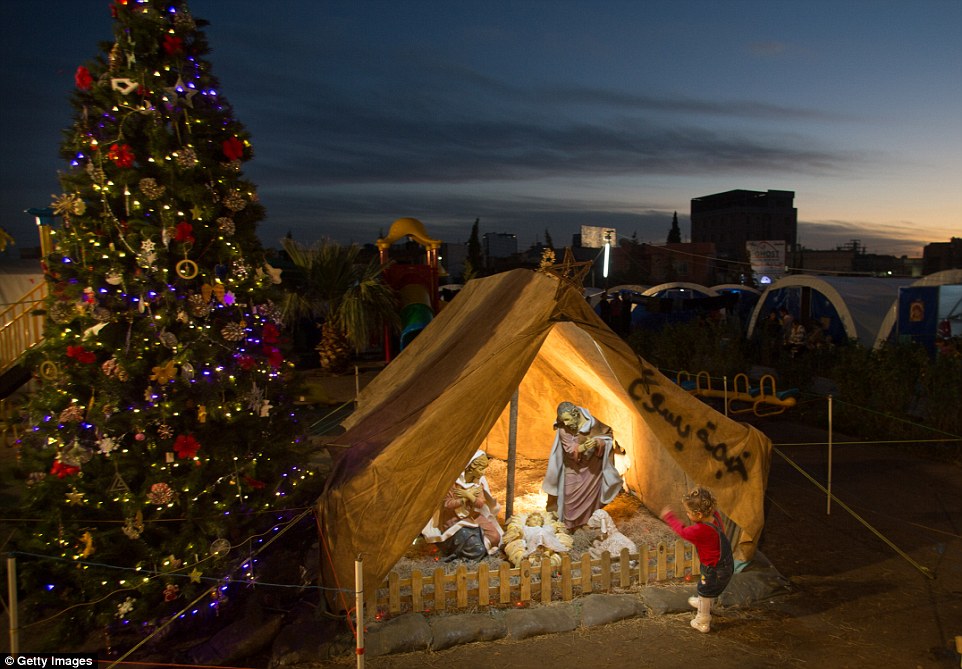
refugee-nativity-erbile

Readings from the first chapter of Luke included the stories of the Angel Gabriel’s Annunciation to Mary, Mary’s Visitation to Elizabeth and Mary’s radical song – The Magnificat.   Listen to the sermon here

Sermons for the Fourth Sunday in Advent

women Matthew1

On the Fourth Sunday of Advent we try to reach beyond the lectionary to the folks who won’t make it to church on Christmas Eve or on Christmas morning by forgoing the prescribed readings in favour of reading the entire Birth Narrative.

Click on these links to find  sermons I have preached on Advent 4

Keeping Christmas Well: a Christmas Resurrection Story

The Greatest Birth Story Ever???

The Nativity: A Parable So Simple a Child Can Understand It!

Mary and Elizabeth: Visitation or Escape 

Fear Not for the Progressive Grinch Who Stole Christmas Does Indeed Have a Heart

“The Force Be With You” or “Live Long and Prosper”


When I Grow Too Old to Dream – a sermon on Matthew 1:18-25

vera-lynn

Readings include: Isaiah 35:1-10, Luke 1:46-55, Matthew 1:18-25

Listen to the sermon here

Enjoy Vera Lynn’s rendition

Advent Awake! – a sermon for Advent 1A

advent-awakeThis sermon is inspired by the work of the Reverend J. Edwin Bacon Jr. whose retelling of the Rev. Dr. Martin Luther King Jr.’s radical sermon “Remaining Awake Through a Great Revolution” inspires my own musings. Bacon is one of my favourite preachers and it is a privilege to be able to adapt and expand upon his work! Our readings included: “The Star Within” a creation story by Dr. Paula Lehman & Rev. Sarah Griffith, Matthew 1:1-17; and Matthew 24:36-44. Listen to the sermon here

What Needs to Die So that Christ May Be Born In You? a sermon for Advent 1A

window4This sermon was preached at Holy Cross Lutheran November 28, 2010, sadly racism continues to live on in ways that threaten so many lives and the question of this sermon seems even more urgent today. The readings included Isaiah 2:1-5, “Amazing Peace” by Maya Angelou, and Matthew 24:36-44, during the sermon I read from the Qur’an Sura 19:1-30 which you can find by following the link in the body of the sermon.

While I was studying for an undergraduate degree in Religious Studies at the University of British Columbia, I worked as a volunteer women’s center. Because I was studying the religions of the world, women who were being persecuted as a result of religious belief were often referred to me.

I’d been working with a young woman who was being abused by her father and brothers because they felt that she was adopting Canadian ways and thereby abandoning Islam.  I remember visiting her in the hospital emergency room after her brothers had beaten her nearly to death. She told me that the last thing her brother said to her before tossing her out of the back of a van, was that she should consider herself lucky that they had talked their father into letting them beat her, instead of doing what he had ordered in the first place which was to kill her. I sat at her bedside wondering how a brother could do such a thing to his sister. I decided that they must be religious fanatics and I wondered how any religion could drive a father to seek the death of his own daughter.

The next morning I didn’t feel much like going to my Religious Studies Methodology Seminar. The Seminar was comprised of 7 students from various faith traditions along with 4 atheists and 3 agnostics. Together we studied the various methods of studying religion. We were about to embark on the phenomenological approach to the study of religion. “The Phenomenology of Religion” is a fancy academic way of describing the study of actual religious experiences of the divine. As we stumbled to our seats the professor announced that he would be dividing us into groups of two and he wanted us to learn all that we could about our partner’s religious experience. We would have two weeks to come up with a 1,000 words describing on the phenomenology of our partner’s religious life. I was paired with an Imam who was studying Western approaches to religion prior to taking up a position in a local mosque. Ibrahim was a recent immigrant from Pakistan. But he might as well have been from Mars as far as I was concerned. On that day of all days, Muslim men were not exactly my favorite characters. Continue reading

Ruled By a Power Greater than Fear: a sermon for Jesus the Christ Sunday

fearnotSince 1925, the last Sunday of the church year has been celebrated as Christ the King or Reign of Christ Sunday. This year at Holy Cross we celebrated “Jesus the Christ Sunday” with readings from Galatians 3:26-28 and Luke 23:33-43.

Listen to the sermon here

Yesterday, my Auntie died. Barbara was a kind woman. A good woman. A woman who welcomed me into her home even though we met long after the marriage that tied us together as kin had ended. A woman who welcomed me into her home even though she could scarcely afford to take care of herself and her two children. A good woman who chose to be hospitable, kind, and welcoming, when it would have been perfectly acceptable for her to send me on my way.

I was a teenager when I first met my Auntie Barb. I was doing what a lot of young people have done since time began. I left the safety of my home to travel the world. I didn’t have much money, just a back-pack on my back, a few dollars in my pocket and all the confidence of a nine-teen year-old, looking for adventure. Barbara must have been in her late forties when I arrived on her doorstep. Her marriage to my uncle was ending and she was struggling to make ends meet. Her two children, my cousins were just kids twelve and fourteen; demanding all the things that kids have always demanded of their parents. Barbara could barely afford to put their food on the table, and yet when I arrived on her doorstep, Barbara opened her door, invited me in, and took me on as one of her own. Her many kindnesses to me, came from somewhere deep inside of her that said, no matter how tough my own life is, no matter how little I have to give, I choose to give, I choose to be kind, I choose to open my door to welcome, I choose to be hospitable. My Auntie Barbara died yesterday, and the lives that she touched are sorely grieved at her passing, but the world goes on. So, what does it matter that Barbara choose kindness when there were so many other less costly options open to her?

Today, in churches all over the world, Christians are celebrating Christ the King Sunday or in as those churches that try to be more inclusive in their use of language, call it, the Reign of Christ Sunday. It is the last Sunday of the Church year and since 1925, the last Sunday of the church year has been used to declare that Christ Reigns; that despite what the world says, Christ and not the rulers of this world reigns supreme. It is no coincidence that Christ the King Sunday began in 1925, by the decree of Pope Pius the 11th. You see in Italy in 1925, there was a king other than Christ. ll Duce, Benito Mussolini rode the crest of fascism to become the supreme ruler of Italy in 1925, declaring himself the heir to the Roman Empire.   Il Duce declared that the fascist state of Italy was born out of the eternal need of the Aryan and Mediterranean races to ensure the purification of their people. Christ the King Sunday was established in defiance of Il Duce.   The church chose to insist that Christ and not racism ruled supreme. It wasn’t the first time that the followers of Jesus insisted that something other than fear would rule their lives. From the very beginning the followers of Jesus insisted that Jesus and not Caesar is LORD. The very first creed was as simple and as complicated as that.            Jesus is LORD. Jesus rules not Caesar. This simple and yet complicated creed, was enough to get you killed in the first century. And yet, people chose to insist that the ways of Jesus would rule their lives and not the ways of the empire.    So swift and harsh was the reaction of the Roman Empire to the rebel claim that Jesus rules, that hundreds and thousands of Jesus followers were crucified for insisting that there was another way to live; a way to live free from fear.

As the followers of Jesus were persecuted for living in the hope that love and not hate offered a better way, it became more and more dangerous to confess that Jesus is LORD, and so the rebels developed ways of recognizing one another that set them apart from those who lived in fear of the powers of the Empire. The Ichthys, the symbol of the fish arose as a way of identifying those who chose love over fear. Ichthys the symbol of the fish was adopted by the early followers of Jesus because the Greek word for fish, ICHTHYS was an acronym for the word fish. The first letters of the Greek words Jesus Christ Saviour of the World, spell the Greek word for fish. The symbol of the Ichthys was simple to draw; it could be traced in the dirt, quietly so the authorities would not notice, the same authorities that insisted that Caesar was the saviour of the world.

Quietly, defiantly, the followers of the way, the way of the one who first called the fishers from Galilee, the rebel Jesus of Nazareth, who dared to suggest that love was more powerful than fear, chose to identify themselves with the symbol of the fish.       It wasn’t until 364, when Constantine co-opted Christianity as the religion of the Empire that the Cross usurped the fish as the symbol of Christianity. The adoption of the cross, the instrument of state execution was an act of defiance. The most fearful symbol of Roman oppression was transformed from an instrument of torture into a symbol of torture and death’s inability to kill hope. Where once the Roman Empire had used crucifixion to terrorize the peoples they had conquered, the very people they conquered used the sign of the cross to declare that hatred could not kill love.

The forces of hatred over and over again have used fear to drive out love. Over and over again, people have found ways to resist hatred in spite of their fears. History is littered with stories of leaders who have insisted that the only way to survive is to play to our fear. Fear mongering is nothing new. Fear mongering has often tried to dominate the hearts and minds of people. During the darkest days of the second world war, when the fascist regime of Germany’s Third Riche rose to power they did so, by playing on the fears of the German people. But despite the fearsome methods of the loathsome fascists, there were those who continued to choose not to be ruled by their fears.

There are all sorts of stories of those who resisted insisting that fear would not rule their lives. There is a story of quiet resistance that happened Norway after the Norwegians were defeated by the Nazi’s. In the darkest days of the German occupation some Germans, adopted the symbol of the paper clip, worn in their lapel pockets as a symbol that hatred would be defeated. As powerful and as frightening as those dark days were, there were those who choose not to be ruled by fear. A symbol as innocuous as a paper clip, declared that love and not hate would rule the day.

Once again there are those who seek power by playing to our fears. Symbols that we thought had been banished to the pages of history are being drawn on mosques and synagogues all over the world. Just this past week, in Ottawa and in Toronto Swastikas have declared that we should be afraid and let hatred rule. Once again there are those who choose not to let fear rule. Safety pins are appearing everywhere declaring that despite the best efforts of those who choose fear and hate as their rulers, hatred will not be allowed to rule those who choose love. Something as innocuous as a safety pin has become a symbol of hope as people declare themselves safe places for those who are being oppressed.

The human spirit is an amazing and fragile work of beauty. The human spirit can and is often crushed by fear and hatred. But the human spirit can also be restored and empowered by love. We can choose to live in fear, or we can choose to live in hope. Our fears can feed hatred. Our hopes can feed love.

For those of us who seek to follow the teachings of the one whose love could not be conquered by what at the time appeared to be the most powerful Empire on earth, symbols like the fish, the cross, a paper clip and a safety pin point to a way of being in the world that moves us beyond our fears so that love is empowered. The symbols in and of themselves are nothing really, just signs pointing to something beyond the powers that be, to something capable of giving life to love.

Sometimes the horrors of our history are so overwhelming that we begin to fear that fear itself with conquer us. Sometimes, in the face of the enormity of our fears, all we need is something simple like a sign, or a symbol to point us beyond our fears so that love can triumph over fear and hatred. Sometimes that sign comes in the form of a fish, a cross, a paper clip, or a safety pin, and sometimes that sign comes in the form of an open door, a welcome, a hot meal, a cup of water, a warm embrace, or the presence of a friend or ally.  The symbol itself is not much in and of itself; insignificant really in the grand scheme of things, but more powerful than the most potent rulers. When you think about it, Jesus himself is but a sign, a symbol pointing beyond himself to the most potent thing in all of creation, the power of love over fear.

My Auntie died yesterday. Hers was an insignificant death in the grand scheme of things. But the love she embodied is more powerful than death. The love she embodied lives on in all the lives she touched. We can live into our fears or we can live beyond our fear. We can be ruled by those who use fear to rule or we can be ruled by a power greater than all our fears. Choose LOVE and live beyond our fears. Choose LOVE.


Home in the Love We Call God – a sermon for Jesus the Christ Sunday- Luke 15

prodigalRather than the recent church tradition of celebrating the Reign of Christ/Christ the King Sunday, on the last Sunday of the church year, we at Holy Cross celebrate our complex relationship with Jesus the Christ. readings include the parables of the lost from Luke 15:1-32. 

Listen to the sermon here

A number of years ago, I’d only been doing this job for a couple of years, immediately after a worship service, I went over to the hospital to visit one of you. I was all decked out in my Sunday best, so I very much looked the part of a pastor. Even though, I still felt more than a little like an impostor. I’ve been at this for over sixteen years now and sometimes I still feel like I have so much to learn before I’ll feel like a real pastor. But it was Sunday and even though the collar around my neck often felt like it might choke the life out of me, it proclaimed to everyone at the hospital that I was there in my professional capacity. I enjoyed a very pleasant visit with one of the seasoned members of this congregation who went out of their way to ensure that we both enjoyed the visit.

As I was leaving the floor a woman beckoned me over to the visitors’ lounge, “Could I please help her.” I sat down beside her and listened to her tale. When you’re wearing a clergy collar people presume all sorts of things about who you are. This distraught young woman presumed that I was a competent professional who could accomplish what she could not. She told me that her father from whom she’d been estranged for many years was dying and needed a priest. They’d called both the Roman Catholic churches in town and none of the priests would be available for a few hours. She was afraid that that might be too late for her father and wondered if I was willing to administer the last rites.

I hesitated. The young woman presumed my hesitation was because I was obviously not a Roman Catholic priest. She asked me, “Protestants do have last rites don’t they?”

I refrained from telling her that since Vatican Two Roman Catholics no longer have last rites. Instead I simply told her what I had been trained to tell her during my scant few months of training as a hospital chaplain. Which was that I’d be happy to spend some time with her father. The young woman persisted, “Can you give my Dad the last rites? Please!”

I nodded and asked her for a few details about her Dad. Armed with only some basic details and the fear that I was in way over my head, we entered the room and the daughter announced to her father that this nice Lutheran priest had come to give him the last rites.

With that, the young woman slipped out of the room and I was left with a man not much older than myself, who looked very much worse the wear.

I introduced myself and explained that none of the local Roman Catholic priests were available for a few hours and that I would be happy to stay with him until one of the priests arrived.

“You’re a priest?” the man in the bed looked unconvinced.

I assured him that I was indeed a priest although in the Lutheran church we call priests pastors. I was babbling. I do that when I’m nervous.

He told me that he’d never met a priest who was a woman. He’d met lots of priests who acted like old women, but never a priest who was actually a woman. He reached out and took my hand, “Can you hear my confession?” Continue reading

Jesus Remember Me When You Come Into Your Kin-dom – a sermon for the last Sunday of the Church Year

rememberTraditionally the festival of Christ the King or Reign of Christ Sunday. At Holy Cross we celebrate Jesus the Christ Sunday. This sermon explores our complicated relationship with the Jesus we meet upon the cross who shared our human desire to transcend death.  

Listen to the sermon here:

She had no family.  She lived alone. For the purposes of this sermon I will call her Sophia. Sophia the Greek word for wisdom. I became her pastor because she knew somebody who used to be a member here and when the doctors told her that she was dying she thought she ought to have a pastor. I was summoned to her bedside. I was afraid. I had been told that she only had a few weeks before the cancer would take her. To be present to a stranger when they are so close to death is a daunting task. No time for gentle hello’s, or warming up to one another, just a long, painful and sometimes awkward good-bye.

I went to Sophia’s bedside every day. Some days, when she was able, the questions just tumbled out of her. She wanted to know what I believed. No pat answers or trite platitudes if you please, just the facts. I liked her no-nonsense approach even though I knew that the meager facts that I possessed might not sustain us on our journey. It didn’t take me long to figure out that she’d spent a great deal of time in the church. Her parents saw to it that she was raised in the church, but a lifetime of tragedy and heartache had lead her far away from the faith she’d grown up with.  But as death drew near she longed for the certainty of her youth.  

She’d like to believe. It would be nice to think that there would be a place for her, not exactly heaven per se but someplace heavenly, perhaps like Paris in the springtime. She so loved Paris in the springtime, if only heaven were full of cafés, or patisseries where she could while away the hours talking with others who appreciate the finer things of life.

Life, would there be life beyond death? She’d like to believe so.

One morning, I stopped by Eduard’s bakery on Main Street and picked out the most European pastries I could find, then I swung by Starbuck’s and had them grind some fresh beans. As I brewed the coffee in Sophia’s kitchen, the aroma wafted up the stairs and she shouted down and asked me to heat up some milk so that we could have lattes. It was as heavenly a breakfast as we could muster and our conversation took us back to Paris and a springtime before I was born when Sophia was young and beautiful and the men fell at her feet.

Some of her stories actually made me blush. We laughed and laughed and laughed until we cried. After Paris, we travelled to London by way of some excellent fish n’ chips and a few glasses of cider. It was cold and wet in London and Sophia managed to complete her nursing studies even though a certain young man begged her to give up work and come and be his love. Over sausages and beer, we travelled to Hamburg where Sophia fell in love with an orphanage full of refugee children. By the time our conversations took us to India, Sophia was too ill for a curry so we sipped tea as we wept over her stories of poverty and disease. Continue reading

Be the Crack that Lets the Light Shine In – a sermon lamenting the election

img_0693Our readings included Ecclesiastes 3:1-8 and Luke 21:5-19, our Contemporary Psalm was “Anthem” by Lenard Cohen

Listen to the sermon here

“There is a time for everything,

a season for every purpose under heaven:

a season to be born and a season to die;

a season to plant and a season to harvest;

a season to hurt and a season to heal;

a season to tear down and a season to build up;

a season to cry and a season to laugh;

a season to mourn and a season to dance;

a season to scatter stones and a season to gather them;

a season for holding close and a season for holding back;

a season to seek and a season to lose;

a season to keep and a season to throw away;

a season to tear and a season to mend;

a season to be silent and a season to speak;

a season to love and a season to hate;

a season for hostilities and a season for peace.” (Ecclesiastes 3:1-8)


“The birds they sang

at the break of day

Start again

I heard them say

Don’t dwell on what

has passed away

or what is yet to be.

Ring the bells that still can ring

Forget your perfect offering

There is a crack in everything

That’s how the light gets in.”  (Anthem by Lenard Cohen)


What a season we are in; a time to grieve, a time to weep, a time to harken back through the ages to seasons when our ancestors spoke of rending their garments.

Tearing their clothing, the fabric that protects them from the elements.

Tearing the fabric that adorns their body, the fashion that identifies them, shows the world who and what they are ripped and torn as they throw themselves down to the ground and wail in their grief.

In these past few days, the sound of rending garments has haunted my very being as if the fabric of civility is torn in two and our hopes and dreams as timid as we allow them to be, are ripped asunder.

Wailing and gnashing of teeth can only begin to express our grief.

What we need is the ululation, that long, wavering, high-pitched scream, the kind of howling that has long since got out of fashion in our civil society.

“We asked for signs

the signs were sent:

the birth betrayed

the marriage spent

Yeah the widowhood

of every government —

signs for all to see.”

Our hopes and dreams of a new season had barely begun to surface.

When our own demons tore the curtain asunder to reveal the reality that white supremacy and male supremacy, are not going gently into the great night.

“Ah the wars they will

be fought again

The holy dove

She will be caught again

bought and sold

and bought again

the dove is never free.”

Women grabbed as once again misogyny is worn as a badge of honour.

Walls erected.

People of colour taunted with lynching ropes.

Our fragile planet groaning under the pressure of our filth, threatened by the ignorance of powerful deniers who now wield the power of the richest purse. 

“Ah the wars they will

be fought again

The holy dove

She will be caught again

bought and sold

and bought again

the dove is never free.”

Conversion therapy is on the books again.

Tired tropes of white supremacy.

Muslim bans, deportation squads, treaties broken, pipelines built, clean coal replacing suspicious solar, as our energies are directed and distracted by promises of taking back and making great again.

“The holy dove is never free.

The wars they will be fought again,”

 water-boarding and torture back in vogue again.

Even generals cower before visions of their new commander-in-chief, promises to “bomb the shit out of them” as the generals wonder who are “them.”

Let’s build a wall. Let’s build it high.

Let’s dig a moat. Let’s fill that moat with crocodiles.

Let’s keep them out.

What a season this is.

Only the promise of winter can cheer our hearts, the drifting snow, the promised birth.

Let Jesus come.

Let Christmas mirth distract us here.

Jesus saves.

But Christians cheer.

They’ve found their saviour.

“Two Corinthians” is their guy.

Pussies be damned we hear them preach.

What a season this is.

I’ve struggled wondering what to say to you this morning; what hope can I offer?

When the message of the one we profess to follow has been used in ways that have convinced 81% of white evangelicals to vote for change such as this?

The majority of Roman Catholics joined in.

33% of the women who voted cast their lot with a misogynist.

75% percent of those who voted profess to be Christian.

Jesus weeps.

The curtain is torn.

Wars and rumors of wars.

“The holy dove

She will be caught again

bought and sold

and bought again

the dove is never free.

Ring the bells that still can ring

Forget your perfect offering

There is a crack in everything

That’s how the light gets in.”

“Here we stand.”

We Canadians.

Convinced that we are above it all.

Polite and kind are we.

Have a nice day.

Your welcome.

Excuse me.

“Here we stand.”

We who have yet to elect a female prime minister or a prime minister of colour.

Our last prime minister called for a burka ban and a barbaric practices hotline and we had already elected him 3 times.

But we’re not them.

No orange tan, just pretty locks of hair and a name that takes us back to simpler days when the just society, and multiculturalism inspired a mania whose child now feeds our arrogant notions of sunny ways.

We’re not them.

Our fingers point to the racist south while First Nations die in a slow creeping genocide.

It’s been a year since McLeans’ announced that our Indigenous peoples are incarcerated at ten times the rate as other Canadians.


But we are not them, despite the fact that our Indigenous peoples are murdered at more than six times the national average.

NO we are not them, even though our Indigenous peoples must survive on 40% less than the average wage in Canada.

We are not them.

139 active drinking water advisories in 94 First Nations communities across the country, more than 1000 missing and murdered indigenous women and girls and to which we say,

“Have a nice day

your welcome.”

We are not them.

Even if it is true that by almost every measurable indicator Canada’s indigenous population suffers a worse fate and more hardship than the African American population in the United States.

We are not them.

We are not racist.

“The birds they sang

at the break of day

Start again

I heard them say

Don’t dwell on what

has passed away

or what is yet to be.”


There is a season turn turn turn, to every purpose under heaven.

Jesus saves.

And here we stand, right smack in the middle of a season in which the Gospel and the church are associated with bigotry, racism, misogyny, sexual assault, climate change denial, and persecution of people based on ancient myths interpreted as facts.

Here we stand, an inclusive, progressive, science loving, historically critical, knowledge loving family that continues to struggle with the teachings of Jesus, refusing to take the Bible literally while trying to take it seriously.

Here we stand, convinced that we can do no other.

Opening our arms wide, extending a promise of radical welcome.


“Ring the bells that still can ring

Forget your perfect offering

There is a crack in everything

That’s how the light gets in.”

Ring the bells that still can ring:

the bells of justice

the bells of hope

the bells of peace

the bells of joy

“Forget your perfect offering.”

The cracks are there for all to see.

The light shines in.

And still we sing.

And still we stand.

Trusting that every tear will be wiped away.

That all shall be well and all manner of things shall be well.

LOVE will turn our mourning into dancing.

Here we stand for we can do no other.

Ring the bells that can still ring.

The LOVE that is God is the only hope I have to offer you in this strange season that we are in.

The LOVE that is God is the best hope that we have to give.

There is a crack in everything.

Be that crack.

Let the light come in.

Ring the bells that can still ring.

Be that crack.

Let the LOVE come in.

BE THE LOVE SHINING IN.