Wisdom of Solomon 6:12-16 and Matthew 25:1-13 – Here’s a sermon that I preached several years ago when this coming Sunday’s readings prompted me to use/borrow/steal from the book “Wisdom’s Feast: Sophia in Study and Celebration”, by Susan Cady, Marian Ronan, Hal Taussig (Harper and Row, 1986).
The parable of the ten, what??? Bridesmaids??? Really, ten bridesmaids, it sounds like the set up for some elaborate joke. Ten bridesmaids were waiting for a bridegroom, they waited so long that they fell asleep! I don’t know, you fill in the rest! I’ve never been much good at telling jokes, I’m more of a storyteller. Part of the fun of a story is the journey itself, but when you tell a joke you have to worry about punch lines. I tend to forget punch lines, or if I do remember them, I usually manage to mess them up and loose the laugh. So, there were these ten bridesmaids waiting for a bridegroom. Five of the bridesmaids were wise and five of the bridesmaids were foolish. The wise bridesmaids brought along some extra oil for their lamps, the foolish bridesmaids did not. Long before the bridegroom arrived all ten of the bridesmaids fell asleep. Yada yada yada!
A little detail here, a little detail there and lo and behold we’re at the punch line. Turns out the bridegroom doesn’t know five of the bridesmaids so he shuts the door and says: “Truly I tell you, I do not know you. Keep awake therefore, for you know neither the day nor the hour.” Ha, ha, ha, very funny…. I simply don’t get it. For years and years, generation upon generation, people have been telling this one, and leaving people hanging with that punch line. Ha, ha, too bad, so sad, you just don’t get it. You don’t get to come into the party!
Okay, I know this is a parable and that means that like all parables there’s a trick of some sort that we have to work out. So, for generations preachers have been unraveling this one and the usual explanation goes something like this….“Keep awake! Don’t fall asleep! And for heaven’s sake be prepared! Cause if your not, Christ will bar the door and you won’t get into heaven! So, Keep awake, for you know neither the day nor the hour. Christ could come back at any moment and if your not ready! That’s it! Boom! Christ will deny you, the door will be shut and you’re not getting in. Oh and by the way, your going to burn in hell for all eternity. So, remember keep awake, be afraid be very afraid. Cause your gonna die! And if you haven’t brought along some extra oil for your lamp, well it ain’t gonna be pretty!”Continue reading →
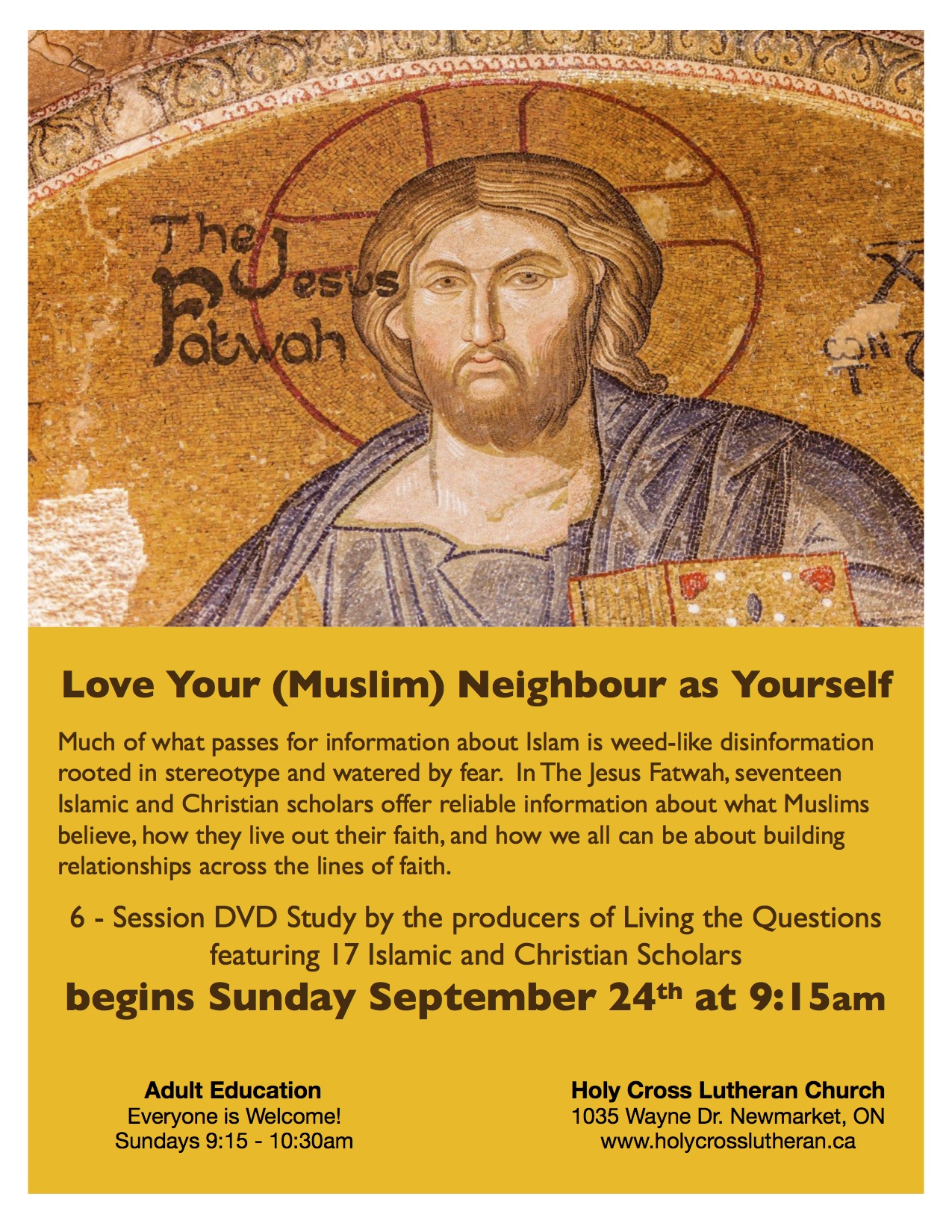
Before we begin the Living the Questions series “The Jesus Fatwah” we are familiarizing ourselves with the basics of Islam. Join us on Sunday mornings at 9:15am.
All Saints’ Sunday readings: Contemporary reading: “A Return to Love: Reflections on the Principles of a Course in Miracles” by Marianne Williamson, Gospel: MATTHEW 5:1-12 – extensive quote within the sermon from evolutionary scientist Stephen Jay Gould – the hymn sung before the gospel is “I Am the Dream” words: S. Curtis Tufts, Music: Rick Gunn
Our Gospel reading has often been called the Beatitudes. It is traditional to read the Beatitudes on All Saints’. Some years we read the eight Beatitudes as they have been passed down to us from the anonymous gospel storyteller known as Matthew, who sets Jesus’ sermon on the mount. But this year is the year of Luke, so we read this anonymous storyteller’s version of the Beauties which appear in Jesus’ sermon on the Plain. But whether it’s the sermon on the mount or the sermon on the plain what has been passed down to us is a description of the important characteristics of those who are blessed. There are all sorts of ways to interpret the word “makarios” which was translated into Latin as “beatus” the word for “blessed,” “happy, or “fortunate.” Today, I’d like to offer you another way of interpreting the Greek word “makarios”. “makarios” contains the Greek word “karios” Some of you will recognize the word “karios”,
here in Canada the mainline churches work together within the organization that bears the name “karios”. Karios is the organization through which we work together to achieve justice in Canada and in the world. The name Karios was chosen because it is one of the Greek words for “time”, a special kind of time, the opportune time, or the supreme moment. Karios is used in the scriptures to mean that time when all is well, when people are making the best use of their time, when there is harmony or peace among people, or peace with God. Karios can also be used to describe the time when it is clear that the Divine has somehow visible right here and right now. Karios is sacred time. “Makarios” is related to Karios because a person who achieved “makarios” was said to be a person who had moved beyond the constraints of time and space.Continue reading →
All Saints’ Day is a day for remembering. The word saint simply means “holy”. In the New Testament, all those who believe and were baptized were referred to as saints. It wasn’t until round about the third century that the church began using the word saint to refer to those who had been martyred for the faith. Over time these martyred saints were held up for veneration and people used to pray to them to intercede on their behalf. I’m not going to go into all of the institutional abuses that led Martin Luther and the later reformers to abolish the veneration of the saints. Except to say, that while the Reformation put an end to the veneration of the saints in the protestant churches, it did not abolish the concept of sainthood.
Within the mainline protestant denominations, we use the term in much the same way as it was used in the New Testament to describe the faithful. We talk about the communion of saints to describe all the faithful who have gone before us who now rest in God, together with all the living who walk in faith. So today as we celebrate the saints, we give thanks for all the faithful those living and those who have gone before us.
Today, I remember and rejoice as I give thanks and praise to God for the witness of St. Joyce of Belfast. St. Joyce who in her own way taught her children to love God and to pray always. And so today, I give thanks and praise to God for the life and witness of St. Joyce of Belfast, my Mom, who was the first to teach me the Lord’s Prayer, and who puts flesh on Christ’s command that we love our neighbours as we love ourselves.
Today I remember and give thanks for the life and witness of St. John of Wales, whose life in the church as a choir-boy was followed by long years of self-exile and whose keen wit and lack of patience with hypocrisy instilled in me a desire for honesty and integrity in the articulation and living of the faith. I give thanks for St. John, my Dad, whose open heart has stretched his discerning mind and enabled many to see the humour in this God-given life we live.
Today, I remember and rejoice as I give thanks and praise to God for the witness of St. Valerie of Ladner. St. Valerie so loved and feared God that she dared to reach out and invite a wayward soul to come and worship God. St. Valerie sang God’s praise, rejoiced in the communion of saints and helped a young friend find a home in God’s holy church. And so toady, I give thanks and praise to God for the life and witness of St. Valerie, my high school friend, who was the first to invite me to come and worship God.
Today, I remember and rejoice as I give thanks and praise to God for the witness of St. Wilton of Lunenburg. St. Wilton loved God all the days of his life and served God with gladness and distinction. St. Wilton went far beyond his call as pastor, he opened up the scriptures to those who eagerly sought the truth of God’s Word with love and dedication and he went on to inspire a diligence to scholarship that nurtured the faith of so many young people. And so today, I give thanks and praise to God for the life and witness of St. Wilton, my first pastor, who taught me to be uncompromising in my study of the scriptures, and steadfast in my love for God.Continue reading →
All over the world, Lutheran churches celebrate the earth-shattering events that were set in motion on October 31st 1517, when a Roman Catholic priest named Martin Luther nailed his 95 Theses to the door of the church in Wittenberg. Luther challenged the most powerful institution that his world had ever known. Luther shook the very foundations upon which the reality of his fellow humans was based. The power of the Holy Roman Catholic Church rested upon an interpretation of reality that envisioned a God who sits in judgement upon a throne in the heavens, a God who commanded a quid pro quo relationship with HIS subjects; a God whose determination to tip the scales of justice was so precise that he sent HIS only Son to die as a sacrifice for the sins of humanity, a God who used the sacrifice of that Son to somehow atone for the sins of every man, woman, and child who ever lived; saving them from the wrath of this God who had no other choice but to condemn sinners to eternal torment in the fires of hell, a God who established the church on earth to oversee the administration of the atoning power of Jesus death upon the cross, a church so powerful that they could sell you a piece of paper called an indulgence that would whisk you or your loved one out of the pits of Hell and up, up, up into the willowing, billowing, soft, gentle fluffy whiteness of Heaven, so that you could spend all of eternity basking in the Glory of your Father in heaven’s presence. These indulgences were more valuable than gold and it’s no wonder that the Church was able to sell them like hot-cakes, pardon the pun, and yes, I’m been sarcastic in my telling of this tale. Yes, history is more complicated than I’m telling it right here and right now, because I’m trying to make a point. The selling of indulgences was just the tip of the iceberg when it comes to the abuses the church on earth and in heaven.Continue reading →
YAHWEH said to Moses: “See, there is a place by me where you shall stand on the rock; and while my glory passes by I will put you in a cleft of the rock, and I will cover you with my hand until I have passed by; then I will take away my hand, and you shall see my back; but my face shall not be seen.”
Memories, stories, imaginings, myths, wonderings, and glimpses are the stuff of truth. Even though I was only a child, I have very vivid memories of my very first trip on an airplane. We lived in Belfast, Northern Ireland and we were moving to Canada. I was terrified and fascinated all at the same time. I don’t know where I heard them first, but words like “frozen,” “north,” “wolves,” “igloos”, and “Eskimos” filled my imagination. I have a vague memory of being told that there wouldn’t be any Eskimos where we were going.
I remember the excitement and the fear about flying up in the sky, higher than the clouds. We’d be so high that we’d be able to look down at the clouds. I just couldn’t wait. I was going up, up into heaven. Visions of angels sitting on clouds, maybe, just maybe I’d catch a glimpse of Jesus playing with all the little children. I never dreamed that I’d see God. God would be clothed in a cloud and if God peaked out I’d hide. I didn’t want to see God. God was way too scary. I wanted to stay well clear of God. God was a scary guy, so scary that you’d probably drop down dead if you saw God. Maybe I shouldn’t look down on the clouds, just incase I caught a glimpse of God, because then I’d never make it back down from heaven. And then, I’d never get to see the Eskimos that I just knew were waiting for me down in Canada!
It wasn’t easy being up there in the sky for the very first time. I couldn’t take my eyes off that little porthole. Even though I knew somewhere deep down inside that I wasn’t really looking out at heaven, I just couldn’t help wondering what was really out there. I remember thinking that maybe just maybe there were angels dancing on those clouds, invisible angels, cause I knew that you became invisible when you died. God was pretty much invisible most of the time. Continue reading →
Then Jesus spoke to them again in parables. He said, “The kindom of heaven is like this: there was a ruler who prepared a feast for the wedding of the family’s heir; but when the ruler sent out workers to summon the invited guests, they wouldn’t come. The ruler sent other workers, telling them to say to the guests, ‘I have prepared this feast for you. My oxen and fattened cattle have been slaughtered, and everything is ready; come to the wedding.’ But they took no notice; one went off to his farm, another to her business, and the rest seized the workers, attacked them brutally and killed them. The ruler was furious and dispatched troops who destroyed those murderers and burned their town. Then the ruler said to the workers, ‘The wedding feast is ready, but the guests I invited don’t deserve the honour. Go out to the crossroads in the town and invite everyone you can find.’ The workers went out into the streets and collected everyone they met, good and bad alike, until the hall was filled with guests. The ruler, however, came in to see the company at table and noticed one guest who was not dressed for a wedding. ‘My friend,’ said the ruler, ‘why are you here without a wedding garment?’ But the guest was silent. Then the ruler said to the attendants, ‘Bind this guest hand and foot, and throw the individual out into the darkness, where there will be wailing and gnashing of teeth.’ “Many are called, but few are chosen.” Matthew 22:1-14
Is this the Gospel of Christ? In Lutheran, Anglican, United, Roman Catholic and other mainline denominations this text will be read and in those congregations the preacher will conclude the reading with a proclamation declaring that this is, “The Gospel of Christ!” or “The Gospel of the Lord!” to which the people will declare “Praise to you O Christ!” But I ask you: “Is this the Gospel of Christ?” “Wailing and gnashing of teeth.” Is this the Gospel of Christ?
I must confess that when I realized that this text is the one assigned for this, the very Sunday when we are about to begin our “visioning process,” my heart sank. This gospel reading comes around every three years and I’ve always managed to be on vacation when that happens, so I’ve never actually had to preach this particular gospel text. I was sorely tempted to change our gospel reading to something more in keeping with the task that lies before us this afternoon. This text is hardly conducive to creating a new 21st century vision of what our church might become. “Bind this guest hand and foot, and throw the individual out into the darkness, where there will be wailing and gnashing of teeth. Many are called but few are chosen.”
Throw him out into the darkness for the crime of being badly dressed? What kind of vision is this for us, here, today? Are we not a progressive congregation? Do we not pride ourselves on being an inclusive community? “Many are called but few are chosen.” Is this the “Gospel of Christ?” “Praise to you O Christ!” I don’t think so.Continue reading →
Sisters and Brothers, hear again the words of St. Francis of Assisi:
I think God might be a little prejudiced.
For once God asked me to join God on a walk
through this world,
and we gazed into every heart on this earth,
and I noticed God lingered a bit longer
before any face that was
weeping,
and before any eyes that were
laughing.
And sometimes when we passed
a soul in worship
God too would kneel
down.
I have Come to learn: God
adores God’s
creation.
In the spirit of St. Francis, I bid you peace. Please take a long deep breath…..Peace. Now if you would focus your attention upon these two beautiful bouquets upon the altar. Yes, I am well aware that these bouquets are little more than a collection of weeds. Yes, I know that many of us were taught by the Church, I’m talking here about the capital “C” Church; we were taught by the Church that flowers don’t belong upon the altar. Flowers upon the altar distract people from the presence of God and the acts of worshipping God, so if we must have flowers in the sanctuary, we were all trained to place them anywhere other than upon the altar; the holy of holies, the place where God works in, with, through, and under the bread and wine to touch us, love us, strengthen us, and empower us. We can’t, reasoned the Church, we can’t have people distracted from the actions of God that center upon the altar. So, the Church banished flowers from the altar. But on this the feast day of St. Francis, I asked Carol to gather up some bouquets of weeds and place upon the altar. I did so, because these bouquets are beautiful!
Take a good look…..In this beautiful season of autumn these particular weeds are everywhere. You cannot go for a walk or a drive in and around town without being confronted by the existence of these spectacular weeds. Take a good look….aren’t they beautiful.In the words of St. Francis,
I have Come to learn:
God adores God’s
creation.
Now look around you, take a very good look at this spectacular gathering, this splendid bouquet of what some might call weeds but, if you look very closely you will see in one another a breathtakingly beautiful bouquet of awe-inspiring flowers. Aren’t you lovely? Made from LOVE. Gathered around this makeshift altar of ours God will indeed work in, with, through, and under each one of us to touch us, to love us, to strengthen us and to love us. In, with, through, and under this is the way that Lutheran theology describes the way in which God comes to us in the bread and wine of holy communion. I have gotten into the habit of always reminding you that we live and move and have our being in God and that God lives and breathes in, with, through, and beyond us. I repeat this over and over again, not only to remind all of you but to remind myself that God is not some far off distant being, who lives up there or out there somewhere. God is here, right here, all around us, in us and beyond us just as surely as we are in God. So, on this the final Sunday in the Season of Creation it is so very appropriate for us to turn our attention to St. Francis who reminds us that all of creation is in God.
Francis was born into a wealthy merchant family and spent his young life striving to become a knight by actively participating in the completion between Italian cities to dominate the emerging capitalist system. Francis learned like each one of us must learn that acquiring things, amassing wealth, competing for power, these things cannot ever bring us peace. And so, Francis renounced things, gave up his wealth and powerful position in Italian society, and walked away from the competitive capitalist system.
Francis even went so far as to challenge the Church’s teachings about how to be a Christian. For centuries, the Church taught that the best way, the truest way to be a Christian in the world was to follow the example of the early followers of the Way that we find in the book of the Acts of the Apostles.Continue reading →
About a dozen years ago, I traveled to Vancouver to attend an educational conference for Lutheran Mission Pastors. Most of the conference was spent inside a stuffy meeting room. But one afternoon about forty of us were loaded onto a school bus and we traveled down to the east-side of Vancouver to spend some time with Pastor Brian Heinrich, who ran the Lutheran Urban Ministry Society. I doubt that many of you have ever or will ever visit the downtown east side of Vancouver. Lutheran Urban Ministry was located near the corner of Main and Hastings in one of the poorest areas in all of Canada. It was the sort of place where forty Lutheran pastors stuck out like a sore thumb. At the time the downtown east-side was one of the roughest neighborhoods in Canada. This was before Olympic developers gentrified the neighbourhood.
As we arrived, I noticed the discomfort that was written all over the faces of my fellow clergy. Although I’d travelled to the eastside many times and even lived for a few months in a cheap apartment on the edge of the eastside, my journeys in the eastside were usually quick, with as few stops as I could manage, so that I could avoid the unpleasant sights and sounds that you encounter in places were poverty literally fills the air. Knowing that we were scheduled to spend the day in the eastside made me long for the mountaintops that I could see stretching up to the sky across the river. I could feel the same discomfort that was written on the faces of my colleagues take hold of my own face.
On the steps of the church, a young man was shooting up. In the alley next to the church, very young men and women were offering their bodies for sale. Inside the church we were greeted by several of Pastor Brian’s parishioners. Before we could get inside the sanctuary, a very smelly man extended a filthy hand in friendship. When I took his hand he grinned at me with his two remaining teeth and told me his name was David and that I should make myself at home. Eventually, Pastor Brian introduced us to about a half a dozen of his parishioners. All of them wore their poverty with a welcoming smile. Because the sight of forty Lutheran Pastors being guided around the neighborhood on a tour might have shaken up the local inhabitants, we were divided up into small groups and assigned guides. That’s how I met a woman, for the purposes of this sermon I’ll call, Gracie. Continue reading →
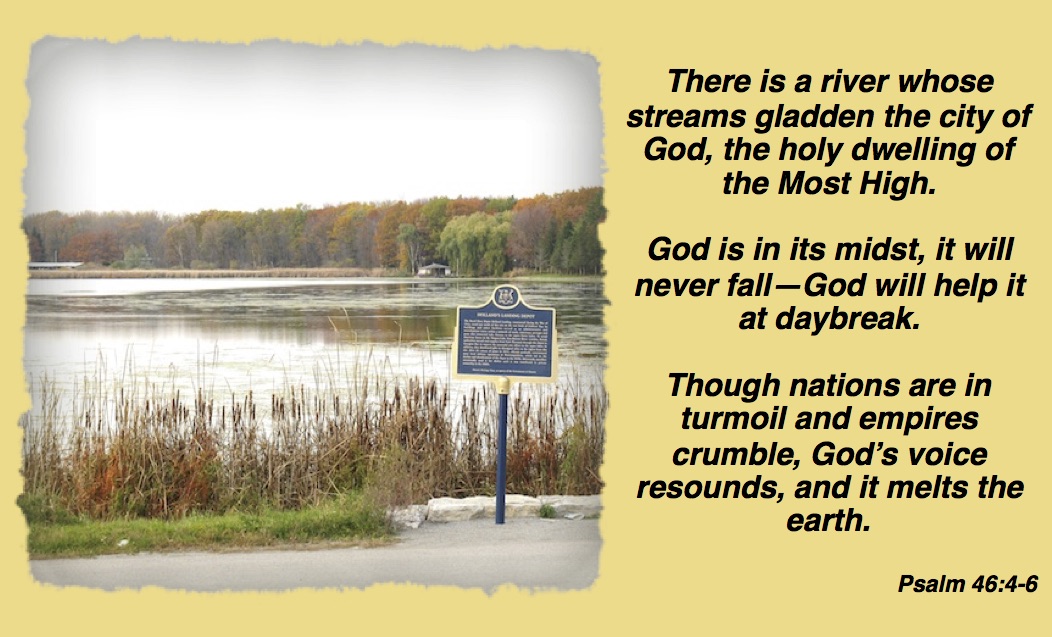
On this the fourth Sunday of the Season of Creation, we are encouraged to celebrate rivers. Today, when hundreds of thousands of Porto Ricans living along the Guajataca River are being evacuated because the force of the river may cause a dam to burst, it is difficult to contemplate gentle pastoral images of rivers gently flowing past. It is difficult to imagine the peaceful waters and let’s face it most of us come to church on a Sunday morning hoping for some sanctuary from the realities that bombard us in the media. I don’t know about you, but between the rantings of the cyber-bully who currently occupies the most powerful office in the world, and the news of the suffering caused by hurricanes and earthquakes, I would really like to be able to luxuriate for a while in the gentle images of a peaceful river. I would love to take you all on a walk down by the river-side so that we could contemplate together the image of God as a river, gently caressing us, supporting us through life. If only Jesus would refrain from teaching in parables designed to disturb us.
Jesus parable about the workers in the vineyard bursts the dam of our complacency and sends us scrambling towards the shore in the vain hope that we can escape the knowledge, that while we bask aboard our luxurious pleasure-crafts, while all around us our neighbours are drowning. Sure, we could just allegorize Jesus parable and interpret it as a nice little story in which the Landowner becomes God, the workers at dawn are good Christians like you and I, while the workers who show up much later are those who convert on their deathbeds, and even though it may seem unfair, God the Landowner treats everyone the same and everyone is rewarded in some far and distant here-after because God is full of Grace. I’ve heard countless sermons that interpret Jesus’ parable as a nice little story. But the words of my preaching professor ring loudly in this preacher’s mind: “Beware of parables that become nice little stories. Parables are verbal hand-grenades and should be handled with care.” So, I hope you will forgive me if the raging waters of a river flowing violently were rivers are not supposed to be, rushes over my interpretation of Jesus parable about the kind of justice that demands so much from landowners like you and me because today as so many of our neighbours and friends are drowning, I cannot and will not allegorize this parable.
You see, when Jesus’ audience heard him tell this parable, they would have immediately understood who the landowners and who the workers were. Jesus audience lived under the occupation of the Romans. Jewish Landowners in occupied Palestine would have had very few choices. Landowners could oppose the Romans and lose their land and then have to resort to becoming day labourers themselves, or they could collaborate with their Roman oppressors and participate in the abuse of their neighbours. As an occupied people, the Jews were waiting for someone to come along and save them from Caesar’s oppressive rule. They longed for a Messiah who would change their world and end their oppression. The crowds that flocked to listen to Jesus’ are looking for some sort of revelation about when and how the oppressive Roman occupations that set neighbour against neighbour was going to end. Rather than point to some far off distant salvation at the hands of an intervening God, Jesus points directly at the very crowds longing for salvation and insists that only when land-owners stop oppressing their neighbours will the long dreamed of kindom of God become a reality.
Imagine for a moment that you are in the crowd. You have worked hard all your life. You have saved and invested wisely. You have a home on land you either rent or own. You and I, we are the land-owners. And each one of us, we want to pay the labourers, in whatever vineyard we are involved in, we want to pay less. Sure, an honest day’s pay for an honest day’s work is all well and good when it applies to us. But who among us is willing to pay more for our meals so that day labourers can receive salary that will feed and house their families?
Let’s face it we are more than willing to shop at Walmart without caring too much about how Walmart treats its employees provided Walmart offers us a bargain. We want to pay less and we know that if we pay less, Walmart will pay less. We are all too willing to shop in dollar stores even though we know that the bargains we scoop up were in all likelihood manufactured by people working as slaves. We want to pay less for our groceries and are smart enough to know that those Mexicans working on the Marsh will be the ones to pay the price for our cheap vegetables. You know that I love my devices, my iPad is precious to me, even though I know the price paid by the labourers in China so that I could we could have our fun. We want to pay less and we also want to get more. We want our investments, and our retirement savings funds, to earn us bigger and bigger dividends. We want our property values to increase, even tough we know that those increases will make it impossible for the vast majority of our young neighbours to ever be able to become landowners. We want our governments to do more with less because we want to pay less taxes.Continue reading →
Join us at Holy Cross Lutheran Church in Newmarket as we begin our exploration of Islam. Using the Living the Questions video series: “The Jesus Fatwah” we will delve into a study of Islam on Sunday mornings beginning Sept. 24th at 9:15am
This interactive sermon is the third in a series of sermons responding to the question “Who Do You Say I AM?” Part 1 can be found here and Part 2 here
The sermon is divided into two sections and the audio includes the readings as well as the songs. you can listen to the sermon here
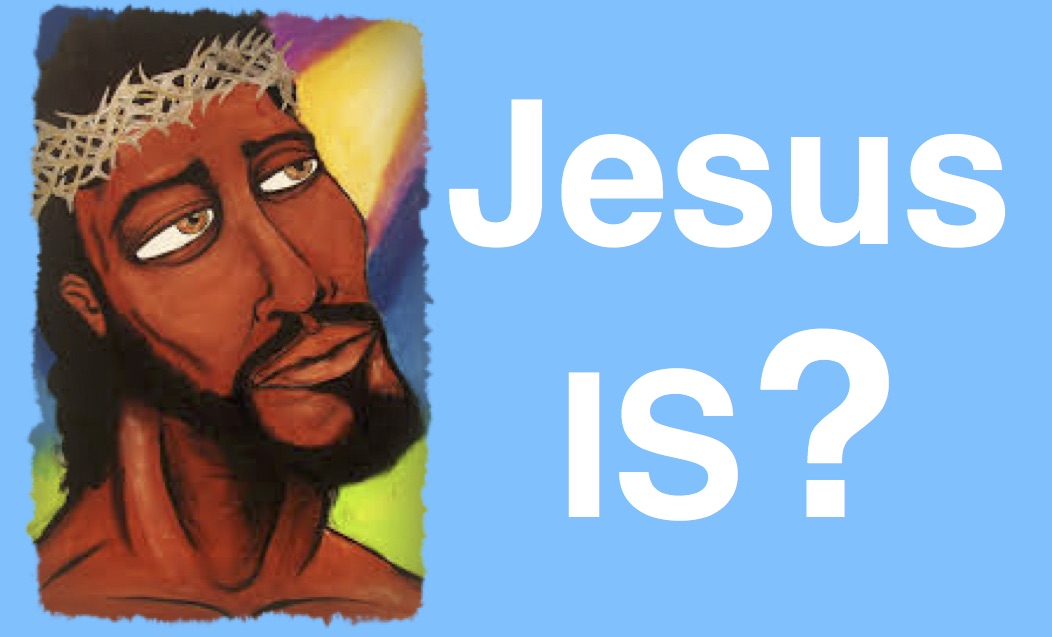
“Jesus IS?” Section ONE: Questioning
We cannot un-know what we have learned. In the past one-hundred years biblical scholarship has exploded. In the halls of academia, in the seminaries of mainline denominations the quest for knowledge about Jesus has born so very much fruit. Now thanks to the explosions of the information age, information that was once reserved to the carefully initiated, is available to everyone. Wander into your local bookstore, or turn on your computer and you will discover more information than any one person could ever digest on the subject of Jesus. And yet, despite more than 2000 years of scholarship, theologizing, speculating, preaching, and teaching, the question, put on the lips of Jesus by the anonymous gospel-storyteller that we call Matthew, remains a daunting question to answer.
“Who do you say that I AM?” This is a question designed by the storyteller to evoke a response from the listener. “Who do you say that I AM?” Our individual responses to this question are tinged by all that we have been taught, by our families, by the church, by the culture in which we live, by the communities to which we belong, by the books we have read, the movies we have seen, the documentaries we have watched, the lectures we have listened to. Those of us who have stayed behind in the church, long after the vast majority of the population have left, we have been trying to answer questions about Jesus have learned so much about Jesus. But rather than help us answer the question, what we think we know about Jesus, has left us tong tied.
“Who do you say that I AM?” The way in which we answer questions about the identity of Jesus matters in a world where so many of the answers that have already been offered continue to misrepresent the man who lies at the heart of Christianity. These days, what passes for Christianity often stands in direct opposition to the teachings of the man Christians profess to follow. The idol worshipped by millions depicts Jesus as a super-hero God, sent to die as a blood sacrifice for sin. This idol has co-opted the story of Jesus the man who steadfastly refused to take up violence against his enemies. Worshippers of this idol seek the companionship of a personal saviour, sacrificed violently for their personal sin, while they turn their backs upon Jesus’ the man’s personal quest for peace through justice for all. Worshippers of this idol follow a saviour who encourages them in their personal quest for happiness in this world and the next. All too often, this personal quest for happiness, results in the oppression and suffering of others, requiring the followers of this idol to embrace violence.
“Who do you say that I AM?” The way in which we answer this question has implications for the way in which we live in the world. “Who do you say that I AM?” – a human, a seeker of justice committed to non-violent resistance to oppressive systems, willing to give everything to achieve peace, peace for all. A teacher offering insights into a way of being in the world that embodies LOVE. Or a super-human, blood-sacrifice, who demands obedience and conviction to a carefully crafted story designed to ensure that your tribe wins the battle to create a new world order, where your tribe wins not only in this life but in the next. “Who do you say that I AM?”
Section Two: Imagining
“Who do you say that I AM?” Before we can say who Jesus is, we must imagine who Jesus was. David Steindl-Rast reminds us that, “religions start from mysticism. There is no other way to start a religion.” Steindl-Rast compares this mystical experience “to a volcano that gushes forth…and then…the magma flows down the sides of the mountain and cools off. And when it reaches the bottom, it’s just rocks. You’d never guess that there was fire in it. So after a couple of hundred years, or two thousand years or more, what was once alive is dead rock. Doctrine becomes doctrinaire. Morals become moralistic. Ritual becomes ritualistic. What do we do with it? We have to push through the crust and go to the fire that’s within it.”
The fire that sparked Christianity is Jesus. The red-hot experience of the living breathing Jesus, bubbled up out of out of the mountain that Judaism had become. Like red hot lava Jesus flowed through the towns and villages of first century Palestine sparking a revolution that has long since cooled. We are the inheritors of the dead rock formations that lie scattered about us. If we are ever to push through the crust to experience the fire that lies within, we will need to have the courage to shatter the idol of Jesus that Christianity has fashioned out of the rock. That means imagining who Jesus was when the fire ignited so that we can determine who Jesus is, here and now, in this place and in this time.
“Who do you say that I AM?” Let’s begin where it always begins in ancient literature, let’s begin with the name. The name given to the experience of whatever it is that lies at the very source of reality. YAHWEH – I AM WHO I AM. The ancient name given by the Hebrew people to their experience of the Divine. I AM – from the verb to be… God – IS
The question put on the lips of Jesus by the anonymous gospel storyteller we call Matthew “Who do you say that I AM?” echo’s the very I AM that this same Jesus depicts in a whole new way. It is all in the name. Sadly, we’ve missed the fullness meaning of Jesus’ name. Jesus was known by two names in the ancient world. Can anybody tell me what those names were? ……Yeshua ben Yosef …. Yeshua bar abba … Joshua = God is Gracious or God Saves
Yeshua ben Yosef = Joshua son of Joseph
Yeshua bar abba = Joshua son of abba the name Jesus used for God
Joshua – salvation a man or a god
There in lies the question – Jesus divine or human?
“Who do you say that I AM?”
Last Sunday I talked about how the Creeds have shaped us. The Apostle’s and the Nicene Creeds were created in the 4th century after the life of Yeshua ben Yosef, or Yeshua bar Abba by the powers of the Roman Empire to ensure that there would be a consistent view of Yeshua throughout the emerging church. That consistent view served the Empire well and went a long way to solidify the idol of Jesus Christ that continues to pervade our culture. So, let’s set aside the creeds for a moment and respond to the questions of Jesus’ identity in ways that give us a glimmer of the fire that gave birth to a way of being in the world.
Labour Day weekend marks a milestone in my life. You see 23 years ago, after a driving about 4,000 kilometres, all the way from Vancouver, I arrived in Waterloo, Ontario, just in time for the long Labour Day weekend. I didn’t know anyone in Waterloo. I didn’t have a place to live. But on the Tuesday after Labour Day, I was scheduled to report to Waterloo Lutheran Seminary to begin orientation for what would be a four year masters of Divinity program. In the course of that long ago Labour Day weekend, I found a place to live, unpacked all the belongings that I’d been able to stuff in to my old 84 Oldsmobile, and discovered that in Ontario, milk comes out of in plastic bags. You have no idea how mystified I was wondering just how those plastic bags functioned as an appropriate container for milk. I actually remember standing in the grocery store wondering what people here in Ontario did once they’d opened the plastic bag. Visions of milk spilling everywhere caused me to well up with such a feeling of homesickness. Since then, Labour Day Weekends have been strange combination of nostalgia for what once was and excitement for what is yet to be. I came to Ontario in the midst of a transition. I’d just completed a 4 year undergraduate degree in Religious Studies and I was about to begin Seminary. Both my undergraduate and my masters degree would qualify me to be a pastor. After a years in the travel industry working as both a tour wholesaler and an accountant, I wanted something more out of my work; I wanted something more than just a job I wanted a profession. Religion, Christianity, the Church, the inner workings of reality, books, studying, teaching, deep conversations, these things were and are expressions of my passion. Travel Brochures, numbers, spread-sheets, office politics, sales-figures, the day to day commute into the city, these things represented a means of making money to pay the bills. Don’t get me wrong, my work in the travel industry was usually interesting, sometimes challenging and often quite satisfying. But it had nothing what so ever to do with passion.I viewed my work as a job. What I wanted was a profession. I was caught up in a way of seeing that divided work into categories of meaningful and meaningless. I was incapable of seeing the sacred in my work. Despite the fact that I worked with interesting, beautiful, people and was privileged enough to enjoy the world in ways that some people can only dream of, I couldn’t see meaning in my work. I was for all intents and purposes an arrogant snob.I was raised in a culture and in a time when education, and fancy letters after one’s name, meant that your work was more important and therefore more meaningful than the work of folks who didn’t have a professional calling. Not surprisingly, I am a product of my experience. I was raised by British working-class parents who struggled to ensure that I had access to the kind of educational opportunities that would result in more than just a job. Their dreams and visions were of having their children become “someone”. A job was something anyone could get. A career was something special. A career meant that you were someone who was involved in something more; a career meant that you were a professional. Even the word job is designed to put the worker in their place. Job comes from the word “jobbe” which describes piece work. A person who does a job is like a cog in a wheel of a much larger machine, who preforms a task that is often disconnected from the end product. A profession is defined as a vocation, a calling that requires specialized educational training. I was tired of functioning in a job and I felt called to a profession in which I could put my own particular passions to work. It took me a long time to understand that a profession could also be just a job and that a job could indeed be the expression of one’s passion. While I was busy judging the quality of particular occupations, I failed to see the inherent dignity of work itself. The legacy of the class system that divided us into tribes based on the money our work could generate leaves many of us with the miss-guided notion that work is simply a means to an end. All too often we direct our attention to the end and judge the work by how much the worker is able to accumulate. How big is your pile of money? That becomes the point of our work. We express the value of our work in the size of our homes, our cars, the vacations we take, the clothes we wear, the toys we play with. The object of our work becomes the pile. How high can we build our towers? What mark can we leave upon the earth?
Seabright Farmhouse
Years ago, when I was working as a volunteer at a retreat centre, I remember the You see the main building of the retreat centre was an old farmhouse. The kitchen had an old and ugly linoleum floor. That floor had seen so much traffic that the the pattern was worn off in places. I remember getting up before sunrise, or wandering in late in the evening, to get down on my hands and knees and scrub that floor because it was a job best done when no one was around. First, I’d scrub it with a scrub brush and Comet; you know that old fashioned abrasive powder. Then I’d have to rinse it with hot water and a cloth. Then after it dried, I’d wax it. It wasn’t a very big kitchen, but it took a couple of hours to do it right. Yet, even when it was finished, that old linoleum wasn’t really up to much. But it was clean. You could have eaten off that floor. I knew full well that it would only take a few moments for the retreat centres’ inhabitants and visitors to destroy the floors lustre, and I sometimes wondered why I even bothered. But then one night and old theologian who regularly visited the retreat centre, was up and about late at night and he found me on my hands and knees scrubbing. I don’t remember much about the long conversation we had that evening, but I do remember the words on the thank-you card that Fritz left for me before he left the retreat centre. Written on the card were the words of the Persian poet Gibran: “Work is love made visible.” “Work is love made visible.” For just a moment the words penetrated my carefully held notions about the meaning of work and I understood why I felt so satisfied every time I scrubbed the floor. The work was my way of giving expression to the love I had for the people and the place. Years later I came across those words again. “Work is love made visible.” Joan Chittiser quoted Gibran in an essay I read and tucked away, back when I was trying to figure out what it means to be human. Chittister writes: “A spirituality of work is based on a heightened sense of sacramentality, of the idea that everything that is, is holy and that our hands consecrate it to the service of God. When we grow radishes in a small container in a city apartment, we participate in creation. When we sweep the street in front of a house, we bring new order to the universe. When we repair what has been broken or paint what is old or give away what we have earned that is above and beyond our own sustenance, we stoop down and scoop up the earth and breathe into it new life again. When we compost garbage and recycle cans, when we clean a room and put coasters under glasses, when we care for everything we touch and touch it reverently, we become the creators of a new universe. Then we sanctify our work and our work sanctifies us. A spirituality of work puts us in touch with our own creativity. Making a salad for supper becomes a work of art. Planting another evergreen tree becomes our contribution to the health of the world. Organizing a good meeting with important questions for the sake of preserving the best in human values enhances humanity. Work enables us to put our personal stamp of approval, our own watermark, the autograph of our souls on the development of the world. In fact, to do less is to do nothing at all. A spirituality of work draws us out of ourselves and, at the same time, makes us more of what we are meant to be. Good work — work done with good intentions and good effects, work that up builds the human race rather than reduces it to the monstrous or risks its destruction — develops qualities of compassion and character in me. My work also develops everything around it. There is nothing I do that does not affect the world in which I live. In developing a spirituality of work, I learn to trust beyond reason that good work will gain good things for the world, even when I don’t expect them and I can’t see them. In that way, I gain myself. Literally. I come into possession of a me that is worthwhile, whose life has not been in vain, who has been a valuable member of the human race. Finally, a spirituality of work immerses me in the search for human community. I begin to see that everything I do, everything, has some effect on someone somewhere. I begin to see my life tied up in theirs. I begin to see that the starving starve because someone is not working hard enough to feed them. And so I do. It becomes obvious, then, that the poor are poor because someone is not intent on the just distribution of goods of the earth. And so I am. I begin to realize that work is the lifelong process of personal sanctification that is satisfied only for the globe. I finally come to know that my work is God’s work, unfinished by God because God meant it to be finished by me.” Chittister’s view of work as an expression of our love, reminds me that the LOVE that we call God, finds expression in the work that we do. Indeed, the LOVE that IS God works in, with, through, and beyond us. On this Labour day weekend, may we all remember and honour the sacred work that has nourished, grounded, and sustained us in the blessed lives that we lead. May we honour the sacred workers who have provided a means for LOVE to find expression in the world. May we all find work that gives expression to our love for the world, our love for one another, and our love for our neighbours. Work is indeed LOVE made visible. LOVE is the source, and ground of our being. May our work, together, and beyond make the LOVE that is God visible. Now and always,Continue reading →
I am indebted to John Philip Newell’s book “The Rebirthing of God: Christianity’s Struggle for New Beginnings” for inspiring this sermon. The Season of Creation is a relatively new addition to the Church calender and the first and Gospel readings are those prescribed for Forest Sunday: Genesis 2:4b-23 and John 3:1-16. The contemporary reading is from John Philip Newell. The Scripture readings were taken from ‘the inclusive bible: The First Egalitarian Translation” which opens a new way of understanding both the Genesis story and the Gospel According to John simply by using more inclusive literal translations of the Hebrew and Greek. You can find all three readings here
The Season of Creation is a very recent addition to the Church Calendar. We first observed it, here at Holy Cross, just two years ago. So, this is the first opportunity we have had to observe Forest Sunday. It seems odd to me that in a country like Canada where the forests are so vast and have such a huge impact on the history of this nation, that up until just a few short years ago, did not set aside a day dedicated to the celebration of our forests. Indeed, that churches around the world, should have failed until recently to set aside a season dedicated to the celebration of Creation is not just astounding, but dare I say it, sinful.
So, I’d like to begin this sermon by summoning up visions of my favorite forest. Now, I’m well aware that there are hundreds of brilliant forests in these parts, but it won’t come as a surprise to many of you that my favorite forest is located on the West Coast.
This particular forest is special not only to me, but it also stands tall in the annals of Canadian forests; indeed, it stands out among the forests of the world. It is located just north of West Vancouver and I’ve been walking in this forest since I was a teenager. This deep, dark, rich, rain-forest is one of the few old-growth forests in Canada and many of the trees are over 600 years old. This particular forest has managed to survive uncut thanks to the erection of a lighthouse in 1875 on Point Atkinson. The authorities wanted to ensure a dark back-drop for the lighthouse so they banned logging in the area and the city of West-Vancouver has set the forest aside with the creation of Lighthouse Park.
My first trip to Lighthouse Park, I was but a child, taken there by my father for a family outing. I remember a dark, wet, gentle hike down to the water’s edge, followed by a half-hour’s uphill climb back to the parking lot, where my mother waited with our picnic lunch, of sandwiches and hot tea. Later, when I was old enough to drive myself, there were so many dark, wet, gentle hikes in this forest cathedral where I often retreated to for solace from the trials and tribulations of finding my way in the world.
Over the years, I have often returned to this living cathedral where the Douglas Firs and Red Cedars are hundreds, and hundreds, and hundreds and hundreds of years old and looking up to see just how far they stretch toward the sky, makes you dizzy. I still remember the first time I took Carol into the depths of this sacred place. The sheer pleasure of seeing someone you love overwhelmed by the splendor of some of the biggest and oldest trees on the planet, was match only by the deep silences that are possible in such a place. It is without a doubt a thin place a place where the boundary between what is known and what lies beyond the know is so thin that you can feel the presence of the One who is both the source of all that is and who is Beyond all that is.
In this thin place, I have laid down burdens, wept, laughed, shouted, cried, rejoiced, slept, breathed deeply of the earth and lost my breath trudging up the dark, damp, fecund trails. In this thin place, this forest cathedral I have worshiped the source of all that is, been mesmerized by that which is beyond all that is, and been emptied of concerns, trials, tribulations and filled with joy, hope, peace and love. In this thin place, this forest cathedral, over and over again, I have been born anew. In this forest cathedral, and in so many forest cathedrals, I have come to understand what Julian of Norwich meant when she said that, “we are not just made by God, we are made of God.” for in these sacred thin places, in these forest cathedrals, in the sheer beauty and the magnitude of life that abounds from deep within the forest floors, up through the steadfast trunks to the skyward canopies, the One who is the Source of All this is also the One who is the Source of My Being.
But these thin places are not for the faint of heart. Over the years, I have made various pilgrimages to Lighthouse Park, only to find a sign erected warning those who dare to enter that a bear has been sighted in the area. Sometimes the authorities have posted a sign that because of the threat of a dangerous bear in the area that park is closed to all hikers. When I was younger, and much more foolish, I ignored those signs and ventured into the deep, dark forest despite the warnings. The sense of danger was palpable and added to the intensity of the experience of this dangerous wilderness. But the wisdom gained over the decades has of late caused me to heed the warning signs and so from time to time Carol and I have travelled to Lighthouse Park filled with anticipation only to be thwarted by a warning sign.
It seems appropriate somehow that a Thin Place should be so subject to warning signs. I’ve told you before about Rudolf Otto’s definition of God, whom he calls the Numinous. Otto defines the numinous in Latin with the words, “Mysterium, Tremendum, et Facinam” the One whose is the Source of all being is mysterious, tremendous and fascinating. Mysterious yes. Tremendous, literally makes you tremble, yes. But even though you tremble in fear in the presence of such great mysterious, you just can’t help but be fascinated by the One who is the source and ground of your being.Continue reading →
The feast day of Augustine of Hippo is a good time to recall what St. Augustine had to say on the literal meaning of Genesis: “Usually, even a non-Christian knows something about the earth, the heavens, and the other elements of this world, about the motion and orbit of the stars and even their size and relative positions, about the predictable eclipses of the sun and moon, the cycles of the years and the seasons, about the kinds of animals, shrubs, stones, and so forth, and this knowledge he holds to as being certain from reason and experience. Now, it is a disgraceful and dangerous thing for an infidel to hear a Christian, presumably giving the meaning of Holy Scripture, talking nonsense on these topics; and we should take all means to prevent such an embarrassing situation, in which people show up vast ignorance in a Christian and laugh it to scorn. The shame is not so much that an ignorant individual is derided, but that people outside the household of faith think our sacred writers held such opinions, and, to the great loss of those for whose salvation we toil, the writers of our Scripture are criticized and rejected as unlearned men. If they find a Christian mistaken in a field which they themselves know well and hear him maintaining his foolish opinions about our books, how are they going to believe those books in matters concerning the resurrection of the dead, the hope of eternal life, and the kingdom of heaven, when they think their pages are full of falsehoods and on facts which they themselves have learnt from experience and the light of reason? Reckless and incompetent expounders of Holy Scripture bring untold trouble and sorrow on their wiser brethren when they are caught in one of their mischievous false opinions and are taken to task by those who are not bound by the authority of our sacred books. For then, to defend their utterly foolish and obviously untrue statements, they will try to call upon Holy Scripture for proof and even recite from memory many passages which they think support their position, although they understand neither what they say nor the things about which they make assertion.” (from Augustine’s commentary on Genesis: “The Literal Meaning of Genesis” (translated and annotated by John Hammond Taylor, S.J.; two volumes; Newman Press, New York, 1982; pages 42-43 of Volume 1)
That annoying Canaanite woman is at it again and not even Jesus can catch a break. Every three years that annoying woman comes along to disturb us. The way the anonymous gospel storyteller that we call Matthew tells his story, this annoying woman exposes Jesus for the human being that he was and shatters our illusions of Jesus the god-like super-hero. We could just look the other way. We could do what people, all too often, do when someone brushes off another human being with a racial slur; we could pretend we didn’t hear it. We could do what, according to the story, Jesus’ followers wanted Jesus to do, when they urged him to: “Please get rid of her! She keeps calling after us”
It clear from the way that the story is told that Jesus was trying to ignore this annoying woman’s incessant pleas, but she will not leave him alone. As much as I’d like to ignore her and everything she represents, she just won’t give us a break. Yes, I know that according to the story this woman was worried about her child, but how dare she expose Jesus in this way?
It’s been a hell of a week and I don’t know about you, but I’ve heard more than enough about racism this week to last me a lifetime. I don’t want to have to think about racism today. I want to get away from all the noise about racism and I don’t want to have to think about the fact that even Jesus is guilty of uttering a racial slur. If I still believed in the kind of God who functions like a puppeteer in the sky, I would suspect that this gospel reading didn’t just appear on this particular Sunday by chance. Even though I don’t believe in that kind of God, every once in a while it would sure be nice to be able to blame this reading on God. But like I said, every three years this reading comes up in the lectionary and this annoying woman forces us to see Jesus for who he was, a man. Jesus was a man of his time; a man who was raised in an environment where women were to be seen and not heard; a man who was raised to believe that his people were superior to other people, a man who wasn’t about to be disturbed by the yammering of a woman who was after all was said and done nothing more than a Canaanite.
Jesus was after all a rabbi and a busy rabbi at that. Hadn’t he just fed the 5,000 and walked on water? He was a rabbi who was in demand, the crowds couldn’t get enough of him, Jesus had places to go and people to see. Just who did this woman think she was? It is clear from the way the story-teller recorded this story that she was a Canaanite woman, they were after all in the district of Tyre and Sidon and that place would have been full of Canaanites. Jesus and his disciples had wandered off the beaten track, probably trying to avoid the crowds that couldn’t get enough of Jesus. Well there’s just no telling who you might run into when you wander into neighbourhoods where those kinds of people live.Continue reading →
On this quiet summer morning, I arise to find the airwaves clamouring with the sound of Tweets. As news of war and rumours of war penetrates my consciousness and awaken me to the surreal clamouring of madmen who hold the power of life and death in the grasp of their tiny hands, it is so very tempting to give in to the cynicism of the talking heads. While our hearts grieve for our broken world, let us remember that while we cannot control the actions of others, we can, however, control the way we react to the actions of others. Let us not fall into temptation. Let us live in hope. Let us pause in the gentleness of this summer morning to turn our being toward the dream of peace. Shalom, Salam, Santi, Pax, Udo, Santi, Axsti, Salmu, Sith, Paix, Peace….Let us open ourselves to the sound of the still, small voice, the Daughter of a Sound, the Bat Qol who calls us Beyond the Beyond and Beyond that also toward the Deep Peace….
Two videos which present John Philip Newell’s interpretation of the Celtic prayer for Deep Peace
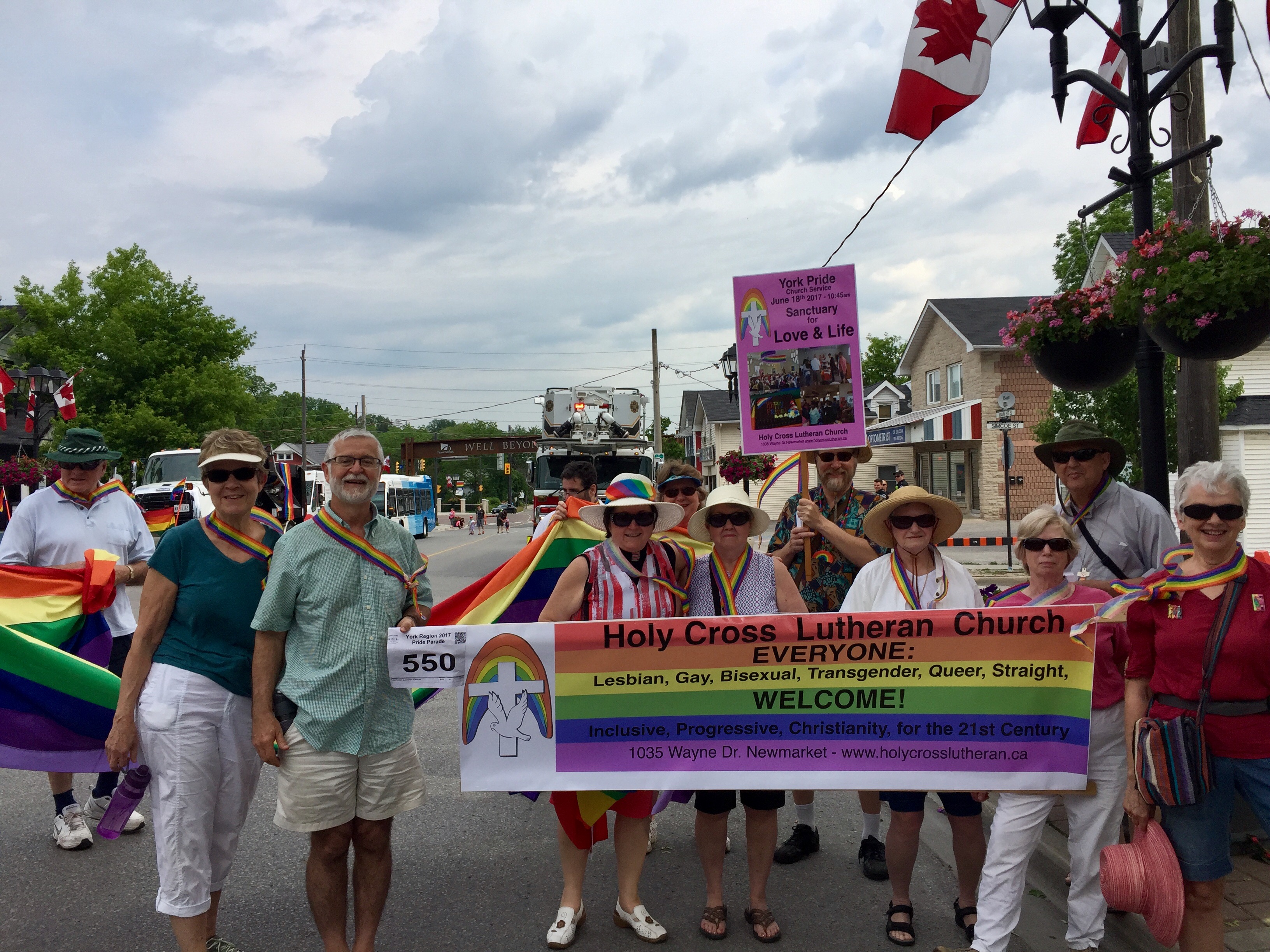
Earlier this week, I drove down Main Street. Main Street is all dressed up for Pride. On the lampposts, you can see beautiful rainbow banners announcing the York Pride Festival. I must tell you that I was so overcome by the sight of these Pride banners that I had to pull over and have a little cry. The sight of these banners flapping in the wind for all to see may seem totally unremarkable to some people. But to some of us, the sight of those banners moves us beyond words to tears that spring from a very deep place within our soul; tears that reflect so many emotions born of pain, defiance, struggle, isolation, relief, hope, and joy! As I wept, I couldn’t help but marvel at how very much has changed since I first began to become aware of who I am.
I was only ten years old in 1967, when Pierre Trudeau declared that, “There’s no place for the state in the bedrooms of the nation.” I was too young to understand the news in 1968, when Canada decriminalized homosexual acts. I don’t remember being aware of the Stonewall riots that erupted in 1969. As a teen-ager in the 1970’s, what went on between consenting adults was something seldom talked about. It wasn’t until the early 80’s when the reality of the AID’s epidemic drove conversations about homosexuality into the public square, that I began to pay attention to the cause of gay rights. Living in Vancouver and working in the travel industry, I lost friends, good friends, to a disease that devastated the gay community. Later as I began to allow myself to understand who I am, I remember trying and failing to find the courage to march in Vancouver’s Gay Pride parade. I don’t know what frightened me more, being seen at the parade or seeing myself for who I am. Fear is a long, long way, from pride. So, it took me longer than I care to admit to summon up the courage to participate in the pride parade in 1986. Later as I was preparing myself to become a pastor, I had the very good fortune to fall in love. Falling in LOVE is a very empowering experience. But falling in LOVE in 1997, when your church says things like “love the sinner, hate the sin”, well let’s just say, that when I was called here to Holy Cross in 1999, it wasn’t just fear that kept Carol and I quiet on the subject of our relationship, it was the reality that if I said anything at all, I wouldn’t survive as a pastor for very long. “Don’t ask don’t tell,” was the unofficial policy of the ELCIC. So, you didn’t ask, and I didn’t tell. Newmarket, I was told was a conservative town. Well a lot has changed over the years. Many of us worked for a very long time at considerable cost to change the policies of our government and our church. The benefits of equal marriage in Canada, and full inclusion in the Evangelic Lutheran Church in Canada are life-changing and I confess that there are days when I still feel like pinching myself. “Can it actually be true? Can I actually be married to the woman I love and still be a pastor?”
The relief and the joy of being who I am without fear of persecution, makes me proud not only of who I am, but of who you are, who we are as a community and as a country. My pride runs deep and so it is a joy to see how very far we have come. Sitting in my car weeping, I couldn’t help but marvel at the courage of so many people who paved the way for us. Those banners on Main Street and all the happy pride-goers yesterday, and all of us gathered here today to celebrate, we have so much to be thankful for. But I can’t help remembering a conversation with someone who will remain nameless. This person insisted that she, “loves the gays”, but she just wishes that they wouldn’t make such a big deal out of everything. She just couldn’t approve of gay pride. “I mean really, why do they need to flaunt their sexuality in public the way that they do. Can’t they just keep it to themselves.” This person went on to declare, “I don’t flaunt my heterosexuality in public.”
Well her inability to flaunt her heterosexuality in public was all too clear. Her sexuality was very clearly suffering from her inability to see beyond all the stuff she’d ever been taught about her body;
sadly, I suspect that most of the stuff that had her so tightly wound up she must have learned from the church. For centuries our public institutions, all too often encouraged or justified by the institutional church, confined generations of lesbian, gay, bisexual, transgendered, queer, and straight people in closets so dark that we could none of us see who we are.
One of the blessings that we religious types have is a plethora of metaphors and stories that were created to liberate people from prisons of our own making. One of the stories that I have always loved is this morning’s first reading from the book of Joshua. I can hear that old spiritual, “Joshua fit the battle of Jericho and the walls come tumbling down,” each and every time some uptight, repressed individual begins to complain about those gay’s and their parades. The very idea of the children of Israel, those ancient Hebrew migrants, persecuted and excluded marching and hollering all around the mighty city of Jericho, with its walls erected to keep the riff raft out, well the metaphor is too perfect. I can see it all now day after day, people making an ungodly racket. The sound of the shofar’s loudly blasting a radical tune. I’ll bet there was dancing and singing and hootin and hollerin. No wonder those walls come a tumblin down.
The scriptures are full of stories created to provide hope to the downtrodden, the oppressed, the persecuted, the suffering, the outcast, even the sinners. Yes, the walls may be tall, the structures that keep you out may be entrenched, but make enough racket and you’ll see those walls crumble. So, today I give thanks to all those rowdy folks who marched in spite of the fact that the walls erected by our society to keep them in the closet seemed insurmountable. Today, I celebrate all the brave pride-goers who brought the walls of injustice down so that we can be all that we are created to be without fear. It has been a long and difficult struggle, and our pride celebrations inspire such joy. So, we sing, we dance, we make noise and yeah, we flaunt our sexuality in public! And I’m guessing that the gay rights movement has liberated more than just the LGBTQ communities. I’m guessing that our straight sisters and brothers have learned a great deal about who they are. I’m pretty sure that liberation and freedom from sexual repression are indeed a blessing that more than just a few of us are grateful for. The reality that we a wonderfully and beautifully made, creatures of mysterious and sublime wonder is a blessing of unfathomable joy.
So today, we celebrate who we are! But with each and every utterance of, the words “Happy Pride!” we cannot forget that our joy is tinged with sadness for all our sisters and brothers around the world who continue to live and die in fear. The Pride movement is still in its infancy.
We have come a long way. But we have miles to go and so many more wall to break down; walls that will require a whole lot of noise before they come tumblin down! We are blessed to live in a place where we can be who we are and love one another without fear of the state. Sadly, there are still places here where some of us are afraid to hold hands. There are places where some of us fear to go. We will need to do a whole lot more marching. We will also need to make a great deal of noise so that our government opens gaps in our walls so that we can provide sanctuary to LGBTQ refugees. We will need to make a great deal more noise so that hate-filled states like Chechnya will stop the killings and Malaysia will stop the public floggings. Those of us who remain in the Church must continue to make a whole lot of noise so that our institutions repent the abuses of our past and stop the abuses that continue to be perpetrated in the name of Jesus. We must do our best to join our voices to the voices of those outside our walls so as to hasten their crumbling. We must open up dialogues and we must tell our stories so that the LOVE that lives in us can inspire hope as it breaks down walls. We must remember that the one whom we profess to follow this Jesus fellow, is the one who said over and over again, “Do not be afraid. Have no fear!” The very one who reached out beyond the confines of the walls established by the structures and institutions of his day, to love his neighbours. The same one who insisted that God is LOVE.
So, as we celebrate today, we do so mindful that there is more noise for us to make and hopeful that as we make that noise together the walls will come tumblin down. Happy Pride everyone! May the LOVE that is God empower all of us to be all that we are created to be.
This Sunday is Trinity Sunday. In anticipation, preachers all over the world are dutifully pondering the Doctrine of the Trinity desperately searching for something to say to encourage their congregations.
Preachers will trot out tired old clichés conjuring up images of triangles, shamrocks around, or point to H20’s ability to appear as water, ice, or steam while still maintaining it’s unified essence. Or have you heard the one about the 3 blind men and the elephant in the room. That old chestnut is trotted out by many a desperate preacher struggling to put flesh on the doctrine of the trinity. But for the life of me I can’t see how 1 blind man touching the elephant’s trunk and presuming that there is a tree in the room, while a second blind man catching wind of the elephant’s ear is convinced that there is some sort of giant fan in the room, while a third man grabs hold of the tail and is sure that he has hold of a rope, helps you to conclude that just because they’re all sharing a room with an elephant you can now confess that God is indeed Father, Son, and Holy Spirit, one God, forever and ever amen. But all sorts of mental gymnastics will be exercised in the vain attempt to make some sort of sense of the doctrine of the Trinity!
On Trinity Sundays, mindful of the fact that trying to explain the doctrine of the Trinity usually leads to heresy: dusty theological books that have not seen the light of day since last Trinity Sunday have been poured over to ensure that the formula’s learned in seminary are repeated correctly and heresy scrupulously avoided. The imaginative among us have attempted to baffle our congregations with our theological intellect, the pragmatic among us have attempted to baffle our congregations with something akin to BS, while the desperate among us have simply tried to survive the Trinity Sunday hoping against hope that no one will notice that we haven’t a clue what we’re talking about.
Perhaps only dear old Dr. Martin Luther possessed the theological integrity sufficient to save a preacher from the perils of preaching on Trinity Sunday. So, before I launch, forth, let me remind you what the instigator of the Reformation had to say on the subject of the Trinity. Martin Luther warned that: “To deny the Trinity is to risk our salvation; to try and explain the Trinity is to risk our sanity.”
I will confess that Martin Luther had much more at stake, literally at stake, than I do, because the truth is that for centuries the punishment for heresy would have found many an ancient preacher burned at the stake. But while the death penalty for heresy has been lifted, the risk to one’s sanity remains. Continue reading →

 Wisdom of Solomon 6:12-16 and Matthew 25:1-13 – Here’s a sermon that I preached several years ago when this coming Sunday’s readings prompted me to use/borrow/steal from the book “Wisdom’s Feast: Sophia in Study and Celebration”, by Susan Cady, Marian Ronan, Hal Taussig (Harper and Row, 1986).
  Adult Education at Holy Cross Lutheran Church










 pastordawn