I am indebted to John Claypool’s sermon from back in 1997 for the story of Eugene O’Neill’s play “Lazarus Laughs” and to Henri Nouwen’s “Our Greatest Gift: A Meditation on Dying and Caring” for the “Parable of the Twins”.
Preparing sermons this Holy Week and wrestling with texts and doctrines, I have had as my companion Michael Morwood’s new book “It’s Time: Challenges to the Doctrine of the Faith”. Written from the perspective of a former Roman Catholic priest, Morewood’s insights transcend the denominational divide and speak directly to the need for new articulations of the faith. I have been gleaming all sorts of insights that are helping me to proclaim the Gospel in a world where knowledge about the magnificence of creation is expanding at a phenomenal pace. Imagine my delight this morning, when a posting by the author himself alerted me to a brief speech he gave on Good Friday that outlines his hopes for the church of tomorrow. Enjoy!
Michael Morwood is an Australian who is currently the theologian in residence at the Kirkridge Retreat Center, at Bangor, Pennsylvania.
I post this sermon, which I preached last Easter Sunday, touched by the memories it evokes. Resurrection came to my Gran this past summer. Her 100 years were and are a blessing to her family and friends. She comes to me often in so many ways; this sermon is but one.
Tredegar, Wales the village where Nellie was born in 1911
Sisters and brothers in Christ, today we gather to celebrate the greatest story ever told! Christ is risen! Christ is risen indeed! Alleluia! Christ is risen in you and in me. And because Christ is risen, I can welcome each of you to your very own resurrection!!! Christ is risen in you and in me! Alleluia!!!
It is the greatest story ever told. Like all the best stories ever told it does not answer all our questions. Poet Mary Oliver insists that, “There are many stories more beautiful than answers.” The bible is full of great stories. The sacred scriptures contain responses to some of humanity’s greatest questions. The stories in the scriptures provide us with responses to some of our deepest longings, but those responses do not come in the form of answers. The Bible is full of stories that touch the deepest mysteries of life. The ancients knew that eternal truths are best communicated through stories, and so we plumb the depths of the scriptures’ parables, myths and similes to discover our reality. The story that bursts forth on this Easter Sunday is the greatest story ever told. It is a story told in response to our deepest reality and our darkest fear: death. Continue reading →
The Church’s Good Friday obsession with talk of “sacrifice for sin” has been breed into the bones of this particular preacher. I have been trained to speak the language of the Church. I know full well the many doctrines of atonement that have been proposed to explain the reasons Jesus died upon a cross. I’ve been studying the historical context and the theological consequences of Jesus’ death for more years than I care to admit. Yet every year, I find myself wanting to book a vacation or call in sick so that I can avoid the awesome task of preaching on Good Friday.
I’ve put it off tackling the Good Friday texts as long as I dare. So today, I picked up my copy of “The Last Week” by John Dominic Cross and Marcus Borg, together with my copies of John Shelby Spong’s “Resurrection: Myth or Reality” and “Jesus for the Non Religious” and spent the day in pursuit of a sermon.
What follows is not the sermon I will preach on Good Friday, but rather, the notes I made to remind myself not to fall into the trap of talking about the events surrounding Jesus’ death in the way I was trained to speak of those events. I offer up my notes hoping that those who are engaged in the struggle of grappling with how to talk about the cross in the 21st century might find some solace in a fellow struggler’s ruminations.
For those of you who don’t have to come up with a sermon for Good Friday, I offer these notes as my humble attempt to see beyond the rhetoric about the cross to the Good News. As always I am indebted to Dom and Jack for their scholarship.
There are many ways in which our focus upon the cross is disturbing. Not the least of which is the way in which we as Christians tend to talk about the crucifixion as Jesus’ passion. I have always thought it a tragedy that we should describe the events of Jesus’ crucifixion as Jesus’ passion. I’ve always understood talk of an individual’s passion to be concern with those things that people lived for. And so to insist that Jesus’ lived to die a horrible death might sooth those who seek to turn Jesus into some sort of preordained blood sacrifice.
But for those of us who look to Jesus in search of the face of God, such talk seems is indeed a crime against divinity. For what kind of petty, sadistic god would engineer the birth of, foster the life of, and then engineer the death of a beloved child. Surely such a god is no more than a wicked illusion of our own making.
I wonder what Jesus himself would make of the god we have created. I wonder what Jesus himself would make of our Good Friday commemorations? I suspect that if Jesus is anything like the accounts of his life suggest, he would be mortified, and I mean that literally…I think that Jesus would be mortified …mortified ie shamed to death…of what has become of his life’s passion; for if Jesus’ was passionate about anything, he was passionate about life. Jesus declared, “I have come so that you may have life and live it abundantly.” Jesus’ passion was about living. Living fully, abundantly. Continue reading →
Re-posted from last year:On Maundy Thursday, followers of Jesus will gather together to remember what we have been told about the night before Jesus died. In our community we will begin with a ritualized washing of hands, then dine over a simple meal of soup, wine and bread. Over the meal we will talk together about the events of Jesus’ life, paying special attention to what we have been told about the Last Supper and Jesus’ betrayal. As the meal and the conversation comes to a close, we will take bread, give thanks bless it and give it to one another saying, “The bread of Christ given for you.” Then we will take a glass of wine give thanks and pass it to one another saying, “Christ poured out for you.” Then we will strip our sanctuary in preparation for what the morrow brings.
In this post I have included a copy of the worship bulletin for this liturgy of suppers. It can be downloaded here. to be printed double-sided
21st century minds often find it difficult to reconcile the gospel accounts of this evening with. So, in place of the homily, we will discuss our struggles to understand the events of this evening in light of all that we have learned together.
For those of you who have asked, a copy of a previous Maundy Thursday homily is included here. This homily was preached in 2007 and while I am tempted to make some changes to it in light my own struggles to come to terms with the gospel accounts, I offer it unaltered, trusting that others may see in it the early stirrings of my own desire to discover a more progressive Christianity. At the time I had just completed reading Marcus Borg and John Dominic Crossan’s “The Last Week” and John Shelby Spong’s “Jesus for the Non-Religious” and their work permeates the homily.
Maundy Thursday 2007:
It’s a strange night. For several decades after the Resurrection, Jesus’ followers were known as the People of the Way, or the Followers of the Way. Almost 2000 years separate the first followers of Jesus from 21st century Christians.
I wonder if the early People of the Way would have as much difficulty recognizing modern Christians as Jesus’ followers as we modern Christians have understanding the practices of the People of the Way.
The People of the Way understood Jesus to be the embodiment of what can be seen of God. Jesus shows us who God is and Jesus shared with his followers his vision of God’s justice. Continue reading →
In our parish on Palm Sunday, our liturgy stays with the commemoration of Jesus’ entry into Jerusalem. Trusting that our members will join us on Good Friday, we have not adopted the practice of rushing to the Passion of Christ. This allows us time to linger over our Hosannas.
Our worship began outside with the reading of Luke 19:28-4, followed by a procession of palm waving, hosanna cheering congregation. This year I changed the first reading to the story of Jacob’s wounding during a wrestling match with God in Genesis 32:22-31, followed by an feminist interpretation of Psalm 118, and the Gospel text John 12:12-15.
I am indebted to Michael Morewood’s book “Is Jesus God” for the inspiration behind this sermon and to John Dominic Crossan and Marcus Borg’s “The Last Week” for the historical details.
“THERE ONCE WAS A MAN WHO suffered from various illnesses for a very long time. This man had seen countless doctors who over the years had performed countless tests on him and had prescribed lots of medicine. But, the man’s condition did not improve. This man even tried home remedies to make himself feel better. He drank herbal teas, and took mega-doses of vitamins along with his prescriptions. But still he did not feel any better. Then one day the man heard about a doctor who was said to be an outstanding diagnostician. So the man called the doctor to make an appointment. And even though the doctor was booked for months in advance the man was delighted when the receptionist managed to fit him in. As the date of his appointment drew near the man was excited by the prospect of finally getting to the bottom of his problem. At last, he would find out just what was wrong with him and in no time he was sure that this brilliant doctor whose praises were sung by one and all, this doctor would be able to cure him. The day of the appointment arrived. After the doctor had thoroughly examined the man and had reviewed his tests, she sat down with him and she said, “My friend, you are not a healthy man. But you can be well again if you will only follow my advice. What you need to do is lose about sixty pounds, get involved in a regular program of exercise, and eat more grain, fruit, and vegetables. You don’t need to take any more of the medicine that has been prescribed for you and you don’t need all those vitamin pills.” When the man heard this, he was indignant. He demanded that the doctor prescribe some new medicine for him, possibly some experimental drug not yet on the market, which would cure his illness. The doctor smiled patiently and repeated her advice. “You don’t need medicine,” she said. “You need to change your lifestyle.” The man simply cursed the doctor and stomped out of the office. For the rest of his sickly life, he told everyone that she was a quack who didn’t deserve to be called a doctor.
ONCE THERE WAS A WOMAN WHO was in serious trouble with the law. This woman had run up all sorts of debts, and in desperation she had embezzled some money from the company where she worked. The Company found out and was now pressing charges against her. The woman was beside herself with worry. She didn’t know where to turn until a friend of hers told her of an outstanding defense attorney who seldom lost a case. The woman called the lawyer immediately, and he agreed to see her. She was delighted and relieved. “At last,” she said to herself, “I have a lawyer who will get all these charges dropped. Then I’ll be able to get on with my life.” But when she saw the attorney and explained her situation to him, he shook his head and said, “What you did was wrong, and you may have to spend some time in prison. After you’re released, you’ll need to get into an ongoing program to pay off your debts. You’ll need to get a steady job and repay the company the money that you stole. If you do all this, you may be able to get your life back together again. The woman was outraged at the attorney. She expressed her dismay in no uncertain terms, “I don’t need you to give me a lecture, I need you to defend me against these charges and get them dropped. And with that she dismissed the lawyer, bad mouthed him all over town and resumed her search for an attorney who would do for her just exactly what she wanted. Continue reading →
This year our Lenten Evening Prayer services draw on Peter Rollins collection of Parables found in “The Orthodox Heretic and Other Impossible Tales”. Prayers are drawn from the writings of the Christian Mystics. Each week an audio recording of the service will be posted as well as a copy of our worship bulletin.
Philip Clayton is the Dean of Claremont School of Theology and Provost of Claremont Lincoln University. He also holds the Ingraham Chair at CST. Clayton earned a joint PhD in Religious Studies and Philosophy from Yale University and has held visiting appointments at Harvard University, the University of Cambridge, and the University of Munich. He has published over 20 books, the latest of which “Transforming Christian Theology: For Church and Society” is a must read for anyone presuming to do theology in public. The book is close to a definition of “progressive Christianity” as you are likely to find.
Readings: Numbers 27: 1-11; Acts 13:44-51; John 12:1-8
St. Patrick’s Day doesn’t often fall on a Sunday, but as our congregation’s Annual Meeting would begin immediately following our worship service, I decided to be somewhat playful and irreverent with a sermon designed encourage folk to think beyond words on a page. The first reading brought the wonderful story of the Daughters of Zelophehad to church and as this reading does not appear in the Revised Common Lectionary it was fun to play with these feisty woman. The reading from the book of Acts is actually the prescribed reading for the commemoration of St. Patrick and the Gospel text is prescribed for Lent 5C. The Guinness was just for fun! Enjoy.
I got my very first job when I was just ten years old. Our neighbours were going away on holiday and they needed someone to take care of their cat. Now I have never been a cat person. In fact, if the truth be known, I’ve always been sort of afraid of cats. When I was little I was terrified of them. But as I grew I learned to control my fears and these days I just tend to avoid cats. I don’t really know why, they just give me the creeps. Back when I was ten, cats still had the power to make me very nervous. But our neighbours tempted me with the promise of a dollar a day for ten days. All I had to do was go into their house each day and feed their cat. There was no litter tray to deal with because back then people still had those little trap doors and the cat could go outside whenever it needed to. So, I signed on and each and every day for ten days I mustered up all my courage and I went into the neighbours’ house and I opened a tin of cat food and I filled a dish with water. I did it as quickly and as quietly as I could and in ten days not once did I ever run into that cat. When the neighbours came home they were so delighted with the good job that I had done that they actually gave me a whole dollar as a bonus. Eleven whole dollars, I was wealthy beyond my wildest dreams. I knew exactly just what I was going to do with that money. You see, Christmas was just a few days away and for the first time in my life I had money to buy Christmas presents! My parents insisted that there was no need for me to buy Christmas presents and they suggested that I should save my money. But I just had to buy presents. To this day I can still remember the joy of hoisting my hard earned cash onto the drugstore counter to purchase my carefully selected merchandise. I can still remember those two amazing gift sets. The first one was for my Dad. It was manufactured by the Old Spice Company and inside it had a soap on a rope, and a two bottles. One of the bottles contained after-shave and the other something called men’s cologne. I didn’t know what cologne was so I had to ask the saleswoman who explained that it’s what they call perfume for men, and I knew that my Dad just had to have some of that. Now the second gift set was a real bargain it was made by Yardly. I wasn’t fooled by all those tiny bottles of perfume that were so much more expensive. No, I picked the gift set that had the biggest bottle of perfume. It also had a big container of something that looked like talcum powder but the container said it was actually dusting powder and it came with a little puffy yellow thing for dusting the powder all over your body. I knew that my Mom would just love this. Together the two gift sets cost a just few pennies less than eleven dollars. I don’t think that I have never enjoyed Christmas quite the way I enjoyed that one. Continue reading →
This year our Lenten Evening Prayer services draw on Peter Rollins collection of Parables found in “The Orthodox Heretic and Other Impossible Tales”. Prayers are drawn from the writings of the Christian Mystics. Each week an audio recording of the service will be posted as well as a copy of our worship bulletin.
Yesterday’s post in which I mentioned panentheism certainly prompted some interesting questions from various readers. So, even though I’ve written, preached and posted about panentheism many times, I thought I’d provide a fuller explanation of what I mean when I use the this word which I believe provides a way of articulating our reality that is both helpful and hopeful.
Let me begin by saying, that panentheism is, in and of itself, an evolving term. The term can be found in the works of German philosopher G.W.F. Hegel, process theologian Alfred North Whithead, and more recently in the work of Juergen Moltmann, Matthew Fox, Philip Clayton and Marcus Borg. The word itself is made up for three Greek words: pan = all, en = within, theism = god. Panentheism is used to describe God as ONE who is in everything. Panentheism (unlike pantheism) does not stop with the notion that God is in everything, but goes on to posit that everything is God. God is in the universe and God transcends the universe. God is greater than the sum total of the universe. But the universe cannot be separated from God. We are in God and God is in us. God breathes in, with, and through us.
The term panentheism is proving helpful to Christians in the 21st century who are working to articulate our faith in light of all that we are learning about the universe. It is also invaluable to those of us who have a deep reverence for creation and are seeking ways to live in harmony with creation by treading lightly upon the earth. Panentheism is also a concept present in many faiths and provides us with a common way of speaking together about our Creator. But like all language the term fails to fully capture the nature of the Divine. It is merely a tool to help us think beyond the idols we have created to function as objects of our worship.
The Apostle Paul insisted that God is “the One in whom we live and breath and move and have our being.” (Acts 17:28) As we look towards the heavens, we see an ever expanding new story of who we are. Just as Paul struggled to find ways to articulate the nature of the Divine to his contemporaries, Christians continue in every age to find ways to articulate the nature of the Divine to each new generation. We do not abandon the wisdom that has been offered by those who have gone before us. But we cannot ignore the wisdom that is being revealed to us here and now in our time and place within the communion of saints.
Below is a video that I have shown to Confirmation students (ages 12-15) as we begin to explore the great religious questions that have inspired wisdom seekers from the beginning of human consciousness: Who am I? What am I? Where do I come from? Why am I here? Where am I going? etc. The responses of young people inspire me! I cannot wait to see what they will reveal to us about the nature of our reality! As you watch this video, I offer you a benediction. It is a blessing that I have adapted with permission from the work of John Shelby Spong.
God is the source of life, so worship God by living,
God is the source of love, so worship God by loving.
God is the ground of being, so worship God by having the courage
to be more fully human; the embodiment of the Divine.
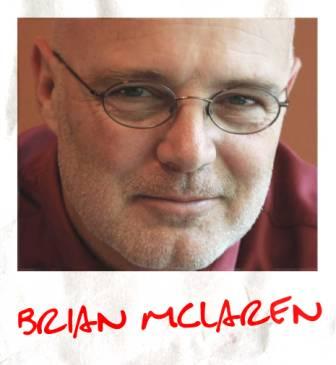
What God is up to today is not just for us. “God is as devoted to Muslims, Hindus and Atheists as to Christians.” Brian McLaren’s contributions to the Lenten Preaching Series at Calvary Episcopal Church in Memphis challenge Christians to move beyond narrow Christian notions of discipleship. recorded Feb.27-28 2013
As the Roman Catholic Church prepares to elect a new pope, this presentation by Phyllis Tickle seems very timely. Tickle provides a history lesson which enlightens us on the marriage between the church and empire that gave birth to Western Christianity. Tickle is convinced that a whole new day is dawning in this post-Constantinian church that promises to seriously engage the 21st century.
Recorded on Feb. 26, 2013 at Calvary Episcopal Church in Memphis Tennessee during their annual Lenten Preaching Series.
Feb.20, 2013: Preaching during the Lenten Preaching Series at Calvary Episcopal Church in Tennessee, Bishop Spong calls the church to move beyond tribal understandings of the nature of God. As always Jack’s humour gently moves his listeners to see beyond familiar views of the scripture toward a more expansive Christianity that encourages adherents to “live fully, love wastefully, and be all that we can be.” Enjoy!
Among the teachings of Jesus, the parables of the lost and found are so well known, so familiar that we are in peril of failing to hear the foolishness they advocate. Although only a few of us have had the opportunity to tend a flock of sheep, most of us at one time or another have been responsible for the welfare of a flock. And whether that flock be sheep or co-workers, clients, customers, students, friends, or children none but the foolish among us would leave 99 to the perils and dangers of the wilderness in order to go looking for one idiot who’d been stupid enough to get themselves lost. We may not keep our coins at home, but I daresay that most of us have felt the sting of loosing a drachma or two or three in this recession. Only a fool would waste a moment searching for our losses when our portfolio’s are so full. I dare say that if we managed to find or recoup our loss, we’re hardly likely to invite the neighbourhood to a party that would in all likelihood eat up more than we had found. Parents, and all of us have been parented, so we know the wisdom of parents not rewarding bad behaviour. Most of us are law-abiding. We all want what is best for our own parents, and so I don’t think any but the foolish among us would consider celebrating the return of someone who has hurt our parents in the past.
These parables of the lost and found are outrageous. None of us would get very fare in life if we lived by these teachings. It is better to put the welfare of the many above the needs of one. It is pointless to cry over spilt milk. Sometimes its better to cut your losses and move on. The best accountants learn quickly to write off losses that would be too time consuming and costly to recoup. Children need to learn that they can’t always get what they want; that there are consequences to their actions, that dues must be paid, that we need to ask for forgiveness and make amends for our crimes, that rules need to be followed, and laws cannot be broken. That doing the right thing will be rewarded. And yet along comes Jesus, spouting such foolishness that even we who are predisposed to agree with him, even we can sympathize with the self-righteous and wonder how anyone could be expected to live like this. Continue reading →
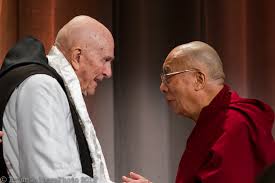
Fr. Keating is an internationally renowned theologian and an accomplished author. He has traveled the world to speak with laypeople and communities about contemplative Christian practices and the psychology of the spiritual journey. Thomas Keating, founder of the centering prayer movement, is an author, teacher, and monk who has worked for many years to foster understanding among the world’s religions. A member of the Cistercian Order in the Benedictine tradition.
“We are Living Through the Greatest Theological Shift Ever in Christian History. How Do We Bring the Freeing, Enheartening, Inspiring, Challenging Message of Jesus of Nazareth to this Age, to Our Times, and to Our Questions” Inspired by the life and work of Thomas Berry, Michael Morwood explores God’s role in the new story of cosmology. Morwood, an Australian theologian was silenced by Rome after the publication of his book “Tomorrow’s Catholic”.
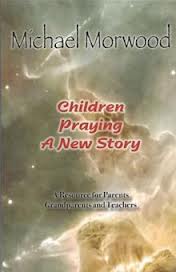
Morwood has an uncanny ability to re- imagine and articulate christianity in ways that speak to those of us who embrace all that we are learning from science about the origins and nature of the cosmos. See my early post on Morwood’s work on prayer here. If you’re looking for a resource for children his book “Children Praying a New Story: A Resource for Parents, Grandparents and Teachers”is terrific! (copies are difficult to find, I got mine from Kindle) I’m currently reading Morwood’s latest book a fable entitled “Faith, Hope, and a Bird Called George: A Spiritual Fable” and I will post more about this soon.
In this video, recorded in April 2012 at Corpus Christi, Morwood speaks on “Thomas Berry, Eco-Spirituality and the Future of Christianity”
Far too many preachers stumble into the celebration of Easter without doing our homework. Resurrection is a central tenant of the Christian faith and Easter is the primary celebration of resurrection and yet, too many of us fail to open ourselves to current scholarship surrounding the doctrine of resurrection. Questions about the nature of the resurrection ought to send us back to the words of the Apostle Paul. Bernard Brandon Scott is a charter member of the Jesus Seminar. His book “The Trouble with Resurrection” is a must read for those who preach during the Easter Season.
If you are planning to write a sermon or listen to a sermon this Easter, this video provides essential background information about the words of the Apostle Paul on the nature of the resurrection which may surprise you. Scott’s treatment of 1 Cor. 15 provides a new understanding of resurrection which is compelling as well as liberating.










 pastordawn