Following Prostitutes and Christ – a sermon for Epiphany 3A – Matthew 4:12-23

Vancouver's east endWhen I was in my early twenties, I grew weary of sharing space and I decided that I wanted an apartment all to myself, despite the fact that I couldn’t really afford an apartment all to myself. But I was determined and that’s how I ended up living in a very rough neighborhood in the east end of Vancouver. My parents weren’t’ very happy about the neighbourhood and worried about the unsavory characters that lived in the run-down building where I found a spacious one bedroom apartment that I could just about afford. The apartment was just a couple of blocks away from the office where I worked, so I was able to walk to work. I ignored all the warnings of my family and friends and I convinced myself that I could handle anything that came my way.

In my heart of hearts I was rather pleased to be living in such a poor rough and tumble neighbourhood. I was young and foolish and the neighbourhood was exciting. Every Sunday I would make the trip back to my home church in the suburbs. Sometimes I would make a second trip out during the week to attend a Bible study. Like so many young people, I was harsh in my criticisms of the elaborate life-styles of my elders. At bible studies, I was always bringing up the plight of the poor and the oppressed and challenging people to do something. Various members of my own family often accused me of being a bleeding heart liberal. I wore their criticism with a certain amount of pride, convinced that I was living out my beliefs.

Although I walked to work each day, I didn’t know any of my neighbours, until one morning I was surprised by a knock on my apartment door. I wondered how anyone would get past the lock on the front door. So, I peered through the peephole and was relieved when I saw a young woman at my door. I unbolted the door and in swept Brenda. Brenda was all smiles and laughter as she explained that she and her roommates were out of coffee and she wondered if I might be able to lend them some coffee.  When I explained that I had just used up the last of my coffee making my own morning brew, Brenda told me not to worry, she and her roommates would be happy to join me. When Brenda returned, she introduced her roommates, Janice and Sue and we all sat down together for our morning coffee. Continue reading

WHY: by Nina Simone in honour of the Rev. Dr. Martin Luther King Jr.

Recorded on April 7, 1968 – just three days after the assignation of Dr. King, recorded live at the Westbury Music Fair. There’s a rawness to this performance that speaks volumes. The song was written by Nina Simone’s bass player Gene Taylor.

Let Freedom Ring Through You!

Martin Luther King2

Epiphany 2A; John 1:29-42 Jan.19, 2014.  A sermon in celebration of the life and witness of the Rev. Dr. Martin Luther King, Jr.

A pdf of the worship bulletin here:

The audio includes the Acclamation, sermon and Hymn of the Day:

Listen to the sermon:

https://pastordawn.com/wp-content/uploads/2014/01/epiphany_2a-mlk.m4a

Let Freedom Ring

MLK FREEDOMWednesday would have been Martin Luther King’s 85 birthday and on Monday our neighbours to the south will celebrate Martin Luther King day. So, this Sunday our worship will commemorate the life and witness of this martyr of the faith. I know that there are some who say that as Canadians we don’t celebrate MLK Day. However, the gospel reading assigned for tomorrow includes Jesus’ early followers first attempts to figure out who Jesus was and hints at what it might mean to follow Jesus. While we have many images of what a follower of Jesus looks like, the life and witness of Martin Luther King, Jr. provides a concrete example of what it actually looks like to follow Jesus.  We will spend some time exploring what our lives might look like should we have the courage to follow Jesus. 

We will sing as our Hymn of the Day what was once known as “The Negro National Anthem,” Lift Every Voice and Sing. I have known a good many people who insist that “white people” ought not to sing this particular hymn. For a time I shared their reluctance, knowing that I have absolutely no idea what it means to live as a person of colour in a predominately white culture. However, over the years I have been convinced that Left Every Voice and Sing speaks to Dr. King’s dream of a world in which we are all freed from the shackles imposed upon us by the colour of our skin. The empathy engendered by this powerful hymn opens us to the possibilities inherent in Dr. King’s dream. 

This video of the ‘ Negro National Anthem’ was originally screened at the historic African-American Church Inaugural Ball in Washington, DC on January 18th, 2009. Many of the esteemed individuals featured in this video in attendance and we presented with the ‘ Keepers of the Flame’ award for the monumental contributions to social justice. This version of the song was performed by the Grace Baptist Church Cathedral Choir, conducted by Derrick James.  While Canadians might balk at the overtly “American” images, we would do well to remember the history we share with our American cousins and the work that both countries need to engage in in order to move us closer to realizing Dr.King’s dream.

I include this pdf of tomorrow’s worship bulletin here, which includes preambles to some of the music we will be singing. Worship begins at 10:45am

Why Should We Pursue Happiness? Karen Armstrong

happiness 4Happiness, the word comes to us from the word for “happenstance,” is not something that happens to us. In her own expansive style, Karen Armstrong explores the contours of happiness.

Children and the Epic of Gilgamesh

Gilgamesh the kingMarcus Borg is often quoted as having said something to the effect that the average adult has but a grade five understanding of Christianity. Which is okay if you are in grade five but it won’t sustain you through a lifetime of questions. While I agree with Borg that a good many people have rejected Christianity on the basis of what they learned as children and we have a great deal of work to do to educate adults about the breadth and depth of the Christian faith, I wonder what it would mean for the church if we stepped up our game when it comes to the education of children.

I can still remember taking my first religious studies class as an adult and being The Last Quest of Gilgameshblown away by the revelation that so many of the biblical stories that I was struggling with actually had their origins in tales that were told long before a wandering Aramean went down to Egypt. I remember being both fascinated with the story of Gilgamesh and angry at the Church for failing to let me in on the reality that human’s have been myth-making since forever. I’m sure that I would have been far less traumatized by the realization that the biblical writers engaged in the ancient art of myth-making had I been introduced to it in my adolescence. Needless to say, since I have been teaching Confirmation classes (ages 11-15) I have taken the opportunity to introduce the Epic of Gilgamesh as a precursor to discussions on the book of Genesis.

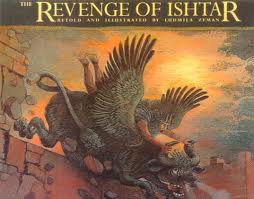
revenge of ishtarSeveral years ago, the task of introducing Gilgamesh to young people was illuminated by the discovery of a two of books by Ludmila Zeman designed to bring the tales first carved onto clay tables in Mesopotamia to life. Both Gilgamesh the King and The Last Quest of Gilgamesh are beautiful illustrated and even though they are recommended for children ages 8 and up, provide an engaging experience for adolescents. For those Confirmation students who are particularly keen, I have added Zeman’s The Revenge of Ishtar  to the Confirmation class’s collection of resources. I have even been known to use this speeded little tomes in Adult Education Classes.  Ludmila Zeman emigrated to Canada from Czechoslovakia and lives, works and creates in Vancouver.

Jesus, the Lamb of God Who Takes Away the Sin of the World? It ain’t necessarily so! (a sermon for Epiphany 2A – John 1:29-42)

Lamb of GodLooking back upon what I preached the last time John 1:29-42 appeared in the lectionary, I realize just how indebted I am to John Shelby Spong for giving me the words to articulate my own objections to the label attached to Jesus by a late first century writer also known as John. Most if not all of this sermon is derived from Jack Spong’s work. For more details I would refer you to Jesus for the Non-Religious and The Fourth Gospel: Tales of a Jewish Mystic. We at Holy Cross were privileged to have Jack speak to us about both of these books. In fact a year before it was published, Holy Cross was the test audience for the material in The Fourth Gospel: Tales of a Jewish Mystic. This sermon ought to have all sorts of footnotes, but I trust you will forgive me for simply confessing that I can no longer tell were Jack leaves off and I begin. Suffice it to say that this sermon is my feeble attempt to put Jack’s work into the form of a sermon.

When I turn the gospel according to John and read about John the Baptist pointing to Jesus, saying:  “Here is the Lamb of God who takes away the sin of the world!”  I want to scream,  “NO!” I have come to believe that our images of God are far too narrow. As far as I’m concerned most of our ideas about God fall far short of every even beginning to describe who God might be. One thing I’m absolutely certain of is if we can imagine ourselves being more loving, more gracious, or more merciful that our theology suggests that God is, then we had better go back to the drawing-board and think again. The ways in which we have traditionally interpreted the life, death and resurrection of Jesus the Christ, paint a picture of a God who is far less loving, gracious or merciful than you or I. Nobody in this room, would demand a blood sacrifice of a lamb, let alone the blood sacrifice of their own child. So, the image of God that is based on this kind of theology must be judged as inadequate to the task of evening beginning to provide us with a glimpse of who our God is.

As we go back to the drawing-board, we ought to take a long hard look at how we arrived at this image in the first place. Thank goodness for the work of our friend Jack Spong who has enabled us to see beyond the literal to the more-than-literal meanings of the various ways in which the followers of Jesus have understood the life and teachings of Jesus. During the years that followed the crucifixion, Jesus’ followers were left wondering what it was all about. How could someone in whom they had seen the fullness of God, be taken from them in such a horrendous way? How could their God allow it?   What were they to do? Over the years that followed, Jesus’ followers looked back at the life, death, and resurrection of Christ through the lens of their own religious experiences. Jesus’ followers were primarily Jewish and so it didn’t take long for the familiar Jewish symbol of the Lamb of God to be applied to Jesus as a way of making some sense out of his death.  Today most Christians associate the symbol of the Lamb of God with the Jewish celebration of Passover.  While the Gospel narratives do indeed locate the time of Jesus death during the celebration of the Passover, and there is indeed a sacrificial lamb involved in the Passover, the actual phrase “the Lamb of God” comes not from the religious rites of Passover, but rather the religious rites of Yom Kippur: The Day of Atonement.  Phrases like “the Lamb of God”, “died for our sins” and “washed in the blood of the lamb” can all be found in the religious rites of Yom Kippur.  Continue reading

Benedictus: “For Longing” by John O’Donohue

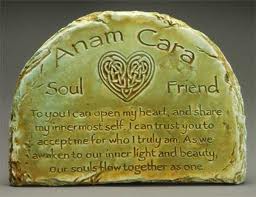
anam caraThe art of creating blessings is not what it once was. There are days when I wonder if the lost art of blessing will ever escape the dull drums of the hallmark-esk drivel that is passed around to masquerade as sacred text. John O’Donohue is one of my favourite poets. He manages to delve into his Celtic roots to tap into the desire to bless another without resorting to the trite  cliches that dominate our modern attempts at this ancient art art form. His blessings are so carefully crafted to open our very selves to the possibility of the Divine. 

For Longing John O'Donohue pastordawn

A Progressive Christian Wades into the Waters of Baptism

baptism 33A sermon for the celebration of the Baptism of Jesus

Matthew 3:13-17

Listen to the sermon here:

God Is a River – Peter Mayer

riverPeter Mayer, one of my favourite folk singers, captures a hint of the essence of God when he sings. This morning our worship celebrates the baptism of Jesus and with so much water everywhere around us, the image of God as a river strikes some chords that I find both refreshing and challenging.

What the Universe Reveals – When God Is Elusive

Image

Universe Reveals O'Murchu pastordawn

Wisdom from Our Spiritual Ancestors: Matthew Fox

Julian of Norwich Between pastordawn

I was introduced to the work of Matthew Fox long before I ever entertained the idea of becoming a student of religion. Fox’s groundbreaking book, “Original Blessing” introduced me to the work of the Christian mystics and helped me to see beyond the institutional theology of those who won the long forgotten theological battles of our past. His exploration of the work of those whose theology threatened the agendas of the powers that be and development of “creation spirituality” opened me to a new way of understanding and articulating Christianity.

Holy Miracle by Love Eternal

Thankyou babe

Baptism A Mystery of the Faith: a sermon for the celebration of the Baptism of Jesus

baptism 33There’s a definition of what it means to be a priest that has always daunted me. A priest it has been said is “a keeper of the mysteries; a keeper of the sacred mysteries of our faith. People often confuse the idea of mystery with the idea of secret. But I can assure you that as a keeper of the mysteries of the faith it is not my job, nor is it any other priest’s job, to keep the mysteries of our faith a secret. Yes, as an ordained pastor, one of my responsibilities is to be a keeper of the mysteries of our faith. As a keeper of the mysteries I am responsible for ensuring that the community I serve holds those mysteries sacred. We do so, by remembering that the reality that we call God works in, with, and through those mysteries. 

Baptism is considered to be one of the mysteries of our faith. Baptism is a sacrament of the church and by definition a sacrament takes ordinary stuff – water – mixes that ordinary stuff with the Word and in the combination of water and the Word you have a tangible means of God’s grace. God’s grace is revealed in the sacrament of Baptism by the act of our gathering together and mixing the stuff of the earth with the Word. We have only two sacraments in the Lutheran church Baptism and Eucharist, and both of those things are sacraments because we gather together take ordinary stuff – bread and wine, or water and mix it with the Word of Jesus the Christ and in the water, the bread and the wine the means of God’s grace is made visible to us.

So, there you have it the technical definition of the sacraments, the mysteries of Baptism and Communion, in which the reality that we call God works in, with, through and under. But like all technical definitions of mysteries, these definitions fail to capture the essence of the mystery that lies at their very heart; the mystery of the reality that we call God. As a keeper of the mysteries, one would think that a priest, a pastor, ought to be able to reveal, by way of definition something of the nature of the reality of the Divine. The truth is I have no real definition to offer you of this reality that we call God. I read once, I wish I could remember where the wisdom of a priest far more skilled than I who declared that he’d given up trying to explain God to anyone because in the end, he said, “I cannot lead you to God, anymore than anyone can lead a fish to water.”

The most important thing I learned in seminary is that “I don’t know is an answer.” The truth is the more we learn the more we know that we don’t know. But this unknowing can be so unsatisfying, precisely because we believe that God is the one in whom we live and breath and have our being, we want to know the very nature of the One who is the ultimate Reality.

Now, if these words haven’t already become so vague that the veil of unknowing has begun to make any tangible means of God’s grace seem invisible and so beyond our grasp, let me leave the theology behind and tell you a story. One thing I do know for sure is that the shortest distance between the questions of what it means to be human and understanding our humanity is a story. Continue reading

Being Honest to God: Richard Holloway

hollowayHe was once the Primate of the Episcopal Church in Scotland but these days Richard Holloway describes himself as an agnostic Christian hungering after transcendency and preaching a gospel of uncertainty. His memoir “Leaving Alexandria: A Memoir of Faith and Doubt” is a favourite of mine. In this video he explores being honest to God and understanding religion as an art form. Holloway’s words both challenge and comfort me as he plumbs the depths of our longing through the poiesis of ultimate meaning.

Bat Col – The Daughter of a Sound: Hearing the Word Utter Our Name

Preparing to Preach on Jesus’ Baptism

BAT QOL pastordawnHeather Murray Elkins tells her story, “The Secret of Our Baptism” and opens us to a new way of hearing the Bat Col, the Daughter of a Sound, the Voice of the Divine, the Word, who speaks in this Sunday’s Gospel reading. Matthew 3:13-17

Don’t Forget the Mystery of Our Faith!

Thomas 70 pastordawn

Christ Has Died. Christ Is Risen.

Christ Will Come Again, and Again, and Again, and Again…

A sermon for the Second Sunday of Christmas: 

Readings:  John 1:1-9; Thomas 70; Matthew 2:1-12

Listen to the sermon: 

Holy Morn: Tina Malia

The Big Question – Bruce Sanguin

bruce sanguinEvolutionary Christian theologian Bruce Sanguin’s current article in the United Church observer tackles “The Big Question” – Is God a Seperate Being ??? For those of us who are struggling to move beyond our limited images of God, Sanguin offers a resting place along the way. Just click on the link below to read the article. I highly recommend it!!! Bruce Sanguin, a minister in the United Church of Canada, is one of the principal contributors to the new Living the Questions interactive DVD series “Painting the Stars”

The Big Question – The United Church Observer.

Bruce Sanguin LTQ

YOU are the Light of the World: an Epiphany sermon

epiphanyMaybe it’s because I’ve directed too many Christmas pageants, but when I hear the story of the Magi visiting the baby Jesus, I don’t think of three kings at all. No visions of regal visitors decked out in their finest riding atop camels guided by a star for me. Just memories of little boys, decked out in colourful shiny robes that threaten to trip them up, giggling and roughhousing, with their cardboard crowns askew. Of all the little boy kings that I’ve tried to corral one of them stands out from all the rest. Perhaps I remember him so well because he was so little that we couldn’t have him knell at the manger for fear that he would disappear into the hay and our audience would only see two Wise Guys paying homage. Or maybe it was the speed with which he dashed in and out of the gang of shepherds who threatened to trip him up with their crooks. But I really think it was the ingenious way he solved the problem of his lost gold, that makes little, for the purposes of this sermon let’s call him Jay, stand out from all the other little boy kings.

Little Jay’s mother, like all the mothers of all the kings, was responsible for creating a facsimile of the gift her wise son would bestow on the baby Jesus. Unlike some of the feeble efforts that I’ve seen over the years, Jay’s gift of gold was a cut above the rest. Inside an elaborately carved box that his Dad had picked up on his travels to the Middle East, Jay’s mother had placed upon a bed of statin a carefully created block of wood wrapped in golden gift paper. It positively sparkled.  It must have impressed Jay, because he was forever opening up his box to show his fellow cast-members his treasure. During the dress rehearsal, Jay’s performance was perfect. Jay positively perfected the art of gazing up at the makeshift star that hung above the altar just east of our makeshift manger. When he arrived at the place where the newborn baby Jesus, who just happened to be a little girl that year, Jay strode right up to her mother Mary and opened the box containing his treasure and proudly announced his gift of gold for the new born king. They, whoever they are, say that if the rehearsal doesn’t go well then the performance will be wonderful. So, I was more than a little worried when our dress rehearsal went off so splendidly because that could mean only one thing, and I wasn’t looking forward to a performance where things went wrong. Sure enough, unbeknownst to me, on the morning of his big performance, somewhere between his home and church, Jay lost his golden treasure. All he had was an empty box when he showed up at his father’s pew wailing because all was lost. Jay had no gold to give to the baby Jesus.

This story reminds me of a story that Joan Chittister tells that I’ve told you before but like all good stories it is worth telling over and over again. It’s the story of a Sufi master who was found scratching through the sand in the middle of the road. “What are you doing?” some pilgrims asked the Sufi as they passed. The old Sufi looked up and said, “I’m looking for my treasure. I’ve lost it.” the old man said.  So the pilgrims, good people all dropped to their knees to help. They sifted sand.   They dug under stones. They sweat under the waxing midday sun. Until, finally, hungry, soaking wet and exhausted, one of the travellers asked of the Sufi,      “Sufi, are you sure you lost your treasure here?” And the old man said, “Oh, no. No, I didn’t loose my treasure here,  I lost it over there on the other side of those mountains.” Continue reading