Yesterday’s article by Brandon Ambrosino in the Religion section of the Hufington Post sent the wheels in motions. I am indebted to Pete Rollins new book the Idolatry of God as well as his video Atheism for Lent for providing me with the courage to preach this sermon.
Lent 1C – February 17, 2013 – Listen to the sermon here.
Below are the three video clips we used in class this morning as we continued our conversation about myth and making meaning.
Brian Swimme is a mathematical cosmologist with an uncanny ability to articulate the new story of our origins in ways that those of us unfamiliar with the breakthroughs in science can begin to understand. As science continues to revolutionize our understanding of who we are and where we are, the stories we tell to make meaning of life will also begin to change.
The Reverend Dr. Otis Moss III is the Pastor of Trinity United Church of Christ in Chicago. As the successor to the Rev. Jeremiah Wright, Moss exemplifies the finest traditions of the African American Church’s long line of brilliant preachers. In this video Moss speaks at the Chautauqua Institution exploring the dissonance between “Analogue Religion and Digital Faith.” Moss sees the democratization of faith as “open source communities” enable users to network in ways religion has heretofore been unable to achieve.
Two years ago, the Strange History of Transfiguration Sunday inspired this sermon. I offer it here because the words of Desmond Tutu speak volumes as I work on this year’s Transfiguration sermon.
When our images of God are tied to the idol of a supernatural sky-dweller who has the power to solve all our problems, despair is sure to follow as our super-hero fails time after time to impress us.
When I was a very little girl, I was absolutely convinced that I had the power to change the mind of God! Confident that I held such power, I never missed an opportunity to exercise it. Now, I’ll grant you that like most children, I was also convinced that the universe itself actually revolved around me, so believing that I was powerful enough to change God’s mind, wasn’t exactly much of a stretch. In fact, when I was a child, it wasn’t all that difficult to change God’s mind. For instance, I could stop God from breaking my mother’s back simply by leaping over a crack in the pavement. “Don’t step on a crack and break your mothers back.” Now, in my young mind the only one powerful enough to crush my mother’s powerful spine, must be God. I also knew that God wasn’t particularly fond of ladders, and that if I refrained from walking under them, God would smile upon me.
I had no idea why black cats, or spilling salt, or breaking mirrors, or opening umbrellas inside, or leaving hats on the bed, or putting new shoes on the table, would annoy God, but I knew enough to avoid doing such things. I was absolutely sure that God would respond positively if I managed to pull a turkey’s wishbone apart in just the right way so that I was left holding a piece larger than the piece my brother was left with. God also responded well if I knocked on wood, or caught sight of a falling star, or if I crossed my fingers and hoped to die.
I didn’t need to understand why my activities worked to influence the heart and mind of God, I simply knew that they did and would continue to do so just as long as I continued to avoid the necessary evils and indulge in an apple a day, and managed to blow out all the candles on my birthday cakes.
The universe that revolved around me might have been full of all sorts of rules, but it would continue to revolve exactly the way I wanted it to if I managed to placate the old guy up in the sky who was pulling every body else’s strings. I never once considered that that old God in the sky was pulling my strings because I was absolutely confident in my ability to do what was necessary to pull God’s strings.
But as I grew up, I began to learn that despite my best intentions, the universe did not revolve around me. Little by little I learned that I didn’t have what it takes to influence all of the things that were having an impact upon my life. And just as surely as my powers waned, so too did the powers of God.
I can still remember sitting in the back seat of the car and wondering why God despite the fact that I always lifted my feet up each and every time my father drove over a railroad track, my parents simply couldn’t find the money we needed to buy our happiness. Surely God must know that I was doing my part to do what was necessary to make God shine his smile upon my family.
So each and every time God failed to do exactly what I wanted God to do, God’s power was diminished in my eyes. As I grew, I gave up trying to influence God and I took off after God’s son. After all Jesus was far more fun to be around than his old doddering Father. For starters Jesus actually liked children. And Jesus had way better party tricks than his Dad. Jesus could turn water into wine, make the blind see, and the lame walk. And if the cupboard was bare, no need to worry, cause Jesus was even better than my Mom at turning nothing into something. Where Mom could make a meal out of almost nothing, Jesus could make enough to feed 5000. And there was always that trick to beat all tricks, cause in all my young life, I never heard tell of anyone else who ever came back from the dead and brought tons of chocolate with him. I mean that old doddering guy in the sky simply didn’t stand a chance against Jesus. Santa Claus was about the only one who could come close, and everybody knew that Santa would be nothing without Jesus.
So, somewhere along the way, that I had no need to worry about stepping on a cracks, or spilling salt, or dropping forks, because these things were nothing more than superstitions. Besides, who needs to worry about superstitions when you’ve got Jesus for as your friend? My buddy Jesus was all I needed to keep my world on an even keel. So, I walked with him and I talked with him and we were so happy together, until stuff started to happen that made me begin to doubt Jesus ability to change the world.
A few weeks before my eleventh birthday, Sirhan Sirhan shot Bobby Kennedy and for the second time in my life, I saw my father cry. I was only six-years old when the shooting of Bobby’s older brother made the adults in my life cry. Their tears changed something in me. I listened more intently to what was going on in the world around me. I needed to know what was happening so that I could do something to change it. A year after Bobby Kennedy was shot, I went to my first protest march. I was just twelve years old, but I knew that Vietnam was wrong and had to be stopped. I believed that my presence together with the presence of hundreds of thousands, could make a difference.
I left my buddy Jesus playing in the garden. I began to listen to the radical Jesus who spoke truth to power and called us to follow him so that we could change the world. As a teenager I knew that we had to end the war in Vietnam and even though the sixties were drawing to a close, and the flower children would soon be trading in their incense and beads so that the could find jobs and climb the corporate ladder, we marched. And when in 1975, the Vietnam war ended in defeat, I actually naively believed that public opinion had caused the powers that be to change their minds.
So, I continued to work for peace, only this time it was nuclear proliferation that we needed to stop. It was somewhere during the Regan years that I gave up the notion of changing the world by marching in the streets. Iran Contra put an end to my naiveté. Jesus and I retreated. Literally. I mean we literally retreated. A few friends and I worked together on a retreat center. Seabright Farm was a Christian retreat centre designed to nourish people who were trying to live their lives in the world. Jesus was our guide. We wanted to live in this complicated world of ours, the way that Jesus might live. So we dedicated ourselves to learning. Learning all we could about Jesus, Christianity, the church, theology, living responsibly, ethically. Our attempts to change the world took on a more modest approach. We set out to change the world, by changing ourselves.
Eventually, my work at Seabright Farm, brought me into seminary, where I suppose I thought I could change the world by changing the church. Along the way, I must confess that over the years I’ve become more than a little jaded and cynical. There are days when I don’t really believe that anything will ever really change. But there are moments, moments when I actually believe that it’s possible not only to change the world, but to actually change God.
Transfiguration Sunday is a strange festival in the Church calendar. The story of the Transfiguration is the story of Jesus climbing a mountain with his closest friends. On the mountaintop Jesus has a profound experience. There is a dazzling light, a cloud that overshadowed them, and the cloud terrified them. That same cloud appeared generations earlier and overshadowed one of the fathers of the Jewish people. That same cloud appeared generations later and overshadowed the father of the people of Islam.
As we read of that cloud today, we should do so with the same fear and trembling of our sisters and brothers who over the generations have encountered that cloud. For Transfiguration Sunday may be a festival of the church, but it’s history is steeped in the political and religious intolerance of the world. Before the fifteenth century, only a few Christian communities kept the feast of the Transfiguration. The festival hadn’t caught on like other festivals.
In all of Christendom only a handful of congregations marked the day and we would not be celebrating it today if it weren’t for a terrible battle. On the sixth of August 1456 news was announced in Rome that John Hunyady had defeated the Turks near Belgrade and the bells of churches rang out in celebration of the slaughter of some 50,000 Muslims. Overjoyed, Pope Callistus ordered the whole church to commemorate the victory against the infidels by celebrating the feast of the Transfiguration.
For generations the church commemorated the battle by celebrating Transfiguration Sunday on August the sixth. Some church’s still celebrate Transfiguration on the sixth of August. However, shortly after the end of World War II protestant churches discretely decided to move the festival of Transfiguration to the last day of Epiphany. They did so, because of the infamy of August 6. In 1945 a slaughter of a different sort was inflicted on a different people.
On August 6th 1945, someone climbed not a holy mountain, but into the cockpit of a plane—a machine of war. There had been a lull of a week in the fighting between the Allies and Japan. The Allies had a new secret weapon and they wanted to us it with the maximum psychological effect. They had prepared three atomic bombs. On the 16th of July, the first bomb was tested in New Mexico.
As a terrifying cloud rose up from the earth, the father of the atomic bomb J. Robert Oppenheim quoted from the Hindu Scriptures a line from the Bhagavad-Gita, “Now, I am become death the destroyer of worlds.” On August 6 the second bomb was dropped on Hiroshima, and three days later the third one was dropped on Nagasaki. 150,000 people lay dead. Thousands more died later from the effect of atomic radiation. 75,000 buildings were destroyed. Two cities were devastated. The world will never be the same. The date for the festival of Transfiguration was moved.
The shape of that awful cloud hangs now forever in our sky. If you close your eyes you will see that cloud; rising up from the earth; a mushroom more poisonous than anything created by God. It is the new tree of knowledge of good and evil. We have eaten of its fruit and we shall never be the same.
We live in fear of everything that emanates from that terrible cloud. Is it any wonder that the vision of that cloud was invoked by the leaders of our neighbours to the south as they tried to convince the world to go to war against the people of Iraq. Weapons of mass destruction! Yesterday, the memory of the cloud hung over Iraq. Today, the memory of that cloud is being used to isolate Iran and Korea.
Has the memory of that poisonous cloud obliterated from our minds the memory of another cloud? Do we no longer remember the story of another climb, another light, another voice, another cloud? Jesus was there speaking of his departure, which he was about to accomplish at Jerusalem.
Jesus was speaking of his death, his destruction by another tree. Do we not meet on Transfiguration Sunday today under the shadow of that tree, to break bread and to proclaim the victory of Christ’s death over every evil, even the total annihilation by human evil.
Friends, I trust that we will be led out of this morass of fear and hatred by a pillar of cloud; a cloud that transformed Moses and a band of refugees in the desert into a people; a cloud that rested upon Jesus declaring Jesus to be the embodiment of all that God had tried to say for generations; the same cloud that carried on Mohammad into the heavens, leaving behind a people who would take on the name Islam, which itself means peace.
Memories of clouds… Sorry, but I’ve looked at cloud’s from both sides know and like the song says I really don’t know clouds at all. I’m still wondering if its possible to be the people God created us to be? I’d given up wondering whether or not it’s realistic to hope, but rather whether it’s even possible to hope that the world can be changed. The poor will always be with us. Wars will keep breaking out just as surely as the sun rises in the east. Bad things will continue to happen to good people. And just when I think that hope is pointless…that the powerful will always abuse the powerless…just when I’m about ready to join the ranks of those who say live for today and forget about tomorrow…some people half a world away, begin to turn the whole world upside down…and dictators begin to loose their grip…and I begin to wonder, what if? And I feel the hope begin to stir in me.
In his book, God Has A Dream: A Vision of Home for Our Time, Desmond Tutu tells about a transfiguration experience that he will never forget. It occurred when apartheid was still in full swing. Tutu and other church leaders were preparing for a meeting with the prime minister of South Africa to discuss the troubles that were destroying their nation. They met at a theological college that had closed down because of the white government’s racist policies. During a break from the proceedings, Tutu walked into the college’s garden for some quiet time. In the midst of the garden was a huge wooden cross. As Tutu looked at the barren cross, he realized that it was winter, a time when the grass was pale and dry, a time when almost no one could imagine that in a few short weeks it would be lush, green, and beautiful again. In a few short weeks, the grass and all the surrounding world would be transfigured. As the archbishop sat there and pondered that, he obtained a new insight into the power of transfiguration, of God’s ability to transform our world. Tutu concluded that transfiguration means that no one and no situation is “untransfigurable.” The time will eventually come when the whole world will be released from its current bondage and brought to share in the glorious liberty that God intends.
Just over a week ago, many of you followed Jesus out of your comfort zone and down to the Inn From the Cold. You worked very heard to prepare over 200 meals to feed the hungry. But you did so much more than just feeding your neighbours. I believe that you actually achieved a transfiguration of sorts. Shortly before that evening, some of us watched Desmond Tutu talk about the need to change our image of God. I’d like to read back to you the words that Tutu said: The images that we have of God are odd because God—this omnipotent one—is actually weak. As a parent I understand this. You watch your child going wrong and there’s not very much you can do to stop them. You have tried to teach them what is right, but now it is their life and they are mucking it up. There are many moments when you cry for your child, and that’s exactly what happens with God. All of us are God’s children.
I frequently say, I’m so glad I’m not God! Can you imagine having to say, “Bin Laden is my child. Saddam Hussein is my child. George Bush is my child.” Oh! All of them, including me. Can you imagine what God must have felt watching the Holocaust? Watching Hiroshima and Nagasaki? Watching Rwanda? Can you imagine God watching Darfur? Imagine God watching Iraq and saying, “These are my children here, and they are killing my other children. And I can’t do anything because I have said to them, ‘I give you the space to be you and that space enables you to make choices. And I can’t stop you when you make the wrong choices. All I can do is sit here and cry.’” And God cries until God sees beautiful people who care, even if they may not do earth-shattering things.
There is a fantastic story of a so-called colored woman who was driven from her home and ostracized by her family because she had HIV/AIDS. She came to live in a home for people who suffered from the disease, and there were white men there who would help her because she couldn’t do anything herself. She was all skin and bones. They would carry her like a baby and wash her, bathe her, feed her. Then they would put her in front of a television set and hold her. And this was during the apartheid years. I visited this home and said, “What an incredible lesson in loving and compassion and caring.”
It was transfiguring something ugly, letting something beautiful come from a death-making disease. When God sees that, a smile breaks forth on God’s face and God smiles through the tears. It’s like when the sun shines through the rain. The world may never know about these little transfigurations, but these little acts of love are potent.
They are moving our universe so that it will become the kind of place God wants it to be. And so, yes, you wipe the tears from God’s eyes. And God smiles.” You people have transfigured the face of God on more than a few occasions. By following Jesus out into the world, to reach out to your sisters and brothers, you have transfigured the face of God.” (see the video below for the full context of this quote)
So, on this Transfiguration Sunday, let me remind you of God’s ability to Transform the world precisely because God dwells in with and through you! Do not give up hope: no one and no situation is “untransfigurable.” The time will eventually come when the whole world will be released from its current bondage and brought to share in the glorious liberty that God intends. Continue to give hope to the hopeless, reach out and love the world that God loves, and always remember that you have the power to transfigure the face of God!
A Benediction: Always remember that you have the power
to transfigure the face of God!
You can wipe the tears from God’s eyes.
You can make God smile.
Reach out with love.
Be the compassionate people God created you to be!
Receive the blessing of God whose love knows no boundaries,
Here’s an Ash Wednesday homily for the 21st century!
We’ve all been there. Driving down the road – distracted by thoughts of this and that, when all of a sudden it happens, a car comes at you out of no where and you slam on the breaks or you quickly swerve to avoid a disaster. You could have been killed. You could have killed someone. Your life or someone else’s life could have been radically changed in an instant. As you pull back into traffic you are ever so conscious of the weight of you foot on the accelerator and you swear that you’ve got to be more careful. You begin to scold yourself. What were you thinking? Why weren’t you paying attention? Wake-up you could have been killed.
Welcome to Ash Wednesday. What have you been thinking? Why weren’t you paying attention? Wake-up — you are going to die!!! Ash Wednesday is your mid-winter wake-up call. Some of you may not need the wake-up call. Some of you know all too well that death is all around us. Some of you have lost someone dear to you. Some of you have felt that fear in the pit of your belly when the doctor suggests a particular test. Traditional Ash Wednesday worship would require us to focus on the brevity of life and remember that none of us will get out of this life alive. Our ancestors in the faith, entered into a morose season of Lent by via the awesome reminder that they came from dust and soon they shall return to the dust.
Lent was a season of lament and repentance based on a particular understanding of what it means to be human. Since the 11th century most of Christianity has understood the human condition as that of those who have fallen from grace. But we live in a post-modern world. We no longer believe that Adam and Eve were the first humans. We read Genesis not as history but as myth. We understand that humans evolved over millions of years. There was no perfect human condition for us to fall from.
What happens when you reject the theological construct of original sin? What happens when you embrace the idea that we are fiercely and wonderfully made? What happens when you see humanity as originally blessed?
Once you open up Pandora’s box you can’t just walk back out of the room and pretend that the theory of evolution doesn’t have something to teach us about what it means to be human. If we see our selves as incomplete creations rather than fallen sinful creatures, how then do we deal with our mortality?
Perhaps we can begin to express what it means to be human in terms that reflect our need to evolve in to all that we were created to be. Perhaps the brevity and uncertainty of life can begin to wake us up so that we can seize each and every moment. This is the day that God has made, let us rejoice and be glad in it!
All that we love and care for is mortal and transitory, but mortality is the very reality that can become the inspiration for celebrate life and to love. Ash Wednesday reminds us of our human condition of mortality. But we should also remember the reality of creation itself is transformed by death and is constantly renewing itself. There is an eternal quality to creation, just as there is an eternal quality to life.
Tonight we embrace the promise that in death we are transformed into a new way of living on in God.Trusting that here and now we are living in God, we delight in the knowledge that in God we share in eternity. We are constantly dying, but we are also constantly living as we reflect God’s vision in the world of the flesh. This day, this moment is eternity for God is here, revealed in the wonders of creation; in the face of our neighbours, in the beauty of the earth, in the magnitude of the universe and in the miracles of sub-atomic particles. Tonight is our wake-up call.
We will not pass this way again. If we’ve been hibernating its time to take a deep breath and let ourselves be filled with the Spirit so that we can live fully, love extravagantly and be all that we were created to be. Yes we are dust, but we are earthly dust, springing forth from a multi-billion-year holy adventure.
Dust is good, after all; it is the place of fecundity, of moist dark soil, and perhaps we are as various scientists are suggesting: “star-dust” evolving creatures emerging from God’s intergalactic creativity. We are frail, but we are also part of a holy adventure reflecting the love of God over billions of years and in billions of galaxies.
So, how can we fail to rejoice in the colour purple, or pause in wonder at a baby’s birth? How can we fail to enjoy the beauty of a sunset or the splendor of a mountain range? How can we fail to embrace the sorrows that surround us with love? How can we remain deaf to the cries of our neighbours, or the pleas of our enemies? Tonight is our wake-up call?
Life is here for the living. This is eternity; right here, right now!!! Let the ashes we receive be the ashes of transformation; of awakening to the beauty and love of seizing the moment and living it to the fullest.
Remember that you are dust and to dust you shall return. Let the memory of your incomplete humanity awaken you to the wonders, joys, sorrows, and pain of life.
Let it be said of you that here in this little part of eternity that you lived fully, loved extravagantly and helped humanity evolve into all that God dreamed we can be! Amen.
An Ash Wednesday Benediction
Remember that you are dust and to dust you shall return.
Let the memory of your incomplete humanity
awaken you to the wonders, joys, sorrows, and pain of life.
Let the ashes you wear be the ashes of transformation;
of awakening to the beauty and love of seizing the moment
and living it to the fullest.
Let it be said of you that here in this little part of eternity
that you lived fully, loved extravagantly
and helped humanity evolve into all that God dreamed we can be!
You are fearfully and wonderfully made
In the image of the ONE who is was and ever more shall be
Feb.3/2013: Richard Dawkins Loses Debate Against Former Anglican Head Rowan Williams at Cambridge University
The debate motion that “religion has no place in the 21st Century” was well-defeated at the event held yesterday at the Cambridge Union Society. Dawkins lost the debate by 324 to 136 as he failed to convince the gathering that religion has no place. Also taking part in the debate were Andrew Copson and Arif Ahmed.
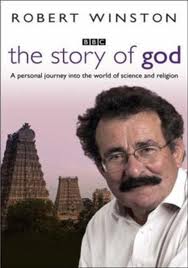
Imagining the unimaginable and describing the indiscribable – the human endeavour to capture the nature of the divine in words, images, stories and myths is the subject of this excellent BBC documentary series. Robert Winston, (medical doctor, scientist and Professor of Science and Society at Imperial College London) examines the roots of religious beliefs and the various ways in which humanity’s sense of the divine have developed.
Professor Winston says: “However you define God, and whether you believe in God or not, the world we live in has been shaped by the universal human conviction that there is more to life than life itself; that there is a ‘god’ shaped hole at the centre of our universe.“We have come up with many different ways to fill that hole, with many gods or just one, with gods of hunting, gods of farming, gods of war and gods of sea and sky.”
Looking at the Bible as “literature with a religious agenda which distorts the past,” Dr Francesca Stavrakopoulou (University of Exeter) challenges some long held assumptions about monotheism to ask the question: “Did God Have a Wife?” Her BBC documentary explores the early roots of monotheism in Judaism, Christianity and Islam.
Last week, as part of my preparation to teach a class on myth-making I spent some time exploring the creation myths from cultures other than my own. What I rediscovered was the power of story to help us make meaning of and in our lives. It is an exercise that I highly recommend!
Sand Artist – Marcus Winter is an indigenous artist of New Zealand who brings the Maori Creation Story to life with his performance painting of sand art.
Myths are created in the context of a culture – shaped by the characteristics of the culture in which they are born. Over time myths have the power to shape culture. However, as our cultural context changes we must continue the process of making meaning and creating new myths.
Here are the video clips we used to explore the process.
Since becoming a pastor, the questions that I hear more frequently than any others concern the subject of prayer. “How do I pray?” or “What should I prayer?” used to be the most often asked questions. However, since speaking and writing about giving up the idol of the “Big Santa-God-in-the-Sky” who grants requests or doesn’t answer prayers as if they were wishes, people have added “To whom should/do/can we pray?” to the list of most the asked questions. While I am tempted to offer answers to these questions, I suspect that my answers will not satisfy those who insist that there must be some secret formula that will make their prayer life successful.
I can say that when prayer ceases to be a laundry list of wants and desires, it has the power to open us to the awe and wonder of being a part of something far greater than ourselves. When we allow ourselves to be opened to more than what and who we are, the sense of gratitude that wells has the power to make us lovers of creation and partners with our sisters and brothers in this grand endeavour we call life.
In the stories handed down to us of Jesus of Nazareth, we are told that his followers asked him how they should pray. When I read these stories I see a frustrated Jesus whose followers insist that John the Baptist’s followers have a formula for prayer and Jesus ought to give them one as well. In these stories its as if Jesus says, “Oh well if you insist, then when you pray pray like this.” The prayer that results has become known as The Lord’s Prayer, and although there are many translations and interpretations of this Abba Prayer, these days the one I am becoming fond of is the one provided by Neil Douglas-Klotz in Prayers of the Cosmos: Meditations on the Aramaic Words of Jesus.The video below provides a beautiful interpretation of this interpretation. Enjoy. May it move you toward prayer without words so that you can pray without ceasing and let your life be your prayer!
Sometimes, Meister Eckhart’s plea echoes from the very core of my being and I too, pray God to rid me and the world of God. The other day, someone told me that theology is not important, that the world is beyond caring about the preoccupation’s of religious organizations. I must confess that a part of me wished that the theologies of world were indeed irrelevant. Sadly, old and destructive theologies are being exported from the so-called developed world to the developing world with catastrophic consequences.
The Gospel of Intolerance is a filmmaker Roger Ross Williams glimpse into the scandal of Evangelical Christian efforts to influence Uganda’s lawmakers to step up the persecution of GLBT people.
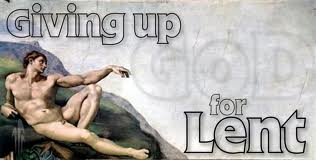
Dare we give up God for Lent? Are we ready to expose ourselves to critiques of Christianity so that we might move beyond “God as a crutch” toward an experience of the absence of God? I find myself intrigued by Peter Rollin’s attempt to move us beyond our carefully held images/idols toward a deeper understanding of Christ’s experience on the cross. Atheism for Lent is a daring idea; a real journey into the wilderness.
Back in November, I had the privilege of attending a series of lectures given by Phyllis Tickle who describes the current reformation that the church is experiencing as part of a cultural phenomenon that happens about every 500 years, which she calls “The Great Emergence”. When asked what skills religious leaders will need to navigate the information age, Tickle insisted that the best advice we could give to anyone considering a religious vocation was that they should study physics. Inwardly I groaned, remembering my feeble attempts to come to grips with the most rudimentary theories of quantum physics. But I also nodded in agreement, knowing that so many of our religious narratives strive to make meaning of the cosmos as it was perceived by ancient minds. When our ancestors looked into the heavens they had no way of knowing the wonders of the cosmos that we are beginning to discover. While physicists can ignore theology, theologians who ignore physics will find themselves stuck atop Job’s dung-heap impotently shaking their fists at the Divine. Perhaps Tickle is correct and the clerics of the future will out of necessity need to be physicists. Theoretical physicist Michio Kaku speculates that the universe is “a symphony of strings” and the “mind of God would be cosmic music resonating through eleven dimensional hyper-space”. If you have the courage to climb down from the dung-heap, take a look at Michio Kaku’s “The Universe in a Nutshell”. If the Divine bollocking that Job endured makes you wonder if ignorance might just be bliss, then take a peek at “Is God a Mathematician?” or “The Mind of God”. Who knows, maybe if a few more of us dare to dwell in the questions we might just come up with imaginative narratives to help us fathom what it means to be human.
Bill Moyers’ six-part series exploring the work of Joseph Campbell on the Power of Myth first aired back in 1988 and remains one of the most popular series that PBS has ever aired. I still remember watching it for the first time in 1992 in a Religious Studies 101 class. It opened my mind to a whole new way of understanding our desire to make meaning of our experiences. I post it here for the benefit of the class I’m currently teaching on Progressive Christianity. As we attempt to move beyond the doctrines and dogmas that have held the church captive to a new way of being church, it is helpful to understand that so many of the mysteries we encounter in life cannot be contained in thoughts, ideas, or doctrines precisely because they transcend words. To speak of eternal mystery we must use the language of myth.
The video below is the one in the series: The Hero. I suspect that once you’ve watched it, you’ll want to search out the other videos in the series.
Barbara Rossing’s book The Rapture Exposed: The Message of Hope in the Book of Revelation changed the way I approach the material in the Book of Revelation. After reading the book and using it as the basis of an adult study the loathing and trepidation I always felt about dealing with the content of this troublesome tome was replaced by a desire to encourage people to take another look at what this book might offer us as we struggle with the awesome task of treading the earth lightly.
Rossing sees both a critique of our culture and a message of hope for creation in this all too often abused piece of scripture.
Whenever the story of Jesus turning water into wine at the wedding in Cana comes around in the lectionary, our congregation pops a cork and substitutes the sweet wine we use for communion with champagne. It is our attempt to enter into the spirit of outrageous hospitality that Jesus exhibited in this story which the author of the Gospel According to John uses to begin his tale of Jesus public ministry. However, the last time this reading came up in January of 2010, our living rooms were being inundated with visions of the disaster in Haiti. So, we put away our champagne and turned our hearts and minds to questions about what we might do to respond to our neighbours in need. Below you will find the sermon that I preached. I post it here, three years after the disaster because here in Canada we have heard from Julian Fantino (Canada’s Minister of International Cooperation) that the Harper government may be about to pull the plug on disaster relief to Haiti which continues to suffer. Fantino’s attempt to justify such a move demonstrated his complete lack of knowledge of the history of the worlds abuse of Haiti. As our sisters and brothers continue to suffer, perhaps this old sermon will inspire some to take action to lobby our governments not to abandon those in need.
Sermon for Epiphany 2C – John 2:1-11 (Jan. 17, 2010)
I’ve been thinking a lot about my friend Katherine this week. I’ve been trying to imagine how she’s coping with the scope of the disaster in Haiti. Katherine and I worked together for a large tour operator in Vancouver. Katherine worked in the accounting department. I should say that Katherine ran the accounting department; even though her title only indicated that she was the assistant to the comptroller, the truth is that without Katherine the department would cease to function effectively. I’d been with the company for several months before we actually met. We saw each other in the hallways, but Katherine was quiet and shy, and her English was difficult to understand.
Christ Church Cathedral was right across the street from the our office and on Wednesday’s at noon this flagship of the Anglican Church offered a full communion service for people who worked in the downtown offices. I used to see Katherine quietly sitting in the pews. Sometimes during the peace we would shake hands. But we never spoke more than a few words to one another. Then one day, my secretary said that Katherine from accounting had asked to see me. I assumed that it had something to do with my inability to get my expense reports in on time, so I told my secretary to tell her I was busy. That evening, long after my secretary had gone home, Katherine caught up with me.
I looked up and there she was hovering over my desk. “You Christian?” she asked. I must have hesitated in answering, because Katherine turned as if to leave. “Yes, I’m a Christian?” “You eat dim sum with me?” Now this time I know I hesitated because I hate dim sum. “What mean no like dim sum? I teach you like, we eat, God be with us.”
There was no escape, the next day Katherine lead me down a back ally and into the basement of a building I would never have gone to on my own. Katherine introduced me to the waiter with the words, “she Christian” which brought a smile to the waiter’s face and we were ushered to a table full of people. Over the course of the meal it was made clear to me that all my dining companions were Christian. They chattered away in a language I soon discovered was a Malaysian dialect. Katherine was ethnically Chinese, but she grew up just outside the city of Jakarta.
Katherine explained that she was a Roman Catholic but her fiends were Dutch. They sure didn’t look Dutch and it would be several dim sums later before I realized that by Dutch, Katherine meant the Dutch Reformed Church. “They no like bread wine, Katherine explained, Calvin angry man what about Martin Luther, he likes bread wine?” He sure does like bread wine. “I just take bread, no wine that’s for the Fathers.”
I learned that, Katherine’s family sacrificed a great deal to send their daughter to a Roman Catholic school. Katherine was proud of the fact that she had been taught by British nuns. “They teach me good English no?” “You teach me good Canadian and Lutheran yes?”
It was a command not a question and if the truth be told Katherine taught me so much more than I ever taught her. I lent her a copy of Here I Stand, and when Katherine finished reading about Martin Luther’s life she said, “Germans just like Dutch not smiling.” So, I took Katherine to my church so that she could see us smile.
Katherine liked Luther’s theology of grace, but she said it was dangerous, because people might forget to say thank-you. Katherine took me to her church, it was a Chinese Pentecostal church, I never understood a word but I sure felt the Spirit in that place. Katherine said that was all I had to understand, that the Spirit is alive in us, we could go for bread wine with the Anglicans on Wednesday the Spirit is quieter over there, not so scary.
One morning Katherine was waiting in my office when I arrived. It was clear that she’d been crying. She wanted to know what we were going to do about the earthquake. I hadn’t even heard that there’d been an earthquake. But it had struck just outside of her hometown and we had to do something. “I suppose we could make a donation somewhere.”
Katherine looked at me as if I’d gone mad. “God lives in us! We have lots! We’re Christian. We help!” she said, “It is as simple as that!”
Katherine dragged me off for dim sum with her friends and we spent most of the next few months raising money and collecting stuff for victims of the quake. All because as Katherine would say, “God lives in us! We’re Christian. We help!””
So, I’ve been thinking a lot about Katherine this past week and wondering how she’s coping with the news about this latest earthquake. The earth shakes, the ground trembles and the people die. Put away the champagne, the hour has not yet come, “A voice is heard in Ramah, mourning and bitter weeping. Rachel weeping for her children, refuses to be comforted, for her children are no more.”
“God lives in us! We’re Christian, we help!” The estimates are based on educated guesses; some say 50,000.00 some say more than 100,000.00 are dead. All we know for sure is that at least 3 million people have been impacted by the quake. Technology allows us to hear them cry and wail and beg for help. Images are flashed into our living rooms and we quietly weep and people the world over are left wondering why. That is except for the people who know exactly why these children of God are suffering.
Pat Robertson’s sure and certain knowledge has been transmitted all over the planet as people of every race and creed shake their heads in astonishment. “The people of Haiti entered into a pact with the devil.”
Jeeessssuss wept! Once again our tribalism rears its ugly head. That Pat Robertson should have said such a thing doesn’t really surprise us. That the news media should spread his primitive outrageous venom is a travesty. As the earth continues to shake, the dead and dying remain trapped, we see the fear and anguish in the faces of the few Haitian representatives, that the media can find to interview, turn to anger as they are asked to comment on their opinion of Pat Robertson’s theory.
The Haitian Ambassador to the United States, Raymond Joseph could barley conceal his rage. His carefully chosen words revealed the seething bitterness of generations. Listen to what he said barely 24 hours after the quake:
“I would like the whole world to know, and America especially that the independence of Haiti, when the slaves rose up against the French and defeated the French army, powerful army, the United States was able to gain the Louisiana Territory for 15 million dollars…that’s 3 cents an acre. That’s 13 states west of the Mississippi that the Haitian slave revolt provided America. Also the revolt of the rebels in Haiti allowed Latin America to be free. It is from Haiti that Simon Bolivar left with men and boats to go deliver South America. So, What pact the Haitians made with the devil has helped the United States to become what it is.”
These words don’t lend themselves to a sound-bite and so the Ambassador was cut off and we were left to wonder what exactly he was talking about.
Fortunately, the technology that brought his words to the world allows us to find out more. Over the course of the past few days I’ve been reading the history of Haiti as the Haitian people themselves have recorded it. That history goes a long way to helping me understand a question that haunted me from the very beginning of the coverage. Over and over again we have heard that Haiti is the poorest nation in the Western Hemisphere. The abject poverty of Haiti is being blamed for the lack of infrastructure. Rescuers are pointing to the lack of infrastructure as the primary reason why so many Haitians will die in the aftermath of this horrendous quake.
I’ve been to Haiti. Back in the days when I worked in the travel industry the Dominican Republic was emerging as a tourist destination and so I often traveled to Santo Domingo to purchase hotel space. The Dominican Republic is the nation that shares the island of Hispaniola with Haiti. The Dominican Republic is the busiest tourist destination in the Caribbean. The tourist industry is responsible for the Dominican’s economy being the largest in the Caribbean. Things are by no means rosy in the Dominican but relative to Haiti the comparison is a stark one.
So, why is Haiti the poorest nation in the Western hemisphere? Haiti is just, if not more beautiful than the Dominican and yet its people have suffered in poverty for generations.
In 1492, Columbus sailed the ocean blue. He landed near the city of Cap-Haitien and claimed the island he called Hispaniola for Spain. In the 16th century the first African were brought to Hispaniola as slaves. The colony was taken over by the French and by the 18th century Saint-Domingue as the French called it was the most lucrative of all of France’s colonies.
In the middle of the 18th century an uprising by Haitian slaves successfully defeated the French. But the French did not go quietly into the night. While Haiti did become the first Republic founded by slaves, the world refused to recognize the Republic.
Following the independence of the United States, Thomas Jefferson convinced the new nation not to recognize Haiti. Without official recognition the economy suffered. A nation cannot conduct trade unless it has diplomatic ties to other nations. But the world would not even consider recognizing a nation founded by salves. And so Haiti was forced to accept a deal that saw the fledging nation agree to pay France reparations for the loss of its valuable economy. In effect, Haiti was required to pay a ransom to the slave owners for their freedom.
The ransom payments put a huge burden on the people of Haiti. Over the years the Haitian people often rebelled against the burden. Several times the United States had to intervene on behalf of the French to ensure that the payments continued. The ransom was not paid off until 1947. By then the fragile nation was vulnerable to the rise of all sorts of unsavory leaders the most notable of those the father and son team of Duvalyehs other wise known as Poppa Doc and Baby Doc. These dictators favored the corporations who were exploiting the natural resources of Haiti and so both Poppa Doc and Baby Doc enjoyed the political and military support of the United States government. They borrowed all sorts of money to support the regime and when the US could no longer tolerate their excess and drove Baby Doc into exile, the Haitian people were left with a debt to the World Bank in excess of a Billion Dollars.
The world could have forgiven Haiti’s national debt. The legal term for this debt is “odious”. Apparently, according to the United Nations “odious” debts cannot be demanded from nations because they were incurred under repressive corrupt regimes. But under the influence of the United States, the World Bank refused to forgive Haiti’s national debt.
Not surprisingly, Haiti fell into arrears and in July of 2003, Haiti was forced to send 90% of its Foreign Reserves to the United States in order to pay off those arrears. But lest we as Canadians point the finger at the US, I should tell you that the Quebec Declaration of 2001 is where the fate of this island nation was sealed and where Canada as a member of the Summit of the Americas worked hand in hand with our American cousins to ensure that the payments continued to flow.
In recent times leaders have emerged in Haiti who have tried to shake off the horrendous burden of debt. Jean-Bertrand Aristide who currently lives in exile is a case in point. Aristide or should I say, Father Aristide for this former president of Haiti is a Roman Catholic priest; a liberation theologian who called for the end of economic oppression. A Roman Catholic priest Aristide was officially silenced by the Vatican during Pope John Paul’s purge of Latin American liberation theologians who called on churches and governments to remember God’s preferential option for the poor. Aristide would eventually be ousted from his Franciscan order, but to this day the church has not defrocked him.
Newly declassified documents, tell us that the Regan Administration instructed the CIA to support the military coup that ousted Aristide from the presidency after only 11 months in office. Aristide’s liberation theology was labeled communist because it threatened to use Haiti resources for the benefit of the Haitian people and not international corporations. But Aristide’s pronominal popularity with the people of Haiti forced a reluctant Bill Clinton to restore him to the presidency.
But alas, when the political tide changed in the United States the Bush administration, once again employed the CIA only this time, according to their own documentation, the CIA kidnapped Aristide and fly him to Central Africa where he remains in exile.
Aristide may not have been up to the task of leading Haiti. Most clergy that I know are woefully ill-prepared to lead a nation. So, I’m not suggesting that the current state of affairs in Haiti were helped much by Aristide. What I am trying to get across to you is the reality that the poverty in Haiti is not of their own making and it certain has little to do with a pact made with the devil. Unless of course, the devil is the evil known as the western economic system?
Now I didn’t tell you all of this to suggest that the current disaster is a result of politics. I told you this to let you know that the lack of infrastructure that has left the people helpless in the face of disaster is a result of policies supported by the governments of Western democracies like the United States and Canada.
The Haitian people are helpless in the face of this disaster. And so we see images of them doing the only thing they can do, they are begging for aid. This is not the time for pointing fingers or attaching blame. This is the time for us to rush to their aid.
There will be plenty of time down the road for us to ensure that some measure of justice is achieved for the people of Haiti. There debts must be forgiven. All future aid must come in the form of grants and not loans. For as recently as the hurricanes of 2006, we saw the World Bank issue loans instead of grants and they by increase the indebtedness of this impoverished nation.
Yesterday, Haitians we seen marching and singing in the streets of Port a Prince. They were praise God and begging God to help them. If you really believe that God has come to dwell with us. If you believe that the Spirit of God lives and breaths in us, then you know that God will come to their aid through us!
We are the body of Christ. Christ lives in with and through us. We need to hear their prayers and open our hearts and minds and yes our wallets. That’s the immediate need. We who have been so richly blessed, we who live in abundance, must share our blessings. They need cash and we have plenty of it! So, give. Give and keep giving.
But money is not enough. We need to seek justice. And not just for the Haitians, but for every tribe and nation that has suffered from the exploits of the economic system that has worked so well to benefit us. If there is a devil, it is the systemic evil of a financial system that relies on the exploitation of the weakest to sustain the life-styles of the strongest. And if anyone has made a pact with this devil it is those who have benefited from this system.
Rachel is joined in weeping for her children, by the cries of mothers and fathers and sisters and brothers of all those who have been held in poverty by the rich and the powerful. Sisters and brothers, God lives and breathes in us, hear their cries and be God’s response. Let justice be our guide. Give. Dig deeply. Keep giving.
Don’t take my word for the reasons behind the injustice and the suffering. Do your own research. Ask questions, gain wisdom, work for justice. Lobby politicians, lobby corporations, speak-out, get involved. Hear the cries of the children of God. Be God’s voice, be God’s hands. Usher in God’s reign of justice and peace.
Or as my friend Catherine would say, “God lives in us! We’re Christian. We help!””
Although the World Bank eventually cancelled Haiti’s debt, the legacy of poverty continues to haunt recovery efforts. As politicians grow weary and threaten to cut needed aid, they continue to condemn Haitians for their slow recovery as an excuse to abandon relief efforts. Our failure to understand Haiti’s history threatens to once again punish the most vulnerable. We must continue to help! It may not be easy or swift but the recovery of Haiti is our shared responsibility!
As I begin to look at resources for this coming Sunday, this old sermon preached in 2007 reminds me that sometimes the world forgets just who it was that turned water in to wine! The theology about grace in this sermon is from Edward F. Markquart “Sermons from Seattle”, who has saved me from myself on many a late Saturday night!!! The story about my Nannie is best when it is served up with a big dollop of an Irish accent, preferably of the Belfast variety!
Last summer my family my family threw a wedding feast of our own. It was my niece’s wedding and in addition to attending I had the privilege of presiding. Working a family gig, as a pastor is an unusual experience; especially where my family is concerned. These folks knew me back in the day. So seeing me up there in my working duds, doing what we clergy do, well it’s a bit of a stretch for the folks you grew up with.
At the wedding feast, I ran into some folks that my brother and I went to high school with. Every once in a while I would catch him looking at me as if he was trying to figure something out.
Now fortunately, this particular wedding feast had an ample quantity of wine and over the course of the evening, my old classmate eventually sauntered over to my table and sat down. We exchanged a few pleasantries. Je told me a little about his life, reminding me that he had 3 kids, and explaining how he liked his work as a salesman for a manufacturing firm. It was a pretty dull conversation, until we got around to the part where I said, “Do you remember the time when we….” And then he said, “Yeah, but what about the time we…” And then I said, “Yeah, but that was nothing compared to the time we all….
So, we laughed together about those two crazy kids that we used to be all those years ago. And then Je just blurted it out. “How do you stand it?”, he asked. For a moment I thought he was asking me about getting older. It took me a while to figure out that he was truly mystified by my chosen profession. “How can you stand being a minister?”
“Well I….” He didn’t let me answer before he launched forth. “Don’t get me wrong! I don’t mind all that religious stuff. I mean Jesus was a really great guy and all that, but how can you stand to be around all those Christians all the time!”
It wasn’t the first time that someone had asked me such a question. And I really didn’t want to get into all this at my niece’s wedding, so I asked my old class-mate if he would like to dance. To which he replied, “Do they allow you people to dance?”
I didn’t dignify that one with an answer. I just grabbed my old frined’s empty glass and told him we were going to need to fill our glasses and on our way to the bar, my friend said he thought that they frowned on people like me enjoying themselves! To which I replied, “Have you heard the one about Jesus and the wedding party?”
Who was it that turned water into wine in the first place? My old friend wasn’t the first and I expect that he won’t be the last person who thinks that just because I wear a collar that I’m some sort of religious fanatic, whose forgotten how to have fun!
You see my old classmate’s understanding of Christianity is based on a few scattered childhood memories, together with a whole lot of what “they” say. You know, that grand and glorious “they” who seem to frown on everything that even remotely smells like it might be interesting, or fun, or even remotely useful. That ever present, humourless “they” who scream and shout about family values, and the Judeo-Christian tradition that must be maintained at all costs, regardless of what science, or common sense or decency, or kindness, or hospitality, or even Jesus tells us. That ubiquitous “they” whose message about Christianity, sounds more like bad news than the Good News that Christ proclaimed.
“They” who if they did manage to recognize grace because it had the audacity to fall into their laps, would probably make up some sort of rule so that people wouldn’t dare to expect that grace would ever come their way again. The almighty “they” who have managed to reduce the Good News of Jesus’ life death and resurrection to a list of thou shalt nots or else God’s gonna roast your sorry you know what in the fiery pits of hell forever and ever amen! So, wipe that silly smile off your face, and fall down on your knees and never ever forget that you are nothing but a lousy disgusting creature that God would just as soon smite rather than have to listen to. And the only chance you have of escaping the pits of hell, is if you open up your wallets and send a cheque right away so that “they” can send you a copy of the rules, so that you’ll be sure to know who’s in and who’s out, and how to go about making sure that when the end of the world arrives, your on the right and I do mean “right” side of Jeesuus!
Sisters and brothers if you’ll only empty your wallets, Jeesuus will be see to it that what ever you touch will turn to gold. Cause God wants you to be healthy, wealthy and wise, so if you just check your brain at the door and follow “them” you too can be on the path to glory!
Those are the kind of Christians that my old friend was talking about. The kind of Christians who have managed to give Christianity such a bad name. The kind of Christians who seem to be getting all the attention these days. And I’m with my old friend on this one: I can’t for the life of me figure out how people can stand to be around that kind of religious fanatic. If there is a hell, and just for the record, I don’t believe that there is such a place, but if I did believe in hell, hell for me would be to spend eternity with a bunch of religious fanatics. As for me, its just like the song says, “I’d rather laugh with the sinners than cry with the saints!” Cause if heaven is full of religious fanatics then I don’t want any part of it. Angels and fluffy clouds simply don’t appeal to me.
I’m with Mark Twain on this one, there’d better be good scotch and amazing conversation or I’m simply not interested. Choirs of angels is one thing, but I’ll be over with the Grateful Dead, and we’ll be jamming and that party will go on forever, cause there’ll have to be numbers from the likes of Louis Armstrong, John Lennon, Elvis, Patsy Cline, Judy Garland, and Chicofsky! Yeah, and when we get around to Vivaldi and the music is sweet and low, I want to have a word with Gandhi, and Einstein, Madam Curie, Bodacia, Simone de Bouveria, Emmerson, Tennison, and I’ve always wanted to find out exactly what Abraham, Jesus and Mohammad, have to say for themselves and what they really think about the mess we’ve made of all that they tried to teach us. And then, I want to hear from Sarah, Hagar, and Mary and I want to know what they think about all sorts of stuff. So, it’s a good thing that eternity goes on forever cause there’s so much to learn, to taste, to experience and to enjoy.
The Good News is that Jesus came so that we might have life and live it abundantly. Abundant life! It boggles the imagination! So, why oh why do so many people try to turn the Good News into bad news? How do we get from I want you to live abundantly to stop, wait, stand over there, don’t do this and definitely don’t do that and wipe that smile off your face cause the end is near?
Is it any wonder that the writer of the Gospel of John, decided to tell the story of Jesus’ turning water into to wine right up front? I mean really, if somebody asked you to tell the story of who Jesus is and why Jesus matters would you begin by telling them the one about the day Jesus turned water into wine. Well, maybe you would if all the religious types around you were so busy making rules and pointing out the rule breakers, worrying about who’s in and who’s out and telling everyone that God is gonna smite them if they don’t behave themselves.
The writer of the Gospel of John describes Jesus efforts at the wedding feast as a sign. He deliberately doesn’t call it a miracle. The writer of the Gospel, the Good News about Jesus Christ, says that this is the first of Jesus signs. A sign does not draw attention to itself but rather points us toward something else. The wonderful thing about this sign is not that Jesus was able to turn water into wine, but that Jesus gave us a sign to point the way.
Jesus took 180 gallons of water and turned it into 180 gallons of wine. 180 gallons of water; but not just any water; water that was used for rites of purification. Purification rites, things dreamed up by religious types to make sure that people who had broken the religious rules could make themselves right with God. Jesus takes these gallons of water that were designed to wash away the guilt of those who had broken the law; water that was designed to wash away guilt and Jesus transforms these gallons of water into the best wine you can imagine. Jesus first sign points to a new way as Jesus transforms gallons of guilt into gallons of grace. Gallons of grace and gallons of forgiveness! This new way of Jesus’ is a way of joy and happiness. It’s gallons of joy! (Edward F. Marquart)
Being a Christian is like going to a party. Have you heard the one about the party; you know the one that Jesus told? It seems that a whole bunch of people were invited to a wedding feast but they couldn’t come. They had all sorts of excuses why they couldn’t come like they had to fix a new house or take care of their stuff. People had excuses about why they couldn’t come to the party so the fellow giving the party had to put the word out and invite all sorts of other people to come. (Edward F. Marquart)Being a Christian is like going to a party. Maybe that’s why we followed Jesus and not John the Baptist. Cause if John was the founder of our religion, then discipleship would be all about rigorous fasting, with no good wines, and only repentance never grace. But we follow the guy who turned water into wine, guilt into grace! Christianity is not for sour pusses. Christianity is not for legalists. Christianity is not for people who love to wallow in their guilt like pigs like to wallow in the mud. Some religious people are like that; God forgive them! They just can’t seem to get enough of wallowing in their guilt. But the new way that Jesus’ signs point to is full to the brim of grace. This new way makes us free to love. (Edward F. Marquart)
This new way helps us to understand that we may indeed be a crummy Christian; we may not be very good at all, but the Gospel of grace insists that despite our tendency to fall short of what God created us to be; God refuses to give up on what God has created. But rather than make it all about the rules God has decided to try and love us into the fullness of life. Grace is God’s solution to the evil in the world. And in spite of our stupidity, our bunglings, our mistakes, our brokenness; God is going to keep on loving us, not because of who we are or what we can accomplish, but because of who God is and what God can accomplish through loving us.
Gallons and gallons of grace, designed to overwhelm us with the sheer magnitude of God’s love so that we can’t help but love in response to all that amazing grace. That’s the Good News!
God is love and God loves us, and you don’t have to look any further than Jesus to understand just how much God loves us and when you look at the life of Jesus and the way in which Jesus embodied that love you can see the way. The way to respond to all that grace with love; love for God and love for the world that God loves.
Jesus came that we might have life and live it abundantly. There’re gallons and gallons of grace to go around. That’s Good News indeed. News that needs to be shared.
But people have all sorts of excuses for not coming to the party. We’ve made such a mess of Christianity, and some of our wine has turned to vinegar! One whiff and people remember that their allergic to what we’re offering. So we’re going to have to do more than simply just invite folks to stop by for a taste of what we have to offer. It’s not enough for us to wait around for folks to drop by for some wine. We’re going to have to pack up some wine and go out into the world where the folks are at and ask them to take a sip to see for themselves. And we’ll need to remember Jesus’ warning not to put new wine in old wine skins. We’re going to have to find some new wine skins.
The News is Good! Abundant life, life beyond our imaginations. Life that defies our limited vision. Life that will not be bound by petty rules; small minds or weak temperaments, life that is abundant, filled with love that is steadfast and sure enough to be in the world active and loving, transforming the sorrows of this world into joy. And as for those sourpuss religious folks, how will we put up with them? Well there’s enough grace for them too. And when their rhetoric gets us down, we can take refuge here at Holy Cross, where the wine is sweet and good.
I’ve told this story before. But incase you’ve forgotten just how amazing the grace is around here, let me remind you. A few years ago my grandmother, Nannie came to visit me for a few months. Now Nannie has had her fill of Christians and so she doesn’t like churches. So, even though I’m the pastor here, no amount of invitations could convince my Nannie to come to church on Sunday morning. But when the Sunday of the Church Picnic rolled around; well back then we used to have our worship service in the park and then party after worship. So, rather than invite Nannie to come to church, we told her that we were going to a church picnic.
Nannie wasn’t sure at first but she loves a picnic and when I assured her that there’d probably be potato salad and that there’d definitely be wine; well Nannie agreed to come. She had a lovely time and that evening my Mother called to talk to her Mother and when I told Mom that Nannie had been to the church picnic my mother was more than a little intrigued. I handed Nannie the phone and Mom must have asked Nannie about you folks cause I heard my Nannie say this: “Auch Joyce, sure they were lovely; auch they were that nice sure you wouldn’t even know they were Christians.”
“They were that nice, sure you wouldn’t even know they were Christians.” It didn’t take you folks long to let my Nannie know that everything she believed about how horrible Christians are is not true about you. There are lots and lots of folk out there who can’t get past their distaste for Christianity and all the horrible things they’ve heard have caused them to assume that we are all about inflicting guilt.
It’s time to pack up some wine in new wine skins and take some of that grace out there into the world that God loves. So that the Good News of God’s grace can be heard, and felt and lived. So that the miracle of Holy Cross can be a sign pointing to the way of Christ; and all may know that Christ came because God wanted to remind us of the gift of abundant life.

 Yesterday’s article by Brandon Ambrosino in the Religion section of the Hufington Post sent the wheels in motions. I am indebted to Pete Rollins new book the Idolatry of God as well as his video Atheism for Lent for providing me with the courage to preach this sermon.














 pastordawn