God: Supernatural Theism or Panentheism?

Marcus borgWhenever we try to articulate what God IS, language fails us. For the most part, the institutional church has defined God with words and expected that members of the institution will confess loyalty to those words. Many of the words, with which the institution has traditionally described God, craft an image of God as a supernatural being up there or out there who is responsible for creation and from time to time interferes in the workings of creation. As we continue to learn more and more about the magnitude of creation, both in time and space, our traditional words about God seem ever more puny. While some respond to our ever-expanding knowledge about creation by attempting to make our notions of God fit into the tight little containers that were crafted by our ancestors, some are seeking new ways to speak of the CREATOR OF ALL THAT IS, WAS OR EVER SHALL BE. Often our attempts are as clumsy and as limited as the attempts of our ancestors. But sometimes, sometimes the likes of Tillich breathes new life into the notions of our ancestors and Paul’s description of our God as  “the one in whom we live and move and have our being” becomes for us, as Tillich imagines, “the Ground of our Being”.  

So, with a spirit of discovery and wonder, I encourage you to listen to Marcusfish in water Borg’s attempt  to describe our God. Borg’s efforts take us beyond the Ground of our Being toward a panentheistic understanding of God in all things and all things in God.  Please note: panentheism is not pantheism – pantheism means God is in everything – so God can be worshipped by worshipping nature because God is in nature. Panentheism means everything is in God and God is in everything – so – God breathes in, with, through, and beyond us, and we intern are in God – everything is in God but God is more than the sum of everything. A panentheistic view of God does not preclude thinking of God as personal – but it does understand that God is more than personal. 

While I don’t agree with everything Borg says in this video, it is a wonderful place to begin to think about expanding our way of speaking of the Divine. As long as we remember that our language will always fail to capture the wonders of our God.

Re-Thinking Fundraising

raising moneyThose of us who serve as clergy, find ourselves, through no fault of our own, as the CEO of a non-profit organization. Most of us have little or no training in fundraising. Many of us abhor fundraising because we were trained to inculcate the belief that stewardship (giving out of our abundance without receiving goods or services in return) and not fundraising (profits from the sale of goods) is the way to fund the church. The sad reality is that most of us are being asked to do more with less. Many of us will have to engage in fundraising whether we like it or not. This video is an amazing wake-up call.  Despite the fact that scale of fundraising that Pallotta is discussing is well beyond the means of most churches, the philosophy of spending money in order to make money does apply to most congregations. For those of us who give money to charity this video challenges some long-held beliefs about the ways in which we judge charities.

Today! Now Is the Time! – Brian McLaren

brian_mclarenWhat God is up to today is not just for us. “God is as devoted to Muslims, Hindus and Atheists as to Christians.” Brian McLaren’s contributions to the Lenten Preaching Series at Calvary Episcopal Church in Memphis challenge Christians to move beyond narrow Christian notions of discipleship.  recorded Feb.27-28 2013

Listen to a podcast of the evening lecture here

Lost and Found – Lent 4C

Lost-and-foundThis morning I tried something very different – in place of the sermon I tried an interactive exercise designed to help the congregation experience the parable. I was inspired by a lecture I heard down in Chautauqua when Jewish New Testament Scholar, Amy-Jill Levine  was exploring the parables.  

Listen to the interactive/sermon here

You can watch Amy-Jill Levine’s lecture which inspired me to challenge the congregation to move beyond allegorizing this parable here (look real close and you’ll see me down near the front, just soaking it al in!

The Marriage of Church and Empire – Phyllis Tickle

cdtickle1As the Roman Catholic Church prepares to elect a new pope, this presentation by Phyllis Tickle seems very timely. Tickle provides a history lesson which enlightens us on the marriage between the church and empire that gave birth to Western Christianity. Tickle is convinced that a whole new day is dawning in this post-Constantinian church that promises to seriously engage the 21st century.

Recorded on Feb. 26, 2013 at Calvary Episcopal Church in Memphis Tennessee during their annual Lenten Preaching Series. 

Believing in Easter versus Participating in Easter – Marcus Borg

Marcus borgDoes It Matter Whether or Not the Tomb Was Really Empty or Whether Anything Extraordinary Actually Happened to the Corpse of Jesus? Not Really, According to Marcus Borg! March 5, 2013 – Speaking at Calvary Episcopal Church’s Lenten Preaching Series, Marcus Borg looks toward the empty tomb to explore the resurrection. Borg describes the essence of his sermon saying, “He agreed with the more than 90% of American Christians who stated in a poll that the resurrection of Jesus “mattered greatly” to them. He disagreed with them, though, that the resurrection was “physical” or “bodily.” This, he believes, would turn it “into an utterly spectacular event that happened once a long time ago.” Borg points out that, “In the gospels and the New Testament as a whole, the meaning of Easter is twofold. First, Jesus lives; and second, Jesus is Lord. Both convictions flow out of his followers’ experiences of him after his death.” Jesus continues to be “a present reality,” and “his followers continue to experience the same spirit” that “they had known in and around him in his historical lifetime,” the Spirit of God. “‘Jesus is Lord’ is the constant affirmation of the New Testament. It has even been called the earliest Christian creed” because “Easter is about the transformation of the world. Easter is about saying ‘Yes’ to the passion of Jesus. He’s still here, still recruiting.”   Enjoy:

Listen to Marcus Borg’s March 6th podcast about this sermon here  as well as a preview of of Dr. Borg’s upcoming book.

Moving Beyond Tribal Theism with John Shelby Spong

SPONG swirlFeb.20, 2013: Preaching during the Lenten Preaching Series at Calvary Episcopal Church in Tennessee, Bishop Spong calls the church to move beyond tribal understandings of the nature of God. As always Jack’s humour gently moves his listeners to see beyond familiar views of the scripture toward a more expansive Christianity that encourages adherents to “live fully, love wastefully, and be all that we can be.” Enjoy!

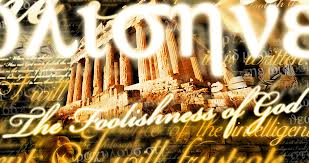
The Foolishness of God – a sermon for Lent 4C – Parables of the Lost


foolishness of godAmong the teachings of Jesus, the parables of the lost and found are so well known, so familiar that we are in peril of failing to hear the foolishness they advocate. Although only a few of us have had the opportunity to tend a flock of sheep, most of us at one time or another have been responsible for the welfare of a flock. And whether that flock be sheep or co-workers, clients, customers, students, friends, or children none but the foolish among us would leave 99 to the perils and dangers of the wilderness in order to go looking for one idiot who’d been stupid enough to get themselves lost. We may not keep our coins at home, but I daresay that most of us have felt the sting of loosing a drachma or two or three in this recession. Only a fool would waste a moment searching for our losses when our portfolio’s are so full. I dare say that if we managed to find  or recoup our loss, we’re hardly likely to invite the neighbourhood to a party that would in all likelihood eat up more than we had found. Parents, and all of us have been parented, so we know the wisdom of parents not rewarding bad behaviour. Most of us are law-abiding. We all want what is best for our own parents, and so I don’t think any but the foolish among us would consider celebrating the return of someone who has hurt our parents in the past.

These parables of the lost and found are outrageous. None of us would get very fare in life if we lived by these teachings. It is better to put the welfare of the many above the needs of one. It is pointless to cry over spilt milk. Sometimes its better to cut your losses and move on. The best accountants learn quickly to write off losses that would be too time consuming and costly to recoup. Children need to learn that they can’t always get what they want; that there are consequences to their actions, that dues must be paid, that we need to ask for forgiveness and make amends for our crimes, that rules need to be followed, and laws cannot be broken. That doing the right thing will be rewarded. And yet along comes Jesus, spouting such foolishness that even we who are predisposed to agree with him, even we can sympathize with the self-righteous and wonder how anyone could be expected to live like this.  Continue reading

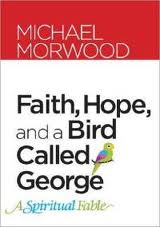
Faith, Hope, and a Bird Called George: A Spiritual Fable

Faith Hope and a Bird Called GeorgeI have just reread Michael Morwood’s “Faith, Hope, and a Bird Called George: A Spiritual Fable” and I remain convinced that this book will continue to be a powerful resource for years to come as I struggle to provide pastoral care without resorting to metaphors that point to a theistic deity. My theology has changed so much in recent years and sometimes it is so very tempting to lean on the crutches provided by familiar notions about God that point to an anthropamorphized manipulator who is up there or out there just waiting to intervene in our lives.

Morwood’s enchanting little tome follows the theological quest of Faith, a mature woman in both years and theology who is approaching the final stages of her life and seeks a deeper understanding of what it means to be in relationship with God. No longer content with traditional religious answers, Faith wonders what to do now that she has expanded her understanding of the nature of the Divine beyond the Father-Sky-God toward a panentheistic understanding of God as the “ground of our Being”. During conversations with her cat named Hope and her bird named George, Faith comes to a deeper awareness of her place in the cosmos. With gentle humour and piercing inquisitiveness Faith is encouraged by her curious cat Hope to debate her bird George whose previous owner was a member of the clergy. George’s traditional answers fail to satisfy and as Faith tries to interpret their meaning for her doubting cat, she finds herself moving to a new way of being in the world.

If you find yourself on a journey that sees you questioning traditional interpretations of Christianity, this book will make an excellent companion. Only, be sure to by a couple of copies, for you are sure to want to give it to friends. If you are clergy you’ll just have to buy dozens of copies because this is one of those books you’re going to want to give to all those folks who you encounter who are searching for an approach to faith that does not require them to suspend their understanding of reality in order to trust that God does indeed dwell in, with and through us.

For more about Michael Morwood see my earlier posts: here and here

Lenten Evening Prayer: Parables Ancient and Modern – Great Misfortune

Orthodox HereticThis year our Lenten Evening Prayer services draw on Peter Rollins collection of Parables found in “The Orthodox Heretic and Other Impossible Tales”. Prayers are drawn from the writings of the Christian Mystics. Each week an audio recording of the service will be posted as well as a copy of our worship bulletin. 

Evening Prayer a copy of the worship bulletin can be found here – it is designed to be printed double-sided and folded into a booklet.

Listen to the worship service here

Letting Go of our Tightly Held Piety to See Our Need of Confession

JOHN OF THE CROSS as
Little Crystal was only two and a half years old when she got hopelessly stuck.
 And when she got stuck she did what all small children do, when they have gotten themselves into a situation that the can’t get out of, little Crystal cried for help. She went into her mother’s study, holding in one hand a family treasure and her other hand couldn’t be seen.  Crystal cried out, “Mommy I’m stuck”. Her unseen hand was stuck inside her great-grandmother’s vase.  The precious vase had been handed down from her great-grandmother to her grandmother, to her mother. Crystal had always been told that one day the magnificent vase would be hers.

Crystal’s mother tried to move quickly without panicking. She scooped the vase and her little girl up into her arms and carried them to the kitchen sink. She used warm soapy water to try to loosen the toddler’s hand, which was stuck all right. When soap didn’t work she reached for the butter. While greasing her child’s wrist like a cake pan, she asked the obvious “mother question.” “How in the world did you do this, child?” Crystal carefully explained that she had dropped candy down into the vase to see if she could still see it when it was at the very bottom. But she couldn’t see it, so she reached in for her candy and that’s when she got stuck and she couldn’t get her hand back out.

Well, as time passed, the situation became more and more serious. Crystal’s mother called for re-enforcements. She phoned her own mother and told her to get there as fast as she could. A neighbour suggested Vaseline. The apartment manager got out some WD40. Still no luck.  It began to seem like the only way to get Crystal’s hand out was to break the family heirloom.

When Grandma finally arrived, both Crystal and her mother were almost hysterical. They were both more than a little relieved to have Grandma’s calming presence. Grandma sat little Crystal on her knee. 

Crystal was very upset and still very stuck. Grandma took a good look at the vase that used to sit on her mother’s kitchen table all those years ago.  She looked at the miserable look on her grand-daughter’s face, and she said, “Crystal, sweetheart.  Your mommy told me that you reached into the vase for candy.  Is that right?”

Crystal was a little breathless from all the crying she had been doing and all she could manage was a whimpered, “Mmm hummm.” “Honey, tell grandma the truth now. Do you still have a hold of that candy?” “Mmm humm”.  Crystal sobbed. Then Grandma rubbed little Crystal’s back, held her close and gentle, but firmly said: “Let it go, child.  Let it go.” Sure enough, the vase slipped off as smooth as silk. (I have searched for the source of this story, without success. I first heard it at a retreat on the West Coast a lifetime ago)

In this fast paced world of ours, I often find myself in little Crystal’s predicament.  Surrounded by a treasured family heirloom, desperately clinging to a treasure.  My predicament often makes it difficult for me to appreciate the beauty of the heirloom. Letting go isn’t as simple as it sounds. But sometimes letting go is the only way to preserve the integrity of the heirloom. When I think about the church’s practice of public confession, I can see how desperately I have been holding on to candies that no longer satisfy my need for forgiveness.  Continue reading

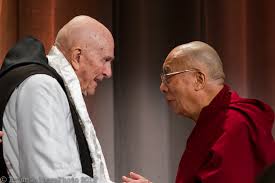
Buddha at the Gas Pump interviews Thomas Keating

keating dalhi lamaFr. Keating is an internationally renowned theologian and an accomplished author. He has traveled the world to speak with laypeople and communities about contemplative Christian practices and the psychology of the spiritual journey. Thomas Keating, founder of the centering prayer movement, is an author, teacher, and monk who has worked for many years to foster understanding among the world’s religions. A member of the Cistercian Order in the Benedictine tradition. 

“We are Living Through the Greatest Theological Shift Ever in Christian History” – Michael Morwood

“We are Living Through the Greatest Theological Shift Ever in Christian History. How Do We Bring the Freeing, Enheartening, Inspiring, Challenging Message of Jesus of Nazareth to this Age, to Our Times, and to Our Questions” Inspired by the life and work of Thomas Berry, Michael Morwood explores God’s role in the new story of cosmology. Morwood, an Australian theologian was silenced by Rome after the publication of his book “Tomorrow’s Catholic”.

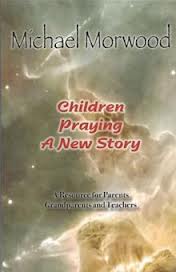
Children Praying Morwood has an uncanny ability to re- imagine and articulate christianity in ways that speak to those of us who embrace all that we are learning from science about the origins and nature of the cosmos. See my early post on Morwood’s work on prayer here.  If you’re looking for a resource for children his book “Children Praying a New Story: A Resource for Parents, Grandparents and Teachers” is terrific! (copies are difficult to find, I got mine from Kindle) I’m currently reading Morwood’s latest book a fable entitled “Faith, Hope, and a Bird Called George: A Spiritual Fable” and I will post more about this soon.

In this video, recorded in April 2012 at Corpus Christi, Morwood speaks on “Thomas Berry, Eco-Spirituality and the Future of Christianity”

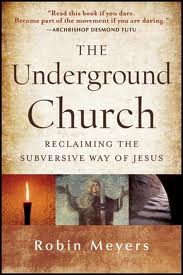
The Underground Church – Robin Meyers

underground churchSince reading his book “Saving Jesus From the Church:  How to Stop Worshiping Christ and Start Following Jesus” I have been a regular listener of Robin Meyers’ weekly sermonsaving Jesus posts. So it was with great eagerness that I snapped up a copy of his latest book “The Underground Church: Reclaiming the Subversive Way of Jesus”. Meyers is a dangerous follower of the radical teaching of Jesus who calls the church to be leaven in the world and move beyond notions of conservative and liberal christianity.  

Why Is There Suffering In the World? – Thomas Keating

Thomas KeatingThomas Keating is a Trappist Monk who is credited with the development of the contemplative practice of Centering Prayer. “Centering Prayer is a method of silent prayer that prepares us to receive the gift of contemplative prayer, prayer in which we experience God’s presence within us, closer than breathing, closer than thinking, closer than consciousness itself. This method of prayer is both a relationship with God and a discipline to foster that relationship.”

At the age of 90, Keating continues to reflect upon the need to integrate our expanding knowledge of the cosmos into our ever-changing theology.  In this video clip, Keating responds to the question of suffering in the world that I find totally refreshing.  I’ll wet your appetite with this short video. But rest assured, as I read more of his work, I’ll be posting more of Keating’s insights.

Help Me Jesus, Help, Help Me Jesus – Sermon for Lent 3C

 only you o godLent 3C – March 3, 2013 sermon – a sermon in memory of Marlene Healy-Ogden

Listen to the sermon here

Listen to Only You O God here

The Power of Outrospection – Empathy as a Way of Living

outrospectionWhat do Mr. Spock, Che Guevara and Gandhi have in common? They are all part of philosopher Roman Krznaric’s video The Power of Outrospection which explores the idea of empathy as part of a way of living that creates revolution that leads to social change.