Emmaus is Nowhere because Emmaus is Everywhere: a sermon on Luke 24

Road to EmmausThis sermon was inspired on my own journey to Emmaus where in the space of the same afternoon I heard a stranger declare: “Christianity is dead!” and Karen Armstrong’s now famous TED talk about her call for a world Charter for Compassion.

Has anybody here ever been to Emmaus? Which one? According to the latest issue of Biblical Archeology there are at least nine possible locations that are candidates for the Biblical town of Emmaus. Historians tell us that there is no record of any village called Emmaus in any other ancient source. We simply don’t know where Emmaus might have been. Tradition, tells us that it might have been a place just a few hours walk from Jerusalem. New Testament scholar, Marcus Borg suggests that Emmaus is nowhere. Emmaus is nowhere precisely because Emmaus is everywhere. Each and every one of us has at one time, or indeed for some of us, many times, traveled along the road to Emmaus.

I know that I have been on the road to Emmaus most of my life. I’ve had lots of company on the Road to Emmaus. I’ve had many conversations along the way discussing, with anyone who’d care to accompany me, the ifs, ands, and buts of Christianity, of religion, and indeed of life. If you haven’t traveled down the road to Emmaus you must be very skilled in the fine art of turning off your brain and if you check you just might discover that your heart isn’t actually beating.

It’s so easy to imagine, those two characters striding down the Road to Emmaus that we can almost hear them talking, maybe even arguing about what happened. What on earth were they to make of all this! Jesus was supposed to be the Messiah. Jesus was the One who had come to liberate Israel, to free the people from oppression. Jesus was the One who was supposed to draw the people back to God, restore the relationship between God and God’s people. Now Jesus was gone, and what had changed? Now, Jesus was gone, and the Roman Empire was still oppressing them, still inflicting such pain and hardship, still killing them. Was it all a mistake? Was it all a lie? Had they been fooled by some kind of cruel hoax—were they wrong to put their hopes in this man from Nazareth? They had trusted Jesus believed in Jesus, followed Jesus. Their lives had been changed. They had seen the lives of others changed and they had expected even greater changes to come. Jesus had confronted corrupt powers. Jesus had charmed great crowds. Jews and Gentiles alike responded to the truth of Jesus’ teaching. Rich and poor had come to Jesus, believing in Jesus’ healing power. But Jesus had been shamed, and ridiculed, and humiliated, and crucified and now Jesus was dead. Well, was Jesus dead? Some said they’d seen Jesus, alive! Not that Jesus had survived the crucifixion by some miracle of strength, but that Jesus had risen from the dead. They seemed so totally convinced by their own experience…were they confused by their own grief? Were they delirious? Had they loved this Jesus so much—invested so much hope in Jesus life and leadership—that they simply could not let him go? And what did ‘resurrection” mean? Apparently it was not the resuscitation of a corpse. Jesus wasn’t revived to resume his former life; to take up his broken body until the day he might die again. No, somehow this was some new mode of being that seemed to be spiritual to some and yet real to others. And, if Jesus were risen from the dead, what would be the point of all that? What was the point to a Messiah—to a presumed political and religious leader—if Jesus wasn’t able to lead people here on earth? How could Jesus restore Israel when he had so easily been defeated by a handful of Roman guards? How could he bring release to the captives, how could he bring justice for the poor, how could Jesus advocate for the widows and the homeless? How could Jesus call people to account for all the ways they had strayed from God’s intent, now? What good could come from some kind of spiritual ghost? We can hear these two friends wrestling with each other and with their own hearts on the road that day! Continue reading

Practicing Resurrection: Forgiveness – a sermon for the Second Sunday of Easter

Practicing Resurrection pastordawnOur first reading was the traditional gospel story for the Second Sunday of Easter in which we heard the story of Doubting Thomas for John 20:19-31. This was followed by a video in which Richard Holloway retells the story of Peter’s denial and the encounter between the resurrected Jesus and Peter. You can view the video here . This was followed by the gospel reading from John 21:15-20

Listen to the sermon here

While We Wait for Resurrection: a reminder from John Shelby Spong

Not Salvation! Solidarity and Transformation: Good Friday sermon 2015

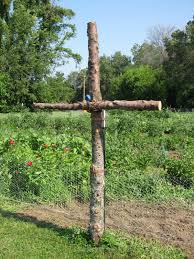
rough crossI am indebted to Marcus Borg for once again guiding me through Holy Week. Marcus’ words echo throughout this sermon. His last book (sadly his last book, what shall we do without him?) Convictions: How I Learned What Matters Most provided me with a way of seeing beyond the cross for which I am grateful. I am also grateful to James Carroll whose book Christ Actually: The Son of God for the Secular Age, remains a constant source of inspiration.

Listen to the Good Friday sermon here

I Plead Guilty to the Charge of Denying the Resurrection – But I ain’t leaving!!!

I am reposting this particular post because it remains the most visited post of this blog.  It first appeared during  my first months of blogging and I am often asked about this post. Its contents continue to invoke the wrath of some and the appreciation of many. I offer it here, mindful that in the intervening tree years since I first posted it, I have had the opportunity to explore progressive and evolutionary theologies which have nourished me in my efforts to proclaim the Easter story in ways that move beyond the tired debate over the physical resuscitation of a corpse toward an understanding of resurrection that permeates my daily quest to know the unknowable ONE who lies at the heart of reality. 

Peter Callesen's Papercut Resurrection

Peter Callesen’s Papercut Resurrection

Blogging is sometimes a very strange medium and I must say that I am overwhelmed by the responses to my recent posts about resurrection.  While many have emailed or posted their ardent “amens” others have been scathing and some hostile to my remarks.  I am grateful to everyone who has responded.  All of your comments help me as I continue to ponder the theological and practical implications of the Easter story.  For those of you who have suggested that I have no business calling myself a Christian or a pastor and have suggested that I ought to consider leaving the church, I offer the following.

A while back, I got together with clergy colleagues to talk about the challenges of preaching during Holy Week. When the subject of the crucifixion and the resurrection came up, the conversation became very lively as the traditionalists challenged the progressives. Toward the end of our conversation, it became clear that because I was unwilling to concede to the notion that Jesus corpse was physically resuscitated; I stood accused of having denied the resurrection.

Some colleagues rose to my defense and insisted that I wasn’t saying anything different than what we all learned in seminary. But they also insisted that most lay-people simply don’t want to hear it. So, I asked them if they were going to preach about what they had learned in seminary and beyond and the general consensus was that there are too many guests on Easter Sunday to tackle theology.

Some said, they were simply too afraid of the fundamentalists in their congregations to ever even attempt to preach what they knew. A few confessed that they were working up to it; but not on Easter Sunday.

The traditionalists in the group were disgusted. One colleague went so far as to insist that I had no business being in the church because my very presence puts the beliefs of the faithful at risk. He wondered aloud, “Why do you stay in the church if you don’t believe?  If the church’s theology no longer works for you, why don’t you just leave?” Continue reading

Preparing to Preach on RESURRECTION: Giving up the notion of a physical resuscitation.

resurrectionChrist is Risen! Christ is risen indeed.  Alleluia! Let me follow that proclamation up with a good Lutheran question: “What does this mean?”  What does it mean that Christ is risen? What does resurrection mean? The truth is that there are about as many different explanations of Christ’s resurrection as there are Christians.  And that’s a good thing, because the question of the resurrection is a question that lies at the very heart of Christianity. So, is it any wonder that Christians have been struggling to come to terms with resurrection since the very first rumours that Christ had risen began to circulate. Over the centuries the various responses to the question of resurrection have divided Christians as various camps work out various responses.

For many Christians and non-Christians alike Resurrection is the dividing line. But this is nothing new.  Indeed the drawing of that line can be seen in the earliest Christian writings that we have. The Apostle Paul himself, wrote to the community of followers at Corinth: “If there is no resurrection of the dead, then not even Christ has been raised. And if Christ has not been raised, then all of our preaching has been meaningless—and everything you’ve believed has been just as meaningless.”

There are many believers and non-believers alike who point to these line’s in scripture and say, “Ah ha, there it is, either you believe in the resurrection or you don’t!”
Continue reading

Good Friday Sermons

Good Friday2015Holy Week marks a sharp uptick in visitors to this blog. From comments, messages, and emails I hear from fellow preachers who, like me, are daunted by the task of preparing the Good Friday sermon. That task is even more daunting for those of us who serve progressive communities. My fellow progressive-christian-preachers tell me of the dearth of progressive-christian Good Friday sermons to be found on the internet and encourage me to re-post my own attempts to rise to the occasion. So, here are the links to some of the Good Friday sermons I have preached over the years of my journey with the progressive community which I serve. The people Holy Cross Lutheran Church has over the years provided an invigorating space for me to pursue my questions. They have also provided the resources which make this blog possible. So, if you find the work posted here  of value to you and your community, please consider supporting this ministry of Holy Cross. I rarely solicit donations. But Holy Cross is a small community that continues to give to others in so many ways and your encouragement is greatly appreciated!!! (Holy Cross Lutheran Church, 1035 Wayne Dr., Newmarket, On. L3Y 1N3)

Follow the links to Good Friday sermons and feel free to use/adapt/repost

2014 God Is Dead? click here

2013 Giving Up the Theories of Atonement in Order to Move Toward an Evolutionary Understanding of Jesus. click here

2012 Good Friday Rituals or Crimes Against Divinity? click here

God Is Dead? – Good Friday Sermon April 18, 2014

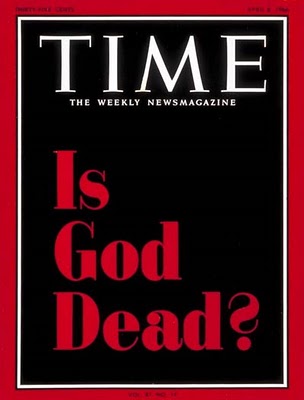
time-is-god-deadThis Good Friday sermon (preached 2014) was born of the theological struggles our congregations has engaged in over the past few years. It mirrors our theological journey. This year members and friends of our congregation engaged in an “Atheism for Lent” study and so the sermon begins with a parable from an atheist critique of Christianity. I am grateful to the members and friends of Holy Cross Lutheran Church for the courage and wisdom they have shared with one another as together we seek to know the unknowable. You can listen to the audio of the sermon or read the manuscript.

Jesus of Nazareth taught using parables. So, in the shadows of the horrors of the cross, let us turn to a parable; not one of Jesus’ parables, but a modern parable. This parable was first told in 1887. It was reprinted in 1969, in the Time Magazine that bore the iconic “Is God Dead?” cover.

“Have you not heard of that madman who lit a lantern in the bright morning hours, ran to the market-place, and cried incessantly: “I am looking for God! I am looking for God!” As many of those who did not believe in God were standing together there, he excited considerable laughter. Have you lost him, then? said one. Did he lose his way like a child? said another. Or is he hiding? Is he afraid of us? Has he gone on a voyage? or emigrated? Thus they shouted and laughed.

The madman sprang into their midst and pierced them with his glances. “Where has God gone?” he cried. “I shall tell you. We have killed him – you and I. We are his murderers. But how have we done this? How were we able to drink up the sea? Who gave us the sponge to wipe away the entire horizon? What did we do when we unchained the earth from its sun? Whither is it moving now? Whither are we moving now? Away from all suns? Are we not perpetually falling? Backward, sideward, forward, in all directions? Is there any up or down left? Are we not straying as through an infinite nothing? Do we not feel the breath of empty space? Has it not become colder? Is it not more and more night coming on all the time? Must not lanterns be lit in the morning? Do we not hear anything yet of the noise of the gravediggers who are burying God? Do we not smell anything yet of God’s decomposition? Gods too decompose. God is dead. God remains dead. And we have killed him. How shall we, murderers of all murderers, console ourselves?  That which was the holiest and mightiest of all that the world has yet possessed has bled to death under our knives. Who will wipe this blood off us? With what water could we purify ourselves? What festivals of atonement, what sacred games shall we need to invent? Is not the greatness of this deed too great for us? Must we not ourselves become gods simply to be worthy of it?  There has never been a greater deed; and whosoever shall be born after us – for the sake of this deed he shall be part of a higher history than all history hitherto.”

Here the madman fell silent and again regarded his listeners; and they too were silent and stared at him in astonishment. At last he threw his lantern to the ground, and it broke and went out. “I have come too early,” he said then; “my time has not come yet. The tremendous event is still on its way, still travelling – it has not yet reached the ears of men. Lightning and thunder require time, the light of the stars requires time, deeds require time even after they are done, before they can be seen and heard. This deed is still more distant from them than the distant stars – and yet they have done it themselves.”

It has been further related that on that same day the madman entered various churches and there sang a requiem. Led out and quietened, he is said to have retorted each time: “what are these churches now if they are not the tombs and sepulchres of God?”

This parable first printed in 1882, is known as The Parable of the Mad Man.” It was written by Friderich Nietzsche. One of the characteristics of a parable is that it surprises us with a truth that we already know. God is dead and we have killed him! Continue reading

PREPARING TO PREACH ON GOOD FRIDAY. Searching beyond the talk of sacrifice to see the Good News.

The Church’s Good Friday obsession with talk of  “sacrifice for sin” has been breed into the bones of this particular preacher.  I have been trained to speak the language of the Church.  I know full well the many doctrines of atonement that have been proposed to explain the reasons Jesus died upon a cross.  I’ve been studying the historical context and the theological consequences of Jesus’ death for more years than I care to admit.   Yet every year, I find myself wanting to book a vacation or call in sick so that I can avoid the awesome task of preaching on Good Friday.

I’ve put it off tackling the Good Friday texts as long as I dare.  So, I picked up my copy of “The Last Week” by John Dominic Crossan and Marcus Borg, together with my copies of John Shelby Spong’s “Resurrection: Myth or Reality” and “Jesus for the Non Religious” as well as Marcus Borg’s final book “Convictions” and Dom Corssan’s new book “How to Read the Bible and Still Be Christian and spent the day in pursuit of a sermon.

What follows is not the sermon I will preach on Good Friday, but rather, the notes I made a few years ago to remind myself not to fall into the trap of talking about the events surrounding Jesus’ death in the way I was trained to speak of those events.  I offer up my notes hoping that those who are engaged in the struggle of grappling with how to talk about the cross in the 21st century might find some solace in a fellow struggler’s ruminations.  For those of you who don’t have to come up with a sermon for Good Friday, I offer these notes as my humble attempt to see beyond the rhetoric about the cross to the Good News. As always I am indebted to Marcus, Dom. and Jack for their scholarship. 

There are many ways in which our focus upon the cross is disturbing.   Not the least of which is the way in which we as Christians tend to talk about the crucifixion as Jesus’ passion.  I have always thought it a tragedy that we should describe the events of Jesus’ crucifixion as Jesus’ passion. I’ve always understood talk of an individual’s passion to be concern with those things that people lived for. And so to insist that Jesus’ lived to die a horrible death might sooth those who seek to turn Jesus into some sort of preordained blood sacrifice.

But for those of us who look to Jesus in search of the face of God, such talk seems is indeed a crime against divinity. For what kind of petty, sadistic god would engineer the birth of, foster the life of, and then engineer the death of a beloved child. Surely such a god is no more than a wicked illusion of our own making. I wonder what Jesus himself would make of the god we have created. I wonder what Jesus himself would make of our Good Friday commemorations? I suspect that if Jesus is anything like the accounts of his life suggest, he would be mortified, and I mean that literally…I think that Jesus would be mortified …mortified ie shamed to death…of what has become of his life’s passion; for if Jesus’ was passionate about anything, he was passionate about life. Jesus declared, “I have come so that you may have life and live it abundantly.” Jesus’ passion was about living. Living fully, abundantly.  Continue reading

Preparing for Maundy Thursday: When you don’t believe that Jesus was a sacrifice for sin!

MAUNDY THURSDAY SERMONS:

Click here for Two Suppers – Maundy Thursday- A Strange Night

Click here for Scuffed Up Reddish Pumps

Click here for Is This A Big Hoax?

I was asked by a colleague: “So, if you do not believe that Jesus died for your sins, then why bother celebrating the events of Holy Week?” Behind this question lies the assumption that the only way to understand Jesus’ death is to frame it within the context of the theology of “penal sacrificial atonement” ie “we are judged to be sinful creatures, punishment is required, God sends Jesus to pay the price for our sin”. That Anslem’s theory of sacrificial atonement was formulated in the 11th century and continues to hold sway in the minds of so many followers of Christ is a testament to the power of our liturgies and hymns to form our theology.  However, Anslem’s theory is not they only faithful way to understand Jesus’ death. 

When one seriously engages the question, “What kind of god would demand a blood sacrifice?” the answers often render God impotent at best and at worst cruel and vindictive. I have often said that atonement theories leave God looking like a cosmic son of #%#%# ! Progressive Christian theologians are opening up new ways of understanding the death and resurrection of Jesus that empower the faithful to see new possibilities.

To my colleague, who fears that I am leading the faithful astray, and to those who find little comfort in the theories of an 11th century monastic, I offer the following:

Jesus said, “I give you a new commandment: Love one another. And you’re to love one another the way I have loved you. This is how all will know that you’re my disciples: that you truly love one another.”

That we should love one another is not a new commandment. There have been many before Jesus and many who came after Jesus who have commanded, advised, encouraged, implored, and even begged us to, “love one another.” What is new about Jesus commandment is that we are to love one another the way that Jesus loved. Which begs the question:  How exactly did Jesus love?

I believe that Jesus loved in ways that I am only beginning to understand. I believe that Jesus was so open to the power of the LOVE that is God; that Jesus was able to live his life fully without fear.

I believe that Jesus wanted more than anything else for his followers to be so open to the power of LOVE that is God so that they too would live their lives fully without fear.

I believe that that’s what Jesus meant when he said, “I have come that you might have life and live it abundantly.”

I believe that Jesus lived life abundantly and that means that he loved abundantly and without fear.

Jesus was so open to the power of LOVE that is God that Jesus would not let the powers of darkness stop him from loving and living fully.

The kind of LOVE that Jesus embodied and taught has no boundaries.  No darkness, no power, no fear, not even death can limit the power of LOVE.

For if LOVE is limited by death, then love will always be qualified and quantified.

That Jesus was willing to LOVE without boundaries, came at great cost to himself.

But Jesus was willing to pay that price in order to show  others the way.

The way to LOVE without limit, without fear, without boundaries.

LOVE without boundaries is abundant life.

That Jesus’ LOVE endured the worst that the world could send his way, that Jesus’ LOVE was for all the world, dead and buried, and yet bursts free from the grave, bears witness to the power of LOVE.

That Jesus LOVE could not be destroyed, not even by the thing we fear the most, death itself, saves us from the need to fear death.

Jesus has shown us the way.

We can live abundantly lives that are free from the fear of death. Because Jesus has shown us the way we are free to live fully, to love extravagantly and be all that we were created to be.

LOVE shines in the darkness and darkness shall not overcome LOVE.

If Jesus, life, death, and resurrection teach us anything, surely they teach us not to be afraid.

Not to be afraid of the darkness.

Not to be afraid of living fully.

Not to be afraid of loving extravagantly.

Not to be afraid of the powers of evil.

Not to be afraid of the power of death.

LOVE will endure.

All will be well.

Jesus can’t save us from life.

There is evil to contend with.

There will be darkness and there will be death.

Jesus couldn’t save himself and he cannot save us from life. Darkness and death are part of life.  Each of us must walk into the darkness that lies before us.  We can beg God to take the cup from us!  But the darkness will still come.  And there will be days when the darkness will triumph.  There are good Fridays too many to mention out there.  We can shout all we want for Jesus to save us, but in the end we too will have to take up our cross and find a way to follow Jesus into the darkness and beyond, trusting that even though it feels for all the world that God has forsaken us, we will make it beyond the darkness.

The cross will not look the same for each of us. But there will be crosses to bear. Jesus has showed us the way. If we are to follow Jesus, then we must love one another they way that Jesus loved.  It is the way beyond the darkness. Do not be afraid of evil, of death, or of the darkness. Follow Jesus who by love frees us from the power of darkness to hold us captive to our fears so that we can have life and live it abundantly.

How exactly did Jesus love?

Without limit.

What did Jesus save us from?

Our fears.

Journeying Toward Resurrection: John Philip Newell


snowdropsA powerful series contemplating resurrection in ever deepening ways in order to explore what a risen christianity might look like in terms of its offering of healing and blessing for the earth. Created by John Philip Newell a poet, pastor and scholar who opens our eyes o a vision beyond doctrines and dogmas that fail to proclaim the wonders of the universe in which we live.  “Christianity will rise again to the extent that we remember the sacredness of everything that has been born in the universe.”

Mary Speaks: “The Testament of Mary” and “The Confession Stone” a Midrash for Palm Sunday

Palm Sunda 2015Judas, Peter, Pilate, Caiaphas, and John – these are the names most often heard in the stories we hear during Holy Week….the men who failed Jesus or who conspired against Jesus, their names we hear during this holiest of weeks. But what of the women who stood by Jesus, who wept for Jesus, who bore witnesses to the betrayal, the trial, the execution, and the death of Jesus. Where are their stories during this week of weeks? For centuries, the church has failed to listen to the voices of the women whose lives were intertwined with Jesus’ life. The stories of these faithful women have been hidden in the mists of time. This Palm Sunday we turned to one of those women; to Mary the mother of Jesus. Her voice has been silenced by the church. She has been confined to works of art that speak not with words. 

So, as we enter Holy Week we turn to two new works of art that give voice to Mary’s story. Anne Keith and I will do our best to give voice to Mary’s story using the words of the Irish writer Colm Tóibín whose book, “The Testament of Mary” imagines Mary as an old woman, nearing the end of her life, looking back on the life of her beloved child Jesus. You will hear cynicism in the voice of Mary who is visited by the men who will tell her son’s story; men who are determined to make a particular meaning out of Jesus life and death. Mary does not share their enthusiasm for the tragedy that robbed her of her child, nor will she twist her own story to suit their needs.

Mary’s voice will also come to you through music. Mezzo soprano, Linda Condy, accompanied by our Musical Director: Marney Curran, B.S.M., A.R.C.T., will preform “The Confession Stone: Songs of Mary” composed by Canadian Robert Fleming based on the poems of Owen DodsonOwen Dodson was an African-American poet whose work is part of what has been dubbed the Harlem Renaissance. Dodson’s poetry brings a lively humanity to the Mary empowering her voice to evoke the passion of a mother’s loss.

Both Owen Dodson and Colm Tóibín provide a powerful midrash with which to begin our Holy Week. 

Beyond the Serpent. Beyond the Idol Jesus. Beyond the Beyond and Beyond that Also: a sermon Lent 4B – John 3:14-21

bronze serpentA sermon that peers beyond the mess we have made of John 3:16. 

Listen to the sermon here


Approaching the Resurrection – What Did Paul Actually Say?

trouble with resurrection

Far too many preachers stumble into the celebration of Easter without doing our homework. Resurrection is a central tenant of the Christian faith and Easter is the primary celebration of resurrection and yet, too many of us fail to open ourselves to current scholarship surrounding the doctrine of resurrection. Questions about the nature of the resurrection ought to send us back to the words of the Apostle Paul. Bernard Brandon Scott is a charter member of the Jesus Seminar. His book “The Trouble with Resurrection” is a must read for those who preach during the Easter Season.

If you are planning to write a sermon or listen to a sermon this Easter, this video provides essential background information about the words of the Apostle Paul on the nature of the resurrection which may surprise you. Scott’s treatment of 1 Cor. 15 provides a new understanding of resurrection which is compelling as well as liberating.


“I Am Woman” – a sermon for International Women’s Day

International Women's Day

Gospel Reading:  John 2:13-22  and I Am Woman by Helen Reddy

Listen to the sermon here

Where are the Angry Women? Where are the Angry Christians? Where are the Angry Humans? – a sermon for the Third Sunday in Lent – International Women’s Day

International Women's DaySunday March 8, 2015 is International Women’s Day. The appointed gospel reading for this the third Sunday of Lent is from John 2:13-22 which recounts the story of Jesus turning over the tables in the temple. This sermon is inspired by the work of Beverly Wildung Harrison and the prophetic witness of Nobel Peace Prize winner Leymah Gbowee. 

Today is International Women’s Day a day. International Women’s Day has been celebrated since 1911. It is also known as the United Nations Day for Women’s Rights and International Peace. Women have come a long way since 1911. Sadly, we must all confess that women have a long way to go before we achieve our vision of a world in which all people have equal access to opportunity. There is much for us to celebrate on this particular International Women’s Day and there is also much to lament. In our world the phrase “war on women” is bandied about by the media and each time I hear it anger rises in me and it is all I can do to stop myself from screaming. In our own country we have watched the steady erosion of hard one gains as our federal government continues to cut funding to women’s organizations and continues to refuse to launch a federal inquiry into the disappearance of far too many of our aboriginal sisters. Any serious reflection on the plight of women in the world makes my blood boil and I can’t help but wonder why we don’t just follow Jesus’ example because maybe if we turn over a few more tables in the halls of power we might be able to draw some serious attention to the abuses perpetrated upon women for the sake of maintaining the status quo.

The story of Jesus turning over the tables of the moneychangers in the temple has always intrigued me. The idea that Jesus could have become so angry with religious authorities for cooperating with the violent and oppressive, Roman Imperial system that he would create such a scene in the Temple is so far from the image of Jesus as the meek and mild long-haired peace-nick that we’ve all come to take for granted.

For generations, biblical commentators have gone to great pains to ensure that any hint of Jesus humanity is scrubbed clean from interpretations of this story. Anger is a perfectly normal human emotion. Jesus was a human being and therefore he was subject to normal human emotions. But the institutional church frowns upon anger. Indeed, in many places one can still find anger listed as one of the seven deadly sins. “ira” which can be translated as anger or wrath made the list of seven deadly sins. This list is often attributed to the early Christians. Indeed, there are those who would argue that these sins are biblical. However, they are actually the work of a 4th century monk named Evagirus Ponticus, whose nickname was Evagrius the Solitary. He spent most of his adult life living as a hermit in the desert. I suspect that if a modern psychologist were to take a brief look of Evagrius’ personal biography they could very quickly make a diagnosis of clinical depression. Evagrius himself prescribed tears as the pathway to God and was known to have spent days at a time alone and weeping profusely. He is best known for his writings on the various forms of temptation, which the institutional church latched onto with a vengeance. His original list included eight deadly sins. But the church erased “sadness” from the list and elevated the seven deadly sins to the category of mortal sins. Mortal sins were those sins that actually placed one’s soul in danger of eternal damnation. Continue reading

Learning to Die Daily: a sermon for the second Sunday in Lent

let suffering speak

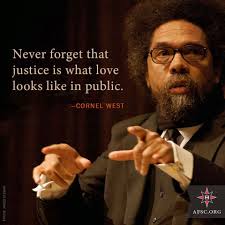
Lent 2B – Mark 8:31-38 this sermon is inspired by my study of the work of Dr. Cornel West. His words flow through this lines of this sermon and his prophetic imagination provides the hope-filled vision of LOVE parading around the world as justice.

Listen to the sermon here

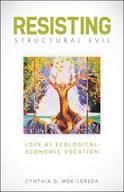
Resisting Structural Evil: Love As Ecological-Economic Vocation by Cynthia D. Moe-Lobeda

Resisting Structural EvilIn the midst of teaching an adult education class on evil from the perspective of progressive Christianity, I was contacted by Dr. Cynthia Moe-Lobeda who had come across this website and wondered if I would be interested in her new book. What followed has been a splendid introduction to the work of a progressive christian ethicist who, despite the fact that she just happens to be Lutheran, I have failed to discover before now! That our little class just happens to be struggling with the problems of systemic evil and looking for signs of hope in the midst of our entanglement with institutions and structures which bind us up in evil that is hurting, oppressing, and condemning whole populations to poverty, prompted me to latch on to Dr. Moe-Lobeda’s invitation to take a look at her new book, if only for the resonance of the title  Resisting Structural Evil: Love as Ecological-Economic Vocation with our current struggles.

Dr. Moe-Lobeda’s resume includes her work as Wismer Professor of Gender and Diversity Studies at Seattle University where she teaches Christian ethics and lectures and consults international on climate justice, economic globalization, white privilege, moral agency, Earth ethics, and being public church. 

ResistingstructuralevilResisting Structural Evil is a must read for those of us who are seeking ways to live in a world where we benefit from systems beyond our control which oppress and abuse whole populations and threaten entire ecosystems. Confronting the evil in which we are all implicated is a task so daunting that many of us are loath to engage the powers of evil lest we be overwhelmed by the multitude of problems in the world. Dr. Moe-Lobeda’s work provides a framework for a spirituality which can nurture and sustain us as we embrace our call to resist evil. After reading her excellent articulation of the moral crisis, enriched by Moe-Lobeda’s ability to embody ethics with stories that resonate with our deep hunger for justice, structural evils are unmasked with an eye to countering hopelessness. Sowing seeds of hope with a spirituality of love that is capable of engaging both Mystery and reality is not for the feint of heart. Yet, Moe-Lobeda’s carefully laid out, totally approachable, framework for the kind of morality capable of  responding to the vision of justice which permeates her work, provides the reader with the courage to see new ways of being Love in the world!

Our little class has already benefited from Dr. Cynthia Moe-Lobeda’s invitation to resist structural evil. We began by devoting ourselves to unpacking the wisdom is the lecture she gave to the Common Good Cafe at University Temple United Methodist Church in Seattle, WA. entitled A Spirituality of Resistance. The talk provides a wonderful overview of Dr. Moe-Lobeda’s important work. Watch the video and see for yourself. Then, order her book! I know that we will be spending more time working with her book as we digest the rich nourishment of her wisdom!     

Too Often Christianity’s Cross-Eyed Perspective Distorts the Good News that God is LOVE: a sermon for the Second Sunday of Lent – Mark 8:27-38

fish necklacesThat I should serve as the pastor of a church called Holy Cross is ironic. You see for years and years, before I ever dreamed of being the pastor of a church named Holy Cross, I’ve been trying to figure out how crosses became so popular. Personally, I can’t abide crosses! I hate them! I can’t abide the glorification of an instrument of torture and death! I have never understood why crosses are worn as jewelry! People would never dream of wearing an electric chair around their neck. I cannot for the life of me, imagine that any of Jesus’ followers would have ever considered wearing the symbol of Roman tyranny and persecution around their necks.

The early followers of the way; the first Christians used the fish as the symbol of their faith. For a very long time, I used to wear a simple fish necklace that a little girl made for me. Just before I went to seminary, my friend gave me a slightly more elaborate necklace with even more fish on it. Before I was ordained, I insisted that I’d never wear a cross. But then as an ordination gift my wife Carol had her son design a cross that is made up of fish and I must admit that it’s difficult to see this fish cross as an instrument of torture. But then I read a passage like the Gospel text from Mark 8:27-38 and once again the cross becomes a symbol of torture. In this text, the gospel-storyteller we call Mark has Jesus insist that, “If any want to become my followers let them deny themselves and take up their cross an follow me.” All I can say is “Woa, wait just a minute Jesus. Take up my cross and follow you. Wait a minute; I know where you’re going. You’re on your way to Jerusalem and I know exactly what’s going to happen when you get there. You are going to stir things up, get yourself into trouble, upset the powers that be and the next thing you know they are going to nail you to the cross and you are going to suffer and die. If I pick up my cross and follow Jesus, I’m going to end up right there with Jesus, hanging from my cross, suffering and dying and for what? What’s it all about Jesus? Why are you so hell-bent on getting yourself crucified and why do you want me to join you?” Continue reading

Beyond the Wildernesses: a sermon for Lent 1B

JusticeThis sermon is inspired by the work of Dr. Cornel West whose words and challenges infuse this sermon with courage and passion. The questions which frame the challenges are from W.E.B du Bois as quoted by Cornel West. Listen to the sermon here