God Is a River – Peter Mayer

riverPeter Mayer, one of my favourite folk singers, captures a hint of the essence of God when he sings. I have long since given up thinking of God as “My Rock and Salvation” and the image of God as a river in which I flow helps me to capture a hint of the ONE who is so much more than any of our images or metaphors can begin to capture.  

This morning I will lead our Adult Education Class in a conversation about “eternal life”. As our images of God expand to include all we are learning about the cosmos, this song connects me to the Source of Life. I can’t help wondering how far our conversation will take us. I suspect that new images will emerge. I hope that we can learn to live in the ambiguity of our questions. 

The Power of Laughter – John O’Donohue

Laughter St Teresa

“So, When People Say, ‘That Doesn’t Line Up With Lutheran Doctrine’ I Couldn’t Care Less!”

Bell bkFor me the heart of this conversation is expressed by Rob Bell: “The word ‘evangelical’ means ‘good news’ right? Yea, so we’re all about good news, right? So whatever else that word means, I would hope that we are all people of good news. So, if that word refers to a tribal group deeply aligned with an industrial military complex and the furthering of an empire that has on occasion stormed through the world a little more briskly than we would like, tied into a political party that has an agenda often run by multi-national corporations, I’m not interested. But if its referring to an open tomb and hope for everybody, I’m in. “

“So, you either walk away from the word, and say I don’t want anything to do with that, or the word ‘radical’ has its root in the word radix which is a Latin word that means root. The radical is the person who goes back to the roots. So, you either walk away from it or you grab it and say, ‘No, this is what it means.’ And you just hold on tightly. Secondly, I’m interested in anybody who has fresh word about Jesus: Lutherans or Methodists or Anglicans or Evangelicals, or Catholics, or Jedi. If you have fresh insight into Jesus, that’s what I’m interested in. So, when people say that doesn’t line up with Lutheran doctrine, I couldn’t care less. Is that a fresh word about Jesus?”

“I actually think that what you are realizing right now is that some of these tribal systems are falling apart because all of a sudden I’m having fish tacos with Richard Rohr and Peter Rollins shows up and its just an absolute potluck of  Jesusness. I think what’s tipping now is people are going, ‘You’re interested in following Jesus and I’m interested in follow Jesus and that trumps whatever institution we get our pay-cheque from.”

Video recorded in April 2013 at the Seattle School of Theology. The interviewer lacks depth, but if you fast forward to the Q & A (28min mark) the students questions provide Bell with an opportunity to delve a little deeper.

Pyrotheology – Peter Rollins

IMG_1959

Peter Rollins recently spent a weekend lecturing at Holy Cross. His refreshing perspective and keen insights were a gift to our community. We learn a great deal from Pete and our conversation continues. Here are several new videos that will give you a taste of Pete’s work.

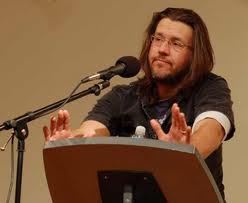
This is Water: David Foster Wallace

goldfish“Because here’s something else that’s weird but true: in the day-to day trenches of adult life, there is actually no such thing as atheism. There is no such thing as not worshipping. Everybody worships. The only choice we get is what to worship.” David Foster Wallace
– This Is Water: Some Thoughts, Delivered on a Significant Occasion, about Living a Compassionate Life

As a pastor, I am often asked to define spirituality. Over the years I have explored many definitions of spirituality; all of which fall short of capturing the experience of the awareness of the sacredness of life that I believe spirituality is. In his efforts to define the value of the value of an education, David Foster Wallace comes close to describing an awareness that is spirituality. Spirituality opens us to the awareness that there is life before death, here and now and that life is sacred. Enjoy the video. You can read the full text of the speech here

The audio comes from a commencement speech given by David Foster Wallacewallace in 2005 to at Kenyon College. The video was made after David Foster Wallace died. Wallace was an American novelist, short story writer, essayist, and professor at Poma College who has been described as “the most gifted and linguistically exuberant American novelist and short story writer of his generation. 

God: A Changing Reality – John Shelby Spong

jack spongFrom the spirit-filled world of animism, through the tribalism of the patriarchs, the warnings of the prophets Jack Spong’s sermon examines our visions of God and demonstrates the journey from God as tribal god who orders genocide to the loving god who calls us to love our enemies. This sermon was preached at Countryside Community Church in Omaha, Nebraska on April 14, 2013.

Beauty: A Human Calling and An Aspect of God – John O’Donohue

John O'DonohueHaving only recently been introduced to the work of John O’Donohue, (thanks Susan!) I find myself totally enthralled! O’Donohue was an Irish poet, philosopher, theologian, environmental activist, and storyteller whose writings explore the wisdom of Celtic Christianity. O’Donohue was an imbiber of beauty which he heralded as a human calling and an aspect of God. I’ve spent a good deal of time this week absorbed in the beauty of his masterpiece Anam Cara: A Book of Celtic Wisdom (1998). Anam Cara is Gaelic for “soul friend” and the book is just that as it gently guides you through the spiritual landscape of Irish imagination. The book reads like a prayer. O’Donohue insisted that “it is within our power to transform our fear of death so that we need fear little else this life brings.” Sadly, O’Donohue died young (just 52 in 2008), but he left a legacy of wisdom in a series of books that I look forward to immersing myself in. 

“When love awakens in your life, in the night of your heart, it is like the dawn Anam Carabreaking within you. Where before there was anonymity, now there is intimacy; where before there was fear, now there is courage; where before in your life there was awkwardness, now there is a rhythm of grace and gracefulness; where before you used to be jagged, now you are elegant and in rhythm with your self. When love awakens in your life, it is like a rebirth, a new beginning.” (Anam Cara)

As I bask in the beauty of O’Donohue’s wisdom, I am delighted to discover a film he made shortly before his death to compliment Anam Cara. The film in and of itself is a “soul friend.” You can enjoy it below. If you are familiar with O’Donohue’s wisdom or if you’ve never encountered the man, you will enjoy the brief video of O’Donohue speaking to a gathering of psychotherapists on the subject of observation. Quoting Heidiegger “true listening is worship” O’Donohue draws in his audience with humour and makes listening a joy while slipping in his subversive advocacy of a  “kind of un-thearaphy”.  His humour will wet your appetite for the longer film, which is well worth the time. I recommend putting your feet up with wee dram to add to your enjoyment!

Anam Cara – 2008

A Tough Week for the Planet: Earth Sunday Sermon

earth-day-2013On the heels of Peter Rollins visit to our congregation last weekend, this Earth Sunday sermon flows out of Peter’s work. You can listen to Peter’s sermon which is the jumping off point for this Earth Day sermon here

Listen to the Earth Day sermon here

Worship Bulletin here

The readings are here

The video of the excerpt from Chief Seattle’s Response is below


Resurrection: “Believe Whatever You Want About What Happened. Now Can We Talk About What This Story Means”

borg & Holt

Recorded February 7, 2013: Marcus Borg and Charles Holt discuss Jesus’ resurrection.

The Raising of LOVE: the “more-than-literal” meaning of the Raising of Tabitha – a sermon on Acts 9:36-41

dorcas

“Can the ways in which we tell the stories of resurrection transform us into followers of Jesus who embody a way of being in the world that can nourish, ground, and sustain the kind of peace that the world yearns for?”  I preached this sermon on the raising of Tabitha years ago, as an attempt to convey the academic essay of New Testament scholar Rick Strelan into the form of a sermon. I believe that it is vital for preachers to convey the wealth of insights that are bandied about in the halls of academia, so that congregations can let go of so many interpretations of scripture that insult their intelligence, so that we can  begin to explore the “more-than-literal meaning” (Marcus Borg) of biblical texts. Rick Strelan’s essay appeared in “Biblical Theology Bulletin, May 1, 2009, under the title “Tabitha: the gazelle of Joppa”. 

Yesterday, I went for a walk. As I was walking along, minding my own business, a bright light appeared in the sky. The light nearly blinded me and so it took a while for me to figure out what was happening. Suddenly, it was so clear that the light was actually coming from a very large spaceship. I could scarcely believe by eyes. I stood frozen to the spot as the space ship landed in the middle of the road. You’ll never believe what happened after it landed. A couple of little green creatures with giant eyes gout out, took my picture, and then got back in the spaceship and flew off into the farthest reaches of space.

You don’t believe me, do you? You think that I’m making a joke of some sort, or maybe I’ve been working too hard and I’ve finally lost the plot. I know there’s probably nothing that I can say that would convince you that little green men have photographed me. Quite frankly that’s a relief because if you’ll believe that, you’d probably believe anything.

I do find it interesting that you won’t allow yourself to believe that I encountered aliens from another planet, and yet, you’ll suspend your disbelief when I tell you a story from the Bible. Or will you? Take our first lesson from the book of Acts.    The miraculous story of how the Apostle Peter raised a disciple named Tabitha from the dead. You all know that when someone is dead, that’s it they are dead. You can pray over them all you want, but they’re never going to sit up, let alone stand up like Tabitha. There’s about as much chance of a person standing up after they’ve actually been dead as there is little green men from outer space landing on the street outside this church.The story of the raising of Tabitha is one of those stories that we wouldn’t believe for a second if it weren’t in the Bible. I suspect that when it comes to stories from the Bible, most of us don’t really believe that they happened exactly the way the Bible says they happened. Or do we?Now maybe you’re the generous type and so you say, “Don’t be too hasty, it could happen if the person wasn’t really dead.”  I mean, maybe Tabitha’s friends got it wrong and she just appeared to be dead. The story says that Tabitha died, then her friends washed her body and laid her out in an upper room. Then, since Lydda was near Joppa, the disciples sent two couriers to Peter, who was in Lydda and they asked Peter to head back to Lydda, which was about 10 miles away. That’s a 20 mile round trip on foot with a walking speed of about 3 miles per hour it would take at least 7 hours. She was definitely dead. According to the story Peter sends everyone out of the room, knelt down and prayed and then said, “Tabitha, stand up!”  and she did just that.

The story of the raising of Tabitha is one of those stories that we wouldn’t believe for a second if it weren’t in the Bible. I suspect that when it comes to stories from the Bible, most of us don’t really believe that they happened exactly the way the Bible says they happened. Or do we? Continue reading

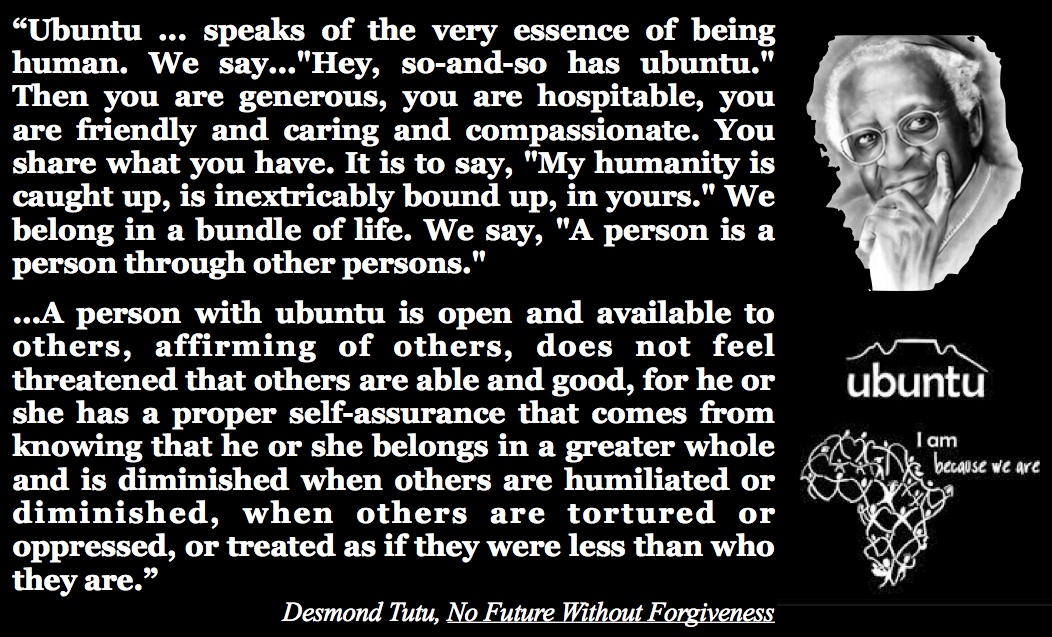
Ubuntu: I Am Because We Are: Desmond Tutu

Ubuntu -- pastordawn.com

Desmond Tutu, Peacemaker: A conversation with Desmond Tutu and John Allen. Recorded March 21, 2013 by Pepperdine University School of Law. This brilliant video provides an opportunity for Desmond Tutu and his Press Secretary John Allen to reflect upon the work of South Africa’s Truth and Reconciliation Commission. It is a marvellous testament to the potential for goodness that exists in humanity. Tutu’s use of the African word “ubuntu” to express his conviction that we cannot be fully human without other humans is wisdom born of human evolution witnessed up close and personal.

The Passion of Jesus: Holy Week, Good Friday and Easter: Marcus Borg

last-weekSpeaking on March 18 2013, Marcus Borg breathes life into the book he wrote with John Dominic Crossan: “The Last Week”

Thanks Marcus, now I have this song on the brain!

Memories, Conversions, and Convictions: Why Jesus Matters- Marcus Borg

Marcus BorgSpeaking on March 17, 2013 at All Saints’ Episcopal Church in Pasadena, Marcus Borg responds to the question about the relevance of Jesus using three words that frame the book he is currently writing: “Memories, Conversions, and Convictions.”  Enjoy!

You-can-believe-all-the-right-things

The Church of Tomorrow: Michael Morwood

it's time

Preparing sermons this Holy Week and wrestling with texts and doctrines, I have had as my companion Michael Morwood’s new book “It’s Time: Challenges to the Doctrine of the Faith”. Written from the perspective of a former Roman Catholic priest, Morewood’s insights transcend the denominational divide and speak directly to the need for new articulations of the faith. I have been gleaming all sorts of insights that are helping me to proclaim the Gospel in a world where knowledge about the magnificence of creation is expanding at a phenomenal pace. Imagine my delight this morning, when a posting by the author himself alerted me to a brief speech he gave on Good Friday that outlines his hopes for the church of tomorrow.  Enjoy!

Michael Morwood is an Australian who is currently the theologian in residence at the Kirkridge Retreat Center, at Bangor, Pennsylvania. 

Suicide Bombers and Barefoot Prophets: The Forces of Radical Religion in the Early 21st Century

philip clayton chautauquaPhilip Clayton is the Dean of Claremont School of Theology and Provost of Claremont Lincoln University. He also holds the Ingraham Chair at CST. Clayton earned a joint PhD in Religious Studies and Philosophytransforming from Yale University and has held visiting appointments at Harvard University, the University of Cambridge, and the University of Munich. He has published over 20 books, the latest of which “Transforming Christian Theology: For Church and Society” is a must read for anyone presuming to do theology in public. The book is close to a definition of “progressive Christianity” as you are likely to find. 

GOD Within ALL, ALL Within GOD

spirial shellYesterday’s post in which I mentioned panentheism certainly prompted some interesting questions from various readers. So, even though I’ve written, preached and posted about panentheism many times, I thought I’d provide a fuller explanation of what I mean when I use the this word which I believe provides a way of articulating our reality that is both helpful and hopeful.

Let me begin by saying, that panentheism is, in and of itself, an evolving term. The term can be found in the works of German philosopher G.W.F. Hegel, process theologian Alfred North Whithead, and more recently in the work of Juergen Moltmann, Matthew Fox, Philip Clayton and Marcus Borg. The word itself is made up for three Greek words: pan = all, en = within, theism = god. Panentheism is used to describe God as ONE who is in everything.  Panentheism (unlike pantheism) does not stop with the notion that God is in everything, but goes on to posit that everything is God. God is in the universe and God transcends the universe. God is greater than the sum total of the universe. But the universe cannot be separated from God. We are in God and God is in us.  God breathes in, with, and through us.  

The term panentheism is proving helpful to Christians in the 21st century who are working to articulate our faith in light of all that we are learning about the universe. It is also invaluable to those of us who have a deep reverence for creation and are seeking ways to live in harmony with creation by treading lightly upon the earth. Panentheism is also a concept present in many faiths and provides us with a common way of speaking together about our Creator. But like all language the term fails to fully capture the nature of the Divine. It is merely a tool to help us think beyond the idols we have created to function as objects of our worship.

The Apostle Paul insisted that God is “the One in whom we live and breath and move and have our being.”  (Acts 17:28) As we look towards the heavens, we see an ever expanding new story of who we are. Just as Paul struggled to find ways to articulate the nature of the Divine to his contemporaries, Christians continue in every age to find ways to articulate the nature of the Divine to each new generation. We do not abandon the wisdom that has been offered by those who have gone before us. But we cannot ignore the wisdom that is being revealed to us here and now in our time and place within the communion of saints. 

Below is a video that I have shown to Confirmation students (ages 12-15) as we begin to explore the great religious questions that have inspired wisdom seekers from the beginning of human consciousness: Who am I? What am I? Where do I come from? Why am I here? Where am I going? etc. The responses of young people inspire me! I cannot wait to see what they will reveal to us about the nature of our reality! As you watch this video, I offer you a benediction. It is a blessing that I have adapted with permission from the work of John Shelby Spong.

God is the source of life, so worship God by living,

God is the source of love, so worship God by loving.

God is the ground of being, so worship God by having the courage

to be more fully human; the embodiment of the Divine.

SPONG swirl

God: Supernatural Theism or Panentheism?

Marcus borgWhenever we try to articulate what God IS, language fails us. For the most part, the institutional church has defined God with words and expected that members of the institution will confess loyalty to those words. Many of the words, with which the institution has traditionally described God, craft an image of God as a supernatural being up there or out there who is responsible for creation and from time to time interferes in the workings of creation. As we continue to learn more and more about the magnitude of creation, both in time and space, our traditional words about God seem ever more puny. While some respond to our ever-expanding knowledge about creation by attempting to make our notions of God fit into the tight little containers that were crafted by our ancestors, some are seeking new ways to speak of the CREATOR OF ALL THAT IS, WAS OR EVER SHALL BE. Often our attempts are as clumsy and as limited as the attempts of our ancestors. But sometimes, sometimes the likes of Tillich breathes new life into the notions of our ancestors and Paul’s description of our God as  “the one in whom we live and move and have our being” becomes for us, as Tillich imagines, “the Ground of our Being”.  

So, with a spirit of discovery and wonder, I encourage you to listen to Marcusfish in water Borg’s attempt  to describe our God. Borg’s efforts take us beyond the Ground of our Being toward a panentheistic understanding of God in all things and all things in God.  Please note: panentheism is not pantheism – pantheism means God is in everything – so God can be worshipped by worshipping nature because God is in nature. Panentheism means everything is in God and God is in everything – so – God breathes in, with, through, and beyond us, and we intern are in God – everything is in God but God is more than the sum of everything. A panentheistic view of God does not preclude thinking of God as personal – but it does understand that God is more than personal. 

While I don’t agree with everything Borg says in this video, it is a wonderful place to begin to think about expanding our way of speaking of the Divine. As long as we remember that our language will always fail to capture the wonders of our God.

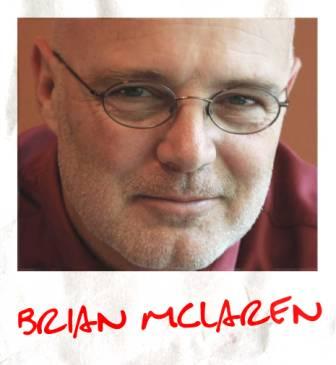
Today! Now Is the Time! – Brian McLaren

brian_mclarenWhat God is up to today is not just for us. “God is as devoted to Muslims, Hindus and Atheists as to Christians.” Brian McLaren’s contributions to the Lenten Preaching Series at Calvary Episcopal Church in Memphis challenge Christians to move beyond narrow Christian notions of discipleship.  recorded Feb.27-28 2013

Listen to a podcast of the evening lecture here

Lost and Found – Lent 4C

Lost-and-foundThis morning I tried something very different – in place of the sermon I tried an interactive exercise designed to help the congregation experience the parable. I was inspired by a lecture I heard down in Chautauqua when Jewish New Testament Scholar, Amy-Jill Levine  was exploring the parables.  

Listen to the interactive/sermon here

You can watch Amy-Jill Levine’s lecture which inspired me to challenge the congregation to move beyond allegorizing this parable here (look real close and you’ll see me down near the front, just soaking it al in!

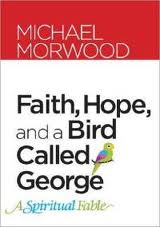
Faith, Hope, and a Bird Called George: A Spiritual Fable

Faith Hope and a Bird Called GeorgeI have just reread Michael Morwood’s “Faith, Hope, and a Bird Called George: A Spiritual Fable” and I remain convinced that this book will continue to be a powerful resource for years to come as I struggle to provide pastoral care without resorting to metaphors that point to a theistic deity. My theology has changed so much in recent years and sometimes it is so very tempting to lean on the crutches provided by familiar notions about God that point to an anthropamorphized manipulator who is up there or out there just waiting to intervene in our lives.

Morwood’s enchanting little tome follows the theological quest of Faith, a mature woman in both years and theology who is approaching the final stages of her life and seeks a deeper understanding of what it means to be in relationship with God. No longer content with traditional religious answers, Faith wonders what to do now that she has expanded her understanding of the nature of the Divine beyond the Father-Sky-God toward a panentheistic understanding of God as the “ground of our Being”. During conversations with her cat named Hope and her bird named George, Faith comes to a deeper awareness of her place in the cosmos. With gentle humour and piercing inquisitiveness Faith is encouraged by her curious cat Hope to debate her bird George whose previous owner was a member of the clergy. George’s traditional answers fail to satisfy and as Faith tries to interpret their meaning for her doubting cat, she finds herself moving to a new way of being in the world.

If you find yourself on a journey that sees you questioning traditional interpretations of Christianity, this book will make an excellent companion. Only, be sure to by a couple of copies, for you are sure to want to give it to friends. If you are clergy you’ll just have to buy dozens of copies because this is one of those books you’re going to want to give to all those folks who you encounter who are searching for an approach to faith that does not require them to suspend their understanding of reality in order to trust that God does indeed dwell in, with and through us.

For more about Michael Morwood see my earlier posts: here and here