Tell Us About God. We Have Almost Forgotten – a Christmas Eve/Day sermon Luke 2:1-15

nativity bYou can listen to this sermon here

There’s a story that I love to tell. So many of you have heard it before. But this is the night for telling stories over and over again and because I love this story, tonight’s the night! I first heard it from a very wise seminary professor and since then I’ve heard Marcus Borg and Parker Palmer tell it. I’m not sure that this story actually happened, but I am sure that it is absolutely true!

It’s a story about a three-year-old girl who was the only child in her family. Her mom is pregnant, and this three-year-old girl is very excited about having a baby in the house. The day comes where the mother-to-be delivered, and the mom and dad go off to the hospital. A couple of days later they come home with a new baby brother. And the little girl is just delighted. But after they’ve been home for a couple of hours, the little girl tells her parents that she wants to be with the baby in the baby’s room, alone, with the door shut. She’s absolutely insistent about the door being shut.

It kind of gives her folks the willies, you know? They know she’s a good little girl, but they’ve heard about sibling rivalry and their not sure about what they should do. Then they remember that they’ve recently installed an intercom system in preparation for the arrival of the new baby, and they realize that they can let their little girl do this, and if they hear the slightest weird thing happening, they can be in there in a flash.

So they let their little girl go into the room. They close the door behind her. They race to the listening post. They hear her footsteps move across the room. They imagine her now standing over the baby’s crib, and then they hear her say to her two-day-old baby brother, “Tell me about God. I’ve almost forgotten.”

Tonight we are all that child, standing over the baby’s crib hoping against hope that the newborn baby will tell us about God; maybe because we have almost forgotten, maybe because we don’t believe, maybe because we want to believe, maybe because we’ve lost hope, maybe because we are endlessly curious, or maybe just because T’s the season! Regardless of why, here we are gazing into the crib at the newborn baby hoping that this child will tell us about God. But all we have is this story; a story so simple it sounds as if it was created for children; poor homeless refugees, far from home, in the darkness of a winter’s night, struggling to keep warm amongst the dung of a stable, a tiny baby, swaddled in what we imagine as rags and lying in a feed trough, shepherds, angels and a star in the night sky. It’s a lovely story. A story that warms our hearts, told over and over again in the darkness of so many winters as we struggle to keep our demons at bay. We’ve told it so often that we’ve forgotten why it was told in the first place. We’ve lugged so much of our own baggage into that stable that we can scarcely see the baby. We’ve heaped our expectations and longings onto the images and our need to know has demanded that the facts confirm our desires. Continue reading


Sermons for the Fourth Sunday in Advent

Click on these links to find  sermons I have preached on Advent 4

Keeping Christmas Well: a Christmas Resurrection Story

The Greatest Birth Story Ever???

The Nativity: A Parable So Simple a Child Can Understand It!

Mary and Elizabeth: Visitation or Escape 

The Greatest Birth Story Ever??? Luke 1:26-38, a sermon for Advent 4B

blue madonna babeAs always, I am indebted to the scholarship of John Dominic Crossan and Marcus Borg whose book The First Christmas is the gift that keeps on giving! You can listen to the sermon here

For those looking for a different approach to Advent 4B check out the sermon posted here

Some have said that it was the most amazing birth story ever told. This birth narrative heralded the arrival of a child who was praised as the Son of God, the Saviour of the World who was said to be the personification of peace on earth; God incarnate; fully divine and fully human. Not everyone agrees that this is the most amazing birth story ever told. Among the ancients, some insisted that the story Alexander the Great’s birth was the greatest story every told. 

Alexander the Great’s birth story is truly one of the greats. His was, after all the, son of a Queen and a god and a king. His mother, Olympias was a Queen, betrothed to Philip of Macedonia. The night before they were married, Queen Olympias dreamed that a thunderbolt fell upon her body, which kindled a great fire, whose divided flames dispersed themselves all around her, and then as if by magic they were extinguished. Philip dreamed that he sealed up his Queen’s lady parts with a seal which bore the impression of a lion. The high priests who interpreted the dream warned Philip not to even entertain the idea of consummating the marriage because one wouldn’t go to the trouble of sealing up something that was empty. So Queen Olympias must already be with child, who would undoubtedly be a boy with the courage of a lion. If that wasn’t enough to put Philip off he found a serpent lying beside Queen Olympias as se slept, which was said to have abated his passion. Later the oracle of Apollo at Delphi went on to explain that this was no ordinary serpent, no this was the incarnation of the God Zeus.

The day that Alexander the Great was born, one of the seven wonders of the world burnt to the ground. The temple of the goddess Artemis in Ephesus was the home of the Goddess Artemis who was said to have been attending to the birth of Alexander at the time. Alexander the Great was heralded as the Son of God and Saviour of the World and as one of the greatest warriors the world has ever known, he went on to conquer a good portion of the planet. But by the time our hero was born, the glory days of the Greeks had long since passed. The Empire of Rome had replaced the Greeks as rulers of the world and they had the conquered lands to prove it. By the time our hero was born, Julius Caesar had established an Empire the likes of which the world had never seen before. Gaius Julius’ prowess on the battlefield was matched only by his cunning in the senate and together had one him the title of Caesar.  But as great and marvellous a leader as Julius Caesar may have been, history tells us that he and his wife were not blessed with children. Alas, Caesar did have a son by virtue of his dalliance with Cleopatra but that’s another story all together; suffice it to say, that that little fellow didn’t stand a chance against the one Julius would appoint as his heir. Born to Julius Caesar’s niece, little Octavian was eventually adopted as his great-uncle’s heir apparent who eventually amassed powers that far outshone his illustrious uncle’s. Continue reading

God Beyond Our Personifications, Images, and Idols: a sermon for the Third Sunday of Advent

Christ Sophia pastorDawnLuke 1:47-55, Meditations with Meister Eckhart, John 1:6-8, 19-28
View the readings Readings: here

O Holy Darkness, Loving Womb, O Come, Christ Sophia, Midwife Divine Now Calls Us and O Child Within The Christmas Scene

Listen to the sermon here


Make Straight the Way for Our God: a sermon for the Third Sunday of Advent, John 1:6-8, 19-28

europcarThis sermon was preached on Advent 3B 2011 at Holy Cross Lutheran Church.

When John the Baptist cried out from the wilderness to the world with his infamous exhortation to “Make straight the way of the Lord” he never could have imagined the highways and the byways that we 21st century preparers of the way encounter. These days the ways in which we travel are far from straight.

The day after I married the love of my life, Carol and I travelled to England to enjoy our honeymoon. The flight over the Atlantic had been packed, so even though we were dead tired when we boarded, it had been impossible to sleep. The days before the overnight flight had been filled with wedding celebrations, visits with family, that included conversations into the wee hours, followed by early morning trips to the airport as family members returned to their far flung homes.

I was exhausted as I tried to make my way through the construction site that is now Gatwick Airport. Dragging luggage past temporary signs designed to make do until the completed new Gatwick is unveiled just in time for the 2012 Olympics. Tired and confused we made our way past a shed, to the edifice that housed the car rental offices. While I secretly hoped that the perturbed looking woman behind the desk, would announce that they’d lost our reservation. Suddenly, the idea that anyone would entrust me with a vehicle in my brain-dead state, terrified me.

The very idea that I would be set loose behind the wheel of a right-hand drive car struck fear into my heart. Surely the United Kingdom of Great Britain & Northern Ireland had in place some laws designed to protect the British people. One look at my zoombizized persona, should have been enough to warn the purveyor of rental agreements, that I was not to be trusted with a vehicle designed to be driven on the left side of the road. But rather than, deny me access to such a dangerous weapon in my weakened condition, all this representative of Eurocar wanted to know was weather or not I carried adequate insurance. Sensing a way out, I suggested that the insurance coverage that came with my credit card might not be up to the task. A little too gleefully, I thought, the woman ensconced safely behind a desk, explained that they had just the right insurance for me. It seems that I would be on the hook for 12,000 pounds should I happen to total the car they were going to lend me. But for just 13 pounds a day, I could bring what was left of the car back on the hook of a tow truck if need be and I was covered.

It seems that nothing was going to deter this company from setting me loose on an unsuspecting British nation. So, as she handed over the keys, I bid a fond farewell to my mother, who sat waiting for my exhausted 78-year-old father, who was busy securing his own vehicle. I told myself that if Dad could do this, surely I could. So, Carol and I headed out to the parking lot to pick up our almost new, Voxhaul, Astra. It was beautiful and under normal circumstances I would have been delighted with this speedy little machine. But as I approached the driver’s door, I begin to tremble. It had been more than 20 years since I drove a car from that particular vantage point. It was cold and damp, so it took a while to get my GPS installed on the windscreen, and when I punched in the address of the hotel down in Bournmouth, I was relieved to see that the journey should only take about an hour and 40 minutes. I wanted nothing more than a clean bed upon which to lay my weary head. I warned my lovely bride Carol that we’d better find a place where I could get some caffeine or this might prove to be a disastrous trip. Continue reading

Shady Ladies, Forgotten Stories, and Images of God: Casualties of Our Advent Lectionary

women Matthew1

In the preface to her beautiful children’s book, “But God Remembered: Stores of Women from Creation to the Promised Land” Jewish writer Sandy Eisenberg Saso tells this revealing story:

“Before God created man and woman, God wanted to create Memory and Forgetfulness. But the angels protested.
The angel of Song said, ‘Do not create Forgetfulness. People will forget the songs of their ancestors.’
The Angel of Stories said, ‘If you create Forgetfulness, man and woman will forget many good stories.’ The Angel of Names said, ‘Forget songs? Forget stories? They will not even remember each other’s names.’
God listened to the complaints of the angels. And God asked the angels what kinds of things they remembered.
At first, the angels remembered what it was like before the world was formed. Then as the angels talked about the time before time existed, they recalled moments when they did not always agree.
One angel yelled at another, ‘I remember when your fiery sword burned the hem of my robe!’
‘And I remember when you knocked me down and tore a hole in my wing,’ screamed another.
As the angels remembered everything that ever happened, their voices grew louder and louder and louder until the heavens thundered.
God said, ‘FORGET IT!’
And there was Forgetfulness.
All at once the angels forgot why they were angry at each other and their voices became angelic again. And God saw that it was good.
God said, “There are some things people will need to forget.’
The angels objected. ‘People will forget what they should remember.’
God said, ‘I will remember all the important things. I will plant the seeds of remembrance in the soul of My people.’
And so it was that over time people forgot many of the songs, stories and names of their ancestors.
But God remembered.”

As we approach the Third Sunday of Advent, I can’t help wondering why the creators of the Revised Common Lectionary (RCL: the list of prescribed readings for Sunday worship) have failed to remember the stories and names of our foremothers? John the Baptist will strut across the stage again in this Sunday in churches all over the planet. The followers of the RCL will not hear the names of Tamar, Rahab, Ruth, or Bathsheba; no, even Mary is only suggested as an optional replacement for the reading of the Psalm! Unless worship planners are prepared to tinker with the lectionary Elizabeth and Mary will have to cede the stage to John the Baptist. So, all you worship planners and preachers out there, I say to you, “TINKER AWAY! TELL THE STORIES!” Continue reading

Gestating in Darkness: a sermon for the Second Sunday in Advent

gestatingThis sermon included quotes from James Carroll’s new book “Jesus Actually: The Son of God for the Secular Age” Carroll’s book is a splendid exploration prompted by Dietrich Bonhoeffer’s question “Who is Jesus for us today?”

Readings: Isaiah 40:1-11 and Mark 1:1-8. Our sermon hymn was “God Is Within”, Text by George Stuart to the Tune Ar Hyd Y Nos = All Through the Night

Listen to the sermon here

St. Nicholas Is Too Old and Too Tired to Defeat the Selling Power of Santa Claus!

santa_as_satanToday, the Feast of St. Nicholas, the ancient precursor to the modern Santa Claus, will pass without much ado. Some will try to encourage us to resurrect St. Nicholas to save us all from Santa’s powers for we have gone astray.  To those well meaning souls who would rid Christmas of its flagrant consumerism, I can only offer up a feeble, “Baa Humbug!”

The very best traditions about St. Nicholas suggest that he was a protector of children while the worst tradition has him providing dowries so that young girls could be married off by their father rather than be sold into slavery. Meanwhile, the modern character Santa Claus grooms children to take up their role as consumers in the cult materialism. Some parents may bemoan the little gimmie-monsters that their children become, but most adults are rendered helpless by our own remembered indoctrinations and so we join in what we choose to deem as harmless fun.

T’is the season for contradictions.  ‘Tis the season when we prepare to celebrate  the incarnation of God in human form while also waiting for Santa Claus to come down our chimneys. Face it; most of the folks dashing about in the malls are more worried about the imminent arrival of Santa Claus than they are about God. I’d even go so far as to say that a good number of people have unconsciously substituted Santa Claus for God.  Santa Claus and the baby Jesus get into some pretty fierce competition at this time of year; and in the culture the larger loyalty belongs to Santa.

Besides, I don’t believe that consumerism is the most dangerous thing about Santa. So, before you accuse me of being a Scrooge or even a Grinch, ask yourself who it is that most children worship at this time of year, and I think you’ll agree that Santa is the one we’ve all been trained to bow down to, and not just at Christmas. It is difficult to deny that sometimes our view of God has been more influenced by Santa Claus than by Christ?  I dare you to compare the number of children standing in the lines at the shopping centre to get their picture taken on Santa’s lap to the number of children in Sunday School? So many of us made that same trip to see Santa when we were little and when we finally got to Santa’s lap, he asked us the big Judgement Day question that Santa always seems to ask, “Have you been good this year?” There’s only one way to answer that question – even though we may have been as deviousness might qualify us as servants of that other mythical character that begins with santa and ends with  n.  For all too many people this laptop confession begins a pattern for interactions with an image we create of the Father-God, who watches and records our offences, making a list if only for the purpose of forgiving us because an appropriate blood sacrifice has been made on our behalf.

Think I’m being harsh? Just listen to that song that pours from muzak speakers, the song that spells out a theology of Santa Claus.  “Oh, you better watch out.  You better not cry.  You better not pout. I’m telling you why. Santa Claus is coming to town.  He knows when you’ve been sleeping. He knows when you’re awake.  He knows if you’ve been bad or good, so be good for goodness sake. He’s making a list, checking it twice, gonna find out who’s naughty and nice. Santa Claus is coming to town.” The trouble with the theology of Santa Claus is that we keep applying it to God as we try to turn the Creator of all that is and ever shall be into a list-checking, gift-giver, whom we better watch out for, lest we be punished. Why then are we surprised that when our Santa-god fails to deliver or bad things happen to good people, that our childish faith in the Santa-god isn’t enough to sustain our trust?

Santa in his present incarnation is indeed pernicious, but like most mythical characters, he cannot be killed and any attempts to resurrect St. Nicholas to replace him are doomed, for the power of Santa’s materialism will always defeat the dim memories of St. Nicholas and his chocolate money. If we are going to break free of the cult of materialism, perhaps we out to try to convince Santa to use his mythical powers for goodness sake!

Yeah, that’s right, I’m going to say it, it’s time to let old St. Nick and his young assistant Santa die, so that a new Santa can be born; a Christmas resurrection if you will. We need a new Santa capable of changing our consuming ways. If the Coca Cola Company could use the advertising industry to transform St. Nick into Santa, surely we can resurrect Santa using the modern persuasive powers of social media to redesign the old salesman extraordinaire into a mythical character with powers fit for the needs of this century.

blue santina

SANTINA- all decked out in her Advent blue!

Imagine if you will, a new and improved Santina, all decked out in Advent blue, she has the power to open young minds to the needs of our neighbours and travels the world via her magic transporter beam, to gather the hopes and dreams of the poor and oppressed into one internet feed, which she magically imprints in our hearts and minds, so that we change the world, creating peace through justice! 

Oh, wait, we already have such a character. We don’t need St. Nicholas or Santa Claus, nor any new-fangled Santina.  We need the One we’ve always needed. The One who comes in the guise of a person. The One we seek is Christ. The One who lives and breathes in, with, and through us to create peace on earth through justice and love. The One who uses our hands, our feet, our lives to change the world!

Enjoy this version of Let There Be Peace on Earth in which Vanessa Williams uses not only inclusive language, but celebrates the Earth as our Mother!

The de Chardin Project: a theatrical triumph!

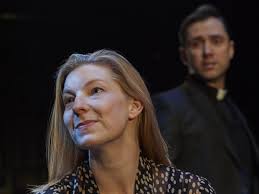
de chardin projectYesterday, I enjoyed an expansive evening at Toronto’s Theatre Passe Muraille as playwright Adam Seybold’s “The De Chardin Project” brought one of my theological heros to vivid life. Before my very eyes, Pierre Teilhard de Chardin gave new meaning to “forever!” Seybold’s bravery in taking on the complex work of Teilhard is matched by his sensitivity for the life and ideas of the man whose thinking continues to impress those who seek ways of expressing the complicated marriage of theology and science. In ninety short minutes Seybold’s script propelled us to the sun and back over and over again as the talents of Maeve Beaty and Cyrus Lane breathed life in to the divine/human love affair that is life

After years of pouring over Teihard’s work, I can empathize with the challenges of bringing his genius to a wider audience. The combination of talents that have come together in this production to stretch the audience’s perspective beyond the limits of tired arguments has succeeded in creating an experience which far exceeded my expectations. When I entered the theatre, I was sceptical. I wondered what would become of the ideas that I treasure. But it only took a few moments for Seybold’s words to woo me and before I knew it, Cyrus Lane’s tortured and dying Teilhard had me opening myself to a series of transformative moments, the like of which I’ve not enjoyed in the theatre for a long time. With Maev Beaty’s steady hand as our guide, Teihard’s questions took us on an adventure worthy of our deepest wonderings. Beaty’s moving ability to transform herself was aided by the subtle and sometimes startling staging. Director Alan Dilworth managed to not only direct his actors but his audience as well as we transcended the stage up, up, up, to the sun and back again into the deep interior of our being to capture precious grains of sand.

If you live in the Greater Toronto Area, whether you’ve read Teihard or never heard of him before, this play is a must see. The run ends December 14. So don’t delay. After the adventure of The De Chardin Project the expansion of my ideas about reality, like forever, is just beginning as Maev Beaty’s passionate “Yes” echoes throughout my being!

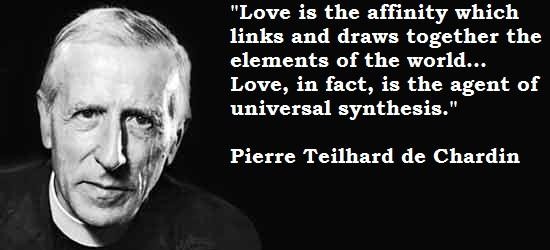
Teilhard Love

Magnificat for Ferguson, New York, and Canada’s Broken Justice Systems

stolen sisters pastorDawnAs I prepare the liturgy for the Third Sunday in Advent, various interpretations and musical settings of the Magnificat litter my office. Over and over again, the words placed on the lips of the young child Mary who was “great with child,” a child in whom our hopes and dreams for a new kin-dom of justice are embodied, sing in my imagination. In these past few days, I have observed my Canadian sisters and brothers as we look with horror and sadness as news of  what look to us like travesties of justice steam across the border. As Canadians we comfort ourselves with the delusion that the kind of racism which results in what appears to be a systemic contempt for the lives of young black men does not exist here in Canada. We shake our heads in disbelief as grand-juries refuse to indite police officers in Ferguson and New York trusting that our own justice system would do a better job of seeking justice. Some of us go as far as offering up a prayer of sorts giving thanks that we live up here and not down there. Up here we believe that we are above the kind of racism that results in systemic contempt for the lives of so many simply because of the colour of their skin. 

Mary’s song echoes in my brain and the tears begin to flow; tears of solidarity with the grieving, angry, laments being sounded by our American cousins as they cry out for justice, longing for the powerful to be brought down from their thrones and the lifting up of the lowly. Feeling my own anger and frustration at the callus disregard for the lives of Michael Brown, Eric Garner, and little Tamir Rice, shot and killed by police who failed to determine that the gun Tamir was holding was a toy, I can’t help but wonder, “How long, O Lord.”

No sooner than my lament leaves my lips, I comfort myself with the thought that I don’t live down there in the U.S., and like so many Canadians, I am more than willing to leave the fate of my American cousins in God’s hands, for there is nothing I can do; thank God. I can happily go about my day, smug in my country’s belief that we are not like “them.” So, with Mary “My soul magnifies the Lord, and my spirit rejoices in God my Saviour,” as images of Canadians, black, white, brown, and yellow dance in my head as equal before the law. Even as I sing to myself my favourite rendition of the Magnificat, images begin to creep into my head; images that cause the tears to return, images of stolen sisters, and the “Highway of Tears” bridges the gap between my delusions and reality. Continue reading

Advent Blue

When we leave behind our personifications of the Deity, we can’t help but rekindle our love of God in whom all of creation rests. Recognizing the Earth as sacred and moving toward an understanding of the Earth as a beautiful part of the Body of God is vital to our being in God. Peter Mayer’s hymn to our Blue Boat Home puts a whole new hue in my perception of Advent Blue!

WAKE UP for CHRIST’s SAKE! – sermon for Advent 1B

purple universeOn this the first Sunday in Advent we awakened ourselves to the cosmic contours of the darkness. Our first reading was The Star Within: a creation story by Dr. Paula Lehman & Rev. Sarah Griffith, followed by a musical video reflection My Soul by Peter Mayer which you can watch below. Our Gospel reading was from Mark 13:24-37. Listen to the sermon here


Gazing Into the Vast Empty Darkness Reveals the Sacred Dimensions of the Cosmos

During the season of Advent, dwelling in the darkness becomes part of our discipline of waiting. Darkness is so revealing.

Veni, Veni, Emmanuel

Hayley Westenra’s cover of this classic Advent hymn!
Emmanuel: God With Us. Emmanuel: God Is with us!

Awake My Soul – Preparing to Preach on the First Sunday of Advent

awakeThe Gospel reading for this coming Sunday concludes with these words attributed to Jesus by the storyteller know to us as Mark:  “And what I say to you I say to all: Keep Awake!” In the stories which have been handed down to us, Jesus is often heard warning, encouraging, sometimes begging us to wake up or to stay awake. So as I prepare for the Advent Season, this tune from Mumford and Sons keeps running through my mind. EMBODIED WAKEFULNESS is emerging as a theme for a season which often has our heads swimming in the clouds. 

Sunday’s reading from the gospel according to Mark:

Jesus said: “In those days, after that suffering, the sun will be darkened, and the moon will not give its light, and the stars will be falling from heaven, and the powers in the heavens will be shaken. Then they will see ‘the Son-of-Man coming in clouds’ with great power and glory. Then the Human One will send out the angels, and gather his elect from the four winds, from the ends of the earth to the ends of heaven. From the fig tree learn its lesson: as soon as its branch becomes tender and puts forth its leaves, you know that summer is near. So also, when you see these things taking place, you know that he is near, at the very gates. Truly I tell you, this generation will not pass away until all these things have taken place. Heaven and earth will pass away, but my words will not pass away. But about that day or hour no one knows, neither the angels in heaven, nor the Son, but only the Father.  Beware, keep alert; for you do not know when the time will come. It is like someone going on a journey, who leaving home and putting the slaves in charge of their own work, commands the doorkeeper to be on the watch. Therefore, keep awake—for you do know when the lord of the house will come, in the evening, or at midnight, or at crockcrow, or at dawn, or else, coming suddenly, the lord may find you asleep. And what I say to you I say to all: Keep awake. (Mark 13:24-37)

Quest for the Cosmic Christ – a sermon

Cosmic Christ pastordawnWe begin our quest for the Cosmic Christ on this the last Sunday of the Church calendar; traditionally the festival of Christ the King or Reign of Christ Sunday. Readings: John 1:1-6; Colossians 1:15-20; and Matthew 9:16-17. This sermon is the first in a series of sermons on our Quest for the Cosmic Christ which anticipates the season of Advent’s waiting and hoping for Christ to be born in us.

Listen to the sermon here:

Movements are Shaking Monuments: Bishop Yvette Flunder

Acts 16-28Many progressive Christians were introduced to  Bishop Yevette Flunder by the Living the Questions interactive dvd series. She is a phenomenal preachers whose extraordinary gifts  have the power to shake us out of our safe, comfortable, ways of being church. As we at Holy Cross Lutheran continue our ReVisioning process, Flunder’s sermon to the community at Drew Theological Seminary (2012) reminds me that there’s a whole lot of shaking going on in and around the church. Which begs the questions: What needs to continue to stand? and What needs a good shaking to make it fall down to make room for something else? Flunder’s sermon sent me back to the Book of the Acts of the Apostles, (16:23-28) to review the story that inspired her powerful images. There I noticed for the first time a line which has previously eluded me. Following the shaking of the great earthquake, Paul and Silas’ jailer presumes that they have fled the scene. But the Apostle Paul shouts: “Don’t harm yourself! We’re all still here!.” Despite the shake up of christianity which progressive and evolutionary thinkers are championing: Don’t worry! We’re all still here!” Some of our great monuments have fallen and more will follow suit. But they give way so that something new can be born. Sounds like resurrection to me!

Brussels Sprouts, Ebola, and Thanksgiving – reposted by request

Brussels SproutsAt the request of several of our American cousins, here are a few resources for Thanksgiving.  Thanksgiving celebrations invite us to remember not just our blessings, but the Source of All that IS.  Readings for Thanksgiving can be found here. Our contemporary reflection was the video “A Good Day” featuring Brother David Steindl-Rast (below)

A transcript of the sermon is here:

Listen to the sermon here:  other Thanksgiving posts can be found here and here

Questions, Questions, Questions – ReVisioning Sunday

puzzle on copyOur worship this morning preceded a congregational gathering in which we began the work of ReVisioning our congregation. After years of ReThinking Christianity we are beginning to move on to the work of articulating those things what it is that we do hold in common.

Using the Parable of the Good Samaritan the sermon explores the art of living in the questions. Listen to the sermon here

Parable of the Talents! It Really Isn’t About God!

Yesterday’s post about the the parable Jesus told in Matthew 25:14-30 inspired some feedback which suggested that I was reading too much into the parable. It seems to me that the whole point of storytelling is to evoke something in the audience. The best storytellers (of which Jesus is one) recognize that they can have absolutely no control over where their audiences might take their stories. Parables are stories designed to shock and transform their audiences. Jesus could have selected a different style of storytelling. That the stories that have been passed down to us by Jesus’ followers come to us as parables suggests that shocking interpretations are consistent with the desires of those who pass them on. But for those who insist that God is the slave-master in the parable of the talents, here’s a little animated version of the parable; no dialogue, just the actions. I’m not prepared to identify the master in this tale with the Divine One who Jesus described as Love. It isn’t really about about God. But then again, it IS.