Recorded Oct.16, 2016: Matthew Fox preaches on Luke 18:1-8 at All Saints Church in Pasadena. Fox defines prayer as, “a radical response to life; a profound or deep response to life.” As such, working for justice is the embodiment of our response.

Recorded Oct.16, 2016: Matthew Fox preaches on Luke 18:1-8 at All Saints Church in Pasadena. Fox defines prayer as, “a radical response to life; a profound or deep response to life.” As such, working for justice is the embodiment of our response.
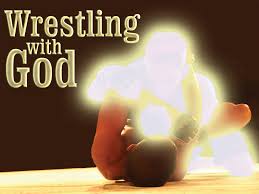 Before I read our Gospel text I took a few moments to reflect upon the story from the Torah that was our First Reading (Gen.32). I showed the short film below which was created by Jewish scholars to help rabbis teach the stories of the Torah to young children. I use this video to teach the stories of the Torah to our Confirmation students. I think it is important for those of us who follow the teaching of the Rabbi Jesus, to pay attention to the way in which the stories that spoke to Jesus continue to speak to Jewish people here and now. Watch the video and then listen to the sermon here
Our Gospel reading comes to us from a story told by an anonymous writer named Luke, who tells a parable that he attributes to the Rabbi Jesus: According to Luke: “Jesus told the disciples a parable on the necessity of praying always and not losing heart. “Once there was a judge in a certain city who feared no one—not even God. A woman in that city who had been widowed kept coming to the judge and saying, ‘Give me legal protection from my opponent.’ For a time the judge refused but finally the judge thought, ‘I care little for God or people, but this woman won’t leave me alone. I’d better give her the protection she seeks or she’ll keep coming and wear me out!’” Jesus said, “Listen to what this corrupt judge is saying. Won’t God then do justice to the chosen who call out day and night? Will God delay long over them? I tell you, God will give them swift justice. But when the Promised One comes, will faith be found anywhere on earth?”
I too have met this tiresome, troublesome, annoyingly, persistent widow who constantly cries out for justice. This woman won’t leave me alone. I must confess that I would rather not have this woman clamouring at my door! Each and every time I encounter this woman, she goes on and on, she wears me out! I cannot go anywhere without seeing this woman. She is everywhere. Pointing to her oppressor and demanding justice. She is on the radio in my car as I go about my business. She is on my computer screen as I try to keep up with the news of the day. She is in my living room as I try to relax flipping channels seeking respite from her persistent cries for justice. She appears in my facbook feed, and tweets at me from my phone, I cannot escape her cries for justice. I am sick and tired of this annoying woman. I cannot escape her shouts for justice.
I’m not sure that anything at all can be done to secure justice for this annoying woman. Too much time has passed. There are no witnesses. Boys will be boys. She needs to forgive, forget and move on. Why doesn’t she just leave me alone. There’s nothing that I can do for her. There’s nothing I want to do for her.
I have my own troubles. People to see, places to go, things to do. If only she’d leave me alone. Her persistent cries for justice have begun to haunt me and not even sleep gives me respite from her persistent cries for justice. If only she’d stop going on and on and on and on about her oppressor, about the injustice that has been perpetrated against her.
Maybe if she would just shut up about it, I wouldn’t have to wrestle with her in the night. Round and round we go, pinning one another down, she demanding justice, me pleading for peace. This wrestling over things beyond my control is wearing me down. I’m starting to wonder who this woman thinks she is. Hell, I’m beginning to wonder who I think this woman is. In the darkness of the night I sometimes wonder if this persistent, complaining woman, is just some trumped up version of myself. In her eyes, I sometimes think I see a glimmer of something far too familiar, something ugly, fearsome, unpleasant, and lurking in my own memories. In the wee hours before dawn, I think I can actually see myself in her.
But no, I’m not going there. We are not going there. Women all over the world don’t want to go there. Defenseless, innocent, naive children all over the world we dare not see them in the face of this persistent woman.
And then, just when I think that I have her pinned down and I’m about to wrestle something anything out of this insane encounter, the light begins to dawn on me, as I realize that there in the face of this persistent woman is the ONE in whom we all live and breathe and have our being; the ONE whose name eludes us.
I awaken to the realization that this place where we have all been, this place where we cannot escape is indeed Peniel, for here and now, in the face of this persistent woman, in the face of every persistent woman, indeed in the face of every persistent man, woman, and child, crying out for justice we have seen God face to face. It isn’t always pretty, it isn’t always what we want to see or where we want to see it, but it is the face of the ONE that we call God; the face of God shouting, crying, pleading, for justice.
Wrestling with the persistent, pleading, ones who continue to demand justice from me, I rise wounded from Peniel – the place where I know that I have seen God face to face, and yet my life has been spared. Limping away, forever changed, knowing that the wound that changes the way I walk in this world is the blessing given to me by those who have the courage to cry out for justice. Transformed by this wound I begin to see that I am at one and the same time both the judge who has the power to create justice and the one who cries out for justice.
In this Peniel, is where ever and when ever we have the courage to look into the face of another and see the face of God, and our lives have been preserved. We cannot walk away from an encounter such as this without responding to the ONE in whom we see the face of God, with justice. Whether our role in this life long wrestling match is that of the judge or the seeker of justice, may we see God face to face.
 In place of the sermon this Sunday, we watched the video “An Experiment in Gratitude” followed by brief comments about embodied gratitude. You can watch the video below and listen to our conversation here below are the notes from on which the comments are based:
Over the course of the past nine years a group of little people have come into my life. Lovely little people who call me Gran. There are seven of them and participating in their little lives is a source of such great joy. Each stage of their development is a wonder to behold. I particularly enjoy watching their parents as they attempt to teach these little darlings the things that they need to know about being human. One of the first things that we teach little humans is the fine art of saying thank-you. It takes a fair amount of repetition to teach a child to say thank-you. Over and over again, after giving them exactly what they want, we ask, “Can you say thank-you?” and the little darlings repeat the words “Thank-you.” Sometimes all we have to do is ask the question: “What do you say?” in order to hear the words “Thank-you” uttered in such a delightful way as to inspire us to praise them as such good little girls and boys.
Expressing gratitude is a skill that all tiny little people must learn in order to develop into well-rounded human beings. Indeed, scientists insist that being grateful is a prerequisite of happiness. Happy humans it seems, are humans who embody gratitude. But there is more to gratitude than simply saying thank-you. I remember learning that gratitude includes more than simply expressing our thanks. It happened when I was about sixteen and actually noticed the beauty of a sunset and for the first time I realized that I was part of something so much bigger than myself. I know I must have seen the sunset before, but this time I actually saw the sun set. We were driving down the road, my friend Valerie and I were riding in a car driven by her mother, Lola. It was a partly over-cast day on the west coast of British Columbia. Just a few clouds. You could see the mountains off in the distance. We were chatting back and forth when all of a sudden, Lola pulled the car over to the far side of the road, switched off the engine and got out. Valerie followed her mother out of the car, so I figured I had better do the same. Val and her mother scampered down from the road and onto the beach. When they reached the water’s edge, they stopped and just looked off into the distance. Apart from a tanker-ship making its way across the horizon, I couldn’t see much of anything. Lola had the most amazing expression on her face. She positively glowed with happiness. Valerie wore a similar expression. I must have looked somewhat puzzled because Val smiled at me and said “Isn’t it the most beautiful thing you have ever seen?” This only confused me more. What were they looking at that had made them stop the car, scamper down the bank and stand there at the water’s edge on a cold autumn evening.
These happy, glowing, smiling people made me nervous. There they stood grinning from ear to ear. What were they on? And then, I saw it. For the first time in my life, I saw it. It had been there before. But I had never really seen it before. The sky was amazing. The colours were overwhelming. It almost didn’t look real. It looked like someone must have painted it that way. It was magnificent. A work of art. The most beautiful thing I have ever seen. If you’ve never seen a late October, Pacific Coast Sunset before, you’ve missed one of the great wonders of the world. Neither Emily Carr’s paintings nor picture perfect post cards do a western sunset justice.
Believe it or not, even though I had been living on the west coast for about four years, at that point I had never before really noticed just how beautiful a sunset could be. No one in my experience had ever taken the time to stop and look at one. No one had ever pointed one out to me before. I would never have dreamed of stopping a car and getting out to watch as the sun put on a show while setting. So, I stood there. Overwhelmed by it all. Amazed at just how beautiful it was. Wondering just who or what could be responsible for such a spectacular thing as this. Before long my thoughts drifted to the Creator. Actually noticing a magnificent sunset was the beginning of a journey beyond myself as the reality that I am part of something so much bigger than myself continues to permeate my being.
Back then, I expressed my gratitude by very much the same way as my grandchildren are being taught to express their gratitude, simply by saying “Thank-you”. The object of the Thank-you being God. At the time, God was an old bloke up there in the sky somewhere. As my images of God changed over the years, my Thank-you’s continued to be expressed to my ever-changing images of God. But I must confess, that it was a whole lot easier to say thank-you to God when God was some big guy up there, out there somewhere? It was so much easier when I thought of God as “Father” or even as “Mother” to express my gratitude by simply mimicking the behaviour that I’d been taught as a child, “Can you say “Thank-you” Oh yes indeed I can say thank-you. “God is great, God is God, let us thank him for our food. By his hand we must be fed, Give us Lord Our Daily Bread.” Continue reading
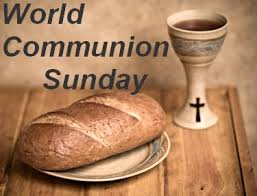 This sermon is inspired by, infused with, and indebted to the work of Kurt Struckmeyer whose essay “The Words of the Eucharist” articulates communion in terms of “liberation” and pointed me to the work of the Roman Catholic liturgist Gabe Huck; with just a little Martin Luther thrown in to insure that “this is most certainly true.” The readings included 1 Corinthians 11:23-26, Mark 14:22-25 and Luke 22:14-20 – listen to the sermon here
John 10:22-31
The time came for Hanukkah, the Feast of Dedication, in Jerusalem. It was winter, and Jesus was walking in the Temple area, in Solomon’s Porch, when the Temple authorities surrounded him and said, “How long are you going to keep us in suspense? If you really are the Messiah, tell us plainly.”
Jesus replied, “I did tell you, but you don’t believe. The work I do in my Abba’s name gives witness in my favour, but you don’t believe because you’re not my sheep. My sheep hear my voice. I know them and they follow me. I give them eternal life, and they will never be lost. No one will ever snatch them from my hand. Abba God, who gave them to me, is greater than anyone, and no one can steal them from Abba God. For Abba and I are One.” With that, the Temple authorities reached again for rocks to stone him.
 With that, the Temple authorities reached again for rocks to stone Jesus. Welcome home. On this Homecoming Sunday, we are reminded that home is not always a safe place. The buffalo have ceased their roaming, the deer and the antelope no longer play, and all too often is heard a discouraging word. Welcome home. As many of us know all too well, home may be where the heart is, but home is also a place where the most cutting of family arguments can wound even those of us who’s strength of character has lead us far from home.
Jesus never faired well at home. Whether it was his home in Nazareth where his neighbours wanted to toss him off a cliff, or his spiritual home in Jerusalem, where the Temple authorities reached again for rocks to stone him, Jesus words, his teaching, his way of being in the world made the people at home so angry they could kill him. There was something about this fellow Jesus that got on people’s nerves. I mean the nerve of the fella, imagine insisting that he, Jesus, and Abba are ONE. Bad enough that Jesus had the audacity to call God Abba, “daddy” as if he and the Creator are on intimate terms, but then to suggest that God, the Creator of all that IS, and all that ever shall be, to insist that he and God are ONE, well is it any wonder that the Temple authorities reached again for rocks to stone him. After all the Temple authorities are charged with the solemn responsibility of preserving good order.
Every home needs rules and when it comes to the rules the Temple authorities know the rules backwards and forwards, and this guy Jesus seems incapable of sticking to the rules. Everyone knows that according to the rules God is up there and out there, beyond us and from time to time God comes down here and the best place to find God is in God’s house, and in God’s house we have rules about who, how, and when people can approach the ONE who IS the source of all life. God’s house has rules for a reason. Without rules there is chaos and chaos is the very thing that the Creator established creation for. In our earliest myths we imagined that in the beginning there was chaos and God’s Spirit hovered over the chaos and said, “Let there be light!” and so began the slow and steady evolution out of the muck and the mire of chaos and into the natural order of things, with God up there in the heavens and we earth creatures down here, going about our business, and remembering to pay homage from time to time to the ONE who makes it possible for us all to feel at home here in creation. Then along comes Jesus, suggesting that God is not safely out of reach but that indeed God is ONE with him, why the next thing you know people will be imagining all sorts of things, and some one will suggest that we are all ONE with God. Quick find some rocks so we can stone this guy before things get out of control. After all our home is our castle, and we need to stay in control of the castle lest our carefully held ways of doing things devolves into chaos. We’ve got to keep God safe from such ideas.Ideas are far too dangerous to be allowed to infect the masses, pardon the pun. If ideas are allowed to fester, the next thing you know we won’t recognize our homes anymore and we’ll have to find new ways of living together.Get me a rock, will you? I can’t stand it when my home is threatened by an idea; especially an idea that is so dangerous that it threatens my image of who I am by suggesting that the god I worship and adore might be something other than who or how I want god to be. If you don’t believe me, just look at our neighbours in the United Church of Canada. If only they’d reached for their stones a little sooner, then that Greta Vosper woman would never have gotten all the attention she’s getting now and she’d never have been able to infect their house with ideas about God being dead.
JEEZUS H CHRIST! Just imagine what might happen if people are allowed to suggest that God is dead!
Ok, I know, I am grossly over-simplifying things here.But we are at home here aren’t we. We’re family and we don’t have to spell everything out do we.We know who we are and whose we are. Whether we say it out loud in here, where we all know what we mean, our whisper it out there where people might not understand, we know that God being dead is precisely the foundation upon which many of our homes have been built for generations. Jesus said, “I and Abba are ONE.” and we all know how that worked out. Jesus was executed by the state, aided and abetted by the Temple authorities, Jesus died at the hands of those who firmly believed that he was a troublemaker capable of creating chaos. Jesus died believing that he was ONE with God.
We have been taught to believe that JESUS and God are ONE, so dear friends and family, here in this house we can safely say that God did indeed die. God died and was buried. The good news is that we also believe that death does not have the final word. God is dead. Long live God! For we in this house know the sweet beauty of resurrection. We know that God dies over and over again, precisely because we know that when Jesus said, “I and Abba are ONE.” Jesus pulled God out of the heavens and the faraway God of our ancestors was reborn as the Abba whose intimacy with us is so palpable that we can say that Abba and I are ONE. We are ONE with God.
The community of people who followed Jesus after his death understood this. The Apostle Paul understood that God was no longer up, there, far away, distant, beyond our reach, or tucked away in the Holy of Holies. The Apostle Paul, knew that that particular God died upon the cross with Jesus, but death did not have the final word. The power of the resurrection empowers us to know that God is the ONE in whom we live and move and have our being. We are ONE with God and this dear family means chaos. For if we are ONE with God, then those people out there, those other humans, indeed all those other beings, in fact creation itself, is ONE with God. That means that every life is precious, including the life of this planet. That means that all the walls in the world won’t be able to separate us from the ONE in whom live and move and have our being. It means that even the biggest, baddest, most scary ones out there, are ONE with God. How will we know how to be in the world when each and everyone we meet is kin?
God is Dead! Our lovely, God, the one we created in our image, the one who we safely tucked away up in heaven, the one we allowed to come into our sanctuaries only if he behaved and followed our rules, that god, the image formed by the art and thought of mortals, is dead. Long live God. Long live the ONE in whom we live and move and have our being. Long live the ONE with whom we are ONE. We can throw all the stones we want at the Gretas of this world, who dare to point out that our images of the ONE are for all intents and purposes dead, but our rocks won’t help us preserve the order that we are counting on to save us from chaos.
Life is chaotic. Our rules, regulations, and houses can offer us sanctuary from time to time from the chaos, but the rules and regulations, the carefully held beliefs, the doctrines and the dogma, even the images we hold dear cannot save us. We can toss all the rocks we want, but alas, the ONE in whom we live and move and have our being, lives and dies over and over and over again, in, with, through, and beyond us, that’s the beauty of the chaos that the light brings into view.
The ONE in whom we live and move and have our being is more than we can  begin to imagine. The “Idea of the Holy” is in and of ITSELF, “Mysterium, Tremendum, et Facinans” (Rudolf Otto) Mysterious, Tremendous, and Fascinating. Take and eat. Taste and see for LIFE in the ONE is Mysterious, Tremendous and Fascinating.
Chaotic, always transforming, ever changing, awe-inspiring, terrifying, delicious, pungent, devastating, jaw-droopingly real, compelling, exhausting, dangerous, sublime, enchanting, revolting, magnificent, challenging, refreshing, frightening, unimaginable, surprising, beyond our ability to express, and yet this Chaos of which we are ONE, is home.
So, welcome home. Take and eat. Taste and see. For it is, in the words of our ancestors, good, very good. And be prepared, because the ONE in whom we live and move and have our being, lives and dies, over and over again. For we dear family are the people of the resurrection. We are the ones who proclaim, “God has died. God is risen. God will come again and again, and again.” Welcome home: Taste and see. For God is God. Can I get an Amen?
 Commenting on her former role as the Anglican Church of Canada’s director of public witness for social and ecological justice Henriette said that she had “a front-row seat, and was a witness to a truth process that is unique in Canadian history, that is deeply, deeply relevant to the work of our church, is deeply relevant to who we are as Canadians and whoever lives in this land.”
Listen to Henriette’s sermon, which explores the Parable of the Good Samaritan within the context of the work of reconciliation, here

Recorded Aug 8/2016 at the Chautauqua Institution.
 Diana Butler Bass moves from her latest book Grounded‘s focus on nature to examine the sacredness of the city. Bass explores the theological images that appear in scripture that help us to think in new ways about the urban environments of our day. Seeking transformative images to usurp our tendency toward building empires toward a vision of the “urban cosmos” that empowers its inhabitants to live with justice, love, and humility, Bass paints a seductive vision of a universal city on a hill; a dwelling place of peace. In contrast to the system of globalization which seeks market control in the service of empire, Bass points to cosmopolitanism, a world view based upon our shared common humanity.
 Over and over again as I have explored the stories handed down to us by our ancestors, I have been struck by the significance of names in ancient literature. The ancient writers used names as a tool to reveal important details. A character’s name in a story can be used to remind us of other characters in other stories that also carried that name, or a character’s name can be taken from a word that has significant meaning. We can use the names of biblical characters to explore deeper meanings within the stories. We would do well to pay attention to the names of biblical characters. The lack of a name is just as important as any given name. I believe that there’s a reason that the anonymous gospel storyteller we call Luke failed to give a name to the woman we find bent over in chapter. The writer we call Luke can be very deliberate about names when he wants to be. I believe that the storyteller wants us to see this woman as our very selves.
So, let’s play along shall we? Stand up. Stand up and bend over. Please, if you are able stand up and lean over 45 degrees. I want you to have a sense of the woman’s predicament. For a few moments, just a few moments I want you to feel the strain on your back, and the burden on your shoulders that that woman felt for 18 years. I want you to look and see how being bent limits your vision. See how your perspective is shorter. Stooping, you cannot easily look into the faces of those around you, you can’t be on the same level with anyone, you can’t see the whole church. It’s not so easy to look toward the horizon to see a glorious sunrise or sunset. Vistas of God’s wondrous works on earth are restricted. So bent out of shape, how could you ever gaze into the awesome stars at night.
Listen to the story one more time: Jesus was teaching in one of the synagogues on the Sabbath. And there appeared a woman with a spirit that had crippled here for eighteen years. How many of us arrive on the Sabbath with spirits that have crippled us? She was bent and quite unable to stand up straight. She was bent….in Greek the word is “kyphotic.” She was a kyphotic woman. The word kyphotic literally translates as bent together or bent with. It is as if this woman is bent in on herself. It’s a picture of someone who has not only borne the yoke but who really owns it in her very body. She is not just a woman with an infirmity but the Scripture says, with the spirit of an infirmity. Whatever it was that had bent her, whatever emotional or physical burden she had borne, the Scripture suggests, ultimately became part of her until her very body was confirmed to its image. There is nothing she can do now to help herself out of the spiritual pretzel her life has become. Each of us knows this infirmity intimately. At one time or other, over and over again, we have all experienced this infirmity in our lives and in our bones.* (Jana Childers “The Kyphoptic Woman” 2005)
Each of us have been bent with the burdens of our relationships, our jobs, our finances, or our health and sometimes even our lovelessness. We have all been this woman who is bent out of shape by her burdens. We have all been bent in on ourselves. But today, I want to take the image of this woman a few steps further to see what she reveals about our culture.
Okay, you can sit down now. Sit back and relax as I tell you the story of two communions; two communions that are not limited in time or space to the actual communions that they reveal. The first communion is indeed my first communion. I was just 15 years old and I’d only just begun to attend church. It was a small Lutheran church and back then they only celebrated communion a few times a year. I wasn’t prepared for communion. I’d only been attending church for a few weeks and I had no idea what it was all about. I still remember wondering what I should do. I was leaning toward just sitting where I was and waiting until after the service so that I could ask the pastor for an appointment to talk to him about what I needed to do in order to make sure that I was prepared properly to go to the table. That’s when my friend’s mother Lola leaned over and asked me if I wanted to go up for communion with them. I whispered that I’d never been to communion before. She smiled and took my hand and said that’s okay, you’re welcome at the table. I didn’t see any table and I was sure that I was missing something. So, I stood there with my hand in hers and listened very carefully as the Pastor told the story, “In the night in which he was betrayed, our Lord Jesus took bread and gave thanks; broke it and gave it to his disciples saying: Take and eat; this is my body, given for you. Do this for the remembrance of me. Again after supper, he took the cup gave thanks and gave it for all to drink….” Continue reading
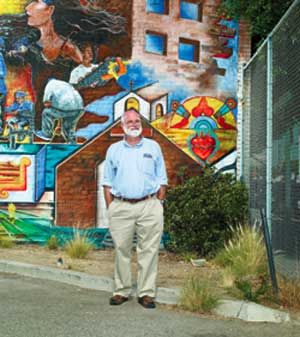 During my visit to Chautauqua last week, I was introduced to Fr. Gregory Boyle. As the Chaplain for the week, Fr. Boyle introduced us to his work at Homeboy Industries in Los Angeles. “Homeboy Industries provides hope, training, and support to formerly gang-involved and previously incarcerated men and women allowing them to redirect their lives and become contributing members of our community. Each year over 10,000 former gang members from across Los Angeles come through Homeboy Industries’ doors in an effort to make a positive change. They are welcomed into a community of mutual kinship, love, and a wide variety of services ranging from tattoo removal to anger management and parenting classes. Full-time employment is offered for more than 200 men and women at a time through an 18-month program that helps them re-identify who they are in the world, offers job training so they can move on from Homeboy Industries and become contributing members of the community – knowing they count!” Fr. Boyle’s work in and of itself is astonishing. But his ability to share the wisdom his work has taught him through the art of storytelling is miraculous. It was a joy to sit at this master’s feet!!! Here’s a talk he gave back in 2012. I’ve already ordered his book Tattoos on the Heart and look forward to gleaming more from this wise holy man!!!
 Jesus’ parable of the Good Samaritan is one of the most familiar stories of all time. The trouble with such a familiar story is that we all know it so well that we hear it on autopilot. We know the characters almost as well as we know how we are expected to respond to this story. We can point to the priest and the Levite and explain why they acted the way they did. We can even explain how shocking it would have been to a first century Jewish audience to hear a Samaritan described as “good.” Most of us have heard this parable interpreted so many times that we already know exactly how we are expected to feel when we hear it and what we are expected to learn from it. “Love God with all your heart, with all your soul, with all your strength, and with all your mind and love your neighbour as yourself” and who is your neighbour, why even the lowly Samaritan, the one you would least expect is your neighbour. We know this story backwards and forwards and yet like any good story, there is always something that we can learn from it or it wouldn’t have been told as often as we have all heard it. But just in case familiarity with the story is getting in our way of hearing the radically outrageous truth to which this story points, let me tell it one more time with a slightly different twist.
Like all parables this didn’t actually happen but then again it is always happening. Last week on my way back from Chautauqua, let’s say somewhere near Buffalo, I was attacked by a band of thieves. They stole my car and left me lying by the side of the road. A bishop happened to be passing on her way to Toronto, she saw me lying there bruised and battered, but she had people waiting for her, meetings to attend, and she could not be late, after all she is a bishop and people are counting on her. So, she put her foot down on the accelerator and hurried past me. Later, a bunch of pastors who were car-pooling home from a spirituality retreat came tooling down the highway. They saw me lying by the side of the road and they considered stopping to lend a hand but they had congregations to return to, members to visit, and sermons to consider. So after much consideration the pastors decided to hurry past lest they be waylaid by my problems. Suddenly, travelling from the opposite direction came a sleek, decked out bus with the words “TRUMP Make America Great Again!” in bold letters along the side. Lo and behold it was the orange fellow himself, Donald J. Trump heading up to Buffalo to appear before a “huuuge crowd” of adoring fans. Without hesitating for a moment, the Donald appears with a first-aid kit and begins to dress my wounds. I recognized him right away, and wanted to crawl away and die, but the Donald just loads me into the back of his bus and off we go to the nearest casino, which he just happens to own. At the casino the Donald puts me up in a room fit for a queen and instructs the staff to take very good care of me. It sure wasn’t easy being helped like that, by such a loathsome, despicable man. You know that I’d have to be in a very vulnerable state to accept help from the likes of Trump and his merry band of nut-bars. Thank goodness that this didn’t actually happen. But I can’t help wondering what I might learn about my own prejudices from such an encounter, or what I might learn about his woundedness, or indeed what we both might learn about our shared humanity. (stop it now!!! I know what you’re thinking…just try to remember the Donald is human)
Over the years, I believe that I have played most of the characters in the Parable of the Good Samaritan. I suspect that most of you have as well. Most of us have at one time or another played the role of the lawyer, trying to get Jesus to explain the secrets of life to us. Most of us have at one time or another played the role of the priest when we see a broken down car on the side of the road, with its occupants standing around looking desperate for help, but we pass by, not because we are bad people, but because the rules of our society tell us that only fools would consider stopping on the side of the road to help strangers. After all it might be a trap, and surely they have a cell phone so they can call the police who will surely come soon to help them and all of you have surely played the role of the Levite. Oh, you may want to be a good Samaritan, but there are just too many street people, too many requests for money, too many people sleeping out in the cold, and to many vacant faces staring up at us. It’s so difficult to know how or who to help. So, we strike up uneasy compromises with to salve our consciences. We give away whatever coins we happen to have as if a few coins can really help. We go about our business failing to even bother asking how we might help, for fear that from the vacant face, we might hear a voice that demands more of us. Continue reading
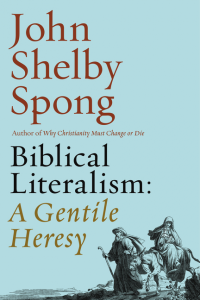 Thanks to the generosity of my congregation, I am provided with time for Continuing Education. So, last week I journeyed down to the Chautauqua Institution to listen to Jack Spong articulate the thesis of his latest “last” book: Biblical Literalism: A Gentile Heresy. Jack’s 85 years have afforded him much wisdom when it comes to exploring the sacred texts of Christianity in ways that can open us to new visions of a Christianity capable of nourishing 21st century minds. I’m happy to report that Jack has yet another “last” book scheduled for publication in 2018 under the working title: “Charting a New Reformation.” As always it was a blessing to be guided by Jack!!! Thanks to the Chautauqua Institution for making Jack’s lectures available to a wider audience.
 Today, Holy Cross had the honour of hosting York Region’s Pride Fest worship. In the wake of the tragedy in Orlando, we did our best to be both sanctuary and celebration. Thank-you to everyone who came together to be LOVE for one another!
Watch video of the opening hymn here
 Today was Picnic Sunday at Holy Cross and we were blessed to worship on the shores of Lake Simcoe at the Loretto Maryholme Retreat Centre. The Worship Bulletin which includes the readings is available here. A written text of the sermon I intended to preach can be found here, or you can listen too the abbreviated sermon that was preached to the accompaniment of not so gentle breezes is printed below
 The song sung prior to the Gospel is Jann Aldridge-Clanton’s “Welcome New Wineskins” sung to the tune of Blessed Assurance. (Inclusive Hymns for Liberating Christians). As for my appropriation of the Beach Boys, “Help Me Rhonda”…my apologies! I am indebted to Christopher B. Zeichmann’s article “Rethinking the Gay Centurion” in The Bible and Critical Theory Vol 11 #1, 2015.
Listen to the sermon here

This Sunday is Trinity Sunday. In anticipation, preachers all over the world are dutifully pondering the Doctrine of the Trinity desperately searching for something to say to encourage their congregations.
Too many preachers will trot out tired old clichés conjuring up images of triangles, shamrocks around, or point to H20’s ability to appear as water, ice, or steam while still maintaining it’s unified essence. Or have you heard the one about the 3 blind men and the elephant in the room. That old chestnut is trotted out by many a desperate preacher struggling to put flesh on the doctrine of the trinity. But for the life of me I can’t see how 1 blind man touching the elephant’s trunk and presuming that there is a tree in the room, while a second blind man catching wind of the elephant’s ear is convinced that there is some sort of giant fan in the room, while a third man grabs hold of the tail and is sure that he has hold of a rope, helps you to conclude that just because they’re all sharing a room with an elephant you can now confess that God is indeed Father, Son, and Holy Spirit, one God, forever and ever amen. But all sorts of mental gymnastics will be exercised in the vain attempt to make some sort of sense of the doctrine of the Trinity!
On Trinity Sundays, mindful of the fact that trying to explain the doctrine of the Trinity usually leads to heresy: dusty theological books that have not seen the light of day since last Trinity Sunday have been poured over to ensure that the formula’s learned in seminary are repeated correctly and heresy scrupulously avoided. The imaginative among us have attempted to baffle our congregations with our theological intellect, the pragmatic among us have attempted to baffle our congregations with something akin to BS, while the desperate among us have simply tried to survive the Trinity Sunday hoping against hope that no one will notice that we haven’t a clue what we’re talking about.
Perhaps only dear old Dr. Martin Luther possessed the theological integrity sufficient to save a preacher from the perils of preaching on Trinity Sunday. So, before I launch, forth, let me remind you what the instigator of the Reformation had to say on the subject of the Trinity. Martin Luther warned that: “To deny the Trinity is to risk our salvation; to try and explain the Trinity is to risk our sanity.”
I will confess that Martin Luther had much more at stake, literally at stake, than I do, because the truth is that for centuries the punishment for heresy would have found many an ancient preacher burned at the stake. But while the death penalty for heresy has been lifted, the risk to one’s sanity remains.
Now, I will confess that when faced with a particularly difficult theological knot, I prefer to begin by quoting Jesus and not Luther, but alas Jesus remained silent on the issue of the Trinity. So, I did try to find something helpful in the words of the Apostle Paul. But alas, without some really amazing theological gymnastics that are beyond my abilities to comprehend, even the Apostle Paul remains mute on the issue of the Trinity. So keeping in mind Dr. Luther’s dire warning that to, “To deny the Trinity is to risk our salvation; but to try and explain the Trinity is to risk our sanity.”
Let me remind you that the Trinitarian formula appears in Scripture only once, in Matthew 28, during what is called the Great Commission, when Jesus commands the disciples to go forth, baptizing in the name of the Father, and of the Son, and of the Holy Spirit. But the doctrine of the Trinity does not appear in the Bible
By the way, just so we’re clear, I rummaged through some of my previous sermons on the doctrine of the Trinity and I must confess that if this were the twelfth century, an angry mob would be stoking up the fires beneath my feet because based on things I have proclaimed on various Trinity Sundays a charge of Modalism could very successfully be laid against me, as could a charge of Sabellianism. You might be interested to know, that more traditional preachers than I, will no doubt preach sermons this Sunday which will prove them guilty of Arianism or at the very least Subordinationism. All of these heresies in a bygone age would have left us with a severe shortage of clergy in the church, as many of us would be smoldering at the stake for our crimes. Deciding who is right and who is wrong, who is in and who is out is a deadly preoccupation of humanity, a preoccupation that the church has not been able to escape. Continue reading

Pentecost Sunday is a day for stories about the nearness of God. So we begin with the story of the Tower of Babel from Genesis 11:1-9, then make our way to the anonymous gospel-storyteller we call Luke’s story of the early followers of Jesus’ encounter with the Holy Spirit at Pentecost in Acts 2:1-21, and then the anonymous gospel-storyteller we call John’s story of Jesus’ insistence that he and God are one, before rounding off with Sandy Eisenberg Sasso’s excellent children’s book God In Between.
Listen to the sermon here
 If you haven’t had an opportunity to learn from Amy-Jill Levine, don’t miss this opportunity!!! I have travelled far and wide to listen to Professor Levine and she has never failed to open the New Testament in ways that have changed my view of Jesus “The Misunderstood Jew”. Her book “short stories by Jesus” is my go-to for insights into the parables of Jesus. This year our congregation has benefited greatly from “The Jewish Annotated New Testament” edited by Amy-Jill Levine and Marc Zvi Brettler. Jewish New Testament scholars are a rare breed and Amy-Jill Levine is powerfully articulate in her approach to the teachings of the Jewish rabbi that we Christians long to follow. Members of Holy Cross: be sure to sign-up for the road trip we will be taking into the city to be a part of this event!!! For those who will be anywhere near Toronto, follow this link for details. In the meantime allow this video to whet your appetite.

 pastordawn