A Way to Understand the Resurrection – Richard Holloway

Peter Callesen's Papercut Resurrection

Peter Callesen’s Papercut Resurrection

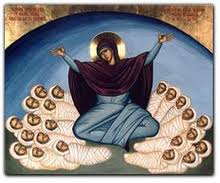
Richard Holloway, the former Primate of the Scottish Episcopal Church, interprets the story of the resurrection not as an historical tale, but as our own story. Holloway has written of his longing for a humbled and broken church. His own humility and brokenness shines through this video as Holloway embodies his own longing.

Humpty Dumpty, Doubting Thomas, and Resurrection – John 20:19-31 – Easter 2A

humpty dumptyChrist is Risen! Christ is Risen Indeed! Alleluia! Here we are still in the early days of the fifty daylong celebration of Easter and I’m already wondering how long we should keep chanting that Christ is risen! Sometimes, it seems that after the first flush of Easter Sunday’s excitement, our shouting that Christ is Risen sounds a little like we doth protest too much. The crowds of Easter are pretty much gone and churches all over Christendom are trying to keep up the excitement with the remnant of believers who turn up at church more often than Christmas and Easters. Our shouts of Christ is risen seem a little feeble; almost as if we are trying to convince ourselves that the celebrations of last Sunday actually mean something. After all it’s pretty safe to shout that Christ is risen in church. Nobody is going to challenge us in here about what we mean by that. But what if we were shouting that Christ is risen on the street corners or at work? Would we be comfortable telling people what we mean?

Christ is risen! Are we really willing to shout when it comes to declaring our belief in the resurrection? And if we are willing to shout about the resurrection, what is it that we would be shouting about? After all people have been arguing about the resurrection ever since the rumors about the empty tomb first began and after 21 centuries we still can’t agree what happened to Jesus after he died. Over the centuries the word resurrection has taken on so much baggage that it is difficult for many of us to talk about resurrection because we all bring so much to the conversation whenever we try to discuss it. Most of us grew up believing that we needed to believe in physical resurrection in order to belong. So we have learned to accept that resurrection means the physical resuscitation of a corpse. Yet even the stories that we tell in church don’t necessarily insist that Jesus physically rose from the dead.

The Irish novelist who wrote the famous book about his childhood in Ireland called Angela’s Ashes, also wrote a less famous book about his early years as a teacher in the United States. The book was called T’is and even though it didn’t sell quite as well as his first novel, McCourt’s I love it because it lends some keen insights into a teaching and teaching is one of the things I love about being a pastor. McCourt tells a story about Humpty Dumpty that illustrates some of the difficulties we face when we begin a discussion of the resurrection. McCourt tells his class the story of Humpty Dumpty to his class and for a whole class period there’s a heated discussion of “Humpty Dumpty” itself. (I’m using the term “itself” because no where in this English nursery Rhyme does it indicate what gender Humpty Dumpty is) In McCourt’s class Humpty Dumpty’s gender was automatically assumed to be male. But it was the sixties and so nobody argued about Humpty’s gender when McCourt recited the well known rhyme: “Humpty Dumpty sat on the wall, Humpty Dumpty had a great fall; All the kings horses And all the king’s men Couldn’t put Humpty together again.” Then Frank asked his class what is going on in the nursery rhyme and all the hands shot up to say things like: This egg falls off the wall and if you study biology or physics you know that you can never put an egg back together again. I mean it’s common sense really. That’s when Frank asked the question that set the class at odds with him. “Who says it’s an egg? Of course it’s an egg! Everyone knows that! Where does it say that it’s an egg? The class is thinking. They’re searching the text for egg, any mention, any hint of egg. They just won’t give in. There are more hands and indignant assertions of egg. All their lives they knew this rhyme and there was never any doubt that Humpty Dumpty was an egg. They’re comfortable with the idea of egg and why do teachers have to come along and destroy everything with all this analysis. McCourt insists that he’s not destroying. He just wants to know where they got the idea that Humpty Dumpty is an egg. Because the class insists, it’s in all the pictures and whoever drew the first picture must have known the guy who wrote the poem or he’d never have made it an egg. So Frank says, All right. If you’re content with the idea of egg we’ll let it be but I know the future lawyers in this class will never accept egg where there is no evidence of egg. And so by tacit agreement Humpty Dumpty becomes now and always an egg. (I am indebted to Bernard Brandon Scott’s reminder of the story about Humpty Dumpty in  Frank McCourt’s novel “T’is”)

For me the subject of the resurrection of Jesus has a great deal in common with Humpty Dumpty because by some sort of tacit agreement it was decided long ago that the resurrection of Jesus just has to be a physical resuscitation of a corpse; this despite the fact that the earliest writer on the subject of the resurrection, the Apostle Paul denies that the resurrection of Jesus was a physical resuscitation of a corpse. Continue reading

PRACTICING RESURRECTION – a sermon for the 2nd Sunday of Easter

resurrectionFor this sermon I used a video within the sermon to help illustrate resurrection. You can view the video within the written text of the sermon below or listen to the audio version provided. I am indebted to the work of James Rowe Adams for much of the New Testament Scholarship in this sermon.

The Scripture texts were John chapter 20:19-31 and Acts 4:32-35

Audio Version of the Sermon click here

Practicing Resurrection

Christ is Risen! Christ is Risen indeed!  Alleluia! So, Christ is Risen!  So What???What can it possibly mean to you and to me, that a rag-tag bunch of Jesus’ followers gathered together in an upper-room and talked about their experiences of Jesus and decided that not even death could extinguish the life that they experienced in Jesus? What difference does it make to you or to I that Christ is risen? The truth is that it can make absolutely no difference what so ever. Now there are a whole lot of people who will tell you that the important thing about resurrection is that you believe it. Those same folks absolutely love the story of doubting Thomas. And so every year on the second Sunday of Easter we read the story of doubting Thomas as a kind of inoculation against Thomas’ disease.

I sometimes think that the designers of the lectionary were trying to build up our resistance to doubt. Having problems believing in resurrection, well don’t do what Thomas did, don’t doubt, because you’ll be proven wrong. Jesus is alive, the wounds in his hands proved that to Doubting Thomas, so have no doubt about it the resurrection happened!  Believe in the resurrection!

The trouble with believing in stuff is that it belief can make absolutely no difference what so ever. I can believe in justice for all, but unless I’m prepared to seek justice, to be fair, or to resist injustice, it makes absolutely no difference what so ever. You can shout, “Christ is risen!” all you want but unless you are willing to live it, the resurrection means very little at all. In order to live the resurrection you have to begin practicing resurrection. In order to practice something, you have to know what it looks like, what it sounds like, or what it feels like.

I’ve been trying to figure out how to show you what resurrection looks like in the flesh. Then I remembered a video that’s been doing the rounds on the internet, so I want you to watch this modern miracle of resurrection.

WATCH THE VIDEO CLIP FROM:  Alive Inside

Christ is Risen! Christ is Risen indeed!  Alleluia!  Almost 2000 years ago, a bunch of rag-tag Jesus followers were huddled together in fear. Their beloved leader had been brutally executed by the powers that be and they were terrified that they would be next. Paralyzed by their fear, hiding behind a locked door, something happened that gave them the strength to burst forth from their own tomb and change the world. Continue reading

Scuffed Up Reddish Pumps: a Maundy Thursday Sermon April 17, 2014

red pumpsThis year’s Maundy Thursday commemoration at Holy Cross included: hand washing, soup supper, eucharist, intimacy and this story from the Reverend Susan J. Thompson who, along with Pastor Tom Doherty presided over our worship.

It was a dark and . . . windy night. The swinging doors into the sanctuary were banging, the tree branches scraping against the stained glass windows, and casting eerie shadows.

It was then my colleague and I decided to make the place a little cosier for our Maunday Thursday service. We scrambled around the balcony storage and found all our Christmas tea lights and holders, and both of us had plenty of candles in our studies. We placed all of them around the chancel, and on the window sills where the shape-dancing trees seemed a little less intimidating in the warm candle glow.

In a kitchen to the right , Session members were preparing warm scented water and gathering the tubs in which to immerse people’s feet. The towels were at the ready. All we needed now was the chalice and plate for the elements, so I raced downstairs to the cupboard.

I was stopped in my tracks by a pounding on the door. My heart sank as I went to it, for there was (let’s call her Louise) a client of our food bank. I opened the door, exchanged pleasantries, and politely informed her that the food bank would be open next Tuesday.

“Oh, I don’t want food, she said”. Just a pair of shoes”. Continue reading

Tickled By the Racy Svetlana; Otherwise Known as the Woman Evangelist Who Rocked Jesus’ World! – a sermon Lent 3A on John 4:1-42

Tickled

There’s a commercial currently running on the TV and each time it comes on, I can’t help myself, it makes me smile and if I let myself, it makes me laugh. It’s a collection of scenes in which lovely little babies laugh. They laugh and they laugh and they laugh and before you know it you’re hooked and you just can’t help yourself you are laughing too. Laughter is a great tonic! Laughter is good for the soul! And yet, for some unknown reason we tend to exclude laughter from our religious life. Religion is serious business and so we don’t laugh much in worship. There’s a quote from St. Teresa of Avila that served as a warning sign for me as I was preparing this sermon. “NOT YET TICKLED” writes St. Teresa, “How did those priests ever get so serious and preach all that gloom? I don’t think God tickled them yet. Beloved—hurry.” The thought of being tickled by God is delightfully refreshing. Continue reading

Lent: Letting Go of our Tightly Held Piety to See Our Need of Confession

JOHN OF THE CROSS as
Little Crystal was only two and a half years old when she got hopelessly stuck.
 And when she got stuck she did what all small children do, when they have gotten themselves into a situation that the can’t get out of, little Crystal cried for help. She went into her mother’s study, holding in one hand a family treasure and her other hand couldn’t be seen.  Crystal cried out, “Mommy I’m stuck”. Her unseen hand was stuck inside her great-grandmother’s vase.  The precious vase had been handed down from her great-grandmother to her grandmother, to her mother. Crystal had always been told that one day the magnificent vase would be hers.

Crystal’s mother tried to move quickly without panicking. She scooped the vase and her little girl up into her arms and carried them to the kitchen sink. She used warm soapy water to try to loosen the toddler’s hand, which was stuck all right. When soap didn’t work she reached for the butter. While greasing her child’s wrist like a cake pan, she asked the obvious “mother question.” “How in the world did you do this, child?” Crystal carefully explained that she had dropped candy down into the vase to see if she could still see it when it was at the very bottom. But she couldn’t see it, so she reached in for her candy and that’s when she got stuck and she couldn’t get her hand back out.

Well, as time passed, the situation became more and more serious. Crystal’s mother called for re-enforcements. She phoned her own mother and told her to get there as fast as she could. A neighbour suggested Vaseline. The apartment manager got out some WD40. Still no luck.  It began to seem like the only way to get Crystal’s hand out was to break the family heirloom.

When Grandma finally arrived, both Crystal and her mother were almost hysterical. They were both more than a little relieved to have Grandma’s calming presence. Grandma sat little Crystal on her knee. 

Crystal was very upset and still very stuck. Grandma took a good look at the vase that used to sit on her mother’s kitchen table all those years ago.  She looked at the miserable look on her grand-daughter’s face, and she said, “Crystal, sweetheart.  Your mommy told me that you reached into the vase for candy.  Is that right?”

Crystal was a little breathless from all the crying she had been doing and all she could manage was a whimpered, “Mmm hummm.” “Honey, tell grandma the truth now. Do you still have a hold of that candy?” “Mmm humm”.  Crystal sobbed. Then Grandma rubbed little Crystal’s back, held her close and gentle, but firmly said: “Let it go, child.  Let it go.” Sure enough, the vase slipped off as smooth as silk. (I have searched for the source of this story, without success. I first heard it at a retreat on the West Coast a lifetime ago)

In this fast paced world of ours, I often find myself in little Crystal’s predicament.  Surrounded by a treasured family heirloom, desperately clinging to a treasure.  My predicament often makes it difficult for me to appreciate the beauty of the heirloom. Letting go isn’t as simple as it sounds. But sometimes letting go is the only way to preserve the integrity of the heirloom. When I think about the church’s practice of public confession, I can see how desperately I have been holding on to candies that no longer satisfy my need for forgiveness.  Continue reading

What a Joke: These Stories Never Actually Happened! – a sermon for the First Sunday in Lent – Genesis 2:15-17; 3:1-7, Matthew 4:1-11

Eve & AdamI am indebted to the exegetical work of John Holbert for the insights into Hebrew humour!

Each year as Lent approaches, I find myself flirting with the idea of giving up Lent for Lent. Lent is just too much work. For centuries, during Lent the church has emphasized so many concepts that seem alien to the 21st century mind. Each year during Lent preachers are required to undertake the unenviable task of unpacking unpopular, seemingly antiquated concepts in an effort to encourage the contemporary churchgoer to entertain the equally antiquated rituals of Lent. I mean Christmas and Easter might attract a few more people to our sanctuary, but how do you attract people with talk about repentance or fasting? Just look at our readings for this morning. Temptation is the order for toady. Eve and Adam succumbing to temptation, the Apostle Paul prattling on, heaping condemnation upon the first parents for having given in to temptation, and then Jesus himself resisting temptation from non-other than the Devil. Not exactly cheery stuff designed to bring comfort on a cold damp winter morning, where apart from the time change, there are very few signs of a longed for spring.

But Lent has arrived and so we must tuck into this dish of temptation hoping that it will reveal some hint of the promise of what lays beyond our long Lenten journey as we travel toward Easter’s resurrection joy. But these are not easy readings to unpack.

I could begin by warning against taking these texts literally. But you have heard warnings against taking the text literally and I know that you understand that the story about Eve and Adam is just a story. It never really happened. Most of you, even though you might be tempted to think that Jesus literally went out into the wilderness and was tempted by the Devil, most of you have long since realized that the Devil doesn’t actually exist. If you’re still tempted to believe that this story actually happened, well, the fact that in the story itself, Jesus goes out into the desert all by himself ought to at least make you pause to ask, who wrote this story down, if there was nobody there but Jesus and the Devil?

These stories are just that, they are stories. In the words of Marcus Borg, “The events in these stories never actually happened. But the events in these stories are always happening.” Let me say that again, lest there be any doubt: They never actually happened, but they are always happening. That’s what makes these stories such great stories. The stuff in these stories is always happening over and over again. Temptation is the stuff of our lives. Each and every one of us, each and every day struggles with temptation, each and every one of us and all of us together as humanity. This grand human experiment that we are caught up in requires that we all struggle with temptation. Continue reading

Shrove Tuesday – Such Frivolity!

ShroveTuesdaylrShrove-Tuesday, at whose entrance in the morning all the whole kingdom is inquiet, but by that time the clocke strikes eleven, which (by the help of a knavish sexton) is commonly before nine, then there is a bell rung, cal’d the Pancake-bell, the sound whereof makes thousands of people distracted, and forgetful either of manners or humanitie; then there is a thing called wheaten floure, which the cookes do mingle with water, eggs, spice, and other tragical, magical inchantments, and then they put it by little and little into a frying pan of boiling suet, where it makes a confused dismal hissing, (like the Lernean Snakes in the reeds of Acheron, Stix, or Phlegeton) until at last, by the skill of the Cooke, it is transformed into the forme of a Flip-Jack, cal’d a Pancake, which ominous incantation the ignorant people doe devoure very greedily.  John Taylor, English poet (August 24, 1580 – 1654)

Shrove comes from the old English word shrive = to shrive is to be absolvedshrove following confession.  Those who have received absolution are the shriven.  The priest who dose the shriving is the shriver. The shriven would feast using up all the foods that were avoided during Lent.

The practice of feasting is not complete without revelry and merrymaking. Many of the rules of acceptable behaviour are  set aside so as to ensure that a “wild time” is had by all:

  • Men dressed as women and women dressed as men (Prussia 15th century)
  • Football was played with wild abandon in the streets to ensure that windows were broken and gardens disturbed
  • Dancing in long meandering lines through the streets was encouraged
  • Church clipping:  clasping hands and surrounding the church
  • Jokes were told
  • Magic usually forbidden was preformed
  • Skipping (usually forbidden) was encouraged with up to ten people skipping together using the same rope (considered scandalous at other times of the year)
  • Fortune telling was allowed
  • Dancing was encouraged on church property!
  • Children were encouraged to mock their elders!
  • Tricks were played on members of the clergy.
  • Clergy decked in all their finery engaged in races.
  • Little boys and girls went from house to house knocking on doors and then running away.
  • Water was poured over the heads of officials.
  • Unspeakable things were done to chickens.
  • Eggs were tossed.

Pagan Roots:  the grand battle between Winter and Spring

  • Masks were worn to scare Winter away
  • the pancake is the symbol of the sun
  • music and revelry frightens Winter and Welcomes Spring
  • Church bells were rung at odd times to confuse Winter
  • Skipping made the earth more fertile
  • Boys and girls were encouraged to sneak away together so that matches might become inevitable.
  • Sledding down snowy slopes on Shrove Tuesday encourages the land to be fertile.

Did you know?

  • The faithful once believed that it was advantageous to hang one’s laundry out on Shrove Tuesday because chances were that the laundress having just received absolution, hanging laundry in a town full of folks who had just received absolution was sure to mean that the whites would dry whiter than white!
  • Certain works were forbidden on Shrove Tuesday: mending, sewing, hair combing, rope twisting and grindstone milling. Disobeying these bans will bring about summer storms, winds will rip off roofs, chicken will scratch in gardens, meat will have worms and fingers will swell.
  • Carnival = fare well to carni = meat

TRANSFIGURATION – Looking Back at the Way Forward.

transfiguration

Fifteen years ago, I travelled to Newmarket to preach for the first time at Holy Cross Lutheran Church.  It was Transfiguration Sunday and I was preaching for Call.  I knew that the following Sunday the Congregation would gather to vote on whether or not to call me as their pastor.  I’ve been serving as the Pastor of Holy Cross for almost fifteen years and over the years the people of Holy Cross have nourished and challenged me and transformed me into a pastor.  What follows is a transcript of the sermon I preached on that long ago Transfiguration Sunday.  Old sermons reveal our old selves.  While my theology has changed over the years and I would not preach this sermon in the same way now,  I treasure the memory of that hopeful candidate for call.  To the people of Holy Cross:  Thank-you for transfiguring me!  Shalom!

When I was a teenager, I was always in a hurry.  I wanted to see and do everything there was to see and do.  When I was nineteen, I knew that I just had to get out there and see what the world had to offer.  So with nothing more than a backpack, a three month Euro-rail pass, and eight-hundred dollars in travellers cheques, I boarded an airplane bound for Amsterdam. 

I was searching for adventure and I was convinced that Europe held the excitement I was looking for. Inside my backpack was the book that would make it all possible.  Europe on Ten Dollars a Day.  I was determined to make my eight-hundred dollars stretch the length and breadth of Europe.  I was going to see and do it all!  It wasn’t easy.  In fact when I look back on it now, it seems like such a lot of hard work.  Up early in the morning sightseeing all day long. Meeting new people.   Fighting my way through the crowds of tourists.  Searching for cheap places to eat and sleep. 

After two months of travelling from one European city to the next, I just couldn’t face one more castle or museum.  I figured that it was time to get away from the cities so I headed for the Alps. After a long train ride from Munich, I arrived in the Swiss town of Interlaken.  There I boarded a coggle train that would take me to the Alpine village of Grunewald.  The train was filled with tourists anxious to fill their rolls of film with pictures of the mountains, but it was overcast and there were no mountains to be seen.  Continue reading

We Have Enemies, And So, We Pray: a sermon for Epiphany 7A on Matthew 5:38-48

NowSince I was thirteen years old, I have borne the mark of my enemy. It’s faded quite a bit over the years, but if I look carefully I can still make out the marks left behind by, let’s call her, Betty Cherie’s teeth.  Way back in the eighth grade Betty Cherie and I fell afoul of one another. I don’t really remember what it was that started the whole thing.  It was one of those grudges that only thirteen-year-old girls can hold onto with any kind of tenacity. All I can remember is that Betty Cherie and I hated each other and the whole school knew it.

One afternoon our rivalry reached the point of war. I still cringe when I remember it. After all I was thirteen and I should have known better. I’d like to say that she started it. But, I honestly don’t remember how we got ourselves to the point were we were to meet each other in the playground to fight it out. Our adolescent duel took place in full view of the student body. We met at high noon, out behind the portables, out of sight from the teachers. It began with two sworn enemies pushing each other around. There was some hair pulling, I think I even got in a punch or two before she bit me. Continue reading

43,000 Feet: “Travelling Through Life Arse First Is All I’ve Ever Done”

“Everything a person perceives, has already happened.” All we have is the past!

Following Wherever Christ Leads: a sermon for Epiphany 3A

IMG_0635

This afternoon our congregation is hosting a Blanket Exercise designed to help us to listen to the histories of Canada’s First Nations. Our worship was designed to open us so that we might engage in the exercise with open hearts, ears and minds. Our readings included Acts 10:9-16, 2 Corinthians 5:17-20 and Matthew 4:12-13.

Following Prostitutes and Christ – a sermon for Epiphany 3A – Matthew 4:12-23

Vancouver's east endWhen I was in my early twenties, I grew weary of sharing space and I decided that I wanted an apartment all to myself, despite the fact that I couldn’t really afford an apartment all to myself. But I was determined and that’s how I ended up living in a very rough neighborhood in the east end of Vancouver. My parents weren’t’ very happy about the neighbourhood and worried about the unsavory characters that lived in the run-down building where I found a spacious one bedroom apartment that I could just about afford. The apartment was just a couple of blocks away from the office where I worked, so I was able to walk to work. I ignored all the warnings of my family and friends and I convinced myself that I could handle anything that came my way.

In my heart of hearts I was rather pleased to be living in such a poor rough and tumble neighbourhood. I was young and foolish and the neighbourhood was exciting. Every Sunday I would make the trip back to my home church in the suburbs. Sometimes I would make a second trip out during the week to attend a Bible study. Like so many young people, I was harsh in my criticisms of the elaborate life-styles of my elders. At bible studies, I was always bringing up the plight of the poor and the oppressed and challenging people to do something. Various members of my own family often accused me of being a bleeding heart liberal. I wore their criticism with a certain amount of pride, convinced that I was living out my beliefs.

Although I walked to work each day, I didn’t know any of my neighbours, until one morning I was surprised by a knock on my apartment door. I wondered how anyone would get past the lock on the front door. So, I peered through the peephole and was relieved when I saw a young woman at my door. I unbolted the door and in swept Brenda. Brenda was all smiles and laughter as she explained that she and her roommates were out of coffee and she wondered if I might be able to lend them some coffee.  When I explained that I had just used up the last of my coffee making my own morning brew, Brenda told me not to worry, she and her roommates would be happy to join me. When Brenda returned, she introduced her roommates, Janice and Sue and we all sat down together for our morning coffee. Continue reading

Let Freedom Ring Through You!

Martin Luther King2

Epiphany 2A; John 1:29-42 Jan.19, 2014.  A sermon in celebration of the life and witness of the Rev. Dr. Martin Luther King, Jr.

A pdf of the worship bulletin here:

The audio includes the Acclamation, sermon and Hymn of the Day:

Listen to the sermon:

https://pastordawn.com/wp-content/uploads/2014/01/epiphany_2a-mlk.m4a

Bat Col – The Daughter of a Sound: Hearing the Word Utter Our Name

Preparing to Preach on Jesus’ Baptism

BAT QOL pastordawnHeather Murray Elkins tells her story, “The Secret of Our Baptism” and opens us to a new way of hearing the Bat Col, the Daughter of a Sound, the Voice of the Divine, the Word, who speaks in this Sunday’s Gospel reading. Matthew 3:13-17

So this is Christmas: Rachel Weeping!

Rachel weeping“A voice was heard in Ramah sobbing and lamenting loudly: it was Rachel weeping for her children; she refused to be consoled, for they were no more.” Matthew 2:18

Matthew 2:13-23 seems like such an offensive text to be reading so soon after Christmas. And yet, this gospel text, known as the “Slaughter of the Innocents” is indeed the prescribed lesson for the first Sunday of Christmas.  Amid our celebrations, and in the midst of the gospel writer’s account of the birth of Christ, this horrendous story of the slaughter of innocents begs the question:  WHY? It’s Christmas for heaven’s sake! My preaching professor, used to remind us of the first question that we should ask when we are preparing a sermon on a particular text. After reading the text over several times,we were encouraged us to ask the obvious question. “So What?”

So What? Well for this child of the sixties, only one Christmas song comes to mind when I read of the slaughter of the innocents, it’s the one Christmas song that asks the question:    So What? We’ve just celebrated Christmas? So what does this mean? Please listen. “So this is Christmas?”


John Lennon was murdered on December 8, 1980. Shot by a deranged fan. And so is it any wonder, the melancholy why in which he sang this song, haunts our Christmases? So, what possible difference can Christmas make? We haven’t even had a chance to finish our celebrations and the news is far from good. Thousands continue to die in Sudan, Palestine is a mess. The people of the Philippians continue to suffer in the aftermath of disaster. Militants in Afghanistan are growing stronger despite the presence of foreign forces, violence and death are the order of the day in Syria where hundreds and thousands have been slaughtered.   Millions have died in Darfur and still the world cannot find a solution so today thousands more will se-come to starvation and genocide. The war on Terror rages on as one side scores points on the other at the cost of human flesh and the word “drone” has taken on a horrific meaning.  AID’s continues to ravage Africa and still we withhold the money and the medicines that could save millions. Hunger continues to claim the lives of the poor despite the fact that we have more than enough food to feed the world. Poverty continues to enslave millions the world over.

And so this is Christmas, and what have we done?

For we are the ones to whom a child was born.

We are the ones to whom a saviour was given.

A saviour who is Christ the Lord.

A saviour sent to provide hope to the world.

And we are the ones in whom Christ lives.

The Spirit of the Lord is upon us, for God has done great things for us!

Christ lives and breathes in us.

So, we are the ones God has sent to save the world.

So, this is Christmas and what have you done?

Clearly we have work to do!

The work of Christmas has barely begun.

If the slaughter of innocents is to end, we had better get busy.

Rachel is weeping for her children.

And God knows why she weeps.

Rachel weeps because her children are no more.

And Rachel, their mother, refuses to be comforted.

Rachel’s children—our children, yours and mine—born for love and mercy, die from neglect and ugliness and Rachel weeps bitterly. There’s a little book of prayers called: “Children’s Letters to God”. The prayers in that book have the power to make you smile and cry all at once. The very first letter to God in that book reads: “Dear God, in Sunday School they told us what you do. Who does it, God, when you are on vacation?” We may smile, but sometimes it feels as if for all intents and purposes, God is on vacation. For surely God would not stand idly by and allow so many innocents to perish?

Once we broaden our images of God; the source of our being, the One who dwells in us, we can begin to see that the place where we have traditionally located the Divine One changes from up there to in and around here and we can begin to seek God not out there but within and around us. If God is on vacation, it is because we are on vacation. For the Divine one works in, with and through us to sooth the pain caused by violence and greed.

So, let me assure you sisters and brothers, our God is not on vacation. Despite appearances to the contrary, our God is not absent, but God is surely weeping. For in Christ God showed us the way. The Christmas story insists that our God is in-fleshed and dwells among us.  This changes everything. It’s not enough to pray with words expecting some far off deity to change the world. The changing of this world will happen when we begin to live into our full humanity and the sacred nature of our very being shines forth with LOVE. In, with and through us is how the LOVE we call God changes the world.. For we are God’s people on earth; Christ’s body on earth and it is through Christ’s body that God will save the innocents. There’s no time for us to waste feeling overwhelmed by the magnitude of the problems. It’s time for us to roll up our sleeves and get busy.

There’s a song that helps me to remember the hope born in Bethlehem. These Hands


And so this is Christmas… Rachel weeps.  We’ve been on vacation long enough. Our God has taken on flesh and dwells among us!  It’s time for the work of Christmas to begin again. We are God’s hands!


Christ is Born in You!

Christ is born in youDuring these twelve days of Christmas we celebrate the birth of the Messiah. Messiah, is a word the ancient Hebrews used to describe the anointed one. The one whom God would send to change the world. In Greek the word for Messiah is Christ.

On this Boxing Day, my thoughts swirl around a poem written by the unknown writer of the Gospel of John in which the birth of the Christ is describe as the WORD. It’s a mysterious cosmic poem that moves our minds away from the mundane everyday ordinary stuff of life to the extra-ordinary mysteries of creation, which when you think about it is what every birth does.

Just holding a newborn in your arms and before long you’ll find yourself pondering the mysteries of this life. Who are we and where do we come from?  Why are we here? What does it all mean? These are all perfectly wonderful questions and speculating upon the many possible answers to those questions is a fascinating process. But in the end, our words will always fail us when it comes to answers. As we are speculating about the birth of this beautiful little baby, the baby is alive and among us, and needs to be fed and changed, nurtured, guided and protected.

Our speculations about the mysteries of creation are a little like our preparations for Christmas. All the preparations, the decorating, the shopping, the wrapping, the stuffing, the cooking, and the worrying, and in the end all our preparations aren’t really the point. The point is it’s Christmas day and the guests are here or we’ve arrived and the gathering is upon us, or not, and its up to us to welcome the Messiah, to celebrate Christmas.

The trouble is that sometimes, we are so preoccupied with the preparations, with the idea of getting it right that we forget the whole point of Christmas is the celebration itself; the gathering of the clan, the being with one another, the opportunity to be present to one another. It’s one of the reasons why I love the stories that the unknown writers of the gospels of Matthew and Luke put together.    In those familiar tales we hear a story of a couple of parents who were not at all prepared to welcome a child into the world. It’s an earthy story that brings the pungent aroma of a animal dung right into our carefully decorated living-rooms. And the Messiah that we greet in the story found in Matthew has no halo hovering over his head. The writer of Matthew makes it very clear that the Messiah comes from a very dubious pedigree, numbering a prostitute, a product of incest, an adulteress and sexual trickster among his ancestors. The Messiah’s parents were an unwed teenage girl and an unspeaking father, who wasn’t a father, and the pair of them appear to be homeless and then on the run, seeking shelter wherever they can find it.

Our romantic notions of a pretty little stable will have to wait a thousand years for St Francis to pretty up and launch us on a quest for cattle lowing, shepherds kneeling and magi bowing. Our expectations of the Messiah have become so very highfalutin, so otherworldly that I wonder if we are really prepared to welcome the Messiah this very morning. We hardly know what to expect from the Messiah. Are you really ready to welcome the Messiah? What do you expect?

There’s an old Jewish story, I can’t remember where I first heard or read it. I suspect I might have learned it from Scott Peck? The story is now deep in my bones. It surfaces most Christmas mornings to remind me that Christ is born in us.

Once there was a monastery with a long history of commerce and a thriving spiritual community. But as time wore on, fewer and fewer villagers visited the hallowed halls. Fewer people turned to the monastery for advice. Even the sale of their famous wines began to dwindle. The abbot began to despair for his community. “What should they do?” he wondered.

They prayed daily for guidance, but the brothers only became more dispirited. The monastery itself reflected their mood, becoming shabby and untidy. At last the Abbot, hearing that a wise Jewish rabbi was visiting, swallowed his pride and went to visit the rabbi to ask his advice. The abbot and the rabbi visited for a long time.

They talked of their respective religions, and the fickleness of human nature. The abbot explained his problem to the rabbi and asked for advice, but the Jewish sage only shook his head and smiled.

As the abbot sadly departed, the rabbi suddenly rose and shouted after him, “Ah, but take heart my friend for the Messiah lives amongst you!” All the way home the abbot pondered the rabbi’s words, “The Messiah lives amongst you.” What could he mean? Did the Messiah live in the abbey? The abbot knew all the brothers very well. Could one of them really be the Messiah? Surely he, the abbot, was not the Messiah… Was it possible?”

Upon reaching the monastery the abbot confided the rabbi’s words to another brother, who told another brother, who was overheard telling another brother. Soon the whole abbey had heard the news. “The Messiah lives amongst us!” “Who do you suppose he could be?”

As each brother speculated on who the Messiah could be, his view of his brothers began to change. Brother Louis no longer appeared simple, but rather innocent. Brother Jacques was no longer uncompromising, but rather striving for spiritual perfection.

The brothers began to treat each other with greater respect and courtesy; after all, one never knew when he might be speaking to the Messiah. And, as each brother discovered that his own words were taken seriously, the thought that he might become the Messiah would cross his humble mind. He would square his shoulders and attend his work with greater care and start acting like a Messiah.

Soon the neighboring villages began to notice the change that had come over the monastery. The brothers seemed so happy. Villagers flocked to the monastery and were energized by the spirit of the Brothers. And so the spirit grew and the monastery flourished. As each new brother was welcomed, the question arose, “Could he be the Messiah?”

Apparently the monastery still prospers today and it is often whispered both within its walls and in the surrounding towns that the Messiah lives amongst them. As you celebrate Christmas this year, remember that the Messiah lives among you.

If you are waiting for perfection, Christmas is going to be a lonely and frustrating time. If you are waiting for some future time, the wonders of this moment will pass you by. If you are expecting salvation outside yourself, you might miss your own wisdom. If you hold your loved ones to impossible standards you just might miss the Messiah who sits right next to you. I know that you’ve worked hard, and made all kinds of preparations, but today is the day it’s time to greet the Messiah, now. Don’t miss a moment of it. Enjoy. The Messiah arrives in you and right next to you! Enjoy!

Christmas Happens Every Day, Everywhere!!!

We know that the birth of Christ did not happen the way it is described in the gospels according to Matthew and Luke. But we know that the birth of Christ happens that way each and every day, everywhere!!! Let us always be open to the presence of Christ in all of humanity, on this day and every day!

The Boy: produced by the Reformed Church of Hungary

The Holly and the Ivy

One of my favorite Christmas movies. Produced in England in 1952, there is no sentimentality here. The story is raw and engaging. Clergy will hear the echoes of their lives  in the frustration and doubts expressed by the Parson who is brilliantly portrayed by Ralph Richardson. This movie was censored in the United States because too many of the characters do not believe in God and say so. The ending does not resolve their unbelief. It is a brilliant snapshot of another time that reminds us that the good old days never really where. I love this film’s honest unresolved angst. Enjoy!

LIVING NATIVITY

blackSeveral years ago Lesley attended a small church in the suburbs.  Every year toward the end of Advent the members of this church would create a living nativity. About a week before Christmas when most people were busy getting ready for the holiday they would conscript a few volunteers to begin the preparations for the living nativity. Out on the front lawn of the church, the volunteers would slap together a few boards in the shape of a stable. Costumes would be created out of old sheets and bathrobes so that children from the congregation could be dressed up as Mary and Joseph, shepherds, angels and wise folks. Then the children would be arranged in the make-shift stable so that people passing by in their cars would be reminded of what took place in Bethlehem on the first Christmas. The church was located at a fairly busy intersection and year after year, Lesley would marvel at the fact that the living nativity had never caused an accident, as drivers strained to see a motley band of children pushing and shoving each other inside what only remotely resembled a stable.

The living nativity was the brainchild of Deedee the dreaded church organist.  Deedee was a rather severe woman, who always wanted everything to be done just so.  Deedee worked hard to plan various grand events that she felt would benefit the congregation.  But somehow, Deedee’s grand plans were always beyond the capabilities of the volunteers that she usually managed to conscript. Over the years, people in the congregation learned to hide whenever they saw Deedee coming toward them with her clipboard. If Deedee managed to corner you and your name got put onto her clipboard, you were sunk.  Once your name was on the list, you were one of Deedee volunteers.  Deedee’ s conscripts never really knew what it was they had volunteered for until they arrived for their first rehearsal.  And by then it was too late, because Deedee had never been known to let a volunteer slip through her hands.  Continue reading