Keeping Christmas Well: a Christmas Resurrection Story

A sermon for the Fourth Sunday in Advent

Our worship service was cancelled at Holy Cross this morning. So, there is no recording of the sermon. Just this transcript of what I intended to preach. Transcripts never fully reflect a sermon; all the tangents that occur in the moment are missing from transcripts. So, this morning you will have to provide your own tangents. Enjoy!

The icy weather is playing havoc with the usual hustle and bustle of the season. Usually, the church’s season of Advent offers a sanctuary from the endless demands of preparation for the big day. Our Christmas traditions, if they are to be maintained, require a great deal in the way of preparation. But there’s one Christmas tradition that I’ve been enjoying since I was a child that requires little or no preparation save for the effort to carve out the time, when time seems to be in short supply. Somehow over the years, I’ve never missed the opportunity to watch the old black and white version of Dickens’ classic, A Christmas Carol. There is of course only one portrayal of Ebenezer Scrooge that will do.

Alistair SimIf it’s not Alistair Sim, it’s just not Scrooge.  I usually wait until Christmas Eve to watch the movie. But this year I found the time to read the book and I’ve got to say, there is much in Dickens exploration of Christmas that  I’ve been missing over the years. 

In the words of Charles Dickens:  Ebenezer Scrooge “was as cold and miserly a man as one could ever meet. “He was a tight-fisted hand at the grindstone, Scrooge! A squeezing, wrenching, grasping, scraping, clutching, covetous, old sinner! He carried his own low temperature always about with him; he iced his office in the dog-days; and didn’t thaw it one degree at Christmas.”

Ebenezer Scrooge’s transformation on Christmas Eve is nothing short of a miracle. Scrooge was a broken man. Broken, years before the story begins. The women he loved, Belle, broke her engagement to him one Christmas, she tells Ebenezer, “you fear the world too much. All your other hopes have merged into the hope of being beyond the chance of its sordid reproach. I have seen your nobler aspirations fall off one by one, until the mast passion, GAIN, engrosses you.”

Belle doesn’t tell us how this fear of the world developed. She doesn’t tell us what Scrooge’s nobler aspirations had been. We don’t know what made Belle fall in love with Scrooge in the first place—but we do know that whatever it is, it is gone now. As the Ghost of Christmas Past moves through Scrooge’s life we catch glimpses of what may have broken him – a distant father, the death of his much loved sister, his exposure to wealth in the first place – but we are never quite told what made Scrooge the man he is at the beginning of Dickens’ tale. All we know is that Scrooge is broken and greed and anger have possessed his very soul. Scrooge’s life was broken. While he had all of the wealth, and then some, that any person might need – he was miserable.

I used to think that A Christmas Carol was the story of Scrooge’s metamorphosis. The scene in the movie were Scrooge realizes that it is Christmas morning and that life doesn’t have to be the way it has always been and he does that wonderful dance and sings: “I don’t know anything!  I never did know anything  all on a Christmas morning!” I always thought of that wonderful dance as the culmination of Scrooge’s metamorphosis, like a butterfly bursting forth from a cocoon. But now I see it for what it really is.  It is a dance of resurrection. For Scrooge was dead. Dead and gazing at his own tombstone, when suddenly, and suddenly for me always indicates the work of the Spirit, suddenly, Scrooge realizes that what he is seeing are only the shadows of things that might be. Suddenly, Scrooge knows “that men’s deeds foreshadow certain ends. But if the deeds be departed from surely the ends will change!” Scrooge is born again and is able to declare with confidence, “I’m not the man I was.” And so, the resurrected Scrooge becomes all that God intended him to be. Scrooge’s past didn’t go away—the hurtful Christmas memory of Belle ending their engagement, all of the ill-spent years somewhere between the party at Fezziwig’s and the visit of the spirits would still be a part of Scrooge’s life, resurrection doesn’t erase the past, but transforms the future, hope becomes part of the resurrected life! And so, Scrooge reborn, becomes “as good a friend, as good a master, and as good a man as the good old City ever knew…and it was always said of Scrooge “that he knew how to keep Christmas well!” Knew how to keep Christmas well. Keeping Christmas well is very different than celebrating Christmas. Keeping Christmas well is about resurrection; resurrection of our very selves. I always thought of that wonderful dance as the culmination of Scrooge’s metamorphosis, like a butterfly bursting forth from a cocoon. Keeping Christmas well is to forget what you have done for other people and to remember what other people have done for you. Keeping Christmas well is to see your neighbours as just as real as you are, and to try to look behind their faces to their hearts, hearts hungry for human connection, for dignity, for love and for joy. Keeping Christmas well is the realization that the only good reason for your existence is not what you are going to get out of life, but what you are going to give to life. Keeping Christmas well means closing your book of complaints against the management of the universe and looking around you for a place where you can accomplish some good. Keeping Christmas well is remembering the weakness and loneliness of people who are growing old; it means not worrying so much about how much your friends love you but asking yourself whether you love, honour and care for them enough; it means stepping down from your pedestal long enough to see that you are not the centre of the universe;  it means bearing in mind the things that other people have to bear on their hearts; trying to understand what those who live in the same home with you really want, without waiting for them to tell you; it means burying your ugly, destructive and selfish motives and nurturing your nobler ones.

Keeping Christmas well includes the realization that your generation is not the last generation; that you have received an astonishing inheritance given by God, that your very next breath of life is pure gift; that all your various abilities and capacities were knit together in your mother’s womb and you had nothing to do with this original blessing, and that the bounty planet earth offers—its beauty and majesty – are both a wondrous blessing and an awesome responsibility; it’s the realization that you have duties to perform as citizens of a free nation in a dangerous world; that matters of war and peace are not just problems for others to solve; that much, if not most, of what goes on in the space around you depends upon your choices and your actions. 

Keeping Christmas well is about being fully alive to all that life has to offer and being gracious in your responses to this amazing grace  and living into all that God created you to be. When you keep Christmas well you are willing to believe that forgiveness is the doorway to a hope-filled future;

that mercy reflects God’s nature; and that love is the most powerful thing in the universes—stronger than hate, stronger than evil, stronger than death! Keeping Christmas well is living with the knowledge that there is nothing in heaven or on earth that can separate you from the love of God in Christ Jesus. e Scrooge’s metamorphous began, dancing and singing:  “I don’t know anything, I never did know anything, all on a Christmas morning.”  To keep Christmas well you must first realize that in the grand scheme of things you don’t know anything. For then, in humility, you can see the hope that lies in the manger. The hope of resurrection.

Scrooge knew how to keep Christmas well, may that be said of all of us. And as Tiny Tim said, “God bless us everyone!      

The Power of Love Who Lives In Us: a Christmas Eve Sermon

cloth nativityA sermon preached on Christmas Eve 2011 at Holy Cross Lutheran Church.

It has been said that the shortest distance between humanity and the truth is a story.[1]  Tonight, as we celebrate the greatest story every told, we also celebrate our own stories. As families gather and festivities progress we will tell our stories to one another; stories that move us to a deeper understanding of who we are; stories that in their own way compliment the greatest story ever told. Every family has them, those little stories that we love to tell one another because they remind us of our deep connections to one another or reveal a truth we treasure in one another. Christmas is a time for stories old and new, stories grand and glorious, happy and sad stories that will cause us to remember, to laugh and to cry.

So, this evening, my story, like the story of Jesus birth, begins with the stories of two pregnant women. The Jesus’ story begins with the stories of Elizabeth and Mary, two cousins who were great with child. My story begins with the news that two of my nieces Ashley and her sister Sheri Lynn, were also pregnant. Ashley was expecting her first child, Sheri Lynn her second. My niece Sheri Lynn’s little girl is my great-niece Isabella.

Isabella is just 3 years old and last month she and her mother, Sheri Lynn, travelled here from Vancouver, so that Isabella could be the flower-girl at my wedding. Before they arrived the story was already being told of Isabella’s response to the news that her Aunt Ashley was going to have a baby and that that baby was going to be a little boy. Isabella proudly announced that her Aunt Ashley’s little boy was going to be her new little brother. Well meaning adults tried to correct Isabella by gently telling her that her Aunt Ashley’s little boy would in fact be her cousin and not her brother. But Isabella insisted that he would be her brother. Various family members tried to convince Isabella that the baby her mommy was expecting would be her little brother or her little sister, but the little boy that her Aunt Ashley was expecting would be her cousin. But no matter how hard or how often they tried to explain it, Isabella went on insisting that her Aunt Ashley’s new baby would be her brother.

One day, while they were visiting, I snapped at the chance to look after Isabella while her mother did some sightseeing. I had some errands to run and it was marvellous to have a little 3 year-old along to help me. It gave me the opportunity to do some great-auntie stuff. And that’s how Isabella and I ended up in the local Christian bookstore trying to find a lightweight nativity set that she would be able to carry home with her on the airplane. I wanted her to learn to tell the greatest story ever told in her own unique way. Continue reading

Pregnant with Possibility: Was Mary a Virgin or Was Mary Raped?

pregnancy test

Mary Pregnant? St. Matthew-in-the-City (Auckland, NZ)

Mary, this enigmatic  woman has remained in the shadows for centuries. All too often the epithet “virgin” has been applied to the young woman who fell pregnant so long ago. As her Advent appearance approaches, I this re-post this sermon which I preached a couple of years ago in which I asked some questions about Mary. At the time I was reading Jane Schalberg’s “The Illegitimacy of Jesus”, John Shelby Spong’s “Born of a Woman” and “Jesus for the Non Religious” along with John Dominic Crossan and Marcus Borg’s “The First Christmas” and this sermon is laced with their scholarship. As always the written text is but a reflection of the sermon preached on the Fourth Sunday of Advent 2009.  

Sadly, one doesn’t have to travel too far into the past to arrive at the time when women’s voices were not heard. Indeed, in the Lutheran church, it was only a few short decades ago.  For most of us that time is within our own lifetime. For generations, men have told our sacred stories. Men have decided which stories made it into the canon of Sacred Scriptures. Men have interpreted the stories that were allowed to be told. Men have translated, taught, and commented upon those stories from pulpits, in universities, in seminaries, in commentaries and in the public square.  Continue reading

Shady Ladies, Forgotten Stories, and Images of God: Casualties of Our Advent Lectionary

women Matthew1

In the preface to her beautiful children’s book, “But God Remembered: Stores of Women from Creation to the Promised Land” Jewish writer Sandy Eisenberg Saso tells this revealing story:

“Before God created man and woman, God wanted to create Memory and Forgetfulness. But the angels protested.
The angel of Song said, ‘Do not create Forgetfulness. People will forget the songs of their ancestors.’
The Angel of Stories said, ‘If you create Forgetfulness, man and woman will forget many good stories.’ The Angel of Names said, ‘Forget songs? Forget stories? They will not even remember each other’s names.’
God listened to the complaints of the angels. And God asked the angels what kinds of things they remembered.
At first, the angels remembered what it was like before the world was formed. Then as the angels talked about the time before time existed, they recalled moments when they did not always agree.
One angel yelled at another, ‘I remember when your fiery sword burned the hem of my robe!’
‘And I remember when you knocked me down and tore a hole in my wing,’ screamed another.
As the angels remembered everything that ever happened, their voices grew louder and louder and louder until the heavens thundered.
God said, ‘FORGET IT!’
And there was Forgetfulness.
All at once the angels forgot why they were angry at each other and their voices became angelic again. And God saw that it was good.
God said, “There are some things people will need to forget.’
The angels objected. ‘People will forget what they should remember.’
God said, ‘I will remember all the important things. I will plant the seeds of remembrance in the soul of My people.’
And so it was that over time people forgot many of the songs, stories and names of their ancestors.
But God remembered.”

As we approach the Third Sunday of Advent, I can’t help wondering why the creators of the Revised Common Lectionary (the list of prescribed readings for Sunday worship) have failed to remember the stories and names of our foremothers? John the Baptist will strut across the stage again in this Sunday in churches all over the planet. We have begun a new cycle in the RCL in what is know as Year A the lectionary Gospel readings will focus upon readings from the Gospel according to  Matthew. But followers of the RCL will not hear the names of Tamar, Rahab, Ruth, or Bathsheba; no, not even Mary will put in an appearance despite the fact that all of these women are mentioned in the very first chapter of the Gospel according to Matthew! Last year was the same even though the RCL focussed upon the Gospel according to Luke, neither of the women of the Luke’s first chapter make an appearance without a great deal of effort. Unless worship planners are prepared to tinker with the lectionary Elizabeth and Mary will have to cede the stage to John the Baptist. So, all you worship planners and preachers out there, I say to you, “TINKER AWAY! TELL THE STORIES!” Continue reading

St. Nicholas Is Too Old and Too Tired to Defeat the Selling Power of Santa Claus!

santa_as_satanToday, the Feast of St. Nicholas, the ancient precursor to the modern Santa Claus, will pass without much ado. Some will try to encourage us to resurrect St. Nicholas to save us all from Santa’s powers for we have gone astray.  To those well meaning souls who would rid Christmas of its flagrant consumerism, I can only offer up a feeble, “Baa Humbug!”

The very best traditions about St. Nicholas suggest that he was a protector of children while the worst tradition has him providing dowries so that young girls could be married off by their father rather than be sold into slavery. Meanwhile, the modern character Santa Claus grooms children to take up their role as consumers in the cult materialism. Some parents may bemoan the little gimmie-monsters that their children become, but most adults are rendered helpless by our own remembered indoctrinations and so we join in what we choose to deem as harmless fun.

T’is the season for contradictions.  ‘Tis the season when we prepare to celebrate  the incarnation of God in human form while also waiting for Santa Claus to come down our chimneys. Face it; most of the folks dashing about in the malls are more worried about the imminent arrival of Santa Claus than they are about God. I’d even go so far as to say that a good number of people have unconsciously substituted Santa Claus for God.  Santa Claus and the baby Jesus get into some pretty fierce competition at this time of year; and in the culture the larger loyalty belongs to Santa.

Besides, I don’t believe that consumerism is the most dangerous thing about Santa. So, before you accuse me of being a Scrooge or even a Grinch, ask yourself who it is that most children worship at this time of year, and I think you’ll agree that Santa is the one we’ve all been trained to bow down to, and not just at Christmas. It is difficult to deny that sometimes our view of God has been more influenced by Santa Claus than by Christ?  I dare you to compare the number of children standing in the lines at the shopping centre to get their picture taken on Santa’s lap to the number of children in Sunday School? So many of us made that same trip to see Santa when we were little and when we finally got to Santa’s lap, he asked us the big Judgement Day question that Santa always seems to ask, “Have you been good this year?” There’s only one way to answer that question – even though we may have been as deviousness might qualify us as servants of that other mythical character that begins with santa and ends with  n.  For all too many people this laptop confession begins a pattern for interactions with an image we create of the Father-God, who watches and records our offences, making a list if only for the purpose of forgiving us because an appropriate blood sacrifice has been made on our behalf.

Think I’m being harsh? Just listen to that song that pours from muzak speakers, the song that spells out a theology of Santa Claus.  “Oh, you better watch out.  You better not cry.  You better not pout. I’m telling you why. Santa Claus is coming to town.  He knows when you’ve been sleeping. He knows when you’re awake.  He knows if you’ve been bad or good, so be good for goodness sake. He’s making a list, checking it twice, gonna find out who’s naughty and nice. Santa Claus is coming to town.” The trouble with the theology of Santa Claus is that we keep applying it to God as we try to turn the Creator of all that is and ever shall be into a list-checking, gift-giver, whom we better watch out for, lest we be punished. Why then are we surprised that when our Santa-god fails to deliver or bad things happen to good people, that our childish faith in the Santa-god isn’t enough to sustain our trust?

Santa in his present incarnation is indeed pernicious, but like most mythical characters, he cannot be killed and any attempts to resurrect St. Nicholas to replace him are doomed, for the power of Santa’s materialism will always defeat the dim memories of St. Nicholas and his chocolate money. If we are going to break free of the cult of materialism, perhaps we out to try to convince Santa to use his mythical powers for goodness sake!

Yeah, that’s right, I’m going to say it, it’s time to let old St. Nick and his young assistant Santa die, so that a new Santa can be born; a Christmas resurrection if you will. We need a new Santa capable of changing our consuming ways. If the Coca Cola Company could use the advertising industry to transform St. Nick into Santa, surely we can resurrect Santa using the modern persuasive powers of social media to redesign the old salesman extraordinaire into a mythical character with powers fit for the needs of this century.

blue santina

SANTINA- all decked out in her Advent blue!

Imagine if you will, a new and improved Santina, all decked out in Advent blue, she has the power to open young minds to the needs of our neighbours and travels the world via her magic transporter beam, to gather the hopes and dreams of the poor and oppressed into one internet feed, which she magically imprints in our hearts and minds, so that we change the world, creating peace through justice! 

Oh, wait, we already have such a character. We don’t need St. Nicholas or Santa Claus, nor any new-fangled Santina.  We need the One we’ve always needed. The One who comes in the guise of a person. The One we seek is Christ. The One who lives and breathes in, with, and through us to create peace on earth through justice and love. The One who uses our hands, our feet, our lives to change the world!

Enjoy this version of Let There Be Peace on Earth in which Vanessa Williams uses not only inclusive language, but celebrates the Earth as our Mother!

Keep Watch: John the Baptist, Like Christ Has Many Disguises!

homeless-manThere was a  young woman who lived in an apartment, in a very rough neighbourhood.  It was the east end of a very large city.  Many of the people who lived in this neighbourhood got by on welfare, others earned their living any way they could.  The young woman moved into the apartment because it was close to the office where she worked, the rent was cheap and quite frankly she was young and foolish.  She ignored all the warnings of her family and friends and moved into the apartment convinced that she could handle anything that came her way.

Her neighbourhood contained the most unsavoury of characters.  The office where she worked was just down the street from her apartment and every morning as she walked to work she would meet some of her neighbours returning home from an evening of plying their trade on the streets and in the alleys.  Each morning, she would be met at the entrance to her office by an old man named Ed.

Ed had been living on the streets for years.  He was very hairy, very dirty, and he tended to rant and rave a lot.  Ed was a wild man.  He slept on the doorstep of the young woman’s office because it was somewhat protected from the winter weather.  Even though Ed made the young woman nervous, she got used to seeing him in her way.

Ed always gave the young woman a warm welcome when she arrived.  He knew that when she got inside, she would brew fresh coffee. He used to tease her that, she was a sucker for a sad face as he waited patiently for her to bring him a cup of coffee.  They never talked much, though.  Ed would just rant and rave about the injustices of the world.   The young woman never found out how Ed ended up on the streets.  She didn’t know how he spent his days. Continue reading

REPENT! TURN AROUND! REPENT! Become the Prophet Crying For the Wilderness! – a sermon preached on the Second Sunday of Advent when John the Baptist Cries

BCsunsetI didn’t know it at the time, but I actually met John the Baptist when I was fifteen years old. She didn’t look much like you’d imagine John the Baptist would look, but she had that same crazy intensity, that same focus on the fact that we’d better change our ways, we’d better repent, and start doing things differently or we’d be in real serious trouble. Lola was my friend Valerie’s mother and she simply couldn’t stop going on and on about the environment and how we were destroy the earth. At the time, I remember thinking she was a bit of a nut-case and on more than one occasion I wished she’d just shut up about it. I was just a kid, and the earth was just something I took for granted.  The earth was just there to provide for our needs. I couldn’t believe how much Lola went on and on about all the stuff we humans were doing to destroy the earth. I just wished she’d leave us along to get on with things, I couldn’t abide her incessant nonsense about how we were going to destroy the planet.  All her feeble little attempts to be kind to the earth, made me seriously question her sanity.

I tolerated Lola not just because she was my friend’s mother, but I didn’t really understand her until one day when the three of us were travelling together. We were coming home from church. I had only been going to church for a few months.  I was trying hard to understand this whole God thing. So, I went to church a lot.  My friend Valerie had persuaded me to start going to church with her and family had become like my second family as they supported me during my first attempts to explore the mysterious world into which I had begun to feel pulled. As we drove home from church, I was feeling a little glum. Try as I might, I couldn’t really understand this church thing; all that singing and praying didn’t really help me to feel closer to God. Mostly I just liked how people at church treated each other.  I liked how they went out of their way to help me feel at home. Whether or not God was there, well I really wasn’t sure. 

Anyway, we were driving along the road.  It was a partly over-cast day on the west coast of British Columbia, just a few clouds.  You could see the mountains off in the distance. We were chatting back and forth when all of a sudden Lola pulled the car over to the far side of the road, switched off the engine and got out.  Valerie followed her mother out of the car, so I figured I had better do the same.  Val and her mother scampered down from the road and onto the beach.  When they reached the water’s edge, they stopped and just looked off into the distance.  Apart from a tanker-ship making its way across the horizon, I couldn’t see much of anything. Lola had the most amazing expression on her face.  She positively glowed with happiness.  Valerie wore a similar expression.  I must have looked somewhat puzzled because Val smiled at me and said,  “Isn’t it the most beautiful thing you have ever seen?”  This only confused me more.  What were they looking at that had made them stop the car, scamper down the bank and stand there at the water’s edge on a cold autumn evening? 

Maybe my parents were right, these religious types are a little bit weird.  Happy, glowing, smiling people make me nervous. There they stood grinning from ear to ear.  What were they on?  And then, I saw it.  For the first time in my life, I saw it.  It had been there before.  But I had never really seen it before. The sky was amazing.  The colours were overwhelming.  It almost didn’t look real.  It looked like someone must have painted it that way.  It was magnificent, a work of art,  the most beautiful thing I have ever seen!

If you’ve never seen a late October, Pacific Coast Sunset before, you’ve missed one of the great wonders of the world. Neither Emily Carr’s paintings nor picture perfect post cards do a western sunset justice. Believe it or not, even though I had been living on the west coast for about four years, at that point I had never before really noticed just how beautiful a sunset could be.  No one in my experience had ever taken the time to stop and look at one. No one had ever pointed one out to me before.  I would never have dreamed of stopping a car and getting out to watch as the sun put on a show while setting. So I stood there. Overwhelmed by it all.  Amazed at just how beautiful it was. Wondering just who or what could be responsible for such a spectacular thing as this.  Before long my thoughts drifted to the Creator. Suddenly this God, that I had been trying so hard to fathom, was there. Right there.  Not just in the magnificence of the sunset, but right there on the beach.  At that moment, I was just as sure of God’s presence as I was of my own. I remember an overpowering feeling  of gratitude, gratitude for God’s presence, gratitude, because for the first time in all my life I was at home.  I knew that I was home. Home, not because of the place; home not because of the beauty of the sunset, but home because of God’s presence.  That longing that I had always felt; that longing that I have always labelled as homesickness, that over-powering longing was gone.  In that glorious moment, the presence of God, filled my longing and I was at home.

I’m sure that each of you could tell of a similar experience. So many of us have been blessed by the presence of God in creation. So many of us have had our longing for God filled by the wonder and majesty of creation. I suspect that our love of creation comes as a direct result of our relatedness to creation. For like creation and everything in creation we share a common Creator. My own love affair with creation kicked into high gear on the beach gazing at the magnificence of the setting sun and it has grown in intensity over the years. This past summer, Carol and I drove out to Vancouver and I have to say, if you want to renew your love for creation, drive across this magnificent country of ours.

You’ll find yourself absolutely besotted with creation as you fall in love all over again. By the time we reached my beloved Rocky Mountains, it was like some star-crossed lover, who simply couldn’t help herself from bubbling over with excitement. Not even the first rainy day of our trip could dampen my excitement as we drove south from Jasper toward the Columbia Ice fields. I couldn’t wait to gaze upon the grandeur of the glacier that I remembered from so many visits over the years. The rain was falling quite heavily as we pulled into the massive parking lot perfectly situated across from the ice-field. As we climbed the steps toward the viewing station, I couldn’t see much because I’d pulled my hood up over my head to protect me from the rain. When I reached the top and looked across the highway, it took my breath away, the mass of ice that was frozen in my memory, was gone.

I’m not sure if the drops of water falling down my cheeks were raindrops or teardrops, as I stood there frozen by a strange mixture of fear and sadness. In the decades that have passed since I first began to visit the ice-fields back in the 1970’s the ice has been receding at a rate of between 10 and 15 centimeters per decade. 120 centimeters may not seem like a great distance, but couple that with a decrease in the thickness of the ice and it is positively shocking to see the amount of ice that has vanished from view.

jokulsarlon-glacier-lakeTake a look at the iceberg that I asked Andrew to hang. This photograph was taken in a place I visited long ago. It’s a place were icebergs are born. I ended up there back in the days when I was in the travel business and ended up on a cheap Air Iceland flight that was delayed for a week in Reykjavík for a week. Back then Iceland’s airline must have had only two airplanes and when one of them suffered mechanical difficulties you literally had to wait around for them to fix it. It’s one of the reasons that flights were so cheap on Air Iceland.  You simply never knew how long your stopover in Iceland might be. I was trapped there for a week and during that time we decided to explore some of the most amazing geological sites that the earth has to offer. We travelled about 400 kilometers outside of Reykavik to the Jokulsarlon Lagoon; the birthplace of glaciers. It was in this strange lagoon, under an eerie twilight that lasted for the entire duration of my stay in Iceland, that I stud on the hull of a small tourist vessel, staring up at a magnificent glacier. I have no words to describe my terror. Continue reading

Jesus Remember Me: a sermon for Reign of Christ Sunday

remember
Reign of Christ Sunday November 24 2013
Jesus Remember Me When You Come Into Your Kin-dom
Readings: Psalm 46, Meister Eckhart and Luke 23:33-43

THE WIND WILL SHOW ITS KINDNESS Meister Eckhart (1260-1328)

A person
born blind can easily
deny the magnificence of a vast landscape.
One can easily deny all the wonders that one cannot touch,
smell, taste, or hear.
But one day the wind will show its kindness
and remove the tiny patches that cover your eyes,
and you will see God more clearly
than you have ever seen
yourself.

During the offertory, our Music Director Marney Curran offered an impromptu rendering of Sarah McLachlan’s “I Will Remember You” a sacred moment!

The First Funeral and the Power of Lament

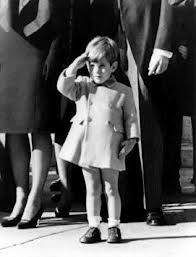
John JohnIn 1963, I was in grade one. My memories of my five-year-old self are vague; filled with blurred images and impressions. But one memory stands out. George Kennedy sat up close in the front row with me. George Kennedy was an odd looking little boy. I only know that he was an odd looking little boy because my classmates were in the habit of teasing him about his looks. I cannot tell you why they thought that he was odd looking because in my memory he looks like a cute little five-year-old boy. George Kennedy and I must have lived near one another because I can remember him walking up ahead of me and so I choose to believe that we were headed in the same direction and not that I was stalking him. My most vivid memory of George Kennedy happened the day that we were all unexpectedly sent home from school.

The crackly voice of the school principal announced over the PA system that President Kennedy had been shot and was dead and we were all told to go straight home. I did not know what a president was, I only knew that Mr. Kennedy was dead and so I remember walking home behind George Kennedy and feeling really bad because George’s daddy was dead.

I have flashes of memory from that week, spent huddled around the TV set with my mother and father, knowing that they were so very sad. I remember their tears. It is my first memory of them crying. President Kennedy’s funeral was the first funeral I can remember attending.  The first three funerals that I remember from my childhood were John Kennedy’s, Martin Luther King’s and Robert Kennedy’s funerals. In my mind’s eye, I can see clearly little John John’s salute, Corretta’s black veil, and Ethel standing there with all Bobby’s children. There is a song from those long ago days, a song that to this day makes me weep no matter where or when I hear it. It begins with the sound of a mournful flute.

“Anybody here seen my old friend Abraham, can you tell me where he’s gone?
He freed a lot of people but it seems the good they die young.
You know I just looked around and he’s gone.”

The sound of the electric organ gives us but a moment to breath as verse by verse our good friends John, Martin and Bobby are snatched from us.  That song is a lament that lives in the souls of those of us who grew up grieving common losses.

There have been other times when we have grieved together, times when we have lamented, like September 11, 2011, our cries of lamentation at the loss of so many lives on a day that forever changed our world. Not all our losses have been shared so widely. Sometimes we have gathered to lament losses that don’t quite make it to the world stage, but which are earth-shattering in their own circles. Sometimes we have lamented the ongoing pain that exists as a result of the lack of justice in this world.

The art of lament, in a world that hungers for closure so that it can be about its business, is a struggling art-form. It seems that our ancestors were so much better and lamenting and could launch forth into wailing and gnashing of teeth with much more abandon than we like are likely to tolerate in public places.

These days we think it unseemly for mourners to wail at a funeral, choosing celebrations of life over the wailing in the face death. But the act of lament has over the centuries played an important part in our human development and I would argue that the act of lament has also played an important role in the life of our God.

Lament is a transformative act. Lament moves us from one place in our lives to another. Lament moves us and thereby transforms our humanity. Lament is very much a part of our human evolution. And so I lament the disappearance of lament from our worship. Lament is the voicing of one’s anguish or complaints to God. 

Lament provides us with the opportunity to gather together and express our anguish in the presence of the ONE who is, was and ever more shall be. The ONE we call God. For in the pit of despair we are made painfully aware that our hope lies beyond ourselves.  Because hope is the only way out of the pit of despair we look to the ONE who is so much more than we can comprehend to through us a life-line and so we wail and weep, and shout and rant until we can begin to know the presence of the ONE. Often, the knowledge of the presence of the ONE comes to us through the presence of one-another. Sometimes, the knowledge of the presence of God comes to us in the very lament itself as we discover God in the midst of our pain. All too often our modern sensibilities tempt us to arrive at hope by trying to avoid the lament. But when we fail to utter our rage over suffering or injustice we tend to arrive at false hope, or failing hope.

Lament allows us to fully engage our despair, and by engaging one another and indeed God in our despair we are transformed. Lament is where we must begin if our rage at the suffering and injustice in this life is to be transformed into peace and justice. Lament is the place where our grief begins to move us from deadness of our shock and horror into a place were we can begin to cope and find healing. Lament is the place where we can begin to discover our God weeping with us; grieving with us and being transformed with us.

There’s a line from the Mystic Meister Eckhart that has been a sort of mantra for me of late: Eckhart insists that: “Every act reveals God and expands God’s Being.” As I look around me at the pain and suffering that exists in the world, I can’t help but lament all the poverty, the violence, and the hatred that exists as a result of our incomplete humanity. Most of us cope with the magnitude of suffering by limiting our exposure to it. We try not to dwell on it because we are afraid that it will overwhelm us and we won’t be able to cope. From time to time we let just a little bit of the suffering in; just a little lest we be overcome by despair. Sometimes we have no choice and the suffering bursts in on us and we are forced to deal with it. Either way, whether we let ourselves be touched by suffering or we have suffering thrust upon us, that suffering transforms us. Suffering can transform us in unhealthy ways or in healthy ways. But suffering will change us. If we have the courage to lament, to engage our God in our rage over the suffering; I mean really engage our God, we can be changed in ways that were once unimaginable.

In our lament we touched the pain of the suffering, we didn’t heal it, we didn’t cure it we just touched it. And the power of our lament changed us. We were changed by their impotent silence. And God, well God was revealed in our lament. And God’s being was expanded. Now I know that some will say that it was our perception of God’s being that was expanded and not God’s being itself.  But to deny that God’s Being is capable of expansion as a result of interaction with us, is to deny the reality of relationship. God lives and breathes in with and through us so our evolution as beings changes God. In with and through us God weeps, God bleeds, God cries and God waits, for transformation. Our lament is an act of trust. An act that declares our intent to wrestle with God, to struggle with God as we begin the difficult transformation into the beings that we are becoming. The power of lament to transform our mourning into dancing, injustice into justice, and violence into peace is transformative. 

Lament is a process, a process of transformation. There’s absolutely no point in lamenting the suffering of the world unless you’re prepared to be touched by that suffering and transformed by it.We are called to suffer with the poor in order that we might lend our strength to transform suffering into life-giving joy. Our God will wipe away every tear from every eye and our God will do this as God lives and breathes in with and through you. Taking up the cross of suffering is not about signing up for suffering for suffering’s sake. Taking up the cross of suffering is about engaging with those who suffer in ways that will forever change the world. It is about lamenting alongside, so that together we can be transformed. Engaging in the act of lament is no easy thing.  But just like the blues, lament has the power to transform our mourning into dancing. To transform our weeping, bleeding, crying, suffering God, into a powerful loving, justice making, peace keeping, God who works in with and through us to transform our world. Let it be so.

Stellarella It’s Saturday – A Book for “Progressive Little Thinkers”

Stellarella thinkers

The newly published, “Stellarella It’s Saturday”, story by Deborah W. Dykes, illustrated by Christina Mattison Ebert-Klaven comes with ringing endorsements from John Dominic Crossan and Joan Chittister.  With progressives of this calibre singing its praises pre-publication, I ordered several copies sight-unseen for the little ones in my life and I haven’t been disappointed. It is a rare think to find God imagined as a woman!!! So, imagine my delight when I discovered that the shero Stellarella is portrayed as a strong, intelligent, brave little girl! This little book would be a valuable addition to any child’s library. Enjoy!

God In Between

Over and over again, I am asked about Christian resources for children that do not re-inscribe old damaging theologies. The questions often come from progressives who are searching for gifts for their grandchildren. Having experienced the challenge myself, I fully understand their frustration.  So, over the course of the next few weeks I’ll try to post a few good books that are currently on the market. These suggestions will be posted here on the home page and on together on the new page which you will see above “Children’s Resources”.

God In BetweenLet me begin with an old favourite:  “God In Between” by Sandy Eisenberg Sasso, illustrated by Sally Sweetland. Sandy Eisenberg Sasso is the first woman to be ordained a rabbi. She serves a Reformed congregation in Philadelphia. She has written numerous children’s books (some of which I will post about soon), of which “God In Between” is by far my favourite! The book tells the tale of a town’s quest for God and their delight at finding God in the very midst of life.  I discovered the book shortly after it was first published in 1998 and over the years I have given numerous copies to the children in my life. I have also used the book during worship in place of the dreaded children’s sermon. I’ve read it to children from four to eighty!

Telling Our Stories of the Saints in Our Lives

saintsPastor Dawn and Pastor Tom Doherty’s  All Saints’ Sunday sermon included stories from the congregation celebrating the saints in their lives. Be sure to listen to the Hymn of the Day that follows the sermon: “We Come to Tell Our Stories” with new words by Jann Aldredge-Clanton to an old familiar tune (HANKEY by William E. Fischer – I Love to Tell the Story).

click here to see an earlier post about Jann Aldredge-Clanton

THANKSGIVING: Not One, Not Two

I AM the bread of lifeA sermon on Deuteronomy 26:1-11 and John 6:25-35 inspired by Garrison Keillor and Joan Chittister; two of the best storytellers I know.

Listen to the sermon:

Reckless Generosity – a Sermon for Thanksgiving

Gratitude Generosity

When I was a kid, the adults in my life were very fond of telling me how grateful I ought to be because things were so much harder back when they were kids. I’m sure most of us can remember being told by our elders just how tough times were when they were back in the day. My parents, grandparents, aunts and uncles and just about every adult I knew must have grown up poor. Why if I had a nickel for every time I heard someone say,  “When I was a kid we were so poor that…..” well I’d have a whole lot of nickels.

Today, when I hear the words, “We were so poor that…”  I brace myself for an outrageous claim like…. We were so poor that we couldn’t afford Kraft Dinner. Kraft Dinner, you were lucky, we were so poor that we couldn’t afford dinner,  all we had was a cup of cold tea without milk or sugar. Cup of Tea, we were so poor that we only had filthy cracked teacups. Filthy cracked teacups, that’s nothing we were so poor that we couldn’t afford teacups, we used to have to drink our tea out of a rolled up newspaper.  That’s nothing we were so poor that all we could we couldn’t afford newspapers so we had to suck our tea from a damp cloth.

Someone always chimes in with, “Well we might have been poor, but you know we were happy in those days. That’s right money can’t buy happiness. We used to live in a tiny house, with holes in the roof.  “House?  You were the lucky ones we were so poor that we had to live in one room, all 126 of us, with no furniture.  Half the floor was missing; we were all huddled together in one corner for fear of falling!  Ha!  You were lucky to have a room! We used to have to live in a corridor! Ohhh we were so poor we used to dream of living in a corridor! A corridor would have been a palace to us. We used to live in an old water tank on a rubbish tip. We were woken up every morning by having a load of rotting fish dumped all over us!!!   Rubbish tip, you were lucky, we were so poor that we lived in a hole in the ground covered by a piece of tarp, but it was a palace to us…especially after we were evicted from our hole in the ground and we had to go live in a lake. Lake, you were lucky to have a lake, there were a 160 of us living in a small cardboard box in the middle of the road. Cardboard, we were so poor we lived for three months in a brown paper back in a septic tank.  We used to have to get up at six o’clock in the morning, clean the bag, eat a crust of stale bread, go to work down in the mines for 14 hours a day, week in week out.  We had to get up out of that cardboard box at three o’clock in the morning and lick the road clean with our tongues.    In case you didn’t recognize it, that was my interpretation of a classic Monty Python sketch, simply called the “We were so poor sketch”. (watch the video below) Continue reading

Hell Is Here On Earth – a sermon for Pentecost 19C on Luke 16:19-31

1 percentI will be preaching on St. Michael and All Angels this coming Sunday. But for those of you who are working on the Parable of Lazarus and the Rich Man, here’s a copy of a sermon I preached a few years ago.

I moved out of my parent’s house when I was quite young and like most young people I didn’t have much money so I lived in some pretty weird places. I once shared a house with a bunch of people that I met working in the travel industry. I didn’t know them very well when I first moved in but as the months dragged on, I got to know some of them better than I would have liked. There were five of us living in a four-bedroom house about a block from Spanish Banks in Vancouver. The house’s proximity to the beach made up for some of my roommates’ shortcomings and the rent was cheap.  So, even though I didn’t like the idea, I didn’t kick up much of a fuss when one of my roommates brought home a puppy.

Now there are those people who would argue that all puppies are cute, I just don’t happen to be one of them. Besides this thing was a Doberman and I don’t care if it was cute, I don’t like Dobermans. I was trying to convince my roommate David that he couldn’t possibly keep a Doberman in our house, when two of my other roommates showed up and quickly became besotted with the creature. One of my roommates when so far as to insist that the puppy was the cutest thing she had ever seen and that we simply had to keep it. While she was hugging and kissing the puppy, David got quite annoyed and pulled the puppy away from her and insisted that this dog was not going to be a pet. He declared that we needed this dog to grow up and be a guard dog, and if that was going to happen then we needed to start treating this dog as we meant to continue.

I had no intention of sharing a house with a Doberman, let a lone a guy who wanted to have one as a guard dog, so I started looking for another place to live. Before I moved out of that house, I had the unfortunate opportunity to watch David as he tried to train his puppy. First of all, David had to give the dog a name and it had to be a name that would instill fear into people, so that’s how the puppy ended up with a name like Vader as in Darth Vader.  None of us were supposed to cuddle the dog or pat the dog or play with the dog. That was just fine with me. But one of our roommates, Ellen was forever getting into trouble for treating the puppy like a baby. So, David insisted that Vader be chained up outside. A few months after I moved out of the house, I went back to visit and discovered that even Ellen was afraid to go into the backyard because Vader was actually turning into a viscous guard dog. She told me that David had been leaving Vader chained up for longer and longer periods of time and no one in the house would dare to go out into the back yard to feed Vader. I found out from the others that even though they’d tried to get David to pay more attention to Vader, he insisted that it there was nothing wrong with the way he was treating Vader. For months David left Vader chained in the backyard for days at a time and as the dog got bigger and bigger, the three roommates that were left in the house with David became more and more afraid of the dog and eventually they had to insist that David move out.  A few months later, I heard that David and Vader had parted ways. It seems that Vader had taken a chunk out of David’s arm and David had to have the poor creature put down. For some reason Jesus’ parable about Lazarus reminded me of Vader the Doberman. Continue reading

Penetrating Blue Moon

bluemoonAway from the bright lights of the city

the stars shine more deeply

penetrating cares and woes.

Then there is the moon:

the prognosticators announced that it would be blue,

as in once in a blue…

But I see only a light that penetrates deeply

with the power

to change the tides of my being

in ways that make my spirit sing.

The Coffinmaker: a short film by Dan McComb

CoffinmakerI have known only one coffin maker. To my knowledge he built only one coffin. It was carefully crafted with all the love he could pour into the task. It was a small coffin, just large enough to hold his nine-year-old granddaughter. I remember watching the wood-shavings fall gently to the shop floor; more poignantly than tears. When his task was complete, children gently, quietly, reverently placed small stuffed animals inside to keep their playmate company on a journey they did not understand. One little boy picked up a few of the wood-shavings, looked toward the grandfather, raised the shavings to his lips and kissed them. When everyone left, I mimicked the child’s actions and then placed several wood-shavings into my pocket. As the coffin maker helped his son lower the precious cargo into the ground, I fingered the wood-shavings; a gesture of gratitude for the strength they provided. “If we make it too convenient,  we’re depriving ourselves of an opportunity to get stronger so that we can carry on….Work is love made visible…”

“Every year, Americans bury enough metal in the ground to rebuild the Golden Gate Bridge, says Vashon Island coffin maker Marcus Daly. His simple, handcrafted wooden coffins are an economical and environmentally friendly burial alternative. But Daly believes a coffin’s most important feature is that it can be carried. Here’s why.”

The Bent Over Woman – Luke 13:10-17

bentover woman1It was hot. Already the sun had parched the earth. The air was still. The ground beneath her feet radiated the heat. She was tired. Earlier she had thought about staying at home. Her weary body could use a rest. All week long she had toiled in the heat of the sun. On this Sabbath she longed to rest her crumpled, aching body. She tried to ignore the weakness she felt. She had suffered long and hard. She couldn’t even remember when or how she had become so weak. Over the years, her weakened spirit had left her body bent and crippled. The evidence of her heavy burdens could be seen in her crooked spine. She was ashamed of her appearance.

It had been eighteen long years since she had stood straight and tall. She vaguely remembered running when she was a child. She ran everywhere back then. She ran faster than anyone else in the town. She loved to run. Running made her feel free.

Her mother used to warn her not to run. Her mother tried to stop her. But she was so full of life. She wanted to see everything. She wanted to do everything. She wanted to go everywhere.

Her mother warned her not to be so curious. Her mother tried to keep her busy. Her mother tried to keep her out of trouble. But it was no use, no matter how many tasks her mother gave her; she always managed to find time to explore. She had so many questions. She wanted to know how things worked. Life was so very exciting. She dashed from one adventure to the next. She ran everywhere, everyday. Except of course on the Sabbath. On the Sabbath she walked. She walked with her family to the synagogue. She loved to go to the synagogue. As her father and brothers took their places at the feet of the rabbis, she sat quietly with her mother and sisters and the other women and girls in the back of the synagogue. She listened carefully as the men and boys talked.  Continue reading

“Poetry Knows We are Both Living and Dying at the Same Time” Marie Howe

Marie Howe“Marie Howe’s poetry is luminous, intense, and eloquent, rooted in an abundant inner life. Her long, deep-breathing lines address the mysteries of flesh and spirit, in terms accessible only to a woman who is very much of our time and yet still in touch with the sacred.”  —Stanley Kunitz      

kingdom of ordinary timeVacation’s gift of time has invited me to open a book of poetry. Poetry has no need to provide all the words. Poetry has only to provide the words to open us to ourselves.  Marie Howe’s latest collection “The Kingdom of Ordinary Time” has won for her the role of New York State Poet Laureate. Who knew states had laureates? Her words have gently opened me to myself. After posting this, I shall return to my bookshelves to unearth the collection in which Howe opened me to that which lives in and beyond me: “What the living do”.

For those of you who are not on vacation, watch this brief video of Howe reading some of her liminal work. Enjoy!


Star Market Marie Howe

Commemoration of Saint Mary: Was Mary a Virgin or Was Mary Raped?

pregnancy test

Mary Pregnant? St. Matthew-in-the-City (Auckland, NZ)

I’m on vacation so I don’t get to preach this coming Sunday. But if I did, I suspect that I would move the Commemoration of St. Mary to Sunday and take the opportunity to explore the life and witness of this amazing woman. Today the Church celebrates the feast of St. Mary the Mother of Jesus or as it is still called in the Roman Catholic Church The Feast of the Assumption of St. Mary into Heaven. This enigmatic  woman has remained in the shadows for centuries. All too often the epithet “virgin” has been applied to the young woman who fell pregnant so long ago. So on this festival day I this re-post this sermon which I preached a couple of years ago in which I asked some questions about Mary. At the time I was reading Jane Schalberg’s “The Illegitimacy of Jesus”, John Shelby Spong’s “Born of a Woman” and “Jesus for the Non Religious” along with John Dominic Crossan and Marcus Borg’s “The First Christmas” and this sermon is laced with their scholarship. As always the written text is but a reflection of the sermon preached on the Fourth Sunday of Advent 2009.  

Sadly, one doesn’t have to travel too far into the past to arrive at the time when women’s voices were not heard. Indeed, in the Lutheran church, it was only a few short decades ago.  For most of us that time is within our own lifetime. For generations, men have told our sacred stories. Men have decided which stories made it into the canon of Sacred Scriptures. Men have interpreted the stories that were allowed to be told. Men have translated, taught, and commented upon those stories from pulpits, in universities, in seminaries, in commentaries and in the public square.  Continue reading