
 In the midst of this brutally cold winter I can find no signs that spring is around the corner. To say that it is cold outside is an understatement of epic proportions. Regardless of the challenges of this wild winter, I cannot simply retreat to the warmth of the fireside. I have places to go and people to see. By the time the driveway is shovelled, the ice is scraped, the windshield juice is topped up in my car and all the extra time it takes to navigate the roads in this weather, I can barely complete the regular tasks this busy modern life of ours demands, let alone feel guilty because I’m not adopting some contemplative spiritual exercises that harken back to a simpler time! I heard someone say, “If you are currently not experiencing any stress in your life, you should immediately lie down because it appears that you may be dead.” So, please don’t ask me to take on any Lenten disciplines!
I have also heard it said, that in Canada the most common response to the question “How are you doing?” is the word “Busy!”. Canadians and I suspect Americans, Europeans, and most inhabitants of the so-called First World, seem to feel the need to justify our existance by assuring others that we are leading busy lives. While I am absolutely convinced that lives lived in the twenty-first century are busier than the lives of our ancestors, I’m not so sure that being busy is something we ought to be proud of.
Growing up, I remember all sorts of predictions about how life in our immediate future would be filled with so much leisure time as a direct result of the technology that would be at our fingertips. But as technology advances, our ability to work wherever and whenever the need arises has severely curtailed our leisure time. Our lives are busy and we have forgotten what it means to be human beings because most of us have become human doers. We have forgotten how to simply be.
I find it reassuring, comforting even, that our ancestors understood our Creator as YAHWEH, which translated can be understood as “I AM WHO I AM or I SHALL BE WHO I SHALL BE. That the name of God should be understood as the verb “to be” helps me to understand myself as one who is created in the image of the great I AM and not the great I DO. I am a human being not a human doer! What I need from a season like Lent is not a prescription for more things to do. But rather, the encouragement to simply be.
Might I suggest that we can begin this encouragement to simply be by simply greeting people with a simple word of peace. If such a greeting seems awkward to you then perhaps simply asking people how they “are” rather than how they are “doing” will suffice. Such a subtle change may not be enough for some people to refrain from telling you what or how they are “doing” and you may find them insisting that they are indeed “busy”. But a little gentle persistence may enable some to respond about their very being. Reminding one another that we are beings and not just doers might lead us toward some peace. Shalom, As-salam alaykum, Peace dear beings, Peace…..
 Readings for Ash Wednesday click here
On Ash Wednesday we are invited to begin a journey into the mystery of our existence. Since the days long ago when the first of our kind gathered together around under the starlit sky, humans have gazed upon the stars and offered up their questions, longing to know who and what we are, where we come from, why we are here, are we alone in the universe, who made us, why are we here, and perhaps most daunting of all our questions: what will become of us. Tonight, an answer of sorts is offered. Dust.
From dust we came and to dust we shall return. Among all the creatures that inhabit creation, we humans are unique in that we alone are conscious of our own mortality. We know that we are made up of the stuff of the earth; that we sprang forth out of the dirt, the dust of the earth, the same dust that was once the stuff that stars are made of. Out of that dust we are made and when our life on this earth is over, we shall return to that dust. We are after all is said and done, mortal. The life that we know will one day end and the stuff that we are made of will be returned to the earth. We hope that out of our remains new life will spring forth and for some of us this is enough; to be part of the endless cycle of life.
For others of us, the recycling of our remains is not enough. Remembering that we are dust and to dust we shall return strikes us as bleak, and we long to be more than just the sum of our parts. We long to be more than just the stuff that is housed in our bodies. We want more than just this present incarnation of dust. We fear the inevitable decomposition of who we know ourselves to be. We can’t help wondering what lies beyond the dust that we are. Most of the time, we can keep our fears under control as the demands of our bodies to be fed, watered, and amused keep us busily scurrying to and fro, this way and that, with precious little time to spare. Day after day we avoid the questions our mortality stirs in us. From time to time, we catch sight of our aging selves in mirrors that reflect the passing of years as we journey closer to our own earthly demise. Sometimes a nagging pain, a frightening diagnosis, a sudden impact, the death of a friend, or a night like tonight reminds us that we are dust and to dust we shall return and we are forced to deny the reality of our eventual demise because it is just to frightening to contemplate; or to embrace the reality of our dustiness trusting that the Love that lies at the heart of all that is will not abandon us to the abyss of nothingness. Continue reading
 Three years ago, I reluctantly gave in to requests to preach on the subject of prayer and I devoted my sermons during the season of Epiphany to the subject of prayer. I have been asked to re-post those sermons. In the course of three years, my theology has continued to evolve. However, I have resisted the temptation to edit the sermons and so the manuscripts are what they are, an exploration of sorts. Here’s the sixth sermon in the series. The final instalment of this series comes in the form of a discussion. Rather than preach on the 7th Sunday of Epiphany, I responded to questions from the congregation. The audio recording of that reflection appears below.
Prayer #6 – PRAY WITHOUT CEASING – preached on Epiphany 6B, 2012 – listen to the sermon here
Prayer #7 – PRAYER TRANSFORMS US – responding to questions about the series, this reflection took the place of the sermon on Transfiguration Sunday, 2012 – listen to the reflection here
Cast you minds back to another time and place and tell what the numbers 33 45 and 78 have in common??? Vinyl Records anyone? When I was a kid music came from a portable RCA record player. The sound quality wasn’t all that great, but somehow we didn’t seem to care. Later when I was a teenager, my parents got a fancy state of the art Phillips stereo cabinet and suddenly sound seemed to be coming from booth ends of the room. I never did understand how those old record players managed to pick up sound from the grooves in the vinyl to produce music. I still remember my father’s first reel-to-reel tape recorder, and then there were the eight-tracks, followed by cassettes, followed by CD’s. I can remember these things, but I have no idea how they made music. It doesn’t matter how many times people try to explain it to me, I still think it’s a miracle that such beautiful sounds can come out of machines. Continue reading
 Readings included Mark 1:29-39: Jesus raises up Peter’s Mother-in-law, and Aleksandr Solzhenitsyn, “The Gulag Archipelago 1918-1956”
“If only it were all so simple! If only there were evil people somewhere insidiously committing evil deeds, and it were necessary only to separate them from the rest of us and destroy them. But the line dividing good and evil cuts through the heart of every human being. And who is willing to destroy a piece of his own heart?”
listen to the sermon here
Three years ago, I reluctantly gave in to requests to preach on the subject of prayer and I devoted my sermons during the season of Epiphany to the subject of prayer. I have been asked to re-post those sermons. In the course of three years, my theology has continued to evolve. However, I have resisted the temptation to edit the sermons and so the manuscripts are what they are, an exploration of sorts. Here’s the Fifth sermon in the series. I shall repost the seven sermons in the series over the course of the Season of Epiphany.
Prayer #5 – Jesus Is Not a Super-Human Miracle Worker! Jesus Is Human! preached on Epiphany 5B, 2012 – listen to the sermon here
Usually, the stories in the gospels about Jesus healing the sick leave me wanting more. They usually seem so incomplete. I have always wanted more details about how exactly Jesus was able to heal those who were sick. Usually, the stories about Jesus healing are read or referenced by the notion that Jesus was some sort of miracle-worker and we are predisposed to believe that Jesus had miraculous powers; that he was somehow able to harness the healing power of God and dispense it at will. We are encouraged to believe that that very same power is available to us if only we figure out exactly how to cozy up to Jesus and ask him in just the right way to heal us or heal those we love. But these stories found in the earliest of the Gospels and attributed to an early follower of the Way known as Mark, don’t portray Jesus as a miracle-worker at all.
I love the story of Peter’s mother-in-law, because I can easily relate to it. I remember back when I was about 17 and I was suffering from a terrible cold. I had a raging fever and I was as sick as a dog. I also had tickets to an Elton John concert. Even though I could barely breath, when the time came, I got myself up out of bead, and whoa-presto, it was as if the power of Elton John’s name had cured me and I was able to follow the Yellow Brick road all the way to the Coliseum where, together with my friends I was hopping and bopping to the Crocodile Rock . So, I have no difficulty believing that when Simon Peter finally brought Jesus around to visit his mother, the sheer power of all the rumors she’d been hearing about this man Jesus, would have been enough motivation for this Jewish mother to rise up out of her sickbed to see who this fellow was who had enticed her son away from his nets. That Jesus could have harnessed the healing power that lies within our grasp as he traveled from town to town and cured the sick and drove out daemons isn’t difficult to believe. Lets face it, first century daemons sound a lot like mental or emotional illnesses, so Jesus ability to cure people who are disturbed by daemons really isn’t much of a stretch. But after centuries of interpretation and proclamation, we tend to hear these stories in ways that portray Jesus as some sort of super-human, miracle-worker, or dare I say it as some sort of God. Because after all, our image of God is that God is some sort of super-human miracle-worker. So for generations we’ve been looking to Jesus in the same way as we look to God to cure all that ails us. And so we are just as likely to appeal to Jesus in prayer, as we are to appeal to God to heal us. So, as our notions about God change, our notions about Jesus change also. Continue reading
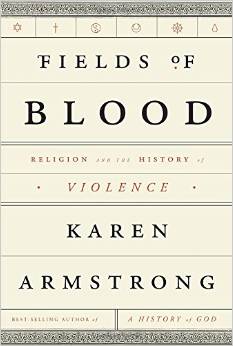 Since 911, the rhetoric has been dialled up to piercing levels when it comes to the relationship between religion and violence. The constant noise has numbed us to the realities of history as many of us accept the judgments of the endless cacophony of popular voices proclaiming that violence is a natural consequence of religion. Karen Armstrong’s meticulous research challenges the popular doctrine of both atheists, theists, and all those who would lay claim to the notion that religion is responsible for violence, terrorism, and war. Armstrong surveys a wide sweep of history, beginning 3000 years before the Common Era with the kind of vigour that has lead readers of her previous epics to trust her conclusions. Adept as Armstrong is when it comes to revealing her encyclopedic knowledge of world religions, Fields of Blood is a must read for all those who work in the field of religion as well as an enlightening read for all those who find themselves on the receiving end of modern pundits of both the religious and political varieties.
In the video below, Karen Armstrong provides an overview of her work which will no doubt compel you to add Fields of Blood to your reading list. Filmed at Chautauqua in August of 2014.
Three years ago, I reluctantly gave in to requests to preach on the subject of prayer and I devoted my sermons during the season of Epiphany to the subject of prayer. I have been asked to re-post those sermons. In the course of three years, my theology has continued to evolve. However, I have resisted the temptation to edit the sermons and so the manuscripts are what they are, an exploration of sorts. Here’s the Fourth sermon in the series. I shall repost the seven sermons in the series over the course of the Season of Epiphany.
Prayer #4 – AWE: Reclaiming the word Religion, preached on Epiphany 4B, 2012 – listen to the sermon here
Our Gospel reading was extended to include Mark 1:21-35 “Rising Early the next morning, Jesus went off to a lonely place in the desert and prayed there.”
I was about 16 or 17, when God first overwhelmed me. I’d been attending church for about two years. Looking back on that confused young girl, I can see how I might have been attracted to Christianity by Jesus. Jesus the radical, who changed the world, is a compelling figure for a teenager who’s out to change the world. I remember that I prayed a great deal back when I first got involved in the Church. I can remember believing that prayer could change everything. Prayer could change the world. Prayer could change my life. Prayer could change other peoples’ lives. Prayer could even change the mind of God. If only I could figure out the correct way to pray. And if I prayed often enough and hard enough and at just the right moment, prayer would change everything.
The trouble was, I was praying often, I was using all sorts of types of prayer and nothing seemed to be working. So, I remember deciding, that my ineffective prayers had nothing at all to do with the power of God or the power of prayer, but with the power of me. I kept telling myself that if I could just learn how to pray, God would definitely do the rest. So, I prayed and I prayed, and I prayed and when nothing much seemed to happen, I blamed myself for not being a good enough Christian: if only, I’d spend more time reading the bible, or if only I was a better person, or if only I was a better believer. It was all up to me. So, I promised myself, and sometimes I even went so far as promising God, that someday, I’d learn how. Someday, I’d find the right teacher, I’d study hard and I’d learn exactly what I needed to do to make my prayer life, more effective. But in the meantime, I’d keep trying, even though it felt like no one was listening. I told myself that this kind of persistence is precisely what people meant when they said, “have faith”. Having faith means praying when it seems like there’s no point at all, in praying. So, I had faith and I prayed…and nada. Not a single thing. It was like talking to myself. Not even a warm fuzzy glow. But I had faith that somehow God, that big guy up there in the sky, He, and I do mean He, cause back then God was an old, bearded, guy who lived on a fluffy cloud, and spoke King James English, in a very lofty way. Anyway, He, must have been hearing my prayers, but because he was God and all, and knew everything there was to know, he was keeping stuumm in an effort to teach me something. So, all this empty praying was going to pay off in the end.
Eventually, I began to expect very little from prayer. Prayer became something akin to my car insurance. I knew I had to pay it, even though I couldn’t afford it, because someday it might just come in handy. But I never really expected my car insurance to do anything for me, especially as I couldn’t afford to pay for collision insurance. But if I hit someone else, well it just might keep me out of jail. So, I kept on praying, trusting that if I happened to hurt someone else, God would function kinda like my car insurance, only instead of keeping me out of jail, God would keep me out of hell. It was all about me back then. And then one night it happened.
My little world was blown apart and for the first time in my young life, I knew that life wasn’t all about me. It happened on the beach. Actually, it was on a boardwalk down by the ocean. A bunch of my friends and I had managed to talk our parents into letting us spend the night sleeping out under the stars. It was late August and there was supposed to be a particularly amazing meteor shower. The only problem was that in our part of the globe, the best viewing time was supposed to be between 3 and 6 am. So, we begged and we pleaded, or we miss-lead our parents and told them we were staying over at a friend’s place and about a dozen of us headed down to the boardwalk to sleep out under the stars.
It was a fabulous night. No adults to tell us what to do. Good friends to talk to. Swimming after dark. An illegal campfire to make us feel just a little bit afraid that someone might catch us. And just enough beer to make us feel like we were big shots and not enough beer to give us a buzz, because only a couple of us were brave enough to try to buy beer from the dozy lady at the convenience store who never seemed quite able to do the math when she bothered to card us. Did I mention that we’d slipped down across the boarder, not because the meteor shower would be any better down there, but because we lived close enough to Washington state and the beaches in Pt Roberts were very attractive because, we knew that there was only one sheriff on patrol and we figured that we could out-run him if we had to. Besides old Dusty, weren’t much of a sheriff and he pretty much stayed away from the boardwalk cause he knew better than to go looking for trouble. And we were trouble. We were a gang of kids from church, about a dozen kids, with about a dozen beer, and we were gonna stay up all night and watch the stars and no, no good copper was gonna stop us. Continue reading
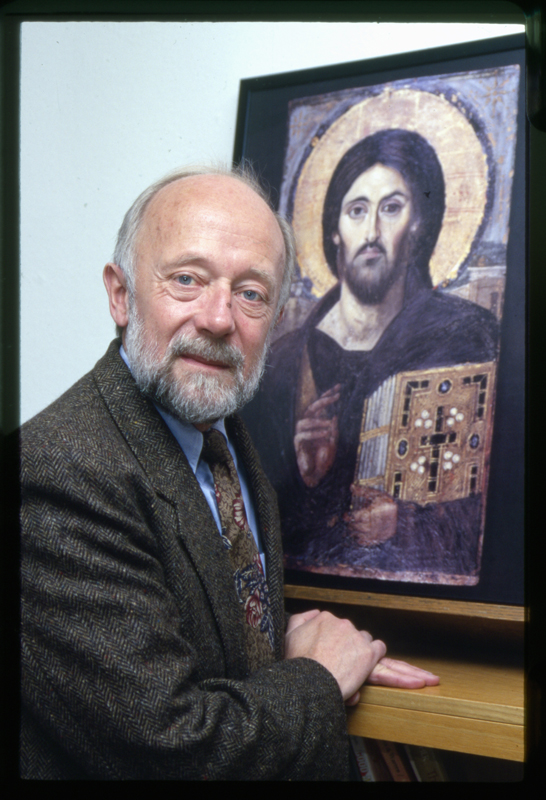 News of Marcus Borg’s death has caused thanksgiving to well up in so many of us who where touched by his generous way of imparting wisdom. Marcus Borg was blessed with a gentle touch which allowed him to challenge us to move beyond our long held beliefs so that we might see the One in whom we dwell as the One who comes to unique expression in each of us. I have been richly blessed by his scholarship. His ability to make his readers and listeners feel as though he was articulating our thoughts, doubts, questions, and insights was matched by his ability to push us beyond the limits we set for ourselves so that we too could challenge the status quo which plagues religious traditions. I am a better pastor, teacher, preacher, and human as a result of Dr. Borg’s skillful expressions of his passion for delving into the riches of our shared christianity and the gentle, generous way in which he challenged us all to think anew about the wisdom of the ages. Marcus Borg was blessed with gifts which he used to bless others. May it be said of us that we use the blessings he bestowed on so many of us to be a blessing to others. Well done Marcus. Thank-you Marcus. Shalom Marcus. Shalom.

During the struggle to open the Evangelical Lutheran Church in Canada to the full participation of gay, lesbian, bisexual, and transgendered people, there were some very dark days. As many of you know, during my first years in ministry, it was not a struggle that I did not want any part of. I was for all intents and purposes living in the closet, even if it was the most transparent of closets, the walls of that closet made it very clear to me that my job would be at risk if I spoke publicly about who I am. So, in the early years, I was determined to keep my mouth shut about my own sexuality and fight the good fight from the relative safety of the background. Then by virtue of my office, I was asked to speak publicly at a forum being held by York region, mental health professionals who were gathering resources to support GLBT youth. The organizers of the forum knew that many young people suffered as a result of their family’s involvement in churches that propagated hatred toward gays and lesbians and they wanted me to speak directly to these issues so that mental health professionals might be equipped to begin to counter some of the religious propaganda that was damaging so many young people.
A few days after I spoke at this public forum a note was hand delivered to the mailbox at the parsonage. The note contained two quotes from the book of Leviticus: “Thou shalt not lie with mankind, as with womankind it is abomination” and “If a man also lie with mankind, as he lieth with a woman, both of them have committed an abomination: they shall surely be put to death; their blood shall be upon them.”
I was shaken by the quotes and even more shaken by the fact that they were hand delivered to my home. I tried to shake off my fear by telling myself that the note represented the ravings of a fool. But when I shared the note with members of the church council, I was reminded that in my world these words represented Bible quotes but in the real world they actually constituted a death threat. Continue reading
 In light of this events of this past week, I have been hearing the phrase “innocent victims” over and over again and these words have summoned up the memory of a song that now haunts my thoughts with the question: “Are My Hands Clean?”
Various news reports delivered over various mediums have declared particular victims of recent violent atrocities to be innocent. It is true that none of the Parisian victims of the violent jehadists deserved to be targeted, held hostage, or killed! But, I wonder about our desire to label certain victims as “innocent” whenever violence shakes our world.
Yes the perpetrators of the violence are guilty! But who among us is completely innocent? There are some who have worked diligently to love their neighbours as they love themselves. There may even be some among the Parisian victims who loved their enemies. But who among us can claim that we have not failed miserably to love our enemies?
Nothing can justify the acts of violence perpetrated by those who seek to inflict terror. Yet, we appear to feel justified as we continue to enjoy the benefits of a society whose systemic injustice engenders the very frustrations which breed the hostilities which leave so many of the victims of our privilege believing that violence is the only answer.
Can we, who have and continue to benefit from the world’s power imbalances, open ourselves to the possibility that we are part of the problem? Can our efforts to end the violence begin with confession as we endeavour to love our enemies. I’m not suggesting that our love be anything other than the fierce love which has the power to change the world. Fierce love is costly and difficult, requiring the kind of wisdom that creates justice. Justice will no doubt have an impact upon our lifestyles and our power. Do we have the courage to see that our hands a far from clean and begin to offer tangible proof of our desire to love our neighbours and our enemies?
As one who endeavours to follow the teachings of Jesus, I find myself praying that this cup be taken from me. The task is too daunting. The way is to difficult. And yet… the alternative is to become my enemy and take up violence to preserve my lifestyle, my privilege, my power, my world. May the ONE who is LOVE, live and breath in me so that I might have the courage to love.

Listen to the sermon here
 I have just completed reading James Carroll’s latest book “Christ Actually: The Son of God for the Secular Age” for the second time. I know that I will read it many more times as I continue my own work of articulating an understanding of Jesus for the 21 century. Carroll’s way of exploring Christianity has always been enlightening and refreshing because he has the courage to question the tradition from the vantage point of someone who has lived the tradition with passion. Carroll is former Roman Catholic priest who now serves as Distinguished Scholar-in-Residence at Suffolk University and is a columnist for The Boston Globe, whose books include: “Constantine’s Sword: The Church and the Jews,” “American Requiem: God My Father,” and the “War That Came Between Us, Crusade: Chronicles of an Unjust War,” “Toward a New Catholic Church: The Promise of Reform,” as well as eleven novels.
Carroll’s critique of Christianity is infused with a sense of responsibility for the ways in which our anti-Jewish texts have misremembered the story of Jesus. His exploration of first century history points to the profound influence of the Roman destruction of the Temple in 70 C.E. upon the way in which the gospel-storytellers crafted their accounts of Jesus for their late first century communities. Insisting that we must measure everything we say about Jesus now against Jesus’ Jewishness, Carroll asks a compelling question: “What if the so-called divinity of Jesus lays bare not so much the mystery of God as it does the majesty of what it means to be human?” Carroll sees that the divinity of Jesus in some way suggests the Divinity in which we all participate. Carroll’s work is a must read for those of us who are working to articulate a 21st century Christology!
The video below was recorded at First Parish in Cambridge on Wednesday, December 10, 2014
 The story told in this sermon can be found in Maeve Binchy’s book of short stories “This Year it Will be Different.” As always I am indebted to those progressive grinches Marcus Borg, John Dominic Crossan, John Shelby Spong, and Michael Morwood for their insights into the sacred. Our sermon hymn was No Obvious Angels. The readings were all from Luke 1:1-56.
You can listen to the sermon here
One of my favorite Christmas movies. Produced in England in 1952, there is no sentimentality here. The story is raw and engaging. Clergy will hear the echoes of their lives in the frustration and doubts expressed by the Parson who is brilliantly portrayed by Ralph Richardson. This movie was censored in the United States because too many of the characters do not believe in God and say so. The ending does not resolve their unbelief. It is a brilliant snapshot of another time that reminds us that the good old days never really where. I love this film’s honest unresolved angst. Enjoy!
 You can listen to this sermon here
There’s a story that I love to tell. So many of you have heard it before. But this is the night for telling stories over and over again and because I love this story, tonight’s the night! I first heard it from a very wise seminary professor and since then I’ve heard Marcus Borg and Parker Palmer tell it. I’m not sure that this story actually happened, but I am sure that it is absolutely true!
It’s a story about a three-year-old girl who was the only child in her family. Her mom is pregnant, and this three-year-old girl is very excited about having a baby in the house. The day comes where the mother-to-be delivered, and the mom and dad go off to the hospital. A couple of days later they come home with a new baby brother. And the little girl is just delighted. But after they’ve been home for a couple of hours, the little girl tells her parents that she wants to be with the baby in the baby’s room, alone, with the door shut. She’s absolutely insistent about the door being shut.
It kind of gives her folks the willies, you know? They know she’s a good little girl, but they’ve heard about sibling rivalry and their not sure about what they should do. Then they remember that they’ve recently installed an intercom system in preparation for the arrival of the new baby, and they realize that they can let their little girl do this, and if they hear the slightest weird thing happening, they can be in there in a flash.
So they let their little girl go into the room. They close the door behind her. They race to the listening post. They hear her footsteps move across the room. They imagine her now standing over the baby’s crib, and then they hear her say to her two-day-old baby brother, “Tell me about God. I’ve almost forgotten.”
Tonight we are all that child, standing over the baby’s crib hoping against hope that the newborn baby will tell us about God; maybe because we have almost forgotten, maybe because we don’t believe, maybe because we want to believe, maybe because we’ve lost hope, maybe because we are endlessly curious, or maybe just because T’s the season! Regardless of why, here we are gazing into the crib at the newborn baby hoping that this child will tell us about God. But all we have is this story; a story so simple it sounds as if it was created for children; poor homeless refugees, far from home, in the darkness of a winter’s night, struggling to keep warm amongst the dung of a stable, a tiny baby, swaddled in what we imagine as rags and lying in a feed trough, shepherds, angels and a star in the night sky. It’s a lovely story. A story that warms our hearts, told over and over again in the darkness of so many winters as we struggle to keep our demons at bay. We’ve told it so often that we’ve forgotten why it was told in the first place. We’ve lugged so much of our own baggage into that stable that we can scarcely see the baby. We’ve heaped our expectations and longings onto the images and our need to know has demanded that the facts confirm our desires. Continue reading
 If it’s not Alistair Sim, it’s just not Scrooge. I usually wait until Christmas Eve to watch the movie. But this year I found the time to read the book and I’ve got to say, there is much in Dickens exploration of Christmas that I’ve been missing over the years.
In the words of Charles Dickens: Ebenezer Scrooge “was as cold and miserly a man as one could ever meet. “He was a tight-fisted hand at the grindstone, Scrooge! A squeezing, wrenching, grasping, scraping, clutching, covetous, old sinner! He carried his own low temperature always about with him; he iced his office in the dog-days; and didn’t thaw it one degree at Christmas.”
Ebenezer Scrooge’s transformation on Christmas Eve is nothing short of a miracle. Scrooge was a broken man. Broken, years before the story begins. The women he loved, Belle, broke her engagement to him one Christmas, she tells Ebenezer, “you fear the world too much. All your other hopes have merged into the hope of being beyond the chance of its sordid reproach. I have seen your nobler aspirations fall off one by one, until the mast passion, GAIN, engrosses you.”
Belle doesn’t tell us how this fear of the world developed. She doesn’t tell us what Scrooge’s nobler aspirations had been. We don’t know what made Belle fall in love with Scrooge in the first place—but we do know that whatever it is, it is gone now. As the Ghost of Christmas Past moves through Scrooge’s life we catch glimpses of what may have broken him – a distant father, the death of his much loved sister, his exposure to wealth in the first place – but we are never quite told what made Scrooge the man he is at the beginning of Dickens’ tale. All we know is that Scrooge is broken and greed and anger have possessed his very soul. Scrooge’s life was broken. While he had all of the wealth, and then some, that any person might need – he was miserable.
I used to think that A Christmas Carol was the story of Scrooge’s metamorphosis. The scene in the movie were Scrooge realizes that it is Christmas morning and that life doesn’t have to be the way it has always been and he does that wonderful dance and sings: “I don’t know anything! I never did know anything all on a Christmas morning!” I always thought of that wonderful dance as the culmination of Scrooge’s metamorphosis, like a butterfly bursting forth from a cocoon. But now I see it for what it really is. It is a dance of resurrection. For Scrooge was dead. Dead and gazing at his own tombstone, when suddenly, and suddenly for me always indicates the work of the Spirit, suddenly, Scrooge realizes that what he is seeing are only the shadows of things that might be. Suddenly, Scrooge knows “that men’s deeds foreshadow certain ends. But if the deeds be departed from surely the ends will change!” Scrooge is born again and is able to declare with confidence, “I’m not the man I was.” And so, the resurrected Scrooge becomes all that God intended him to be. Scrooge’s past didn’t go away—the hurtful Christmas memory of Belle ending their engagement, all of the ill-spent years somewhere between the party at Fezziwig’s and the visit of the spirits would still be a part of Scrooge’s life, resurrection doesn’t erase the past, but transforms the future, hope becomes part of the resurrected life! And so, Scrooge reborn, becomes “as good a friend, as good a master, and as good a man as the good old City ever knew…and it was always said of Scrooge “that he knew how to keep Christmas well!” Knew how to keep Christmas well. Keeping Christmas well is very different than celebrating Christmas. Keeping Christmas well is about resurrection; resurrection of our very selves. I always thought of that wonderful dance as the culmination of Scrooge’s metamorphosis, like a butterfly bursting forth from a cocoon. Keeping Christmas well is to forget what you have done for other people and to remember what other people have done for you. Keeping Christmas well is to see your neighbours as just as real as you are, and to try to look behind their faces to their hearts, hearts hungry for human connection, for dignity, for love and for joy. Keeping Christmas well is the realization that the only good reason for your existence is not what you are going to get out of life, but what you are going to give to life. Keeping Christmas well means closing your book of complaints against the management of the universe and looking around you for a place where you can accomplish some good. Keeping Christmas well is remembering the weakness and loneliness of people who are growing old; it means not worrying so much about how much your friends love you but asking yourself whether you love, honour and care for them enough; it means stepping down from your pedestal long enough to see that you are not the centre of the universe; it means bearing in mind the things that other people have to bear on their hearts; trying to understand what those who live in the same home with you really want, without waiting for them to tell you; it means burying your ugly, destructive and selfish motives and nurturing your nobler ones.
Keeping Christmas well includes the realization that your generation is not the last generation; that you have received an astonishing inheritance given by God, that your very next breath of life is pure gift; that all your various abilities and capacities were knit together in your mother’s womb and you had nothing to do with this original blessing, and that the bounty planet earth offers—its beauty and majesty – are both a wondrous blessing and an awesome responsibility; it’s the realization that you have duties to perform as citizens of a free nation in a dangerous world; that matters of war and peace are not just problems for others to solve; that much, if not most, of what goes on in the space around you depends upon your choices and your actions.
Keeping Christmas well is about being fully alive to all that life has to offer and being gracious in your responses to this amazing grace and living into all that God created you to be. When you keep Christmas well you are willing to believe that forgiveness is the doorway to a hope-filled future; that mercy reflects God’s nature; and that love is the most powerful thing in the universes—stronger than hate, stronger than evil, stronger than death! Keeping Christmas well is living with the knowledge that there is nothing in heaven or on earth that can separate you from the love of God in Christ Jesus. Scrooge’s metamorphous began, dancing and singing: “I don’t know anything, I never did know anything, all on a Christmas morning.” To keep Christmas well you must first realize that in the grand scheme of things you don’t know anything. For then, in humility, you can see the hope that lies in the manger. The hope of resurrection.
Scrooge knew how to keep Christmas well, may that be said of all of us. And as Tiny Tim said, “God bless us everyone!
 As always, I am indebted to the scholarship of John Dominic Crossan and Marcus Borg whose book The First Christmas is the gift that keeps on giving! You can listen to the sermon here
For those looking for a different approach to Advent 4B check out the sermon posted here
Some have said that it was the most amazing birth story ever told. This birth narrative heralded the arrival of a child who was praised as the Son of God, the Saviour of the World who was said to be the personification of peace on earth; God incarnate; fully divine and fully human. Not everyone agrees that this is the most amazing birth story ever told. Among the ancients, some insisted that the story Alexander the Great’s birth was the greatest story every told.
Alexander the Great’s birth story is truly one of the greats. His was, after all the, son of a Queen and a god and a king. His mother, Olympias was a Queen, betrothed to Philip of Macedonia. The night before they were married, Queen Olympias dreamed that a thunderbolt fell upon her body, which kindled a great fire, whose divided flames dispersed themselves all around her, and then as if by magic they were extinguished. Philip dreamed that he sealed up his Queen’s lady parts with a seal which bore the impression of a lion. The high priests who interpreted the dream warned Philip not to even entertain the idea of consummating the marriage because one wouldn’t go to the trouble of sealing up something that was empty. So Queen Olympias must already be with child, who would undoubtedly be a boy with the courage of a lion. If that wasn’t enough to put Philip off he found a serpent lying beside Queen Olympias as se slept, which was said to have abated his passion. Later the oracle of Apollo at Delphi went on to explain that this was no ordinary serpent, no this was the incarnation of the God Zeus.
The day that Alexander the Great was born, one of the seven wonders of the world burnt to the ground. The temple of the goddess Artemis in Ephesus was the home of the Goddess Artemis who was said to have been attending to the birth of Alexander at the time. Alexander the Great was heralded as the Son of God and Saviour of the World and as one of the greatest warriors the world has ever known, he went on to conquer a good portion of the planet. But by the time our hero was born, the glory days of the Greeks had long since passed. The Empire of Rome had replaced the Greeks as rulers of the world and they had the conquered lands to prove it. By the time our hero was born, Julius Caesar had established an Empire the likes of which the world had never seen before. Gaius Julius’ prowess on the battlefield was matched only by his cunning in the senate and together had one him the title of Caesar. But as great and marvellous a leader as Julius Caesar may have been, history tells us that he and his wife were not blessed with children. Alas, Caesar did have a son by virtue of his dalliance with Cleopatra but that’s another story all together; suffice it to say, that that little fellow didn’t stand a chance against the one Julius would appoint as his heir. Born to Julius Caesar’s niece, little Octavian was eventually adopted as his great-uncle’s heir apparent who eventually amassed powers that far outshone his illustrious uncle’s. Continue reading


 pastordawn