 Ash Wednesday February 13, 2013
Listen to the homily here
To help remind us that we are stardust, our worship began with video: The Call of the Pleiades – Gerald Jay Markoe

Ash Wednesday February 13, 2013
Listen to the homily here
To help remind us that we are stardust, our worship began with video: The Call of the Pleiades – Gerald Jay Markoe
Traditionally the season of Lent is a mournful time filled with calls to repentance and self-examination as we follow Jesus into the wilderness to be tempted and then on that long march to Jerusalem where the powers that be will have their wicked way with him. Our liturgies take a mournful tone as we lament our woeful human existence, confess our sinfulness, and hear exultations to take up our crosses so that we too can follow Jesus to the bitter end. Over and over again we are asked to remember that we are in bondage to sin and cannot free ourselves, as we gaze upon the cross remembering that Jesus our savior bled and died as a result of our wicked sinfulness.
Lent is a strange season that harkens back to a forgotten era. Unlike so many of the seasons of the church year it’s not exactly a season that attracts people to church. Not many of you got out of bed this morning and said, “Yippy it’s the first day of Lent. Oh goodie! We get to be reminded that we are sinful, that life is miserable and unless I’m willing to take up my cross and follow Jesus all the way to Golgotha, there’s precious little hope cause we’re all going to die and when the time comes we want Jesus to remember us.”
Now I know that there are some people who just love Lent and I must confess that I like the quieter, more somber tone that our liturgies take. I actually enjoy the opportunity to slow things done and be more reflective in our worship together. I savor the silences and the opportunities to be more contemplative. I love the colour purple with all its vibrant hues and the best part of all is that the beginning of Lent means that spring is just around the corner. What I don’t like about Lent are the signs, symbols, hymns and stories that make it so easy for us to fall back into the 11th century.
It is so easy for us to lean not on the ever-lasting arms of Jesus but on the scales of St. Anslem and find ourselves not looking forward to the promise of resurrection and the gifts of eternal life, but rather dreading judgment day knowing that the scales of justice must be balanced and fearing the moment of truth when our sins are piled onto the scale and knowing that our only hope for reconciliation with our Maker is that Jesus is sitting on the other end of the scale.
“Woe is me. Woe is me for I am sinful. My sins are too numerous to count. There are all the things I have done and all the things I have left undone. Thank God Jesus died for me. Somebody had to pay the price for my sinfulness. Jesus died for a reason, and you and I dear sisters and brothers are that reason. A blood sacrifice had to be paid. God’s justice demanded it and Jesus paid the price with his very own blood. Jesus took our place up there on that cross and the least you and I can do to say thank-you is to spend some time shouldering our own crosses as we retrace Jesus steps to Jerusalem.”
The season of Lent with all of its liturgical trappings makes it so easy to fall back upon St. Anslem’s theory of atonement. St Anslem the 11th century English monk, a legal scholar who came up with the theory about why Jesus died on the cross known as substitutionary satisfaction. Jesus stood in on our behalf to satisfy the debt that had to be paid.
St Anslem’s theory may have satisfied the minds of worshippers in the 11th century but a lot has changed in the last ten centuries. Take for example the sixteenth century — Martin Luther a name near and dear to the hearts of Lutherans everywhere. Good old Martin Luther was so obsessed with his own sinfulness that he spent many a long night agonizing over those things that he had done and left undone that he often found himself flagellating of an evening. You don’t hear much about flagellation these days; at least not in church. But flagellation was all the rage among the religious of Martin’s day.
Why Marty would whip himself into a positive frenzy just thinking about his sinfulness; and I do mean whip himself. Flagellation is the fine art of punishing oneself for ones’ sins by stripping down to the waist and whipping one’s back to the point of drawing blood so that you could bleed just like your Saviour bleed for you before he was led through the streets of Jerusalem on his way to Golgotha. Martin became so obsessed with his own sinful nature that his own priest feared for his life. Father Staupitz, the priest to whom Martin was constantly confessing his sins to is said to have become so frustrated with Martin’s obsession with trivial sin. I mean how much can a faith monk, living in a monetary have to confess. Legend has it that Staupitz grew weary of Martin’s confession of every trivial sin, that in desperation he once told Luther to go and sin boldly, perhaps hoping that Luther would at least have something to actually flagellate for.
Happily for Christendom, Martin Luther eventually came to the realization that far from being a harsh judge of our sinfulness, God is actually a gracious God and thus the Luther’s theology of Grace gave birth to the Reformation. No longer did the faithful have to worry about balancing the scales with acts of piety because God’s grace is sufficient. God in Christ freely forgives us all our sins, not because of any merit we might gain from acts of piety but simply because in Christ, God took on human form and travelled to the cross and paid the ultimate price. Thanks to Luther we all know that we are justified by faith through grace. We are made righteous in the eyes of God through Christ and there is nothing that we can say or do about it.
Now that’s all worked very well for about 500 years. Just a few years ago, even the Roman Catholic Church agreed that when it comes to the doctrine of grace, Martin Luther was correct. We humans it can be and is said, are simul justus et peccator; we are both sinners and saints all at the same time. Yes we are in bondage to sin and cannot free ourselves, but by God’s grace we are also forgiven, and set free to live in joyful response to God’s amazing grace. So, for about 500 years we’ve been chugging alone, delighted that we are all forgiven sinners and then along comes Darwin.
Oops. You mean Adam and Eve weren’t actually the very first people on earth? And then along comes archeology. Oh, I see there’s actually a whole lot of bones that tell us that we humans didn’t arrive ready made, that actually over millions and millions of years we actually evolved into the creatures that we are and indeed there’s lots of medical evidence that insists that we are still evolving. Okay, so you mean to tell me that Eve didn’t actually cause us to fall from grace. There is no garden to which we can return to?
Now how are we going to explain who we humans are? If we are no longer understand the human condition according to the theological concept of “The Fall”, then why did Jesus have to die? The idea that we were once perfect creatures who committed some outrageous sin, and fell from grace and we’ve got to get ourselves back to the garden, just doesn’t jive with the facts on the ground.
So, here we are at the beginning of Lent in the full throws of another Reformation and we are struggling to understand our place in the grand scheme of things. When you reject the theory of “The Fall” and you begin to understand yourselves not as broken people, but as incomplete people, people who are still evolving into whatever it is that we were created to be, well you can’t but help to look at Jesus differently. Couple that with the explosion of historical knowledge that has brought us all sorts of new insights into the first century in which Jesus of Nazareth actually walked the earth, and you begin to ask yourself, what are we too do when we get together to worship the creator of all that is and ever shall be.
So, that was my dilemma as I was trying to figure out how we should set off on our Lenten journey. I was busy contemplating the theory of original sin. Which dates back not to Jesus day, but rather to St. Augustine of Hippo who lived during the fifth century. The theory of original sin is one way of understanding the Creation story from the book of Genesis. You see as a result of our fall from the garden, humans, who were originally created to live in a perfect relationship with God, were somehow tempted when evil came to the garden in the form of a snake. Because Eve and then Adam, succumbed to the temptation of evil, God got annoyed and kicked them out of the garden and took away the gift of immortality. This fall from grace meant that from that day to this every human is born sinful by nature.
So there I was in my office contemplating the notion of original sin, when I was distracted by the tone on my computer that indicated that a new email had arrived. Tired of thinking about original sin, substitutionary satisfaction and the doctrine of grace, I gleefully succumbed to temptation long enough to open the email. It was from my daughter in-law. The subject line read: Happy Addison followed by an exclamation mark. The body of the email included one of those viewing screens above which was this message: “There is no video, just wonderful sound!” I eagerly clicked play: and to my delight came the sounds of our nine-month-old grand-daughter. She was laughing and laughing and laughing. Her mommy was playing peek-a-boo with her and her laughter was infections.
There is nothing in heaven or on earth quite like the sound of a baby laughing out loud with such great gusto, that all you can do is laugh right along. I laughed and I laughed, until tears of joy rolled down my cheeks. And I knew once and for all that the theory of original sin is nothing but a crock of ….Well you get the picture. Babies are not born sinful. Sinful babies are not being born all over the world as a result of an apple being eaten by some mythical creature. Now, I know full well that the doctrine of original sin is nothing more than a theory used to describe the human condition. I know the dangers of taking theories literally.
If we are indeed in the midst of a new reformation and I really do believe that we are. Then we really do have to begin to examine the theories and metaphors that we’ve been using for centuries to see if they are still life-giving ways of helping us to live in relationship to our Creator. When we no longer see ourselves as creatures born defined by original sin, we are set free to begin to explore human evolution in ways that will help us to evolve into the humans that we were created to be.
Lenten celebrations that flagellate us with words that reinforce a definition of ourselves as wicked sinners who can only be redeemed by a blood sacrifice simply won’t do in the 21st century. Not if we want to equip ourselves to live in communion with our Creator and our fellow creatures. Evolving Christians know that despite our weak and deliberate offences we are not the sum total of our weaknesses for we are fearfully and wonderfully made in the image of our creator; albeit an incomplete image. While we still look to our relationship with our Creator longing for the development of a clean heart with in us, we do so trusting that the Ground of All Our Being works in with and through us to ensure that we evolve into all that our Creator dreams that we can become.
So during the season of Lent we can look to the stories of Jesus of Nazareth who in his time and place revealed to his contemporaries a view of our Creator that challenged their notions of reality. We look to the life and witness of Jesus of Nazareth to see what we can learn about who we are and whose we are. And thanks to the struggles of all those who evolved before us, we can also look to the one we know as the Christ to seek understand of how God works in with and through us to achieve the evolution of humanity into creatures that live in ways that reflect the life of Jesus.
This is an exciting time to be alive. These are exciting days for the church. Excitement can be a wonderful thing, but it can also be frightening. So, sometimes we cling to the things of former days, and we hold on to the familiar. Those familiar comforts are all well and good if they provide us with some sense of security in these exciting times. But those familiar comforts can also be vain comforts if we begin to worship them.
So, during this Lenten season, I invite you to wander off into the wilderness. Now don’t be afraid, because we are after all Canadians and Canadians know how to handle a journey into the wilderness. Take heart for we are not going out into the wilderness alone. Jesus goes on before us. And we will follow his story to see what we can learn from his life and witness. And we’ll take the Mystics along with us to help us see the wisdom of the centuries in new ways.
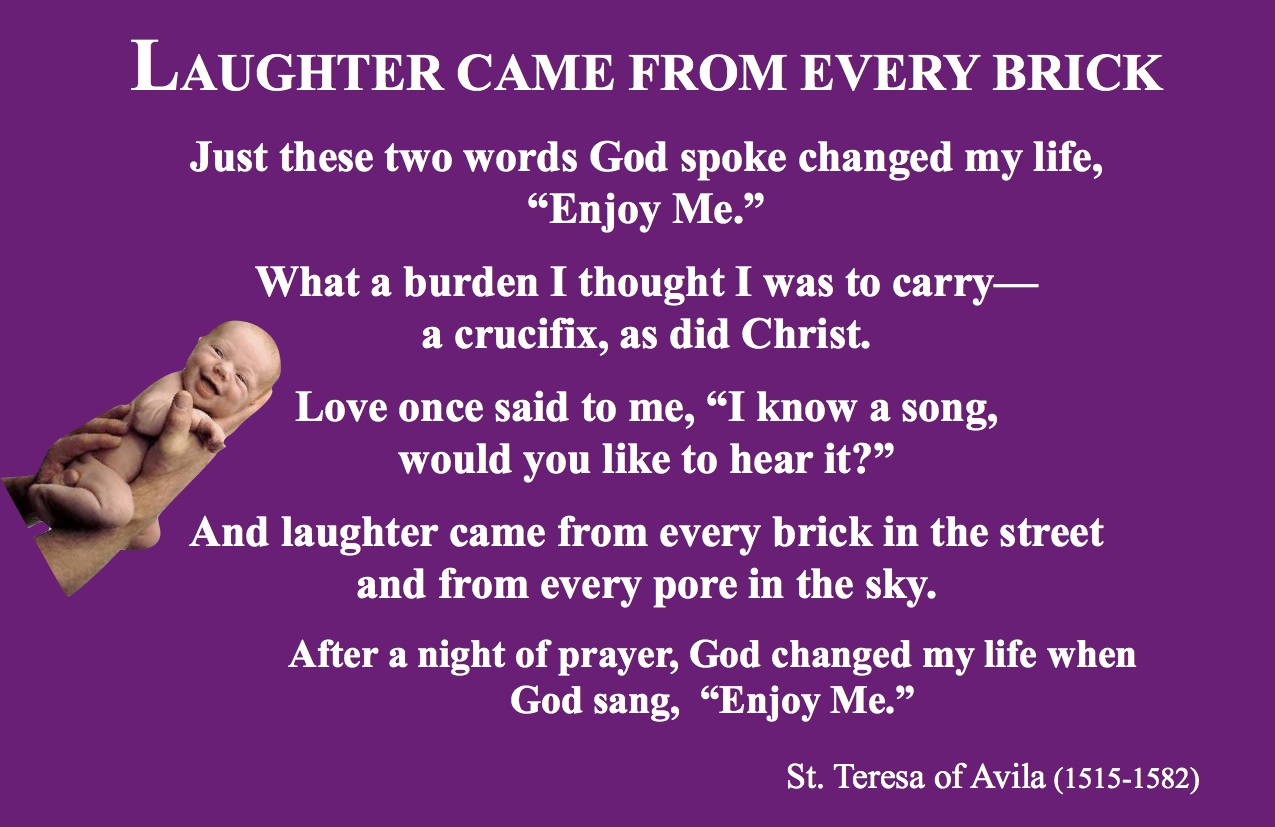
Imagine if you will a baby in your own life. A baby from your past perhaps, you baby brother or sister, maybe your own babies when they were just new and discovering the joys of creation. Such a beautiful little child. So much ahead of her. So much to explore. But for now a simple game of peek-a-boo. Ah, such laughter. You can’t help but laugh along and as you laugh, the tears of joy stream down your cheeks as you begin to imagine the wonders of the beautiful human being this child will grow into. And as you are over-come with joy, you won’t be able to help yourself as you are compelled to thank the Creator of such a beautiful little creature. And as you give thanks, listen to the words of St Teresa of Avila whose joy echoes down through the centuries to help us evolve into the vision of our Creator: Teresa writes: “Just these two words God spoke changed my life, “Enjoy Me.” What a burden I thought I was to carry— a crucifix, as did Christ. Love once said to me, “I know a song, would you like to hear it?” And laughter came from every brick in the street and from every pore in the sky. After a night of prayer, God changed my life when God sang, “Enjoy Me.”
A Benediction: Listen, listen closely,
can you hear the memory of a baby’s laughter?
Such beauty, such potential, such joy.
Now listen again,
can you hear the voice of God?
Listen carefully,
listen beyond the laughter and you will hear God say:
“Enjoy Me”.
“Enjoy Me!”

This is a fascinating conversation that explores the role of Progressive Christianity in the life of the church.
Bishop John Shelby Spong, Rev. Dr. Jay Emerson Johnson, Dr. David Hollinger and Rev. Byron Williams discuss the mainline church and liberal Christianity at the Pacific School of Religion.
 “Remember that you are dust and to dust you shall return.” are the words that are spoken during Ash Wednesday’s Imposition of Ashes. I have always thought of the dust of the earth, funerals, and death during this age-old ritual. But last year during our worship, we added a new reading to our Ash Wednesday Liturgy. This new creation story embraces a perspective on reality that is all together different than that of our ancestors in the faith. This new perspective turned my thoughts toward life and eternity.
More and more I have come to believe that unless our worship together can embrace reality as it is viewed in the 21st century, we will fail in our efforts to make worship relevant in the 21st century.
The Star Within
a creation story by Dr. Paula Lehman & Rev. Sarah Griffith
In the beginning, the energy of silence rested over an infinite horizon of pure nothingness.
The silence lasted for billions of years, stretching across aeons that the human mind cannot even remotely comprehend.
Out of the silence arose the first ripples of sound, vibrations of pure energy that ruptured the tranquil stillness as a single point of raw potential, bearing all matter, all dimension, all energy, and all time: exploding like a massive fireball.
It was the greatest explosion of all time!
An irruption of infinite energy danced into being. It had a wild and joyful freedom about it, and like a dance it was richly endowed with coherence, elegance, and creativity.
The universe continued to expand and cool until the first atoms came into being. The force of gravity joined the cosmic dance; atoms clustered into primordial galaxies.
Giant clouds of hydrogen and helium gases gathered into condensed masses, giving birth to stars!
Generations of stars were born and died, born and died, and then our own star system, the solar system, was formed from a huge cloud of interstellar dust, enriched by the gifts of all those ancestral stars.
Planet Earth condensed out of a cloud that was rich in a diversity of elements.
Each atom of carbon, oxygen, silicon, calcium, and sodium had been given during the explosive death of ancient stars. These elements, this stuff of stars, included all the chemical elements necessary for the evolution of carbon-based life.
With the appearance of the first bacteria, the cosmic dance reached a more complex level of integration.
Molecules clustered together to form living cells!
Later came the algae, and then fish began to inhabit the waters!
Thence the journey of life on land and in the sky.
Insects, amphibians, birds, reptiles, and mammals: all flourished and diversified and elaborated the themes of life. And now it is our time, too.
This is our story.
The story of our beginning, our cosmology.
And so we commence our Lenten Journey this night – this Ash Wednesday, with open hearts in the midst of our Creator.
As we partake in our daily things of life may we see them as sacred.
May we be empowered to perform simple acts of concern and love, and real works of reform and renewal.
Let us love deeply the earth which gives us air to breathe, water to drink, and food to sustain us.
May we remember that life is begotten from stardust, radiant in light and heat.
We are all one – all of creation, all that now live, all that have ever lived.
Remember we are stardust, and to stardust we return.
Remember we are part of the great mystery.
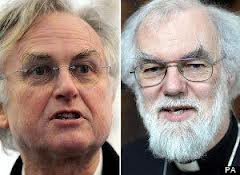 Feb.3/2013: Richard Dawkins Loses Debate Against Former Anglican Head Rowan Williams at Cambridge University
The debate motion that “religion has no place in the 21st Century” was well-defeated at the event held yesterday at the Cambridge Union Society. Dawkins lost the debate by 324 to 136 as he failed to convince the gathering that religion has no place. Also taking part in the debate were Andrew Copson and Arif Ahmed.
 Evangelical Lutheran Church in Canada’s National Bishop Susan Johnson was our Guest Preacher
Sunday February 3, 2013
Listen to the sermon here
The Story of God
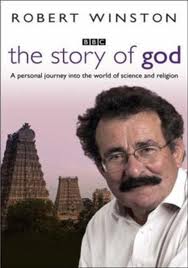 Imagining the unimaginable and describing the indiscribable – the human endeavour to capture the nature of the divine in words, images, stories and myths is the subject of this excellent BBC documentary series. Robert Winston, (medical doctor, scientist and Professor of Science and Society at Imperial College London) examines the roots of religious beliefs and the various ways in which humanity’s sense of the divine have developed.
Professor Winston says: “However you define God, and whether you believe in God or not, the world we live in has been shaped by the universal human conviction that there is more to life than life itself; that there is a ‘god’ shaped hole at the centre of our universe.“We have come up with many different ways to fill that hole, with many gods or just one, with gods of hunting, gods of farming, gods of war and gods of sea and sky.”
 Looking at the Bible as “literature with a religious agenda which distorts the past,” Dr Francesca Stavrakopoulou (University of Exeter) challenges some long held assumptions about monotheism to ask the question: “Did God Have a Wife?” Her BBC documentary explores the early roots of monotheism in Judaism, Christianity and Islam.
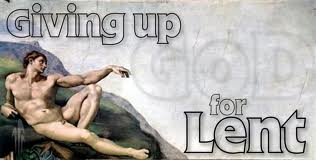 Dare we give up God for Lent? Are we ready to expose ourselves to critiques of Christianity so that we might move beyond “God as a crutch” toward an experience of the absence of God? I find myself intrigued by Peter Rollin’s attempt to move us beyond our carefully held images/idols toward a deeper understanding of Christ’s experience on the cross. Atheism for Lent is a daring idea; a real journey into the wilderness.
 Back in November, I had the privilege of attending a series of lectures given by Phyllis Tickle who describes the current reformation that the church is experiencing as part of a cultural phenomenon that happens about every 500 years, which she calls “The Great Emergence”. When asked what skills religious leaders will need to navigate the information age, Tickle insisted that the best advice we could give to anyone considering a religious vocation was that they should study physics. Inwardly I groaned, remembering my feeble attempts to come to grips with the most rudimentary theories of quantum physics. But I also nodded in agreement, knowing that so many of our religious narratives strive to make meaning of the cosmos as it was perceived by ancient minds. When our ancestors looked into the heavens they had no way of knowing the wonders of the cosmos that we are beginning to discover. While physicists can ignore theology, theologians who ignore physics will find themselves stuck atop Job’s dung-heap impotently shaking their fists at the Divine. Perhaps Tickle is correct and the clerics of the future will out of necessity need to be physicists. Theoretical physicist Michio Kaku speculates that the universe is “a symphony of strings” and the “mind of God would be cosmic music resonating through eleven dimensional hyper-space”. If you have the courage to climb down from the dung-heap, take a look at Michio Kaku’s “The Universe in a Nutshell”. If the Divine bollocking that Job endured makes you wonder if ignorance might just be bliss, then take a peek at “Is God a Mathematician?” or “The Mind of God”. Who knows, maybe if a few more of us dare to dwell in the questions we might just come up with imaginative narratives to help us fathom what it means to be human.
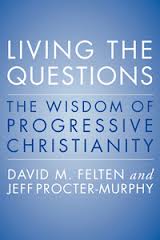
Having worked our way through the Living the Questions 2 and Saving Jesus dvd series, our Adult Education Class is using the book: Living the Questions: The Wisdom of Progressive Christianity as a frame for our review of progressive Christian theology. Each week I will post the video clips that were used during the class. This week’s class consisted of an introduction as well as an exploration of what it means to move beyond definitions of the Divine toward the reality of unknowing.
Thinking Theologically
“We must get away from this theistic supernatural God that imperils our humanity and come back to a God who permeates life so deeply that our humanity becomes the very means through which we experience the Divine Presence.” John Shelby Spong
 Leftover People – Pastor Tom Doherty
Listen to the sermon here
Leftover People our Hymn of the Day: Leftover People

Tomorrow, I will get into my car to begin the nearly three-and-a-half-thousand kilometre journey to Vancouver. When people ask me why I’m driving so far instead of flying, I tell them it is because my sabbatical affords me the luxury of taking my time. But I suspect the real reason has something to do my love of this immense land in which I have the pleasure of living. From behind the wheel, I will have the freedom to explore just a small part of Canada and I can hardly wait to get beyond the familiar routes of my day-to-day life and out on to the open road, knowing all the while that in the far off distance, beyond the rocks and trees of Ontario, the open expanse of the prairies lie the mountains. I will linger in the mountains before making my way to the Vancouver School of Theology, on the grounds of my alma mater the University of British Columbia, where I will spend six glorious weeks reading and reflecting upon the many emerging connections that are happening in progressive christian theology. So, filled as I am, with anticipation of all that tomorrow promises, I am also filled with memories of other trips into the splendour of creation.
When I was a student in the Religious Studies department at the University of British Columbia, I decided that if I was ever going to be able to understand religious practices that I would need to do more than simply study them from an academic perspective. Longing to understand more about Buddhism I decided to learn how to meditate. I went to a Buddhist retreat centre to try to learn the fine art of meditation. While I learned a great deal in the process of learning to meditate, I found the experience of meditation to be very frustrating. I’m drawn to ideas, and reading, and studying. I love roaming around in the words that have been strung together by scholars, or historians or theologians, or philosophers or psychologists or even novelists. I thrive on the written word and so the scarcity of words that the discipline of meditation demands can often frustrate me.
I remember talking to a good friend of mine about the trouble I was having learning to meditate. Bryan had travelled all over the Far East and was an avid practitioner of transcendental meditation. He sympathized with my dilemma and suggested that perhaps my particular spiritual quest would need to be one that entailed letting go of words so that I could move beyond words.
I remember being dumbfounded by the idea of ever being able to let go of words. But Bryan insisted that unless I moved beyond words, I’d remain frustrated by my attempts to learn any form of meditation. I confessed that I had absolutely no idea where to begin. Bryan said that my basic problem was wrapped up in the weakness of my right mind. Before I could take offense, Bryan went on to explain that I was primarily a left-brain kind of gal. Bryan insisted that I needed to learn to develop the right hemisphere of my brain.
Even though I was familiar with the theories about right brain verses left brain, I had absolutely no idea about how to go about changing what I thought was the unchangeable reality that my left brain which is the area responsible for verbal and cognitive skills is the hemisphere that I tend to rely on rather than the right brain wherein lies the artistic, playful side of my nature.
I like words. I like the way words sound. I like the way the way words look. I like the meanings of words. I love the history of words. I love putting words together. I’m called to a profession that is all about words. So, asking me to move beyond words is like asking me to give up my lifeblood. But Bryan was determined to move me beyond words and made me promise that I’d meet him at his workplace the very next day.
Bryan is a pilot; a helicopter pilot. Bryan also knows that I’m afraid of heights and although I’ve conquered my fear of flying, I’m partial to fix-wing aircraft. Helicopters make me more than nervous; helicopters terrify me. Most of my fear of helicopters is Bryan’s fault. While Bryan was studying to fly helicopters he would share with me all of his newfound knowledge about helicopters. One thing stood out: helicopters are unreliable. The best mechanic can safety check a helicopter and certify that it is perfectly safe to take off and still the helicopter can malfunction and cause the pilot to have to land immediately. So, I wasn’t too crazy about meeting Bryan at work. But who am I to argue with a guy who is determined to develop my left brain.
That’s how I found myself hovering over the mountains of North Vancouver in a small helicopter that for some reason had no doors. I was strapped in and Bryan assured me that there was no way that I could fall out but there was something about all that fresh air that seemed a little too close for comfort. So I held on for dear life as Bryan headed North towards Garibaldi Mountain. As Garibaldi slipped out of followed by Blackcomb and Whistler the sheer beauty of all that lay before me filled me with such awe that my mind struggled to comprehend the splendor my eyes beheld. This of course was my left-brain on overdrive struggling to find words to describe the experience of my senses. It wasn’t until I heard Bryan’s voice through the crackly headset that I realized that rather than moving beyond words, my mind was flooded with words.
I asked Bryan where we were going and he pointed to a place on the northern horizon and told me that we were going to put down on the side of a mountain in a place that he knew that I would love. As we’d long since passed the boundaries of my ability to recognize the mountains by their shape, I turned to the map of the Bastion Range but could not read our location. Bryan motioned to a point in the distance and indicated that it would be there that he would land.
As we hovered over the spot, I wondered how he’d manage to land, when through the headset Bryan explained. It was too dangerous to actually land. Bryan would hover inches from the ground and if I was willing to go where few humans had ever been, I would step out of the chopper and huddle down on the ground as Bryan swooped back up into the air out of sight so that I could be alone in a place where Bryan was sure I’d find no words but one.
I was relieved that Bryan hadn’t explained all this while we were still on terra firma because I would never have agreed to the journey. But out there the appeal of the Alpine meadow perched on a mountainside was more than I could resist.
As the ground approached, I became convinced that I was about to die, but I was much younger then and far more reckless, and in seconds, I was hugging the earth and feeling the whoosh of the chopper as Bryan climbed. I knew that he’d be back in about 5 minutes, but as the sound left, it was replaced by the roar of a silence I’d never heard before. I stood up in time to see Bryan disappear behind the summit and discovered that I was literally on top of the world. I’ve rarely tired to put into words what happened next. I resisted doing so for years. I think out of some sort of belief that in trying to put it into words I’d rob it of its, its what, that’s just it, I don’t know what……Well I do know, I just don’t know how to say it.
Standing there looking out at what seemed like all of creation right there before me. Looking down at the vast valley below and up to the summit I could almost reach out and touch, blanketed by a sky that I was convinced I could walk out upon, because so much of it appeared to be below me and not above, my senses were overwhelmed.
I was alone and yet I knew I was not alone.
I’d like to say that I was conscious of a presence but that’s not really how it was.
Words don’t do it justice.
I was surrounded by it.
Not “it” really but “is”.
“Is” is about as close as I can come to describing it.
I was in the presence of, or surrounded by, or overwhelmed by, our upheld by or embraced by or touched by or loved by ISNESS.
GOD IS TOO SMALL A WORD TO DESCRIBE THIS ISNESS.
But there in the presence of all that IS, I had no need to describe IS, it was enough to simply be.
All words, and thoughts slipped away and it was enough to just be.
To be in the presence of BEING.
……….
It’s more than beyond words, but as I try to explain what I felt on that mountainside, I’m struck by the fact that our ancestors speak of this ISNESS as YAHWEH…I AM WHO AM.
The verb “to be” is the very name of the God who is the source of all BEING.
The clearest way that I can point to and say “there that’s it that’s the pathway where you will meat this ISNESS” is to point to creation itself and say there, there right there in the creation of the Creator you will discover all that you need to know this ISNESS.
Standing there in the presence of ISNESS I could feel it.
There was no stillness except in me.
I was absolutely still except for the breath breathing in me.
All around me I could feel the energy of the meadow, the movement of the mountaintops that lay below me, and the dance of the sky, and the Breath of it all caressing me, holding me, touching me, holding me, moving in me, loving me.
As I loved it all, I could feel the tears rolling down my cheeks, taste them, as the spilled upon my lips.
I sobbed with delight.
As the WORD itself spoke to me through all that IS.
The Hebrew word in Genesis and in the first chapter of the Gospel of John that we translate as the “WORD of God” means so much more than our word, WORD can capture.
For us words cannot convey what the ancients spoke of when they tried to describe the creative energy that speaks into being all that is. The voice of God that says, let there be light and so it was IS more than our word WORD or words about the WORD can express or convey.
The Hebrew word that the ancients used is DABHAR and it literally means: “word and deed”. For the very utterance by the Creator of all that IS, is in and of itself a compelling creative energy.
THE DABHAR, then is the compelling force of creative energy that IS. So, we often describe it as the WORD, in all capitol letters.
For in the beginning was the WORD and the WORD was with GOD and the WORD was GOD. For GOD DABHAR light and it was, it was Good. GOD DABHAR the sky and DABHAR the waters and the earth below and it was good.
God went on Dabharing and Dabharing and this compelling creative word and deed that is God called forth all that is or ever shall be and it is good. We live and breathe and have our being in this very ISNESS that is all that IS and ever shall be. This Creation IS, and in this ISNESS we are held, and touched, and loved, and moved to be all that we are.
Can you hear the verb “to be”? Can you feel it?
When all words fall away it is the WORD that remains. The very DABHAR of our GOD who IS.
Creation is the sacred WORD of God. ALL that IS is in GOD.
If you want to know God you can catch a glimpse of God in all that God has made. Creation is the sacred DABHAR, the WORD AND DEED of GOD.
As part of creation each of us is DABHAR, for the WORD became flesh and dwells with us. You are God’s WORD and DEED. God speaks in with and through creation and so God speaks in with and through you.
The great Christian mystics speak of their experiences of God by pointing to creation. Hildegard of Bingen says, “The Word is living, being, spirit, all verdant greening, all creativity. This Word manifests itself in every creature.”
Meister Eckhart says, “Every creature is a word of God and is a book about God.” Creation itself Eckhart describes as the primary scripture, a Bible.
Our spiritual task is to get out of its way long enough that we might be filled with it and go about our task of healing, celebrating, and co-creating. For DABHAR the WORD wishes to incarnate us. Let the DABHAR the WORD become flesh and dwell among us.
Hear words as we begin to try to translate the New Testament in more Hebraic terms:
In the beginning was the DABHAR the Creative Energy:
The Creative Energy was with God
And the Creative Energy was God.
It was with God in the beginning.
Through it all things came to be,
Not one thing had its being but through it,
All that came to be had life in it
And that life was the light of persons,
A light that shines in the dark,
A light that darkness could not overpower…
The DABHAR, the Creative Energy was the true light
That enlightens all people;
And it was coming into the world.
It was in the world
That had its being through it,
And the world did not know it…
But to all who did accept it
It gave power to become children of God…
The Creative Energy was made flesh,
It pitched its tent among us,
And we saw its glory,
the glory that is its as the only Child of the Creator,
full of grace and full of truth.
Creation itself is a sacrament. Creation itself is the primary sacrament.
As I partook of that sacred sacrament on the mountainside, I never wanted it to end. But as the chopper came into view, I was keenly aware of how glad I was to be able to return to the world. Bryan insisted that he’d only been gone for five minutes but in those five minutes all of eternity had come into view. As we sailed passed mountaintops, I wept for the sheer joy of weeping. Long after the hum of the choppers noise subsided in my ears I could feel the ISNESS breathing in me as Bryan and I drove through the streets of Vancouver. All around me the beauty of the world was so clear, and I knew that God really does love it because I had a sense of why.
14 billion years is the inkling we have of the age of the universe. 14 billion years of creation that we know of, coming together to create all that IS now here in this place, in you and in me.
This ISNESS, this Creation is the original blessing that is life. You don’t need to travel to a mountaintop to see it. Wandering out into creation, the DEBHAR of GOD is not just speaking, God is shouting, declaring God’s love in the splendor of the leaves whose vibrant colours positively sing out I love you! Standing in the presence of the many children of God, you can almost taste God in the sacrament of DABHAR that each person is. The ISNESS is here all around us, breathing in with and through us, for the WORD has become flesh and dwells with us.
Let all creation sing out with joy!
I am indebted to Mathew Fox whose book “Original Blessing” provided me with words to express the inexpressible!

This Sunday I tried something new: introducing a video clip into the sermon! You can view the video within the written text of the sermon below or listen to the audio version provided. I am indebted to the work of James Rowe Adams for much of the New Testament Scholarship in this sermon.
The Scripture texts were John chapter 20:19-31 and Acts 4:32-35
Audio Version of the Sermon click here
Practicing Resurrection
Christ is Risen! Christ is Risen indeed! Alleluia!
So, Christ is Risen! So What???
What can it possibly mean to you and to me, that a rag-tag bunch of Jesus’ followers gathered together in an upper-room and talked about their experiences of Jesus and decided that not even death could extinguish the life that they experienced in Jesus? What difference does it make to you or to I that Christ is risen?
The truth is that it can make absolutely no difference what so ever. Now there are a whole lot of people who will tell you that the important thing about resurrection is that you believe it. Those same folks absolutely love the story of doubting Thomas. And so every year on the second Sunday of Easter we read the story of doubting Thomas as a kind of inoculation against Thomas’ disease.
I sometimes think that the designers of the lectionary were trying to build up our resistance to doubt. Having problems believing in resurrection, well don’t do what Thomas did, don’t doubt, because you’ll be proven wrong. Jesus is alive, the wounds in his hands proved that to Doubting Thomas, so have no doubt about it the resurrection happened! Believe in the resurrection!
The trouble with believing in stuff is that it belief can make absolutely no difference what so ever. I can believe in justice for all, but unless I’m prepared to seek justice, to be fair, or to resist injustice, it makes absolutely no difference what so ever. You can shout, “Christ is risen!” all you want but unless you are willing to live it, the resurrection means very little at all.
In order to live the resurrection you have to begin practicing resurrection. In order to practice something, you have to know what it looks like, what it sounds like, or what it feels like.
I’ve been trying to figure out how to show you what resurrection looks like in the flesh. Then I remembered a video that’s been doing the rounds on the internet, so I want you to watch this modern miracle of resurrection.
WATCH THE VIDEO CLIP FROM: Alive Inside
Christ is Risen! Christ is Risen indeed! Alleluia!
2000 years ago a bunch of rag-tag Jesus followers were huddled together in fear. Their beloved leader had been brutally executed by the powers that be and they were terrified that they would be next. Paralyzed by their fear, hiding behind a locked door, something happened that gave them the strength to burst forth from their own tomb and change the world.
Ever since they began to practice resurrection, people have been trying to figure out exactly what happened; what could have changed these bumbling, terrified, betrayers, abandoners, who seemed to be always getting things wrong, into a bunch of leaders who began a movement that spread through out the Empire within their own life-times and then based on the power of their witness, spread throughout the world and continues to nourish and sustain millions of people from generation to generation?
Now there are those that insist that it was the power of Jesus having been physically resuscitated from the dead that motivated his followers to change their lives and the lives of millions who have come after them. But we live in the 21st century and we have access to all sorts of information that the generations who have gone before us did not. Most of us, myself included, are not swayed by arguments about a physical resuscitation of Jesus’ body. But I can tell you without a doubt that I do believe in resurrection and I know that Christ is risen and I also know that the same power that the early followers of Jesus used to change the world is available to you and to me. And now more than ever the world needs us to start using that power. It’s long past time for us to start practicing resurrection.
So, if they weren’t talking about a physical resuscitation when they spoke of Jesus’ resurrection, what did the early followers of Jesus actually mean when they spoke of Jesus having been raised from the dead? During the first century many Jews had adopted a vision of the future that dealt with the prevailing question of the day: “How could a just God allow his people to suffer endlessly at the hands of their enemies?” Or as Dom Crossan puts it: When was God going to clean up the world so that justice could prevail?
An emotionally satisfying answer was found in a fantasy expressed in one of the visions attributed to the prophet Ezekiel in the valley of dry bones: “Mortal, these bones are the whole house of Israel. They say, ‘Our bones re dried up, and our hope is lost; we are cut off completely.’ Therefore prophesy, and say to them, Thus says the Lord God: I am going to open your graves, and bring you up from your graves, O my people; and I will bring you back to the land of Israel.”
The idea that God would one day raise up the dead was not particularly popular with the priestly party in Jerusalem, perhaps because they had come to terms with the occupation forces of Rome, but it appealed strongly to some Pharisees who insisted that God would see to it that ultimately justice would prevail.
Biblical scholars suspect that Jesus and his followers shared the Pharisees’ hope for resurrection. Each of the synoptic gospels tells a story about how members of the priestly, party known as the Sadducees, came to Jesus with a trick question that was intended to show the absurdity of the resurrection, but in each story Jesus cleverly avoids their trap.
That the editors of the first three gospels chose to include these stories, suggests that at least by the end of the first century resurrection imagery was important to the followers of Jesus. But exactly what they meant by resurrection is not clear. In the Christian writings, two Greek words are translated as “resurrection”. Each of these words evolved from a verb that translates into English as “raise”.
The first word, “anastasis” comes from the verb, which meant to stand up. The second word, ‘egersis” is from the verb that meant to wake up. When early Christian writers used these terms they may have been thinking like Pharisees and insisting that God would prove to be just.
Many New Testament scholars see the stories about the risen Christ as examples of hymns of praise or poetic expressions of the faithful whose lives had been transformed b their encounter with the Jesus story.
The apostle Paul never mentioned the empty tomb and his own description of his encounter with the risen Christ is one of a vision of Christ rather than an actual physical encounter. Paul uses the Greek verb for “appeared” when he describes both the apostles’ encounters and his own with the risen Christ.
But New Testament scholars can parse the words of the gospels forever and they are never going to be able to tell us exactly what the early followers of Jesus meant when they said that Jesus is risen. What we can know about their understanding of resurrection can be found in the events that followed Jesus’ execution. Crucifixion was designed by the Romans to terrorize the nations they occupied. Corpses were left on display so that the people would understand that if they stepped out of line in any way, the horror or crucifixion was all they could hope for. The terrorizing of the population worked well for the Romans. For a while Jesus’ followers were terrified. But death could not contain the power of their experiences with Jesus. And it wasn’t long before they were living not as terrorized citizens of the Roman Empire, but as liberated followers of the way, banding together in communities of compassion, sharing their wealth, ensuring that none were needing among them. Risking it all, for the sake of Jesus vision of God’s reign of justice and peace.
When I read the accounts of those early followers of the way who abandoned the tomb of the upper-room to gather together to build communities of compassion it is clear to me who was raised up by images of resurrection. The followers of Jesus were lifted up from a crouching or cowering position as they boldly proclaimed what they had learned from Jesus. The followers of Jesus stood up and got on with the business that was begun by Jesus. The followers of Jesus began to understand themselves in a whole new way. The Apostle Paul wrote: “We who are many, are one body in Christ, and individually we are members one of another.” “Now you are the body of Christ and individually members of it.”
By merging the pharisaic image of resurrection with the image of the body of Christ the first Christians could declare with confidence that Christ is risen. When followers of Jesus in the first century and in the twenty-first century talk about the resurrection of Christ we are proclaiming that death did not have the last word in the Jesus story because his followers were raised up to be his now body.
When we say that we believe in the resurrection of the dead, we are proclaiming that no matter how dead someone may appear to be, new life is always possible. Practicing resurrection begins when we huddle together refusing to let our fears entomb us. Practicing resurrection happens when we gather together to build communities of compassion.
Our friend in the video came to life not through any power of his own, but through the compassion of his caregivers who struggled to reach him. Caregivers are empowered to do their work by the gathered community. Resurrection is not a solitary endeavour. Practicing resurrection requires that we gather together sharing our gifts, talents and treasure for the good of all. Practicing resurrection happens when we build communities of compassion that live fully, love extravagantly and empower people to be all that they were created to be.
Let it be so among us. Let us be a community of compassion. Let us always seek ways to empower our neighbours and ourselves to live fully, love extravagantly be all that we were created to be. Let us practice resurrection here and now!

As our Easter celebrations continue, the readings for this coming Sunday quickly move our attention to the story of Thomas. Poor old doubting Thomas. It’s the same every year. Thomas’ doubts greet the faithful on “low Sunday”. But before you let Thomas’ doubts capture Easter’s hope, consider exploring the resurrection of Mary. Perhaps my not-so-long-ago encounter with a visiting New Testament scholar will entice you to follow Mary out of her tomb and beyond the streets to her place at the head of the fledgling community that became the church:
He just said it for the third time! “Harlots!” He keeps calling them “harlots”, while I rack my brains to come up with one harlot. Then he points to the text and his charges become clearer, he says, “she is a “prostitute!”
My carefully reigned in anger is unleashed. “Where? Where? Where? Show me where it says this woman is a prostitute!”
As he refers to the Gospel text and insists that, “It is there, right there in the text”,
I want to scream, I want to cry, I want to wipe the bemused expression from his face. I want to rub his nose in the damned text. Instead, I begin the uneasy process of reigning in my anger. I slow my speech, I try to erase the tremor from my voice and I ask him to, “Show me, show me where it says this woman is a prostitute.”
He consults his text and says, “a woman in the city who was a sinner.”
“A sinner not a prostitute.” I respond.
He insists, “Yes a prostitute.”
“Where?” I ask.
Again he insists, “A woman who was a sinner.”
I demanded to know, “Where does it say she was a prostitute?”
He insists, “The author means that she was a prostitute.”
I lose control, “How do you know? What words does the author use to say that his woman was a prostitute? Show me in the text where it says she was a prostitute?”
He still doesn’t get it, “What do you mean? It is clear that this woman was a prostitute.”
Once again I push, “Show me. Show me where?”
He continues to say, “She was a woman from the city who was a sinner.”
I know that the text says that, so I implore him to tell me, “The Greek… What does the Greek say?”
He replies, “amartolos”.
I push, “Does that mean prostitute?” We both know that it does not.
He replies, “Sinner. But the context clearly shows that she was a prostitute.”
Still pushing I ask him to “Show me. Show me how the narrative says this woman was a prostitute. Show me where it says her sins were sexual. Show me where it says so in the narrative.”
He says, “It’s clear.”
Clearly we disagree, so I try again, “Clear to you. Show me. Show me!”
As he fumbles through the pages, I offer him a way out, “Okay. Even if I concede the point that her sins were sexual, show me where it says that these sexual sins were nothing more than lust or adultery, show me where it says that she was a prostitute. Show me!”
He couldn’t show me. It’s simply not there.
Nowhere in the New Testament does it ever say in Greek or in English that Mary of Magdala is a prostitute. But over and over again scholars, theologians, popes, preachers, and dramatists, have continued to cast Mary of Magdala as a prostitute.
In the years that have transpired since than day in seminary, when a visiting New Testament scholar insisted that “the context clearly shows that she was a prostitute,” I’ve delighted in being able to participate in the phenomenon of Mary’s resurrection as the first Apostle.
I’ve gobbled up all the many books that have recently been written about the woman commonly known as Mary Magdalene. Some of them have been great scholarly texts like Jane Schaberg’s tome entitled “The Resurrection of Mary Magdalene.” While others have been little more than a salacious romp like Dan Brown’s: The Davinci Code. But whether its scholarly speculation on the nature of Mary’s leadership in the Early Church or scandalous speculation on her sexual exploits with none other than Jesus himself, what these books hold in common is their ability to touch an insatiable curiosity about this enigmatic biblical character whose feminine attributes have ruffled the cassocks of those patriarchs of the priestly persuasion for centuries.
The recent resurrection of Mary has offered up portraits of a character whose historical roots go all the way back to a relationship with Jesus of Nazareth. And that relationship situates Mary at Jesus’ right hand. Now you’d think that someone whom all four gospels declare to be so very close to Jesus, ought to be someone your hear about in the church all the time. You’d think that someone who the gospels record as having supported Jesus fledgling ministry out of her own resources, someone who if the gospels are to be believed, followed Jesus all the way to the cross and to whom the risen Christ first appeared and who is the first to be sent by Christ to proclaim the good news of the resurrection, you’d think that such a someone would be heralded down through the centuries, from pulpit to pulpit across the length and breadth of Christendom as the First Apostle. For indeed the literal definition of apostle is “one who is sent”. And if the gospels are to be believed, Mary was sent by none other than the Risen Christ, so you’d think she would be honored by the very church that professes to follow Christ.
But there’s just something about Mary…. that has made priests and preachers down through the centuries abhor her. That the historical evidence clearly points to Mary’s role as a leader, perhaps the foremost leader of the first, fledgling followers of Jesus Christ, has not seemed to help Mary’s case. Indeed, it may be that her leadership position as the Apostle to the Apostles, the first witness to the resurrection and the first to proclaim that Christ is alive, is the very thing that set the proverbial cat among the priestly pigeons.
Now I know that there are those who would say that the swirling conspiracy theories that abound around any discussion of Mary are little more than the rumblings of ill-advised detractors who seek to undermine the teaching authority of the church. But the evidence is clear that dear old Pope Gregory the Great, whether it was by accident or design actually misrepresented the Scriptures when he pontificated in a way that only popes can, about a woman’s sexuality. That this particular woman happened to be a close confidant of the one his holiness Pope Gregory called, “Lord and Saviour” did not save her from falling (pardon the pun) falling prey to his holiness’s foibles as he confused Mary Magdalene with the woman caught in adultery and made the perilously, presumptuous leap from adultery to prostitution. And low and behold for 14 centuries after Gregory’s not so great condemnation, Mary has remained relegated to the ranks of those whose bodies are bought and sold for the sake of those who care little for the female gender. And despite biblical and historical evidence to the contrary, Mary has been denied the titles that befit her rank.
But if you want to believe that it is merely a coincidence that the denial of Mary’s rank coincides with the church’s adamant denial down through the centuries that women could ever hope to enter the ranks of the priesthood, well I’m sure that God will forgive you, I’m just not sure Mary or her sisters will.
So what do the scriptures tell us about the disciple whom Jesus loved? Well for starters Mary was a woman whom Jesus healed. The gospel according to Luke tells us that:
“With Jesus went the twelve, as well as some women he had healed of evil spirits and sickness; Mary of Magdala, from whom Jesus had cast out seven demons; Joanna, the wife of Herod’s steward Chuza; Suzanna; and many other women who were contributing to the support of Jesus and the Twelve with their own funds.”
Evil spirits and sickness; 7 demons, no mention of sex. No mention of prostitution. Now I don’t know about you, but if a prostitute showed up at your church tongues would be wagging. And whoever wrote the gospel of Luke was more than capable of passing on a sexual tidbit or two. In fact just before he tells us about the women who support Jesus’ ministry, the writers tells the tale of a woman caught in adultery. But the writer never mentions that Mary was a prostitute.
Now there are some who insist that Gregory the not so great was simply confused by this story and so we should understand that it was an easy mistake to make. But to accept this is to accept that adultery and prostitution are the same thing. Now I get that popes are not well versed in matters of sex, but sadly that’s never stopped them from pontificating.
What irks me more is that a 20th Century New Testament scholar, who ought to know better, could suggest that adultery and prostitution are the same thing or indeed that one woman is the same as the next.
Okay, I’ll admit that I have an ax to grind. Many women do. But can you blame us?
Gentlemen. I know that I have the rare privilege of serving in ministry with the most enlightened generation of men any woman has had the privilege of serving. You guys are great! So, please don’t hear this as some sort of angry tirade against men. Because sadly, the attitudes that have confined Mary to walking the streets at night are not confined to men. The entire church culture is steeped in antiquated attitudes that will take all of us, women and men together, decades to recover from.
But recover we will. We will recover the witness of St Mary of Magdala, whose dedicated faith in Jesus, helped her to follow Jesus, despite the fact that all of the Twelve Disciples abandoned him, Mary stayed and followed Jesus all the way to the foot of the cross and beyond. Even in her grief, while the disciples remained locked behind closed doors because they were afraid, Mary ventured out to perform with her ointments ready, not knowing how she would be able to roll the stone away, only knowing that they could not fail to do what she thought would be the last loving act for her beloved Jesus.
It is long past time for the church to celebrate the resurrection of Mary of Magdala, the Apostle to the Apostles.
Mary faithfully ventured forth, not knowing how; only knowing that she must. And it was Mary who recognized in the face of someone she thought was just a gardener; Mary recognized the face of Christ. In Mary Magdalene we see a woman whose love of Jesus pushed her to keep going in the face of torment and death. It was Mary’s love of Jesus that sent her into the garden alone. Even though she though that her beloved Jesus was dead and gone, her love helped push her forward and she discovered that everything old has been made new through love.
So, looking back to Mary, I wonder what it would take for us to proclaim, “I have seen Christ”? Where can we find God in our lives and thereby find new life, new hope, new love? Where can we find what Mary found; Mary who when she found this new thing, was able to go on to found a community of followers of Christ who endured despite the odds against them. A community who although their writings were suppressed by the powers that be, they could not be kept silent. A community whose gospel lay buried for centuries, and whose restoration preserves the traditions if not the words of Mary who encourages us down through the centuries with these words:
“Do not weep and be distressed nor let your hearts be troubled. For Christ’s grace will be with you all and will shelter you. Rather we should praise Christ’s greatness, for Christ has joined us together and made us true human beings.”(Gospel of Mary and no I won’t supply the exact reference, in the hope that you might just read the entire Gospel)
Mary saw the risen Christ in the face of a gardener. Were can we find the face of Christ? Can we begin to see the face of Christ in the human beings that surround us? Perhaps when we begin to share Mary’s faith that the risen Christ can bee seen, we will begin to see the ace of Christ in those around us; in face of the stranger we meet on the road, in the face of the homeless man as we sit and share a meal with them, in the face of a child we reach out to lift up out of poverty, in face the woman upon whose shoulders we stand, in the face of our opponent as together we struggle for understanding, in the face of our enemy as we work for peace, in the face of our tormentors as we strive for justice, in the face of the sick as we seek healing, and in the face of the poor as we offer aid.
When we can look into the face of those we meet and see the face of Christ then perhaps we can follow in the footsteps of Mary and all the world will know by our love, that we too follow Christ.
St. Mary of Magdala, the first Apostle, the Apostle to the Apostle, the one in whom the Risen Christ entrusted the good news of eternal life.
May the power of Mary’s witness inspire you to see the face of Christ in the world.

Click here to listen to the worship service: Ash Wed Service
Click here to download the worship bulletin Ash Wednesday Feb 22 2012



 pastordawn