Holy Week marks a sharp uptick in visitors to this blog. From comments, messages, and emails I hear from fellow preachers who, like me, are daunted by the task of preparing the Good Friday sermon. That task is even more daunting for those of us who serve progressive communities. My fellow progressive-christian-preachers tell me of the dearth of progressive-christian Good Friday sermons to be found on the internet and encourage me to re-post my own attempts to rise to the occasion. So, here are the links to some of the Good Friday sermons I have preached over the years of my journey with the progressive community which I serve. The people Holy Cross Lutheran Church has over the years provided an invigorating space for me to pursue my questions. They have also provided the resources which make this blog possible. So, if you find the work posted here of value to you and your community, please consider supporting this ministry of Holy Cross. I rarely solicit donations. But Holy Cross is a small community that continues to give to others in so many ways and your encouragement is greatly appreciated!!! (Holy Cross Lutheran Church, 1035 Wayne Dr., Newmarket, On. L3Y 1N3)
Follow the links to Good Friday sermons and feel free to use/adapt/repost
2015 Not Salvation! Solidarity and Transformation click here
According to the American novelist, Joyce Carol Oates: “Homo sapiens is the species that invents symbols in which to invest passion and authority, then forgets that symbols are inventions.” Following last year’s Maundy Thursday worship, I received a very rude reminder of our all too human habit of investing passion and authority in invented symbols. Our efforts to remember the life and death of Jesus of Nazareth are bolstered year after year, decade after decade, century after century by the symbols we followers of the Way have invented and invested with passion and authority. So, after our regular Maundy Thursday ritual of removing invented symbols from the sanctuary, I went looking for our own sacred Good Friday symbol. Each Maundy Thursday, we followers of the Way get together to remember Jesus by focusing upon the symbols which represent to us the events of the night before Jesus died, when he gathered his followers together to eat the Passover meal. At that supper Jesus took bread, gave thanks and broke it and the rest as they say is history. Our Maundy Thursday Eucharist is packed with symbols, from the hand-basins in which we ritually wash one another to remember Jesus washing of his followers feet, bread and wine which we ritually consume as Christ given and poured out for us, to the ritual stripping of the sanctuary of all of the symbols in which we have invested passion and authority, in our efforts to re-member Jesus.
The rituals of Maundy Thursday prepare us for the rituals of Good Friday and so after our worship, I went downstairs to venture into the cupboard under the stairs to retrieve the stark symbols of this congregation’s Good Friday rituals. It is the same every year, a rough-hewn cross, fashioned out of the trunk of a Christmas tree that once adorned this sanctuary. A Christmas tree – evergreen, a symbol in which we invest our passion for everlasting life, stripped of it’s branches so that only the trunk remains and then cut so that the top section can be lashed with twin to the main section to fashion a cross of sorts. A rough-hewn cross in which we invest our passion for what we have come to call the passion of Christ. Each year, once the sanctuary is stripped of all the symbols which we have invented to facilitate our ritual remembering, I journey down beneath the stairs to retrieve our rough-hewn cross to facilitate our Good Friday remembering. This year, I had designed our remembering ritual, so that we could pay particular attention to our rough-hewn cross. This sermon was built around an exercise of re-membering which I hoped would help us to participate in the very act for which symbols are invented. Symbols are created to point beyond themselves, to direct our focus to that which lies beyond the symbol. This year, my Lenten sermons had focused on a definition of Divinity which describes God as beyond the beyond and beyond that also. So, this Good Friday sermon was written to use our rough-hewn cross to examine the work of the cross in the lives of the followers of Jesus, so that we might see beyond the symbol to the One who is beyond the beyond and beyond that also. I planned to place the rough-hewn cross here on the floor of the sanctuary, right in the middle of our circle so that as the Gospel according to John’s symbolic narrative, which has become known as the Passion Narrative, was read you could gaze upon our rough hewn cross and as my sermon began I would literally and figuratively take apart our invented symbol so that we might peer beyond it. I planned to sit here in the midst of you and unlash the vine that held our rough-hewn cross together and as I untied the vine, I would do my level best to untie the bonds that our religious tradition have placed upon the symbol of the cross and perhaps encourage you to question the passion and authority which is all too often invested in this invent symbol of the life, death, and resurrection of Jesus of Nazareth. Then with dramatic flare, I planned to put it back together again. As I used the old Christmas tree trunk to pull together our history and tradition, and the withered vine to lash our troubled attempts to remember back into the form of the cross in the hope that we might see the cross from the perspective of the 21st century followers of the way which on this day of days we struggle to be.Continue reading →
Kester Brewin certainly has a different take on the story of the prodigal! Pirate Theology is not a homiletical method that I’ve ever employed. But then pirates tend to work for themselves. Brewin’s playful pirate theology encourages us to leave our places of comfort in order to view a familiar story as a tragedy in order to grasp what he calls “radical theology” in which we take responsibility for who we are rather than defer to “the Big Other”.
Brewin is a founding member of Vaux-London, a collective of artists and faithful urban dwellers that served as an early model of fresh expressions of church in the UK.
Kester teaches Mathematics in London and works as a consultant for the BBC, as well as writing for the national educational press. He is also an acclaimed poet and has been described by Brian McLaren as ‘one of the leading public theologians for a new generation of thoughtful Christians.’
There’s a definition of what it means to be a priest that has always daunted me. A priest it has been said is “a keeper of the mysteries; a keeper of the sacred mysteries of our faith. People often confuse the idea of mystery with the idea of secret. But I can assure you that as a keeper of the mysteries of the faith it is neither my job nor any other priest’s job to keep the mysteries of our faith a secret. Yes, as an ordained pastor, one of my responsibilities is to be a keeper of the mysteries of our faith by ensuring that the communities that I serve hold those mysteries sacred. It is my job to hold the mysteries in such reverence that we all remember that the reality that we call God works in with and through those mysteries. Baptism is considered to be one of the mysteries of our faith. Baptism is a sacrament of the church and by definition a sacrament takes ordinary stuff – water – mixes that ordinary stuff with the Word and in the combination of water and the Word you have a tangible means of God’s grace. God’s grace is revealed in the sacrament of Baptism by the act of our gathering together and mixing the stuff of the earth with the Word. We have only two sacraments in the Lutheran church Baptism and Eucharist, and both of those things are sacraments because we gather together take ordinary stuff – bread and wine, or water and mix it with the Word of Jesus the Christ and in the water, the bread and the wine the means of God’s grace is made visible to us.
So, there you have it the technical definition of the sacraments, the mysteries of Baptism and Communion, in which the reality that we call God works in, with, through and under. But like all technical definitions of mysteries, these definitions fail to capture the essence of the mystery that likes at their very heart, the mystery of the reality that we call God. As a keeper of the mysteries, one would think that a priest, a pastor ought to be able to reveal, by way of definition something of the nature of the reality of the Divine.
The truth is I have no real definition to offer you of this reality that we call God. I read once, I wish I could remember where the wisdom of a priest far more skilled than I who declared that he’d given up trying to explain God to anyone because in the end, he said, “I cannot lead you to God, anymore than anyone can lead a fish to water.” The most important thing I learned in seminary is that “I don’t know is an answer.” The truth is the more we learn the more we know that we don’t know. But this unknowing can be so unsatisfying, precisely because we believe that God is the one in whom we live and breath and have our being, we want to know the very nature of the One who is the ultimate Reality. Now, if these words haven’t already become so vague that the veil of unknowing has begun to make any tangible means of God’s grace seem invisible and so beyond our grasp, let me leave the theology behind and tell you a story. Because one thing I do know for sure is that the shortest distance between the questions of what it means to be human and understanding our humanity is a story.
It happened on Thursday night. All week long I’ve been thinking about what I would say about the Baptism of Jesus and I wasn’t getting very far. It’s been a busy week, with lots of things to do as programs around here gear up again after the lull of the holidays. After teaching Confirmation on Thursday, I got home at about 9:30. The house was empty because Carol was off visiting the grandchildren for a few days. It had been a long day, and I quickly got into my pajamas, switched on the fireplace, and settled into my recliner in front of the television. The PVR was full of shows for me to watch and the opening scenes of Gray’s Anatomy dragged me into the complications of lives I would never have to minister to and I began to relax. The drama of medical emergencies mixed with the complications of various love affairs pulled me into a world where there was absolutely nothing expected of me and I was loving it right up until the moment that the telephone rang. Modern technology means that the name of the person calling usually appears on right there on the TV screen so that I can decide whether or not I’m going to answer the call. When the phone rang I expected it to be Carol calling to say goodnight, so I’d already pushed the pause button, expecting that after a quick goodnight I could get back to my shows. Buy the time I realized that there was no name on the TV screen but only a phone number, it was too late and I was already saying hello.
The caller was someone I’d heard from only once before. They were already halfway through a very nasty tale of woe when I realized that they were asking me to come out. It was a call for help. It was a call that I had every right not to respond to. I mean the caller wasn’t even a member of this congregation. It was late. I was already in my pajamas. It was dark outside.
I was annoyed. I mean really. Couldn’t this person have called me before I left Newmarket? What gave them the right to think that I would come out so late, in the dark, for someone I’d only met once before? The audacity. The sheer audacity of such a request was enough to make you scream. Give me a break. I listened to the caller’s plight with precious little sympathy. I asked her to hold on for a moment so that I could try to think of a way to help. What I really meant was: is there anyone in Newmarket that I can disturb at this time of night and ask them to go over and help. Some of you have offered to help in this way in the past. You know who you are and you can be sure that your names went through my mind as I tried to avoid leaving the comfort of my warm snug. It was only the thought of how annoyed I was to be disturbed at such a late hour that kept me from disturbing one of you. So I told the caller to hold on and I would be there in about half an hour.
I was cursing to bet the band as I went upstairs to get dressed. The air was positively blue. I was angry. I was going out, on what in my mind was the middle of the night, it was ridiculous. Hell, it was dangerous. It was dark. Yeah we were going to meet in a public place. But why the expletive, curse, fill in the blank your self, why the ………blanket blank, should I? I certainly wasn’t going out of love for my neighbour. I was ticked. I was going because it’s my job to go. Sure I knew that I had every right to refuse to go. But if I didn’t go, my shows would be ruined. How could I possible sit there and enjoy my shows when I knew that someone needed my help? Forget the shows, if I didn’t go, I knew darn well I wouldn’t get any sleep.Continue reading →
Each year, I begin my preparations for preaching on the Baptism of Jesus with this video in which Heather Murray Elkins tells her story, “The Secret of Our Baptism.” Elkins opens us to a new way of hearing the Bat Col, the Daughter of a Sound, the Voice of the Divine, the Word, who speaks in this Sunday’s Gospel reading. Luke 3:15-17, 21-22
The art of blessing is often neglected. The birth of a New Year calls forth the desire in us to bestow a blessing upon those we love. Several years ago, John O”Donohue, one of my favorite Irish poet’s created a New Year’s blessing for his mother entitled Beannacht-for Josie. It is a blessing of superior quality. And so, on this New Year’s Eve, may you all receive this beannacht with my added blessing for a peace-filled New Year in which the God in whom all of creation is held, might find full expression in your miraculous life!
The readings included John 1:1-9; the Gospel of Thomas 70, and Matthew 2:1-12 You can listen to the sermon here
This year, in addition to all of the many holiday festivities that we are accustomed to enjoying over the Christmas holidays many of us added the time-consuming guilty pleasure of binge-watching. Binge-watching is a relatively new phenomenon which results in hours and hours spent watching entire seasons of a TV series in one or two days. Thanks to things like Netflix, Apple TV and YouTube there are a so many TV series available but one that has me in its grip at the moment has more power to demand my attention as a result of a passion that developed in me when I was but a child.
When I was just ten years old, we lived in Newmarket for less than a year. By that time I had already lived in Birmingham, England, Belfast, Northern Ireland, Toronto and Newmarket. I was in grade five and I went to J.L.R. Bell public school. My teacher, Mr. Jones, was a particularly gifted storyteller. Mr. Jones had the ability to hold our little class in the palm of his hand simply by weaving tales of the world beyond our little lives. I can still remember the wonder and excitement that he generated when he announced that we were going to begin to study the explorers. I had no idea what an explorer was, but the globe that Mr. Jones spun on his desk as he explained that for years and years and years everyone believed that the earth was flat and that if you travelled far enough you ran the risk of falling off the edge, well I was hooked. Then he pulled down a large display map that was suspended on what looked to my ten-year-old eyes to be a window-blind and pointed to what looked like a funny shaped boot and told us that our study of the exploration of the world would begin in Venice, Italy in the year 1384, with the birth of Marco Polo.
I had absolutely no idea what he was talking about. Venice, Italy, 1384, Marco, Polo, none of these words meant anything to me except for one, so I was hooked. What was a Venice? What was Italy? What could he possibly mean by 1384? Whatever was a Marco and what on earth did a Marco have to do with a Polo? Polo’s were the little mints that my Nannie kept in her purse.
At the tender age of ten, Mr. Jones launched me upon a grand adventure, which would lead to my life-long love of history and of words. For days and days and days, Mr. Jones wove fabulous tales of the discoveries of Marco Polo as he traveled upon the Silk Route to China where he met the fascinating Kublai Kahn whose very name summoned up both mystery and danger. The adventures of Marco Polo had me hooked on history but Mr. Jones didn’t stop there, no. Vasco da Gama, Christopher Columbus, Ferdinand Magellan, John Cabot, Jacque Cartier, Henry Hudson and a host of others who Mr. Jones taught us about with only the globe and that mesmerizing map of his to aid him, all served to open me up to ideas and concepts that turned me into a student of history and a lover of stories.
I had to leave Mr. Jones class before the end of term because once again my family was on the move. We were right in the middle of following Thomas Cook to the shores of what would eventually become my home on the west coast of British Columbia, when I handed over the atlas that Mr. Jones had lent me. I was trying hard not to cry as I bid, the man who was at that very moment my favorite person in the whole world, good-bye. It was when Mr. Jones encouraged me to continue my journey into the past that I had what I know recognize as an epiphany. With that great big wall map as a backdrop and the globe in front of me, I knew that I too was an explorer. What I didn’t know, what that particular epiphany didn’t reveal, was that I was also a storyteller.
Epiphanies are marvelous, miraculous events that have the power to reveal the very depths of who and what we are. Strictly speaking an epiphany is a flash of insight. The word epiphany comes from the Greek for the appearance of the divine. When the word was first explained to me, my teacher suggested that the word epiphany could be used to describe that moment in a cartoon when the light-bulb appears above a character’s head. A flash of insight! A moment of discovery that enlightens the mind and can change a life, open up a whole new world, herald a new way of being, unravel a mystery, or reveal the Divine in our midst.
It is hardly and any wonder, that the celebration of the Epiphany, was once second only to Easter in the church year. The recognition of God in our midst, no that’s something to celebrate! Over the years, Christmas has eclipsed the celebration of Epiphany. We won’t even bother coming to church on Tuesday for the feast of Epiphany. These days most Christians don’t even wait until Epiphany to take down their Christmas decorations. Yesterday, I saw Valentine’s Day decorations in the grocery store. The world scarcely pauses to notice. Perhaps the wise-guys are to blame.Continue reading →
This sermon owes much to the work of Richard Rohr whose work opens me to the LOVE who lies at the core of REALITY, the ONE we call God. The source of the story that I tell about a Christmas Eve way back when has been lost to me. I cannot remember when I first heard it. It’s power to open me to the LOVE that is God remains with me and so I treasure the story and tell it so as to open others. To open ourselves to the cosmic nature of the Christ we used different scripture readings. The readings can be foundhereDuring the sermon copious amounts of chocolate oranges were smashed open and distributed. You can listen to the sermonhere
Christmas Eve is a night when the phrase “way back when” is uttered by storytellers often. I remember way back when I was just a little girl, you know long, long, ago, way back when Christmas celebrations were so different. Way back when I was a child, we didn’t hang fancy, especially dedicated stockings on the chimney with care, in hopes that St. Nicholas soon would be there. No, way back when, people didn’t have the money to waste on special, fancy, Christmas stockings that were only used once a year. Way back when, we just went into our sock draw and pulled out the largest sock we could find and we’d hang it up, in the hope that if we’d been good we’d get some goodies instead of the dreaded lump of coal that our parents had been threatening us with for weeks. Come Christmas morning, way back when, we were happy when our sock was filled not with stocking-stuffers like we have these days, but with the same thing we got every Christmas in our stockings, an apple, an orange, a few toffee’s and a couple of coins. You see way back when, fruit was seasonal and fresh apples and oranges were a real treat. These days we can haul crates of tiny delectable oranges from the grocery store all year long. But way back when, oranges at Christmas were a real treat.
Now I never did like oranges very much, so I would always try to trade my orange with my brother so that I could have two apples instead. You see way back when children were easier to please and Christmas was different. Which leads me to another story. I don’t remember when or where I first heard this story about way back when World War II had just ended and refugees were loaded into camps until the world could figure out what to do with the millions of displaced people. Back then; refugee camps were filled to overflowing with children who’d lost their families during the war. Apparently there was this little boy in a camp in France; we’ll call him Andre. Andre couldn’t have been more than about seven years old and he could barely remember the family he lost almost three years before the war ended. He’d been living in the refugee camp, more of an orphanage really, for almost a year. A few nuns who never could scrap together enough money to feed the children properly ran the camp. But they did there best and the children were, after all was said and done, lucky to be alive. The children hardly noticed that Christmas was approaching until one of the nuns announced that a neighbour had promised to come by on Christmas Eve to drop off a sack of oranges. Andre had only a vague memory of an orange. The year before a stranger had shared an orange with him and he remembered the taste of the three tiny sections of his share of the orange that oozed precious juice down his half starved throat. Andre spent the days leading up to Christmas Eve dreaming of having a whole orange of his very own. He thought about the smell of the orange, dreamed of peeling the orange, and carefully considered whether or not to devour each and every section of the orange all at once or whether he should divided it and save a section or two for Christmas morning.Continue reading →
The story told in this sermon can be found in Maeve Binchy’s book of short stories “This Year it Will be Different.” As always I am indebted to those progressive grinches Marcus Borg, John Dominic Crossan, John Shelby Spong, and Michael Morwood for their insights into the sacred. Our sermon hymn was No Obvious Angels. The readings were all from Luke 1:1-56.
Years ago, I struggled with most of the stuff I was reading both in the bible and about the bible. I’d been attending church every Sunday since I was 15 and I was doing my best to be a Christian. But the more I read the bible, the more I studied the stories in the bible, the more difficult it became to reconcile all of the inconsistencies. Nowhere are those inconsistencies more apparent than in the stories about the birth of Jesus. Long before I ever dreamed of going to seminary to become a pastor, I was introduced to the work of progressive scholars like Marcus Borg, Dom Crossan and Jack Spong. It was a relief to learn how to take the bible seriously without taking it literally. It was also a relief to discover that my pastor and indeed most of the pastors I knew didn’t take the bible literally. But I have to admit that Christmas in the Church just hasn’t been the same since I learned that the stories about the birth of Jesus that appear in the Gospels according to Matthew and Luke are not historical narratives. I must also confess that since we here in this community embarked upon this grand adventure together of ReThinking our Christianity, the celebration of Christmas in our worship together has become more and more of a challenge. There are days when I feel like a progressive Grinch who is determined to steal Christmas. Then there are other days when I feel like the Grinch’s little dog, who try as he might he just can’t seem to balance those reindeer antlers on his tiny little head. There are days, and some sleepless nights when I simply long for the good old days, when we could sink into the sentimentality of the season without having to delve into scholarship or worry about our evolving theology.
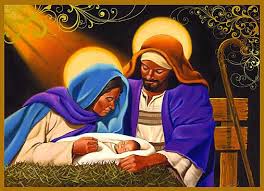
I miss those Advents when we all acted as though prophets foretold the birth of Jesus centuries before it happened, when we suspended disbelief and went along with the idea that angels visited Mary and Joseph, and we marveled at the fact that Mary conceived will still a virgin. It was easier when that Star guided wise guys and heavenly hosts actually visited shepherds abiding in their fields. Damn those progressive Grinches who’ve robbed us of our simple ways of celebrating the birth of Jesus
and as for those radical Grinches who have us questioning everything from the divinity of Jesus to the cosmic reality of the Christ, well I for one wish they’d leave us alone to sing our songs in peace. We Whos did just fine down here in Who-ville before those Grinches tossed all the elements of the birth stories upon their sleighs and left us here wondering what to do and how to sing. For however shall we celebrate the birth of the Son of God now that we know Mary couldn’t have been a virgin, and Matthew and Luke were the worst historians ever?
Well fear not my friends, because like all Christmas stories ours too has a happy ending. The good news is that those progressive Grinches who have stolen Christmas, do indeed have a heart after all. Even that Grinch Marcus Borg knows a thing or two about opening his heart to the wonder of the stories about Jesus birth. Yes, Borg, just like the rest of those Grinches like Spong, Crossan, and Morewood, leads us to understand that the stories of Jesus birth didn’t actually happen the way the gospel storytellers wrote them. The good news is that Borg, just like the rest of those Grinches, does have a heart big enough not to just stop with the reality that the birth stories are not history. Borg’s heart is big enough to cope with his mind’s ability to give us a better question than, “Did the birth stories happen they way they were written? When Borg encourages us to ask: “why did the gospel story-tellers tell their stories they way they told them?”
Borg’s heart leads him to remind us that the stories may not have happened exactly the way they are written, but they are absolutely true because these stories are always happening. The sacred is always being discovered in the ordinary stuff of life. Every birth is sacred because in every birth their lies among the muck and the mess of birth the reality of Divinity which lives in, with, through, and beyond each and everyone of us. The birth narratives open us to the reality of the sacred, which lies at the very heart of life; all life. Humanity is born over and over again, and over and over again comes the sacred possibility of abundant life; life in which we are capable of living deeply and loving more fully that we can possibly imagine.
In the life and teachings of Jesus people experienced this divine abundance and it opened them up to the possibilities of a world in which the reign of God who is LOVE accomplishes peace through justice. Why did the gospel storytellers write about the birth of Jesus they way they did? Could it be that the divinity embodied in the life of Jesus of Nazareth could not be killed by the worst that the Romans could conceive? The storytellers told the story of Jesus birth using the tools that they had available to them to open their contemporaries to the reality that in Jesus the sacred dimension of life was experienced in the flesh. These parables about the birth of Jesus have opened generations to the sacred Holy One in whom we live and move and have our being. When we begin to experience the more-than-literal meaning of these parables about the birth of Jesus, we are opened to the sacred in our midst in ways that only LOVE can open humans.Continue reading →
As the world turns expectantly for news from the United Nations Climate Conference in Paris, we hope that leaders everywhere can find the courage to commit us all to change our ways. Prophets have been warning us for decades of the dangers of climate change. The figure of John the Baptist looms large during the first half of Advent. This angry misfit shouts and us, convicting us of hastening the end. This sermon from three years ago, asks questions which ring true today: Do we have the courage to join John the Baptist? Do we have the stamina to become a prophet of doom? Our planet may be depending on us! You can listen to the sermon here or read the text below.
I didn’t know it at the time, but I actually met John the Baptist when I was fifteen years old. She didn’t look much like you’d imagine John the Baptist would look, but she had that same crazy intensity, that same focus on the fact that we’d better change our ways, we’d better repent, and start doing things differently or we’d be in real serious trouble. Lola was my friend Valerie’s mother and she simply couldn’t stop going on and on about the environment and how we were destroy the earth. At the time, I remember thinking she was a bit of a nut-case and on more than one occasion I wished she’d just shut up about it. I was just a kid, and the earth was just something I took for granted. The earth was just there to provide for our needs. I couldn’t believe how much Lola went on and on about all the stuff we humans were doing to destroy the earth. I just wished she’d leave us along to get on with things; I couldn’t abide her incessant nonsense about how we were going to destroy the planet. All her feeble little attempts to be kind to the earth, made me seriously question her sanity.
I tolerated Lola not just because she was my friend’s mother, but I didn’t really understand her until one day when the three of us were travelling together. We were coming home from church. I had only been going to church for a few months. I was trying hard to understand this whole God thing. So, I went to church a lot. My friend Valerie had persuaded me to start going to church with her and family had become like my second family as the supported me during my first attempts to explore the mysterious world into which I had begun to feel pulled. As we drove home from church, I was feeling a little glum. Try as I might, I couldn’t really understand this church thing; all that singing and praying didn’t really help me to feel closer to God. Mostly I just liked how people at church treated each other. I liked how they went out of their way to help me feel at home. Whether or not God was there, well I really wasn’t sure.
Anyway, we were driving along the road. It was a partly over-cast day on the west coast of British Columbia, just a few clouds. You could see the mountains off in the distance. We were chatting back and forth when all of a sudden; Lola pulled the car over to the far side of the road, switched off the engine and got out. Valerie followed her mother out of the car, so I figured I had better do the same. Val and her mother scampered down from the road and onto the beach. When they reached the water’s edge, they stopped and just looked off into the distance. Apart from a tanker-ship making its way across the horizon, I couldn’t see much of anything. Lola had the most amazing expression on her face. She positively glowed with happiness. Valerie wore a similar expression. I must have looked somewhat puzzled because Val smiled at me and said isn’t it the most beautiful thing you have ever seen. This only confused me more. What were they looking at that had made them stop the car, scamper down the bank and stand there at the water’s edge on a cold autumn evening. Maybe my parents were right, these religious types are a little bit weird. Happy, glowing, smiling people make me nervous. There they stood grinning from ear to ear. What were they on? And then, I saw it. For the first time in my life, I saw it. It had been there before. But I had never really seen it before. The sky was amazing. The colours were overwhelming. It almost didn’t look real. It looked like someone must have painted it that way. It was magnificent, a work of art. The most beautiful thing I have ever seen.Continue reading →
The Season of Creation ends today with the commemoration of St. Francis and the rhetoric of election season together with the events chronicled in Paul Moses book “The Saint and the Sultan: The Crusades, Islam, and Francis of Assisi’s Mission of Peace” inspired this sermon.
The reading from St. Francis and the Scripture reading can be found here
I chose to extract two readings from the lectionary to reflect upon sanctuary for refugees. Splitting the prescribed gospel text into the first and second readings and using the epistle text as the Gospel: Mark 6:30-34, Mark 6:53-56, Ephesians 2:11-22. The video which was shown during the sermon, along with the English translation, can be viewed here, listen to the sermon here
The beheading of John the Baptist is an unusual subject for a beautiful summer morning. However, from time to time the lectionary takes us where we are reluctant to go. Our readings included: Mark 1:1-11, Mark 1:14-15 and Mark 6:14-29
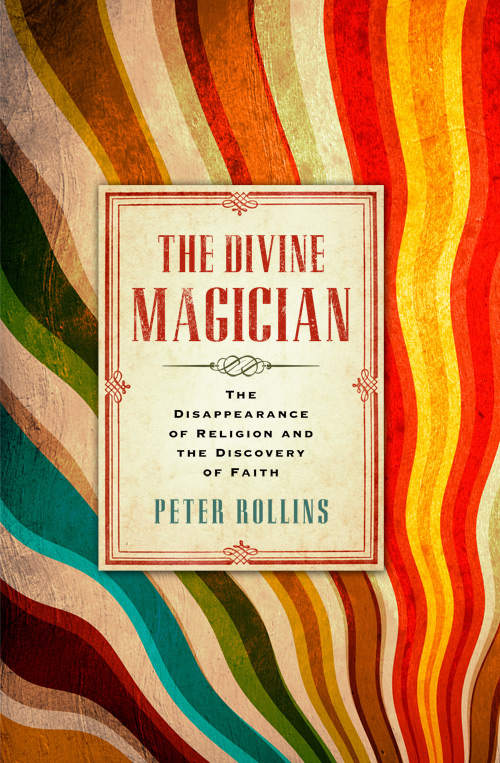
In April, I had the privilege of travelling to Belfast to attend Peter Rollins’ Festival of Light where he gathered together some of the thinkers who have influenced his thinking. In his book The Divine Magician the fruit of this influence provides an expression of radical theology which has the power to ignite what Pete calls “pyrotheology”. Here are a few short videos which are designed to fan the flames. Enjoy!

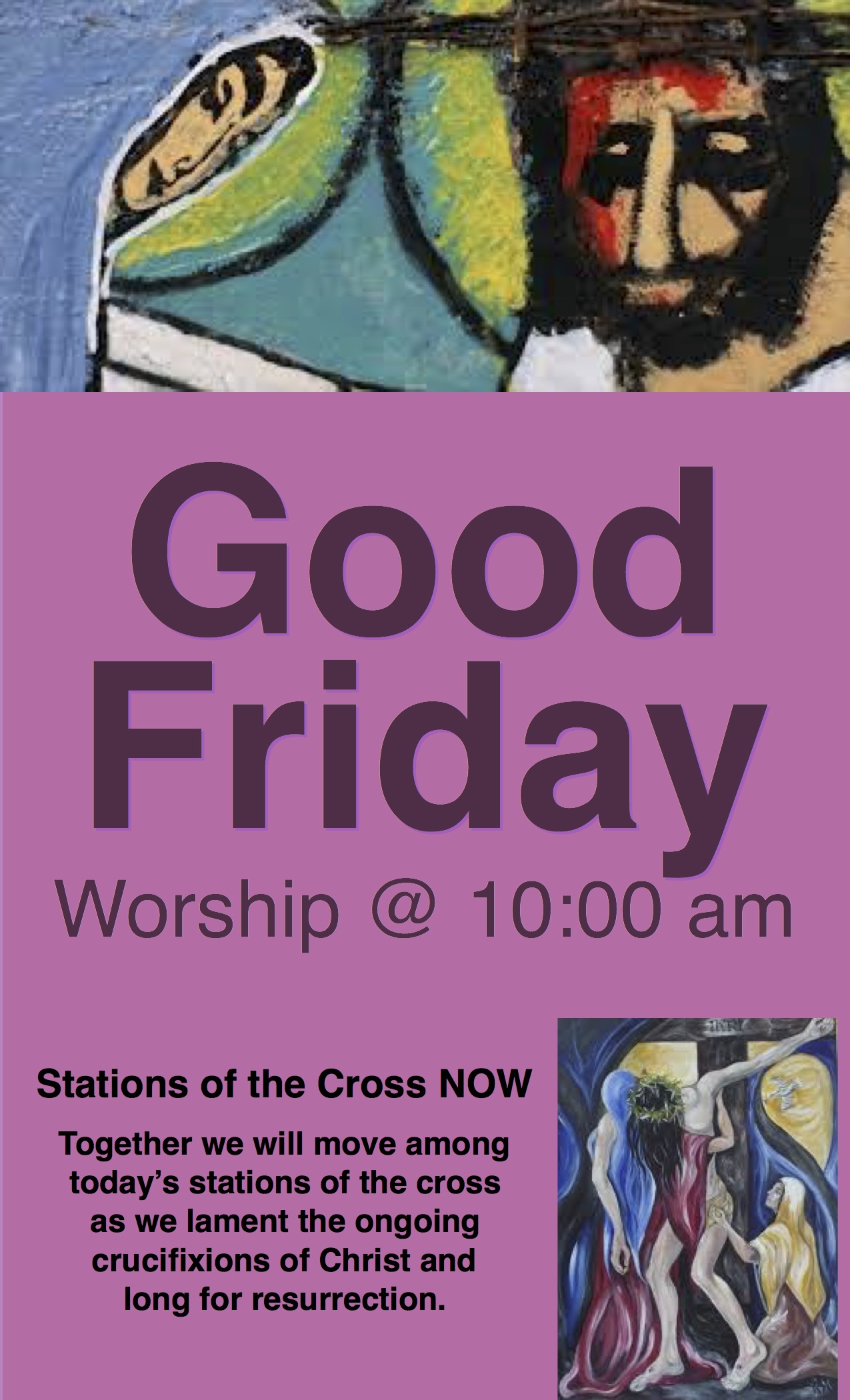 Holy Week marks a sharp uptick in visitors to this blog. From comments, messages, and emails I hear from fellow preachers who, like me, are daunted by the task of preparing the Good Friday sermon. That task is even more daunting for those of us who serve progressive communities. My fellow progressive-christian-preachers tell me of the dearth of progressive-christian Good Friday sermons to be found on the internet and encourage me to re-post my own attempts to rise to the occasion. So, here are the links to some of the Good Friday sermons I have preached over the years of my journey with the progressive community which I serve. The people Holy Cross Lutheran Church has over the years provided an invigorating space for me to pursue my questions. They have also provided the resources which make this blog possible. So, if you find the work posted here of value to you and your community, please consider supporting this ministry of Holy Cross. I rarely solicit donations. But Holy Cross is a small community that continues to give to others in so many ways and your encouragement is greatly appreciated!!! (Holy Cross Lutheran Church, 1035 Wayne Dr., Newmarket, On. L3Y 1N3)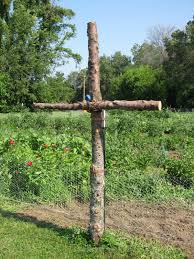










 pastordawn